Texas Baptist Ministry Award recipients honored

A Southeast Texas hospital chaplain, a West Texas college campus ministry director and a Central Texas lay couple involved in restorative justice ministry are the 2009 recipients of the Texas Baptist Ministry Awards.

Baylor University and the Baptist Standard confer the awards annually to recognize excellent ministers and highlight models for ministry.

David Cross

David Cross, director of chaplaincy at the Baptist Hospital of Southeast Texas in Beaumont, has been honored with the W. Winfred Moore Award for lifetime achievement.

Cross has served 27 years as a chaplain with Baptist Hospitals of Southeast Texas, working the last 25 years as director of the chaplaincy de-partment.

He leads a staff of four fulltime chaplains and numerous volunteers, in addition to performing the typical on-call duties of a hospital chaplain.

In 2002, Cross created the hospital’s Faith Community Nursing program. Now recognized by the International Parish Nurse Resource Center, the program has certified 54 nurses ministering in 160 churches.

He has been a resource regionally to churches, civic organizations, businesses and government agencies—as well as the health care community—in the areas of stress, interpersonal relations, grief, death and dying, and organ and tissue transplantation.

Cross was director of the Pastoral Counseling Services of Central Texas and director of counseling and community services for Waco Baptist Association from December 1979 to January 1982. During that time, he and his wife, Jacquie, served as missionaries in Christian social ministry with the Southern Baptist Convention’s Home Mission Board.
Buddy Young

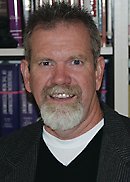
Buddy Young, director of Baptist Student Ministry at West Texas A&M University in Canyon and coordinator of the South Padre Island Beach Reach ministry, is recipient of the George W. Truett Award for ministerial excellence.

In 1980, while he was attending seminary and serving the Baptist Student Union at the University of Texas at Dallas, Young took a small group of Christian students to South Padre Island to share their faith.

That began an evangelistic ministry he continued as BSU director at Alvin and Brazosport colleges and that he brought to students at the Canyon campus when he became BSU director at West Texas A&M in 1988.

The ministry officially was launched the next year with a handful of students primarily from Texas Baptist Student Unions. The first few years, volunteers primarily participated in street and beach evangelism. By 1984, the ministry began providing free rides, water and beach first aid stations to the Spring Breakers.

The outreach has developed into a ministry involving hundreds of Christian students from multiple campuses throughout the United States in evangelistic outreach to their peers during Spring Break on South Padre Island.

This year, Beach Reach involved 525 participants from 17 campus and collegiate church ministries who touched the lives of more than 20,000 students. They saw 21 people baptized in the Gulf of Mexico.

Since the beginning of Beach Reach, more than 5,000 Christian students have been trained in personal evangelism, and at least 3,000 people have accepted Christ.

In 1998, Beach Reach spawned similar ministries in Panama City Beach, Fla., and other popular Spring Break destinations around the country.
Charles and Mary Alice Wise

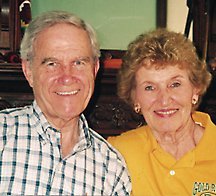
Charles and Mary Alice Wise from Trinity Baptist Church in Gatesville are recipients of the Marie Mathis Award for lay ministry. The Wises have spent 40 years in volunteer prison ministry, including 16 years ministering to women on Death Row.

Wise first became involved in prison ministry with Bill Glass and his Champions for Life Ministries. That initial experience led to a long-term commitment to leading weekly Bible studies for prisoners.

When a federal judge ordered Texas to close the Gatesville State School for Boys and Mountain View School in 1979, and those facilities became correctional units for female inmates, the Wises believed God brought a mission field to their town. And they responded to that missions opportunity.

Since 1993, the Wises—sometimes individually, more often together—have ministered to women on Death Row at the Mountain View Unit. They also have ministered to the family members of Death Row inmates, even accompanying them to the Huntsville Hos-pitality House for the hours surrounding executions.

In the last nine years, Mrs. Wise particularly has devoted much of her energy to launching the Central Texas Hospitality House, a nondenominational, nonprofit ministry to prisoners’ families. She serves on the board of directors for the ministry, designed to provide a safe place of refuge for the visiting family members of prisoners incarcerated in the Gatesville area.


Justice Revival calls churches to unify and serve

DALLAS—Dallas-area churches are taking notice of the 5,800 homeless people and the 89 percent of Dallas high school seniors who are not college- or career-ready when they graduate. And they are setting aside differences to follow God’s command to help the least of these.

Dallas pastors fill the stage, stating they are ready to see churches unify and work toward the Justice Revival goals of improving the education system in Dallas and end chronic homelessness in the community through partnerships, discipleship, advocacy and action. (PHOTO/Kaitlin Chapman/Texas Baptist Communications)

The Justice Revival is a faith-based event attempting to unite Christians across denominational lines, mobilizing churches to improve public schools and end chronic homelessness by creating permanent supportive housing.

The three-day conference Nov. 10-12 held in Dallas aimed to energize and mobilize churches to make a lasting change in their city.

More than 200 Dallas churches and city leaders agreed to address two needs by urging church partnerships with public schools and by pressing for creation of 700 units of permanent supportive housing for the chronically homeless.

Holy Communion Baptist Church in South Dallas offers an effective model. In the last two and a half years, the church has become heavily involved in offering tutoring for a local elementary school and has opened Diamonds of Dallas, a permanent supportive housing facility to help homeless men in Dallas.

“Permanent living is not that you support them the rest of their life,” Pastor Micah Phillips explained. “It is permanent for a time. These people need permanent support until they can become independent.”

Through Diamonds of Dallas, homeless men are offered temporary residence in the church facility and then led through a six-month job-training and life-skills program, preparing them step-by-step to gain vision, dignity and self-sufficiency.  

Jaci Valesquez leads worship during the Justice Revival with her husband Nic Gonzalez, who is also a member of the Christian Latin band Salvador.

“Through this, I want people to see the love of Christ that creates energy and hope,” Phillips said. “That helps them do better, and they begin to pull themselves up by their own bootstraps and get back on their feet.”

The first step to making a difference in the community and to offering permanent supportive housing is to be in the community, be with the people and learn to love them, he said.

“We need to get congregations to see that it is OK to move outside the walls of the church,” Phillips said. “We need to teach disciples about loving outside the walls of the church, to be receptive to people who don’t smell like them, dress like them, talk like them, act like them. This is what Jesus has called us to do.”

Phillips and his church also have affected their community by taking on education needs in the local schools through tutoring and mentoring programs. The church also hosts an after-school program two days a week where children can come to the church for help with homework in a safe, encouraging environment.

“If pastors will go into the schools, meet the principal, walk the hallways and meet the kids, they will build relationships and open doors,” Phillips said. “Principals can’t request us to come in, but they can’t stop us from coming in. They will appreciate the help we can give.”

Gus Reyes, director of Texas Baptists’ affinity ministries and Hispanic Education Initiative, insisted church partnerships with schools are a must.

“It is plain and simple, especially in the Hispanic environment,” Reyes said. “In many countries, the government isn’t seen as a safe place, and schools are run by the government.

“So, when these families come here from Spanish-speaking countries, they may not trust the schools.

“But when the church connects to the local school, they are opening the door because churches are seen as a safe place. They build a bridge to schools and that builds a bridge to the community.”


Good News Goods allow consumers to purchase with a purpose

BROWNWOOD—Consumers may be buying a bit more than a quick snack when they pick up their favorite chocolate bar. They may be supporting modern slavery, fair trade advocates insist.

By purchasing items from particular companies and product supply chains, consumers are getting more than they bargained for, said Charlotte Bumbulis, who leads the Texas Baptist Christian Life Commission fair trade initiative Good News Goods.

Many of the cheapest items on the market—including those from some of the largest manufacturers and retailers—are made available at such low rates because they rely on trafficked slave labor worldwide.

During a Good News Goods event at Howard Payne University, students and faculty members learned about fair trade goods and how purchasing can help people in economically developing areas. Charlotte Bumbulis (seated), leads the Texas Baptist Christian Life Commission’s fair trade initiative. Jay Smith, assistant professor in the School of Christian Studies at Howard Payne University, and Tomi Grover, who works with Texas Baptists in community ministries and restorative justice, browse the materials about Good News Goods.

Most people buy products without thinking about who made them or where they come from, Bumbulis said. But the Christian faith should affect every aspect of a person’s life—including shopping habits, she stressed.

According to betterworldshopper.org, a site dedicated to providing comprehensive information on companies’ social and environmental responsibility levels, trafficked labor forces support a wide range of industries, including coffee, chocolate and cleaning supplies.

Bumbulis insists there are ways consumers can “purchase with purpose,” encouraging fair economic development in other countries and remaining true to biblical beliefs.

“Fair trade” items are available in many places or can be ordered online, Bumbulis said. Good News Goods is one avenue through which people can buy items directly from microbusinesses in the developing world. People also can buy from local businesses or look for companies that make it a point not to use product supply chains that rely on trafficked labor.

“This is a way for us to put our faith and ethics into action,” she said. “The prices are slightly higher, but that’s the price of justice. That’s the price of fair wages.”

Though it still comprises a small amount of overall purchases, fair trade buying increased 22 percent worldwide in 2008. Despite the growth in the fair trade movement, many people are finding out about it only now.

Bumbulis has found many students who are encountering it for the first time as she has held Good News Goods events at Howard Payne University, Baylor University and the University of Mary Hardin-Baylor and expects to meet many more when she visits the University of Texas at Austin, Sam Houston State University and Baptist University of the Americas.

“My goal of inviting the Good News Goods to the Howard Payne University campus was to educate our student body on fair trade as it relates to workers from disadvantaged countries,” said Lynn Humeniuk, associate professor of sociology and director of the criminal justice program at Howard Payne.

Humeniuk said she was pleased by the reaction of HPU students toward Good News Goods. “Not only did they buy many of these products, but they also were able to see how the simple purchase of chocolate or a bracelet could make a difference in the life of a poverty-stricken worker.”

Bumbulis understands not every purchase will be a fair trade item. In some places, certain fair trade items are difficult to buy.

But every fair trade purchase makes a difference, she noted. It helps support human rights and economic development around the globe.

“This is a tangible way to be aware of biblical justice issues that seem too big for us to make an impact on. But we are through some actions like fair trade purchases.”

For more information about Good News Goods, visit www.goodnewsgoods.com or call (888) 244-9400.


Empty bowls dinner raises hunger funds, awareness

BROWNWOOD—Good Samaritan Ministries served guests at its recent Empty Bowls event a simple meal of soup, bread and water to portray the theme: “Live simply, so others can simply live.”

The event drew 387 participants and raised $5,826 to fight hunger. Ninety percent of the proceeds will meet needs in the Brownwood area, and 10 percent will be donated to Heifer International.

“I am truly thrilled and overwhelmed by people’s generosity,” said Gary Gramling, Good Samaritan board member and coordinator of the event. “We had no idea what to expect with this being our first year, but we had a tremendous turnout. I hope to see this continue as a tradition in Brownwood.”

The Empty Bowls event sponsored by Good Samaritan Ministries in Brownwood attracted 387 participants and raised $5,826 to fight hunger. (PHOTO/Kalie Lowrie/Howard Payne University)

Hunger and poverty are both issues that significantly affect the Brownwood area. In Brown County, 20.3 percent of residents—and 29.2 percent of children—live at or below the poverty level, according to a report issued by the Texas Association of Com-munity Action Agencies in April 2008.

The Empty Bowls event garnered an outpouring of support from the community. Restau-rant owners donated soup, local artists made bowls, children decorated placemats, musicians played live music throughout the day, and many others served as volunteers.

“We are really appreciative of the support the community has shown,” said Angelia Bostick, director of Good Samaritan Ministries. “Now that people know about Empty Bowls, we hope to see even more participation next year.”

Katy Blackshear, director of Baptist Student Ministry at Howard Payne University, coordinated the handmade bowls for the event, provided by local artists and students from HPU. Each person who attended the event was invited to pick out a handmade bowl to take home.

“My hope is that all who took a bowl home with them from the event would place it somewhere significant as a reminder that there are people in our community and beyond who face hunger each and every day,” said Blackshear. “Surely, we can do more to bring an end to this sad reality.”

Texas Baptists around the state help to support Good Samaritan Ministries in Brownwood through gifts to the Texas Baptist Offering for World Hunger.


Day of Hope and Prayer set for January 31

DALLAS—As Texas Hope 2010 moves into the last stretch before Easter 2010, Texas Baptist leaders have set Jan. 31 as the Day of Hope and Prayer to encourage churches and individuals to continue their efforts to reach every Texan with the hope of Christ and to care for the hungry and hurting in the state.

The Day of Hope and Prayer will be a time when Texas Baptists can pause for a few moments during a worship service or family time to pray for the needy and to ask God for ways to help them.

“The foundation for Texas Hope 2010 has always been prayer,” said Randel Everett, executive director of the Baptist General Convention of Texas.

“I am unfamiliar with any significant awakening that was not preceded by a significant commitment to prayer by God’s people. We are calling our churches to join together for a time of prayer on Sunday, Jan. 31.”

The vision for the Day of Hope and Prayer began in September as Gus Reyes and Jane Wilson, Texas Hope 2010 prayer team leaders, realized the 240 Texas county leaders who agreed to help with the goal of distributing Scripture—specifically multimedia compact discs including Scripture and testimonies—to all 8.8 million homes in Texas have a monumental task ahead of them.

Because Woman’s Missionary Union of Texas is known for its commitment to prayer, Reyes and Wilson contacted Nelda Seal, interim executive director-treasurer of Texas WMU.

They invited Texas WMU leaders to spearhead an effort enlisting individuals and churches to adopt the county leaders and pray daily for their efforts and Texas Hope 2010 as a whole. Seal contacted WMU groups and enlisted prayer leaders for these county leaders and their endeavors.

Reyes, Wilson and Seal decided the prayer emphasis should be continued beyond the prayer leaders, so the Day of Hope and Prayer was established to support and encourage churches to continue their Texas Hope 2010 efforts by praying for the lost, caring for the hurting and hungry, and sharing the hope of Christ.

“We are asking that people focus on two things—the lost and the hungry,” Seal said. “We are praying for nourishment for the soul and the body.”

The day is not designed to be an elaborate undertaking but a time to pause during worship services, small groups, choir practice, Sunday school classes or other activities on that day or in the week before to pray for the lost and the hungry in their communities and in Texas, Reyes said.

“We believe God will speak to leaders and pastors on what to pray about and how to pray,” he said. “They know their community and the needs in their community.”

Everett encourages churches and individuals to use this day to pray for ways to share the hope that Christ offers.

“Pray for God to give boldness to his people as we seek to share the good news to everyone in Texas,” Everett said.

“Pray for God to prepare the way for those who will be receiving the message of the hope of Christ. Pray for God to be honored through all we do in Texas Hope 2010.”

The Day of Hope and Prayer also is a time for churches to energize or begin efforts to reach their communities with the hope of Christ as Easter 2010 approaches, he added.

Texas Hope 2010 prayer guides, names of county leaders and prayer topics to be used for the Day of Hope and Prayer can be found at www.texashope2010.com.


City Reach extreme sports team makes impact on Pasadena youth

PASADENA—In the midst of the Real Encounter extreme sports team performing skateboard tricks and BMX bike stunts, they told a crowd of 2,000 parents and students at Pasadena Memorial High School about their hope in life—Jesus Christ—during a City Reach Houston youth event.

Joe West, a BMX biker from Springfield, Mo., flies more than 10 feet through the air during the Real Encounter extreme sports evangelism event.

The nine-person Christian team of extreme sports professionals—some with national and world rankings—partnered with Texas Baptists and South Main Baptist Church in Pasadena—to gain access to intermediate schools by performing extreme sports and showing media and music clips to share character lessons about setting goals and encouraging others.

They also invited the students and their families to a free extended show where a gospel presentation took place. More than 215 students and adults responded to the invitation to begin a relationship with Christ that night.

“We do motorcycle stunts, BMX stunts, back flips, front flips, some crazy, crazy stuff,” said Brad Bennett, executive director and founder of Real Encounter, based in Springfield, Mo. “But right in the middle of that, we stop and share how God has changed our lives. What we are doing is coming alongside the church to reach a people group they don’t normally reach.”  

Jason Caillier, youth minister at South Main Baptist Church, said the extreme sports group was key in the church gaining access to public school students.

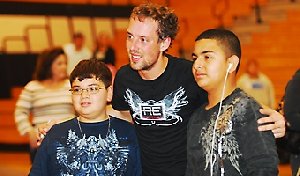
Joe West, a BMX biker from Springfield, Mo., poses with two boys after the Real Encounter extreme sports outreach at Pasadena Memorial High School Nov. 4.

“The backbone of the community is the public schools,” said Caillier. “If we are going to be a church and impact our community, what better place to do it than where the community gathers and organizes its life. That’s why we chose to do this in the schools.”

Gail Ward, a peer facilitator at South Houston Intermediate where the group performed, was thankful that the athletes came to her school because of the message and inspiration they brought.

“It helps them to know that there are dreams out there no matter what their home life is,” she said.

Team members adapt their message and extreme sports performance to the needs of each school. But the group’s main focus is getting students to come to what the team calls a “harvest night.”

“We know that when people are coming to what we call the harvest night, it is a show,” Bennett said. “More than anything we want to show people hope, show them why God created them, why they are here and that God wants a relationship with them. That is why we call it a harvest night. We want to see a harvest of souls.”

Joe West, a BMX biker from Springfield, Mo., flies more than 10 feet through the air during the Real Encounter extreme sports evangelism event.

At the beginning of the night, the team is direct about their intentions of sharing how Jesus made an impact on their lives. They want to maintain integrity, Bennett noted, not wanting any person to feel tricked into coming but to feel loved and invited to stay.

“When we get to the gospel part, we take it very seriously,” Bennett said. “We get down to business and allow the Holy Spirit to do what he does best and reveal where they stand with God. I just share my story, lay out the Roman Road and offer an invitation.”

Those who wanted to accept God’s gift of salvation at the harvest night were asked to come forward to meet with an encourager from South Main Baptist Church. The encouragers sat down at the small cafeteria lunch tables with groups of two or three people to talk through their decision, explain ways to grow in Christ and stress the need to become part of a church.

“To me, follow-up is the key,” Caillier said. “Everyone likes to go fishing and catch fish, but no one likes to clean the fish. We have focused with our volunteers and our youth ministry and others on cleaning the fish, on getting them in the boat and then working on that developmental state. This event is the tip of the iceberg and afterward, follow-up will be a big deal.”

Caillier and other church members gathered names of new believers so they can contact and encourage them in the days to come. Leighton Flow-ers, director of youth evangelism with the Baptist General Conven-tion of Texas, sees the results as fruit from the Texas Hope 2010 efforts to share the gospel with every Texan by Easter 2010.

“This church is reaping the benefit of the harvest of this City Reach event and of Hope 2010 as we strive to reach every person in Texas with the gospel of Christ,” Flowers said. “The biggest part of the work will take place in the next weeks and months as the churches contact, baptize and disciple all of these who have made decisions. And that is the exciting part.”

{ustream}s=nw2bo899{/ustream}
Watch the live stream of the annual meeting in Houston.

Because the event went so well and the athletes helped form bonds with school faculty, the church now has a stronger presence and opportunity to serve in the schools again.

“The reputation of our church has now increased with the school district because when we went in, they have been so pleased,” Caillier said. “They have already asked us to bring Real Encounter back next year.”

The youth outreach is one part of City Reach Houston, a series of evangelistic and outreach efforts by Texas Baptists in the days surrounding the BGCT annual meeting in Houston.

“We don’t just come here for a business meeting, but we come here to impact the city,” Flowers said. “And we come beside the local church to see how we can help them reach their city for Christ. That is what City Reach is all about.”

Through City Reach events, at least 700 people have started relations with Christ, and other gospel seeds have been planted through block parties, back-to-school events, revivals and prison ministry.


Churches seek unity during the City Reach Houston prayer rally

HOUSTON—Neither denominational lines, language nor ethnicity stood in the way as more than 300 Christians representing 120 congregations throughout the Houston area joined together at Discovery Green Park downtown to pray for unity, forgiveness and compassion at the City Reach Houston Prayer Rally for Transformation.

Ginger Howell, member of Fairfield Baptist Church in Cypress, opens holds out her hands as she worships beside other Christians who came to the City Reach Houston prayer rally.

Rickie Bradshaw, church consultant for Union Baptist Association and an organizer of the event, said the rally was about coming together to ask forgiveness for disunity among Christians and to seek God’s blessing on the city.

“We want Houston not only to be known as the space city or the city of energy or the city with the finest medical center in the world, but we want it to be known as a place where the Lord is,” Bradshaw said. “That is what we really and ultimately want. We want healing and deliverance to take place in our city.”

To do this, Bradshaw said, the church must come together as one, seek the Lord in prayer and then turn from its wicked ways so the presence of God will be attracted to the city.

Participants of the City Reach Houston prayer rally join hands to pray together for God to move in a might way during the rally.

“It’s not that the Methodists or Baptists or Catholics haven’t been doing it,” said Bradshaw. “It’s the fact that we haven’t been doing it together. So today, we are saying to the Father above that all of his children are here together representing the body of Christ of Houston. That is why we are here.”

John Ogletree, pastor of First Metropolitan Baptist Church, said a unified repentance from the body of Christ will bring about a lasting, eternal change in the city.

“Unless we repent, the church can’t be effective,” Ogletree said. “Unless we repent of some things and get some things straight, we can’t make a difference in people’s lives.”

Organizers of the event chose Discovery Green for the rally location because they felt it placed God in the public square and allowed for prayerwalks to the compassion, business and criminal justice districts in downtown, Bradshaw said.

“As you can see here in this park, there are people from all over the city skateboarding or playing with boats in the lake or going through the waterfalls or eating in the restaurants or picnicking on the ground,” Bradshaw said. “We said let’s go into the marketplace and worship the Lord and invite the city to be blessed.”

Rickie Bradshaw (left), pastor of First Southwest Baptist Church in Houston and church consultant for Union Baptist Association, explains the purpose of the Prayer Rally for Transformation while Charles Torres, pastor of Eclesia Misionero Internacional, translates the message into Spanish.

Rally participants formed three large groups to prayerwalk three districts in the downtown area, asking God to bless and lead the ministries, businesses and leaders in those areas.

When the groups returned to the park, they split into clusters to gather around 45 posts representing the communities in Houston. Each cluster had a list of churches and pastors in that community, enabling participants to pray for all 4,000 Houston churches.

Leaders of various compassion ministries and churches led participants in prayer using Ezekiel 37:1-10 as their guide, asking God to revive the dry bones of the church and to raise up an army of compassionate ministries to bless the city and eradicate poverty and homelessness there, Bradshaw said.

The event drew a crowd of young people ready to see their city changed by the love of God, said Keyla Santos, a member of Bethseda House of Grace in Sugarland. They participated “because of God’s love and God’s mercy,” Santos said.

“We know how God has worked himself within the community and in our church, and we want everyone in Houston to be able receive the blessings we have received through this faith and know how good he is and how good his mercy is.”

The prayer rally was part of City Reach Houston, a series of outreach events taking place in in the days leading up to the Baptist General Convention of Texas annual meeting Nov. 16-17 in downtown Houston.

City Reach Houston is based on Texas Hope 2010, an effort by Texas Baptists to pray for the lost, care for the hurting and hungry and to share the Hope of Christ so that every Texan has a chance to respond to the gospel by Easter 2010.  

“I hope that this will be a spiritual appetizer to whet the appetite spiritually for what the churches from all across Texas will come and do,” Ogletree said.  

“I hope that God’s presence will be felt here, that God’s business will be taken care of, and most of all, that we will be more mission-minded and that people will come to Jesus Christ.”


Dallas-area senior adults encourage troops

DALLAS—Buckner Hearts in Action, a group of military supporters from Buckner Retirement Village, spent a recent Sunday morning giving out candy, camouflage skullcaps and hugs to military personnel flying out of Dallas-Forth Worth International Airport.

Residents of Buckner Retirement Village provide a warm send-off to troops being deployed.

“They do this on the first Monday of every month,” said Alicia Russell, executive director of the Buckner Retirement Village in Dallas. “But this time, they are working together with the Mesquite Christian Center and the Seagoville Senior Center. All three of these groups crocheted skullcaps for our soldiers, to give them out today.”

Rhenda White-Brunner, who directs USO in Dallas/Fort Worth, said the support from the community means a lot to the troops.

“This is an effort for them. They come here to encourage the soldiers, but they may be facing their own physical and health challenges. Many of them are veterans, and so they are just letting them know that they are cared about, valued, respected and love. It’s from their heart that they are here,” she said.

Lorine Davis, a member of Buckner Hearts in Action, gave hugs to members of the military. She is a resident of the Buckner Retirement Village.

One of the veterans participating in Buckner Hearts in Action is 87-year-old Pete Davis.

“I just enjoy getting out here to shake their hands,” Davis said. “They need all the support they can get.”

In late October, Davis and Curtis Campbell, another resident at Buckner Retirement Village, participated in the Veteran’s Honor Flight in Dallas. The flight recognizes veterans for their sacrifice by flying them to see their war memorial at no cost.

While in the Washington, D.C., area, Davis and Campbell also were taken to Walter Reed Army Hospital to visit military personnel who had been injured in battle.

“We visited ones who had suffered anything from missing limbs and eyes and were able to encourage them,” Davis said. “We want all these people to know that we appreciate their sacrifice.”


Students challenged to look into the eyes of poverty

WACO—Enter “Darfur in Sudan” in an Internet search engine, and you’re almost certain to see photos of starving children or the skeletons of genocide victims, photographer/filmmaker David Johnson told about 150 people at Baylor University’s Poverty Summit.

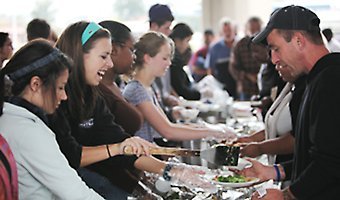
Sonja Davidson holds Alex Chillous during a meal served at Church Under the Bridge, beneath Interstate 35. Participants in Baylor University’s Poverty Summit served the meal. (PHOTOS/Baylor Photography/Robert Rogers)

“You look at it and say: ‘It’s too late. It’s done. What can I do?’” Johnson said. But one reason for the Nov. 6-8 summit was to refocus the lens, he said. Johnson has traveled to Africa to make documentaries about people who find hope in the midst of poverty.

“I want to say: ‘Here are the people. Look them in the eyes.’ And I want to talk about how we can make sustainable change,” he said.

Students, faculty and the Baylor Interdisciplinary Poverty Initiative joined together to present the summit.

Johnson showed his photographs, including an image of a smiling young woman in a market. The mother of three young children is an AIDS victim who had been abused by her husband. But with the help of a $10 micro-loan, “she now has the largest stand on the street,” Johnson said. “She’s a CEO, isn’t she? She’s got pride.”

Another image was of grinning youngsters in Darfur—two groups, each pulling the end of a long rope.

“I saw them and said: ‘This is awesome. This is what I played in gym class in seventh grade. It’s tug of war,’” Johnson said.

“They said, ‘No, sir, this is tug of peace.’ And these are kids are in the midst of genocide,” he said.

“You can take lives, but you can’t kill hope until they give up.”

Johnson told his listeners not to expect fast, easy solutions.

“The solution is not just in you, but in the people you want to help,” he said. “Instead of simply donating to single mothers, mentor the next generation of males.”

Participants at the summit could choose from more than a dozen breakout sessions on topics ranging from literacy in developing countries to international missions to economics.

Participants in Baylor University’s Poverty Summit served breakfast at Church Under the Bridge. Many who attend the church, which meets beneath Interstate 35, are homeless. (PHOTOS/Baylor Photography/Robert Rogers)

Many also served Sunday breakfast to homeless people at the Church Under the Bridge in Waco.

Some who attended visited the World Hunger Relief farm in Elm Mott, operated by a Christian relief organization. At the farm, interns are trained to work with communities to develop farming techniques and educate people on how to conserve and share resources with those in need. Food raised at the farm is sold locally and given to food banks, said Matt Hess, the farm’s education director.

A session on renewable resources inspired Nathan Griswell, a Baylor University graduate student in environmental science. The son of missionaries, he grew up in Cuernavaca, Mexico, and is doing his thesis on a gravel filtration system for wastewater. His goal is that people in Latin America will be able to re-use the water in showers and toilets.

Griswell has been testing the technology in the lab, but “my project here has been mostly on statistics,” he said. “The session was helpful for practical, real-world application if I go to Latin America to teach people and build this and market it.”

In another session, students gathered in small groups to discuss how to fight poverty through such ways as public transportation or after-school programs.

They brainstormed about how to gain community and governmental support as well as how to do personal research—for example, by keeping a journal of their experiences on a city bus so they will understand pros and cons of public transportation.

“This isn’t just about picking up trash, but about what kind of trash is out there and whether there’s a better way of dealing with it,” said Tom Pope, a Baylor University graduate student in political science.

Johnson urged his listeners—whatever their approach to eliminating poverty—to take a lesson from Jesus.

Whether he met an immoral woman at a well or spotted a scorned tax collector in a tree, “Jesus hung out with them,” Johnson said. “He sat at the table with them and saw something others didn’t see.”

In the same way, “you’re going to have to spend some time with these people and love on them,” Johnson said. “Sit down with them and hear their stories.”


On the Move

Austin Adams to First Church in Texarkana as middle school minister.

Halie Baker to Highland Church in Denton as interim children’s minister.

Dan Branthoover has re-signed as youth minister at Rock Hill Church in Aubrey.

Megan Card to First Church in Texarkana as girls’ minister.

Gary W. Cook to Gaston Oaks Church in Dallas as pastor.

Doug Evick to First Church in New Braunfels as minister to children and young families.

Bobby Greenwood to First Church in Texarkana as student minister, where he was middle school minister.

David Hardage to First Church in Bryan as interim pastor.

Timm Horton to Central Church in Italy as interim youth pastor.

Kayla Kiser has resigned as children’s minister at Highland Church in Denton.

Matt Landers to First Church in Texarkana as student worship leader.

Ben Morris to Living Proof Church in Grandview as minister of worship.

Matt Reynolds to First Church in Texarkana as pastor of spiritual development, where he was minister of students.

Joel Salazar to First Church in Grand Prairie as minister of music from Central Church in Livingston.

Noel Vargas to Millican Church in Millican as pastor, where he was interim.


Around the State

Howard Payne University will host the 26th annual Community Thanksgiving Feast from 11 a.m to 1 p.m. Nov. 25. Last year, more than 100 volunteers served meals on the campus or delivered meals to people who could not come to the campus. In 2008, more than 600 people came to the campus to have their Thanksgiving meal, and 1,267 meals were delivered. The meal is paid for through donations. The university’s food service staff prepares the meal.

Adamsville Church in Lampasas broke its new sanctuary in right as Pastor Kelly Wolverton baptized several people. The former sanctuary is being remodeled as a chapel and youth department education space.

Baylor University’s board of regents has approved $10 million to support the initial renovation phase of the Baylor Research and Innovation Collaborative, the first project of the newly created Central Texas Research and Technology Park. The collaborative will be housed in the former General Tire facility donated to the university by Waco business leader Clifton Robinson to make the park a reality. In addition to Baylor’s commitment, the Texas Legislature appropriated $10 million to Texas State Technical College for “capital expenditures and renovations for collaborative research projects” in partnership with Baylor. The facility will provide graduate research space for Baylor’s School of Engineering and Computer Science and for select Baylor interdisciplinary research centers and institutes. In addition, it will provide space for anchor industry partners, advanced technology training and workforce development.

For the fifth consecutive year, Bill Pinson, executive director emeritus of the executive board of the Baptist General Convention of Texas, delivered a fall lecture series at Dallas Baptist University on the particular distinctives and history that have helped shaped Baptist faith.

Hardin-Simmons University has added several new faculty members including Larry Baker, professor of pastoral ministry and director of the doctor of ministry program; Cyndee Castel, instructor of nursing; Andrea Cheek, instructor of nursing; Rob Fink, assistant professor of education; Jason King, assistant professor of English and director of basic writing; and Thomas Weir, associate professor of economics.

Anniversary

Bill Shockley, 20th, as pastor of Oak Ridge Church in San Antonio, Dec. 3.

Death

Carolyn Chastain, 76, Nov. 1 in Longview. She was a high school educator whose career spanned 22 years. She also served alongside her husband at his pastorates in Louisiana, First Church in Krum, First Church in Edinburg and Morgan Avenue Church in Corpus Christi. She also supported his ministry as director of missions for Gulf Coast Association, where he served 17 years. She served the various churches in many ways, including Sunday school teacher and superintendent, Vacation Bible School director and Woman’s Missionary Union director. She is survived by her husband of 56 years, Jack; son, Jay; daughter, Kay Thiele; brother, Bill Ferguson; and five grandchildren.

Event

Columbus Avenue Church in Waco will present the “Waco Christmas Celebration” for the 10th year Dec. 12 and 13 at 2 p.m. and 5 p.m. each day. The cast will feature more than 200 people, including a 100-voice choir. Both secular and sacred music will be presented, with elaborate costuming, choreography, special lighting effects and drama. Tickets are $5 for general admission and $10 for premium seating. For more information, call (254) 752-1655, ext. 212.

Ordained

Lance Finley as a deacon at Live Oak Church in Gatesville.


Texas textbook battles have national impact

DALLAS—Battles in the Texas State Board of Education over social studies textbooks really amount to a conflict over what kind of nation the United States was founded to be—and what it may become in the future, a nationally recognized authority on religious liberty issues told an interfaith gathering in Dallas.

“It’s important to all of us because what happens in Texas schools doesn’t stay in Texas schools. What Texas says goes in those textbooks, the rest of us have to read,” said Charles Haynes, senior scholar at the First Amendment Center in Washington, D.C.

Texas is the second-biggest buyer of textbooks in the United States, behind California, and many publishers craft their books with the Texas market in mind.

“What we teach in the public schools matters,” Haynes told a group at Northaven United Methodist Church in Dallas during the “Faith & Freedom Speaker Series,” sponsored by the Texas Freedom Network Education Fund.

Two outspoken critics of church/state separation—evangelical author Peter Marshall and David Barton, founding president of the WallBuilders organization—are among the panel of experts appointed to guide the Texas textbook standard writing process.

When Marshall and Barton speak of “Christian America” and stress its importance in teaching history and social studies, the term means more than a nation where a majority of the people claim Christian faith, Haynes noted.

Instead, they believe the United States has “fallen away” from its founders’ ideals, and they are driven by the desire to “restore America by recovering its biblical roots.”

Their calls for teaching more about the importance of the Puritans’ influence on colonial society and for stressing to students how the First Great Awakening set the stage for the American Revolution are appropriate, he noted. Christianity’s role in American history should be taught, he said, “But we need to get it right. … I’m concerned about what’s left out of the Christian America vision. It’s selective history.”

Puritan John Winthrop’s vision of America as a “city on a hill”—a shining example of Christian virtue—needs to be balanced by Roger Williams’ commitment to full liberty of conscience for all people, including those with whom he deeply disagree theologically, Haynes noted.

At the time of the American Revolution, some of the founders wanted not just a Christian America but an exclusively Protestant America, he observed.

But others— such as Benjamin Franklin, Thomas Jefferson and Thomas Paine—hardly fit the mold of orthodox Christianity.

“We were diverse from the very beginning,” Haynes noted. “The framers were divided.”

And history curriculum should reflect that balanced picture, he stressed.

“What I don’t want is selective history that gives a skewed understanding,” he said.

Neither “the restorers” who want to return to a Golden Age of Protestant America nor “the removers” who want to turn public schools into “religion-free zones” should be allowed to prevail, Haynes insisted.

“The land of the free has in many ways become the land of the easily offended. The answer to speech we don’t like is more speech, not less speech,” Haynes said.

Public schools should neither “inculcate nor inhibit religion,” he emphasized. Instead, they should be places where the religious liberty rights of all students are protected, and “civil habits of the heart” are instilled, Haynes said.