Temple church’s historic sanctuary lost to early-morning fire

TEMPLE, Texas (ABP) — The 70-year-old sanctuary of the First Baptist Church of Temple appears to be a total loss after a fire consumed it in the early-morning hours of Jan. 19.

An early morning fire gutted Temple’s historic First Baptist Church. (KWTX/Waco Photo)

Reports on the church’s website and in several local news outlets said the fire began around 5 a.m. local time in the sanctuary building. The building’s roof collapsed. It was unclear, as of mid-morning, whether other buildings on the church’s campus had also been destroyed.

According to the history section of the church’s website, the sanctuary that burned Jan. 19 was itself the result of a fire. Completed in 1939, it replaced an 1895 building that burned in 1938.

The church’s day-care center was closed Jan. 19 as firefighters continued attempts to put out remaining hot spots and assess the causes of the blaze. The church has scheduled a special prayer meeting in the congregation’s youth center for 7 p.m. on Jan. 19.


Faith ‘keeps me calm,’ Obama tells church

WASHINGTON (RNS)—President Obama addressed how his faith guides him and the importance of hard work as he marked the birthday of the late Martin Luther King Jr. at a Washington church.

“Folks ask me sometimes why I look so calm,” he said at Vermont Avenue Baptist Church, a historic congregation King had visited.

“I have a confession to make here. … There are times when it feels like all these efforts are for naught, and change is so painfully slow in coming, and I have to confront my own doubts. But let me tell you during those times, it’s faith that keeps me calm. It’s faith that gives me peace.”

The president spoke for almost half an hour in the usual spot for the sermon on the church’s program, addressing about 500 people gathered in the Family Life Center of the congregation founded by freed slaves in 1866. At times he spoke like a preacher, opening his speech with “Good morning. Praise be to God,” and concluding with “through God all things are possible.”

He spoke of holding the kind of “faith that breaks the silence of an earthquake’s wake with the sound of prayer and hymns sung by the Haitian community,” as the congregation applauded in agreement.

King visited the church in 1956, Obama noted, “as a 27-year-old preacher to speak on what he called the challenge of a new age.”

At the time of King’s visit the Supreme Court had ruled that the desegregated bus system in Montgomery, Ala., he opposed was unconstitutional. The high court had also ruled in Brown v. Board of Education against school segregation but schools and states had “ignored it with impunity,” Obama recalled.

“Here we are more than half a century later, once again facing the challenges of a new age,” he said. Even with “fits and starts,” he said there has been progress over bigotry and prejudice.

“It’s that progress that made it possible for me to be here today, for the good people of this country to elect an African-American the 44th president of the United States of America.”

The civil rights movement in particular and the country in general have been successful when all Americans are responsible and work hard, he said.

“In this country, there’s no substitute for hard work,” Obama said. “No substitute for a job well done, no substitute for being responsible stewards of God’s blessings.”

Obama, who attended with first lady Michelle Obama and his daughters Malia and Sasha, sat up front with the pastor, singing along when the congregation broke out in “We Shall Overcome” and joking with the pastor about how he might permit his new nephew to meet the pastor’s new granddaughter in about 30 years.

It was obvious that this was not a typical service at Vermont Avenue, with Pastor Cornelius Wheeler offering warnings to worshippers before it began about not leaving the area of their seats for exuberant worship or photos.    

In the last year, Obama has visited three other Washington churches—the Washington National Cathedral for his inaugural prayer service; St. John’s Episcopal Church across Lafayette Square from the White House on the day of his inauguration and on Easter; and Nineteenth Street Baptist Church the Sunday before his inauguration. Last July he said he may attend “a number of different churches” and enjoys “powerful” sermons from the chaplain who leads services at the chapel at Camp David, the presidential retreat.


Baptist World Alliance rescue team arrives in Haiti

FALLS CHURCH, Va. — A Baptist World Aid Rescue24 team has arrived in Port-au-Prince, Haiti, and has begun work in a local clinic, according to a news release from the Baptist World Alliance.

The BWAid team, consisting of members from Hungary and North Carolina, has come up against horrific scenes.

"The situation is terrible, I have never seen anything like this," said Bela Szilagyi, head of Hungarian Baptist Aid, who has been working in major disaster zones for more than 10 years. Szilagyi is one of the leaders of the BWAid Rescue24 team in Port-au-Prince.
 
They came across "immense chaos, confusion, and the terrible smell of dead bodies."
 
Members of the team flew to a location close to the Haiti-Dominican Republic border, and were escorted into Port-au-Prince by "blue helmets," United Nations peacekeeping soldiers. They will remain in Haiti for one week providing emergency medical services.


Christian Athletes use spotlight to share their faith

When Colt McCoy of the University of Texas expressed his faith in an interview following the Longhorns’ BCS championship game loss to Alabama Jan. 7, the quarterback placed himself in a growing cadre of Christian athletes becoming increasingly vocal about their commitment to Jesus Christ.

“I always give God the glory,” said McCoy, who was knocked out of the game—the last of his college career—by a shoulder injury, probably contributing to his team’s defeat. “I never question why things happen the way they do. God is in control of my life. And I know that if nothing else, I’m standing on the Rock.”

Herb Lusk kneels in prayer after scoring a touchdown for the Philadelphia Eagles in 1977. (From ESPN video)

Highly publicized expressions of faith have become standard fare in college and professional sports at least since 1977, the year running back Herb Lusk dropped to a knee after scoring a touchdown for his Philadelphia Eagles. The end-zone prayer often is cited as the first to be televised across the nation.

Many Christians find those high-profile testimonies encouraging, prominently featuring evangelical sports figures in worship services and evangelistic conferences. The trend prompted writer Tom Krattenmaker to call big-time sports “one of the most outwardly religious sectors of American culture.”

In part, the prominence given Christian athletes can be attributed to American Christianity’s addiction to celebrity culture. But some observers believe sports figures offer a more distinctive appeal than mere fame.

Christian athletes appear more demonstrative and outspoken in testifying about their faith than celebrities in entertainment or business in large part because they understand what it means to be on a team and share credit, said Grant Teaff, executive director of the American Football Coaches Association.


“The simple answer is that as committed Christians, they know from where their strength comes and recognize the source of their talents and gifts,” he said. “As team players, they know they didn’t get this far alone, and they want to give credit.”

That same attitude extends to athletes who compete in individual events, he added.

“They understand they have been trained and developed, and they have been blessed with somebody who helped shape that raw talent,” Teaff said. “Unless the person is unusually self-centered, athletes know they don’t win alone. And Christians, especially, should have that tendency not to be self-centered but to want to share credit.”

That not only means thanking coaches, trainers and teammates, but also giving glory to God, he explained. But most Christian athletes understand the distinction between praising God for allowing them to perform to the best of their ability and believing God plays favorites in athletic competitions and determines their outcome, Teaff insisted. “God loves the players and coaches on the other side. God loves the officials. He loves—period,” he said.

Some sporting fans find such public expressions of faith discomfiting. In his book, Onward Christian Athletes, published last year, Krattenmaker warned that vocal expressions of faith in stadiums risks alienating an increasingly pluralistic society.

“There are many secular fans who really feel annoyed by that kind of religious expression,” Krattenmaker, a Portland, Ore., specialist on religion in public life, told the Associated Press. “Even people who are religious themselves often resent this situation where athletes talk about God in this big moment of victory, sometimes seeming to imply God gave them the victory.”

{youtube}qygFhxCkFkg&hl=en&fs=1&rel=0{/youtube}
Colt McCoy's "I Am Second" video.

But others, like University of Florida quarterback Tim Tebow, who famously writes Bible verses in his game-day eye black, say it’s simply a part of who they are. And focusing on one’s faith keeps athletes’ priorities in order, Tebow says.

Tebow, who grew up the son of missionaries in the Philippines and has seen desperate poverty at close quarters, told the Washington Post he couldn’t imagine getting stressed out over something as inconsequential as a BCS national championship game.

“Pressure is not having to win a football game; pressure is having to find your next meal,” he told the Post last year before the Gators’ win over the University of Oklahoma.

Nevertheless, outspoken Christian athletes like Tebow—who Sports Illustrated writer Austin Murphy called “the most effective ambassador-warrior for his faith I’ve come across in 25 years” at the magazine—continue to feature prominently in evangelistic outreach.

For more than a year, billboards across the Dallas-Fort Worth area and spots on local broadcast media have presented sports and other celebrities—and a few regular folks with a story to tell—proclaiming the message, “I am Second,” and directing people to the iamsecond.com website. Recently, a commercial featuring Texas’ McCoy launched nationally prior to the BCS National Championship.

Tony Dungy, a former NFL coach who led the Indianapolis Colts to a Super Bowl victory in 2007, has testified publicly about his evangelical Christian faith. (RNS FILE PHOTO/Brett Duke/The Star-Ledger )

Athletic figures such as Jason Witten of the Dallas Cowboys, Josh Hamilton of the Texas Rangers, and former NFL coaches Joe Gibbs and Tony Dungy figure prominently in the campaign, which also features Jason Castro of American Idol, Michelle Aguilar of The Biggest Loser and other celebrities.

A Plano-based church-planting ministry, e3 Partners, developed the media campaign, and Norm Miller, chief executive of Dallas-based Interstate Batteries, provided key support.

On its best day soon after the campaign was launched in December 2008, about 15,000 people visited the ministry’s website—many to view the testimony of Brian Welch, formerly of the heavy metal rock band Korn, said Nathan Sheets, vice president of e3 Partners and team leader for the “I am Second” campaign.

But when the campaign featured quarterbacks McCoy and Sam Bradford of the Oklahoma Sooners prior to the Red River Rivalry match-up at the Cotton Bowl in Dallas, their videos attracted 33,000 visitors in one day to the website and prompted “a tremendous amount of forwarding,” said Sheets, a member of Prestonwood Baptist Church in Plano.

Athletes draw attention, and they often are more open about sharing their faith than some other public figures, he noted.

“Athletes in general are not reliant on continuing relational development for their success,” Sheets said. Actors or recording stars might put future contracts in jeopardy by being outspoken about their faith, but athletes tend to be judged almost exclusively by performance in competition, he explained.

Of course, any public figure invites scrutiny. And sometimes athletes who have cultivated a straight-and-narrow image may find themselves losing lucrative endorsements if personal frailties come to light, as golfer Tiger Woods discovered when his marital infidelity became known.

Tim Tebow, who famously writes Bible verses in his game-day eye black, says religious expression for athletes is simply a part of who they are. And focusing on one’s faith keeps athletes’ priorities in order. (PHOTO/Marc Seroto/Getty Images)

But how well-known Christian athletes handle themselves when they stumble can be instructive. Last August, a website posted photos from an incident in Arizona nearly eight months earlier where Hamilton—a recovering substance abuser—was seen in a bar, visibly drunk and in compromising poses with women other than his wife.

But once the photos came to light, Hamilton apologized publicly, telling reporters, “It just reinforces to me that if I’m out there getting ready for a season and taking my focus off the most important thing in my recovery, which is my relationship with Christ, it’s amazing how these things creep back in.”

He also reported that the day after the incident, he contacted his wife, the Texas Rangers organization and Major League Baseball to confess his lapse in sobriety. After Hamilton’s public confession, his wife, Katie, subsequently posted her own statement of support on the Dallas Morning News sports blog.

The “I am Second” campaign received “very positive response” from Christians who rallied around Hamilton, Sheets noted.

“It endeared him even more to Christians who could look at him and say, ‘He struggles just like I do, and he has to depend on the grace of God,’” he said.

Athletes at every level—and to some degree, any celebrity who makes his or her faith public—find themselves subject to close scrutiny, Teaff observed. “There’s a segment of society that has negative feelings about people who achieve success. They love to see them tumble and to fall short of what they proclaim themselves to be,” he said.

Grant Teaff (San Angelo Standard-Times Photo)

Teaff, who coached football at Baylor University from 1972 to 1992 and led the Bears to a Southwest Conference Championship, noted he always spent three days with freshmen student athletes at the beginning of each year to provide them a solid foundation to help them deal with the temptations they would face.

“My philosophy for student athletes was to develop the total person—physically, mentally and spiritually—and help them grow in all three areas,” he explained. “I explained it in terms of a three-legged stool. If any one of the legs was weak, it would not stand.”

As the coach at a Christian university with a strong Baptist heritage, Teaff noted he required participation in team devotionals prior to each game. He also used every opportunity to coach student athletes not only in their physical development, but also in terms of how they learned to handle personal relationships, classroom assignments and spiritual development.

“We talked about the importance of reading the Bible, about their prayer life and about attending church. The first thing each year, we would attend church together as a team one Sunday at the beginning of each season,” he recalled.



Baptist pastor among dead in Haiti

ALLENTOWN, Pa. (ABP) — Baptists in Haiti mourned the death of a beloved pastor killed in the Jan. 12 earthquake.

Gedeon Eugene, a vice president of the Baptist Convention of Haiti, told the Baptist World Alliance that Bienne L'Amerique, 46, pastor of Shiloh Baptiste Church in Port-au-Prince, was one of thousands of victims buried in rubble of collapsed buildings in the capital city.

L'Amerique, described as a beloved pastor and leader among Haiti's Baptists, was a host to mission groups from the United States and was due to visit the U.S. next month.

''Everybody in our office is crying,'' Jack Groblewski, senior pastor of New Covenant Christian Community in Bethlehem, Pa., told the Morning Call newspaper in Allentown.

With most of Haiti's power grid destroyed, information from Haiti was slow in coming during the first three days after the disaster. Eugene told BWA officials there had been no word on the fate of about 15,000 members of six Baptist congregations located in Port-au-Prince.

Groblewski said about half of L'Amerique's church building collapsed, and it was constructed better than some others. The American pastor said streets in the neighborhood where Shiloh Baptiste was located are said to be lined with corpses, which are covered with sheets or blankets because there are no body bags.

Baptists in America responded quickly to the humanitarian crisis, but aid was slow in arriving due to difficulty in getting into the country. A medical team from North Carolina Baptist Men left for Haiti Jan. 14, but was still trying to get across the border a day later.

Texas Baptist Men were waiting for clearance Jan. 15 to send 5,000 water-purification systems that cost $30 each. The group asked for donations to help cover costs of the $150,000 commitment.

Buckner International was preparing four containers of shoes and emergency food items for Haiti, which will cost $5,000 per container to ship. Buckner asked the public to supply new items such as new socks, tents, toiletries and new and unopened first-aid kits.

Relief agencies said the best way to help in the short term is to give money. Aid cannot be distributed until staging areas are established, and most volunteer work will not be needed until after the initial search-and-rescue phase. Groups including Baptist World Aid, the Cooperative Baptist Fellowship and American Baptist Churches USA are all raising money for earthquake relief.

Several churches are also making large commitments to disaster relief. Seventh & James Baptist Church in Waco, Texas, set aside $10,000 for earthquake aid. Mitch Randall, pastor of NorthHaven Church in Norman, Okla., asked his church members to give money to Baptist World Aid. Randall visited Haiti last year to distribute mosquito nets with His Nets, a ministry that fights malaria in developing countries started by T Thomas, coordinator of the Cooperating Baptist Fellowship of Oklahoma.

Baptist leaders also sought prayer for Haiti. www.d365.org, a devotional website sponsored by the Cooperative Baptist Fellowship, The Presbyterian Church U.S.A., and the Episcopal Church, is editing content to guide readers in devotion and prayer about Haiti.

Colleen Burroughs of Passport, Inc., the organization that produces d365.org, said the site was created in response to 9/11, when it became apparent that Advent literature written months earlier for students was not relevant at the time. The site offers daily devotions, along with Advent and Lenten series, but it is also designed to respond immediately to events like the tsunami in Asia or Hurricane Katrina.

"The immediate response helps make it a relevant ministry to students," Burroughs said. Last year d365.org had 450,000 visitors from all around the world, and the site is currently being translated for Christians in Mongolia at their request.


–Bob Allen is senior writer for Associated Baptist Press.


YMCA seeks to reclaim the ‘C’ in its name

SHERWOOD, Ore. (RNS)—The wooden box, not quite big enough to hold a pair of shoes, sits on the reception desk, just inside the Sherwood YMCA. Once a day, Roger Button empties the box, finds a quiet place to sit and prays over the slips of paper he finds inside.

Requests vary. Someone’s son struggles with drug addiction. A friend needs a job. Somebody wants more blue, figure-8 rubber exercise bands.

“Sometimes people mistake the prayer box for a suggestion box,” Button said with a shrug.

Roger Button, chaplain at the Sherwood YMCA in Sherwood, Ore., helps makes sure the Christian message of the Y is delivered. (RNS PHOTO/Randy L. Rasmussen/The Oregonian)

As the first ordained chaplain to serve a single branch of the Portland-based YMCA of Columbia-Willamette, Button gradually is trying to replant the Christian values at the heart of the YMCA.

The regional Y is reminding people who think of it as a good place to work out or find dependable child care that the “C” in Young Men’s Christian Association still means broad Christian values inspired by Jesus’ life.

“My role here is to minister to the staff and members who call the Sherwood YMCA their home,” Button said. “I feel blessed to be able to be here and be a listening ear.”

The United States is home to YMCAs. They operate autonomously, interpreting their common charter according to the needs of their communities, said Mamie Moore, a spokeswoman for the YMCA’s national office in Chicago.

No one keeps track of how many Ys are reclaiming their Christian heritage, she said. But an October conference in Colorado for YMCA chaplains drew about 90 people from 40 Ys.

“We’re not a church. We’re not a denomination,” said Bob Hall, president and chief executive officer of the regional YMCA. “We’re not in the business to replace churches, but many people who step inside a YMCA may never set foot in a church.

“Our mission, our purpose, our reason why is to teach, train, equip and see people taking responsibility for their own physical, mental and spiritual well-being. We believe in the whole person.”

Hall likes to say he’s trying to “illuminate the C” in the Young Men’s Christian Association. He has reactivated the chaplaincy—there hadn’t been one for decades—hiring a minister, Bob Reichen, as vice president for mission advancement. Reichen ministers to staff, volunteers and members across a five-county region.

“We were founded on Christian ideals,” Hall said—love, respect, honesty, responsibility and service. “They’re in our DNA,” he said.

The YMCA was founded in Britain in 1844, at a time when the Industrial Revolution drew young men to London for work. George Williams and a group of businessmen wanted to offer a Christian alternative to the sordid street life. The first YMCA offered beds, Bible studies and wholesome activities. By 1854, there were 397 YMCAs across seven countries, claiming 30,369 members.

Since the Portland YMCA opened in 1868, attention to its core values has been more profound at some times than others. But the time is right to reclaim them, Hall said.

Last year, the local YMCA served 86,000 individuals with early childhood centers, before- and after-school programs, youth sports and teen development programs, three health and fitness centers, and a camp founded in 1926.

“These are all tools for building character,” Hall said of the facilities and programs. Someone can build muscles or strength at any fitness club. But at the Y, “we offer an opportunity to exercise, challenge your mind and encourage your spiritual life.”


Ringing phone signals church’s call to serve

VICTORIA—Templo Jerusalem Baptist Church was looking for a place where it could invest itself locally in ministry. That place literally called the church to serve.

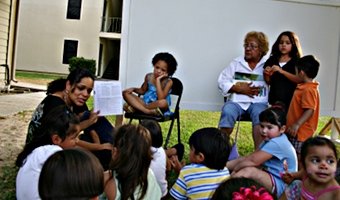
Children from the Fox Run apartment complex enjoy activities led by volunteer from Templo Jerusalem Baptist Church in Victoria.

The manager of a nearby apartment complex phoned the church and asked its members to consider starting a ministry on the premises. The complex had experienced a shooting and fighting between tenants and saw routine drug activity. The manager was looking for a way to improve the environment for residents.

“When she contacted us, we felt like it was a godsend,” said Pastor Ricky Garcia, noting the call came as the congregation was evaluating local ministry opportunities.

Since the phone call last fall, the congregation has led activities for children in the apartment complex on the last Wednesday of each month. Each effort has had a different theme, but Garcia said the message has been the same—Christ is Lord and Savior.

Garcia said the church is following the model members see in the Bible. Christ and his followers ministered to people placed before them.

“By focusing on what was in front of them, they created a wave that reached the multitude,” he said.

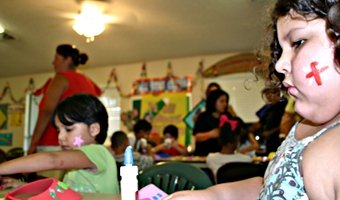
Craft activities engage the children's creative skills.

On the church’s first visit to the apartment complex, residents were skeptical of what the congregation was attempting to do. They avoided eye contact with church members and remained distant from them. As time has passed, tenants have become more comfortable with the church group.

Following the most recent church-sponsored event in the complex, a family asked a few church members to come inside their apartment and pray for them.

“It’s a pretty big stride,” Garcia said. “When we first got there, everyone was very cautious about us. They’re beginning to trust us.”

Church members are encouraged by the ministry opportunities they see, especially younger members of the congregation. Many of them enthusiastically serve each week.

“The kids are really excited about it,” Garcia said. “The youth are really excited about it. They’re really enjoying this, working with the kids.”

Guadalupe Baptist Association Director of Missions Tommy Bil-lings praised Templo Jerusalem Baptist Church’s desire to reach out to its community and willingness to respond to God’s call upon the congregation to serve in the apartment complex.

Templo Jerusalem Baptist Church Sunday school teacher Tammy Randall (left) and church missionary Elida Alanis (seated in a chair) teach children from the Fox Run apartment complex in Victoria.

“God gave them a heart for the Fox Run apartment complex, which is very near to their campus,” Billings said. “God just placed it on their heart.”

The congregation hopes excitement and opportunities will lead to further chances to pray with people and share the gospel. The congregation plans to distribute Texas Hope 2010 multimedia compact discs containing gospel presentations to every apartment in the complex.

Texas Hope 2010 is an initiative to share the hope of Christ with every Texan by Easter 2010 and place Scripture in every Texas home. Texas Hope 2010 CDs include gospel presentations and ways to access audio versions of Scripture

“In the near future, I’d like to get in more homes and pray with them,” Garcia said. “I think prayer can open up a lot of opportunity. I know once we pray, they’re going to see God move, and they’re going to see how mighty God is.”

For more information about Texas Hope 2010, visit www.texashope2010.com.


Comanche church gives out CDs for Texas Hope 2010

As part of their participation in Texas Hope 2010, Texas Baptists in Comanche County have ordered 2,500 evangelistic compact discs to distribute throughout the area.

The Texas Baptist congregations that placed the order are part of the Heart of Texas Baptist Network.

Van Christian, pastor of First Baptist Church in Comanche, said he hopes the Texas Hope 2010 compact discs will help spread the hope of Christ throughout the region. The discs contain audio and video gospel presentations, as well as provide access to Scripture in more than 400 languages.

“We saw the videos. We saw there’s good material on there,” he said.


Baptist students gain a taste of global poverty

ELM MOTT—Spartan living accommodations—a 10-foot by 10-foot room without electricity or running water with only a little heat from a wood-burning stove—didn’t deter the student workers.

Workers at the World Hunger Farm in Elm Mott spend time each afternoon milking goats. The milk along with produce grown on the farm is used to feed the volunteers at the farm, and the additional produce is sold in the local community to help support the farm.

Seven college students from Baptist Student Ministries around Texas rose early each morning to work hard in community gardens and learn about global hunger issues as they spent a week at the World Hunger Farm, near Waco.

The group was one of several Go Now Missions student teams who served in Texas, Nicaragua, the Middle East, East Asia, Eastern Europe and North Africa during Christ-mas break to share the love of Jesus and to expand their worldviews.

The World Hunger Farm trip was designed for students to experience what it is like to live in poverty conditions, while learning the responsibility Christians have to help the poor and hungry.

“We wanted to come here to learn about how poverty is taking place worldwide and how we can make a difference by helping people who are poor,” said Krista Davis, team leader and associate director at the Stephen F. Austin Baptist Student Ministry.

Amber Hamilton (left) and Alyssa Evalle pull weeds in the carrot patch during their weeklong stay at the World Hunger Farm.

Matt Hess, education director at the World Hunger Farm, led the team in classes about global hunger and food production, as well as assigning the group chores such as herding and milking goats, gardening, gathering eggs, collecting firewood and cooking for volunteers on the farm.

“We want everyone who comes to the farm … to gain a better appreciation for food, where it comes from, who is involved in our food systems and the justice, or lack of justice, involved in our food system. We want them to gain that understanding and then be able to respond,” Hess said.

The goal is to train people to appreciate resources and use them wisely to make an impact on others—whether through spending money responsibly, growing their own food, being informed about causes of poverty or becoming an advocate for hunger issues, Hess said.

“We are attempting to alleviate hunger,” Hess said. “And we are contributing to the alleviation of hunger by training interns or live-in volunteers to be involved in nutrition programs domestically and abroad as missionaries or with other organizations or through the Peace Corps.”

For the team, being educated in global food systems and causes of poverty has allowed them to see the approach they need to take to provide long-term help and change.

“A lot of this is teaching us what it takes to rehabilitate more than relieve people,” Davis said. “By farming and working the land, we get the opportunity to teach someone else that is in poverty how to farm themselves and how to take care for themselves to survive to where they are not depending on other people.”

To help the team implement what they learned when they return to their colleges and universities, Mallory Homeyer, lead organizer of the Texas Hunger Initiative, shared how they can participate in the initiative, which is striving to alleviate hunger in Texas by 2015, through policy building and community efforts.

“I’m excited to talk to them about the hunger initiative, because I thought it might be something they could take home that’s practical when they feel overwhelmed with the week,” Homeyer said. “This might be a way they could get involved with hunger in their communities and talk to some of their peers, as well.”

A Go Now Missions team stayed in the Nicaragua house while serving at the World Hunger Farm. The house was made to mimic a simple home built by Habitat for Humanity in Latin America. The houses typically are 10-foot by 10-foot shelters without running water or electricity, heated by wood-burning stoves.

The Texas Hunger Initiative is working on forming local coalitions to identify hunger needs and become advocates for hunger issues. Homeyer shared options for taking information the group learned at the farm to mobilize other students to take part in alleviating hunger in Texas and worldwide.

“Working in a garden, you don’t get to have people constantly praising you,” Ho-meyer said. “But I think that they may not realize the lasting effects of what this week meant in their life until years down the road when they get in the busyness of life and they realize God intended us to rest and to enjoy his creation and to feed the hungry.”

Brenda Sanders, director of Go Now Missions, said Christmas trips like the one at the hunger farm are open doors for students to learn about the world and to naturally share about Christ because of the time or year.

“We know it is a unique time of year for two reasons—students are available because they have time off and because of the opportunity to share about Christ in such a natural way because of the holiday season,” Sanders said. “It’s just a natural time to share at this unique time of year.”

The goal of the Christmas trips is for the students to spread the love of Christ across the globe, seeing lives changed in the process. But many times, the greatest changes happen within students’ hearts.

Crystal Donahue, a senior at the University of Mary Hardin-Baylor who served on the East Asia team, saw how God is working in hearts around the world and walked away with a new passion to share the love of God.

“The glimpse I got was that the Spirit is strong there, and he is working in people’s hearts,” Donahue said.

“My perception is that God has placed laborers there that are planting seeds of trust among the people so that their actions back up their beliefs. God is burdening hearts in America and others elsewhere to live, serve, love and build relationships with a community in an approachable fashion.”

John Williams, a senior theater major at East Texas Baptist University who served on the North Africa team that prayer-walked an urban area looking for opportunities to share the hope of Christ, realized what a blessing it is to have the freedom to read the Bible and discuss Scripture.

“This trip has changed me in so many ways, making me more thankful for the God we serve and for the order he gives,” Williams said.

“In (the North African country where he served), the priest reads the Bible, and the priest interprets it for them. We need to be thankful for the society we live in where we can look at the Bible and interpret the Bible ourselves.”

For Joshua Lubbers, an international studies major at Texas Tech University who served in the Middle East, his time away meant gaining a new worldview of the Middle East, realizing it isn’t a scary place, but one that needs more people to take the love and hope of God to the people there.

Above all, Sanders hopes the students will take their new experiences back to their campuses, realizing they can implement the same efforts and passion there.

“We hope that this whets their appetites for missions and that they go back to their campuses changed,” Sanders said.

“For those who served overseas, I hope they go back looking for international students on their campus and ways to share the love of Christ with them. For others, I pray they will put into action something they learned while serving this Christmas.”

As the Christmas teams were returning, Go Now Missions commissioned 11 students to serve as semester missionaries in Texas, Washington, Oregon, Massachusetts, Spain and South East Asia during the next six months.

To learn more about Go Now Missions or to support student missions, visit www.gonowmissions.com.


Sports camps seek to change lives–one game at a time

DENTON—In an age where fascination with local and national sports teams influences—and even controls— the schedules and lives of many children and adults, Bill Chamblee sees sports as a bridge to hope and a bridge to Christ.

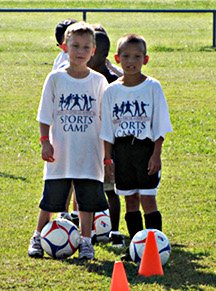
Sports campers take a break to enjoy snow cones and water. New Hope Baptist Church hosted a soccer camp instead of the traditional Vacation Bible School during summer 2009 in an attempt to reach out to a different segment of the community who normally would not participate in VBS.

Before Chamblee retired in 2007 from 35 years of recreation ministry at First Baptist Church in Denton, the church’s missions committee sent him and three others to Springfield, Ill., to conduct a basketball camp for Eastview Baptist Church. After this experience, he became convinced God wasn’t finished using his passion for sports and his desire to see people begin relationships with Christ.

Through the help of the missions committee at First Baptist Church and a small group of men willing to serve as ministry advisers on the board of directors, Chamblee began Sports Ministry of North Texas, focused on using sports and church partnerships to reach communities with the gospel.

“God led me to start a group that would teach sports such as basketball, soccer, softball, baseball and football as an avenue to share the claims of Christ,” Chamblee said. “I want to teach the kids a skill, help them have fun and share the love of Christ.”


Children stand in line waiting to perform a soccer drill they were just taught by Bill Chamblee, director of the Sports Ministry of North Texas.

Since beginning the ministry in 2008, Chamblee partnered with churches to hold sports camps in North Texas and Illinois. In 2009, the ministry saw more than 50 elementary and middle school students begin relationships with Christ through the four camps held that summer. The ministry receives support through gifts to the Mary Hill Davis Offering for Texas Missions and other donations from individuals. Consequently, Chamblee can offer the sports ministry to churches free of charge.

“I believe sports is an international language, and by using that as the hook, people will come and respond,” Chamblee said. “In responding to that sport and learning a new skill, we can share with them the claims of Christ.”

No matter what the sport, the camps teach basic skills and provide time for Bible studies and gospel presentations. Each camp is slightly different according to the facilities the church can provide, Chamblee said.

Elmer Cummings, pastor of New Hope Baptist Church in Aubrey, found this extremely helpful because the church didn’t have a gym, only a grassy lot next to the church. When Chamblee heard of the accommodations, he suggested the church host a soccer camp on the field.

In an effort to reach a segment of the population that typically didn’t attend the church’s yearly Vacation Bible School, the congregation chose to forgo hosting a traditional VBS and allowed Chamblee to lead a weeklong soccer day camp for the community.

“We really weren’t reaching unchurched kids in our community” through the Vacation Bible School, Cummings said. “We were looking for something where unchurched kids would come, and about 40 percent of the kids who came to the soccer camp were unchurched.”

More than 70 children participated in the weeklong event, but they weren’t the only people influenced by the week. Since Chamblee relies on the local church to provide volunteers and the registration process, church members who love sports had an opportunity to learn how to use their hobbies as a ministry. Several members who typically don’t help with VBS showed up to volunteer at the camp, because it was active and based on sports, Cummings said.

“Sports ministry is important because there are a lot of people who need to be reached, and it is a different way of going about reaching,” Cummings said. “We can’t expect people to come and sit in a classroom or listen to a service. But we can give their kids an opportunity to be involved in a sport, and they are grateful for that. Through this, they see that there is something different about the church.”


Keith Hanks (left) teaches children about goal kicks. Hanks and many other volunteers from New Hope Baptist Church in Aubrey partnered with the Sports Ministry of North Texas to host a soccer camp in place of a VBS outreach in summer 2009.

Cummings saw the camp as a way to show the community that the church wants to be involved in their lives, meeting them where they are and with the interests they have.

“I hope they had a good time and saw Christian adults having a good time and reflecting the joy and life of Christ,” Cummings said. “I hope it gave them a different perspective of what it means to be a Christian. A Christian can encourage getting out and playing soccer too.”

Mike Scheer, the missions pastor at Denton Bible Church, sees the ministry as a platform for churches to engage parts of their community previously not open to involvement in the church or with the gospel. Using sport camps and programs can allow the church to build trusting relationships through common interest.

“A lot of parachurch ministries seem to ignore or don’t seem concerned with local churches, whereas Bill works with local churches, giving them an opportunity for outreach,” Scheer said. “He is a guy who is dedicated to the gospel and is using sports and all those areas that God has gifted him in to influence others.”

Scheer also stressed how using sports can break down barriers, helping the church connect with families in the community.

“It’s a great opportunity to be around other families, many who aren’t involved in a church,” Scheer said.  “It’s a nonthreatening way to get to know those people. It’s easy to become friends with them or the kids. By being on the field, you are where the families are at and can minister to them there.”

For more information about the Sports Ministry of North Texas, visit www.smntxs.com.


Age no excuse for lack of exercise, physical therapist insists

ABILENE—A few simple exercises can help senior adults maintain the independence they desire, a Hardin-Simmons University professor contends.

But that call to exercise comes with a caveat.

“Anybody who has not been exercising should always check with their doctor to make sure their risk factors are controlled, because we all have risk factors, and aging is a risk factor in itself,” said Janelle O’Connell, professor and department head in physical therapy at HSU.

She is one of 55 physical therapists in the United States certified as an exercise expert for senior adults.

Regular exercise and good nutrition can help most senior adults maintain their independence longer, according to Janelle O’Connell, a professor and department head in physical therapy at Hardin-Simmons University.

Conditions such as hypertension, coronary artery disease or diabetes are no reason to abandon exercise, but a doctor’s advice should be sought, she said.

“There really is no reason why 98 percent of the people in this country cannot exercise except for the fact that we make a lot of excuses,” O’Connell said.

“With that in mind, the first thing I would recommend is they get a buddy, because most people are more likely to exercise if they have someone to keep them ac-countable.”

Senior adults need exercise, she emphasized, noting a study that says 70 percent of people over 65 are considered independent, but one-third of them cannot walk one lap around a track; one-third cannot kneel, crouch or stoop; 20 percent cannot climb 10 steps without stopping; and 16 to 20 percent cannot lift 10 pounds.

“I think it’s too easy to make excuses like ‘I’m too old.’ We’re never too old. Only five percent of individuals over age of 75 are what we actually consider fit, and that’s because they maintain a high level of fitness. They exercise on a regular basis,” O’Connell said.

Many cite arthritis as their reason for not exercising, she noted.

“Actually, all the research suggests that with arthritis, any kind of exercise is actually better for it. I personally can speak to that. I have arthritis in my knees, and my knees feel much better when I exercise on a regular basis,” she insisted.

{youtube}8T8j0jIiIVE&hl=en&fs=1&rel=0{/youtube}
Janelle O’Connell says you're never too old to exercise.

Aerobic exercise should be done five to seven times a week, O’Connell suggested. While it may be too hard at first, the goal should be eventually to exercise 40 minutes each time.

Rather than walking every day, most people prefer to incorporate time on a stationary bicycle or swimming for a change of pace, she said.

O’Connell emphasized the importance of balance training for senior adults.

“There is an increased risk of falls as we age and mostly because we have changes within our musculoskeletal system and our neuromuscular system that cause our coordination to fail a little bit. And if we don’t actually practice and do that activity, we can’t get any better at it,” she pointed out.

“Balance exercise training is very important, as we know that when people fall, they may break a hip. Fifty percent of people who break a hip become dependent within the first year—that is, they never regain their total function again.”

Core stability to strengthen the muscles from the rib cage to pelvis also becomes increasingly important as people age, she added.

Generally, exercise is more effective at maintaining health than as a weight-loss measure, she suggested.

“Especially for seniors, I really recommend the aerobic activities—the walking, the swimming, the cycling—more for the balance, more for the coordination, more for the functional lifestyle issues so they can maintain independence in their home,” O’Connell said.

“Most seniors will tell you they do not want to go into a nursing home or into assisted living. They want to be independent, and the best way to do that is to do physical activity every day.”

Strength training, using canned goods or sand in milk cartons, also can be valuable to maintaining independence, she suggested.

“As we age, a huge problem is that we lose muscle mass. Men lose it much quicker than women. As we lose muscle mass, that’s when we become frail—we can’t lift things,” she said.

O’Connell also stressed the importance of a good diet heavy on fruits, vegetables and whole grains. “And put away the sugary stuff. Our bodies don’t need that.”


Hot rod ministry rolls out of Northeast Texas church

PARIS—James McNeal believes his drive to the National Hot Rod Association’s winners’ circle began in the choir loft of Immanuel Baptist Church in Paris.

James McNeal, a deacon at Immanuel Baptist Church in Paris, is the National Hot Rod Association champion.

When he obeyed God by following the example of the young men in his Sunday school class and joining the choir, McNeal maintains, he received God’s blessing—all the way to the finish line.

McNeal was bitten by the drag racing bug at age 15, but his history at Immanuel goes back all the way to his birth. He now serves the church as a deacon, high school boys’ Sunday school teacher and choir member.

Not exactly the resumé that might be expected of the national super pro drag racing champion, but for McNeal, it all fits together well.

“I look at my racing as an opportunity for the Lord to use to help someone else see Christ,” he said.

While his witness may not be overt, McNeal believes his presence at the track makes it different than it might be otherwise.

“When I walk up, their language might be one way, but out of respect for me or just for whatever reason, they change their language. But really, only God knows what he is doing through my racing,” McNeal said.

His victory at the national championship in Pomona, Calif., signaled God has a plan for his life in the racing world, he continued.

“One of the most exciting things about this win that I’ve got is that God gave me his best, and I feel like it’s an affirmation from him that he’s using it,” McNeal said.

James McNeal (second from right), a layman at Immanuel Baptist Church in Paris, won the National Hot Rod Association’s championship race in Pomona, Calif. (PHOTOS/Courtesy of James McNeal)

Occasionally, situations at the track allow him to more overt in his witness, he noted.

“Sometimes people don’t want unsolicited advice, but sometimes that opportunity does arise where you can give people some good advice. I always let people know the bottom line of it is that if you don’t know Jesus, that’s the big problem,” McNeal said.

His exploits at the track also have helped him at church, he said. At the beginning of his tenure as the high school boys’ Sunday school teacher, he admits he had a little trouble finding a point of connection. A fieldtrip to the drag strip in Ennis helped significantly.

“I’m a different person than I was before that,” he said. “And so now when I teach my lessons, it’s coming from someone that’s made a connection with them. And I do something that’s pretty cool to them.”

{youtube}HAB0R7OpQ8U&hl=en&fs=1&rel=0{/youtube}
James McNeal, a deacon at Immanuel Baptist Church in Paris, Texas, talks about how his NHRA championship intersects his faith.

While McNeal believes he may be making a bigger impact on the boys since the day at the races, he knows their example on a day at church has changed him as well. He looked up one Sunday morning and saw three of his boys—including his son—singing in the choir.

“God started touching my heart, saying: ‘You know, you’re supposed to be up there. You know you should’ve been up there for years,’” McNeal recalled.

The next choir practice, he was in his seat ready to go.

Not only does McNeal believe God blessed his voice and made him a better singer because of his obedience; he believes it also made him a better driver.

“Knowing I was where I was supposed to be just put a peace in my life that’s still with me—at work, at home, everywhere I go,” he said.

“This win, this national championship that I’ve won, I want to give a lot of credit to that. Because I submitted, and I should be ashamed of myself, because whenever I will do it God’s way, he is so quick to bless me. I feel like when I got in that choir … he was so quick to bless me, so quick to give me his best.”