Bike Out Hunger cyclists ride 415 miles, raise $9,400 for hunger efforts

SAN ANTONIO—For Job Gonzalez, cycling 415 miles during the Bike Out Hunger tour April 19-24 wasn’t just a test of his own strength and competition. It was a personal journey driven by the hungry children and families he sees daily as he rides through the colonias near his home in McAllen—areas that lack clean running water and adequate sewer systems.

Gonzalez, worship leader at Baptist Temple in McAllen, cycled hard and fast, because he knows what it’s like to be hungry. His family didn’t always have enough to each when he was a child, he recalled.

Eight riders from Howard Payne University rode 20 miles from Santa Anna to Brownwood to raise money and awareness for world hunger. The team included (left to right) students Remington Reed and Laura Driggers, adjunct faculty member Jeff Mitchell, student Angelie Lara, faculty member Derek Smith, tennis coach Dalton Hutchins and student Jeff Chaumet. Participating but not pictured is faculty member Gary Succaw. (PHOTOS/Kalie Lowrie)

Because God provided for his family when they were hungry, he wanted to pass along the blessings, riding to raise awareness about the 1.3 million hungry people in the state and to raise money for the Texas Baptist Offering for World Hunger. The offering supports more than 100 hunger and development ministries in Texas and around the world.

“I’m doing something for a great cause, raising awareness about hunger,” Gonzalez said. “I’m here riding across Texas, about 415 miles, just loving what we do. I feel like I am representing the area where I am from, and I do it with all my heart. There are moments with steep hills, and I just want to give up. But I picture myself and all these people from all over Texas on the side of the road cheering me on to finish.”

Through the ride, the cyclists raised more than $9,400 for the Texas Baptist Offering for World Hunger. The offering will provide food and meal distribution, agriculture and livestock initiatives, clean water and sanitation, micro-enterprise development and job training for people around the world, attempting to bring them out of the cycle of poverty. The offering supports more than 100 feeding ministries in Texas, the nation and abroad.

Each day of the Bike Out, cyclists stopped to hold hunger rallies at Baptist universities and churches along the way, where riders and hunger offering advocates talked about the reality of hunger in the state. One shared the story of a child stealing a teacher’s lunch because he was so hungry from having nothing to eat during the weekend. Others talked about students intentionally failing classes so they could attend summer school and receive free lunches they otherwise would not have.

Gonzalez also shared his heart with those he encountered, emphasizing the church must be willing to meet physical needs as they share the hope of Christ.

Cyclists stopped at Truett Seminary in Waco on day three to participate in a hunger rally. Students who attended took time to pray for the riders and hunger issues in the state. (PHOTO/Texas Baptist Communications)

“It is time that we come together as one body, as one community and start serving our community with whether it is one meal or whatever we can do,” Gonzalez said. “We have to feed their stomach so that they can hear us.”

In Texas, hunger affects more than 1.3 million people, and the state leads the nation with the highest percentage of children who are food insecure. More than 47 percent of Texas children in public schools are on the free or reduced lunch program.

But hunger is not only an issue in Texas. It affects more than 1 billion people worldwide. It leaves more than 16,000 children a day dead from hunger-related causes. Every five seconds, a child dies from hunger.

Because the need is great, Bike Out Hunger brought together more than 50 cyclists, the Texas Hunger Initiative and Baptist universities in the state to help raise awareness of hunger issues. Five cyclists complete the entire 415 miles, riding about 70 miles a day. Seven additional riders completed multi-day rides, and more than 30 others joined to ride for one day.

There is enough food in the world to provide for everyone who is hungry, Jeremy Everett, director of the Texas Hunger Initiative, told a hunger rally at Baylor University’s Truett Seminary. The problem is distribution, he said.

The Texas Hunger Initiative is a Baylor School of Social Work and Texas Baptist Christian Life Commission partnership aiming to make Texas food secure by 2015.

To help with distribution problems, volunteers through the initiative are trying to connect the faith-based community to share resources and provide adequate distribution sites around Texas. 

Everett spoke strongly to those who attended several Bike Out Hunger rallies, stressing the church must take responsibility for the issue of hunger and start acting, striving to change the reality at hand.

“You are your brother’s keeper,” Everett said. “Right now, we live in a world that says it is all left up to personal responsibility. You pull yourself up by your bootstraps, and I’ll pull myself up by mine. But we know that is not the way that Jesus modeled time and time again in Scripture.”

{youtube}2zd1xUlsOZA{/youtube}
Bike Out Hunger participants reflect.

For Steve Dominy, pastor of First Baptist Church in Gatesville, hunger is at his doorstep daily. Church members hand out half a ton of food each year to people in need in the Gatesville area.

“Poverty is an issue here in Gatesville,” Dominy said. “Approximately 50 percent of our kindergarteners and first graders are at or below poverty level. We work with our local care center to help them raise food and funds. We have a ministry here that sells food at reduced cost. And we work with boys and girls clubs to make sure that there are no kids that leave the club Friday and are hungry until Monday.”

The church helps because “he whose stomach is empty stomach has no ears to hear,” Dominy said. Even with the church being involved with hunger ministry, Dominy said there still is much more to do. And churches in Texas must unite with others in order for all hungry people to be helped.

“It ticks me off that Texas is hungrier than any state in the nation,” Dominy said. “Texas is the greatest state in the nation, and there is no way that that should happen. And I am willing to bet that 99 percent of the population doesn’t know about that. So, I hope they raise awareness about hunger issues in the state and mobilize some people to … do something about it.”

To help raise hunger awareness among his students, Jeff Mitchell, an adjunct math professor at Howard Payne University, cancelled his classes to ride for a day in the event and to open the door for his students to do the same. Also, a weekly breakfast group that Mitchell attends decided to skip breakfast that week to support the hunger offering and Mitchell’s efforts.

“You can give money to lots of things,” Mitchell said. “You think about that for a moment, but when you get involved, you think about that for a lifetime. Several students asked why we didn’t have class, and I got to explain about Bike Out Hunger. Actually, one of my students rode here. It was great to ride with one of my students and to see the other students excited about getting involved.”

For Ryan Musser, student minister at First Baptist Church in Hewitt, and Morgan Woodard, pastor of First Baptist Church in Golinda, the ride wasn’t just about raising awareness in others. It was about letting Christ continue to teach them what it is like to be in poverty, to be the ones needing help.

More than 60 days ago at the beginning of Lent, both men decided to give up something for Lent that would help them understand poverty on a new level. For 40 days, the two men set aside their car keys and used bikes for transportation.

The men wanted to understand what it was like to be part of the working poor who lack adequate transportation. During Lent, Musser and Woodard learned about Bike Out Hunger and knew it would be a great way to share with others the lessons they learned about hunger.

For three days, the two men rode, learning additional lessons on the way about the sacrifice Christians need to make in order for the state to be completely food secure.

“I learned something today about mile 42 in the middle of a hill,” an exhausted Musser said after he arrived at the finish in San Antonio.

“I was reminded that the call to take up our cross is not an easy task, and it involves sacrifice. So many times, we talk about world hunger, and we say that task is just too big. The kingdom of God isn’t about doing easy things. It’s about doing right things. And we were given a way to live, and a sacrificial way to live. And if it hurts, we are supposed to continue pressing on because that is what our king has already done.”


Task force report urges SBC to free IMB to work in North America

NASHVILLE, Tenn.—The Great Commission Resurgence Task Force will ask the Southern Baptist Convention to give its International Mission Board freedom to evangelize unreached people groups on what had been the exclusive turf of the North American Mission Board.

The task force report—posted May 3 at www.pray4gcr.com —also calls for NAMB to phase out its cooperative agreements with state Baptist conventions over seven years and budget for a national strategy focused on church planting.

Messengers will consider the task force report and vote on its recommendations at the SBC annual meeting in Orlando, June 15-16.

The recommendation expanding the scope of IMB work calls on Southern Baptists to entrust to the agency “the ministry of reaching unreached and underserved people groups without regard to any geographic limitation.”
The recommendation points to changing realities based on large concentration of unreached and underserved people groups in cities—and even smaller college towns— throughout the United States.

“When the Southern Baptist Convention was founded, the world was rather easily divided into ‘home’ and ‘foreign’ missions. That world is gone. Now, with revolutions in transportation and the movement of peoples, the world has come to North America,” the report states.

The current IMB mission statement prohibits active missions involvement in North America, it notes.

“We believe that restriction fits the past far better than the present, much less the future. … (The IMB) has the charge to develop strategies for reaching these unreached and underserved people groups around the world, and this most often means a deep involvement in language and cultural studies. We need to allow the IMB to utilize those skills and that knowledge within North America as well. Put simply, it makes no sense to duplicate this effort and work with an artificial separation of the mission,” the report says.

However, the report says NAMB “retains the leadership mission of reaching North America with the gospel.”
Another recommendation focuses on “liberating NAMB to conduct and direct a strategy of reaching the United States and Canada with the gospel and planting gospel churches.”

The report urges NAMB to focus at least half of its efforts on helping church plant churches that will, in turn, start more churches and to shift funding away from where Southern Baptist churches are concentrated.

“We call upon NAMB to penetrate lostness in partnership with state conventions located in the most unreached and underserved populations of North America,” the report states.

“Our hope and vision is to see NAMB reprioritized, decentralized and fully authorized to lead Southern Baptists in this great work. This will mean the phasing out of cooperative agreements, a structure in place since the 1950s, that return a tremendous percentage of CP monies back to the regions where Southern Baptists are most greatly concentrated and often leaves NAMB with insufficient mobility to appoint personnel directly and ensure missional focus.”

An interim progress report initially had set a four-year goal for phasing out cooperative agreements.

Other recommendations include:

• Adopt mission and visions statements.  The proposed mission statement reads: “As a convention of churches, our missional vision is to present the gospel of Jesus Christ to every person in the world and make disciples of all the nations.” Stated values are Christ-likeness, truth, unity, relationships, trust, future, local church and Christ’s kingdom. The statement on truth says, “We stand together in the truth of God’s inerrant Word, celebrating the faith once for all delivered to the saints.”

• Give more. The report calls for “a new level of sacrificial giving" among Southern Baptists” and to call all funds channeled through the causes of the Southern Baptist Convention, state conventions and associations as “Great Commission Giving.” This new nomenclature would apply equally to contributions given through the Cooperative Program unified budget or designated donations to individual causes.

The report recommends minimum mission offering goals—no less than $200 million for the Lottie Moon Christmas Offering for International Missions and at least $100 million for the Annie Armstrong Easter Offering for North American Missions.

The report also asks Southern Baptists to affirm an intention to raise to 51 percent the Cooperative Program SBC allocation budget to the IMB.


Changes underscore Baylor’s commitment to ministry of healing

DALLAS—Commitment to Christian healing ministry has guided Baylor Health Care System since its founding, but creation of an office of mission and ministry has given renewed emphasis to that defining sense of purpose, hospital officials said.

Chaplain Mark Grace, longtime director of pastoral care at Baylor, was named vice president of the new office of mission and ministry. The office brings together three ministry components—spiritual care to patients, their families and hospital staff; pastoral education programs for ministers, seminary students and laity; and faith in action initiatives.

“It pulls together all facets of the health care system that relate to faith,” Grace said. “It’s more than token banner-waving. It’s identifying at the corporate level in an explicit way that this is how we’re going to do business.”

Baylor President and CEO Joel Allison described the organizational change as “the beginning of a new era in Baylor Health Care System’s commitment to its Christian ministry of healing.”

Allison pointed to a four-fold purpose in creating the office:

• Re-envision ways to strengthen and streamline Baylor’s historical Christian ministry of healing.

• Explore new ways to engage and support Baylor employees as they live out their faith and values in service to others.

• Embed mission and ministry programs across the expanding health care system.

• Partner with other Christian mission and ministry agencies to help meet medical missions needs locally and around the world.

“I think we’re seeing a resurgence of enthusiasm among our trustees, executive officers, medical staff and employees toward our mission as a Christian ministry of healing,” said John McWhorter, president of Baylor University Medical Center.

Grace sees the office of mission and ministry as a place where Baylor can help employees and staff explore “the interchange between practice and faith and to see their work as sacred vocation.”

While individuals on the Baylor Health Care System staff long have been involved in volunteer service and mission trips, the new faith in action initiatives program provides a coordinated approach to offering employees a way to “put feet to faith,” Grace said.

“It’s taking it to another level by embedding this in the daily life of the organization,” he explained.

Don Sewell, who served 12 years with the Baptist General Convention of Texas in the areas of Partnership Missions and as liaison to worldwide agencies and who has worked most recently with the Baptist World Alliance, directs the faith in action initiatives.

Baylor works closely with the Baptist General Convention of Texas, Buckner International and other ministry partners, both globally and locally, and the health care system expects to see that emphasis grow, McWhorter noted.

For example, Baylor employees volunteer to serve meals to the homeless at Cornerstone Baptist Church in inner-city Dallas once a month. Baylor also provides staffing for Cornerstone’s medical and dental clinic.

“We have a waiting list of departments wanting to serve,” McWhorter said.


Obama proclaims National Day of Prayer despite court ruling

WASHINGTON (ABP) — President Obama has followed through on his promise to declare May 6 the National Day of Prayer despite a controversial April 15 ruling by a federal judge who said the government encouraging its citizens to pray violates the First Amendment.

“We are blessed to live in a nation that counts freedom of conscience and free exercise of religion among its most fundamental principles, thereby ensuring that all people of goodwill may hold and practice their beliefs according to the dictates of their consciences,” Obama said, in an April 30 proclamation declaring the day for 2010. “Prayer has been a sustaining way for many Americans of diverse faiths to express their most cherished beliefs, and thus we have long deemed it fitting and proper to publicly recognize the importance of prayer on this day across the nation.”

Presidents since at least 1952, when Congress declared a prayer day, have issued such proclamations noting the observation, extolling the role of prayer in many Americans’ lives and encouraging prayer for the nation as well as others in the world. In 1988, Congress fixed the date of the observance as the first Thursday in May.

But on April 15, U.S. District Judge Barbara Crabb of Wisconsin agreed with plaintiffs who had sued to put an end to the federal government’s involvement in the event, which is marked by ceremonies both public and private around the country.

“It bears emphasizing that a conclusion that the [First Amendment’s] Establishment Clause prohibits the government from endorsing a religious exercise is not a judgment on the value of prayer or the millions of Americans who believe in its power,” Crabb wrote in a 66-page opinion. “No one can doubt the important role that prayer plays in the spiritual life of a believer. However, recognizing the importance of prayer to many people does not mean that the government may enact a statute in support of it, any more than the government may encourage citizens to fast during the month of Ramadan, attend a synagogue, purify themselves in a sweat lodge or practice rune magic.”

Crabb stayed enforcement of her ruling until all appeals of it have been exhausted, however. Obama’s Justice Department announced April 22 that it would appeal the decision.

While some religious-liberty advocates have praised Crabb's decision, others have said acknowledging the role that prayer has historically played for many Americans does not rise to the level of violating the First Amendment’s ban on government establishment of religion.

Americans United for Separation of Church and State and the Interfaith Alliance both said the decision was well-reasoned and sensitive to the true nature of uncoerced faith. The Alliance Defense Fund and American Center for Law and Justice criticized the decision and said it would likely be overturned.

The Baptist Joint Committee for Religious Liberty did not take an official stance on the ruling, but the Washington-based religious-liberty group has criticized the National Day of Prayer before. BJC Executive Director called the event misguided last year.

"The problem with the National Day of Prayer is that it is an official act of the government urging citizens to engage in a religious exercise," Walker said. "A day of prayer is more appropriately called for by pastors, rabbis and imams among us — not civil magistrates, Congress or even an American president."

A representative of the Southern Baptist Convention's Ethics and Religious Liberty Commission, however, lambasted the ruling.

"[W]e are deeply offended by the fact that this judge would decide that the National Day of Prayer actually establishes religion," said Barrett Duke, the agency's vice president, according to an ERLC press release. "I think her understanding of the establishment of religion exceeds the founding fathers’ understanding of what that means."

The National Day of Prayer historically was a broadly ecumenical enterprise, but the event has become controversial in recent years. Some moderate and liberal religious leaders have criticized the National Day of Prayer Task Force, a conservative evangelical group led by the wife of Christian broadcaster James Dobson that serves as the event’s unofficial sponsor, for hosting religiously exclusive prayer events in state capitols and municipal facilities around the country.

Some conservatives, meanwhile, criticized Obama last year for his decision not to mark the day as his predecessor did, with elaborate and highly publicized prayer events at the White House. Obama instead observed the day privately.


–Robert Marus is managing editor and Washington bureau chief for Associated Baptist Press.

Previous ABP stories:

Obama administration to appeal ruling against National Day of Prayer (4/22/2010)

Judge rules National Day of Prayer unconstitutional (4/16/2010)

Conservative ‘National Day of Prayer’ supporters upset over Obama snub (5/7/2009)


Dove Award-winners emphasize desire to make a difference

NASHVILLE, Tenn.—Songs of praise and testimonies about the message behind the music highlighted the 41st annual Dove Awards, sponsored by the Gospel Music Association.

Singer/songwriter Brandon Heath garnered the Male Vocalist of the Year honor for the second year in a row. He also received a Dove for his participation on the album, Glory Revealed II: The Word of God in Worship, which won Special Event Album of the Year.

Singer/songwriter Brandon Heath garnered the Male Vocalist of the Year honor for the second year in a row. He also received a Dove for his participation on the album, Glory Revealed II: The Word of God in Worship, which won Special Event Album of the Year.

“I don’t think that being Male Vocalist of the Year necessarily means being the best singer, but I think it means knowing what you want to say and being given the ability to share that with people,” Heath said.  “I’m constantly trying to find a unique way of putting the message of the gospel into songs.

“The goal is for people who wouldn’t normally listen to Christian music to hear a message about the love and grace of God and his life-changing power. That’s what I want to keep writing songs about. I still get e-mails about the lives that are being changed by these songs, and it’s such a driving force to create music that will help lead people into a relationship with Christ.”

At the Dove Awards ceremony, Heath performed with Jars of Clay on the song “Two Hands.”  Jars of Clay’s album, The Long Fall Back To Earth, garnered Recorded Music Packaging and Pop/Contemporary Album of the Year honors.

“We are humbled to receive these awards, because it is a sign that these songs are connecting with people,” Jars of Clay’s lead singer Dan Haseltine said. “We write songs about things that are hard, true and beautiful. When we’re writing songs, if we feel like something is really connecting and moving us, then there’s a hope that it will move other people. We really want our lyrics to focus on making a difference in the lives of people by reaching out and being the hands and feet of Christ.” 

Jars of Clay founded a non-profit organization, Blood:Water Mission, to build clean water wells, support medical facilities and tangibly reduce the impact of the HIV/AIDS pandemic in Africa while addressing the underlying issues of poverty, injustice and oppression.

The band’s first relief effort was the “1,000 Wells Project” with a goal of raising funds to build, rebuild and repair 1,000 wells in urban and rural areas of sub-Saharan Africa. This year, Jars of Clay will celebrate achieving their goal and bringing clean water to more than 150,000 people.

Casting Crowns received the Artist of the Year honors at the Dove Awards.

“It gives weight to the things we talk about in our songs,” Haseltine said. “The songs on this album share about getting our hands dirty, reaching into the lives of people, being engaged and making a difference for eternity. The songs also share messages about suffering and talk about the way that God provides. 

“Through the years, we’ve had the privilege to sit down, laugh and cry with people who actually live that out in more tangible ways than we ever have, and they’ve shared amazing stories of what God is doing around the world.”

At the Dove Awards presentation, Artist of the Year recipients Casting Crowns performed their hit song “Until the Whole World Hears” with a 200-voice children’s choir. 

Despite a busy touring schedule, Casting Crowns remains committed to serving in local churches and continues to be one of the nation’s top-selling artists across all genres, with their recent album debuting at No. 4 on the Billboard 200 chart.

“Whatever we do in word or deed, we do it for the glory of the Lord,” Casting Crowns lead singer Mark Hall said.

“Believers have to understand that we’re not the audience of Christ; we’re the body of Christ. That makes all of us artists. God will use people in different areas to point people to him—whether it’s teaching, accounting or building houses. We share the gospel every night during our concerts, and we talk about how to be a believer means to lay your past at Christ’s feet and walk away from your old life. You have to lay each day at his feet, follow him and live in his strength.”

For a complete list of Dove Award winners, please visit www.gospelmusic.org.


Adopted daughter a ‘perfect fit’ for Hamilton pastor’s family

HAMILTON—Maya Sitota grabs her mother’s hand and leads her to the bedroom, instructing her in 2-year-old babble to turn on the music.

“Oh, oh, oh,” she says, pointing to the radio on the window ledge.

Last year, Maya Sitota of Ethiopia joined the Felton family of Hamilton—mother, Sharon; father, Keith; and brothers, Carter and Dakota. (PHOTOS/Russ Dilday/Buckner International)

“She loves this song,” Sharon Felton replies, turning on Beyonce’s hit ‘All the Single Ladies’ as Maya bounces up and down to the half chanting, half singing lyrics, “oh oh oh oh oh oh oh oh.”

It’s hard to believe the happy toddler who loves hair bows and football, dancing and wrestling with her big brothers, might never have lived to see her first birthday.

When Maya arrived at Buckner International’s baby home in Addis Ababa, Ethiopia in June 2008, she was malnourished and starving. Malnutrition is the cause of half of all deaths among children 5 and under in Ethiopia, a country where extreme poverty and AIDS has left 4 million children orphaned.

But just as Maya was abandoned, God’s redemptive plan for her life began. Thousands of miles away, Keith and Sharon Felton began the adoption process in Texas. And now, after being home with her family for six months, it’s as if she’s always been a Felton.

“It’s amazing how much love you can have for someone you didn’t give birth to,” Sharon Felton said. “She’s the perfect person for us, a perfect fit for our family.”

Ten years and waiting

Maya Sitota loves music, including the sounds she makes on the Felton family piano.

Ten years ago, Keith Felton, now pastor at First Baptist Church in Hamilton, went to Ethiopia on a mission trip to lead basketball camps for children.

“While I was there, I fell in love with the Ethiopian people and learned about the percentage of orphans and the need for adoption,” he said.

He came home from that trip and talked to his wife about adopting, but they were a young couple without children.

“We always talked about adopting one day,” she said. “You know how you just throw things out over the years. But I always had so many excuses. I would say that I didn’t want to adopt internationally because I couldn’t keep them connected with their culture. I thought that was so important.

“But one day I was talking with a friend, and he responded (sarcastically) saying, ‘Yeah, that’s more important than having parents,’ It was like a knife in the heart.”

His words became a wake-up call that changed her heart toward adoption. But it was their children, Carter, 9, and Dakota, 6, who helped them move forward.

Keith Felton, pastor of First Baptist Church in Hamilton, plays with his daughter, Maya Sitota. He and his wife, Sharon, adopted their daughter from Ethiopia last year. (PHOTOS/Russ Dilday/Buckner International)

Dakota had been asking for a sister since he was 3, but his mother always told him no. But once they discussed adoption with the boys, they were both excited to have a new member of the family. One day, Dakota walked out into the living room and dumped his piggy bank in a large jar of change the family had started collecting to pay for the adoption.

“He said, ‘OK, I’m ready to help bring my sister home,’” Sharon Felton recalled.

The boys’ support made the process that much easier, her husband added. “They are the very best big brothers,” he said.

Much of the Hamilton community, a rural town of about 3,000 people, pitched in to bring Maya home. Strangers would come up to them and want to help. Even Carter’s second grade class collected books for orphans of Bantu, Ethiopia, where Buckner operates a school and community center.

“Ninety-nine percent of the folks here didn’t know about the cost,” Keith Felton said. “But when they found out, they all wanted to help. Almost every time we had a bill due, the money was there.”

Maya’s adoption was “more or less a fulfillment of what was put on my heart so long ago,” he added. “God has taught me that he will complete things in his own timing. He who began a good work in me would be faithful to complete it.”

Long-term effect

Keith Felton, pastor of First Baptist Church in Hamilton, plays with his daughter, Maya Sitota.

The Feltons were matched with Maya in January 2009. When they received the paperwork about her, the first thing they noticed was her name. Sitota means “gift,” and the day she became available for adoption—June 24—was Sharon Felton’s birthday.

“Seeing my birthday on her paperwork was definitely an ‘aha’ moment,” she said.

The couple was first scheduled for court in Ethiopia in July 2009, but their date was postponed due to a three-month delay in adoption proceedings in Ethiopia. In Ethiopian adoption, the court date is when a judge declares a child legally adopted. Families typically travel several weeks after their court date to pick up their child and finalize their adoption at the U.S. Embassy.

The Feltons finally traveled to Ethiopia to pick up Maya in September 2009, one year and three months from the date they started the adoption process.

“That’s short in the adoption world,” Keith Felton said.

Sharon Felton was most surprised by the quality of care and love provided to Sitota at the baby home. They receive plenty of individualized care and attention, and a registered nurse visits them every other day.

“All the kids were so great, beautiful and healthy,” she said. “They are so well cared for and loved. The caregivers cried and kissed her when we left. The older kids did, too.”

The shared bond of adopting from the same baby home in Ethiopia has brought together a group of adoptive families living in Texas and Tennessee in a very special way, she said. The families meet regularly to celebrate birthdays and holidays, and share life via Facebook and e-mail. “We will always be connected. We’re like family,” she said.

When Maya arrived at Buckner International’s baby home in Addis Ababa, Ethiopia in June 2008, she was malnourished and starving.

Maya’s adoption has profoundly affected the community of Hamilton, too, Keith Felton said.

“We could not be in a better town. They all love her,” he said. “I think having Maya here in Hamilton will impact people in ways we may never see. I’m hoping it will plant a seed in their hearts toward adoption.”

The Feltons get a lot of questions about being part of an interracial family, but the obstacles they will face “are not insurmountable,” Sharon Felton said. “I know there will be issues with race that we will face along the way, but it’s really a non-issue right now. We have had more positive encouragement and support than I ever expected.”

The Feltons agree adoption isn’t for everyone, but they think more families are capable of adopting than do.

“Adopting is hard. Kids are hard. Parenting is hard,” Keith Felton said. “But it’s not so hard that you can’t handle it.”

“It’s not as scary as you might think,” Sharon Felton added. “Don’t let anything get in your way—money, culture. It’s so worth it, and it’s so fun. She makes us laugh every day. You just don’t know what you’re missing.”

To learn more about adopting from Ethiopia through Buckner International and the agency’s affiliation with Dillon, visit www.dillonadopt.com.


Bhutanese refugees enjoy a day in the country

ROYSE CITY—For one day, about 40 Bhutanese people felt a little more at home—out of the cityscape where they had been transplanted and back to a more rural setting.

Three boys enjoy the outdoors at Sabine Creek Ranch.

But Rob Matchett wants them to know God has an eternal home reserved just for them.

Ten families made the trip from Dallas to Sabine Creek Ranch, south of Royse City, as a part of the fun day for the refugee families who had resettled in Dallas from Bhutan, in South Asia.

College students involved in the Segue ministry sponsored by Sabine Creek Ranch help the refugee families transition to life in a new country. The students help them with matters as simple as learning how to use a dishwasher or an air conditioning thermostat and as involved as helping learn English or obtain a driver’s license.

“It’s not that they need a toaster or need to wash dishes with a dishwasher, but it provides a great way for our college students to establish a loving, caring relationship with them,” Matchett explained. And in the process, students help them grow or enter into a relationship with Jesus Christ.

Bhutanese children wait their turn to try to conquer a climbing wall at Sabine Creek Ranch.

A Bhutanese mother and child enjoy a meal during an event sponsored by Segue at Sabine Creek Ranch.

A minority of the Bhutanese already are Christian when they come to America, and for them, the transition may be even harder than for their compatriots.

“We found a pocket of Christians, and they said to us, ‘Where are the Christians,” Matchett related. “They said, ‘If we stay Hindu, we have help from the temple.’”

Several Hindu businessmen have given many of the Hindu refugees work in their warehouses. The few Christians have found it much harder to find employment, Matchett said.

Three Bhutanese men have communicated to their American friends that they have made a profession of faith in Jesus Christ as their Savior, but they have not said so publicly out of fear of losing their jobs. The day of the outing at Sabine Creek, the men sent their families, but they did not attend.

Bhutanese children enjoy fun and games in the country.

The day at the ranch included worship, arts and crafts for children, a climbing wall, ropes course, other outdoor games and a hayride.

“They’re pretty adventurous in some ways,” Matchett said. “They’ve made it to America and 100,000 others still are in the refugee camps. To be one of the first, that says a lot about their courage.”

The Baptist Student Ministry at Texas A&M-Commerce helped lead games and serve lunch.

Texas Baptists helped to support the event through gifts to the Mary Hill Davis Offering for Texas Missions.

“If you do the Mary Hill Davis Offering, you helped this day happen,” Matchett said.


Drawings draw children into Bible stories

ROUND ROCK—Seeing isn’t always believing, but it sure can help children connect with the gospel.

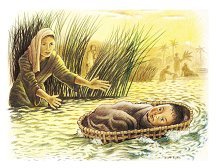
New BaptistWay Press Vacation Bible School materials are featuring illustrations meant to help children connect with Bible stories and the gospel. The meticulous color artwork is designed to draw the children into the stories, helping them gain a sense of what it was like to have stood next to the disciples or Christ.

BaptistWay VBS materials, including lesson plans, teacher resources, worship slideshows and scripts, can be downloaded for free at www.baptistwaypress.com, and the illustrations can be downloaded there for a small fee.

Scott Byers, a member of Woodlawn Baptist Church in Austin, produced the images as a way to use his design abilities to share the gospel.

For years, Byers has designed artwork for a range of companies, but he wanted to use his talents to make a difference in people’s lives. At a chance meeting with Texas Baptists’ Preschool/Children’s Ministry Specialist Diane Lane, Byers discovered the convention wanted to add illustrations to its VBS materials in 2010. The match was ideal.

“I’m really looking for meaningful work,” he said. “That’s why the BGCT work appealed to me.”

Diane Lane is thrilled the illustrations are part of the BaptistWay Press VBS materials, themed “The Big Sea Adventure: Exploring the Depths of God's Love.”

“Children often have problems understanding abstract messages or stories,” she said. “These images help given them an idea what it was like during Jesus’ time, help them picture the stories they are hearing about during the week. That goes a long way in helping them connect with the stories and the gospel the stories share.”

Vacation Bible School remains one of the most effective ways congregations use to share the gospel with their communities and touch the lives of people who otherwise remain unconnected to churches.

By offering free downloadable VBS materials, Lane hopes every church—no matter its size or budget—can afford to hold a VBS.

“We want every person in Texas to know about the love and hope of Christ,” Lane said. “One of the best ways to work toward that goal has been—and continues to be— Vacation Bible School.”

For more information about BaptistWay’s VBS materials, visit www.baptistwaypress.com or call Lane at (888) 244-9400.


Baptist scholars view Noah’s Ark discovery claims with skepticism

LEXINGTON, Ky. (ABP) — As the newest reported discovery of Noah's Ark raised doubts even among fellow Ark-hunters, two Baptist seminary professors said Christians should not rest their faith on whether remains of an ancient vessel are ever found high in the mountains of Turkey.

AFP first reported that a team of Chinese and Turkish evangelical explorers said April 26 that they recovered wooden specimens from a structure on Mount Ararat in eastern Turkey carbon dated as 4,800 years old, around the time biblical literalists believe the Genesis story about a worldwide flood would have occurred.

"It's not 100 percent that it is Noah's Ark, but we think it is 99.9 percent that this is it," said Yeung Wing-cheung, a Hong Kong documentary filmmaker and member of the 15-member team from Noah's Ark Ministries International.

Team member Panda Lee examines mortise-and-tenon construction in the structure, suggesting it was built before the invention of metal nails.

Within hours an e-mail written by Randall Price, a Liberty University professor who was the archaeologist with the Chinese expedition in the summer of 2008, declared the photos of the supposed discovery a fake. After it went public on websites, Price clarified that while he did not retract his statements, they were not meant for public dissemination.

"The only public statement he wishes to make at this time is that he believes that the greater the claim the greater the evidence needs to be to support it and urges the Chinese-Turkish team to make their collected samples from the structure available to scientists and scholars for comparative analysis," said a statement on the website of World of Bible Ministries, of which Price is president. "While he has reservations about the nature and procedure of the Chinese-Turkish expedition and the artifacts related to it, he believes that a decision concerning this matter must wait until independent examinations of the site and the structure can be made and published."

Bob Cornuke of the Bible Archaeology Search and Exploration Institute, who produced a 2008 DVD about his own search for Noah's Ark in 2005 and 2006 in Iran, called the Chinese team's discovery a "fraud … of the highest caliber" in a story on WorldnetDaily.com.

Even Answers in Genesis, which offers several resources presenting what the ministry believes is geological evidence supporting the Bible's account of the Genesis flood, reacted with caution.

Jackson

"Every few years we hear of claims that Noah's Ark (or what may remain of it) has been found on the mountains of Ararat in Turkey," read a statement on the ministry website. "Over the decades, we have learned to be cautious about such Ark claims."

"We have no doubt, however, that there once was a massive Ark that served as a vessel of salvation during a global Flood and landed on the mountains of Ararat, as recorded in the book of Genesis," the statement went on to say.

Dalen Jackson, academic dean and professor of biblical studies at Baptist Seminary of Kentucky, said such literal readings of Scripture fail to acknowledge how biblical language often expresses rich meaning in ways other than simply conveying information.

"We may assume that the truth of a story can be measured only by the correspondence of its events with actual historical events," Jackson said. "In fact, the biblical writers, like their contemporaries throughout the ancient world, told stories without reference to modern historical and scientific understandings, stories that conveyed traditions about where they came from and why the world was the way it was. Even so, they recognized the presence of God in the world and that God was good and had created people in order to have a special relationship with them."

Gerald Keown, associate dean and professor of Old Testament interpretation at M. Christopher White School of Divinity at Gardner-Webb University, said his skepticism over claimed blockbuster archeological finds is not related to the veracity of the Bible stories but the lack of veracity of con artists eager to exploit public naivete.

Keown

Keown cited the James Ossuary, a limestone burial box "discovered" in 2002 that supposedly at one time contained the bones of the brother of Jesus, which turned out to be the work of a master forger who embellished ancient artifacts with what appeared to be inscriptions of biblical names, as an example.

"I question the survival of any wooden artifact from ancient times which has been exposed to air," Keown said. "Even materials from the relatively recent past — the 1600s to 1700s — which have been under water and sand are notoriously fragile and disintegrate upon exposure to the air. The desire to make a buck off of people who are willing to be conned has no expiration date."

Keown said most historical questions that intrigue most Christians will never be "answered" by archeology, but the most important message in the Bible is not historicity but faithfulness.

"I wish more Christians were as interested in how seriously they/we respond to the life challenge of the gospel as they/we are in whether this or that 'really' happened," he said. "The latter tends to get us into heated debates that have no bearing on the true life of faith, but represent our straining gnats and swallowing camels."

Jackson said when stories in the Bible don't fit with the evidence scrutinized by modern historians and scientists, believers should look for the spiritual, theological, and moral teaching of the texts. That, he said, is something the early church fathers recognized long before the scientific age.

"Those who search for Noah's Ark are so intent on proving that the evidence exists to show the correspondence of that biblical story to actual historical events that they always overreach in their conclusions about the pieces of wood they find high in the mountains of Turkey," Jackson said.


–Bob Allen is senior writer for Associated Baptist Press.


Independent panel criticizes Obama, Bush, Clinton on religious freedom

WASHINGTON (ABP) — A bipartisan federal panel charged with monitoring religious-freedom questions worldwide blasted current and past administrations — Republican and Democratic alike — April 29 for under-emphasizing religious liberty in foreign policy.

In releasing its annual report, the independent United States Commission on International Religious Freedom (USCIRF) took particular aim at President Obama — for a perceived softening of his rhetoric on religious liberty and for failing to name an ambassador for international religious freedom.

The report also re-suggested the same 13 nations the panel recommended last year to the administration to be deemed “Countries of Particular Concern,” or CPCs, for particularly egregious violations of religious freedom. They are Burma, China, Eritrea, Iran, Iraq, Nigeria, North Korea, Pakistan, Saudi Arabia, Sudan, Turkmenistan, Uzbekistan and Vietnam

In addition, the panel named 12 nations to a “watch list” for countries in danger of crossing over into CPC territory under the terms of the 1998 International Religious Freedom Act, which established the commission. They are Afghanistan, Belarus, Cuba, Egypt, India, Indonesia, Laos, Russia, Somalia, Tajikistan, Turkey and Venezuela.

Critical of inaction

The report was highly critical of the three administrations — those of Obama, George W. Bush and Bill Clinton — that have operated since the panel came into existence for not doing enough to take advantage of its recommendations.

“USCIRF’s mandate is to delve into the human-rights ‘hot spots’ of the world where freedom of religion is being obstructed and trampled, and to offer policy solutions to improve conditions in that small but critically important point of intersection of foreign policy, national security, and international religious-freedom standards,” the report said.

“Regrettably, that small point seems to shrink year after year for the White House and the State Department. This is a deepening problem despite the fact that religious freedom should be increasingly more important as one of the core considerations in foreign policy and national security.”

For example, the report noted, neither the Bush nor Obama administrations designated as CPCs five countries the commission has repeatedly recommended for such status: Iraq, Nigeria, Pakistan, Turkemenistan and Vietnam.

In addition, the nations that have been deemed CPCs by the State Department have rarely received any additional U.S. sanctions as a result. Instead, U.S. officials have chosen to simply remain with sanctions already placed on those countries for other reasons — an option the law that created the designation allows, but one that USCIRF members say the State Department has over-used.

“Of the eight countries [currently] designated as CPCs by the State Department, only one — Eritrea — faces sanctions specifically imposed under IRFA for religious-freedom violations,” the report said. “While relying on pre-existing sanctions is technically correct under the statute, the practice of ‘double-hatting’ has provided little incentive for the other CPC-designated governments to reduce or end egregious violations of religious freedom. For these mechanisms to have any real impact on promoting religious freedom, the designation of an egregious religious-freedom violator as a CPC must be followed by the implementation of a clear, direct and specific presidential action.”

The commission also pointed out that the State Department has issued an indefinite waiver on taking action under the CPC designation against Saudi Arabia. Another CPC designee, Uzbekistan, remains under a temporary waiver for action. Both are U.S. allies.

“As a result of these waivers, the United States will not implement any policy response to the particularly severe violations of religious freedom in either country,” the report said.

Taking aim at Obama

More than a decade since the International Religious Freedom Act was first passed, the commission also noted, “the State Department either has not implemented or has underutilized key provisions of the law, leaving central aspects of the act unfulfilled. This is the case for both Democratic and Republican administrations. While President Obama has emphasized religious freedom in major policy speeches abroad, the administration to date has not demonstrated the intent to break from the practice of previous administrations.”

The panel pointed out that Obama’s State Department still — more than a year after the first USCIRF report since Obama took office — has not issued any CPC designations or named an ambassador-at-large for international religious freedom.

In addition, the report suggested Obama might be undercutting his initial rhetoric on religious freedom. It noted that, during high-profile speeches last year in Egypt and Turkey, Obama repeatedly used the term “freedom of religion”

But, since the speech in Cairo, the report noted, Obama has increasingly referred to “freedom of worship” — as has Secretary of State Hillary Clinton — in international speeches.

Although likely subtle to most Americans, the rhetorical shift has raised eyebrows in the religious-freedom community.

“This change in phraseology could well be viewed by human-rights defenders and officials in other countries as having concrete policy implications,” the commission said. “Freedom of worship is only one aspect of religious freedom, and a purposeful change in language could signify a much narrower view of the right [of religious freedom], ignoring for example, the components of religiously motivated expression and religious education. This is not the message our nation should be sending to the world’s religious-freedom abusers.”

White House spokesmen denied that the shift signifies any change in U.S. policy.


–Rob Marus is managing editor and Washington bureau chief for Associated Baptist Press.

Read More

Full text (in PDF format) of the 2010 USCIRF Annual Report

Previous ABP story:

Religious freedom panel adds Nigeria to list of world's worst violators (5/1/2009)


Church in Alvin restored 18 months after Hurricane Ike

ALVIN—After a long and trying renovation, South Park Baptist Church in Alvin has emerged from the destruction caused by Hurricane Ike 18 months later to stand restored. And members testify they are more dedicated than ever before to reaching their community for Christ.

Although the church experienced about $1 million worth of damage to its facilities, the members stood strong, joining together, continuing to share the hope of Christ in the midst of disaster and forming a plan to restore the church campus.

“The church has been drawn closer together,” said Mike Webb, a deacon and chairman of the church’s transitional building committee. “This has just been a time for us to learn to adapt, to learn to reach the lost of our city and to work with other churches in the city.”

The church’s sanctuary, children’s building and two education buildings were damaged severely, leaving only the fellowship hall usable after the hurricane.

“The inside of the buildings became very large terrariums,” said James McGlothlin, interim pastor at South Park Baptist Church. “What the storm didn’t knock over, it ruined through dumping buckets of rain.”

First Methodist Church in Alvin allowed the church to hold worship services in its building the Sunday after the storm hit so the members could continue to worship together. In the following weeks, South Park Baptist Church members split into two worship services and met in the fellowship hall, the only building not harmed by the storm.

Church Strategist Richard Mangum offered the church funds from the Baptist General Convention of Texas to help with the immediate rebuilding efforts needed after the storm, but the church declined, stating that there are churches with greater needs than theirs. 

“It just shows the sensitivity of the church to other churches,” Mangum said. Pastor Bruce Peterson, who retired after 18 years at South Park Baptist, “said we are a strong church, and we will be OK, so take those funds and use it for a church that needs it more than us. And I did.”

To help with the restoration, the church established a transition team to choose contractors and to work with the insurance company to begin making repairs to the building. Although insurance covered the majority of the storm damage, the church had to use additional funds to pay for removal of asbestos found in the children’s building and to update the baptistry.

“I don’t think that things happen by coincidence,” Webb said. “Now that (the renovation) … is over and even in that time, we think God was helping us see a different path and preparing us for something. I think the church was really good about coming together and supporting one another.”

The church held its first service back in the sanctuary on Christmas Eve 2009, but the remainder of the buildings were not completely restored until February 2010. To celebrate the completion of the renovation, the church held a rededication service, recognizing the journey God had carried the church through and looking forward to the ministry God has for the church in the coming months and years.

The service was “just a time to refocus saying we want you (members) to place your heart back into the church during 2010,” Webb said. It was “a rededication of the facilities but also a dedication of the people back to the church.”

Gratitude to God characterized the church throughout the ordeal, Mangum said.

“I think basically it was my sense from the pastor to the members that they were very resilient and grateful that they had not received more damage,” he said. “They knew that God was going to see them through and help them get to the other side of this and have something better on the other side.”

Webb agrees, noting that the church believes God sustained them for a reason, recognizing that he isn’t done using the church to influence the community and even the world for his kingdom.

“There is something bigger out there that we think God is preparing us for,” Webb said. “I think he is just preparing us for the next step. I don’t know that he has revealed that next step to anyone. We are still in the building stages of learning what that is.”

As the church settles back into the facilities and continues to search for a new pastor, the members continue to search for ways to share the hope of Christ with all people groups in the city. 

“We are getting information from the city of Alvin, what unreached groups are here,” McGlothlin said.  “They are in process of seeing that their location is good for the future growth of Alvin. They see they need to reach the people who come here. We are ever discovering in Texas that the Lord has brought the world to our doorstep. Though foreign missions is important, we are seeing that you can do missions without even leaving our block.”

Above all, the church recognizes that the last 18 months has been a story of God’s provision in all types of circumstances. As the congregation continues to look for a pastor, members are excited to see how God will continue to use the church to reach the community with the gospel.

“It is the testimony of the faithfulness of God in trying circumstances,” McGlothlin said.


Port Neches drama yields 32 professions of faith in Christ

PORT NECHES—When First Baptist Church in Port Neches decided to perform the evangelistic play Last Chance, members wanted to share the hope of Christ with their community. By the end of the three days of performances, the church saw 32 people make decisions to follow Christ and 65 renew their commitments to him.  

In the past, the church has been focused on reaching its community with the gospel, but sharing the message in a new way with the community was part of the church’s Texas Hope 2010 efforts, an emphasis by Texas Baptists to pray for the lost, care for the hurting and hungry and share the hope of Christ with all Texans.

“I thought it was a great challenge for our people and a great way to understand that we aren’t working by ourselves but working with the convention to reach our state for the kingdom,” said Pastor David Mahfouz about the church's involvement in Texas Hope 2010.

The play, by Reality Outreach, portrays scenes of real-life tragedies that people might find themselves in, such as a high school shooting or an abusive marriage relationship. In the midst of this, the reality of every person’s life and death as well as Christ’s redeeming love is shown.

The church hired the organization to direct the production, while church members served as the actors. Additional church members participated in the outreach event by counseling people who wanted to follow Christ after seeing the play.  

“It is a presentation of the reality of Jesus Christ—his death, burial and resurrection, and it talks about people’s choices in life and that it makes a difference in where they will spend eternity,” Mahfouz said.  

For 40 days before the play, the church prayed for the outreach efforts and for those who don’t know Christ in their community. One week before the play, church members delivered more than 300 Texas Hope 2010 multimedia compact discs that include the Gospel of John and have an option to download the New Testament in more than 400 languages to homes surrounding the church and invited residents to attend the play.

Reaching out to the community “is important because as you know we are living in a pretty tough world right now,” said Aron Arceneaux, a member of the church and actor in the play. “It’s not only important for our church but all churches to be involved in the community in some way.”

For many church members, outreach is not a new idea, but the play was an additional avenue for many to share the hope of Christ to touch the hearts of people in the community in a different way through the play, said Cheryl Hernandez, a member of the church who volunteered with her daughter to be in the play.

“This was important because there are so many people that are lost in every community,” she said. “It is very important to reach out to them on a level that they can relate to. I think the play was effective because they could see their lives portrayed right in front of them, especially the student scene because there have been so many shootings at campuses and people are just amazed at how it happens.”

Participating in the play hit close to home for Hernandez as she played an abused wife and mother because it was portraying the same real-life situation some of her family had endured a few years ago. Through this, Hernandez desired to share the hope of Christ even more with women and children stuck in these situations.

Marcie Cate, a sophomore at Lamar University and a member of the church, wanted to see her community influenced by the gospel presentation. But she noted she was challenged in her faith as she saw young and old alike within the church unite and work together for the cause of the gospel.

“It was awesome and you think about the audience being affected,” Cate said. “One of the first things the director said is that the cast will be most affected. And it was so true. You have people from middle school to great grandmas working together, and we don’t get to have that very often. The group really grew together through the effort and through the prayer time.”

But unity wasn’t the only thing gained within the church. Cate also grew in her own walk with God as she allowed him to place her in a counseling position at the end of the play where she was able to lead a lady to faith in Christ.

“God just led me into things like the counseling, things where on my own I normally wouldn’t do things like that,” Cate said. “I got to be with my church family and with them show Christ in a different way. I got a lot of courage and confidence in that, in my ability to tell people about Christ.”

The church recognizes that sharing the gospel with the city through the play is only the beginning. As people in the community made decisions to follow Christ, members were paired with many to disciple them and help them grow in their relationship with Christ.

“As they came, we worked with them to get an individual to work one on one with them in a disciplining process,” Mahfouz said. “They were given the hope CD and are now involved in discipleship material about how to grow in their faith and how to read their Bible.”

On Easter Sunday, Mahfouz baptized six children and teenagers who had made professions of faith in Christ during the play. Many others are scheduled to be baptized in the near future.

Through the efforts, Mahfouz and the church members said they were looking for God to restore their city, bringing hope and eternal life to many. And they saw that happen.

“We were hoping for a revived church and a revived people,” Mahfouz said. “It has been a hard time this year coming out of our storm experience. Within the last five years, we have had five major storms, and it makes it hard for long-term planning because just when we’ve recovered from one another on has hit. So it is exciting to see people seeking the Lord and coming into the church.