Who’s in Charge?

Baptist churches across the board agree—Jesus Christ is the head of the church.

But when it comes to ways Christians discern Christ’s will for their particular congregation, handle its day-to-day administrative chores and make decisions about budget and buildings, Baptist churches demonstrate remarkable diversity.

Both the 1963 and 2000 versions of the Baptist Faith & Message identify the local Baptist church as an autonomous body operating through democratic processes under the Lordship of Jesus Christ. In such a congregation, each member is responsible and accountable to Christ, the faith statements assert.

In his book The Baptist Identity: Four Fragile Freedoms, Walter B. Shurden of Mercer University linked the Baptist commitment to democratic church governance to the emphasis on the individual.

“Baptists practice democratic church polity not because it is more efficient or more reliable or even more biblical than other forms. They follow it because it accents the role of the individual within community, allowing the greatest freedom for the greatest number of people to have a say. Moreover, democratic church polity is a statement of the equality of all believers in determining the mind of Christ,” wrote Shurden, then-director of Mercer’s Center for Baptist Studies.

But how churches exercise their autonomy, carry out democratic processes and give members opportunities to carry out their responsibilities differ—particularly after their membership grows.

Some historians point to the thoroughly democratic practices of early Baptists in the Colonies as influencing early American democratic ideals and providing a model for the New England town hall meeting. Many small-membership congregations still hold similar monthly business meetings where member openly discuss and vote on every decision that affects the church.

However, allowing every person in a 50-member congregation an opportunity to speak publicly regarding an issue is one thing; allowing every person in a 500-member or 5,000-member church the same privilege is another.

So, some chur-ches have chosen to delegate certain authority to smaller groups, whether staff, deacons, elders or committees.

“I’ve come to believe the polity issue is usually resolved in Baptist churches of varying sizes by virtue of efficiency rather than theology,” said Gary Long, pastor of First Baptist Church in Gaithersburg, Md.

The way decisions are made and the number of people involved in that decision-making process tend to depend in part on the level of trust members have in leaders, he asserted.

“If trust is high, decisions are made more frequently in smaller groups and supported by the larger congregation. When trust is low and anxiety is high, there is more of a call from the congregation for a vote,” he said. “Good leaders seem to sense where decisions are along the scale of importance and weigh out when to act versus get congregational input.”

Polity also may be determined simply by how busy and involved members are at a particular point, Long added.

“The folk who are busy raising kids, coaching soccer, excelling at career and truly focusing on their own spirituality seem more interested in volunteering and serving than in leading and deciding,” he observed.

Long, former pastor of Willow Meadows Baptist Church in Houston, noted he has served in a congregation where decisions of various types explicitly are categorized, and the level of congregational input was determined by perceived importance.

“Hiring and firing ministers were A level, for example. Calendar decisions were C level and agreed upon by the staff. Plans for a yearly focus or a new ministry partner were B level and decided by committees in consultation with ministry staff,” he said.

Even so, some level of ambiguity remained.

“Of course there were times when I was left wondering, ‘Is this a B or a C level issue?’ Those were the times when I deferred to the next level up the chain, rather than guessing I had the authority to decide something on my own,” he said.

“It was slow, but I don’t recall ever getting criticized for counting on other church members to help with decisions.”

In some respects, First Baptist Church in Woodbridge, Va., follows a similar approach. The church votes on major decisions in a church meeting that requires 50 percent of active members for a quorum. Major decisions include budget, incurring debt, hiring a senior pastor and making changes to bylaws or constitution.

At a members’ meeting every other month, the church receives financial reports, grants transfer of membership and accepts new members, approves any mid-year budget changes and votes on hiring any staff other than the senior pastor.

However, the Woodbridge church adds a different approach in terms of day-to-day administration. Elders deal with matters of spiritual discipline and proper doctrine. An administrative ministry team—which includes an elder—manages the church’s resources. Deacons work in a servant role, alongside dozens of ministry teams.

Ray Bearden, who has been pastor of First Baptist Church in Woodbridge, 17 years led his congregation to institute the role of elder about seven years ago, but he emphasized the elders’ primary role is to provide spiritual leadership. Elders are selected on the basis of already exhibiting the gift of spiritual leadership and as being people to whom the congregation looks for wisdom, he explained.

“They are not ruling elders,” he stressed. “These are people who have spiritual influence already.”

Bearden led the church to install elders in part because was wanted the accountability to a group whom the congregation acknowledged as spiritual leaders. Also, he felt many deacons were operating outside their spiritual gifts. Deacons who clearly had the spiritual gift of service but lacked the gift of administration and leadership were devoting much of their time and energy to “administrative minutia,” he said.

According to the system the Woodbridge church instituted, the congregation has a minimum of five and maximum of seven elders, including the pastor, who is the only elder not subject to a term limit. Other elders are limited to two consecutive three-year terms.

“We meet every Tuesday night for two to three hours, with at least one hour spent in prayer,” Bearden said. “It’s a pretty heavy commitment.”

An elder-selection committee nominated the initial group of elders, and the congregation approved them. Subsequent nominees have been suggested by the congregation, considered and nominated by the elders and then affirmed by a vote of the congregation.

First Baptist Church in Marshall follows a more traditional Baptist approach to decision-making and day-to-day administration. The church makes significant decisions in general business meetings, and most of the recommendations come from committees.

“When the committee system works well, it provides a shared sense of being given ownership and being involved—that a particular project is not just staff-led or pastor-led,” Pastor Kevin Hall said.

Hall acknowledged some churches have moved toward granting most decision-making authority to a board of elders, to staff or even to the pastor alone, but he questioned the wisdom of that approach.

“It’s more Baptist to have as many of the people making the decisions as possible,” he said. “Granted, it’s more arduous. It slows things down.”

But allowing church members time to work through processes at their own pace also means providing time to build consensus. Objections can be addressed along the way, corrections can be made, and the church can benefit from the process.

A friend jokingly refers to lengthy processes as “traveling at the speed of church,” Hall noted.

“Moving at the speed of church may be slower, but it may be better.”


Author finds faith and fanaticism in devotion to college football

AUBURN, Ala. (RNS)—Chad Gibbs has been on a pigskin pilgrimage throughout the South, searching for spiritual truth in Tuscaloosa, Baton Rouge, Gainesville and Fayetteville.

He grew up a fan of the Alabama Crimson Tide and switched allegiance to his alma mater—and the University of Alabama’s archrival—Auburn University. For a while, Gibbs became so fanatical he wondered if football had replaced God as his god.

“I wondered about how much I could care about football before it starts to hinder my faith,” said Gibbs, a 2002 Auburn graduate who lives less than a mile from the school’s famed Jordan-Hare Stadium.

Chad Gibbs toured the Bible Belt and college football’s SEC schools for his book, God and Football: Faith and Fanaticism in the SEC. (PHOTO/RNS/Chad Gibbs)

Gibbs set out to find how other Christian football fans handled their dual obsessions. For 12 weeks he attended football games involving every Southeastern Conference football team.

That quest resulted in Gibbs’ new book, God and Football: Faith and Fanaticism in the SEC, which tracks college football’s near-religious following in the heart of the Bible Belt, where many fans worship their SEC teams on Saturdays and God on Sundays.

In the summer of 2009, he contacted churches and campus ministries in all 12 SEC university towns.

“I was looking for fanatical fans that were also Christians,” Gibbs said. “My idea was to go to the games and spend time with them and see how they balance the two.”

Among the many memorable people he met was a Catholic priest, Gerald Burns, pastor of St. Aloysius Catholic Church in Baton Rouge, La., who watches Louisiana State University games on his big-screen, high-definition TV. He once joined the LSU crowd in chanting, “Go to hell, Ole Miss!” while wearing his Roman collar. LSU won 61-17.

Gibbs soon realized he wasn’t the only one who got carried away with football, letting it become his religion.

“If you ask them point-blank, ‘Do you worship football?’ they’d say no,” Gibbs said. But for some, football clearly trumps God, he said.

Gibbs interviewed evangelist David Nasser, a football fan, who talked about how discussing football opens doors to sharing faith. Nasser added, however, that “football is a great hobby, but a horrible god.”

The statement struck a chord with Gibbs, and became the theme of his book.

“I was using football for my self-awareness and identity as a person,” Gibbs said. “I was trying to get too much out of football. On a Sunday morning after a loss, I was still pouting. … I was looking to get so much out of football that football really can’t give you. I learned you have to take it as what it is, as a game.”

People who look for the meaning of life and salvation from football always will be disappointed, he said.

“When you try to fill that void where you’re supposed to put God, if you try anything else, it doesn’t work,” Gibbs said.

“It’s not something to build your life around. Football’s certainly not worth being miserable about. When you start leaving games depressed, you may want to step back and take a critical look at things. I began to realize what about football had me so wrapped up. I was looking for more from football than I should be looking for from football. It’s hard to fit a football into the God-shaped hole in your heart.”

After Auburn’s win over Clemson this season, Auburn Coach Gene Chizik said, “It’s a God thing,” which stirred up a lot of commentary over how much God really cares about football.

“When I heard it, I did kind of cringe,” Gibbs said. “I know how it sounded. It sounded like God made Clemson miss a field goal.”

Gibbs thinks what the coach was getting at was turning a loss into a learning experience. And while Gibbs clearly thinks football shouldn’t be more important than spiritual issues, he doesn’t rule out that God cares about football.

“I don’t think God gets upset if we go to football games,” Gibbs said. “You can obviously take it too far. I think God’s big enough to hear prayers about Sudan and football at the same time.

“I don’t think God’s a fan of a particular team. If he is, right now he’s an Alabama fan.”


Greg Garrison writes for The Birmingham News in Birmingham, Ala.


A quiet faith lurks behind Colbert’s comedic bluster

WASHINGTON (RNS)—When comedian Stephen Colbert brought his act to Capitol Hill last month and stole the spotlight with his satirical shtick, no one was more surprised than lawmakers.

“You run your show,” House Judiciary Committee Chairman John Conyers scolded him. “We run the committee.”

When Colbert finally let his well-coiffed hair down and got serious about the “really, really hard work” done by migrant farmworkers, even more people were surprised when the funnyman gave a glimpse of his private faith.

Comedy Central’s Stephen Colbert has used his Colbert Report to make fun of religious institutions, even as he remains a man of deep and devout faith. (RNS PHOTO/Courtesy of Scott Gries/Comedy Central)

“And, you know, ‘whatsoever you do for the least of my brothers,’ and these seem like the least of our brothers right now,” Colbert said, quoting Jesus. “Migrant workers suffer and have no rights.”

It was a different kind of religious message than Colbert typically delivers on Comedy Central’s The Colbert Report, where he often pokes fun at religion—including his own Catholic Church—in pursuit of a laugh.

Yet it was the kind of serious faith that some of his fellow Christians say makes him a serious, covert and potent evangelist for their faith.

“Anytime you talk about Jesus or Christianity respectfully the way he does, it is evangelization,” said Jim Martin, the associate editor of the Jesuit magazine America, who has appeared on Colbert’s show four times. “He is preaching the gospel, but I think he is doing it in a very post-modern way.”

Colbert’s on-air persona is a bloviating holier-than-thou conservative whose orthodox Catholicism is part of what makes him funny. On air, Colbert has chided the pope as an “ecu-menace” for his outreach to other faiths, referred to non-Catholics as “heathens and the excommunicated” and calls those who believe in evolution “monkey men.”

Diane Houdek has tracked Colbert’s on-air references to Catholicism on her blog, Catholic Colbert. When he recites the Nicene Creed or Bible verses from memory, it shows how foundational his faith is, she said.

“He is moving in an extremely secular world. It is hard to get a lot more secular than Comedy Central,” Houdek said. “Yet I feel he is able to witness to his faith in a very subtle way, a very quiet way to an audience that has maybe never encountered this before.”

It’s particularly powerful to Catholics, Houdek said, when the lines blur between Colbert’s personal faith and that of his on-air alter ego.

She pointed to a 2007 segment in which his character reveled in Pope Benedict XVI’s statement that non-Catholic faiths were “defective.”

“Catholicism is clearly superior,” Colbert crowed beside a picture of the pope. “Don’t believe me? Name one Protestant denomination that can afford a $660 million sexual abuse settlement.”

It wasn’t just funny, Houdek said, but also powerful. “He really made a strong criticism of the church.”

Colbert’s personal opinions about Catholicism usually are not so clearly displayed, and his range of guests offers few clues. Guests have ranged from the theological left—openly gay Catholic writer Andrew Sullivan—to the conservative Catholic League President William Donohue.

Houdek regularly fields comments from readers who believe they’ve found a fellow traveler in Colbert.

“You can’t pin him down,” Houdek said. “He becomes kind of a Rorschach test for what the viewer’s beliefs are.”

David Gibson, a Catholic writer who covers religion for PoliticsDaily.com, said Colbert’s ability to present his character and himself at the same time is where his strength as a Christian role model lies.

“I think what he models most effectively is the talent for discernment,” Gibson said. “He shows what is important to the faith and what can genuinely be debated and disparaged.”

Kurt C. Wiesner, rector of All Saints Episcopal Church in Littleton, N.H., writes a blog about religion and popular culture. Watching Colbert’s congressional testimony, he saw something that reaches beyond Catholicism.

“He offered a human witness, without a doubt,” Wiesner said. “He gave witness to what Christians are often called to do, but the message isn’t be a Christian like him. It is that one’s faith calls us to be engaged with our fellow human beings.”


Can a church be congregational in polity and have elders?

Baptists long have been known as strong advocates of the priesthood of the believer—the idea that every individual can approach God and have a personal relationship with the Creator. Each person has the right to interpret Scripture for himself or herself.

The concept of the priesthood of the believer gave rise to the congregational form of church governance—each member having a say in the decisions the church makes, from calling a pastor to determining the color of the nursery walls.

The democratic process is the congregational form’s strength, Pastor Kevin Payne of First Baptist Church in Independence, Mo., believes.

“It’s the recognition that everyone has a voice. It recognizes each person’s value,” he said. “The congregation holds people accountable.”

Payne believes democracy also is the system’s weakness. “The democratic process has serious flaws,” he said. “It’s dominated by those with strong personalities.”

It’s unwieldy, he added, slowing decision-making. Often, requests must pass through several committees before getting to First Baptist’s quarterly business meetings.

Fewer members participate in business sessions, particularly younger members. “They don’t want to talk about money and routine business matters,” Payne said. “They want to do ministry.”

Mark Wingfield, associate pastor of Wilshire Baptist Church in Dallas, believes the congregation’s character, rather than its size, determines governance. Wilshire, which averages about 1,100 in worship, follows a slightly modified congregational structure, with deacons.

Wilshire uses committees for business issues, such as personnel, and for structure, such as worship and education. When the church discovered some committees, such as baptism, had little to do with churchwide decision-making, they were converted to ministry teams.

“Our congregation is pretty easy-going, and the history of the church shows that it has not been acrimonious,” Wingfield said. “There is a high trust level, and we have been intentional about balance on our committees between male and female, married and single, old and young.”

Leaders at First Baptist in Independence may explore other governing options based on demographics rather than size. The church averages about 215 in Sunday morning worship.

One option First Baptist may consider is a governing form gaining acceptance among some Baptists—elders, either as a “ruling” elder board that decides administrative and business issues or as a “spiritual” body that leads in doctrine and ministry.

The Acts 29 Network, which includes some Baptist churches, advocates use of ruling elders. The pastor is the lead elder, with a group of others who decide most issues—business and spiritual.

But elders in other Baptist congregations focus on spirituality and service. First Baptist Church of Woodbridge, Va., uses a congregational form of government enhanced with a small group of elders.

Pastor Ray Bearden believes the governing process remains congregational at heart, because church members can express their opinions in business sessions held every other month and participation in ministry teams.

The church uses an administrative ministry team for day-to-day business. Major issues, including the budget, are brought to the congregation. Members can bring up anything from the floor during business sessions.

The church also has deacons whose primary focus is to care for church members and to concentrate on ministry delivery.

Elders at the Woodbridge church “ensure proper doctrine and exercise church discipline,” Bearden said. They also can step in to help the pastor or teams deal with conflict. Elders “may wade into” the discussion on any issue that needs “spiritual clarity … to make sure team members maintain … a spiritual focus,” he said.

He believes the combination of deacons and elders works well for his church, because it allows people to serve where they are gifted and helps keep the focus on ministry.

Cowboy churches tend to use an elder system, as well, explained Charles Higgs, director of western-heritage ministries for the Baptist General Convention of Texas. In most cases, they serve as the “spiritual soul of the church,” rather than as ruling elders.

Most cowboy congregations, at least in Texas, primarily are lay-led, with elders serving alongside lay pastors. Usually the church has no deacons, and business and ministry are handled through ministry teams.

Generally, the church only conducts an annual congregational business meeting, but additional business conferences can be called for land or building purchases or to call a pastor.

Accountability is a key strength, Higgs believes. The pastor is accountable to the elders, who are accountable to the congregation who elects them.

Elders are not elected for life, but, instead, usually are elected to three-year rotating terms. The pastor and elders determine who will serve on the various ministry teams. The first Sunday of each month, everyone is asked to stay after worship to participate as part of the leadership team.

The system works well because cowboy churches target and tend to reach adults (70 percent of baptisms are adults), particularly men, many who are put off attending traditional churches because of a perceived emphasis on money. Several rural congregations have adopted the model, calling themselves “country” churches, Higgs said.

Higgs sees two drawbacks. First, he has seen a few congregations suffer when elders “felt empowered” to control the church and resort to an elder-ruled system.

Second, communication can become mired. Pastors and elders must make sure they communicate to the congregation. Higgs believes encouraging all members to participate on the leadership team is a way to bridge the communication gap.


Governing multi-site churches like franchising a business

As some congregations reach out to minister beyond their church campus, many have chosen to begin second or third or more sites under the church umbrella. Adding more sites usually means adjusting the congregation’s governing structure.

Glenn Akins, assistant executive director of the Baptist General Association of Virginia, works with multi-site congregations. Currently on sabbatical to study multi-site governance, Akins favors a business model form of church polity.

In addition to his state role, Akins also is a member of Bon Air Baptist Church in Richmond that has four campuses.

The multi-site approach to church growth has three advantages over establishing independent congregations, Akins believes. Multi-sites are more cost effective. They build on a “recognized brand”—the church already is known in a community or city. Also, “there is a synergy of resources that the satellite has access to,” he said.

Akins sees governance in multi-site churches as akin to franchising. Most sites remain as part of the whole rather than become independent congregations because of their “shared DNA,” he said. “They are so integratedly woven, so there is no obvious way to cut them apart.”

Governance has been the last piece of multi-site work to receive much attention, he explained. Congregations concentrate on ministry first. Business franchises operate from a plan that spells out the relationship and the financial agreements between the parent company and the franchisee.

“I haven’t seen one for multi-sites yet. There are pieces but no complete document,” Akins said.

Eugenia Freiburger addressed the topic at a recent Southern Baptist Research Fellowship conference. An adjunct instructor on leadership at the Baptist Seminary at Richmond and at Union Theological Seminary, she stresses the importance of developing a framework within which a satellite will be launched.

“The framework allows the church to make intentional choices—to determine what’s negotiable and what’s non-negotiable for all aspects of church life, including governance,” explained Freiburger, also a freelance consultant on leadership. “The framework helps the congregation to talk through the issues before the launch takes place.”

The church and the satellite would determine the form of governance based upon identity, organizational design and ministry strategy.

“You must answer the question: Does the governance facilitate the strategy or can it change?” she said. “I believe form follows function.”


Other patterns

As new ways to minister develop, likely church governance will take different forms. The missional movement already has affected polity issues in some areas.

For example, the California-based Ecclesia Network, of which New Life Christian Fellowship in Blacksburg, Va., is a part, uses an equipping team composed of individuals each gifted with one of the “basic gifts” listed in Ephesians 4.

And a handful of congregations scattered across the country still follow a very old polity—union. During western expansion and the days of circuit-riding preachers, diverse congregations shared a building and often gathered to hear one another’s minister.

Hopewell Union Church near High Point, Mo., retains that flavor. Southern Baptist, Presbyterian and Independent Christian congregations have shared the building since 1829. They have shared the last two pastors who together have served for about 20 years.

“There are theological differences,” explained current Pastor Randy Smith. “But there hasn’t been a problem.”

Members of each denomination determine issues that affect themselves, and each denomination is represented on the full congregation’s trustee board. Items such as building and grounds or participation in community events are simply brought up for a vote following a worship service.


Age no barrier to extended missions service for East Texas couple

BUNA—William and Wynna Withers never expected to fall in love with the people of Ukraine. In fact, for most of their married life, the couple never imagined leaving their home in Buna, deep in the East Texas Big Thicket.

William and Wynna Withers of Buna heard God’s call to missions in Eastern Europe, and they spent three years serving in Ukraine. (PHOTO/Jennifer Rash Davis/The Alabama Baptist)

They certainly never anticipated moving to Ukraine for three years—especially at ages 65 and 64, respectively.

But they did, and now they are back in the United States, telling everyone they can about the missions opportunities in Eastern Europe.

The couple liked their quiet life. He was a basketball coach and teacher for many years before going into the insurance business. She was a stay-at-home mom but later served as the office manager for her husband’s business. They were faithful church members of First Baptist Church in Buna, where they served in different capacities.

But they came to the conclusion God wanted something more from them.

“I was sitting at my breakfast table the second week of February 1992 reading Open Windows” (devotional guide), Withers said. He prayed for a team that was traveling to the former Soviet Union with a pastor from San Angelo.

“I was sitting there and very clearly I heard, ‘William, I want you to go.’ … I knew it was God, and I was excited,” he said.

After he returned from his first trip to the former Soviet Union, Withers couldn’t say no to going back. He began going on missions trips to that area of the world two to three times a year. It was during this time that God was “training me to be a missionary,” he said.

For Mrs. Withers, the call to missions came a little later.

“When God spoke to William at that kitchen table in 1992, he didn’t say anything to me,” she said. “When (her husband) told me he was going and asked me to go, I said, ‘No, thank you.’ I didn’t want to fly; I didn’t want to leave my kids.”

The Ukraine

While taking a discipleship training class based on Henry Blackaby’s Experiencing God, Mrs. Withers said she realized that without faith, it’s impossible to please God, and God rewards those who earnestly seek him.

“I didn’t want to fly; I didn’t want to go to a country that possibly didn’t have electricity and running water. But (to put) this faith in action, I needed to have that reality,” she said. “William was having all these wonderful experiences, and I wasn’t in any of that. It slowly began to come to me that I was missing out. So I prayed, ‘God, enable me to go wherever you want me to go.’”

About three years later, she went on her first international missions trip to southern Ukraine with her husband and stayed two weeks. From 1995 to 2005, they took about 15 trips but never very long ones.

Then, one day, Mrs. Withers told her husband she thought she could stay for a couple of months next time. But as they were discussing going for a couple of months, they learned about the International Mission Board’s Masters Program, which allows adults 50 years of age or older to serve overseas for two to three years.

“All of a sudden … we were talking about a two- or three-year commitment,” Mrs. Withers said. “I had a peace that I can do this—leave my children. I got the same peace like when I was saved.”

The couple were assigned to Odessa, Ukraine, in October 2005, and their assignment was to assist local churches, especially in regard to evangelism, and coordinate American volunteers who came to work in the area.

After receiving training in Richmond, Va., they went to Odessa in January 2006 but had to return to the United States after only a year for Mrs. Withers to have neck surgery. The couple were allowed to start their term over halfway through 2007.

In 2009, they were asked to move to Transcarpathia, an area in the western part of the country that is home to mainly Hungarian-speaking people.

At first, they were reluctant to leave the relationships they had formed with only a year left in their term. But once they were told that there had been only two teams that had gone to work in Transcarpathia in the past five years, their hearts were broken.

The Witherses moved in August 2009 and worked with the Roma (Gypsies), university students and missions teams from Alabama.

Now back in Texas, the Witherses—who well up with tears every time they speak of Ukraine—plan to travel across the United States telling about God’s work in Ukraine and rallying volunteers and support for Ukrainian churches.

The couple believe they are a testimony God can use anyone no matter how old or settled in life one is.

“I’m not a goer,” Mrs. Withers said. “I like my nest, my ‘mesta’ (the Ukrainian word for ‘nest’ or ‘place’). I didn’t want to leave my mesta. My home was my mesta. But God enabled me to do it, and the more I did it, the more he enabled me and the more his grace grew, and (Ukraine) became my mesta.”


Pastor renews call for change in messenger-seating challenges

ATHENS—An East Texas pastor who proposed a process to change how the Baptist General Convention of Texas handles messenger-seating challenges plans to bring up the issue again at the convention’s annual meeting in McAllen, Nov. 8-9.

Kyle Henderson, pastor of First Baptist Church in Athens, made a motion at last year’s meeting to amend the BGGT bylaws to create a process to deal with messenger-seating challenges in advance of the annual meeting.

At the 2009 Baptist General Convention of Texas annual meeting, Kyle Henderson, pastor of First Baptist Church in Athens, introduced a motion to establish a process requiring advance notice of any messenger-seating challenge. (BGCT FILE PHOTO)

His recommendation was referred to the BGCT Executive Board, and the board created an ad hoc study committee chaired by Bob Fowler of Houston. When the study committee brought its recommendation to the board’s Sept. 28 meeting, the Executive Board overwhelmingly rejected it.

“I was disappointed with the lack of action by the Executive Board and intend on making a renewed motion at the annual meeting this year and resisting any effort for it to be referred back to the Executive Board,” Henderson said.


Proposed changes

Henderson’s proposed bylaws revision would have required any messenger who wanted to challenge the seating of another messenger to make “a good faith effort” to contact that messenger’s church at least 18 days before the annual meeting.

He further proposed that a statement of intent to challenge seating be presented to the BGCT credentials committee at least one week prior to the meeting.

According to Henderson’s proposal, the credentials committee would have to await an official vote of the church whose messenger was challenged before bringing a report to the convention floor to seat or unseat anyone.

The study committee presented a modified proposal, because it felt Henderson’s recommended process would have mandated a church respond to allegations made by any messenger, Fowler told the Executive Board.

The committee’s recommendation said, in part: “Any messenger intending to challenge the seating of another messenger should verify the grounds upon which such a challenge is being made. At least two weeks in advance of the convening of a meeting of the convention, the challenging messenger should present the challenge to the Committee on Credentials, including steps taken to verify the basis of the challenge. …”

The committee’s proposal also allowed for challenges to be presented to the credentials committee any time prior to its report to the annual meeting, but it said “adequate time should be afforded the committee to consider a challenge, including time to communicate with the challenged messenger and the messenger’s church and to permit an appropriate response to be received.”


Bylaw questions

When the board discussed the study committee recommendation, Van Christian, pastor of First Baptist Church of Comanche, noted his appreciation for the original intent of the proposal, but he asserted the recommendation from the committee would have violated the BGCT constitution and bylaws.

The only requirement for a messenger is that he or she be duly elected by an affiliated church, and he said the proposal would have put the credentials committee in the position of determining if a church is in good standing with the convention.

In a subsequent interview, Christian elaborated on his position. He pointed specifically to the language of the constitution saying the convention in session is composed of “messengers elected by Baptist churches that shall voluntarily cooperate with the convention.”

The bylaws—which indicate the terms “supportive,” “cooperating” and “affiliated” are interchangeable in the governing documents—stipulate two criteria for affiliation. If a church “identifies itself with, aligns itself with, and endorses, generally, the purposes and work of the convention” and if it is otherwise eligible to send messengers, then the church is affiliated with the BGCT.

Bylaws also spell out the duties of the credentials committee as being “responsible for verifying credentials of prospective messengers, enrolling messengers, for investigating any contention arising out of the enrollment of messengers, and for reporting its findings to the convention.”

Christian objected because he believed the motion the board considered granted more authority to the credentials committee than is permitted in the convention’s governing documents.

“The point I made at the Executive Board session,” he said, “was that according to these statements, the only thing that the credentials committee can verify is that a messenger is a member of, and has been duly elected by, a church voluntarily cooperating with the convention and has presented the appropriate credentials at the meeting. Any contention arising out of prospective messengers can only be investigated by the credentials committee to this extent.

“Questions as to the determination of the relationship of a church to the convention based on other matters, and the determination of whether such church is in cooperation with the convention, must be addressed by the convention in annual meeting or by the executive board in interim, as has been our history.

“The proposed document gave the authority to the credentials committee to make such a determination and report to the convention. I cannot see how any reading of the constitution and bylaws could grant them such authority.”

Fowler, an attorney and member of South Main Baptist Church in Houston, agreed the credentials committee’s job is limited to determining that every prospective messenger was duly elected by a BGCT-affiliated church—not determining whether a congregation should qualify as affiliated, he said.

“I think that Robert’s Rules, at least, permit any messenger to challenge the seating of any other messenger. However, a reading of our governance documents, as they were revised and restated less than 10 years ago, would seem to support Van’s interpretation of the limited criteria necessary to send valid messengers to the annual meeting.

“Does that mean that Kyle’s assertion that BGCT’s processes and procedures permit any messenger to challenge the seating of any other messenger? I think Kyle is right, at least from a historical Texas Baptist tradition, although the current constitutional and bylaw provisions might bode otherwise.”

Fowler sees both the original recommendation and the committee’s proposal as conflicting with the BGCT constitution and bylaws. The credentials committee “does not exist to be an arbiter of church affiliation qualifications.” he said.

“Therefore, I have become persuaded that Kyle Henderson’s and my own committee’s recommendations each go down the wrong path under our governance documents. They each could have the unfortunate result of stirring up challenges on doctrinal and church practice issues that are better left to the governing bodies as a part of orderly consideration,” he said.

Both the original proposal and the study committee recommendation “were honestly seeking to improve the fairness of a process that perhaps should not really exist,” Fowler concluded.


Biblical process

Henderson emphasized he wants to improve the tone of business at BGCT annual meetings, as well as making sure the state convention follows biblical procedures when conflicts arise. He noted he chairs a committee that is recommending significant changes in the BGCT annual meeting format to increase participation.

“This process will be undermined if we do not change some of the basics of our meeting. It has to get less political, less adversarial and more Christlike,” he said.

The motion he presented at last year’s annual meeting essentially follows the teaching of Jesus recorded in Matthew 18 in regard to conflict resolution among Christians, he insisted.

“It says go individually first, then with others, and only then take the grievance to the large group. Our process of challenging messengers at the annual meeting is not biblical, it is not kind, and it is divisive. Requiring someone to give notice before challenging another church’s messengers is polite, at the very least,” he said.

“It is not in conflict with our bylaws, but even if it were, when the ways of Jesus are at odds with our rules, then our rules should change. We can’t blame our rules. We make the rules.”


Speaking from experience

Henderson noted he and the other pastors involved in crafting the original proposal last year examined the minutes of five annual meetings when the BGCT voted not to seat messengers. On at least one occasion, a messenger recommended a change to the messenger-challenge process, he added.

Speaking from personal experience, Henderson recalled serving on the credentials committee several years ago.

“We were told people were planning to challenge the seating of messengers from a church. The people were never identified. The committee prepared for a coming anonymous storm,” he said.

“Last year, the credentials committee was told that a churches’ messengers would be challenged, though they were never told who would make the challenge. The committee formulated a response plan of action. This is already our process.”

Concern last year focused on Broadway Baptist Church in Fort Worth . The Southern Baptist Convention had severed ties with the church on the basis of its perceived acceptance of homosexual members.

Broadway Baptist decided just prior to the 2009 BGCT annual meeting not to send messengers, rather than risk a challenge. Last month, the church voted to approve a statement indicating it was severing its relationship with the BGCT.

Henderson insisted he couldn’t understand why his motion, which mandated a church respond to allegations made by any messenger, was considered inappropriate.

“Our process and procedures allow any messenger to challenge any church’s messengers. This is already in place,” he said.

“What my motion does is take appropriate steps to ensure any challenge to messengers would be given to that church before the annual meeting so that the church had opportunity to hear the charges against them and have opportunity to respond. Our ecclesiology indicates that only a church can speak for a church—a pastor does not, the deacon chairman does not. We do not elect delegates; we elect messengers. Therefore, the only authorized body to solve a charge leveled at a church is the church voting in business session. Its messy, but it is what makes us Baptist.”

Under the current system, any messenger could be recognized at a microphone at the annual meeting and challenge the messengers from any church, he added. The matter would then be referred to the credentials committee.

The committee “would have to make their recommendation without consulting the church that is being challenged. This is a clear violation of our core beliefs about the authority of the church,” he said.

“As the process stands now we have to work with hearsay and accusations, not deliberative information and truth. My motion would change the process, protect churches from unwarranted and unfounded accusations, mirror the Jesus model of conflict resolution, and take our inner debates off the front page of the paper when we try to deliberate in public what can only be solved in private.”


BGCT gets ready for first annual meeting in Rio Grande Valley

MCALLEN—Texas Baptists will gather in the lower Rio Grande Valley for the first time for their annual meeting Nov. 8-10, spreading the hope of Christ throughout the region, as well as being encouraged and empowered to share the gospel when they return home.

In another annual meeting first, messengers to the gathering are being encouraged to participate in local mission projects ranging from feeding hungry children to providing books for children in the region, as well as exploring service opportunities and extended partnership possibilities.

The efforts give Texas Baptists an opportunity to live out the meeting’s theme, “Spreading Hope,” Baptist General Convention of Texas Executive Director Randel Everett said.

By partnering with churches throughout the Rio Grande Valley, Baptists from across the state can help strengthen existing ministries that have a long-term impact in the area.

“The Rio Grande Valley is one of the most exciting and challenging areas of Texas,” Everett said. “Texas Hope 2010 was launched here in September of 2008, and now we have re-turned here to kick off Hope 1:8.”

Messengers will celebrate how God worked through Texas Baptists in Texas Hope 2010, an effort to share the hope of Christ with every Texan by Easter 2010 and alleviate hunger in the state.

Through the initiative, Texas Baptists shared more than 860,000 multimedia gospel compact discs, increased efforts to feed people in need and raised a record amount of more than $1.5 million for hungry people worldwide through the Texas Baptist Offering for World Hunger.

Building upon the momentum of Texas Hope 2010, convention leaders hope to encourage every Texas Baptist to be involved in Hope 1:8, an effort based upon Christ’s command in Acts 1:8 that his followers will be his witnesses throughout the world. Organizers are seeking to help each Texas Baptist understand he or she is a missionary, whether locally, in another city, in another nation or in another country.

To help accomplish that goal, annual meeting messengers will consider a total budget of $48 million, including anticipated income from investments, Mary Hill Davis Offering for Texas Missions, to Texas Baptist worldwide mission efforts and giving to missions through the Cooperative Program, the primary giving channel for Texas Baptists. Convention leaders anticipate $35.85 million will be given through the Texas Baptist Cooperative Program in 2011.

The budget aids Texas Baptists in sharing the gospel throughout the state and around the world through churches, health care systems, aging care facilities and child care institutions. It helps congregations start congregations, assists churches in feeding the hungry and undergirds mission and evangelism efforts.

Messengers also will consider a motion that would change the planning and execution of future annual meetings, affecting their schedules, locations and focus.

Convention officers also will be elected during the meeting. Candidates who have announced they will be nominated during the meeting are Victor Rodriguez, pastor of South San Filadelfia Baptist Church in San Antonio, for president; Jerry Carlisle, pastor of First Baptist Church in Plano, for first vice president; Ed Jackson, member of First Baptist Church in Garland, for second vice president; and Sylvia DeLoach, member of First Baptist Church in Richardson, for second vice president.


Why sing? Worship leaders explore question at Baylor conference

WACO—Why is Christianity a faith that sings?

More than 2,000 worship leaders and Christian musicians from around the country gathered on the Baylor University campus to explore that question during the “Fantastical” Church Music Conference, led by Baylor alumnus and Dove Award-winning recording artist David Crowder.

“Why do we sing?” moderator Crowder, music and arts pastor at University Baptist Church in Waco, asked a panel that included keynote speakers Louie Giglio, Rob Bell and Francis Chan.

Conference leaders (left to right) Dan Haseltine from the band Jars of Clay, Bob Kauflin from worshipmatters.com and singer/songwriter Matt Redman listen as David Crowder shares thoughts on worship during a panel discussion.

“It sounds like a really simple question, but I think it’s foundational and fundamental,” Crowder said. “It was really interesting to hear each speaker tackle that question and share the purpose of music in the church.”

Giglio, pastor of Passion City Church in Atlanta, Ga., and a leader of Passion Conferences for college students, answered the question by pointing to the vastness of God’s creation.

“I sing praises to God because I’m rejoicing in being part of the universe that he created,” said Giglio, whose involvement in college ministry began at Baylor when he established Choice Bible study in 1985. “We are cosmically insignificant, but divinely prized. I’m singing because my soul has been awakened from the dead.”

Bell, pastor of Mars Hill Bible Church in Grandville, Mich., challenged songwriters not to solely rely on “blood guilt” and “three-tiered universe” metaphors.

Bell, author of Velvet Elvis and teacher on the popular NOOMA videos, emphasized that many people today feel an aching sense of loss in their home life. He stressed the desperate need for songs that offer Christ as the believer’s true home.

Chan, pastor of Cornerstone Community Church in Simi Valley, Calif. and author of Crazy Love, underscored the importance of using hymns and contemporary worship songs to proclaim praises to an almighty God.

Rob Bell

Crowder and other conference organizers planned the event in Waco to assist and encourage worship leaders by sharing ideas and providing beneficial resources for songwriters, as well as sound and lighting seminars for behind-the-scenes workers on production and technical teams.

In addition to leading workshops and panel discussions, musicians including Matt Redman, Matt Maher, Israel Houghton, Jars of Clay, Gungor, Derek Webb, Hillsong London and Leeland performed concerts throughout the conference.

“We’ve been thinking about doing a conference like this for years, and it’s really an extension of our desire to serve the church, both locally and globally,” Crowder said.

“It was amazing to have all these leaders in the same room, while exploring both the richness in the history of church music and celebrating where we currently are.

“It’s our desire that people will walk away with a better understanding of music’s role in the church, a greater appreciation for the diversity that exists in church music, enthusiasm to lead in authentic and thoughtful ways, a lot of new songs to use and a renewed excitement for their role in the church.

“I also hope that leaders will be challenged to think more theologically about the musical selections they are putting in front of congregations. Craft-ing and choosing songs for a congregation is a huge responsibility, because you’re ushering people into the presence of God, as well as shaping the way people think about and praise him.”

Peter Wilson, lead singer of Hillsong London, encouraged worship leaders to remain focused on Christ and be used as his instruments.

“When your eyes turn off of yourself and on Jesus, you realize you are standing with him,” Wilson said.

“When you realize his glory and grace, you can’t help but praise him.”


Summer missions confirms calling for Wayland sophomore

PLAINVIEW—Jess Martinez felt uncertain about her calling to Christian service. After all, for a sophomore in college, working with youth can be a little uncomfortable.

But Martinez, a student at Wayland Baptist University, applied for a summer mission position through the Southern Baptist Convention’s North American Mission Board and discovered God could use her to minister to youth.

“It was really a good summer for me, because God showed me that I’m headed in the right direction,” Martinez said. “It was a summer of confirmation for me.”

Jess Martinez

Martinez spent the summer working with a church in Burley, Idaho, only 40 miles from her hometown of Twin Falls. She had worked with the church two summers earlier as part of a Youth Evangelism Saturation team. The teams consisted of high school students who helped churches with summer projects. After working with the church in Burley, the youth pastor asked Martinez if she would consider returning to work as a summer missionary.

“I prayed about it for a while and felt that God wanted me to go there,” she said.

Martinez applied for a summer mission, letting the sending agency know that she already had a destination and job assignment. Once accepted, Martinez knew her destination and summer duties would test the calling on her life to work with youth and help them discover an active faith—something she struggled with through her early teen years.

“I became a Christian when I was 6 years old,” she said. “I was raised in the church. I was always involved because my dad was the pastor. But I didn’t really go that extra mile. But God got hold of me and said he wanted something more from me than just being a Christian.

“There is more to being a Christian than just reading your Bible and going to church. You have to be more involved.”

Martinez felt nervous about her summer assignment. She has no trouble relating to students once she gets to know them, she said, but the thought of jumping into unknown waters left her a little cold. She also said being a preacher’s kid and being home-schooled left her without first-hand knowledge of many of the issues many teens face.

“I know that a lot of students will come to their youth leaders and tell them what is going on in their life. Things are big to them,” Martinez said. “I never really knew how I would handle a lot of those things because I was sheltered. My parents aren’t divorced. I’ve never faced any really big things. I haven’t had those experiences that kids are facing today, so how am I going to relate to them?”

Through the course of the summer, youth talked to Martinez about the issues they were facing. Through those conversations, she learned she had something to offer those students.

“God just showed me that it doesn’t matter that I haven’t faced those things. He can still use me in those kids’ lives,” she said. “I was kind of surprised by how I was able to interact in those kinds of awkward and uncomfortable situations at times.”

Now back at school, Martinez is committed more than ever to her education and to a career in ministry to high school students.

“I think over the past few years, God has really shown up in my life,” she said. “It has just clicked and made sense, and I want to help those students get it as well, so they can go off into the world or college or wherever they choose and be solid in what they believe.”


UMHB volunteers learn as they serve in summer missions

More than 100 University of Mary Hardin-Baylor students, teachers and alumni traveled to at least 20 countries and throughout the United States as a part of summer missions.

University of Mary Hardin-Baylor students in the Chris Allen Band lead children in praise songs at the St. George’s Primary School in Windhoek, Namibia. (PHOTOS/ Coley Taylor)

Coley Taylor, a junior computer graphics design major, went to Namibia, Africa, this summer with the Chris Allen Band, a worship group.

His team’s usual routine consisted of performing in a service in the morning at a school, going to a center where children directly affected by AIDS could get a free meal and then performing another show at a church or a school. The team ended their week with an all-age church service on Sunday mornings.

“The people we were directly working with mostly all had a relationship with Christ. Our main job was to motivate and encourage them to not just be content with a skin-deep relationship, but to dig deeper in the word and share their faith with others around them,” Taylor said.

The people of Namibia weren’t the only ones affected by the work the group did in Africa.

UMHB student Chris Shippey carries a Namibian child to church after playing soccer with several children before the service.

“I learned what it truly meant to worship again,” Taylor said. “In modern society, it is so easy to sing a song and not think about what you are saying. But to see people that literally had nothing but the clothes on their back sing something like ‘How Great is Our God’ or ‘Our God is Greater’ with all their heart really gave me a reality check and sent my heart back to the place it needed to be.”

A senior education major, who asked to remain anonymous for security reasons, served this past summer in the Middle East. She worked with the Bedouin from a nomadic tribe. Since proselytizing is illegal in the Middle East, her group had to be creative about spreading the gospel.

“We mainly used henna to share stories of the Bible,” she said. Henna is a flowering plant used since antiquity to dye skin, hair, fingernails, leather and wool. The name is also used for dye preparations derived from the plant, and for the art of temporary tattooing based on those dyes.

University of Mary Hardin-Baylor students watch as a girl is baptized in front of St. George’s College in Windhoek, Namibia.  The outdoor temperature was 60 degrees that day.

“Bedouin women are fascinated by henna, and each henna design tells a different story. We would go to them with the story of the woman at the well, or the parable of the lost sheep in henna on our hands and they would ask what our designs meant. After we shared the stories, the women would put the same henna design on their hands. When other women asked what it meant, they would tell the story.”

“This trip gave me the opportunity to learn about and experience a different culture. It opened my eyes to the things in my life that I tend to take for granted and also gave me a love for a different people group.”


Musical collaboration leads to international adoption

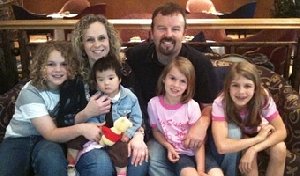
McDONOUGH, Ga.—When the Contemporary Christian group Casting Crowns signed up to tour with recording artist Steven Curtis Chapman six years ago, band members had no idea that their musical collaboration would inspire lead singer Mark Hall and his wife, Melanie, to adopt a child from China.

After a long wait, Melanie Hall received the perfect Mother's Day gift in China when she welcomed Hope into their family.

While traveling on the 84-city “All Things New Tour,” the Halls watched a video presentation each night dedicated to adoption awareness, a cause close to Chapman’s heart. The Halls felt led to respond to the great need for orphan care.

“About the 12th night of the tour, I went to my wife, Melanie, and said that I felt like God was leading us to adopt a child,” said Hall, who is the student pastor at Eagle’s Landing First Baptist Church in McDonough, Ga., as well as a performer with Casting Crowns. 

“She just calmly looked at me and said, ‘This is something that I have known for some time … I’ve just been waiting on you.’”

After spending some time praying about adding a fourth child to their busy family, the Halls added their name to a long waiting list and started the necessary procedures for international adoption.

In China, Mark and Melanie Hall—along with their children John Michael, Reagan and Zoe—welcome Hope to their family. (PHOTOS/Courtesy of Mark and Melanie Hall)

“The adoption process is long and drawn out,” Hall said. “There’s a lot of things to do and hoops to jump through.”

In May, after being on the waiting list three years, the Halls traveled to China to receive their 2-year-old daughter, Hope. Steven Curtis Chapman’s wife, Mary Beth, joined them on the trip and provided guidance, support and encouragement along the way as they prepared to welcome the new addition to their family.

The adoption trip was filmed and was included on Casting Crowns’ live CD/DVD project, Until the Whole World Hears.

On Mother’s Day, the Halls were overwhelmed with emotion as they held Hope in their arms for the first time and remembered reading reports that just a few days after her birth, she had been abandoned outside of a hospital, wrapped in a red blanket.

With the trauma of medical treatments and living in an orphanage behind Hope, she is enjoying the freedom of a new life and experiencing what it means to be loved.

“She is already running the house,” Hall said, beaming. 

For families considering adoption, Hall advises: “There’s only so much praying you can do about it. The need is so great for children to live in a godly home. Once you start praying about adopting a child, it’s just a matter of time before love takes you in.”