Winter break provides opportunities to share gospel

ARLINGTON—For Texas Baptist college students serving on mission trips between semesters, sharing the gospel happened well beyond their destinations.

Katie Walker, a student at Howard Payne University, served over Christmas break with a Go Now Missions team in Moldova. The team brought new winter boots and warm socks to orphans in facilities supported by Children’s Emergency Relief International.

Students found opportunities to share the hope of Christ where they were serving, with people they met while traveling and with those they encountered during mission initiatives through Go Now Missions, the student missions arm of the Baptist General Con-vention of Texas.

Student teams spread the gospel by giving new boots to orphans in Moldova, engaging African immigrants in New York City, encountering college students in East and South Asia, helping rebuild a Haitian village and building a home in Jamaica.

Hector Briceño, a Texas A&M University at Kingsville student who went on a trip to share the gospel with Africans in New York City, found an opportunity to share the hope of Christ with Japanese-speaking man from New Zealand who stayed at the same hostel as the team. After the man asked to join the mission team, Briceño and his colleagues were able to minister to him for the duration of the trip.

John Williams from East Texas Baptist University and Azri Flores from Texas A&M University in Kingsville share the gospel in Harlem during a Go Now Missions winter break trip.

“He barely knew about Jesus Christ,” Briceño wrote. “He only knew that (Jesus) was a man that had died. It took a long time, but God gave me the opportunity to minister to him one on one. He understood everything. The team was able to get him a Japanese Bible, and he was very impressed when he started reading the Scriptures in his mother language. I believe reading Scripture in your first language is very powerful.”

Opportunities to expand God’s kingdom continued as the students began their specific projects. A 10-member student team delivered new boots to more than 2,000 Moldovan orphans who are cared for by orphanages supported by Children’s Emergency Relief International, the international arm of Baptist Child and Family Services. The Texas students attempted to shine a ray of hope into the orphans’ lives.

Dani Clark (center) from Howard Payne University and Melissa Bulman (right) of Tarleton State University, members of a Go Now Missions team from Texas, work on a construction project in Jamaica.

“I pray they forever remember that it was Christ who gave them their shoes,” wrote Howard Payne University student Carlee Ammons. “‘Cadou de la Isuis’—these shoes are a gift from Jesus—is what we told each child as we handed them their shoes. I pray they take hold of that promise and never forget the love of Christ. I pray we don’t forget it either.”

Hector Castelltort, a Texas A&M University at Kingsville student who served in Haiti, saw opportunities to minister while painting a school. There he befriended a young man with whom he sought to share the hope of Christ. The interaction between the two nearly moved Castelltort to tears.

“We didn’t only paint a school in four days but also painted the dreams of a better future for the kids who go to that school,” he wrote.

A 10-member student team delivered new boots to more than 2,000 Moldovan orphans who are cared for by orphanages supported by Children’s Emergency Relief International, the international arm of Baptist Child and Family Services.

Brenda Sanders, who leads Go Now Missions, praised Texas Baptist college students for wanting to serve God between semesters. In the past two years, interest in winter mission trips has increased significantly, she noted, as students view their break from school as an opportunity to share the gospel outside where they live.

“More and more students are seeing the holidays as a good time to invest in missions,” she said.

“Not only do they have the time, but they see the opportunities for open doors to share about the meaning of Christmas. I also think that the types of mission trips we had for students really resonated with them. This generation loves to be involved in meeting needs and building relationships. They had the opportunity to build a house, work with orphans or build relationships with immigrants or college students.”


For more information about Go Now Missions, visit www.gonowmissions.com.


Line between inspiration and insanity may be narrow

SALT LAKE CITY (RNS)—A teenager says God appeared to him in a grove and told him to start a new Christian church. Another person claims the Almighty talks to him through the radio. A French girl gets messages from heaven to lead an army against the British, and a Utah woman thinks she is meant to have Jesus’ baby and 12 husbands.

Some of these figures were considered prophets and saints, while others were judged insane. The question is: How do you tell which is which?

Jim Jones, who founded the Peoples Temple in San Francisco, led more than 900 followers to commit suicide in Guyana.

Historic figures who started new religious movements—including Martin Luther, who launched the Protestant Reformation; Joseph Smith, founder of Mormonism; Mary Baker Eddy of Christian Science and Ellen White of Seventh-day Adventism, as well as Jim Jones of the People’s Temple and David Koresh of the Branch Davidians—were viewed by outsiders as delusional. But followers, ranging from the millions to the hundreds, considered each to be credible guides to divinity.

“There is ample research to suggest that, for the most part, religious people are no more inclined to mental illness than nonreligious people,” said Wendy Ulrich, founder of Sixteen Stones Center for Growth, a small group of mental-health professionals, in Alpine, Utah. Pathology arises, Ulrich asserts, when a person’s search for meaning “goes into extreme overdrive” and people “lose touch with vital aspects of reality.”

From the start, psychologists must weigh a person’s religious and cultural expectations. The more important faith is, the more prominent a role religious language will play in a person’s mental process.

Maybe the person is speaking in tongues, communing with the dead, sensing the presence of a guardian angel or getting messages from milk cartons. So, the questions arise: Does the experience fit with some religious tradition that is dominant in a culture? Does it make sense to a particular faith community, or is it out of the norm? Is it consistent with the faith’s scripture, practices and beliefs, or does it challenge them?

Unbalanced people may repeatedly quote scriptures or obsessively perform rituals or adopt a grander, more spiritual identity such as King David, Moses, Muhammad or Jesus.

“If the pope says he’s the Vicar of Christ, that’s OK because it fits with a centuries-old tradition,” said Ralph Hood, who teaches psychology of religion at the University of Tennessee in Chattanooga. “If I think I am, I’m in trouble.”

There are at least two common ways in which mental patients describe their delusional experiences with God, Ulrich says. Schizophrenics hear voices or see things that are not there. Those suffering from paranoia, meanwhile, see conspiracy in everyday events or think God is speaking specially to them.

“They over-interpret common experiences to mean either someone is out to get them or God is out to help them,” Ulrich says. “Ideas of grandiosity and thinking of themselves as special or chosen in some way are not uncommon.”

But it never is easy to assess the authenticity of another person’s spiritual experience.

Ulrich has known people whose behavior could be inspiring or could signal a muddled mind. Many of them take part in church services without fellow believers even being aware.

She has known some religious folks who are unusually clairvoyant, with a penchant for and openness to revelatory experiences. They largely are calm, highly functioning, rational people, who are socially engaged but don’t call attention to themselves.

She’s also seen people who are “very high-functioning in some areas of life and can be quite charismatic, intelligent and charming,” but they begin to “over-interpret impressions or events as messages from God in ways that make other people nervous, even people within their own value system or religious system.”

Such people think the “rules” of the community don’t apply to them and may start to feel that others are out to get them, she says, and they don’t understand why.

If you ask a religious person how God communicates, she might say through impressions or a kind of whispering. But if you ask a mentally ill person that question, he might say, “I shook hands with him yesterday.”

For a believer such as Gregory Johnson, the line between genuine religious experience and madness sometimes is blurred. Johnson, who directs Standing Together, a Utah group of evangelical pastors, is not a charismatic Christian, so he doesn’t speak in tongues or engage in the more ecstatic practices. But he does believe God heals, speaks and leads.

“I see a range of healthiness and levels of extremity within the confines (of Christianity),” he said. “I see people who are zealous but not insane.”

One of the tests, Johnson says, might be the “fruits” or outcomes of the divine communication. Does the experience lead a person into more altruistic actions, greater caring for others and deeper relations, or does it simply draw the recipient further into narcissism?

As a pastor, Johnson says, he would worry about actions that are “destructive to other people or to themselves.”


Actress pushes churches to reach out to prisoners

WASHINGTON (RNS)—Jesus left his followers with precious few commands: love thy neighbor, feed the hungry, clothe the naked and visit the prisoner among them. So why do so many churches have such a hard time with that last one? 

Oscar-winning actress Hilary Swank, for one, is waiting for a good answer.

Hilary Swank plays Betty Anne Waters, who lobbied to get her brother, Kenny Waters, (Sam Rockwell) freed from a wrongful conviction in Conviction. (RNS PHOTO/Courtesy Innocence Productions)

In her recent movie, Conviction, Swank plays Betty Anne Waters, a real-life high school dropout whose 18-year quest to free her brother from a wrongful murder conviction led her from GED to the bar exam.

“As we’re sitting here speaking right now, someone is in prison for a crime they didn’t commit,” Swank said at a recent screening of the film at a historic black church in Alexandria, Va. “And that’s not OK.”

Waters’ brother, Kenny Waters, was the 83rd prisoner exonerated and freed as a result of DNA testing, forced by the persistence of the New York-based Innocence Project. To date, 261 prisoners have seen their wrongful convictions overturned.

“I think we always have to have hope and faith that eventually the right thing will happen,” Swank said. “I don’t know how it will be solved, but I think in talking about it, we shine a bright light.”

Prison Fellowship, the nation’s best-known church-based outreach to inmates, is teaming with Swank and her film to help show congregations prisoners’ needs, and lobby to reduce wrongful convictions, end prison rape and halt the shackling of female inmates during childbirth.

“I think it’s hard to convince people these things are happening,” said Kimberly Alleyne, spokeswoman for Prison Fellowship. “Who wants to believe that these women are being shackled and held down while they’re giving birth to babies? It’s almost unconscionable.”

While Swank’s movie highlights the problem of wrongful conviction, U.S. prisons are full of people who admit to being guilty. In 2008, the last year for which the Bureau of Justice Statistics data was available, 7.3 million people—one in every 31 American adults—were in jail, prison, on probation or on parole.

{youtube}JCwlaLyjtcA{/youtube}

“I think some struggle with the issue of helping prisoners because, by and large, many of the people who are serving sentences are guilty,” Alleyne said. “Our approach is whether they’re guilty or not—particularly if they are guilty—they still need to be embraced by the love of God. This is not a judgmental work.”

Pat Nolan, a Prison Fellowship vice president who served 29 months in federal custody after pleading guilty to corruption charges as a California state legislator, knows what it’s like. He maintained his innocence and said he accepted a plea deal to avoid the possibility of a long imprisonment.

“When you’re in prison, it’s like you’re an amputee,” Nolan said. “You’re cut off from your family, you’re cut off from your job, from your community, from your church.”

At the screening, Nolan’s voice broke with emotion as he said: “I still have every letter that was sent to me (in prison). Within each of your churches are people who have sons, brothers, wives, sisters in prison. They suffer alone.”

Prison Fellowship, founded by Watergate ex-con Chuck Colson, currently partners with about 8,000 U.S. churches, but says it needs more. Some churches are reluctant to join prison work because it involves “stepping out of your comfort zone and going to a place you haven’t been to before,” Alleyne said.

But she said it’s not just about hardened criminals inside the walls, but what happens to them when and if they rejoin society on the outside.

“The local church is the backbone of our re-entry process,” Alleyne said. “People from the churches and the community are there waiting on the outside so that when a prisoner comes out, he or she has somewhere to go for clothing, to get housing, to get help with jobs.”

It’s what happens at Shiloh Baptist Church, which hosted the film screening. Because inmates often serve sentences far from home, Shiloh runs a teleconferencing ministry to allow families to talk to incarcerated loved ones.

“I’ve done teleconferencing with prisoners who haven’t seen their family in 16 years,” said volunteer Lionel O. Smith, a 30-year veteran of the federal prison system. “They have just an emotional period of about 10 to 15 minutes where they’re just so emotional they can’t even speak.”

Shiloh’s pastor, Lee A. Earl, said serving prisoners and their families is part of the church’s mandate to address all aspects of human need.

“Like Miss Swank said, it’s a tremendous love story. This is about love. That’s what Christ was about, that’s what he died for—receiving people that proper … folk didn’t think he ought to be receiving. If we’re not careful, we’ll get into that same kind of religion.”


Baptist Briefs

‘Immoral behavior’ cited in Missouri convention resignation. The Missouri Baptist Convention announced the resignation of Executive Director David Tolliver. “With deep regret we announce Dr. David Tolliver has resigned as executive director of the Missouri Baptist Convention due to immoral behavior with a woman,” a release, posted by the convention’s in-house news journal, The Pathway, said. “His resignation is effective immediately. Jay Hughes, associate executive director of support services, will serve as acting interim executive director until a permanent interim executive director is named by the Executive Board.” Tolliver, who was named to the position permanently in February of 2009 after serving nearly two years in an interim capacity, first joined the state convention’s staff in 2005. He previously was the long-time pastor of a St. Louis-area church. Convention officials did not respond to phone calls and e-mails asking for additional information or comment.

BJC chief honored. Baptist Joint Committee Executive Director Brent Walker received an award from the Richmond, Va.-based First Freedom Center for his work advancing freedom of conscience and basic human rights for people of all faiths, traditions and cultures. Walker was named winner of the Virginia First Freedom Award, one of the three awards given annually by the education organization to recognize extraordinary advocates of religious freedom who have made remarkable contributions. The First Freedom Center also bestows international and national First Freedom Awards. Walker is both a member of the U.S. Supreme Court Bar and an ordained minister. He began his tenure at the Baptist Joint Committee in 1989 and became executive director in 1999. 

Professor named to detainee task force. David Gushee, distinguished university professor of Christian ethics at Mercer University, has been named to the Constitution Project’s bipartisan task force on detainee treatment. The goal of the task force is to investigate and report on past and current treatment of detainees by the U.S. government as part of its counterterrorism policies. Gushee, director of Mercer’s Center for Theology and Public Life, is the only Christian ethicist on the panel, which includes attorneys, law professors and physicians, as well as former ambassadors and generals. The task force will be chaired jointly by Asa Hutchinson, former undersecretary of the Department of Homeland Security during the George W. Bush administration; Eleanor J. Hill, former staff director for the Joint Congressional Inquiry on the Sept. 11 attacks and inspector general of the Department of Defense under President Bill Clinton; and James R. Jones, a former member of Congress from Oklahoma who served as ambassador to Mexico under Clinton. The task force should release its final report in 12 to 18 months.

Summer service opportunity available in China. Volunteers for China needs Christians to teach conversational English in China next summer. Program cost is estimated to be $1,200 to $1,300, plus airfare estimated at $1,000 to $1,500. For more information, contact David or Ann Wilson at (865) 983-9852 or visit www.volunteersforchina.org.


BGCT ends year short of budget, behind 2009

The Baptist General Convention of Texas ended 2010 nearly 13 percent below budget requirements and 7.65 percent behind the previous year’s receipts, the BGCT treasurer’s office reported.

Texas Baptists gave $32,644,317 to the BGCT Cooperative Program, 87.37 percent of the $37,365,000 budget. In 2009, churches gave $35,347,969.

“While we’re disappointed with Cooperative Program receipts this year, we feel that the reduction from 2009 is due in large measure to the economy and high unemployment,” BCCT Treasurer Jill Larsen said. “We hear anecdotally from some of our churches that they are suffering from the recession still.”

However, she noted optimistic signs in terms of giving in November and December. Larsen characterized Cooperative Program forecasts for 2011 as “fairly conservative.”

While the detailed budget calls for $35,850,000 in 2011, she pointed out that includes $1 million from reserves and $2 million in projected revenue from special fund-raising initiatives.

“That means the actual 2011 Cooperative Program budget (from church receipts) is $32,850,000—only $200,000 more than we received in 2010,” Larsen said.


Faith Digest

Beliefs about human origins hold steady. Four in 10 Americans believe God created humans in something like their present form within the last 10,000 years, a recent Gallup Poll revealed. While that percentage represents a slight dip from 2008, when 44 percent said they do not believe divinely made humans evolved over time, it has remained remarkably stable since 1982, the earliest year for which Gallup provided data. Nearly as many Americans—38 percent in 2010—say they believe humans evolved over time, but God guided the process. That percentage, too, has remained consistent since 1982. Gallup’s 2010 poll was based on telephone interviews of 1,018 adults conducted Dec. 10-12. The margin of error is plus or minus 4 percentage points.

Happiness is sharing a pew with friends. Close friendships among congregants, rather than theology, seems to be the key to happiness among religious people, according to a recent study. One-third of Americans who attend religious services weekly and have three to five close friends in the congregation said they are “extremely satisfied” with their lives. In comparison, only one in five Americans who attend services weekly but have no close friends in the congregation say they are extremely satisfied. The findings are from the Faith Matters Survey of U.S. adults, which included 3,108 people in 2006 and 1,915 in 2007.

IHOP drops suit against IHOP. The International House of Pancakes has dropped its suit against the International House of Prayer after claiming the Missouri-based church had infringed on its trademarked IHOP acronym. Patrick Lenow, spokesman for IHOP Restaurants, said the suit was dismissed on Dec. 21 but negotiations were continuing between the chain and the church. The Kansas City church declined comment other than to confirm it was aware of the dismissal of the suit. In its suit filed Sept. 9 in the U.S. District Court in Los Angeles, the pancake chain said the church “intended to misappropriate the fame and notoriety of the household name IHOP to help promote and make recognizable their religious organization.” The Glendale, Calif.-based breakfast chain uses the website IHOP.com and the church’s website remains IHOP.org.

Fewer ‘Middle Americans’ married, attending worship. Marriage among Americans who have graduated high school but not college is on the decline, and their religious attendance has dropped at the same time, a recent report shows. So-called “Middle Americans” ages 25 to 60 who were in their first marriages dropped from 73 percent in the 1970s to 45 percent in the 2000s, according to The State of Our Unions, an annual report from the National Marriage Project at the University of Virginia. Middle Americans—who comprise 58 percent of the U.S. adult population—have a high school diploma and may have some post-secondary education but have not gained a four-year college degree. Members of this group have seen a similar drop in religious attendance, from 40 percent attending nearly every week or more in the 1970s to 28 percent in the 2000s.

–Compiled from Religion News Service


Grant will help answer: ‘How can I be a minister?’

BIRMINGHAM, Ala. (ABP) — An international student ministry and historical partner of the Cooperative Baptist Fellowship has received a $750,000 Lilly Endowment grant to help theologically moderate churches discover God's calling for both clergy and laity.

The grant will support a new program called Echo Initiative by Passport, Inc., a non-profit ministry organization started 19 years ago by husband-and-wife team of David and Colleen Burroughs while they were still in seminary.

The Echo Initiative — referring to God's call as a repeated sound throughout a Christian's life — will enable the ministry originally conceived as a summer camp for students in grades 6-12 to produce needed resources it cannot currently provide, said Colleen Burroughs, executive vice president for the organization based in Birmingham, Ala.

Developed in conversation with creative thinkers, ministers and theologians, the initiative will seek to broaden the conversation of call beyond paid vocational ministries to reach into the daily lives of children, youth and adults. It will produce tangible resources such as Vacation Bible School and retreat materials designed around the question, "How can I be a minister as a follower of Christ today?"

It will be funded by the largest independent donation in Passport's history and its first free-standing grant from the Lilly Endowment. "Christmas came early for our office this year," said Passport President David Burroughs. "We are very excited about the ability to implement the carefully crafted vision that this grant makes possible."

The Echo Initiative includes three phases.

An education initiative will produce resources for children, youth and adults designed to be flexible enough to allow for varied settings but cohesive enough to connect the conversation of God's call to follow over time.

An empowerment initiative will include training of college-age leaders for annual Echo events for youth and mini-grants for practicum experiences through PASSPORTexpeditions, a program that provides students with individual opportunities around a specific interest like ministry to victims of sex trafficking or addressing poverty through Passport's Watering Malawi well-drilling initiative.

An encouragement initiative will provide professional development support for youth ministers both to reaffirm their personal vocational calls and to cultivate a culture of calling with students in their ministries.

Colleen Burroughs said the Echo Initiative is particularly interested in offering the new resources in Spanish and is working out relationships to enable not only word-by-word translation from English but also considering cultural context.

She said Passport has already received the Lilly check and plans to "hit the ground running." Two expeditions are tentatively planned for next summer. Producing solid resources takes a bit more time, she said, but planning is already underway.

Though it is the first direct grant, this isn't the first time that Passport has participated in a program funded by Lilly.

Previously Passport worked with CBF in a Lilly-funded three-year program to create leadership "ecosystems" and with Baptist Theological Seminary at Richmond in the Samuel Project, a Lilly-funded project that included a weeklong Echo experience for high-school students in 2005.

–Bob Allen is senior writer for Associated Baptist Press.


Senator concludes probe of ministry finances, calls for self-reform

WASHINGTON (RNS)—Sen. Charles Grassley of Iowa has concluded a three-year probe into alleged lavish spending at six major broadcast ministries and asked a prominent evangelical group to study ways to spur self-reform among religious groups.

Since 2007, Grassley, the outgoing top Republican on the Senate Finance Committee, has pursued allegations of high salaries and the use of private jets and Rolls Royces by some of the nation’s most prominent TV ministers.

On Jan. 6, he released a final 61-page review that said evangelists Benny Hinn of Texas and Joyce Meyer of Missouri had made “significant reforms” to their operations, but four others provided incomplete or no responses.

Grassley asked the Evangelical Council on Financial Accountability to conduct a formal study of issues raised by his staff, including whether churches, like other nonprofits, should be required to file detailed financial disclosure forms to the Internal Revenue Service.

“The staff review sets the stage for a comprehensive discussion among churches and religious organizations,” Grassley said in a statement. “I look forward to helping facilitate this dialogue and fostering an environment for self-reform within the community.”

Both Grassley and ECFA officials said they hope to resolve issues in ways that do not involve new legislation.

“Less government is better, and I think both ECFA and the senator espouse that philosophy,” said Michael Batts, an ECFA board member and certified public accountant who will chair the ECFA’s new Commission on Accountability and Policy for Religious Organizations.

Although the association has worked primarily on certifying the financial integrity of evangelical groups, the commission’s work will include a range of religious organizations and other nonprofits, he said.

“These issues are the types of issues that transcend theology and doctrine and actually relate to the freedoms and the practices of all religious organizations,” he said.

There is no timetable set for how long the new commission will work before sending Grassley a report, but ECFA President Dan Busby said it would be “a robust process” of more than a few months.

Among the issues it will consider are:

  • Whether there should be limits on clergy housing allowances
  • Whether tax rules about “love offerings” received by clergy should be clarified
  • Whether current laws that prohibit partisan politicking in churches should be changed
  • Whether the IRS should create an advisory committee of churches and other religious organizations.

Americans United for Separation of Church and State criticized the report’s recommendation of repealing the prohibition of church electioneering.

“If these multimillion-dollar ministries are already misusing their donations for personal gain, imagine how much more dangerous they would be operating in the world of partisan politics,” said Barry Lynn, executive director of Americans United.

Grassley staffers determined they did not have “time or resources” to issue subpoenas to the four ministries that did not completely respond to their inquiries. They instead issued reports based on public records, third parties and insiders.

Among their findings:

  • Insiders in Kenneth Copeland Ministries in Fort Worth said they were intimidated from speaking with committee staff, with one former employee saying they were told “God will blight our finances” if they talked.
  • Georgia pastor Creflo Dollar’s ministry was called the “least cooperative,” with staffers unable to determine the names of board members.
  • The majority of questions asked by Grassley staffers of Bishop Eddie Long’s megachurch in Lithonia, Ga., remained unanswered, including the amount of his salary.
  • Several former staffers at Paula White’s megachurch in Tampa, Fla., wanted to speak with staffers but “were afraid of being sued by the church,” and at least one was reminded by a church lawyer of a previously signed confidentiality agreement.


Website highlights how Baptists were changed by Civil War

ATLANTA (ABP) — The American Civil War led Baptists in the South to forsake their historic commitment to the separation of church and state and embrace Christian nationalism, the head of a Baptist history organization says on a new website.

While Southerners later would claim the Civil War wasn't fought over slavery, Bruce Gourley says, for Baptists of the day it was a defining issue.

Bruce Gourley, executive director of the Baptist History and Heritage Society, says the Civil War challenged Baptist convictions that had been hard won by a persecuted minority fighting for religious freedom in Europe and Colonial America.

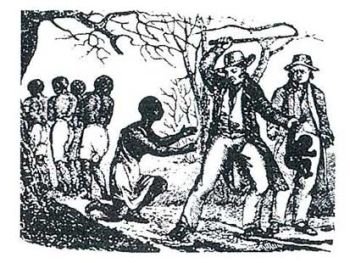
Defending slavery as an institution ordained by God, Gourley wrote on a new website coinciding with the 150th anniversary of the Civil War, many Baptist leaders in the South became convinced the newly formed Confederate States of America was God's chosen nation and viewed battlefield service as honoring to God.

"The Christian nationalism embraced by many Baptists in the Confederate States of America watered down their commitment to the separation of church and state and reduced God to the God of the South," Gourley wrote in an article on American Civil War: In Their Own Words, a website he launched several weeks ago.

Gourley said a similar mistake was made in the late 20th and 21st century when "many embraced the myth of America's founding as a Christian nation and denied their own faith heritage of separation of church and state."

Gourley

Gourley launched the website to make research behind his forthcoming book, Diverging Loyalties: Baptists in Middle Georgia During the American Civil War by Mercer University Press, available to the general public. Though it is a personal project, he is inviting organizations, businesses and individual to become sponsors of the public service by donating $1,000 or more to the Baptist History and Heritage Society.

Gourley said things like news coverage of the 150th anniversary of the Civil War focused on controversies like "secession balls" that polarize whites and blacks and reports linking white supremacist groups with the Tea Party movement prompted him to develop the site out of "a simple desire to tell the historical truth."

In the decades that followed the Civil War, for example, Gourley said many white southerners, including Baptists, came to deny that slavery was the cause of the war — a denial that remains widespread today. For Baptists of the day, however, it was clear that slavery was a root cause.

When Southern Baptists gathered in 1845 Augusta, Ga., to organize a new convention, Gourley said, much discussion was given to differences over missionary strategy and funding with Baptists in the North. He said the record is clear, however, that Baptists in Augusta believed northern abolitionists were responsible for Baptist division and that Baptists in the South had been patient long enough.

One statement from the meeting expressed outrage that a northern Baptist missionary had "actually remitted money to the United States to aid in the assisting of slaves to 'run away from their masters.'"

While many, if not most, white Baptists in the South believed that slavery was ordained by God and necessary for the southern economy, Gourley said they were not monolithic on the need for secession.

Privileged white slaveholders had the most to lose, Gourley said, but many southern whites did not own slaves. To rally their support, slaveholders argued that even the poorest whites were superior to blacks and warned that if Lincoln's campaign succeeded that blacks would take away white jobs.

Even with that, Gourley said, many white southerners were unconvinced but joined the Confederate Army anyway to defend families, fight alongside friends and in hopes of earning a better life.

The Civil War lasted from April 12, 1861, the day that Confederates fired on federal Fort Sumter, S.C., until Robert E. Lee's surrender at Appomattox, Va., on April 9, 1865. In between, as many as 8,000 hostile engagements took place between Union and Confederate forces and hundreds of major battles. An estimated 620,000 Americans died from battle and disease, nearly as many casualties in all other U.S. wars combined.

A main feature of the American Civil War: In Their Own Words website is a daily snippet of history about events that occurred on the same day 150 years ago. 


Texas legislators faced with daunting budget deficit

AUSTIN—Texas lawmakers are faced with a sluggish economy and a budget deficit as high as $25 billion, forcing them to make difficult spending decisions during the legislative session that begins Jan. 11.

Staring at a drop in revenue, no prospects of receiving federal aid to pull the state out of the deficit and a reliance on income from the state sales tax during slow economic period, legislators will be seeking ways to navigate a difficult and intricate situation, Texas Baptist Christian Life Commission Director Suzii Paynter said.

 State Seal“We are on the eve of a new legislature in Austin,” Paynter wrote. “Complicated leaders representing diverse constituents will be charting a course (or not) on a complex landscape. My prayer is that we begin to see signposts for this achievement—stability, health, growth and prosperity for Texas families and putting them first.”

Legislators will face pressure to make up for the budget shortfall through a variety of options, including the expansion of gambling, expansion of toll roads and the reduction of aid for children and the poor. Using some—or all—of the $9.5 billion rainy day fund will be hotly debated.

In such an environment, legislators need to hear from their constituents, not simply lobby groups who continuously knock on their doors, Paynter said. Legislation affects people across the state, and lawmakers need to understand how their decisions affect lives, she emphasized.

“There is no mere business interest, there is no association, there is no political institution that can, by being the beneficiary of generous policy, set the single plumb line for a stable future,” Paynter said.

“And the inaction of ignoring the elderly, the mentally disabled, the hungry, the poor, the abused, the economically exploited, the neglected, the dying, the recovering addict, the re-entering felon is a sure way to destabilize the future of Texas families. Although the airwaves are full of dollar signs and reality-check statistics, any principled moral voice is clear that the stepladder to a successful tomorrow will not be made out of budget cuts alone.”

Paynter encouraged Texas Baptists to engage lawmakers regarding issues about which they are passionate. The path to a better and more just Texas comes as a result of passionate people fighting for what they believe while respecting the viewpoints of others, she stressed.

“Find your voice when it comes to important values. They almost always come with some contradictions that need to be spoken, aloud,” she said.

“What we know to be right or just may not be politically feasible—at least at first. The great statesmen of our history called this deliberation; they fought. They talked about struggling with either/or and they talked about wanting both/and until there was a healthy compromise, and they set the world on a course to constitutional democracy.”

The CLC can help connect people to the elected leaders, provide material to help Baptists speak about issues and help individuals raise topics that are affecting their communities, she added.

The CLC also will focus on influencing legislation in several areas this session:

  • Fighting the expansion of gambling, a battle it has led for decades on the basis that it never creates the revenue for the state that it promises and negatively impacts Texas residents. With a budget deficit, gambling lobbyists regularly argue the expansion of gaming is a way to solve the financial difficulty.
  • Closing the loopholes that allow payday lenders avenues through which vulnerable people are exploited by being charge interest as high as 400 percent.
  • Pushing for the efficient use of funds to aid those in need, particularly children and the poor. These areas will come under particular scrutiny this session as lawmakers seek to make budget cuts. The CLC believes aid to society’s most vulnerable is crucial, but funds also should be used effectively and efficiently.
  • Encouraging incentives for families and organizations—including churches—to use renewable energy and become more energy efficient.


For more information, visit www.texasbaptists.org/clc or www.facebook.com/christianlifecommission .


On the Move

Andy Anderson has resigned as pastor of First Church in Eldorado.

Roddy Arnold to Crutchfield Heights Church in Sherman as pastor.

Gayle Baucum to Pioneer Church in Valley View as pastor.

Gary Bowman to First Church in Bloomington as pastor.

Clay Brockman to Western Heritage Church in Cresson as minister of music and youth.

Ryan Buck to Western Heritage Church in Cresson as associate minister for children and community.

Josh Burton to First Church in Pottsboro as pastor.

Sam Buzzard to Hillcrest Church in Marshall as pastor.

Adan Cancino to La Esperanza Iglesia in George West as interim pastor.

Aaron Crawford to Calvary Church in Simms as pastor.

Jonathan Dick to Faith Community Church in Maud as pastor.

Kevin Evans has resigned as pastor at Valley Creek Church in Flower Mound.

Frank Florez to Asherton Mission in Asherton as pastor. He also continues to serve as pastor of Gethsemani Church in Carrizo Springs.

Gains Gardner to First Church in Rockport as associate pastor, where he had been interim minister of education and administration.

Bill Gillum to First Church in San Angelo as minister of music.

Michael Gleason to First Church in Kingsville as minister of education and youth from First Church in Pettus, where he was youth minister.

David Goff has resigned as minister of music and worship at First Church in Portland.

Jeff Lanningham to First Church in Rockport as minister of education and administration.

Zach Lentz to First Church in Bronte as youth minister.

Ruben Metcalf to San Angelo Cowboy Church in San Angelo as pastor.

Carl Moman to First Church in Brownfield as pastor, where he had been interim.

Dennis Morgan to Oak Grove Church in Grapeland as pastor.

Jimmie Nelson to Cross Timber Church in Burleson as interim pastor.

Sarah Norris to First Church in Amarillo as associate children’s minister.

John Pope to Galilee Church in San Angelo as pastor.

Josh Rhodes to Rainbow Church in Rainbow as youth minister.

Kenny Sanders to Rose Hill Church in Texarkana as interim pastor.

Bruce Scofield to First Church in Hebron as interim pastor.

Bob Shirley to First Church in Normangee as pastor.

John Stickl to Valley Creek Church in Flower Mound as pastor, where he was associate pastor.

Koby Strawser to Spring Creek Church in Meridian as pastor.

David Taylor to Somerset Church in Somerset as pastor.

Neal Terwilliger to First Church in Sulphur Springs as worship pastor.

Michael Weaver to First Church in Poteet as pastor.

David Williams to First Church in Paducah as pastor.

Jeremy Woods to Cottonwood Creek Church in Denison as pastor.

Kevin Wooley completed his service as interim worship leader at First Church in Sulphur Springs.


Around the State

Dillon International will hold a free adoption information meeting at the Buckner Chil-dren’s Home campus in Dallas Jan. 24 at 6 p.m. A representative will give an overview of adoption in China, Korea, Haiti, India and Hong Kong, plus new opportunities in Ghana. A domestic adoption program for Texas families and adoption programs in Russia, Ethiopia and Honduras, available through an affiliation with Buckner, also will be discussed. For more information or a reservation for the meeting, call (214) 319-3426.

Losing teams in Howard Payne Univeristy’s fundraiser for Go Now Missions had to wear facial hair dictated by spinning the “mustache wheel of doom.” The wheel depicted various facial hair styles. Participants were encouraged to wear the style at least a week. The winning team was exempted. John Aceves and Nathan Gilbert got their beards shaved as a part of the fundraiser. The goal was $3,000, but $7,919 was collected.

The University of Mary Hardin-Baylor conferred degrees upon 207 students during winter commencement ceremonies. One hundred eighty-one students received baccalaureate degrees, 23 students received master’s degrees and three students received doctoral degrees.

During winter commencement ceremonies, 88 Howard Payne University students received baccalaureate degrees, while one student each earned an associate’s degree and master’s degree. Gary Price received an honorary doctor of humanities degree.

Baylor University graduate students Xiomara O’Neill, Beatriz Ramos, Andrew Trujillo and Emilie Ventura have been awarded scholarships from the Hogg Foundation for Mental Health to support bilingual mental health services in Texas. All are students in the Baylor School of Social Work. The foundation pays tuition and fees for new bilingual students entering graduate social work programs in Texas. In return, students agree to provide mental health services in Texas for a period equal to the timeframe of the scholarship.

Three Texans were among those who received degrees from New Orleans Baptist Theological Seminary during winter commencement ceremonies. Josh Stewart, worship pastor at Kingsland Church in Katy, received a master of arts degree in worship studies; Brandon Hanson, minister of students at Calvary Church in Beaumont, master of divinity; and Brad Hoffman, pastor of Memorial Church in Baytown, doctor of ministry.

Gary Brock, chief operating officer of Baylor Health Care System in Dallas, has been elected to the Texas Hospital Association’s 2011 board of trustees.

Anniversaries

Tye Howard, fifth, as pastor of Iglesia Vaquera in Waxahachie, Dec. 18.

Harvey Patterson, fifth, as pastor of First Church in Luella, Dec. 22.

Glenn Killam, fifth, as pastor of White Creek Church in George West.

Heath Peloquin, fifth, as pastor of Brighton Park Church in Corpus Christi, Jan. 1.

First Church in San Antonio, 150th, Jan. 22-23. While the church has engaged in mission efforts throughout the year to commemorate the milestone, the celebration will culminate with a fellowship and barbecue dinner at Rio Cibolo Ranch on Saturday from 2 p.m to 7 p.m. Dinner will be served at 5 p.m. Sunday will include a reception for former ministerial staff. Ticket sales will continue through Jan. 16. For more information, call (210) 226-0363. Don Guthrie is pastor.

Keith Petteway, 15th, as pastor of Shiloh Church in Franklin.

Danny Wendt, 10th, as pastor of First Church in Hempstead.

Chet Haney, 15th, as pastor of Parkside Church in Denison, Feb. 1.

Event

New York Yankees pitcher Andy Pettitte will be a guest speaker at The Heights Church in Richardson, Feb. 6 at 9:15 a.m and 10:50 a.m. Pettitte’s wife, Laurie, will sing in both services. For more information, go to www.theheights.org.

Revival

Mercury Church, Mercury; Jan. 16-19; evangelist, Robert Barge; music, Jeff Gore; pastor, Keith Simpson.

Deaths

J.T. Thweatt, 79, Nov. 25 in Glendale, Ariz. A graduate of East Texas Baptist University and Southwestern Theological Sem-inary, he served 40 years as a pastor and as an administrator with the Baptist Foundation of Arizona and Arizona Baptist Retirement Centers. He is survived by his wife, Dee; daughter, Cheryl Brown; son, Steven; sister, Mary Harwood; brother, Edwin; five grandchildren; and five great-grandchildren.

Felix Gresham, 94, Dec. 6 in Stephenville. He served as a U.S. Army chaplain during World War II in campaigns in New Guinea and the Philippines. He was the first director of the Baptist Student Union at John Tarleton College (now Tarleton State University) in Stephenville, and later was pastor of First Church in Stephenville. He became dean of students at Southwestern Theological Seminary in 1955, and served at the seminary in various capacities until his retirement in 1986. He was a longtime member of Gambrell Street Church in Fort Worth. He was preceded in death by his wife, Bunelle, in 2009. He is survived by his son, John; four grandchildren; and three great-granddaughters.

Larry Hardgrave, 60, Dec. 14 in Athens as a result of an automobile accident. He was pastor of Rope, Catch and Ride for Christ Cowboy Church in Mabank the last four years. He is survived by his wife of 23 years, Vivian; sons, Chad Hardgrave and Andy Cornelius; daughters, Tobie Herrington, Erin Ludtke and Mary Beth Retamoza; brother, Thomas; sister, Susan Ingram; and nine grandchildren.

Kenneth Medford Hutson, 82, Dec. 14 in Bedford. He was a church starter in southern Utah from 1963 until his retirement in 1993. He then became pastor of First Church in Bertram until his retirement in 1997. He was preceded in death by his sisters, Charlene Lambright and Susie Faye Hutson. He is survived by his wife of 62 years, Dorothy; sons, Dusty, Paul and Mark; brother, Kenneth Lester; and six grandchildren.

Geneva King, 80, Dec. 18 in San Antonio. Her husband, Bill, worked on the Baptist General Convention of Texas staff from 1966 to 1976. After his retirement, they moved to San Antonio, where she was a member of Shearer Hills Church 34 years. She was preceded in death by her husband of more than 52 years in 2001. She is survived by her sons, Ross and Kyle; sister, Jerry Toland; and four grandchildren.

Yvonne Stackhouse, 74, Jan. 7 in Chicago. She was the author of the book that marked Hardin-Simmons University’s centennial in 1991. An HSU graduate, she went on to service the university as a writing instructor, international student coordinator and board member. As university historian, she chronicled the school’s history from 1891 to 1991. In 2000, she was awarded an honorary doctor of letters degree for her contributions. She was preceded in death by her huband, John. She is survived by her sons, John Jr. and Brent; daughters, Cindra Taetzsch and Jayne Gaddy; sister, Valerie Lunau; brothers, Nelson and Bruce Annan; and 10 grandchildren.

Licensed

Evan Henson to the ministry at First Church in Duncanville.

Ordained

Lenard Dossey to the ministry at First Church in Yancey.