‘Miracle Detectives’ on the hunt for answers

WASHINGTON (RNS)—Dirt at an ancient holy site in Chimayo, N.M., reputedly cures a woman’s rare bone cancer. In North Carolina, a 14-year-old girl stricken with pneumonia is removed from life support but survives after an angelic image appears on a security monitor outside her hospital room. A Texas man lives despite being cut in half after being run over by a train.

Were these acts of God, or is there a scientific explanation for events that seem to defy reason?

For an hour every Wednesday night, that divisive question is the focus of Miracle Detectives, a prime-time television foray into exploring the miraculous.

Randall Sullivan and Indre Viskontas go on the hunt for the truth behind miracles in the new show Miracle Detectives on the Oprah Winfrey Network. (RNS PHOTO/Courtesy Windfall Management)

The show features two investigators—one a believer, the other a scientist—who seek answers to “mysterious incidents that seem to transcend logic.” It’s one of 17 programs on the new Oprah Winfrey Network that debuted New Year’s Day.

In a society less devout than the United States, and in an era of near daily scientific breakthroughs, such a show might seem a waste of valuable air time. But polls in the United States consistently show 80 percent of Americans believe miracles occur, and slightly more than half believe in guardian angels.

Miracle Detectives may be preaching to the converted: An online survey found more than 92 percent of the program’s viewers said they believe in miracles; nearly 3 percent said they do not; and almost 5 percent said they “need proof.”

Each week, hosts Randall Sullivan, who says he experienced a miracle himself, and Indre Viskontas, a neuroscientist who sings in her church choir but approaches the supernatural with skepticism, visit the sites of reported miracles to hear first-hand accounts.

Interviewing experts and conducting experiments, the duo gathers information and attempts to answer the question: Miracle, or not?

Sullivan, 59, said there is no conflict being an evidence-hungry reporter while also believing in supernatural signs and wonders.

“A journalist’s role is to explore,” he said. “Yes, you’re certainly seeking truth, but you’re also exploring. First thing I want to know is, what happened to people? What did they experience? I want it from the inside out, from them and from me.”

Viskontas, 34, holds a doctorate in cognitive neuroscience, but also calls herself “a very spiritual person,” who was raised a Roman Catholic and is a soloist in her church choir.

“I identify as a scientist,” she said. “A scientist is interested in trying to understand the phenomenon in front of them. They’re trying to get at what is actually happening.”

An expert in how memories are formed and retrieved, Viskontas said she’s in a unique position to discover what someone remembers, what actually happened and how circumstances led them to believe there is a supernatural force at work.

That doesn’t mean she denies the possibility of the miraculous. In fact, she struggles with it.

“One of things I struggle with the most is the idea that an all-loving, all-powerful, all-knowing God would choose to use miracles in which to operate,” Viskontas said.

“There are so many instances in which those miracles don’t happen. It’s very hard for me to believe that God would act in such a direct way, and it seems to me if that were true, then he’s kind of an underachiever.”

Sullivan had a life-altering experience while covering the war in Bosnia in the 1990s for Rolling Stone magazine.

Raised in an irreligious family, he found himself “skeptical and guarded” in the village of Medjugorje, where visions of the Virgin Mary have been reported, drawing pilgrims by the busload.

“I was there to observe, not to be a pilgrim,” he recalled.

While climbing the Mountain of the Cross, the central feature in the village, Sullivan was caught up a violent thunderstorm and feared he might die.

He encountered a group of nuns, singing in French and kneeling in prayer.

“For the very first time in my life, I got down on my knees in the mud and stone and prayed with them and felt an immense sense of release and uplift,” he recalled. “It was like a cork had been pulled out of a bottle.”

A young woman draped a cloth on his shivering shoulders. “I felt instantly warmed and comforted. But when I opened my eyes, the nuns and the woman were gone.”

No one else had seen or heard the nuns, Sullivan said. “The only thing that made me feel I wasn’t completely insane was that I still had the cloth in my hand.”

After struggling with the experience, Sullivan decided to embrace it and concluded it had been a gift from God.

“That core belief inside is so deeply set that I really do believe there are miracles, and I approach most of these cases (on the program) wanting to believe,” he said. “But I’m certainly willing to check it out. If it’s true, there’s nothing to be lost challenging it.”


Faith Digest: No policy changes for military chaplains

No policy changes for military chaplains. The pending repeal of the U.S. military’s ban on openly gay members will not change policies related to chaplains, the Pentagon stated. “There will be no changes regarding service member exercise of religious beliefs, nor are there any changes to policies concerning the chaplain corps of the military departments and their duties,” reads a six-page memo about implementing the repeal of the Don’t Ask/Don’t Tell policy. It notes that chaplains will continue to be required to “care for all,” and their First Amendment freedoms will remain unchanged. “When chaplains are engaged in the performance of religious services, they may not be required to engage in practices contrary to their religious beliefs,” it reads. In November, the military issued a comprehensive review of the planned repeal and concluded “special attention” should be given to the chaplains corps because of sharp differences on the issue. But that report also concluded existing rules protecting chaplains’ First Amendment rights were “adequate” for the ban’s repeal.

More than 6 million U.S. Muslims projected by 2030. The Muslim population in the United States is expected to double over the next 20 years, fueled by immigration and higher-than-average fertility rates, according to a new report from the Pew Forum on Religion and Public Life. The number of Muslims in the United States is projected to rise from 2.6 million, or 0.8 percent of the U.S. population, to 6.2 million, or 1.7 percent in 2030. That rate of growth would make Muslims about as numerous as Jews or Episcopalians in the United States today. Researchers found nearly two-thirds (64.5 percent) of Muslim Americans are immigrants, while 35.5 percent were born in the United States—a figure projected to rise to almost 45 percent by 2030.

Judge upholds law preventing guns in churches. A federal judge has dismissed a lawsuit by gun rights advocates who claimed a Georgia law prohibiting weapons in a house of worship was unconstitutional. GeorgiaCarry.org, an organization that supports gun owners’ rights, and two of its members filed suit against state officials saying the law placed an undue burden on them. However, Judge Ashley Royal of the U.S. District Court in Macon, Ga., said any burden on worship attendance was “tangential” because the law requires that people not carry the weapon in services, leave it in their cars or surrender it temporarily to security officers.

Russian Orthodox leader urges dress code. A Russian Orthodox archbishop has called for an official dress code to encourage propriety after previously suggesting provocatively dressed women provoke immorality and violence. “Vulgar external appearance and vulgar behavior is a straight path to misery,” Archpriest Vsevolod Chaplin said in an open letter. Chaplin, who is in charge of the Moscow Patriarchate’s department on church and society and is known for his provocative statements, was responding to a petition protesting comments he made several weeks earlier when he suggested immodestly dressed women invite rape.

Compiled from Religion News Service


Awards presented to missions leader, pastor & medical doctor

College Station-based missions innovator, a Houston pastor and an Abilene physician are recipients of the 2010-2011 Texas Baptist Ministry Awards, presented by Baylor University and the Baptist Standard.

The awards were announced during the Winter Pastors’ School at Baylor’s Truett Theological Seminary and its Kyle Lake Center for Effective Preaching.

James W.L. Adams

James W.L. Adams of College Station is recipient of the W. Winfred Moore Award for Lifetime Ministry Achievement. Moore was longtime pastor of First Baptist Church in Amarillo and a president of the Baptist General Convention of Texas.

Adams has been in ministry six decades, from his student days at Baylor University to service as an interim pastor in his retirement years.

Thirty years ago, when he served as pastor of Beech Street First Baptist Church in Texarkana, Ark., Adams founded International Baptist Ministries as a volunteer. He began taking groups overseas on “friendship weeks” to participate in evangelistic events, lead training opportunities and undergird the work of indigenous churches in about two dozen countries.

Since its beginning, 100 percent of the contributions to International Baptist Ministries have been used for mission work, with no funds expended for organizational or administrative expenses. Through three decades, Adams consistently has told potential donors any gifts to the global ministry should be above and beyond tithes and offerings to their own churches—not in place of them.

Adams’ pastorates included First Baptist Church of Navasota, First Baptist Church in Madisonville, First Baptist Church of South Houston and First Baptist Church in Victoria. While he served the Navasota congregation, he also preached each Sunday afternoon at First Baptist Church in Anderson when that historic congregation was without a pastor, saving the church.

Denominational service included terms as moderator of Guadalupe, Bowie, Southwest Arkansas and Creath-Brazos Baptist associations, as well as a period as interim director of missions for Creath-Brazos Associa-tion. He also has served on the executive boards of the Texas and Arkansas Baptist state conventions.

Marvin Delaney

Marvin Delaney, pastor of South Park Baptist Church in Houston, has been honored with the George W. Truett Award for Ministerial Excellence, which recognizes a Texas Baptist minister for a singular ministry achievement in the recent past. Truett, pastor of First Baptist Church in Dallas from 1897 to 1944, was widely recognized as a world Baptist leader.

In 1978, Delaney hocked his pickup truck for $2,400 to buy four Radio Shack laptop computers and begin teaching computer programming in his community—a program that later spread to several campuses in the Houston Independent School District and at South Park Baptist Church.

That passion for teaching continued, as Delaney has been instrumental in leading South Park to address the educational needs of at-risk youth through University Park Academy.

Since 1996, the secondary school has graduated more than 2,000 students, all of whom previously had failed TAKS. More than 150 either have graduated from college or are currently enrolled in a university.

Under Delaney’s leadership, South Park Baptist also has become involved in international ministry. Last year, the church focused on Nigeria, restoring a hospital in Ogbomoso, providing financial support  to Bowen University in Iwo and helping to modernize the publication house in Ibaden. 

At the same time, South Park built a church and children’s home in Port-au-Prince, Haiti, and has been involved in a project to provide fresh water in Gantier and Tube, Haiti.

Delaney has been involved deeply in denominational activities, serving as a director of the Baptist General Convention of Texas Executive Board and as an officer in the Texas Baptist African-American Fellowship.

George Dawson

George Dawson of Abilene is recipient of the Marie Mathis Lay Ministry Award, which recognizes a Texas Baptist layperson either for singular or lifetime ministry achievement. Mathis directed Baylor’s Student Union 25 years, served as president of both the state and national Woman’s Missionary Union and led the women’s department of the Baptist World Alliance.

Dawson became a medical doctor and his wife, Dorthy, became a nurse out of a sense of calling. After their daughter, Nan, was born with cerebral palsy, they found themselves unable to pursue their desire to serve as career medical missionaries. But for nearly 50 years, they have found other ways to fulfill God’s calling.

In 1964—long before short-term international mission trips became commonplace— Dawson spent one month as a volunteer in Kontogora, Nigeria, providing the Baptist medical missionary who served a 35-bed hospital there a much-needed res-pite. That journey marked the first of four similar trips to Africa in the 1960s. In the years that followed, he served in Venezuela, Brazil, Chile, Mexico and India.

He also was instrumental in starting the first medical clinics along the Rio Grande as part of Texas Baptist River Ministry.

Dawson, a longtime member of First Baptist Church in Abilene, helped that congregation launch its counseling center in the 1970s—one of the first church-based counseling centers in the state. He also helped launch the first charity clinic in Taylor County and helped First Baptist start a medical clinic at what later became Ambler Baptist Church.

Even after he retired from Abilene Family Practice—and gave the medical building to Hendrick Medical Center as a charitable trust—Dawson continued to serve area residents as medical director of the Hospice of the Big Country.


Competing claims prompt need for apologetics

SAN ANTONIO—Christians curious about apologetics first need to understand what apologetics is not, Jim Denison, theologian-in-residence for the Baptist General Convention of Texas, told a conference.

“Apologetics isn’t apologizing. … We’re not here to teach you how to apologize for your faith. Apologetics is simply defending your faith—explaining why you believe what you believe. It’s what the Gospels were written to do,” said Denison, president of the Center for Informed Faith.

Jim Denison, theologian-in-residence for the Baptist General Convention of Texas and president of the Center for Informed Faith, addresses an apologetics conference in San Antonio.

“If you sell anything, you do apologetics. If you try to convince anybody of anything, you’re doing apologetics. Christian apologetics is simply learning ways to defend our faith in Jesus.

“These days, on a new level, you’re going to be asked by skeptics why it is that you believe what you believe and whether or not a thinking person can possibly believe what it is that you claim to believe.”

The need for apologetics has increased in recent decades with the growth of other world religions and the rapidly expanding number of people who have no faith claim.

“So, we find ourselves engaged in interreligious dialogue where we have to explain what we believe and why we believe it,” he continued.

Also on the rise is postmodern thought, which challenges the notion that any truth is absolute and applicable to everyone, he said.

“It’s now conventional wisdom, if you’re under 40 years of age, that truth is personal, individual and subjective. No one has the right to force their beliefs on you. As long as I am sincere in my faith and tolerant of yours, we’ll all get along,” Denison said, explaining the postmodern mindset.

“Whether the issue is homosexuality, or it’s abortion, or it’s euthanasia, or if it’s a religious kind of defense, whatever your conversation might be, the postmodern mind says: ‘I can’t know the thing in itself. I can only know my experience of it. And my experience may not be your experience. So, there really isn’t such a thing as truth,’” he said. “This postmodern turn is killing established, institutional, traditional Christianity in Western Europe and North America. In a postmodern culture that says the Bible is irrelevant and faith is whatever you say it is, how do we respond to that?”

The postmodernist claim of no absolute truth has a foundational problem, Den-ison observed.

“To say there is no absolute truth is to make an absolute truth claim: There is no absolute truth, and I’m sure of it,” he said.

Christians should remember when defending faith that God changes lives—arguments do not, Denison said.

“Apologists, like all believers, must depend on the Holy Spirit. Human words can’t change human lives. The good news is that it’s not on you.”

Denison outlined four approaches to apologetic thought.

Logic. The rational approach says the biblical worldview is reasonable. Following two premises that are true lead undeniably to a conclusion that can’t be disputed.

Jesus used this type of argument with the Pharisees when they confronted him about healing the man’s withered hand on the Sabbath, Denison noted. He asked if it were permissible to rescue a sheep from the ditch on the Sabbath. After their tacit affirmation, he then pointed out a man is more valuable than a sheep. Therefore, it if is permissible to help a sheep, it is permissible to help a man.

Evidence. Jesus used this approach when he told John’s emissaries to return and tell him of what they had seen and heard. “Look at what I’ve done. Look at what’s happened. On the basis of the evidence, make your decision. … Look at what Jesus did, and you’ll know who Jesus is.”

Experience. Jesus invited people to follow him. Once they followed, then he commanded them to be his witnesses.

“Tell your story. Somebody can certainly disagree with your logic, they can take issue with your historical data, but I can’t tell you, ‘That didn’t happen to you.’ I have no right to say, ‘No, you didn’t have that experience,’” Denison said. He pointed to the biblical example of the healed man who testified, “I was blind, but now I see.”

Fideism. This faith-based, Spirit-led approach uses whatever method fits the current need best—the right tool for the right job.

“Let’s not decide that every application needs a hammer. Let’s use all the tools in the toolbox. I believe each method has value depending on the conversation we want to have,” Denison said.


Christians urged to be salt and light

SAN ANTONIO—America’s culture needs dramatic change, but it won’t come about through any program, said Jim Denison, theologian-in-residence for the Baptist General Convention of Texas. Rather, change results from the lives of Christians sold out for Christ, he insisted.

Denison reminded participants at a San Antonio apologetics conference Jesus called them salt and light. The comparison to salt constituted a great compliment, he noted.

“Salt was worth more than gold was in Jesus’ day. Salt preserved, it purified, it cleansed, it seasoned,” he said. “You are the salt—definite article. You are the only; you, all of you—if you were there, he’d be pointing at you—you are the salt of the earth. The only purifying, cleansing, preserving, seasoning influence in this fallen world.”

As light, Christians are called to be conspicuous, he added.

“You can’t hide who you are. You can’t hide what you are. People are watching every moment of every day to see who you are and what you are. You don’t have to put a fish sticker on the back your car for people to know you are a Christian,” Denison said.

Throughout history, the church has reacted differently to culture, sometimes separating itself completely and sometimes taking so much of culture on that the church, not the world, experienced change. Biblically, the church should transform culture, he insisted.

“I’m here to argue that the best biblical model is to see us as salt and light transforming the culture we have been assigned to influence with the good news of God’s love,” he said. “I believe with all my heart that the great need of the day is for Christians to be change agents—culture-changing believers, salt and light where they are.”

Culture resists frontal attacks, Denison noted.

“But the culture is enormously susceptible to salt and light. … Christians who are simply loving people and living for Jesus at the highest level of influence they can achieve,” he said.

“God cares more about the lost world even than you do. He’s not willing that any should perish, but that all may have eternal life. He wants all men to come to a saving knowledge of Jesus Christ. He has a plan—a plan to prosper you and not to harm you, a plan to give you a hope and a future. He has a good, perfect and pleasing will for your life.

“So, put it in his hands. Ask him how you can be salt and light at your maximum place of influence. And leave the results with him. And you will be faithful; and therefore, you will be successful.”


‘Tough truth’ of Christianity offered as honest diagnosis for spiritual sickness

SAN ANTONIO—Postmodern thinking supposes it unethical for Christians to put forth Jesus as the only way to heaven, but the opposite is true, Mike Licona, apologetics coordinator for the North American Mission Board, told a conference in San Antonio.

“It’s like saying, ‘There is no truth, and that’s the truth.’ … Or, ‘You’re being intolerant, and we’re not going to tolerate it,’” Licona said.

Mike Licona

Those who think no one should make exclusive truth claims are themselves making an exclusive claim of truth, he said. So, when they say it’s unethical to do so, they indict themselves, Licona said.

“In the postmodern culture, you have to not only tolerate another viewpoint, you have to recognize it as equally valid with yours,” Licona said.

“If someone tells me I’m wrong, I can handle that. My skin isn’t that thin.”

Also, to say that an exclusive claim for Christ as Savior is unethical ignores truth, Licona said. He told how his mother had gone to doctors after discovering a lump, and she was diagnosed with Stage 4 breast cancer. The doctors told her it was bad news and gave her a bleak outlook for what the next year held as she went through surgery, radiation and chemotherapy.

“What they gave her was truth, and it was tough truth, and it’s what a person needs to hear in that situation,” Licona said.

It would have been unethical to follow up that diagnosis with an addendum that some people thought vitamins and positive thinking would effect a cure and perhaps she might want to try that route, he insisted.

“If it would have been unethical for a medical professional to do that with a person when their life is on the line, I submit to you that it is far more unethical when a person’s eternal soul is on the line for us to compromise truth because we are afraid of offending them,” Licona said. “What is being ethical? It’s being truthful, especially when the stakes are high.”


McCall’s personal papers trace Southern Baptist race relations

NASHVILLE, Tenn. (BP)—An extensive collection of personal records from one of the Southern Baptist Convention’s most influential black leaders now is open to researchers at the Southern Baptist Historical Library and Archives in Nashville, Tenn.

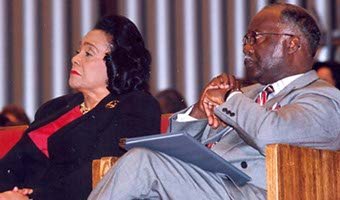
Emmanuel McCall, a member of the Home Mission Board staff from 1968 to 1991 and developer of Southern Baptist Theological Seminary’s black studies program, has donated his personal papers to the library and archives, including more than 30 boxes of correspondence, audio-visual resources, sermons and other items.

Emmanuel McCall, shown here with the late Coretta Scott King, was a prominent Southern Baptist denominational worker who was instrumental in addressing the denomination’s racial issues. (BP FILE PHOTO)

The collection helps document the SBC’s transition in the 20th century from harboring notorious racial prejudice to becoming one of the most ethnically diverse denominations in America.

McCall, author of five books, said he hopes his papers will provide researchers with “materials that will help them to understand how the Lord worked” in the SBC. “And the Lord did do a mighty work in what happened across the years,” McCall added.

Although three institutions asked for McCall’s papers, he said he decided on the Southern Baptist Historical Library and Archives because his files hold more value for Southern Baptists than any other group.

Director Bill Sumners of the library and archives noted: “Dr. McCall and others of his generation, both black and white, encouraged and pushed Southern Baptists to do the right thing as it related to inclusiveness for all races into the Southern Baptist family. In today’s setting we take this for granted, but in 1968 or 1970 that wasn’t the case. His papers document much of that struggle. It is a story that should not be allowed to be forgotten.”

The collection lacks McCall’s official HMB records, which may have been lost or destroyed. But Sumners said he has not given up on finding them.

Within the existing files are records of McCall’s encounters with some of the SBC’s key leaders in the advance of racial justice—men like Mississippi layman and former SBC President Owen Cooper.

“The first SBC meeting that I attended was the Houston meeting in ’68,” McCall said. “There were about 30 editors and various denominational persons who were trying to push the Statement Concerning the Crisis in our Nation (a document denouncing racial prejudice), and Cooper led a four-hour fight against passing that statement. And I had a rather negative attitude towards him without realizing that his attitude would change that next December.”

The change came when Cooper’s daughter brought home a black friend from college and challenged her father’s prejudice, McCall said. So, he let the friend stay in their house and later called the HMB to request a meeting with McCall and a colleague.

“He just opened up,” McCall said. “He had had sort of a revelation and change. And later that next year, he initiated an interracial laymen’s retreat and then became a leader among the laypeople in the Southern Baptist movement toward reconciliation.”

Among the other personalities referenced in McCall’s files are Jimmy Carter, Billy Graham, Martin Luther King Jr. and longtime National Baptist leader Joseph H. Jackson.

Sumners expressed thanks for McCall’s donation and said it contains a wealth of material for students of history.

“This collection does tell the story of an individual’s life and how God used him in a special way to influence an entire denomination and agency,” Sumners said.

More information on the Emmanuel McCall papers is available at www.sbhla.org .


Texas Tidbits

Search committee begins work. The Baptist General Convention of Texas executive director search committee recently met for the first time. The group prayed for God to guide them to the person he is calling to lead the convention, began outlining the values that will guide the search and brainstormed ways to seek input from the diverse Texas Baptist family. Ron Lyles, the committee’s chairman and pastor of South Main Baptist Church in Pasadena, noted the committee is encouraging Texas Baptists to pray for the search process, particularly in worship services Feb. 27. “We had an excellent first meeting as we were reminded of our task within the context of God’s empowerment and purpose,” he said. “We began to build a trustful relationship with each other and prayed for each other. We are unified in our desire to seek God’s direction and are committed to doing that in a confident but humble manner. We are determined not to feel anxious or hurried in our deliberation and decision, but we will be diligent in our work.” The committee also elected David Lowrie, pastor of First Baptist Church in El Paso, as its vice chairman.

Hospitality House anniversary set. The 25th anniversary celebration of the Huntsville Hospitality House—a home away from home for visiting families of inmates—will be from 4 to 6 p.m. Feb. 20 at Magnolia Lake, 2001 Highway 30 East, near Huntsville. Guest speakers include Bob and Nelda Norris, the founding directors of the Hospitality House, and prison evangelist Bill Glass. Inmate family members who have benefited from the ministry also will share testimonies. A meal will be served at no cost, but seating is limited, and donations will be accepted. For reservations, call (936) 291-6196.

ETBU trustees approve renovation. Trustees of East Texas Baptist University approved a recommendation to renovate the Bennett Student Center, turning it into the Bennett Student Commons. The estimated $3.63 million project will expand and improve the food service area, as well as the university bookstore. The renovation is scheduled to begin at the conclusion of the 2011 spring semester and be complete by mid-August, in time for the fall semester.

BCFS meets goal for Abilene center. Baptist Child & Family Service met its goal of raising $625,000 to help open Abilene’s first transition center for at-risk youth. The Shelton Family Foundation, the Dodge Jones Foundation and the Dian Graves Owen Foundation helped BCFS reach its goal, and the Texas Department of Family and Protective Services provided $25,000 in initial seed money. Transition centers are “one-stop shops” that offer case management, counseling, sheltering and life-skills training to at-risk young adults. The Abilene transition center will serve youth who are aging out of foster care, returning home from juvenile justice institutions or are coping with challenges such as homelessness. Once established, the center will house and partner with government and community organizations to ensure comprehensive, yet nonduplicated, services that help youth become independent and law-abiding adults. 

Hardin-Simmons president promotes Honor Flight. Jeff Ballenger, a 1987 Hardin-Simmons University graduate, enlisted HSU President Lanny Hall as co-chair of an Honor Flight program to provide World War II veterans living in West Texas a trip to Washington, D.C., to see the memorial in their honor. Ballenger, an entrepreneur in Council Bluffs, Iowa, noted “time is of the essence” because 1,200 World War II veterans die each day. Ballenger and Hall are seeking to raise $250,000 to enable 300 veterans to participate in the Honor Flight this spring. For more information, contact West Texas Honor Flight, P.O. Box 125, Council Bluffs, IA 51502 or Hardin-Simmons University, P.O. Box 16100, Abilene 79698.

ETBU forensic science program receives gift. Ben Condray, professor emeritus of chemistry at East Texas Baptist University, donated $200,000 to enable the school’s new forensic science program purchase lab equipment. Condray taught 37 years at ETBU before retiring in 1987.


On the Move

Richard Coe to Lakeside Fellowship in Roanoke as youth minister.

Charles Davenport to Caprock-Plains Area as interim director of missions.

Clint Davis to Eastside Church in Comanche as youth minister.

Elizabeth Dunn to First Church in Sanger as preschool minister.

David Foster Jr. to First Church in Stamford as youth minister.

C.L. Garey has resigned as pastor of Crossroads Cowboy Church in Madisonville. He is available for supply or interims at (936) 245-0458.

David Hardage to First Church in Waxahachie as interim pastor.

Aaron Hefty to First Church in Granbury as interim student minister.

Paulette Hill to Calvary Church in Pilot Point as children’s minister.

James Hudgins to First Church in Evant as pastor.

Adam Hughes to West Church in Batesville, Ark., as pastor from Ridgecrest Church in Abilene.

John McClary has resigned as associate pastor of First Church in Portland.

Jay Miller to Caps Church in Abilene as interim pastor.

Alan Morris to Southside Church in Brownwood as pastor.

Jeremy Pace has resigned as director of missions at The Village Church in Highland Village to start a church in London, England.

John Sisk to Normanna Church in Normanna as interim pastor.

Jeff Stanley to First Church in Ovilla as interim pastor.

Mike Wilson to Tabernacle Church in Ennis as interim pastor.


Around the State

East Texas Baptist University will hold Tiger Day, a free preview event, March 5. Participants will tour the campus, meet faculty and current students, receive admissions and financial aid information, and visit academic departments. Lunch is provided. For more information or to register, call (800) 804-3828.

A free lunch and program honoring retired Baptist ministers, missionaries, church and denominational workers, and seminary professors, as well as their spouses, will be held at Dallas Baptist University March 18 at 10 a.m. A worship program will begin the day, with Darold Morgan, Bill Pinson, Charles Wade and Presnall Wood participating. A complimentary lunch will follow. After the luncheon, affinity groups of retirees will have time to fellowship. Hosts for these reunions will be Wayne Allen, Jan Daehnert, Hubert Martin, Joe Mosley, Alva Parks, Herb Pedersen and Bernie Spooner. For more information, call (214) 333-5130.

• The Texas Port Ministry will hold a fund-raising banquet March 25 at River Place in Freeport. Tables of eight are available for $200. Individual tickets are $30. The Texas Port Ministry shares the gospel with seamen from around the world when they dock in Texas. For more information, call (979) 233-5641.

Marcus Wood, women’s soccer coach at Hardin-Simmons University, was named Division III coach of the year by the National Soccer Coaches Associa-tion of America. Wood led the Cowgirls to the NCAA Division III title with a 24-0-1 record.

• The Baylor Alumni Association has named five Baylor University graduates as recipients of the Distinguished Alumni Award. Gerald Cobb, Timothy Hale, Michael Johnson, Patricia Mathes and David Rubenstein received their awards at the 2011 Hall of Fame banquet Jan. 21. The association also presented awards in nine other categories: Families of Baylor Award—the Abney Family, which includes five generations of alumni and students; Herbert H. Reynolds Outstanding Young Alumni Award—Brian Clark, Kristen Cox, Chase Palmer and Sophia Young; Price Daniel Distin-guished Public Service Award—Marvin Watson; George W. Truett Distinguished Church Service Award—Marv Knox and Randall O’Brien; Abner V. McCall Humanitarian Award—Calvin McKaig; Abner V. McCall Religious Liberty Award—Derek Davis; Herbert H. Reynolds Retired Faculty and Administrat-ors Awards—Carolyn Backus, Norman Gilchrest, Stanley Campbell and Tom Newsom; W.R. White Meritorious Service Award—Carroll Dawson, Calvin Smith, and Bob and Anna Smith Wright; and Alumni Legacies Scholarship recipients—John Dickson Jr., Samuel Davidson, Chase Fickling, Allison Jones, Bill Kroll, Kathryn Morrill and Rachel Wells.

Whit Goodwin has been appointed director of student life at Houston Baptist University. He had been director of the scholars’ program at Samford University.

Anniversaries

Ken Wells, 30th, as pastor of Northview Church in Lewisville, Feb. 13.

Lowell Addy, 15th, as minister of business administration at First Church in Wichita Falls, Feb. 25.

Jerry Davis, 15th, as pastor of First Church in Collinsville, March 15.

First Church in Waxahachie, 150th, March 17. A number of activities are planned throughout the month. On March 6, former pastor Bill Austin will preach in the morning worship service, followed by a barbecue lunch. Cost is $5, and reservations are required. Team Impact will present assemblies in schools March 9-13, and revival services will be held at the church each evening at 6 p.m. Ana Rodriguez, Miss Texas, will speak in the morning worship service March 20. That afternoon, a granite water sculpture by Jesus Moroles will be dedicated. Carol Farrar will be the musical guest March 27, and State Representative Jim Pitts will deliver a state proclamation. David Hardage is interim pastor.

Retiring

Jim Curtis, after five years as minister of music at Crossway Church in Abilene, Dec. 31. He is available for supply work at (325) 676-9222.

Tom Boggus, after 24 years as music minister at Calvary Church in Bryan, Jan. 30.

Death

Bill Agee, 80, Jan. 24 in Waco. After his two initial pastorates in Arkansas, he was pastor at First Church in Whitehouse, Pine Springs Church in Tyler, Meadow Brook Church in Rockdale, Emmanuel Church in Waco, First Church in Bremond, First Church in Hearne and Calvary Church in Tyler. After retirement, he served numerous churches in Central Texas as interim pastor over a period of 14 years. He was a member of Columbus Avenue Church in Waco. He served on Baylor University’s board of trustees and also on the board of Hillcrest Baptist Hospital in Waco. He is survived by his wife of 59 years, Pat; son, William Jr.; daughters, Gaylen Tenberg and Carolyn Chamness; nine children; and nine great-grandchildren.

Event

Shiloh will present a concert at First Church in Granbury Feb. 27 at 5 p.m.

Licensed

Mark Camarillo to the ministry at First Church in Pleasanton.

Revival

International Church, Abilene; Feb. 17-20; evangelists, Daiqing Yuan, Yutaka Takarada, Ernest Dagohoy and Jerry Clower; pastor, Myung Kyo Lee.


Children at Heart president announces retirement date

ROUND ROCK—Jerry Bradley, president of Children at Heart Ministries, has announced his retirement effective Dec. 31, capping a 40-year career in Baptist child care.

Bradley, who came to Round Rock in 1990 to become executive director of the Texas Baptist Children’s Home, today heads a ministry that also includes Gracewood in Houston, Miracle Farm in Brenham and STARRY in Round Rock.

Jerry Bradley

“Over half of my career has been spent serving in our ministries,” he said in a statement to employees. “Those have been wonderful years, and it is now time for a leader with new vision and greater vigor.”

The Children at Heart Ministries board of trustees will appoint a search committee to find a successor. Succession planning has been under way for several years.

Bradley began at Texas Baptist Children’s Home on June 1, 1990, moving from a position as director of child care for Oklahoma Baptists. He previously worked at institutional ministries in Kentucky and Florida.

A graduate of Oklahoma Baptist University with a degree in social work, he also holds master’s degrees in religious education from Southern Baptist Theological Seminary and in social work from Florida State University. He is an ordained minister.

In 1990, the entity that would become Children at Heart Ministries included Texas Baptist Children’s Home and Miracle Farm, with assets of just over $9 million, an endowment of about $6.7 million, an annual budget of $2 million and about 2,400 clients.

Today, with a $10 million budget, assets of more than $100 million and an endowment of nearly $80 million, the ministries serve more than 6,000 children, mothers and families each year.

New ministries added under Bradley’s leadership included Gracewood’s ministry to single mothers and children in Houston and STARRY, which provides an emergency shelter and foster care in Williamson County and counseling in Round Rock, Waco and Temple. In addition, existing programs, such as family care at Texas Baptist Children’s Home for single mothers and their children, expanded greatly.

He also oversaw a restructuring in 2006 in which all four ministries became part of the family of Children at Heart Ministries.

“Critical decisions led to the creation of new corporations and the structure of a family of ministries that exist to honor God and build a better world by serving children and strengthening families,” he said.

“It has not always been easy, but it has been done with a sense of stewardship and forward thinking. It leaves a structure that can continue to grow and meet the needs of Texas families.”

Bradley determined the time had come for new leadership at Children at Heart Ministries.

“All organizations have a life cycle, and the only way to keep them viable is through vitality and vision under God’s direction. I have come to the point in life when I know that it is time for new leadership to be at the helm of this great ministry,” he said.

“My successor will find a dedicated staff, supportive trustees, beneficial resources, new challenges and a firm foundation upon which to build a new administration.”


Leaders offer helpful tips for mission trips along the border

Leaders of mission work along the Texas-Mexico border shared several helpful hints for volunteers who feel called to share the hope of Christ in the region through mission trips

Work on the Texas side of the border. Although drug cartel violence has not ravaged the entire Mexico side of the border, organizations continue urging mission teams to work along the Texas side of the border where the physical and spiritual needs remain great, and the region is safe.

Partner with trusted organizations. There are a multitude of churches and ministry organizations along the Texas border. Choosing an organization that is known and trusted like those supported by Texas Baptists’ Cooperative Program giving—Texas Baptists River Ministry, Buckner International and Valley Baptist Missions Education Center—helps church groups know they will be well taken care of and put in a position where they can have a long-lasting impact for God’s kingdom.

Listen to local leaders and organizers and do as they say. Local residents and ministries know the area better than visitors coming into it. While the Texas border remains safe, it is always important to remain in areas organized have already scouted. It not only does it keep teams safe, but also enables them to work together better and accomplish the task at hand.

Consider staying at a Christian retreat center. There are several retreat centers along the Texas border designed to host mission teams. Many of them—like Valley Baptist Missions Education Center—can help connect mission teams with projects, provide three full meals each day to each trip participant and allow space for teams to debrief at the end of the day—all at prices drastically lower than what it would cost to stay at a hotel and eat at restaurants. And the money spent at these retreat centers is invested back into ministry and mission efforts.

Expect God to work before a trip, during the trip and after it. Missions leaders believe people along the border are more open to the gospel than they typically are because of the violence on the other side of the border. Organizers encourage team members to prepare themselves through prayer and studying the Bible before the trip, during the trip and long after the trip finishes. God will change the lives of people mission volunteers encounter along the border, mission leaders said. Lives of volunteers also may be changed.