Outdoor baptism draws others seeking Christ

HOUSTON—When members of The Walk Church in Houston set up the baptistery for an outdoor service, they were excited by the prospect of celebrating what God had done in changing the lives of three people.

It turns out they were setting up to celebrate much more. Those three people were simply where God started.

Pastor Jesse Shelton of The Walk Church in Houston had been scheduled to baptize three people in an outdoor service, but by the time he had shared the gospel with those who gathered around, more than 40 were baptized.

Following the baptism of the three people who were scheduled to go through the ordinance, Pastor Jesse Shelton shared the gospel with the crowd who had gathered to see what was happening. A person came forward asking to be baptized as well. Then another. And another. And another.

Some came alone—others, in groups of two and three. But they kept coming. Each confessed Christ as Lord. And each was baptized in his name.  

“It just kept going and going and going,” Shelton said.

The procession of people seeking Christ simply continued, Shelton said. People wanted a relationship with God. In the end, so many people were baptized that the church ran out of the 40 certificates it brought to give to those who were baptized.

“People just started coming,” Shelton said. “And they wouldn’t stop coming. We were out there until 11 p.m.”

The outpouring of people dedicating themselves to following Christ is the result of God moving in one of Houston’s toughest neighborhoods, Shelton said. Known as “The Hole” because “when you go in you never leave,” the area leads the city in violent crime rate, high school drop-out rate and teen pregnancy rate.

Christians began trying to start The Walk Church about one year ago, going door-to-door sharing the gospel, Shelton said. It was tough work, as many people were not initially open to the gospel, but Shelton and other Christians continued trying to minister in the area.

Residents became used to their presence and began opening up to them. In the process, Shelton built relationships and shared the gospel.

A small core group started The Walk Church with the aid of the Baptist General Convention of Texas. Texas Baptists facilitate church starts with the help of funding through the Cooperative Program and gifts through the Mary Hill Davis Offering for Texas Missions.

Lives were changing, Shelton said. Drug dealers quit selling. They committed themselves to Christ.

When their neighbors saw the changes, they became interested in hearing the gospel. Those living testimonies carried the hope of Christ throughout the neighborhood.

“That’s the biggest sermon,” Shelton said. “That’s more powerful than any words we can share.”

When Shelton stood next to the baptistery and gave people an opportunity to be baptized, individuals were overjoyed to take advantage of the opportunity. So, they came forward—all 40-something of them.

“It’s really been beautiful,” Shelton said. “People are being changed through repentance.”


Baptists work for peace, relief amid ethnic violence in India

FALLS CHURCH, Va. (ABP) — Baptist leaders called for global prayer for peacemaking efforts and for churches and communities affected by ethnic strife in northeast India.

According to the Baptist World Alliance, the Garo Baptist Convention mobilized relief efforts to temporary camps set up for an estimated 50,000 people displaced by fighting between two tribal groups that began Jan. 1.

"Many villages have been torched and people left homeless," reported Wanne Garrey of the Garo Baptist Convention. She said church leaders were "trying their best to calm down the situation."

At least 10 people have died and an estimated 2,000 houses burned in serious conflict between the Garo and Rabha communities in the border area of Meghalaya and Assam states in northeast India.

Meghalaya is one of three Indian states with a Christian majority. More than 70 percent of inhabitants are practicing Christians. That includes a sizeable Baptist community. The Garo Baptist Convention has more than 2,500 churches and nearly 250,000 baptized members. Baptist history in the area dates to the work of American Baptist missionaries that began in 1836.

Rettair Momin, general secretary of the Garo Baptist Convention, sent out an urgent prayer request for the situation Jan. 6.

Atungo Shitri, secretary of the Justice and Peace Department of the Council of Baptist Churches in North East India, immediately organized a delegation to visit the affected area.

"We are going to meet with the Deputy Commissioner and the Superintendent of Police, and appeal to them to provide adequate security to affected villages," Shitri said in a Jan. 7 e-mail to Benjamin Chan of American Baptist Churches USA International Ministries. "If the situation allows, we will also visit the two communities and offer relief assistance and peaceful solution."

Debbie Mulneix, International Ministries' liaison to churches of India and Nepal, was reported safe as she traveled in Assam.

According to Indian media, about 12,500 people have returned to their villages after spending more than a week in relief camps. A curfew in the area was lifted Jan. 19. 


Tireless retirees help burned-out church rise from ashes

ATHENS—One year after Lake Athens Baptist Church lost its building to arson—and the same week two young men received life sentences for burning a string of East Texas churches—more than 30 Texas Baptist Men Retiree Builders started work rebuilding the church’s facility.

Bill Campbell, a member of Lake Athens Baptist Church and a volunteer with Texas Baptist Men Retiree builders for 20 years, operates a saw on the construction site at his home church. (PHOTO/Ken Camp)

Lake Athens Baptist Church, near Athens, was one of 10 churches in three counties burned during a five-week period in early 2010. Jason Robert Borque, 22, and Daniel George McAllister, 20, confessed to five fires in the Tyler area and were considered suspects in the remaining arsons—including the burning of Lake Athens Baptist Church.

“I’ll never forget that night,” Pastor John Green said. “There were eight fire departments working on it. One truck had a spotlight on the church, shining on the steeple. Sometimes, it was almost blocked out by the smoke, but it always came back into sight. And I knew our church would come back.”

While the memory of the fire remains, members of the church likewise never will forget the day one year later when a team of volunteers in 32 RVs rolled into the church’s parking lot to help rebuild the facility.

With a nailgun in hand, Marshall Rathbun, a volunteer from First Baptist Church in Center, works on the interior walls of Lake Athens Baptist Church. (PHOTO/Ken Camp)

“We had insurance, but thanks to these folks, we’re able to build a 16,000-square-foot building for the cost of a 10,500-square-foot building,” said R.B. Richardson, a charter member of Lake Athens Baptist Church.

With the foundation, steel frame, exterior walls and roof already in place, the TBM Retiree Builders focused on the building’s interior.

While the men worked on the construction project, their wives held a morning Bible study open to anyone in the community, and each afternoon, they worked on a craft project that will benefit children in remote mountain villages in Mexico.

“These volunteers are a breath of fresh air,” Green said. “Without their help, we would have had to go into debt to build that kind of facility. As it is, our new sanctuary will seat 100 more than before.”

Steve Jackson (standing) from Calvary Baptist Church in Midlothian and Charles Tompkins (kneeling) from First Baptist Church in Hallettsville work on framing out a room inside the new facility of Lake Athens Baptist Church. (PHOTO/Ken Camp)

Members of Lake Athens Baptist Church already knew firsthand about the TBM Retiree Builders’ capabilities. The group had worked on the church’s previous facility, and one of its members, Bill Campbell, has served with the builders about 20 years.

After the Retiree Builders complete two weeks in Athens, a volunteer building team from Green Acres Baptist Church in Tyler will complete any necessary interior finishing work.

Texas Baptist Men launched the Retiree Builders program in mid-1979. In addition to the church builders, other TBM construction groups specialize in cabinet building or projects at Baptist encampments. One Spanish-speaking team works with Hispanic churches, and TBM plans to launch a crew specializing in construction for cowboy churches.

Volunteers travel at their own expense and are housed in their own recreational vehicles. Retiree Builders complete 10 to 12 projects a year.

Average age of the volunteers on the Athens project is about 73—the youngest is about 60, and the oldest is 90, said Ron Beard, state project coordinator for the Retiree Builders.

Bill Pigott, state director of TBM Retiree Builders, notes economic downturns have taken a toll on the missions action program. About 200 couples are considered active with the group, and another 100 serve on occasional projects—down considerably from a high of about 400 couples 20 years ago.

“There’s no question we’re getting hit by the economy and delayed retirement,” Pigott said. “It also seems like there’s a different mindset among some people who reach retirement age now. So many feel like they’ve already done their part.”

Charles Tompkins from First Baptist Church in Hallettsville works on framing out a room inside the new facility of Lake Athens Baptist Church. (PHOTO/Ken Camp)

If fuel costs continue to escalate, that could force some retirees on fixed incomes to limit their travel, as well, he added.

“Some of these folks spend everything they make from their Social Security check doing what we do,” Pigott said.

Even so, the group remains committed to its mission. After two weeks in Athens, some of the volunteers will begin work on a project at Mount Lebanon Retreat Center near Dallas, and others will travel to Camp Zephyr in South Texas.

Steve Jackson from Calvary Baptist Church in Midlothian drives nails on a TBM Retiree Builders project at Lake Athens Baptist Church. (PHOTO/Ken Camp)

“Our motive always is to share Christ with people. If all we have done is build, we’ve fallen short. We are called to be a witness,” Pigott said.

The witness of the volunteer builders—serving joyfully at personal sacrifice—left its mark on Lake Athens Baptist Church, as did the challenge of the last year, the church’s pastor noted.

“We are a stronger church because of it,” Green said. “Our people have responded in a very positive manner. And people in the community have taken notice of what’s going on here, asking us, ‘How is your church coming along?’

“I believe that up from the ashes, God is going to raise a mighty force of giving people, loving people to be his witnesses.”


Go here for more information on Texas Baptist Men Retiree Builders, or call Bill Pigott at (214) 707-4379.


Iron sharpens iron: Mentoring offers support

While a seminary degree can be an important component of a pastor’s toolbox, relationships with other pastors can be just as important—if not more so, according to some Texas Baptists who work with students preparing for vocational ministry.

Tim Skaggs (left), pastor of Coggin Avenue Baptist Church in Brownwood, has mentored three Howard Payne University ministry students—(left to right) Chase Woodhouse, Paul Deetz and Evan Henson. (PHOTO/George Henson)

But the mentoring relationship need not wait for graduation, and its genesis may be better suited before that first full-time position has been attained, they insist.

“It provides them with a support system,” said Don Williford, interim dean of Logsdon Seminary at Hardin-Simmons University in Abilene.

“They know there are people they can call when they face situations they have uncertainty about.”

For instance, when a pastor or staff member considers a change in ministry location, it can be comforting to have the voice of experience whispering in one’s ear, he noted.

Williford lacked that type of interaction when he was a student at Southwestern Baptist Theological Seminary years ago, he noted.

“When I had struggles in the local church, I had little to fall back on,” he said.

“My time in seminary prepared me well for doctrinal issues and those sorts of things, but for those things that pop up from time to time, I was largely on my own,” he recalled.

Mentoring constitutes a key part of the program at Baylor University’s Truett Theological Seminary, amounting to 12 hours of the degree program, said Robert Creech, director of pastoral ministries for the seminary.

Students choose a mentor in the field of ministry they plan to pursue, and they spend a full semester working with that person. The program presents a list of ministry competencies each student is to engage in during the semester.

The student not only meets weekly with his mentor, but also meets monthly with a lay committee.

{youtube}-gTQSG9ooEY{/youtube}

In addition, each student has about 2,000 pages of books and articles to read and respond to during the semester as part of the mentoring experience.

In each of his classes, Creech said, he stresses the importance of every minister finding a mentor during the first three months on the field when he or she secures a first full-time position.

The program at Truett helps them become accustomed to that type of relationship, he said.

“Having that kind of relationship provides a confidence that I can do this, and I’m not in it all by myself. I have people I can fall back on,” Creech said.

Often, a reverse-mentoring takes place as an added benefit, because the mentor is exposed to new ways ideas and perspectives, said Tim Skaggs, pastor of Coggin Avenue Baptist Church in Brownwood, who has mentored three Howard Payne University ministry students.

“It’s challenged my own way of thinking,” he said. “It’s forced me to evaluate why do I have a quiet time, why do I preach the way I preach, and in general, why do I do the things I do,” he said.

Skaggs tries to maintain a two-prong approach. On the one hand, he tries to cover some of the nuts-and-bolts of ministry—how to manage staff, how to run a staff meeting, how to make a hospital visit, how to relate to deacons, and how to conduct a baptism and the Lord’s Supper.

He tries to convey there is more than one way to do all those things, but how they are done will reveal the pastor’s personality—for good or ill.

The other part of the equation is more personal.

“I ultimately want to impress upon them the importance of the family. The church is not the top of your ministry list—your family is. If you win your community for Christ but lose your family, you’ve lost,” he said.

Skaggs also tries to impress upon the young ministers the importance of taking care of their own spiritual conditions and the value of spiritual rest.

Creech echoed that concern.

“There is so much to ministry that isn’t head knowledge. And one thing these mentoring relationships provide is an opportunity to wade out into deeper waters, but to know that you are safe, you have support,” he said.


Seminary gives association six months to vacate property (Updated)

FORT WORTH—Southwestern Baptist Theological Seminary notified Tarrant Baptist Association before Christmas it had six months to vacate its offices on the edge of the seminary campus. The seminary asserted the association was in violation of its affiliation agreement—in part because of perceived toleration of homosexuality by a member church or churches.

Tarrant Association Moderator Al Meredith contends the seminary lacks authority to take unilateral action, but he expressed hope the situation can be resolved and the association’s longtime fraternal relationship with the seminary be maintained.

However, a letter from Southwestern Seminary he received Jan. 18 indicated the seminary planned to pursue its claim on the property. Directors of the Tarrant Baptist Association executive board will discuss their response as part of a regularly scheduled Jan. 24 meeting, Meredith said.

Southwestern SeminaryThe association office received an initial  registered letter from Southwestern Seminary Dec. 10. The letter stated the association was in violation of its 1997 affiliation agreement, and it directed the association to vacate its property on James Avenue within six months. It also stated title on the property should revert back to the seminary.
In 1982, the seminary provided Tarrant Baptist Association land and the funds to build its office building, granting a 99-year lease on the property, Meredith explained. At that time, the seminary and association entered into an affiliation agreement stipulating the property would not be used for commercial activity, and the association and seminary would commit to remaining in theological harmony, he said.

In 1997, the property agreement was renegotiated, and Tarrant Baptist Association received the deed to the property, he said. “The affiliation agreement remained intact,” Meredith added.

According to the agreement, if any disagreement should arise between the association and the seminary, the matter should be resolved a three-member arbitration panel with one seminary representative, one associational representative and one party mutually agreed upon by both parties, he noted.

On Dec. 20, three associational representatives—Moderator-elect Meredith, Moderator Bobby Bridges and Leadership Development Director Becky Biser—met with Seminary President Paige Patterson and some of his staff to discuss the situation.

“We had a lengthy and amicable discussion,” Meredith said in an interview.

He noted during the discussion, Patterson commented that had learned information he did not have when the original Dec. 10 letter was delivered. He agreed to consider the matter further and discuss it with the seminary’s attorneys. However, the letter Meredith received Jan. 18 indicated the seminary would continue its original plan.

Patterson was not available for comment for this article.

In a Dec. 21 letter to pastors in the association, Meredith noted specific areas in which the seminary claimed the association was not in compliance with its affiliation agreement:

Toleration of homosexuality. While the 2000 Baptist Faith & Message takes a clear position against homosexual behavior, the seminary contends the association has a church or churches that do not comply with the statement of faith on that matter. “They feel this places them in a contradictory situation,” Meredith’s letter stated.

The Southern Baptist Convention cuts its historic ties with Broadway Baptist Church in Fort Worth in 2009 over its perceived acceptance of homosexual members. Last year, Broadway also withdrew its affiliation from the Baptist General Convention of Texas rather than face a challenge

Placement. The seminary asserted it had asked for—and had not received—assistance from the association office in helping students and faculty gain access to empty pulpits in the association.

Meredith’s letter also noted the seminary expressed the need for additional office space or a welcome center that could be housed in the offices Tarrant Association occupies.

"We hold the deed. We believe the property to be ours," Meredith said in an interview. "If the seminary needs the building, I'm sure we would be willing to talk about selling it to them for a fair market value."

Meredith acknowledged he was disappointed by the seminary's response. Even so, he insisted he and other associational leaders would continue praying for a win/win situation.

“If Tarrant Baptist Association wins and Southwestern Seminary loses, the kingdom of God loses. If Southwestern wins and the association loses, the kingdom loses. The matters of the kingdom are greater than either the seminary or the association. My prayer is that we do nothing to bring reproach on the name of Christ,” he said.  

“Tarrant Baptist Association has enjoyed a longstanding fraternal relationship with Southwestern Baptist Theological Seminary, and we want that to continue.”


Tiny heart touches the hearts of thousands

NASHVILLE, Tenn.—While getting ready for release of their fifth album, the Christian rock band Sanctus Real narrowed down possible selections for album titles and asked fans to vote for their favorite title. They overwhelmingly selected Pieces of a Real Heart to reflect songs written about forgiveness, hope and redemption.

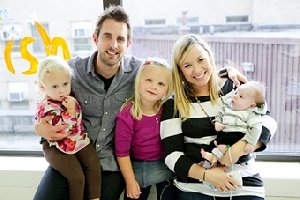
After 10 weeks in the hospital, it was a joyous homecoming as Matt and Sarah Hammitt finally were able to bring Bowen home.

Little did the band realize the deeper meaning that title would assume in the coming months, as the small heart of Bowen Hammitt, son of lead singer Matt Hammitt and his wife, Sarah, captured national attention and opened doors to share Christ’s love.

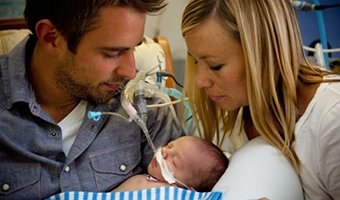
Bowen was born Sept. 9 with a serious and rare heart defect, Hypoplastic Left Heart Syndrome. In babies with HLHS, the left side of the heart cannot pump blood, so the right side must supply both the lungs and the body. Without surgical intervention, the condition is fatal.

“Any parent would say that watching your child go through something like this is much worse than going through it yourself,” Matt Hammitt said. “You want to take their place, but you can’t. That’s been the most difficult part for me.”

Just four days after his birth, Bowen underwent his first operation, as a shunt was inserted into his heart. 

Bowen Hammitt, whose name means “small, victorious one,” is battling a life-threatening heart defect and will undergo another surgery in February.  In a season filled with heartache and hope, his parents remained committed to leading others to Christ while sharing a powerful message about Christ’s unfailing love.

After several hours waiting beside Bowen’s bedside in intensive care, his parents went to their nearby hotel room for some rest. A few hours later, the phone rang at 2:13 a.m., alerting the Hammitts to return immediately to the hospital. By the time they arrived, doctors and nurses frantically were trying to save Bowen’s life. The medical staff finally resuscitated him after several attempts.

In the weeks that followed, Bowen—whose name means “small, victorious one”—also battled an infection and other complications. To keep their family and friends updated, the Hammitts set up a website called “Bowen’s Heart.” Thousands of people around the world began sending messages of encouragement while committing to pray for Bowen. 

Thanksgiving week marked a joyous and tear-filled homecoming, as the Hammitts finally brought their 10-week-old son home to meet his two sisters. In February, Bowen is scheduled to undergo another surgery. 

{youtube}NZVjKrmvYYQ{/youtube}

The Hammits’ unwavering faith throughout this trial has provided countless opportunities to share the gospel, including during a segment on ABC World News.

“We thank God for the gift of waking up at home this morning with baby Bo-wen at our bedside,” Matt Hammitt said. “We’ve been praying so long for these moments. Taking care of Bowen at home will in-clude a lot of work and lack of sleep, but having our family together is worth it.

“When bad things come your way, you can either be angry or bitter—or you can let them shape, mold and teach you lessons about life. It’s our desire that people will be encouraged as they see that we have been brought closer to Christ through this trial, and he is the ultimate source of comfort and strength. By bringing others to Christ during a time of struggle, we want to lift up the body of Christ and further the work of the kingdom, in all things giving glory to God along with praise and thanksgiving.”


Champions for Life events reap harvest in Golden Triangle

BEAUMONT—More than 1,000 people made first-time decisions to follow Christ during Golden Triangle Baptist Association’s second Champions For Life week.

Last year, Champions for Life—a ministry of evangelist and former professional athlete Bill Glass—focused on area high schools and prisons. This year, the program included 26 middle schools, along with eight high schools and 12 prisons.

Clarence Lee, a former Washington Redskin, spoke to students at Henderson Middle School in Sour Lake as part of Champions for Life.

More than six months of planning went into making the events a success, said Cal Smith, a layman from First Baptist Church in Beaumont who headed the event.

Smith appreciated the great number of volunteers who worked hard on the program, including a teacher-appreciation team who provided 1,550 “blessing bags” to teachers.

“We also formed a new team this year, which consisted of former school counselors, principals and teachers who read the response cards from all the students and forwarded those of a serious nature to the counselors at each school,” Smith said.

Those 432 cards dealt with issues such as thoughts of suicide, problems with family and friends, cutting, physical abuse, drug and alcohol abuse, depression and bullying.

Art Perez, a layman from First Baptist Church in Beaumont, found going to the schools enlightening.

“It’s been an eye-opening experience. It’s amazing what these kids are going through. We have them fill out these cards about the issues they are dealing with, and it’s heart-breaking,” he said. “You hear about a lot of these things on the news, but these kids are living it.”

Six teams prepared meals for correctional officers and staff at 12 prisons. Each person received brisket or chicken with baked beans and potato salad.

Teachers also were invited to a comedy night held at one of the local schools.

Five former National Football League players and a world champion power lifter visited schools and prisons as they headlined the events of the Champions for Life week. In addition to feats of strength, they also offered insights into making good choices.

At youth rallies outside of the school day, the athletes shared about the difference Jesus Christ makes in a life.

{youtube}VgN4oQQ0i0g{/youtube}

The former NFL players also traveled to Lamar University in Beaumont and shared their faith in Christ.

Youth rallies in Beaumont, Nederland, Silsbee and Orange—along with the 12 prison events—yielded 1,044 first-time professions of faith in Christ and 1,394 commitments to rededication.

Clarence Lee, a former Washington Redskin, said those decisions are why he has gone to schools and prisons more than a dozen years.

“I have to be obedient to God. He always puts kids around me, and they’re attracted to what I do. If he’s going to bring kids to you, I think it’s important to use the gifts you have to point them in the right direction—to point them to him,” Lee said.


Gridiron event offers a ‘super’ evangelism opportunity

ARLINGTON – On Feb. 6, two teams will fight for professional football’s highest honor when they meet in Arlington for the 45th annual Super Bowl. Leading up to the event, a diverse group of Christians will try to point people to an even higher calling.

Dubbed Reach 45, evangelical Christian groups—including the Baptist General Convention of Texas, I am Second, Dallas Baptist Association, Tarrant Baptist Association, Texas Baptist Men and the Southern Baptists of Texas Convention—have come together to seek to share the hope of Christ with the more than 200,000 people who come to the area to experience Super Bowl week.

“We’re just trying to reach as many people as we can,” said Jana Jackson, director of Dallas Baptist Association family and community ministries.

Christians will use a variety of methods to reach people who descend upon the Dallas-Fort Worth Metroplex for the game. They hope to distribute 1 million tracts directing people to testimonies of National Football League players filmed and posted online by I am Second.

In addition to using tracts, Christians will attempt to couple ministry with evangelism. In a community service blitz the day before the Super Bowl, volunteers will serve through Cornerstone Baptist Church in Dallas and Mission Arlington. First Baptist Church in Arlington will sponsor a community-wide watch party in the park near the church’s facilities, aimed primarily at serving the economically disadvantaged. Churches also are participating in Souper Bowl of Caring, an annual emphasis on donating food to local hunger ministries.

A group of churches and organizations also has come together to focus on fighting human trafficking. Large events typically also are accompanied with increased prostitution, which also means an increase in trafficked girls—many of them children.

Led by Traffick911 out of Southside City Church in Fort Worth, volunteers will work in cooperation with authorities to combat trafficking through its “I’m not buying it” campaign.

The group will sponsor an anti-trafficking tailgate party in Mansfield Feb. 5 that will feature Jay Ratliff of the Dallas Cowboys as program personality, several Christian bands and personal testimonies by survivors of trafficking.

For information about how to be involved in Reach 45, visit www.reach45.com


Life coaching makes its way into churches

MURFREESBORO, Tenn. (ABP)—Career coaching has been around in the business field for decades. More recently, it spun off a concept of life coaching. Now, the coaching concept is starting to make its impact in churches.

Ircel Harrison

Most experts credit Benjamin Karter, a former football coach turned motivational speaker, as one of the originators of the personal coaching field. As coaching began to be viewed as having a broader application than just leadership training for business executives, Karter’s background in athletics prompted speeches focused on mentoring, role modeling and helping people identify and then pursue life goals.

Today, a “life coach” is a person who provides general guidance and support seeking to improve others’ professional and personal lives.

Ircel Harrison, an associate with Pinnacle Leadership Associates in Lexington, S.C., said coaching is different from therapy and counseling, both of which require a high level of knowledge and should be left to experts. It’s closer to mentoring and consulting, except those relationships connote more of a teacher-learner dynamic where one partner imparts experience or expertise on the other.

Coaching, he said in an interview, is more a matter of self-discovery. The “elevator speech” he uses is “to help people discover their growing edge and then live into it.”

“The whole coaching idea is that most of us already know what we need to do; we just need to find a way to do it,” Harrison said.

Coaching involves a formal relationship that helps people develop structures of accountability. “People grow best in accountability structures,” he said.

No caption submitted

People choose whether to be accountable in various walks of life, Harrison said. They become accountable to an employer or business in order to earn a living and join Alcoholics Anonymous or Weight Watchers because they want to change their habits and lives.

In churches, however, accountability too often is viewed as a dirty word, Harrison said. Since retiring as coordinator of the Tennessee Cooperative Baptist Fellowship at the end of 2008, he has worked with Pinnacle President Mark Tidsworth to develop a program called Disciple Development Coaching.

“People connect to a church when they are engaged, when they are growing, when they are very honest that they have certain needs and those needs are being met,” Harrison said. “One way that happens is through growth, and growth comes through accountability.”

Structures of accountability already exist in groups like Sunday school classes, where members encourage and support one another in small-group settings, Harrison said. The difference with coaching, he said, is it is more formalized, and the coach learns some basic skills in listening, setting goals and maintaining accountability structures.

A former campus minister, Harrison always invested a lot of his time on student discipleship, typically with group studies of books like Richard Foster’s Celebration of Discipline.

While they have similar goals, Harrison said, traditional discipleship and coaching use different methods.

“The thing that for me differentiates peer coaching from a lot of the traditional discipleship is most of the discipleship programs I have been a part of have been more of a mentor-student type of dynamic, and usually a pretty structured curriculum kind of approach,” he said.

“This approach is much more: ‘OK, help me identify what I need to do in my life, and then I’m going to go out there and find resources. I might even go to my pastor and ask him for a list of resources.’”

One byproduct of the approach is it makes the ministers of the church more resource providers than experts about religion.

“What we have tried to do is say if you have a need and can verbalize that, instead of telling you what to do, we encourage you to brainstorm about possibilities of what you can do for yourself,” Harrison said.

He noted he “really didn’t know much about it” before entering the coaching field. Over the past two years, he has coached 12 people—mostly ministers and most utilizing long-distance meetings by phone.

He is seeking to implement coaching principles with lay people in his congregation, First Baptist Church in Murfreesboro, Tenn., and believes it also has application in church staffs where the lead pastor relates to other staff as a coach and not just as a supervisor.

“Quite honestly, it’s one of those things where not everybody is going to want to do this,” he acknowledged. “It’s for folks that think: ‘I’d like to be more intentional about certain things, whether it’s my spiritual life, my marriage or my work in the community. I need a peer who will stand along beside me and encourage me in the right direction.’”


Academy for Spiritual Formation blends learning, discipline, community

NASHVILLE, Tenn. (ABP)—Growing up in a Baptist church and later working part-time as a youth minister, Johnny Sears always believed his faith had to go deeper than a set of beliefs or activities.

“How do we take prayer from being another thing on the to-do list and make it a way of life?” Sears pondered in an interview. “That’s really in my mind what it’s all about, and it all flows from that.”

Johnny Sears

Attending classes part-time at Baptist Seminary of Kentucky, Sears learned about contemplative spirituality practiced by individuals like Thomas Merton, a Trappist monk in Kentucky who wrote 70 books before his death by an electrocution accident in 1968 at age 53.

Interest in the subject led Sears to withdraw from seminary to enroll in the Academy for Spiritual Formation, a two-year covenant-learning environment combining academic training and experience in spiritual disciplines offered by Upper Room Min-istries. In July, he took over as the academy’s director.

Started 27 years ago, the academy is part of Upper Room, an ecumenical division of the United Methodist Church’s General Board of Discipleship founded in 1935. He admits a 35-year-old Baptist layman with an engineering degree and no plans to enter full-time ministry might not seem a logical choice.

On the other hand, “the Baptists that I’ve seen and talked to that go through it, we all just kind of get into it and have this epiphany,” he quickly added. “We just fall in love with it.”

The academy enrolls a community of about 50 people plus faculty who go through the program together. Over the course of two years, they are offered a total of 16 courses and meet in a retreat setting for five days four times a year.

Sears, who fully intended to re-enter seminary but during his two-year hiatus decided he no longer desired a ministry degree, said the commitment in some way mirrors the seminary experience. It’s a huge obligation of both time and money, for example, and both aim for an outcome of spiritual transformation.

On the other hand, Sears said, he found the approach more holistic than seminary, which while incorporating both head and heart, still tilts more toward the intellectual side.

“You have the experiential, you have the intellectual, you have the social and you even have the institutional piece of it, too,” he said. It’s what his former professor Glenn Hinson called the “four-legged stool” for balanced spirituality.

One of the gifts of the academy, Sears said, is the sense of community that develops.

“It will be such an odd mix of people each time,” he said. “People come from all walks of life. The academy is typically a mixture of lay and clergy.”

“It tends to skew a little older,” he added. “I’m trying to work on that and get younger people in, but that time and money commitment is difficult. Lots of times it’s not until you’re in those later stages of life that you really can manage to do this.”

That community gets broken up into smaller groups of seven or eight who get together every night for every session for about an hour and a half.

“It’s not just a discussion group,” he said. “It’s a time to be with one another and to journey together and share lives. It’s sort of a group spiritual direction in a sense. … Over the course of two years, that can become very intimate.”

On top of that is a “daily rhythm” of the eight sessions.

“You start each day in worship and morning prayer,” he said. “You have Eucharist every day. You close with night prayer. So the day is framed in prayer and worship. You have times of silence, extended periods of silence, during the day. You have the academic aspect of it, but all of those things work together.”

Sears said the academy isn’t some sort of “fringe group” promoting a New Age spirituality that says, “I’m spiritual, but I’m not religious.” It’s highly ecumenical, he said, but it works within the institutional church as an extension instead of replacing it.

Sears said he thinks one reason Baptist participants find the academy so rewarding is the way they worship often doesn’t include as much of the contemplative side, and they traditionally are so action-oriented they can lose connection to the “deeper well” of spirituality.

“That’s not to say that we’re just navel gazing and we’re going to sit around a pray while the world goes to hell,” he said. “I genuinely think that if you have that deep connection to God that you can’t avoid being thrust into the social issues of the day.

“We tend to fall off on one side or the other as a totally individualistic me-and-Jesus sort of experience, or we emphasize the social activism kind of aspect. The problem with that is getting burned out, and you’re trying to do it all on your own. You become bitter and angry and all those kinds of things. Really, that activism has to come from this place of being rooted in Spirit, and then it’s out-flowing that.

“We’re not the ones that are really driving this bus,” he continued. “I’m not going to do this on my own. This needs to come from some place transcendent, and I need to be attuned to that. That is the only way that my ministry is really going to have an impact.”

One thing the Baptist tradition brings to the table, Sears said, is the “voluntary principle” of religion.

“We’re not going to be coerced,” he said. “That is something that is needed, not an obstinate independence, but an ability to challenge the status quo and not be coerced into a certain pattern and certain way.”


Former Point of Grace member wants to share legacy of hymns

LOUISVILLE, Ky.—Since retiring from the contemporary Christian group Point of Grace in 2008, Heather Payne has had her hands full raising four young children and serving in various ministries at First Baptist Church in Fisherville, Ky., where her husband, Brian, is pastor.

With such a busy schedule, Payne didn’t expect to be back in the recording studio just two years after leaving the group to work on a solo project.

{youtube}pPrM8QY7FjQ{/youtube}

But as she thought about the importance of sharing a rich legacy of hymns with her children, Payne was inspired to create The Sweet Exchange, an album that features a unique blend of traditional hymns, original songs and modern worship choruses.

“This generation has no clue about hymns, and that’s so sad to me,” Payne said.  “I want my children to be familiar with hymns. I grew up singing hymns and loved them. I remember when I was very young and my mom would let me hold the hymnal, even though I couldn’t read at the time. I felt so big, and I learned the hymns by just singing along.”

The hymns selected for this album were some of Payne’s favorites while growing up, including “Rock of Ages,” “Holy, Holy, Holy,” “Jesus Paid It All” and “Be Thou My Vision.” 


Although melodies and instrumentation have changed, the lyrics remain the same. By adding a modern approach and an updated style, Payne hopes young worshippers will find new meaning in traditional hymns. 

Furthermore, Payne hopes the musical selections on this album will reflect the importance of finding a balance between contemporary songs and traditional hymns in churches today.

“With this album, I really wanted to bridge the gap between the older and younger generations and to help them find a connection to these songs of faith,” she said. 

“Emotions go just so far in worship. What’s incredible about hymns is that the message is so beautifully written and clearly explains the gospel of Jesus Christ. With the rich doctrine and theology in hymns, truth sinks in.”


Winter break provides opportunities to share gospel

ARLINGTON—For Texas Baptist college students serving on mission trips between semesters, sharing the gospel happened well beyond their destinations.

Katie Walker, a student at Howard Payne University, served over Christmas break with a Go Now Missions team in Moldova. The team brought new winter boots and warm socks to orphans in facilities supported by Children’s Emergency Relief International.

Students found opportunities to share the hope of Christ where they were serving, with people they met while traveling and with those they encountered during mission initiatives through Go Now Missions, the student missions arm of the Baptist General Con-vention of Texas.

Student teams spread the gospel by giving new boots to orphans in Moldova, engaging African immigrants in New York City, encountering college students in East and South Asia, helping rebuild a Haitian village and building a home in Jamaica.

Hector Briceño, a Texas A&M University at Kingsville student who went on a trip to share the gospel with Africans in New York City, found an opportunity to share the hope of Christ with Japanese-speaking man from New Zealand who stayed at the same hostel as the team. After the man asked to join the mission team, Briceño and his colleagues were able to minister to him for the duration of the trip.

John Williams from East Texas Baptist University and Azri Flores from Texas A&M University in Kingsville share the gospel in Harlem during a Go Now Missions winter break trip.

“He barely knew about Jesus Christ,” Briceño wrote. “He only knew that (Jesus) was a man that had died. It took a long time, but God gave me the opportunity to minister to him one on one. He understood everything. The team was able to get him a Japanese Bible, and he was very impressed when he started reading the Scriptures in his mother language. I believe reading Scripture in your first language is very powerful.”

Opportunities to expand God’s kingdom continued as the students began their specific projects. A 10-member student team delivered new boots to more than 2,000 Moldovan orphans who are cared for by orphanages supported by Children’s Emergency Relief International, the international arm of Baptist Child and Family Services. The Texas students attempted to shine a ray of hope into the orphans’ lives.

Dani Clark (center) from Howard Payne University and Melissa Bulman (right) of Tarleton State University, members of a Go Now Missions team from Texas, work on a construction project in Jamaica.

“I pray they forever remember that it was Christ who gave them their shoes,” wrote Howard Payne University student Carlee Ammons. “‘Cadou de la Isuis’—these shoes are a gift from Jesus—is what we told each child as we handed them their shoes. I pray they take hold of that promise and never forget the love of Christ. I pray we don’t forget it either.”

Hector Castelltort, a Texas A&M University at Kingsville student who served in Haiti, saw opportunities to minister while painting a school. There he befriended a young man with whom he sought to share the hope of Christ. The interaction between the two nearly moved Castelltort to tears.

“We didn’t only paint a school in four days but also painted the dreams of a better future for the kids who go to that school,” he wrote.

A 10-member student team delivered new boots to more than 2,000 Moldovan orphans who are cared for by orphanages supported by Children’s Emergency Relief International, the international arm of Baptist Child and Family Services.

Brenda Sanders, who leads Go Now Missions, praised Texas Baptist college students for wanting to serve God between semesters. In the past two years, interest in winter mission trips has increased significantly, she noted, as students view their break from school as an opportunity to share the gospel outside where they live.

“More and more students are seeing the holidays as a good time to invest in missions,” she said.

“Not only do they have the time, but they see the opportunities for open doors to share about the meaning of Christmas. I also think that the types of mission trips we had for students really resonated with them. This generation loves to be involved in meeting needs and building relationships. They had the opportunity to build a house, work with orphans or build relationships with immigrants or college students.”


For more information about Go Now Missions, visit www.gonowmissions.com.