If administration won’t fight gay marriage, conservative law firms will

WASHINGTON (RNS)—If President Obama and the U.S. Department of Justice no longer want to defend the Defense of Marriage Act from challenges by gay rights activists, who will?

Activists Steve Mershon (left) of Maplewood, N.J., and Kelly Stricklin of Atlantic City, N.J., rally outside the New Jersey capital building in support of gay marriage. (RNS FILE PHOTO/Patti Sapone/The Star-Ledger)

Leading conservative law firms say they’re eager to defend the 1996 law that defines marriage as between a man and a woman, but that may not be so easy.

Could a conservative firm like Liberty Counsel, a Florida-based group that often opposes the administration, be the stand-in for the U.S. attorney general before a judge hearing DOMA challenges?

“That’s what we’re pursuing,” said Mathew Staver, founder of the firm and dean of Liberty University School of Law. “Somebody has to step in and do the job when the attorney general and the president will abandon theirs.”

Liberty Counsel had filed friend-of-the-court briefs in two DOMA court cases and is now strategizing with members of Congress to intervene on their behalf to defend the law that bans federal recognition of same-sex marriages.

“It’s early in the process,” said Staver, whose firm has litigated dozens of cases related to marriage—including DOMA—and represented Congress, state legislators and private organizations on other issues. “We’re still doing a lot of preliminary discussion.”

Staver and other conservative lawyers harshly criticized the recent announcement by Attorney General Eric Holder that Obama had determined that DOMA is unconstitutional when applied to same-sex couples married legally under state law.

Matthew Staver, dean of Liberty University School of Law, said the conservative Liberty Counsel, which he founded, may stand in for the U.S. attorney general before a judge hearing challenges to the Defense of Marriage Act. (RNS PHOTO/Courtesy of Liberty Counsel)

Last month, the Alliance Defense Fund submitted a brief on behalf of House Judiciary Committee Chairman Lamar Smith of San Antonio in response to a Massachusetts challenge of DOMA being heard in a federal appeals court. Now it could be turning its attention to the cases in Connecticut and New York that prompted the administration’s new decision.

“I have no doubt that the Alliance Defense Fund and other organizations will involve themselves in these cases,” said Austin Nimocks, senior legal counsel for the Arizona-based firm. “The question is what is going to be the nature of the role. If somebody with (legal) standing to intervene in these cases wants ADF to represent them, we will certainly explore that with them.”

California’s Proposition 8—which ended same-sex marriages in the state but was later ruled unconstitutional by a federal judge—offers some clues to the road ahead.

The ADF is representing the group ProtectMarriage.com to defend the 2008 voter referendum after the state’s governor and attorney general opted not to defend it; the California Supreme Court is weighing whether the group has legal standing to step in as the case heads to a federal appeals court.

The American Center for Law and Justice, a law firm founded by religious broadcaster Pat Robertson, also is mulling its role in the fight over DOMA.

Jordan Sekulow, a lawyer and policy director with the Washington-based firm, said attorneys are in private discussions with members of Congress and could represent some by filing amicus briefs or more directly representing them in court.

“It’s possible that because of the politically charged nature of this that it’s more likely for organizations who have taken a stand on this issue to lead the defense,” he said.

His firm has represented dozens of members of Congress in recent cases, from opposing Obama’s health care plan in Virginia and Florida to supporting the National Day of Prayer and disputed crosses erected in California.

But do these groups have a chance if they try to pick up where Justice Department lawyers left off?

John Witte, director of the Center for the Study of Law and Religion at Emory University, said conservative activists simply don’t have the firepower or the “unrivaled” political power of administration lawyers.

“There’s just no substitute for having the federal government’s attorney general and Office of Legal Counsel involved in these cases,” he said. “Maintaining DOMA once the administration steps away … is going to be much harder.”


Supreme Court sides with Westboro Baptist Church

WASHINGTON (ABP) – The United States Supreme Court ruled 8-1 on March 2 that anti-gay protests outside of military funerals by a controversial Kansas Baptist church are protected speech under the First Amendment.

The ruling overturned a jury decision that held Westboro Baptist Church in Topeka, Kan., liable for millions of dollars in damages for picketing near the Maryland funeral of a fallen Marine with signs indicating that God was killing soldiers in Iraq and Afghanistan in judgment of America’s toleration of homosexuality.

In its ruling, the high court upheld an appellate court’s overturning of that decision that said the soldier’s father could not receive damages for constitutionally protected speech simply because it was hurtful.

Albert Snyder, center, is surrounded by veterans as he exits the Supreme Court after justices considered the limits of free speech surrounding an anti-gay church that picketed outside Snyder’s son’s military funeral. (RNS PHOTO/Paul Kuehnel/York Daily Record/Sunday News)

The Supreme Court said the church’s picketing of funerals with signs reading “God Hates Fags” and “Thank God for Dead Soldiers” is “certainly hurtful and its contribution to public discourse may be negligible,” but that freedom of speech does not depend on whether or not the message is popular.

The justices agreed that the church’s speech inflicted pain on grieving family members, but declined to react to that pain by punishing the speaker.

“As a nation we have chosen a different course — to protect even hurtful speech on public issues to ensure that we do not stifle public debate,” Chief Justice John Roberts wrote in the majority opinion. “That choice requires that we shield Westboro from tort liability for its picketing in this case.”

Justice Samuel Alito filed a dissenting opinion, saying that while the church’s speech might be protected if directed toward a public figure, plaintiff Albert Snyder of York, Pa., was a private individual who suffered “great injury” due to “outrageous conduct” by a group seeking publicity.

“In order to have a society in which public issues can be openly and vigorously debated, it is not necessary to allow the brutalization of innocent victims like the petitioner,” Alito opined.

Groups from across the political spectrum filed briefs supporting Westboro Baptist Church’s case while acknowledging distaste for the message. The ruling was one of the most anticipated in the current Supreme Court term as a landmark case testing the limits of free speech

Previous stories:

Justices struggle with free-speech limits in arguments over church

Supreme Court to hear Westboro Baptist Church case Oct. 6

Groups across spectrum file briefs supporting Westboro Baptist Church

Baptist church claims funeral protests protected by 1st Amendment

Father of fallen Marine files brief in case against Westboro Baptist Church

Supreme Court accepts case testing limits of free speech


HBU trustees plan to reconsider non-Baptists on board (Updated)

Houston Baptist University trustees plan to revisit the matter of allowing non-Baptist Christians on the school’s governing board.

In a Feb. 27 e-mail to directors of the Baptist General Convention of Texas Executive Board, Associate Executive Director Steve Vernon reported he had participated Feb. 25 in a meeting with HBU leaders who told him about the trustees’ intention.

Vernon — together with Executive Board Chair Debbie Ferrier and Chris Liebrum, director of the BGCT Education/Discipleship team –met in Houston with HBU President Robert Sloan, other administration officials from the university and pastors from the HBU board of trustees.

While the BGCT Executive Board met Feb. 21-22, HBU trustees at their regularly scheduled meeting discussed the issue of opening their board to some non-Baptist trustees, he said.

The special agreement between HBU and the BGCT allows HBU to elect 75 percent of its own trustees, with the BGCT electing the remaining 25 percent. Under the terms of the agreement, all trustees HBU elects must be Baptist but not necessarily from BGCT-affiliated churches.

A revised agreement recommended by the HBU trustees and the BGCT Executive Board last year but rejected in McAllen at the BGCT annual meeting would have allowed up to one third of the trustees elected by the university — one-fourth of the total board — to be non-Baptist Christians.

“Houston Baptist did not and does not need the permission of the BGCT to take this step. HBU went through the process last year as a matter of courtesy and as a way of discussion of the issue,” Vernon noted in his e-mail to the board.

“At the meeting I had with them on Friday, Houston Baptist University officials wanted to let us know that they would be voting on electing up to 25 percent of their board as non-Baptists Christians within the next few days. They wanted to give us at least 10 days of advance notice on their vote.”

On Feb. 11, Baylor University’s board of regents voted to amend that university’s bylaws, allowing members who are active in Christian — but not Baptist — churches to comprise up to 25 percent of the Baylor board.

However, Vernon said, HBU officials insisted their intended action is not in reaction to the move by the Baylor regents.

“As I understand the process of HBU, this was a discussion that began after the annual meeting at their November 2010 board meeting,” he said. “They assured us that it was in no way related to the Baylor University discussion. As with Baylor, this does not affect the 25 percent of the trustees that we elect by special agreement with Houston Baptist.”

The proposed change also will not change HBU’s commitment to its Baptist identity, Sloan said.

“We are a Baptist institution. We will remain a Baptist institution. That’s who we are,” he said.

The move to allow non-Baptists some representation on the school’s governing board grows out of an awareness of the diversity within the HBU student body and the surrounding city, he explained.

“We are located here in the nation’s fourth-largest city — soon to be third-largest city. Our entire city is enormously diverse, but at the same time, it also has a rich Christian witness,” Sloan said.

HBU historically has drawn support from the broad Christian community in the region, and HBU’s leaders became convinced non-Baptist Christians needed some presence on the governing board, he added.

“To cooperate with other Christians in this way seems a logical progression,” he said.

Any change in the school’s statement of faith as expressed in the preamble to its governing document would require a 100 percent vote of the trustee board, he noted.

The BGCT will continue to elect 25 percent of the HBU board, and of the 75 percent of the board HBU directly elects, at least two-thirds will be Baptist, Sloan said. The BGCT provides about $375,000 annually to HBU — about 0.7 percent of the school’s budget.

Sloan expressed his respect for the decision messengers to the BGCT annual meeting made in McAllen, but he added the school’s leaders became convinced allowing non-Baptists a minority presence on the governing board was “absolutely vital” for HBU to fulfill its mission.

“In our to fulfill our mission, the feeling was that we had to have at least some representation from non-Baptists on our board,” he said.

“I am confident Baptists will overwhelmingly understand why it is important for us to do this.”

EDITORS NOTE:  The story originally was posted Feb. 27. It was updated Feb. 28 to include statements from HBU President Robert Sloan.


‘Soul Prep’ for Easter not just a ‘Catholic thing’

Many Christians view Easter—the celebration of Jesus Christ’s resurrection—as the culmination of their community life, expressing the heart of their faith. But Baptists and other evangelicals often have omitted any intentional period of preparation for their holiest day.

Many Baptists are seeking to re-claim the pre-Easter focus—historically called Lent—that has been an integral part of Christians’ experience since the early years of the church.

“It’s a biblical thing, not a made-up Catholic thing,” said Kyle Henderson, pastor of First Baptist Church in Athens, acknowledging a robust Baptist suspicion of spiritual practices seen as too closely associated with the Roman Catholic Church or its distant cousins, the Anglicans.

Lost treasure

Some Baptists say they sense those suspicions—in part a legacy of the Protestant Reformation—have left them with a diminished spiritual vocabulary.

“There is an uneasy sense that something got lost,” said Phyllis Tickle, whose 2008 book, The Great Emergence, chronicles the blurring of denominational distinctions in late 20th- and early 21st-century American Christianity.

Every 500 years or so, Tickle noted, the church metaphorically holds a great rummage sale, “getting rid of the junk that we believe no longer has value and finding treasures stuck in the attic because we didn’t want them or were too naïve to know their true worth.”

The Reformation was one of those rummage sales, and the current “great convergence” is another, she maintains. For evangelicals, the long-forgotten treasures in the attic include a wide array of spiritual disciplines—including Lent—with roots in the church’s first centuries.

For Sterling Severns, discovering Lent and other seasons of the Christian year was “an eye-opening experience,” which he encountered at the first church he served after graduating from seminary.

“It tapped into something in me that surprised me,” said Severns, pastor of Tabernacle Baptist Church in Richmond, Va. “I remember I almost felt as if I’d been let in on a great secret.”

Lenten practices

Lent—a 40-day period of fasting and self-sacrifice preceding Resurrection Sunday—began as early as the second century, probably as a period of preparation for new Christians who were to be baptized on Easter. Eventually, the entire Christian community, not just baptismal candidates, observed the period of fasting and self-denial.

Among Christians in Western Europe, it universally began on Ash Wednesday and culminated in Holy Week—the days just before Easter that include Maundy Thursday, Good Friday and Holy Saturday.

After more than a millennium as an essential element of spiritual formation, Lent and other spiritual practices were reduced in importance as unbiblical innovations by the Protestant Reformers and eliminated entirely by the Baptists who emerged from their influence. Today, some Baptists who are recovering disciplines like Lent say they’re struck by their spiritual richness.

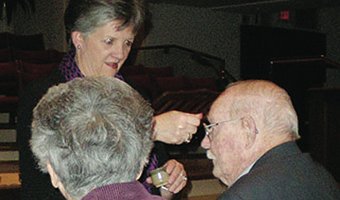
First Baptist Church in Richmond, Va., inaugurates Lent with an Ash Wednesday service—in which the ash of burnt palm branches are smeared on worshippers’ foreheads—and in the last week includes a contemplative service, involving a rhythm of Scripture and devotional readings, silence and meditative songs.

“I’m surprised at how much our folks have embraced” the services, said Lynn Turner, senior associate pastor at First Baptist and staff liaison for the events. “Not just accept—embrace.”

Turner attributes that response in part to the use of prolonged silence.

“It’s simply a time to be quiet,” she said. “Complete silence is a form of prayer we almost never use. We don’t have periods of sustained silence—of even three to five minutes—in our traditional worship services. The rhythm of the contemplative service is different.”

Season of the Cross

While Baptists in East Texas may not warm up to the idea of observing Lent, worshippers at First Baptist Church in Athens wholeheartedly embrace periods of spiritual self-examination, confession and prayer during what they call the “Season of the Cross” in the weeks leading up to Easter, the church’s pastor noted.

“‘Lent’ is not a biblical word, and it can be a disturbing word for some people who didn’t grow up that that tradition,” Henderson said. “I don’t care about our people being committed to Lent. I care a lot about them being committed to Lenten ideas.”

First Baptist in Athens does not rigidly adhere to a liturgical Christian calendar, but Henderson estimates he has led some sort of Ash Wednesday observance annually during his 14 years at the church—normally during a regularly scheduled Wednesday evening prayer service.

Typically, the service involves members writing their sins on slips of paper, collecting and burning the folded pieces of paper, and having their foreheads marked with the sign of the cross using those ashes.

Touching the emotions

Baptists involved in intentional preparation for Easter—whether referred to as Lent or some other name—view it as an effective tool for teaching and spiritual formation.

“I quit doing a Super Bowl Sunday years ago because what does that say about us as a church?” said Chuck Warnock, pastor of Chatham (Va.) Baptist Church. “We Christians have our big Sunday. Our super Sunday is Easter. And we need to get ready for it by doing more than just planning a special hour-long service. We need to prepare our people.”

Lenten practices can help Baptists get in touch with an often-neglected side of worship—the emotional dimension, said Bill Tillman, who holds the T.B. Maston Chair of Christian Ethics and teaches spiritual formation at Hardin-Simmons University’s Logsdon Seminary in Abilene.

“It’s appropriate to grieve over one’s sins and to grieve the death of Jesus. At the same time, Easter should be the ultimate celebration for Christians,” he said. “Spiritual disciplines are things that can help people get into the emotional side of their faith practice, experiencing grief and delight.”

Christ AroseThe Lenten season, as a key part of the Christian calendar, helps Christians move through the salvation story in an orderly way and incorporate the rhythms of the Christian year into daily living, he noted.

“People are looking for reference points,” he said.

Teaching time

Tabernacle Baptist Church in Richmond, Va., uses Ash Wednesday as a teaching day, the congregation’s pastor said.

“Our service is way of teaching people what it means,” Severns said, a key consideration in a church that never had observed Lent before it called him as pastor.

“I was really nervous about the imposition of ashes the first time we did it. But we found way more people came than we expected, and that included the older generation—traditional Baptists—who fell in love with it.”

Severns, an artist whose photography is exhibited in the church, uses photos to remind the congregation of its sense of community. Images of all church members whom he has shot over the past seven years—now including some who have died and children who have grown—are projected on a wall throughout the service.

“We pull out all the stops to enhance our sense of unity as a community,” he said.

For Henderson, Ash Wednesday is a two-fold teaching experience. First, he emphasizes the Old Testament meaning of bearing a mark and using ashes as a sign of repentance. At the same time, he explains the meaning of terms such as ‘Lent’ so members who did not grow up in churches that follow liturgical practices will understand what fellow Christians do during the weeks leading to Easter.

“It’s a way to connect to the broader Christian world,” he said.

Focus on the cross

Easter CrossThe Athens church marks the Season of the Cross by erecting two crosses—a 9-foot cross suspended by ropes in the middle of the sanctuary to help worshippers focus and a 30-foot cross outside on the church grounds to draw the attention of people who pass by.

Worship services during the weeks leading to Easter include a progressively greater emphasis on the cross, Henderson noted. Small-group Bible studies also focus on themes appropriate to the emphasis.

“There’s a change in the tone of the worship services. They are more introspec-tive, with seasons of confession. They tend to be quieter, and our contemporary service features more unplugged acoustic music than usual,” he said.

This year, the church will set up two stations in the sanctuary where people can write down confessions of sin and prayer requests during worship services, then leave them tucked away.

“It’s sort of like a Wailing Wall where people leave their prayer requests,” Henderson explained. “It is a physical, tactile experience. We try to involve all the senses.”

Some years, the church observes the Lord’s Supper on Maundy Thursday—the Thursday prior to Easter, when Jesus instituted the ordinance—and incorporates teaching about the Passover. Typically, a 7 a.m. service on Good Friday involves members moving through the Stations of the Cross, reading Scripture and reflecting at each location.

On the evening before Easter, church members gather at the church to decorate the outdoor cross with flowers so it will be covered when people see it the next morning.

Lent and other elements of the Christian year can be a countercultural response to society’s pressures, Warnock observed.

“The fact is, if we don’t have some kind of spiritual calendar, then we cede our entire lives to the secular calendar or the sports calendar or the shopping calendar,” he said. “No matter what you call it or whether your follow all its intricacies, it’s a calendar that speaks to our spiritual walk and development.”


Vestal predicts more CBF downsizing

DECATUR, Ga. (ABP) – The head of the Cooperative Baptist Fellowship predicted future budget cuts that for the first time would affect global-missions personnel for the 20-year-old movement spun off from the Southern Baptist Convention.

The CBF Coordinating Council normally recommends a budget at its February meeting. Based on declining financial support from approximately 1,900 contributing churches and individuals the elected body instead instructed staff to anticipate revenues of $12.3 million in 2011-2012 — scaled back from an already lean projection of $12.9 million proposed by staff — at the Feb. 23-25 meeting at First Baptist Church in Decatur, Ga.

Robert Dietz, a Coordinating Council member from Florida, contributes to an offering that raised about $4,000 for missions.

Unwilling to recommend a budget requiring “fundamental changes” in funding priorities without input from elected leadership, council leaders and staff made last-minute alterations to the meeting agenda to involve the full council in roundtable conversation to rank priorities as a guide for staff and council leadership in making hard choices. Not surprisingly, the most-prized area of work was global missions.

After processing the feedback, leaders reported back to the full council that realities of CBF funding make it unlikely that future cuts would totally spare missions.

“I just have to be real candid with you,” said CBF Executive Coordinator Daniel Vestal. “I don’t see how we can cut another $600,000 out of the budget without addressing it to global missions, unless you don’t want us to do anything else but global missions, because we have cut for the last two years.”

“We have just gone through a layoff of 25 percent of our staff,” Vestal said, referencing the elimination of 13 jobs and reassignment of one staff member due to a shortfall in the current budget announced in January.

“We have cut programming,” Vestal said. “We are funding most of the programming in leadership development, in congregational formation, from designated gifts, and we have been living off of these large anonymous gifts to global missions for eight years, in addition to the money that churches have been giving each week.”

Asked if cutting funds to global missions would mean recalling current field personnel, Vestal replied: “I’m not going to sit here and say, ‘This is exactly how we would do it.’ We would look at staff. We would look at personnel on the field. We would look at projects. We would look at ministries of the missionaries on the field, and we would have to say ‘This is how we will address this shortfall.”

CBF leadership will ask churches over the next six months to have a special offering to keep global missions at its current work force, but Vestal said that would be only “a one-year deal.”

“I don’t want to diminish that,” he said. “But we are in a real downturn, and we have to be honest about that.”

Bill McConnell, chair of the council’s finance committee, said the group planned to have a budget ready by the full council meeting but put brakes on the process based on recent giving records.

CBF Moderator Christy McMillin-Goodwin presides Feb. 24.

“We still do not have a budget,” McConnell said. ‘We are going to propose a figure of $12.3 million as the target for us to discuss and to see if we can reach for the year 2011-2012.”

“This is a sobering number,” McConnell commented. “When I came on the council — this is my third year — we were working with a budget much higher than that.”

Vestal said a $12.9 million budget would create “personnel issues,” but the current operation could be maintained with layoffs and reassignments. The reduced baseline of $12.3 million, however, will require “much more fundamental changes” that staff did not to make without input from elected leadership.

“We are going to have to make some cuts, and it will affect the core of our work at CBF,” said McMillin-Goodwin, minister of education and missions at Oakland Baptist Church in Rock Hill, S.C. She said staff leaders would use council input to develop a budget that will be considered by the finance committee and advisory council and probably distributed by e-mail to the full Coordinating Council prior to a June 22 regular meeting immediately prior to the General Assembly.

This year the Fellowship’s budget is $14.5 million. Through January, however, revenues were running at just 84 percent of year-to-date projections, said Larry Hurst, CBF controller.

About two months into the budget, Vestal said, Fellowship leaders determined they could not operate for 10 more months based on projected income of $14.5 million. In January the Fellowship cut 13 jobs and reassigned another staff member.

The Coordinating Council adopted a resolution Feb. 25 that voiced “deepest gratitude and appreciation for all those who have given their talents, gifts and labor in the work of the Cooperative Baptist Fellowship over the past 20 years” and “great respect and appreciation for those whose jobs have been eliminated due to adverse economic conditions.”

Despite current economic woes, Vestal said he remains confident that ongoing discussions by a 2012 task force studying the CBF’s structure and funding over two years will see the organization through tough times.

“I think we are trying to discern how to fund mission in the 21st century,” Vestal said. “We know how to do mission in the 20th century. We know what that looks like, but it doesn’t work anymore. We know what doesn’t work, but what does work?”


–Bob Allen is senior writer for Associated Baptist Press. 


Austin pastor notes value of Christian calendar for spiritual formation

In this interview, Don Vanderslice, pastor of Mosaic Church in Austin, reflects on how his community of faith observes the Christian calendar:

I’d never been a part of a community that participated really fully in the Christian calendar until I came to Mosaic. We recently did some one-on-one conversations between our pastoral staff and leadership team, and almost every member of our community. They were conversations about spiritual formation, gifts, passion, commitment, other things. What came out over and over again, in asking the question—“How has Mosaic been a part of your spiritual formation?”—was how important the Christian calendar had been in spiritual formation over the past few years.

Don Vanderslice, pastor of Mosaic Church in Austin, speaking at the Transforming Culture Symposium in 2008. (David O. Taylor Photo)

A number of our people were brought up in churches, but we have a lot out of the free church tradition, the Baptist tradition, and then about a third have Catholic, Episcopal, Lutheran, some kind of liturgical background. But they all highly value the Christian calendar and part of that has to do with spiritual formation. It draws us into the priority of journey, reminds us that the spiritual life is indeed a journey, as we celebrate for instance that Lent takes us to Easter, which itself isn’t just a day, but a season during which we dive into the Easter stories—plural—and leads in the Pentecost season, and then ordinary time.

The idea of journey or pilgrimage is that we’re going somewhere, and not just landing on a holiday here and there. I’ve always found it odd that in the Baptist, free church tradition in which I grew up we were so devout in celebrating the secular calendar. Mother’s Day, Father’s Day—if there was a greeting card for it, we dedicated a Sunday to it. But if there was a day in the church year that had been embraced by Christians for about 2,000 years which said something about what it means to be church, we dismissed it.

The Christian calendar is a realization that in the same way God created seasons of the year, there are seasons for the church. We don’t always exist in summertime or in winter. Of course, there’s always a time to think about repentance, but in part of the church year we think seriously about what that means in our lives. When the church says at Advent, now we’re starting a new year in contrast to the culture around us, we’re saying something about our priorities and about our lives, holistically and spiritually. The calendar we follow says a lot about us. The calendar gives us a way of remembering our story.

Mosaic generally has a countercultural feel, and following the Christian calendar has counter cultural aspects to it. Is there an awareness of that at Mosaic?

Absolutely. We have a countercultural commitment, and the Christian calendar is countercultural. Throughout the year, we draw attention to the fact that it distinguishes us from the rest of the culture. I mean, we’re not rah-rah about, but it comes out constantly. At Advent we call attention the fact that it’s the beginning of the year, not the beginning of the shopping season or even of Christmas, which has its own season (after Dec. 25). No, it’s the beginning of Advent. We measure our time differently. When we get to July 4,we still preach out of the lectionary, and that wasn’t created to celebrate American independence in the 21st century. Of course we talk about it being the Fourth, but we acknowledge that we follow a calendar that isn’t tied to our patriotism.

It’s a radical way of marking time and embracing what we have felt in the church is valuable.

How would you introduce spiritual disciplines like the Christian calendar to a congregation unfamiliar with them?

I’ve never been a pastor of a church that resisted those ideas, so I’m not an authority. But I wonder if it started with a small group of people in a church who were interested in exploring the idea, then letting the small group bring the suggestion to the full community instead of the pastor. And there has to be trust between staff leadership and the community.

It’s odd in churches that they celebrate Palm Sunday and Easter with great joy but there’s nothing in between. Holy Week puts that in perspective. It’s a something we are very intentional about as a community. Our Good Friday is very dark. We don’t try to explain Good Friday, give easy answers, we just take part in this last day of Jesus’ life. Then our Holy Saturday is a silent service, where we do ask a lot of questions. They don’t provide easy answers. It’s a way to be, though, because it’s a lived experience. Every human has had a Holy Saturday. We want to articulate that and not cheat our way out of it, just to be present to it. Then Easter really means something. We’re exhausted by the end of Holy Saturday, and Easter is so energizing and enriching when we celebrate the resurrection.


True Love Waits commitments in Africa approach 1 million

NASHVILLE, Tenn. (BP)—The number of commitments by African youth to sexual purity through True Love Waits International stands at more than 959,000 since LifeWay Christian Resources launched its strategic initiative there in summer 2007.

Students in East London, South Africa, signed True Love Waits pledge cards. (PHOTO/Courtesy of Roxie Shore)

During that three-and-a-half-year period, more than 1.6 million young people in Africa heard the True Love Waits message promoting sexual abstinence until marriage. In addition, nearly 46,000 married adults have committed to faithfulness, and more than 41,600 decisions to follow Jesus Christ have been recorded by True Love Waits team members.

From April to October 2010, the total grew by more than 70,000 African youth, according to True Love Waits leaders.

In Africa, the greatest response to True Love Waits is in the Eastern Cape province of South Africa. In November, True Love Waits International South Africa was approved as a registered organization, and ministry partnerships there are growing, reported Sharon Pumpelly, lead consultant for True Love Waits Inter-national.

In the Philippines, which joined True Love Waits International in 2009, nearly 22,000 students signed commitment cards last year after going through training, with plans in place for expanding outreach to Filipino young people ages 15 to 24 beginning this year.


Third Day inspires audiences to action

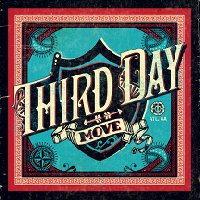
ATLANTA, Ga.—For the Christian rock band Third Day, Move is more than just the title of their latest CD. It’s a call to action—to be the hands and feet of Christ, extend kindness and make a difference.

“I would love for believers to listen to these songs and be inspired to do greater things for the kingdom,” lead singer Mac Powell said.

For more than a decade, the Christian rock band Third Day has produced songs filled with messages of God’s glory and redemption.

“As people are listening to these songs, I hope it reminds believers to reflect Christ through their words and actions. We definitely want our songs to uplift people, but we also wanted to make believers ponder, reflect and pray. 

“So we addressed topics that non-Christians probably ask themselves a lot. We tackled subjects like: ‘What do non-Christians see when they look inside church walls? Are we effectively living out the gospel and ministering outside the church walls?’ 

“It’s our desire that the songs on this album will encourage people to be who God’s called them to be—while sharing his love with those in need.”

While hitting the road on the nationwide “Make Your Move Tour” this spring, band members hope to inspire audiences with the message behind the music.

For more than a decade, the band has reached audiences with songs filled with messages of God’s glory and redemption.

Along the way, they have garnered multiple honors, including an American Music Award, four Grammy Awards, 24 Dove Awards from the Gospel Music Association and 27 No. 1 radio hits. They have sold more than 7 million albums.

Third Day has been featured on The Tonight Show, 60 Minutes and Nightline, covered in USA Today and the New York Times and even graced the cover of Billboard Magazine

Despite the accolades, Third Day keeps the spotlight shining on Christ. 

Their concerts have benefited mission organizations and relief efforts, such as Habitat For Humanity, Blood:Water Mission and World Vision.

“Our purpose is to connect people to Christ,” Powell said. 

“One of our new songs, ‘Children of God,’ was inspired by 1 John 3, which focuses on God’s great love for his children. 

“That’s a message we really want to share with audiences—no matter who you are, where you are from or what you’ve done in life, you can still be called a child of God.

“We want to emphasize to audiences that all they have to do is accept the free gift of salvation, and God’s great love is waiting to welcome them with arms wide open.  

“As we look back on the history of Third Day and all the accomplishments that we’ve been blessed to earn and receive, the best thing is knowing that thousands of lives have been changed for the better and with the assurance of salvation.”


TBM honors leader, notes God’s activity

MESQUITE—Texas Baptist Men honored Leo Smith for his years of service as the mission organization’s executive director, heard reports on “the activity of God” through TBM and conducted business at their Feb. 18 meeting.

Smith, 72, recently announced his intention to retire after seven years as TBM executive director and more than four decades in leadership with the organization. Smith became interim executive director in 2002 and served in that capacity until he was elected to the position in February 2004.

The TBM personnel committee will serve as a search committee to find the next executive director.

Texas Baptist Men Executive Director Leo Smith was honored Feb. 18.

In his final report to the board, Smith pointed to several of the 18 ministry areas in which TBM is involved and asked leaders of those ministries to give testimonials. Smith particularly noted the group’s growing involvement in water purification worldwide, pointing out TBM workers filtered 109 million gallons of water last year.

He also noted TBM has 9,999 trained disaster relief volunteers, and he encouraged anyone at the meeting who had not received basic training to respond soon and help the missions organization reach the 10,000 mark.

In a business session, the group elected Tommy Malone from Park Central Baptist Church in Dallas as president, in addition to electing vice presidents for each of the organization’s ongoing ministries.

TBM also approved a $1,852,533 budget for 2011, down 6 percent from 2010, reflecting a decrease in financial support from the Baptist General Convention of Texas. The budget anticipates $472,500 from the BGCT Cooperative Program, $100,000 from BGCT worldwide causes and $150,000 from the BGCT in designated gifts.

TBM presented four Parabolani awards, named for a first century brotherhood of Christians who risked their lives for their faith. The 2011 recipients are Bob Young, a member of The Heights Baptist Church in Richardson for his involvement in water purification; James Cundiff of McKinney for his service in Haiti; and Cordelia Smith from South Park Baptist Church in Alvin for her sacrifice in allowing her husband to devote himself to service as TBM executive director.


Most Americans support upcoming congressional probe of Muslims

WASHINGTON (RNS)—Americans haven’t heard much about congressional hearings on the radicalization of U.S. Muslims, but more than half think it’s a good idea, and nearly as many believe Muslims here haven’t done enough to fight extremists in their midst, according to a new poll.

At the same time, 62 percent say American Muslims are an important part of the religious community, and a clear majority—72 percent—say Congress should investigate religious extremism anywhere it exists, not just among Muslims, according to a PRRI/RNS religion news poll.

The poll, conducted by Public Religion Research Institute in partnership with Religion News Service, was released as House Homeland Security Committee Chairman Peter King, R-N.Y., prepares to hold hearings on the threat of homegrown Islamic extremism during the week of March 7.

The poll examined attitudes toward both the hearings and American Muslims, analyzing the responses by gender, age, most trusted news source, and religious and political affiliation.

Overall, men, viewers who trust Fox News, white evangelicals and Republicans are more likely to think the hearings are a good idea and to believe Muslims want to establish Shariah law in the United States. The hearings find less support among Democrats (45 percent), people who trust CNN (45 percent) or public television (28 percent), and white mainline Protestants (50 percent).

Nearly half (49 percent) of Americans do not believe Muslims in the U.S. have been unfairly targeted by law enforcement; more than one-third (36 percent) believe Muslims have been targeted unfairly. One in five (22 percent) Americans believes U.S. Muslims want to establish Shariah law here.


Unfamiliar practices may bring unexpected benefits to churches

Introducing unfamiliar practices to church members can be challenging, but congregations often are far less resistant than expected, according to some pastors who have tried it.

“I think people are hungry for ritual, especially those who don’t come from a Christian tradition which has them,” said Sterling Severns, pastor of Tabernacle Baptist Church in Richmond, Va. “Communion is the closest many Baptists come to ritual. But there’s something that is inside Scripture, a way that God uses ritual and rhythm to help people understand something about God’s nature.

“I think that instinct is also inside us, and we don’t know it,” said Severns, who introduced his congregation to Lent soon after he was called to the Richmond church. “And sometimes when we start sharing these rituals with individuals unfamiliar with them, it taps into something they didn’t even know they were hungry for. When we bring ritual to the rhythm of worship, it’s one of the things that bring us together.”

Wide acceptance of untried spiritual disciplines can succeed if a few factors are present, pastors and other church leaders noted.

Start with the familiar. Author and pastor Rick Warren popularized the significance of a 40-day period of spiritual development with his “40 Days of Purpose” campaign and through several books, said Chuck Warnock, pastor of Chatham (Va.) Baptist Church. And it’s biblical, he added, noting that spans of 40 days played important roles in the lives of Noah, Moses, Elijah, Jonah and Jesus.

“I think a church that doesn’t want to observe Lent, per se, could easily plan 40 days of anticipation leading to the Easter Sunday celebration,” Warnock said.

It’s not a package deal. Adopting spiritual disciplines long associated with the liturgical tradition doesn’t require reorienting a church’s entire worship patterns, many pastors said. Choose those practices that work and avoid rigidity, they urged.

“We’re not a liturgical church, and I don’t think our members associate Lenten practices with Catholic or Episcopal liturgical forms of worship,” said Lynn Turner, senior associate pastor at First Baptist Church in Richmond, Va., who coordinates many of the churches services during Lent. “The practices we’ve adopted simply connect them with God. People say, ‘I need this in my life.’”

At Richmond’s Tabernacle Baptist Church, worship services during Lent and at Easter often involve a procession of ministers and choir. “We process carrying the Christ candle, but we don’t robe up,” Severns said. “Some of our folks are in jeans and flip-flops. I wear a suit and bow tie. And we sing traditional Baptist hymns.”

Crown of ThornsAt Mosaic, a congregation in Austin with Baptist links and roots in the city’s lively artistic community, worship is an unexpected combination of informal dress, alternative—and original—folk music and liturgical practices. The service, held each Sunday at 5 p.m., is called simply “liturgy.” Pastor Don Vanderslice begins each sermon with the ancient greeting, “The Lord be with you.” His diverse congregation responds, “And also with you,” and following the public reading of Scripture, worshippers respond, “Thanks be to God.”

“Our liturgy is designed to … (bring) together the ancient signs and symbols of our tradition along with the visual arts, Scripture reading, storytelling and a music created out of our own community,” the church writes in a defining web statement. “We at Mosaic follow this rich tradition of diversity and orthodoxy, combining elements of the ancient church while interpreting the liturgical expression for our own local context.”

Start them young. Seminary and divinity school students are well placed to ex-plore unfamiliar spiritual practices and develop ways to integrate them in the chur-ches they serve in contextually appropriate ways.

Many students at Hardin-Simmons University’s Logsdon Seminary in Abilene will serve West Texas churches that might view observance of Lent—and the liturgical Christian calendar in general—as too high church and Catholic-influenced for their tastes, noted Bill Tillman, who holds the T.B. Maston Chair of Christian Ethics there and teaches spiritual formation.

Even so, those students can help their churches incorporate into worship the spir-itual disciplines associated with Lent, he noted.

Early Christians “saw the value of introspection and confession,” Tillman said. “They practiced fasting—self-denial of things that get in the way of one’s relation-ship with God. They saw these as ways to get into a better frame of mind to celebrate the resurrection.”


–Managing Editor Ken Camp contributed to this story.


What’s the skinny on Lent?

An odd word, Lent.

Most European languages refer to the 40-day penitential period prior to Easter with some form of the words “forty” or “fast.” English-speakers, on the other hand, adapted a Teutonic or Anglo-Saxon (no one knows for sure which) word that meant “lengthen”—a reference to lengthening days as spring approaches.

Of course, that only really makes sense in the northern hemisphere, but Christians in, say, Australia or South Africa nevertheless retain the word. But then they also celebrate Christmas in the summer.

Even here on the north side of the planet, Lent—whose start is determined by the date of Easter—seems to fall in wintry weather more often than warm. This year, though, the name and the season dovetail quite nicely. Easter, which falls on April 24, is later than at any time since 1943 and won’t arrive this late again until 2038—a choice bit of trivia that can fill a lull in the Easter lunch conversation.

Since Easter falls on April 24 and Lent lasts 40 days, Ash Wednesday—the inauguration of the fast—will be March 9. If you actually pulled out your calendar, counted the days and can’t make it add up, it’s because you included the Sundays in Lent. Don’t. Every Sunday is a mini-celebration of the resurrection and isn’t a fast day. No, that doesn’t mean you can abandon on Sundays whatever vow you made. Yes, it does mean you can rejoice that the Lord is risen—risen indeed.

Lent winds up with the Triduum—literally, three days—that forms the heart of Holy Week. On Holy Thursday, Christ instituted the Lord’s Supper and established a new commandment: to love each other in the way he loved us.

Maundy Thursday, an alternative name for Holy Thursday, is derived from the Latin word for “commandment”—mandatum—which English Christians, who apparently fared poorly in Latin class, garbled.

Good Friday—the day of the crucifixion—is the most significant of the three days, but that might not be obvious in churches that tack a brief Tenebrae observance of darkness at the end of their Maundy Thursday service.

Holy Saturday is a day for somber examination—Christ lay in the tomb and for a while it looked like hope was abandoned. A little time spent reflecting on the utter despair the disciples experienced on this day will enrich your celebration of the good news they discovered on Easter morning.

So, Lenten observances can be a bit involved, but it’s not rocket science. Spend a bit of time at it and the results might surprise you.