Ergun Caner moving to school begun by J. Frank Norris

ARLINGTON (ABP) – Ergun Caner, the former president of Liberty Theological Seminary demoted for exaggerating claims about his Muslim upbringing, has been hired as provost and vice president for academic affairs at Arlington Baptist College, according to a press release on Caner's website.

Founded by J. Frank Norris in 1939 as the Fundamental Bible Baptist Institute, the Arlington Baptist College is affiliated with the World Baptist Fellowship. Caner, who remained as professor at Liberty after trustees removed him as president and dean last June, will also teach theology, church history and apologetics at Arlington.

“I have the utmost confidence in Dr. Ergun Caner,” President D.L. Moody said in presenting the candidate to the board of trustees. “I believe that he has the abilities, wisdom and passion to enhance the work and ministry of Arlington Baptist College as we prepare a generation of giants for Jesus Christ.”

According to the press release, Caner’s election was unanimous.

“I am thrilled to be joining the Arlington Baptist College,” Caner said. “This is an historic institution, founded by one of Christianity’s most courageous voices, Dr. J. Frank Norris.”

Caner became a popular speaker after 9/11 on circuits including the Southern Baptist Convention with his testimony of being trained overseas as a jihadist terrorist before his conversion to Christianity. After blogs and news media reported that he grew up in Ohio, Liberty trustees investigated and found “factual statements that are self-contradictory” in recordings of Caner’s speeches, asked him to step down as dean and gave him a teaching contract for one year.

Moody said he was excited to welcome Caner to the school’s administrative team. “He shares the values that I have for biblical authority, evangelistic fervor and godly example,” Moody said.

Norris, founder of both Arlington Baptist College and the World Baptist Fellowship, was a fundamentalist Baptist leader in Texas in the first half of the 20th century. The one-time editor of the Baptist Standard and longtime pastor of First Baptist Church in Forth Worth was nicknamed the “Texas Tornado” during a long-running feud with the Southern Baptists.

Once loyal to the Southern Baptist Convention, Norris became alienated by the Seventy-Five Million Campaign, forerunner to today’s Cooperative Program of unified budget support of both state and national Baptist conventions. He spent the rest of his days seeking to undermine the SBC, accusing Baptist schools of teaching evolution and tolerating “modernist” theories of Bible study.

After his exclusion from his local association, state convention and the Southern Baptist Convention, Norris founded his own independent fundamentalist group, originally called the Premillennial Baptist Missionary Fellowship but renamed the World Baptist Fellowship after a split over his authoritarian leadership.


Previous stories:

Publisher of Ergun Caner's memoirs stands by demoted seminary head

After investigation into claims, Liberty University demotes Ergun Caner

Liberty U. to investigate alleged untruths by seminary president

Liberty U. backs seminary president amid charges of misrepresentation


Pastor, denominational statesman James Pleitz dies

PENSACOLA, Fla. (ABP) – James Pleitz, a well-known pastor in Florida and Texas active in denominational leadership, died Sunday, May 15. He had been in care of the Joyce Goldenberg Hospice Inpatient Residence in Pensacola, Fla., since May 2.

James Pleitz

Pleitz retired in 1993 after more than 15 years as pastor of Park Cities Baptist Church in Dallas, with 9,000 members one of the largest churches affiliated with the Baptist General Convention of Texas. Prior to that Pleitz was pastor of First Baptist Church in Pensacola, Fla., for 18 years. He and his wife, Margaret, returned to Pensacola in retirement, and he served First Baptist Church as pastor emeritus. She preceded him in death after 61 years of marriage in February 2010.

Pleitz was well known in Baptist life for service in many denominational leadership positions. He chaired the powerful Southern Baptist Convention Executive Committee in 1968-69 and a committee that studied the Cooperative Program unified budget plan in 1981-83. Pleitz was president of the Florida Baptist Convention in 1971-72. He was president of the SBC Pastors Conference in 1974-75 and preached the SBC annual sermon in 1983 in Pittsburgh. He also served as a trustee and board chairman of the SBC Radio and Television Commission, which is now a part of the North American Mission Board.

Pleitz was also active in the “moderate” resistance to efforts launched in 1979 by a group called the “conservative resurgence” to rescue the convention from so-called “liberalism.” He was a founding director of Associated Baptist Press, an independent news service formed in 1990 to ensure a flee flow of information during the controversy.

Pleitz was also a beloved pastor, known in both Dallas and Pensacola for television broadcasts that spread his influence far beyond the church walls in both communities. He came to First Baptist of Pensacola as a young minister – some thought too inexperienced to handle the challenge – but he led the church to recognition as Guideposts magazine’s “Church of the Year” in 1970. Early in his ministry he was pastor of two churches in Arkansas, First Baptist Church of  Bentonville and Grand Avenue Baptist Church in Fort Smith.

Pleitz was a graduate of Ouachita Baptist College (now University) and Southern Baptist Theological Seminary. He received honorary doctorates from four colleges, including his alma mater.

Pleitz is survived by a son, a daughter, five grandchildren and two great-grandchildren. Services are scheduled at 10 a.m., Wednesday, May 18, at First Baptist Church in Pensacola. In lieu of flowers the family suggests donations to either the Royal Outreach Center or Ouachita University Student Scholarships through First Baptist Church of Pensacola .


Baylor School of Social Work welcomes alumni from Carver School

WACO—A movement birthed more than a century ago from passion to obey Jesus’ commandment to love one’s neighbor as oneself lives on through Baylor University’s School of Social Work.

Recently, the Baylor School of Social Work served as host for a reunion for alumni of the Carver School of Church Social Work—a pioneering institution in the area of Christian social work.

Sandy Wisdom-Martin (left), executive director of Woman’s Missionary Union of Texas, enjoys a visit with Diana Garland, dean of the Baylor School of Social Work, during a reunion of the Carver School. (PHOTOS/Baylor School of Social Work)

Established in Louisville, Ky., the school was founded in 1907 as the Woman’s Missionary Union Training School—a place for women who wanted to serve in ministry but were not allowed to attend seminary.

Over time, the school relinquished ownership to the Southern Baptist Convention, changed its name to honor prominent professor W. O. Carver, and prepared hundreds of men and women for careers in church and community ministry.

Diana Garland, dean of the Baylor School of Social Work, served as the Carver School’s dean from 1993 to1995.

“I am the grandmother who knows all of you and where you come from even though you may not know your distant cousins in the room,” Garland told participants at the reunion.

“It brings tears to my eyes to gather a group like this who have been through so much in their own personal lives and in our own history together—one of tragedy and one of triumph—and we are here tonight to celebrate the triumph.”

Garland referred to a history written in fresh ink, as the alumni listening to her speech knew all too well their school’s history. Their alma mater erupted in controversy in the mid-1990s after a change in leadership in the Southern Baptist Convention and the seminary.

Southern Baptist Theological Seminary dismissed Garland as dean and eventually shut down the institution in 1997. That same year, the Carver name and some of its physical assets were sold to Campbellsville University. The university changed the name slightly, from the Carver School of Church Social Work to the Carver School of Social Work.

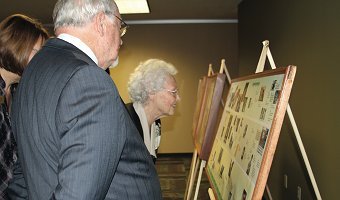
Elizabeth Smith, an alumnae of the Carver School of Social Work, examines a timeline showing the school’s history. (PHOTOS/Baylor School of Social Work)

Patty Villarreal, Carver class of 1993, recalled the difference the school made in her life and expressed sorrow over its demise.

“I had grown up with a tradition that, as a Latina, the place and the role of the woman was not very prominent. She was not worthy to stand behind the pulpit,” said Villarreal, national director for church and community initiatives for Buckner International.

Carver transformed her theology, Villarreal said, and gave her hope.

“The training that I received there is just so valuable, and it is sad that that it ended the way that it ended,” she said.

Seven years after the school closed, national Woman’s Missionary Union called a summit in Birmingham, Ala., to discuss what should be done to keep alive the school’s mission.

“The outcome was the group’s blessing and encouragement for Baylor to lead out in organizing the church social work network, including alumni of all the graduate schools that Baptists have supported to prepare women and men for social work and leadership of the Christian social ministries and missions of Baptist congregations,” Garland reported. So, Baylor adopted the graduates as “alumni-by-choice.”

“Indeed we do share a collective sorrow as to the circumstances but are reminded of the scripture that ‘except a seed die, it does not grow again.’ The seed must die, and then it gives fruit, and it’s not just one thing, but much fruit,” said Timothy Johnson, a former professor at the Carver School.

Johnson then offered his advice on how to view the situation.

“It’s important to let the sorrow of the past go, because that is the fertile soil in which God prepares the next blessing. In his providence, (Carver’s closure) happened, and it pushed us out much as the disciples had to be pushed out from Jerusalem to do what Jesus said—go into all the world—and so we’ve gone across this country.”

Alumnae Darla Bailey called the transition a “work in progress.”

“We’ve been talking about this and talking and wanting to get together to celebrate who we are and celebrate not just the Carver legacy, but also what is happening here at Baylor University,” said Bailey, a Carver School representative on the Baylor School of Social Work board of advocates.

“I hope this is the beginning of something great that’s going to happen on an ongoing basis—something that’s going to start tonight and continue—and I’m looking forward to watching us and seeing where we end up on our journey.”


Missions volunteer brings message of God’s love to children

In mid-June, Heather Herschap leaves her South Texas home and heads back to India—her third journey to one of the most populous nations on earth and a trip that was more than two years in the planning.

But this time, the wheelchair-bound missionary takes with her three things she didn’t have on her first two visits—a certificate of ordination, a new book she wrote just for the children to whom she will minister and a dedicated group of three friends who’ll help her accomplish her mission.

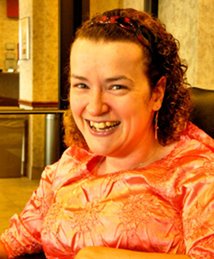
Heather Herschap

The children’s book, My Friends and I, is meant to teach children, especially disabled children, that no matter who they are or where they’re from, they are entitled to the unqualified and never-ending love of God.

“I didn’t want to write it,” said Herschap, a graduate of Baylor University’s Truett Theological Seminary. “I wanted to go to India. But if it hadn’t taken two-and-a-half years to get the trip together, I wouldn’t have had time to write it or time to get ordained. That was all God’s plan.”

While she was in Laredo waiting to go to Laredo, Herschap had a conversation with a church friend about how she could be more purposeful.

“She said ‘You need to write something about the disabled community,” Herschap said.

That was the birth of her writing career.

Disabled by cerebral palsy, Herschap said she has a special love for all children, but because disabled children in India are shunned by both their families and society, she feels a special calling to teach those children they are entitled to God’s love.

In India, people “see disabled children as a curse on the family,” she said. She wants those special children to know they are loved and they are special.

One page in her book reads.

“Whether we are strong or weak,

My friends and I have dreams to seek.

With or without our disabilities,

There’s always room for possibilities.”

The book is written in simple rhymes and is easy for youngsters to read. It tells simple messages in powerful ways.

While Herschap noted her book is introspective, it is not about her childhood experience.

“I think a writer who writes seriously always thinks about their own life, … but I knew I was loved and wanted and supported from the get-go,” she said. “I do think the message that the book has is the message I’ve been called to preach.”

Herschap was ordained last October at Seventh and James Baptist Church in Waco, where she also was baptized and commissioned.

She says she chose Seventh and James because “I feel like that’s where I grew up from a baby Christian to a confident, strong woman of God. So, I chose Seventh and James to kind of complete the process. Not that I think God is finished with me, because I know he’s not,” Herschap said.

Published by Tate Publishing and Enterprises, it is available now only in English, but Herschap hopes that will change soon.

Herschap beams when she talks about India. And as to her writing career, she’s already started on her second book and plans a third in collaboration with one of her former professors.

My Friends and I currently is available from the publisher at www.tatepublishing.com or on Amazon.com.

Herschap also beams when she talks about one of the three friends who will serve with her in India—her boyfriend, who teaches at a university near where she lives.

For now, they are partners in missions and ministry. Asked about a more long-term partnership involving a wedding ring, Herschap responded: “We’ve talked about it. We’ve talked about it several times. We’ll see what God says.”


Two-thirds of Americans say Osama bin Laden’s in hell

WASHINGTON (RNS)—While Americans have debated whether Osama bin Laden’s body belongs at the bottom of the Arabian Sea, most agree on the final destination of his soul—in hell.

A new poll reports most Americans (82 percent) believe bin Laden distorted the teachings of Islam to suit his own purposes, and nearly two-thirds (65 percent) agree he will be “eternally punished for his sins in hell.”

Americans react to hearing about Osama Bin Laden's death.

Evangelical Christians, at 80 percent, are most convinced bin Laden will spend eternity in hell, according to the poll conducted by Public Religion Research Institute in partnership with Religion News Service a few days after the al-Qaida founder was shot by U.S. troops in Pakistan.

In contrast, only about two-thirds of Catholics, white mainline Protestants and minority Christians—and less than half the religiously unaffiliated—agree that bin Laden’s in hell.

The poll didn’t yield representative samples of Muslims or other minority faiths.

Stephen Prothero, a Boston University religion professor and author of God Is Not One, said the numbers struck him as low, particularly among evangelicals. But the “eternally” part of the question may have prompted hesitation among some respondents, he said, compounded by questions about hell raised by megachurch pastor Rob Bell’s recent book, Love Wins.

Americans are more conflicted over whether Christian values are consistent with the raucous celebrations that broke out after bin Laden was killed. About 60 percent of respondents—ranging from seven in 10 minority Christians to just over half of white mainline Protestants—believe the Bible’s message, “Do not rejoice when your enemies fall,” applies to the death of bin Laden.

Ray Maldonado of Paterson, N.J., marks the death of al-Qaida leader Osama bin Laden at Ground Zero in New York. (RNS PHOTO/John Munson/The Star-Ledger)

Clark West, an Episcopal chaplain at Cornell University, said the Bible sends mixed messages on such celebrations—examples of rejoicing over an enemy’s downfall, as well as the admonition from Proverbs.

“Scriptures can be found both supporting and critiquing such celebrations,” he said. “There can be healing for a trauma survivor in recovering a joyful sense that evil will not have the last word, but human events like the killing of bin Laden should not be confused with the divine vanquishing of evil.”

But for 9/11 survivors and victims’ families, “quiet prayer and attentiveness,” rather than raucous celebration, may provide a greater sense of healing, he said.

In other findings:

• A slim majority (53 percent) of Americans say the United States should follow the Golden Rule and not use any methods on our enemies that we would not want used on our own soldiers—down from 2008, when 62 percent agreed.

Support for the Golden Rule principle was strongest among minority Christians, Catholics and religiously unaffiliated Americans (all with majorities above 52 percent), but less so among evangelicals (47 percent) and mainline Protestants (42 percent).

• Younger Americans between the ages of 18 and 34 (69 percent) are more likely to believe the Bible passage about not celebrating “when your enemies fall” applies to bin Laden than do those age 65 and older (47 percent).

• Religiously unaffiliated Americans (57 percent) are significantly more likely than Christians to say the use of torture against suspected terrorists can never be justified. Catholics, at 53 percent, are the Christian group most likely to say torture can never be justified.

• Majorities of white evangelicals (54 percent) and minority Christians (51 percent) believe God had a hand in locating bin Laden, compared to only a third of white mainline Protestants and 42 percent of Catholics.

• A slim majority (51 percent) of Americans believe God has granted America a special role in human history, led by two-thirds of evangelicals and nearly as many (63 percent) minority Christians, compared to 51 percent of Catholics and white mainline Protestants.

Prothero said he was most surprised by the Golden Rule responses, which indicate half the country is willing to disregard Christianity’s most commonly expressed teaching—at least, when it comes to wartime.

“There is this sense that America is supposed to be a Christian nation … but that tends to be more of a slogan than a reality,” he said. “Are you willing to think about the Bible when it comes to torture and terrorism and bin Laden, or are you just throwing biblical principles out the window and going with your gut and your anger and your revenge?”

But even if Americans seem conflicted on this fundamental Christian teaching, the widespread agreement across religious and political lines that bin Laden “distorted the teachings of Islam” indicates a growing knowledge about Islam, he said.

“There’s an awareness out there about the distinction between Islam and Islamic extremism,” Prothero said. “It’s an important conversation that we’ve having right now.”

The PRRI/RNS Religion News Poll was based on telephone interviews of 1,007 U.S. adults between May 5 and 8. The poll has a margin of error of plus or minus 3 percentage points.


Student group provides service to churches, hands-on experience

PLAINVIEW—For ministerial students at Wayland Baptist University who want hands-on experience, internships typically take the form of volunteer or part-time staff roles at area churches, most of them small congregations. But a new student-led venture at Wayland provides future ministers with another venue for honing their skills.

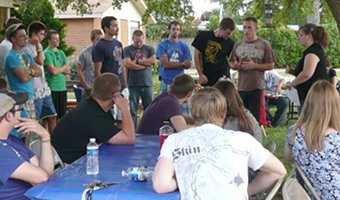
Wayland Baptist University students serving in the Eleazar Project group discuss their experiences at a fellowship at the home of a religion faculty member. The group met monthly for fellowship and networking. (PHOTO/Wayland Baptist University)

The Eleazar Project, housed in Wayland’s School of Religion and Philosophy, consists of groups of students who travel to churches around the region to provide their services for a Sunday. The specifics vary from church to church depending on their needs.

Organizers chose the name “Eleazar” after a common Biblical name that translates from Hebrew as “May God help,” echoing the sentiment of students who feel called to serve churches with leadership from God.

“We call the churches beforehand and explain to them what the point of the project is, which is two-fold—to serve churches and to gain experience,” said Chris Winegar, a senior religion major from Rock Rapids, Iowa, who plans to be a preacher. “Some churches want only preaching, some want everything from Sunday school teachers and children’s workers to music leaders.”

After the team leaders have defined the church’s needs, the group meets to lay out the plan of action, forming the team based on what students are needed and the strengths and talents of those studying for ministry at Wayland. Not all of the 40 students in the Eleazar group are religion majors or minors. Some, Winegar noted, are just interested in serving churches and getting more experience in doing so.

The group’s services are not limited to small churches, and the group likes the variety of experiences they’ve been able to have. A key element is an evaluation form the group receives from church staff members providing helpful feedback on how students can improve their skills.

Miguel Garcia, a freshman from Livingston, has found his Eleazar Project visits to churches helpful as he hones his skills as a worship leader. Although Garcia is a religion major with an emphasis in youth ministry, he enjoys leading music and playing his guitar at churches.

“I have learned a lot during this. It has helped me to prepare for the services more,” he said. “This has helped me learn more hymns and challenged me to know not only contemporary songs but to fuse traditional music into the services as well. I also used to be pretty nervous in leading worship but now I’m much more comfortable.”

Garcia leads worship for the youth program on Wednesdays at Seth Ward Baptist Church and enjoys the opportunity to practice flexibility in his worship role.

Although he is preparing to preach, Winegar has let other students take the pulpit with Eleazar since he gets the opportunity to preach locally at College Heights Baptist Church, where he has been a member a few years. He enjoys the role of coordinating experiences for other students and seeing them really benefit from the field trips.

“It’s been nice to go into a church you’re not used to, because all churches do some things differently,” Winegar said. “We’ve been able to hone our skills with these services, and it’s given us exposure to different people and personalities.”

Junior Wes Tayntor, a religion major from Wichita Falls, said he also has enjoyed the exposure to varied churches. He has preached with Eleazar at Highland Baptist Church in Lubbock and at First Baptist in Earth. While he is considering a career in encampment ministry, Tayntor enjoys preaching and is glad to be able to use that skill and sharpen it.

“I enjoy preaching and having the chance to get more experience in that area. I think both times I have benefited in the time of preparing and the chance to speak in front of different groups,” Tayntor said. “The feedback forms have been helpful too to know what to change the next time—what worked, what didn’t work.”

Debbie Wiley, who directs the theological research and writing lab for the school, said she original proposed the group idea to school dean Paul Sadler, believing ministerial students needed a new option to give them practical experience. With his approval, she pulled together students to form the original leadership team of four, then promptly moved out of the way, desiring the group to be student-led all the way. She has been pleased at the outcome.

“Students may leave here and never have the opportunity to have actual experiences with churches in the field in which they want to serve,” Wiley said. “In the fall we were going somewhere almost every week, and in the spring we’ve been several times.”

The leadership team now stands at seven members, Winegar said, with some freshmen added to give them several years of leadership.

The group has regular fellowships each month to establish bonds and network about their experiences. They had a fall formal and a fellowship that ended in a surprise reenactment of an underground church experience. A barn dance was planned to close out the spring semester.


Former foster child finds forever family, hope for future

ROUND ROCK—For Pamela Roberts, life looks much different now than in her early years. The first half of her life was characterized by uncertainty and chaos, but now she knows the love of a family and anticipates a bright future.

Pamela first came to STARRY—a program of Children at Heart Ministries—when she was 11 years old. Her biological parents struggled with addiction and often left their seven children unattended for hours at a time. When Child Protective Services learned about it, Pamela was sent to the STARRY Emergency Shelter.

Pamela Roberts

Pamela stayed at STARRY 90 days, the maximum allowable time for children, then she began a journey from one foster home to the next. It wasn’t long before she ended up back at the STARRY Emergency Shelter for another 90-day stay.

From there, she was placed in a cottage at Texas Baptist Children’s Home, where she met the people she now calls her parents.

The campus life program is designed to provide a temporary living situation for children experiencing crisis, but when house parents James and Angela Roberts decided to leave their roles at the children’s home, they didn’t want to go without Pamela.

“They asked me to come with them when they left, but I just needed more time to think,” Pamela said.

So the couple left, and Pamela moved into another cottage with house parents John and Brenda Toner. She stayed there a year before she made up her mind to accept the offer from the Roberts family.

STARRY and the children’s home worked together to orchestrate the transistion process, and in May 2008, James and Angela Roberts became Pamela’s foster parents.

“James and Angela always had a special place in their hearts for Pam and welcomed her into their home as their daughter with open arms,” said Sara Henderson, a former STARRY case manager and mentor to Pamela. “I had the privilege of becoming employed with STARRY just as Pam transitioned into foster care and was able to see Pam and the Roberts grow in love and support of one another throughout the transition.”

Shortly after she moved in with the Robertses, Pamela realized they had become her family, so she decided to take their last name.

“I felt like God put me with them to be my family,” she said.

Several years later, life still is changing for Pamela. Last year, the Robertses left for Poland, where they are serving with the Southern Baptist International Mission Board. They will be there for three years, and Pamela hopes to visit soon.

“I talked to Pam the other day, and she misses her family now that they are overseas, but there is no doubt in her mind that she is theirs and they are hers,” Henderson said.

Pamela currently attends Temple Community College but plans to transfer to the University of North Texas in the fall. She wants to pursue a degree in early childhood development and become a preschool teacher.

“Pam has an amazing love and compassion for children,” Henderson said. “She will excel in whatever she puts her mind to.”

When Pamela thinks about how her life has changed, she sees the blessings Children at Heart Ministries have been, and how they allowed her to enjoy being a kid.

“My life became so much easier when I came” to Children At Heart Ministries, Pamela said. “It taught me how to be able to be me and not have to grow up so fast taking care of my siblings and having all the responsibilities that an adult would have.”


Plano churches learn value of collaboration rather than competition

PLANO—A 5K run to raise money for an endowment fund managed by a Catholic parish may not sound like an appealing venture for some Baptist churches, but Markus Lloyd at Legacy Church in Plano saw it as an opportunity to collaborate to meet local needs.

Lloyd, minister to children at Legacy Church, recalled an incident several years ago that made a deep impression. When he served on staff at another church, he saw churches in close proximity to each other duplicating efforts for Halloween-alternative events.

At the conclusion of the 2010 Seton Soles 5K Run, Markus Lloyd (3rd from left), minister to children at Legacy Church in Plano, joins representatives St. Elizabeth Ann Seton Catholic Church, Collin Creek Community Church and Grace Community Church in making a presentation to an endowment fund to promote biblical justice in Collin County.

“I saw multiple fall festivals at churches, sometimes literally across the street from each other. I had to wonder if non-Christians looked at that and wondered why these people competed with each other instead of collaborating,” he said.

When Lloyd arrived at Legacy Church more than three years ago, he realized six other churches were in his church’s ZIP code—all within about a one-mile radius. He contacted the children’s ministers at those churches, and together, the group began exploring ways to pool resources and work together on common goals.

One prospective project the group discussed involved developing an event that would raise funds to meet needs in the community and involve families in an activity they could enjoy together. The ministers decided a 5K fun run would be a perfect fit.

“Then we found out St. Elizabeth Ann Seton Catholic Church already was doing it,” Lloyd said. The Catholic parish sponsored a fund-raising event to benefit the Monsignor Henry V. Petter Endowment Fund that helps people in Collin County who are struggling with economic hardships and are victimized by social injustice.

After some discussion, three churches in the group decided to designate Lloyd to talk with representatives of the Catholic parish to explore the possibility of working together.

“When I talked with them, they said, ‘We had been praying about opening this up to others outside our church,’” he recalled.

Legacy Church joined Collin Creek Community Church, a Wesleyan congregation, and Grace Community Church, a nondenominational fellowship, in working with the Catholic parish on the 2010 Seton Soles 5K event, raising about $60,000 for the endowment fund.

This year, West Plano Presbyterian Church joined Legacy, St. Elizabeth Ann Seton and Collin Creek Community churches in the 5K run and a related family fair.

Lloyd acknowledged that the collaborative effort required conservative evangelicals getting past two terms that created a hurdle for some—“Catholic church” and “social justice.”

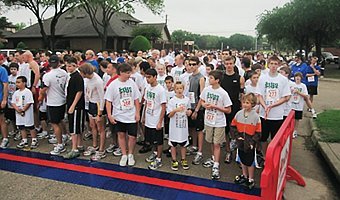
Runners participate in the Seton Soles 5K, a fund-raising event to benefit the Monsignor Henry V. Petter Endowment Fund that promotes biblical justice and helps people in Collin County who are struggling with economic hardships. The event involved about 250 volunteers from four churches, including Legacy Church of Plano.

“There’s a historical animosity between Catholics and Protestants, but most people who go to church now don’t have a clue what it’s about. There were a few who said: ‘Why do it? They’re not like us.’ But it really wasn’t a big problem,” he said.

“The other challenge was that the idea of biblical justice is not necessarily something all denominations are familiar with.”

Even so, the event—which has drawn about 1,000 runners each of the last two years—involved about 250 volunteers from four participating churches.

It also has led to other collaborative ventures. For instance, the Catholic church opened up membership on the advisory board of its community endowment to representatives from other churches, including Pastor Gene Wilkes from Legacy Church.

“I had a friend who said something like: ‘Ministerial alliances used to hold joint services. This looks like they are now serving jointly. I like the change.’” Wilkes said.

Other collaborative events that involve multiple churches include a midsummer family show, “worship in the park” services slated for Sept. 11 and—hearkening back to the event that first sparked Lloyd’s passion for cooperative efforts—a fall festival involving several churches.

Lloyd sees the benefits of those collaborative exercises both at the congregational and the personal level.

“I remember how nervous I was when I walked into a Catholic church for the first time. This year, I felt like I was part of the family. If we hadn’t worked together, I would have missed out on that feeling and missed the chance to be connected with so many great people,” he said.

“I guess the biggest lesson I’ve learned is to just walk across the street and shake a hand.”


Virginia Baptists exploring renewed ties with Averett

RICHMOND, Va. — A Virginia Baptist committee exploring a possible renewal of Baptist General Association of Virginia ties with Averett University — ties dissolved in 2005 in a disagreement over homosexuality — has seen “positive” progress, says the committee’s chair.

The committee, formed last fall, held its second meeting April 26 on Averett’s Danville, Va., campus, said Jeff Bloomer, a retired Culpeper, Va., public school administrator who leads the committee. An earlier meeting on March 24 was held at the Virginia Baptist Resource Center in Richmond, Va.

Averett’s 145-year-old ties with the Baptist General Association of Virginia ended in 2005.

“The committee has held two meetings to discuss the topics of mutual interest,” Bloomer said in a statement released on the committee’s behalf. “The committee has been thorough and deliberate during discussions. Progress, which is going very well, is positive.”

Averett president Tiffany Franks, who was elected head of the 900-student school in 2008, declined additional comment, saying the committee statement “speaks to where we are right now.”

“It reflects the status of where we are in the process,” she said.

Both Bloomer and Franks confirmed the request was initiated by the university last year. In November the Virginia Baptist Mission Board’s executive committee authorized BGAV president Bob Bass to form a committee to meet with Averett representatives.

Averett was affiliated with the BGAV from the school’s founding in 1859 until 2005, when the relationship was ended following a 15-month dispute over homosexuality. In the fall of 2003, the school drew the ire of some Virginia Baptists when the chair of its religion department wrote an article published in a Danville newspaper endorsing the ordination of an openly gay Episcopal bishop. At about the same time, John Shelby Spong, a controversial retired Episcopal bishop, delivered two lectures on campus, in which he reportedly said the God revealed in a literal reading of the Bible is “immoral” and “unbelievable.”

Following a series of discussions with then Averett president Richard Pfau, the BGAV diverted funds allocated to the university to create the Southwest Virginia Christian Leadership Network (now the Christian Leadership Network) to train ministers and laypeople in the mountainous region west of Roanoke. The network was to operate directly under Pfau’s office and would not draw its teachers from Averett's faculty. The agreement appeared to open the way for the BGAV to maintain its ties with the school.

However, Virginia Baptist leaders' confidence in the agreement was shaken in early 2005 when they learned the school's Gay/Straight Alliance hosted a gay pride week on campus.

Pfau said the series of events was not endorsed by the school, but he acknowledged the Gay/Straight Alliance was a recognized student organization whose administrative advisor was the dean of students.

Following a meeting between Pfau and BGAV executive director John Upton, the two released a statement — later endorsed both by the Virginia Baptist Mission Board and Averett’s trustees — that effectively ended the 145-year relationship.

“Because of our current differences we now resolve to walk separate paths with blessings on one another, recognizing that these paths might join again at a future time,” said the joint statement.

It’s not clear whether a renewal of ties would restore BGAV funding to Averett, which totaled $350,000 annually when the relationship ended. Also unclear is whether the BGAV would nominate a portion of Averett’s board of trustees, as it did prior to 2005.

In addition to Bloomer, both Bass and Upton serve on the BGAV committee in an ex officio capacity. Other members are two former BGAV presidents — Darrell Foster, a Virginia Beach, Va., attorney, and Tim Madison, pastor of Mechanicsville (Va.) Baptist Church — and Kevin James, pastor of Salem Baptist Church in Sparta, Va., and a former BGAV second vice president.

Averett’s representatives in the discussion include Franks; Dan Carlton, pastor of Downtown Baptist Church in Alexandria, Va., and an Averett trustee; Gary Tucker, associate professor of computer science and math at Averett; and Jamie Williford, Averett’s chaplain.

The date of the committee’s next meeting was not announced.


Minister moms split between pulpit and potty training

WASHINGTON (RNS) — Every now and then, Amy Butler will find herself having to do a little simultaneous parenting and preaching from her pulpit at Calvary Baptist Church in downtown Washington.

Amy Butler of Calvary Baptist Church in Washington, D.C., frequently finds herself balancing her roles as pastor and parent to her children Hayden, right, Hannah, center, and Sam, left. (RNS photo courtesy Amy Butler)

“My daughter, in particular, knows the look,” said Butler, whose teenage children sit — and occasionally chat — with their friends in the balcony. “And if I’m up front leading worship, I can see everything … so if I need to shoot a look, I do.

“And they know exactly what that means.”

Female pastors with one flock at home and another in the pews say being a minister and a mom is a perpetual juggling act, with high expectations, never enough time and challenges that their male colleagues will never face.

At the same time, they say, it can also be a profound blessing.

“Baptist women ministers more than ever before are young, married, and starting families,” said Pam Durso, executive director of the group Baptist Women in Ministry.

Pregnancy, in particular, creates unusual dynamics for clergy and congregations. Rachel Cornwell doesn’t usually talk about herself in her sermons, but one Sunday during Advent, two days before her son was born, she couldn’t help but draw parallels to the baby Jesus.

Now, the pastor of Woodside United Methodist Church in Silver Spring, Md., is preparing for the birth of her third child in August.

“It’s the kind of job where you don’t clock out … but I had to make sure that I was really taking my days off and really honoring my family as well as my congregation and my responsibilities to them,” said Cornwell, the mother of a 6-year-old daughter and 3-year-old son.

Across denominations, clergy moms speak of the gifts of sharing their children with their congregations, and the challenges of meeting everyone’s needs.

Joe Stewart-Sicking, who has studied Episcopal clergy with young children, calls it the “church-home spillover.” He assisted with a recent study of Episcopal clergy, which found that 84 percent of clergywomen said balancing the dual roles was difficult, compared to 61 percent of clergymen.

Clergywomen relayed a number of sticky situations, especially with small children.

Tonya Vickery of Cullowhee Baptist Church in Cullowhee, N.C., splits pastoral and parenting duties with her husband, Jeffrey, as the parents of Elizabeth, 13, and Ally, 11. (RNS photo courtesy Tonya Vickery)

“They talk about their 3-year-old seeing them in their clericals and they would tell them, `Please take that off,”’ said Stewart-Sicking, an assistant professor of pastoral counseling at Loyola University Maryland. “They knew that that meant Mommy was going away.”

Even when children are in the sanctuary, the distance between the pulpit and the pews can be difficult for some ministers’ children.

Najuma Smith-Pollard, pastor of St. James African Methodist Episcopal Church in Los Angeles, recalled one Sunday when her son, Dorian, preferred the company of his mother over his babysitter.

“He still got away … and he ran right up there to the pulpit and he held on to my leg, and I kept on doing what I had to do,” she said of her now-19-month-old. “When it came time for me to preach, one of the ushers, she came and got him.”

Despite the growing acceptance of a woman in the pulpit, congregants often worry about how the church will deal with her absence when her baby is born. When Cornwell took eight weeks of maternity leave, she arranged for others to fill in on Sunday mornings.

“You always have this issue if the young woman you hire … gets pregnant, then who’s going to take care of their church?” said Adair Lummis, a sociologist at Hartford Seminary who has studied women clergy.

Tonya Vickery of Cullowhee Baptist Church in Cullowhee, N.C., said she and her co-pastor husband split parenting and pastoral duties between them, with each of them baptizing one of their two daughters.

“Whoever’s on call as the minister at that moment, the other is on call as the parent at that moment,” she said.

Clergywomen with adult children say the dynamics have changed as more churches have grown comfortable with female pastors.

“Certainly in the early years, we were trying to prove that women could be ministers, could do this work,” said Peg Chemberlin, president of the National Council of Churches, and the mother of a 26-year-old daughter.

“And, on the other hand, there was built into us culturally and perhaps biologically this push to be good mothers, too.”

Now, she says, many denominations have groups for women in ministry that provide clergywomen with informal networks to discuss how to juggle roles.

Leaders of the Young Clergy Women Project, an online community with more than 500 members, say the most popular sections of their online publications are the ones devoted to “Moms and Ministry.”

This Mother’s Day, Cornwell will spend her weekly day off – Friday — at a special Mother’s Day party at her children’s day care programs. On Sunday after she finishes preaching, her husband will treat her to a special lunch.

“I feel very celebrated,” she said. “I feel very blessed.”


Multisite multiplication

The term “multisite” or “multicampus” church might first bring megachurches to mind.

But as it has developed, the church-growth model has taken on many forms to serve a variety of purposes and ministry contexts.

Ministry

Some churches use the multicampus model as a way to meet specific needs.

Broadview Baptist Church in Abilene set up a second site in a trailer park of highly mobile, lower-income families. “We knew it wouldn’t ever be able to be self-supporting,” Pastor David Cason explained.

The church changed its strategy in 2005, when members became convinced God was calling them to reach out to the socio-economically disadvantaged in the city.

The second site has been able to break down barriers of ethnicity and economics much more than members would have been able to do at the main campus, Cason said.

Culture

Some churches choose the multisite option to reach a wide range of cultures or subcultures. Some of those target language and international cultural groups.

Bon Air Baptist Church in Richmond, Va., has four campuses. One grew out of a previous ministry in a mobile home park combined with a group of about 10 to 15 Hispanics meeting in a room at the church’s oldest campus on Buford Road. The combined ministry now meets in a storefront and offers two worship services, one in Spanish and one in English, with two site pastors—one Hispanic and one Anglo.

All Souls Church in Charlottesville, Va., started as a house church in 2009 and now includes what it calls “small communities,” each embedded contextually among the people it serves. The church sees its context as broadly including “all sorts of people” but particularly drawn to a subculture of “cultural creatives”—people who are artistic, progressive, socially conscious and spiritually open. The church has several small communities scattered throughout the city.

Lifestyle

Some people want to stay close to their neighborhood for much of their activity outside of career responsibilities. One Bon Air site targets people within a five-mile radius who use the nearby bypass to get to their offices. Otherwise, most don’t like to drive out of their area.

Pleasant Valley Baptist Church in Liberty, Mo., also targets people not already connected to the church who do not like to drive any distance to worship. The congregation started a second campus near Kansas City International Airport to help church members reach friends and relatives in that area who would not drive out to the main campus.

Sustain growth

One reason multisite churches often are synonymous with megachurches is size. Tom Cheyney of the Southern Baptist Convention’s North American Mission Board and co-author of Sponsoring Starbucks’ Churches in a Folgers World, suggests space considerations should be the primary reason for opening a second or third campus.

“Whether you are an existing church or a new church plant, the real reason behind considering such an approach should be due to lack of space,” he wrote in “The Multisite Church Planting Strategy: Possibly the Most Effective Channel for ‘Doing Church’ in the 21st Century,” an article posted on NAMB’s church planting network website, churchplantingvillage.net.

He sees the multicampus approach as a movement to sustain continued growth of a particular congregation. “When the church moves away from its four-walled expression, it will discover the tremendous power of reproduction,” he wrote.

“Usually, by moving strategically into other sites, it allows the corporate church as a whole to continue to grow while adding other meeting sites. These sites allow for further growth without adding the significant cost of building a new facility.”

Forms

The multicampus model takes on various forms depending upon the needs of the churches that adopt it. Conjoined congregations are multisites that meet simultaneously, sharing the same preacher and worship experience from one live site with a video or Skype link.

Some churches share the senior pastor through video playback, sometimes by taping an early service on the main campus and sending it to other sites or by using the taped version the following week.

Some use a hybrid approach, with the same sermon but different songs or with a different sermon and different songs from the main campus.

Some share the same senior pastor for all ministry needs among all campuses, while others share a senior pastor but have a campus pastor for each site.


TBM continues to meet needs in Texas

While nine Texas Baptist Men disaster relief teams served tornado victims in Alabama, other TBM volunteers continued to meet needs caused by wildfires in West Texas and storms in East Texas.

Texas Baptist Men volunteers at the Robert E. Dixon Missions Equipping Center in Dallas collect about 4,000 cases of donated water to distribute to firefighters and victims of wildfires in West Texas. (PHOTO/Courtesy of Texas Baptist Men)

TBM collected more than 4,000 cases of bottled water donors delivered to the Robert E. Dixon Missions Equipping Center in east Dallas, and volunteers have distributed the water to firefighters and people displaced by the wildfires that have raged across more than 1 million acres.

Initial deliveries went to First Baptist Church in Weatherford, Palo Pinto Baptist Association and First Baptist Church of Possum Kingdom Lake. Distribution continues, and TBM Associate Executive Director Mickey Lenamon asked churches or areas affected by the fire and in need of water to call (214) 828-5177.

The West Texas Special Feeding Unit served first-responders in Junction City. The disaster relief unit from First Baptist Church in Plains was dispatched to Comstock, where the team served 3,050 meals as of May 4 and anticipated serving another 3,750 by May 9.

Dallas County Cowboy Church also sent a six-member crew to work with First Baptist Church in Fort Davis in recovery operations there. En route, the team delivered snacks and supplies to firefighters in Strawn.

Meanwhile, a TBM chainsaw crew from Kaufman-Van Zandt Baptist Association worked in the area around Canton to clear trees felled by tornadoes and high winds.