DBU names Miller as Perry Award recipient

DALLAS—Dallas Baptist University honored Norm Miller, Interstate Batteries chairman, with the 2011 Russell H. Perry Free Enterprise Award during the annual award dinner, Nov. 7 at the Anatole Hotel in Dallas.

Established in 1988, the gala dinner honors leaders whose lives are testimonies of achievements in free enterprise and service to the community. The event is named in memory of Dallas business leader and philanthropist Russell H. Perry. Over the past 24 years, the dinner has raised more than $3.5 million in scholarship funds for nearly 1,525 DBU students.

Dallas Baptist University hosted the 24th Annual Russell H. Perry Free Enterprise Dinner Nov. 7 at the Anatole Hotel in Dallas. Pictured are (left to right): Joe Gibbs, dinner speaker; Norm Miller, 2011 recipient of the Russell H. Perry Free Enterprise Award; Boone Powell Jr., honorary chair of the dinner committee; and Mike Arnold, chair of the dinner committee.

Miller began his career with Interstate Batteries shortly after graduating from North Texas State University in 1962. In the past 48 years, he has moved through the ranks of Interstate—from his father's Tennessee distributorship, to the national field sales team at Dallas corporate headquarters, and on to the helm of Interstate's executive manage-ment team.

He assumed the president and chairman roles in 1978 after working 16 years under his mentor and company founder John Searcy. Since then, Interstate has grown to become the top-ranked replacement battery company in North America with 200,000 dealers across the United States and in Canada.

Additionally, Miller led the company in founding the Interstate Batteries Great American Race in 1983, which has become the world's richest old car race and America's premier vintage car event.

In 1989, he pioneered Interstate's entry into NASCAR. Teaming up with Joe Gibbs Racing in 1992, Interstate won the Daytona 500 in 1993 and the prestigious Winston Cup Cham-pionship in 2000.

Miller was recognized by DBU for his strong Christian leadership at Interstate Batteries as well as in the community. He serves as a board member for Dallas Theological Seminary and is a founding team member of I Am Second.

He and his wife, Anne, have two children, Tracy and Scott; five grandchildren; and one great-grandson.

Past recipients of the Russell H. Perry Free Enterprise Award include Wright Lassiter (2010), Tom Leppert (2009), Drayton McLane Jr. (2008), Andy and Joan Horner (2007), David Dean (2006), Pete Schenkel (2005); Noble Hurley (2004), the Weir Furniture family (2003), George A. Shafer (2002), Mary C. Crowley (2001), Erle Nye (2000), Ross Perot Jr. (1999), Jim L. Turner (1998), Rodger Meier (1997), Forrest Smith (1996), Lonnie "Bo" Pilgrim (1995), Bob Minyard, Liz Minyard, Gretchen Minyard Williams, J.L. Sonny Williams (1994), Boone Powell Sr. and Boone Powell Jr. (1993), Kenneth H. Cooper (1992), Tom Landry (1991), Maurice and Ebby Halliday Acers (1990), Trammell Crow (1989) and John M. Stemmons Sr. (1988).


Baptist cooperation developed slowly but took root deeply

Mention "cooperation" and many Baptists think of the Cooperative Program, the Southern Baptist Convention's unified giving plan.

But Baptists may have forgotten that instead of money, cooperation historically grew around accomplishing kingdom work together—primarily missions—when churches realized they could do more working together than they could on their own.

The idea that believers voluntarily could cooperate set Baptists apart, but it took decades for the concept to develop and to be used extensively among churches and other Baptist entities. That process took time because of Baptists' distinctive beliefs and history, said Bill Pinson, Baptist General Convention of Texas executive director emeritus, in a series of Baptist distinctives articles.

Objections to cooperation

Some objected to cooperative effort because the Bible, they said, makes no provision for any organization except the local church. But other Baptists cited passages such as Acts 15:2, 2 Corinthians 8-9, Galatians 1:2 and 2:1-10 and Revelation 1-3 as the basis for voluntary cooperation.

The strongly held belief in the autonomy of the local church caused others to resist the cooperative movement. Many feared organizations outside the local body would attempt to exercise control over the churches. Those who pushed cooperation overcame this objection by stressing its voluntary nature.

The Pennsylvania Association, formed in 1707, became the first formal outgrowth of the voluntary cooperative effort in America. Organized after the English model, it existed for fellowship and discussion of church issues.

Cooperation in diversity

Diversity and competition were additional problems the concept faced. Much of the diversity among Baptists—at least 50 groups and subgroups exist in the United States today—grew out of two distinctly Baptist principles—religious freedom, with its emphasis on soul competency and the congregational form of governance closely tied to it.

Diversity and competition "still keep some churches from cooperating with each other. However, many churches are willing to cooperate voluntarily, as long as basic convictions are not compromised, for the advancement of evangelism, missions, education and benevolence," Pinson wrote.

But diversity often did—and still does—stand in the way. Albert W. Wardin Jr., a retired history professor at Belmont University, noted theological and cultural differences often have disrupted cooperative attempts.

Theological differences around issues of Calvinism, Arminianism (free will) and fundamentalism (moderate and militant) have disrupted cooperation.

"Moderate fundamentalists will cooperate with evangelicals of like faith, but militant fundamentalists refuse cooperation with evangelicals who, in turn, may cooperate with theological liberals," Wardin wrote in Doing Diversity Baptist Style: Documents for Faith and Witness.

Cultural and ethnicity issues surfaced when Southern Baptists split with Northern Baptists, now known as American Baptist Churches-USA. Wardin asserts the initial split between the two was cultural, not theological. Northern Baptists objected to slavery, while Southern Baptists "defended" the South's "way of life." The Southern Baptist Convention declared the approach to missions caused the split.

A collaborative approach

Several factors challenge Baptists' traditional cooperative efforts, Pinson believes. Denominations are seen as relics and Baptist distinctives as irrelevant, with some Baptists preferring to cooperate through affinity groups. The rise of megachurches that can fund their own efforts and don't need the help associations or conventions can provide also disrupts cooperation.

Denominational conflict and pressure to conform to demonstrate "cooperation" also are factors.

But Bill Leonard, a professor of church history at Wake Forest University School of Divinity, believes Baptists can form new organizational relationships based on collaboration. "Twenty-first century 'concerns' suggest, perhaps demand, that multiple Baptist groups extend their collaborative ministries while pursuing more formal institutional connections," he wrote in an opinion article for Associated Baptist Press.

"Denominational realities compel consideration of a more integrative associationalism between such Baptist communions as the ABC/USA, the Progressive National Baptist Convention, the Cooperative Baptist Fellowship, the Lott Carey Missionary Convention and the Alliance of Baptists."

He pointed out the New Baptist Covenant effort has helped foster that type of cooperation. "But without more substantive denominational affiliations, that may be too little too late."


Seeing the Big Picture

"Are we missing the big picture?"

That's the question some Christian leaders are asking as America's centuries-old denominational patterns unravel, while denominational distinctions seem as entrenched—and unbridgeable—as ever.

In a post-denominational society, can churches retain theological integrity and still find common ground with people who hold differing beliefs?

"Christians today are falling into the trap of tribalism," said Jonathan Merritt, creative director at Cross Pointe Church, a Southern Baptist congregation in suburban Atlanta. "Not only are we part of the Baptist tribe, but also the Southern Baptist Convention tribe, the Reformed and non-Reformed tribe, the traditional and contemporary tribe.

"I love my heritage, but ultimately I'm looking for ways to build the kingdom" of God, said Merritt, a 28-year-old activist who has led some Southern Baptists across denominational lines to address environmental issues. "Most young Christians want to be part of the Jesus tribe. That paradigm is shaping the way we should answer this question and the way a lot of young Christians answer this question."

Some Christians insist the question—and the answer—is broader and compels them to partner with other faith traditions.

"The world's brokenness means people of faith must collaborate, and we have learned that goodwill Baptists can work with other faiths and Christian traditions to advance the common good," said Robert Parham, executive director of the Baptist Center for Ethics in Nashville, Tenn.

"We readily work with others out of faithfulness to Jesus' great commandment to love our neighbor. Loving neighbors means seeking their welfare, advancing the common good. While we might disagree with other faith expressions over the divinity of Jesus, interpreting the Bible, the meaning of baptism and the practices of the church, we refuse to let those issues become stumbling blocks keeping us from loving our neighbor."

Worries that interdenominational and interfaith cooperation will dilute theological integrity aren't new. Some 19th-century Baptists insisted on the exclusive validity of Baptist churches.

But their 21st-century descendants find the questions less clear-cut and endlessly vexing: Can an evangelical Christian vote for a Mormon presidential candidate? Can Baptists join Muslims and Hindus at a worldwide Catholic-convened day of prayer for peace? Where are the boundaries—if any?

Social ministries and disaster relief

Partnering to meet human needs, especially following a natural disaster, presents the fewest dilemmas, some Christian relief workers insist.

"Disaster response and hunger relief are areas in which Baptists are involved where we can set aside differences to meet needs of victims and hurting people," said Dean Miller, who coordinates disaster relief for the Baptist General Association of Virginia.

"When people are hungry or need a tree cut off the roof of their houses, nothing about translations of the Bible or the meaning of baptism comes into play at all. That's true not just among Baptists but among all religious groups and non-religious groups."

Miller could think of no circumstance that would prevent the BGAV from cooperating in disaster response with any group—and that includes a rival state convention, the Southern Baptist Conservatives of Virginia.

"We have a great relationship with the SBCV in disaster relief," said Miller—no small feat in the tortured post-conflict environment of Baptists in the American South.

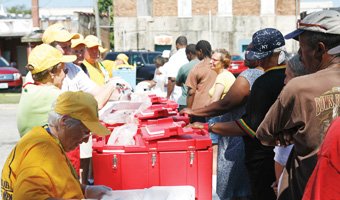
When disasters occur in Texas, disaster relief units both from Texas Baptist Men and the Southern Baptists of Texas Convention may be on the scene. Likewise, after TBM begins to wrap up its work in providing emergency food service and other ministry as a first-responder, the Baptist General Convention of Texas offers ongoing disaster response to help with recovery and rebuilding.

Further complicating matters, TBM is affiliated with the BGCT and receives no financial support from the SBTC. However, some of its lay leaders are members of SBTC congregations, and their churches sometimes work closely with the men's missions organization.

By the early 1990s, years of theological disputes among Southern Baptist Convention churches had propelled many moderates and progressives out of the national denomination and into new organizations like the Cooperative Baptist Fellowship and the Alliance of Baptists.

Conflict eventually filtered into the SBC's state affiliates, sometimes with opposite results—in Texas and Virginia, ultra-conservatives left older, moderate state conventions to form new right-leaning ones. In Missouri, where conservatives prevailed, moderates formed an alternative network of churches. For Baptists in those states, overcoming bitter memories and continuing suspicions is nearly as challenging as setting aside doctrinal distinctions.

But at least in relief ministries, said Miller, focusing on "the big picture" has resulted in amiable collaboration.

"Since I've been state coordinator, the BGAV and the SBCV have shared responsibility in disaster relief in a variety of ways," he said, including following a spate of tornadoes in Southwest Virginia last spring and Hurricane Irene last August.

It's trickier, Miller concedes, when immediate responses transition into more explicitly evangelistic efforts.

"In a longer-term response that might include a strategy of church planting or evangelism, there's potential for conflict," he said. "If a (Christian relief) organization chose to bring its faith issues earlier in the process, it might cause us to re-evaluate how we work with them.

"That's not to say we aren't motivated by our faith from the outset of disaster responses. When we hand out food, we want to take opportunities to share Christ, but we don't staple a gospel tract on the food. If we were asked to do so, we'd say no."

Mission engagement

Cooperating across denominational boundaries in evangelism is more difficult, mission strategists insist, and some missionary-sending organizations carefully demarcate the frontiers.

Almost 5,000 overseas missionaries of the SBC's International Mission Board follow a policy of five "concentric circles" defining cooperation with other faith groups.

"IMB missionaries do not enter into strategic relationships randomly but with church-planting movement intentionality and in accord with the biblical principles of the 2000 Baptist Faith and Message," notes the policy adopted by IMB trustees.

"Because our relationships have this intentionality they have different guidelines depending on the purpose we are pursuing."

The Baptist Faith and Messageis the SBC's statement of faith, most recently revised in 2000.

From broadest to narrowest, the five levels:

• Aim to "gain a presence or access to a … population segment." At this level "creativity and flexibility are essential in associating with cultural programs, educational institutions, business forums or whatever can open the door to deeper levels of relationships."

• Seek to "minister to specific needs," including disaster relief and social development. This can be accomplished only with "organizations that have a Christian identity and are motivated by spiritual principles."

• Share the Christian gospel only in collaboration with those "whose commitment is to New Testament evangelism and who present personal repentance and faith in Jesus Christ as the only way to salvation."

• Start new congregations only with organizations whose definition of "church" is consistent with the Baptist Faith and Message, which calls it "an autonomous local congregation of baptized believers, associated by covenant in the faith and fellowship of the gospel; observing the two ordinances of Christ, governed by his laws, exercising the gifts, rights, and privileges invested in them by his word, and seeking to extend the gospel to the ends of the earth."

• Influence the "ongoing shape of Baptist work and identity, even after the missionary is no longer present, through theological education and ministerial training. Seldom, if ever, would we engage in strategic relationships … at this level."

The Cooperative Baptist Fellowship's 160-plus mission workers also draw distinctions in collaborative activities, but without a formal policy.

"We do not have official guidelines that we have established for partnerships with other religious groups," said Rob Nash, the CBF's coordinator of global missions.

"Generally, we make decisions about partnership based upon mutually shared goals and vision and upon relationships of trust that are built over time. We have a process in place for establishing full-fledged partnerships and/or memoranda of understanding that ensures that we have exit strategies and other mechanisms in place so that the nature of the relationship is clear."

The CBF partners with a variety of Baptists around the world, Nash said, but "we have never limited ourselves to these Baptist relationships. Our field personnel have partnered with organizations even beyond the Christian faith when global disasters and other kinds of social ministry have made it helpful to do so in order to meet the needs of a community."

"Obviously, with any partner we do our homework to ensure that the organization has a good reputation and that its approach to ministry and service is in harmony with our own basic mission and vision," he added. "This ensures that the partner is focused upon a sustainable assets-based approach to community development and that we do not sacrifice our own theological and missiological commitments."

Theological education

Although educating Baptist ministers remains largely denominationally focused, collaborative models are emerging in places. Baptist communities at Methodist-affiliated Duke Divinity School in Durham, N.C., and the Disciples of Christ's Brite Divinity School in Fort Worth maintain "theological and multicultural diversity of students and faculty to be an important context for coming to a clear understanding of individual faith and practice," according to administrators.

Wake Forest University's School of Divinity, while highlighting its Baptist heritage, is "intentionally ecumenical."

"The divinity school's roots in Baptist traditions are deep and strong, and these roots enable the divinity school to ground its present story in the lived experience of preceding generations who strived to be a sign of God's justice and hope in the world," said Gail O'Day, dean of the Winston-Salem, N.C., school, in a message on its webpage.

"The divinity school's mission to be an ecumenical learning community, in service to the ecumenical family of churches, means that students from a wide range of Christian traditions contribute fully to the rich fabric of our communal life."

By contrast, the six seminaries owned and operated by the SBC maintain a distinct Baptist identity, typically restricting faculty to members of Baptist churches.

"It depends on what type of education church leadership wants to pursue," said Merritt, who earned degrees from both Southeastern Baptist Theological Seminary in Wake Forest, N.C., and the Methodist-affiliated Candler School of Theology at Emory University in Atlanta.

"There's a confessional approach and a contextual ap-proach."

Although Merritt believes cooperative initiatives such as church planting should be limited to Christians whose views are compatible—"I don't see it as being exclusionary; it's just pragmatic"—varied views in seminary communities can be spiritually rewarding, he noted.

"I love, within the range of orthodox Christian belief, when there's room for a lot of viewpoints to be presented in theological education," he said.

"If we are confident that what we believe is true and right and biblical, then we shouldn't be afraid to have it presented alongside other views in a theological education setting."

Social justice

Religious disagreement is no obstacle to collaboration in efforts to achieve a just society, said Parham of the Baptist Center for Ethics, which has developed resources to assist Christians in the effort.

One of the BCE's documentaries "shows that each (Abrahamic) tradition sees its text as sacred and that each text calls readers to do justice," he said.

"Jews, Muslims and Christians will not prioritize the sacredness of another faith's primary text. But that disagreement does not negate the common agreement to seek justice, to care for the vulnerable, to protect orphans and the elderly."

An immigration documentary explores a shared belief among Baptists and Catholics—who "have a long, contentious history over matters of doctrine"—that "Jesus calls us to welcome the stranger," Parham said.

Merritt also advocates a Christian commitment to the "common good" that can cross denominational lines while retaining faith integrity.

"Christianity is not something you do but who you are," he said. "It's impossible to lay that aside to do a particular kind of work. Partnerships have to allow space for those who follow Jesus to conduct that work within that context."

But he detects a "shift in young people from culture-war Christianity to incarnational Christianity."

"As I rediscover the Jesus of the Bible, he didn't begin with a six-point platform but came to live among human beings and heal and weep. That's the model for us as we move forward."


Does Calvinism extol God’s glory or make him a moral monster?

Roger Olson, professor at Baylor University's Truett Theological Seminary, agreed to write a new book refuting Calvinism because he believes somebody needs to rescue God's reputation.

"I am against any Calvinism—and any theology—that impugns the goodness of God in favor of absolute sovereignty, leading to the conclusion that evil, sin and every horror of human history are planned and rendered certain by God," he writes.

Olson doesn't particularly like the title of the book, Against Calvinism, but Zondervan publishing insisted on it. He admires Calvinist colleagues and students, and he makes it clear he respects their Christian commitment. It's radical Calvinism—generally held by those who identify themselves as "young, restless and Reformed"—he feels the need to oppose.

Olson believes Calvinist theology crosses the line into radical territory when it "makes assertions about God that necessarily, logically imply that God is less than perfectly good in the highest sense of goodness found in the New Testament and especially in Jesus Christ, the fullest revelation of God for us."

So, when it comes to the TULIP of so-called five-point Calvinist doctrine—total depravity, unconditional election, limited atonement, irresistible grace and perseverance of saints—Olson seeks to mow down at least the U, L and I, leaving just two petals blooming.

"In spite of their best efforts to avoid it, the 'good and necessary consequence' of their soteriology (doctrine of salvation)—TULIP—is that God is morally ambiguous if not a moral monster," he asserts.

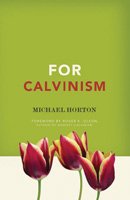
In the companion volume, For Calvinism, Michael Horton of Westminster Seminary prefers the terms "particular redemption" to limited atonement and "effectual grace" to irresistible grace. But otherwise, he mounts a spirited defense of the five points he and other Calvinists refer to as the "doctrines of grace."

"Chosen in Christ from all eternity, we are called effectually to Christ in time," Horton writes. "Through faith, which itself is God's gracious gift, we receive Christ and all of his benefits."

Rather than defaming God, Horton insists, Reformed theology acknowledges God's rightful place as sovereign and offers a biblical and accurate assessment of humanity's inability to attain salvation apart from God's initiative.

"It is impossible to read the Bible without recognizing God's freedom to choose some and not others—and the fact that he does in fact exercise that right," he writes.

Unconditional election should remind Christians "God is always on the giving end and sinners are on the receiving end of grace," he adds.

Books and sermons on "how to be born again" miss the point, Horton asserts. Sinners do not choose to follow God until God chooses to draw sinners to himself.

"The new birth is a mysterious work of the Spirit in his sovereign freedom, not an event that we ourselves can bring about any more than our natural birth," he writes.

Horton dismisses criticism that God's election of only some to salvation is unfair by insisting fairness would demand every sinner's eternal punishment.

"God is not arbitrarily choosing some and rejecting others," he writes. "Rather, he is choosing some of his enemies for salvation and leaving the rest to the destiny that all of us would have chosen for ourselves."

Olson doesn't accept that argument. "The issue is not fairness but love," he writes. "A God who could save everyone because he always saves unconditionally but chooses only some would not be a good or loving God."

Election rightly understood refers to the people of God in general—all those who freely respond to the invitation to be "in Christ"—not to specific individuals, he writes. Reprobation—the idea that God has predestined some people for hell—follows logically if one believes God is absolutely sovereign and has chosen only some individuals for salvation, Olson insists.

Radical Calvinists' belief in the absolute sovereignty of God amounts to divine determinism, and it makes God responsible for evil, he asserts.

"The one main reason Arminians and other non-Calvinists believe in free will is to preserve and protect God's goodness so as not to make him the author of sin and evil," Olson writes. "Calvinism makes it difficult to recognize the difference between God and the devil except that the devil wants everyone to go to hell and God wants many to go to hell."

Horton rejects that assessment of Reformed theology. However, he acknowledges the excesses of some zealous converts to the "New Calvinism" movement.

"We have to distinguish between a God-centered perspective and thinking that you have God on your side—which implies that he's against fellow brothers and sisters," he writes.

"Unfortunately, we can turn God into a mascot for our team while extolling his sovereignty, glory and grace. … For all sorts of reasons, we can be misguided in our approach, and we can do all sorts of nasty things 'for the glory of God.'"


Changes in missions strategy required, border pastor insists

DEL RIO—Rapidly changing conditions along the Texas/ Mexico border demand changes in the way churches from the United States engage in missions in northern Mexico, an Acuña minister insisted.

"I have spent the last 23 years in Acuña. I know the people, and the people know me," he said. When questioned by people connected to Los Zetas—a paramilitary enforcement group in Mexico—Reyes said he does not take sides politically but always offers the same response.

"They need Jesus Christ," he said. "Our fight is not against flesh and blood. God is the solution through Jesus Christ."

Daniel Rangel, director of River Ministry with the Baptist General Convention of Texas, agreed with Reyes about the importance of close cooperation and frequent communication with churches along the border. He agreed missions approaches along the border need to change, but he suggested a key change needs to be a greater missions focus on the Texas side of the Rio Grande where safety and security are not a problem.

"Ministry is happening along the Texas side of the border," he said. In the last year, River Ministry worked with more than 2,000 volunteers, he reported. Their efforts resulted in 11,000 people receiving medical attention, 30,000 receiving some other form of ministry and more than 3,000 making professions of faith in Christ.

At the same time, Texas Baptists also can support missions in Mexican border areas, he stressed, even if not in the same way they did 10 or 15 years ago. Upstate churches can work with Baptists in the area to provide Bibles, Vacation Bible School materials and other resources.

The BGCT continues to work in partnership with No Mas Violencia—No More Violence—to teach biblical peacemaking principles along the border.

Like Reyes, Rangel affirmed the need for a long-term ministry presence in border villages, towns and cities. But he added some areas still need visiting groups—provided those volunteers are willing to follow the direction and advice of Christians who live and serve in the region.

"This is not the time to step away from ministry along the border," Rangel said. "The people of Mexico want peace, security and comfort. Many of them just don't know they can find what they need in Jesus. The people are in need, and now is the time to offer them the hope that is found in Jesus."


Texas Tidbits

Baylor regents OK $120 million in construction. The Baylor University board of regents approved $120 million in capital improvements, the largest investment in construction on the Baylor campus since the Baylor Sciences Building in 2004. Construction will be financed through the issuance of bonds and will include a new 700-bed East Village Residential Community and 33,170-square-foot dining facility, extensive renovation of the 47-year-old Marrs McLean Science Building and Phase 2 of initial construction on academic and research space in the Baylor Research and Innovation Collabora-tive. In other business, regents reviewed and discussed the first draft of the university's strategic plan. During Baylor Homecoming, the school also unveiled an artist's rendering of a proposed on-campus, riverfront football stadium near I-35 that would replace Floyd Casey Stadium. Regents have not voted on the proposal yet.

BCFS awarded contract for voucher program. Baptist Child & Family Services has been awarded a one-year, $4 million renewal contract to administer the education and training voucher program on behalf of the Texas Department of Family & Protective Services. The program provides funding to foster youth pursuing higher education or vocational training and is available to students throughout the state. BCFS has led the statewide voucher program since 2009. Last year, BCFS helped more than 1,400 young adults pursue post-secondary education. Most youth accessed the voucher program online in order to attend junior college, universities or colleges, and 47 attended vocational programs.

Four Texas Baptist schools receive 'military friendly' honors. Dallas Baptist University, Howard Payne University, the University of Mary Hardin-Baylor and Wayland Baptist University were designated "military friendly schools" by G.I. Jobs, a magazine for military personnel transitioning into civilian life. The Military Friendly Schools list honors the top 20 percent of colleges, universities and trade schools doing the most to embrace America's military service members and veterans as students. Schools make the list by offering scholarships and discounts, veterans' clubs, military credit and other services to those who served. The latest list of Military Friendly Schools was compiled through extensive research and a data-driven survey of more than 8,000 schools nationwide.

Correction: The article "BGCT approves budget, rejects attempt to restore Baylor to full level" erroneously listed the convention's new first vice president as Jerry Johnson, rather than Jeff Johnson. To clarify: In the only contested race, Jerry Carlisle, pastor of First Baptist Church in Plano, was elected president 415-214 over Randy Wallace, pastor of First Baptist Church in Killeen. Jeff Johnson, missions strategist and former pastor of First Baptist Church in Del Rio, was elected first vice president. Byron Stevenson, pastor of The Fort Bend Church in Sugar Land, was elected second vice president.


Salem witch trials get another look in new documentary

SALEM, Mass. (RNS)—For centuries, scholars have wondered how a farming village in 1692 could have become so hysterically anxious that magistrates would order 20 executions for crimes of witchcraft.

Now a new documentary film about the infamous Salem witch trials is stirring fresh debate by heaping blame on the local minister, Samuel Parris.

An actor portrays Samuel Parris in Salem Witch Hunt: Examine the Evidence, a new film. (RNS PHOTO/Courtesy of Essex National Heritage Commission and Don Toothaker)

Scholars agree Parris played a central role, but they're divided on whether he deserves the villainous treatment he receives in the film, Salem Witch Hunt: Examine the Evidence.

The 35-minute film began showing four times daily last month at the Salem Maritime National Historic Site. Five leading scholars collaborated with the Essex National Heritage Commission, producer of the film, which draws heavily on a recent compendium of nearly 1,000 documents from the period.

"We finally have a chronology that tells us about how it all began," said Univer-sity of Virginia historian Benjamin Ray, one of four scholars who took questions after a recent screening. "Before we had documents, but we didn't have an orderly sequence. It's hard to give an account of history without a sequence."

In reviewing sermons, journals and court records, scholars began to see how various pieces fit together. Everywhere they looked, they seemed to find fingerprints—figuratively and literally—of Parris and his ally, Thomas Putnam, a wealthy landowner and church member.

The story begins with a community that feels under siege. Reeling from bloody Indian wars and wary of encroaching French Catholics, residents of rural Salem Village feared the Puritan experiment in America's colonies might be nearing a violent end. Into this tinderbox comes the newly ordained Parris, a 36-year-old Harvard dropout who'd been a serial failure in farming and business enterprises.

"This is really his last chance to succeed," said Salem State University historian Emerson "Tad" Baker in the film. "He can't fail at this, because if he does, he's really kind of failed at life."

Desperate for an accomplishment, Parris revives rigorous church standards in a bid to stoke a religious revival, according to the film. His fervor heightened tensions between church members and the "reprobate," or nonmembers. When he warns in sermons of an unfolding battle between good and evil, conditions ripen for accusations to fly.

Trouble begins in Parris' own family. After his niece and daughter start acting strangely, the girls cite two local women for cursing and tormenting them. Parris later pressures Tituba, his slave, to confess before the magistrates. Tituba warns them: Nine witches remain at large. The hunt intensifies across all levels of society. Even church members are accused.

Girls caught up in the fervor of the 1692 Salem witch trials are seen in Salem Witch Hunt: Examine the Evidence, a new film. (RNS PHOTO/Courtesy of Essex National Heritage Commission and Don Toothaker)

At various junctures, it seems, Parris could have called for cooler heads to prevail. But he had his own motives to continue the hunt, according to Cornell University historian Mary Beth Norton.

"He wanted to become like Cotton Mather," Norton said in the film, referring to the prominent Boston minister who had become known for describing children afflicted by alleged witchcraft.

Parris lets accusations and trials continue, with help from Putnam, who continually revises court records to make the accused seem guilty. Parris asks forgiveness within a few years of the last trials. He died in 1720, having never found the success he sought, according to the film.

Although scholars worked together on the film, not everyone likes how Parris comes across. One critique—the film could have shown more compassion and understanding for a struggling man who faced enormous, sometimes competing, pressures.

"I thought it was a little over the top the way the film portrayed him," said Richard Trask, a historian and archivist at the Danvers Archival Center, which preserves records from the witch trials. "Parris is much more than the bad guy."

Indeed, Salem residents still are trying to make sense of their region's infamous past and Parris' role in it.

"For years, I always had thought of him as fiercely intoxicated with power," said Peter Santos of Salem. "I now really believe that he was a tragic hero. He believed he was God's right-hand man, doing all within his power to protect his fellow Christians."

Parris' role isn't the only new insight from the film. Tituba's ethnic identity is revealed to be Native American (in other renderings, including Arthur Miller's 1952 play The Crucible, Tituba is African). Also, many of the 150 accused in the region during the 1690s came from nearby Andover, not Salem Village.

"They should really be known as the Andover Witch Trials," Baker said.

Scholars also are casting doubt on the popular idea that those executed in 1692 were principled heroes who refused to repent for a crime they didn't commit. In fact, the accused had no reason to believe a confession would save their lives, said Margo Burns, a linguist and expert on period documents at St. Paul's School in Concord, N.H.

What filmgoers are apt to remember, however, is the minister's prominent role. Whether they'll give him credit for repenting, or only for escalating hysteria, remains to be seen.


On the Move

Sharon Barnes to First Church in Corinth as children's minister.

Jim Bigbee has resigned as pastor of Center Point Church in Denton.

David Bird to The Ridge Church in Carrollton as mission pastor from Trinity Valley Church in Carrollton, where he was pastor.

Ron Blevins to First Church in Tuscola as minister of music.

Butch Booth to First Church in Ovilla as executive pastor.

Laine Denison has resigned as mission pastor at The Ridge Church in Carrollton.

Ryan Gilbert to Tabernacle Church in Ennis as interim youth pastor.

Todd Gray to Tabernacle Church in Ennis as pastor from Central Church in Italy.

Donny Harbers to Wylie Church in Abilene as pastor from First Church in Hamlin.

Gregory Johnson to First Church in Sanger as pastor.

Clayton Ledbetter to The Ridge Church in Carrollton as community pastor from Trinity Valley Church in Carrollton, where he was music minister.

Larry McIntire has resigned as pastor of Friendship Church in Ennis.

Daryl Witten has resigned as minister of music at First Church in The Colony.


Band shares songs of salvation around the world

NASHVILLE, Tenn.—The contemporary Christian group No Other Name desires to reach the far corners of the world with its music and message so they can lift up the name of Jesus.

The group—made up of the brother-sister duo of Sam and Laura Allen, along with their friend Chad Smith—bases its name on Acts 4:12, "Salvation is found in no one else, for there is no other name under heaven given to men by which we must be saved."

The contemporary Christian group No Other Name is made up of the brother-sister duo Sam and Laura Allen, along with their friend Chad Smith. Their recently released debut album, The Other Side, includes the song, "Let it Start With Me."

While sharing songs of salvation around the world, No Other Name helps raise awareness for missions organizations such as the Southern Baptist International Mission Board. 

During their concerts, band members tell about their mission trips to Brazil, India and Nicaragua. They also encourage audience members to join in sharing Christ's love with the nations.

"We not only have a time of worship and praising God, but we hope to inspire people to get involved in missions—either going on a trip, supporting financially or through prayer," Sam Allen said. "We also encourage them to get involved in a local church and become the hands and feet of Jesus by serving their community."

Because they want to make a global impact for Christ, the International Mission Board recently selected "Let it Start With Me," from the band's debut album, The Other Side, as the theme for this year's missions campaign. 

The song will be used in conjunction with a music video created by the IMB and filmed in Bangkok, Thailand. The video debuted at the SBC annual meeting in June and is being distributed to 40,000 churches this fall.

"We wanted to write a song that gives the average Christian who is trying to find their place in the Great Commission a place to begin," Allen said. "The common response among Christians when confronted with the incredibly overwhelming task of spreading the gospel is, 'Where do I start?' The lyrics are a prayer that simply says, 'Lord, let it start with me.'"

Further emphasizing their desire to spread the gospel among the nations, the group traveled to the United Arab Emirates to film a video for the song "Lead You to the Cross" on the sand dunes and in the city streets of Dubai. 

"It's an eye-opening experience to go to places where they have never heard the gospel," Allen said. 

"It will absolutely change your life. Regardless of how daunting the task is and how much work is involved on the trip, it's so beneficial to see how other people are living and to spend time with missionaries who have left everything behind to tell others about Jesus. 

"Oftentimes, the missionaries serving overseas need to be encouraged and reminded that people are praying for them. That's a huge relief when they know that people are lifting them up in prayer and haven't forgotten about them as they are sharing the gospel. Through our music and message, we want to help missionaries in any way that we can and also help others to find their role in the Great Commission." 


Faith Digest

Church health trends not looking good. American congregations have grown less healthy in the last decade, with fewer people in the pews and aging memberships, according to a new Hartford Seminary study. Median worship attendance at a typical congregation decreased from 130 to 108, according to the Faith Communities Today survey, based on responses from more than 11,000 Christian, Jewish and Muslim congregations in 2010 and more than 14,000 congregations in 2000. The percentage of congregations with average weekend worship attendance of 100 or fewer inched up from 42 percent to 49 percent over the decade. More than a quarter of congregations had 50 or fewer people attending in 2010. Across the board—among white evangelical, white mainline and racial/ethnic congregations—there was a decrease in attendance. In many cases, congregations not only are seeing fewer people but older ones in their pews. At least one-third of members in more than half of mainline Protestant congregations are 65 or older.

Most Americans don't know candidate's religion. Six out of 10 Americans don't know Republican presidential candidate Mitt Romney is a Mormon, a new survey shows. Just 42 percent identified the former Massachusetts governor as a Mormon, according to the Washington-based Public Religion Research Institute. That figure remains unchanged from July 2011, despite a flurry of media attention after a prominent supporter of Texas Gov. Rick Perry—Robert Jeffress, pastor of First Baptist Church in Dallas—called Romney's religion a "cult." The only group that showed an increased knowledge about Romney's religion was white evangelicals, whose knowledge of Romney's faith rose from 44 percent in July to 53 percent in mid-October. Researchers found Perry trails both Romney and rival Herman Cain among white evangelicals on measures of political affinity but is relatively even with Cain on measures of religious affinity. Just 8 percent of evangelical voters said Romney's beliefs are closest to their own. The poll is based on a random sample of 1,019 adults, with a margin of error of plus or minus 3 percentage points.

Supreme Court steers clear of roadside crosses. The Supreme Court announced it will not reopen a case in which a lower court ruled highway crosses memorializing Utah state troopers are unconstitutional. The Utah Highway Patrol Association had erected 12-foot white crosses to honor fallen officers since 1998. The American Atheists filed suit in 2005. The group lost its first legal challenge, but the 10th U.S. Circuit Court of Appeals ruled last year that the memorials "have the impermissible effect of conveying to the reasonable observer the message that the state prefers or otherwise endorses a certain religion." The conservative Alliance Defense Fund, which asked the Supreme Court to consider the case, was disappointed. "Justice is not well served when unhappy atheists can use the law to mow down memorial crosses and renew the suffering for the survivors," Alliance Defense Fund Senior Counsel Byron Babione said.

–Compiled from Religion News Service


Around the State

Graduates of East Texas Baptist University's nursing department earned a 100 percent pass rate on the national licensure test for registered nurses for the fourth consecutive year. Of the 29 undergraduate nursing programs in Texas, ETBU was the only program to have a 100 percent pass rate for the 2010 examination year.

About 1,500 people participated in 121 Community Church's "Run4Justice," which raised more than $133,000 to help International Justice Mission's efforts to rescue children in Cambodia from human trafficking.

Baylor University honored several people during its homecoming festivities. Bob Brewton was named alumnus of the year. He is founder and chairman of the board of the Baylor Angels Network, which connects investors with Baylor business students to give them hands-on entrepreneurial experience. Michael Lindsay was named young alumnus of the year. He is president of Gordon College in Massachusetts. Legacy Award winners were Jim and Nell Hawkins and Joe and Barbara Albritton. The school's Pro Ecclesia medal of service was presented to pastor/author Max Lucado. The school's Pro Texana medal of service was bestowed on Mark White, former governor of Texas. The medal of service for business leadership went to Gary Keller, a 1979 graduate and founder of Keller Williams Realty. The medal of service for media arts was awarded to Charles Overby, chairman of a foundation dedicated to promoting a better understanding of the First Amendment. The Baylor Founders Medal was presented to John and Marie Chiles.

Abi Bailey and Josh Malacara were named Hardin-Simmons University's homecoming queen and king during recent festivities.

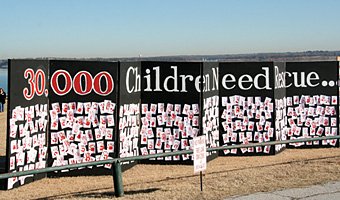
The children's ministry of 121 Community Church in Grapevine painted red handprints to display on an 80-foot wall. They represented 30,000 children in Cambodia who need to be rescued from human trafficking and reminded participants in the Run4Justice to keep pressing on toward the goal.

Joan Zhang has been selected as the recipient of the Martha Howard Scholarship at Dallas Baptist University. Zhang is pursuing a master of arts in Christian education with an emphasis on childhood ministry. The scholarship is named in honor of Howard, who has taught kindergarten preschool at Park Cities Church in Dallas more than 60 years.

Howard Payne University's student speaker bureau won the debate sweepstakes award at the Forum in the Forest Speech and Debate Tournament hosted by Rice University at Kingwood College. This was HPU's first sweepstakes win. Howard Payne teams made up three of the four in the finals round.

Anniversaries

El Jordan Church in San Antonio, 60th, Oct. 9. Adam Perez is pastor.

Steven Gilley, 10th, as pastor of First Church in Milford, Nov. 18.

Tommy Culwell, 15th, as pastor of Colonial Hill Church in Snyder, Nov. 24.

Baptist Temple in San Antonio, 100th, Dec. 10-11. A time capsule will be opened Saturday, and there will be trolley tours of sites in the church's history. A catered lunch will be held Sunday, and reservations are needed by Nov. 27. Jorge Zayasbazan is pastor.

Retired

• Charles Maciel, as pastor of Ambler Church in Abilene, after 27 years of service. He was a bivocational pastor 44 years. He also was a coach and teacher 30 years.

• Victor Lopez, as pastor of Buena Voluntad Church in San Antonio, Nov. 13. He has been pastor of the church 35 years, and he has been in ministry 44 years.

Deaths

Harold Watson, 84, Oct. 29 in Sherman. A pastor more than 57 years, he led churches in Peacock, Whitesboro and South-mayd, as well as Oklahoma. He was pastor emeritus at First Church in Whitesboro, where he served from 1968 to 1992. He served as moderator of Grayson Association. He was preceded in death by his wife, Georgia; his second wife, Tammy; daughter, Theresa Joy Watson; granddaughter Tracy Jordan; and sister, Joy Pike. He is survived by his wife, Carol; son, Joe; daughters, Cindy Jordan and Tishira Brown; stepson, Mike Freytag; stepdaughter, Jana Sudderth; nine grandchildren; 12 great-grandchildren; five step-grandchildren; and one step-great-grandchild.

Miller Robinson, 77, Nov. 7 in Snyder. He was pastor emeritus of Colonial Hill Church in Snyder, where he served 32 years. A Baylor University and Southwestern Seminary graduate, he also was pastor of Coryell Church and White Mound Church in Gatesville, and First Church in Matador. He served several churches as interim pastor after his retirement in 1996. He was preceded in death by his daughter, Melissa; two brothers, sister and two grandchildren. He is survived by his wife, Sandra; and sons, John and Kinney.

John Crowe, 77, Nov. 7 in Abilene. A builder, his company constructed several buildings on the Hardin-Simmons University campus and recently completed the renovation of the campus pond area. He received HSU's John J. Keeter Alumni Service award in 2008. He is survived by his wife, Betty; sons, John, David, Timothy and Jed; daughter, Sara Burleson; brother, James; sisters, Anne Solomon, Alice Myers, Ellen Myers, Shella Lea Massey and Carolyn Thornton; and 24 grandchildren.

Mary Francis McKenzie, 95, Nov. 8 in Dallas. She had a long career of service with Baptist churches and denominational entities. She first worked at First Church in Oklahoma City with W.R. White. In 1946, she moved to Dallas to work with J. Howard Williams, executive director of the Baptist General Convention of Texas. She began serving as educational secretary of Gaston Avenue Church in 1961, and then moved in 1964 to work with R.C. Campbell at Buckner Baptist Benevolences. She retired in 1981 but continued to be active at Gaston Oaks Church in Dallas until her death. She was preceded in death by her brother, H.P. McKenzie Jr.

Event

Shane & Shane and Phil Wickham will perform a Christmas concert Dec. 3 at 6:30 p.m. at First Church in Irving. Tickets are $8. For more information, call (972) 253-1171. John Durham is pastor.

Ordained

Steve Brewton to the ministry at First Church in Roanoke.

Michael Robinson and Kenny Folmar as deacons at Mildred Church in Corsicana.

Eric Jackson and James Nail as deacons at First Church in Roanoke.

Scott Berry and John Green as deacons at First Church in Dripping Springs.


TBM names Gibson executive director

DALLAS—The Texas Baptist Men board of directors unanimously has elected Don Gibson, 74, as the missions organization’s executive director.

Don Gibson

Don Gibson

Gibson, a long-time staff member of TBM, has been interim executive director since April. He succeeds Leo Smith, who served more than seven years as executive director and more than four decades with the organization. Smith retired in February.

“It has been an interesting journey, ever since I started 35 years ago this month as a volunteer with Texas Baptist Men,” Gibson said. “I’ve tried to retire twice, but God had something else in mind.”

Gibson is the fifth executive director of Texas Baptist Men in the organization’s 45-year history.

“The selection follows a thorough search process designed to select the man called by God to provide spiritual leadership, while directing Texas Baptist Men’s day-to-day operations and ministries. The position of TBM executive director is a calling and not a job to hire someone to fill,” said TBM President Tommy Malone, who served on the search committee.

Other search committee members were chairman Bill Noble, Hall Whitley, Dick Moody, Gene Wofford, John LaNoue, Kevin Walker, Bill Pigott, Steve Chun, Everett Dodson and Al Wise.

Gibson and his wife, Lena, began serving with TBM lay renewal teams in the mid-1970s, when they lived in Houston. In 1982, Gibson resigned his position as an engineering manager at Hudson Engineering to become a fulltime Mission Service Corps volunteer with TBM.

About five years later, Gibson joined the TBM staff as director of lay ministries. During his time in that role, TBM piloted the first Experiencing God weekends, based on the study material written by Henry Blackaby.

Gibson worked for Henry Blackaby Ministries from 2002 to 2007 and continued to serve as a TBM volunteer before rejoining the mission organization’s staff in 2008 as church renewal consultant and men’s ministry coordinator.

“We, as an organization, have truly experienced the power of God at work in us and then through us. The order is very important. Some may say our best days—our most productive days—are behind us. I beg to disagree with them,” Gibson said.

“Our best days, our most productive days, are only limited to our faith and our obedience to God in living out our own personal love relationships with him. God is not limited in any way, except through our lack of love and obedience to him.”