Steven Curtis Chapman reflects on the next chapter

NASHVILLE (BP)—When he was only 19 years old, Steven Curtis Chapman decided to impersonate George Jones.

There was no better place to mimic the country legend’s voice and mannerisms than as part of Chapman’s job at Opryland USA.
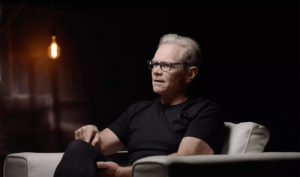
Steven Curtis Chapman describes his faith journey in an “I Am Second” short film, a series of video testimonies featuring a diversity of Christian celebrities produced by a Plano-based ministry. (Screen Capture Image)

He did it so well, it brought an invite for the teenager to perform across the parking lot at the Grand Ole Opry.

“I stepped onto the famous stage, and the band hit the first chord as though we had rehearsed it a thousand times,” he recounted in his 2017 book Between Heaven and the Real World: My Story. “Wow, this really is the big-time! I thought.

“I stepped up to the microphone and launched into my best imitation of [‘He Stopped Loving Her Today’]. …I finished the first verse, then sang the chorus, nailing them both.

“I went on to the second verse, and my mind raced as the words came to me. I finished by hitting and holding the high note in the chorus: ‘He stopped loving herrr … today.’”

The crowd erupted with a standing ovation. Legendary country star Roy Acuff, who had introduced Chapman moments earlier, was so impressed he asked for another chorus of the song.

Thrown off guard, Chapman drew a total blank on the lyrics as the band began to play. Trying to help him out, they played through the opening again … and again … and again. A few of the musicians even began to shout some of the words in his direction, all of this in front of the crowd that had just moments before thundered their approval and Chapman’s family, whose previously beaming faces were now something else entirely.

He finally got his bearings and finished the chorus. Acuff couldn’t help but comment after he made his way back to Chapman on the stage, noting that some words were left out and asking what went wrong.

Although Jones was then at the peak of his career, his drinking had—more than a few times—affected his performances, whether by causing him to fall off the stage or forget his lines or even not show up at all.

Chapman noted in his book that there is nothing funny about such issues with alcohol. But as he stood there on the Opry stage he needed a response, and quick.

“Oh, I just wanted to do it like George does it these days,” he told Acuff.

“The crowd howled with laughter, and they began applauding again,” Chapman wrote.

Peaks and valleys along the way

The applause never has died for Chapman, but the 37 years since his first album have brought a lot of chapters for a career now in its fifth decade. There have been goals met, and there have been curveballs.

There have been mountains, but there have also been very deep valleys, such as the 2008 death of his 5-year-old daughter Maria Sue.

There have been his roles as musician, husband, father, friend, son, business partner and international ministry leader, all under the umbrella of one guy with a guitar who just wants to sing songs that tell people about Jesus.

On July 27, the Opry stage served as another moment for Chapman as friend Ricky Skaggs officially extended the invitation to become its newest member.

“My dad didn’t listen to music in the car very much, but I remember as a kid riding along with him and my older brother,” Chapman told me recently. “One night he turned on the radio, and I heard a bunch of static, and then this music came through the speakers.

“‘Hey boys, that’s the Grand Ole Opry,’ he said. ‘That’s as good as music gets.’ Something told me this was special, magical, even.”

After hearing repeatedly that he was a fine songwriter whose voice just wasn’t strong enough to be a recording artist, Chapman finally broke through with his first album in 1987’s “First Hand.”

The next five years brought a meteoric rise and honors alongside the genre’s most glorious mullet. 1992’s “The Great Adventure” brought an end to the latter but sent Chapman to stadium-level success.

Career achievements and personal challenges

His career achievements now include 59 Dove Awards, five Grammys and 16 million albums sold, ten of those reaching Gold or Platinum. In 2023 Chapman’s name became the first and only on the list of Contemporary Christian Music artists to have 50 No. 1 songs.
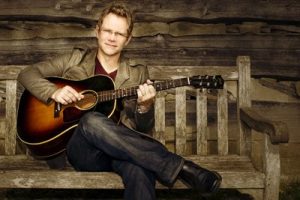
Steven Curtis Chapman

It could’ve been different. Throughout his career Chapman struggled with his success and the time it took him away from home, the stress it placed on his wife Mary Beth to raise six kids while he was in a different city. Many times, he sought counsel and considered stepping away.

“I really did try to think through if it were possible,” he said. “Even here, at this place in my life right now my wife throws around the R-word of retirement.”

Taking a different route early on could have led to a standard work week, he said, while still serving in a local church, perhaps as a worship leader. Something with music would certainly have been in his life such as giving lessons, as his 85-year-old dad still does at Chapman Music in Paducah, Ky.

“I believe somewhere I would’ve ended up in ministry on some level,” he said. “But I also feel very much like this is what God made me to do.”

He and his wife Mary Beth are considering writing a book about their marriage. On Oct. 13 they’ll celebrate 40 years.

“We’ve had people tell us that we should share our story,” he said. “We’ve resisted, because we’ve both said very clearly in our books that we don’t have it figured out. By the grace of God and trial and error, we’ll go three steps forward and 40 steps back, then 40 steps forward and two steps back.

“Yet, by his grace, we’re still together and realizing there are some things that we can share that could really encourage people from our journey.”

The “R-word” doesn’t appear to be in Chapman’s near future. Music remains very much in his life, but his favorite audience knows him as PopPops and are happy to be part of an Instagram reel.

Nov. 1 will bring his official induction to the Grand Ole Opry. His sons, Caleb and Will Franklin, will join him onstage alongside his dad, Herb Sr.

“It’s how I’ve always processed life,” he told me on music’s role. “The pain, joy, confusion, you know, trying to understand the mystery of God and his word and how to apply that to my life. With my family and marriage, those are the places where God is the most real, where I’m most aware of my need for him, his truth and his wisdom.

“As long as I’m breathing and able to have a thought in my head, I’m probably going to be writing songs.”


Texas lawmaker-seminarian opposes Christian nationalism

At a time when some evangelicals see voting for a Democrat as incompatible with being a Christian, Rep. James Talarico, D-Austin, asserts his Christian faith leads him to support the Democratic Party and its presidential nominee, Vice President Kamala Harris.

Talarico, who serves in the Texas House of Representatives, is convinced Harris’ policy positions on issues ranging from expanded health care to immigration reflect a compassionate approach to “how we treat our neighbors.”

That belief—along with deep concern about the rise of Christian nationalism—prompted Talarico to endorse Evangelicals for Harris and to oppose former President Donald Trump.

“When you look at Donald Trump, his character, his actions and his policies are antithetical to the teachings of Jesus Christ,” Talarico insisted.

Pastor Jack Graham of Prestonwood Baptist Church in Plano voiced a dramatically different perspective during a June conference call with Trump and a group of conservative Christians.

Graham, a former president of the Southern Baptist Convention, joined an “emergency prayer call” hosted by televangelist Paula White-Cain’s National Faith Advisory Board, voicing support for Trump prior to his televised debate with President Joe Biden.

“He is a warrior for us,” Graham said. “He’s standing for us and always has been representing the principles and precepts of God’s word that we strongly believe.”

Calling ‘bigger than politics’

Some have questioned why Talarico has identified with “evangelicals” who support Harris for president.

As the grandson of a Baptist pastor in Laredo, Talarico said he feels an affinity toward evangelical traditions, even though he identified both the church where he worships and the seminary where he studies as “mainline Protestant institutions.”

He is a longtime member of St. Andrew’s Presbyterian Church in Austin—an LGBTQ-affirming congregation affiliated with the Presbyterian Church (U.S.A.). He also is a student at Austin Presbyterian Theological Seminary and hopes eventually to serve in a pastoral role.

Talarico sees both his church and the seminary as “having an evangelical calling—to share the Good News with everyone and take Jesus’ teachings into the world.”

He views that calling as “bigger than politics,” but also as influencing how Christians should view issues dealing with poverty, immigration, public education and care for the environment.

Talarico believes many evangelical Christians have felt excluded from the Democratic Party, but he also thinks the Republican Party has “taken Christians’ votes for granted.”

“We just want to extend a hand to evangelicals to let them know they have a place in our party,” he said.

Of course, some evangelicals view the issue altogether differently.

Landon Schott, senior pastor of Mercy Culture Church—a multi-site congregation with campuses in Fort Worth, Dallas and Waco—made his views clear in a recent Instagram post in which he wrote: “YOU ARE NOT A BIBLE BELIEVING, JESUS FOLLOWING CHRISTIAN IF YOU SUPPORT THE GODLESS ROMANS 1 EVIL OF THE DEMOCRATIC PARTY!”

He went on to write: “When godless world leaders, wicked politicians and woke false teachers all support the same political party/candidate, YOU ARE NOT ON THE LORD’S SIDE!”

Highlighting the dangers of Christian nationalism

Rep. James Talarico speaks on the floor of the Texas House of Representatives on May 24, 2021, in Austin. (Courtesy photo via RNS)

During his time in the Texas House, Talarico, has voiced opposition to what he sees as Christian nationalism.

“Christian nationalism represents the most dangerous form of government—theocracy,” he said. “It is a form of tyranny, and it is most dangerous because the tyrant thinks he is on a mission for God.”

He views Christian nationalism as an unhealthy merger of religious and American identities that seeks special privileges for Christianity.

Talarico—who taught at a low-income public school in San Antonio—sees examples of Christian nationalism in legislation mandating the Ten Commandments be posted in every classroom, allowing school districts to hire Christian chaplains and incorporating Bible stories into elementary school reading curriculum.

He also sees it at the heart of Gov. Greg Abbott’s campaign to grant parents “school choice” through educational savings accounts—essentially a school voucher plan to divert public money to private schools, including religious schools.

“Jesus didn’t come to establish a Christian nation. He came to reveal the ultimate reality—the kingdom of God that is within us and around us,” he said. “The kingdom of God is so much bigger than any political party.”

Ads generate controversy

Evangelicals for Harris have created some controversy with ads they have produced—particularly one that includes an archival clip of evangelist Billy Graham issuing a call to repentance, contrasted with a clip of Trump saying he never felt the need to ask God for forgiveness.

Franklin Graham, president of the Billy Graham Evangelistic Association and Samaritan’s Purse, criticized the group for using his father’s image.

“They are trying to mislead people,” he tweeted on social media. “Maybe they don’t know that my father appreciated the conservative values and policies of President @realDonaldTrump in 2016, and if he were alive today, my father’s views would not have changed.”

One ad produced by Evangelicals for Harris includes clips of Trump’s rhetoric and urges voters: “Read 1 John 4. Choose Christ’s Love. Let our Witness be Good News.” Another ad includes clips from speeches by Harris and Gov. Tim Walz and references the “fruit of the Spirit” in Galatians 5:22-24.

Talarico sees that use of the Bible as significantly different than those who see Trump as “the chosen one” or a Messiah-like figure anointed by God.

“The key difference is we’re not worshipping Kamala Harris. We’re just voting for her,” he said.


Seven screen-free weeks changed one man’s view of God

(RNS)—It all started when Carlos Whittaker received that perky Sunday morning iPhone notification summarizing his time spent on his handheld screen in the past week.

Seven hours and twenty-three minutes on average per day.

Whittaker, an author and former worship pastor, did some quick math and realized that number translated to nearly 100 full days a year.

If he lived to be 85, he’d have spent a decade looking at his phone. While most of his work centers around his social media community—his “Instafamilia”—he knew something needed to change.

Whittaker messaged Daniel Amen, a psychiatrist with nearly 3 million followers on TikTok, earning him the nickname, “America’s most popular psychologist.”

How much time, Whittaker wanted to know, would he need to take away from all digital devices to effect real change in his brain. Amen quoted him close to two months.

Using a screen-free Sony camera to document the journey, Whittaker ditched his phone and spent two weeks with Benedictine monks in the California desert, two weeks working on an Amish farm in Ohio and three weeks with his family—both at home in Nashville and on a trip to Yellowstone—all free from any connectivity.

From his experience came a new book, RECONNECTED: How 7 Screen-Free Weeks with Monks and Amish Farmers Helped Me Recover the Lost Art of Being Human. RNS talked to him about his journey and his book. This interview has been edited for length and clarity.

You got your start as a worship leader for churches like Hillsong. How has your worship evolved over the years?

For a long time, I was a “professional evangelical.” I went from worship pastor to signed worship artist, touring and playing shows. Now, I rarely even speak in churches anymore. I just love going to church with my family now. Worship looks like what I’m doing now: worshipping with people that don’t believe like me, holding my own and having a blast doing it.

Your ah-ha moment came when you saw how much time you were spending on your phone. But why a desert with Benedictine monks? Why Amish farmers?

I started multiplying the seven-plus hours I was spending and realized that’s two cycles of the sun a week. Once I made the decision to not look at screens, I thought of places without them: the Benedictine monastery in the high desert of Southern California. My wife’s father was a volunteer in the ’80s and ’90s there, so she made an intro for me.

A friend of mine married a former Amish guy, so they were my connection to the sheep farming family in Mount Hope, Ohio.

Then I moved back home for three weeks—I mean, anybody can do this with monks and the Amish, but can I do this around my family in Nashville?

How did unplugging impact your spirituality?

It really disturbed and disrupted it. I realized how much (focus) I place on random pastors’ YouTube sermons and podcasts. I was constantly filling my mind with content, but when all that went away, it was just me and my mind. God got really tangled up.

The first week at the monastery was like a massive deconstruction and reconstruction in seven days. I had some very deep conversations with monks that shook up my faith a lot and then got to build it back.

When I look at my faith, when I am just consuming, consuming, consuming on all of these devices, that builds a box around who God can be. God got way bigger than I think I had ever pictured he was going to get.

What did wellness look like for you in the seven weeks? Did you pick up any new exercise or spiritual habits?

Savoring is something that I never thought about as a spiritual practice, but I realized pretty quickly that I’ve stopped savoring anything, because we get things so quickly.

Multitasking is the worst thing to ever happen to us. I drank coffee out of ceramic mugs for eight straight weeks. It just tasted better. I was able to savor it. Now when I go to a coffee shop, I never get my coffee to go. I’m like, if I don’t have four minutes to sit and savor, you know?

I’d say the second thing is just slowing down. If there’s one thing the monks taught me, it’s to move at what I call God speed.

What was the hardest part?

The first four days by far. It was heart palpitations, panic attacks, night sweats. It was like coming off of this drug, and I don’t really think the drug is the phone. It was more like this drug of control and knowledge and having to know all the time.

Suddenly, I wasn’t able to get out of my own head. Because at the monastery, it was 23 hours a day of silence. To go from seven and a half hours a day on my phone to just being in my head, it was awful.

But day five, it felt like an elephant stepped off my chest. It stopped being an experiment about a phone. Suddenly it was an experiment about all of these incredible things that were on the other side of the phone that I’d forgotten about.

The other worst day was turning my phone back on.

What do we miss when we can Google every question that pops into our brain?

We miss being who God created us to be. I don’t think our souls or our psyches were created with that capacity to know as much as we know. I think we miss wondering. When I lost access to information, I thought, “Wow, I don’t think I’ve wondered since, like, the 1990s!”

I’d walk outside and wonder how hot it is. I’d reach for my phone. Well, I guess I’m just going to have to wonder. We ask questions, but we don’t wonder anymore, because Google kills wonder. Questions lead to more questions, which I think leads to creativity. We should all maybe know a little less, and we’ll human a little more.

You write about experiencing panic attacks and mental health struggles.

I’ve struggled for a long time with a kind of fear of sickness and health. I would Google symptoms, so it was mind-blowing to see the worry go away when I didn’t have this false sense of control in my hands.

I’ve removed some apps that were causing me to worry more than I should. One of those is Life360, an app I used to track my kids and make sure I knew where they were, how fast they were going. My mom said: “Carlos, I’m so glad I didn’t have that app. I just had to trust that you’d be home before the sun went down.” All of these things that give us a false sense of control are actually adding anxiety to our lives.

You suggest replacing your phone with a point-and-shoot camera to document an activity with loved ones. What other practical steps can we take to reconnect?

I’ve deleted all the news apps off my phone. I deleted X off my phone, and I subscribe to this thing called the newspaper. Every morning, I walk in my front yard, it feels like the 1960s. If anything happens I need to know about, either someone tells me or I find out about it the next morning.

I’m no longer part of this rage ecosystem. I bought an alarm clock and set it next to my bed. It wakes me up without any notifications, and I’m just a lot happier.

I no longer use the map app to find my way. I look it up before I leave my house, write it on a piece of paper. I will get lost on the way, but I’ll find my way slowly but surely. I think God created us to find our way. I love getting lost now. All of these things have helped me reconnect to who I was created to be.

You emphasize it’s not just about screen time—it’s about connecting when you’re not on your devices.

This isn’t a book about how bad phones are. It’s a book about how beautiful things are on the other side of the phone. I’ve gone down to four hours a day on my phone.

It’s not because I’ve placed rules on screen time—I’ve just fallen in love with having conversations, having 90-minute meals. One hundred years ago the average meal lasted 90 minutes. Today, it lasts 12 minutes. Try 30 minutes. Set an alarm, put it in the kitchen.

We’ve lost the ability to have crucial conversations about things that we disagree with over something that we love, a shared plate. The longer you eat, the better the relationships get.


Tyler couple’s ministry to kindergarteners spans decades

TYLER—Generations of kindergarteners have memorized Bible verses and learned about Jesus’ love for them in Pat and Charles White’s Sunday school class at First Baptist Church in Tyler.

The church recently recognized the couple for their decades of service to preschoolers and children. The beginning of the school year marks 50 years Pat White has taught the kindergarten Sunday school class.

But the couple’s involvement in ministry to children actually began a few years earlier, when her husband was teaching a fifth-grade Sunday school class and she taught 3-year-olds at First Baptist Tyler.

Since one boy in the 3-year-old class was deaf, she learned enough American Sign Language to teach him each week’s Scripture memory verse and the Bible lesson.

“I graduated with him, teaching the 4-year-olds the next year and then the 5-year-olds,” she said.

When the boy’s family moved from Tyler to Austin, she settled into teaching the kindergarten class. After about 10 years with the fifth graders, her husband joined her.

“It got to the point where those fifth-grade kids were getting too smart for me. I came down to kindergarten to help Pat, where the kids were more on my level,” he said with a grin.

‘Felt called to teach kids’

For Pat White, the hours spent in preparation, outreach and instruction for kindergarten Sunday school class became a passion project.

“I fell in love with it,” she said. “I felt called to teach kids.”

In fact, after several years teaching professionally at higher levels, she went back to school to earn her master’s degree in early childhood education.

Her last few years in public school classrooms were spent teaching English-as-a-Second-Language to children in pre-kindergarten through second grade.

Teaching kindergarteners means providing multiple learning stations each Sunday. Pat White enjoys exercising creativity in developing a variety of crafts, games and activities designed to reinforce concepts presented in the Bible lesson.

“God gives me ideas,” she said.

“She’s the thinker and the organizer,” her husband commented. “I handle the snacks.”

“And the kindergarten class is known for its snacks,” Katie Goodrum, director of preschool ministry at First Baptist Tyler, interjected.

Charles White grew up attending First Baptist Tyler until he left to study accounting at Texas Christian University in Fort Worth. His work for an oil company took him and his wife to New Orleans and Pittsburgh before moving back to Tyler in 1969. On two occasions, he served on the church staff as business manager.

He doesn’t recall any men who served in the preschool area and few who worked with children when he was growing up. He has been glad to be able to correct that deficiency for the last several decades.

“I think it’s good to have a man in the classroom at this age level,” he said. “It’s good for the kids to see a man here.”

He especially enjoys seeing how much the kindergartners “grow and mature” from the time they enter class in August until they move up to the first-grade class a year later.

Teaching kindergarteners to good to others

The Whites particularly like to involve the kindergarteners in activities that benefit others, such as assembling sacks of food for families at Thanksgiving or sending cards to homebound church members.

“We want them to recognize the need to do something for other people,” Pat White said.

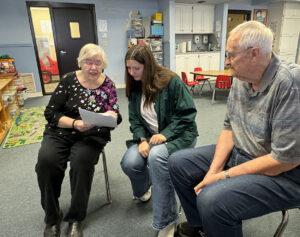
Pat White shows Katie Goodrum, the preschool director at First Baptist Church in Tyler, the mailing list of kindergarteners who receive letters from her and her husband Charles each week. (Photo / Ken Camp)

In addition to the hours spent preparing hands-on learning activities and the Sunday mornings spent interacting with the children, she also mails a letter on Monday or Tuesday each week to every child in her Sunday school class.

“I’ve mailed letters to 311 students since I started doing it in 2008,” she said. “If a child visits the class and I get an address, they’ll get a letter from me each week unless a parent asks me to stop.”

Each letter reinforces a key idea from the previous lesson and introduces the next week’s Bible story. It also presents a question about the upcoming lesson, along with the Bible verse where the child can find the answer.

“The letters mean a lot to the children,” she said, noting some children have told her years later how much they looked forward to getting mail from her each week.

‘Generations have been blessed’

The Whites noted it is satisfying to see children they taught in their kindergarten class make a profession of faith in Christ and be baptized when they are older.

They also have the satisfaction of teaching kindergarteners in recent years whose parents they taught decades earlier.

“When I think of Charles and Pat, I think of years of faithful service, loving children and welcoming them into the church with grace and joy every Sunday,” said Casey Cockrell, minister of discipleship at First Baptist Church in Tyler.

“Their dedication, not just in the visible aspects of their service, but also in the countless hours of behind-the-scenes work, is a testament to their love for Christ and others.

“Generations have been blessed by their faithful service, and it’s a joy to see my two daughters and others stand to celebrate the Whites.”

In October, Charles White will turn 90, and his wife will turn 85. If they even raise the question of whether it’s time to step down from teaching, Goodrum shakes her head firmly and says, “No.”

“They are rock stars as far as I’m concerned,” she said. “To have this kind of consistency in the preschool area, we are so blessed.

“I don’t have to scramble on Sunday morning. I have the easy job. I get to sit back and watch the kids learn.”


Mexico Protestants protest displacement, church burning

OAXACO, Mexico (BP)—The last Protestants in an indigenous Mexican community dominated by Roman Catholics were forced from their homes Aug. 6 and their lone church set ablaze, Christian Solidarity Worldwide reported Aug. 22.

Members of the Protestant Interdenominational Christian Church and their supporters were expected to protest in the main square of Mexico City and in the city of Oaxaca, CSW said.

Demonstrators called out serious religious freedom violations in the community of San Isidro Arenal in San Juan Lalana Municipality, Oaxaca State.

In Oaxaca, members of the Protestant Interdenominational Christian Church have been subjected to discrimination, violence and arbitrary detention since November 2023.

They also face imminent forced displacement from their homes due to their religious beliefs, CSW said. Previous protests were held in Oaxaca Aug. 19.

“We stand with those who are raising their voices today across Mexico in support of freedom of religion or belief for all,” CSW’s Head of Advocacy Anna Lee Stangl stated.

“It is imperative that the governments of the San Juan Lalana Municipality and Oaxaca State, and at the federal level, take urgent action to uphold the Mexican Constitution and ensure that freedom of religion or belief is a right enjoyed by all, regardless of where they live or their ethno-linguistic identity.”

Oaxaca is just 2 miles from Hidalgo, where Baptist worshipers in several indigenous villages have endured similar persecution, driven from their homes and churches unless they observe Catholic customs and rites, or convert to Catholicism.

Persecution escalated recently

In Oaxaca, persecution escalated Aug. 6 when a large mob of 300 men dispossessed the last remaining religious minority families their lands and livestock, destroyed their crops and burned their church, CSW said.

On Aug. 16, when pastors Moisés Sarmiento Alavés and Esdrás Ojeda Jiménez and two other men went to the community to attend a legal proceeding announced by the Oaxaca State Prosecutor’s Office, the proceedings never occurred and the men were attacked by a mob.

“They were stripped, beaten, arbitrarily detained for over six hours, and forced to sign a document which they did not have the opportunity to read,” CSW reported. “The four men were ultimately freed by the police later that same day.”

Porfirio Flores, an attorney and representative of the Fellowship of Pastors, told CSW that “greater attention must be paid to the issue of religious freedom in Oaxaca. A fundamental change is needed regarding the problems arising from civil and religious charges within internal normative systems, while respecting the secular state.”

The persecution of Protestants in indigenous Catholic communities stems from a 1993 community accord mandating Roman Catholicism as the only religion permitted in San Isidro Arenal, a system allowed under the Law on Uses and Customs. However, religious freedom is guaranteed in Mexico’s constitution.

“The volatile situation in San Isidro Arenal is yet another example of how the government’s failure to intervene at the early stages of cases of religious intolerance and its neglect of education around freedom of religion or belief has led local authorities to believe that they can enforce religious adherence and practice and commit criminal acts against those who believe differently with impunity,” Stangl said.

“Concrete steps must be taken now to protect the members of the religious minority in San Isidro Arenal, and those who are responsible for crimes committed against them must be held to account for their actions.”


Obituary: Dorothy Louise Welch

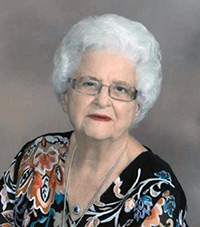
Dorothy Louise Welch, longtime educator and faithful church member, died Aug. 14. She was 93. She was born Sept. 10, 1930, and grew up in East Dallas as the youngest of five children. As a child she attended First Baptist Church of Urbandale on her own and was baptized at age 11 in a white linen dress made by her mother. After graduating from Woodrow Wilson High School in 1948, she attended North Texas State University and earned an undergraduate degree in education, graduating in three years by taking classes each summer. Early in her teaching career, she began working on a master’s degree in school administration but soon decided this was not her calling and switched to her real passion—elementary education. “If the Lord gave me a talent, it was to see potential in children and to love them,” she said. She taught primary school, predominantly second grade, for 40 years in Dallas. She loved teaching, and near the end of her career, she was honored as a lifetime member of the P.T.A. She met her husband John at the Tower Theater in downtown Dallas, and they were married in 1954. They joined Wilshire Baptist Church in 1960, where they taught the 5-year-old Sunday school class for many years. She also served on the church’s preschool and history committees and on the search committee that recommended Pastor George Mason. Her husband John worked 48 years at the Baptist Standard, including 30 years as business manager. After he retired, they participated as volunteers in Church Builders. Dorothy Welch enjoyed quilting and doing handiwork. She won blue ribbons at the State Fair of Texas for her Christmas stockings, tablecloths and beading. Her quilts won awards from the Dallas Quilters Guild, and she was delighted to make one-of-a-kind items for friends and family. She enjoyed an active retirement and attended the same exercise class for many years, which she considered the secret to her longevity. She was a 30-year member of the Daughters of the American Revolution, sang in Wilshire’s New Song Choir and was active in Wilshire Adventurers. She was preceded in death by her husband John in 2001. She is survived by their son, Tom Welch of Palm Springs, Calif.; son David Welch and his wife Annamaria Di Bartolo Welch of Irving; and granddaughters Alessia and Elisa. Memorial contributions may be made to Wilshire Baptist Church—Missions, 4316 Abrams Rd, Dallas, TX 75214.


Ukrainian bill bans Russian-linked faith groups

(RNS)—On Aug. 20, the Ukrainian Parliament passed a long-anticipated bill that will ban the activities of churches deemed to be affiliated with the Russian Orthodox Church or supporting the Russian invasion.

The legislation, expected to be signed into law soon by President Volodymyr Zelenskyy, explicitly bans religious institutions subordinate to leaders based in Russia.

Even some supporters of Ukraine see it as an overstep in the name of national security, a violation of religious freedom and a potential risk to continued foreign military aid.

The clear target of the law is the Ukrainian Orthodox Church with its historical ties to Moscow.

The church declared itself independent of the Moscow Patriarchate three months after the full-scale Russian invasion in 2022, but many still suspect at least some of the church leadership has loyalties to Russia.

“The government in Kyiv wants to see the conduits of Russian influence in Ukrainian society totally minimized,” said Andreja Bogdanovski, an author, scholar and analyst of Orthodox Christianity.

Ahead of the vote, Zelenskyy said the law would “guarantee that there will be no manipulation of the Ukrainian Church from Moscow.”

“This draft law must work and must add to Ukraine the unity of the cathedral, our real spiritual unity,” he added.

Recent Ukrainian Church history

Historically, the Ukrainian Orthodox Church has been the largest faith group in Ukraine. However, the country’s Orthodox Christians found themselves split in 2019 when a newer religious body—the Orthodox Church of Ukraine—was recognized as canonical and fully independent of Moscow under the blessing of the Ecumenical Patriarchate of Constantinople.

The OCU, which now represents the majority of Orthodox Christians in Ukraine, formed in part from parishes resisting Russian control during Ukraine’s independence movements at the beginning and end of the 20th century.

In the wake of Russia’s 2014 annexation of Crimea and support of separatist militias in the Donbas region, the OCU was bolstered by Ukrainian clergymen who felt that Ukrainian Orthodox Christians needed a religious body divorced from Moscow’s Patriarch Kirill.

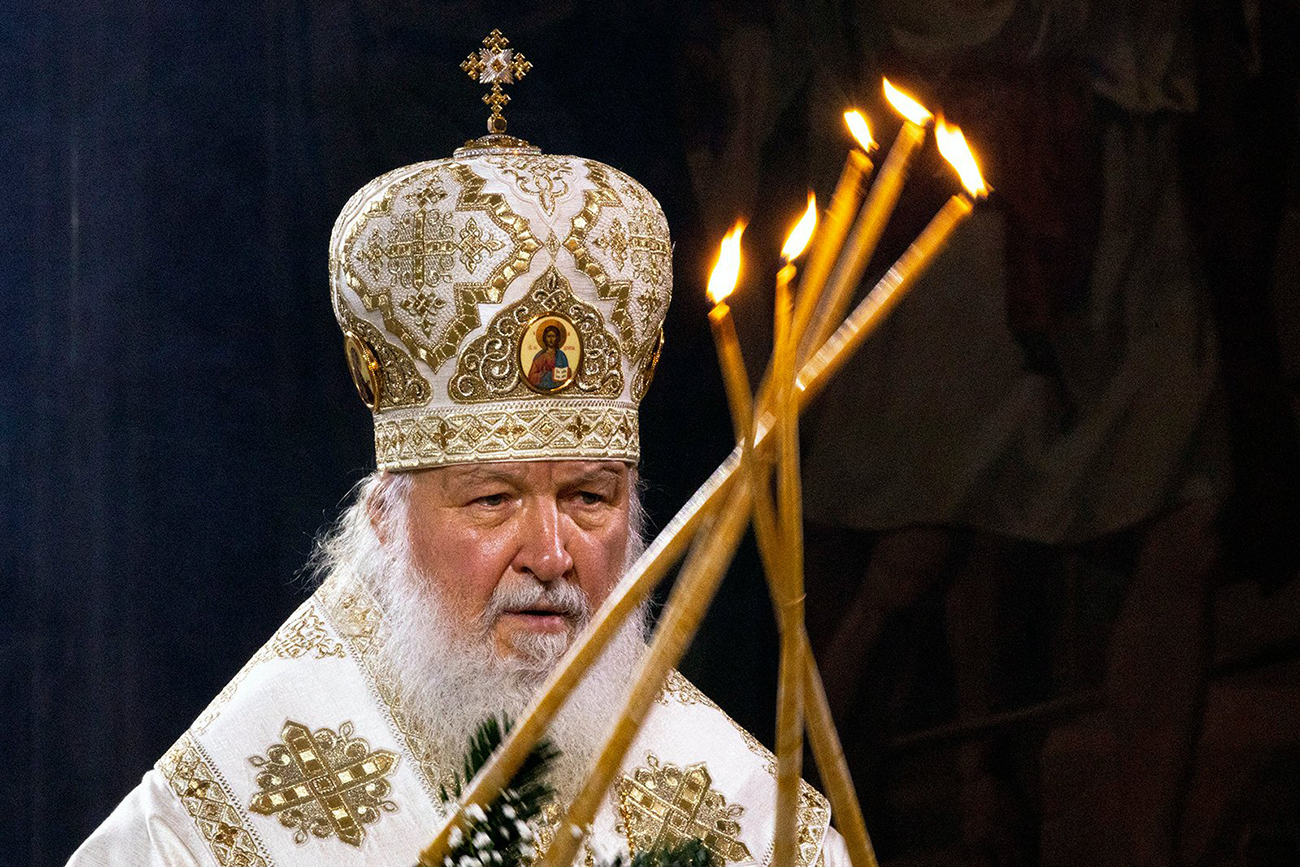
Russian Orthodox Patriarch Kirill in the Christ the Saviour Cathedral in Moscow, on Jan. 7, 2021. (AP Photo/Alexander Zemlianichenko)

Kirill long has been a close ally of Russian President Vladimir Putin and has justified Russia’s aggression in spiritual terms.

The law, once signed, would equip the Ukrainian government to set up a commission to investigate religious institutions across the country. The commission then would have nine months to provide a list of those deemed subordinate to Russian institutions.

Ukraine’s largest organization of religious bodies, the Ukrainian Council of Churches and Religious Organizations, which represents Christian, Jewish and Muslim groups, endorsed the draft law in an Aug. 17 statement, praising the effort “to make it impossible for such organizations to operate in our country.”

Those that sever their ties to Russia during that period will be allowed to continue to function.

What constitutes a tie and an appropriate level of separation have not yet been specified. These details are what in part delayed the legislation’s approval for more than a year and a half after Zelenskyy first endorsed its draft.

Iryna Herashchenko, the first deputy chairwoman of the Ukrainian Parliament, hailed the bill’s passing as a “historic vote.”

Parliament “has passed a bill banning the aggressor country’s branch in Ukraine. 265 MPs voted FOR! This is a matter of national security, not religion,” she announced on X.

Voices of dissent

Despite the broad support inside Ukraine, the bill has been criticized by some Orthodox leaders, including those from populaces that support Ukraine against Russian aggression.

Bulgaria’s newly elected Patriarch Daniil sent a letter of support to Metropolitan Onufriy, the primate of the UOC. The Bulgarian church does not recognize the OCU as canonical, but the church and government have expressed support for Ukraine in the war.

“You have resisted and continue, with God’s help, to resist all attempts to create disunity, preserving the unity, integrity, and canonicity of the Ukrainian Orthodox Church,” Patriarch Daniill wrote.

Onufriy also received letters of support from the heads of the Antiochian and Georgian Orthodox churches. Both jurisdictions have issued statements shy of condemning Patriarch Kirill’s role in Russian aggression.

But the bill also has been blasted on religious freedom grounds by many observers and is expected to be challenged as Ukraine moves closer to joining the European Union.

“It’s very hard diplomatically to reconcile this law with Ukraine’s European ambitions,” said Samuel Noble, a scholar of Orthodox Christianity at Aga Khan University in London.

“This is the kind of thing that will wind up being brought to Strasbourg, that is, the European Court of Human Rights.”

“It’s not normally the kind of thing that one does in a country aspiring to join the European Union. On the other hand, Ukraine is not in a normal situation,” he added.

Smilen Markov, a Bulgarian scholar of Orthodox Christianity, put it more bluntly: “The Ukrainian state is violating religious freedom. It declares a religious community pro-Russian, which is legally problematic, divisive and ruinous.”

Regina Elsner, the chair of Eastern churches and ecumenism at the University of Muenster’s Ecumenical Institute, posted on Twitter that the legislation’s approval is “deeply disturbing.”

“This law opens a door to serious violations of religious freedom and new fragmentation within Ukraine,” she said. “The amendments of the last months did not improve anything. Hate and violence against UOC believers get public approval. Sad.”

Since the outbreak of full-scale war, Ukraine has jailed more than 100 UOC priests over charges of espionage and anti-Ukrainian speech, including posting opinions on social media and speaking from the pulpit.

The Russian Orthodox Church in particular has sought to use such religious freedom concerns to garner sympathy for the UOC and cast doubt on Western aid to Ukraine, which has been crucial for the Ukrainian defense.

“The Ukrainian Orthodox Church is being subjected to reprisals for its refusal to join the organization of schismatics and self-ordained peoples, created as a political project aimed at destroying the common spiritual heritage of Russian and Ukrainian peoples,” said Vladimir Lagoida, a spokesman for the Russian Orthodox Church, on Telegram.

“There is no doubt that the persecution of the Ukrainian Orthodox Church will sooner or later receive a fair assessment, just as the godless regimes of the past received it, destroying the human right to faith and to belong to their Church.”

The UOC has ceased to commemorate Patriarch Kirill in prayers and has said it is not bound by the decisions of the Holy Synod of the Moscow Patriarchate.

“In Orthodox Church logic, that’s effectively a declaration of independence,” Noble said. “Even from the Russians’ perspective, officially on paper, the UOC is autonomous in all things, except for Onufriy’s seat on the Synod of the Moscow Patriarchate, which he has more or less disowned.”

Still, many Ukrainians remain deeply suspicious of the UOC. In 2021, 18 percent of religious Ukrainians identified as members of the UOC, but months after Russia’s full-scale invasion, that dropped to just 4 percent, according to the Kyiv International Institute of Sociology.

The same poll found OCU membership increased from 34 percent to 54 percent. In addition, hundreds of Orthodox congregations have switched allegiance from the UOC to the OCU, according to church records, but few monks, traditionally seen as sources of authority in the church, have followed.

“Of course, it is true that the hierarchy of the UOC is partly pro-Russian,” Markov noted. “The allegations about ties with Moscow are often factually correct.

“However, these perpetrations are personal, and they should be proved case by case,” he added. “They cannot be blamed on a religious community of millions of Ukrainians.”


Seminary hosts kickoff for the 2025 SBC annual meeting

FORT WORTH (BP)—Dozens of key Baptist leaders—including Julio Guarneri, executive director of the Baptist General Convention of Texas—gathered for a kickoff to begin preparations for the 2025 Southern Baptist Convention annual meeting in Dallas.

Leaders met at Southwestern Baptist Theological Seminary Aug. 22 to launch plans for the June 2025 event, which will feature a 100th anniversary celebration of the Cooperative Program and President Clint Pressley presiding over his first SBC annual meeting.

Pressley said during this year as president, he wants to remind Southern Baptists they are united around the Baptist Faith and Message and the Cooperative Program.

“We agree on those two things,” he said.

“I want us to hold fast to the confession that tells us who Christ is and why we’re on mission and our cooperating together to actually be on a mission,” said Pressley, senior pastor of Hickory Grove Baptist Church in Charlotte, N.C.

The annual meeting’s theme will be “Hold Fast,” based on Hebrews 10:23-24.

“We hold fast to the confession. We hold fast to stirring up one another to love … and to good works,” Pressley said. “That is the mission.”

Significant volunteer involvement

Around 700 volunteers are needed annually to ensure messengers and guests are served well at the annual meeting.

George Schroeder, pastor of First Baptist Church in Fairfield, is leading the coordination of the volunteers who will serve as greeters, ushers, tellers and more.

“This is Texas and we got to do this thing right. Right?” he asked the more than 200 guests.

“We get to tell people about barbecue, Dr Pepper, football and George Strait, and I suggest we do that,” said Schroeder, a former editor of Baptist Press who also worked for a time in the BGCT communications office.

“But we get to tell them about Jesus. We get to show them who we are.”

Between the two “strong state conventions” in Texas—the BGCT and the Southern Baptists of Texas Convention—Baptists in the state will be able to make a favorable impression on Southern Baptists, he said.

South Carolina pastor D.J. Horton, president of next year’s pastors’ conference and senior pastor of Church at The Mill in Spartanburg, S.C., told the group the 2025 theme will be “Worth Following,” and conference preachers will focus on 2 Timothy.

“Every pastor will be assigned an exposition in 2 Timothy, and if you attend all of it, you’ll hear 10 consecutive sermons laid through verse by verse of the book of 2 Timothy,” Horton said.

“One of the themes in 2 Timothy is that Paul says it’s not about being an innovator, a cultural specialist or social media kingdom,” Horton said. “It’s about following … the doctrines that have been given to us following the pattern of sound teaching.”

Horton said he also wants to model Paul’s intentional mentorship of Timothy and create a way for all willing pastors to be connected with a mentor. He said more details will be released closer to the meeting.

Emphasis on Cooperative Program centennial

The 100th anniversary of the Cooperative Program will be a prominent theme of the 2025 meeting.

Bruno Molina, Hispanic Baptist Network executive director, and Nathan Lorick, Southern Baptists of Texas Convention executive director, joined SBC Executive Committee President Jeff Iorg, Pressley and Guarneri for a panel discussion on the Cooperative Program.

The group gave firsthand accounts of the many ways funds given through the Cooperative Program have been a part of their ministries—from supplementing their seminary educations, to providing a way for their local churches to be involved in national and international missions to supporting state conventions and national entities.

“We’re celebrating what God has done for each one of us to make it possible for us to be not only supporters of but recipients from the Cooperative Program and what it’s meant in our lives,” said Iorg.

Crossover outreach events slated

Ryan Jespersen, Dallas Baptist Association executive director, will be at the helm of Crossover, a citywide outreach initiative, that will take place in the days leading up to the 2025 meeting. Hundreds of Southern Baptists joined together in Indianapolis this past June to carry out dozens of events across the city.

Jespersen believes the impact in Texas will be felt across all of the local associations that touch the Dallas area as efforts will be to mobilize churches in each association to lead in what he called harvest events.

“This year, the North American Mission Board has said we are going to do events that focus on church evangelism,” Jespersen said.

After the meeting, Jespersen told Baptist Press, “These Harvest events could be backyard Bible clubs, block parties, neighborhood canvassing, park outreaches, harvest Sundays with the availability of preachers from all over the country, or anything that the church feels led to do that will directly reach people with the gospel.”

He said “limited grants will be available for churches in Dallas, Denton, Collin, Tarrant, Kauf-Van, Southwest Metroplex, Ellis, and Hunt” Baptist associations.

Jespersen encourages Southern Baptists from across the country “to come and share the gospel with people in the greater DFW area.”

Kickoff participants spent time praying that God would not only lead during the gathering next June but prepare the way for Southern Baptists as they plan to impact Dallas with the gospel.

The prayer time was led by Ray Gentry, president of the Southern Baptist Conference of Associational Leaders; Eddie Lopez, SBC second vice president; and Marcus Hayes, pastor of Crossroads Baptist in The Woodlands.

Texas-based SBC leaders David Dockery and Hance Dilbeck shared their excitement for welcoming Southern Baptists to the “Big D” next summer. Dockery is president of Southwestern Seminary, and Dilbeck is president of GuideStone Financial Resources.

“Being in Dallas, where GuideStone is located, we will have the opportunity to deploy financial educators and advisors to the annual meeting to serve pastors in a great way,” Dilbeck said.

Dockery prayed for the work of the convention: “God, thank you for the privilege to work together in the cause of advancing the gospel. We pray that your hand of favor blessing might rest upon Southern Baptists this day and in days to come.”


Christian Women’s Job Corps alumni serve with Hagar’s Heart

Christian Women’s Job Corps of Greater Arlington Executive Director Brandi Dalton met Hagar’s Heart founder, Jennifer Jones, at a networking event some time ago.

CWJC—a ministry of Woman’s Missionary Union—teaches job skills and life skills to low-income women. Hagar’s Heart is an Arlington-based organization dedicated to supporting, educating and empowering domestic violence survivors through self-care initiatives.

The complementary nature of the organizations in providing services for women led to Jones becoming a speaker at CWJC events for the last couple of years.

Hagar’s Heart Founder and Executive Director Jennifer Jones with CWJC of Greater Arlington Executive Director Brandi Dalton. (Courtesy Photo)

At one such event, Dalton learned Hagar’s Heart held a standing volunteer service day the third Saturday of every month.

“I immediately thought, hmm,” Dalton said, “Our alumni meet the third Saturday of every month.”

Since CWJC alumni have received such an investment in their lives through Christian Women’s Job Corps, they are encouraged to “pay it forward” by investing in others, she explained.

So, Morgan Farr, CWJC of Greater Arlington alumni coordinator, organized an alumni service project with Hagar’s Heart for Aug. 17.

Hagar’s Heart aims to give back to domestic abuse survivors what was taken from them by their abusers—their self-worth and trust.

Personal understanding

Jones said she started Hagar’s Heart because she is a survivor of domestic abuse, herself.

She was an educator more than 20 years, but about six years ago, life circumstances brought her life in education to a close.

Jones sensed even then there was something else God was calling her to: “You know God always provides the way.”

She was no longer in an abusive relationship when the COVID-19 pandemic swept across the country, but it occurred to her that just because she was able to escape didn’t mean every woman experiencing abuse could.

In fact, the lockdowns of COVID meant exactly the opposite, Jones said. Women were trapped with their abusers and couldn’t get away.

This realization led her to find a fiscal sponsor and found Hagar’s Heart “right then and there,” she said.

Domestic violence is an isolating experience, Jones stated. She explained she was out of her abusive relation for 13 years before she could admit, even to herself, she’d been abused.

“I didn’t think it happened to people like me,” she said.

Handmade message bracelet for an “I See You” box. (Courtesy Photo)

She had a job and could anticipate abusive behavior and side-step it, because she had a place to go. So, she believed it was “just a bad marriage,” not abuse. But in working through the trauma she’d experienced, a counselor helped her understand, “even once is too many times.”

Even one time being called names or experiencing physical abuse, even one time being locked out of one’s home or made to leave is too many, she continued.

Statistics show domestic violence happens to 1 in 3 women and 1 in 4 men. That illustrates it’s not only happening in a certain ZIP code or to people of a certain ethnicity, Jones said.

Society is ignorant about who can be affected by domestic violence, she said. “I was ignorant that it could happen to me.”

Jones saw a need to transform how society—especially the women who are affected by it—understands domestic violence. Hagar’s Heart seeks to do that by educating and empowering survivors, rebuilding self-worth.

Seen, worthy, loved

Taking its name from the Genesis 16 story of Hagar—where God meets her in her escape from the abuse she’d suffered, and she names God, El-roi, the God who sees—Hagar’s Heart emphasizes three statements: “You are seen. You are worthy. You are loved.”

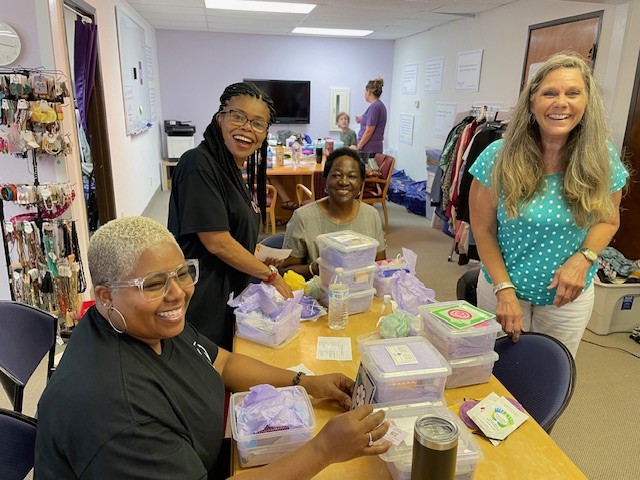
The CJWC alumni who served Aug. 17 joined in the mission of rebuilding self-worth by helping to pack “I See You” boxes. They will be distributed to women at eight women’s shelters in the area.

These boxes are filled with personal care products, including fragranced lotions and soaps, ethnic hair products (if needed), chocolate, handwritten notes, journals, and a handmade bracelet—items that don’t just meet a physical need but an emotional need to feel worthy, as well.

The shelters provide for physical, counseling and legal needs, while “I See You” boxes and the other services Hagar’s Heart provides help to reach the intangibles—reminding the women they are worth more than what standard, utilitarian items alone might communicate, Jones explained.

These special boxes gently speak to women’s hearts.

Earlene Moore (standing on left) and other CWJC alumni pack “I See You” boxes at Hagar’s Heart. (Courtesy Photo)

Giving back

Earlene Moore, a CWJC alumna, participated in the project. She came to CWJC in 2015 when she decided to close her baking business.

Moore said she appreciated the job skills, particularly computer skills, she learned there to help her get back into the workforce after being self-employed for several years.

“It’s a beautiful thing to be able to give back to others,” Moore said. Yet, she still was having second thoughts about going to Hagar’s Heart to help, because she had so many other things going on that week.

“So, anyway, I went on, and I’m so glad,” she continued. When she learned what they were doing and how meaningful it was and began going down the checklist packing boxes, she decided this project will not be a one-time thing.

“Our group was making sure the boxes had everything they needed,” she said, “nail clippers, lotions, handwritten notes, … everything you and I take for granted.”

But as she packed, she thought about the joy the boxes will bring the ladies who will receive them—from knowing someone was thinking about them and they care—and she started praying over the boxes.

“Then the lady next to me said, ‘Are you praying?’ And I said ‘yes.’” So, the other lady started praying, too, Moore explained.

“I See You” box contents. (Courtesy Photo)

Moore already has spoken with group leaders at her church and will call her friends and family to make plans to help fill more “I See You” boxes.

“Once I find something that’s really wonderful and that’s really helping someone, I go all in. So, that’s kind of where I am,” Moore stated.

CWJC of Arlington utilizes 60 to 65 volunteers every semester to teach classes, serve on information technology teams to keep computers up to date and running, serve on mentor teams as journey partners, serve on teams that process donations for professional clothing boutiques and help with no-cost shopping, and assist in other areas.

Each semester they serve 14 daytime and 14 evening students, because that’s how many computers they have in their computer lab, Dalton stated.

Moore said she wished more people would get involved with giving back.

Another alumna, Barbara Jones, said, “I can tell you that CWJC is more than just free training classes. It is a life change.

“… I know it was God that led me to CWJC. I not only improved my office skills, but most importantly grew in my Christian walk.

“We are always looking for ways to help our community, and there have been many lasting relationships in our sisterhood.”


Campus ministry leaders prepare at Collegiate Week

Days before the start of a new school year, more than 1,730 college students and leaders gathered at Falls Creek Conference Center in Oklahoma to learn how to live on mission and become passionate followers of Jesus.

Groups from across North America—including Alaska, Hawaii and Canada—met with International Mission Board and North American Mission Board personnel for the five-day event that included worship, teaching and fellowship.

State convention collegiate ministry leaders partnered to plan and produce the event, which saw its largest post-COVID attendance this year.

Pastor Arjay Gruspe of Pawa’a Community Church in Honolulu, who also is director of Next Generation Ministries for the Hawaii Pacific Baptist Convention, served on the event planning team.

This year he brought eight others from Hawaii, including four students, to “challenge them to be countercultural in the way they live and approach life on their campuses.”

He celebrated the report that more than 50 individuals prayed to receive Christ as Savior and more than 200 responded to a call to ministry during Collegiate Week.

“It was great to see so many campus and church-based campus ministries interacting and planning ways to partner and pray for one another this fall,” Gruspe said. “IMB always has a strong presence and did a great job in having students consider mission involvement.”

Gruspe added he was glad to see increased numbers of seminaries engaging with students this year.

‘College years are pivotal’

Collegiate Week partners with Southern Baptist seminaries, Woman’s Missionary Union, NAMB and IMB to introduce students and leaders to a wide spectrum of available missions, vocational and educational opportunities.

Registration Coordinator Carissa Jones of the Oklahoma Baptist Convention noted the event also seeks to help participants take their next steps in ministry leadership.

“The college years are pivotal. Students are often on their own for the first time and making decisions that will impact them for the rest of their lives,” Jones said. “The world is there waiting for them, and the body of Christ needs to be as well.”

H.B. Charles, Shane Pruitt and Tommy Woodard were featured speakers during the 2024 Collegiate Week, with worship sessions led by Cody Dunbar and Matt Roberson.

Participants recorded decisions and requested follow-up contact through a QR code, and others responded during worship services, which saw hundreds of participants gather throughout the altar area.

Denton minister brought 35 students

Jared Gregory, college pastor at First Baptist Church in Denton, has brought students from his church’s ministry to Collegiate Week since 2018 and has served in several planning capacities for the event over the years.

He characterized it as a time for students to “connect with God, each other, and our mission agencies” before the back-to-school rush sets in.

This year, Gregory brought 35 students from the University of North Texas, Texas Woman’s University and North Central Texas College.

“It’s such a good week to see students get right in their relationship with God before they start ministry to others,” Gregory said. “This year, we had a number of students come forward to confess sin in their lives that is holding them back from God, and three students declared a call to ministry.”

Stacy Murphree, campus minister at Austin Peay State University in Clarksville, Tenn., said the timing of Collegiate Week is a bonus, right before the beginning of fall semester. This year, she brought about 100 Baptist Collegiate Ministry students from six campuses, and she said student and leaders benefitted from networking and sharing ideas.

The experience also “jumpstarts” her leaders, who had about one week before campus ministries officially started, she added.

“I love that our students can hear about campuses in emerging areas. Maybe they could feel personally led to serve in those areas, but this also broadens their perspective of campus ministry that’s not just about what we do on our campuses,” Murphree said. “It’s about what God is doing throughout the United States.

“Nowhere else could they be with other students from other BCMs across the country and now be able to better pray for those campuses, too. This is such a valuable time.”


Health care paves the way for gospel in Indonesia

EAST JAVA, Indonesia (BP)—A health care triad—including a Baptist hospital, a rural clinic and a nursing college—in East Java is reaching far beyond the island’s, and even the country’s, borders.

The history of Southern Baptist work in Indonesia is long, dating back to 1951, when missionaries first went to the island nation. Medical work wasn’t far behind, and it soon became a key strategy for gospel access.

From its beginning in 1955, the Kediri Baptist Hospital has focused on excellent medical care with the vision of the Great Commission. (IMB Photo)

By 1955, nurses Ruth Ford and Everly Hayes and Dr. Kathleen Jones had started the Kediri Baptist Hospital. For decades medical doctors sent through the International Mission Board—formerly Foreign Mission Board—remained in leadership and service.

To provide trained nurses to serve at the hospital, IMB missionary nurse Virginia Miles founded Kediri Baptist Hospital Health College in 1961.

Today, the medical facilities are led by Indonesian medical professionals committed to the gospel and the vision to use health care to make the gospel known to all nations.

Indonesian Baptists work closely with the International Mission Board to maximize the reach of the gospel and lead other Christian health care professionals to meet physical and spiritual needs.

Emphasis on the Great Commission

IMB missionary Jacob Stanley serves as a liaison between the medical facilities in Kediri, Indonesian Baptists and health care professionals in the United States. He explained how an emphasis on the Great Commission was woven into the history of the medical work in this area.

“More than 60 churches, still in existence today, can trace their roots to the evangelistic work of the Kediri Baptist Hospital,” Stanley said. “Evangelism was part of the founding.”

On a typical day at the Kediri Baptist Hospital, all beds are full, and expectant mothers eagerly wait for their turn in the newly renovated maternity ward.

As is common in Indonesia, family members of patients wait at the hospital, sometimes days, resting on blankets laid out in hallways. Not all rooms are air conditioned, but the Indonesians do not seem bothered by the constant heat and humidity.

The hospital’s director, Dr. Iva Yuana, takes time to greet family members warmly, as she steps around them moving through the halls. She doesn’t stay in her office for long, because she continues to practice pediatric medicine.

Yuana considers the facility to be behind the times, according to world medical standards. Still, the hospital thrives as a trusted source for excellent health care.

Approximately 500 students attend the health college, all with a goal to receive a degree in nursing. The college is open to men and women and students of all faiths. Half of the students are Muslim. All students participate in Bible study and chapel services.

Safe place for spiritual inquiry

The college has become a safe place to ask questions and read the Bible, even for those who would be forbidden from these activities in their homes. Indonesia remains the country with the largest concentration of Muslims in the world.

The college is also intentional to train Christian nurses as missionaries, who will be presented with opportunities to practice medicine in unreached areas. The nursing college intentionally presents requests from other countries to students who are willing to be trained in evangelism, in addition to their medical training.

Six students who passed a Japanese-language course are preparing for work in Japan. They will serve in health care facilities and will also be connected with IMB missionaries and Japanese churches to increase the reach of the gospel in East Asia.

Opportunities to serve in countries closed to the gospel or missionary presence also are increasing, as health care needs around the world continue to grow.

Clinic meets needs in rural area

The most recent addition to Baptist health care facilities is the Eternal Peace Clinic. In 2020, the clinic opened its doors to rural community residents who can receive both medical and dental care. The clinic includes a pharmacy, so those without transportation or without the funds to travel to the city can get the care and the medicines they need.

Staff at Eternal Peace Clinic are trained to pray with patients and engage them in gospel conversations while they wait to see the doctor or stand in line for prescriptions to be filled. Home visits provide opportunities for follow-up to physical and spiritual conditions.

Stanley said he has great respect for the work of Indonesian leaders and wants to increase opportunities for health care professionals and churches in the United States to partner with the work being done through the facilities in Indonesia.

Walking through the facilities, Stanley points out equipment donated by churches, even a CPR dummy that he himself carried through immigration on a return trip from the United States. In fact, the Eternal Peace Clinic was built through contributions to IMB’s health care ministries.

Historically, this key work with the Indonesian Baptists has led to “churches planting churches that plant churches,” Stanley said. “We just need more people to join the vision of how health care strategies are reaching the lost with the gospel.”


Around the State: ETBU bass fishing team goes on mission to Alaska

The East Texas Baptist University bass fishing team traveled to Soldotna, Alaska, as part of ETBU’s Tiger Athletic Mission Experience. This trip marks the 21st mission initiative for the university’s athletic department and the second for the Tiger bass fishing team, following their 2018 trip to the Amazon River in Brazil. The 16-member team traveled from Dallas to Anchorage with a stop in Seattle before a three-hour drive to Soldotna. They arrived at First Baptist Church in Soldotna just before midnight, ready to begin their week of service. Junior Brett Jolley led a Sunday School lesson, and senior Cade Nettles preached during the main service at First Baptist Church in Soldotna. After church, the team spent the afternoon fishing in a local river and caught 37 salmon. Throughout the week, they served two ministries, Solid Rock Bible Camp and First Baptist Church in Soldotna. The Tigers spent time splitting wood and painting at the youth camp, which uses upwards of 150,000 pounds of firewood each winter. ETBU partnered with another mission team from Michigan, which was building a teaching facility from the ground up, painting all of the siding for the project. The team also focused on rebuilding the boardwalk at First Baptist Church of Soldotna. During the trip, the team had the opportunity to fish for salmon on the Kenai River, where they fostered connections with local anglers.

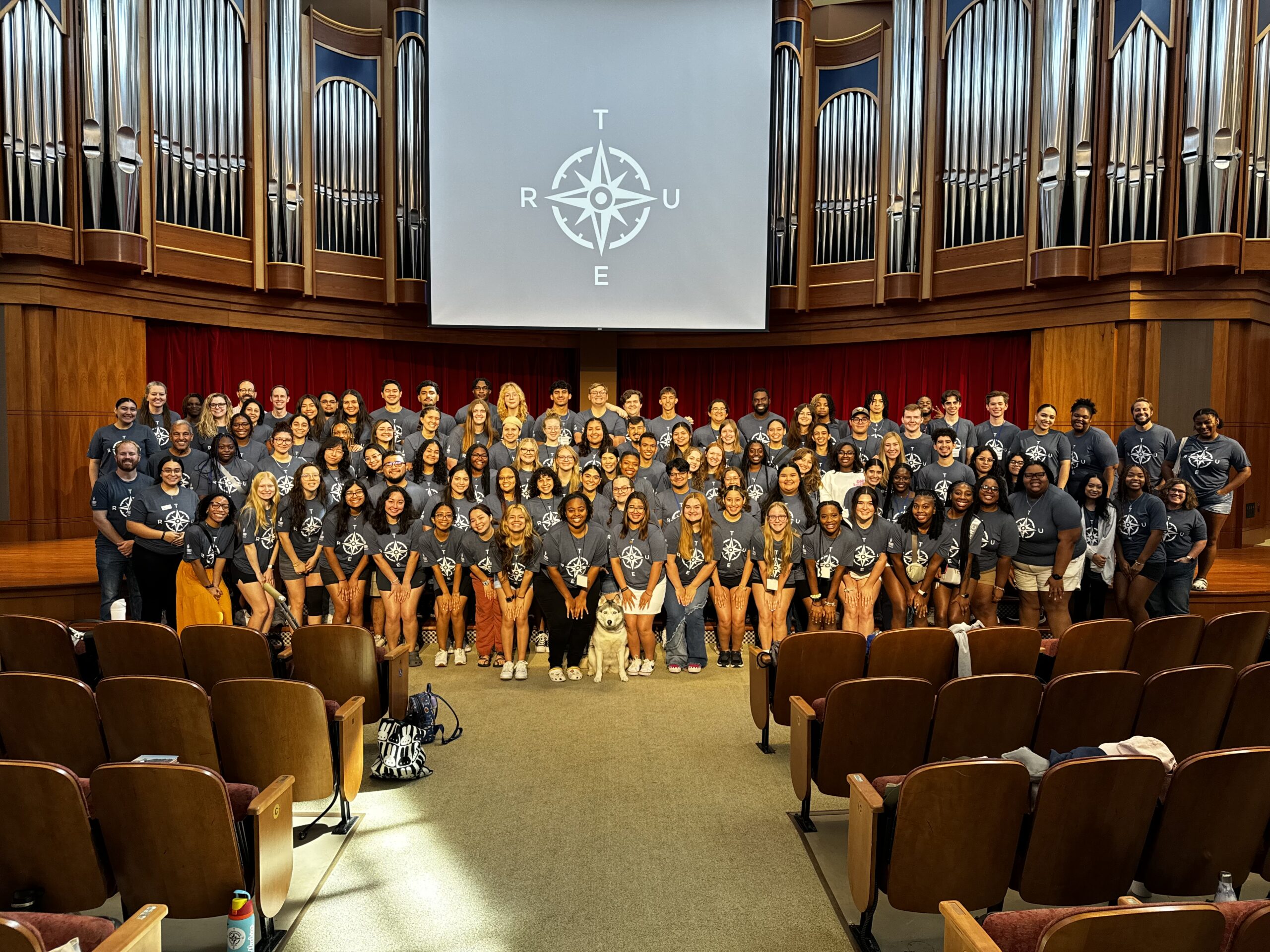
Ninety-seven students and more than a dozen faculty and staff at Houston Christian University participated in the Aug. 4–6 Kaleō student leadership and discipleship retreat. (HCU Photo)

Ninety-seven students and more than a dozen faculty and staff at Houston Christian University participated in the Aug. 4–6 Kaleō student leadership and discipleship retreat. The retreat brings together key student leaders to provide a biblical vision for their calling to leadership on campus and equips them with professional development in essential leadership skills. Xavier Maryland, campus pastor of Sugar Creek Baptist Church in Missouri City, preached in the four plenary sessions, and HCU leaders provided workshops on time management, handling difficult conversations constructively and building a leadership development pipeline. Student leaders also engaged in discipleship-focused small groups led by HCU faculty and staff throughout the retreat.

Clockwise from top left: Former Baylor Bears John Peers (gold—tennis men’s doubles for his native Australia); Brittney Griner (gold—team USA women’s basketball), Kristy Wallace (bronze—women’s basketball for her native Australia; and Avery Skinner (silver—U.S. women’s volleyball) took home medals from the Paris Olympics. (Baylor Photo via web)

With the 2024 Summer Olympics complete, Baylor Bears are coming home from Paris with a school-record four medals—earned by four different Olympians—continuing Baylor’s long history of Olympic excellence. Former Baylor men’s tennis standout John Peers got things started for Baylor, winning gold for his native Australia in men’s doubles. Appearing in his third Olympics, Peers won his second medal—having won bronze in mixed doubles in Tokyo—by sweeping through this year’s Olympic rounds. Also appearing in her third Olympics, Brittney Griner—who led the Baylor women’s basketball team to the 2012 national championship—won her third Olympic gold with women’s basketball—extending the Team USA run to eight straight golds. Griner joins Michael Johnson and Jeremy Wariner as the only Bears to win three or more Olympic gold medals. Former Baylor volleyball all-American Avery Skinner and the U.S. women’s volleyball team won silver, and Kristy Wallace and the Australian women’s basketball team won bronze. Baylor’s two gold medals were more than 166 of the 206 participating countries in this year’s Olympics, and their four total medals would have ranked in the top third of all countries for 2024. And that doesn’t include the 10 medals (five gold, three silver, two bronze) coached by Baylor track and field head coach Michael Ford in his role as Team USA’s men’s sprints/hurdles coach. All-time, Baylor athletes now have won 20 total medals (14 gold, four silver, and two bronze) dating back to 1904—more than 85 countries.

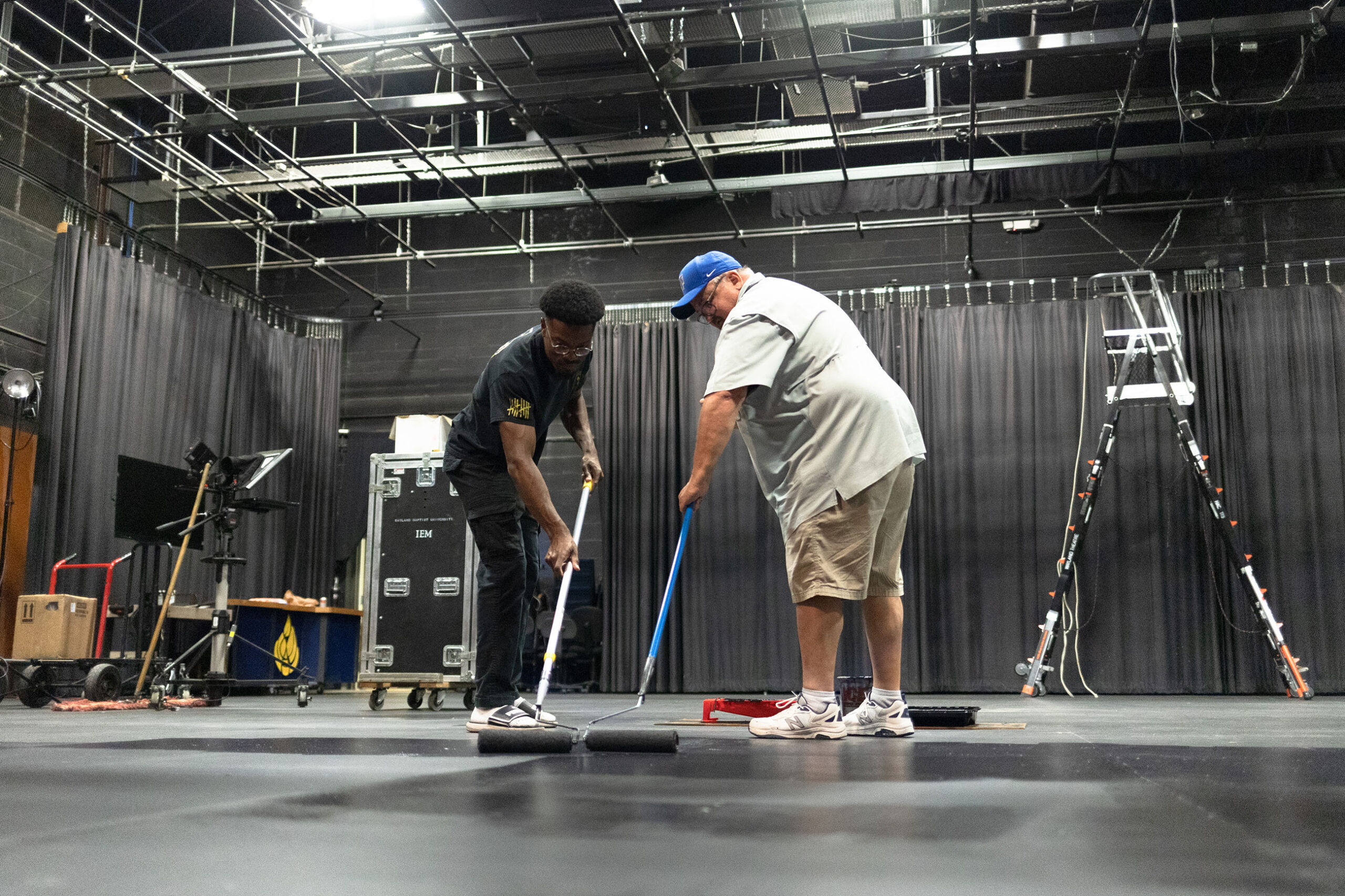
Ray Rush, assistant professor of communications and media studies, and Justin Porter, in-house producer and livestream coordinator, paint the Black Box studio in anticipation of the installation of new cameras and lights. (Wayland Photo)

A $1 million gift to update Wayland Baptist University’s multimedia facilities has moved the institution closer to reaching the $18 million goal of the Thrive Campaign. The gift from Ben and Bertha Mieth pushes Wayland’s Thrive Campaign past the $17 million mark, while benefiting students seeking careers in multimedia, sports production, media-enhanced teaching and media ministry. The Mieths serve as campaign chairs and previously provided a $2.5 million gift to update School of Nursing facilities and equipment at Wayland’s San Antonio campus. Ray Rush, assistant professor of communications and media studies, said the gift primarily will be used to update the production control area, what he describes as the “heart” of media production—video production, cinema production, audio livestreaming, podcasting, and social media content production. Rush also noted it will enhance the equipment in Harral Auditorium for chapel, based on equipment commonly used in churches for house-of-worship production.

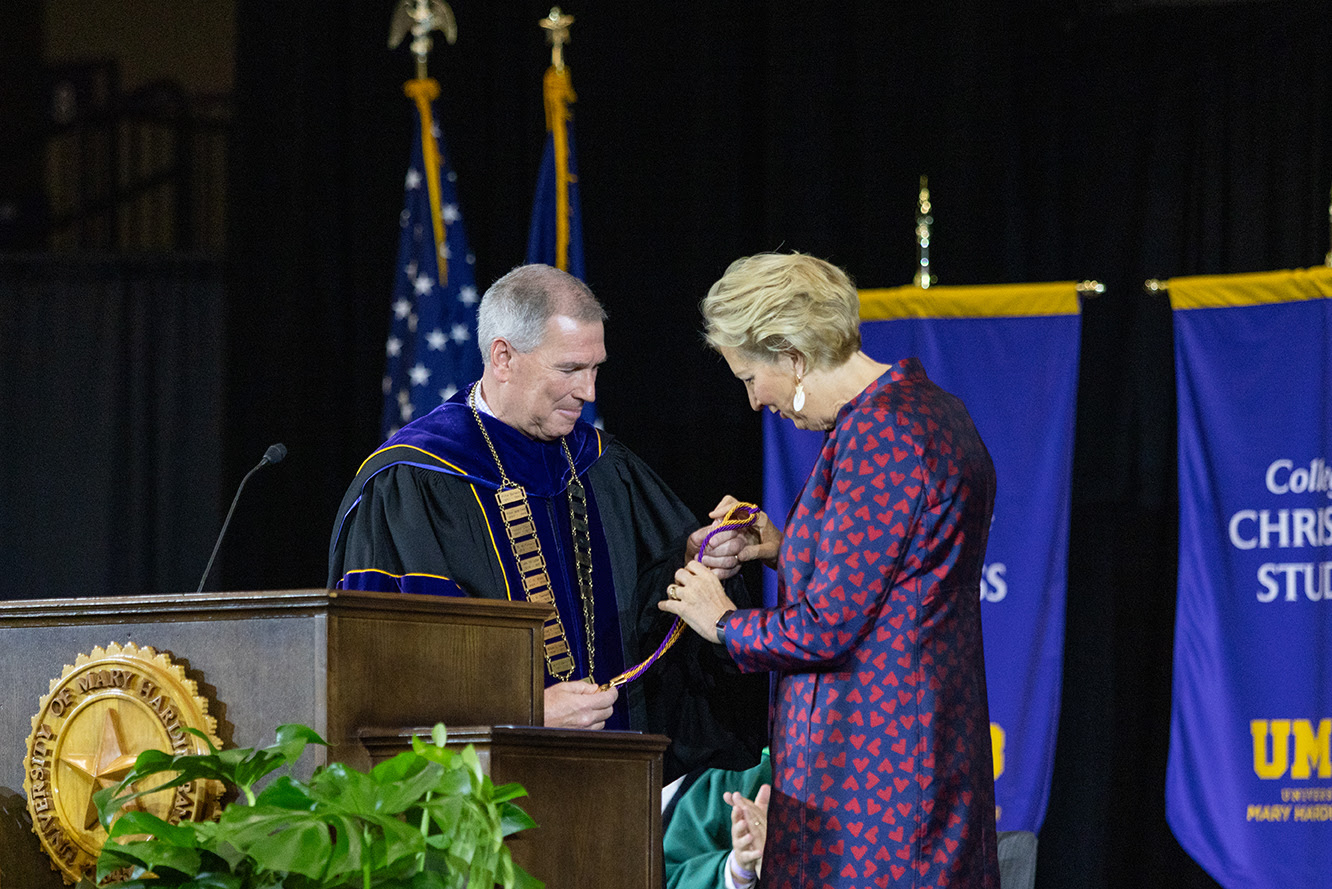
Randy O’Rear presents Shirley V. Hoogstra, J.D., 7th president of the Council for Christian Colleges & Universities, with a Distinguished Service Award for her many years of service to Christian higher education. (UMHB Photo)

The University of Mary Hardin-Baylor celebrated the beginning of the school year and welcomed approximately 700 new freshmen to campus during its 179th Fall Convocation service on Aug. 14. This year, more than 3,300 students aged 16 to 67 are attending classes at UMHB. UMHB President Randy O’Rear presented the guest speaker, Shirley V. Hoogstra, president of the Council for Christian Colleges & Universities, with a Distinguished Service Award for her many years of service to Christian higher education. Hoogstra spoke about God’s work in her life. She encouraged students to “keep both eyes open” as they begin their academic journey at UMHB.

Texans on Mission disaster relief volunteers completed their deployment after Hurricane Beryl on Aug. 15. The Texans on Mission crews and their ministry partners contributed more than 15,500 volunteer hours to the effort, completing 212 chainsaw jobs and logging 754 heavy-equipment hours. Seven remaining chainsaw jobs will be completed by local volunteers at First Baptist Church in Brazoria. Disaster relief teams prepared about 3,800 meals for volunteers and the public and completed more than 30 temporary roof jobs. Volunteers with the shower and laundry units made available more than 1,400 showers for volunteers and 25 for the public, and they washed and dried more than 827 loads of laundry for volunteers and more than 300 for the public. Texans on Mission distributed 178 Bibles, made about 400 ministry contacts, presented the gospel to 44 people, and recorded 14 professions of faith in Christ.

Tammi Outlaw and Gracie Carroll with Parlay. (HSU Photo via web)

Among the many visitors to the Hardin-Simmons University campus, service dogs often can be seen mixed in with students and faculty. While not permanent residents, these canine guests are there to learn and grow just like their student counterparts. One such dog, a gentle golden lab known as Parlay, spends her mornings tucked away in Sandefer Memorial with her handlers, Tammi Outlaw and Gracie Carroll. Parlay belongs to Canine Companions, an organization dedicated to the training and well-being of service dogs across the United States. She came to HSU when Outlaw and Carroll, of the HSU Registrar and Advising Offices, applied together for the chance to foster a puppy from Canine Companions. The goal of Canine Companions is to allow their service dogs to be fostered for 16 months by volunteers who will expose them to as many people, places and things as possible. By spending time on campus, Parlay is exposed to experiences that set her up to succeed once she moves on to proper training and, eventually, serving a person in need.

Three of the eight young adults the Baptist Joint Committee for Religious Liberty introduced as the 2024 class of BJC Fellows have Baylor University ties. Leigh Curl-Dove, a graduate of Baylor University and Duke Divinity School, is pastor of Seattle First Baptist Church in Seattle, Wash. Brittany Washington, a graduate of Baylor University and Texas Christian University, is a clinical counselor and outreach specialist for BIPOC mental health promotion at Harmony Community Development Corporation in Dallas. Sejana Yoo is a hospital chaplain at Baylor Scott & White Hospital in Temple. She is a graduate of Walden University and Baylor Scott & White Hospital’s Clinical Pastoral Education program, and she recently graduated with a Master of Divinity degree with a concentration in spiritual formation and discipleship from Baylor University’s Truett Theological Seminary. They join Margaret L. Conley of Cartersville, Ga.; Jamil Grimes and Wesley Poole King of Nashville, Tenn.; Margaret Hamm of Somerville, Mass.; and Lakia Marion of Knoxville, Tenn.

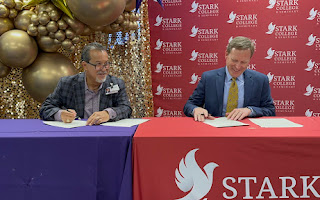
CHRISTUS Health Senior Vice President Dominic Dominguez and Stark College & Seminary President Tony Celelli sign the education affiliation agreement, Aug. 14. (Stark College & Seminary Photo)

Stark College & Seminary is launching a new Master of Divinity in Chaplaincy degree program, developed in collaboration with CHRISTUS Spohn Health System. The new program is designed to equip students with comprehensive theological education and hands-on clinical training, preparing them for impactful chaplain ministry. The partnership allows students to enroll simultaneously in CHRISTUS Spohn’s Clinical Pastoral Education program while completing a Master of Divinity degree at Stark College & Seminary. Through this dual enrollment, students graduate with two degrees: a Master of Arts in Ministry and a Master of Divinity, along with four units of Clinical Pastoral Education. To celebrate the new program, Stark and CHRISTUS Spohn hosted an educational affiliation agreement signing ceremony on Aug. 14, coinciding with the 50th-year celebration of Clinical Pastoral Education at CHRISTUS Spohn Health System.

This year’s winners of the Strickland-Davis Scholarship (from left to right): Rylie Burden, Howard Payne University; Sarah Harbison, Hardin-Simmons University; and Daniel Holcomb, Belmont University. (CLC Photo)

Texas Baptists’ Christian Life Commission announced this year’s winners of the Strickland-Davis Scholarship: Rylie Burden, a global political science student at Howard Payne University; Sarah Harbison, a psychology and social work student at Hardin-Simmons University; and Daniel Holcomb, who is pursuing a degree in faith and justice at Belmont University. The Strickland-Davis Scholarship seeks to provide financial assistance to students from Baptist General Convention of Texas-affiliated churches pursuing degrees in a field of study related to the commands of Micah 6:8—to do justice, love kindness and walk humbly with God. Each school year, three $1,000 scholarships are awarded to students. The CLC directors select the winners from students’ essays on how they will use their degree to live out Micah 6:8. The scholarship is named in memory of Phil Strickland, former director of the CLC, and in honor of Marilyn Davis, former congregational and commission specialist. Strickland was director for nearly a quarter of a century, leading the CLC to care for children, the marginalized and the overlooked. Davis worked with the CLC for 42 years, serving with four directors.