Online Sunday school class offers ‘easy-access Bible study’

RICHMOND, Va.—On a recent Sunday morning at First Baptist Church in Richmond, Va., conversation was lively as members of a Bible study class explored the day's Scripture passage from the Gospel of Luke.

But of the 15 people who responded to comments from the class's facilitator, only about half actually were in the room. The rest were scattered across the country, viewing a live stream on the Internet and offering opinions by e-mail.

David Powers, communications minister at First Baptist Church in Richmond, Va., checks the control panel before live streaming a Bible study class. (PHOTO/Religious Herald)

The 3-month-old webcast Sunday school class is the church's first foray into real-time, Internet-based Bible studies, although First Baptist has live streamed its two Sunday morning worship services more than three years.

"We recognize that some people are interested in exploring spiritual matters but will not or cannot come into this or any other church building," said David Powers, the church's associate pastor for communications. "So, a big part of what we're trying to do is provide an opportunity and channel for that. We want to provide an easy-access Bible study opportunity."

The class also offers a "nonthreatening" environment to engage Bible study, said Steve Booth, associate pastor of Christian formation at First Baptist.

"It's a safe place for people to receive and ask honest questions emerging from dialogue around a biblical text," Booth said. "With the guidance of a thoughtful and sensitive facilitator, the student is encouraged to question and reflect theologically on how one moves from awareness of God to belief in Christ to a living faith evidenced in behavior and choices."

On average, Powers said, about 20 people participate in the class via the Internet, while another eight attend in person, joining the facilitator in a studio equipped with cameras, microphones and computers.

"We've had folks from as far away as Tulsa (Okla.) and all around Richmond and in-between," said Mike Harton, a retired Christian educator who is one of the facilitators.

Harton and Phillis Rodgerson Pleasants, a former church history professor who also facilitates the class, craft each week's lesson from lectionary readings on which First Baptist Pastor Jim Somerville preaches the same Sunday. Harton and Rodgerson Pleasants—both members of First Baptist—enhance their teaching with an iPad, whose images are transmitted wirelessly to a wide screen for those in the studio and streamed to the Internet audience.

"What's excited me about this project is that First Baptist is going to where people are rather than only focusing on bringing people into the building," Rodgerson Pleasants said.

Class facilitators Phyllis Rodgerson Pleasants and Mike Harton review class notes before the live webcast begins. (PHOTO/Religious Herald)

First Baptist's Internet class is a natural evolution in the church's electronic media experience, Powers said. The congregation began broadcasting its worship services on a local television affiliate in 1986, began posting podcasts and video clips of sermons and music on its website in 2007 and started live streaming worship services in 2008.

About a year ago, Somerville initiated what he called "microchurch," encouraging people to form faith communities in homes and apartments using the televised and webcast worship services, as well as other resources posted on First Baptist's website.

"The Web class fits in well with the idea of microchurch," Harton said.

But despite extensive media experience, Powers acknowledged there's been a big learning curve for him and his crew of trained volunteers, all members of First Baptist.

"Part of the challenge is that we can't find anyone else who's doing this kind of thing, so we don't have anybody's technology or pedagogy to pattern," he said. "We've been working at it for three months and still have a long way to go. All of this is new—not only for the volunteers but also for us paid staff and for all the outside experts and vendors we've talked with.

"We're all trying to figure it out as we go along—and not only on the tech side but also the content side. We want to teach and lead in such a way that Web participants are engaged and actually learn something."

The next step—live audio/video interaction capability for Web participants, Powers said.

"It would work like a video chat or a Web-conference," he said. "We still have some technical issues to resolve, but we believe we can do it."
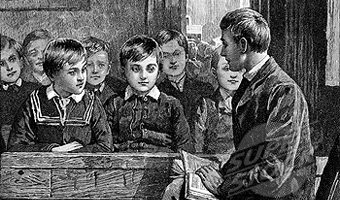


Documentary claims age-graded Sunday school harms families

A controversial new documentary movie contends age-graded Sunday school and youth ministry are doing more harm than good.

In Divided, young filmmaker Philip Leclerc sets out to discover why so many people of his generation are leaving the church. The answer, he says, is the "hipster Christianity" approach to youth ministry, centering on fun and games with Bible study tacked on, and the notion that youth pastors are more qualified to train children than their parents.

{youtube}ZaUR2aEknGM{/youtube}

Leclerc acknowledges grouping kids and age and developmental stages makes sense on the surface. In the Bible, however, parents are given the responsibility for religious instruction of their children.

The modern idea of age-graded Sunday school, youth ministry and children's church came from somewhere else. When it started in the 1800s, Sunday school was intended for poor children without Christian parents. In most American churches today, Leclerc insists, Christian fathers relinquish their leadership to programs based on secular educational theories instead of the teaching of Scripture.

"The issue is to start with we have to get man to respond to God," Voddie Baucham, a Southern Baptist pastor, author and conference speaker, says in the film. "That's our goal. Therefore whatever makes man respond is appropriate. That's the wrong starting point. …

"When it comes to being innovative and trying to reach the culture and doing things that are not found in the Scripture, trying to worship God in ways that God has not told us to worship him, then our innovation becomes dangerous."

Baucham advocates the "family-integrated" church, a model popular with families who home school. Instead of church programs that pull families apart with parents and kids arriving at church together then going their separate ways, the family-integrated church does not offer a separate Sunday school or children's church.

Families sit together in worship and fathers are exhorted and equipped to lead their families in daily worship and to train their children in the way of the Lord.

Baucham asserts there is a clear pattern in both the Old and New Testaments of young people being in corporate worship with their parents, and parents—especially fathers—have the responsibility of instructing their own children. Age-segregated programming used in most churches, he insists, goes against Scripture and does not work.

Divided doesn't claim the family-integrated model is for everyone, but it questions if statistics showing that 85 percent of students in a typical youth group fall away within three years of graduation might fulfill prophecy by early Sunday school opponents 200 years ago that the movement eventually would destroy the family.

"Parents are the only ones who have the proper tools," Baucham says in the movie. "For example, children need nurture, but they also need correction. That kind of biblical correction falls within the purview and responsibility of the parent. The church does not wield the rod in the child's life. Only the parent does. And the Bible says that that is a primary tool in the correction and shaping of children."

The film, produced in association with The National Center for Family-Integrated Churches, comes on the heels of a book by the center's director, Scott Brown, which describes modern youth ministry as a "50-year-old failed experiment" that is "destroying the younger generation, fragmenting the family and dividing the church."

Endorsements for A Weed in the Church include Paige Patterson, president of Southwestern Baptist Theological Seminary in Fort Worth.

"As I have watched what has happened in most of our churches, I have become convinced that Scott Brown is far more right than wrong on this matter," Patterson wrote.

"I, for one, am extraordinarily grateful that he has gone to the trouble to write this book and articulate the position. May God grant that many will listen to it before our families are totally lost and with them the churches also. Our families simply must have some time when they worship and study together."


Sunday school an evolving institution

Sunday school plays such an important role in Baptist life a typical churchgoer might be tempted to think it always has been around. In fact, it is a relatively modern and evolving invention.

While some debate its origins, most credit a British printer named Robert Raikes as founder of the modern Sunday school movement. An Anglican layman, Raikes was concerned about children in slums he saw drifting into a life of crime. Since many children were forced to work in factories six days a week, he and a local pastor decided to open a school for them on Sunday in July 1780.

While Raikes' aim was to teach reading, writing and arithmetic, he used the Bible as a textbook, introducing a spiritual component to the curriculum. When Raikes died in 1811, an estimated 400,000 people attended Sunday schools in Great Britain. The schools served as a model for Britain's public school system. John Wesley described Raikes' Sunday schools as "one of the noblest specimens of charity … in England since William the Conqueror."

The idea spread to other nations. In 1785, a Sunday school was begun by William Elliott, a Methodist layman, in Accomac County, Va. In 1797, Second Baptist Church in Baltimore—now called Second and Fourth Baptist Church—began a Sunday school reported to be one of the first in the United States to use the Bible as its only textbook and all-volunteer teachers.

Like any innovation, the Sunday school movement had its detractors. In Virginia, organizers were criticized because they offered instruction to black slaves. In 1830, a Baptist association in Illinois passed a resolution declaring its lack of fellowship with Sunday schools, as well as foreign and domestic mission and Bible societies.

Opposition to missionary societies and Sunday schools prompted some Calvinist Baptists in the early 1800s to separate into their own Primitive Baptist tradition. Other denominations divided as well. But in time, most denominations came to embrace Sunday school.

Luther Rice, a primary force behind the founding of the General Missionary Convention of the Baptist Denomination in the United States for Foreign Missions—called the Triennial Convention because it met every three years—joined with others to form the Baptist General Tract Society in 1824. Today, the ministry is known as Judson Press, publishing arm of the 1.5 million-member American Baptist Churches USA.

After Baptists in the South separated from the Triennial Convention's missionary-sending program in 1845, many continued to use study materials from the northern American Baptist Publication Society. The Southern Baptist Convention formed its own Sunday School Board, now known as LifeWay Christian Resources, in 1891, completing the Northern/Southern Baptist schism.

In 1920, Arthur Flake was named head of the Sunday School Board's department of Sunday school administration. In 1923, he wrote the book Building a Standard Sunday School containing five points that came to be known as Flake's Formula. Flake's plan—"(1) know possibilities; (2) enlarge organization; (3) provide place; (4) train workers; and (5) go after them"—succeeded in growing Sunday school enrollment from around 1 million in 1920 to nearly 6 million when Flake died in 1952.

Sunday school's golden age lasted until the 1960s, when many denominations began to see enrollments decline. Today, LifeWay Christian Resources reports more than 2 million Sunday school classes in the United States.


Rwandan refugees find new home at Hardin-Simmons

ABILENE—Venantie Uwishyaka and Evariste Musonera took the long way around to meet one another.

They did not know each other in their native Rwanda, but both fled their homeland following the genocide in 1994. Years later, they were introduced in the hallways of Logsdon School of Theology at Hardin-Simmons University.

Evariste Musonera, standing in front of the chapel at Logsdon School of Theology at Hardin-Simmons University, fled Rwanda to escape genocide in 1994.

The two Rwandans may not have known each other, but their stories—like those of thousands of others—are similar.

"We looked for refuge because the war was very, very bad," Musonera said.

He and his family found sanctuary through the U.S. Committee for Refugees and Immigrants, which resettled them in Albany, N.Y., in June 2008. When winter came, the weather was too cold that far north, so Musonera accepted the advice of a friend—another Rwandan refugee—to move to Abilene.

His friend in Abilene had been resettled through the International Rescue Committee, a nonprofit organization that opened a branch office in Abilene in 2003. Since then, the IRC has resettled about 1,000 refugees from all over the world in Abilene.

Musonera, now 52, didn't have to think twice about the invitation to move south, where the weather was much more like what he had known back home. In 2009, he packed up his family and moved to Abilene.

He and his family attend Pioneer Drive Baptist Church in Abilene, and the congregation helped them secure a Habitat for Humanity home, said Nathan Adams, missions minister at the church.

In time, Musonera met Uwishyaka, whose memories of the 1994 genocide are just as vivid as his.

"I lost 28 family members during the genocide," she said. Those included one brother, one sister, aunts, uncles, cousins, and close friends. "It was terrible."

Uwishyaka, 47, came to Hardin-Simmons as an international student, largely because of her association with Baptist missionaries Stan and Marlene Lee, whose bravery still is revered in Rwanda because they chose to remain in the country, even after genocide began.

Venantie Uwishyaka demonstrates an African musical instrument called an "inanga" at her home in Abilene.

Uwishyaka's husband is a Baptist minister who still lives in Rwanda while his wife finishes her degree at Hardin-Simmons. Because of the Lees' inspiration, Uwishyaka chose to attend a Baptist university far from home so that she, too, can serve.

"God called me during the genocide," she said. "They (the Lees) really inspired me and encouraged me."

Uwishyaka has done so well in school that she was named to the dean's list for the spring 2011 semester. She is deeply involved at South Side Baptist Church in Abilene—a congregation that became so involved in ministry to refugees it launched International Evangelical Church. The young congregation, which meets regularly at South Side, has about 160 members, most of whom are refugees. Some refugees attend services and participate in activities offered by both churches.

The response and attitude displayed by Abilene churches helped sway the International Rescue Committee to open a satellite office in Abilene eight years ago.

The IRC's office in Dallas surveyed several Texas cities to determine the best fit for a second Texas location. Abilene was chosen for several reasons, including support offered from its three church-affiliated universities and its congregations.

Baptists in Abilene have been at the forefront of assisting refugees, providing a range of services such as hosting English as Second Language and citizenship classes, helping set up an apartment, and mentoring.

Trinity Baptist Church in Abilene hosts New Song ministry, of which Uwish-yaka, her daughters and niece are members. The 35-member group sings and performs liturgical dance and dramatic skits. They frequently are asked to sing for weddings, funerals and other religious occasions.

"The main thing is evangelism," Uwish-yaka said.

"We share Christ through song and the word of God."

New Song was founded by yet another refugee, Romulus Rushisha, from the Democratic Republic of the Congo. The Rushisha family of eight was resettled in Maine but later moved to Abilene for the same reason as Musonera—it was too cold up north.

Uwishyaka expects to graduate with a bachelor's degree from Hardin-Simmons in December 2012. Her goal is to return to Rwanda and start a missionary training center.

Musonera, who was a principal at a technical high school in Rwanda, earned an associate degree from the Abilene campus of Cisco College last spring and now is working on a bachelor's degree in ministry at Hardin-Simmons. He hopes eventually to earn a master's degree in ministry.

He and his wife, Esperance, both work at Abilene State Supported Living Center, and he also volunteers at Love & Care Ministries, which serves Abilene's homeless and needy.

"I work and I study full time," he said.

In addition to her school work, Uwishyaka works part time at Hardin-Simmons and does volunteer work.

She and Musonera both came from backgrounds that could have left them devastated and questioning God's love. Instead, they both relied on their faith to survive, and now that they are free to share their stories and their faith, that's exactly what they are doing.

"I am very grateful to be here," Musonera said. "And I praise God for what he has done in my life."

–Loretta Fulton is a freelance writer in Abilene. She previously was the religion writer for the Abilene Reporter-News.


Christian presence needed in violent places, former missionary says

SUNNYVALE—Peacemaking means waging spiritual warfare against evil, David Balyeat believes. So, if Christians want to stop violence along the Texas/Mexico border, peacemaking prayer warriors need to report for duty on the battlefield, he insists.

When he travels internationally, David Balyeat of No Mas Violencia displays a portable "More than Conquerors" museum of sports collectibles. His collection fills more than 12 large trunks with soccer jerseys, soccer balls and other sports memorabilia from around the world. By displaying the jersey of a star player from a particular area's favorite team, Balyeat initiates conversations that allow him to share his faith and biblical peacemaking principles.

"The reason violence is there is that we don't go. When you and I say that we—as Christians—won't go, that's where Satan sets up camp," said Balyeat, president of No Mas Violencia International, a nonprofit ministry based in Sunnyvale.

He understands the concerns of mission leaders and pastors along the Rio Grande who have urged caution in sending large volunteer groups to the areas of northern Mexico where gangs and drug cartels battle for control over territory.

As a veteran missionary, associate pastor of Shiloh Terrace Baptist Church in Dallas and frequent mission team leader, he agrees upstate volunteers should develop relationships with church leaders along the border and follow their direction.

However, he fears the consequences if Christians who don't live along the Rio Grande abandon the area altogether. While he recognizes God has not called and equipped everyone to do it, he remains convinced some followers of Christ need to be the presence of Christ in dark places.

"Our task is to set the captives free. The person who is without Christ cannot fight Satan and win. We must fight for them. Our battle is not against flesh and blood but against the powers of darkness," he said.

{youtube}svub1osXQdM{/youtube}

Balyeat hopes to see the No Mas Violencia movement he started in Argentina spread along the Texas/ Mexico border, just as it has to other parts of Latin America.

The Baptist General Convention of Texas has endorsed No Mas Violencia and sponsored training events in several border cities to teach its principles to church leaders.

Balyeat grew up in Argentina, where his parents served as missionaries. He returned in 1996, leaving his position as soccer coach at Dallas Baptist University to serve with the Southern Baptist Convention's International Mission Board as a sports evangelist.

"Soccer is the national religion of Argentina," he said.

And in the late 1990s, holy war was raging in the nation's soccer stadiums as fans of rival teams engaged in brutal—often deadly—acts of violence.

"I knew God could do something about the violence, but only if we would. God is all-powerful, but he chooses to express himself through his people," Balyeat said.

In 1997, he began to lead Christians to go to the soccer games to pray for peace. The Christian peacemaking movement became public when he received permission for young people wearing the jerseys of rival teams to go on the field at halftime and display a huge banner that read: "No More Violence—A Message from God."

Soon, Christians in black T-shirts bearing that message became increasingly visible at major soccer games.

"Baptists began to have a platform we'd never had before," Balyeat said, recalling the phone call he received in November 1999 from the office of Argentina's president requesting a meeting. "After that, it was like we had the keys to the country."

Balyeat worked with teachers to develop an anti-violence public school curriculum that subsequently was approved by the nation's Ministry of Education.

"The material deals with issues of identify, self-esteem and purpose, and it offers an alternative way of living. In the soccer culture there, it's just an accepted way of behaving to hate any person associated with the other team," he explained.

Baptist volunteers enter the schools to teach the eight-week course. Most volunteers are young people in their late teens or early 20s—slightly older peers of the students, not experts who claim to have all the answers, Balyeat stressed.

During the last couple of lessons, students are challenged to take a pledge to become "agents of change."

That commitment includes agreeing to volunteer to serve the community—collecting books for a school library, repairing school facilities or other projects—working alongside the young instructors who taught them in the classroom, he explained.

"Essentially, it's discipleship that takes place prior to conversion. Some call it pre-evangelism," Balyeat said.

"The older students who volunteer are living testimonies, and they build relationships. As they work together, they can say: 'It's what believers do. I am living it. I invite you to live it with me.'"

That does not mean No Mas Violencia necessarily results in dramatic church growth, he noted, although some students subsequently have become Christians after completing the program.

"Is our goal to fill the church with the community or to fill the community with the church?" Balyeat asked.

Community transformation often occurs slowly, he acknowledged. No Mas Violencia has not put an end to all soccer-related violence in Argentina—nor has it completely stopped violence in El Salvador, Uruguay, Paraguay and Venezuela, where the movement has spread.

But individual lives have been transformed, volatile situations have been calmed and Christians have been recognized as people of peace, Balyeat said. And he remains convinced the same thing could occur along the Rio Grande.

"When we go in as believers with a kingdom purpose, the Holy Spirit invades those places, and change happens," Balyeat said.


Matthew West shares life stories through songs

NASHVILLE, Tenn.—For his album, The Story of Your Life, singer/songwriter Matthew West took an unusual approach to find inspiration. He posted a note on his website asking people to share their life stories and said a select few would be turned into songs.

For his album, The Story of Your Life, singer/songwriter Matthew West drew inspiration from the personal stories from more than 10,000 people around the world who shared their greatest joys and most heart-wrenching moments.

West never expected to receive more than 10,000 responses from people in 20 countries who provided detailed accounts of their greatest joys and most heart-wrenching moments.

"I've always been sort of a storyteller at heart," West said. "Up until now, I've written songs telling the story of my life and talking about what I've been through—my experiences, faith and family.

"As I was getting ready to work on a new album, I thought it might be interesting to see what would happen if I turned the microphone around and created songs based on other people's experiences. That was the initial plot behind it, but what wound up happening from that one little idea was an experience much bigger than I originally anticipated."

West was deeply affected by the responses and took the time to read each one. 

"The mountaintop experiences and the joys that we have, those are all defining moments in our lives," West said. "But the stories that were most often shared were the weakest moments. People shared the greatest trials they've ever faced—the illness that they suffered, the loved one that they lost, the desire to have a child, and many people shared about abuse or addictions they were dealing with.

"This project has changed me and challenged me to look at the world in a different way. These people were trusting me to be their messenger. I was up late into the night for several months just reading about people's lives, and I felt like I had been given a window into their world.

"These songs will now go on to hopefully encourage other people who might be going through similar struggles. My desire is that people will realize that their life is telling a story, and by allowing God to work and mend the broken pieces, it can be a beautiful story that impacts the world around them."

In addition to serving as the inspiration for the songs on the album, West also was able to create a devotional book, The Story of Your Life: Inspiring Stories of God at Work in People Just Like You

This month, West is releasing another book and companion DVD, What's Your Story?  This book and interactive guide further illustrate the impact of God's hope and redemption working throughout each life story.

"I want to encourage people to realize that God hasn't stopped working in their lives," West said. "I think a lot of times, we get so defeated in our lives—thinking we've made too many mistakes or that our lives are too bruised and broken that we can't have any impact in the world.

"The truth is that no matter how many mistakes you've made or trials you've faced, it's the brokenness of our lives that God uses to give us something to say to the world. I hope it's an empowering message that people can cling to during difficult times, when they realize that God has something to say to us and through us."


Israel inaugurates Gospel Trail so visitors can follow Jesus’ steps

GALILEE, Israel (RNS)—Perched on Tel Kinrot, a hill above the Sea of Galilee, Winston Mah turned his face toward the warm sun and took in the tranquil view before him.

To his right, the Christian pilgrim from San Diego saw banana groves at the edge of the calm fresh-water lake. To his left, on the opposite hill, rose the majestic Mount of Beatitudes at Tabga, where, according to Christian tradition, Jesus delivered his Sermon on the Mount.

Pilgrims hike along the Gospel Trail in Israel, a 39-mile network of trails and paths that trace Jesus' steps. (RNS PHOTO/Michele Chabin)

"This is a unique experience," Mah said, gazing at a lone fisherman on the water's edge. "This is the view Jesus must have seen, the path he might have walked, the water he walked on. It's a privilege to walk in his footsteps."

It's one thing to read about biblical sites while seated in a church pew back home, Mah said. But "it's another thing entirely to be in the actual place, just as it's described in the Bible," he said, his voice full of wonder.

Mah and his church group were among the first hikers on the newly inaugurated Gospel Trail, 39 miles of integrated paths leading from Mount Precipice on the southern outskirts of Nazareth to the site of ancient Capernaum on the shores of the Sea of Galilee.

Developed by the Israeli Ministry of Tourism and the Jewish National Fund, the project has the enthusiastic support of local Christian leaders, whose flocks depend on the tourist trade.

"It is our hope that this trail will bring many more Christian pilgrims to the Galilee, where Jesus lived and had his ministry," said Boutros Muallem, the Melkite archbishop emeritus of Galilee, who attended the trail's festive opening aboard a boat on the Sea of Galilee.

About 150,000 Christian Arabs live in Israel, the vast majority of them in the Galilee region, in the north of the country. As elsewhere in the Middle East, many Holy Land Christians have emigrated in search of economic stability and peace.

Now that the political situation is relatively quiet, and a record number of tourists are flooding into Israel and the Palestinian-ruled territories, local Christians are benefiting and emigration is slowing, according to government statistics.

Two out of three tourists who visit Israel are Christian, according to the tourism ministry. Leading a group of journalists down a section of the trail on horseback, Tourism Minister Stas Misezhnikov said the Gospel Trail "represents a major means for maximizing the tourist potential" of the Sea of Galilee region.

"It will encourage economic growth in the north through the creation of new jobs," he said, "and an increase in income from the visitors."

The Gospel Trail isn't the first Christian-oriented hiking/cycling trail in the region. The 40-mile Jesus Trail begins in the city of Nazareth, the home of Mary and Joseph, and ends at the Sea of Galilee.

Although the trails overlap in many areas, the Jesus Trail winds its way through more Christian, Muslim and Jewish population centers and already has an infrastructure.

In the coming months, the government hopes tour operators will provide itineraries and transportation to and from various sites along the Gospel Trail, and local business owners will provide everything from accommodations to bathrooms.

In the meantime, visitors need to make their own arrangements or request special arrangements from a tour operator.

Both trails capitalize on the beauty of the Galilee region. One of the only truly green places in Israel, the hills are dotted with towns and villages, cows, sheep and olive trees.

At Tel Kinrot, which was part of the major trade route between ancient Egypt and Syria on the northwestern shore of the Sea of Galilee, an Italian pilgrim named Stefano gazed at the archaeological ruins.

"I'm very happy to be on this trail, to see the sites where Jesus lived and the archaeological sites," the 26-year-old said. "It helps me to thank God for what he does in my life."


Connally tapped to receive inaugural Global Impact Award

Virginia Connally of Abilene will recieve Mission to Unreached Peoples' inaugural Global Impact Award.

The evangelical mission-sending agency based in Plano will confer the award during a vision and award banquet Jan. 19 at the Plano Marriott Hotel.

The award is given to someone who has enhanced the spread of the gospel, especially among people groups who have little or no access to it.

Connally is known for her lifetime support for mission efforts, missionaries and their children, and international students. Her financial investments have greatly impacted global mission efforts.

"Dr. Connally's global impact for missions has included many decades of prayer, encouragement, vision and support," said Kent Parks, president and chief executive officer of Mission to Unreached Peoples. "She and her late husband, Ed Connally, donated the full salary of missionaries for years beginning in the 1950s. She has consistently championed missions."

Reservations for the banquet are being received until Jan. 9. Contact Sarah Hilkemann at sch@prontopost.org.


Some see Crystal Cathedral’s purchase by Catholic diocese as calculated risk

WASHINGTON (RNS)—Even by the depressed metrics of Southern California's real estate market, most observers believe the Roman Catholic Diocese of Orange negotiated a pretty sweet deal when it purchased the iconic Crystal Cathedral, the longtime pulpit of the Robert Schuller and backdrop to his popular Hour of Power television broadcasts.

Not only did Catholics get a national landmark designed by the renowned architect Philip Johnson, but Bishop Tod D. Brown wasn't even the highest bidder. Schuller and the board of the Protestant megachurch opted to take Brown's $57.5 million offer over a $59 million pitch from Chapman Univer-sity because the bishop would keep the campus as a place of worship.

The Roman Catholic Diocese of Orange, Calif., has purchased the iconic Crystal Cathedral for $57.5 million, but it faces a major challenge in retrofitting the building for use as a Catholic cathedral. (?RNS PHOTO/Arnold C. Buchanan-Hermit via Wikimedia Commons)

The diocese's top lawyer, Tim Busch, called the deal "a true miracle." But divine intervention—or at least "an exceptionally gifted architect," as one anxious churchman put it—now will be needed to transform this temple of suburban evangelicalism into a Catholic sanctuary that will make the cathedral a real bargain and not a liturgical white elephant.

That won't be an easy task, given the disparity between traditional Catholic worship requirements and modern Protestant sensibilities.

The challenge of redesigning the Crystal Cathedral's interior was central to the cost-benefit analysis driving the Orange diocese's calculations throughout the process, according to church officials familiar with the deal.

In fact, Brown initially was cool to the idea of buying the Crystal Cathedral, which was $50 million in debt when it filed for bankruptcy last year. Brown, who wanted to leave a new cathedral as part of his legacy, gradually was won over by aides and business advisers.

Some of the bishop's hesitation stemmed from the fact that while the 2,800-seat Crystal Cathedral was a relative bargain, the diocese does not have much cash on hand. The diocese will need to launch a major fund-raising effort that could total $100 million and would entail the sale of other property in order to cover the $57.5 million price tag, as well as several million more that will be needed for renovations and hefty maintenance costs.

But the opportunity was too good to ignore. For one thing, the Crystal Cathedral's price tag was a lot less than it would have cost to build a new cathedral from the ground up.

The Diocese of Orange—the 10th largest in the nation, with 1.2 million Catholics—was facing construction costs approaching $200 million on a lot half the size of the Crystal Cathedral's 31-acre campus.

And for those who may wince at the assertive modernism of the Crystal Cathedral's glass design, the reality is that any new cathedral likely would have followed a similar style. Just look up the coast to Oakland's glass-and-steel Cathedral of Christ the Light, which was dedicated in 2008.

Similarly, lingering concerns over the cost and size of the Cathedral of Our Lady of the Angels in Los Angeles—nicknamed the "Taj Mahony" after its visionary, retired Los Angeles Cardinal Roger Mahony—also played into the decision to make the Crystal Cathedral deal work.

"This was a no-brainer from a business perspective," said a churchman familiar with the purchase, who declined to be named as negotiations continued.

But even after the deal was sealed, there was another hurdle looming. The Vatican had to sign off on the deal, and it was far from a foregone conclusion.

Just as the deal was coming together, it was revealed Pope Benedict XVI was setting up a new Vatican office to vet the construction or purchase of major new churches around the world.

That posed a special challenge because the goal of the commission is to ensure that new cathedrals, unlike some recent designs, are not "buildings composed of cement cubes, glass boxes, crazy shapes and confused spaces (that) remind people of anything but the mystery and sacredness of a church," as Vatican watcher Andrea Tornielli put it in his story on the new body.

To some, the Crystal Cathedral, which was completed in 1980, would fit that unflattering description.

But after a series of exchanges with the Orange diocese, Rome finally gave its approval—two weeks after Brown had won the bidding war.

Now comes the hard part—transforming the Crystal Cathedral from a theater-like atrium complete with Jumbotron screens into a Catholic cathedral where priests will celebrate Mass with incense and reverence.

Brown already said he has "no intention to change the exterior" of the famous building, but he also conceded it would require "critical design upgrades" inside to make it "suitable for a Catholic place of worship."

In a blog post at U.S. Catholic magazine, journalist Megan Sweas questioned whether any renovation could sufficiently sever the cathedral's ties to Schuller's feel-good, made-for-television approach to ministry.

"The space could benefit from a sprucing up, but I hope the diocese goes further than that," Sweas wrote, adding: "How can the Catholic Church make the space its own while respecting what came before?"


Baylor athletics scores big wins, takes top honors

WACO—Baylor University's athletics program ended 2011 with unprecedented success—the football team's first bowl victory since 1992, the school's first Heisman Trophy to quarterback Robert Griffin III and undefeated records for both the men's and women's basketball teams.

Robert Griffin III won the 77th Heisman Memorial Trophy Award—the first Heisman recipient from Baylor University. (Baylor Photo)

The Baylor Bears defeated the Washington Huskies 67-56 in the Valero Alamo Bowl in San Antonio. The Bears' victory marked the highest-scoring regulation bowl game in history and the second-highest scoring bowl game ever.

Less than three weeks earlier, Griffin won the Heisman Trophy, becoming the 77th recipient of college sports' highest award. Heisman voters selected Griffin over Stanford quarterback Andrew Luck, Wisconsin running back Montee Ball, Louisiana State cornerback Tyrann Mathieu and Alabama running back Trent Richardson.

RG3, as Baylor fans know him, wore a new suit and brightly colored Superman socks for the occasion at Best Buy Theater in Times Square.

During the regular season, Griffin passed for a school-record 3,998 yards and 36 touchdowns with just six interceptions. In addition to the Heisman, he also received the Davey O'Brien Award and was named the Big 12 Offensive Player of the Year.

As of Jan. 5, both the Lady Bears women's basketball team—ranked No. 1 nationally—and the Baylor men's basketball team, ranked No. 4 nationally in the Associated Press poll, each held 14-0 records.


Cowboy pastor disciples leaders by using the ‘Absolute Basics’

JOURDANTON—Pastor Pete Pawelek had a problem many pastors face—not enough leaders. The scale of his problem may have been a little more severe than most, however.

Pawelek had been asked to help start a Western-heritage church in Atascosa County, the place he had grown up. He was looking forward to starting seminary in the fall, but after his college graduation in May, he headed home.

Pete Pawelek, pastor of Cowboy Fellowship of Atascosa County, wrote The Absolute Basics of Christianity as a simple-but-challenging discipleship program to develop leaders at his church. (PHOTO/George Henson)

He didn't make it to seminary that fall. Cowboy Fellowship of Atascosa County grew from a dozen families to more than 350 people by July, and he was asked to stay on. In less than 18 months, the congregation had grown to more than 600 people.

"The biggest problem we had early on was discipleship. About half my core team of leaders had never been involved in church. They went at Christmas. They went at Easter. But they were casual Christians, if you will," Pawelek said.

"I probably only had about half a dozen people in the church who had ever been a Sunday school teacher or a deacon, or had risen to any level of spiritual maturity where they had been in a leadership role in a church.

"Here we have this growing ministry with all these baby Christians, a lot of them saved and baptized right here in our church, and they don't know anything. You ask them to find the Book of Psalms, and they can't do it."

To alleviate the problem, he and the core team went to a Christian bookstore seeking suitable discipleship material but couldn't find what they needed.

"Everything either was too simple, or it was too hard," Pawelek said. "Everything either took five minutes a day to do or 50 minutes a day to do. Everything was just so easy you didn't really get anything out of it, or it was so hard the people were intimidated by it and wouldn't do it."

The church tried some of the easier materials, but it wasn't as challenging as they desired. Then, some of the harder materials were tried and "the ones who stuck with it got a lot out of it, but the problem was that most wouldn't stick with it," he said.

With the need to develop disciples still present, Pawelek began writing his own Bible studies that over time have been developed into the Bible study curriculum The Absolute Basics of Christianity.

"I didn't set out to write a book or establish a new Bible study curriculum, but over time, the Bible studies I was writing were tweaked and refined and we thought, 'Hey, this is pretty good,'" said Pawelek, a B.H Carroll Theological Institute graduate.

Soon, other churches began to hear reports of the Bible studies, and Pawelek began e-mailing the material several times a week. Not long after, a publisher called to inquire about compiling the Bible studies.

"For us, it's that happy medium. It deals with heavy issues, but in a simple way. Instead of five or 50 minutes, it takes 15 to 20 minutes a day. Instead of five days a week, Absolute Basics only has four days of lessons a week, so if you miss a day or two, you're OK," he explained.

The key to the study is the memory verses, Pawelek said.

"They're not going to remember what's on page 42. They're not going to be able to quote a bunch of lines out of this, but they're going to have the concepts down, and if they get the Scripture down and begin applying it to their lives, that's when we see things happen," he said.

Pawelek emphasized that the work of changing people is the work of God.

"It's not a how-to book. It's really just a book that gets them into the Bible and gets them turning the pages, and they start reading stuff. And the Holy Spirit starts working in their lives, and God just changes them, and those leaders rise up over time," he said.

Cowboy Fellowship has a continuing discipleship program, and members are strongly encouraged to be a part of it. The first year of that program is spent going through The Absolute Basics of Christianity.

The curriculum starts out with fairly easy material the first four sessions and gradually deepens, Pawalek. There are many Scripture references for students to look up, which make them more familiar with their Bibles.

Also, Pawelek has provided online bonus helps for some portions of lessons, some in text form and others in a video format.

Organized with session titles from A to Z, the curriculum is 26 sessions long. At Cowboy Fellowship, there are breaks, so that it is spread over a year.

Cowboy Fellowship attracts more seasoned Christians now than in its beginning years. But regardless of their church background, everyone who gets involved in the church's discipleship program starts with Absolute Basics.

The second year of the discipleship program is a survey of the Old and New Testaments. From the third year on, members have more in-depth studies of individual books of the Bible of their choosing.

Cowboy Fellowship now averages almost 1,000 people each Sunday and baptizes more than 100 each year in a town with a population of about 10,000.

To help minister to the congregation, Cowboy Fellowship now has 40 lay leaders and 10 lay pastors.

"Like every pastor in the world, I would like to have more leaders, but we've come a long way. Some of it is the Absolute Basics, but ultimately it's the Holy Spirit that has moved inside of people," Pawalek said.

"Any Bible study you do, they're really just a catalyst for what God wants to do in people's lives."


Texas Tidbits

Knowlton chosen to head Baptist Health Foundation. The Baptist Health Foundation of San Antonio board elected Cody Knowlton as its new president and CEO, effective Jan. 1. He succeeds Frank Elston, who retired Dec. 31. Knowlton, a native of San Antonio, has worked in development at Baylor University in Waco since 1993, serving as senior executive director of development since 2006. Baptist Health Foundation of San Antonio was created from the 2003 sale proceeds of the five San Antonio Baptist Hospitals to Vanguard Health Systems of Nashville, Tenn.

HBU acquires wellness center. Houston Baptist University has purchased the Memorial Hermann Wellness Center, adjacent to the school campus on property that fronts Southwest Freeway. The facility, to be known as the Bradshaw Fitness Center, not only will help the university advance its goals of enriching student life and building a residential learning community, but also will serve as a training facility for HBU's NCAA Division I athletic programs.