Florida hurricane relief: ‘You guys are such a blessing’
October 28, 2024
On a warm Florida day, Eunice eats lunch with her neighbor, Jackie. They laugh and smile as they tell jokes and stories, some going back 38 years to when Eunice first moved onto the block. The scene oozes joy.
It’s hard to believe Eunice had difficulty speaking a couple of weeks earlier because of shock in the aftermath of Hurricane Helene. The storm flooded the neighborhood, and she and Jackie escaped neck-deep water by climbing atop a rescue truck.
“You just don’t know what to do,” Eunice said. “You sit in shock for a couple of days with your mouth open, not knowing what to do. What do I do? Who do I call?
“Then you guys show up, with the goodness in your hearts and your service to God. And you get the process started. It’s a blessing. We’re so grateful you are here. Words cannot express.”
Volunteers from a St. Petersburg disaster relief site Texans on Mission is helping coordinate were in the middle of “mudding out” Eunice’s home—removing wet sheetrock, flooring and cabinets. When they finished, they went to work on Jackie’s house.
Cooperative efforts
Volunteers worked to clear debris and “mud-out” homes after Hurricane Helene. (Texans on Mission Photo)
The On Mission Network site has brought Christians from across the country together to deliver help, hope and healing in Christ’s name. Teams from Ohio, Florida, Texas, Virginia, California, Maryland and Alaska are slated to minister in communities that have been overlooked since the storm. Charis Fellowship, Texans on Mission and Virginia Baptist Disaster Relief are working together on the site.
Piles upon piles of sheetrock and flooring line the streets where the teams are ministering. Working a home or two at a time, teams are catapulting people forward in their recovery since the hurricane.
“This is the body of Christ in action,” said Rupert Robbins, Texans on Mission disaster relief associate director who is coordinating the site.
“Our connection to Christ connects us to fellow believers and God’s call to minister to the hurting. The Bible tells us to love our neighbor, and that’s exactly what we are doing. We’re meeting needs. We’re sharing the gospel. We’re seeking to glorify God in all we do.”
Surveying damage and visiting with residents, it’s clear where the teams are working. Where they go, recovery goes with them. People’s spirits are high. They’re helping each other out. The community is pulling together.
Two disaster relief volunteers sit down to join Eunice and Jackie for lunch. Hugs go around a small patio table. Friends—new and old—come together.
“This has never happened before,” Jackie said. “When they say this storm is historic, it is historic. Our parents, our grandparents never experienced anything like this.”
Obituary: David L. Jester
October 28, 2024
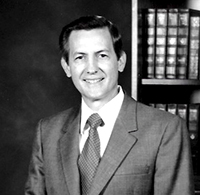
David Linville Jester, former president of Wayland Baptist University, died at his home in Paris, Ky., on Oct. 14. He was 94. He was born March 5, 1930, in Tanganyika—now Tanzania—in East Africa to missionary parents William and Daisy Hicks Jester. He grew up on the southern shores of Lake Victoria. At age 6, he left Tanzania to attend Rift Valley Academy in Kijabe, Kenya. After high school in Louisville, Ky., he received a scholarship to Georgetown College in Kentucky, where he participated in intramural sports and was president of the student body. In 1951, he graduated and married Marie Jean Hans. He went on to complete his Bachelor of Divinity and Master of Divinity degrees at Southern Seminary in Louisville, followed by a Master of Arts and Doctor of Education at Teacher’s College of Columbia University. In 1957, David and Marie Jester were appointed by the Southern Baptist Foreign Mission Board to Iwo Baptist College in Iwo, Nigeria. He worked in graduate studies at University of Ibadan, was president of Niger Baptist College and founder of the School of Basic Studies at Ahmadu Bello University. Upon returning to the states in 1970, Jester served as academic vice president of Campbellsville University. In 1975, he started the graduate program at Georgetown College. In 1981, he became the ninth president of Wayland Baptist College in Plainview. He led WBU from 1981 to 1987, a time in which the school transitioned from a college to a four-year university and established external campuses in San Antonio and El Paso, as well as New Mexico, Hawaii and Alaska. Donna Hedgepath, current president of Wayland Baptist University said of Jester, “His legacy of faith and dedication to higher education has left an indelible mark on the lives he touched.” After leaving Wayland in 1987, Jester continued his career in social and educational programs at Central Texas College and was instrumental in changing the status from an institute to a college known as Texas State Technical College. He also worked at South Texas College. In 1997, Jester became chancellor and president of Mid-Continent University in Mayfield, Ky., where he served until 2002 and was later named chancellor emeritus. Upon retirement, he remained active in Louisville at Hurstbourne Baptist Church as a Sunday school teacher and deacon, and he was president of two boards as well as president of Hillcrest Baptist Camp in Illinois. He is survived by his wife, Marie Hans Jester; daughters Lisa and husband Scott Brumley; daughter Daneta and husband David Sylvester; daughter Karina and husband John Deaver; three grandchildren; and three great-grandsons, along with extended family. Memorial gifts can be made to The Dr. David L. and Marie Hans Jester Endowed Social Work Scholarship at Wayland Baptist University at www.WBU.edu, Nigeria Faithful Works Charity at www.nigeriafaithful.org, or Rift Valley Academy Giving page at www.RVA.org.
Naomi House offers asylum seekers chance to flourish
October 28, 2024
When 2019 saw a surge of displaced people at the United States’ southern border a Waco church with connections to missionaries in Latin America and a close relationship with the pastor of an asylum-seeker-minded Mennonite church in San Antonio didn’t see a problem with the people.
The problem the members of DaySpring Baptist Church saw was in claiming fidelity to Christ but turning away from the needs of those people, explained Dennis Tucker, church member and professor of Christian Scriptures at Baylor University’s Truett Theological Seminary.
Getting there was a process, but in August 2022, Dayspring Baptist Church invited its first family who had been granted permission to seek asylum to move into a new residential ministry—Naomi House.
Exterior of Naomi House. (Courtesy Photo)
Naomi House is a hospitality house that offers a “temporary place of refuge for families as they prepare for the next steps in their asylum-seeking journey,” the church website explains.
Dayspring Baptist Church had been working on the hospitality house concept since the spring of 2021, “because none of us had ever done this,” Tucker recalled.
“None of us were social workers. We were having to find out simple things like city codes for this area. What kind of insurance do we need?”
Tucker explained they spent “the better part of the year” researching, figuring out how to design teams and schedule transportation, and identifying the house—which they rent from a church member.
First steps toward Naomi House
The church had learned much from the experience of one church member whose family had agreed to a request in 2019 from Pastor John Garland at the San Antonio Mennonite Church. He is the son of former Truett Seminary dean David Garland and the late Diana Garland, founding dean of Baylor’s School of Social Work that now bears her name.
With a pledge of support from DaySpring members, the family agreed to help an 18-year-old from Honduras and her newborn infant son who had been granted asylum by housing them in their own home.
Housing the young family gave the church team who supported them valuable experience, but they still had more to learn before they would be ready to begin a full-fledged hospitality ministry, Tucker noted.
Coming out of COVID, the church considered whether a hospitality house like the one San Antonio Mennonite Church operates might be something they could support. Their successful teamwork with the first young family convinced church members they could.
The San Antonio ministry, La Casa de Maria y Marta, as well as most hospitality houses for asylees in Texas, was short-term oriented. But DaySpring members decided on a longer-term housing ministry model, providing at least six months’ residential assistance for families.
Six months is the minimum length of time individuals who have been granted asylum must reside in the country before they legally can work here.
The church had identified women and children as the most vulnerable group among migrants.
While men who cross over the border often find ways to support themselves, it is not always easy for the women. They are vulnerable, particularly to exploitation or trafficking, Tucker explained.
So, at Naomi House, the congregation thus far has housed only women and children—offering safe housing, transportation assistance to work, school, appointments and ESL classes, and additional services as needed.
Because the church has several Spanish-speaking members, the congregation decided they best could support women from Spanish-speaking backgrounds. A common language also helps in learning how to live together, when housemates previously were strangers.
The church added blessings to the framework, as they prepared Naomi House for residents. (Courtesy Photo)
The house is five bedrooms with three bathrooms and is set on about an acre of land. The women who live there can garden, if they choose, and the children have a playset and space to be kids, Tucker noted.
Naomi House has provided housing and support to 8 mothers and 14 children in the two years since it opened.
Rewarding, challenging work
Tucker said the most challenging piece of the ministry is the amount of flexibility required. Every family has a different set of dynamics and trauma they bring in, “so it’s not like we can ever say, here’s our three-page manual on how to care for people in a hospitality house.”
The ministry requires constant adjustments to meet the actual needs of each new family who resides at Naomi House.
But, Tucker noted, the most rewarding aspect of the ministry is its mutuality—this is not a story of a well-heeled, mostly-white American church saving poor migrants.
Instead, there’s an intentionality to the relationships they are building between the church and Naomi House residents. “It’s sharing life together in the belief that this will animate our own faith,” and it has, Tucker explained.
“Most people go to church an entire lifetime, and they wish they could do something to change someone else’s life because it might change their own.
“And so, I think for those of us who are involved—you know, not every story works out perfectly [for] people who come in the house. Some find great jobs. Some don’t find great jobs.
But he explained for those who are involved, “it’s asked us to put our faith to work in a real way, and to allowed us to serve people who are vulnerable—not because we’re going to save them, but because that’s just what the gospel asks of us.”
They don’t have “a metric of success,” Tucker said ministry participants have to remind themselves.
“We have a metric of faithfulness. And we have to be faithful to what we’re asked to do, regardless of any particular outcome, good or bad.”
The church added blessings to the framework, as they prepared Naomi House for residents. (Courtesy Photo)
To measure success, the team asks instead, “are we being faithful to the ministry that God has called us to?”
Tiffani Harris, associate pastor of community life at DaySpring, has been in talks with several churches around Texas and beyond who have expressed interest in beginning a hospitality house ministry.
She mentioned North Carolina has a network of Baptist churches who operate five hospitality houses in Raleigh-Durham alone.
This network is equipped to house refugees from background languages other than Spanish, so DaySpring and the North Carolina network have cooperated to provide asylum-seekers care.
But as a Texan, Harris expressed some ire that North Carolina currently has more hospitality houses. She would love to see at least five hospitality houses operated by Baptists in Texas, she said.
Reciprocity and cooperation
It is difficult work, she agreed with Tucker.
For Harris, it is most difficult to work with people who, having journeyed thousands of miles across dangerous terrain—including for many the Darién Gap—vulnerable to dangerous people, with nothing except their children—realize once they finally get here, just how difficult it’s going to be.
They have been lied to by the cartels who exploit them for money. They have been told the United States has great jobs and cheap housing, Harris noted.
With the dire living conditions they leave behind, maybe the truth would not have dissuaded their journey, she pointed out.
It isn’t easy to walk alongside asylum-seekers as they work through the shock of coming to terms with the reality of life in the United States for asylees, when they have no one and nothing.
But when asylees do find community through the ministry of DaySpring, they are so grateful and bring so much to the church, Harris said.
Other churches in Waco come alongside DaySpring to help with Naomi House, sponsoring some of the monthly expenses, encouraging and partnering with the church, because ministry to asylum-seekers is meaningful.
“Once you step out in faith, when you feel that the Lord has led you to do something like this,” Harris said. “You will be surprised how many people will come around you in support.”
Inmate turned playwright in his ‘comeback season’
October 28, 2024
Jamison Charles always considered himself a follower, and he “followed the crowd straight to prison,” receiving a 50-year sentence for eight felonies, he recalled.
But during his incarceration, he became a follower of Jesus Christ, and “tragedy turned to triumph,” he said.
“I hit rock bottom and found out God has an office there,” Charles told the No Need Among You Conference at the Gaston Christian Center in Dallas, an Oct. 23-25 event sponsored by the Texas Christian Community Development Network.
He entered the federal prison system at age 19 after being convicted for carjacking—his first offense.
“I lost all of my 20s, all of my 30s and half of my 40s” to incarceration, he said. “Prison is terrifying. For me, it was going from being around puppies to being around wolves.”
After serving time at the federal penitentiary in Leavenworth, Kan., Charles jumped at the opportunity to be transferred to the federal prison in Beaumont, near his mother and sister.
While he cherished their visits, he grew to recognize the toll his imprisonment took on his family.
“I realized I wasn’t the only one doing time,” he said. “That brought me to my first real conversation with God.”
‘I’m following the right one now’
Charles prayed, challenging God—if he really existed—to “show up” for him. If God responded, he promised to turn his life around.
“God called my bluff,” he testified.
Charles began attending chapel services at the prison—initially because the chapel was air-conditioned, he confessed. But those chapel experiences made an impact, and he enrolled in every available Bible study for the next eight years.
“I’m still a follower, but I’m following the right one now,” he said.
In one of those early Bible studies, Charles learned the first Scripture verse he committed to memory—Jeremiah 29:11. He wrote the verse on a paper he taped to the bottom of the bunk above his, so he would see it the first thing every morning and the last thing every night.
“I totally blew it, but God said, ‘I still have a plan for you.’ And I believed it,” he said.
Discovered a talent for writing
Charles also took every available class offered in prison. In one class, students were assigned to write about the most horrible thing that ever happened to them. Then the teacher challenged the inmates to write a happy ending to that narrative.
Charles fulfilled the assignment, and the teacher told him he had a gift for writing.
“I started writing every day,” he said.
He began working on a novel based on his own life experiences, and used that story as the basis for a skit that was presented in the prison chapel.
It was so well-received, prison officials encouraged him to develop the brief skit into a full stage play. He wrote the script, enlisted fellow inmates to play assigned roles, and presented the play to the whole prison population.
After he committed himself to using his writing talent for God’s glory—and after participating in a life-changing weekend sponsored by Kairos Prison Ministry—Charles characterized his last two years in prison as “beautiful.”
“I learned how to pray fervently,” he said.
‘Change the narrative of my life’
When he appeared for a parole hearing, Charles told the board if he was allowed to reenter the free world, “I want to change the narrative of my life.”
“Now, I’m in my comeback season,” he said.
When he received an economic stimulus check, he used it to self-publish his novel, Saved-ish: Sometimes It’s Hell Gettin’ to Heaven. At an early book-signing event, correctional officers from the unit where he was imprisoned stood in line to get their copy of the book autographed, he said.
The play based on that same story—which Charles wrote, produced and directed—premiered in March at the Jefferson Theater in Beaumont. It has also been performed in churches and will be presented Nov. 16 in Killeen.
Charles believes audiences have responded favorably to the play not only because of its humor, but also because of its message of redemption.
A person’s value is not diminished just because they have been torn and trampled, he insisted.
“Don’t you dare throw anybody away,” he said. “They are only one God-appointed moment away from changing everything.”
Southern Baptist chief of Air Force chaplains retires
October 28, 2024
OXFORD, Fla. (BP)—As Chaplain Major General Randy Kitchens thinks back over more than 30 years of chaplaincy ministry in the U.S. Air Force, it’s the opportunities he had to share Jesus that stand out.
Chaplain Major General Randall Kitchens retired earlier this year after a 30-year career in the U.S. Air Force. The son of a Southern Baptist pastor, Kitchens served as the chief of chaplains for the U.S. Air Force, the highest-ranking chaplaincy role in the branch. (Photo provided by Chaplain Major General Randall Kitchens)
From combat zones to counseling sessions, Kitchens often found himself in moments where faith became an anchor for the airmen he served. One such moment came early in his career when a young woman walked into his office looking for answers.
Kitchens shared the love of Jesus with her, offering the gospel message he had heard his father proclaim over and over again as a bivocational Southern Baptist pastor. She turned her life over to Jesus on the spot. In a spontaneous act of celebration, Kitchens arranged to baptize her at the base fitness center later that day.
“My dad was a bivocational pastor, and I grew up thinking that was how every pastor served,” Kitchens said. “I thought they were following the Pauline model, having a vocation along with ministry.
“I watched my father, and he essentially taught me. He would take me on visitations, and I learned a lot about ministry from him. He modeled what lifestyle evangelism is really about—no matter where he was or what role he was in, he always found opportunities to share Christ or what Christ was doing in his life with others.”
That gospel message was the cornerstone of Kitchens’ 30-year ministry. He retired in August as the U.S. Air Force chief of chaplains, overseeing all spiritual and ethical matters in the branch.
Kitchens was pastor of Big Coppitt First Baptist Church in Key West, Fla., when God began to open his eyes to the possibilities of military chaplaincy. The church’s location near a large Navy base brought several Navy couples into the congregation, allowing him to see firsthand the distinct spiritual needs of those serving in the military.
Kitchens’ mother-in-law worked as a civilian at an Air Force base and suggested he consider becoming a chaplain. In the early 1990s, right after the first Gulf War, that transition seemed unlikely. The U.S. Defense Department was closing a number of military bases.
‘Lord, open the door, and we will follow’
In October 1990, he began serving as a reserve chaplain with the U.S. Air Force, but he was still praying for an opportunity to serve full-time in the Air Force.
During this time, Kitchens and his wife Sherri prayed, “Lord, open the door and we will follow.”
God answered that prayer in February 1993 when he became a chaplain at Loring Air Force Base in northeastern Maine. For the next three decades, Kitchens served in military bases and war zones worldwide before retiring as the Air Force’s highest-ranking chaplain.
One of his most memorable moments during this period came when he was deployed to Afghanistan. He vividly remembers a night when a young airman, terrified by ongoing attacks, reached out to him. Kitchens spent the next hour talking and praying with him.
“He was just petrified,” Kitchens said. “We talked about fear, we talked about faith, and we talked about God’s leading. Many times, as chaplains, we don’t always recognize the significant impact we have just by being there, listening and walking with people on their journey.”
‘God prepared me for this time’
In 2020, when Kitchens became the U.S. Air Force chief of chaplains, he also became the chief of chaplains for the newly created U.S. Space Force. While the position was new, Kitchens understood some of the uniqueness of the role. His experience at Patrick Air Force Base in Florida, where he witnessed satellite launches, and later at Peterson Air Force Base in Colorado, helped prepare him for the unique challenges of ministering to Space Force Guardians.
“I believe God prepared me for this time,” Kitchens said. “My second assignment was serving at a space wing, where they launched satellites into space. Understanding that mission helped me be ready for the role of Space Force chaplain.”
As the chief of chaplains, Kitchens not only oversaw more than 2,000 Air Force chaplains and religious affairs airmen, but also provided administrative oversight and served as a religious and ethical adviser to Air Force leadership.
“Throughout his military career as a Southern Baptist chaplain, Randy never lost his passion to preach the gospel, sharing unapologetically that faith in Jesus Christ was the key factor to maintaining the spiritual readiness and morale of our troops and their families,” said Doug Carver, executive director of chaplaincy at the North American Mission Board.
Kitchens and his wife, Sherri, have two children and five grandchildren. He retired near his family in Oxford, Fla., where he awaits his next ministry assignment.
“I’m just thankful that the Lord called me to chaplaincy and allowed me to serve,” Kitchens said. “I’m just praying that the Lord will now show me what’s next for the next chapter in my life.”
Around the State: Miss Mary Hardin-Baylor crowned
October 28, 2024
Miss Nursing Student Association, Sophie Stockton, was named Miss Mary Hardin-Baylor 2025, Oct. 19, in the annual Miss MHB Pageant. Stockton is a 20-year-old sophomore nursing major with a minor in Christian studies from Houston. The reigning Miss MHB, Mia Hanks, crowned Sophie Stockton at the end of the evening’s contest. Also recognized were the fourth runner-up, Jordan McBee, Miss Independence Village; the third runner-up, Kelsiy Kniffen, Miss College View; the second runner-up, Brighton Koenig, Miss Student Event Planners Association; and the first runner-up, Londyn Weinzapfel, Miss Campus Activities Board. The Miss MHB Pageant recognizes young women who demonstrate self-confidence, personality and inner beauty.
Students from Christ University campuses in Bangalore and Lavasa, India, participate in class at Wayland Baptist University’s Plainview campus. (Wayland Photo)
A group of 12 students and two faculty members from Christ University campuses in Bangalore and Lavasa, India, arrived at Wayland Baptist University’s Plainview campus for a two-week cultural and academic exchange program. The group will participate in a variety of activities designed to foster cross-cultural understanding and promote learning, especially in the areas of environmental and economic sustainability. They also will engage in academic observation—attending Wayland classes, chapel services and student life activities, while staying in on-campus residences. Highlights of their visit include a tour of Wayland’s Abraham Art Gallery, a visit to the Bayer Lubbock facility and a hike through Palo Duro Canyon to explore its environmental history. With a strong emphasis on global engagement, Christ University frequently collaborates with international institutions to provide its students and faculty cross-cultural experiences. Its curriculum blends academic rigor with social responsibility, preparing students to contribute positively to society.
ETBU’s 2024 Homecoming Court announced during halftime of the football game. The court featured freshmen Jarron Roden and Kaylee Rabb; sophomores Salvatore Pierro and Timberlin Ste Marie; juniors Charles Guillot and Baylie Colston; and seniors Parker Snow and Avery Abshier. Seniors Noah Mink and Skylar Bussing were crowned homecoming king and queen. (ETBU Photo)
East Texas Baptist University celebrated homecoming by welcoming alumni and friends to campus Oct. 18-19. ETBUstudents and alumni gathered for a special homecoming chapel service to honor award recipients. Since 2010, 106 alumni have received ETBU’s Golden Blazer as a symbol of leadership, spiritual authority and God’s blessing. The 2024 Golden Blazers are Conner Combs, Geraldine (Neely) Schwartz and Vic Schwartz. This year’s Alumni Awards honored Jack Terell with the Unsung Hero Award, Judson LaGrone with the Young Alumnus Award, George Moore with the J. Wesley Smith Achievement Award, Catherine Crawford with the Alumni Achievement Award, and Harold and Mildred Sadler were honored with the W.T. Tardy Service Award. Alumna Linda Massey was honored with the Golden Lightkeeper Award, a distinction reserved for alumni who graduated more than 50 years ago and have made lasting impacts in their vocations, church and communities. ETBU seniors Noah Mink and Skylar Bussing were crowned the 2024 Homecoming King and Queen at the homecoming football game. The king and queen were nominated for embodying the qualities of a Christian leader, scholar and servant.
HPU’s Student Speaker Bureau speech and debate team are pictured from left to right: Riley Burden, Katelyn Sims, Katie Richards and Matt Campos. (HPU Photo)
Howard Payne University’s Student Speaker Bureau speech and debate team competed at their season opener at the University of Texas at Dallas DFW Swing tournament on Oct. 4-6. Freshman Riley Burden won the International Public Debate Association open debate division and was named top IPDA speaker at the tournament. Katelyn Simswas the fifth place IPDA speaker and a quarterfinalist. HPU Student Speaker Bureau won third place debate sweepstakes with only three debaters. HPU competed against 13 universities, including Texas Christian University, UT Dallas, Texas Tech University, Southern Methodist University and Arizona State University. In individual events, Burden won second place in impromptu speaking and third place in extemporaneous speaking. Sims won sixth place in informative speaking. Katie Richards placed fourth in persuasive speaking and fifth in programmed oral interpretation. Also competing in the tournament was senior Matthew Campos.
The Keston Center for Religion, Politics and Society presents its fall lecture, a panel conversation, “Baylor in Deeds—Interfaith and Intra-Faith Harmony: Strengthening Leadership for Women Globally through Sports,” at 3:30 p.m. on Oct. 29 in the Armstrong Browning Library and Museum and online via Zoom. The panel will discuss their experiences working with universities in Pakistan, particularly in Lahore, in an interfaith context to strengthen women’s leadership and coaching skills as part of a program funded by a U.S. State Department grant. The grant helps support women through sports activities, leadership workshops and virtual professional learning communities. Five Baylor and University of North Carolina Wilmington professors launched the leadership program in Lahore, Pakistan. To learn more about the in-person event or to register for the Zoom Webinar visit library.web.baylor.edu/kestonfalllecture.
BGCT President Ronny Marriott preaches at DBU chapel, Oct. 7. (DBU Photo)
Ronny Marriott, president of Texas Baptists, led Dallas Baptist University’s Oct. 7 chapel service. Considering Texas Baptists’ emphasis on “God’s Kingdom Agenda,” Marriot asked chapel participants to think about what God’s kingdom is and what it could look like. Marriott discussed truths that act as piers for the foundation of God’s kingdom, supporting those walking in faith: working together in unity, loving like Jesus and sharing the gospel.
Hardin-Simmons University will host the 2024 Dr. James B. Simmons Dinner Nov. 15, at 6:30 p.m. at The Statler Hotel in Dallas. The dinner will honor Sen. James Lankford for his leadership and public service, reflecting the legacy of James B. Simmons. The Simmons Award recognizes those who use their talents to break barriers and demonstrate courage in their fields. Lankford has served the people of Oklahoma since his election to the U.S. Senate in 2014, following four years in the U.S. House of Representatives. Before Congress, Lankford worked more than 20 years in ministry, including 15 years as director of Falls Creek Youth Camp. Lankford lives in Oklahoma City with his wife Cindy and their two daughters. RSVP at https://connectnow.hsutx.edu/register/Simmons.
Anniversaries
First Baptist Church in Hereford celebrated 125 years Oct. 13.
Glorieta Adventure Camps marked the 75-year legacy of what historically was known as Glorieta Baptist Assembly with a Kingdom Impact Celebration, Oct. 11-14. About 400 guests participated, including 70 former Glorieta staff, their children and others with longtime ties to the encampment. The event featured tracks for alumni, families, day campers and youth. Hall Hill, director of Glorieta Conference Center from 2006 to 2016, was the worship leader.
Porn use grows among Christians, study says
October 28, 2024
VENTURA, Calif. (BP)—Christian men and women use pornography more today than in 2016 when Barna spotlighted the sin among pastors and congregants, an updated study found.
The report tracks and defines the problem, calls on the church to offer a healing balm and offers practical guidance to that end.
“The average Christian is not experiencing freedom in this area; 75 percent of Christian men and 40 percent of Christian women report that they are viewing pornography at least occasionally,” wrote Pure Desire Ministries Executive Director Nick Stumbo, a former pastor who overcame porn use more than a decade ago. “The numbers for today’s youngest adults are even worse.
“But what may be more troubling is that well over half of Christians who use porn say they are comfortable with their porn use.”
In the general population, porn use has increased 6 percentage points among U.S. adults in the past eight years, rising to 61 percent, Barna reported, with use increasing to 44 percent among women from a 2016 mark of 39 percent.
For Christians, 54 percent reported viewing porn in the latest study, compared to 68 percent of non-Christians, a disparity of 14 percentage points that narrows when considering frequency, Barna reported.
Nearly a quarter of practicing Christians, 22 percent, view porn at least weekly, compared to 31 percent of non-Christians.
Churches not addressing the issue
But most churches are not addressing the problem, respondents said. Only 10 percent of Christians and churched adults said their churches offer programs to help those struggling with porn use and addiction, but 58 percent of Christian or churched adults want their church to do so.
Despite the low percentage of churches addressing the problem, 75 percent of pastors said they individually are ministering to those struggling with porn, and 51 percent of those seeking help are married men, pastors said.
Among pastors themselves, 18 percent cite porn use as a current personal struggle, and 67 percent have a history of porn use. Most of them, 86 percent, believe porn use is common among Christian pastors, study authors wrote.
When churches do address the issue of pornography, they often overlook the full problem, said Sam Black, an expert in pornography recovery with Covenant Eyes. Churches often don’t see past the spiritual harm, he said in a roundtable discussion included in the report.
“Churches often miss the physical healing that is necessary. They miss that spouses need healing from their partner’s betrayal. And they often completely miss that women watch porn,” Black said. “Leaders often fail at providing people with an understanding of how pornography can be damaging.
“Most churches fail to recognize that pornography undermines every ministry of the local church.”
While churches offer children’s ministry, host marriage seminars, date nights and weekend retreats, inappropriate content is available to children as never before, Black said, and porn is cited as a contributing factor in many divorces.
But Christian respondents disagree on whether porn use is problematic, researchers found. Most Christians, 62 percent, said a person can regularly view pornography and live a sexually healthy life.
While research shows a correlation between porn use and poor mental health and well-being outcomes, researchers were slow to confirm a causal relationship.
“This data doesn’t tell us if porn use leads to lower well-being scores, or if people with lower well-being scores are more likely to use porn,” researchers wrote.
“Further research is needed to explore potential cause-and-effect relationships. If porn consumption contributes to diminished well-being, it’s concerning; conversely, if lower well-being prompts individuals to turn to porn, that’s also undesirable.”
Prevalent among younger generations
Porn use is more common among younger generations including Christians, researchers found. Among practicing Christians ages 18-38, more than half—53 percent—have sent a nude image of themselves via text, email, social media or app. Usually, they send nude images to their boyfriend or girlfriend (87 percent) or a friend (24 percent), and 89 percent of the time it was a nude image of themselves.
Most youth leaders, 89 percent, say they wish parents would teach teenagers about sexual health and behaviors, but most youth leaders (69 percent) believe teens are learning such things from friends or social media.
How can the church make a difference?
Black hopes the church will provide a safe place for honesty, vulnerability and grace in community.
“The Church is God’s plan A. It is within the Church where God seeks to restore those who have become ensnared. God isn’t embarrassed, fearful or ignorant of our sin,” Black said in the report. “Today, the local church has choices. It can largely ignore the problems of pornography because they are too unseemly. It can chastise, rebuke and cast out, which will send more people into hiding.”
Key tips for pastors and Christian leaders:
Insights from the study call on pastors and Christian leaders to intentionally cultivate vibrant faith communities that empower individuals to live with sexual integrity, confront the challenges of the digital age and experience the fullness of God’s design for sexuality.
Prioritize equipping congregations with a comprehensive understanding of the complexities surrounding porn. With the data in mind, this could look like biblical teaching and support groups, but also partnering with counselors and other medical professionals for a combined approach to reconciling (or preventing) the damages of porn use.
The findings are based on an online survey of 2,976 U.S. adults, with an oversample of Christians, conducted Oct. 20-30, 2023; a survey of 462 U.S. senior Protestant pastors conducted Sept. 27-Oct. 9, 2023, and a survey of 205 U.S. Christian youth leaders conducted Nov. 16, 2023-Jan. 16, 2024.
How a pastor became a farmer and climate activist
October 28, 2024
CONETOE, N.C. (RNS)—Congregants at Conetoe Chapel Missionary Baptist Church thought their pastor was crazy when he suggested his rural community take up farming as a way to improve their health and become more self-sufficient.
The small, predominantly Black community, about 80 miles east of Raleigh, is surrounded by vast, fertile farmland but has no grocery store for miles around. According to figures from the Census Bureau, 67 percent of the residents of Conetoe (pronounced Kuh-NEE-tuh) live below the poverty line.
It turned out, Pastor Richard Joyner was prophetic. The venture—which in 2007 was spun off into its own nonprofit, the Conetoe Family Life Center—now produces 1,500 boxes of vegetables a week on land it either bought or leases.
It partners with multiple outfits including public schools, hospitals, the North Carolina Food Bank and local churches to plant, grow, harvest and package the produce, some of which is sold, but most of which is donated.
Funerals—which Joyner used to conduct too many of—are less common, and the health and wellbeing of his congregants who partake of the vegetables, grown without any synthetic chemicals, has improved, he said.
God is not to blame
Floodwaters on Conetoe Family Life Center farmland on Sept. 28, in Conetoe, N.C. (Photo courtesy Later Is Too Late Campaign via RNS)
But now Joyner has another problem. Last month, Hurricane Helene flooded some of his fields, wiping out the late August plantings of salad greens, radishes and beets. The soil already was wet from weeks of rain when the hurricane blew in, dumping 17 inches of rain over a two-week period.
Back in 2016, Hurricane Matthew also flooded the nonprofit’s fields. Members of Joyner’s congregation, about 100 people, have suggested maybe God is trying to tell him something.
“We’re in the Bible Belt,” Joyner said. “When my farm floods, people go: ‘Well, God don’t want you to do that. That’s why he keeps flooding it, and you need to stop being hard-headed.’”
Joyner’s new rejoinder: “God is not flooding the land. Our behavior is destroying the environment. That’s what flooded the land.”
Over the last few years, the 71-year-old pastor has become not only a farmer but a climate change activist. Last month, he lent his name to a new group, Extreme Weather Survivors, which provides trauma-informed support for people harmed by natural disasters.
Some of the group’s members, including Joyner, participated in a Climate Week forum in New York City earlier this month intended to convey the message that extreme weather should not be labeled an “act of God” but an “act of man.”
Speakers such as Delta Merner, a scientist at the Union of Concerned Scientists, testified that in North Carolina, studies have shown climate change significantly has increased heavy rainfall.
In other spots, such as Arizona, she said, science can now show a connection between climate change and record-breaking heat waves, which have become more frequent and intense.
Merner, who studies “attribution science,” a field that aims to determine how much human-caused climate change has influenced extreme weather events directly, said researchers are able to trace climate change back to major fossil fuel producers and cement manufacturers.
Explaining this to church members has not always been easy, but Joyner now sees it as his calling.
Farming and environmentalism late-comer
The Rev. Richard Joyner, left, sorts onions with a youth at Conetoe Family Life Center in Conetoe, N.C. (Video screen grab via RNS)
Joyner himself was a late convert to both farming and environmentalism. He grew up on the outskirts of Greenville, N.C., one of 13 children to parents who worked as sharecroppers.
His father, who always kept a garden and some livestock, loved to farm and was especially good at it. But the landowners always cheated him of his earnings, and that soured Joyner on farming.
When he finished high school, Joyner joined the U.S. Army and later the National Guard. He studied chaplaincy at Shaw University and started working as a chaplain at WakeMed in Raleigh and at Nash General Hospital in Rocky Mount.
He initially worked with patients who had HIV, the AIDS virus, and later with mothers in labor and delivery. Finally, he worked as a hospice chaplain, and that’s where he said his own sense of spirituality was cultivated.
In 2004, he became the pastor of Conetoe Chapel Missionary Baptist Church at the prodding of his mentor, who in his dying days transferred the leadership of the small church to Joyner.
Many of the church’s members were suffering from preventable diseases, including diabetes and high blood pressure.
At the time, Joyner still was working in hospice care, while he watched their slow demise and later presided over their funerals.
Convincing members to change their diets and begin exercising was not easy. He said he came to it reluctantly after learning there was no chance a major grocery chain would locate in such a small town, population 671, a classic example of a food desert.
In 2005, Joyner found three property owners willing to let him use their land for a community garden. The first garden was on two acres located a quarter mile from the church.
Resistance turns to advocacy
Church members resisted the idea. Those with painful personal memories of the legacy of Black exploitation working the land were especially suspicious of farming.
People line up as a Conetoe Family Life Center produce stand opens in Conetoe, N.C. (Video screen grab via RNS)
But he was able to win over the children and eventually the adults, too. The gardens grew to encompass a wide range of crops, in addition to 30 beehives, whose honey is sold locally.
Joyner won several awards for his burgeoning community farm, including a 2014 Purpose Prize, which recognizes social innovators older than 60.
The farm partnered with several universities to study whether food-as-medicine interventions work on people with chronic diseases. It also started a health kiosk on the farm where people can contact health providers online.
CNN did a feature story about the enterprising pastor and his community farm. More recently, the Conetoe Family Life Center built a kitchen on the farm where people can learn to prepare plant-based nutritious meals, and church members caught on.
Now, Joyner is studying how to change farm practices in a time of climate change.
He’s now considering different ways of farming. He recently learned tractors can compact soil and increase the risk of flooding by making the soil less porous. He also knows high tunnels—unheated, plastic-covered hoop-house structures—can provide some protection from rain and include some anti-flooding drainage systems.
One such high tunnel on the farm saved rows of peppers—banana peppers and habaneros—from being ruined. He now wants to build more.
Floodwaters cover Conetoe Family Life Center farmland on Sept. 28, in Conetoe, N.C. (Photo courtesy Later Is Too Late Campaign via RNS)
But finally, there’s the job of advocacy—getting people to understand they live in relationship with creation and if they abuse and manipulate that relationship, there will be consequences.
Living in relationship to the earth and to other human beings and sharing that bounty is now the core of his spiritual journey.
“I’ve been in Christianity all my life,” Joyner said. “But, these fields have become the most powerful place of worship I’ve ever been on.”
It’s a lesson his parents and grandparents knew and one he hopes more people can recover.
“My grandma would always say, ‘This is God’s beautiful earth, and you have one responsibility—to leave it better than when you got here,’” Joyner said. “I take that seriously.”
Churchgoers want to hear pastors address current issues
October 28, 2024
BRENTWOOD, Tenn.—American churchgoers are looking for more than biblical explanation from their pastor each week. Many say they expect the sermons to help them understand and address modern cultural issues.
Four in 5 U.S. Protestant churchgoers (80 percent) say they believe a pastor must address current issues to be doing their job, according to a Lifeway Research study. Few (16 percent) disagree, and 4 percent aren’t sure.
Churchgoers seem to distinguish between addressing cultural issues and endorsing political candidates. A previously released Lifeway Research study of Americans found only 29 percent believe it is appropriate for pastors to endorse candidates for public office during a church service.
Christians who attend a worship service at least once a month are more likely than other Americans to believe endorsements during church services are acceptable, but still, only around a third (35 percent) agree.
If Protestant churchgoers are looking for direct endorsements at church, they’re going to be disappointed. Just 2 percent of pastors say they have endorsed a political candidate during a church service this year, according to an additional Lifeway Research study of U.S. Protestant pastors.
But for churchgoers wanting pastors to address issues, most feel like their church meets those expectations. Around 3 in 5 say their pastor addresses current issues within a sermon weekly, including 27 percent who say that happens every week and 35 percent almost every week. Another 23 percent say it happens at least once a month.
Only a handful of churchgoers say broaching modern topics happens less frequently. Around 1 in 14 (7 percent) say they hear a sermon addressing current issues several times a year, while 6 percent say that rarely happens. Just 1 percent say their pastor never addresses those topics in a sermon, and 2 percent aren’t sure.
“Churchgoers notice that most pastors are not just preaching from the Bible as an historical document,” said Scott McConnell, executive director of Lifeway Research.
“Pastors seek to explain the original meaning and context, but then apply those principles to issues and situations today. Such application of the biblical text helps churchgoers recognize its relevance.”
Churchgoers under the age of 50 are more likely to hear their pastors broach modern topics each week. Those aged 18-34 (34 percent) and 35-49 (41 percent) are more likely than those 50-64 (25 percent) and 65 and older (17 percent) to say their pastor’s sermons address current issues every week.
African American churchgoers (40 percent) are also among the most likely to say they hear culturally relevant issues in sermons every week.
Those at the largest churches, with 500 or more in worship attendance, are among the most likely to say their pastors rarely address current issues (13 percent).
While 80 percent of churchgoers believe pastors must touch on these topics as part of their role, some are more likely to see this as necessary.
Methodists (96 percent) and those who attend Restorationist Movement churches (89 percent) are among the most likely to believe pastors must address current issues to be doing their job.
White churchgoers (82 percent) and those of other ethnicities who are not African American or Hispanic (87 percent) are also among the most likely to see this as a requirement.
Older churchgoers, those 65 and older, are among the most likely to disagree that pastors must address current issues as part of their job (22 percent).
High level of trust in pastors
Congregants may want to hear from their pastors on the concerns of the day because they broadly trust those leading their churches.
More than 9 in 10 U.S. Protestant churchgoers (91 percent) say they completely trust the pastor of their church. Only 5 percent disagree, 2 percent aren’t sure and 2 percent say they currently do not have a pastor. Of those who have a pastor at their church, 92 percent of churchgoers trust them.
“It can be assumed from these numbers that most of those who have lacked trust in their pastor have either found a new church or no longer attend their church once a month or more,” McConnell said.
“Yet, almost half of churchgoers with a pastor (47 percent) indicate their trust in their pastor could improve since they did not strongly agree that they completely trust the pastor of their church.”
Some churchgoers are more trusting of their pastor than others. Men are more likely than women to completely trust their pastor (93 percent v. 89 percent). Churchgoers with evangelical beliefs are also more likely than those without such beliefs to be trusting (95 percent v. 87 percent).
White churchgoers (93 percent) and those aged 50-64 (95 percent) are among the most likely to completely trust the pastor of their church.
Additional education can raise distrust among churchgoers. Those with a graduate degree (9 percent) are more likely than those who have a high school diploma or less (4 percent) to say they don’t trust their pastor.
The online survey of American Protestant churchgoers was conducted Sept. 19-29, 2023, using a national pre-recruited panel. Analysts used quotas and slight weights to balance gender, age, region, ethnicity, education and religion to reflect the population more accurately.
The completed sample is 1,008 surveys, providing 95 percent confidence that the sampling error from the panel does not exceed plus or minus 3.2 percent. This margin of error accounts for the effect of weighting. Margins of error are higher in sub-groups.
Percentage of ‘Nones’ flatlines for third consecutive year
October 28, 2024
PHILADELPHIA (BP)—The percentage of U.S. adults not affiliated with a religion has flatlined at 26 percent since 2022 after decades of growth, the American Bible Society said in its latest release from the 2024 State of the Bible.
But the diverse group of 70 million Americans designated as “Nones,” 10 percent of whom say they’ve made a personal commitment to Jesus, are reachable by the church, said John Plake, American Bible Society chief innovation officer and State of the Bible editor in chief.
“One of the things that we think is really useful in ministering to people with no religious affiliation is just to recognize that they’re not against you,” Plake told Baptist Press. “And they’re not against the church, or God or the Bible. They’re in this place in between.
“It’s this liminal place in between for a lot of Americans, and that gives us hope that we can reach out to those people, and we can communicate the gospel clearly and biblically.”
Researchers aren’t sure why the Nones category grew steadily in the last quarter of the 20th century, spiked three percentage points from 2021 to 2022, and now appears to be stabilizing, Plake said. But he cited a trend of Americans becoming less religiously brand affiliated, which the American Bible Society has documented since the late 1990s.
“Denominations in America are sort of less brand-aligned than they used to be,” he said. “When I was growing up … the denominational brand was on the marker of the church. Today, that’s less popular, even if those churches are still affiliated with the Southern Baptist Convention, or the Assemblies of God, or the ELCA (Evangelical Lutheran Church in America), they may not actually say that on the sign or make a very big deal about it.
“So, often people are attending churches,” Plake said. “But they actually don’t know what kind of church they’re attending.”
Not all Nones are the same
The American Bible Society explored Nones in the 7th chapter of its latest State of the Bible, released Oct. 10th. The Bible society links to an audio interview with Ryan P. Burge, whose groundbreaking 2021 book “The Nones” traces public data from the General Social Survey back to 1972, when only 5 percent of U.S. adults said they were religiously unaffiliated.
“Dr. Ryan Burge has helped us understand that just because someone says they have no religious affiliation, that kind of doesn’t tell us enough about them,” Plake said. “They’re not all the same group of people.”
Along with the 10 percent of Nones who’ve accepted Jesus are 25 percent who are open or curious about Jesus or the Bible. Conversely, 64 percent of Nones are not curious about the Bible or Jesus, and 40 percent are hostile to the Bible.
“We’ve been concerned that this movement towards no religious affiliation would then become a further movement towards becoming atheist or people who are really opposed to the gospel,” Plake said. “And we’re not really seeing that.”
Rather, many Nones are still exploring their faith, and others will come to a place of exploration, researchers believe.
Churches can reach out to Nones by recognizing they’re receptive to the gospel at key areas in their lives, including during periods of disruption or when they’re struggling with anxiety or emotional needs.
“As a former pastor, I’m thinking, ‘OK, how can we do church in a way that reaches out to our community,’” Plake said, “and welcomes people who might be struggling with these issues.”
Among other characteristics of Nones:
7 percent read the Bible three to four times a year.
3 percent agree “the Bible is totally accurate in all of the principles it presents,” compared to 38 percent of the general public.
8 percent say their religious faith is very important in their life today, compared to half of the general public.
40 percent believe the Bible was written to control or manipulate people.
State of the Bible is based on a nationally representative survey conducted for the American Bible Society by NORC at the University of Chicago, using the AmeriSpeak panel. Findings are based on 2,506 online interviews conducted in January 2024 with adults in all 50 states and the District of Columbia.
Additional chapters scheduled for release this year focus on loneliness and philanthropy.
Scholars and family: Stop taking Bonhoeffer’s name in vain
October 28, 2024
(RNS)—In recent years, author and radio host Eric Metaxas and other conservative Christian supporters of Donald Trump have compared themselves to the famed German theologian Dietrich Bonhoeffer, who was put to death for taking part in a plan to assassinate Adolph Hitler.
Eric Metaxas speaks at Judson University’s annual Constitution Day chapel service on Sept. 26, 2018, in Elgin, Il., near Chicago. (RNS File Photo / Emily McFarlan Miller)
In a recent interview on Flashpoint, a Christian television talk show on the Victory network, both Metaxas—author of a bestselling biography of Bonhoeffer—and the show’s host called the current election a “Bonhoeffer moment” and urged Christians to rise up and oppose evil.
That evil, in Metaxas’ eyes, is the Democrats, who, he has argued, stole the 2020 election and whom he often compares to Nazis. For him, if Democrats win the next election, it could mean the end of America as we know it.
Metaxas has argued and has claimed in the past Trump is God’s chosen candidate and those who oppose him oppose God.
His newest book, Religionless Christianity—a phrase used by Bonhoeffer—describes America’s current politics as a spiritual war and sign of the end times.
‘Dangerous misuse of Bonhoeffer’s life and lessons”
A group of Bonhoeffer scholars and the theologian’s descendants have had enough.
In a statement issued Oct. 18, members of the International Bonhoeffer Society called on Metaxas and others to stop comparing the current election to the rise of the Nazis. The statement, in particular, called out Metaxas for social media posts featuring a gun and a Bible and his support of Jan. 6 rioters.
“This portrayal glorifies violence and draws inappropriate analogies between our political system and that of Nazi Germany,” the scholars said in a statement, which has been signed by more than 800 Bonhoeffer scholars and other Christian leaders. “It is a dangerous misuse of Bonhoeffer’s life and lessons, particularly in this election season in the United States.”
The scholars and relatives of Bonhoeffer also objected to the mention of Bonhoeffer’s work in Project 2025, a controversial plan from the Heritage Foundation and other Trump supporters, which has been criticized for promoting Christian nationalism.
“From Project 2025 to violent political rhetoric, the legacy of German pastor Dietrich Bonhoeffer is being invoked this election season on behalf of Christian Nationalism,” the scholars said in their statement. “It is a dangerous and grievous misuse of his theology and life.”
New Bonhoeffer biopic released in November
The statement was prompted in part by the upcoming release of a new Bonhoeffer biopic, which will be out in theaters in late November. One of the posters for the film shows Bonhoeffer with a gun, and a trailer for the film shows his involvement in the plot to kill Hitler.
Movie poster for a new Bonhoeffer biopic. (Angel Studios)
Some of the early social media tweets about the film included messages about the “battle against tyranny” and a line from the trailer, “My country was invaded from within.”
During Metaxas’ Victory Channel interview, the trailer for the movie—which is being distributed by Angel Studios, the studio behind the hit film Sound of Freedom, was shown. After the trailer, Metaxas and other guests urged Christians to wake up to the evil of their political enemies.
In an interview for a German news publication, relatives of Bonhoeffer criticized that depiction of the theologian. Relatives also released a statement rejecting the idea that Bonhoeffer would have embraced Christian nationalism.
“He would never have seen himself anywhere near the right-wing extremist, violent movements that are trying to appropriate him today,” family members said in a statement passed on by Bonhoeffer scholars. “On the contrary, he would have criticized these very attitudes.”
Metaxas’ press contact did not immediately respond to a request for comment.
Lori Brandt Hale, professor of religion at Augsburg University and president of the English language section of the International Bonhoeffer Society, said scholars understand filmmakers need to take artistic license, and they do not believe the filmmakers intend to send Christian nationalist messages.
‘Strongly oppose’ any call for political violence
Lori Brandt Hale (International Bonhoeffer Society Photo)
Hale, who has seen the film, said the movie—and, even more so, the marketing material—exaggerates the theologian’s role in the conspiracy against Hitler and plays up the idea of him being an “assassin.”
She and other scholars worry that may give viewers the wrong message—especially if they already hold Christian nationalist views or are sympathetic to Metaxas’ claims—and they may use Bonhoeffer’s opposition to Hitler to justify political violence.
Hale said Bonhoeffer’s theological and ethical reflections in the face of the evils of the Nazis are distorted by American Christian nationalists. In America’s current politics, she fears Christian nationalists miss the real comparisons with Nazi Germany, including “threats to political enemies, the free press, and the Constitution, and calls to dehumanize certain groups of people, especially immigrants and refugees.”
“The people who make comparisons with Nazi Germany and contemporary realities, they are just not doing the work,” she said.
The statement from the Bonhoeffer Society makes a similar point.
“Any attempt to invoke Dietrich Bonhoeffer and his resistance against Hitler as a reason to engage in political violence in our contemporary context must be strongly opposed,” it says. “Moreover, while Bonhoeffer supported the coup, he refused to offer a Christian or theological justification for it. He understood the dangers of such a rationale.”
The promotional site for the film includes a call to reject racism and antisemitism and calls on supporters to practice civil discourse and peacemaking. A “Bonhoeffer Declaration” linked to the site also calls for fans to “stand with Israel” and is endorsed by a number of Christian pastors, including some with Christian nationalist ties.
‘A singular voice of love, grace, justice and courage’
Makers of the new Bonhoeffer biography reject the idea that the film has a Christian nationalist message.
Jared Geesey, chief distribution officer of Angel, said the film is being released at a time when antisemitism is on the rise and that the film calls audiences “to stand up against evil and love our neighbor—no matter who that neighbor is.” He also downplayed any connection to Metaxas and defended the poster promoting the film.
“The film is not based on the Eric Metaxas book, even though the titles may look similar,” he said. “The movie poster is simply a representation of the film. This is a spy thriller, and we believe the artwork captures the tension inherent in the story.”
Todd Komarnicki, writer and director of the Bonhoeffer movie, said he “could not be further from being a Christian nationalist.”
“The fact is, Bonhoeffer doesn’t belong to any group,” he said. “He is a singular voice of love, grace, justice and courage, and his voice is just as clarion now as it was during WWII.
“We should be listening to him (which our movie does) and not to all the voices trying to steal him for their own cultural grievances.”
Kingdom focus at upcoming BGCT annual meeting
October 28, 2024
Messengers and guests from Texas Baptist churches across the state will gather Nov. 10-12 at the Waco Convention Center for the 139th Baptist General Convention of Texas annual meeting.
Under the theme “His Kingdom Agenda,” attendees will join in worship and business sessions, hear from six keynote speakers, choose from among 35 unique ministry workshops and experience numerous times of fellowship throughout exhibit halls, meals and receptions and rallies.
BGCT Executive Director Julio Guarneri said he looks forward to connecting with church leaders across the convention and celebrating together all God has done.
“I’m looking forward to being in the sessions and worship and hearing some of the great speakers that we have invited and then connecting [with] pastors from across the state and from outside of Texas,” Guarneri said.
“Celebrating the things that we have accomplished … just a big time of celebration [and] enjoying being together as a family.”
Kingdom-focused event
The annual meeting’s keynote speakers include Guarneri; Albert Reyes, president and CEO of Buckner International; Al Curley III, associate pastor at Cornerstone Church in Arlington; Meghan Hendrickson, director of Dallas Baptist University Baptist Student Ministry; Joel Gregory, emeritus professor of preaching at Baylor University’s Truett Theological Seminary; and Ronny Marriott, pastor at First Baptist Church in Richardson and president of Texas Baptists.
Reyes will speak on “A Kingdom of Wholeness,” Curley III on “The Gospel of the Kingdom,” Hendrickson on “Kingdom Advance,” and Gregory on “The Kingdom Has Come Near.” Guarneri and Marriott will deliver the executive director’s report and the president’s address, respectively.
Worship will be led by Art Wellborn, worship pastor at First Woodway Baptist Church; Lampsato, East Texas Baptist University worship band; DBU Chapel Worship; and Michael Glenn, worship leader at First Baptist Church in Burleson.
Workshops will include topics on church health, vision and strategy, identity, discipleship, kingdom giving and more. Attendees can visit exhibit halls throughout the three-day gathering to learn more about ministry resources from Texas Baptists staff, ministry partners and other vendors and for networking and fellowship.
Several meals and receptions also will be hosted by Texas Baptists’ ministries and partners, and a welcome center will be available near the registration area to help first-time attendees to the gathering.
Rallies a tone-setting ‘celebration of diversity’
Rallies scheduled for Sunday evening include the African American Fellowship worship rally at Carver Park Baptist Church, Texas Baptists en Español rally in Texas Rooms South at the Waco Convention Center and the Millennial/GenZ rally at Terry Black’s Barbecue in Waco. Sunday rallies will begin at 5 p.m. and end at 6:45 p.m. to allow attendees to join the 7 p.m. evening worship session at the Waco Convention Center.
Guarneri said he encourages attendees not to miss out on these opportunities to celebrate diversity within the convention.
“It’s meant to be a celebration of our diversity with the people, the local people in Waco, and then with our different fellowships and affinity groups,” said Guarneri. “It hopefully sets the tone for the rest of the annual meeting.”
Church insurance relief to be considered
During business sessions, messengers will elect officers and vote on recommendations, including a 2025 proposed missions and ministries budget of $36,716,950, worldwide missions initiatives and partnership allocations of $1.1 million, and nominations for Executive Board directors and boards of affiliated ministries.
Messengers also will hear and vote upon a recommendation for a Texas Baptists Insurance Program to assist affiliated churches amidst a challenging property insurance environment through collaboration in a captive insurance pool.
Passage of that recommendation would grant BGCT leaders authorization to “take all necessary steps” to successfully implement the program subject to the Executive Committee’s approval, pending the results of a feasibility study already in process.
This and other recommendations are available online via the “Business” page of the annual meeting website.
Clarifying the call and prayers for unity
Guarneri said he is praying for a spirit of unity among messengers and guests and that participants will come away with a renewed clarity for the coming years of collaborative missions and ministries through Texas Baptists.
“We want to communicate what we can be doing together for the next couple of years with a sense of clarity. We have a sense of clarity about what we’re going to join together for in the next couple of years, and so, we hope that that happens through the preaching, and that happens through some of my reports and other things that [attendees] experience there,” Guarneri said.
“I’m praying, first of all, that God’s presence would be felt when we’re together. Second, that there would be a spirit of unity, that we would be listening to others [and] listening to God’s voice,” he said.
Attendees are encouraged to access the schedule, worship and business sessions information, workshop titles and descriptions, rallies, meals and receptions in the Texas Baptists app, which is free to download online at txb.org/app.
To register as a messenger or guest for Texas Baptists’ annual meeting, visit txb.org/am. Online registration closes Nov. 11.

 David Linville Jester, former president of Wayland Baptist University, died at his home in Paris, Ky., on Oct. 14. He was 94. He was born March 5, 1930, in Tanganyika—now Tanzania—in East Africa to missionary parents William and Daisy Hicks Jester. He grew up on the southern shores of Lake Victoria. At age 6, he left Tanzania to attend Rift Valley Academy in Kijabe, Kenya. After high school in Louisville, Ky., he received a scholarship to Georgetown College in Kentucky, where he participated in intramural sports and was president of the student body. In 1951, he graduated and married Marie Jean Hans. He went on to complete his Bachelor of Divinity and Master of Divinity degrees at Southern Seminary in Louisville, followed by a Master of Arts and Doctor of Education at Teacher’s College of Columbia University. In 1957, David and Marie Jester were appointed by the Southern Baptist Foreign Mission Board to Iwo Baptist College in Iwo, Nigeria. He worked in graduate studies at University of Ibadan, was president of Niger Baptist College and founder of the School of Basic Studies at Ahmadu Bello University. Upon returning to the states in 1970, Jester served as academic vice president of Campbellsville University. In 1975, he started the graduate program at Georgetown College. In 1981, he became the ninth president of Wayland Baptist College in Plainview. He led WBU from 1981 to 1987, a time in which the school transitioned from a college to a four-year university and established external campuses in San Antonio and El Paso, as well as New Mexico, Hawaii and Alaska. Donna Hedgepath, current president of Wayland Baptist University said of Jester, “His legacy of faith and dedication to higher education has left an indelible mark on the lives he touched.” After leaving Wayland in 1987, Jester continued his career in social and educational programs at Central Texas College and was instrumental in changing the status from an institute to a college known as Texas State Technical College. He also worked at South Texas College. In 1997, Jester became chancellor and president of Mid-Continent University in Mayfield, Ky., where he served until 2002 and was later named chancellor emeritus. Upon retirement, he remained active in Louisville at Hurstbourne Baptist Church as a Sunday school teacher and deacon, and he was president of two boards as well as president of Hillcrest Baptist Camp in Illinois. He is survived by his wife, Marie Hans Jester; daughters Lisa and husband Scott Brumley; daughter Daneta and husband David Sylvester; daughter Karina and husband John Deaver; three grandchildren; and three great-grandsons, along with extended family. Memorial gifts can be made to The Dr. David L. and Marie Hans Jester Endowed Social Work Scholarship at Wayland Baptist University at


 When he appeared for a parole hearing, Charles told the board if he was allowed to reenter the free world, “I want to change the narrative of my life.”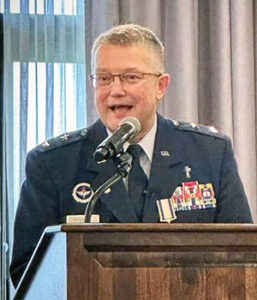



 The report tracks and defines the problem, calls on the church to offer a healing balm and offers practical guidance to that end.
 Porn use is more common among younger generations including Christians, researchers found. Among practicing Christians ages 18-38, more than half—53 percent—have sent a nude image of themselves via text, email, social media or app. Usually, they send nude images to their boyfriend or girlfriend (87 percent) or a friend (24 percent), and 89 percent of the time it was a nude image of themselves.




 But the diverse group of 70 million Americans designated as “Nones,” 10 percent of whom say they’ve made a personal commitment to Jesus, are reachable by the church, said John Plake, American Bible Society chief innovation officer and State of the Bible editor in chief.