BUBBA among rejected SBC names

WASINGTON (RNS)—As the Southern Baptist Convention recently weighed changing its name, denominational leaders were bombarded with suggestions—hundreds of them.

Most suggestions avoided the word "Southern," but one hinted at the denomination's regional flavor—Baptist Ultimate Bible Believing Alliance, or BUBBA. In the end, leaders recommended the unofficial moniker "Great Commission Baptists."

Other rejected names included:

• Association of Thriving Baptist Churches

• Baptist Southern Convention

• Christian Synergy Convention

• Ends of the Earth Baptist

• Eternal Baptist Convention

• Friendly Family Church of America

• Global Association of Immersing Christians

• Global Association of Immersing Evangelicals

• Jesus Christ is Lord Baptist Convention

• League of Baptist Messengers


Rick Warren finds new purpose in weight loss

LAKE FOREST, Calif. (RNS)—Megachurch Pastor Rick Warren has become an outsized evangelical superstar as best-selling author of The Purpose Driven Life series, pastoral mentor and even political referee. Now, Warren is finding a new purpose—tackling his outsized waistline.

Mehmet Oz measures megachurch Pastor Rick Warren's waistline at a Daniel Plan forum at Saddleback Church in Lake Forest, Calif. (RNS PHOTO/Courtesy Toby Crabtree/Saddleback Church)

Warren, 58, noted the revelation came about a year ago, during a marathon baptism session of about 800 people at Saddleback Church. As he struggled to immerse members of his flock in the baptismal pool one by one, he realized his parishioners were heavy and that he, too, was fat, setting a terrible example.

Warren's gradual weight gain—about two to three pounds a year—has added up over his 30 years as a pastor. To lose the extra pounds and inspire others to do the same, the former football player en-listed the help of three doctors.

Warren recruited a family physician, Mark Hyman; Meh-met Oz, New York Times best-selling author and host of NBC's The Dr. Oz Show; and Daniel Amen, a professor of psychiatry at the University of California, Irvine School of Medicine, and the lone Christian in the mix.

Together, they launched "The Daniel Plan: God's Prescription for Your Health," named after a passage in the biblical Book of Daniel where the prophet and fellow Israelites refuse to accept "royal" food and wine from the Babylonian king, opting for water and simple vegetables instead.

The Daniel Plan encourages parishioners to link into Saddleback's vast network of small Bible study groups as support systems to get fit. Congregants exercise together at weekly classes such as "Walk & Worship" and "Pump & Praise." The three doctors offer tips on healthy eating, and participants can create a health profile online.

Since the launch of the plan a year ago, more than 15,000 people have signed up, and participants have shed a combined total of at least 250,000 pounds, according to the church. The 6-foot-3 Warren, who started the program at 295 pounds, shed 60 pounds in the first year.

Amen, a Saddleback member, said: "Churches are by and large a place of illness. … I'm tired of fat football coaches and fat pastors."

Rick Warren is finding a new purpose—tackling his outsized waistline.

The advantage of losing weight in a church, he said, is the support of the built-in community.

"When you're surrounded by other people who have the same values, and they have the same health habits, you're going to do so much better," he said.

Tammie Allen, 41, a mother of two and a Saddleback Church member, joined the Daniel Plan with other members of her Monday night Bible study group.

"You can't do it alone, and you can't do it without God's power," said Allen, who started exercising with other Saddleback parishioners and chose more fruits and vegetables. So far, she's dropped 97 pounds.

"My daughter tells me all the time she loves being able to put her arms around me."

Jim and Melanie Black, who just celebrated their 11-year anniversary, joined the program together and have dropped their taste for fast food. "We're doing it so we can serve God at a higher level," he said.

Chiquita Seals, 45, a single mother of two, is so far the church's biggest loser.

"In the beginning, I thought, 'This is just another diet program,'" she said. Seals added she assumed she was "going to be eating rabbit food."

After all, Seals said, she had tried other diet programs like Jenny Craig and Weight Watchers, but this is the only one that stuck. When she began the Daniel Plan, she weighed 267 pounds. She now weighs 135.

"All my life I thought that I could never be used by God," Seals confessed in a video posted on the church's website. But after losing the pounds, "I know I can be used by God."

To be sure, the program has attracted scrutiny. The church posted an online response to those who questioned the use of non-Christian doctors to help lead the program, saying that members "will never compromise our belief that Jesus is the only way to heaven or that the Bible is the 100 percent completely in-fallible and perfect word of God."

"These doctors are helping us as friends," the statement concludes, "but are in no way advising our church on spiritual matters."

For his part, Warren still hopes to drop another 30 pounds. And, in typical Warren fashion, he's spreading his message to other churches. The bottom line, Amen said, is those looking to lose weight are in luck.

"If for whatever reason your family won't do it with you," he said, "well, you now have the family of Saddleback."


Politics & Media: Learn to recognize bias, determine reliability

Voters want and need reliable and truthful information about candidates at all levels of government and from all political perspectives. But in an information age that overwhelms the electorate with sheer volume at breakneck speed, what factors should people of faith keep in mind as they glean information from mainstream and religious media?

"People come to media already with certain biases," noted Debra Mason, executive director of the Religion Newswriters Association, an organization for religion writers in the mainstream media. "Sometimes they can't separate out those attitudes."

Voters need to be aware of their own biases, including those in their own faith tradition. Then they also must look for the bias that the media they use also likely will reflect.

"World (magazine) may appear to be using the same standards and approach as the New York Times, but, in fact, it is using a Christian frame to everything it reports," Mason said. "That's not necessarily bad, … readers just need to recognize that."

Readers looking for information also should be aware that a look of professionalism, particularly online, doesn't necessarily mean the information is reliable.

"It's very easy to have a site that looks professional and sounds professional as if it has been done by professional journalists but that still is propagandistic," she said. "That is harder to discern."

But Mason encourages all voters to be as informed as possible and to use a variety of media as they research candidates and issues. She offered some tips for discovering legitimate and credible sources of information:

• "Look at the issues that are raised to high prominence," she said. Prominently featuring certain, especially highly emotional, issues, even when those issues are not major concerns in the campaign, could indicate a bias. Ask, "Are those editors using those issues because they are highly salient to a particular group?"

• Look for diverse comments on the site. "If the journalists are annoying both sides, sometimes that's a clue that the site is offering a little of both sides of issues," Mason said.

• Is the medium's ownership clear? "If you can't find out who owns it … or is producing it, you have to wonder why that information is so elusive."

• Don't assume a secular medium holds higher journalistic standards than does a religious one, with the additional assumption that one medium treats information more fairly or accurately. "The selection of news may be more narrow (in a religious medium), but the treatment of news may be just as fair, and the censorship may be light," she explained.

• Diversity can provide more angles to veracity. "Any story with diverse sources and with a lot of different points of view is going to get closer to the truth," she said. "Bloggers are basically offering their opinions."

Media consumers need to be aware of the difference between blogs—personal journals on the Internet—and news stories online. People "sometimes don't notice or discern the difference between news and commentary," she said. Realizing the distinctions will help voters determine possible bias.

• Voters must be cautious with political polls and numbers, Mason noted. "Numbers can be used in deceptive ways. It's important to look at where they (writers) are getting the numbers and how the poll is being done. Do they tell you how the numbers are being used? You can use numbers to support assertions or to deceive."

• Who has been interviewed for the article? While a story might quote sources, does it adequately identify the individuals' connection to the candidate? "The closer someone is to the person written about, the more accurate you hope the information will be," Mason explained. "But you also have to consider the level of the investment of that (source) in the candidate. But at least that person is on the record."

• Voters also must remember that today's media have "a huge opportunity for rumor and conjecture" because they must offer news 24 hours a day, seven days a week. "That's what's so hard today—the 24/7 news cycle," Mason said. Media "risk publishing or distributing errors more frequently and more easily than with longer and more predictable publishing cycles."


Bearing false witness still a sin, even in campaign season

When a politically volatile email arrives warning Christians about some elected official's action or some candidate's position that sounds so horrible it's hard to believe—don't believe it, some pastors suggest.

And for heaven's sake, don't forward it.

"When an email is forwarded to me, I am skeptical from the start," said David Morgan, pastor of Trinity Baptist Church in Harker Heights. "Assume it isn't true until you check it out. Personally verify it. Be hesitant to forward anything."

Christians have a responsibility not only to avoid bearing false witness, but also to stand up for truth, said Van Christian, pastor of First Baptist Church in Comanche.

"We are horrendously guilty of the urban-legend syndrome. If it sounds good to us and seems plausible, we want to warn everybody about it," Christian said. "To tell something you do not know to be true is a terrible Christian witness."

Failure to check out the veracity of a rumor not only violates the commandment about truth-telling but also demonstrates sloth, he added.

"We need to make a commitment to not be lazy. We need to be good stewards of the truth. We should take the time and make the effort to find out what the truth is and stand for that," Christian said.

Civility should characterize a Christian's conversation, whether that involves political debate during a campaign or commentary on an official after an election, Morgan said.

"After the election, respect is not a bad thing for Christians to have. Practice truth-telling and respect, whether or not your candidate wins," he said.

"There is not a demon on the ballot—usually. If my candidate didn't win, I would not be happy, but I need to realize the other guy who won is not the bad guy.

"We should take steps not to be polarizing. Find those things we have in common. … The candidates are all seeking what's best for America. I'm still naïve enough to believe that. They have different visions, but they want what's best for the country."

Christians who like to quote Scripture to back up their already-determined political views should listen to the whole counsel of the Bible, Christian suggested.

"We are pretty selective about which Scriptures we listen to. When we look at the commands of Scripture, we find we are not to bear false witness. We are to control ourselves and tame the tongue. We are to bear one another's burdens. These things receive more emphasis than what we generally tend to quote."

In regard to both truthfulness or civility, Christian offered a question believers should ask: "If we were discussing politics with Jesus, would we do it the same way we do with others?"


Faith & politics: Making choices in a fallen world

Passion and conviction often direct a Christian in choosing public servants. Economic concerns, social-justice issues, foreign policy or a host of other issues can be of primary concern.

Suppose Candidate A's approach on one issue matches, but his stand on another does not. Candidate B indicates her stand is just the opposite on the two. How does a person of faith choose when his or her values clash?

"No candidate is going to agree with you 100 percent of the time," noted Brent Walker, executive director of the Baptist Joint Committee for Religious Liberty. "You must balance out which candidate reflects your understanding … on issues that matter."

Furthermore, Christians should be realistic in their expectations, in terms of finding a candidate whose values mirror their own.

"The first thing Christians need to recognize is that they are voting for an elected official, not for their pastor. The expectations need to be differentiated," said Van Christian, pastor of First Baptist Church in Comanche.

Followers of Christ have to decide which political values are most important and establish priorities—or rather, acknowledge priorities they already hold, Christian noted. "We have to be honest with ourselves about whether they are in the same order biblically," he said.

"Christians should work from what is clearly defined in Scripture out to the more general principles. Those issues that are clearly defined should be at the forefront, and those that are based on general principles should be more toward the back. … There are issues that trump others."

The gospel can keep believers focused, noted Bill Tillman, director of theological education for the Baptist General Convention of Texas. Christians are citizens of both heaven and of a particular geographical location.

"All issues (and) positions, all other ideals—for the Christian—must be filtered through the gospel. When a candidate's particular conviction begins to abridge gospel values, it is time for a Christian to begin to question that particular conviction," he said.

The Bible should be a Christian's guide, said Kelly Boggs, the Louisiana Baptist Convention's public policy officer and editor of the Baptist Message. Formation of values "starts way before talking about politics," he said. "Hopefully, people have formed their values on the Bible, … and hopefully, they are informed."

After looking at the individual candidates, party platforms and the issues, "then you've got to choose—what is right for me," Boggs added.

Matt Paxson, an associate pastor at Fairview Baptist Church in Fredericksburg, Va., and a candidate for mayor in that city, believes voters must remember that each candidate reflects his or her "larger" party.

"Although there are times when candidates of one party might appeal to me, it is important that I remember that they represent a larger party that has identified platforms," he said.

Concern for the greater good, as opposed to self-interests, directs some believers' choices.

"Community is important. What will benefit the community as a whole?" noted David Morgan, pastor of Trinity Baptist Church in Harker Heights. "We should look out for the good of the majority and protect the rights of the minority when we vote."

Lee Wilkins, who teaches journalism ethics at the University of Missouri, considers community. "I'm leery of making a decision based on a single issue. There is a huge range of choices—everything from war and peace to tax issues. … I think all politics is about community," she explained.

"We must ask: What is best for me? What is best for my community? And I assume people in my community are not going to be like me, so I also must ask: What is best for people unlike me? They may be poorer, richer, of different faiths. … We're too focused on 'me.' It's I-I-I-I-I. But it's not about 'I' but about 'we' … the people plural."

Wilkins emphasized that when an issue "seems to strike at core values, I must ask which ones. … Then I ought to ask: How does … the range of policy proposals fit into my value structure?

"We should not be afraid to ask candidates questions. We should go beyond the first minute of sound bite and then ask the deeper questions," she said.

Wilkins added most people hold to values deeply and usually concurrently, rather than as separate beliefs, and systems of thought teach respect.

"I know of no religious or philosophical system that holds to demonizing people for what they believe, and I am exceptionally wary of people who ask me to do that," she said.

When struggling with decisions, people of faith must remember they "live in a fallen, quite mortal world," Tillman said.

"As we begin to support a particular candidate … we must figure out where they come out mostly, not just on one issue. Confusing? Dilemma-producing? Yes, but if we really do invest some time into the political sphere, we will find ourselves making these matters a point of prayer, ever more seeking the will of God for ourselves and beyond ourselves. The results of such seeking can't be bad at all."

–With additional reporting by Managing Editor Ken Camp


Amarillo church creates climate that nurtures ministers

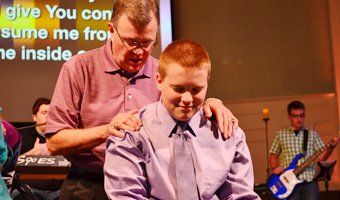
AMARILLO—Paramount Baptist Church in Amarillo has licensed 20 students to the ministry in the last six years.

Calling out ministers, missionaries and other servants of Christ is nothing new for the Panhandle church, Pastor Gil Lain said.

Pastor Gil Lain prays for Hayden Walsh, one of many students at Paramount Baptist Church who has committed his life to vocational Christian ministry. (?PHOTO/George Henson)

"It has been a characteristic of Paramount for years," he said. "Paramount has been a sending point. One of our International Mission Board missionaries … calls us a launching pad. We've got a bunch who are out there on the mission field and in place in churches right now. It's been a pattern here."

At least a half-dozen more young men who attended the church through high school have been licensed by other churches, and at least a half-dozen couples serve as missionaries, he added.

Family Minister Aaron Groff, who until recently served as youth minister, said there isn't a formula in place at Paramount that leads to so many feeling a call to ministry.

Instead, there's a climate that nurtures it.

"More than anything, we try to create a culture that is gospel-centered, where we challenge students to walk in an authentic relationship with Christ," he said.

"I think it's also important that the guys who have been in ministry that came out of Para-mount came back and shared their story. Some of them have helped us with camps and things. There's just been this heritage in place."

When young people sense God's calling and express it, Paramount begins a mentoring process.

Individual mentoring sessions have been held at least biweekly and more often weekly, Lain said. He recalled one group of young men who met with him at 6 a.m. on Thursday mornings and the sacrifice they willingly made to be there so early.

Three church staff members at Paramount Baptist Church in Amarillo—(left to right) Sharoin Tarpley, Karolyn Price and Ramona Coffman—wash the feet of three students who have committed to vocational Christian service—(left to right) Kimberly Fowlkes, Elainabeth Robinson and Kristen Coffman.

"It was the highlight of my week," Lain said. "I received so much from those guys, because they were hungry for learning, and they trusted me and believed in me. In the midst of just the everyday church life and the pressures and burdens, they were a bright light. Even when things were hard on them, they still were a bright light and gave me so much."

Young people who sense a calling on their lives also often are plugged into intern roles, even while still in high school.

Lain also credits the congregation with fostering a climate where people are open to hearing God's calling.

"Paramount is the kind of church where staff members don't just come and leave like a revolving door. I've been here 20 years, and Aaron has been here eight years," he said.

"What our young people see is a church treating a staff like a staff ought to be treated. They see staff members who have joy, who have good support—and they think it's always like that."

For those who have different experiences at other churches, it can be "a real shock to them," he acknowledged.

"But it sets the level high where they know it can be good. That's a real tribute to this church family. Not to us as staff—we're the recipients. It's the church family. It says a lot about Paramount that people want to go into ministry because they see that," Lain said.

Many in the church also emphasize the importance of finding one's purpose in Christ, Groff added.

Paramount does not "push kids toward ministry, but we do teach really strongly that everyone is a minister," Lain said. "Our job is to equip the saints for ministry. And there are a lot other young people here who aren't going into 'the ministry,' but they see what they are going to do as God's call on their life, and they plan to serve the Lord the rest of their life," he said.

The importance of serving Christ regardless of vocation permeates the church membership, Groff said.

"It helps that it's part of the DNA of the church. Our Sunday school teachers, our small-group leaders, the people who go to camp with us—they understand the bigger picture that we serve in our places of work. Not just as a place of work—it's not by accident, but with great purpose," he explained.

"When we're at school, we're to be on mission on that campus; when we travel, we are to be missionaries. Our adults understand that, and they invest that into our students as well."

This year, the congregation planned an intergenerational mission team of youth and adults to foster those mentoring relationships.

In the end, however, calling is not a thing engineered by people, Lain and Groff agreed.

"This is a God thing, not something we can claim any credit for," Groff said.


Louisiana College sues over contraceptive mandate

ALEXANDRIA, La. (ABP)—A Baptist college in Louisiana is suing the federal government over a requirement that religious schools and hospitals cover contraceptives in insurance for their employees, including birth control pills that induce abortion.

The Alliance Defense Fund filed a federal lawsuit in Alexandria, La., on behalf of Louisiana College, a private Christian school affiliated with the Louisiana Baptist Conven-tion. The lawsuit claims new rules mandating coverage of FDA-approved contraceptives violate the college's confession of faith, the 2000 Baptist Faith and Message, which upholds the "sanctity of all human life from conception to natural death."

The lawsuit cites SBC resolutions opposing the manufacture and sale of RU-486, called the "abortion pill" because it is taken to end an early pregnancy after unprotected sex or if other birth control fails.  It also points to FDA approval in 2010 of ella, an emergency contraceptive effective up to five days after conception. 

The lawsuit says requiring Louisiana College to provide health insurance for its employees that covers abortion-inducing drugs would violate "sincerely held religious beliefs regarding abortion." It seeks to block enforcement of the contraceptive mandate as a violation of the school's constitutional rights under the First and Fourth amendments, as well as the Religious Freedom Restoration Act.

The lawsuit describes a compromise announced Feb. 10 by President Obama requiring insurance companies to pay for birth control if religious employers object as "fictitious," because insurers would pass those costs on to employers through premiums. It says that even trying to determine whether a school like Louisiana College qualifies for exemption from the rule as a religious institution requires the government to examine religious beliefs and doctrines in ways that excessively entangle church and state.


Church-state tension inherent in health-care system, expert says

WINSTON-SALEM, N.C. (ABP)—A Baptist church-state scholar says religious liberty concerns about new coverage mandates come with the territory in America's employer-based health insurance system. 

Melissa Rogers, director of the Center for Religion and Public Affairs at Wake Forest Divinity School, said in a Huffington Post article that if the Obama administration's attempt to provide free birth control coverage to all women while respecting the conscience of religious employers who oppose contraception on moral grounds sounds complicated, "that's because it is."

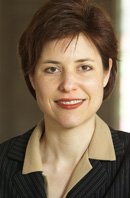
Melissa Rogers

"Indeed, my hope is this episode will prompt us to reconsider our employer-based health insurance system," said Rogers, a senior fellow at the Brookings Institution and former chair of President Obama's first Advisory Council on Faith-Based and Neighborhood Partnership.

The Obama administration's re-cent proposal to take religious organizations that object to contraception coverage out of the equation by requiring insurance companies to pay for it "makes good sense to me" and to a lot of Catholics and other people of faith who say it works well for them, Rogers said.

Some Catholics who oppose artificial birth control and evangelicals who believe "morning-after" or "Plan B" birth control pills cause an abortion, however, still object to supporting such coverage even indirectly and believe forcing them to provide it tramples on their religious liberty.

The Affordable Care Act, passed by Congress and signed into law by the President in March 2010, requires employers to cover preventive services like mammograms, colonoscopies, immunizations and pre-natal and new-baby care with no out-of-pocket costs.

The administration included FDA-approved contraceptives and sterilization among covered services. The White House originally announced a conscience clause exempting churches from the requirement, but not institutions such as church-run hospitals and schools.

After receiving backlash, the president said nonexempt religious organizations would be treated essentially the same as churches and would not have to pay for birth control if they object.

The White House has promised to work out a similar arrangement for self-funded insurance providers like GuideStone Financial Resources of the Southern Baptist Convention.

The Obama administration is right to take seriously legitimate religious-liberty concerns in developing its coverage rules, Rogers asserted.

It is not the government's business to determine whether a certain faith's beliefs are "right," she said. At the same time, allowing employers' to use their religious convictions as an excuse to deny federal benefits to their workers "would be disturbing."

Rogers said the tension is inherent in the U.S. health-care system, where most people are insured through their jobs.

"It is right to honor the religious objections of faith-based employers, but it is also right to ask why we retain a system where the health coverage employees receive may be limited by those objections," she said.

President Obama has said that if he were starting a system from scratch, a single-party plan might make sense, but he isn't starting from scratch. Instead of disrupting an employer-based health-care plan that Americans have grown accustomed to and generally like, his health-care plan calls for reforming the system to control costs and provide coverage for an estimated 50 million citizens who lack health insurance.

Rogers said debate about how to accomplish that is inevitable but need not be so acrimonious.

"These matters are complex, but our debate over them need not be caustic," she said. "May cool heads and fair-mindedness prevail as we move forward."


Young singer finds strength and stability in Christ

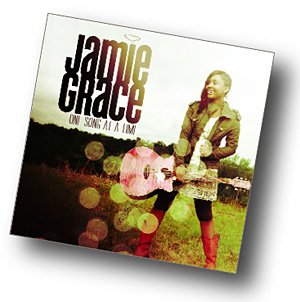
ATLANTA, Ga.—Jamie-Grace Harper's Grammy Award-nominated contemporary Christian song, "Hold Me," grows from her own experience of God's sustaining grace as she has struggled with Tourette syndrome.

Jamie-Grace Harper’s Grammy Award-nominated contemporary Christian song, “Hold Me,â€Â grows from her own experience of God’s sustaining grace as she has struggled with Tourette syndrome.

At age 11, Harper was diagnosed with the neurological disorder characterized by uncontrollable sounds or movements.

"Symptoms started showing up when I was 9, and it was two years later that I received the official diagnosis," Harper said. "It was really frustrating and stressful, because I started making these weird movements and sounds that I couldn't control, and I dealt with a lot of bullying and torment from kids at school. When I got the diagnosis, in one way it was a relief to know what was going on. But it also left me with more questions and heartbreak, because there wasn't a cure or a medicine to fix it.

"Before being diagnosed with Tourette's, I was this outgoing kid who was passionate about her faith. After receiving the diagnosis, I spent almost two years in a slump. I never doubted that God was there, but I thought he didn't love me as much. I thought that my parents and sister must have loved the Lord more than I did, and in return, God must have loved them more than he loved me because they didn't have this problem. I had a lot of doubts and insecurities with my relationship with Christ and also with my self image." 

However, an unexpected gift from her grandfather sparked a renewed joy and also helped relieve some of her symptoms.

"When I was 13 or 14, my grandfather gave my sister and me a drum set and guitar," Harper said. "Looking back, I think he was trying to bring us some hope and joy during this time.  I don't think he had any idea that he was stirring up this passion in me to play music.  I had been singing my whole life, but when I started playing these instruments, it took music to another level for me and also started helping my symptoms. During that same time, I was really impacted by Psalm 30:5, 'Weeping may remain for a night, but rejoicing comes in the morning.'

"Between that verse and being involved with music, I was able to start coming out of my slump and began to understand that God still had a plan and purpose for my life. I realized that he wasn't going to let go of me—even though I was confused, stressed out and depressed. When I realized that he was still there and was still taking care of me, my outlook on life completely changed." 

At age 19, Harper performs concerts across the country on the Revolve Tour, where she shares a message with teenage girls about finding strength and identity in Christ. In addition, she has established a nonprofit organization for teenagers with Tourette syndrome. As she describes her personal struggles, she desires to provide comfort and hope for others who are suffering from similar issues or illnesses. Harper has also created the Grace Talk conference, designed for local churches and focusing on topics relevant to teenage girls such as purity, relationships, parents and school. 

{youtube}ISgr8SgCYbY{/youtube}

A few months ago, she released her debut album, One Song at a Time. While maintaining a busy speaking and performance schedule, Harper is majoring in child and youth development at Point University, formerly Atlanta Christian College. 

Whether she is singing, speaking or working with young families, Harper desires to make an impact on lives with messages of hope and encouragement while sharing the gospel.

"I want to do everything I can to help other teenagers and to tell everyone I can about the joy of the Lord," Harper said. "I want to do whatever I can to share the love of God and to share that we all go through difficult things, but we are never alone. God is right there with us, and is never going to leave his children."


On the Move

Wesley Clark to First Church in Pearsall as minister of youth.

Steve Dominy to University Church in Shawnee, Okla., as pastor from First Church in Gatesville.

Jonathan Hewitt to First Church in Carrizo Springs as interim pastor.

Chris Lang to Wellborn Church in Wellborn as interim youth and children's minister.

Rosy Smith to First Church in Pearsall as minister of senior adults.


Faith Digest

Obama proposes change in charitable deductions for wealthy. For the fourth year in a row, President Obama is proposing lower tax deductions for the wealthy on donations to churches and other nonprofit organizations. Under the 2013 budget proposal from the Obama administration, the tax break for charitable donations would fall from 35 percent to 28 percent for the top 2 percent of taxpayers, those earning more than $250,000. Obama has argued in the past it is not fair that the wealthy receive a larger tax break for the same donations to charity when a middle class taxpayer can claim only a deduction of 15 percent. The White House said the change wouldn't affect the 80 percent of overall contributions that come from individuals and foundations and is unlikely to have a substantial impact on donations.

British court rules against town meeting prayers. A British High Court justice has triggered dismay and anger across England and Wales with a recent decision that declares prayers at town hall meetings against the law. Justice Duncan Ouseley ruled local government councils were violating a 40-year-old law if they conducted prayers "as part of a formal local government meeting." But the judge added that prayers could be allowed if they were held before the town hall meeting officially began, and if councilors were "not formally summoned to attend." The High Court ruling came after the National Secular Society and an atheist councilor, Clive Bone, filed suit against Bone's town council in Bideford, in southwest England.

No opt-out for Quebec students. Canada's highest court has ruled children in Quebec schools cannot opt out of a course on ethics and world religions. The Supreme Court unanimously rejected an appeal from Catholic parents who sought to keep their children out of the course because they felt that exposing them to a variety of religions would confuse them. The nine high court judges disagreed, saying exposing children to beliefs and values that differ from their own is a fact of life in Canada's multicultural society. The Supreme Court decision upheld two lower court rulings that dismissed the parents' claim.

FBI, Muslims discuss training materials. FBI officials say they are willing to consider a proposal from a coalition of Muslim and interfaith groups to establish a committee of experts to review materials used in FBI anti-terrorism training. The coalition raised the idea during a meeting with FBI Director Robert Mueller, who met with the groups to discuss pamphlets, videos and other anti-terrorism training materials that critics say are either Islamophobic or factually incorrect. Groups at the meeting included the Islamic Society of North America, the Muslim Public Affairs Council, the Sikh American Legal Defense and Education Fund, the Interfaith Alliance, and the Shoulder-to-Shoulder campaign. Mueller told representatives of the groups that FBI experts had reviewed almost all of the agency's training materials, including 160,000 pages of documents. More than 700 documents and 300 presentations were subsequently pulled from the agency's training materials.

–Compiled from Religion News Service


Around the State

Dillon International will hold a free adoption information meeting March 19 at 6 p.m. at Buckner Children's Home in Dallas. A representative will give an overview of adoption from China, Korea, Haiti, India, Hong Kong and Ghana. A domestic adoption program for Texas families and adoption programs in Russia, Ethiopia and Honduras, available through an affiliation with Buckner, also will be discussed. For more information or to make a reservation for the meeting, call (214) 319-3426.

Sue Jordan was named the Sam B. Hall Jr. Civic Service Award recipient during a banquet held at East Texas Baptist University. The annual Sam B. Hall Jr. Lecture Series commemorates the late U.S. representative and federal judge, who was a Marshall native and an alumnus of the College of Marshall, which now is ETBU.

Hardin-Simmons University's first Honors Forum on Faith and Intellect will focus on bioethics. The March 22-23 event will feature Peter Dysert, chief of pathology at Baylor University Medical Center, and Jim Denison, president of the Denison Forum on Truth and Culture, as keynote speakers. The forum includes concurrent sessions on various bioethics themes, a disabilities panel discussion, a physicians panel and a student art show. Registration begins at 2 p.m. Thursday, and the conference concludes at 1 p.m. Friday. Fees are $20 for the conference and meals, with discounts for employees, students and honors alumni. Meal reservations must be made by noon March 20. For meals reservations or more information, call (325) 670-1531.

• Host churches still are needed to assist with volunteers and meals for the Dallas Association's Dallas Cup Hospitality Center April 2-6 in Frisco. The Dallas Cup soccer tournament brings players, coaches and fans from all over the world, and the hospitality center is one means of spreading the gospel through this event. For more information, call Carolyn Alston at (214) 319-1166. Participating congregations need to send a team leader to a volunteer orientation meeting at 10 a.m. March 22 at First Church in Frisco for final preparations and information.

• Tony Martin, professor in the Christian studies department, will speak on "The Abiding Lesson of the Titanic Catastophe" at the April 12 University of Mary Hardin-Baylor Christian Studies Forum at noon. Held in the Shelton Theater of the Mabee Student Center, the event is free and open to the public. Participants are encouraged to bring a lunch.

• Brian Bessent, David Lott and Melanie Ocana have been named the recipients of Hardin-Simmons University's outstanding young alumni awards by HSU's Board of Young Associates. The board is a select group of alumni under age 40 who aspire to assist the university in achieving its mission of providing a quality education in a Christian environment.

Dallas Baptist University's Women's Auxiliary presented its annual Ruth Awards to Joyce Andres of Irving, Beverly Giltner of Arlington and Betty Rush of Hurst.

Howard Payne University celebrated Black History Month with a special chapel service. Members of the African-American chapter of HPU's Alumni Association, current students and former students presented poetry, music and stories during the service titled "Pressing on with Precision and Purpose."

Anniveraries

• Mountain Church in Gatesville, 80th, March 25. John Weaver will be the guest speaker. A covered-dish luncheon will follow the morning service. Kurt Fuessel is pastor.

• Park Robertson, fifth, as pastor of First Church in Noonday, March 30.

• First Church in La Feria, 100th, April 13-15. Call (956) 797-1214 for more information.

Deaths

• Estelle Watson, 93, Jan. 14 in San Angelo. A pastor's wife, she made two missionary trips to Russia and taught Sunday school until the end of her life. She was preceded in death by her husband, Ausie, in 1993. She is survived by sons, Travis and Larry; daughter, Peggy Beeman; seven grandchildren; five great-grandchildren; and one great-great-grandchild.

• David Womack, 57, Feb. 26 in San Angelo. He was pastor of Eola Church in Eola. He is survived by his wife, Julia; daughter, Reanna Choate; son, David; stepsons, Michael and Daniel Farris; and sister, Brenda Young.

Retirement

• Nancy Conlin, as minister of childhood education at First Church in Bryan, March 15. She served the church 19 years.

Event

• First Church in Bryan will hold a two-hour seminar with Nabeel Jabbour on reaching out to Muslims March 25 from 5 p.m. to 7 p.m. in the fellowship hall. David Higgs is pastor.

• Roland Hill has been named police chaplain emeritus by the Pasadena Police Department. He served as the department's chaplain more than 36 years. For 31 years, he also was pastor of First Church in Pasadena, where he continues to teach and minister as a retiree.

Revival

• First Church, Poteet; March 4-7; evangelist, Jason Dykes; pastor, Michael Allen Weaver.