Bubba Jonas to Mingus Baptist Church in Mingus as pastor, after serving the congregation as interim.
Oza Jones to Texas Baptists’ Center for Ministerial Health as director of evangelism, from his previous role as director of African American Ministries in the Center for Cultural Engagement.
Cory Liebrum to the role of director of discipleship and NextGen within Texas Baptists’ Center for Church Health, from his previous role as youth and family ministry specialist with Texas Baptists.
‘I needed a miracle,’ living Christian martyr recalls
October 29, 2024
As the young Sudanese child of a Christian mother and Muslim father, Mariam Ibraheem never planned to end up in the United States one day, but God had other plans, she said.
Ibraheem addressed a Dallas Baptist University gathering to pray for all persecuted religious minorities, Oct. 24.
In 2014, Ibraheem’s imprisonment and impending death sentence drew international attention and prayer, before Christian Solidarity Worldwide and other religious freedom advocates aided in her release and eventual resettlement to the United States.
Ibraheem was born in a refugee camp in Sudan. Her father died at the camp, before she and her mother left to settle in a small town.
She described her childhood as happy, despite the difficulties. Her mother was warm and generous and well-loved in the community, even though she was a Christian, Ibraheem explained.
Though she was reared in her mother’s Ethiopian Orthodox faith, her father’s Muslim surname created problems for her down the line.
The small town they’d settled in was under Islamic sharia law. She didn’t mind honoring social customs to cover her hair and wear a long dress. But she said what the school taught about Islam didn’t sit well with her, when she looked at the kindness of her Christian mother. During Muslim prayer times tensions increased.
They decided it would be better for her to attend a Catholic school. So, Ibraheem moved to complete her studies.
A Catholic priest became her legal guardian, a requirement in order for a young woman to secure a dormitory.
The nuns at the Catholic school made an impression on her, Ibraheem said, because they were there not for their own benefit, but to serve the Lord. She said she wouldn’t describe herself as converting to Catholicism, but rather as “growing in that space where she was.”
It was a formative time in her faith. The Roman Catholic Church was open to anyone who had need, not just Catholics. Ibraheem noticed this openness.
She went on to one of the top universities in Africa to study medicine, graduating in 2010, but she never became a doctor. Doing so would have required her to become Muslim, as Christians faced discrimination and weren’t allowed to practice medicine.
Her mom died while she was away at school, but Ibraheem went back to the small town where her mother had lived. Women generally were not allowed to own a business. But townspeople helped her acquire land and set up a farm and a business at the market, she said, because they had respect for her mother.
The day her life turned upside down
She was content in that life, until her husband, an American citizen, returned to Sudan for a visit. While he was there, Ibraheem was summoned one day to the police station.
She thought maybe something had happened to one of the workers at her farm. Instead, it was her half-brothers, who she didn’t know, there to challenge her life choices. They claimed she was Muslim and charged her with committing adultery.
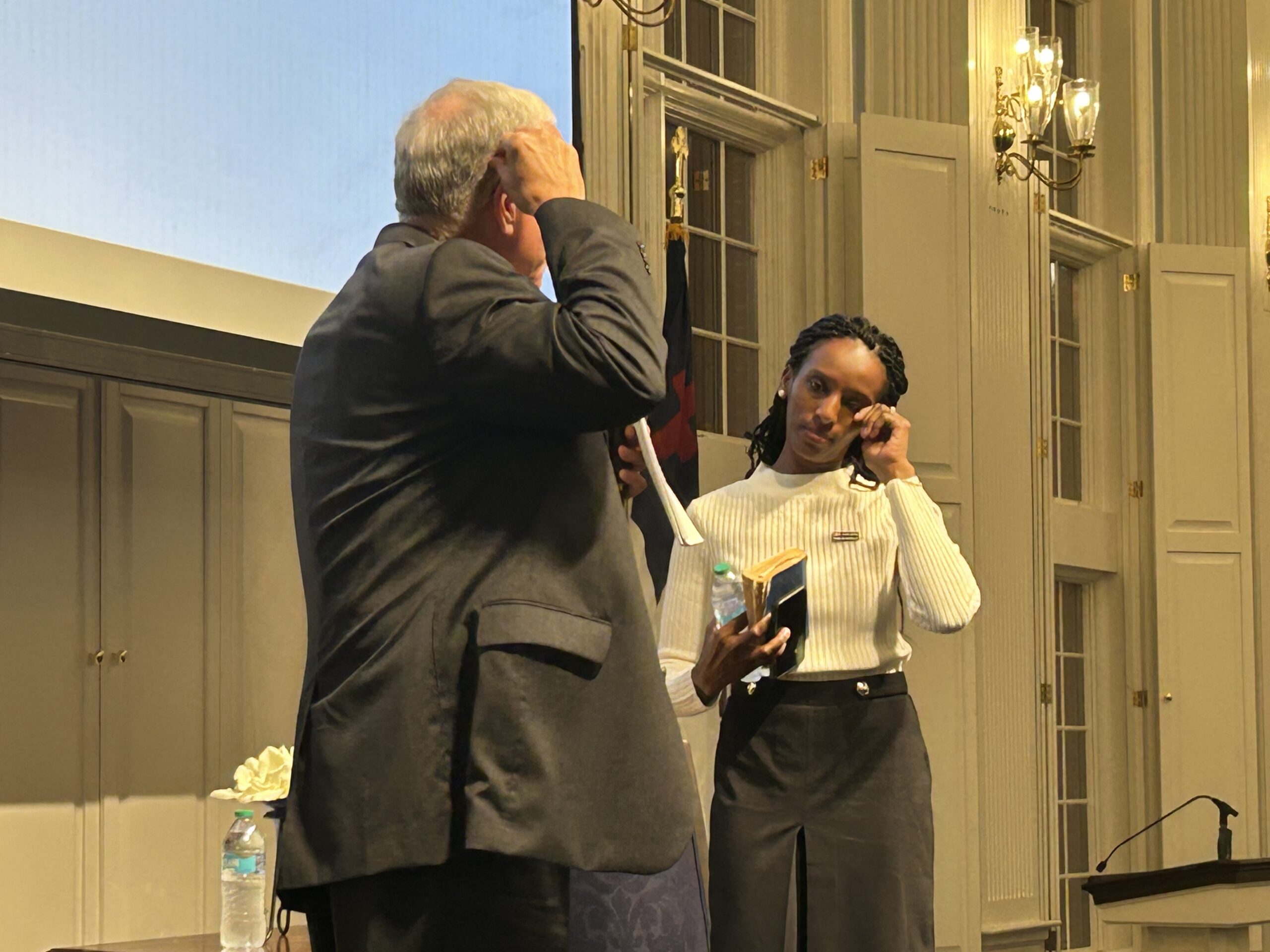
Ibraheem shows the audience the Bibile she smuggled into prison, at great cost. She took pages out to hide them as she read. (Photo / Calli Keener)
Ibraheem explained because her father was a Muslim, she was considered Muslim, and it was illegal for Muslims to marry Christians. Because she was considered illegally married, her son was considered illegitimate and under threat of being taken from her to be placed in an orphanage or with Muslim family members.
She tried to explain to the judge she was never Muslim, but the judge would not listen.
She had been advised to say “yes” to everything the judge said, but she couldn’t.
He told her she faced execution for being a Christian, when in the eyes of the law, she was Muslim, she explained. But the judge said he wanted to save her life.
She responded: “I’m already saved in Christ. He saved my life.”
In response to her perceived insolence, the judge ordered her to jail on adultery charges, Christmas Eve 2015. It was her son Martin’s first Christmas, and she had been looking forward to celebrating together as a family.
To prevent the government or her half-brothers from taking custody of her son—because it was illegal for a Christian to be his father—the toddler, Martin, went with Ibraheem to prison, but he would only be allowed to stay there until he turned 2 years old.
Ibraheem also discovered she was pregnant again during the prison intake process.
She described games she played with Martin in prison to disguise the shackles on her legs, because seeing her in chains upset him. She said she still has marks where the shackles cut into her ankles when pregnancy made her ankle swell.
She also explained people frequently were sent to her in jail to try to convince her to denounce her faith. They would threaten her with taking Martin away and putting him in an orphanage. She constantly was told all she had to do to go back home with her son was renounce her faith in Jesus.
Other inmates knew of her Christian faith due to local media coverage. They threatened to kill her and Martin. Ibraheem said she barely slept in prison, out of vigilance for their safety.
The priest who was her guardian encouraged her to remember she was none of the terrible things they were saying about her. She wasn’t there because she was an infidel or a bad person, he assured her. “You’re there because you love Christ.”
“I knew there was a purpose for what I had to go through,” Ibraheem said. She described feeling a peace no matter how things might turn out.
Death Sentence
Her refusal to recant resulted in another charge, apostasy, which carried a death sentence.
Finally, she was given three days, she said. “This is your last chance,” she said they warned her. “After that, you have to face your sentence.”
She was near the time for her baby to be born, and the sentence was 100 lashes and death by hanging.
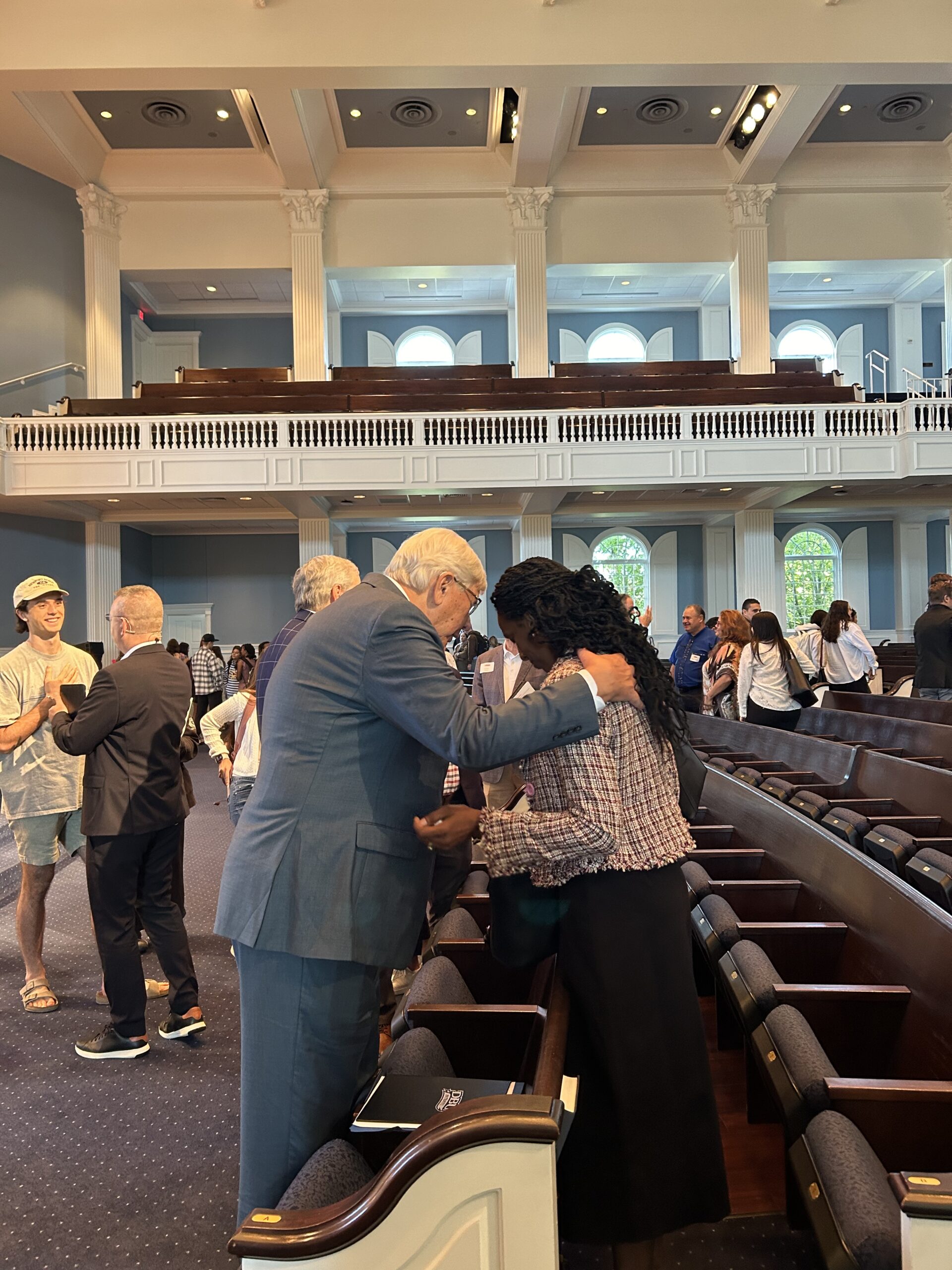
Randel Everett, senior fellow for DBU’s Institute for Global Engagement, takes a moment to pray for Ibraheem after DBU chapel services. (Photo / Calli Keener)
“I needed a miracle,” she said. “I was praying for a miracle.”
She was at peace with whatever happened. But she knew Jonah was in the belly of the fish for three days and Jesus was in the tomb for three days, so she prayed God might grant her a similar miracle, Ibraheem explained.
At court she was held in a cage, while Martin sat with her lawyers. Ibraheem recalled a crowded room and the fear on her lawyers’ faces.
But when the judge told her to stand, “I was looking into his eyes. I wasn’t scared,” she said.
“The room was very comfortable,” Ibraheem noted. And she didn’t know why, but “he was sweating. He was scared.”
When the judge read her sentence, he said because Islam is a religion of mercy and she was pregnant, her sentence would be suspended to give her two years once the baby was born.
“I got my miracle,” Ibraheem observed.
She returned to prison, where her daughter Maya was born. She received no medical care. No one believed she was in labor, so Ibraheem delivered the baby in shackles—alone except for Martin who was beside her when his sister was born.
When she was imprisoned, Ibraheem did not know about the prayers for her taking place around the world, though at times, she said, she’d felt their power.
Advocates helped gain Ibraheem’s release and her eventual resettlement to the United States, where she now lives with her family. She speaks publicly about her experience, continuing to advocate against religious persecution.
Dallas Baptist University’s Institute for Global Engagement hosted the two-day Praying for ALL the Persecuted event.
UPDATED Oct. 31, 2024, to note the host and event name.
Park Cities Baptist withdraws from SBC
October 29, 2024
Park Cities Baptist Church in Dallas—a prominent congregation situated in the affluent Highland Park/University Park area—voted to withdraw its affiliation with the Southern Baptist Convention.
During an Oct. 27 called conference, the congregation approved the motion to cut ties with the SBC “by a strong majority,” according to a public statement released by the church.
“The church appointed a lay leader committee, which studied these matters for more than nine months, outlined the various issues that led them to recommend this course of action,” the public statement from the church said.
“Although there were multiple matters raised, the concern for the autonomy of the local church and the desire to determine the timing and grace of any separation from the SBC were of paramount importance.
“As part of the motion to withdraw, the church affirmed that it is a God-glorifying, Gospel-centered, Bible-believing, theologically conservative Baptist church and that neither its doctrine nor its beliefs have changed.”
At the same time, the church reaffirmed its denominational commitment to the Baptist General Convention of Texas “and its engagement with the state convention in its missions and ministries.”
The chief executive officers of some BGCT-affiliated institutions and agencies are members of Park Cities Baptist, and its members serve in a variety of capacities on Texas Baptists’ committees and boards.
The statement from the church noted the congregation charged committees to “evaluate effective ways to work with and support specific projects” of the SBC International Mission Board and North American Mission Board.
“In all of this, we will all seek to glorify the Lord, build up the church, unify the overall Body of Christ, and proclaim the Gospel even more effectively. We move forward together as a church family to further the Gospel in the unity of the Spirit to the glory of God,” the statement from the church concludes.
Gradual distancing from SBC in recent years
Park Cities Baptist Church was organized in 1939 as a Southern Baptist church, and former pastors served in a variety of leadership roles in the national convention.
However, for at least two decades, the church’s involvement with the SBC essentially has been limited to support for its mission programs.
While the statement from Park Cities Baptist did not specify exactly what prompted the decision to withdraw from the SBC, the Southern Baptists at their annual meeting in June debated a constitutional amendment that would have barred from the SBC churches that employ female pastors.
Messengers to the annual meeting voted 61.45 percent to 38.38 percent in favor of the amendment limiting “friendly cooperation” with the SBC to a church that “affirms, appoints, or employs only men as any kind of pastor or elder as qualified by Scripture.”
Although a majority approved the measure, it failed because amendments to the SBC constitution require two-thirds approval at two consecutive annual meetings.
The website for Park Cities Baptist Church staff listing currently does not include any women who carry the title “pastor.” However, Pastor Jeff Warren has advocated for women in ministry.
“Jesus did not genderize the Great Commission, nor does God dispense spiritual gifts to his children according to sex. We must release every girl and boy, woman and man into their God-given calling, not putting parameters around anyone based on sex, ethnicity or status,” Warren wrote in an opinion article published March 21, 2023, in the Baptist Standard.
“Relegating women to specific roles—often preschool, children, youth, worship or women’s ministries—is to narrow the work of a gift-filled congregation and thus stifle the advancement of the gospel.
“Such parameters have not always been imposed on the mission field in other parts of the world. Let’s release our girls and women—called by God—to lead, proclaim, teach and preach the glorious message of the gospel to the whole wide world.”
40-year-old Arabic Church of Dallas reaches the world
October 29, 2024
A church started in 1982 as a home Bible study for Arabic-speaking immigrants celebrated its 40th anniversary Oct. 27.
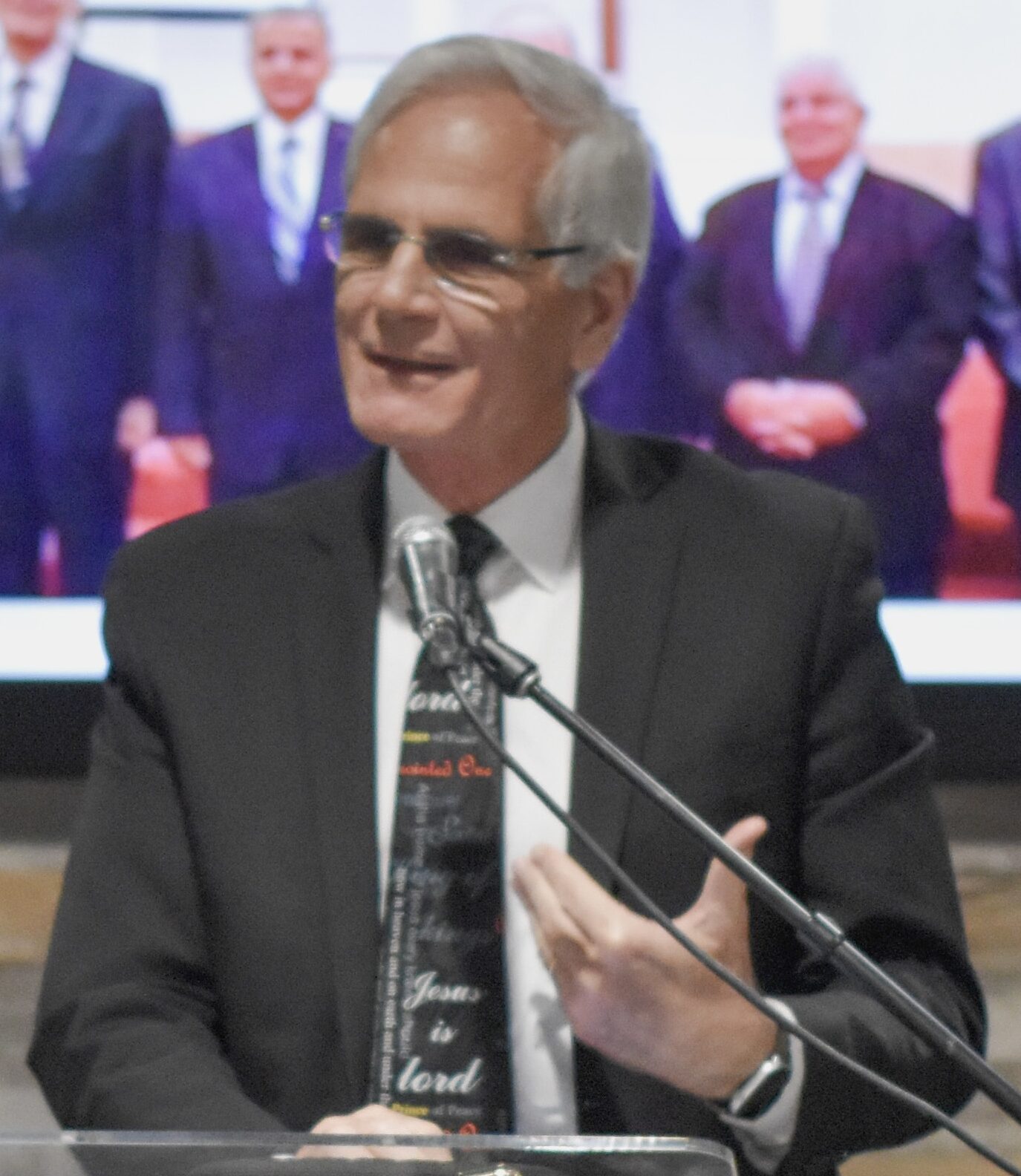
Jalil Dawood, current pastor of Arabic Church of Dallas. (Photo: Heather Davis)
When the Arabic Church of Dallas started, “there was no Arabic-speaking church in all of North Texas,” current pastor Jalil Dawood said. “The next one is 300 miles away in Houston.
“Newcomers to the United States need to feel at home at the start of their lives until they adjust. Also, they need to hear the gospel and get saved, as this great nation provides freedom to come to Christ.”
Beginnings
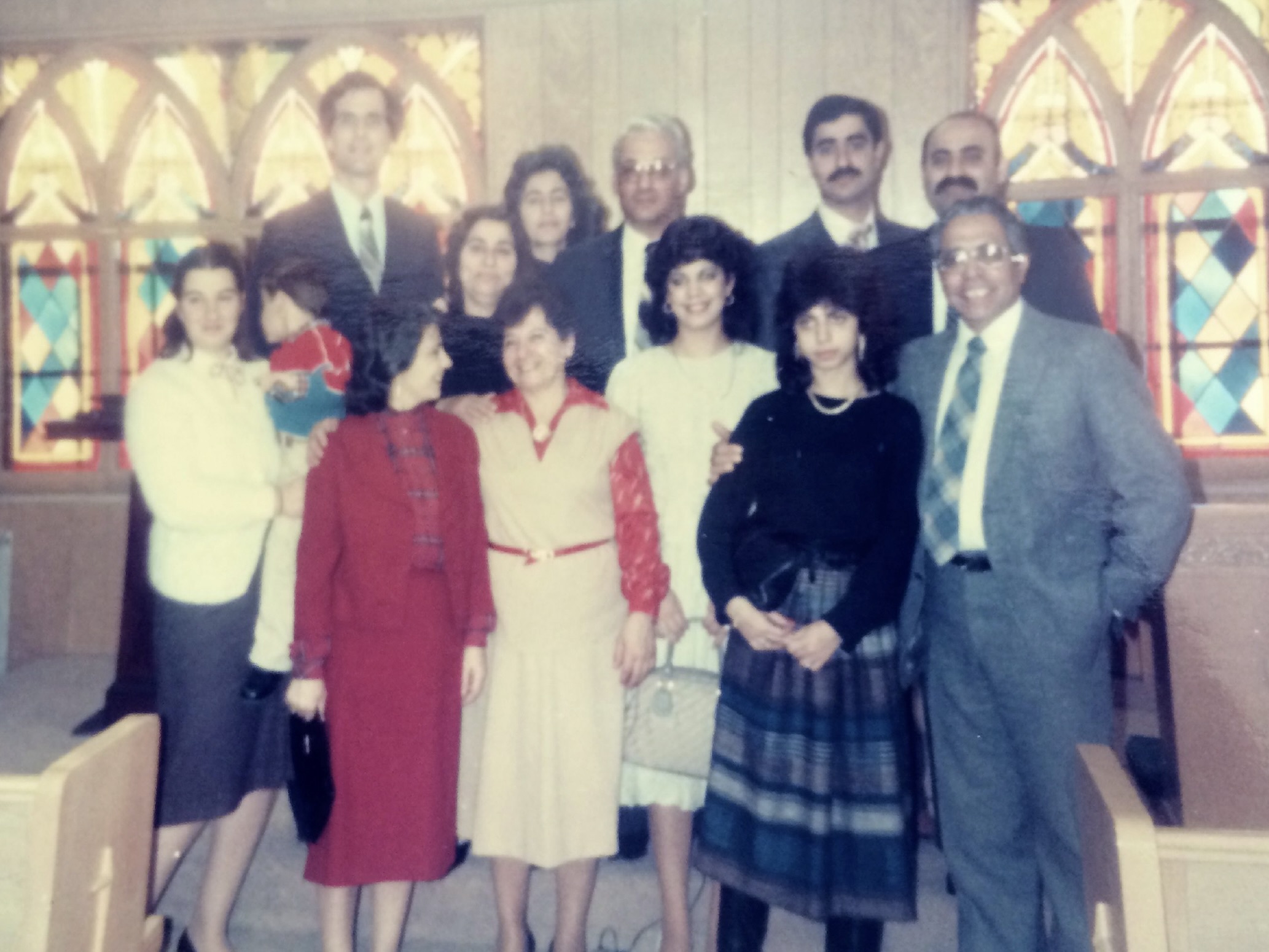
Original members of Arab Church of Dallas, with founding pastor Imad Shehadeh (back row, far left). (Photo courtesy of Imad Shehadeh)
Imad Shehadeh came to Dallas from Jordan with his family in July 1982 to study at Dallas Theological Seminary. Four of the five pastors of Arabic Church of Dallas—Shehadeh and three others—“felt that receiving theological training at an interdenominational seminary was best to prepare us for a future ministry in the Middle East.”
The Shehadehs started the Arab Bible study soon after they arrived in Dallas. The Bible study grew and needed a larger space. First Baptist Church in Dallas, where the Shehadehs were members, gave the group a Sunday school room in its facilities.
The Arab Bible study continued to grow and became recognized by the leadership of First Baptist Church.
Imad Shehadeh, founding pastor of Arabic Church of Dallas and president of Jordan Evangelical Theological Seminary. (Photo: Heather Davis)
W.A. Criswell, pastor of First Baptist Dallas at the time, “felt that I should be ordained as pastor, to which the Arab believers of the Bible study agreed fully,” Shehadeh said.
After Shehadeh’s ordination in May 1984, the Arab church was “given a whole wing at First Baptist that became known as ‘The Arab Chapel.’ So, while the Arab Church started in 1982, it was made official in 1984,” Shehadeh explained. “It assumed the name ‘The Arab Church of Dallas’ when we relocated to Richardson” in 1988.
Transitions
More people of Arabic descent lived in North Dallas than near downtown Dallas. So, the church relocated north.
“We had a long dream to relocate to our own place,” Shehadeh said. “We leased a building in 1988 in Richardson, and we all contributed physically with the work of renovation, along with some professional builders supplied by First Baptist Dallas. It was a very nice facility with a worship hall, a fellowship hall and several classrooms.”
Arab Church of Dallas on Pastor Imad Shehadeh’s (center) farewell Sunday at their Richardson location. (Photo courtesy of Imad Shehadeh)
Shehadeh completed his degree at Dallas Theological Seminary in the summer of 1990 and returned to Jordan.
“It was so extremely painful to leave the Arab Church of Dallas that we planted and served for eight years. But we were fulfilling a calling from the Lord that we had to obey,” Shehadeh said.
Samir Kawar became the church’s second pastor. Two years later, the church needed to relocate again when rent was raised beyond what the church could afford.
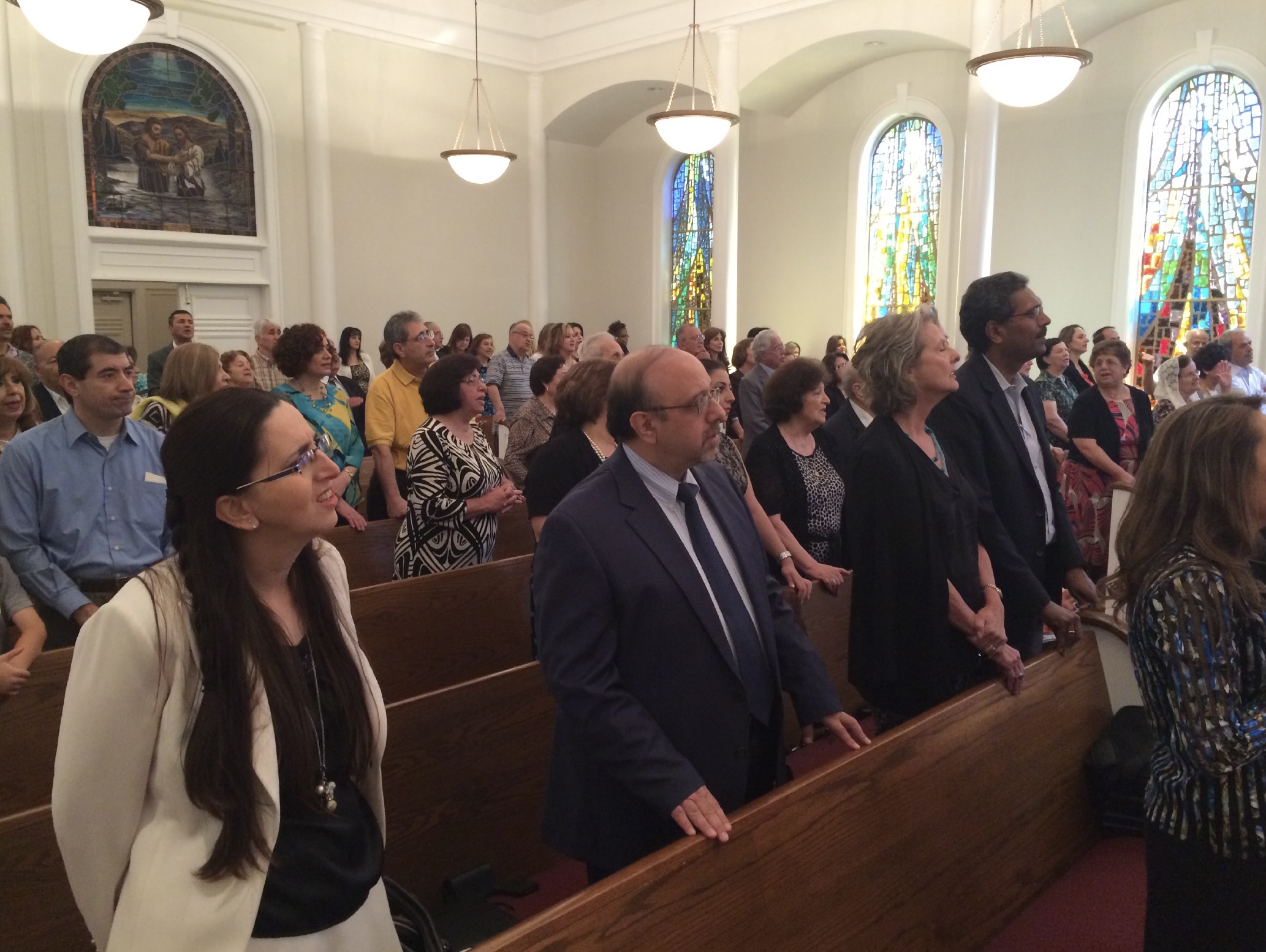
Arabic Church of Dallas’ 30th anniversary celebration in the chapel of First Baptist Church of Plano. (Photo courtesy of Imad Shehadeh)
The Arab Church of Dallas eventually found a host and partner in First Baptist Church of Plano. When First Baptist Plano relocated in 2021 from its historic downtown Plano location to its new facility near Coit Road and the President George Bush Turnpike, Arabic Church of Dallas made the move with them.
“Muslims have built 100 mosques in the Dallas-Fort Worth area and 200 in the Houston area,” Dawood noted. “If the Lord provides, we would love to have our own building, but not for the sake of a building, but for the glory of the Lord, as a city on a hill shines for the glory of God and to those who speak Arabic.”
While Arabic Church of Dallas is similar in many ways to what Dawood called “American churches” with respect to doctrine and style of worship, they experience challenges particular to churches composed predominantly of immigrants.
“Christians from the Middle East merge with the English-speaking American churches. So, people move to churches based on their needs, especially with the second generation [of immigrants],” he said. So, attendance and membership numbers fluctuate, especially when “there are waves of refugees and immigrants from the Middle East.”
Reaching the world
A photo of the five pastors of Arabic Church of Dallas taken during the church’s 30th anniversary celebration. lLeft to right: Imad Shehadeh, Nabeeh Abbassi, Tony Malouf, Samir Kawar and Jalil Dawood. (Photo courtesy of Imad Shehadeh)
Ministry to Middle Eastern refugees and immigrants stretches beyond Arabic Church of Dallas. In 2014, Dawood—a refugee from Iraq—founded World Refugee Care to feed refugees around the world and to plant churches. The nonprofit also has “trained pastors and leaders among refugees in Australia, Germany, Turkey, Iraq, Greece [and] Holland.”
“We are working to start new works in many other different nations,” Dawood continued. “And we have training material for leadership and discipleship that can be used with any church or backgrounds.”
Churches wishing to inform, educate and train their members to reach immigrants and refugees from the Middle East or who are looking for a partner in planting churches there can learn more at World Refugee Care.
Jordan Evangelical Theological Seminary (Courtesy photo)
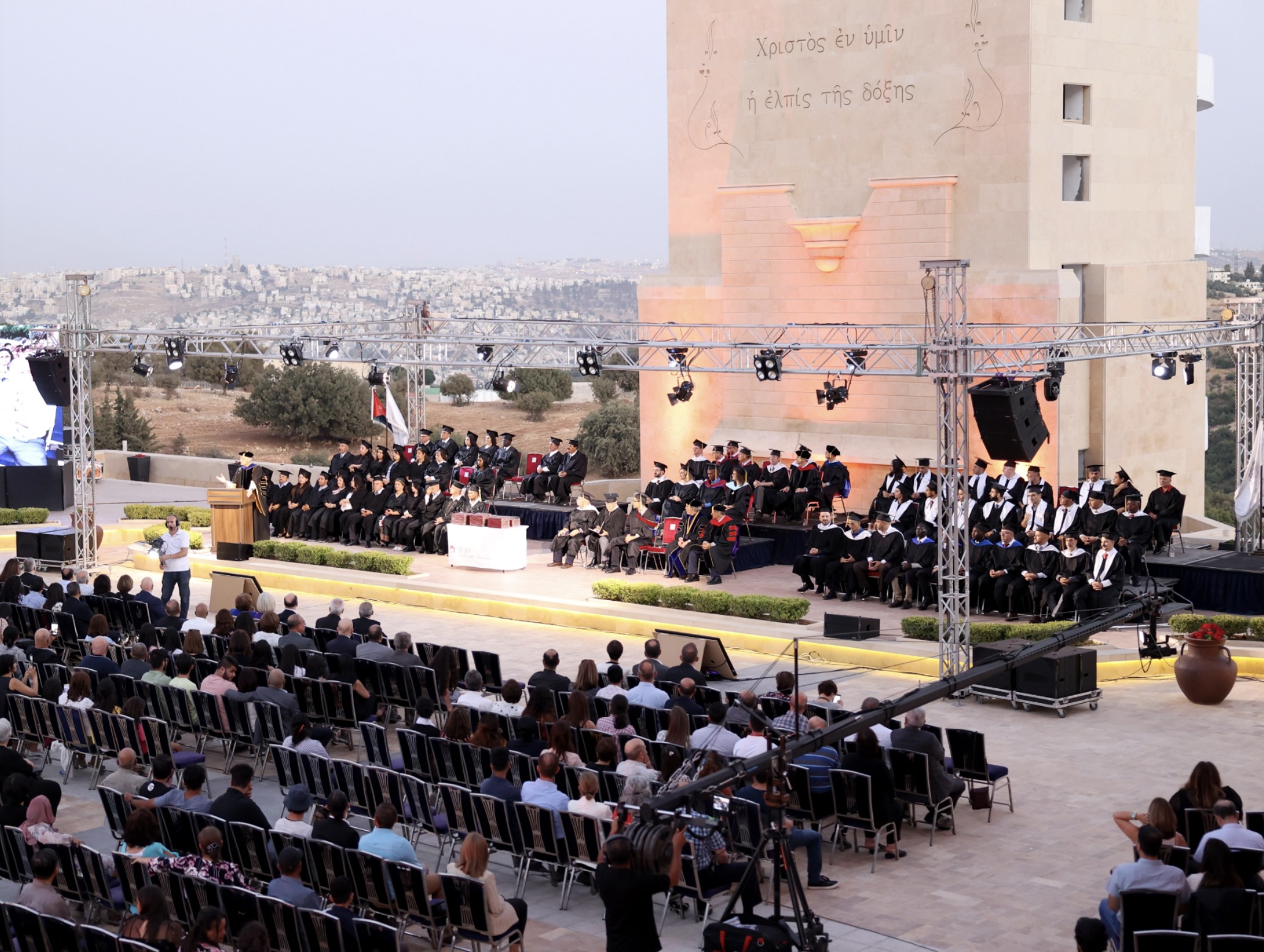
Shehadeh “returned to Jordan in 1990 to start a training ministry at the request of Middle East leadership. The fruit was the founding of the Jordan Evangelical Theological Seminary [in 1991], now in its 33rd year. The seminary seeks to train men and women from the 22 Arabic speaking countries of the Middle East, North Africa and Arab Peninsula.”
A graduation ceremony at Jordan Evangelical Theological Seminary. (Courtesy photo)
“While it is a missions-focused school, it is also a degree-granting institution at the bachelor, master and doctoral levels, with graduates now serving in 26 countries,” Shehadeh said. “As Dr. Criswell would say, ‘This is God!’”
Nabeeh Abbassi, former pastor of Arabic Church of Dallas and head of Jordanian Baptist Convention. (Photo: Heather Davis)
Another former pastor, Nabeeh Abbassi, also became a pastor of a Baptist church in Jordan and is the head of the Jordanian Baptist Convention.
“I am very proud and do rejoice in my heart for what the Lord has done. Being at the 40th celebration, it was a joy to see many familiar faces, many new faces, but also to recognize that at least 16 people who were part of this church have gone to glory,” Shehadeh said.
“The Arab Church of Dallas is a living testimony of God’s faithfulness and the faithfulness of the leadership that served in it.”
Wayland student mission trips made eternal difference
October 29, 2024
PLAINVIEW—For native-born Alaskan youngsters Parker and Marty, Wayland Baptist University’s nine-year investment in the Kenai Peninsula Sports Camp operated by Alaska Missions made a difference—an eternal difference.
“In 2015, we were the first group that went to help get the camp started,” explained Donnie Brown, director of spiritual life at Wayland. “We’ve been going back pretty much every year since then.”
Making his second visit to Alaska, Alex Clements was among five students to make the trip during the summer break. He got the opportunity to lead Parker and Marty to Christ. They are two of five kids who made professions of faith in Christ during the time the Wayland team was in Alaska.
Led by Wayland’s offensive line coordinator, Marcos Hinojos Jr., other Alaska team members included Annalicia Hernandez, Mikayla Shires, Jazmine Jackson and Dylan McDougal.
They recently were joined by baseball Coach Todd Weldon and students Jeremy Bolligar and Olivia Fisher as they spoke in a chapel service highlighting three of Wayland’s summer missions programs.
Weldon and Bolligar worked at a Students International baseball camp in Jarabacoa, Dominican Republic, while Fisher worked with Go Now Missions, a Texas Baptist missions partner, in Zwolle, La.
Making eternal impact in Alaska
Clements told students attending the Wayland chapel service about sharing a dorm with Parker and Marty and learning from them.
“They told us a lot of stories about how they lived—like how they had to go and hunt for a lot of their food, like literally going to hunt for whales and seals,” Clements said.
As they grew to understand each other, Clements and the other Wayland students shared their faith with Parker and Marty. By the end of the week, “those guys had been so receptive to what we were saying that they ended up being saved. I really saw God move through them.”
Hinojos confessed he initially wondered what kind of an impact five people from a Texas Baptist school could make in Alaska.
“But God kind of slapped me in the face with what he did with this group of five people,” Hinojos said. “Six kids came to accept the Lord, and their lives were changed not just in the moment, but forever—for eternity.”
“It doesn’t matter how young you are. It doesn’t matter where you’re at in your faith journey. None of that matters,” the football coach said. “What’s important is that you answer the call when the Lord says it’s time, and these five did. They dramatically changed the course of those kids’ lives forever. It was neat for me to see.”
Teaching kids to play football was way out of Shires’ comfort zone, yet God was teaching her as she used sports to share the gospel with kids.
“Alaska is known as one of the most beautiful places on earth, but there is also home of some of the most broken and lost souls. And you don’t know that until you go out there,” Shires said.
“So, God just kind of put on my heart that I just need to be a missionary wherever I go. You never know who’s going to be needing the gospel. God used this trip to help me to realize that every single person, no matter where you are, needs the gospel.”
Using baseball to reach youth in Dominican Republic
At the baseball camp in the Dominican Republic, a devotional time provided Bolligar an opportunity to share his faith with young players.
“At the end of the week, I got the opportunity to lead a devotional for them,” he said. “I never thought I would lead a devotional, and I never thought I’d be on stage speaking at chapel either. I just saw that the kids through the week just started getting more attentive and started asking a lot more questions. That’s the way I saw God work.”
His baseball coach also got opportunities to share his faith with young players.
“I felt really the Holy Spirit placed on my heart to communicate to those kids because in the Dominican Republic baseball is huge. It’s an opportunity to a better way of life,” Weldon said.
The kids who attended baseball camp might never make it to the major leagues in the United States, but the Wayland group used their interest in sports to introduce them to new life in Christ. Weldon emphasized “the importance of their relationship with Jesus and growing closer to him.”
Changing lives
Fischer spent her time in Louisiana working in backyard Bible schools for little children and visiting senior adults in a nursing home.
“We ran the gamut from little-bitties to the elderly,” she said. “Some of them knew about God, and some of them didn’t. But at the end of each VBS, they did like a little performance of what they learned. You could hear God moving through those children. You could hear the voice of the Holy Spirit, and it was just so moving to see how the kids had grown.”
Brown closed the chapel service with an invitation to students to participate in mission trips during fall and spring breaks as well as the summer months.
“God uses those mission opportunities to change people’s lives,” Brown said. “But also, your life is changed for participating.
“Our hope is that after you experience one of these trips—you go, and you serve—that you come back ready to serve right where you are and that the lessons that you’ve learned on the mission field become lessons that you can use right here on our campus. We would love to take a large group of students back to Alaska and to these other places.”
Hispanic Christians condemn racist jokes at Trump rally
October 29, 2024
NEW YORK (RNS)—Amid outrage over racist jokes told at a Donald Trump campaign event in New York City on Oct. 27, some Hispanic Christian leaders and scholars are raising questions about the Republican candidate’s standing with a crucial ethnic and religious demographic a week before Election Day.
Tony Hinchcliffe, a standup comedian, opened Sunday’s event at Madison Square Garden with a set that referred to Puerto Rico as a “floating island of garbage” and made disparaging comments about immigrants and Latinos.
“These Latinos, they love making babies, too,” said Hinchcliffe, who then added a lewd remark.
Archbishop calls for personal apology from Trump
The Trump campaign officials immediately tried to distance the campaign from Hinchcliffe’s “floating island of garbage” remark. Trump campaign Senior Adviser Danielle Alvarez told RNS the joke “does not reflect the views of President Trump or the campaign.”
In an open letter addressed to Trump and sent to RNS, Archbishop Roberto O. González Nieves of the Archdiocese of San Juan condemned the remarks, saying he is doing so after conferring with his fellow bishops.
“Puerto Rico is not a floating island of garbage,” the letter read. “Puerto Rico is a beautiful country inhabited by a beautiful and noble people, which is why in Spanish it is called ‘un encanto, un edén,’” or “an enchantment, an Eden.”
González went on to say Hinchcliffe’s remarks “do not only provoke sinister laughter but hatred” and “should not be a part of the political discourse of a civilized society,” invoking “a climate of equality, fraternity and good will among and for all women and men of every race, color and way of life” as the “foundation of the American dream.”
The Franciscan archbishop called on Trump to personally apologize for the remarks, saying it is “not sufficient for your campaign to apologize.”
‘Our community is deeply offended’
Gabriel Salguero, who heads the National Latino Evangelical Coalition, said his phone began buzzing with texts and phone calls as soon as footage of Hinchcliffe’s comments began circulating on social media on Sunday.
Gabriel Salguero (Courtesy of The Gathering via RNS)
“I was on the phone for hours after that,” said Salguero, a Floridian whose family is part of the Puerto Rican diaspora. “Our community is deeply offended. We don’t endorse candidates, but we do endorse decency.”
Salguero said while members of his faith community are not a monolith and many will likely still vote for Trump, “It certainly did not help him.”
Salguero sent a separate statement in which the National Latino Evangelical Coalition decried the “deeply xenophobic and lewd rhetoric made by a comedian targeting Latinos and other communities at the rally in Madison Square Garden last night.
“We firmly believe that racialized attacks should have no place in political campaigns and are contrary to the Gospel we proclaim,” the statement read.
The National Latino Evangelical Coalition statement included more of Salguero’s personal response, saying: “As a Puerto Rican living in Florida whose parents and siblings were born in Puerto Rico, has many relatives still living on the island, and had many relatives who served courageously the United States military, I take this as a personal affront. My wife, children, parents, extended family and friends are not ‘garbage’ as this joke crudely insinuated. As a Christian, I forgive offenses but I also call for repentance and an apology for platforming this hurtful rhetoric.”
‘I wish the mudslinging would stop on both sides’
Tony Suarez (Video Screen Grab via RNS)
The remarks drew a more qualified reproach from Tony Suarez, the vice president of the National Hispanic Christian Leadership Conference and a longtime faith adviser to Trump. Suarez, in a written statement, said Hinchcliffe’s performance “made me cringe,” and noted “the crowd didn’t seem to find him funny either.”
Suarez in his statement buffered his criticism by suggesting supporters of Vice President Kamala Harris, including her running mate Minnesota Gov. Tim Walz, were guilty of overwrought rhetoric by comparing the New York event to a Nazi rally.
“I wish the mudslinging would stop on both sides,” Suarez’s statement read. “From comparing President Trump’s event in NYC to a Nazi gathering to disparaging remarks regarding the beautiful island of Puerto Rico, none of this is productive.”
Reached by email, Samuel Rodriguez, president of the National Hispanic Christian Leadership Conference and another Trump faith adviser, responded to questions about the joke by writing, “Puerto Rico is beautiful!”
“That joke was not funny,” added Rodriguez, who spoke at a faith-themed Trump event on Monday. “I am glad the crowd did not respond, and I am likewise glad the Trump campaign did respond pushing back on the joke that was completely inappropriate and foolish”
Some Hispanic evangelicals pray for Trump victory
Trump has courted Hispanic evangelicals for as long as he has run for president, with some success. There is evidence it helped him in Florida in 2020, and he’s worked to replicate that effort this year. At a recent Latino Americans for Trump event in the state, Hispanic evangelical pastors prayed over Trump and asked God to make him president.
“We anoint (Trump) to be the next, 47th president of the United States, to restore the biblical values,” said Guillermo Maldonado, senior pastor of King Jesus International Ministry in Miami, as he prayed over Trump.
The comments at the rally may sour more Latino Catholics against Trump, as well. Nichole Flores, associate professor of religious studies and director of the Catholic Studies Initiative at the University of Virginia, said she was “shaking with rage” when she heard about Hinchcliffe’s comments.
Calling herself “deeply offended, but also deeply saddened,” Flores said that her family and community had been talked to in “vile and almost animal-like terms.”
Flores saw Hinchcliffe’s comments about Latino sexuality “in real continuity” with Trump’s infamous comments about Mexicans as rapists at his 2015 campaign launch, part of a “theme that Latinos are not just a threat to society, but that somehow we’re sexually deviant and other, and that is one of the bases for rejecting us from American society.”
U.S. Bishops decline requests for comment
U.S. Catholic bishops contacted by RNS, including Cardinal Timothy Dolan, who serves as the archbishop of New York and sat next to Trump at the Al Smith fundraiser convened in this city earlier this month, did not respond or declined requests for comment about the comedian’s jokes.
The lack of response did not surprise Flores, who said prelates had focused their public engagement on abortion as a “preeminent priority.”
“Had these remarks been about abortion, we likely would have heard from the bishops already,” Flores said. “Latino identity and dignity is not placed on that same level.”
Chieko Noguchi, the spokesperson for the U.S. Conference of Catholic Bishops, said in a statement the group does not “endorse political parties or candidates” and declined to comment on “something that was said during a political event.”
“But,” Noguchi added, “Pope Francis invited us to seek ‘a better kind of politics, one truly at the service of the common good’ in his encyclical letter Fratelli tutti. We should strive to seek the truth, build bridges, and find solutions together that promote the common good and dialogue in a respectful and meaningful way.”
Flores, for whom democracy is a key area of academic study, said that “while a lot of people have already voted,” Latinos “who are still weighing their votes will have this as their final impression.”
Still, there are many Latinos who have already voted for Trump or will still do so. For Flores, “this reveals something important and really damning about our political culture today, that the dignity of the human person and the dignity of life is not at the center of politics.
“That speaks to deeper challenges that Catholics, and Christians more broadly, have in offering an authentic public witness to the good news of Jesus Christ in the world, because if this is that witness, then we have a lot of work to do,” she said.
Call for reparations as a healing act of repentance
October 29, 2024
A white professor at a historically Black university considers reparations for slavery and segregation an essential act of biblical repentance that can lead to racial healing in the United States.
If white Americans take the risk of stepping into the “river of repentance,” they will find “standing stones at the bottom,” Joel Edward Goza told participants at the No Need Among You Conference.
The Texas Christian Community Development Network sponsored the Oct. 23-25 event at the Gaston Christian Center in Dallas.
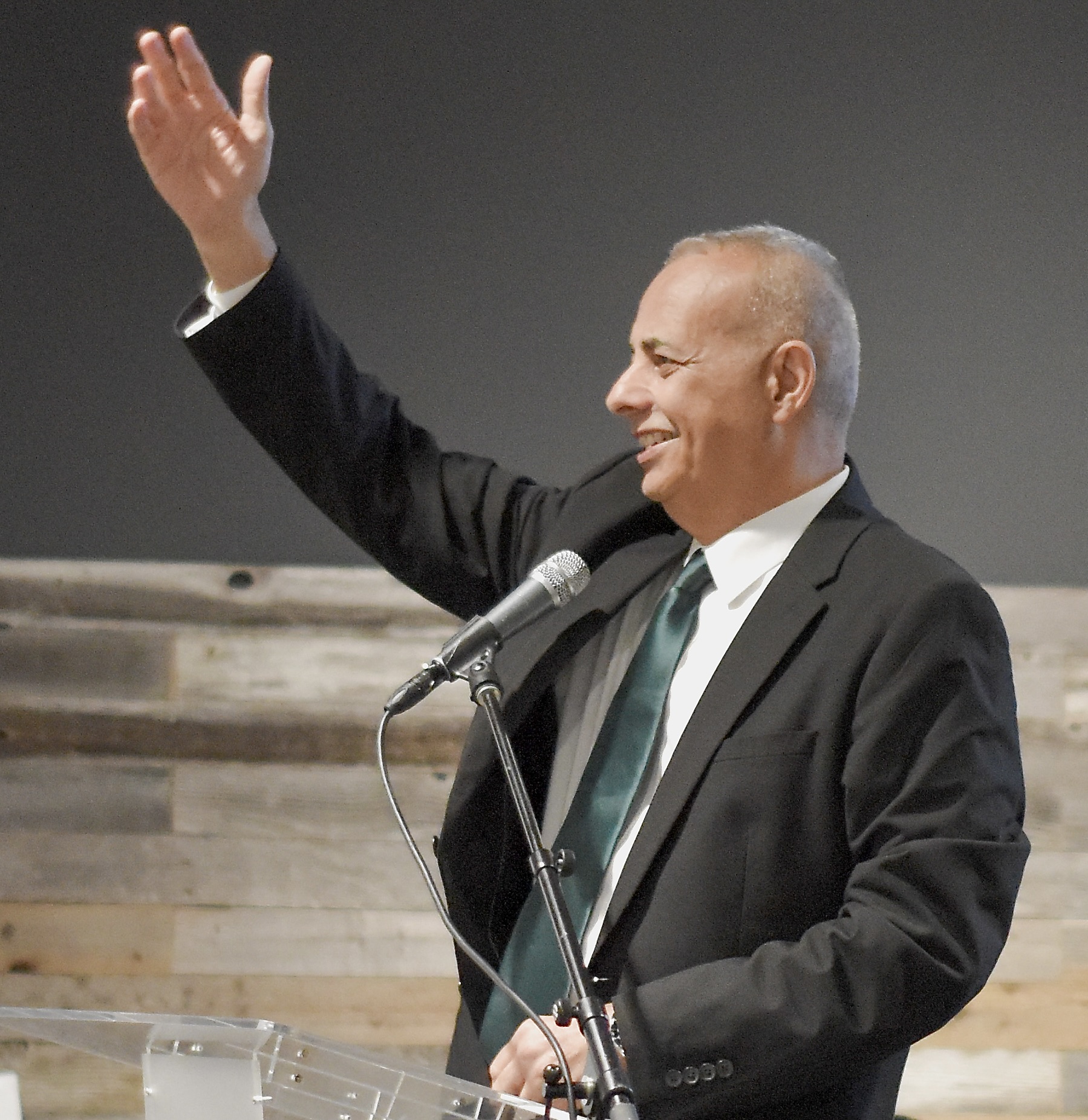
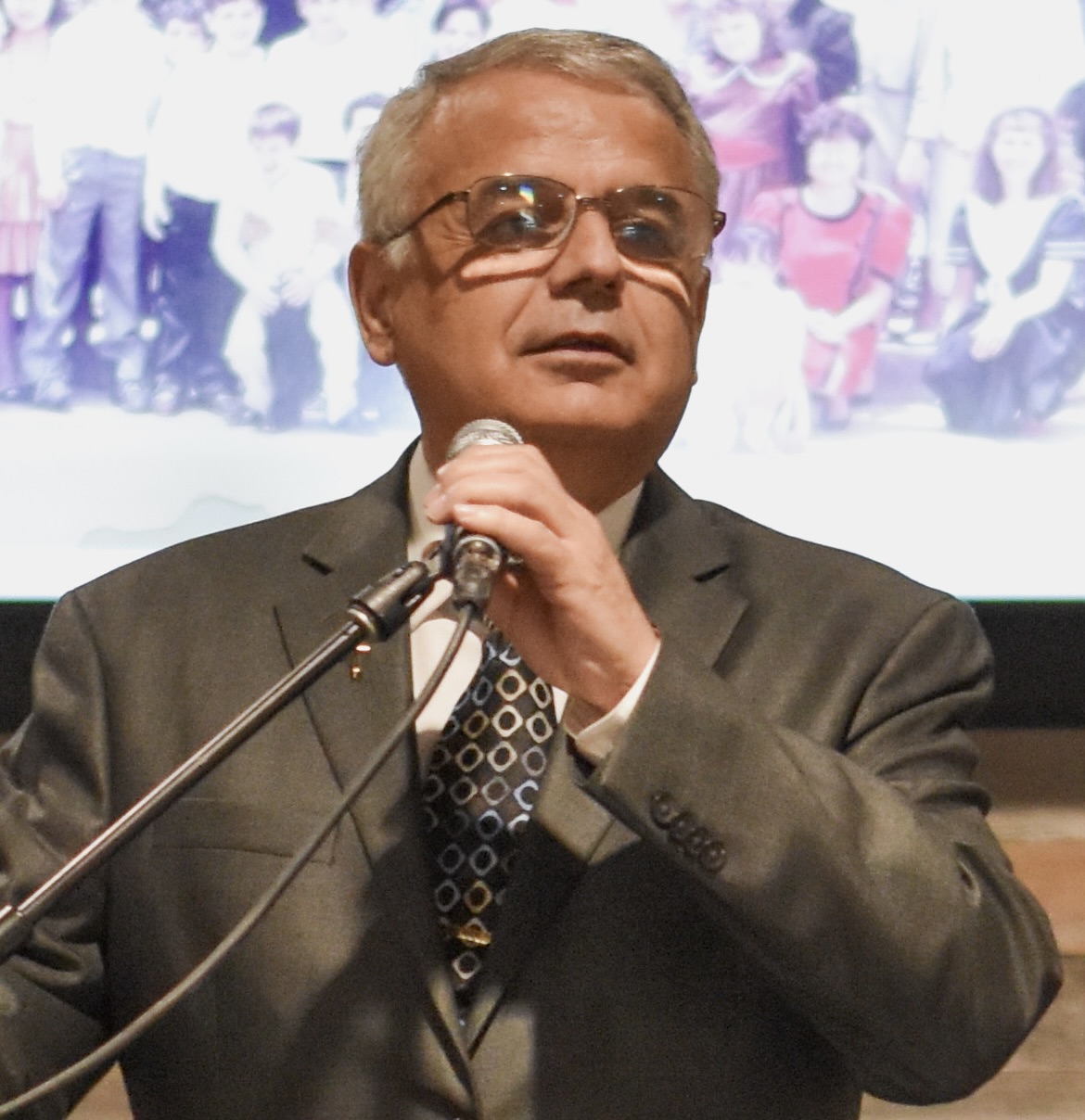
Goza, an ethics professor at Simmons College of Kentucky and author of Rebirth of a Nation: Reparations and Remaking America, acknowledged he initially resisted the idea of reparations.
“I know my history,” he said, noting he is the descendent of slaveholders, Confederate Army veterans and ardent segregationists.
However, his research led him to a dramatic conclusion: “We have committed tangible crimes.”
The effects of those crimes continue to be felt in the United States, Goza asserted. He pointed to the income gap between the races, as well as the high rate of incarceration among African Americans.
“We pay for our racial crimes every day,” he said.
Reparations represent more than “dollars and cents,” he insisted.
“It’s an opportunity to create a fundamentally different democratic future,” Goza said.
Before change occurs, the dominant white culture in the United States must engage in a sometimes painful examination of its history. White Americans need to question preconceived ideas about race and lament injustice, he asserted.
“Are we ready to question the assumptions that got us here?” he asked. “Without mourning, we can’t mature.”
Healing deep wounds caused by racism may seem impossible, but God can “make the impossible inevitable,” he asserted.
“Hope is real. We can move from a posture of protectionism to a posture of penitence,” he said.
Christians can embrace a future grounded in praying for the coming of God’s kingdom, where God’s will is done on earth as it is in heaven, Goza said. “God can make things different.”
‘Love people into the kingdom’
Individuals who have deconstructed an inherited faith that seemed irrelevant can reconstruct a vibrant faith built on the vision of God’s kingdom, said Terry Kagle, family service and volunteer coordinator for Abilene Habitat for Humanity.
Kagle, who spent four decades in congregational ministry in a variety of roles, distinguished between the church and the kingdom of God.
“The church is within the kingdom, but the kingdom is a lot bigger than the church,” he said. “The church has instrumental value, but the kingdom has intrinsic value.”
Kagle challenged Christians to “lean into the kingdom” and “love people into the kingdom.”
“We show we love God by loving people—all of them,” Kagle said.
While some churches may exclude some people, God’s kingdom is broadly inclusive of people with all their differences, he said.
“Go big. Go wide,” he urged. “It’s the most important thing you can do.”
Coyletta Govan, founder of DFWCITI (Communities in Texas Impower) Women, similarly challenged Christians who are concerned about community development to have a broad perspective.
“Minister to the needs of people without judgment, and do it in ways that keep their dignity intact,” she said.
Poverty is deeply entrenched, pervasive and “highly infectious,” she observed. But rather than looking at problems, she encouraged Christians to view the poor as people created in God’s image.
“Their plight is your purpose,” she said. “If you can see them, you can serve them.”
Florida hurricane relief: ‘You guys are such a blessing’
October 29, 2024
On a warm Florida day, Eunice eats lunch with her neighbor, Jackie. They laugh and smile as they tell jokes and stories, some going back 38 years to when Eunice first moved onto the block. The scene oozes joy.
It’s hard to believe Eunice had difficulty speaking a couple of weeks earlier because of shock in the aftermath of Hurricane Helene. The storm flooded the neighborhood, and she and Jackie escaped neck-deep water by climbing atop a rescue truck.
“You just don’t know what to do,” Eunice said. “You sit in shock for a couple of days with your mouth open, not knowing what to do. What do I do? Who do I call?
“Then you guys show up, with the goodness in your hearts and your service to God. And you get the process started. It’s a blessing. We’re so grateful you are here. Words cannot express.”
Volunteers from a St. Petersburg disaster relief site Texans on Mission is helping coordinate were in the middle of “mudding out” Eunice’s home—removing wet sheetrock, flooring and cabinets. When they finished, they went to work on Jackie’s house.
Cooperative efforts
Volunteers worked to clear debris and “mud-out” homes after Hurricane Helene. (Texans on Mission Photo)
The On Mission Network site has brought Christians from across the country together to deliver help, hope and healing in Christ’s name. Teams from Ohio, Florida, Texas, Virginia, California, Maryland and Alaska are slated to minister in communities that have been overlooked since the storm. Charis Fellowship, Texans on Mission and Virginia Baptist Disaster Relief are working together on the site.
Piles upon piles of sheetrock and flooring line the streets where the teams are ministering. Working a home or two at a time, teams are catapulting people forward in their recovery since the hurricane.
“This is the body of Christ in action,” said Rupert Robbins, Texans on Mission disaster relief associate director who is coordinating the site.
“Our connection to Christ connects us to fellow believers and God’s call to minister to the hurting. The Bible tells us to love our neighbor, and that’s exactly what we are doing. We’re meeting needs. We’re sharing the gospel. We’re seeking to glorify God in all we do.”
Surveying damage and visiting with residents, it’s clear where the teams are working. Where they go, recovery goes with them. People’s spirits are high. They’re helping each other out. The community is pulling together.
Two disaster relief volunteers sit down to join Eunice and Jackie for lunch. Hugs go around a small patio table. Friends—new and old—come together.
“This has never happened before,” Jackie said. “When they say this storm is historic, it is historic. Our parents, our grandparents never experienced anything like this.”
Obituary: David L. Jester
October 29, 2024
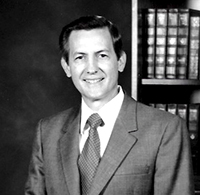
David Linville Jester, former president of Wayland Baptist University, died at his home in Paris, Ky., on Oct. 14. He was 94. He was born March 5, 1930, in Tanganyika—now Tanzania—in East Africa to missionary parents William and Daisy Hicks Jester. He grew up on the southern shores of Lake Victoria. At age 6, he left Tanzania to attend Rift Valley Academy in Kijabe, Kenya. After high school in Louisville, Ky., he received a scholarship to Georgetown College in Kentucky, where he participated in intramural sports and was president of the student body. In 1951, he graduated and married Marie Jean Hans. He went on to complete his Bachelor of Divinity and Master of Divinity degrees at Southern Seminary in Louisville, followed by a Master of Arts and Doctor of Education at Teacher’s College of Columbia University. In 1957, David and Marie Jester were appointed by the Southern Baptist Foreign Mission Board to Iwo Baptist College in Iwo, Nigeria. He worked in graduate studies at University of Ibadan, was president of Niger Baptist College and founder of the School of Basic Studies at Ahmadu Bello University. Upon returning to the states in 1970, Jester served as academic vice president of Campbellsville University. In 1975, he started the graduate program at Georgetown College. In 1981, he became the ninth president of Wayland Baptist College in Plainview. He led WBU from 1981 to 1987, a time in which the school transitioned from a college to a four-year university and established external campuses in San Antonio and El Paso, as well as New Mexico, Hawaii and Alaska. Donna Hedgepath, current president of Wayland Baptist University said of Jester, “His legacy of faith and dedication to higher education has left an indelible mark on the lives he touched.” After leaving Wayland in 1987, Jester continued his career in social and educational programs at Central Texas College and was instrumental in changing the status from an institute to a college known as Texas State Technical College. He also worked at South Texas College. In 1997, Jester became chancellor and president of Mid-Continent University in Mayfield, Ky., where he served until 2002 and was later named chancellor emeritus. Upon retirement, he remained active in Louisville at Hurstbourne Baptist Church as a Sunday school teacher and deacon, and he was president of two boards as well as president of Hillcrest Baptist Camp in Illinois. He is survived by his wife, Marie Hans Jester; daughters Lisa and husband Scott Brumley; daughter Daneta and husband David Sylvester; daughter Karina and husband John Deaver; three grandchildren; and three great-grandsons, along with extended family. Memorial gifts can be made to The Dr. David L. and Marie Hans Jester Endowed Social Work Scholarship at Wayland Baptist University at www.WBU.edu, Nigeria Faithful Works Charity at www.nigeriafaithful.org, or Rift Valley Academy Giving page at www.RVA.org.
Naomi House offers asylum seekers chance to flourish
October 29, 2024
When 2019 saw a surge of displaced people at the United States’ southern border a Waco church with connections to missionaries in Latin America and a close relationship with the pastor of an asylum-seeker-minded Mennonite church in San Antonio didn’t see a problem with the people.
The problem the members of DaySpring Baptist Church saw was in claiming fidelity to Christ but turning away from the needs of those people, explained Dennis Tucker, church member and professor of Christian Scriptures at Baylor University’s Truett Theological Seminary.
Getting there was a process, but in August 2022, Dayspring Baptist Church invited its first family who had been granted permission to seek asylum to move into a new residential ministry—Naomi House.
Exterior of Naomi House. (Courtesy Photo)
Naomi House is a hospitality house that offers a “temporary place of refuge for families as they prepare for the next steps in their asylum-seeking journey,” the church website explains.
Dayspring Baptist Church had been working on the hospitality house concept since the spring of 2021, “because none of us had ever done this,” Tucker recalled.
“None of us were social workers. We were having to find out simple things like city codes for this area. What kind of insurance do we need?”
Tucker explained they spent “the better part of the year” researching, figuring out how to design teams and schedule transportation, and identifying the house—which they rent from a church member.
First steps toward Naomi House
The church had learned much from the experience of one church member whose family had agreed to a request in 2019 from Pastor John Garland at the San Antonio Mennonite Church. He is the son of former Truett Seminary dean David Garland and the late Diana Garland, founding dean of Baylor’s School of Social Work that now bears her name.
With a pledge of support from DaySpring members, the family agreed to help an 18-year-old from Honduras and her newborn infant son who had been granted asylum by housing them in their own home.
Housing the young family gave the church team who supported them valuable experience, but they still had more to learn before they would be ready to begin a full-fledged hospitality ministry, Tucker noted.
Coming out of COVID, the church considered whether a hospitality house like the one San Antonio Mennonite Church operates might be something they could support. Their successful teamwork with the first young family convinced church members they could.
The San Antonio ministry, La Casa de Maria y Marta, as well as most hospitality houses for asylees in Texas, was short-term oriented. But DaySpring members decided on a longer-term housing ministry model, providing at least six months’ residential assistance for families.
Six months is the minimum length of time individuals who have been granted asylum must reside in the country before they legally can work here.
The church had identified women and children as the most vulnerable group among migrants.
While men who cross over the border often find ways to support themselves, it is not always easy for the women. They are vulnerable, particularly to exploitation or trafficking, Tucker explained.
So, at Naomi House, the congregation thus far has housed only women and children—offering safe housing, transportation assistance to work, school, appointments and ESL classes, and additional services as needed.
Because the church has several Spanish-speaking members, the congregation decided they best could support women from Spanish-speaking backgrounds. A common language also helps in learning how to live together, when housemates previously were strangers.
The church added blessings to the framework, as they prepared Naomi House for residents. (Courtesy Photo)
The house is five bedrooms with three bathrooms and is set on about an acre of land. The women who live there can garden, if they choose, and the children have a playset and space to be kids, Tucker noted.
Naomi House has provided housing and support to 8 mothers and 14 children in the two years since it opened.
Rewarding, challenging work
Tucker said the most challenging piece of the ministry is the amount of flexibility required. Every family has a different set of dynamics and trauma they bring in, “so it’s not like we can ever say, here’s our three-page manual on how to care for people in a hospitality house.”
The ministry requires constant adjustments to meet the actual needs of each new family who resides at Naomi House.
But, Tucker noted, the most rewarding aspect of the ministry is its mutuality—this is not a story of a well-heeled, mostly-white American church saving poor migrants.
Instead, there’s an intentionality to the relationships they are building between the church and Naomi House residents. “It’s sharing life together in the belief that this will animate our own faith,” and it has, Tucker explained.
“Most people go to church an entire lifetime, and they wish they could do something to change someone else’s life because it might change their own.
“And so, I think for those of us who are involved—you know, not every story works out perfectly [for] people who come in the house. Some find great jobs. Some don’t find great jobs.
But he explained for those who are involved, “it’s asked us to put our faith to work in a real way, and to allowed us to serve people who are vulnerable—not because we’re going to save them, but because that’s just what the gospel asks of us.”
They don’t have “a metric of success,” Tucker said ministry participants have to remind themselves.
“We have a metric of faithfulness. And we have to be faithful to what we’re asked to do, regardless of any particular outcome, good or bad.”
The church added blessings to the framework, as they prepared Naomi House for residents. (Courtesy Photo)
To measure success, the team asks instead, “are we being faithful to the ministry that God has called us to?”
Tiffani Harris, associate pastor of community life at DaySpring, has been in talks with several churches around Texas and beyond who have expressed interest in beginning a hospitality house ministry.
She mentioned North Carolina has a network of Baptist churches who operate five hospitality houses in Raleigh-Durham alone.
This network is equipped to house refugees from background languages other than Spanish, so DaySpring and the North Carolina network have cooperated to provide asylum-seekers care.
But as a Texan, Harris expressed some ire that North Carolina currently has more hospitality houses. She would love to see at least five hospitality houses operated by Baptists in Texas, she said.
Reciprocity and cooperation
It is difficult work, she agreed with Tucker.
For Harris, it is most difficult to work with people who, having journeyed thousands of miles across dangerous terrain—including for many the Darién Gap—vulnerable to dangerous people, with nothing except their children—realize once they finally get here, just how difficult it’s going to be.
They have been lied to by the cartels who exploit them for money. They have been told the United States has great jobs and cheap housing, Harris noted.
With the dire living conditions they leave behind, maybe the truth would not have dissuaded their journey, she pointed out.
It isn’t easy to walk alongside asylum-seekers as they work through the shock of coming to terms with the reality of life in the United States for asylees, when they have no one and nothing.
But when asylees do find community through the ministry of DaySpring, they are so grateful and bring so much to the church, Harris said.
Other churches in Waco come alongside DaySpring to help with Naomi House, sponsoring some of the monthly expenses, encouraging and partnering with the church, because ministry to asylum-seekers is meaningful.
“Once you step out in faith, when you feel that the Lord has led you to do something like this,” Harris said. “You will be surprised how many people will come around you in support.”
Inmate turned playwright in his ‘comeback season’
October 29, 2024
Jamison Charles always considered himself a follower, and he “followed the crowd straight to prison,” receiving a 50-year sentence for eight felonies, he recalled.
But during his incarceration, he became a follower of Jesus Christ, and “tragedy turned to triumph,” he said.
“I hit rock bottom and found out God has an office there,” Charles told the No Need Among You Conference at the Gaston Christian Center in Dallas, an Oct. 23-25 event sponsored by the Texas Christian Community Development Network.
He entered the federal prison system at age 19 after being convicted for carjacking—his first offense.
“I lost all of my 20s, all of my 30s and half of my 40s” to incarceration, he said. “Prison is terrifying. For me, it was going from being around puppies to being around wolves.”
After serving time at the federal penitentiary in Leavenworth, Kan., Charles jumped at the opportunity to be transferred to the federal prison in Beaumont, near his mother and sister.
While he cherished their visits, he grew to recognize the toll his imprisonment took on his family.
“I realized I wasn’t the only one doing time,” he said. “That brought me to my first real conversation with God.”
‘I’m following the right one now’
Charles prayed, challenging God—if he really existed—to “show up” for him. If God responded, he promised to turn his life around.
“God called my bluff,” he testified.
Charles began attending chapel services at the prison—initially because the chapel was air-conditioned, he confessed. But those chapel experiences made an impact, and he enrolled in every available Bible study for the next eight years.
“I’m still a follower, but I’m following the right one now,” he said.
In one of those early Bible studies, Charles learned the first Scripture verse he committed to memory—Jeremiah 29:11. He wrote the verse on a paper he taped to the bottom of the bunk above his, so he would see it the first thing every morning and the last thing every night.
“I totally blew it, but God said, ‘I still have a plan for you.’ And I believed it,” he said.
Discovered a talent for writing
Charles also took every available class offered in prison. In one class, students were assigned to write about the most horrible thing that ever happened to them. Then the teacher challenged the inmates to write a happy ending to that narrative.
Charles fulfilled the assignment, and the teacher told him he had a gift for writing.
“I started writing every day,” he said.
He began working on a novel based on his own life experiences, and used that story as the basis for a skit that was presented in the prison chapel.
It was so well-received, prison officials encouraged him to develop the brief skit into a full stage play. He wrote the script, enlisted fellow inmates to play assigned roles, and presented the play to the whole prison population.
After he committed himself to using his writing talent for God’s glory—and after participating in a life-changing weekend sponsored by Kairos Prison Ministry—Charles characterized his last two years in prison as “beautiful.”
“I learned how to pray fervently,” he said.
‘Change the narrative of my life’
When he appeared for a parole hearing, Charles told the board if he was allowed to reenter the free world, “I want to change the narrative of my life.”
“Now, I’m in my comeback season,” he said.
When he received an economic stimulus check, he used it to self-publish his novel, Saved-ish: Sometimes It’s Hell Gettin’ to Heaven. At an early book-signing event, correctional officers from the unit where he was imprisoned stood in line to get their copy of the book autographed, he said.
The play based on that same story—which Charles wrote, produced and directed—premiered in March at the Jefferson Theater in Beaumont. It has also been performed in churches and will be presented Nov. 16 in Killeen.
Charles believes audiences have responded favorably to the play not only because of its humor, but also because of its message of redemption.
A person’s value is not diminished just because they have been torn and trampled, he insisted.
“Don’t you dare throw anybody away,” he said. “They are only one God-appointed moment away from changing everything.”
Southern Baptist chief of Air Force chaplains retires
October 29, 2024
OXFORD, Fla. (BP)—As Chaplain Major General Randy Kitchens thinks back over more than 30 years of chaplaincy ministry in the U.S. Air Force, it’s the opportunities he had to share Jesus that stand out.
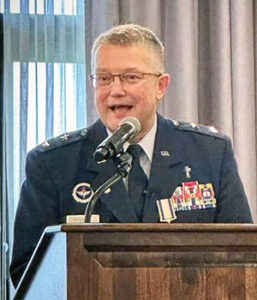
Chaplain Major General Randall Kitchens retired earlier this year after a 30-year career in the U.S. Air Force. The son of a Southern Baptist pastor, Kitchens served as the chief of chaplains for the U.S. Air Force, the highest-ranking chaplaincy role in the branch. (Photo provided by Chaplain Major General Randall Kitchens)
From combat zones to counseling sessions, Kitchens often found himself in moments where faith became an anchor for the airmen he served. One such moment came early in his career when a young woman walked into his office looking for answers.
Kitchens shared the love of Jesus with her, offering the gospel message he had heard his father proclaim over and over again as a bivocational Southern Baptist pastor. She turned her life over to Jesus on the spot. In a spontaneous act of celebration, Kitchens arranged to baptize her at the base fitness center later that day.
“My dad was a bivocational pastor, and I grew up thinking that was how every pastor served,” Kitchens said. “I thought they were following the Pauline model, having a vocation along with ministry.
“I watched my father, and he essentially taught me. He would take me on visitations, and I learned a lot about ministry from him. He modeled what lifestyle evangelism is really about—no matter where he was or what role he was in, he always found opportunities to share Christ or what Christ was doing in his life with others.”
That gospel message was the cornerstone of Kitchens’ 30-year ministry. He retired in August as the U.S. Air Force chief of chaplains, overseeing all spiritual and ethical matters in the branch.
Kitchens was pastor of Big Coppitt First Baptist Church in Key West, Fla., when God began to open his eyes to the possibilities of military chaplaincy. The church’s location near a large Navy base brought several Navy couples into the congregation, allowing him to see firsthand the distinct spiritual needs of those serving in the military.
Kitchens’ mother-in-law worked as a civilian at an Air Force base and suggested he consider becoming a chaplain. In the early 1990s, right after the first Gulf War, that transition seemed unlikely. The U.S. Defense Department was closing a number of military bases.
‘Lord, open the door, and we will follow’
In October 1990, he began serving as a reserve chaplain with the U.S. Air Force, but he was still praying for an opportunity to serve full-time in the Air Force.
During this time, Kitchens and his wife Sherri prayed, “Lord, open the door and we will follow.”
God answered that prayer in February 1993 when he became a chaplain at Loring Air Force Base in northeastern Maine. For the next three decades, Kitchens served in military bases and war zones worldwide before retiring as the Air Force’s highest-ranking chaplain.
One of his most memorable moments during this period came when he was deployed to Afghanistan. He vividly remembers a night when a young airman, terrified by ongoing attacks, reached out to him. Kitchens spent the next hour talking and praying with him.
“He was just petrified,” Kitchens said. “We talked about fear, we talked about faith, and we talked about God’s leading. Many times, as chaplains, we don’t always recognize the significant impact we have just by being there, listening and walking with people on their journey.”
‘God prepared me for this time’
In 2020, when Kitchens became the U.S. Air Force chief of chaplains, he also became the chief of chaplains for the newly created U.S. Space Force. While the position was new, Kitchens understood some of the uniqueness of the role. His experience at Patrick Air Force Base in Florida, where he witnessed satellite launches, and later at Peterson Air Force Base in Colorado, helped prepare him for the unique challenges of ministering to Space Force Guardians.
“I believe God prepared me for this time,” Kitchens said. “My second assignment was serving at a space wing, where they launched satellites into space. Understanding that mission helped me be ready for the role of Space Force chaplain.”
As the chief of chaplains, Kitchens not only oversaw more than 2,000 Air Force chaplains and religious affairs airmen, but also provided administrative oversight and served as a religious and ethical adviser to Air Force leadership.
“Throughout his military career as a Southern Baptist chaplain, Randy never lost his passion to preach the gospel, sharing unapologetically that faith in Jesus Christ was the key factor to maintaining the spiritual readiness and morale of our troops and their families,” said Doug Carver, executive director of chaplaincy at the North American Mission Board.
Kitchens and his wife, Sherri, have two children and five grandchildren. He retired near his family in Oxford, Fla., where he awaits his next ministry assignment.
“I’m just thankful that the Lord called me to chaplaincy and allowed me to serve,” Kitchens said. “I’m just praying that the Lord will now show me what’s next for the next chapter in my life.”





 Goza, an ethics professor at Simmons College of Kentucky and author of Rebirth of a Nation: Reparations and Remaking America, acknowledged he initially resisted the idea of reparations.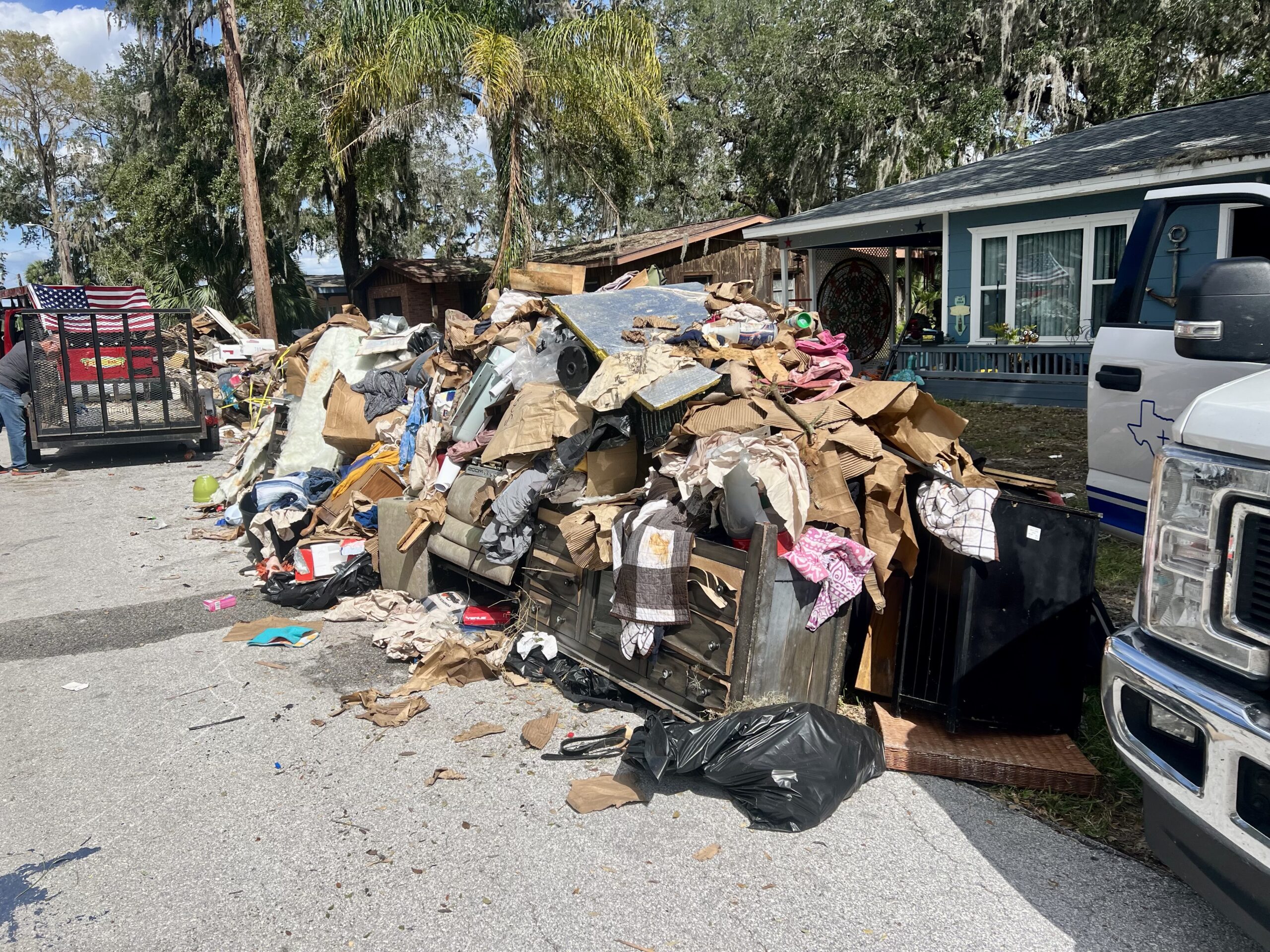
 David Linville Jester, former president of Wayland Baptist University, died at his home in Paris, Ky., on Oct. 14. He was 94. He was born March 5, 1930, in Tanganyika—now Tanzania—in East Africa to missionary parents William and Daisy Hicks Jester. He grew up on the southern shores of Lake Victoria. At age 6, he left Tanzania to attend Rift Valley Academy in Kijabe, Kenya. After high school in Louisville, Ky., he received a scholarship to Georgetown College in Kentucky, where he participated in intramural sports and was president of the student body. In 1951, he graduated and married Marie Jean Hans. He went on to complete his Bachelor of Divinity and Master of Divinity degrees at Southern Seminary in Louisville, followed by a Master of Arts and Doctor of Education at Teacher’s College of Columbia University. In 1957, David and Marie Jester were appointed by the Southern Baptist Foreign Mission Board to Iwo Baptist College in Iwo, Nigeria. He worked in graduate studies at University of Ibadan, was president of Niger Baptist College and founder of the School of Basic Studies at Ahmadu Bello University. Upon returning to the states in 1970, Jester served as academic vice president of Campbellsville University. In 1975, he started the graduate program at Georgetown College. In 1981, he became the ninth president of Wayland Baptist College in Plainview. He led WBU from 1981 to 1987, a time in which the school transitioned from a college to a four-year university and established external campuses in San Antonio and El Paso, as well as New Mexico, Hawaii and Alaska. Donna Hedgepath, current president of Wayland Baptist University said of Jester, “His legacy of faith and dedication to higher education has left an indelible mark on the lives he touched.” After leaving Wayland in 1987, Jester continued his career in social and educational programs at Central Texas College and was instrumental in changing the status from an institute to a college known as Texas State Technical College. He also worked at South Texas College. In 1997, Jester became chancellor and president of Mid-Continent University in Mayfield, Ky., where he served until 2002 and was later named chancellor emeritus. Upon retirement, he remained active in Louisville at Hurstbourne Baptist Church as a Sunday school teacher and deacon, and he was president of two boards as well as president of Hillcrest Baptist Camp in Illinois. He is survived by his wife, Marie Hans Jester; daughters Lisa and husband Scott Brumley; daughter Daneta and husband David Sylvester; daughter Karina and husband John Deaver; three grandchildren; and three great-grandsons, along with extended family. Memorial gifts can be made to The Dr. David L. and Marie Hans Jester Endowed Social Work Scholarship at Wayland Baptist University at


 When he appeared for a parole hearing, Charles told the board if he was allowed to reenter the free world, “I want to change the narrative of my life.”