Views about Latino voters’ faith often distorted
WASHINGTON (RNS)—There are more Latino voters in the United States than ever. As reporters and pundits seek to understand this important voting bloc, they’re digging into the faith of Hispanic communities.
But as this election cycle brings yet another flurry of trend pieces about Latino evangelicals, some narratives distort the big picture of Latino faith. Others are just myths.
Consider the facts about Latino voters and their faith:
The share of U.S. Latino adults who are evangelical has been relatively steady in the last decade.
Many trend pieces about Latino voters claim that there has been a significant spike in the Latino evangelical population. However, that narrative doesn’t bear out in the polling.
In 2022, Pew Research Center found 15 percent of U.S. Latino adults were evangelical, the same percentage that was evangelical in 2012. In the years in between, that statistic has dropped to 14 percent or been as high as 19 percent.
The Public Religion Research Institute found in 2013 Hispanic Protestants, a category that also includes nonevangelicals such as mainline Christians, made up 3 percent of Americans. In 2023, those numbers grew to 4 percent.
The small growth PRRI has tracked comes as the overall number of U.S. Latinos is growing, as is the share of the U.S. population they represent. In 2022, Latinos made up nearly 1 in 5 Americans, up from 16 percent in 2010.
This growth does not translate to a significantly expanding Latino evangelical population, yet this misunderstanding persists.
A segment on MSNBC’s “Morning Joe” on Sept. 5 broadcast that narrative, with journalist Paola Ramos saying, “You even have some scholars like Mark Mulder from Calvin University that predict that by 2030, over 50 percent of Latinos will identify as evangelical.”
In an email, Mulder told RNS Ramos had misquoted a prediction he and others made in a 2017 book that included all Latino Protestants, a larger category.
Asked whether he stood by that prediction in 2024, Mulder pointed out the book had been written in 2015, almost a decade ago.
“Right now, no, that does not seem plausible,” he wrote.
A December 2023 poll by PRRI also found Hispanic Protestants’ net gain in membership is relatively small. Only 1.4 percent of the U.S. population has become Hispanic Protestant after growing up with a different childhood religion, but 0.9 percent of those raised Hispanic Protestants have left the faith.
In polling released in August, PRRI found younger Latino adults in both the 18-to-29 and 30-to-49 age cohorts were more likely to be Protestant than older generations, a trend that has held over the last decade.
But while evangelical Protestants have almost always outnumbered nonevangelical Protestants by more than 2-to-1 overall, that gap has been smaller in the 18-to-29 age cohort over the years, with relatively higher representation of nonevangelical Protestants. PRRI pollsters caution that it can be difficult to draw certain conclusions when sample sizes are small.
Eli Valentín, an ordained Pentecostal and founder of the think tank Institute for Latino Politics and Policy, said although Latino evangelical political engagement is currently peaking, this group’s involvement in the religious right began during George W. Bush’s presidency.
While many Latino evangelical traditions began after white evangelical proselytization, the groups had more distance between them in political engagement and worship traditions until recently, said Valentín, a Democratic strategist. Still, Latino evangelical Protestants remain politically diverse.
In 2022, Pew found half of Latino evangelicals identify as Republicans or lean that way, and 44 percent identify as Democrats or lean that way, making the group more conservative than Catholic or religiously unaffiliated Latinos.
A poll from The 19th and SurveyMonkey conducted Aug. 26 to Sept. 4 and released Sept. 10 found 63 percent of Hispanic Protestants would vote for Donald Trump if the election were held today, and 29 percent would vote for Kamala Harris.
More Hispanic Protestants than the national average (36 percent) said inflation and the cost of living was the issue that mattered most to them, with 44 percent identifying that as a priority. And while only 6 percent identified abortion as their top issue, 57 percent of Hispanic Protestants said abortion should be illegal in most or all cases.
Religiously unaffiliated Latinos are seeing the largest growth of any faith category among Latinos.
In 2022, 30 percent of U.S. Latino adults were religiously unaffiliated, up from 10 percent in 2010, according to Pew polling. But the trend pieces haven’t followed. Almost half (49 percent) of U.S. Latinos ages 18 to 29 are religiously unaffiliated, while older generations tend to affiliate with religion.
This group leans significantly Democratic, with 66 percent identifying with the party or leaning that way and 24 percent identifying with Republicans.
In The 19th’s Sept. 10 poll, 59 percent of Hispanics who said their religion was “nothing in particular” indicated they would support Harris if the election were held today, and 28 percent said they would support Trump. Three percent indicated support for a third candidate, and 10 percent were undecided.
Atheist and agnostic Hispanics, who make up only about 5 percent of Hispanics polled, more heavily favored Harris, with 68 percent support. Less than a quarter (22 percent) said they would support Trump, and 4 percent said they would support a third candidate, with 5 percent remaining undecided.
Both groups have high support for abortion rights, even as fewer than 1 in 10 in each group cited it as their top issue. Eighty-seven percent of Hispanics whose religion is “nothing in particular” think abortion should be legal in most or all cases, and 94 percent of Hispanic atheists or agnostics say the same.
Like other groups, a plurality of Hispanics whose religion is “nothing in particular” say inflation and the cost of living is the top issue (39 percent), and 32 percent of Hispanic atheists and agnostics agree.
Catholics are still the largest religious group among Latinos.
Even as Catholicism experiences a strong trend of disaffiliation, 43 percent of U.S. Latino adults are Catholic, according to Pew data from 2022.
 PRRI found in 2023 that 11.6 percent of the general U.S. population are Hispanic Catholics. In the general U.S. population, 3.7 percent are former Hispanic Catholics and 0.4 percent are Hispanic Catholic converts.
While white Catholics are more likely to be Republican, Latino Catholics are more likely to be Democratic. In 2020, Latino Catholics backed Joe Biden over Trump by a 35-point margin.
In a 2023 Pew poll, 60 percent of Latino Catholics said they were Democrats or leaned Democratic, while 35 percent said they were Republicans or leaned Republican.
In the 19th’s Sept. 10 poll, a third of Hispanic Catholics (33 percent) said they would vote for Trump if the election were held today, while about half (52 percent) indicated they would support Harris. About 1 in 10 (11 percent) are undecided, and another 2 percent plan to vote for a third candidate.
Like other groups, 40 percent of Hispanic Catholics said inflation and the cost of living is the most important issue.
While only 1 in 20 (5 percent) cited abortion as their top issue, 70 percent of Hispanic Catholics said it should be legal in all or most cases, despite U.S. Catholic bishops’ teaching that the “threat of abortion” should be Catholic voters’ “preeminent priority.” About a quarter (28 percent) said it should be illegal in most or all cases.
A birds-eye view of the data shows the Latino evangelical population is not significantly growing. Instead, religious disaffiliation is chipping away at the Catholic base. The impacts of these trends on this year’s election remain to be seen.
“When it comes to Latino voters, the faith component, the religious component is still underexplored,” Valentín said.
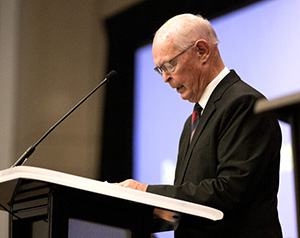
 Vernon Dee Stokes of Midland, longtime public educator and trustee of Wayland Baptist University, died Sept. 14. He was 85. He was born Jan. 1, 1939, in Arch, N.M., to Scott Smith Stokes and Alma Rachel Copeland Stokes. He lived his early years in eastern New Mexico until his family relocated to Sundown, where his father worked in the oilfield. After graduating from Sundown High School, he went to college at Wayland Baptist College, where he graduated in 1959. At Wayland, he met Belva Ramsey, and they married Nov. 1, 1958. Stokes’ career in public education spanned 40 years. He was first a classroom teacher and coach, then a high school administrator. He received his master’s degree in 1966 and his doctorate in education from Texas Tech in 1970. He worked as a consultant at West Texas Education Center in Midland—later Region 18 Education Service Center—before becoming assistant superintendent for the Burleson Independent School District. In 1981, he became deputy director and later executive director of Region 18. When he retired from that role in 1996, he almost immediately was called to serve as interim superintendent of Ector County Independent School District. He finished his years in public education in 2001 as superintendent of schools at Ector County ISD. His commitment to higher education was lived out through his longtime support of Wayland Baptist University. He served on Wayland’s board of trustees for 19 years and chaired the board for three years. “Dr. Stokes was a beacon of leadership and a pillar of the Wayland family,” said Wayland President Donna Hedgepath. “His profound impact on education and his unwavering dedication to serving others embody the values we hold dear at Wayland. We are deeply grateful for his numerous contributions and his enduring legacy.” Wayland named Stokes as Distinguished Alum for Leadership in 1987, and he received the Keeper of the Flame Award in 2015. He was named Wayland’s Distinguished Alumni Benefactor in 2019, and he received the President’s Award in 2022 and the Distinguished Alumni Award in 2024. Beginning when he was a teenager, Stokes led music and served in other staff positions at various churches. He taught Sunday school more than 60 years, and he was a deacon. He served the Baptist General Convention of Texas as a member of the Christian Education Coordinating Board. He was preceded in death by daughters Shelly Stokes Coll and Shauna Stokes Sanderson and by a great-granddaughter. He is survived by his wife of nearly 66 years, Belva; son Shane Stokes and wife Kim; son Shannon Stokes and wife Kimberly; 15 grandchildren, 11 great-grandchildren and four sisters. A memorial service is scheduled at 1:30 p.m. on Sept. 20 at First Baptist Church in Midland. Memorial gifts can be given to Ezekiel Department Benevolence Fund at
 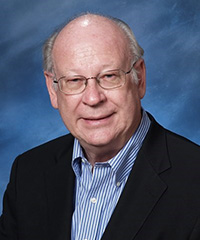 John Theodore “Ted” Sanders, former trustee and distinguished alumnus of Wayland Baptist University, died Sept. 8 in Angel Fire, N.M. He was 82. He was born Sept. 19, 1941, in Littlefield to John “Jay” Duff Sanders and Phyllis Sanders and grew up in Friona. A basketball scholarship enabled him to attend Wayland, where he met Beverly McSwain at a hayride. They married during their senior year of college. After he earned his bachelor’s degree in mathematics from Wayland, he went on to earn a master’s degree from Washington State University in Pullman and his doctorate from the University of Nevada at Reno. His career spanned several significant roles, including senior leadership positions in the New Mexico Department of Education, and as state education chief in Nevada, Illinois and Ohio. He also served as U.S. Deputy Secretary of Education under President George H.W. Bush and was president of the Southern Illinois University system. “Dr. Sanders was a visionary leader whose passion for education was matched only by his dedication to serving students and educators across the nation,” Wayland President Donna Hedgepath said. “His remarkable journey from a student athlete at Wayland to a national leader in education exemplifies the transformative impact of lifelong learning and service. We are profoundly grateful for his contributions to our university and his enduring legacy.” He is survived by his wife Beverly of Frisco; daughter Audrey Sanders Wright of Texarkana, Ark.; son John (Drew) Andrew Sanders and wife Angie of Overland Park, Kan.; daughter April Sanders Helm and husband Matthew of Deforest, Wisc.; son Anthony (Tony) Sanders of Elgin, Ill.; eight grandchildren; two great-grandchildren; and brothers Thomas and David Sanders.
 Well, I read that book back in the ’60s, when it was very popular, and everybody seemed to be reading it. Then when COVID occurred in 2020, and we were all sequestered and reading everything we had on our bookshelves, I pulled it down, reread it, looked at it, and thought, “Oh, my goodness, this is the way I live.”
 The report points to a possible link between those who advocate for a Christian nation and people who agree with statements such as the need to “smash the perversions eating away at our moral fiber and traditional beliefs.”