Obituaries: Heard, Adams

Andrew Heard, 30, July 26 in Cuero. He was quarterback of the 1998 Cuero Gobbler state finalist football team before learning he had Hodgkin’s Disease. He recovered and went on to play Andrew Heardfootball at Texas Tech University and Baylor University. A graduate of Baylor’s Truett Theological Seminary, he was high school minister at Park Cities Baptist Church in Dallas four years. He wrote two books, Your Best Life Later and A Gray Faith, that flowed out of his struggle with Hodgkin’s Disease and lung cancer and explain his walk of faith during adversity. He is survived by his wife, Bailey; daughter, Ellie; parents, Mary and Mark Heard; sister, Rene Moore; and grandmother, Elbie Heard.

Carrie Adams, 75, June 23 in Rockdale. She was the wife of Leslie Adams, pastor of Calvary Baptist Church in Rockdale. She was preceded in death by her son, John Leslie Adams Jr. She is survived by her husband of 52 years.


On the Move: Jonathan Aragon

Jonathan Aragon to United Baptist Church in Laredo as pastor from First Baptist Church in Duncanville, where he was minister of music and worship.

Blake Arrington to Green Acres Baptist Church in Tyler as college minister from Central Baptist Church in College Station, where he was associate college minister.


Around the State: ETBU teacher a Fulbright Scholar

Cassie Falke, associate professor of English at East Texas Baptist University, has been cassandra falke130Cassandra Falkenamed a Fulbright Scholar and will spend the next year in Norway, teaching and doing research. The program sends 800 scholars and professionals abroad each year to more than 150 countries, but only about a dozen are from smaller universities.

Buckner Children and Family Services will hold a free foster care and adoption information meeting at 7 p.m. Aug. 15 at the ministry’s offices at 5200 Buckner Boulevard in Dallas. A Buckner representative will present information on foster care and adoption options in Texas, and international adoption also will be discussed. For more information, email Sheree Scott

O.D. Hall Jr. received the Baylor University Center for Christian Music Studies’ Exemplary Leadership in Church Music Award. He has been a minister of music, manager of music promotion for Lexicon Music, owner/director of MusiCalifornia, and composer and arranger of church music. The award is given annually to a graduate of Baylor University who has contributed significantly to church music ministry.

Dallas Baptist University honored First Baptist Church in West and Gospel for Muslims during the school’s annual community partners appreciation luncheon. Both were recognized for their contributions to the service-learning program at DBU.

Ordained

Daniel Ortner to the ministry at First Baptist Church in Bremond.

Guilherme Almeida to the ministry at Central Baptist Church in Italy.

Dwain White and Albert Herrera as deacons at First Baptist Church in Lexington.

Revival

Tyland Baptist Church, Tyler; Aug. 11-14; evangelist, Buddy Duggins; music, Mark Fried; pastor, David Mahfood.


Foundation elevates Curry, Wright & McGregor

DALLAS—The Baptist Foundation of Texas has promoted three veteran staff members—Ben Curry, Joe Wright and Kari McGregor. The BFT board of directors unanimously approved the appointments during its mid-summer meeting.

Curry, who has been with the foundation 17 years, was named senior vice president for finance and administration after serving as vice president and chief financial officer.

bft holt annual400He will oversee human resources, accounting, records management and information systems. He also will be responsible for projects and initiatives designed to strengthen and improve services and communication with institutional clients.

Curry is a graduate of Baylor University and is a certified public accountant.

Wright, a foundation staff member for 12 years, was promoted to senior vice president and chief investments officer. Previously, he was vice president and chief investment officer.

He will continue to lead the foundation’s investment division, with responsibility for capital markets, real estate and mineral management.

Wright is a graduate of Baylor University and the University of Texas at Dallas.

McGregor joined the foundation in 2000 after working at PricewaterhouseCooper. The board named her vice president and chief financial officer after serving as the controller.

She will be responsible for accounting, endowment account administration and security operations.

McGregor graduated from Texas A&M University and is a certified public accountant.

“These organizational changes will serve Baptist Foundation well as we continue to strive for excellence in service to our client institutions and donors,” said Jeff Smith, who became the foundation’s president in January.

The Baptist Foundation of Texas is a nonprofit organization created in 1930 to manage endowment assets and receive gifts for Baptist institutions. The foundation is based in Dallas and offers services to aid institutions and individual donors, including management of endowment funds and other assets; consultation and planning of charitable trust, gift annuities and scholarship funds; account monitoring; financial reporting; and more.


Conference equips churches to ride the boomer wave

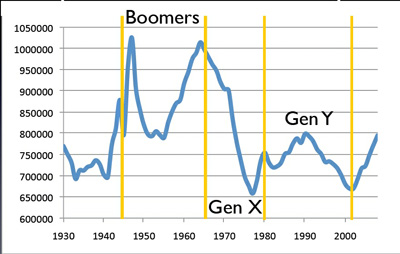
The baby boomer wave is sweeping over senior adult ministries, and people from all across the country are registering to “catch the wave” with the National Boomer Ministry Conference Sept. 5-6 at First Baptist Church in Allen.

boomer chart400Baby boomers remain the largest population group.Baby boomers remain the largest population group, now ranging in ages 49 to 67, said Keith Lowry, Texas Baptists’ single adult/family ministry/senior adult specialist. They tend to have a different mindset about church participation than the previous generation and often are turned off by the term “senior adult.” Most have led successful lives and yearn to leave a legacy, he noted.

“Boomers have great gifts and skills,” he explained. “We are going to have to allow them to utilize those gifts and skills in ways that can be a blessing to others.”

A baby boomer himself, Lowry believes the conference will encourage churches to revamp their senior adult ministries.

“The point of this conference is to help our churches understand some things they can do to engage with and be attractive to baby boomers who are looking for a way to have an impact in the second half of their lives,” he said.

The conference is geared toward churches of all sizes. People who minister to senior adults will identify well with the topic, as will baby boomers eager to minister to their own generation, Lowry noted.

amy hanson300Author Amy HansonKeynote speaker Amy Hanson, author of Baby Boomers and Beyond: Tapping the Ministry Talents and Passions of Adults over 50, is “probably the foremost authority on baby boomers in the country,” Lowry said.

Timothy Jennings—voted one of America’s top psychiatrists by the Consumer’s Research Council of America in 2008, 2010, 2011 and 2012—also will speak at the conference.

Between the two days, participants will be able to attend three breakout. Session options include “This Ain’t Your Momma’s Senior Adult Ministry,” “Boomers Living out Loud,” “Caring for the Caregiver” and “Alzheimer’s Disease—Looking Beyond the Negative Picture.”

Entertainment will be provided by SQuire Rushnell, who created Schoolhouse Rock, and his wife, Louise DuArt, who toured with comedy icons Tim Conway and Harvey Korman. Their act, featured at 7 p.m. Thursday as “Boomer Celebration,” will be open to the public for $10.

For more information about the conference and to purchase tickets, click here


Shariah 101: What is it and why do states want to ban it?

WASHINGTON (RNS)—North Carolina lawmakers recently approved a bill to prohibit judges from considering “foreign laws” in their decisions, but nearly everyone agrees “foreign laws” really means Shariah, or Islamic law.

North Carolina now joins six other states—Oklahoma, Arizona, Kansas, Louisiana, South Dakota and Tennessee—to pass a “foreign laws” bill. A similar bill passed in Missouri, but Gov. Jay Nixon vetoed it, citing threats to international adoptions.
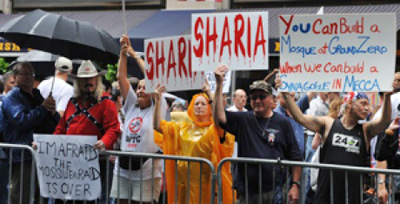
sharia ny protest400Anti-Shariah demonstrators rally against a proposed mosque near Ground Zero in New York. (RNS Photo courtesy Asterio Tecson)The bills all cite “foreign laws” because two federal courts have ruled that singling out Shariah—as Oklahoma voters originally did in 2010—is unconstitutional.

So what’s the big deal with Shariah?

Many Americans think of Shariah as an Islamic legal system characterized by misogyny, intolerance and harsh punishments. Some anti-Islamic activists warn Muslims are trying to sneak Shariah into the American legal system in ways that do not reflect U.S. legal principles or beliefs.

Many Muslim Americans insist Shariah is essential to belief, and any harsh punishments or unconstitutional aspects associated with Islamic law either have been exaggerated, abrogated or are superseded by American law.

Muslims around the world have varying views about what Shariah entails, and its role in personal and public life. So what exactly is Shariah? Here are five facts that might help make sense of this complex and often misunderstood term.

What is Shariah?

Shariah is an Arabic word that literally means “a path to be followed” and also commonly refers to “a path to water.” The term is broad, encompassing both a personal moral code and religious law.

There are two sources of Shariah—the Quran, which many Muslims consider to be the literal word of God, and the “Sunnah,” the divinely guided tradition of Islam’s Prophet Muhammad.

The interpretation of Shariah is called fiqh, or Islamic jurisprudence. Because fiqh is man-made, it can be changed. Shariah, for many Muslims, is divine and cannot be changed.

Some Muslims use the term “Shariah” to apply to both the injunctions in the Quran and Sunnah, and the interpretation of the Quran and Sunnah. Islamic law consists of Shariah and fiqh.

What does Shariah cover?

While often thought of as a legal system, Shariah covers personal and collective spheres of daily life, and it has three components—belief, character and actions. Only a small portion of the action component relates to law. In fact, only about 80 of the Quran’s 6,236 verses are about specific legal injunctions.

The belief component of Shariah commands Muslims to believe in God, the angels, prophets, revelation, and other metaphysical and physical aspects of the faith.

In terms of character, Shariah commands Muslims to strive for traits like humility and kindness, and to avoid traits such as lying and pride.

Actions include those relating to God, such as prayer, fasting and pilgrimage, as well as actions relating to other humans, such as marriage, crime and business.

Some actions relating to other humans can be regulated by the state, while actions relating to God, as well as belief and character, are between an individual and God. Nevertheless, some Muslim-majority countries have criminalized violations of the belief, character and action components of Shariah.

Who is qualified to issue rulings on Shariah?

Shariah was systematized between the eighth and 10th centuries, about 200 to 300 years after Muhammad claimed he received his first revelation. Many people believe by the end of the 10th century the core components of Shariah had been exhaustively debated. That said, changes in Islamic society force scholars to look at Shariah anew, with new interpretations expressed in fatwas, or religious edicts, and legal opinions.

Interpreting Shariah is done by jurists known as fuqahaa, who look at the practicality of both time and place regarding how a ruling can be applied. In places where Shariah has official status, it is interpreted by judges known as qadis. Fiqh interpretations divide human behavior into five categories—obligatory, recommended, neutral, discouraged and forbidden.

Over the centuries, Islamic legal analyses and opinions were compiled in books judges used in deciding cases. Secular courts and Shariah courts coexisted in Islamic lands, with the Shariah courts often taking responsibility for family law matters. With the arrival of European colonization, many of these legal opinions were codified into civil law.

Where is Shariah the law of the land?

Jan Michiel Otto, professor at the Leiden University Law School in the Netherlands, divides legal systems of Muslim countries into three categories—classical Shariah systems, secular systems and mixed systems.

In countries with classical Shariah systems, Shariah has official status or a high degree of influence on the legal system. It covers family law, criminal law and, in some places, personal beliefs, including penalties for apostasy, blasphemy and not praying. These countries include Egypt, Mauritania, Sudan, Afghanistan, Iran, Iraq, the Maldives, Pakistan, Qatar, Saudi Arabia, Yemen and certain regions in Indonesia, Malaysia, Nigeria and the United Arab Emirates.

Mixed systems are the most common in Muslim-majority countries. Generally speaking, Shariah covers family law, while secular courts will cover everything else. Countries include Algeria, Comoros, Djibouti, Gambia, Libya, Morocco, Somalia, Bahrain, Bangladesh, Brunei, Gaza Strip, Jordan, Kuwait, Lebanon, Malaysia, Oman and Syria.

In several Muslim-majority countries, Shariah plays no role—Burkina Faso, Chad, Guinea, Guinea-Bissau, Mali, Niger, Senegal, Tunisia, Azerbaijan, Kazakhstan, Kyrgyzstan, Tajikistan, Turkmenistan, Uzbekistan, Albania, Kosovo and Turkey.

Some countries have Islamic family law courts available for their Muslim minorities—Eritrea, Ethiopia, Ghana, Kenya, Tanzania, Uganda, India, Israel, Singapore, Sri Lanka, Thailand and the United Kingdom.

In the United States, there are no Islamic courts, but judges sometimes consider Islamic law in their decisions. For example, a judge may recognize the validity of an Islamic marriage contract from a Muslim country in order to grant a divorce in America.

Some Islamic scholars argue true Islamic belief cannot be coerced by the state and therefore belief in Shariah should only come from the individual and not be codified by the state.

Does Shariah really prescribe harsh punishments like stoning adulterers?

Yes, but experts in Islam insist many of these punishments have been taken out of context, abrogated or require a near-impossible level of evidence to be carried out. For someone to be convicted of adultery, for example, there must be four witnesses to the act, which is rare. The Quran also prescribes amputating the hands of thieves, but not if the thief has repented.

Other Shariah scholars say such a punishment system can only be instituted in a society of high moral standards and where everyone’s needs are met, thereby obviating the urge to steal or commit other crimes. In such a society, the thinking goes, corporal punishments would be rarely needed.

That said, corporal punishments have been used by Islamic militant groups in places like Afghanistan, Somalia and Syria, and governments in Iran, Saudi Arabia and the Aceh state in Indonesia.


Redemption found on Blue Mountain

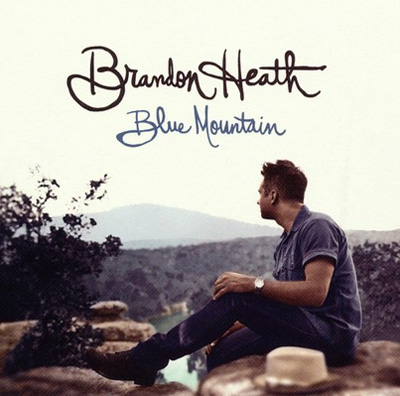
NASHVILLE, Tenn.—With his most recent album, Blue Mountain, singer/songwriter Brandon Heath uses stories about fictional characters in Appalachia to drive home messages about God’s unfailing love, forgiveness and grace.

By taking a creative approach to share the gospel, Heath hopes these songs spark conversations with non-Christians. Heath wrote the song “Jesus in Disguise” as a reminder of the unexpected ways Christ works in the midst of struggles and in varied settings. 

blue mountain400“Jesus isn’t always in the obvious,” Heath said. “But from busy city streets to the rural roads of Blue Mountain, Jesus is always there to be found. You just have to know what to look for and be willing to look for it.”
Heath developed the theme for this project after a friend mentioned an interesting comparison found in the C.S. Lewis book, Letters to an American Lady

“My friend was talking about how he read that some people are like blue mountains,” Heath said. “That’s kind of a funny thing, but if you look at mountains in the distance, they are kind of blue and hazy. He said some people are like that, because you’re always from a distance to them. Once you get up close to them, you’ll see they’re just like everyone else. I love that thought, and the inspiration started flowing from there.”

During concerts, Heath challenges audiences to step out of their comfort zone, reach out and make a difference to people in need. His concerts have helped raise awareness for missions organizations such as Food for the Hungry, International Justice Mission, Young Life, Blood:Water Mission and Restore International.

“Hopefully, people are not only connecting to the music, but also the message behind it,” Heath said. “I want people to realize that if they place their faith in Christ, they will be delivered from their old life, given a new lease on life and a fresh start to lead the kind of life that God wants his children to lead—with our lives glorifying him.”

Since 2008, Heath has sponsored an annual benefit concert, “Love Your Neighbor,” which gathers musicians for a night of music and supports needs in Nashville. The event has raised more than $140,000 for community needs.

“I think the longer I get to know the character of Jesus, the more compassion I have for others,” Heath said. “It is one thing to have compassion and quite another to act on it. Most times, it starts with the people around you.”

With music reflecting life-changing truth, Heath remains grounded on a firm foundation and focused on delivering music with a powerful message that changes lives for God’s glory. 

“I love hearing stories about how the songs have impacted people in unexpected ways and how they have responded by finding redemption and restoration through a relationship with Christ.”


Wrath of God verse roils hymnal group

NASHVILLE, Tenn. (ABP)—The wrath of God has become a point of contention since a new Presbyterian hymnal passed on “In Christ Alone” for theological reasons.

“Why do many Christians shrink from any thought of the wrath of God?” Keith Getty, who co-wrote the hymn—one of the most popular songs used today in churches across the United States and elsewhere—with British songwriter Stuart Townend in 2001, posted on the Getty Music website.

The Irish-born Getty, who now lives in Nashville, Tenn., with his wife, Kristyn, endorsed a First Things article by Baptist theologian Timothy George contending God’s love is inseparable from God’s wrath.

God’s love not ‘squishy’

“God’s love is not sentimental; it is holy,” said George, dean of Samford University’s Beeson Divinity School. “It is tender, but not squishy. It involves not only compassion, kindness and mercy beyond measure—what the New Testament calls grace—but also indignation against injustice and unremitting opposition to all that is evil.”

presby hymnal250George’s article came in response to an April Christian Century article describing “controversial issues” that confronted the Presbyterian Committee on Congregational Song as it worked on a new hymnal titled “Glory to God,” due out this fall.
Bringle, a professor at Brevard College in North Carolina, said the committee had concluded three-and-a-half years of quarterly meetings when disagreement arose in January 2012.

The group had voted for “In Christ Alone,” a song from the contemporary Christian canon, but altered a lyric from “as Jesus died/the wrath of God was satisfied” to “Till on that cross as Jesus died/the love of God was magnified.”

An email debate

When the authors refused to authorize the change, which they considered too great a departure from their original words, the committee debated by email whether to include the song with the original lyrics or remove it from the list.

“People making a case to retain the text with the authors’ original lines spoke of the fact that the words expressed one view of God’s saving work in Christ that has been prevalent in Christian history—the view of Anselm and Calvin, among others, that God’s honor was violated by human sin and that God’s justice could only be satisfied by the atoning death of a sinless victim,” Bringle said.

“While this might not be our personal view, it was argued, it is nonetheless a view held by some members of our family of faith; the hymnal is not a vehicle for one group’s perspective but rather a collection for use by a diverse body.”

“Arguments on the other side pointed out that a hymnal does not simply collect diverse views, but also selects to emphasize some over others as part of its mission to form the faith of coming generations,” she said. “It would do a disservice to this educational mission, the argument ran, to perpetuate by way of a new (second) text the view that the cross is primarily about God’s need to assuage God’s anger.”

A losing vote

The final vote was six in favor of inclusion and nine against, giving the requisite two-thirds majority to the no votes. “The song has been removed from our contents list, with deep regret over losing its otherwise poignant and powerful witness,” Bringle said.

George, who as a church history professor at Southern Baptist Theological Seminary in the 1980s was an early advocate of a resurgence of Calvinism in the Southern Baptist Convention, said the debate is part of a recent trend of treating God’s wrath as something shameful and best left in the closet.

“The result is a less than fully biblical construal of who God is and what he has done, especially in the redemptive mission of Jesus Christ,” George said.

“The full New Testament teaching about the cross involves both expiation, which means providing a covering for sin, and propitiation, which means averting divine judgment,” he wrote. “The semantic range of the Greek words hilasmos/hilasterion includes both meanings. That is why the wrath of God cannot be brushed out of the story without remainder.”

Gospel Coalition confessional statement

Getty has been featured at national conferences of the Gospel Coalition, a group of churches concerned about movements among evangelicals they believe depart from historic beliefs and practices. The group’s confessional statement includes a belief that “by his incarnation, life, death, resurrection and ascension, Jesus Christ acted as our representative and substitute.”

“He did this so that in him we might become the righteousness of God: on the cross he canceled sin, propitiated God, and, by bearing the full penalty of our sins, reconciled to God all those who believe,” the statement says.

“We believe that Christ, by his obedience and death, fully discharged the debt of all those who are justified,” it continues. “By his sacrifice, he bore in our stead the punishment due us for our sins, making a proper, real and full satisfaction to God’s justice on our behalf.”

The hymnal panel said the next Presbyterian collection of hymns and songs will be published amid different conditions than those that molded previous ones.

“It will be used by a church many of whose members have not had lifelong formation by Scripture and basic Christian doctrine, much less Reformed theology,” said a statement on the Presbyterian Hymnal Project website. “It is meant for a church marked by growing diversity in liturgical practice. Moreover, it addresses a church divided by conflicts but nonetheless, we believe, longing for healing and the peace that is beyond understanding.”


Texas barbecue draws a crowd in Italy

The smell of Texas barbecue tickles noses, makes mouths water and attracts a crowd—even in Italy.

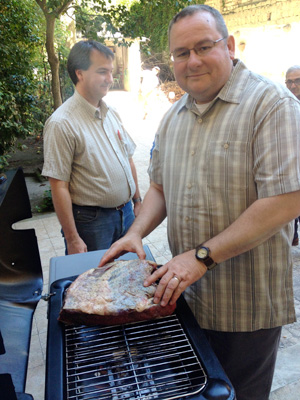
A mission team from Coastal Bend Fellowship, a church in Kingsville, discovered Texas barbecue offered an ideal way to bring Italians together. Partnering with Southern Baptist Convention International Mission Board missionaries Charlie and Shannon Worthy, the Texans held two barbecues during a recent mission trip to Italy.

A taste of Texas

The team held a barbecue for the missionaries in their neighborhood in Naples, where as many as 150 curious people—at least half of them non-Christians—arrived to experience a taste of Texas.

italy barbecue300Noe Treviño, pastor of Coastal Bend Fellowship in Kingsville, prepares to barbecue a brisket in Italy.“The neighborhood party was a rocking neighborhood party,” said Steve Seaberry, director of Texas Baptists’ partnerships office, who made the connection between the church and the missionaries, who recently relocated to another site in northern Italy near Tuscany.

“People talking, visiting, saying goodbye—lots of friendship, lots of warmth. It showed how much people loved them.”

Delma Falcon, the church’s secretary as well as director of outreach and ministry, said the gathering was amazing.

“The people came, and they ate,” she said. “They loved the food. I felt like I was in an Italy movie. Everyone stood around and visited. At the end, they surprised us with a fireworks display.”

Another 130 people attended a barbecue at the missionaries’ church, giving the congregation an opportunity to express their gratitude for the missionaries’ service.

The barbecues had been dreams of the missionaries since they hit the field. The mission team had to improvise—including making their own barbecue sauce, finding necessary spices and even lowering the food down four stories on a makeshift rope and bucket system—but were thrilled to help.

“We had our challenges, but we made it work,” said Noe Trevino, pastor of Coastal Bend Fellowship. “We cooked briskets with charro beans and rice and made some quesadillas. They loved it.”

Positive image

The gatherings provided an opportunity to encourage the missionaries as well as presenting a positive image of Christians in a neighborhood where there are few Christ-followers.

God can use any ability for his purposes, Seaberry noted. He seeks people who are willing to follow his guidance, he insisted.

“There’s literally no skill, gift or talent that cannot be used in service for God,” he said. “If a person begins to have a desire in their heart to use their gifts, skills and talent for God, there is a place. Our challenge is to find it.”

For more information about mission opportunities around the globe through Texas Partnerships, visit www.texasbaptists.org/texaspartnerships.


Transportation safety crucial for churches

INDIANAPOLIS (BP)—While police haven’t assigned blame for a bus accident involving an Indianapolis church en route from a summer youth camp, GuideStone Financial Resources recommends churches take specific safety steps before planning road trips.

“It’s not enough to address safety concerns on a case-by-case, trip-by-trip basis,” said Jim Welch, GuideStone’s director of property and casualty product development. “The church is responsible for putting protections in place for transportation for all ministries, on all trips. It requires leadership commitment, resources, time and consideration. Each is critical for success.”

ambulance320Church-sponsored transportation safety is in the spotlight after a bus just one mile from its destination of Colonial Hills Baptist Church of Indianapolis crashed July 27 on an interstate exit ramp, slamming into a concrete barrier and rolling over, ejecting some of its 37 passengers.
A church volunteer, a youth pastor and his pregnant wife—along with their unborn child—were killed as others were hospitalized, including one teenager with critical injuries.

Questions remain

Indiana State Police told USA Today questions remained unanswered days after the tragedy.

“We are looking into seeing if (the church) has any records they’d be willing to offer up to show us,” USA Today quoted 1st Sgt. Tyler Utterback of the Indiana State Police. “It’s not a requirement.”

Keeping certain vehicle records and building safeguards around ministry transportation should be clear church priorities, Welch said, recommending precautions regardless of whether churches own or charter the vehicles.

“Before and after every trip, no matter how short, churches should inspect their vehicles,” Welch said. “Government data show that 70 percent of all van accidents happen within 25 miles of home. Dedicated teams—two or more qualified adults—should be responsible for these inspections, and churches should keep good records of these inspections.”

Make sure drivers are properly trained, screened and rested; make sure vehicles are properly inspected, maintained, operated and stored; and make sure church representatives and others involved have signed participation agreements and behave appropriately, Welch recommended.

Prescreen drivers

“When it comes to drivers, handing the keys to the first available person is a big mistake. Drivers should be prescreened for clean driving and criminal records, have an established association with the church and have plenty of experience in general driving, as well as with the vehicle they’ll be handling,” he said.

“Also, be aware that if you own a charter bus or school bus, the driver must have a commercial driver’s license. You should order and review each driver’s motor vehicle record every year,” Welch said.

Participants and guardians of participants under age 18 should sign agreements specifying the activity, waiving the church’s liability for trip injuries and granting the church authority to obtain any necessary medical treatment for participants, Welch said.

Check safety records of each type of vehicle before use and use the vehicles only as intended, he said.

Common-sense requirements

Follow “common-sense safety requirements,” he recommends, including:

• Set and enforce capacity requirements for vehicles.

• Require all occupants to wear seat belts at all times, if available.

• Require drivers to obey all speed limits and traffic laws, be at least 25 years old, be well-rested and have appropriate experience driving the particular vehicle they’ll drive for the church.

• Annually evaluate the health and fitness of drivers over the age of 65.

• Prohibit drivers from using cell phones at any time while on the road and limit other distractions, including noise, food, drink and electronics.

When chartering transportation, churches can be proactive by choosing only established, well-known companies with well-maintained equipment, Welch said.

Vet charter companies

“Check them out with the Better Business Bureau and ask for referrals if possible,” Welch said. “The U.S. Department of Transportation’s Federal Motor Carrier Safety Administration  establishes rules and regulations for motor carriers. Churches should familiarize themselves with these standards so they can use them to evaluate a specific carrier’s qualifications and behavior.

“Charter companies should be willing to share information about driver training and certification programs and safety requirements.”

When possible, observe pre- and post-trip vehicle inspections and ask to see inspection records.

“It’s best to have the church attorney carefully review the contract prior to signing,” Welch said. “Never sign an agreement that has wording making the church responsible for injuries sustained while riding in a vehicle driven by a charter operator.

“Keep in mind that the church could still be held liable for injuries that occur at the trip destination or as the result of improper planning,” Welch said. “Churches should discuss trips with their insurance agent to make sure they’re properly prepared and covered.”

Maintain inspections, registrations

Maintain government-required registrations and inspections, and regularly self-inspect vehicles, he said, covering such basics as tire condition and pressure, lights, engine condition, safety equipment, oil and gas levels and windshield wipers. Welch recommends stocking vehicles with safety supplies and equipment, including a fire extinguisher, a first-aid kit and emergency flares.

Insure church-owned vehicles with commercial auto policies, not modified personal policies, and if chartering, take out policies for “hired and non-owned” vehicles, Welch said.

“Additionally, if churches transport large numbers of people (10-plus), they should consider carrying excess or umbrella liability coverage just in case the unthinkable happens,” Welch said. “The limits on auto policies could quickly be exhausted in the event of a larger-scale accident.”

Welch recommends as a resource the risk management experts at Brotherhood Mutual Insurance Company, GuideStone’s alliance partner, which offers free information.


Youth trip bridges divisions in Mississippi Delta town

SHAW, Miss. (ABP)—No one expected a Vacation Bible School run by a visiting Baptist youth group to be a catalyst for racial healing in Shaw, Miss. Yet by all accounts, that’s just what the recent visit by 34 youngsters from Houston’s South Main Baptist Church accomplished.

“I believe this is a turning point for Shaw, a city that’s honestly been down for so many years now,” said Leroy Woods, pastor of United Rock of Ages Missionary Baptist Church in Shaw and head of the local ministerial association. “Yes, sir, things are looking up in Shaw.”

Woods and others who witnessed it say the VBS program, and the community barbecue held at the conclusion, built on the groundwork laid by others, including a minister intent on helping his hometown.

sinclair kevin mug130“We got to participate in something great, an act of grace because of what Jason Coker has done in this community,” said Kevin Sinclair, pastor of youth and missions at South Main Baptist.

Delta Hands for Hope

Coker, a Shaw native and pastor of Wilton Baptist Church in Connecticut, returned to the area in 2000 looking for ways to help his hometown. He zeroed in on ways to help the area’s children, focus of the newly created Delta Hands for Hope.

Once at full speed, the organization will work with Shaw’s school-aged children in education, recreation, health and spirituality. The workforce will include local residents and churches, plus some from out of town and state.

“My goal is to take interested churches and funnel them into the Delta to build relationships with people, to work with and for the folks there, and live into this new organization,” Coker said.

Rural poverty initiative

Shaw is right up Cooperative Baptist Fellowship’s alley with CBF’s 12-year-old rural-poverty initiative focusing on 20 of the nation’s poorest counties. Coker used the Fellowship’s Together for Hope approach by seeking guidance from local leaders on the most urgent needs and ways to help.

jason coker mug130Jason Coker“Assets-based community development is instrumental,” he said. “It’s not outsiders coming in to save the day in some paternalistic way.”

Improving race relations is not the purpose of Delta Hands of Hope said Coker, who grew up a member of the minority white population in Shaw.

“If the point of this was racial reconciliation, we would never get it off the ground,” he said. “But in the process of doing good together, people are learning about each (other), crossing those boundaries of segregation for the first time in substantive ways.”

Those boundaries were significantly crossed when South Main’s young people arrived in Shaw on what Sinclair described as a “rural poverty immersion mission trip.”

In addition to performing work and service, those trips involve learning about local social, cultural and economic issues. In the Delta, that meant visiting the National Civil Rights Museum in Memphis and touring cotton fields and a farm considered to be the birthplace of blues music, Sinclair said.

The youth planned a straightforward Vacation Bible School program for black children in a historically white Methodist church. What no one foresaw, Sinclair said, was how that VBS and a festival and barbecue held at the conclusion would break down racial barriers.

Barriers coming down

Youth group member Adriana McDonnald sensed those barriers coming down even before VBS began, when she and her friends went door-to-door distributing fliers inviting children to attend.

adriana mcdonnald130Adriana McDonnaldAt a general store, the owner told them it was the first time children had been personally invited to a VBS program.

“He ended up giving us free Slushies,” McDonnald said.

Just six children attended the first day, but by the end of the week, the numbers hit 40 to 50, and many of the town’s teenagers bonded with their peers from Houston, McDonnald said.

“And now I want to become some type of missionary or youth minister, just because of this trip,” she said.

Local adults seemed to be equally inspired, Sinclair reported. The Methodist pastor told him during the festival that their sanctuary hadn’t been so full since the 1950s, and Woods was the first African-American to speak from their pulpit.

At the beginning, “I could sense discomfort on both sides, but as everybody ate together and talked together, you could see that collaborative relationship being formed,” Sinclair said.

A watershed mooment

Woods felt the energy, too, and said he considers that week this summer potentially a watershed moment for Shaw. Even before then, he said, local political and religious leaders began to realize it is up to them to fix their town. Several beautification projects were completed as pride in the city grew.

But the VBS and barbecue hosted by South Main at the Methodist church, he said, opened his eyes even wider to the compassion being shown by outsiders and the responsibility he and other locals have to keep working.

“It’s not necessarily about the groups coming in, but us embracing the vision of what God is wanting us to do in Shaw,” Woods said.


Rick Warren returns to pulpit after son’s April suicide

LAKE FOREST, Calif. (BP)—Rick Warren, pastor of Saddleback Church in Lake Forest, Calif., returned to the pulpit July 27 for the first time since his son’s suicide.

Warren, author of the bestseller The Purpose Driven Life, had taken a 16-week absence after Matthew Warren, 27, took his life in April following a long struggle with mental illness.

matthew warren130Matthew WarrenHis death brought an outpouring of support for the Warren family, including from Frank Page, president of the Southern Baptist Convention’s Executive Committee and a former SBC president, who lost his 32-year-old daughter Melissa to suicide in 2009.

‘Heart is broken’

“My heart is broken as I’ve heard the news about Rick Warren’s son,” Page said via Twitter the day after Matthew Warren’s death. “Please pray. Unfortunately, I understand that which they experience now.”

Warren took the pulpit at the Saturday evening service to a standing ovation, thanking Saddleback staff, members, his family and local pastors who supported him.

“In the middle of all that intense pain, Kay and I … and our entire family, we’ve all felt the favor of God on our lives because of your prayers,” he said.

Warren, with comments from his wife, Kay, preached the first message in a new sermon series titled, “How to Get Through What You’re Going Through.”

When asked how he and his family are getting through this time, Warren said, the answer rests on three truths that never change.

God ‘grieves with us’

The first one is life doesn’t make sense, but people can have peace because they know God is with them and loves them, he said. God grieves with us, and he wants to take pain and turn it around as a means to help others who are suffering in the same way.

“He wants to use it as your life message and your life mission,” Warren said.

He acknowledged he still does not understand why his son’s mental illness never was healed or why he died, but having an explanation is not the point.

“I would rather walk with God with all my questions unanswered than to have all my questions answered and not have him in my life,” he said.

The second truth is everything on earth is broken, but people still can have joy because God is good and has a greater plan, he said. Nothing works perfectly in this world, and sin is wearing people down. But they still can rely on God.

God’s plan is good

“His plan is bigger than the problem you’re going through, and it’s a good plan,” he said.

Kay Warren took the platform to explain how she could choose joy even when her hopes were crushed by Matthew’s death. The third truth, she said, is life is a battle, but people can have hope because there’s more to the story.

During her son’s mental illness, she built up hope that God would heal him, she recalled, and she believed he would. After Matthew’s suicide, all the things she had used to give her hope seemed to mock her, and she had to figure out what to do when the outcome was not as she expected.

“What I know about God prevents me from concluding that he is a fake or a phony or a tease, and what I know about myself prevents me from concluding that my faith wasn’t strong enough,” she said.

An enormous mystery remains, she said, but she is content to leave her questions unanswered until she sees Jesus, because she knows he never has forsaken her or her family.

‘Hope is alive’

“Hope may not look the way that I thought it would, but hope is alive in us because we know,” she said.

Warren returned to the stage, telling the congregation he comforts himself by knowing that even though Matthew’s life on earth was full of suffering, he is in his heavenly Father’s arms.

Warren announced just as Saddleback fought to remove the stigma from having HIV/AIDS, the next fight will be to remove the stigma from mental illness.

“If you struggle with a broken brain, you should be no more ashamed than someone with a broken arm,” Warren said. “It’s not a sin to take meds. It’s not a sin to get help. You don’t need to be ashamed.”