Cuts at Department of Education decried, praised

Trump administration efforts to dismantle the U.S. Department of Education by slashing its workforce and closing offices is a “reckless move” that will create “chaos and confusion” and undermine religious freedom, said Amanda Tyler, executive director of the Baptist Joint Committee for Religious Liberty.

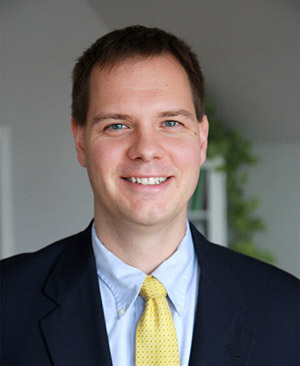
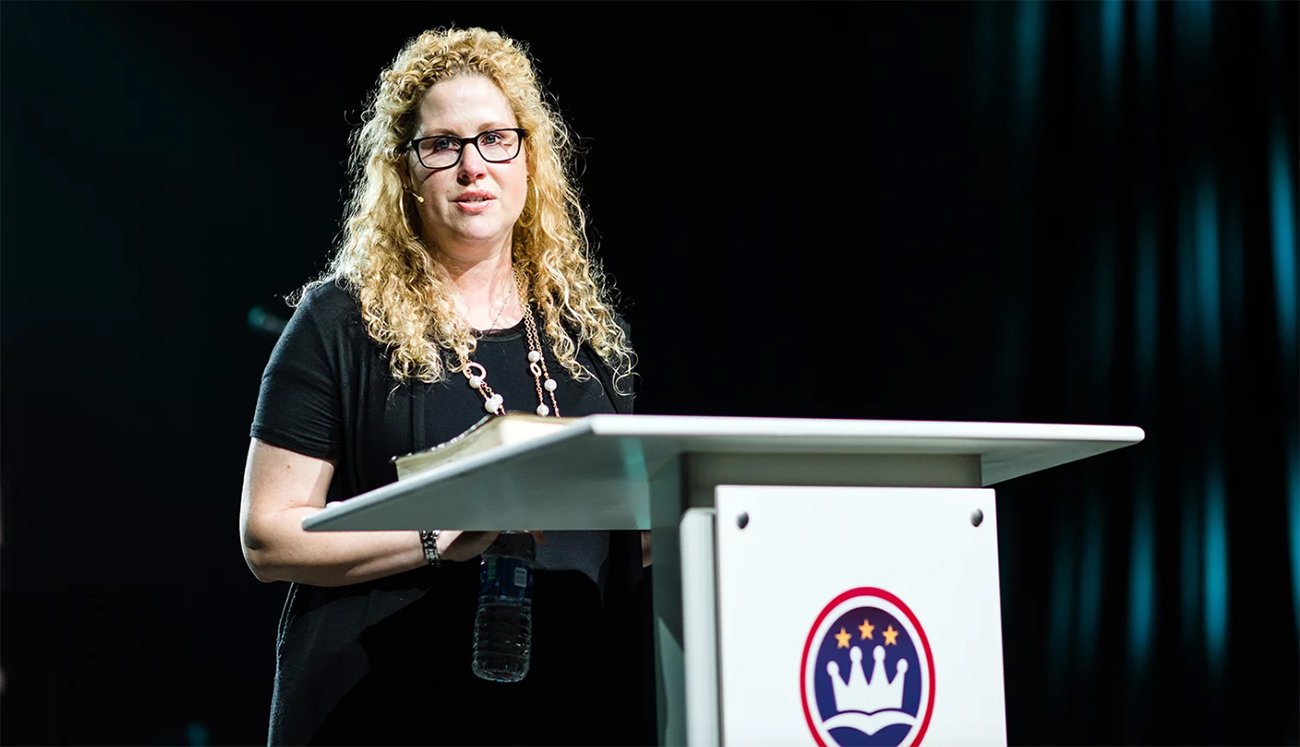
Amanda Tyler

“Public education and religious liberty go hand in hand. Public schools are the only education system where students’ rights to religious freedom are guaranteed to be fully protected,” Tyler said.

“Weakening federal oversight eliminates protections for religious freedom for all students, students with disabilities and low-income families. It is a blatant move to privatize education, redirecting public funds toward private sectarian schools at the expense of public institutions that serve all children.”

While the president lacks authority to dissolve a government department created by Congress without congressional approval, the Trump administration has implemented a major reduction in force affecting nearly half of its employees.

The Dallas regional Department of Education office that handles civil rights complaints is among seven being closed.

“This action is not about improving education—it is about asserting more authority than the president has,” Tyler said. “Gutting the Department of Education creates continued chaos and confusion, particularly for the most vulnerable students.

“This reckless move directly threatens religious liberty by eliminating staff engaged in essential oversight that ensures students can freely practice—or choose not to practice—religion without government coercion. Without these protections, public schools will be vulnerable to state-sponsored religious mandates and discrimination.

“Millions of students across the country will only be harmed, not helped, by firing seasoned civil servants who work tirelessly to ensure they are able to access a quality education. Systematically shutting down the department strips students of federal protections, denies them essential services, and leaves states and districts to fend for themselves.”

Some assert department pushes ‘political ideology’

Of course, not everyone agreed with Tyler. The conservative Eagle Forum applauded what it called an end to “the reign of the Department of Un-Education.”

“Since its opening in 1979, radical teachers unions, and leftist politicians have used this agency to push their political ideology into America’s classrooms and overstep states’ rights. Young minds have been poisoned, parents’ rights have been eroded and test scores have failed to improve. … President Donald Trump has been fulfilling his promises to make American education great again in recent weeks,” the Eagle Forum stated on its website.

Last November, evangelist Franklin Graham voiced support for Trump’s call to shut down the Department of Education.

“The Department of Education has only existed since 1979, and we were better off without it,” Graham posted on Facebook. “We have been spending billions of dollars for what?

“To dumb our children down? To teach them to disrespect the flag and our nation? To introduce them to sexual content at earlier ages including gay and transgender agendas? For them to be taught the lies of Critical Race Theory and DEI? … I think we can do better. Put the parents back in the driver’s seat and let schools come under state and local leadership.”

Part of a larger effort to destroy public education

Rachel Laser, president and CEO of Americans United for Separation of Church and State, linked the Trump Administration’s efforts to dismantle the Department of Education to “the Christian nationalist agenda set out in Project 2025 to destroy public education that benefits all communities in favor of private, religious education.”

Public school districts and universities around the country—and the students they serve—depend on the Department of Education, Laser said.

“Among its many important functions, the Department of Education ensures that millions of American students receive financial aid for higher education and that public schools respect students’ civil rights,” Laser said.

“The stroke of a magic marker cannot take away those important functions and rights from American students.”

Laser alluded to a widely circulated draft of an executive order directing Secretary of Education Linda McMahon to facilitate the closing of the Department of Education “to the maximum extent appropriate and permitted by law.” To date, the president has not signed an executive order concerning the Department of Education.

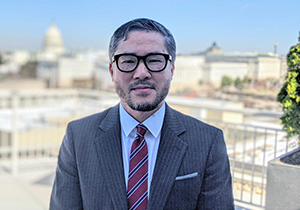
Charles Foster Johnson

Charles Foster Johnson, founding executive director of Pastors for Texas Children, emphasized the important work of the U.S. Department of Education.

“While public education is mainly a state authority and not a federal one, the Department of Education does put the weight of the U.S. Constitution behind the goal of ensuring that minority children of color and disability receive the same educational opportunity as the majority.”

Johnson linked the efforts to cut the Department of Education to efforts at the state and local level to undermine public education and redirect public funds to private schools.

“The same people behind dismantling the federal Department of Education are also pushing private school voucher programs in all the states. These political forces have opposed publicly funded universal education for decades,” Johnson said.

“The end goal of the voucher crowd is to end American public education, to destroy our children’s publicly provided education accorded to all children, and to put it on an open, privatized market—simply put, to make commodities of our kids and for-profit markets of our classrooms. It’s wrong and must be stopped.”


Lawyers say Justice Department probe of SBC closed

NASHVILLE (RNS)—Lawyers for the Southern Baptist Convention said March 12 the U.S. Department of Justice has ended an investigation into the denomination’s response to allegations of sexual abuse committed by Southern Baptist pastors and institutional leaders.

That investigation was launched in 2022 after the release of the Guidepost report that demonstrated SBC executives had mistreated abuse survivors and sought to downplay the effects of abuse in the convention.

“Earlier today, the U.S. Attorney’s Office for the Southern District of New York informed us that the investigation into the Southern Baptist Convention and Executive Committee has officially concluded,” SBC attorneys Gene Besen and Scarlett Nokes told Baptist Press, an official SBC outlet.

Megan Lively speaks at the Caring Well conference in Grapevine on Oct. 3, 2019. (Photo / Karen Race Photography / Courtesy of SBC Ethics and Religious Liberty Commission)

Megan Lively, an abuse survivor and activist, said she was disappointed to hear from an FBI agent the investigation was over. She had hoped, she said, the investigation would move the SBC to take abuse reforms seriously.

“It’s just a mess,” she added.

A spokesman for the U.S. Attorney’s Office for the Southern District of New York declined to comment.

No abuse charges have been filed as a result of the Guidepost report. Matt Queen, a former Southwestern Baptist Theological Seminary professor and provost, pleaded guilty last fall to lying to the FBI, and recently was sentenced to six months of house arrest, a year of supervised release and a $2,000 fine.

But aside from Queen’s case, few details of the investigation have been made public. Given that national SBC leaders have no direct control over pastors or churches, it always was unclear what crimes SBC leaders might be charged with.

Leaders from Southwestern Baptist Theological Seminary, where Queen was once a professor as well as provost, stated: “For more than two years, Southwestern fully cooperated with the DOJ throughout the investigation and is pleased that there were no findings of wrongdoing against the institution or current employees. We remain committed to ensuring the safety of all members of the seminary community.”

This is the second time the SBC’s attorneys have announced an end to the Department of Justice investigation. Last March, those attorneys said the investigation into the Executive Committee, which oversees the denomination’s day-to-day operations, was over, but later clarified the investigation into the denomination as a whole continued.

‘Grateful we can close this chapter’

Southern Baptist leaders have spent more than $2 million on legal fees related to the investigation. Those fees, along with more than $3 million spent defending lawsuits filed by a pair of former SBC leaders named in the Guidepost report, and the cost of the Guidepost investigation itself, have drained the Executive Committee’s reserves and left it unable to pay its legal bills.

SBC Executive Committee President and CEO Jeff Iorg gives an address to Executive Committee members, Feb. 17. (BP Photo / Brandon Porter)

Jeff Iorg, president and CEO of the Executive Committee, gave thanks for the investigation’s end, saying, “We’re grateful that we can close this chapter in our legal proceedings and move forward.”

The SBC’s attempts to manage accusations of sexual abuse have occupied the leadership for more than a decade, and the convention’s governing body, the annual meeting of messengers from local churches, has demanded reform, forcing the Executive Committee to commission the Guidepost investigation in a floor vote in 2021.

But critics of the reform efforts point to the cost of the Guidepost investigation to claim it was a mistake. Abuse advocates worry those critics now will use the end of the Justice Department investigation to derail reforms.

The Guidepost report led Southern Baptists to pass a series of reforms intended to address abuse in churches, including more training and publishing a database of abusive pastors. Those reforms largely have stalled.

While the SBC has distributed training materials and hired a national staffer to help oversee reforms, the database has been tabled for now, with SBC leaders saying last month it is no longer a priority.

Abuse survivors now worry the end of the investigation and the tabling of the database signal abuse reforms have run out of steam.

“Everything seems to be falling apart,” Lively said.


Refugee resettlement groups concerned about new plans

WASHINGTON (RNS)—In a March 10 status report on refugee resettlement, President Donald Trump’s administration acknowledged there had been a “significant deterioration of functions” due to its stop-work orders and suspension of resettlement programs.

The status report was produced to comply with a federal judge’s order after the administration was sued by three faith-based refugee resettlement organizations, along with refugees and their families, for suspending the federal refugee program.

The administration signaled it planned to move forward with identifying a single service provider for refugee resettlement in the status report, a drastic change in how refugees would receive services when they arrive in the United States.

It was “preparing a request for proposals for a new resettlement agency” and expected a solicitation process to take three months, according to the status report.

“This proposal would punish those who have long supported refugee families and abandon decades of expertise and infrastructure that make this program successful,” said Rick Santos, president and CEO of Church World Service, one of two refugee resettlement agencies the administration has resumed working with.

“Doing so is harmful, unnecessary and acts to strip newly arriving refugee families from accessing a robust support network to rebuild their lives.”

The administration also said it did not know how long it would take to restart refugee processing from overseas, as Church World Service and the United Nations’ International Organization for Migration, the other organization the administration resumed working with, will need to rehire furloughed workers.

U.S. District Judge Jamal Whitehead ordered the Trump administration to produce the status report on refugee resettlement at an emergency hearing March 4.

Plaintiffs in Pacito v. Trump—which include faith-based organizations Church World Service, HIAS, Lutheran Community Services Northwest and individual refugees and their families—argued the administration was not complying with Whitehead’s Feb. 25 ruling that blocked the president’s Jan. 20 executive order suspending the refugee program.

In the February ruling, Whitehead had said the president’s actions amounted to a “nullification of congressional will.”

The day after the Feb. 25 ruling, the Trump administration sent out termination notices to the 10 refugee resettlement organizations in the United States, seven of which are faith based. Lawyers for the three faith groups and the nine individual plaintiffs suing the government had requested the March 4 emergency hearing because they believed the terminations were an attempt to undermine Whitehead’s order.

At the end of the hearing, Whitehead said, “The timing of the government’s decision to terminate the contracts of the resettlement agencies just one day after the court issued its preliminary injunction raises serious concerns about whether these actions are designed to circumvent the court’s ruling.”

Exploring ‘alternatives to the traditional reception and placement program’

In the status report, the Trump administration’s lawyers argued the State Department is not required by law to provide reception and placement benefits to refugees when they arrive in the United States.

Melissa Keaney, a senior supervising attorney at the International Refugee Assistance Project, pushed back on that claim in an email to RNS, saying, “The court already found that provision of these critical services is required by Congress.”

She cited the nearly 50-year history of refugee resettlement agencies providing “critical domestic services and benefits to recently arrived refugees.”

The Trump administration indicated the State Department “is also exploring alternatives to the traditional reception and placement program” without providing further details to protect “deliberative process privileges.”

In an interview with RNS, Rachel Levitan, chief global policy and advocacy officer at HIAS—a Jewish organization that provides humanitarian aid and assistance to refugees—echoed Santos’ concerns about the impact the administration’s pivot to a single service provider would have on resettlement expertise and experience.

She said the government’s three-month solicitation process was “ really slow-walking its obligations to comply with the preliminary injunction.”

Krish O’Mara Vignarajah (RNS Photo courtesy of Lutheran Immigration and Refugee Service)

Krish O’Mara Vignarajah, president and CEO of Global Refuge, of which Lutheran Community Services Northwest is an affiliate, struck a more hopeful tone regarding the government’s status report.

“We are encouraged by the government’s efforts to resume refugee resettlement operations, and we hope this will minimize what has been a prolonged disruption to families seeking safety and stability in the United States,” she wrote.

However, she added, “While we understand that operational disruptions are inevitable, the delay in processing and support services has caused real harm to refugees who are already in vulnerable situations. We urge the government to ensure that the United States continues to honor its legal and moral commitments to protecting refugees.”

Responding to Whitehead’s order, the Trump administration’s report also addressed its delay in financially reimbursing faith organizations for contracted work, including work undertaken during the Biden administration.

The report said on March 10, the Office of Refugee Resettlement had directed all payments for work done during the Biden administration to be released. It also said, “The Department of State is reviewing pending payment requests from plaintiff organizations for expenses already incurred and will pay legitimate requests in due course.”

The Trump administration highlighted two payments made Feb. 26 and March 6 to HIAS, accounting for slightly more than $5 million. Levitan told RNS she anticipates HIAS will submit further requests for reimbursement to be fully compensated for its expenses.

Vignarajah also said Global Refuge appreciates the “acknowledgment of pending payment requests” and it remains hopeful “the government will expedite the reimbursement process for expenses already incurred.”

“Many of our partners rely on timely funding to continue their essential work with refugees, and it’s crucial that these payments are processed given the months-long delay,” she said.

Administration ‘formulating new vetting guidelines’

The status report also said the Trump administration had processed hundreds of refugee applications and petitions in the first week of March but that it would be “formulating new vetting guidelines for refugees” with “heightened standards.”

Levitan said, “The lack of transparency about (the new vetting guidelines) and the potential of not resettling people who have been fully vetted and/or have very strong persecution claims are very concerning to us.”

Keaney, of the International Refugee Assistance Project, said the status report raises more questions than answers.

“Rather than showing progress, it confirms what was apparent when the government issued termination notices to resettlement agencies just 24 hours after the preliminary injunction went into effect: this administration’s flagrant intent to undermine and circumvent the judiciary and Congress,” she said.

Moreover, the International Refugee Assistance Project’s statement noted: “In the two weeks since the preliminary injunction order, none of the individual plaintiffs in the case have received any communication from the government about rebooking their travel or other steps to move their cases forward.”

In the report, the Trump administration said it sought the individual plaintiffs’ identities “to confirm the status of their individual applications” but its lawyers still were reviewing a proposed protective order from the refugees’ lawyers.

HIAS president Mark Hetfield said: “With every day that the government stalls in implementing the court order, refugees around the world who were already approved for resettlement suffer greater and greater anxiety. Their approvals expire over time. We are ready to welcome people through the safe and legal resettlement process. We just need the U.S. government to do the same.”


Northeast only region for SBC growth, analysis shows

NASHVILLE (RNS)—Southern Baptists long have been known as a large branch of evangelical Christianity and a dominant force in the Southern states.

But an analysis of recent statistics supplied by congregations across the country revealed New England is the sole region where Southern Baptists gained congregants overall from 2018 to 2023.

Churches in Connecticut, Maine, Massachusetts, New Hampshire, Rhode Island and Vermont grew by 10 percent, a Lifeway Research analysis released March 11 said, based on data from the Southern Baptist Convention’s 2023 Annual Church Profile.

“Every other region saw declines in overall church membership,” the report stated.

Just 2 percent of Southern Baptist churches are in the Northeast region, compared with 78 percent located in the South.

The SBC annual report often is used to indicate the statistical state of the national denomination, which decreased to 12.9 million members according to the most recent profile in May 2024. That marked the lowest numbers since the late 1970s for a denomination that reached its peak at 16.3 million in 2006.

Analysis over five years offers wide view

But analyzing SBC’s results over time can give a wider view of where the growth and decline of Southern Baptists is occurring within the United States, as the Lifeway analysis over five years demonstrates.

“The growth in New England is driven by numerous years of church planting in the region and faithful reporting of continued growth in many of those churches,” Scott McConnell, executive director of Lifeway Research, told RNS via email.

Two Southern regions—one comprising Alabama, Kentucky, Mississippi and Tennessee, and the other including Arkansas, Louisiana, Oklahoma and Texas—saw the smallest drop in church membership in the five-year period at 8 percent.

“The rapid population growth in Texas is definitely driving the growth in the West South Central region of the U.S.,” McConnell said.

The five-year regional comparisons included only churches that reported non-zero data in both 2018 and 2023 for total membership, an executive summary noted. While 69 percent of Southern Baptist churches nationwide contributed to the 2023 Annual Church Profile, McConnell said 99 percent of SBC churches in New England contributed to that statistical census.

“The membership growth (in the Northeast) is not enough to cover losses in southern states, but it is still noteworthy,” McConnell added.

Older churches in the South have lost members

Outside of the South and New England, 11 percent of Southern Baptist churches are in the Midwest and 9 percent are in the West.

“Southern Baptists have the most churches in the South, and those older churches have lost many members over the last two decades,” McConnell said.

“Newer churches tend to reach more new people through baptism, though older churches still may have many baptisms as they reach the next generation of their existing families.”

The region with the largest drop in church membership was the Pacific region, with a decline of 18 percent.

Lifeway Research provided the caveat that Delaware, Minnesota, New Hampshire, Rhode Island, North Dakota, Wisconsin, Maine, Utah, Nebraska and South Dakota each had fewer than 30 churches to consider in calculations and, as such, their analysis needs “to be considered with caution.”


Iorg says abuser database delayed by legal hurdles

A Ministry Check database of Southern Baptist ministers convicted or credibly accused of sexual abuse is “not so much on the back burner” as it is derailed by legal hurdles, said Jeff Iorg, president of the Southern Baptist Convention Executive Committee.

Instead, the SBC will focus on educating churches about best practices and resources that already exist to prevent sexual abuse in churches, Iorg said in a 15-minute Zoom interview with the Baptist Standard on March 10.

At a news conference held during the most recent SBC Executive Board meeting, Iorg said about the Ministry Check database, “At this point, it’s not a focus for us.”

When asked what factors prompted Executive Committee leaders to place the Ministry Check database on the back burner, he said the question seemed to make assumptions he didn’t share.

“I would say, it’s not so much on the back burner as it is we want to teach churches how to access databases that already exist [and] how to do thorough background checks of people that they’re considering employing or using in volunteer positions with minors,” he said.

Additionally, he said SBC leaders will “continue to consider are there other ways that we can make information available to them that would help them to make the kinds of evaluations they need to make.”

“For us, it’s not a matter of not acknowledging databases or wanting to work with them. It’s a matter of how do we do this most effectively that gets the right information to the right churches in the right places at the right time. And that’s what we’re working on,” Iorg said.

“So, it’s not that we’re ignoring the issue. It’s that we’re trying to think how do we solve this issue the best way, and that’s what we’re working on now.”

Iorg explained the concerns about an SBC-generated database were related to “its legality and our capacity to insure it and to insure our convention in light of doing it. And those are hurdles we haven’t found a way over yet.”

So, going forward, the SBC Executive Committee’s plan is to magnify and emphasize databases already available and accessible, he said.

“Rather than one thing we’re not sure we can do, why not focus on the many things we know we can do?” he asked.

Control of the SBC Abuseprevention.com website, created by the Abuse Reform Implementation Task Force, has been in the process of being transferred to the Executive Committee for ongoing oversight.

Now that the transfer is complete, the Executive Committee has updates to the site underway and hopes to roll out the new resource, with state-by-state information on existing (criminal) databases, at the annual meeting in Dallas this June, Iorg said.

“We need it published, and we know that. We’ve got to get it out there,” he said.

Iorg clarified that while he might see differently what was mandated regarding an abuse database, “It’s a big issue. … We’re trying to figure out a way to do it the best way we can.”

Additional background on databases

In a follow-up interview with Jeff Dalrymple, director of abuse prevention and response within the SBC Executive Committee, he said the background screening industry is fairly complex and nuanced, and is “based on our judicial system, which is really at the county level.”

But all of those criminal databases are available to churches now and will be emphasized on the new online resource.

However, Dalrymple noted, it matters which resources are utilized. Some background checking services are more reliable than others, but even the best criminal reporting will have holes. So, relying on a “one-and-done” background check is not adequate to prevent abuse.

Dalrymple said the Professional Background Screening Association is a good place to begin in better understanding what goes into background screening.

Research indicates many churches still are underinformed about sex abuse prevention and so are underutilizing proven methods of preventing child sexual abuse, he explained.

Dalrymple said he wants to encourage ministries to do so much more “in screening, training and operations, and if we put so much emphasis on a database, there’s just so many holes and weaknesses with that as a solution.”

Having the right ratios of youth to workers, “to have a response plan, to understand mandatory reporter laws, and so forth,” all are proven methods of minimizing abuse risk, he emphasized.

Dalrymple said he thought when Southern Baptists decided to call for a database of “credibly accused” ministers, they didn’t understand the legal ramifications of what they were calling for.

Keeping a database of names that haven’t been adjudicated opens the denomination up to “massive financial liability” and more of the defamation lawsuits they’ve been dealing with the last few years, without a guarantee that having the nonadjudicated database actually would help keep kids safe, he said.

On the Law Amendment’s return

The Standard also asked Iorg about reports indicating Texas pastor Juan Sanchez intends to reintroduce the Law Amendment—which goes beyond the Baptist Faith & Message 2000 to exclude churches that accept women as pastors—at the annual meeting this summer in Dallas.

Last year, Iorg provided commentary supporting his position that the amendment should be rejected.

Iorg clarified the position paper published last year was his personal position on the Law Amendment, for which he took full responsibility, not a position the Executive Committee voted on or directed him to take.

“My main concern is that we take action that will bring more clarity to how to respond on this issue and not more confusion. And, I am still concerned that the wording that is currently proposed still doesn’t answer all of the questions that need to be clarified for the credentials committee to know how to respond,” he said.

“So, I hope to work over these next few months to try to help make sure that whatever is considered is the clearest possible solution to this issue. As I wrote in my position paper, I agree that the office of pastor is limited to men as qualified by Scripture.

“I’ve never wavered on that, nor have I ever taught differently or led differently, but where it begins to be complicated is how that is actually applied, when you have so many different churches with so many different models of ministry, of leadership structure in the congregations. And that’s where it begins to be challenging.

“And I would hope that we could adopt something that would give guidance but also recognize this difficulty of applying it in all of these different situations.”

On the Cooperative Program’s future

As the Cooperative Program marks its centennial anniversary and celebrates its past, Iorg said the main thing that gives him hope is his belief in “a rising generation of leaders who want to work together.”

He believes they’ll “facilitate the Cooperative Program being strong for another generation or two because they really will see it as the best way to work together to get so much done.”

Additionally, he noted, “anyone who takes an honest look at what the Cooperative Program has accomplished has to just stand back and awe at what God has done through it.

“And when you see that,” he said, “instead of focusing on some aspect of the negative that is a part of it, but instead focusing on as I said in my speech about ‘Southern Baptists are a force for good,’” individuals will be motivated to continue giving to the Cooperative Program, he believes.

However, Iorg noted “a rising tide of independence and sectarianism in American culture, not just in denominational life.” He is concerned “we’re letting the culture impact us more than we’re impacting the culture on this issue of how to work together.”

But, he believes Christians, finding strong motivation for working together in Scripture, “can look at the practicality of the Cooperative Program, [and see] how well it interfaces with our polity as Baptists and is a useful tool for us.”

Iorg also said Southern Baptists can look at what the Cooperative Program has accomplished and say: “Well, there’s not anything that’s done anything in American Christianity even close to this in the last hundred years. Why would we want to move away from this strategy?’”

Iorg has insisted on several occasions Southern Baptists are “a force for good.”

When asked how the SBC could become an even greater force for good in the world, he responded, “We can minimize some of the problems that we’re currently having by resolving them and then increasing the focus we have on our core mission, which is getting the gospel to the world.”

Iorg acknowledged: “There’s no question that we’re in a season here where we have to work on some legal and financial and strategic issues. But I believe those need to be worked through in the next two or three years, and then we move on, not ‘this is going to be our perpetual new reality.’ That’s at least my goal that I’m committed to.”


Texas House committee hears marathon ESA testimony

Hundreds of parents, teachers and other citizens gathered at the Texas Capitol to make their voices heard regarding a bill that would send public funds to private schools.

The House Committee on Public Education held a marathon public hearing on HB 3, a bill that would establish an education savings account program in Texas.

Citizens filled the hearing room and three overflow rooms for a hearing that began at 8 a.m. on March 11 and continued throughout the night and into the next morning. At the end of the hearing that lasted nearly 24 hours, the bill was left pending.

‘Parent-directed’ program

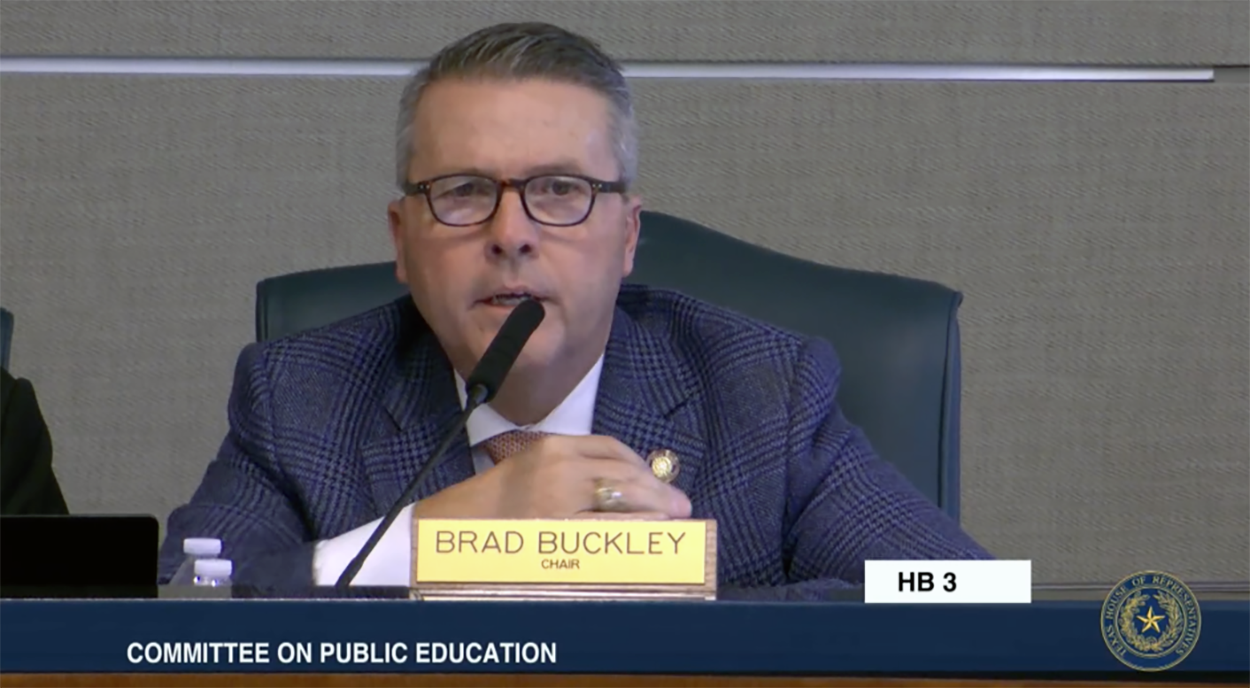
Rep. Brad Buckley, R-Killeen, chair of the committee and author of the bill, asserted the program would empower “parents to find the best educational pathway for their kids.” The Texas Senate already passed a similar bill early in the legislative session.

Rep. Brad Buckley, R-Killeen, chair of the House Committee on Public Education, said education savings accounts would empower parents “to find the best educational pathway for their kids.” (Screen Capture Image)

Buckley said the education savings account program “flips the script,” offering a “parent-directed” as opposed to “school-directed” approach to educating students.

“I trust parents to make the best decision for their kids,” Buckley said. “I want every parent to have access to every tool in the toolbox.”

Buckley’s proposal would allocate $1 billion toward education savings accounts families could direct to private schools for tuition and other expenses such as books and transportation costs.

The House plan would devote to an approved student an amount equal to 85 percent of what public schools receive per student—about $10,900. While payments are directed by parents, they are sent directly to private schools.

Supporters framed the proposal as offering choice to low-income families seeking alternatives to low-performing neighborhood public schools.

Who will benefit?

However, the parents of any child could apply, including students already enrolled in private schools—a point of contention during the lengthy hearing.

Rep. James Talarico, D-Austin, critiqued the voucher-style program as potentially benefitting “millionaires and billionaires” at the expense of the common good.

“Instead of putting this toward public schools, roads, health care and water, we are sending it to parents who are already sending their kids to private school,” he said.

Buckley asserted his plan “provides choice while prioritizing Texas’ most high-needs and vulnerable students.”

If more students apply for the education savings account program than funding allows, HB 3 seeks to establish a framework to give priority in this order:

  • First, prioritize students with special needs from families with an annual income at or below 500 percent of the federal poverty level. That would include a family of four making up to $156,000.
  • Next, give preference to families at or below 200 percent of the federal poverty level—including a family of four making less than $62,400.
  • Next, families between 200 percent and 500 percent of the poverty level.
  • Finally, families at or above 500 percent of the poverty level.

Rep. Gina Hinojosa, D-Austin, voiced serious concern about provisions in HB 3 that allow for-profit vendors—such as educational assessment organizations that will determine who receives a voucher—to solicit and accept anonymous gifts.

That provision “sets us up for bribes and grift,” Hinojosa asserted.

Rep. Jeff Leach, R-Plano, asserted “public schools have choices that parents don’t have,” insisting local school districts make decisions about curriculum, schedules and other matters about which many parents do not agree.

“Why is true freedom, choice and competition something we are afraid of?” he asked.

‘Bullying,’ ‘bribing’ and ‘billionaire backing’

Talarico, a former middle school teacher currently pursuing a Master of Divinity degree from Austin Presbyterian Theological Seminary, framed the issue of public funds going to private schools in moral terms.

Rep. James Talarico, D-Austin, said in regard to education savings accounts: “There are very powerful forces pushing this issue on us. This isn’t about education. It’s about politics.” (Screen Grab Image)

“This is our sixth hearing on vouchers in two years,” Talarico said. “We have not had six hearings on teacher pay. We have not had six hearings on student discipline. We have not had six hearings on student mental health. We have not had six hearings on arts education …

“There are very powerful forces pushing this issue on us. This isn’t about education. It’s about politics. … No other issue comes with this level of bullying, this level of bribing, this level of billionaire backing.”

Talarico pointed out six of his House colleagues “sacrificed their seats” in order to resist vouchers two years ago. Those principled lawmakers were “buried under a mountain of big lies and big money,” he said.

Gov. Greg Abbott has made “school choice” in the form of education savings accounts his top legislative priority. Abbott supported the primary opponents of rural Republicans who defeated a voucher-style proposal in the 2023 legislative session, changing the composition of the Texas House of Representatives.

Talarico also provided historical perspective, noting the first voucher bill was introduced in Texas in 1957, three years after the U.S. Supreme Court issued its landmark Brown v. Board of Education decision that declared as unconstitutional state laws mandating racial segregation in public schools.

“That first voucher bill was a deliberate attempt to resegregate public schools—to allow white parents to take their students out of newly integrated public schools and send them to white-only private schools,” Talarico said.

“Thankfully, Texas defeated that first voucher scheme in ’57, and we’ve defeated them in every decade since, including two years ago. I hope the same remains true this year.”

Hundreds signed up to testify, some noticeably absent

Along with hundreds of private citizens who registered to testify, the public hearing included invited testimony from supporters of voucher-style programs.

The first group of invited guests speaking in favor of the bill were Laura Colangelo, executive director of the Texas Private School Association; Jennifer Carr Allmon, executive director of the Texas Catholic Conference of Bishops; and Robert Enlow, president and CEO of EdChoice, a nonprofit advocacy group.

One invited witness absent from the committee hearing was Jeff Yass, cofounder and managing editor of Philadelphia-based Susquehanna International Group, whose contribution to Gov. Greg Abbott was the largest single campaign donation in Texas history.

In a March 10 post on X—formerly Twitter—Talarico wrote: “An out-of-state billionaire gave Greg Abbott $12 million to pass a private school voucher scam. I’m joining my colleagues in requesting Mr. Jeff Yass testify before the Public Education Committee. Texans deserve to know who’s behind this scam.”

Talarico and Hinojosa—along with fellow committee members Rep. Alma Allen, D-Houston, and Rep. John Bryant, D-Dallas—sent a letter to Yass asking him to testify at the hearing.

“Given your significant role in funding efforts to reshape Texas’ public education system, we believe it only appropriate that you explain your position directly to the people whose schools and communities your money seeks to impact with school closures, program cuts, and teacher layoffs,” the letter states.


Evangelical groups hold vigil against foreign aid cuts

WASHINGTON (RNS)—Evangelical Christian groups are calling on Congress to reinstate foreign aid programs shuttered by President Donald Trump’s administration, arguing the government’s actions will hurt millions of people around the world.

About three dozen evangelical Christians assembled at Capitol Hill Presbyterian Church on March 11 for a “Prayer Vigil for Foreign Aid.” Eugene Cho, president and CEO of Bread for the World, denounced the “broad, untargeted cuts” recently implemented at the U.S. Agency for International Development as an assault on vulnerable populations all over the globe.

Eugene Cho, president and CEO of Bread for the World. (Courtesy photo via RNS)

“These indiscriminate cuts are not just a policy failure,” said Cho, standing in a sanctuary dotted with candles. “For us, especially, as followers of Christ, as uncomfortable as it may be, we must clearly … but prophetically, say: it is also a moral failure.”

The unusual vigil, featuring an array of evangelical organizations such as World Relief and the Accord Network publicly criticizing the federal government, came a day after Secretary of State Marco Rubio declared on social media that the government will cancel 83 percent of programs at USAID.

The announcement followed weeks of chaos at the agency involving work stoppages, ongoing legal battles and mass layoffs led by billionaire Elon Musk and his Department of Government Efficiency.

Matthew Soerens is vice president of advocacy and policy at World Relief, an evangelical Christian group that resettles refugees. (Courtesy Photo)

In a March 10 email, Matthew Soerens, vice president of advocacy and policy at World Relief, the humanitarian arm of the National Association of Evangelicals, told Religion News Service the group’s contracts were among those canceled.

Although he celebrated the fact that four of World Relief’s grants in Sudan, South Sudan and the Democratic Republic of the Congo unexpectedly were reinstated, he noted two of those grants are “scheduled to be completed this month,” and the organization has not received “any information on proposals for renewal.”

Meanwhile, he said, the group’s work in Haiti remains in limbo, with World Relief having received a “stop work” order in January but no formal cancellation. Furthermore, World Relief still hasn’t received any reimbursements for work already done.

“It’s very difficult to operate until we’re confident we will be reimbursed,” Soerens wrote.

In addition, a representative for Catholic Relief Services, the single largest recipient of USAID funds in recent years, according to Forbes, confirmed to RNS their contracts were also among those canceled, although they were unable to clarify precisely how many.

Speakers stress human impact of cuts

During Tuesday’s vigil, several speakers highlighted the human toll of the cuts. Kombo Choga, senior director for program design at Compassion International, pointed out his organization currently does not receive government funds, but said they “are witnessing how the withdraw of aid is devastating” populations they work with, including children.

“It’s causing harm now, and into the future,” he told the crowd, which included evangelical Christian USAID staffers who were laid off during recent cuts. Several held signs emblazoned with slogans such as “Hunger won’t wait” and “Aid strengthens American national security.”

Choga argued while the government has a responsibility to assess the proper use of taxpayer funds, the Bible offers “very clear guidance.”

“Whoever is kind to the poor lends to the Lord,” he said, citing Proverbs 19:17.

Carol Bremer-Bennett, executive director of World Renew, expressed a similar sentiment during her prayer at the event.

“We lament the choices of those in power who have turned away from the suffering of your children,” she said

Funding “has been withdrawn from clinics where babies take their first breaths, from hospitals where mothers fight to survive childbirth, from communities where clean water and medicine once flowed,” she added.

The cuts, Bremer-Bennett said, are “not just numbers on a page,” but “real lives lost.”

‘It’s not too late’

Cho and others expressed frustration at the administration’s actions but also highlighted the potential role of Congress, arguing lawmakers have the power to reinstate the programs.

“We are here today to urge the administration and Congress, Democrats and Republicans alike, to do all that they can,” Cho said. “It’s not too late to protect critical international aid that supports tens of millions of people suffering alone right now.”

In a separate interview, Cho said he was aware of “conversations that are happening behind the scenes” in the halls of Congress regarding aid, but that he and others feel compelled by their faith to publicly voice their concerns with the Trump administration and lawmakers.

“We pray for the administration, but we also are urging our elected members of Congress to do their responsibility—and to do their duty—to follow through on the allocation of those resources,” he said.

Cho was echoed by Lanre Williams-Ayedun, a senior vice president of international programs at World Relief. Speaking at the vigil, she insisted when leaders “neglect the vulnerable,” including those who benefit from foreign aid, it amounts to “turning away from God.”

In addition, James Standish of ADRA, the global humanitarian arm of the Seventh-day Adventist Church, was one of many speakers who noted that foreign aid makes up less than 1 percent of the federal budget.

“We sing that song: ‘God bless America.’ Well, folks, God has blessed America,” Standish said, arguing the Bible instructs believers to share their blessings with others.

‘Grievance’ driving decisions

Multiple speakers made clear that while they believed the foreign aid system has issues, drastically reducing programs was not the answer. Randy Tift, senior adviser at the Accord Network, raised concerns that a cycle of grievance was driving many of the Trump administration’s actions.

“People involved in these recent decisions on all sides, some in current leadership, were grievously mistreated in the past,” Tift said. “I fear grievance is driving a lot of the new team’s decisions; dedicated and faithful USAID staff, including former staff—some of whom are here today—have now been treated with cruelty by some who were aggrieved in the past.”

Other speakers included Gillian Foster Wilkinson, director of strategic alliances at Hope International, and Jessica Moerman, president and CEO of the Evangelical Environmental Network.

After the vigil, Cho told RNS the event originally was planned to be held in front of Congress but had to be moved for scheduling reasons. The hope, he said, was to dispute the idea that Christians, “including those that come from more conservative or evangelical leanings,” are in support of USAID’s cuts.

Cho acknowledged it may take time to turn hearts in Congress but said his group was prepared for a long fight.

“We’re not interested in putting on one-time events,” he said.


Around the State: ETBU hosts Calling Conference

East Texas Baptist University hosted its annual Calling Conference, March 3, providing students the opportunity to learn more about careers in vocational and bivocational ministry. The event brought together current ministers to discuss their calling and how it shapes their ministries. Participants gained knowledge about ministry work and explored their own callings. The conference featured breakout sessions led by experienced ministry leaders: Pastoral Ministry—David Ritsema, senior pastor, First Baptist Church in Waxahachie; Worship Ministry—Tim Whedbee, senior worship pastor, Mobberly Baptist Church in Longview; Youth Ministry—Austin Odom, student pastor, Trinity Baptist Church in Katy; Children’s Ministry—JoAnn Lira Mann, Children’s Director, Graffiti 2 Community Ministries in Bronx, N.Y.; and Mission Ministry—Tom Howe, associate director, Texas Baptists’ Center for Missional Engagement. Ritsema, the keynote speaker, delivered the opening message to the campus community at chapel, emphasizing ministry extends beyond traditional pastoral roles. “You don’t have to be in vocational Christian ministry as a pastor or minister for God to use your gifts, talents and abilities to share the gospel in profound and powerful ways,” Ritsema said. “Here’s what I want you to know: 91 percent of atheists in this country—people who do not believe in God but are seeking spiritual truth—are unlikely to come to me as a pastor. But they will encounter teachers, counselors, coaches and professionals in all walks of life. Whatever field God is calling you to, he can use you to bring the saving message of Jesus Christ to someone who is spiritually hungry. That is part of your calling. As a follower of Jesus, if you are a Christian, you have a calling. You have a gift. You have a purpose.”

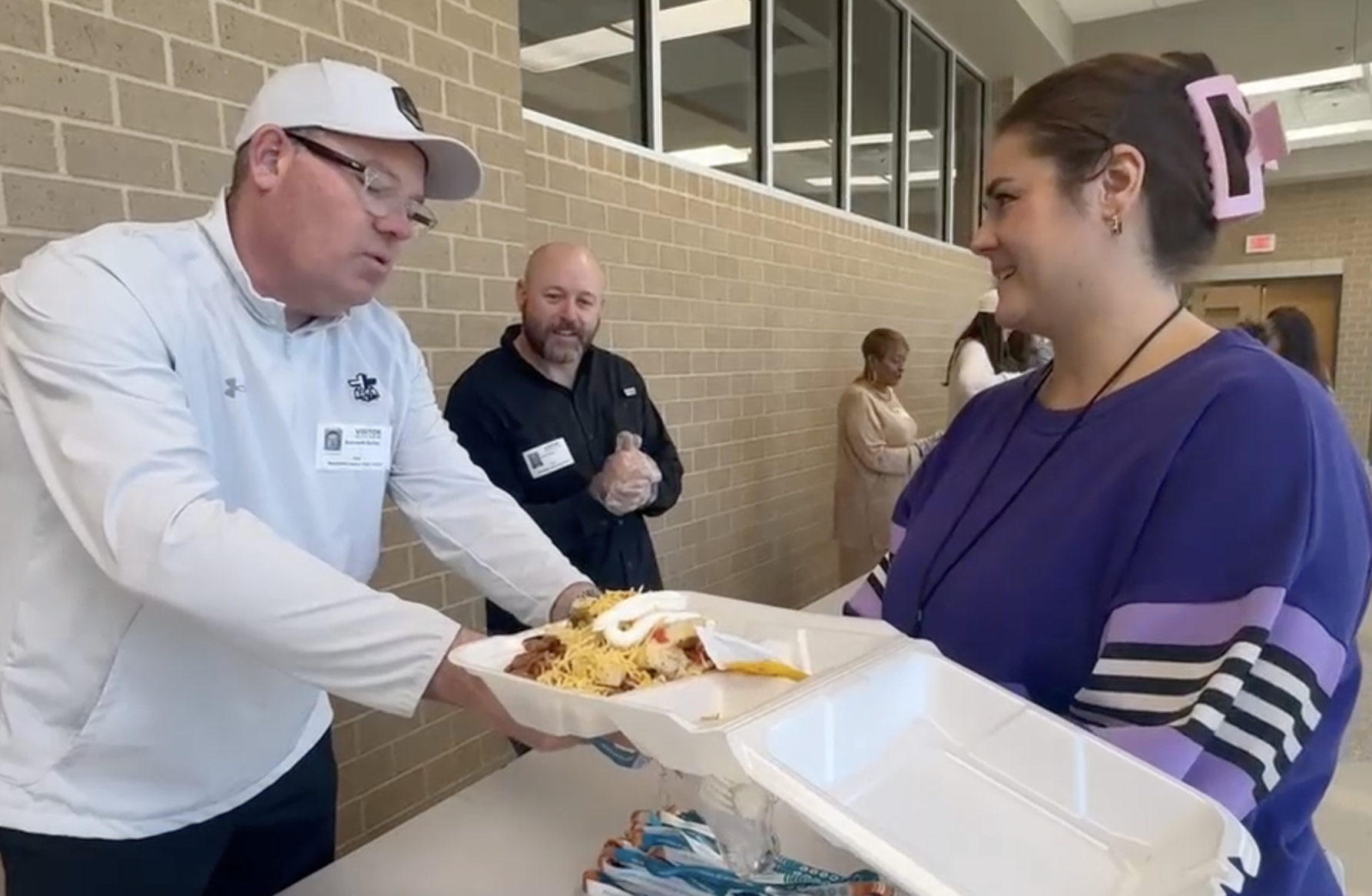
Texans on Mission and the local Fellowship of Christian Athletes chapter show teachers appreciation and God’s love in Mansfield. (Texans on Mission Photo)

The sun had not risen yet, but a dozen Texans on Mission volunteers busily made lunch for teachers at Legacy High School in Mansfield. It was part of a weeklong effort by Texans on Mission and the local Fellowship of Christian Athletes chapter to “show teachers appreciation and God loves them,” said Genia Macon, Texans on Mission unit leader. The team prepared more than 2,000 fajita meals during the last week of February for several Mansfield schools. Texans on Mission delivered the meals daily, while FCA provided food service at each location. Texans on Mission brought a refrigeration trailer full of fajita meat, rice, vegetables, beans, chips and salsa to make the effort happen. The group prepared the meals in the parking lot of First Methodist Church of Mansfield, just two weeks after a Texans on Mission disaster relief training was held there.

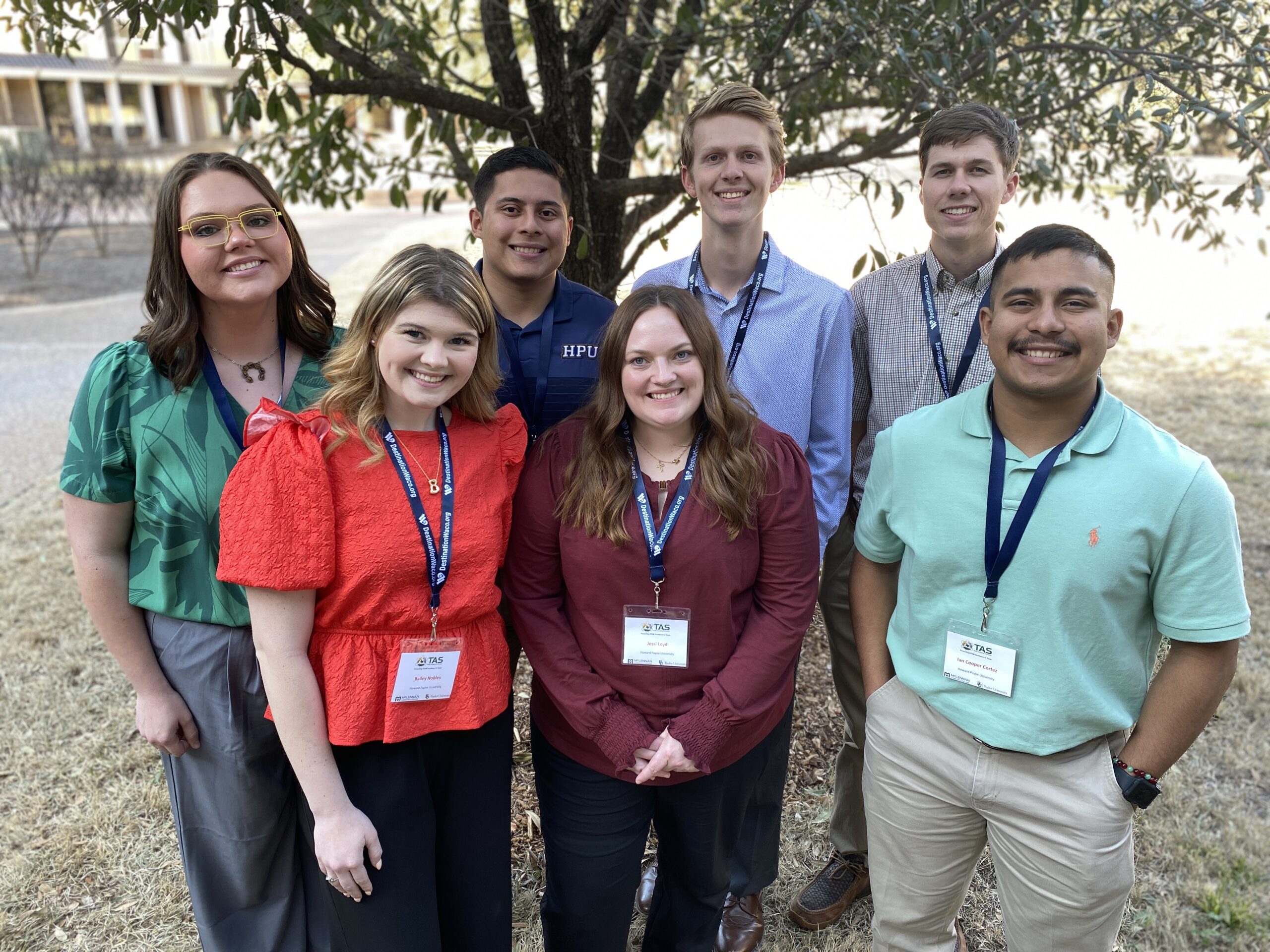
HPU students recently attended the Texas Academy of Science conference in Waco. (HPU Photo)

Howard Payne University’s School of Science and Mathematics attended the Texas Academy of Science conference in Waco, Feb. 28-March 1. Kristen Hutchins, dean of the School of Science and Mathematics and professor of biology, and Dennis Gibson, associate professor of chemistry and department chair of physical sciences, brought seven students to the conference. Two seniors were accepted to present their research posters at the conference. Ethan Cortez, Guy D. Newman Honors Academy and biomedical science double major from Brownwood, presented a poster titled: “Environmental Stressors on Zebrafish and the Impact of Vitamin D.” Nolan Godfrey, biomedical science major from Early, presented a poster titled: “Fluorescence Microscopy Analysis of Microplastic Interactions with Microorganisms.” Other students attending the conference included Ian Cortez, Jessi Lloyd, Kellen McKee, Bailey Nobles and Addysage Seay. The Texas Academy of Science’s stated mission is to “foster student mentorship and research excellence through our annual scientific meetings and the publication of the Texas Journal of Science.” Gibson will serve on its 2025-2026 board of directors as vice president.

The Doctor of Physical Therapy graduating Class of 2025 at Hardin-Simmons University showcased a year’s worth of research at the 29th annual Scientific Inquiries in Physical Therapy Practice on Feb. 28 in Behrens Auditorium. The event marked the culmination of their academic journey before they depart for clinical rotations. Conducted under the direction of professors, students shared research that has the potential to shape the future of physical therapy, through 12-minute platform presentations. Presentations included findings on: Artificial Intelligence in Physical Therapy and how clinicians’ perspectives on AI differ by age, with younger professionals embracing its potential and older clinicians expressing skepticism; The Science of Grunting, where Dennis O’Connell and his students presented research on the animal like sound of a grunt with findings on how grunting can aid movement, even in daily activities like standing from a chair; High School Student Anatomy Education, measuring the impact of human donor lab exposure on anatomy knowledge and career interest in healthcare with exposure of 500-600 high school students; Personality and Clinical Supervision, analyzing whether clinical supervisors utilize personality profiling for better mentorship; Sports Performance and Injury Prevention, including research on a safety squat bar for female softball players to reduce lower back injuries and a new warm-up technique called isometric potentiating warmup for baseball pitchers that can help increase throwing velocity; and Home Health Advancements, evaluating the reliability of a hand-held dynamometer as a simple and effective tool for assessing muscle strength in home health settings.

The U.S. Department of State’s Bureau of Educational and Cultural Affairs recognized Baylor University as one of only 56 doctoral universities with the highest number of students selected for the Fulbright U.S. Student Program. As a Top 20 national producer of Fulbright recipients, Baylor also is the top producer among universities in Texas and in the Big 12. This is Baylor’s third consecutive Fulbright Top Producing Institutions honor. The honor recognizes the top institutions with 10 or more graduates or students selected as Fulbright U.S. recipients. A record 18 Baylor students were selected for Fulbright awards for academic year 2024-25. Since 1946, the Fulbright Program has provided over 400,000 talented and accomplished students, scholars, teachers, artists and professionals of all backgrounds with the opportunity to study, teach and conduct research abroad. Fulbrighters exchange ideas, build people-to-people connections and work to address complex global challenges. Fulbright alumni work to make a positive impact on their communities, sectors and the world and have included 44 heads of state or government, 62 Nobel Laureates, 90 Pulitzer Prize winners, 82 MacArthur Fellows and countless leaders and changemakers who build mutual understanding between the people of the United States and the people of other countries.

The DBU Men’s Basketball team earned multiple top honors at the 2024-2025 Lone Star Conference awards. After a record-setting season, the Patriots were recognized with Coach of the Year—Blake Flickner; Defensive Player of the Year—Xavion Brown; Sixth Man of the Year—Trevor Frank; and multiple All-LSC team selections.

David J. Davis has been invited to teach at John Cabot University in Rome this July.(HCU Photo / Michael A. Tims / Creative Director)

David J. Davis, a history and Honors College professor at Houston Christian University, has been invited to teach at John Cabot University in Rome this July. Davis will teach a course titled “The Popes of Rome: A History of the Catholic Church.” Davis has taught at HCU since 2010 and specializes in medieval and early-modern British history. Ed Borges, assistant provost and director of the Spahr-Tan Center for International Education at HCU, commented on Davis’ opportunity: “This experience will not only enrich his own scholarship but also enhance his ability to engage students in the study of Christianity’s historical development through a Christian worldview.” Davis teaches at the undergraduate and graduate levels and offers courses focused on intellectual, cultural and religious history as well as the history of science. “I love teaching, particularly the history of Christianity,” Davis reflected. “Also, I am honored by the invitation to teach at John Cabot and am excited to explore the city of Rome, one of the bedrocks of Western civilization.” Photo credit: Michael A. Tims/Creative Director

Jay Givens, professor of theological studies and director of online Christian studies for Wayland Baptist University, will participate in the Teaching Interfaith Understanding seminar this summer. (Wayland Photo)

Jay Givens, professor of theological studies and director of online Christian studies for Wayland Baptist University’s School of Christian Studies, has been selected as one of 25 faculty members nationwide to participate in the Teaching Interfaith Understanding seminar. The seminar, hosted by the Council of Independent Colleges in partnership with Interfaith America, takes place June 15–18, at DePaul University in Chicago. The seminar will provide participants with strategies to foster interfaith engagement and leadership among students. Religious diversity and the challenges of pluralism have become central topics in both public discourse and higher education. Through this seminar, faculty members will explore methods for integrating interfaith cooperation into their teaching, develop course modules, and engage in discussions on best practices for addressing religious diversity in academic settings. “Hospitality is a core value of the Christian faith. Jesus didn’t just call us to love our neighbors—those who are like us—but to love our enemies—those different from us. In today’s America, our neighbors come from diverse faith traditions,” Givens said. “This seminar offers me the opportunity to explore new ways to teach my students how to love and engage with people of other faiths as an essential part of their Christian witness.”

The University of Mary Hardin-Baylor has selected Andrew Tiger as its new dean of the McLane College of Business. (UMHB Photo)

The University of Mary Hardin-Baylor has selected Andrew Tiger as dean of the McLane College of Business, effective June 30. Tiger has served as dean or department chair at three universities, held an endowed chair of operations management position, and has developed several academic programs connected to local industries. Most recently, he served as the Norris-Vincent College of Business dean at Angelo State University. He has published more than 30 peer-reviewed journal articles and maintains a productive and high-quality research agenda. He has a special interest in sports analytics and is one of a few who model the pace of play at golf courses. He has developed an iOS app that quantitatively measures how a golf green holds a golf approach shot. Tiger entered academia after working as an industry professional because of his passion for working with students. He earned his Ph.D. in industrial engineering from the University of Houston and holds both a B.S. and M.S. in industrial engineering from the University of Oklahoma. His expertise in operations research intersects with many business disciplines, including operations management, supply chain management and analytics. He has experience working with a Fortune 500 company and has consulted for both large and small private companies.

Retirement

HPU Vice President for Academic Affairs Donnie Auvenshine announced his retirement from HPU after 32 years of service. (HPU Photo)

Donnie Auvenshine has announced his retirement, in June, from Howard Payne University, after 32 years of service to the institution. Auvenshine currently serves as the vice president for academic affairs. Auvenshine joined the HPU faculty in 1993 as professor of Christian studies. He went on to serve as dean of the School of Christian Studies from 1994-2003 and again from 2007-2019. Auvenshine led as vice president for academic affairs from 2003-2007 and then from 2019 to the present. He received Excellence in Teaching Awards in 1996, 1997, 1998, 1999 and 2001. “Dr. Donnie Auvenshine has been one of the finest additions to Howard Payne University in all the years I have been here,” said Gary Gramling, dean of the School of Christian Studies. “He is not only a wonderful teacher who regularly shares insights into the world of the Old Testament, but he is also a capable and trusted minister and friend to all who know him. I know him to be a person of integrity, kindness, honesty and hard work. He also has a keen sense of humor and a contagious laugh.” In addition to his work at HPU, he also was a pastor in DeLeon, Comanche, Odessa and Iraan and has held multiple interim pastorates and provided supply preaching and Bible teaching across the state. He is a previous member of the Theological Education Council for Texas Baptists. Auvenshine is married to Sande and the couple have three children and seven grandchildren.

Anniversary

Speegleville Baptist Church in Waco will celebrate its 175th anniversary on May 18, with a service at 10:30 a.m. followed by lunch and a concert by Mercy Song Revival. RSVP at speegle175@gmail.com.


God using students in movement across Plainview campus

PLAINVIEW—“Students are hungry and responding to the gospel,” said Donnie Brown, director of spiritual life at Wayland Baptist University.

“We’re not doing anything different from what we’ve always done. This is a movement of God.”

“God is doing something here at Wayland,” affirmed JR Dunn, Baptist Student Ministries director. “Students are praying and showing their faith.”

Brown said he began to recognize God moving during the fall semester, when students began to approach him to talk about spiritual life on campus.

“We began talking about what they could do to help us change the spiritual climate on campus. I challenged them to pray. I challenged the students and myself.”

God began to reveal what needed to be done as the spring semester began, Brown noted.

“I sent an email to all students asking if any of them would be interested in serving on a chapel prayer team.” The response was greater than expected, he said.

Wayland students make spiritual decisions during Encounter Week. (Photo / Mikayla Shires)

The spiritual life director and team used an application and personal interview process to determine how many of those who expressed interest were serious.

“We wanted to make sure they were believers. Then, we wanted to make sure that each of them had a daily prayer life of their own,” he said.

Brown had expected a handful of students to have a genuine interest and heart for praying for fellow students, but God surprised him with more than a dozen students truly concerned about changing the spiritual climate of the campus. Instead of one chapel prayer team, two were created.

“Through expectant prayers and softened hearts, God has left his fingerprints on this campus, yet the work is not finished,” Brown said.

Getting serious about prayer

“It is never finished until all of his children get to know him as a Father,” said Adriana Armstrong, a junior from Maricopa, Ariz., who along with other students started coming early to chapel and praying over the auditorium.

“They would pray all the way through,” Brown said.

A designated time was incorporated into each chapel service, with team members spreading across the front of Harral Auditorium, where students could come for prayer.

“We had never done anything like that before,” Brown noted.

“I didn’t know how the students were going to respond. You do that in a church, and all you get is crickets—nobody. So, the first time we offered it, we just told them the prayer team was here.”

God provided more than Brown and the prayer teams were expecting.

“People came,” he said. “I just thought, OK, Lord, I see. Little faith Donnie, here we go, and he was saying, ‘I got you.’”

Brown said God continued to move week after week.

“There are more and more who come down to receive prayer from their peers,” he said of how the movement continues. “More and more students are open to what God has for them.

“They are open to seeing what God would have them to do. They are searching for truth, searching for God to be involved in their life.”

Wayland’s Encounter Week—an annual event intentional about making space for God—came amid the surge in students seeking God, but that’s never really been spiritually disruptive. This time was different.

“It’s called Encounter Week because our whole goal is that students would encounter Christ in a real and tangible way,” the director of spiritual life explained.

As the movement of God became more obvious, students began to pray Encounter Week would bring a harvest. They also started putting hands and feet to their prayers.

“Students started inviting their friends,” Dunn said of students involved in Baptist Student Ministries. “They started doing ministry. They made specific contacts.”

Robert Purvey, who has built one of the most solid young adult ministries in the country through his ability to communicate with people of every ethnicity and socioeconomic background, was the perfect speaker, organizers agreed.

“The first night there was a pretty good crowd,” Brown said of Trinity Chapel, where the evening services for the three-day event were held.

“It looked full the first night, but even more students came the next night. We were seeing that God was moving.”

Wayland students worship during Encounter Week. (Photo / Mikayla Shires)

Two events took place Wednesday—a morning chapel service in Harral Auditorium and the third evening session in Trinity Chapel. Brown knew the chapel service offered a captive audience, with some students required to attend for credit.

“I told our speaker that chapel would be the largest concentration of lost students, and I just wanted him to give a gospel presentation and offer an opportunity to respond,” Brown said.

God moved.

“As I left my office, I grabbed 12 response cards. But I learned quickly that 12 was not enough, because more than 30 came forward to make some kind of decision.”

About half of those decisions were students who came to Christ. The response was overwhelming, spiritually and physically.

“They were coming and saying, ‘I want to follow Jesus,’” Brown recalled. “I was calling for BSM to help counsel. Our president, Dr. Donna Hedgepath and her husband Pete were sitting on the front row praying. I tapped them and said, ‘Can you help us?’”

The image of Wayland’s new president praying with a student while others prayed around them was a moment reflective of how God has been moving at the university.

“Encounter week created a worshipful and vulnerable space that we could listen and encounter God,” said Rosa Ramirez, a senior from Lubbock who has been on the chapel worship team this year.

“I have been praying about Wayland and praying for the seeds that were being planted in chapel. I encountered God by seeing a change on campus and seeing students on campus worship him and inviting him into their lives.”

God kept working

But God wasn’t done yet.

Because it was the last night of Encounter Week, Dunn, Brown and student leaders expected more students than usual at Trinity Chapel, but God moved in an unexpected way again, more than tripling the crowd.

“We kept having to bring out chairs—chairs and more chairs,” Brown said.

Dunn estimated more than 150 students crowded into the small chapel.

“It was a packed house as Robert preached from Romans 12:1-2 about offering your body as a living sacrifice—laying it all down, surrendering to Jesus,” Brown said.

Purvey emphasized renewing the mind and offered an invitation for salvation.

“Two more students made a profession of faith,” Brown said. “Then he offered an invitation to believers who just wanted to surrender and live their lives for Jesus. The altar was full.”

“The presence of the Lord brought many to tears,” Armstrong said. “Encounter Week was a week of surrender by the many students who were already seeking, a testimony of proof that God is only waiting for you to let him in before he begins a big work within.”

What the director of spiritual life described as a “sweet time of celebration, thanking God” followed the service. “It was like a glimpse of heaven, just a beautiful moment,” Brown said.

Dunn noted peer-to-peer counseling as students stayed late to talk about what God was doing in their lives.

“Encounter was exactly what we had prayed for,” Brown said. “We had prayed for a harvest, and God said, ‘OK, here it is.’”

Beyond Encounter Week

In the days since Encounter Week, God has continued to move. Players have come to their coaches requesting to pray after football practices.

“After every practice they will not leave without someone leading a prayer,” one coach told Brown.

A soccer coach said a player approached him about doing a student-led devotional after practice, and the track team has started a student-led Bible study.

Dunn said many students are getting plugged in to BSM and Fellowship of Christian Athletes. “Friends are inviting friends. God is doing something.”

“I believe what happened during Encounter Week was proof the students of this campus are craving the presence of God, so that when given the opportunity to seek him, they found him right where they were,” Armstrong said.

“It’s a movement of God,” Brown said, noting the one-on-one follow-up taking place is crucial as God continues to move.

“It’s about making disciples,” he explained.

“Once I have those initial meetings, we are forming discipleship groups or putting some in what we already have. If they’re new believers, we will walk them through a new believer Bible study and encourage them to get plugged in a local church and get baptized.

“We want them to be discipled because we need to turn them loose and have them be able to share their faith. And to make disciples, they will need to go and replicate.”


Barr: Scripture doesn’t make rules for pastors’ wives

WACO (RNS)—Imagine a job interview where, to get the gig, your spouse must answer intrusive questions about their fertility, personal religious beliefs and their own career trajectory.

Such interrogations are common for many pastors’ wives across white evangelicalism, according to medieval historian Beth Allison Barr—herself a pastor’s wife and the James Vardaman Endowed Chair of History at Baylor University.

 In her new book, Becoming the Pastor’s Wife: How Marriage Replaced Ordination as a Woman’s Path to Ministry, that’s only the start of the often-unspoken expectations awaiting many women who pair up with pastors. Their appearance, homemaking and parenting are often under scrutiny, and their unpaid labor is considered a given.

Barr isn’t arguing for an end to the role itself, but she wants everyone to know that the job’s expectations are based in culture more than Scripture. Though the only avenue in some denominations for women to pursue a calling to ministry, “pastor’s wife” is not the result of a biblical mandate, Barr argues, but of history.

RNS spoke to Barr, author of the 2021 bestseller The Making of Biblical Womanhood: How the Subjugation of Women Became Gospel Truth, about her own experience as a pastor’s wife, the medieval Christian women who pastored both women and men, and her thoughts on how white evangelical Christians might reframe their view on pastors’ wives. The interview has been edited for length and clarity.

What kind of expectations did you find are placed on pastors’ wives?

Probably the hardest expectation that’s often placed on women in these roles is to be a mom. This has absolutely nothing to do with whether a man is doing a good job as a pastor, yet it’s an expectation that a minister’s family should have children who are well-behaved.

For women who experience infertility—and I was one of those women—what does it do when the pastor’s wife can’t be a mom? I remember being confronted head-on by people in more than one congregation about my inability to produce a child. I think it really highlights the weirdness of this role, this unofficial position that is connected to another person’s job.

What does the Bible say about the role of a pastor’s wife?

There is no clear example to point to. And so, here we have this role that has no clear biblical grounding. Almost all of the female leaders in the Bible, we know very little, perhaps nothing, about their marital status. We’ve taken this role that is nowhere in the Bible and then have held it up as sort of the ideal model for biblical women, for godly women.

What historical factors led to the role of the pastor’s wife being what it is today?

In the early Christian world, there was a lot of emphasis placed on unmarried people serving or people giving up their spouses. The Reformation changes this. For early Protestants, the way you distinguished a Protestant minister was that he was married. In many ways, the minister’s wife becomes a symbol of resistance. She literally embodies this conversion experience. These women broke the law to get married, and marriage becomes part of the job description to be a minister.

For a good while, though, we still see women who are serving in independent ministry roles, or women who are married to pastors who are rejecting the pastor’s wife image. There were multiple options for women, and it’s not really until the latter part of the 20th century that we begin to see this idea that the best way to be in ministry as a woman is to be married to a pastor.

How is the decline of women’s ordination related to the rise of the pastor’s wife in the evangelical church?

I write about some powerful women who were serving as pastors to men in the Southern Baptist Convention well into the post-World War II era. This is where the shift happens. In the aftermath of World War II, there was an effort to get men back into jobs, to get them into college, in part by discouraging women from being in jobs that were seen as in competition with men.

In the 1960s and ’70s, we see more women in seminary wanting to be pastors. It is also at this moment that we begin to hear, in more conservative spaces, voices saying it is unbiblical for a woman to be a pastor. They begin fighting against women’s ordination while elevating the pastor’s wife role. Women can still be in ministry, but you have to do it “God’s way.”

The pastor’s wife role begins to be weaponized against female pastors, and to be made extremely visible. Especially in the ’90s, you see seminaries creating institutes to train up pastors’ wives. This is also when you see the spike in this genre that is geared towards helping women become pastors’ wives.

Your book’s cover underscores some of the book’s messages.

Women have throughout church history served in independent leadership roles that were recognized and ordained by men—until now. Members of the Southern Baptist church are pushing to pass this amendment that says women cannot serve in any designated pastoral position, which is one of the most restrictive limits placed on women in Western church history.

I wanted to show in this book cover the scope of history, as well as the narrowing of a woman’s ministry role. We have this image representing this woman who’s this 1950s and ’60s “Leave It to Beaver” minister’s wife. And behind her is an early medieval saint, Catherine of Alexandria, who became the patron saint of preachers. We have this woman who encapsulates the leadership roles that women held, and now we have this reduction.

Do we have any alternatives to the white evangelical pastor’s wife?

I found some stark differences in books written by Black pastors’ wives that gave me hope. They don’t argue that it’s a biblical role. They say it comes from history, stemming from enslaved communities where the stable characters were women who were spiritual leaders and church mothers. I’m thinking specifically about a 1976 book written by Weptanomah Carter.

Especially in these Black pastors’ wives books before 2005, we see that many are co-pastors with preaching and pastoral care authority. I saw more focus on women’s independent gifting and the ability of women to serve in ministry roles that were outside of even their own churches. It showed me how historically constructed these roles are, which means that you can do it differently.


Report confirms Russia violates Ukraine religious freedom

OSLO, Norway (BP)—Russia seriously violates religious freedom in the land it illegally occupies in Ukraine, Forum 18 said in a new report.

Torturing and killing pastors and priests, prosecuting residents for exercising religious freedom, banning worship and entire religious communities, closing churches, prosecuting missionaries and banning Scripture as extremist literature are among the most egregious atrocities Forum 18 cited in its March religious freedom survey of occupied Ukraine.

The survey echoes findings from the U.S. Department of State in its most recent report on international religious freedom and reports from the U.S. Commission on International Religious Freedom.

It also was in line with reports from groups that monitor international religious freedom or serve Christians in Ukraine, including Mission Eurasia’s 2025 Faith Under Russian Terror report, released at the 2025 International Religious Freedom Summit in February.

 “The fundamental cause of freedom of religion or belief and other human rights violations in Russian-occupied Ukrainian territory is Russia’s invasion and occupation from 2014 onwards of Ukraine,” Forum 18 wrote.

“Until Russia’s occupation of Ukrainian territory is ended, the freedom of religion or belief and other human rights violations seem set to continue.”

Since Russia’s invasion in February 2022, it illegally has annexed additional territory, now occupying a fifth of Ukraine, Forum 18 said.

The report comes as efforts to reach a peace agreement with Russia have included U.S. speculations Russia would retain the land it illegally occupies in Ukraine, although no agreement has been reached.

Russia attacked Ukraine’s energy infrastructure with dozens of missiles and drones late March 6 and into the next morning, the Associated Press reported March 7. The attacks killed at least 10 individuals, striking residences and cutting power to homes as well as weapons factories.

US suspends military aid and intelligence to Ukraine

Concurrently, the Trump administration suspended military aid and intelligence to Ukraine, including access to satellite imagery that could help Ukraine answer Russia’s fire, the AP said, citing sources at the U.S. National Geospatial-Intelligence Agency.

Peace talks are set to resume in a few days, Ukrainian President Volodymyr Zelenskyy announced March 6, with Saudi Arabia hosting Zelenskyy and President Donald Trump.

Igor Bandura, vice president of the Evangelical Baptist Union of Ukraine, tells a North Texas crowd in 2024: “We need your help. We need your prayers.” (File Photo / Ken Camp)

Religious freedom in Ukraine and the spread of the gospel in Europe rests largely upon the resolution of the war, Baptist leaders in the region said.

“This is not only a war of Russia against Ukraine,” said Igor Bandura, vice president of the All-Ukrainian Union of Churches of Evangelical Christians-Baptists. “This is a war for Christian values, for the possibility to spread the gospel in freedom, and to fulfill the Great Commission of the Lord Jesus.”

Others have noted the loss of religious freedom in the Russian occupied territory, including Ukrainian Baptist Theological Seminary President Yarsolav “Slavik” Pyzh, Ukrainian journalists who visited the U.S. last year and Mission Eurasia.

Forum 18 documents numerous crimes and violations of religious freedoms in its report, beginning with Russia’s occupation in 2014.

While specific numbers were not cited, the report notes that many religious leaders were murdered, arrested, “disappeared” without information of their location or tortured for practicing their religion or refusing to register their congregations with the Russian Orthodox Church.

But Mission Eurasia, in its Faith Under Russian Terror report, tallied 47 Ukrainian religious leaders killed since Russia’s 2022 invasion, including 12 Baptists, 18 from the Ukrainian Orthodox Church (Moscow Patriarchate), eight Pentecostals, seven from the Orthodox Church of Ukraine and two Adventists.

Among those Forum 18 listed as murder victims were Stepan Podolchak, a 59-year-old priest of the Orthodox Church of Ukraine in Kalanchak, a village in Russian-occupied Kherson Region, whose body was found on the street on Feb. 15, 2024; and Pentecostal deacon Anatoly Prokopchuk, 52, and his 19-year-old son Aleksandr Prokopchuk, also of Kherson, whose mutilated bodies were found in a nearby wooded area, Forum 18 said.

Many of those arrested are taken to prisons in Russia. In one of the most recent cases Forum 18 cited, in mid-February, prison authorities in Russian-occupied Crimea transferred Ukrainian Orthodox priest Kostiantyn Maksimov to a strict labor camp in Russia’s Saratov Region, placing him in quarantine for two weeks.

He was originally arrested in May 2023 without explanation and held in a secret location 10 months, Forum 18 said, before being tried under false charges of espionage for opposing the Russian Orthodox Church.

Maksimov is imprisoned more than 600 miles from the Russian-occupied Ukrainian town of Tokmak in the Zaporizhzhia Region, where he served as a priest.


Oklahoma superintendent seeks funds for patriotic Bibles

OKLAHOMA (RNS)—Ryan Walters is looking for 55,000 Bibles, and he is seeking $60 donations for each of them.

Walters, who is Oklahoma’s state superintendent of public instruction, has made national headlines for his efforts to get Bibles into the hands of public school students in his state.

Former President Donald Trump endorses the ‘God Bless the USA Bible’ in a new YouTube video. (Video screen grab via RNS)

After state officials earlier this week rejected his request for $3 million to buy the Bibles, Walters launched a fundraising campaign to buy copies endorsed by President Donald Trump, with the help of country singer Lee Greenwood.

“We faced opposition from left-wing activists in the state, left-wing legal groups, and frankly, we’ve had some Republicans that haven’t wanted to step up for the initiative,” Walters said in a phone interview, adding he is grateful to Greenwood for stepping up and lending a hand.

Walters and Greenwood teamed up to launch a “Bibles for Oklahoma” campaign to purchase copies of Greenwood’s God Bless the USA Bible, which will then be donated to schools. The God Bless the USA Bible includes within it the King James Version, along with patriotic documents like the Constitution and Declaration of Independence.

“The goal of this campaign is to provide copies of the God Bless the USA Bible to as many schools within the State of Oklahoma Department of Education as possible,” according to the campaign’s website.

Each copy of the patriotic Bible costs $60, the same retail price Greenwood’s website lists.

Last year, the Oklahoma Department of Education paid $25,000 for 500 copies of the Christian Scriptures—or $50 each, according to the Oklahoma Voice. Those 500 Bibles were bought for use in Advanced Placement government classes.

Online Bible retailers offer less expensive Bibles that include just the religious text. Christianbook.com, for example, sells a case of 24 King James Versions with imitation leather covers for $155.76, or $6.49 each. Churchsource.com, run by the Christian publisher Thomas Nelson, offers a 58 percent discount when purchasing more than 25 cases of Bibles.

A spokesman for the God Bless the USA Bible said a bulk discount wasn’t available for the donation programs, since donors will buy one Bible at a time. If all 55,000 Bibles Walters hopes to buy were ordered at the same time, that would be different, the spokesperson said.

Bible and American documents bound together

Walters said his push to get the Bibles into the classroom came in response to requests from parents and grandparents who were upset that their kids didn’t understand the role the Bible played in American history. 

“I think it’s so important that our kids understand what made America great,” he said. “What were those key documents and key beliefs that individuals held throughout our history that made America the greatest country in the history of the world?”

Walters also said he believes it is important to have the Bible and documents like the Constitution and Declaration of Independence in the same resource so kids can look at them side by side.

The state requires students to understand both the Bible and patriotic documents, so having them within the same resource makes it easier for students to learn about them, he asserted.

Oklahoma officials have been less than enthusiastic about Walters’ plans for the Bible. In explaining why the funding request was rejected, Democratic Oklahoma state Sen. Mary Boren told an Oklahoma City television station legislators wanted to avoid “legal complications” while working on the budget, as well as focusing on reading and math in school.

“You can tell that was a big priority,” she told KOCO, an ABC station.

Governor prefers Bible smartphone app

Oklahoma Gov. Kevin Stitt said in a press conference he believes in the importance of religious liberty but does not support the idea of spending $3 million of tax dollars on Bibles.

Stitt, who has supported a state-funded Christian charter school, also said there are easier ways to get the Bible to school kids. He pointed to the YouVersion Bible app, which is run by an Oklahoma megachurch and has been downloaded hundreds of millions of times.

“I’m sure most kids have the Bible app on their phones,” he said.

Walters rejected the governor’s criticism of his efforts.

“Unfortunately, our governor has been coming out against a bunch of President Trump’s initiatives,” Walters said.

University of Oklahoma sociology professor Sam Perry said teaching about the Bible in schools can be appropriate—especially for understanding the culture, history and laws of the United States.

“To understand American history and culture, I think it is necessary to have some measure of religious literacy,” said Perry, who studies Christian nationalism, or the idea that America was founded by and belongs to Christians.

Perry said the God Bless the USA Bible isn’t the only version to include patriotic documents, and including such documents influences how people read the Bible and can have political overtones.

“We have this narrative of America being founded on Judeo-Christian biblical principles,” he said. “And if you want to emphasize that, you stick those documents in your Bible.”

Walters defended the pricing of the God Bless the USA Bible, saying it has a high-quality binding and will stand up to daily use in the classroom.

He also dismissed the idea of purchasing separate Bibles and copies of patriotic documents, saying the point was to get all the resources in the same place.

While phone apps can be helpful, he said, textbooks still matter. Walters also said he has been criticized for trying to push religion on students, which he rejects. Instead, Walters said, he’s trying to get schools back to teaching the basics.

“What we’re doing is making sure kids understand the role that it played in America and American society,” he said.

“Until the 1960s, this wouldn’t have even been controversial. There was a Bible in every classroom. We’ve got to get back to that, so kids understand the historical relevance there.”