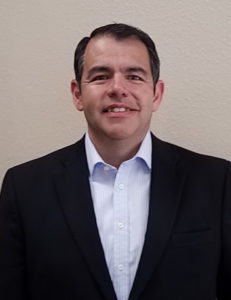
Obituary: Ron Ellison

Ron Ellison, a Texas Baptist historian, died Feb. 9 in Vidor after a lengthy illness. He was 85. He was a member of Calder Baptist Church in Beaumont. Ellison was born Oct. 7, 1932, in Lakeland, Fla., but his family moved to Pickensville, Ala., when he was 6 months old. He served in the U.S. Navy from 1950 to 1953. He received his undergraduate degree from Samford University and a master’s degree from Lamar University in Beaumont. He completed additional study at the University of North Texas, Trinity University and Rice University. He was the author of Chronicle of the Christians of North End Baptist Church, Beaumont, Texas, 1932-1982, and Calvary Baptist Church, Beaumont, Texas: A Centennial History, 1904-2004, and multiple academic papers. He was co-author of Southern Baptists of Southeast Texas, A Centennial History, 1888-1988, which won the Texas Baptist Historical Society Book Award in 1989. Ellison served 15 years as secretary of Texas Baptists Committed and five years on the board of directors of the Baptist Standard. He was a past president of the Texas Baptist Historical Society and also served on the Baptist General Convention of Texas history committee. He is survived by a daughter, Rebekah Anne Cox, of Tuscaloosa, Ala., and two grandchildren.


Obituary: Billy Wallace Tinker

Billy Wallace Tinker, longtime member of First Baptist Church in Richardson, died Feb. 1. He was 84. Tinker was born in Trumann, Ark., Sept. 20, 1933. He enjoyed a 40-year career as a switchman on the railroad and was a member of First Baptist Church in Richardson 54 years. He is survived by his wife of 64 years, Doris Rees Tinker; son Greg and daughter-in-law Jennifer; one granddaughter; one grandson; and one great-grandson. Sisters Ann Ward and Betty Clark and brother John Sydney Tinker Jr. preceded him in death.


Christian Kelly Clark free and content after final Olympics run

PYEONGCHANG (RNS)—In 2002, Team USA Olympic snowboarder Kelly Clark, then 18, thought she had everything she ever wanted—money, fame and an Olympic gold medal.

But at another competition, she heard someone tell a young female competitor who wiped out: “It’s all right. God still loves you.”

That sent her back to her hotel room in search of a Bible. When she couldn’t find one, she found the young woman instead, who was at the same hotel, and said, “I think you might be a Christian and I think you need to tell me about God.”

That encounter, which Clark, now 34, relates in her memoir, Inspired: Pursuit of Progress, changed her life. She became a Christian, a fact she advertises with a sticker on her snowboard that reads, “Jesus, I cannot hide my love.”

On Feb. 12, Clark qualified for the women’s halfpipe finals at the 2018 Winter Olympics in Pyeongchang—her fifth Olympic appearance. After three crowd-pleasing runs, she landed just out of medal range at fourth place.

Minutes later, looking back on what was to be her final Olympic appearance, it was her turn to say that it was all right.

“I just kind of did what I could, and that’s all I could do on a day like today,” she said at the bottom of the halfpipe. “I am grateful I could put down some runs today.”

Clark is public about her faith and says it helped restore her sense of fun in her sport.

“It became this thing that I was made to do and I could actually enjoy, and there was so much freedom in it because I wasn’t doing it to prove to people who I was,” she says in her book.

“Through my relationship with God I learned who I was, and was comfortable in who I was. But I’ll tell you, I’ve never had more fun snowboarding, and I’ve never been more free.”

Clark is now free to run her foundation, which brings underprivileged kids to snowboard camps, and to see what’s next. She has been snowboarding since she was 7.

“I started to understand that I didn’t get my worth from people or from the things that I did,” Clark told Christian Sports Journal last year.

“It was from Christ. If I hadn’t had that shift in my life, I think my world would have come crumbling down.”


David Platt to transition out of IMB presidency

RICHMOND, Va. (BP)—David Platt announced plans to transition out of his role as president of the International Mission Board but will continue to serve until a new president is selected.

Preach and teach in a local church

Platt told trustees, missionaries and staff that during his nearly four-year tenure at the board, he has been “burdened to continue preaching and leading in the local church,” which led to assuming a teaching pastor role at McLean Bible Church in northern Virginia, alongside his leadership of the IMB.

“I am more passionate today than I have ever been about getting the gospel to the nations, and I want to spend what little time I have left on this earth with urgency toward that end,” Platt said. “This passion is what drove me to become IMB president, and I have sought to honor him and you in this role over the last four years.”

He added: “I have come to the realization that it is not viable long-term for me to lead as president of the IMB while serving as teaching pastor in a church. This realization has been sobering, for I don’t believe I can choose between preaching and leading in the local church, and mobilizing and shepherding people in global missions. Therefore, I have come to the conclusion that if I am going to serve in this way in the local church, then I need to serve in different ways for the cause of global missions.”

In 2017, Platt began serving as a teaching pastor at McLean. The IMB trustee executive committee agreed in August to evaluate Platt’s involvement at McLean during a provisional period.

Platt “has no timeline for his departure,” according to a Q&A posted on the IMB website. However, he asked that the search for a successor “begin immediately.”

Southern Baptist Convention President Steve Gaines praised Platt’s IMB service.

“I have known and loved David Platt for many years,” said Gaines, pastor of Memphis-area Bellevue Baptist Church in Cordova, Tenn.

“I am very grateful for the service he has provided as the leader of the IMB. His love for our Savior and passion for the spread of the gospel are both well known to all. He has served Southern Baptists well. We will continue to pray for him and his precious family as they faithfully serve our Lord in the days and years ahead.”

An IMB presidential search committee will comprise board trustees appointed by trustee chairman Rick Dunbar, according to the IMB release.

Platt said “trustee leaders have communicated a desire” for him “to serve with the IMB in the future in some capacity.” Platt indicated willingness to do that “if the Lord so leads.”

Among other SBC leaders to react to Platt’s announcement:

  • Frank S. Page, president of the SBC Executive Committee, said: “I love David Platt and thank God for him. I wish the best for him and his precious family during this time of transition. I look forward to working alongside him in the future as well as the new president of the IMB.”
  • Danny Akin, president of Southeastern Baptist Theological Seminary, tweeted he is “grieved and saddened” by Platt’s announcement. Akin added, however, that he is “grateful our sovereign God is in control! Our trust ultimately is always in him.”
  • Chuck Kelley, president of New Orleans Baptist Theological Seminary, where Platt is an alumnus, tweeted: “I am grateful for the hard work” of Platt and the IMB. “They work diligently each day to serve the kingdom. Join me in praying for David and the IMB as they begin this leadership transition. Great work has been done, and will be done! To God be the glory!”
  • Russell Moore, president of the Ethics & Religious Liberty Commission, tweeted, “I am grateful to God” for Platt and the IMB “and for their common commitment to reach the nations with the gospel of Jesus Christ.”

Among highlights of Platt’s IMB tenure were establishing new channels for professionals, students and retirees to enter the mission field and collecting a record $165.8 million for the Lottie Moon Christmas Offering for International Missions in 2015.

Balanced the IMB budget

Under Platt’s leadership, IMB trustees adopted a balanced budget in 2016 following a six-year period in which the board’s expenses exceeded its revenue by $210 million.

Previously, the IMB had overcome the shortfall by using reserve funds to make up the difference—including global property sales—as it gradually reduced its missionary force. But beginning in 2015, IMB trustees and staff instiututed an “organizational reset” to put the board on stable footing for the future.

Consequently, voluntary resignation and retirement incentives were offered beginning in 2015, and 1,132 missionaries and stateside staff accepted, bringing the board’s total number of missionaries under 4,000 for the first time since 1993, according to SBC Annual reports. As of Dec. 31, 2017, the IMB reported 3,562 overseas missionaries, according to SBC.net.

“By God’s grace over recent years, we have come to a stable, healthy financial position, we have clarified our mission, and we have recalibrated our internal systems and structures around that mission,” Platt said.

“We have set the stage for a limitless mission force that is focused on the missionary task with urgent motivation and strong biblical, theological, ecclesiological and missiological foundations.

“We have sought to create collaborative processes in the IMB such that what we do doesn’t revolve around one leader, but around all of us working together. Consequently, our vision for the future remains the same: we will continue partnering with churches to empower limitless missionary teams who are evangelizing, discipling, planting and multiplying healthy churches, and training leaders among unreached peoples and places for the glory of God.”

Author of the bestselling books Radical and Follow Me, Platt was pastor of The Church at Brook Hills in Birmingham, Ala., from 2006-2014. He also founded and leads Radical, a ministry that provides resources to support disciple-making in local churches worldwide.

Platt and his wife Heather have four children—Caleb, Joshua, Mara Ruth and Isaiah.


Congregational support over the long haul helps people deal with grief and loss

WACO—Churches cannot heal people who experience grief, but like a cast provides support to allow a broken bone to mend properly, congregations can offer support as God gradually knits together lives fractured by loss, a Baylor University social work professor said.

Helen Harris, associate professor in Baylor University’s Diana R. Garland School of Social Work

“God has created our bodies with a marvelous capacity to heal,” said Helen Harris, associate professor in Baylor’s Diana R. Garland School of Social Work.

Likewise, God heals the broken hearts and wounded spirits of grieving people, and he can use churches to provide the support necessary for fragmented lives to come back together in healthy ways, she insisted.

Often, congregations look to professional caregivers, such as pastors and counselors, as experts in grief and loss, Harris said.

“The people who know the most about grief are the people who are experiencing it,” said Harris, who helped begin the first hospice in Waco.

Christians rightly celebrate the life of a deceased person and find hope in biblical promises of everlasting life, but they also should find ways both to “come alongside” individuals who have experienced loss and “give space” to allow them to express grief, she said.

Unique nature of each person’s grief

As congregations seek to care for people in grief, their ministry should be “high touch, not high structure,” she emphasized. Formulaic approaches fail to take into account the distinctive ways different people experience grief, she said.

“Grief is universal, but it also is highly individual and unique,” she said.

Churches typically do a good job ministering to people in the days immediately surrounding a death, said Harris, a member of First Woodway Baptist Church in Waco.

“We show up at the hospital, at the home, at visitation and at the funeral,” she said. “We bring casseroles, cakes and pies. But it’s not long before the rest of us move on with our busy lives.”

‘One loss after another’

Many church members have an unspoken expectation that people who have experienced loss should “get on with their lives” after a loss, she observed.

“Actually, the grieving person experiences one loss after another for the first year,” Harris said.

The first birthday, wedding anniversary, Thanksgiving and Christmas without a loved one can be painful, she noted.

Harris suggested congregations maintain a bereavement calendar in the church office as a reminder to send a note or make a phone call to members who have experienced loss before holidays and on other personally important dates.

Even beyond the first year, major life events can trigger grief, she added.

‘Not all loss is the same’

“Think about the bride who doesn’t have her dad there to walk her down the aisle,” she said. “Or maybe it’s the birth of a child, and a loved one is not there to experience it.”

Churches also need to keep in mind grief due to ambiguous loss, Harris noted. In some cases, such as Alzheimer’s disease or traumatic brain injury, a loved one may be physically present but psychologically absent. In other cases, such as separation due to divorce or military deployment, the person remains psychologically present but is physically absent.

“Not all loss is the same,” Harris said.

Different circumstances surrounding a loss also have an impact on how churches should minister to individual circumstances, she observed. People who lose a loved one due to an act of violence or a catastrophic disaster experience trauma, she noted.

“They need to do trauma work first before they begin grief work,” she said.

Grief recovery does not occur as a linear progression, Harris noted.

“It’s a journey, a process that folds back into itself,” she observed.

Christians help people deal with their grief when they acknowledge its reality, respond in empathy and provide support, she noted.

“The church has the most incredible resource of any organization on Earth to help people who are experiencing grief—its individual and corporate relationship with God the Father, Son and Holy Spirit,” she said.


Evangelicals join interfaith leaders in Washington to promote religious tolerance

WASHINGTON (RNS)—When hundreds of Jewish, Muslim and Christian faith leaders from the United States and abroad descended on Washington for a recent conference on religious tolerance, participants were quick to note an unexpectedly large delegation of evangelical Christians.

Speakers at the Alliance of Virtue for the Common Good event repeatedly highlighted their surprise and delight over the noticeable contingent of evangelicals among the more than 400 participants at the three-day series of discussions and speeches.

Hamza Yusuf, president of Zaytuna College, America’s first accredited Muslim college, said the evangelical presence was notable given recent polling. According to a 2017 poll from Pew Research, nearly three-quarters of white evangelicals say there is a natural conflict between Islam and democracy, compared with roughly half or fewer of those in other major religious groups who express the same view.

White evangelicals also were the major religious group most supportive of President Trump’s 2017 travel ban barring immigrants and refugees from several Muslim-majority countries, according to a 2017 survey from the Public Religion Research Institute.

“The evangelicals coming took great courage, because of a lot of the attitudes within that community,” Yusuf said.

‘Tribal way’ will lead to destruction

At one point, Bob Roberts, pastor at Northwood Church in Keller, a Texas Baptist congregation, asked evangelicals in the crowd to clap if they were excited about the conference and its message.

“This is new for us. It shouldn’t be new for us,” he said over the applause. “I’m not a Muslim, but I just really care about religious freedom. … The tribal way we are doing religion today is going to destroy us.”

In an interview, Roberts said the “older, higher levels” of evangelicalism are unlikely to embrace the message of the conference, because they “have an old worldview.” But he argued younger evangelicals have “realized the world has shifted” and the Washington Declaration issued at the conference is a model for future efforts to protect religious liberty.

“Here’s something that’s really problematic about how we think about religious freedom: We get Christians together and say, ‘Here’s how we’re going to do it.’ That day is over,” he said. “If we don’t have conversations on religious freedom with Muslims, Buddhists, Hindus, Jews—they’re wasted conversations.”

Challenges noted

Deborah Fikes, a Texas Baptist and former permanent representative from the World Evangelical Alliance to the United Nations, also discussed the challenges of interfaith work among conservative Christian groups.

“Growing up, Catholics were criticized, Muslims were criticized … the Methodists were criticized. … It was always such a focus on our differences,” she said during a panel. “Yes, there are definitely obstacles (to tolerance) for evangelicals because of that culture.”

Fikes said in her U.N. work, she observed American military actions abroad can foster negative perceptions of America, especially when conflated with the belief that the United States is a “Christian nation.”

She expressed concern that in America, the “conservative political party’s policies” are “really hurting the most vulnerable,” pointing to evangelical support for the Trump administration’s recent decision to declare Jerusalem the capital of Israel, despite widespread objection among Middle Eastern Christians.

“I know that conservative Christians … are so passionate about protecting Christian minorities in the Middle East, but that one decision has greatly harmed and compromised the Christian minorities we want to protect,” she said.

Group issues Washington Declaration

The conference touted its Washington Declaration at the end of the gathering, which said in part: “Recognizing that our shared values are more important than our differences, and that we are strongest when we act together, we pledge to combine our best efforts to foster unity where there is discord, aid the impoverished, tend the vulnerable, heal the poor in spirit, and support measures that will ensure respect for the dignity of every human being.”

It later adds: “There is no room for compulsion in religion, just as there are no legitimate grounds for excluding the followers of any religion from full and fair participation in society.”

In addition, the Washington Declaration called for concrete steps: serving a billion meals to victims of violence and conflict and proposing the creation of a “multireligious body” that would “support mediation and reconciliation that will act in accordance with our shared values to build peace in the world.”

The declaration did not mention Trump’s travel ban, and it was not clear how many attendees, if any, hailed from the Muslim-majority countries listed in the most recent iteration of the ban—Syria, Iran, Chad, Libya, Yemen and Somalia.

The conference also included the first public address by newly appointed U.S. Ambassador-at-Large for International Religious Freedom Sam Brownback. The former Kansas governor—confirmed by the Senate last month after Vice President Mike Pence cast a tie-breaking vote—described the conference as a model and spoke of religious freedom as the “most important foreign relations topic today.”

“This is the big one,” said Brownback, who grew up Methodist, converted to Catholicism and reportedly also attends an evangelical church. He said later: “The administration has made clear this is a foreign policy and national security objective.”


Evangelical leaders call for DACA solution

WASHINGTON—In light of a looming deadline for beneficiaries of the Deferred Action for Childhood Arrivals program, World Relief brought together evangelical leaders to urge Congress to act on behalf of immigration reform.

“Providing a permanent DACA solution is the most pro-family, pro-education, pro-economy and pro-faith step that Congress and the president can take on this issue,” said Jesse Rincones, executive director of Hispanic Baptist Convention of Texas.

Communities and churches will be affected

Not having a DACA solution would be a failure that would affect more than just 120,000 DACA recipients in Texas, Rincones noted.

Jesse Rincones, executive director of the Hispanic Baptist Convention of Texas

“It will be our local churches and our local communities that continue to deal with the repercussions of such a failure,” he said.

Dreamers—the term often applied to undocumented immigrants who arrived in the United States as children—pay about $241 million in local and state taxes, Rincones noted. If 120,000 Dreamers are deported, the Texas economy would take about a $6 billion annual hit, he said.

“You don’t have to know a Dreamer or have one in your church to be affected,” Rincones said.

If 2,000 teachers in Texas who are in the United States under DACA were deported, the state’s education would be at risk, he added.

“Deporting Dreamers, many whose only country they have ever known is the U.S., means getting rid of the most assimilated and integrated immigrants our country has,” Rincones said.

If a bill is passed, then what the country will see is families who can stay together, students who can use their degrees in the work place, and pastors who can continue to serve their communities, he added.

“And what we will also see, is a country blessed and strengthen by their efforts,” Rincones said.

‘Congress has been unwilling to address it’

Sen. James Lankford, R-Okla., and Sen. Angus King, I-Maine, likewise called for a long-overdue immigration solution.

Lankford noted dialogue—but no solution—regarding immigration reform throughout his time in the Senate.

“It’s not that it has not been something obvious to everyone, that there was an issue or a need. It is that Congress has been unwilling to address it,” he said.

Instead of waiting for Congress to find a solution later, this is the moment to figure out what the law will say about the future of Dreamers and other immigrants in the country, he said.

Lankford served 22 years in youth ministry in Baptist churches. So, he said, he understood why church leaders were calling for a fair legislation for immigrants.

“Each individual is created in the image of God. Each individual has value and worth. Each individual has dignity,” Lankford said.

King noted most of his political philosophy comes from Abraham Lincoln, but said his religious thoughts come from the Gospel of Matthew.

“In Matthew 25, which for me summarizes my Christian faith, is the list of people who we are called upon to be responsible for,” King said. “I think the second person on that list is the stranger, and that is who we are talking about here.”

To see the full press conference, click here


United States ‘strengthened by the power of prayer,’ Trump tells prayer breakfast

WASHINGTON (RNS)—In his second appearance at the annual National Prayer Breakfast, President Trump steered clear of partisan politics and focused on his belief in the country’s dependence on God.

‘A nation of believers’

“America’s a nation of believers and together we are strengthened by the power of prayer,” Trump said in his 14-minute speech that emphasized connections between religion and government.

The 66th annual event, which drew more than 3,600 people to the Washington Hilton Feb. 8, was a time for prayer, speeches and networking between religious and political leaders from scores of countries. Guests at the breakfast included the presidents of Guatemala, Kosovo and Latvia.

Trump cited mentions of God in the Declaration of Independence, the words “In God We Trust” on U.S. currency and the etching of “Praise Be to God” atop the Washington Monument.

“Each year this event reminds us that faith is central to American life and to liberty,” he said. “Our rights are not given to us by man. Our rights come from our creator. No matter what, no earthly force can take those rights away.”

Trump’s speech, which also honored first responders, tireless teachers and hard-working parents, was a shift from his first speech to the annual event last year, in which he promised to “totally destroy the Johnson Amendment,” a 1954 legislative measure that prohibits tax-exempt houses of worship from involvement in partisan politics.

Rep. Steve Scalise, R-La., who spoke after Trump and described the “miracles” of his and others’ surviving a June shooting at a congressional baseball practice, expressed his appreciation for Trump’s challenge last year. He noted the House passed a measure to repeal the Johnson Amendment. But the Senate later removed it from the final tax bill.

Both Scalise, who declared “You can’t separate church from state,” and the president emphasized the importance of Americans’ right to express religious views.

“We see the power of God’s love at work in our souls and the power of God’s will to answer all of our prayers,” Trump said. “When Americans are able to live by their convictions, to speak openly of their faith and to teach their children what is right, our families thrive, our communities flourish and our nation can achieve anything at all.”

The prayer breakfast included an appearance by a military veteran who bounced back from serious injury in a car bomb attack in Iraq, and the president giving a shoutout to a 9-year-old girl who has a disabling illness but whose doctor said she was able to walk again because “this little girl has God on her side.”

Tribute to Doug Coe

Held in early February each year, the breakfast is sponsored by the Fellowship Foundation, a Christian organization also known as the International Foundation. It is co-hosted by Democratic and Republican members of House and Senate weekly prayer groups. The breakfast is a predominantly evangelical Christian event, but Orthodox, Catholic and other Christians also take part, as do some non-Christians.

The breakfast also paid tribute to one of its longtime organizers, Doug Coe, who died last year in late February.

President Trump described Coe as someone “who everybody loved” and added: “For 60 years Doug devoted his time and passion to this prayer breakfast and to many other wonderful causes.”

Coe had emphasized the foundation’s focus on people-to-people relationships. The breakfast is known not just for its big-ticket main event but the ancillary gatherings that give leaders a chance to meet and talk.

Russians in attendance

This year, there were a significant number of Russian attendees at a time when congressional leaders have been investigating Russian meddling in the 2016 campaign.

Speaking in the corridor afterward, Konstantin Bendas of the Pentecostal Russian Union of Christians of Evangelical Faith said a delegation of about 55 Russians attended the breakfast.

“When politicians cannot agree with each other, that’s the time when mere humans, mere people, should step in and start negotiating,” he said, speaking through an interpreter. “And believing people will kneel in prayer. And I think partially we have managed to do that today.”

Other attendees said they appreciated the multiday opportunity to connect with other people of faith.

“A lot of people focus on just the breakfast,” said Donna Rice Hughes, president and CEO of Enough Is Enough: Making the Internet Safer for Children and Families. “But it really is about three days of events and people coming together from all over the world and coming together in the spirit of Jesus.”


CBF revises hiring policy; lifts LGBT ban for some posts

DECATUR, Ga.—The Cooperative Baptist Fellowship Governing Board adopted a revised hiring policy and implementation procedure that allows LGBT individuals to be considered for some staff positions.

However, it requires candidates for ministry leadership positions and missions field personnel to practice a “traditional Christian sexual ethic of celibacy in singleness or faithfulness in marriage between a woman and a man.”

Product of CBF Illumination Project

The board adopted the new policy as part of a two-part recommendation from CBF’s Illumination Project Committee. CBF formed the group about 18 months ago to examine how the Fellowship could maintain unity in the face of cultural changes—particularly regarding human sexuality.

The committee’s recommendation included new language for a hiring policy that makes no mention of sexuality and a detailed implementation plan that provides specific instructions.

In 2000, CBF adopted a policy that prohibited “the purposeful hiring of a staff person or the sending of a missionary who is a practicing homosexual.” The same policy statement also barred “the expenditure of funds for organizations or causes that condone, advocate or affirm homosexual practice.”

The revised hiring policy states in part: “Because of our compelling mission and vision, CBF will employ only individuals who profess Jesus Christ as Lord, are committed to living out the Great Commandment and Great Commission, and who affirm the principles that have shaped our unique Baptist heritage. Preference in hiring will be given to applicants who are active members in good standing of CBF churches as well as those who have demonstrated an active participation and contribution to the missions, ministries or other initiatives of the Fellowship and its partners. CBF employees are expected to have the highest moral character, displaying professionalism and a commitment to the highest ethical standards.”

As a note of explanation regarding moral character and ethical standards, the policy singles out “acting with integrity, being a faithful steward of resources, speaking truth in love, embracing accountability, facilitating fairness, supporting and encouraging peers, nurturing a community of respect, and establishing collaborative relationships.”

It further states: “CBF employees are expected to live out their Christ-centered relationship both inside and outside the workplace, serving as active members of their local church as well as through service to their community.”

New policy ‘focuses on Jesus’

From the time the Illumination Project Committee was formed, the CBF hiring policy adopted in 2000 was the “presenting question” it had to face, said committee member Steve Wells of Houston.

The previous policy “didn’t say you had to love Jesus or go to church” but instead centered on who was ineligible for employment, said Wells, pastor of South Main Baptist Church in Houston.

“It was not a good policy,” Wells said. “Everybody—left, right or center—recognized that. This gave us an opportunity to write a policy that’s about Jesus. Now we have a policy that brings us in line with nearly every other major Christian organization.”

Suzii Paynter, CBF executive coordinator, offered a similar perspective.

“CBF is moving from a hiring policy focused exclusively on sexuality to a policy that focuses on Jesus and his work to transform the world,” Paynter said. “We are a Fellowship, a big tent of faithful believers and autonomous, innovative churches in partnership. While we do not agree on everything, we have shown Baptists and others that we can come together in a relatively short amount of time, focus on what unites us and come out of it poised for a bright future.”

Implementation process offers detailed instruction

The implementation process provides more detailed instruction on sexual ethics than the hiring policy.

“Among other qualifying factors, CBF will employ persons for leadership positions in ministry who exhibit the ideals set forth in our hiring policy, have gifts appropriate to the particular position and who practice a traditional Christian sexual ethic of celibacy in singleness or faithfulness in marriage between a woman and a man,” it states.

That reflects the practice of most CBF congregations, the implementation process document notes.

However, it also states: “In our other positions on the CBF staff in Decatur, we will consider applications from persons who exhibit the qualities set forth in our hiring policy, including Christians who identify as LGBT.”

Wells noted that also reflects the policy of many CBF churches that require ministry personnel to adhere to the congregation’s views regarding biblical sexual ethics but may not even question non-ministerial staff about those matters.

“If you’re hiring a CPA for the business office, there’s no such thing as gay math and straight math,” Wells said. “There is no agenda here, other than for CBF to hire the best person for the job.”

Recognizes concerns of global partners

The committee report—and the implementation procedure adopted by the CBF Governing Board—notes the Fellowship works with more than 100 mission partners globally.

Those global partners “have decisively rejected movement toward hiring or supporting LGBT field personnel or the inclusion of LGBT persons in ordained leadership,” the document states.

Consequently, “CBF will send field personnel who have the gifts and life experiences required for the most faithful ministry in that particular setting, who exhibit the qualities set forth in our hiring policy and who practice a traditional Christian sexual ethic of celibacy in singleness or faithfulness in marriage between a woman and a man,” the document states. The same standard will be applied to supervisors of field personnel, it notes.

Charlie Fuller, chair of the Illumination Project, said his committee sought the guidance of the Holy Spirit to strike a balance and find a faithful way forward.

“Over the past 18 months, the Illumination Project Committee has sought to double-down on being Baptist,” Fuller said. “Baptist bodies who are true to our rich heritage don’t dictate the beliefs of individuals and churches in a top-down fashion. Rather, Baptist organizations and networks such as ours must find their direction from listening to churches and listening to individuals in all their diversity.

“We believe we have done exactly that, and we believe the Holy Spirit has spoken as the Illumination Project Committee worked through our unique process of listening and reflecting the voices of the Fellowship.”

The committee made every effort to prepare CBF-supportive congregations for its report and recommendations, Wells noted.

“We made calls to about 800 stakeholders in CBF life—including a whole lot of churches in Texas Baptist life,” he said. “We hope that communication will bear fruit.”

Not pleasing everyone

That does not mean the committee expects the change to be met with universal approval—either from churches that disagree with lifting the hiring prohibition for some staff positions or from congregations that want CBF to open all ministry roles to LGBT Christians.

“CBF’s new position is completely confusing,” said Howie Batson, pastor of First Baptist Church in Amarillo. “If same-gender sexual behavior is wrong—and Scripture says that it is wrong—then it is wrong for all employees, not just certain employees.

“The double standard is a sure formula for failure that treats staff members as second-class employees.”

George Mason, pastor of Wilshire Baptist Church in Dallas, praised the values expressed in the new hiring policy as “spiritually sound and theologically rich” but took exception with the implementation procedure, which he called “limiting and hurtful.”

The values behind the new hiring policy “represent a maturing Fellowship more concerned with the positive character of disciples than the narrow and negative portrayals of LGBTQ sisters and brothers in the former policy,” he said. “The new guidelines can apply equally to all potential employees regardless of sexual orientation, gender identity or marital status. This is a step forward, but not a leap.”

However, Mason expressed sorrow about the limits on employment in the implementation plan.

“It sadly reflects the state of mind in most of our churches at this time,” he said. “In Baptist life, that’s where change really happens. That’s where I pray more work will be done.

“While I understand the rationale and applaud the hard work of those who served tirelessly on the (Illumination Project) team, I can only feel sadness for those still denied opportunity to serve the Lord among us. The celebration of progress is too often the proclamation of the privileged. I will wait to celebrate the day when our policy and practice match, when joy and justice meet.”

Three days after the Illumination Project Committee presented its recommendations and the CBF Governing Board voted to revise its hiring policy, the Baptist General Convention of Texas issued a statement reaffirming its “long-held position on biblical sexuality and marriage.”

“While we understand the decision-making process undertaken, our position remains unchanged. We believe the Bible teaches that any sexual relationship outside the bounds of marriage between a man and woman is sin,” according to the statement. It added Texas Baptists value “every human individual, and our churches continue to be loving, respectful and welcoming to all people.”

Wells acknowledged not all CBF churches would be pleased with the recommendations of the Illumination Project Committee.

“The reality is that we’re liable to lose some churches—on the left and on the right,” Wells said. “I really don’t believe it will be that many. I remain convinced CBF is the best partner churches can have.”

After the 18-month Illumination Project process, Wells also remains convinced about his own views—both on biblical sexual ethics, which prohibit same-sex marriage, and on cooperation based on shared mission. He expressed his hope other Texas Baptists will consider CBF as a partner for missions and ministry.

“They won’t all look like everyone you know. They won’t all think the same way as everyone you know,” he said. “But they all know the same Jesus you know.”

EDITOR’S NOTE: This article, originally posted Feb. 9, was edited Feb. 10 and Feb. 13 to include additional responses.


Texas WMU leader urges women in ministry to ‘fan the flame’

WACO—Tamiko Jones, executive director-treasurer of Woman’s Missionary Union of Texas, urged women in ministry to “fan the flame” God placed within them and follow God’s calling.

“Out callings are urgent, so that a dying world may know Christ,” Jones told the fourth annual Texas Baptist Women in Ministry Conference at Baylor University’s Truett Theological Seminary.

“Build and Encourage” was the theme of the conference, which alternates locations between Truett Seminary in Waco and Hardin-Simmons University’s Logsdon Seminary in Abilene.

Ministry begins in knowing Christ and the God who sent him, said Jones, associate minister at Bethlehem Baptist Church in Mansfield. The more a minister—or any Christian—knows Christ, the more she will trust God and love others, she added.

Importance of mentors and encouragers

Jones emphasized the importance of mentors in ministry, pointing to the way the Apostle Paul mentored Timothy.

Women in ministry face challenges, she acknowledged. It may be difficult for a woman minister to find a place to serve, and finding someone to support her call and offer guidance may be especially hard.

Jones urged the women in ministry to “fan the flame” within themselves and in each other through encouragement.

“Sometimes you just need a push,” she said, calling on the ministers to welcome the guidance and help of other women

In the moments of doubt, Jones urged the women in ministry to “put down the spirit of fear and embrace the one of power, love and of self-control.”

Jones quoted a poem by Nayyirah Waheed as encouragement when women in ministry face challenges, including those who question their calling: “You do not have to be fire for every mountain blocking you. You could be water, and soft river your way to freedom.”

While the road female ministers travel can be lonely, Jones said, she urged them to store treasures in their heart by studying God’s word. That way, they will persevere when the world turns against them.

Even in those challenging moments, Jones urged the women to ministry to remember God can use both their errors and their success for good.

“God is developing your character for the assignment you’ve been given,” she said. “So, preach the word of God in season and out of season.”


Latina leader urges women ministers to be ‘builders of the body of Christ’

WACO—Every minister is called to be a “builder of the body of Christ,” Alicia Zorzoli told a gathering of Texas Baptist women in ministry.

Zarzoli, who serves on the faculty and board of the Christian Latina Leadership Institute, preached at the Texas Baptist Women in Ministry Conference at Baylor University’s Truett Seminary.

Drawing on the conference theme, “Encourage and Build,” Zarzoli preached from the Old Testament book of Nehemiah, which deals with rebuilding the city of Jerusalem and its walls.

Work together

She noted the third chapter of Nehemiah mentions the people involved in the rebuilding of the wall that protected Jerusalem, and none had a background in construction labor.

Priests, perfumers and the daughters of Shallum all were called to be builders. Therefore, “you and I are builders,” Zorzoli said.

The Scripture passages in Nehemiah present a picture of many people coming from many places to work together and accomplish something, she said.

“We can learn how to come and work together,” Zorzoli said.

God has given the church a big task, just as the people of Judah faced a big job rebuilding Jerusalem. Zorzoli insisted this means each person has to do only a small part, but they all have to work together.

“There are so many things surrounding us that are broken,” Zorzoli said. Rather than focus on the enormity of the task, concentrate on being a faithful steward and servant, she stressed.

“Jesus didn’t ask us to be barrel of water,” she said. Rather, he asked each of his followers to be “just one cup.”

Builders of life

God has called all his people to be builders, which means everyone must work toward the same goal, she noted. But to do that, Zorzoli said, the church cannot depend on hierarchies.

“God called you to be a builder of the body of Christ,” she said.

That can take many forms, Zorzoli stressed.

People who follow Christ are called to be builders of life, and this requires for them to be available to others 24/7, she said.

“You cannot say to someone who is broken, ‘Come at another time, since I’m busy right now,’” Zorzoli said.

Need for empathy

Empathy is necessary to be with people in their brokenness, because “we first need to be open to let that situation impact our lives,” Zorzoli said.

That does not mean Christians just wait until they encounter people who are dealing with hardships. Being available also means Christians “look specifically for ways, for resources, to build that life,” she said.

Because everybody can be available, have empathy, and make an effort to build lives, the call God gives to people does not depend on their background or identity, she emphasized.

The same is to be said about the tools Christians use to build up those lives, she added.

People have their own experiences—the ways in which they have seen God’s faithfulness in their lives—that can be a tool, Zorzoli said.

They also have the Scriptures that show how God has worked on behalf of humanity, and they have the Holy Spirit to guide them, she added.

Some may choose not to be available, not have empathy or not make any effort.

The difference between their impact for God and someone who exhibits those traits is comparable to the “difference between building a mushroom and an oak tree,” she said.

“The oak tree will last,” Zorzoli said.


Around the State: UMHB tops giving goal; Hendrick CEO receives national award

Donors gave more than $82 million to the University of Mary Hardin-Baylor’s “Momentum” fund-raising campaign, exceeding the original goal by $22 million. UMHB launched the campaign in 2012 to fund its comprehensive campus master plan, focused on six areas—student life, visual arts, performing arts, nursing education, football and scholarships. By the campaign’s end Dec. 31, 2017, donors gave $18.6 million for scholarships, and the face of the campus was changed dramatically by the addition of six new facilities—the Cummins Field House, Baugh Center for the Visual Arts, Isabelle Rutherford Meyer Nursing Education Center, Crusader Stadium, Bawcom Student Center, and Sue and Frank Mayborn Performing Arts Center—and the repurposing of several more.

Tim Lancaster, president and chief executive officer of Hendrick Health System in Abilene, received the Earl M. Collier Award for Distinguished Health Care Administration from the Texas Hospital Association. The award—the highest honor bestowed by the association—recognizes outstanding executives who have distinguished themselves through their contributions to the health care industry and their profession, who are leaders in providing quality health care services, and who are active in the association and other industry groups.

Wayland Baptist University received an $8 million unrestricted estate gift from an alumnus who wished to remain anonymous. It is the largest single cash gift in the school’s 109-year history.

The Southern Baptist Convention’s North American Mission Board recognized the Baptist General Convention of Texas for recording the highest number of baptisms of any state Baptist convention. Texas Baptist churches recorded 28,765 baptisms in 2016. It marked the second consecutive year Texas Baptists received the national recognition.

East Texas Baptist University’s School of Nursing Campaign exceeded its $1.8 million fund-raising goal to move the nursing school to downtown Marshall. About 180 donors contributed more than $2.3 million. ETBU plans to relocate the School of Nursing to the former Marshall Grand hotel in the 2019 spring semester. Construction is scheduled to begin this summer.

Texas Baptist Men named Roy Stanford director of donor advising, Jim Young restorative justice ministry coordinator and Harold McKamy accounting manager. Stanford began working as a volunteer with TBM’s agricultural missions program in 2008 and has served on staff in donor relations since 2014. Young’s previous experience includes service as chaplaincy program administrator with the Texas Department of Criminal Justice and director of the Baptist General Convention of Texas’ Missions Equipping Center. McKamy has worked in the consulting, construction, travel and manufacturing industries.

Jordan Hahn and Isaac Sommers

Howard Payne University students Jordan Hahn, sophomore from Burnet, and Isaac Sommers, senior from Boerne, were named National Brief Writing Champions during the American Moot Court Association’s national competition at the University of North Texas at Dallas College of Law. Hahn and Sommers secured HPU’s second national championship title in the history of collegiate Moot Court, with the previous title occurring in 2002. Moot Court is a competition during which students participate in the preparation and arguing of cases in front of judges, designed to simulate argument before the United States Supreme Court. In addition to writing the top brief, HPU’s team was ranked ninth in the oral component of the national tournament, placing in the top 3 percent. Additionally, each student was recognized as a top orator in the tournament, with Hahn finishing as the 13th top speaker and Sommers finishing as the 20th top speaker.

Poet Amena Brown Owen was the keynote speaker at the second annual East Texas Baptist University Women’s Summit on Monday, January 29. The event included a chapel service, women’s leadership luncheon and evening session for female students, faculty and staff. Owen is the author of five spoken word CDs and a nonfiction book, Breaking Old Rhythms, along with her newest book, How to Fix a Broken Record.

Anniversaries

90th for Calvary Baptist Church in Waco. The congregation will mark its anniversary in the 10:45 a.m. worship service, Feb. 11, with the installation of Mary Alice Birdwhistell as pastor. Former pastor Julie Pennington-Russell, now senior pastor of First Baptist Church of the City in Washington, D.C., will preach.

25th for Rick Carpenter as associate pastor of pastoral care at University Baptist Church in Houston.

25th for Doug Diehl as senior pastor at Crossroads Baptist Church in San Antonio.

15th for Todd Wilson as music and worship pastor at First Baptist Church in Abilene.

10th for John Moore as missions pastor at First Baptist Church in Abilene.

Retirement

Don Parks from Central Baptist Church in Marshall, where he served 30 years as minister of music and senior adults.

Gene Pepiton from Wichita Archer Clay Baptist Association, where he served 30 years as director of missions.