Beach Reach sees 246 accept Christ

Rolling onto South Padre Island for five days of evangelistic outreach, the passengers on Baylor University junior Chloe Mandeville’s van got vulnerable about their struggles and fears heading into the first week of Beach Reach.

“We just exposed it all at the very beginning, which I’ve never seen before,” said Mandeville, who was participating in Beach Reach for the third time.

“And I was so encouraged because by the time I shared mine, it was like nothing, because everyone before me and everyone after me had such similar stories. It was like [we were] truly handpicked by God to be in that van together.”

Every spring break, hundreds of college students from Baptist Student Ministries across the state head to South Padre Island to join Beach Reach, a mission effort to share the gospel while providing free late-night van rides and free pancake breakfasts each morning.

Sunday through Thursday nights, while many spring breakers are engaged in revelry, Island Baptist Church opens its facility to act as a “home base” for Beach Reach’s ministry. From 9 p.m. to 3 a.m., a hotline opens for spring breakers to call and ask for a ride.

Vans with a team of five BSM students and a driver—mostly BSM directors—are dispatched to pick up the riders they are assigned. Another team of students stays behind and prays over the ride.

The student acting as “navigator” on each ride tweets into the Beach Reach prayer wall using the #brspi25 hashtag, so those praying can pray for riders in real-time. Each BSM rotates between the two roles in three shifts throughout the night.

Meeting spring breakers with love and grace

On the other side of the island, at Louie’s Backyard, a popular bar and entertainment space, Texans on Missionvolunteers set up a tent and prepared to serve a “midnight pancake breakfast.” Here, BSM students can have spiritual conversations over pancakes with those coming to and from Louie’s.

When they finish their pancakes, spring breakers are walked to the pickup line, where several vans are available to take them home without having to call the hotline. Each night, a new group of 40 Beach Reachers and their vans rotate to be “on the ground” at Louie’s.

Annie Hartman, a first-time Beach Reacher from Dallas Baptist University, said she was surprised by people’s “curiosity and interest in our faith.” She said Louie’s is an important opportunity for Beach Reachers to “not be scared of sin,” but to meet spring breakers where they are “with so much love and grace.”
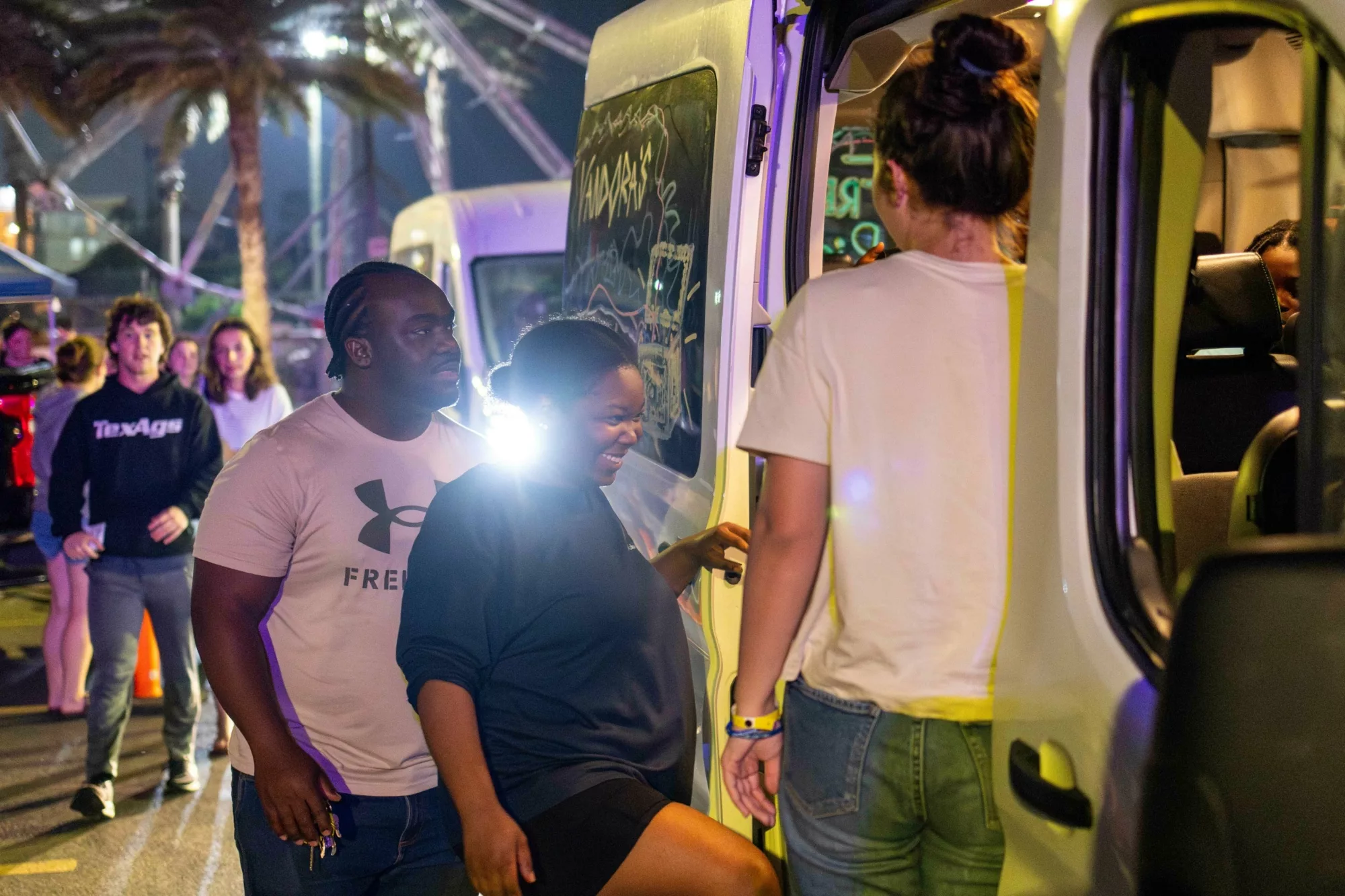
Beach Reach participants greet riders on the spring break shuttle van service. (Texas Baptists Photo)

“I think [Louie’s is] probably a place that a lot of Christians would want to avoid. So, I think it’s really good to be hands-on and reach people that may be lost and meeting people where they’re at,” Hartman said.

Texans on Mission volunteer Phil Winget has served pancakes at Louie’s for 10 years. He said the most encouraging thing to see each year is people giving their lives to Jesus. By Wednesday night of the first week, 50 salvations already had been reported.

“Where else can you see 50 college students accept Jesus as their personal savior in a week? Last year, we had close to 80 baptisms out in the Gulf of Mexico,” Winget said.

“[That] is absolutely the most impactful thing. I’ve never been anywhere where there were 50 college students saved in a week.”

Seeing God’s faithfulness

One of the 80 baptized last year was Destiny, a college student who Mandeville and a few other Baylor students met at Louie’s.

Mandeville said she “saw someone dancing around with a sign, and she ended up giving her life to Christ” toward the end of the week after attending the evening worship services held for Beach Reachers at the South Padre Island Convention Center. Beach Reachers are encouraged to invite spring breakers to join them for worship to build stronger connections.

Mandeville lost contact with Destiny but continued to pray her faith would grow. Her prayers were not in vain, she would learn, shortly after reconnecting with Destiny’s cousins, who also were baptized last year.

BSM students serve free pancake breakfasts cooked by Texans on Mission each morning of Beach Reach. (Texas Baptists Photo)

During the day, a few BSMs host a morning pancake breakfast at Island Baptist Church, an opportunity to deepen relationships with connections they’ve made on the vans the night before.

The BSMs not attending the pancake breakfast can go “fishing”—driving around the island to pick up people walking to their destinations or going to the beach to invite spring breakers to call the hotline at night and have spiritual conversations.

“I went to the beach, and I actually saw the cousins, and I was like: ‘Oh my gosh, you guys, it’s been forever. How are you?” Mandeville recalled.

“We were in a bit of a rush, and I had to scurry off. But the next day [the Baylor BSM was] hanging out at the church, and I was waiting for my van … It was so perfectly ordained by God, because I was the only one out[side], and [Destiny] walked up with this guy. I didn’t recognize her.”

Destiny asked, “When do you guys do the worship service?”

As she drew nearer, Mandeville recognized the young woman as Destiny and invited her to the evening worship service at the convention center.

Destiny told Mandeville in the last year, God had freed her from addiction, she had found a home church and was being discipled.

“It’s such an encouragement, because you don’t really see people after the fact. You interact with them once or maybe twice and then never again. So, it’s so cool to see her a year later and see she’s still on the straight and narrow.”

Destiny came to worship that evening and was “the most influential part of the night” for Baylor students.

“I had to let them know that they are making a difference … [there] may not be a hundred thousand people, but that one lost sheep is still important,” said Destiny. “I wanted to tell them … to never doubt themselves because God chose them … to be here.”

“Here she is, turning the tables and encouraging us … the Lord so clearly spoke through her exactly what we needed to hear in those moments,” said Mandeville.

Nathan Mahand, BSM director at Houston Christian University, encouraged students before their hotline shifts began in the evening that “the gospel is always on the move” and “not (to) let the fact that it’s been a slow week discourage you from sharing” the gospel.

“You’re here this week because someone shared the story of Jesus with you, and you came to believe this story. You want other people to believe the story in the same way that you do. That only happens when you vulnerably go and share what God has done in your life,” Mahand said.

As Mandeville shared her and Destiny’s story on Tuesday night, the prayer room went up in a roar of celebration as tweets on the prayer wall read that new believers were joining the kingdom family.

God’s sovereignty in salvation

On Wednesday, a team from Midwestern State BSM went to the beach to evangelize. Participants Evanne Kleinert, a second-time Beach Reacher, and Abigail Simbaña, a third-time Beach Reacher, had something to celebrate.

“We just prayed to have one good conversation, and then I saw a girl picking up shells on the beach. And so we went over to talk to her—we were asking people if we could pray for them—and I saw that she had a cross necklace on, so we started … asking what that meant to her,” Kleinert said.

“After questions, she claimed that ‘God is her best friend,’ and I was like, ‘Have you heard about the gospel before?’ and she hadn’t. … I shared the gospel with her and explained … what having Jesus as Lord and Savior means and the cost of that,” Simbaña said.

“She was like, ‘Well, I’ve been wanting to get baptized for a long time now.’”

Simbaña explained salvation doesn’t come through baptism but by putting her faith in Jesus.

“She was very receptive, and she was like, ‘I want to make that decision … [and] commitment,’” said Simbaña. “[She] definitely [had] a heart ready to receive the gospel.”

Beach Reach efforts resulted in 87 baptisms in the Gulf of Mexico this year. (Texas Baptists Photo)

Klienert said her Beach Reach experience reminded her how every person truly plays a unique part in leading somebody to Christ.

Hayden Womack, a sophomore and first-time Beach Reacher from Lamar University, said the same.

“I’ve been uplifted by seeing the church work together, for lack of a better term, like a Rube Goldberg machine,” he said. “I’m just a small piece in the wheel, you know? … God has an ornate and sovereign way of knitting everything together perfectly.”

At Wednesday evening worship, Joe Osteen, East Texas BSM regional coordinator and Beach Reach coordinator, referenced Isaiah 49:5-6 and challenged students to “walk in obedience” even as the end of the week was approaching. He reminded them that “God’s salvation is meant to advance to all the ends of the earth.”

“Jesus comes and does the work to make [salvation] a reality, by living and dying and rising from the dead and saving all who call on his name. And he enlists us, in his grace and goodwill towards us, to be a part of that redemptive work,” said Osteen.

He encouraged the students to consider what obedience looks like off the island.

“Perhaps it’s too small to only pour ourselves out like this here at South Padre. Perhaps there’s a bigger purpose—for us to take what we’ve learned and what we’ve experienced here, back to our campuses and be encouraged to continue sharing the gospel,” Osteen said.

“Perhaps God is calling you to lift your eyes a little bit and see beyond your campus to the area around you or to a mission opportunity or to a nation … who needs to know who Jesus is.”

Staying alert for gospel opportunities

During a daily afternoon break, Avery Marsh, junior and first-time Beach Reacher from the University of Houston, got to use a special skill to have a spiritual conversation in a coffee shop.

“I learned sign language during my high school years, and I don’t remember a lot of it,’ Marsh said.

“But I remember some words, and I was in this coffee shop. And one of my friends was like, ‘Avery, this person’s deaf.’ … I saw this sweet [older lady] with a tiny little dog, and I got to sit there and talk with her.”

The woman had been hearing for about 40 years and went deaf gradually. She was starting to learn sign language.

“She is able to read lips and speak and ended up just telling me about her life story and telling me things that I could be praying for,” Marsh said.

“It was so encouraging to me that God doesn’t let anything go to waste—that this skill that I learned in high school randomly because friends adopted deaf kids, I got to use in this way to get to know” the person she encouraged that day.

Over two weeks of Beach Reach, from March 9-20, participants gave 13,832 van rides; took part in 10,014 spiritual conversations; and prayed with 7,750 spring breakers. Additionally, 246 people accepted Christ, 86 recommitted their lives to Christ and 87 were baptized.




Judge rules excess heat in Texas prisons unconstitutional

Texas Baptists’ Christian Life Commission has made combatting inhumane temperatures in Texas prisons a priority. Those efforts received a positive tailwind this week, with a judge’s 91-page ruling declaring the lack of temperature regulation in some state prisons unconstitutional.

U.S. District Judge Robert Pitman stopped short of mandating air conditioning be installed in the ruling, signed on March 26, but he classified incarceration in un-air-conditioned state facilities as cruel and unusual punishment in violation of the Eighth Amendment to the United States Constitution.

The ruling notes: “At the outset, the Court notes that the parties are in agreement that air conditioning all TDCJ facilities is necessary as a matter of inmate health and safety.”

It also acknowledges the defendant, Brian Collier, executive director of Texas Department of Criminal Justice has not already installed air conditioning in all housing areas throughout TDCJ units only because “the Texas Legislature has not appropriated the funds to do so.”

The ruling explains about 95,000 inmates currently are housed in un-air-conditioned facilities. The state’s 46,000 “cool beds”—beds in proximity to partial or full air conditioning—are prioritized to inmates based on an individual’s susceptibility to heat illness.

Inmate risk is measured with a “heat score metric,” which Judge Pitman described in the ruling as, “in practice, arbitrary, inadequate, and ineffective.”

About 12,000 TDCJ inmates have health risk factors that meet requirements for placement in a “cool bed.”

The additional cool beds “are available to inmates without heat scores.” Some cool beds have been assigned to inmates who have suffered heat-related illness but do not have a heat score, the ruling explains.

Of TDCJ’s 101 units, 32 are considered fully air conditioned in the housing areas, and 55 units are classified as partially air conditioned, “though a number of these units have fewer than ten cool beds,” the ruling states.

The ruling also says respite areas and other forms of temporary heat relief currently offered in un-air-conditioned facilities are “inadequate and ineffective,” concluding “air conditioning is the only effective protection from extreme heat” so often experienced in Texas.

The ruling includes testimony of harms caused by the present environment from plaintiffs—Bernhardt Tiede II, who suffered heat stroke, incarcerated without air conditioning at 65 years old with several serious existing health conditions; Prisons Community Advocates; Justice Impacted Women’s Alliance; Texas Citizens United for Rehabilitation of Errants; and Coalition for Texans with Disabilities.

Testimony cited in the ruling included reports of a temperature of 136 degrees observed on a thermometer in a women’s unit in Gainesville, where one plaintiff said she and fellow inmates “were able to cook a raw egg on the concrete floor.”

Extensive injuries related to the heat were noted, including 23 admitted deaths between 1998 and 2012, though the ruling states credible evidence indicates deaths from heat in Texas prisons likely are significantly undercounted, with Collier having admitted in a prior court testimony five years ago to knowing of ten deaths from heat stroke in summer of 2011 alone.

The ruling recounts the story of several inmate deaths, listing those who died by name and describing the conditions that led to their deaths while incarcerated.

In 2022 and 2023, “TDCJ staff filed nearly 80 workers’ compensation claims related to the heat.”

TDCJ wants A/C but lacks funding

Additionally, the ruling explains, “Collier knows that TDCJ’s heat mitigation policies are inadequate,” and that air conditioning is the only real solution to the unsafe conditions caused by Texas’ summer heat.

TDCJ’s facilities director, Ron Hudson, testified air conditioning currently is the division’s “number one priority.” Both Hudson and Collier acknowledged installing temporary or permanent air conditioning was feasible, and TDCJ would do so if the court ordered it.

However, the retrofitting required to install temperature control units and the purchase of the estimated 65,000 tons of A/C equipment needed to heat and cool the entire system might take up to two years or longer, the ruling says.

An article in the Texas Tribune notes some funding allocated to TDCJ last year has been used to install air conditioning.

While the Texas Commission on Jail Standards has required all Texas jails to maintain indoor temperatures between 65 degrees and 85 degrees since 1994, consistent with many other states’ standards, the ruling notes. “TDCJ has nevertheless refused to implement the same (or similar) standards.”

Judge Pitman concluded though the plaintiffs’ arguments likely merited a preliminary injunction requiring temporary air conditioning, granting the injunction would work against the goal of all parties—permanent air conditioning in all TDCJ units—significantly delaying its installation by devoting considerable resources to a temporary solution.

Pitman emphasized to Collier his belief the plaintiffs will prevail in court and advised him to begin preparing for that outcome. For the plaintiffs and the public’s good, the judge denied the injunction and ordered both parties to “file a joint proposed scheduling order on or before April 10, 2025.”

How Texas Baptists can help

CLC Public Policy Director John Litzler said: “While Judge Pitman’s ruling stopped short of granting the temporary injunction that plaintiffs requested, the judge was clear in his opinion that the plaintiffs are likely to succeed in their lawsuit against TDCJ.

“If they succeed, TDCJ will likely be ordered to install all heat and air in the 2/3 of Texas prisons that don’t currently have it in the living quarters. The Christian Life Commission calls on the Texas lawmakers to fully fund this project now, during the budget passed in the 89th legislative session, before TDCJ is ordered to install heat and air by courts.”

This legislative session the CLC is tracking five House bills and one Senate bill related to air conditioning in Texas prisons.

The House bills are HB 489 by Rep. Jon Rosenthal, HB 1315 by Rep. Trey Martinez Fischer, HB 2997 by Rep. John Bryant, HB 3006 by Rep. Terry Canales, and HB 3443 by Rep. Ron Reynolds. Each of the bills has been referred to the House Corrections Committee, but none has been scheduled for a hearing yet.

Rep. Sam Harless of Spring chairs the House Corrections Committee. His office number is (512) 463-0496, and his email is sam.harless@house.texas.gov. Litzler noted it “could help the bills gain momentum if Baptists contacted Rep. Harless’ office and requested a hearing on these five bills which would require air conditioning and heat in Texas prisons.”

Additionally, Texas Baptists may reach out on the Senate bill (SB 169) the CLC is tracking. Sen. Jose Menendez is the primary author on the bill, joined by co-authors Sen. César Blanco, Sen. Molly Cook, Sen. Sarah Eckhardt, Sen. Roland Gutierrez and Sen. Nathan Johnson.

SB 169 has been referred to the Senate Committee on Finance, chaired by Sen. Joan Huffman of Houston. Her office number is (512)-463-0117, and her email is joan.huffman@senate.texas.gov.

“It could help SB 169 gain momentum if Baptists contacted Sen. Huffman’s office and requested a hearing on the bill which would require air conditioning and heat in Texas prisons,” Litzler suggested.

If a bill mandating temperature regulation in TDCJ units passes without a line item in the budget designated toward air conditioning in TDCJ units, or the plaintiffs prevail, as expected, in court, the legislation becomes an “unfunded mandate.”

But while the surplus in the Texas budget is less this year than last, there is still plenty to fund this basic human right for inmates and prison workers, without jeopardizing funding for other important initiatives, Litzler said.


Some Christians seek to overturn same-sex marriage

(RNS)—At a meeting of mostly evangelical Christian communicators, activists and lawyers that took place in Dallas in February, more than a few panel discussions and hallway conversations repeatedly circled back to the same topic: same-sex marriage.

Having helped to engineer the demise of Roe v. Wade after half a century of anti-abortion activism, attendees at the National Religious Broadcasters conference openly discussed plans to make shorter work of Obergefell v. Hodges, the landmark 2015 Supreme Court ruling that legalized same-sex marriage nationwide.

Obergefell is on very shaky ground,” Mathew Staver, founder of the conservative Christian nonprofit legal group Liberty Counsel, told the audience of one panel at the conference. “It’s not a matter of, in my opinion, if it will eventually be overturned, but when it’ll be overturned.”

It’s a brazen claim critics and legal analysts have dismissed as unlikely in the short term. But conservative Christian advocates say they are emboldened by President Donald Trump’s election and the Supreme Court’s decision to overturn Roe v. Wade in 2022.

They hope justices eventually will respond to a growing list of efforts to overturn Obergefell cropping up across the country.

Among them is the legal case surrounding Kentucky county clerk Kim Davis, who made headlines after Obergefellwas decided when she refused to grant a marriage license to a same-sex couple, citing her conservative Christian faith.

She has lost repeatedly in court and even spent time in jail for her defiance. But in July 2024, Staver and the Liberty Counsel filed an appeal on her behalf, arguing the Supreme Court overstepped in Obergefell, only to be denied in early March.

Micah Schwartzman. (Photo courtesy of UVA via RNS)

Staver has vowed to press on, but Micah Schwartzman, professor at University of Virginia Law School and director of the Karsh Center for Law and Democracy, said the prospects for a Davis victory remain thin.

“That case is going nowhere, as best I can tell,” Schwartzman told RNS.

While Justice Clarence Thomas left room in his concurring opinion in Dobbs v. Jackson Women’s Health Organization for the court to reconsider the Obergefell decision, no other justices joined him.

Justice Brett Kavanaugh declared in his own concurrence that “overruling Roe does not mean the overruling of those precedents, and does not threaten or cast doubt on those precedents,” referring specifically to Obergefell.

Strong support for same-sex marriage

Support for same-sex marriage remains high among Americans, according to a 2024 report by Public Religion Research Institute, which showed that about 67 percent agreed it should be legal.

Solid majorities of white mainline Protestants, white Catholics and Hispanic Catholics back same-sex marriage, as do high percentages of Jewish Americans (80 percent), Buddhists (82 percent) and religiously unaffiliated Americans (86 percent).

But Schwartzman said those who depend on or support LGBTQ rights still have reason to be concerned.

“There are political constituencies that want to see Obergefell reversed, and they know that a majority of the justices, at least with respect to writing on a blank slate, objected to Obergefell and thought Obergefell was wrongly decided—including the chief justice, John Roberts, who dissented in Obergefell,” he said.

Katy Faust. (Photo via Amazon via RNS)

Lawsuits aren’t the only route to getting Obergefell back in front of the justices. Speaking on a panel to the religious broadcasters, Katy Faust, who founded the activist organization Them Before Us, suggested her group was focused on a legislative challenge.

“Just because gay marriage was legalized in 2015 that does not mean this is a dead issue,” she said.

“We have to fight against it, because five Supreme Court justices do not determine whether or not children deserve, need or have a right to their own mother and father.”

In an interview, Faust pointed to legislative efforts already underway intended to chip away at Obergefell.

Covenant marriage legislation

Oklahoma state Sen. Dusty Deevers, a Calvinist Southern Baptist pastor who co-authored a 2023 statement in support of Christian nationalism that defined “marriage as the covenant union of a biological male and a biological female” as a core value, introduced two bills in January seen as targeting Obergefell.

The first, the “Covenant Marriage Act,” would create a $2,500 state tax credit for people who opted in to “covenant marriages” that are “based on the traditional understanding of marriage” and could only be dissolved “in cases of abuse, adultery, or abandonment.” The tax credit could be carried forward for up to five years.

The effect of the bill, Schwartzman said, would be to create “two classes of marriage, one that’s privileged and one that’s treated as second class or disadvantaged.”

In the last few months, similar bills have been introduced in Tennessee, Missouri and Texas. Versions of covenant marriage are already legal in Arizona, Arkansas and Louisiana, where House Speaker Mike Johnson married his wife in a covenant ceremony in 1999, according to The Associated Press.

Deevers’ bill, which died in committee last month, appears to be unusual for its inclusion of a tax credit for covenant marriages.

Less attention has been paid to another bill introduced by Deevers: the Promote Child Thriving Act. It creates a $500 annual state tax credit per child for a mother and father filing jointly and escalates to $1,000 if the child was born after the marriage of the parents.

Faust suggested Deevers’ bill appears patterned after a template produced by her group, whose aim is to create a “competing track” that focuses on “biological connections between parents and child, and rewarding that family formation.”

“It takes the focus off of the adults and their relationship, and their own identification and romantic bonds, and puts it on to what marriage is and historically has been—which is an institution that is responsible for the procreation and raising of the next generation,” she said.

Legislation is not ‘an end in itself’

The legislation is not an end in itself. If the Promote Child Thriving Act or a bill like it is signed into law and faces a constitutional challenge, “that could create the kind of live issue that the justices could then rule on,” Faust said.

Staver agreed the strategy “certainly has legs” and could constitute a “direct challenge” to Obergefell if passed.

Staver and Faust also pointed to a resolution passed in January by Idaho’s lower house asking the U.S. Supreme Court to reverse its 2015 ruling. The resolution, known as a memorial, argued the ruling misunderstands “liberty” to mean people should “seek dignity from the state” instead of God, and that the result causes “collateral damage” to other liberties “including religious liberty.”

In South Dakota, a seemingly identical resolution recently passed out of committee, while a North Dakota version passed that state’s House but failed to win approval in its Senate. A version in Montana was recently tabled by the state Senate, and another in Michigan is currently languishing in committee.

While Staver admitted the resolutions are largely symbolic—“If you filed suit against it, there’s no enforcement aspect to it,” he said—the movement “sets the tone” for other efforts.

Introduced by state Rep. Heather Scott, who has argued the United States is a “Judeo-Christian based country,” Idaho’s resolution also called Obergefell “illegitimate overreach” and asked the justices to restore the “natural definition of marriage, a union of one man and one woman.”

During debate, state Rep. Clint Hostetler repeatedly quoted the Bible, saying, “We could go hours and hours pointing to Bible verses in Scripture that validates the institution of marriage given by God and how it’s between a man and a woman.”

The tone has not been unified, however. Rep. Ilana Rubel, a Democrat representing Boise and the minority leader of the Idaho House, later fired back: “We talked about Scripture—we don’t legislate according to Scripture.”

In many cases, locals, including one United Church of Christ pastor, have testified against the resolutions, objecting that they don’t represent all religious Americans or even all Christians.

In South Dakota, Sioux Falls resident Christine Morgan told a committee hearing: “My church and many other churches are open, supportive and welcoming of LGBTQ+ couples. This feels like a very pointed attack from one specific subset of a large belief system.”

Schwartzman said the raw number of cases challenging same-sex marriage is more determinative than any individual effort. “One of the strategies that led to Dobbs was that states were willing to ping the court repeatedly to test whether the court’s commitment to Roe was sound,” he said.

“It’s not just that there was one case that did it—there were many cases over many years asking the court to reconsider its earlier decision.”

Schwartzman said the combined activism he’s seen so far resembles the “early stages” of the campaign to overturn Roe v. Wade. Their success “doesn’t turn on whether any of those particular efforts win or lose,” Schwartzman said.

Instead, “it turns on whether they gain momentum and show that they have sufficient public support to give the justices enough reason to reconsider the earlier decision.”

Overturning Roe, of course, took decades. Yet Staver and his allies insist they’re working on a shorter timeline. Asked when he thinks Obergefell will be reversed, Staver initially said “within my lifetime” before clarifying he had an even smaller window in mind.

“Within the next four years,” he said. “I think we’re close. We just need the right case.”


Gallup study shows pandemic’s lingering effects on kids

NASHVILLE (BP)—Five years after the COVID-19 pandemic, a Gallup study is sharing parents’ perspectives on how that time has affected their children’s social skills and mental health, as well as its impact on academics.

Nearly half—45 percent—of parents surveyed observe a negative impact of the pandemic on their school-age children. Out of that figure, about 22 percent say social difficulty is ongoing.

Approximately 42 percent of respondents say the pandemic negatively affected their child’s mental health, with half characterizing it as persistent.

Lisa Moore has served in student and children’s ministry pretty much since marrying her minister husband Rick 36 years ago. That’s also the amount of time she has been a nurse, the last 30 years in pediatrics.

Moore’s observations through her full-time work in the Pediatric Developmental and Behavioral Health department at Atrium Heath Navicent in Macon, Ga., and 10 years as part-time children’s minister at Lawrence Drive Baptist Church overall align with the study’s findings.

The pandemic’s effects on children appear to be far less noticeable on those she sees heavily involved in church. There is another side she has observed, though.

“There are a number of kids who previously came to church and participated who have not returned,” she said. “I feel a lot of that is due to social anxiety.”

She also has seen a change in how eager children are to become involved. There is a noticeable hesitancy among some, a nature she also observed at times to be passed along by parents.

Impact of social isolation still seen

The fourth and fifth graders of the pandemic are the freshmen and sophomores of today. She said the amount of social isolation from then still can be seen.

“Some kids were able to be around others, whether it was siblings or another close family where it was decided they wouldn’t be completely isolated from others. But some kids weren’t able to be around anyone else.”

That could’ve been the case because they were the only child in the home or the family decided to isolate completely. Either way, those children weren’t left with much more interaction than a screen.

“Electronics played a huge role,” she said, noting how screens were instrumental not only for socializing, but for school.

Melody Wilkes is the director of Preschool and Children’s Ministry at First Baptist Church in Brunswick, Ga., as well as on the leadership team for a private Christian school. She has monitored the pandemic’s impact on children from both roles.

Although not as pronounced as its impact on mental health, the Gallup study nevertheless reported 36 percent of parents saying their children’s math skills were negatively impacted, as were reading (31 percent) and science (30 percent) proficiencies.

The survey affirms what she has noticed among elementary and middle school-aged children.

“The overall academic scores for our students are down from pre-COVID levels,” she said. “I don’t know if that is due to COVID or teachers and leadership at individual schools, but the fact remains that our kids are still behind where they used to be.”

Busy schedules create other problems

Children and families in her direct line of observation have largely overcome social challenges from the lockdown, Wilkes said. That can be attributed to an abundance of activities available since then and a desire to get outside. But that also has come with a cost.

“Schedules are very busy, with some parents engaging their kids in multiple activities during the week as well as on the weekends,” she said. “Those build social skills and friendships, and that’s healthy. But my concerns lie with overscheduling our children without prioritizing Christian training.

“A lot of that falls to the church to provide those opportunities. However, many churches cut back on their activities during COVID and didn’t fully re-engage, taking the opportunity to reset the ministry. I believe this has impacted our children’s faith journey in a big way.”

Moore’s church has refocused on community and how to make it more prominent for families and children. The principles come from Flip the Script, a resource from Lifeway Christian Resources NextGen director Chuck Peters.

“It stands for Friends, Leaders, Influencers and Pastors,” she said. “These are the main influences on if kids stay in church. If they have a friend—and if their parents have friends at the church—they will be more likely to come and get plugged in.”

The rest of the acronym brings home the importance of community, Peters said.

“Coming out of the pandemic, we did a study with Lifeway Research in partnership to learn about the specific needs of Gen Z and Gen Alpha from a cultural standpoint,” he said. “Their worldview is fundamentally different.

“The millennials are the first generation in North America where less than half identify as Christian or attend church regularly. It continues to decline among generations. Gen Z is the first where the majority are not Christian but have a secular viewpoint.”

The result is a generation that no longer has a “cultural gauge” for determining what is good, or right from wrong, he added.

Peters has been in his role at Lifeway for 11 years and in children’s ministry for 16 years. His anecdotal observation is many adults have put the mental health effects of the pandemic behind them. For those children who endured it in their formative years, though, the memories and impact linger.

It’s a generation that has experienced “toxic stress and trauma” while becoming more connected than ever, digitally speaking, he said. The church must be ready to help them.

Every child and every student needs an advocate in the church who isn’t their parent, an adult who genuinely cares for them. That adult helps instill and model a biblical worldview. Introduce them to a personal relationship with Christ while modeling it.

“It’s not enough to know about Jesus. We have to know him personally and relationally for a generation longing for relationship,” he said. “Give them the gospel. Be a leader that loves them and gives them a biblical worldview.”


Sudanese Christians pray in secret amid violence

KHARTOUM, Sudan (RNS)—In the Al Jazirah state of central-southeast Sudan, dozens of Christians hold secret prayer services whenever they can.

They’ve had to hide their worship services amid the civil war in the country, especially after an attack by the Rapid Support Forces, a paramilitary organization formerly operated by the Sudanese government, on the Sudanese Church of Christ in Al Jazirah on Dec. 30, 2024. The attack left at least 14 people, including women and children, seriously injured.

“The soldiers destroyed our church and vowed to eliminate all Christians,” a Sudanese Christian—who asked not to be identified—said by phone. “They warned us against gathering for worship, so we have been doing it in secret to prevent their agents from reporting us.”

Rival factions pose a threat

Christians face threats from both rival factions of the military government currently at war. Both have vowed to eliminate all Christians in the northeastern African country, which has a population of more than 49 million.

About 5.4 percent of the population identifies as Christian, while 91 percent are Muslim, and a small percentage follow Indigenous religions.

Attacks on Christians’ and other faiths’ places of worship, including mosques, have escalated across the country. The U.S. Commission on International Religious Freedom reported in April 2024 more than 150 churches have been damaged since the war began in 2023.

These attacks have prompted condemnation from the international community, faith-based organizations, human rights groups and religious leaders.

The Sudanese Armed Forces, led by Gen. Abdel Fattah al-Burhan, and the Rapid Support Forces, commanded by Gen. Mohamed Hamdan Dagalo, who was previously al-Burhan’s deputy, are engaged in a fierce power struggle to control the country’s valuable resources, including gold and oil.

The conflict has claimed an estimated 150,000 lives and displaced over 13 million Sudanese, with 4 million fleeing the country. Civilians face a dire lack of food, health care and hope for peace.

On Aug. 16, 2024, the United States began peace talks in Geneva. Although representatives from the Rapid Support Forces participated, the Sudanese Armed Forces boycotted the talks—a decision that raised concerns about the possibility of achieving lasting peace and stability in the region.

Rapid Support Forces fighters began withdrawing from the capital of Khartoum on March 26, The New York Times reported, as Sudanese Armed Forces gained control of the city, marking an inflection point in the war. Rapid Support Forces is likely to withdraw forces in Darfur in western Sudan as well, the report said.

Soldiers have been preventing Christians from attending church, from holding weekly fellowship meetings in their homes, from openly expressing their faith and from converting from Islam to Christianity, Peter said.

Evangelical pastor Ibrahim Okot said the war has significantly impacted the Christian community in the country. The Khartoum-based pastor said soldiers have targeted Christians who had previously been protected by the constitution before the nation descended into civil war.

“We lived together as brothers and sisters, but the war has taken on a religious aspect with soldiers now targeting Christians and places of worship,” Okot said. “They do not want anything to do with God or spirituality, which is harmful for any country.

“We are praying for an end to the war to save Christianity and the lives of millions of innocent people. It’s now hard to be a Christian in this country. You can’t carry your Bible openly, pray, gather to worship or identify yourself as a Christian.”

Attacks on places of worship

Christian Solidarity Worldwide, a U.K.-based human rights organization, recently raised concerns about the daily threats faced by Christians in Sudan. Soldiers continue to attack areas where they live, posing a serious risk of violence and the potential elimination of their communities.

“The targeting of places of worship violates both domestic and international law, and, in the context of conflict, international humanitarian law,” said Mervyn Thomas, founder and president of CSW, earlier this year.

“We call on the international community, including the UN Fact-Finding Mission on Sudan, to document these attacks thoroughly with a view towards ensuring accountability.”

A Sudan Armed Forces airstrike hit Al Ezba Baptist Church in Khartoum North on Dec. 20. It damaged the worship facility, the church’s nursery—which was occupied at the time—and several residential buildings, CSW reported (Photo courtesy of CSW)

Pastor Philemon Hassan of Al Ezba Baptist Church in Khartoum North—whose church was attacked by a Sudanese Armed Forces airstrike that killed 11 people on Dec. 20, 2024— aid many people are dying, suffering and lacking basic humanitarian necessities for survival.

He emphasized that lasting peace between the warring factions is essential to halt the continuous attacks on Christians and their places of worship.

“Our prayer to God is for this war to end as soon as possible,” Hassan said.

Simon Umar, a church elder at a Pentecostal church in Khartoum, also said without peace, Christians will continue to suffer from attacks and will live hiding in fear. He said the Christian communities in Khartoum and other areas have tried to gather in small congregations to worship and support one another during the war.

However, these efforts have not been successful as they have faced attacks that resulted in fatalities, he said.

“We attempted to gather, but it was impossible because nowhere is safe,” he said, urging both warring parties to consider the suffering of the people in Sudan and stop the war.

“Christianity can only thrive in an environment of peace and stable government that protects everyone’s rights, including the right to worship and gather.”

Thomas also urged “the warring parties to agree to an immediate ceasefire” and “the international community to increase efforts to ensure the protection of civilians in Sudan.”

Meanwhile, a Christian in Al Jazirah emphasized his neighbors’ commitment to gathering secretly as they seek spiritual nourishment and pray for a swift resolution to the conflict.

“We cannot stop praying, as that is the key to resolving the ongoing conflict,” he said. “I urge both RSF and SAF soldiers to refrain from targeting Christians and places of worship. Our prayers are crucial for achieving lasting peace.”

Ameen Auwalii contributed to this report from Khartoum, Sudan.


Student ministry leaders and parents share goals

BRENTWOOD, Tenn.—Anecdotes often portray parents and student ministry leaders at odds, but both groups share a desire to see the next generation grow spiritually. Each also believes they have a positive, healthy relationship with the other.

A study from Lifeway Students and Lifeway Research explores the perspective of churchgoing parents of teenagers and student ministry leaders in local churches. Both emphasize the spiritual health of their students and say they want to work together to see the next generation become disciples of Christ.

“For believing parents, a key goal is that their teenagers develop a genuine faith in Christ—a desire shared by student ministry leaders,” said Chad Higgins, coauthor of Define the Relationship: Growing a Parent Ministry that Brings Families and Churches Together, a book based on this research.

“Both want students to grow spiritually healthy and mature in their walk with Christ. To align on this, we need to move beyond tracking church attendance as the sole measure of faithfulness and help parents understand and discuss terms like ‘spiritually healthy’ or ‘growing in Christ’ in meaningful ways.”

What do Christian parents say?

Lifeway Research surveyed 1,001 parents who regularly attend church and have at least one child in grades 6-12. They shared hopes for their children, experiences with student ministry and if they feel they could use some help.

When asked their biggest priority for their student’s future, 2 in 5 (41 percent) say their main goal is spiritual well-being. Around half as many point to emotional well-being (19 percent) and physical well-being (18 percent).

Fewer choose financial well-being (9 percent), having a profession they enjoy (9 percent) or relational well-being (4 percent).

Most parents place spiritual (71 percent), emotional (66 percent) and physical (60 percent) well-being of their student’s future as one of their top three priorities.

Almost half (45 percent) say financial well-being, a third (32 percent) choose their student having a profession they enjoy and a quarter (25 percent) say relational well-being is one of their top three highest priorities.

“All the potential priorities listed for parents are good things,” McConnell said. “This is the tension that exists in every Christian home. Parents are forced to consider if seeking the kingdom of God and encouraging their student to do the same is of first importance or one of many things they want.”

Seven in 10 churchgoing parents (71 percent) actively encourage their students to be engaged in the Christian faith, including 37 percent who strongly encourage them.

Far fewer say they leave their spiritual development up to their student (12 percent), share information about different faiths without trying to influence their student (11 percent) or leave their student’s spiritual development up to their church (6 percent).

Most parents feel their encouragement has paid off. Seven in 10 (72 percent) say their student often or consistently lives out a belief in Jesus Christ, with 42 percent saying their student does so often and 30 percent saying they do so consistently. One in 5 (20 percent) say their student has shown interest in following Jesus.

Still, parents have concerns about their student and their spiritual growth. More than 9 in 10 (93 percent) are at least a little worried their student will become distracted by worldly things. Nine in 10 (90 percent) have some concern about their student giving into peer pressure.

Almost as many (87 percent) say they have some level of concern about their student focusing on professional growth while neglecting their spiritual growth. Four in 5 (80 percent) are at least a little concerned their student will feel unsure about their faith.

Additionally, 5 in 6 (85 percent) say they’re at least a little concerned about their student regularly attending church once they move out.

“Church leaders often notice students’ high commitment to sports and extracurriculars and can feel like they compete with church involvement,” said Higgins, co-host of the Youth Ministry Booster podcast.

 “Without real relationships with families, it’s nearly impossible to have priority conversations that don’t come across as accusatory or speculative. This lack of connection can fuel the perception of conflicting goals, even when the core desires of leaders and parents align.”

Most parents (62 percent) say they’re equipped to help their student develop spiritually, while 36 percent feel the opposite. Yet, 94 percent agree they want to become more equipped for this, and just 5 percent disagree.

This may be where parents would like help from student pastors. Only 2 percent say they’re not willing to partner with their church’s student leader to help their student grow spiritually, but 72 percent say they are open to that partnership. One in 5 (20 percent) aren’t sure, and 7 percent say their church doesn’t have a student ministry leader.

What do student ministry leaders say?

For their part, student ministry leaders want to partner and work with parents, but many have limited time and feel overwhelmed. Some leaders are full-time staff members, while others serve as volunteers.

“Student ministers and other leaders are working hard to create a safe, nurturing environment where students can grow spiritually,” Higgins said.

“They’re also seeking true partnership with families, moving beyond a one-size-fits-all discipleship model. Leaders want to communicate where students are and collaborate on the best ways to foster spiritual growth together.”

The average week for a student ministry leader includes a large portion of their time engaged in preparation work alone (11 hours) or with church staff (seven hours).

Most other time is invested in the students themselves, including four hours at student ministry activities, two hours with students one-on-one and two hours with students at their extracurricular activities or hanging out. Much less time involves adult volunteers in the ministry (two hours) or parents (one hour).

Still, equipping parents is an area in which student ministry leaders want to improve. When asked what they’d love to see their ministry do more of next year, if they could do it well, leaders often pointed to increased involvement with parents.

Around 7 in 10 say they’d want to increase their equipping of parents with tools to disciple their students (70 percent) and training of parents to disciple their students (67 percent).

Many also say that if they could do it well, they would love for parents and student leaders to grow in their relationships with each other (46 percent) and for parents to grow in their relationships with each other (41 percent).

Almost as many leaders say they’d want to improve sharing information with parents to keep them aware of new elements of youth culture (38 percent).

Half of student ministry leaders (52 percent) say they would want to train Bible study leaders of students next year. Fewer point to a priority of offering big events to attract more students (33 percent). Another 23 percent would want to offer girls’ ministry activities.

As leaders see a need to do more training and equipping of parents, they also see parents who want to be engaged in the spiritual development of their student.

Three in 4 (76 percent) say parents in their church are concerned about their student’s spiritual development. Additionally, 7 in 10 student ministry leaders (71 percent) say parents in their church are proactive in encouraging their student to engage in the Christian faith.

Despite all the desire to partner with parents and do more training, most student ministry leaders (57 percent) say they don’t have a clearly defined strategy for ministering to parents.

 “Student ministers should recognize it’s tough for parents to replicate something they’ve never experienced,” Higgins said.

“If parents grew up without a model of discipleship in the home, they’re learning from scratch. Understanding this can help ministers approach parents with empathy and support as they navigate their role.”

Student ministry leaders aren’t only concerned about what happens at church. Around 3 in 4 (73 percent) say they have sought to partner with parents to encourage spiritual activities at home, but some have been disappointed with the results.

More than 2 in 5 leaders who have tried to partner (43 percent) say parents don’t even try to engage at home in the spiritual activities they suggest, while 40 percent of leaders say the parents at least try it.

Three in 10 (30 percent) say the parents like it, but half as many (15 percent) say the students enjoy it.

A quarter believe the activities have worked for many families for a short time (25 percent), 7 percent say these activities worked for many families for a long time and 15 percent don’t think they’ve worked for most families. Around 1 in 6 (17 percent) say the results have been very encouraging.

Ministry leaders point to several challenges that have limited the success of these efforts. Around 2 in 5 (42 percent) say parents don’t have time to prepare. Three in 10 (31 percent) believe the activities have been things parents did not want to do, while 27 percent say the students haven’t wanted to participate.

A quarter (24 percent) say church leaders don’t have time to plan and communicate the connection between the church’s efforts and parents’ efforts in students’ spiritual development.

One in 10 student ministry leaders say the parent-student activities expected too much time together (11 percent) or the format of the activities has not been enjoyable (11 percent). One in 20 (5 percent) say the topics haven’t been relevant.

Some leaders blame busyness (7 percent), while others say it’s apathy and the activities not being a priority (4 percent). A few say the parents’ efforts are not tied to the church’s efforts because the parents are non-Christian or unchurched (3 percent).

“Holding two informational meetings a year won’t shift the tide of discipleship in the home, if that’s our goal,” Higgins said. “We want to see leaders build ongoing, meaningful connections that empower families to grow together in faith.”

The online survey of 1,001 student ministry parents was conducted Jan. 30 to Feb. 9, 2024, using a national pre-recruited panel. The sample provides 95 percent confidence that the sampling error from the panel does not exceed plus or minus 3.2 percent.

The online survey of 1,056 student ministry leaders was conducted Feb. 8 to Feb. 28, 2024. The sample provides 95 percent confidence that the sampling error does not exceed plus or minus 6.2 percent.


Report notes lack of progress in global religious liberty

WASHINGTON (RNS)—The U.S. Commission on International Religious Freedom issued its annual list of countries it considers to be the most egregious violators of religious liberty and urged the new Trump administration to appoint a new ambassador-at-large for international religious freedom.

The commission’s 2025 report, released March 25, included a list of countries nearly identical to its 2024 list—a reflection, according to the report, that in most of those countries, things have not improved but often have worsened.

“The administration of President Donald J. Trump faces a complex international environment in which to build on its previous success of centering religious freedom as a cornerstone of foreign policy and global leadership,” the report states.

“Confirming this commitment to advancing freedom of religion or belief will require calibration and joint action with like-minded governments.”

The eight current commissioners of the bipartisan, independent agency asked Congress to halt the visits it receives from representatives of countries designated as the most egregious religious freedom violators.

“Lobbyists paid to represent the interests of governments that kill, torture, imprison, or otherwise persecute their populations because of what religion they practice or what beliefs they hold should not be welcome in the halls of Capitol Hill,” they stated.

The 2025 report also sought a successor to Rashad Hussain, whose ambassador-at-large post ended with the Biden administration. Hussain was recently announced as a distinguished senior fellow at the Institute for Global Engagement, a think tank that seeks to foster partnerships to build religious freedom.

“I think what’s critical here is an ambassador who has access, not only to Secretary (of State Marco) Rubio, but has access to the White House directly,” USCIRF Chair Stephen Schneck told RNS in an interview.

“It needs to be somebody, I think, of that level, given the surge of, the big uptick in violations of freedom of religion or belief around the world that we’re seeing right now.”

Recommended nations for CPC designation

The bipartisan, independent commission, reauthorized last year by Congress through September 2026, annually recommends to the State Department a list of countries to designate as “of particular concern” for committing “systematic, egregious, and ongoing” religious freedom violations.

The 2025 report seeks the redesignation of 12 countries: Burma, China, Cuba, Eritrea, Iran, Nicaragua, North Korea, Pakistan, Russia, Saudi Arabia, Tajikistan and Turkmenistan.

It also seeks designation of four others: Afghanistan, India, Nigeria and Vietnam.

The commission sought the same redesignations and designations last year, with a request to add Azerbaijan.

This year, it requested that Azerbaijan remain on the State Department’s second-tier special watch list, along with Algeria.

The commission also sought these countries to be added to the special watch list: Egypt, Indonesia, Iraq, Kazakhstan, Kyrgyzstan, Malaysia, Sri Lanka, Syria, Turkey and Uzbekistan.

US Commission on International Religious Freedom recommendations. (Courtesy image via RNS)

‘It’s become much worse’

Schneck, who was appointed by President Joe Biden, said the repetition in its requests about Countries of Particular Concern reflects the troubled state of religious liberty across the globe.

“It’s become much worse in several places, including Iran, Nicaragua and, frankly, Russia,” he said, adding that key drivers are often authoritarian governments like those, and religious nationalism in countries such as Myanmar (also called Burma), India and Turkey.

“We’re not seeing progress. In fact, in most of the countries on this list, we’re seeing regress.”

For the second year in a row, the commission also requested that the presidential administration appoint an envoy for Nigeria and the Lake Chad region, as northern portions of Nigeria have seen violence against Christians as well as Muslims.

Schneck said he was disappointed the State Department did not, as expected, announce its latest designations for its lists of religious liberty violators before the conclusion of the Biden administration, nor since the start of the Trump administration.

Concerns about USAID and refugees

The report noted the Biden administration’s funding of hundreds of millions of dollars of humanitarian aid through the U.S. Agency for International Development for religious groups facing genocide and persecution, such as Muslim Rohingya refugees located in and around Bangladesh and for the people of Syria.

But Schneck said those programs are part of the pausing of USAID funds that has occurred since Trump took office.

“As I understand, all of the freezes are still in place that affect those USAID programs,” Schneck said.

“We’re very hopeful that the new administration will act quickly to resolve some of these situations, so that some really needed programs to protect religious freedom on the ground in different parts of the world can be funded appropriately.”

Likewise, Schneck said the commission is worried about the plight of refugees whose temporary status in the United States is in jeopardy due to recent administration decisions.

“We are concerned about anything that makes it more difficult for refugees to flee from religious persecution to find safe haven,” he said.

In its new report, the commission requested its own permanent reauthorization, as well as that of the bipartisan Lautenberg Amendment that provides a legal process to resettle religious minorities from Iran and countries in the former Soviet Union.

The commission’s report also includes examples of people who have held to their religious beliefs even amid antisemitism, Islamophobia and other forms of religious hostility.

“One of the most heartening things that we see around the world is the resilience of people to stand up for their faith or their lack of faith, for that matter, their principles,” Schneck said, pointing to young people in Iran and congregants in churches in authoritarian countries.

“But the larger picture doesn’t change. We are concerned about what looks like a decaying picture for freedom of religion.”


‘Divine appointment’ awaits volunteers in Missouri

POPLAR BLUFF, Mo.—Three Texans on Mission disaster relief leaders motored down a country road in southeast Missouri where a tornado had devastated homes and trees. Then they had what Paul Henry later called a “divine appointment.”

Jacob Moneybrake, Texans on Mission’s new associate director of disaster relief, was in the truck with Henry and Wendell Romans.

“I had never seen anything like it, the devastation,” Moneybrake said of the scene in southeastern Missouri. “The further we went, the worse it got. I thought, ‘We’re here to take trees off homes, but the houses were beyond saving.’”

Henry, the Texans on Mission incident commander, said: “As we neared the end of the damaged area, a man named Jake was sitting in his pickup truck by the side of the road next to a driveway and waved us down.

“He was curious about what we were doing in the area,” Henry said. After the Texans on Mission team explained, Jake “pointed and shared that his brother had been killed in his home, and his sister-in-law had crawled out of the rubble that was once their house.”

A tornado devastated homes and trees in southeast Missouri. (Texans on Mission Photo / Jacob Moneybrake)

No damaged trees threatened what structures remained, so Wendell Romans suggested the Texans on Mission team “follow Jake to his brother’s homesite and assess what he wanted us to do,” Henry said.

“As Jake explained the trees that needed to be cut and removed, he became visibly emotional.” Henry said. “Through it all, we were able to guide Jake to accept the Lord.”

Earlier in the day, the team had experienced various delays in getting to the scene of the worst damage.

“What made this experience even more profound for us was reflecting on how the events of the day had initially gone wrong, delaying our trip to Jake’s brother’s property. It was clearly a divine appointment.”

Moneybrake walked away from the others to retrieve mail from the mailbox for Jake. It had been a difficult morning for the team, and he had an “honest conversation with the Lord” as he walked.

Moneybrake was focused on the work that needed to be done but the challenges that day made it difficult to plan what work to do. When he got back to the others, Jake had made his profession of faith in Christ.

“Then I prayed: Lord, give me your heart for these survivors,” Moneybrake said. “It was a life-changing experience. … I went on a work trip and came home from a mission trip.”

After the team returned to the command center at Temple Baptist Church in Poplar Bluff, wind gusts reached 55 mph and “blew the back steps of the command center across the parking lot,” Henry said. “Later, another gust of wind caught one of the church’s double glass doors—the doors we use to access the building—slammed it open, and tore it off its hinges.

“I’m still trying to understand the deeper meaning behind these disturbances in the otherwise quiet tranquility of this disaster,” he said.

Moneybrake said he and Romans returned the next day to the property where Jake’s brother had died. “We went back to the valley of death. I watched the Lord, with our ministry, wrap arms around these people.”

As of Sunday, March 23, 59 Texans on Mission volunteers were working in the Poplar Bluff area, with multiple pieces of equipment from around Texas.


Around the State: UMHB awards visionary leadership

The University of Mary Hardin-Baylor presented Kathy and Ted Floca of Temple with the John and Mary Hardin Visionary Leadership Award at the university’s annual donor event. John and Mary Hardin were prominent Texas philanthropists in the early 20th century. As the former owners of the Temple Bottling Company, the Flocas built a successful business and invested deeply in their community. Their commitment to supporting education and student success is evident in their many contributions to UMHB. Through the years, their generosity has helped shape the future of UMHB’s students, providing scholarships through the Central Texas Scholarship Fund, supporting the Isabelle Rutherford Meyer Nursing Education Center, the Sue & Frank Mayborn Performing Arts Center, the Marek-Smith Center for Teacher Preparation, and the Jane and Mac Hickerson Crusader Golf Club.

HPU hosted the National Christian Collegiate Forensics Invitational tournament, March 7-9, in Brownwood. (HPU Photo)

Howard Payne University Student Speaker Bureau speech and debate team hosted the National Christian College Forensics Association invitational on March 7-9. HPU has attended the tournament every year since 2005. The tournament included teams from 13 universities from across the United States. More than 130 students gathered on the HPU campus to compete in speaking and debate events over the course of the three days. This is the first time the tournament has been hosted by a Texas university. Freshman Rylie Burden, a jurisprudence and Guy D. Newman Honors Academy major from Nederland, won second place in novice extemporaneous speaking, fifth place in novice homiletics, and fifth place in novice impromptu speaking. She was also in the top 10 debaters in the junior varsity division. Katie Richards, freshman strategic communication and theatre major from Brownfield, placed sixth in faith interpretation. Katelyn Sims, team captain and junior Guy D. Newman Honors Academy and global studies major from Cleburne, and Adrielle Sloan, junior Guy D. Newman Honors Academy and strategic communication major from Blue Ridge, also competed.

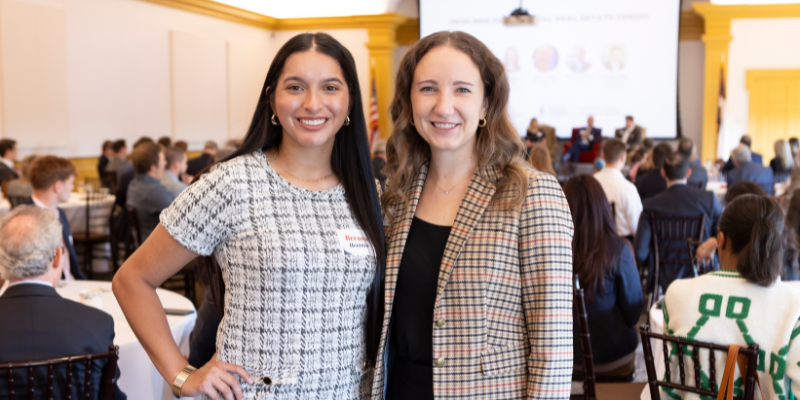
Houston Christian University partnered with Risk Management Association to launch a commercial real estate certificate program in the fall of 2024 to prepare students to pursue internships and future careers in commercial real estate. (Photo / HCU / Archie W. Dunham College of Business)

Houston Christian University partnered with Risk Management Association to launch a commercial real estate certificate program to prepare students to pursue internships and future careers in commercial real estate. The five-week online program consists of eight self-paced courses, available through the Risk Management Association Ignite platform. Nine students were awarded certificates last fall, and 17 students have applied for admission for the Spring 2025 semester with up to 10 to be selected for the competitive program. Students receive an overview of the commercial real estate industry, gain insights on the basics of commercial lending and learn to evaluate risk areas. The program aims to help students gain a comprehensive overview of commercial real estate, including understanding market trends, applying appraisal techniques and gaining the requisite skills to work in an industry expected to grow in 2025. Seven of the nine students who completed the program in fall 2024 secured internships with various companies including Weitzman/United Real Estate, Arthur D. Little, FosterDeck, and Fitts, Roberts, Kolkhorst & Co. Two additional students were offered internships at HCU. The certificate provides students with the foundation and knowledge to begin entry-level roles in the commercial real estate industry as property management assistants, real estate analysts, leasing consultants, marketing coordinators or entry-level realtors.

As Baylor rapidly grows its collegiate esports program, the university hosted the Fall 2024 Texas Esports League Fall Finals, which brought more than 500 competitors to the Mark and Paula Hurd Welcome Center. (Baylor Photo / Matthew Minard)

Baylor University continues the development of its collegiate esports program by hiring Adam Stanley as the Bears’ first esports director and coach. Stanley comes to Baylor after developing Brewton-Parker College into a national esports powerhouse in which his teams won nine conference championships. Baylor will host the Texas Scholastic Esports Federation’s Undisputed State Championships May 1-3 at the Mark and Paula Hurd Welcome Center, which will attract more than 1,500 high school competitors from across the state. Last December, Baylor hosted the Texas Esports League Fall Finals, which included more than 500 competitors. Stanley, who earned a Master of Divinity degree from Baylor’s Truett Theological Seminary, noted: “Esports and gaming culture can be a powerful tool for students to thrive—socially, emotionally, academically, competitively and spiritually. I’m thrilled that the institution I love recognizes the transformational potential of this massive, yet largely unengaged student population.”

Hardin-Simmons University has named Jill Jumper as the next dean of the College of Health Professions. She will assume the role in June 2025, following the retirement of Janelle O’Connell. Jumper has been a faculty member at HSU since 2017. Since 2022, she has served as program director and associate professor for the Doctor of Physical Therapy program. Before this role, she was an assistant professor and director of clinical education for HSU’s Doctor of Physical Therapy program. As she steps into this new leadership role, Jumper’s vision is to continue fostering a culture of servant leadership within the College of Health Professions, providing a prayerful and supportive environment for faculty, staff, students and the broader community. “I see a bright future of growth and development in the College of Health Professions,” she said. “I can’t wait to see how God uses our faculty, staff and students for his glory.”

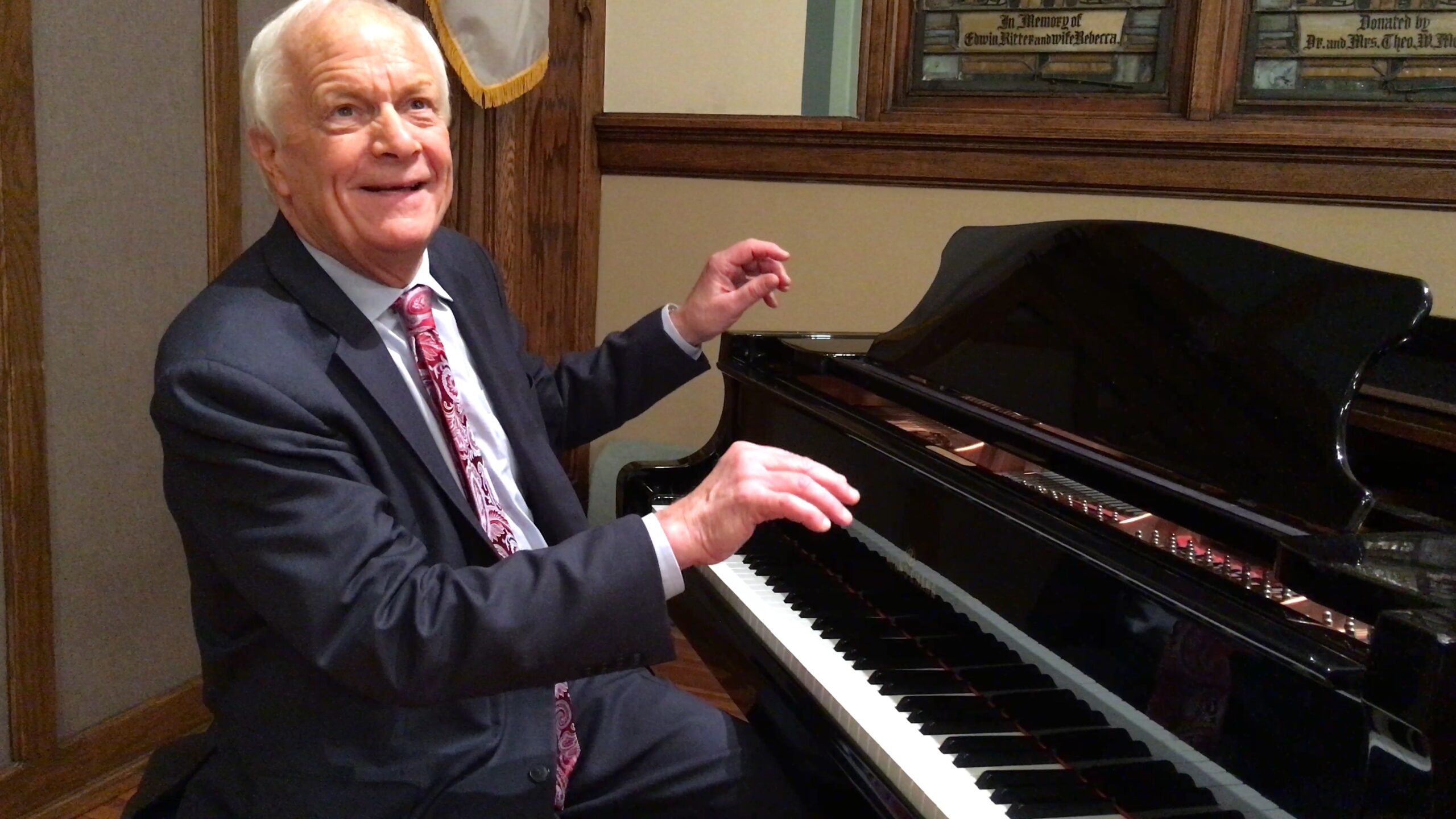
Christian singer-songwriter Ken Medema will join Wayland Baptist University and area high school choirs for an April 5 concert. (Wayland Photo)

Christian singer-songwriter Ken Medema will join Wayland Baptist University and area high school choirs for an April 5 concert, concluding the 2025 Clay and Freada Warren Memorial Music Symposium. The performance is set for 7 p.m. in Harral Memorial Auditorium on Wayland’s Plainview campus. Admission is free. The symposium, originally established by Mark and Freada Warren in memory of their son, Clay, was recently renamed to also honor Freada, who died in November 2024 after a 14-year battle with Cystic Fibrosis. Clay, a Plainview High School graduate and choir member, had a deep love for music before his life was tragically cut short in 2002 at age 18 due to an automobile collision. The symposium is a day-long event featuring Catalyst, a clinic designed for area high school choral students, followed by a concert.

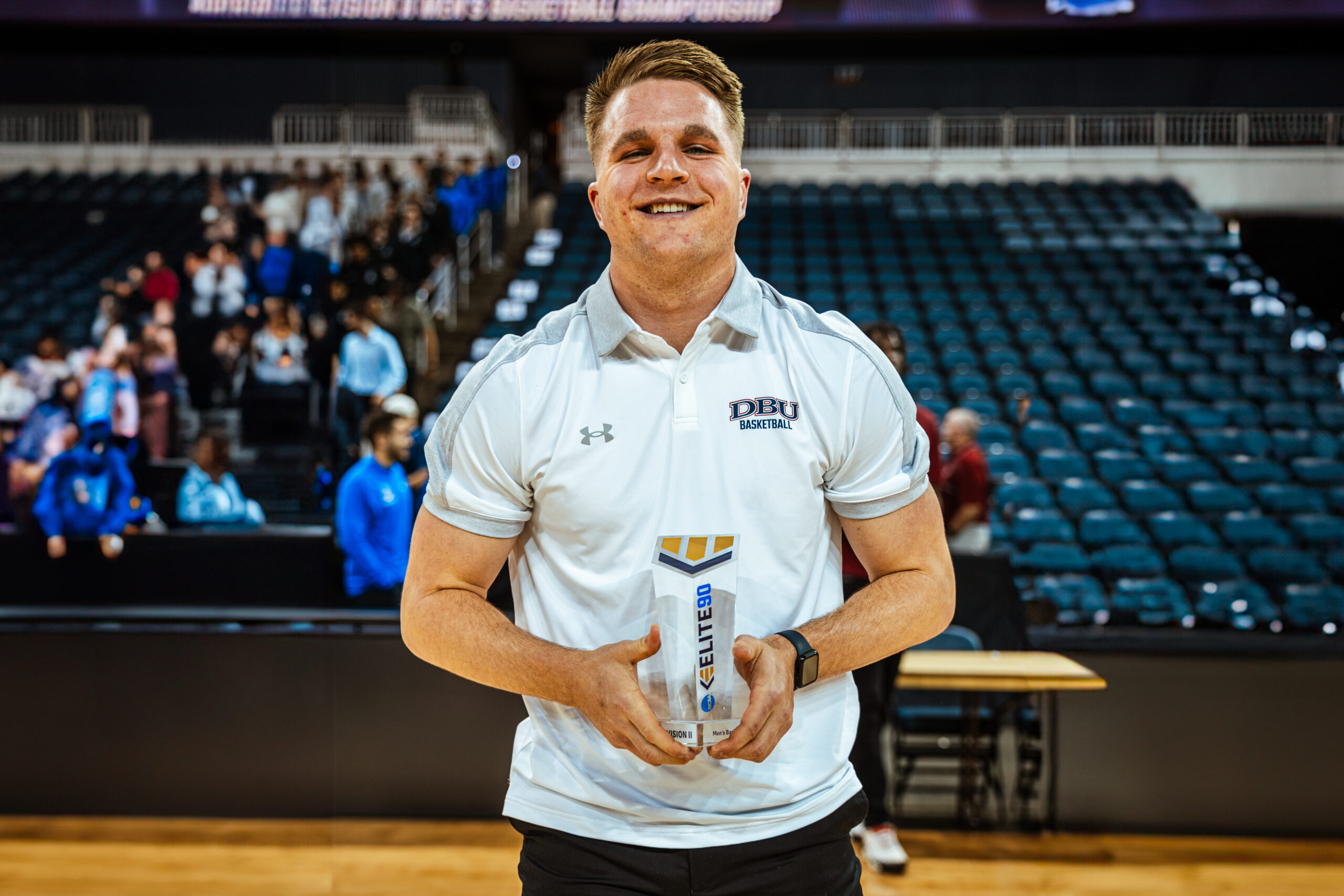
Graham Kroll was awarded the prestigious NCAA Elite 90 Award for the 2025 NCAA Division II Men’s Basketball Championship. (DBU Photo)

Graham Kroll was awarded the prestigious NCAA Elite 90 Award for the 2025 NCAA Division II Men’s Basketball Championship. Kroll, a math and computer science major with a 3.97 GPA, boasts the highest academic standing among all participants in the Elite Eight. He was honored with the award at the NCAA Men’s Basketball Awards Banquet, on the eve of DBU’s participation in the Division II Elite Eight in Evansville, Ind. Kroll makes history as the first student-athlete from the men’s basketball program to earn an Elite 90 honor, and he is also the first student-athlete from the Lone Star Conference to receive the Elite 90 award in men’s basketball. The Elite 90 Award is given to those who not only have excelled at a national championship level in their sport but also have achieved the highest academic standards among their peers. Eligible student-athletes are sophomores or above academically who have participated in a sport for at least two years with their school.

Save the date: Texas Baptists Intercultural Ministries will host Camp Fusion Rallies in Dallas-Fort Worth and Houston. The rallies offer youth from intercultural churches a chance to experience a “day at Camp Fusion.” The Dallas-Fort Worth rally will be held on May 3 at Vietnamese Baptist Church of Garland, from 3-6 p.m. The Houston location is TBD on May 17, from 3-6 p.m.

Anniversary

Del Sol Church in El Paso celebrated 45 years on March 23. Ariel N. Martinez is pastor. The local association bought the land for Del Sol’s original location. A group brought in by the Baptist General Convention of Texas built the congregation’s first building, and another local BGCT church sent people to begin the church in 1980.


Cooperation bridges 500-mile gap for mutual benefit

More than 500 miles separate First Baptist Church in Grapevine and the Valley Baptist Retreat and Conference Center. Texans on Mission helped bridge the gap, facilitating a project that mutually benefitted the North Texas church and the South Texas retreat center.

Joe Crutchfield, a member of First Baptist in Grapevine and disaster relief volunteer with Texans on Mission, said God put together multiple partners to be “the hands and feet of Christ for his ministry.”

After First Baptist Church in Grapevine built a new worship center in the 1990s, its old sanctuary was remodeled as a children’s ministry facility, complete with indoor playground equipment.

Growing ministries need space

About a year ago, Gabriel Nuñez, missions minister at First Baptist in Grapevine, launched a Spanish-language ministry to meet the changing needs of the community, Associate Pastor Jonathan Cook said.

“That ministry is growing, and it needed space for worship,” Cook said.

At the same time, the children’s ministry has grown to a point where the church is working with a design firm to renovate a building to accommodate its needs, he added.

So, the church decided to restore the old sanctuary to its original purpose as a worship center for the Spanish-language ministry and as a secondary worship space for other events, Cook said.

To make the worship space available, the children’s playground equipment needed to be disassembled and removed, and ministry leaders hoped to find a new home for it.

“Our church asks, ‘Where is there a need, and how can we help?’” Cook said.

God put the pieces together

Scott Williamson, a member of First Baptist in Grapevine, had the answer.

Williamson has served more than a decade on the board of the Valley Baptist Missions Education Center in Harlingen. He knew Valley Baptist Retreat and Conference Center in Mission—a ministry of the missions education center—could put the playground equipment to good use.

However, he recognized the logistical challenge of transporting the disassembled equipment to the Rio Grande Valley, getting it unloaded and reassembling it.

Volunteers at First Baptist Church in Grapevine load a Texans on Mission tractor-trailer rig with playground equipment the church is donating to Valley Baptist Retreat and Conference Center. (Photo courtesy of Joe Crutchfield)

Williamson discussed the matter with fellow board member Bill Arnold, former president of the Texas Baptist Missions Foundation, who connected him to Texans on Mission.

The missions organization agreed to make available an 18-wheel tractor-trailer rig to transport the playground equipment from Grapevine to the Rio Grande Valley.

About 50 volunteers from the church worked on Feb. 22, disassembling the 30-foot-tall structure and preparing it to be transported to South Texas.

Then the church’s men’s ministry enlisted about two dozen volunteers to load the disassembled playground equipment onto the Texans on Mission tractor-trailer rig on Saturday morning, March 22.

Work together to help each other

Othal Brand Jr., acting president of Valley Baptist Missions Education Center, enlisted volunteers from the Rio Grande Valley to unload the 18-wheeler on Monday, March 24.

“It’s remarkable to see how all these different groups and organizations can work together to help each other,” Williamson said.

Like-minded Christian groups—even those that are part of the same Texas Baptist family—tend to “stay in [their] own lanes a lot of the time,” he observed.

Christians can accomplish much more when they cooperate, and it begins with communication, he noted.

“We don’t do it often enough,” Williamson said. “We’re all on the same team. But sometimes we’re sitting on opposite ends of the bench, and we forget to talk to each other.”


Obituary: Clifford Dane

Clifford Dane, a Southern Baptist missionary emeritus who served in Belize and Brazil, died Jan. 7. He was 86. Dane was born July 1, 1938, in Weatherford to Henry and Ruth Dane. He came to faith in Christ as a child and was active in church life alongside his parents and siblings. During his 11th-grade year, he surrendered his life to special service for God, and the following year he surrendered to preach and began preaching at various church services. During his last year of high school, he met Peggy Delano. They were married Aug. 16, 1959. Over the next several years, Dane served as a pastor, earned a Bachelor of Science degree from Wayland Baptist University and taught fourth grade. Feeling led by God to foreign missions service, the Danes moved to Fort Worth, where he earned a Master of Religious Education degree from Southwestern Baptist Theological Seminary. In 1972, the Southern Baptist Foreign Mission Board—now the International Mission Board—appointed the Danes as missionaries to Brazil. He established a school of religious education, planted churches and opened a recreational learning camp. Dane earned a Doctor of Philosophy degree from Caribbean College of the Bible International in San Juan, Trinidad and Tobago, and taught courses in theology, archeology and religious education at Baptist Theological Seminary in North Brazil. The Danes later served in Belize, where he worked to strengthen churches, hosted volunteers from the U.S. and continued planting churches. He is survived by his wife of 65 years, Peggy Dane; children Brent Dane, Troy Dane, and Gwenann Sprecher; eight grandchildren; and seven great grandchildren. Donations in his memory may be made to the Lottie Moon Offering, IMB, 3806 Monument Avenue, Richmond, VA 23230, or online at Generosity Resource Center – IMB Generosity.


Spiritual adviser counseled man executed by firing squad

COLUMBIA, S.C. (RNS)—When 67-year-old Brad Sigmon was put to death March 7 in South Carolina for the murder of his then-girlfriend’s parents, it was the first time in 15 years an execution in the United States had been carried out by a firing squad.

Hillary Taylor, a United Methodist minister, served as Sigmon’s spiritual adviser since 2020. The multifaceted, months-long effort to save Sigmon’s life, and provide emotional and spiritual support for his legal team has been a “whirlwind,” said Taylor, director of South Carolinians for Alternatives to the Death Penalty.

Her organization has advocated for three other death row inmates in the state over the past six months, as South Carolina ramps up executions after a 13-year hiatus.

The delay was caused in part by legal challenges to the lethal injection method. In 2021, a state bill gave those on death row the simplified options of electrocution or death by firing squad, which has had the effect of expediting executions.

After Sigmon chose the firing squad, Taylor said, “I got catapulted into the movement to save his life.”

She was introduced to anti-death penalty organizers around the country, and, in time, what had been a volunteer position with the anti-capital punishment group became a paid position.

First involvement a decade ago

Taylor was introduced to the work 10 years ago when she joined an unsuccessful campaign to save the life of Kelly Gissendaner, a Georgia prisoner convicted of persuading her lover to kill her husband in 1997.

Gissendaner, who had taken theology courses offered by Emory University while on death row, sang “Amazing Grace” on the way to her execution.

Taylor, then a first-year student at Emory University’s Candler School of Theology, learned about Gissendaner while working with women in solitary confinement at Lee Arrendale State Prison, where Gissendaner had spent time before being transferred.

Taylor learned Gissendaner “had sobered up, become a Christian and reconciled to her children.” When other inmates had suicidal episodes, Taylor had heard, they would be placed in a cell next to Gissendaner, who would “literally preach and counsel them back to life.”

The more Taylor reflected on Gissendaner’s faith, the “more it reminded me of people in my own life who could have ended up on a similar path if they didn’t have access to power and privilege.”

‘We’re more than the worst thing we have done’

Over time, she came to a realization: “We’re more than the worst thing we have done, or the worst thing that ever happened to us, and that the worst thing is not the last thing.”

Despite Gissendaner’s execution, Taylor is proud of the faith leaders and others who organized to save her life. “It’s possible not to just say sorry, but to ‘do sorry,’” she said.

When Taylor arrived in South Carolina in 2020 to pastor two United Methodist congregations, she called a local justice reform organization and asked them if they needed a spiritual adviser or a pen pal for an inmate on death row.

A few months later, she was connected to Sigmon, who had taken a Bible college course at Broad River Correctional Institution, where he died.

He “had kind of exhausted the spiritual resources available to him,” she said. “That began our pen pal connection,” recalled Taylor.

Like Gissendaner, she said, Sigmon, who became an “informal chaplain” to other prison inmates, tried to become a different person.

After his prison conversion, she said, “he loved to share with people the ways the love of Jesus changed him. His objective was to save the other prisoners, who were like his brothers,” she said.

One of his last requests was to share a last meal with his friends. It was denied.

In the years before his execution, Sigmon and Taylor only met four times in person but exchanged a multitude of letters.

As they got to know one another, Taylor said, she was able to confide in him about the challenges of pastoring two small rural churches during COVID-19, “which was, at the time, a lonely and isolating experience. He was the person who could hold a lot of my fear and my anger. That was a gift I will treasure.”

They teased each other about their affection for rival football teams, Clemson versus South Carolina. “He was always making me laugh,” she said.

She learned from Sigmon, she said, about mercy, compassion and forgiveness, particularly the realization that “even when you are mad, you can come back to a place of kindness, compassion and humanity.”

As the end neared, he was at peace, Taylor said, able to seek reconciliation with some of the people he had harmed.

Took Communion together

In her last in-person encounter with Sigmon, on Ash Wednesday, March 5, they both took Communion, and she was able to anoint his head with ashes, the symbol of repentance and mortality many Christians receive on the first day of Lent.

“When I delivered ashes to him, I got to hug him for only the second time.” As she pressed her forehead, already imprinted with ashes, against his, she told him how grateful she was that he knew the power of love in Jesus.

Being a spiritual companion to a condemned person can be traumatic, particularly when the prisoner loses their final appeal.

Shane Claiborne, an evangelical Christian anti-death penalty activist, wrote in an email interview, “It is a terrible thing to accompany someone as they are executed,” but added that the only thing worse is being executed without accompaniment.

“That’s why we do this holy work, and it is also why we are working so hard for alternatives to the death penalty. The closer you are to the system that executes, the more convinced you become that violence is the problem, not the solution.”

Sister Pamela Smith, a member of the congregation of Saints Cyril and Methodius, has participated in anti-death penalty vigils on the state capitol steps since South Carolina resumed executions.

Smith, who directs the office of ecumenical and inter-religious affairs for the Catholic Diocese of Charleston, is also a board member of South Carolina Alternatives.

“I see this as another way of taking public action to try to raise consciousness to help people understand what actually goes on with the death penalty. Because I live in a state where executions are unfortunately becoming commonplace, you know, I have a passion as part of my overall pro-life commitment to try to do something about it.”

Though not directly involved in prison ministry, the nun was on hand when South Carolina’s first execution in more than a decade took place.

“You know the clock is approaching the hour, even though you don’t hear something happening. There’s just something chilling about the fact that you’ve got a scheduled time of death for this person for whom you’ve been praying and sending letters and presenting petitions.”

Powerful effects of spiritual witnesses

Taylor said the most painful part of her work “is just how ready people are to say things like ‘a firing squad is too merciful for him’—as though those folks were not victims of somebody else’s violence first, and didn’t have anybody to intervene on their behalf. There are ways we can hold people accountable. That’s part of what rehumanizing is.”

There is also, said Taylor, a reward in introducing outsiders to someone who is kind and compassionate—“telling a story that maybe hasn’t been told before.”

Former death row prisoners talk about the powerful effects of spiritual witnesses. Sentenced to death as a 20-year-old for killing a man and wounding another during an armed robbery, Jimmy MacPhee was re-sentenced to life with the possibility of parole during a brief national death penalty hiatus in the 1970s. After 45 years in prison, he is now free, ordained and married.

He spends a lot of time on the road sharing his story—and that of Frankie San, the man MacPhee credits with transforming a furious, violent young man into a writer, speaker and mentor and finally a minister. A Japanese immigrant, now in his 90s, San began visiting McPhee when he first arrived in prison.

MacPhee said his personal experience of redemption inspires him to help others to transition back to life outside the cell block: “We all were washed by the blood. There’s none of us beyond the reach of God’s power. I know [I’m] blessed to be one of them. I know the transformative power is grace, how powerful it can be, and I’ve witnessed it in so many others.”

As it became more likely that the execution would move forward, recalled Taylor, Sigmon told her that if she saw a bird, she would know he was nearby.

“That’s too many birds, Brad,” she said.

“How about a finch,” he suggested.

This week, Taylor said, she is going to go out to buy a bird book.