Evangelicals divided over immigration tension

For years, leaders of the Evangelical Immigration Table have summed up the Bible’s view of immigration in three words: Welcome the stranger.

In Bible studies, sermons, videos, and other resources, the coalition of denominational and nonprofit leaders has sought to remind churchgoers to see immigrants as their neighbors and people worthy of love and support.

They’ve advocated for reforms that ensure America’s borders are secure, keep immigrant families intact, and provide a pathway for undocumented immigrants to gain legal status.

Zach Szmara, an Indiana pastor and longtime supporter of EIT, said the Bible, not politics, should shape how evangelicals see the issue of immigration.

“Evangelicals may have room for disagreement, but we have to start with the fact that we are called to love and welcome immigrants, not view immigrants as threats or burdens,” Szmara told RNS in a recent interview at a church conference in Chicago.

When Szmara founded Immigrant Connection, a church-based network of legal clinics that assist immigrants, in 2014, some churches wanted to get involved, others said it was a good idea, and there was little resistance, he said.

Now, he said, critics treat his work as anathema and ask him if he’s lost his faith.

Divide over immigration

Support for immigration reform has become a flashpoint among evangelicals in recent years.

Last fall, the public policy arm of the Southern Baptist Convention, known as the Ethics and Religious Liberty Commission, broke ties with EIT, due in part to pushback in the denomination that the group had become too liberal on immigration.

The break was notable because Richard Land, a legendary SBC figure who led the ERLC for decades, had been one of EIT’s founders and had long promoted immigration reform.

That split highlights tensions among evangelicals over immigration that have grown during the Trump era of mass deportations—including in Minneapolis, the current epicenter of immigration enforcement.

Public polling shows evangelicals, in general, support reforms that would lead to secure borders and provide legal pathways to citizenship.

But a 2025 study from Lifeway Research, an evangelical firm, showed evangelicals are deeply divided in how they view immigrants.

According to the study, 44 percent of evangelicals said they see recent immigrants as a drain on the country’s resources, while 43 percent see those immigrants as a threat to the safety of Americans.

Over a third (37 percent) said Christians have an opportunity to show love to immigrants, while the same percentage said recent immigrants are a threat to law and order.

Most (80 percent) wanted Congress to pass immigration reforms last year.

EIT’s members include prominent organizations like World Relief, an evangelical humanitarian group that resettles refugees, and the National Association of Evangelicals.

Suspicion growing

Meanwhile, critics argue Christians are called to love immigrants, but that call to compassion and love has been misused.

“What we’re learning now is that illegal immigration is not compassionate. In fact, it’s not only bad for Americans, but it’s bad for people who are migrating illegally,” said Willy Rice, a Florida pastor who is running for SBC president, during a recent podcast from the Center for Baptist Leadership, a group that believes the SBC and other evangelical groups have become too liberal.

Carl Nelson, president of Transform Minnesota, an evangelical church network, said he’s seen support for ministry to immigrants and refugees decline in recent years.

“I see a moving away from being generally compassionate and favorable towards immigration—immigration that’s done lawfully and orderly, and particularly refugee resettlement—towards much, much more suspicion and resistance,” Nelson said.

Within Transform Minnesota’s network is Arrive Ministries, a Minneapolis-area refugee resettlement agency affiliated with World Relief.

Nelson said, to outsiders, the Twin Cities may look chaotic, while inside the cities, people are worried about their neighbors.

“The dissonance between those two viewpoints, I think, has deepened,” Nelson said, adding he also sees a divide between Christians in rural areas and those in urban areas.

Nelson said he has heard some Christians talk about what’s known as the “sin of empathy,” which views having compassion for others as suspect.

That suspicion is meant to put a firewall between compassion and action, he said.

As an evangelical, he said he was raised to believe the role of the church is to be salt and light in the world, a reference to the Sermon on the Mount, a well-known New Testament passage.

Cities Church, Minneapolis

Evangelical responses to immigrants and refugees vary even within the same church.

For example, while one of the pastors at Cities Church, a St. Paul Southern Baptist congregation targeted by activists, works for Immigration and Customs Enforcement, that church has also been involved in welcoming refugees, Nelson said.

Several organizers of a protest at the church were arrested for disrupting the worship service earlier this month.

On Friday, Jan. 30, journalist Don Lemon, a former CNN anchor, and another independent journalist, who livestreamed the protest, were arrested in connection with it.

Youth from Cities Church have volunteered with Arrive, and some church members signed on to a 2017 EIT letter promoting immigration reform. Last year, a pastor at Cities Church used the idea of refugee resettlement to talk about the way Christians will be welcomed by Jesus into heaven.

“It’s like a refugee getting the exciting news from Arrive Ministries saying: ‘We’ve got a placement for you. It’s been secured. There’s a home here reserved for you,’” Cities Church pastor Max Kozak told worshippers in May 2025.

A spokesman for lawyers representing Cities Church said the congregation has no official ties to Arrive Ministries and has not given any money to the ministry.

“The church is still prayerfully exploring next steps following the Jan. 18 disruption of its worship service and is thankful that the Department of Justice has responded,” the spokesman told RNS, before news broke about the arrests of journalists.

Criticism of evangelical advocacy

Eric Teetsel, CEO of the Center for Renewing America, a nonprofit that seeks to “renew a consensus of America as a nation under God,” said evangelical leaders focused on issues like immigration because those issues were socially acceptable, but they aren’t the issues that matter most to the average evangelical sitting in the pews.

Those folks care about religious freedom, the sanctity of human life, and in what he called “traditional marriage.”

“Those were ignored and downplayed, and they ought not have been,” Teetsel told RNS in an interview last year.

Teetsel said evangelicals want their leaders to focus on issues the Bible is clear about, rather than issues like immigration, where Christians can disagree.

“It’s my contention that there is very little in Scripture that guides us towards immigration and border security policy in the 21st century,” Teetsel said.

He accused Democrats of defying the Bible’s beliefs, while evangelical leaders stood idly by and focused on other issues.

“These so-called evangelical institutions that do public policy are focusing their scarce resources on a question like immigration and border policy, rather than these more foundational, significant, and clear issues of life, marriage, and religious freedom,” Teetsel said.

Outside Chicago though, evangelicals have been involved in protesting against ICE, including taking part in efforts to track federal agents’ movements and in protests at an ICE detention center.

Broader effects

The Trump administration’s immigration crackdown has also affected evangelical churches where immigrants make up a large percentage of congregants, including Southern Baptist churches in Minnesota and Wisconsin.

“There are Hispanic churches that are not meeting right now because they are afraid of what’s happening in our part of the world, in part, because of the interaction between the federal government and the state government,” Trey Turner, executive director of the Minnesota-Wisconsin Baptist Convention, told RNS recently.

Some of the current debates about immigration have made evangelicals wary of ministry to immigrants, which Szmara said is unfortunate.

“I think we have to remind the church sometimes, when you love an immigrant, regardless of their status, you know you’re not breaking the law,” he said.

This article has been edited for length.


Obituary: Causey Esco Gram

Causey Esco Gram, pastoral and community leader, died Jan. 13. He was 77. Gram was born March 21, 1948, in New Orleans, La. He attended Benjamin Franklin High School and later Louisiana State University and Southwestern Baptist Theological Seminary. While in seminary, he served five different churches in the Dallas-Fort Worth area. Causey served as captain in the U.S. Army and later the U.S. Army Reserves. He also ministered with poverty and prison ministries, such as Calvary Commission in Lindale. Through that ministry, he and his first wife welcomed formerly incarcerated individuals into their home during Christmas. Causey served as pastor of Pleasant Grove First Baptist Church in Dallas, which merged with First Baptist Church Urbandale under his leadership. He was part of Allied Baptist Churches of Dallas, a group of small churches. He is remembered for his love of singing and playing guitar at church. Causey is survived by his wife, Reba; son, John and his wife Kristin; granddaughters, Melody and Kerys; and a host of church friends, and Dallas County pastors. He is preceded in death by his parents, Causey Esco Gram Jr. and Martha Reynolds; and his previous wife, Sue Gram. Donations in his memory may be made to the American Heart Association, the American Diabetes Association, or the Parkinson Voice Project.


Obituary: Mary Lou Ausmus Serratt

Mary Lou Ausmus Serratt, longtime denominational leader and former pastor’s wife, died Jan. 27. She was 87. Serratt was born Oct. 20, 1938, in Beaumont, to Clifford Buell and Lula Ausmus. She attended Amarillo High School and later Wayland Baptist College in Plainview, where she met her husband, Delbert Serratt. The couple married Aug. 9, 1959, at Temple Baptist Church, and served in pastoral ministry together in California, Kansas, and Texas. Serratt was active in church ministry, including directing drama groups, developing puppet ministries, teaching Sunday school, GAs, Acteens, and leading conferences at Glorieta and Ridgecrest. She trained leaders for state and national Woman’s Missionary Union and worked extensively with international language groups. She also contributed as a writer for national and state WMU publications and traveled nationally and internationally to support missions. A celebration of life will be held at 10 a.m., Friday, Jan. 30, at First Baptist Church in Amarillo, with a reception in the Fellowship Hall following the service. Visitation will be held at Schooler Funeral Home on Thursday, Jan. 29, from 5:30 to 6:30 p.m. Serratt is survived by her husband, Delbert Serratt; son, Jim Serratt and his wife Teresa and their children David, Sarah, and Hillary; daughter, Diana and Jeff Hill and their children Madi, Mason, and Aubree; daughter, Julie Poe and her husband Paul Poe and their daughter Brianna; and Mary Lou’s Cambodian family, Rindy and Chyria Nong, and their children Samuel, Maylia, and Serratt. She was preceded in death by her father, Cliff Ausmus; mother, Lula Erwin Ausmus; and brother, C. B. Ausmus.


Christian nationalism isn’t limited to US, scholars say

Scholars from around the world are gathering in Chicago this week to focus on Christian nationalism, which they say is growing in influence globally.

“Christian nationalism is not a single ideology, nor is it confined to one nation,” said Abimbola Adelakun, associate professor of global Christianity at the University of Chicago Divinity School and organizer of the conference. 

“Across the world, Christianity is being invoked to legitimize political authority and exclusionary visions of belonging. This conference brings global perspectives together to better understand how these movements operate and why they matter.”

The first of what organizers say will be an annual event, the conference is designed to look at issues affecting Christians around the world, Adelakun said. “This year, we’re looking at Christian nationalism, because it’s the most topical issue,” she said.

“We are trying to understand this phenomenon of Christian nationalism. What does it mean for Christianity?” she said. “What does it portend, and where do we go from here?”

She said the scholars invited to the conference have defined Christian nationalism as an attempt to make Christianity the “defining or governing moral order of the nation,” a complicated undertaking in a democratic society. 

“From an ethical view,” she said, “Christianity is a great religion that can define the moral order. But then again, it is now being weaponized against different categories of people.”

Christian nationalism and democracy

The idea only Christians should wield political power can lead to a rejection of democratic ideals, Adelakun commented, including religious freedom. 

She offered the example of Zambia, which was officially declared a Christian nation in 1991. While Zambia bans discrimination against other faiths, there have been attacks on non-Christians, according to the U.S. State Department.

A Zambian scholar will be one of the speakers at the conference, which has registered some 60 scholars and members of the public in all. Others presenting case studies are coming from Ghana, Zambia, Cameroon, Norway, South Korea, Pakistan, Romania, and Russia, as well as the United States and several Latin American countries. 

The event began Wednesday, Jan. 28, and runs through Friday, Jan. 30, at the University of Chicago on Chicago’s South Side. Lectures will be streamed online

The conference will kick off with a keynote lecture from Nimi Wariboko, a professor of social ethics at Boston University. Valentina Napolitana, an anthropologist from the University of Toronto, will also give a keynote address. 

Adelakun said some Christians around the world have reshaped American Christian nationalism for their own context, while in other countries, the Christian nationalism is homegrown and often developed as a way to oppose colonialism. 

“It was a way to say we are not going to reject Christianity because of the defect it has, but we’re going to create an African Christianity,” she said.

She said Christianity can be a powerful force for organizing and allows people from different backgrounds and cultures to unite around a common faith. But it can also be used as a weapon against people who don’t share those beliefs.

James T. Robinson, dean of the divinity school, said the conference helps further the public understanding of religion. 

“Understanding the political uses of religion requires careful historical and comparative scholarship,” Robinson said in announcing the conference. “This conference reflects the divinity school’s commitment to examining religion’s public life with global reach and intellectual precision.”


Speakers announced for African American Ministries conference

Michael Evans Sr., Tony Evans, and Delvin Atchison will be the evening keynote speakers at the African American Ministries Leading Up Leadership Conference in Mansfield, Mar. 12-14.

Michael Evans Sr. is scheduled to speak during Thursday evening’s worship session, Tony Evans on Friday evening, and Atchison on Saturday morning.

Tony Evans is the founding pastor of Oak Cliff Bible Fellowship and president of The Urban Alternative.

The first African American to earn a doctorate in theology from Dallas Theological Seminary, Tony Evans was named one of the 12 most effective preachers in the English-speaking world by Baylor University.

Evans also wrote and published the first full-Bible commentary and study Bible by an African American.

Tony Evans stepped down from his role as pastor of Oak Cliff Bible Fellowship in 2024. His son, Jonathan Evans, is now the senior pastor.

Michael Evans Sr. serves as senior pastor of Bethlehem Baptist Church in Mansfield, where the conference will be held.

Michael Evans Sr. has held key leadership roles among Texas Baptists, including serving as president of the Baptist General Convention of Texas and as director of Texas Baptists’ African American Ministries. He is a graduate of Baylor University’s Truett Theological Seminary.

Delvin Atchison is the senior pastor of Westside Baptist Church in Lewisville. He previously served as director of Texas Baptists’ Great Commission Team.

Atchison earned his undergraduate degree from the University of Texas at Austin and a Master of Divinity with honors from Baylor’s Truett Seminary.

Training and encouragement

Carlos Francis, director of Texas Baptists’ African American Ministries, encourages ministry leaders to attend the conference and participate in conversations and training.

The conference is planned around what pastors say their churches need, Francis explained.

This year’s conference will focus on AI and media, leadership styles, and the mission and ministry of Texas Baptists.

Sessions will address biblical leadership, preaching, evangelism, apologetics, church finances, media, online discipleship, and the role of women in church leadership.

The conference also will highlight ministry innovation through sessions on artificial intelligence, digital communication, community engagement, and WAVE training for summer camp leadership.

In addition, a Seasoned Saints track will provide encouragement and practical guidance for older adults, focusing on legacy building, mental health, caregiving, grief and loss, safety, navigating Medicare, Medicaid and Social Security, and developing a Seasoned Saints ministry.


On the Move: Keeney

Talon Keeney to First Baptist Church of Gatesville as senior pastor, from Tri-Rivers Baptist Area, where he served as associate director.


Around the State: Baylor announces $30 million gift

Baylor University announced a $30 million gift from the Moody Foundation of Galveston to the university’s School of Education, renamed the Moody School of Education. The gift will support scholarships, expand faculty research, and provide resources to grow academic programs. The gift also provides the following:

  • L. Moody II Endowed Scholarship Fund, for students pursuing careers serving preschool through 12the-grade education populations;
  • Russell Moody Endowment for Disability and Flourishing, to expand research and programs to better serve and improve the lives of those with disabilities;
  • Frances Anne Moody Endowed Professorship for School Psychology, to fund a faculty position focused on research addressing mental health in school-aged children;
  • Ross Rankin Moody Endowment for Developing Talent and Potential, to identify and serve students with high academic potential from low-income areas and to provide early math intervention for young learners in high-need communities; and
  • Elizabeth Lee Moody Endowment for School Leadership, to deepen the Moody School of Education’s engagement with Texas educators through professional development and sustained collaborations with current and aspiring school leaders and their schools.

East Texas Baptist University was awarded a grant of $850,000 from the J.E. and L.E. Mabee Foundation. The grant will go toward the university’s Restoring Feagin Hall Initiative. Feagin Hall, built in 1950, was home for 64 years to men called to study at East Texas Baptist College and ETBU. The building was taken offline in 2014, when ETBU opened Steve and Penny Carlile Hall, previously named Centennial Hall. The Restoring Feagin Hall Initiative carries a total cost of $4,170,000, with $2,040,000 already secured through generous donor commitments.

Howard Payne University’s Douglas MacArthur Academy of Freedom Museum will soon expand its educational offerings to area schoolchildren thanks to an $881,000 grant recently awarded by the U.S. Department of Education. The grant will fund the facility’s rollout of a wide range of interactive learning opportunities for students in Brown County and surrounding counties. Grant funds will be used to host educator workshops and seminars, and the modernization of the MacArthur Academy’s learning environments through new furnishings, interactive technology, and student-centered events. The MacArthur Academy will offer cost-free museum visits, transportation support, and meals to students from economically disadvantaged backgrounds.

Wayland Baptist University is bringing back its competitive dance team for fall 2026. Recruiting for the scholarship sport is already underway for prospective dancers interested in joining the team.


Protestant pastor, family forcibly displaced

A Protestant pastor, wife, and 3-month-old baby are temporarily staying with relatives in Oaxaca after being forcibly displaced after the pastor was told to kneel and pray to a Roman Catholic saint.

In November 2025, Mariano Velásquez Martínez, pastor, who led Iglesia Camino Nuevo y Vivo in the community of Santiago Malacatepec, San Juan Mazatlán Municipality, in Mexico’s Oaxaca State, was assigned the role of mayordomo, a stewardship role in which individuals are required to lead a traditional Roman Catholic festival and manage expenses.

On Jan. 15, according to a Christian Solidarity Worldwide report, a fellow mayordomo ordered Velásquez Martínez to light the candles, kneel, and pray to Saint James the Apostle. Velásquez Martínez told his fellow mayordomo such a request was not part of the agreement due to his religious beliefs.

The mayordomo complained to village authorities, who detained Velásquez Martínez for five days.

Velásquez Martínez was also bound with a rope and taken to an assembly of 180 men where an announcement was made that he was to be expelled from the village.

Velásquez Martínez was forced to sign a document, forcibly displacing him from the community.

Velásquez Martínez said he “fears it will be used to fabricate the story that he left the community voluntarily,” CSW reported.

Anna Lee Stangl, CSW director of advocacy, is calling on the government of Oaxaca to take swift action on the matter.

“The arbitrary detention of Pastor Mariano Velásquez Martínez and the subsequent forced displacement of him and his family is unconscionable,” Stangl said.

“This case is unfortunately not unique, and it is past time that the Mexican government, at every level, implements policies to uphold freedom of religion or belief for all, including in communities governed under Uses and Customs,” Stangl continued.

“We call on the government of Oaxaca to take swift action to hold those responsible for the forced displacement of this family to account under the law, and to take steps to make it clear that freedom of religion or belief must be upheld for all,” Stangl stated.

The case comes as sanctions have tightened in response to forced displacement in the state of Oaxaca. A prison sentence can last up to 18 years for perpetrators.


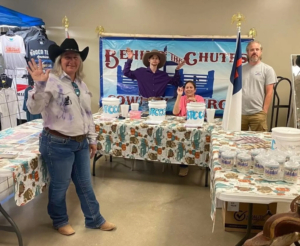
Behind the Chutes Cowboy Church plants gospel seeds

When Steve Belote moved to Amarillo in 2020 to plant and pastor Behind the Chutes Cowboy Church, his love for rodeo and Western culture inspired him to serve as a member on the fair board for the Tri-State Fair & Rodeo.

“I grew up [doing] rodeo. I was a cowboy for a long time [before] I went into the military. So, I had rodeo in me from a young age. And then when I got involved with Cowboy Church ministries, [my love for rodeo] overflowed into it,” Belote said.

Later, in Sept. 2021, Belote encouraged his congregation to get involved in reaching the rodeo attendees for Christ by setting up a booth where church members pass out “literature, handouts, [promotional materials] about the church, and give away Bibles and daily devotionals” that relate the gospel to each rodeo event.

Kay Archer, a Behind the Chutes Cowboy Church founding member, said “everything changed” when she started attending Behind the Chutes.

“I went to churches my whole life, but once I came to the cowboy church, it’s like everything changed … [and I understood that] God is open to all [people],” Archer said.

Since 2022, she has volunteered at the booth. She said each year she is surprised by how curious young people are about Jesus.

“They [say], ‘I don’t know how God is involved in this in the rodeo,’ [and] we just get to talking on that topic, and it just keeps on going and going,” Archer said. “They’re just curious. They want to know [and we get to] plant that seed.”

While his church members man the booth, Belote is behind the chutes, to “take care of the roping boxes and [other needs] back there with the ropers, and then on the other side with the bucking chutes where they have the bucking events.”

He takes that opportunity to “talk to the cowboys [about Jesus] and pray with the [rodeo] clowns.”

“It’s fun trying to put Jesus in a rodeo … [and showing cowboys that] you can worship God anywhere,” Belote said.

Behind the Chutes Cowboy Church’s booth, set up with literature, handouts, promotional materials about the church, and give away Bibles and daily devotionals for church members to engage the Tri-State Fair & Rodeo attendees with the gospel (Texas Baptists photo)

Cowboy church ‘opens up a different door’

Cowboy church ministry “opens up a different door to minister to these [cowboys] where you wouldn’t have a chance with them otherwise,” Belote said.

“You get cowboys back in the back, and they kneel down and pray [before their event]. You pray whether [you’re] religious or not,” Belote explained. “[So, by ministering to them], we’re actually making that door [to get to Jesus] wider.”

Belote recalled how a church member and high school friend, Marty, has been impacted by “the cowboy church movement.”

“I reached out, and he was just getting out of jail again, and we took him in. I got him involved with the ministry, and we got him involved in church, and for the last three years now, he’s been clean. He’s dedicated his life back to Christ,” Belote said.

“If it wasn’t for the cowboy church movement, I don’t think he’d have ever come to Christ.”

Marty volunteers at the church’s Tri-State Fair & Rodeo booth and shares his testimony with those he encounters, Belote said.

“Now, he’s got a purpose, and because he knows that Christ is with him and has helped him get through this, he’s sharing that through [our] ministry, being up there and talking to those guys while he works that booth [at the rodeo],” Belote said.

Behind the Chutes Cowboy Church member and volunteer gives Tri-State Fair & Rodeo attendee branded coffee mug (Texas Baptists photo)

Planting seeds, making disciples

Behind the Chutes has grown by having a presence at the Tri-State Fair & Rodeo, Belote said.

“I do get some locals, they come out to church because of [the booth], just to check it out because a lot of people haven’t heard about the cowboy ministry. They don’t know it’s out there,” Belote said. “So, it’s about getting the word out to people [about the ministry].”

Belote shared that another church member and volunteer has particularly contributed to growth.

“She knew a lot of barrel racers. So, with her knowing the people that she knew, she’s able to go [to the rodeo] and work that booth and share the word of Christ with [barrel racers] and bring a few to church that way,” Belote said.

The heart behind the church’s presence at the rodeo is to “go out and make disciples,” he said.

“People think Cowboy Church is just about cowboys. It’s not. It’s about Christ, and it’s about bringing everybody, no matter who they are, [to Christ],” Belote said. “We can’t save anybody, but we can sure[ly] plant a bunch of seeds.”


Celebrating Churches: FBC Olney holds groundbreaking

Celebrating Churches is a new feature column to celebrate Texas Baptist church and minister anniversaries, baptisms, ministries of local churches, and other items and events of note for BGCT-affiliated churches. To learn more about this new column and/or to submit an entry for inclusion, email news@baptiststandard.com.

The First Baptist Church of Olney held a groundbreaking on Sunday, Jan. 18, for a new educational facility. The project involves the construction of a state-of-the-art facility designed to replace aging infrastructure. Chad Edgington is senior pastor.

DaySpring Baptist Church of Waco was selected as the Christians Caring for Creation Church of the Year for 2025. Christians Caring for Creation recognizes congregations that demonstrate exceptional leadership in caring for God’s creation through faithful action, creative stewardship, and community engagement. The church’s property is now designated a National Wildlife Federation Certified Wildlife Habitat. Eric Howell is pastor.

We celebrate those churches throughout Texas and elsewhere across the United States who will serve their communities amid the anticipated hazardous winter weather this weekend. Thank you for caring for people in need in Jesus’ name.

Part of celebrating churches is helping them grow and develop. The Baptist Standard’s Equip column is full of resources for the growth and development of the church.


Racism and greed related, Baylor leader contends

A member of Baylor University’s President’s Council addressed the relationship between racism and greed during Church Under the Bridge’s Annual Racial Reconciliation Worship Service during the Martin Luther King Jr. Day weekend.

This year’s theme focused on “why the love of money is the root of all evil” and “how the church can create a new way forward.”

Malcolm Foley, author of the book The Anti-Greed Gospel and special adviser to the president for equity and campus engagement at Baylor University, spoke to a crowd under Interstate 35 in Waco, explaining race and racism is more than about identity and hate. It’s also about greed.

In his book and Sunday’s message, Foley suggested, “The strongest principality in American life is money, and race and racism are a perfect case study for understanding how that works.”

Members and guests of Church Under the Bridge in Waco. (Photo/Kendall Lyons)

“The argument is race and racism are not fundamentally issues of identity, hate, or ignorance,” Foley said. “Rather, it is about greed.”

“If a community wants to be truly anti-racist, it must be anti-greed, inspired by the Holy Spirit to resist the death-dealing and imagination-strangling wiles of racialized capitalism. Race’s historical and social purpose is to justify systems of economic exploitation. So, it can only be resisted by communities that bear witness to Christ’s call for us to share,” Foley said.

“The body of Christ is supposed to be a place where money doesn’t matter,” which makes Church Under the Bridge so pivotal for Waco and the surrounding community, Foley added.

“What is most inspiring about the Church Under the Bridge is the economic solidarity and diversity present in the congregation. In this country, the primary mode of segregation has always been along the lines of money and opportunity,” Foley said.

Modeling anti-greed

Jimmy Dorrell, pastor and founder of Church Under the Bridge and Mission Waco, said his ministry work targets the issue of need and helplessness daily by meeting people with the gospel and service.

“We’ve been doing this for 25 years and it continues to grow,” Dorrell said. “We believe the church needs to be intercultural and break down barriers. We deal with the poor and the unchurched, and we get to be creative and do things we believe are important for the kingdom.”

Dorrell said his goal was not to blame but instead empower Christians to respond to community needs.

“I believe in the church. I love the church. But I believe we lost our way in some ways,” Dorrell said. “My goal is not to blame people and point fingers but show how the church can do something about these things.”


DBU cancels classes, evacuates after receiving threats

DALLAS—Dallas Baptist University cancelled classes and evacuated after several threats were made ahead of Thursday morning’s visit by U.S. Housing and Urban Development Secretary Scott Turner.

Turner is a former DBU trustee. He also was an associate pastor at Prestonwood Baptist Church in Plano when he was nominated to be HUD secretary.

Kim Soto, assistant director of media and public relations, confirmed DBU was made aware of the unverified threats and is responding with an abundance of caution.

“Dallas Baptist University has been made aware of several unverified threats involving the campus. While there is no confirmed indication of immediate danger, university leadership is proactively assessing the situation and working closely with law enforcement officials to ensure the safety of our community,” Soto said.

“The safety and well-being of our students, faculty, and staff remain our highest priority. Additional updates will be shared as appropriate, as the situation continues to be monitored,” Soto added.

DBU issued an “emergency response” on Facebook announcing the cancelation of classes for Thursday, Jan. 22, “out of an abundance of caution.”

The Dallas Morning News reported the Dallas Police Department is investigating the reported threats.

DBU released a statement Thursday afternoon announcing the campus will reopen Friday, Jan. 23, HUD Secretary Turner’s visit will be postponed, and cooperation will continue with Dallas Police and the FBI on the investigation.

“We are grateful to share that the Dallas Police Department and the FBI worked alongside our DBU Police Department to investigate the matter, and we can now issue an all-clear. There is no active or ongoing threat to our campus community. Classes and normal University operations will resume tomorrow, Friday, Jan. 23,” DBU Communications said.

DBU, in coordination with local law enforcement officials, said no credible threat was confirmed.