Kurt Kaiser of Waco, Christian composer and pianist, died Nov. 12 after a lengthy illness. He was 83. Kaiser was born Dec. 17, 1934, in Chicago. He held degrees from the American Conservatory of Music and Northwestern University. He and his wife Pat and their family moved to Waco in 1959. They were longtime members of Seventh & James Baptist Church before they helped to start Dayspring Baptist Church in Waco. Kaiser was instrumental in the launch and growth of Word Music, where he was vice president and director of music. He composed more than 300 songs, including “Pass It On” and “Oh How He Loves You and Me.” He and Ralph Carmichael pioneered Christian youth musicals such as “Tell It Like It Is” and “Natural High” in the 1960s and 1970s. He was soloist George Beverly Shea’s accompanist at Billy Graham Evangelistic Association crusades. He received the Lifetime Achievement Award from the American Society of Composers, Authors and Publishers and was elected to the Gospel Music Hall of Fame. He was a longtime supporter of Baylor University, which all four of his children attended, and the university awarded him its Pro Ecclesia Medal of Service in 2017. He is survived by his wife Pat; four children and their spouses, Kris Kaiser Olson and Charles Olson of Waco, Kelli and Kent Kaiser of Sugar Land, Janet and Craig Kaiser of Houston, and Gail and Tim Kaiser of Coppell; 10 grandchildren; two great-grandchildren; one sister, Sigrid Schultz; and three brothers, Helmuth Kaiser, Martin Kaiser and Gerhard Kaiser.
‘The woods exploded’ amid pastor’s fire rescue
November 13, 2018
MAGALIA, Calif. (BP)—When the deadliest wildfire in state history struck the Northern California town of Magalia, Pastor Doug Crowder didn’t get to preach his Veterans Day sermon about risking death to save others, but he had the opportunity to live it.
With the fire speeding toward Magalia in the early hours of the morning Nov. 9, Crowder, pastor of Magalia Pines Baptist Church, was loading into vehicles about 30 people who had been unable to evacuate the town. They had taken shelter at the church building with him and four other church members.
“We were in the driveway planning to leave, and the entire world erupted,” Crowder said in an interview.
There had been no fire in the adjacent businesses or woods, he said. But suddenly “the woods exploded,” he said. “The Subway restaurant across the street exploded, and on all sides of us was fire.”
Church members hurried people back inside the building and prayed—watching flames shoot horizontally between buildings and listening to thousands of gallons of propane detonate at a hardware store next door.
When they emerged the next day, everything around the church had been incinerated, but “we were totally unscathed,” Crowder said.
“The fall leaves were still on the trees” on the church’s property, he added.
The Camp Fire began Nov. 8 and quickly leveled Magalia, home to about 12,000 residents 90 miles north of Sacramento, and adjacent Paradise, where about 27,000 people live. The fire claimed at least 42 lives, making it the deadliest blaze in California history. It has destroyed more than 6,700 structures, most of them homes, according to media reports. As of Nov. 11, 228 people still were missing in the affected area.
Stayed behind to help
Most Magalia and Paradise residents evacuated, but Crowder stayed behind to help the elderly, the homeless, those without enough gas for their vehicles and others who couldn’t evacuate.
With the Magalia Pines church building among the only structures in town spared, the congregation hopes to turn the tragedy into a continued ministry opportunity.
“It will be years before it’s a town again,” Crowder said. “But all through that, our church will be standing, and our church will be ministering.”
The church facility housed firefighters whose home was destroyed along with the homes of about 75 percent of the church’s 100 attendees on Sunday night, Crowder said. With assistance from the California Southern Baptist Convention’s disaster relief ministry, Magalia Pines plans to begin feeding the community and helping people clean up as soon as the public is allowed back in town, likely late this week or early next week.
“This is the worst fire impact” I have seen, said Mike Bivins, disaster relief director with the state convention, noting he has been ministering in California since the 1980s.
Disaster relief workers hoped to take supplies to Magalia, including water and generators. The goal is “to sort of be a community center as people come back in and survey their burned-out property,” Bivins said.
Charles Woods, director of missions for the local Sierra Butte Baptist Association, reported three other Southern Baptist churches have been affected by the Camp Fire, with the death of a member reported by at least one of those congregations. None of the churches has lost its building, but all the pastors’ homes were destroyed.
Still, the pastors all want “to be able to open those churches up in ministry to the people when they come back in,” Woods said. He requested prayer for families of the dead, those who lost all their possessions and the safety of individuals still missing.
Crowder said he had planned to use as an illustration in his Nov. 11 Veterans Day sermon a pin on his military beret from his Air Force pararescue days in Vietnam. The pin said, “These things we do that others may live.” Now the pin is gone along with his house, and the sermon never was preached.
“I didn’t get to preach it,” Crowder said, “but we got to live it.”
TV celebrity craftsman urges hunger fighters to persevere
November 13, 2018
WACO—Move beyond failure and reach for seemingly unattainable dreams, such as a world without hunger, TV celebrity woodworker Clint Harp urged participants at the Together at the Table Hunger and Poverty Summit.
In the process, keep in mind the importance of being willing to “get in the middle of the mess” of broken people’s lives, just like Jesus did, a pioneer in Christian community development told the summit.
Harp, who founded Harp Design Company with his wife Kelly, and Jimmy Dorrell, who founded Mission Waco/Mission World and Waco’s Church Under the Bridge with his wife Janet, spoke at the summit, sponsored by Baylor University’s Texas Hunger Initiative.
Try something ‘totally outrageous’
“Try for something that seems totally outrageous,” said Harp, who made a name for himself creating furniture from scrap lumber on the Waco-based HGTV hit Fixer Upper before launching his own Wood Work series on the DIY Network.
He described a series of failed ventures before he landed a lucrative sales job in Houston, which he quit to pursue his dream of building furniture like his grandfather.
“He was kind of a scoundrel, but he could really build things,” Harp recalled.
Without any formal training or financial backing, Harp struggled financially to start his wordworking business. He was at the point of giving up when he met Chip Gaines from Magnolia Construction at a gas station.
A few nights later at dinner, Gaines’ wife, Joanna, asked Harp if he could build a table if she sketched a general design of what she had in mind. Harp told her that would be no problem—although he had no idea how to do it or where he could build it.
Harp went to the director of Waco Habitat for Humanity, where he had volunteered, asking if the director knew about any place where he could set up a wordworking shop. Habitat had moved from its original cabinet-making shop, and the director offered to let Harp rent the 1,600-square-foot facility for $25 a month.
His initial table-building project for Chip and Joanna Gaines led to a long-term relationship with the couple that continued throughout the five-year run of their Fixer Upper TV show and continues. Today, he operates Harp Design Company a few blocks from the headquarters of Mission Waco/Mission World.
Harp insisted he fulfilled his dream not because he had all the answers, but because he “decided to take one more step” when he almost was ready to quit. He urged anti-hunger activists to persevere in their goal of eradicating hunger, saying, “The answer is often right around the corner.”
‘Get in the middle of the mess’
In the late 1970s, most people avoided the crime-ridden and poverty-stricken area around Waco’s North 15th St., but Jimmy and Janet Dorrell moved into the neighborhood with their young children as an act of Christian obedience.
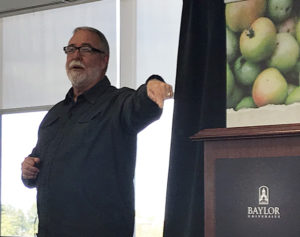
Jimmy Dorrell, who founded Mission Waco/Mission World and Waco’s Church Under the Bridge with his wife Janet, challenged participants at the Together at the Table Hunger and Poverty Summit to “get in the middle of the mess” of broken people’s lives. (Photo / Ken Camp)
“God gave us enough courage to get in the middle of the mess,” Dorrell told the summit.
For $12,000, the couple purchased and moved into a 4,000-square-foot house in an area surrounded by prostitutes and drug dealers.
“Location, location, location—it goes both ways,” Dorrell said.
They built a basketball court next to their home, inviting young people from the neighborhood to play there. That led to more structured programs for children and teenagers and ever-deepening relationships with parents.
As the Dorrells continue to learn from their neighbors, one ministry after another emerged and Mission Waco took shape. Later, as they launched programs in Mexico, Haiti and India, the international Mission World component of their ministry developed.
In the process, Mission Waco began transforming a blighted neighborhood. The ministry launched the Jubilee Theater—a community showcase for locally produced drama, poetry readings and cultural dance performances—in what had at one time been a porno theater.
Mission Waco opened the World Cup Café and Fair Trade Market to provide unemployed or underemployed workers an opportunity to learn food-service job skills, give neighborhood residents a nice place to gather and offer artisans in the developing world a place to sell their handcrafts.
Two years ago, Mission Waco opened the Jubilee Food Market, a non-profit grocery store to serve what had been a food desert, located at least two miles from the closest full-service supermarket.
“The neighborhood is becoming healthy,” Dorrell said. “It’s taken 40 years.”
Transformation takes time, and it demands the kind of commitment God demonstrated through the Incarnation, he said. Christ showed God’s love when he entered into “the middle of the mess” of humanity and willingly “walked into the pain,” he said.
“We can change the world if we learn to love people,” he said.
Redefine goals to eliminate hunger and improve lives
November 13, 2018
WACO—Hunger-fighting ministries should not allow lesser goals, such as distributing a prescribed amount of food, to substitute for truly worthy goals of eliminating hunger and helping families emerge from poverty, speakers told participants at a Baylor University conference.
A Fort Worth-based charity saw its work transformed when it shifted from serving mass numbers to adopting as its mission “ending poverty one family at a time,” Heather Reynolds, former president and chief executive officer of Catholic Charities Fort Worth, told participants at the Together at the Table Hunger and Poverty Summit.
“Invest in what works, and quit investing in what doesn’t work,” Heather Reynolds urged participants at the Together at the Table Hunger and Poverty Summit at Baylor University. (Photo / Ken Camp)
“The status quo is not enough. If we are serious about the eradication of poverty, we need to treat the root causes and not the symptoms,” said Reynolds, who recently accepted a position as managing director of the Wilson Sheehan Lab for Economic Opportunities at the University of Notre Dame. “Invest in what works, and quit investing in what doesn’t work.”
Discouraged by seeing “repeat customers” who could not escape the poverty cycle, leaders of Catholic Charities Fort Worth decided to “shake the model up,” Reynolds told participants at the summit, sponsored by Baylor University’s Texas Hunger Initiative.
Her agency began focusing on long-term, in-depth case management with working poor families to help them “live up to their God-given potential,” she explained. Catholic Charities Fort Worth piloted a new approach to client-focused case management built on relationships, designed to create “a customized path to a bigger, better future,” she said.
“Throw away preconceived notions of one-size-fits-all case management,” Reynolds stressed.
After one year, full-time employment increased by more than a fourth, she said. After two years, participants’ earnings increased by a third, she reported.
‘Be strategic’
The Fort Worth charity also piloted a “Stay the Course” program to encourage clients to advance their education at community colleges. The on-campus case management program involved weekly check-ins and bimonthly face-to-face meetings, and it required measurable progress on action steps every 21 days.
Nearly half (48.9 percent) of clients who participated were still enrolled at community college after six semesters, compared to less than one-fourth (23.8 percent) in a control group who did not receive case management services, Reynolds reported.
More than one in five (22.3 percent) completed an associate’s degree, compared to only 5.7 percent in the control group. Most significantly, among female students in the program, 31.5 percent earned their degree, compared to less than 1 percent in the control group.
“Commit for the long haul, and be strategic. Learn from your mistakes,” Reynolds advised other non-profits focused on hunger and poverty. “Believe in people’s bigger, brighter future. Ending poverty is possible.”
Don’t reach goals by ignoring hard-to-reach people
Hunger-fighting organizations can be guilty of meeting goals without making a significant impact on complex problems, Eileen Hyde, director of strategic initiatives at the Walmart Foundation, told summit participants.
While numerical goals are important, she suggested focusing on who is being served and which geographic areas or groups of people are underserved. If the objective becomes meeting a certain metric, the temptation is to reach that number the easiest way, rather than working among hard-to-reach groups of people, she noted.
“We need to be sure we are not incentivizing the failure to serve certain communities by becoming so goal-driven,” Hyde said.
In funding grants, foundations evaluate whether applicants have been intentional about designing programs “from the human perspective” and considering “equity and inclusion, both demographically and geographically,” she said.
Hyde, who previously worked with Feeding America, emphasized the importance of non-profit organizations, government agencies and private-sector businesses in serving society.
“Each sector and space has a role to play,” she said, pointing to opportunities for collaboration and partnerships.
From the perspective of a corporate-sponsored philanthropic agency, Hyde expressed the desire for honest feedback from grant applicants.
She recommended service providers ask:
What is working, and what is not working?
What problem are you trying to solve?
What is your strategy?
What are your unique capabilities?
Brownback: Religious freedom key to other freedoms
November 13, 2018
WASHINGTON (RNS)—The U. S. ambassador for international religious freedom called for renewed activism on protecting faiths around the globe as religious liberty advocates gathered Nov. 9 in the nation’s capital to mark the 20th anniversary of the International Religious Freedom Act.
“We should push, and we should push it hard,” said Sam Brownback at the event sponsored by the Religious Freedom Institute and Baylor University, which drew more than 100 people.
“You get this one right — you get religious freedom right — a lot of other freedoms bloom,” said Brownback. “You get this one wrong, a lot of other freedoms contract.”
Brownback, a former U.S. senator and governor of Kansas, was confirmed in January as the fifth U.S. ambassador-at-large for international religious freedom. Brownback was a key sponsor of the 1998 law that called for the creation of a bipartisan U.S. Commission on International Religious Freedom, charged with producing an annual report on the worst violators of religious liberty. The measure also directed the State Department to create the ambassador position Brownback holds today.
In July, Brownback and Secretary of State Mike Pompeo hosted the first-ever Ministerial to Advance Religious Freedom at the State Department in Washington, which was attended by representatives of 84 countries.
Brownback recalled with pleasure the broad range of people of faith and no faith at the ministerial.
“We all agreed we should be free to choose, free to be protected from the state or from the mobs that would infringe upon our right of religious freedom,” he said.
The State Department plans to announce a second ministerial, he said, noting nine other countries also are planning regional religious freedom summits.
Work with the next generation
Brownback said he hopes some of the “older minds” on religious freedom will work with the next generation to gain new activists for their cause.
“We need a religious freedom movement in the United States,” he said. “My thinking is it needs to go specific. It needs to start at Baylor or other university campuses.”
He proposed that such a movement could start with campus visits from speakers who have experienced persecution firsthand, such as Rohingya Muslims who have lived in refugee camps after being forced to flee Myanmar. Citing Tibetan Buddhists, Uighur Muslims and Christian house churches, all of which have suffered limitation or persecution in China, Brownback suggested others might work together and say, “Let’s free China from religious persecution.”
The daylong event featured, besides Brownback, his four predecessors as ambassador-at-large for international religious freedom. Bob Seiple was honored as the first person in that role and was joined at the gathering by John Hanford, Suzan Johnson Cook and David Saperstein.
The anniversary observance was sponsored by Baylor in Washington and the Baylor Institute for Studies of Religion along with the Religious Freedom Institute, a Washington-based organization that funds scholarship and on-the-ground action teams to advance religious freedom.
White House expands exemptions for religious objections
November 13, 2018
WASHINGTON (RNS)—The Trump administration issued new rules it says will “provide conscience protections for Americans who have a religious or moral objection to health insurance that covers contraception methods.”
The final rules follow interim regulations issued a little more than a year ago by the Departments of Health and Human Services, Labor and Treasury that aimed to protect Americans with such objections from paying for health insurance that provided birth control. The departments claim a “small fraction” of the nation’s 165 million women will be affected.
The rules counter the efforts by the Obama administration to provide access to free contraception through a provision of the Affordable Care Act. Those efforts were opposed by many critics of the previous administration who now provide a base of support for the current one.
“The first of today’s final rules provides an exemption from the contraceptive coverage mandate to entities that object to services covered by the mandate on the basis of sincerely held religious beliefs,” HHS said in a news release issued Nov. 7.
“The second final rule provides protections to nonprofit organizations and small businesses that have non-religious moral convictions opposing services covered by the mandate.”
On the National Day of Prayer in May 2017, President Trump signed an executive order that said the government would address “conscience-based objections” to the health care mandate. The order, which drew mixed reviews, called for the departments issuing the rules to consider taking the actions they took Wednesday.
Little Sisters of the Poor welcome change
The leader of Little Sisters of the Poor, one of the religious groups that opposed the mandate, welcomed the administration’s new regulations.
“Today, we are so grateful that the federal government has provided a way for us to continue to serve the elderly poor and stay true to our Catholic faith,” Loraine Marie Maguire said in a reaction tweeted by Becket, the law firm that has defended her religious order in court.
“We pray that lawsuits by the state governments that attempt to prevent this will soon be over and that we can finally serve the elderly poor in peace.”
The administration noted the new rules do not provide exemptions for governmental agencies or for publicly traded businesses.
The announcement, issued the day after the midterm elections, noted government programs that provide subsidized or free contraceptive coverage to poor women, such as through community health centers, are not included in the exemptions.
But the exemptions do apply to several other groups that may object to the contraception mandate.
“The religious and moral exemptions provided by these rules also apply to institutions of education, issuers, and individuals,” HHS said.
The new rules do not prohibit employers from covering contraceptives, HHS said.
The departments making the announcement estimated that the exemptions will affect “no more than approximately 200 employers with religious or moral objections.” A fact sheet estimates the exemptions may affect about 6,400 women and “in no case will they impact more than 127,000 women, which the Departments suggest is far more than will actually be impacted.”
The announcement said tens of millions of people are already exempted from the contraception mandate because it does not apply to plans insured through grandfathered coverage that existed prior to the law.
The rules will take effect 60 days after they are published in the Federal Register.
Mixed reaction
Americans United for Separation of Church and State said the administration’s actions enable employers, including universities, to deny religious freedom as well as access to contraception coverage.
“This administration is weaponizing ‘religious freedom’ to justify hurting the millions of women who depend on contraception for their health and equality,” said Americans United President and CEO Rachel Laser. “Bosses shouldn’t get to impose their religious beliefs on their employees, nor should universities on their students.”
Russell Moore, president of the Southern Baptist Convention Ethics & Religious Liberty Commission called the exemptions “the long-awaited conclusion to the crucial achievement of preserving religious liberty from an unlawful government overreach.”
“The contraceptive mandate, and subsequent four-year delay after the Supreme Court’s ruling, revealed the audacity of a state that believed it could annex the human conscience by asking citizens to choose between obedience to God and compliance with the regulatory state,” Moore said. “I am thankful this effort finally ends with religious and moral exemptions issued by the administration.”
GuideStone Financial welcomes “the new rules and appreciates this administration’s desire to protect religious organizations from having to choose between their deeply held convictions or crippling penalties,” said Timothy Head, the SBC entity’s executive officer for denominational and public relations services.
GuideStone and two of the ministries it represents already had gained a final, favorable verdict in court. In July, a federal judge in Oklahoma issued a judgment in favor of GuideStone and its plaintiffs—Truett McConnell University, a Georgia Baptist institution, and Reaching Souls International, an Oklahoma mission-sending entity.
With additional reporting by Baptist Press.
Baptists protest religious liberty restrictions in Bulgaria
November 13, 2018
Bulgarian Baptists participated in a peaceful protest and Baptist World Alliance leaders appealed to Bulgaria’s prime minister after the nation’s parliament gave initial approval to a law significantly restricting religious freedom.
The Bulgarian parliament approved the legislation on first reading in early October, setting a Nov. 16 deadline for receiving public comment before a final vote.
Bulgarian Parliament House in Sofia (Photo / Dennis Jarvis / CC BY-SA 2.0)
Leaders of the Baptist Union of Bulgaria joined in “an open meeting and a peaceful prayerful demonstration” after Sunday worship services Nov. 11, with the intention of marching from the Bulgarian Parliament to the National Palace of Culture in Sofia.
In a Nov. 8 letter to Prime Minister Boyko Borissov, BWA General Secretary Elijah Brown and European Baptist Federation General Secretary Anthony Peck expressed serious concern about amendments to Bulgaria’s Law on Religious Communities, combined into what Bulgarian lawmakers termed the “joint law.” Brown and Peck asked that the law “be withdrawn prior to second reading.”
“We write to express our concern that the implementation of this law could lead to unintended restrictions on religious freedom and the direct persecution of churches and individuals of faith,” the letter stated.
The legislation grants Eastern Orthodox and Muslims believers the exclusive right to train clergy and operate religious schools; restricts religious activity only to designated buildings; gives legal religious status only to groups with more than 300 adherents; places limitations on preaching and teaching; restricts missionary activity; and limits foreign donations to religious groups.
“These efforts to interfere with theological education, restrict missionary and worship activity, and control international donations in fact wrongly extends government power into the internal life of Bulgarian religious communities,” the letter stated.
“No state, we believe, should be in a position to control the training and activities of ecclesiastic ministers, nor should a state favor one faith expression over another. The Bulgarian constitution rightly guarantees freedom of religion; we urge that this principle be adhered to as the right of all the Bulgarian people.”
In a Facebook post, Brown urged Baptists internationally to pray for a reversal and write the Bulgarian embassy in their own countries.
Bulgarian parliament set to severely restrict religious liberty
November 13, 2018
Baptist World Alliance leaders appealed to Bulgaria’s prime minister after the nation’s parliament gave initial approval to a law significantly restricting religious freedom.
The Bulgarian parliament approved the legislation on first reading in early October, setting a Nov. 16 deadline for receiving public comment before a final vote.
In a Nov. 8 letter to Prime Minister Boyko Borissov, BWA General Secretary Elijah Brown and European Baptist Federation General Secretary Anthony Peck expressed serious concern about amendments to Bulgaria’s Law on Religious Communities, combined into what Bulgarian lawmakers termed the “joint law.” Brown and Peck asked that the law “be withdrawn prior to second reading.”
“We write to express our concern that the implementation of this law could lead to unintended restrictions on religious freedom and the direct persecution of churches and individuals of faith,” the letter stated.
The legislation grants Eastern Orthodox and Muslims believers the exclusive right to train clergy and operate religious schools; restricts religious activity only to designated buildings; gives legal religious status only to groups with more than 300 adherents; places limitations on preaching and teaching; restricts missionary activity; and limits foreign donations to religious groups.
“These efforts to interfere with theological education, restrict missionary and worship activity, and control international donations in fact wrongly extends government power into the internal life of Bulgarian religious communities,” the letter stated.
“No state, we believe, should be in a position to control the training and activities of ecclesiastic ministers, nor should a state favor one faith expression over another. The Bulgarian constitution rightly guarantees freedom of religion; we urge that this principle be adhered to as the right of all the Bulgarian people.”
In a Facebook post, Brown urged Baptists internationally to pray for a reversal and write the Bulgarian embassy in their own countries.
HPU eliminates several programs and faculty positions
November 13, 2018
BROWNWOOD—In response to “decreased resources and other difficult trends,” Howard Payne University’s board of trustees unanimously voted to eliminate 10 “underperforming” major or minor courses of study, reconfigure seven others, and cut 12 full-time faculty positions and one full-time administrative support position.
“While the university’s long-term financial standing is stable due to a strong endowment and prudent resource management as demonstrated by the board of trustees, in recent years the annual operating budget has been strained due to a range of underpopulated courses and decreased external scholarship assistance for students,” according to an official HPU statement.
The Nov. 2 vote by the HPU trustees followed similar cost-cutting action last month by the governing board of Hardin-Simmons University, another university affiliated with the Baptist General Convention of Texas.
Eliminated academic areas of concentration include biblical languages and cross-cultural studies in the School of Christian Studies and church music and worship in the School of Music and Fine Arts. Those areas will be merged with majors in Bible, Christian education and the Bachelor of Arts in Music degree, respectively.
Other majors or minors that will be dropped or merged with other programs include Spanish, art, journalism, music performance, piano pedagogy, forensic science and the Master of Science in Criminal Justice degree.
Other academic areas facing realignment are the Master of Business Administration and Master of Education in Sport and Wellness Leadership degree programs, along with theater, computer information systems, biology, chemistry and engineering science.
“By concentrating these actions on program areas of low enrollment, the actions were designed to be as minimally disruptive as possible while achieving needed budget reductions,” said Kyle Mize, HPU assistant vice president for communications, who noted the university has about a $20 million budget.
Impact on personnel
Not all of the academic program closures demanded personnel changes, but 12 faculty posts were eliminated, including two currently unfilled positions. HPU will provide “transition assistance” to personnel who will be leaving the university.
“This is a very painful process,” said Paul Armes, HPU interim president. “These changes are not a negative reflection on any individual employee or academic area but are simply realities we must face if we are to be responsible in our budgeting.
“The board looked at several options. In the end, the trustees approved the most compassionate and minimalist course they felt that they could. From my perspective, their action was careful, considered and generous.”
The cutbacks followed “a lengthy evaluation process prompted by decreased resources and other difficult trends in faith-based education,” according to a statement released by the university.
Not alone
“While there may be little comfort in this reality, our challenges are not unique,” Armes said. “There is simply no way for tuition-driven colleges to live beyond their means. That trajectory must change if these institutions are to move forward positively.”
In fact, the board of Hardin-Simmons University in Abilene—a sister Texas Baptist educational institution—voted to cut personnel, close four Logsdon Seminary extension campuses and eliminate several other academic programs. At least 18 tenured faculty at Hardin-Simmons expressed interest in a buyout offer, and 22 staff have been offered severance packages.
In making the announcement, HSU President Eric Bruntmyer noted that “some external revenue sources are evaporating,” pointing particularly to Cooperative Program assistance through the BGCT and funds made available from the Texas Equalization Grant, a state program that provides eligible students financial assistance to help them attend private nonprofit universities.
The BGCT is eliminating pro-rata funding for all partnering universities due to a 6 percent decrease in Cooperative Program receipts. In September, the BGCT Executive Board approved a 2019 Cooperative Program budget based on $1 million less than this year’s spending plan.
“Decreased funding from the BGCT is a factor in HPU’s ongoing planning but had no bearing on the decision to make these program adjustments,” Mize said.
“Regarding any future changes to the curriculum, HPU continually evaluates its programs and services for maximum effectiveness and will, from time to time, make changes. However, no additional changes are anticipated in the near future.”
Jeremy Everett: Shared power produces sustainable solutions
November 13, 2018
WACO—Confrontation and shaming may produce temporary victories, but shared power built on mutual trust leads to sustainable solutions, the founding executive director of the Texas Hunger Initiative said.
“Ultimately, if we intend to build a system that works for all Americans regardless of their socio-economic level, we have no choice but to find our shared power,” Jeremy Everett told participants at the Together at the Table Hunger and Poverty Summit at Baylor University.
“I am convinced the uniting power and prophetic witness of sowing seeds of mutual trust, collaboration and commitment are critical to cultivating hunger-free communities in our time of contention.”
Everett reflected on what he called “the most erratic year” he could remember in his lifetime.
“Racism, classism, sexism and immigration have prominently been featured each day via social media, on news outlets or by religious leaders. What we have heard often were lies after lies—spinning stories to the point where we were all left scratching our heads as to what actually happened or hunkering down in fear,” he said.
“Impoverished immigrants fleeing violence in Central America have been front and center in our political winner-take-all battle.”
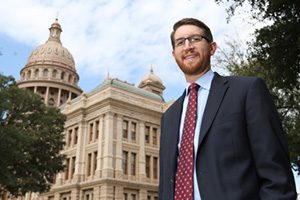
Jeremy Everett
Everett contrasted that portrayal with his personal encounter with an elderly group of undocumented immigrants he met in a citizenship class when he served on the National Commission on Hunger. Most had lived and worked in the United States for much of their lives. Some had served in the military.
“They were not rapists, murderers or drug smugglers,” he said. “They had been business owners, welders and car mechanics, and their one wish was to die as Americans.”
Beyond that desire for U.S. citizenship, the other characteristic they all shared was that they experienced hunger, he recalled. Some had been injured on jobs but did not receive workman’s compensation because they were not U.S. citizens. Some had worked as field laborers or custodians, and their jobs did not provide retirement benefits.
Who are the hungry in the United States?
They are not alone. More than 40 million people in the United States live in poverty, including 13 million children and 4.6 million senior adults, he noted. Not coincidentally, more than 40 million Americans are considered food-insecure, including 13 million children. And more than 40 million Americans lack access to healthcare.
“Sometimes, we act as if it is a different group of 40 million Americans experiencing hunger than the 40 million without healthcare or who live in poverty. But that is not the case,” he said, “It is the same family struggling with all of these problems.
“We have scapegoated the poor to justify not living up to our calling. To scapegoat and push the poor out of our minds, we’ve had to dehumanize them. We have worked hard to classify the poor as lazy, to divide them as ‘deserving’ or ‘undeserving.’ …Thus, it becomes morally defensible for some children to have an abundance of food while others have nothing in the fridge. We can just blame the parents for being lazy or an illegal.”
Everett identified three characteristics of Americans who experience hunger:
Underemployment. Rather than living with chronic daily hunger, most people in the United States who are hungry experience it near the end of a pay period, because they run out of groceries and cannot afford more.
“Basically, many people who are experiencing hunger have jobs and are working, but their jobs don’t pay enough to cover all of their living expenses—even when they’re putting together as many jobs as they can to try and make ends meet,” he said.
Lack of education. “Hunger and education can quickly become a vicious cycle,” he observed. “A person needs to have an education in order to have the best chance of not living in poverty, but living in poverty is a detriment to getting an education.”
Race and ethnicity. “People of color are almost twice as likely to experience hunger in our nation,” he said.
“Whether or not we want to admit it, we have not healed our wounds of racism. We have had our moments of triage—abolishing slavery and the Civil Rights Movement—which were critical steps to slowing the hemorrhaging flow of racist hatred, bigotry and indifference that were pervasive in our history. But we have not taken steps toward healing on a national level.”
Another consistent characteristic of many people who experience hunger is they must “make trade-offs each month,” choosing to skip meals and cut corners on groceries in order to pay other bills.
“If people don’t pay their electricity bill, their power is cut off. If they don’t pay rent, they are kicked out of their home. But if they don’t buy food, they’ll just be hungry,” he said.
“Yes, not having food leads to less productivity at work and school, increases mental health decline and causes shame, but you keep your home. So, people make tradeoffs to get by.”
Methods matter
While the poor need maximized access to public and private assistance programs, Everett insisted the way positive change is accomplished is as important as achieving success in reaching goals.
Since the poor—and those who advocate for them—lack the power that accompanies wealth or prominence in society, they often have secured power through organized action. Many times, that has taken the form of confrontation and publicly shaming people who hold decision-making power, he asserted.
However, victories gained by confrontation and shaming rather than by building consensus are limited, he insisted.
“With that approach, people who are not already on board are rarely converted to the cause of justice,” he said. “Shaming, in essence, implies that it has already been decided who is for and who is against the cause, setting up a self-righteous and self-defeating paradigm rarely resulting in compromise, much less finding common ground. And shaming almost always ensures powerful enemies to any cause the organizers later take on.”
Everett recommended a different approach—shared power earned by cultivating mutual trust.
“This is how sustainable solutions take shape, by creating shared power rather than shaming power,” he said.
“If we are going to change our country for the better, ultimately we need to say, ‘Enough is enough,’ to politics as a winner-take-all battle and instead come together to give voice to all Americans.”
Do the slow, hard work of building coalitions
Building coalitions is essential to addressing the problem of hunger, he asserted.
“I know it is cumbersome, slow and occasionally bureaucratic, but shared power leads to sustainable solutions,” he said.
“What history teaches us is how we go about change should reflect the integrity of our desired outcome. When we only channel self-righteous indignation and anger and belittle those with whom we disagree, even when they are perpetuating an injustice, we do not win in the end.”
Rather than blaming and shaming, instead of dehumanizing and denigrating, Everett called on Christians to recognize the way Christ identified with the poor and vulnerable in Matthew 25 and to “not only see the hungry as humans, but to see the hungry as Jesus.”
Bautistas ven a caravana como una oportunidad de ministerio
November 13, 2018
Mientras que algunos políticos en Estados Unidos han dicho que la caravana que viene de Centroamérica debe de ser considerada una “invasión,” algunos bautistas en México y en el sur de Texas ven la situación como una oportunidad para ministrar.
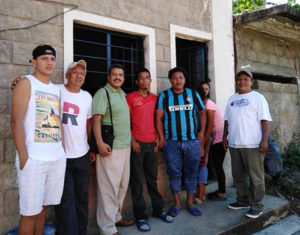
Natanael Ramírez Villegas (tercero desde la izquierda), pastor de la Primera Iglesia Bautista Bethel en Santo Domingo, es retratado con un grupo de inmigrantes de Centroamérica (Foto cortesía de Natanael Ramírez)
Natanael Ramírez Villegas, pastor de la Primera Iglesia Bautista Bethel en Santo Domingo, una ciudad cerca de la frontera de México con Guatemala, empezó con la idea de ministrar a migrantes en diciembre del año pasado.
Para finales de mayo de este año, su congregación y otras iglesias de la Convención Regional Bautista Costa de Chiapas ya ofrecían comida y cuidado espiritual a los inmigrantes que pasaban por Tapachula. Las iglesias se enfocaron en dar de lo poco que tenían a mujeres, madres con niños, ancianos y a personas con discapacidades, Ramírez explicó.
“Todo comenzó con el llamado que Jesús nos dio de ir a la naciones, pero ahora ellos son los que vienen a nosotros,” él dijo.
El ministrar a inmigrantes le ha abierto los ojos a las iglesias que están participando, Ramírez mencionó. Recordó las palabras de una niña que dijo, “ellos están pasando frente a nosotros, es el momento de compartir el evangelio y darles algo para el camino.”
El miedo a la violencia provoca migración
Aunque su interacción con inmigrantes es breve, Ramírez dijo haber escuchado y visto por qué las personas dejan sus hogares.
Familias centroamericanas hacen un largo viaje hacia el norte para escapar la violencia y la pobreza en sus tierras. (Foto cortesía de Natanael Ramírez)
“Conocí a una joven que había hecho planes de dejar su país con su hermano, pero el día que la conocí ella se acababa de enterar que su hermano no había podido salir de Honduras porque una pandilla lo había matado,” Ramírez dijo.
Guerras, narcoviolencia, cambio climático, persecución y la falta de oportunidades son factores por los que familias dejan sus países natales, dijo Danny Carroll, profesor de Antiguo Testamento en Wheaton College y autor del libro Christians at the Border: Immigration, the Church, and the Bible.
“Necesitamos poner esto en una perspectiva global porque la misma desesperación que vemos salir de Honduras, es la que también estamos viendo salir de Sudan o Siria,” Carroll dijo.
La narcoviolencia se ha filtrado a todos los aspectos sociales, e igual como pasó en Colombia, los gobiernos de Honduras y Guatemala han sido infiltrados por los carteles, Carroll comentó.
Las familias están dispuestas a tomar medidas desesperadas por esas razones y elijen caminar largas distancia, él explicó.
“Lo que están haciendo es escapar la violencia de las áreas de bajos recursos, donde las pandillas se alojan, y tratan de preservar las vidas de sus hijos,” Carroll dijo.
El cuidado de otros
Aunque las iglesias bautistas en México tienen algunas necesidades, Ramírez dijo que esas no les deben evitar cuidar de aquellos que huyen por sus vidas.
En México, las iglesias bautistas dan alimentos a inmigrantes que van de paso a Estados Unidos. (Foto cortesía de Natanael Ramírez)
“Tenemos necesidades, pero también podemos dar algo de ayuda,” él dijo. “Al menos podemos ayudar en lo espiritual.”
Las situaciones migratorias han cambiado la manera en que las iglesias ven al mundo, Ramírez explicó. Ahora, las iglesias en la convención regional de la costa de Chiapas quieren crear una organización para continuar permanentemente lo que están haciendo con inmigrantes, él dijo.
El Proyecto de Siembra de Iglesia Inmigrante, como le han llamado a su ministerio, continuará alimentando a inmigrantes, y crecerá para ofrecer un lugar para descansar y tomar un baño.
Para ayudar a aquellos que no pueden continuar, las iglesias pueden ayudarles a encontrar empleo para que se puedan quedar a vivir en el área, Ramírez dijo.
“Dios nos llama a usar lo que tenemos para ayudar a otros,” él dijo
Pastor de Laredo trabaja con bautistas en México
Antes de las caravanas, el pastor Lorenzo Ortiz de la Iglesia Bautista Emanuel en Laredo, ya trabajaba con inmigrantes que cruzaban de Nuevo Laredo a Texas.
Su ministerio empezó con cubanos que venían buscando asilo. Después cambio a incluir inmigrantes de Venezuela y África, y ahora podría pronto incluir a centroamericanos que buscan asilo en Estados Unidos.
Lorenzo Ortiz, pastor de la Iglesia Bautista Emanuel en Laredo, cree que Dios lo ha llamado a ministrar a inmigrantes y a los que han sido deportados. (Foto / Isa Torres)
Ortiz habló con Adolfo Salazar, presidente de la Convención Nacional Bautista de México (CNBM), y sugirió que las iglesias bautistas en México cooperaran para dar ayuda a los que están cruzando México para inmigrar a Estados Unidos.
CNBM saco un comunicado en Facebook donde llamó a las iglesias a compartir el evangelio con inmigrantes—quienes ahora son mayormente de Centroamérica—y también ayudarles con artículos de ropa y calzado, sombrillas, paraguas, artículos de primeros auxilios y medicina básica.
La convención también animó a las iglesias a usar sus edificios para preparar y dar alimentos saludables a inmigrantes. Para proveer de ayuda espiritual, la convención recomendó que las iglesias también tuvieran biblias disponibles para ellos.
“A Dios pertenece el poder para mover las fronteras del mundo y acercar las naciones al conocimiento del evangelio, no desaprovechemos esta gran oportunidad de compartir el mensaje de salvación en Cristo,” decía el comunicado de la convención.
Las convenciones bautistas regionales del norte y sur de México se están movilizando a ministrar a inmigrantes, Ortiz dijo. Aun así, Ortiz añadió, más iglesias y ministerios deben de unirse a este trabajo porque “esto no le pertenece solo a una iglesia.”
“Esto requiere de todo el cuerpo cristiano,” Ortiz dijo.
Un largo proceso
La caravana está por lo menos a 700 millas de Nuevo Laredo, pero Ortiz ya está comunicándose con los gobiernos de la ciudad para determinar lo que las iglesias pueden hacer para ayudar. El gobierno va a proveer alojamiento para los inmigrantes, mientras que las iglesias ayudarán con alimentación y algunos otros recursos, él dijo.
Jacinta Ma, directora de política y defensa de National Immigration Forum, explicó que los inmigrantes han creado un sistema informal en el que forman una línea y escriben los nombres de cada individuo junto a sus familiares. Cada nombre recibe un número y entonces ellos pueden ir y buscar un lugar donde quedarse cerca de la frontera, ella dijo. Cuando su número es llamado, ellos tienen que estar listos para presentarse con un oficial de Aduanas y Protección Fronteriza (CBP por sus siglas en ingles).
Miembros de la caravana de centroamericano han llegado a la Ciudad de México. (Foto cortesía de Natanael Ramírez)
Un oficial de la protección fronteriza hará una prueba para ver quienes califican para buscar asilo. Las pruebas buscan encontrar quienes verdaderamente estarían en peligro si regresaran a sus países.
“Si pasan esa primera prueba con los agentes fronterizos, entonces se les asignará un agente del Servicio de Ciudadanía e Inmigración de Estados Unidos (USCIS por sus siglas en ingles), quien hará otro examen para determinar si son elegibles para recibir asilo,” dijo Ma.
El proceso puede tomar de seis meses a dos años, Ma mencionó. Cerca de 92,000 personas fueron parte del examen para determinar si se les daba asilo el año pasado. Entre el 60 y el 80 por ciento de ellos fueron referidos con agentes de USCIS, pero solo el 20 por ciento de ellos recibieron asilo, Ma explicó.
La llegada de inmigrantes a la frontera—una oportunidad para que se les ministre mientras esperen ahí—es parte del trabajo que Dios está haciendo, dijo Ortiz. Más gente ha escuchado y recibido a Cristo ahí que en las iglesias o en los otros ministerios de las iglesias, él dijo.
“No solo como convenciones, iglesias, o ministerios, pero también como individuos hemos sido transformados al ver como Dios cambia vidas por medio de este fenómeno migratorio,” Ortiz dijo.
Si algunas personas de la caravana logan entrar a Estados Unidos, Ortiz también es parte de una coalición de iglesias que se está preparando para recibirlos en el sur de Texas.
IMB taps Paul Chitwood as presidential candidate
November 13, 2018
RICHMOND, Va. (BP)—The International Mission Board trustees’ presidential search committee announced it will recommend Paul Chitwood, 48, to be elected as the 173-year-old entity’s 13th president.
The vote to elect Chitwood is scheduled for the Nov. 15 plenary session during the IMB board meeting in Richmond.
Paul Chitwood
A former chairman of IMB’s board of trustees, Chitwood is executive director of the Kentucky Baptist Convention, where he has served since 2011.
For 18 years, Chitwood was pastor of Kentucky churches of varying sizes—First Baptist in Mount Washington (2003-11), where he is a member; First Baptist in Somerset (1999-2003); First Baptist Church in Owenton (1995-99); and South Fork Baptist Church in Owenton (1993-95). As a pastor, his churches averaged giving 18.5 percent through the Cooperative Program unified budget.
He was chairman of the IMB trustees from 2008-10, and he served on the board of trustees from 2002 to 2010. His overseas short-term mission involvement includes work in Brazil, Peru, India, China, South Africa, Niger, Nigeria, Senegal, Kenya, England, Spain, Germany and Haiti.
“A decade ago, I had the privilege of working with IMB President Jerry Rankin, Clyde Meador, Tom Elliff, and David Steverson to pen the IMB’s vision statement,” Chitwood said.
“While the wording was and is important, it simply captures the vision God has graciously given us in his word. It’s his vision, and the culmination of the work that he has been doing through his church and, since 1845, through Southern Baptists. Our vision is unchanged: a multitude from every language, people, tribe and nation knowing and worshiping our Lord Jesus Christ.”
‘We need him’
Rick Dunbar of Madison, Miss., chair of the IMB board of trustees and a member of the search committee, said it is obvious God has been preparing Chitwood for a leadership role at the IMB.
“Examine his work history, denominational experience, trustee background, educational history, leadership and team-building history; hear his heart for missions and the Lord, to be shared with the entire world; listen to his wife as she eagerly anticipates this role—and I think you will agree: We need him,” Dunbar said.
The more the search committee talked, prayed and thought about Chitwood, “the more the entire committee has come together united in knowing he is God’s choice for our next president,” Dunbar continued. “He has the biblical foundation, a heart for missions and a proven track record of leading a big organization.”
Chuck Pourciau, chair of the presidential search committee and senior pastor of Broadmoor Baptist Church in Shreveport, La., echoed Dunbar’s endorsement.
“Little did the presidential search committee anticipate the meandering path that would be this search,” Pourciau said. “There were many twists and turns, but our commitment remained singular. It didn’t matter what path we took as long as we ended up in the right place. The right place is to locate and recommend to the trustees the person God had already chosen as the next leader of the International Mission Board.
“We are unanimously agreed that we have done just that in recommending to the IMB trustees Dr. Paul Chitwood as our next president. Dr. Chitwood is uniquely qualified to lead us into the next era of Southern Baptists reaching the nations. His missions heart and leadership acumen will serve us well in the years to come. I am eager to watch God work through him as he leads our international missions efforts.”
Led Kentucky Baptists to give more to international missions
As executive director of the Kentucky Baptist Convention, Chitwood led the organization to a greater focus on strengthening local churches, planting new congregations, evangelizing the unchurched, and shifting more funding to international missions, the search committee noted.
Chitwood identified the need to move more Cooperative Program funds from state mission budgets to the Southern Baptist Convention budget and, ultimately, to the IMB budget. Last year, the convention reported more churches planted and growth in the number of Kentucky Baptists involved in volunteer mission work in Kentucky and around the world.
In consideration of leading the IMB, Chitwood has stated he is committed to the organization’s next executive vice president being someone with significant mission-field experience.
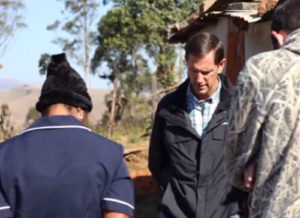
Paul Chitwood and other short-term missionaries in South Africa pray for a terminally ill AIDS patient in 2015. The trip was conducted through a partnership between the Kentucky Baptist Convention and Baptist Global Response, a primary ministry partner of the IMB. (Kentucky Baptist Convention photo)
Chitwood has traveled extensively overseas in support of the IMB and worked alongside IMB missionaries, Dunbar said, which gives him a view into the missionary life and task but also makes him realize how much he will depend on men and women who have long-term overseas experience.
Duane Ostem, an IMB field leader from Asia who served on the committee to provide a field-based perspective, said he is “very happy to join with the rest of the presidential search committee in recommending that Dr. Paul Chitwood be approved as our next IMB president.”
“Dr. Chitwood is passionate about missions,” Ostem said. “He understands the workings of the IMB. He loves missionaries. His humble but strong leadership style will enable him to work well with our Richmond personnel, our field missionaries, and our Southern Baptist churches. His vision for the future will inspire and guide the IMB as we seek to make disciples of all nations.”
At Chitwood’s request, pending trustee approval, Clyde Meador will remain in the president’s office as interim executive vice president during the transition. Meador has served as IMB interim president since Sept. 27.
“I have known Paul for 16 years and have consistently been impressed by and thankful for his commitment to the spread of the gospel to the ends of the earth, as well as his excellent leadership skills,” Meador said. “When Paul was serving as chairman of IMB trustees, he became an integral part of the leadership team, even to the point of having a significant part in crafting our vision statement that continues as a guide even today.
“Paul’s keen insight, leadership strength, commitment to the Great Commission, humility, and understanding of the lost world that lies before us, as well as unusual knowledge of the SBC, all combine to make him the ideal next president of IMB.”
Track record of leadership
August Boto, interim president of the SBC Executive Committee, noted, “The first thing I did upon hearing the news was smile. I can think of no subset of Southern Baptists that should not be pleased to hear of Dr. Chitwood’s nomination. …
“Paul loves missions. He has led out in support of the Cooperative Program as the most effective means of mobilizing our churches. His wide range of experiences has equipped him to see the value of every facet of Southern Baptist ministry and missions, from local church, through the association, and on to the state and national levels. I believe he can be confident of his convention’s support and continual prayer, for we can certainly be confident of his for us.”
Chitwood was Kentucky Baptist Convention president in 2005-06; first vice president in 2003-04; and president of the state pastors’ conference in 2002. He was chairman of the SBC Committee on Nominations in 2015-16. He also has served on several other state mission committees and in associational leadership committees. He has served as a trustee of Crossings Ministries, Sunrise Children’s Services, Kentucky Baptist Foundation, Oneida Baptist Institute, Baptist Haiti Mission and Bridges to Nigeria.
He is an adjunct professor of leadership at Southern Baptist Theological Seminary. He previously has been an assistant professor of missions and evangelism at Southern Baptist Theological Seminary, University of the Cumberlands and Boyce College.
A native of Jellico, Tenn., Chitwood is a 1992 graduate of Cumberland College (now University of the Cumberlands), where he has served as a trustee. He earned a Master of Divinity degree from Southern Baptist Theological Seminary in 1995 and a doctorate from the seminary in 2001. He currently is pursuing a master’s degree in nonprofit administration from the Mendoza College of Business at the University of Notre Dame.
Chitwood and his wife Michelle have been married 25 years. Their family includes son Daniel, 22, and daughter-in-law Derrika; daughter Anna, 20; daughter Cai, 12; and a foster daughter, age 6, who they hope will soon join the family through adoption.
 Kurt Kaiser of Waco, Christian composer and pianist, died Nov. 12 after a lengthy illness. He was 83. Kaiser was born Dec. 17, 1934, in Chicago. He held degrees from the American Conservatory of Music and Northwestern University. He and his wife Pat and their family moved to Waco in 1959. They were longtime members of Seventh & James Baptist Church before they helped to start Dayspring Baptist Church in Waco. Kaiser was instrumental in the launch and growth of Word Music, where he was vice president and director of music. He composed more than 300 songs, including “Pass It On” and “Oh How He Loves You and Me.” He and Ralph Carmichael pioneered Christian youth musicals such as “Tell It Like It Is” and “Natural High” in the 1960s and 1970s. He was soloist George Beverly Shea’s accompanist at Billy Graham Evangelistic Association crusades. He received the Lifetime Achievement Award from the American Society of Composers, Authors and Publishers and was elected to the Gospel Music Hall of Fame. He was a longtime supporter of Baylor University, which all four of his children attended, and the university awarded him its Pro Ecclesia Medal of Service in 2017. He is survived by his wife Pat; four children and their spouses, Kris Kaiser Olson and Charles Olson of Waco, Kelli and Kent Kaiser of Sugar Land, Janet and Craig Kaiser of Houston, and Gail and Tim Kaiser of Coppell; 10 grandchildren; two great-grandchildren; one sister, Sigrid Schultz; and three brothers, Helmuth Kaiser, Martin Kaiser and Gerhard Kaiser.