Hunger and Poverty Summit plants seeds of hope

WACO—One might expect somberness to describe the overall tenor of a conference built around solving a global crisis of hunger and poverty, but this year’s summit orbited a theology of hope.

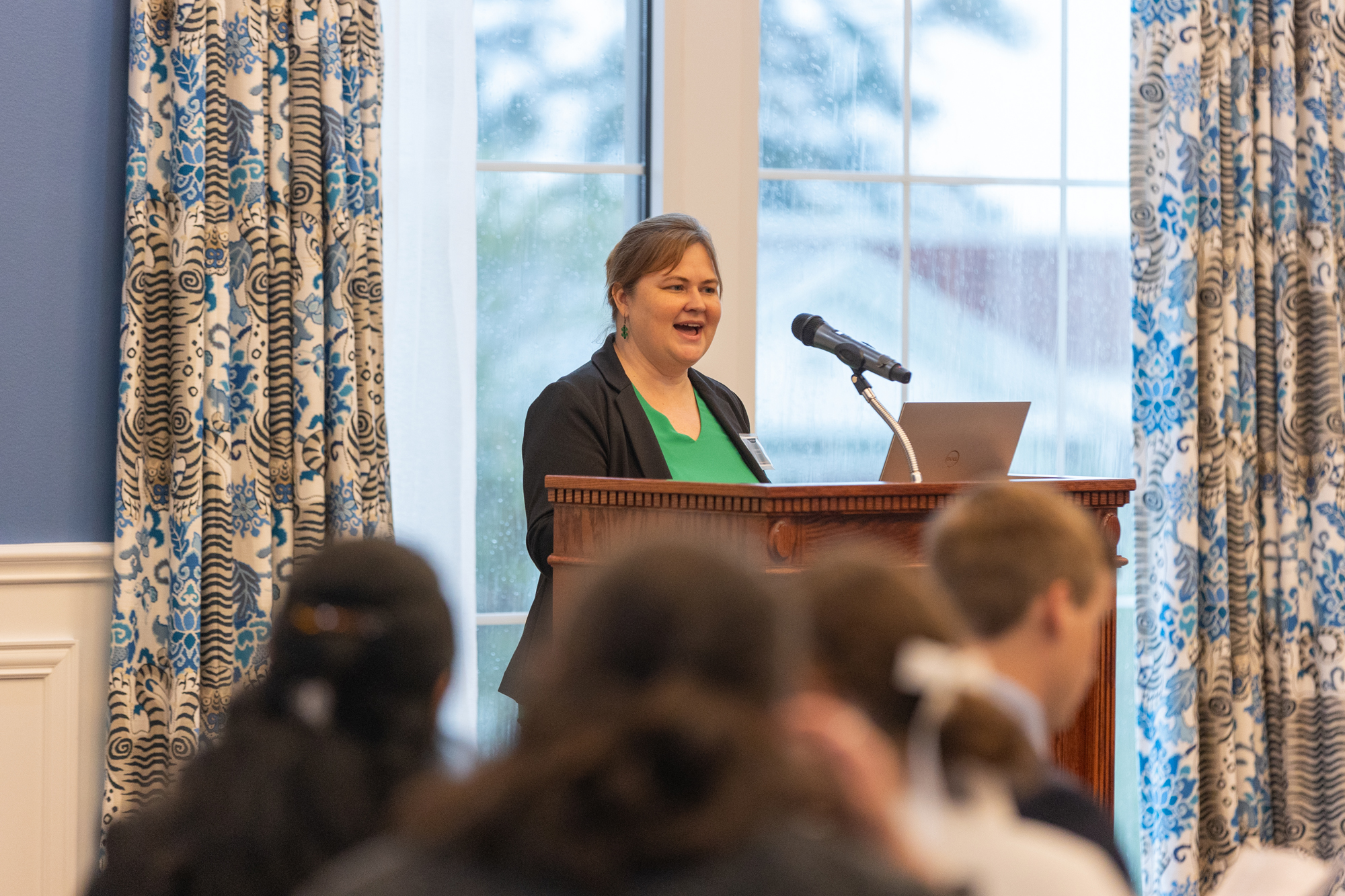
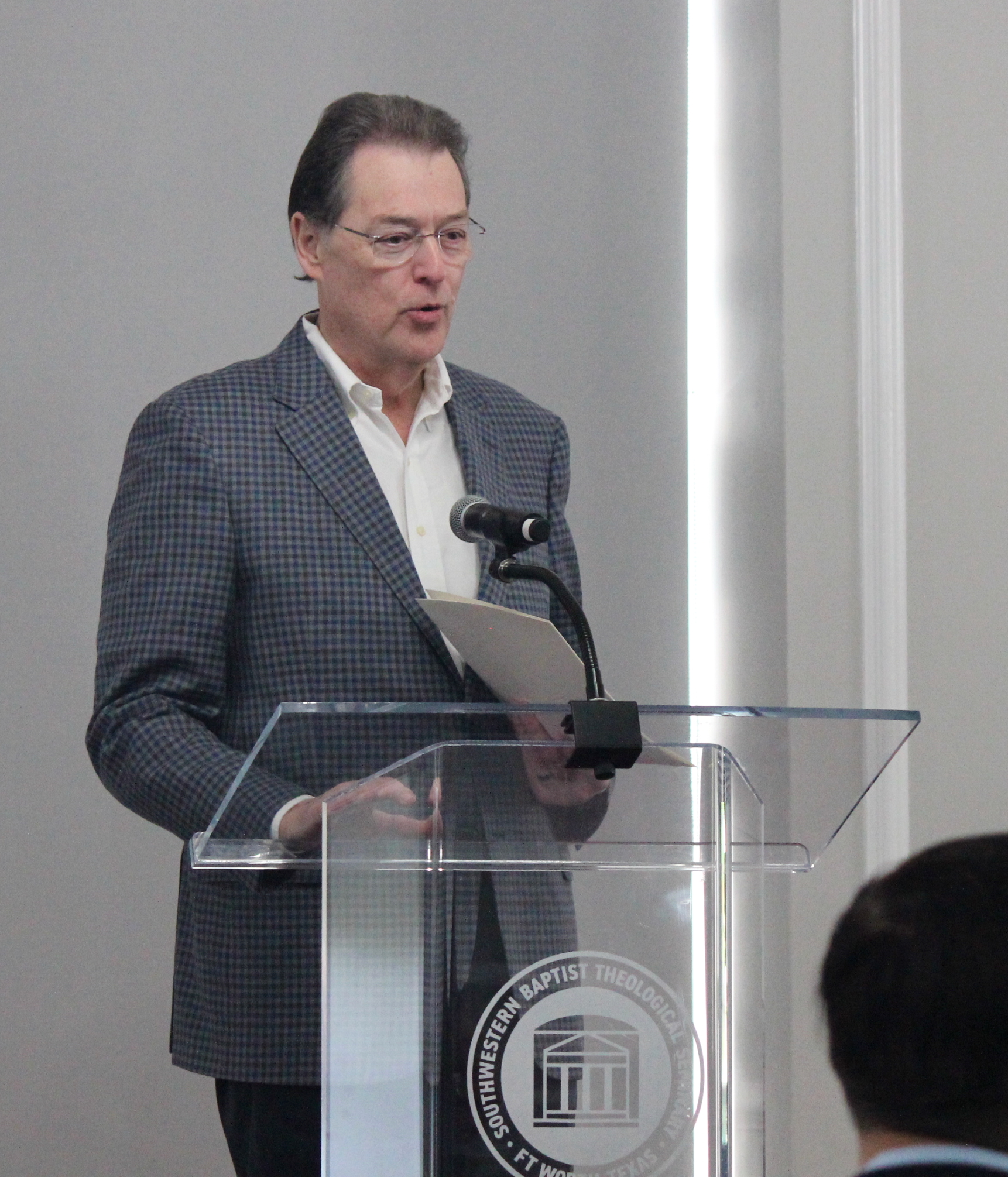
Jenny Howell, director of the theology, ecology and food justice degree program at Baylor University’s Truett Theological Seminary provides introductions at the Hunger and Poverty Summit at Baylor University. (Photo / Calli Keener)

Jenny Howell, director of the theology, ecology and food justice degree program at Baylor University’s Truett Theological Seminary, said problems of hunger, poverty and land degradation have been described as “wicked problems” no single sector can solve.

But these problems can be tackled with collaboration.

Biological research has observed organisms in “webs of connection” show better propensity toward resiliency, she noted.

When hard times come, it’s time to come together and collaborate to solve these “wicked problems.” Perhaps now more than ever, this is a time for collaboration, Howell suggested.

Hope in Africa

These changes are necessary, Howell said, “for the good of my neighbors, for the love of God and the love of place.”

Keynote speaker Father Emmanuel Katongole, professor of theology and peace studies at Notre Dame University, told of his work with Bethany Land Institute in rural Uganda.

He said he never guessed land management, food insecurity and poverty in his home country would become his preoccupation as a theologian, but “the cry of the earth and the cry of the poor go together.” The cries of both in Uganda spurred him to action.

In a world facing serious problems of hunger, poverty and environmental degradation: “We need hope, and we need it badly,” he noted.

Katongole saw in his home country, Uganda, the “slow violence” of global warming, deforestation and economic uncertainty merging “to shape a continent steeped in contradictions and challenges,” and he wanted to try to channel his energy into constructive change.

He and his partners in ministry wanted to help young people facing existential questions learn to value a simple life in their communities, grow food and make money.

They created a campus dedicated to young people working together to address the “three Es” —education, economics and environment—while he worked on his book Born from Lament: The Theology and Politics of Hope in Africa.

In their work, he observed they were dealing with a social problem, an ecological problem and a spiritual problem.

“We have forgotten what it means to belong to the earth,” Katongole noted. And that is a crisis of belonging.

Not knowing “who we are” results in “internal deserts” that eventually “beget external deserts.”

His team decided to try an integrated approach to solving the crises through a spiritual lifestyle of caring for the land where students serve as “caretakers.”

“Something happens when we touch the ground,” Katongole noted.

Human lives are intended to be grounded with God, one another and the earth, he asserted. If one of those pieces is disrupted, the others suffer. That leads to a spiritual crisis of alienation.

But working the land together builds community and identity leading to a deep sense of “who we are as created by God.”

“The actual work of saving the world will always be humble,” he said. So, “start small, start well, and start now,” and learn to live in a place of hope, Katongole urged.

Hope in Fort Worth

Heather Reynolds, managing director of the Lab for Economic Opportunities at the University of Notre Dame recalls her work in Forth Worth at the Hunger and Poverty Summit at Baylor University. (Photo / Ken Camp)

Scripture records God’s “preferential option for the poor and vulnerable” and requires God’s people to have that same preference on behalf of the poor, said Heather Reynolds, managing director of the Lab for Economic Opportunities at the University of Notre Dame.

Reynolds, former president and CEO of Catholic Charities Fort Worth, described how she felt God asking her: “Heather, how are you preferring the poor right now—in this moment, in this space and in this place?”

In response to that question, she noted three bullet points scribbled in her personal devotional journal.

  • Show up. She recalled weekly counseling sessions with Lois, a woman in her 80s who told such captivating stories, Reynolds felt less like a helping professional and more like she was enjoying “coffee with a girlfriend.” Reynolds said she thought Lois overpaid for the $10 sessions, because the therapist gained more from them than the client.
  • Shine brightly with hopeful optimism. She cited the story of Stephen, the first Christian martyr, as recorded in the New Testament Book of Acts. As Stephen offered a prayer of forgiveness for those who stoned him, his face was “aglow” like an angel.

“I have to envision that glow from Stephen’s face came from a deep-seated wisdom that he knew what was coming next—a hopeful optimism about uniting with Christ,” Reynolds said.

Similarly, she said, her memories of people who had a deep impact on her life are surrounded by a “glow of hopeful optimism.”

  • Activate truth. Don’t settle for good intentions. People in poverty “are worthy of our best efforts,” and that means practicing evidence-based approaches to tackling poverty that produce proven results, Reynolds said.

“Our hope is not in these times,” Reynolds said. “Our hope is not in a political candidate. Our hope is not in ourselves. Our hope is in a vision of what is to come. We are called to be hope-filled people.”

Hope is a verb
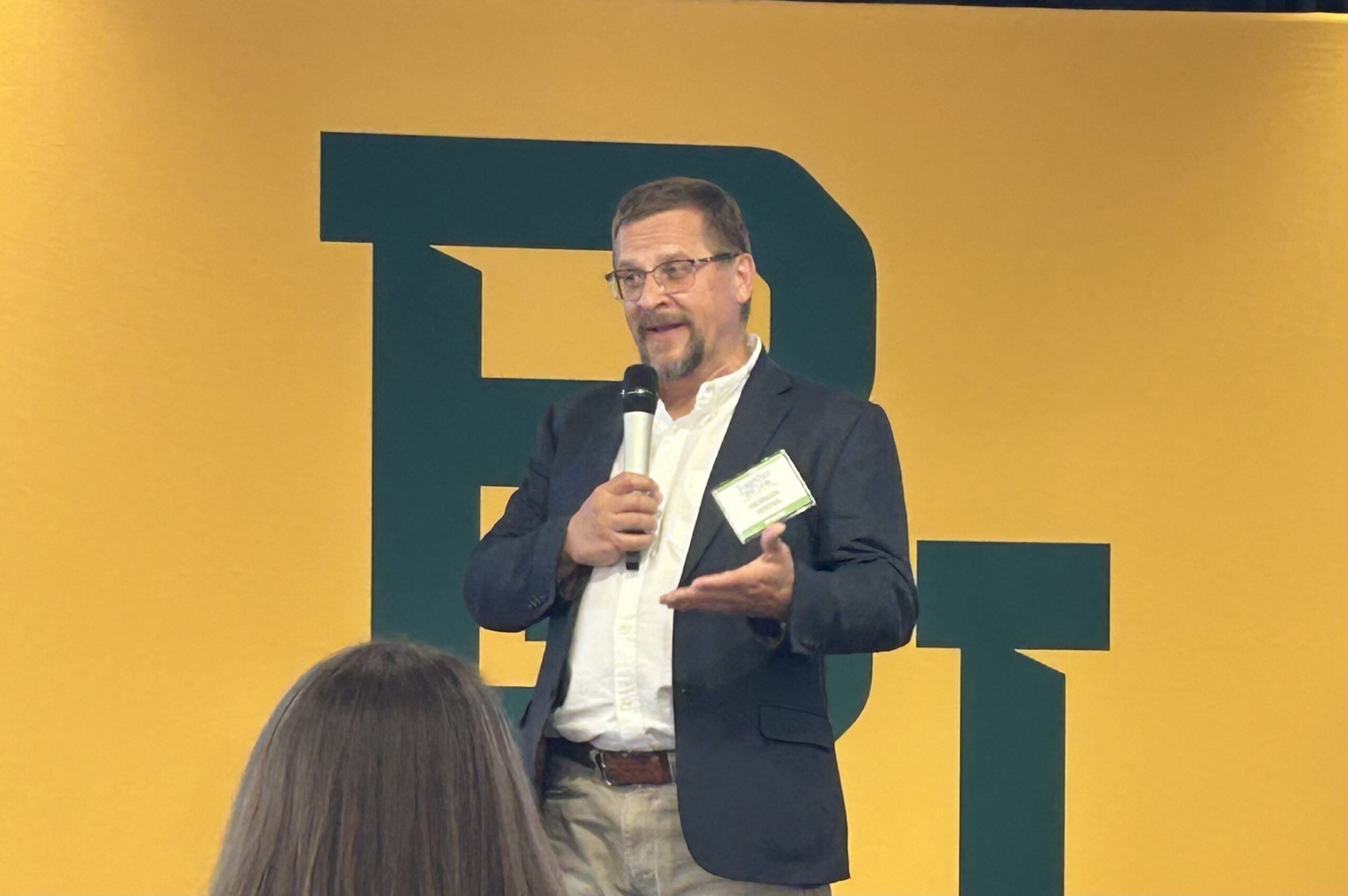
 

Norman Wirzba, professor and senior fellow of Christian theology at Duke University’s Kenan Institute of Ethics, offered the last keynote of the summit. (Photo / Calli Keener)

Norman Wirzba, professor and senior fellow of Christian theology at Duke University’s Kenan Institute of Ethics, offered the last keynote of the summit.

Wirzba asserted hope is one of those terms “people can’t do without,” but “do not assume that people want hope.”

Young people look at a future of “diminished possibilities,” due to climate change, which he said are the result of the actions of “old, white men” like himself.

“So, when young people hear people like me say: ‘Hey, be hopeful. Don’t give up,’ they say: ‘Are you kidding me?’ You’re on your way out. We’re not, and we have to live with what you are leaving us.’”

Many young people who face serious depression or other mental health issues can’t imagine having children in this world. This is not a small matter, he said.

“But we have to be honest about hope. And we have not been honest about our language around hope,” Wirzba said.

Religious sayings intended to be hopeful, like: “Don’t worry. God’s got this,” create the “ultimate bystander effect,” Wirzba said, noting that’s actually a very cynical way to think.

The techno version of hope—where humans retreat to underground bunkers, hope artificial intelligence will save the future or make plans to colonize Mars—are as cynical and empty as the religious version.

Both versions evade “our responsibility that gets repeated over, and over, and over again throughout Scripture, which is the responsibility to be in covenant relationship with God, other people and with our land,” he asserted.

These versions of hope are “supremely dangerous,” irresponsible and part of the reason young people are saying: “Stop talking about hope.”

Hope is not optimism, Wirzba noted. “It’s so, so hard to see what is happening” in the world today, and he is not much more optimistic than the young people, “who have resigned themselves to the fact that the future is going to suck.”

So, he suggested, give up on optimism that never challenges the status quo. Because optimism that things will work out when they are not working out leads to despair, hope is better than optimism.

“Hope is a movement against despair.” But, it’s not something you have or possess.

“Hope is something that involves you in the world in a new way,” Wirzba explained. It’s a verb, “something you do.”

Hope is figuring out how to nurture, protect and celebrate what you love, he explained. Hope is activated by answering the question, “Who or what do you love?”

And when we give our love, kindness and attention to our world, it responds.

“Hope is love in the future tense.” It gets individuals off the couch to ask: “What does love require of me?”

Then hope spurs decisions with the future of what is loved in mind. Communicate that the world is “love-worthy,” Wirzba urged—be agents of hope, and make it more delicious here.

With additional reporting by Managing Editor Ken Camp.


East Texas volunteers pass along legacy of service

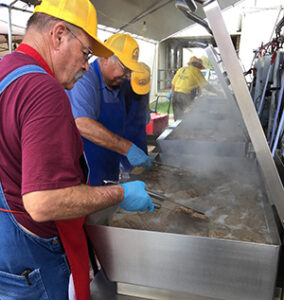
Age caught up with an East Texas disaster relief unit, but their desire to serve kept the future in mind. They donated their three trailers, a truck, a large generator and money to Texans on Mission.

Now a group of Texans on Mission volunteers are retooling the trailers at the Dixon Building in Dallas.

Mike Brittain, former pastor of Morton Baptist Church in Diana, contacted Texans on Mission Disaster Relief Director David Wells and offered the equipment and financial resources. The group is centered in Harrison County, northeast of Longview.

“They ran their team for a number of years, but they aged out of being able to deploy and didn’t have any younger volunteers to take their places,” Wells said.

Brittain led the Morton congregation 30 years, and they started the East Texas Disaster Relief feeding unit 28 years ago.

“We’ve been in it (disaster relief) a long, long time,” Brittain said. “We got older. Our chief cook passed away, and I’m reaching 80.”

‘Still going to be part of disaster relief’

When the nonprofit group lost its place to keep the equipment, they realized they needed to let it go. The group had lots of offers for the equipment, but decided it should all go to Texans on Mission.

“It’s a lot of resources, and every penny donated is going to stay in disaster relief,” he said of the decision. “The Lord just led us to go that direction. … We’re still going to be part of disaster relief.”

Rather than letting their equipment deteriorate from lack of use, the East Texas group donated it. They also donated convection ovens and “tons of Cambros”—insulated containers for delivering prepared food.

“They also gave Texans on Mission $50,000,” Wells said. “It’s a blessing. It really is. And the 2004 Ford truck only has 22,000 miles on it.”

Texans on Mission volunteers are working in Dallas now to update the two kitchen units “to fit and interchange with our current units. We are getting them ready for service as soon as possible,” Wells said.

“Instead of two state feeding units, we will now have four available for deployment on mass feeding.”

History of service

During the East Texas team’s active years, the volunteers traveled overseas to Sri Lanka, Haiti and Gaza. In the United States, they served in New York, Florida, Missouri and “all over the state of Texas,” Brittain said.

Volunteers with East Texas Disaster Relief from Diana serve in Katy. (File Photo)

“During the (space) shuttle explosion, we set up a prayer station at the entrance of the Johnson Space Center and were the collection center for memorials,” he remembered.

In 2011, they went to Haiti as a water purification team and “brought in 15,000 personal water filter systems and a suitcase system for the makeshift hospital.”

Thirty church members from northwest Harrison County and the surrounding area “were committed to disaster relief.” And the Diana church encouraged their pastor, Brittain, to be a part of the work.

When the volunteers served close enough, Brittain returned to the church Saturday evening, preached Sunday morning, then headed back to the disaster relief site.

“As pastor, they gave me the privilege to go,” he recalled.

And “the people donated pretty faithfully to our group.” Those donations and support from the organization then known as Texas Baptist Men provided the equipment and finances that are now being donated to Texans on Mission.

Brittain said they served hundreds of hot dogs but didn’t “run hot dog stands in disaster relief.” They ran “meet Jesus stations, and I pray we never forget that.”


Robert Jeffress says IRS investigated his church

DALLAS (RNS)—President Donald Trump told reporters on April 17 multiple pastors who gathered for a White House Easter service had complained about being investigated by the IRS over the past four years.

“They said, ‘Sir, I was targeted by the IRS, and the FBI came in, sir, and I’ve been going through hell for years,’” Trump said in a discussion in the Oval Office about his threat to revoke the tax-exempt status of Harvard University.

Dallas pastor says God gives Trump authority to ‘take out’ Korean leader
President Donald Trump (left) is greeted by Pastor Robert Jeffress at the Celebrate Freedom Rally in Washington, D.C. (Photo by Yuri Gripas/REUTERS via RNS)

Religion News Service reached out to the pastors who attended the service to corroborate Trump’s account. Most did not immediately respond, but Pastor Robert Jeffress, pastor of First Baptist Church in Dallas, confirmed in an email he told Trump at the event his church had been investigated by the IRS.

“I told the President that our church was the subject of an IRS investigation launched under the Biden administration that spanned several years and cost hundreds of thousands of dollars due to complaints from the Freedom From Religion Foundation,” Jeffress wrote. “The case was ultimately resolved in our favor.”

For years, advocates for the separation of church and state have urged the Internal Revenue Service to hold churches that endorse political candidates accountable. They insist such endorsements violate a provision of the U.S. tax code, known as the Johnson Amendment, that bars nonprofits from taking sides in electoral campaigns.

Little has come of those concerns, as the IRS has long been reluctant to investigate churches.

Asked for documentation proving the investigation occurred, Jeffress said his church is turning all of the documentation regarding the investigation over to the White House, adding, “Any release of that information will come from them.”

The White House did not immediately provide documentation when asked by RNS, saying they were looking into the matter.

Verifying the investigation without documentation may prove difficult. Asked about the alleged investigation, a representative for the IRS said federal employees are barred from disclosing tax return information, “including whether the agency has or has not investigated a particular entity.”

Focused on ‘Celebrate Freedom Sunday’ remarks

According to the Freedom From Religion Foundation, the group filed a complaint about First Baptist in July 2020, before the election and while Trump was still president.


Pastor Robert Jeffress introduces then-Vice President Mike Pence during “Celebrate Freedom Sunday” at First Baptist Church in Dallas on June 28, 2020. (Video screen grab)

It focused on a visit by then-Vice President Mike Pence made to First Baptist for a “Celebrate Freedom Sunday.” Jeffress said he was praying Pence would have a second term as vice president and then be elected president.

“Mr. Vice President, I know I probably should not say this, but my congregation knows that has never stopped me before,” said Jeffress, according to a recording of the service posted on First Baptist’s YouTube channel.

“We are praying that when you finish your term in 2024, we don’t want you moving out of the West Wing. We just want you moving down the hall a few doors and continue to build on the legacy of the most faith-friendly president in history.”

The Freedom From Religion Foundation asserted Jeffress’ remarks amounted to an endorsement.

Repeated attempts to produce a test case

Only one congregation in recent history has lost its exemption for electioneering—an upstate New York church that took out anti-Bill Clinton ads in several large newspapers in 1992.

It has not been for lack of trying. For years, secular advocacy groups have complained about events such as “Pulpit Freedom Sunday,” a campaign involving thousands of pastors in which they endorse candidates from the pulpit and send recordings of their sermons to the IRS, hoping to produce a test case to overturn the Johnson Amendment.

The Alliance Defending Freedom, a Christian legal group, organized the Pulpit Freedom campaign for years but eventually gave up.

Madeline Ziegler, a staff attorney for the Freedom From Religion Foundation, said the organization filed about 30 complaints about alleged violations of the Johnson Amendment. Each time, Zielger said, the organization received a form letter in response.

“They always explain they cannot disclose whether they have started an investigation or the status of any investigation,” Ziegler said.

Ziegler shared a letter from the IRS, dated August 29, 2020, acknowledging receipt of the Freedom From Religion Foundation complaint.

“The IRS has an ongoing audit program to ensure compliance with the Internal Revenue Code,” the letter read. “We’ll consider the information you submitted in this program.”

Such letters may not be as rare as prosecutions. Attorneys for New Way Church in Palm Coast, Fla., claimed earlier this month the IRS had launched an investigation against the church after a local school board candidate spoke at the church in 2022 and explained why she was running for office. The church’s pastor prayed for the candidate, New Way attorneys claimed in a statement.

“We have some questions about your tax-exempt status as a church under Internal Revenue Code (IRC) Section 501 (a) and/or your liability for tax,” read a 2024 letter from the IRS. “Our concerns are based on information we are in possession of indicating you may have conducted political campaign activities which are prohibited under IRC Section 501 (c) (3).”

The letter instructed the church to fill out a “Church Tax Inquiry Questions” form.

Lawyers from the First Liberty Institute say the investigation later was closed.

“We are pleased that the IRS not only closed its investigation, but affirmed that this church’s activities of praying for political candidates during its church service do not threaten its tax-exempt status,” Jeremy Dys, senior counsel for First Liberty Institute, said.

Earlier this year, the National Religious Broadcasters filed a federal lawsuit to overturn the Johnson Amendment. That lawsuit claimed nonprofit newspapers are allowed to endorse candidates, but churches are not.


Video shows how the Texas Lottery was rigged

Video evidence sheds new light on how some individuals inside the Texas Lottery Commission allegedly enabled a syndicate with international connections to rig the system and claim a $95 million Texas Lottery jackpot.

The new evidence—alongside several ongoing investigations and lawsuits—adds momentum to a growing movement to do away with the Texas Lottery, close observers of the Texas Legislature said.

The brief video shows the interior of a storefront office where five individuals—two of whom appear to be minors—worked at computer terminals to print out lottery tickets. The Baptist Standard possesses the unedited video but is not posting it since it depicts minors.
The New York Times reported April 20 the video offered a glimpse into a three-day ticket printing rush in April 2023, when a British gambling consultant worked with Lottery.com and other entities to buy practically every combination of possible lottery numbers to secure a win.

The Times article notes how state lottery officials—charged with enforcing rules for playing the lottery—overlooked violations. Instead, they facilitated the delivery of equipment to four storefront offices posing as retailers to print out about 26 million paper lottery tickets.

The article told the complicated story about how the former owner of a lottery data company purchased by Lottery.com—who later sued Lottery.com for failure to pay—obtained the cell phone with the video and thousands of incriminating text messages.

‘A scheme to cheat the people of Texas’

In an interview with the Baptist Standard, Sen. Bob Hall, R-Edgewood, asserted the commission enabled “outright theft” and likened the scene depicted in the video clip to a “sweat shop.” Hall has led the charge in the Texas Senate to investigate wrongdoing by the Lottery Commission.

“No one on the outside could have ever done what they did without the close cooperation of the personnel within the Lottery Commission—changing the rules, providing the equipment and ignoring what obviously was a scheme to cheat the people of Texas,” he said.

Hall pointed to rule changes permitting the use of electronic devices, allowing the “speed-buying” of tickets, and authorizing the delivery of multiple machines with electronic QR code readers to specific locations.

The rule changes resulted in 60 machines in four locations running constantly for 72 hours to generate tickets with 12.8 million combinations of numbers, he said.

“It took it being orchestrated by personnel within the Lottery Commission to defraud Texans who played the lottery in good faith that they just might have a chance to hit the big one,” Hall said.

Investigations and legal actions

Revelations in the Times article added more fuel to the fire surrounding the Texas Lottery:

  • In February, Gov. Greg Abbott ordered the Texas Rangers to investigate both the April 2023 bulk purchase of lottery tickets and a more-recent $83.5 million win involving lottery couriers.
  • Two days later, Attorney General Ken Paxton announced his office was launching its own investigation into the Texas Lottery to determine whether any state or federal laws were broken.
  • Lottery watchdog Dawn Nettles filed a class action lawsuit on behalf of Texas Lottery players, suing former Lottery Commission Director Gary Grief, Lottery.com and IGT, the vendor responsible for administering the lottery, for fraud.
  • Earlier this month, a Texas Lottery winner from Hood County filed a lawsuit, asserting his $7.5 million jackpot winnings were significantly less than what they would have been if the rigged $95 million jackpot had not been awarded less than a month earlier.
  • The Wall Street Journal published an investigative article April 12 asserting Bernard Marantelli, a London-based banker-turned-bookmaker, spearheaded an international gambling syndicate to rig the Texas Lottery, with financial backing from Tasmanian gambler Zeljko Ranogajec.
  • Last week, the Texas House of Representatives completely defunded the Texas Lottery Commission in its budget for 2026-2027.

‘Should be held accountable’

On April 21, Ryan Mindell resigned as executive director of the Texas Lottery Commission. Sergio Rey, chief financial officer of the agency, was named acting deputy director.

“Laws were broken, and the folks involved should be held accountable. Legislators have had it with the lottery. They feel misled,” said Rob Kohler, consultant with Texas Baptists’ Christian Life Commission.

The fact that the Texas House “zeroed out” the Texas Lottery Commission in its budget and the Senate likely will do the same signals “the very real possibility” the abuses perpetrated could signal the end of the Texas Lottery for the foreseeable future, Kohler said.

Hall likewise is hopeful the light shed on abuses within the Lottery Commission could lead to its demise.

“The state has no business being in the gambling business,” he said.

Corruption within the Texas Lottery Commission should serve as a “wake-up” call to lawmakers who are considering other gambling expansion in the state, Hall asserted.

“If the state cannot manage something as simple and straightforward as the lottery and you have that much criminal activity involved … what can we expect to come into our state when we start allowing sports betting, internet betting and casinos all over the state?” Hall asked.

“The culture that gambling brings” is contrary to Texas values, he said.

“The criminal element is deeply embedded in gambling where there’s a lot of money. And while there’s a lot of money in the lottery, it pales in comparison to the money in sports gambling, internet gambling and casinos.”


Most pastors say their churches will survive

NASHVILLE (RNS)—American organized religion is a bit like a scene from “Monty Python and the Holy Grail.” It has been on the decline for decades, but churches aren’t dead yet.

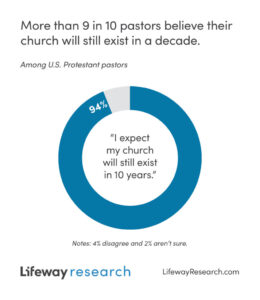
A new survey from Nashville-based Lifeway Research found 94 percent of Protestant pastors believe their church will still be open in 10 years, with 78 percent strongly agreeing that will be true.

Four percent of pastors say their church will close, with the other 2 percent saying they don’t know, according to the survey released April 15. Conducted over the phone, it surveyed 1,003 randomly selected Protestant pastors between Aug. 8 and Sept. 3, 2024.

Those pastors may be right, say researchers who study the American religious landscape.

Duke University sociologist Mark Chaves, who runs the National Congregations Study, said past studies found about 1 in 100 churches close each year. So, the idea that most churches will be around in 10 years isn’t surprising.

“An interesting thing about churches as organizations is that they have ways of staying alive in a very weakened state,” Chaves said in an email. “Other organizations would close, but weak churches have ways of staying alive.”

Short-term optimism

Scott Thumma (Photo by Shana Sureck / Courtesy of Hartford Seminary)

Scott Thumma, director of the Hartford Institute for Religion Research, said the long-term trends for congregations are more worrisome. But in the short term, congregations have become more optimistic.

In a 2021 study of the impact of the COVID-19 pandemic on congregations, 7 percent of church respondents reported their existence was threatened, and 5 percent said their church was in serious financial difficulty.

By 2023, 3 percent of churches surveyed said they were in serious financial difficulty. That same year, in a study about how the pandemic has affected churches, 2 percent of church leaders said they were feeling very negative about their church’s future, while 9 percent were somewhat negative.

Lifeway’s findings that few pastors thought their churches would be closing were “within the ballpark,” Thumma said.

He also said small churches with few staff members and that have paid off their building can keep going for a long time. They may have already seen some decline and know how to cope with it.

Things are harder, he said, for midsize churches that no longer have enough people or money to sustain themselves.

“Small churches can be resilient for a long time, especially when their building is paid for,” said Scott McConnell, director of Lifeway Research.

Twenty-year outlook not good

While many churches may survive the next decade, the 20-year outlook is bleaker.

“People who are in their 70s now won’t be gone in 10 years, but they will be gone in 20 years,” Thumma said. “That’s where you’re going to see the real drop.”

Count Nic Mather of St. Stephen’s Episcopal Church in Longview, Wash., among the pastors who are optimistic for the future. The church has seen a slow but steady stream of newcomers in the last few years, mostly people who are seeking spiritual meaning and the kind of close-knit community the church offers.

“There’s a power of being in community with others,” he said. “And that ethos and sense of community is so strong here that it continues to attract people.”

Mather said his congregation is aware people don’t come to church in the way they did in the past. That’s made it focus more on reaching out to neighbors. The church also allows a number of community groups to use its building, seeing it as a resource for those neighbors.

“We are truly a hub for our community. So many people come into our building for things that aren’t church that I can’t imagine this place not being here,” he said.

Bob Stevenson, pastor of Village Baptist Church in Aurora, Ill., also is optimistic about his congregation’s prospects.

“We’re 40 years old and we have weathered quite a bit, and so unless there is some scandal or some major change socioeconomically in our area, I don’t see anything changing in terms of the church itself,” he said.

Stevenson said the church, which draws about 120 worshippers and is ethnically diverse, has taken steps to “future-proof” itself. That includes paying attention to the integrity of its leadership, something some churches have ignored to their peril.

He also said the church has a strong, committed core of members, which will help it continue for the long term.

Still, he said, COVID-19 taught him and other church leaders that no one can predict the future.

Know when to hold ’em, know when to fold ’em

Ryan Burge, a former pastor and author of The American Religious Landscape, said it’s hard to know when a church is ready to close. Burge, a political scientist at Eastern Illinois University, was the longtime pastor of First Baptist Church in downstate Mount Vernon, which closed last summer.

His church, which was more than 150 years old when it closed, had been on the decline for years but rallied more than a few times. Eventually, as older members of the congregation died, there were no young people to take their place.

“All it takes is two or three people to die in close succession, and it’s game over for a lot of those churches,” he said.

The new Pew Religious Landscape Study found 85 percent of Americans ages 65 and older identify with a religion, and 78 percent identify as Christian. However, only 54 percent of Americans under 30 identify with a religion, including 45 percent who say they are Christian.

Lifeway Research found some indication the rate of churches closing might have increased. The survey includes a look at data from the Southern Baptist Convention showing that 1.8 percent of congregations disbanded or closed in 2022, the last year with data available.

If that annual percentage were to hold steady over the next decade, it would mean about 18 percent of churches would close during that time, which is more than pastors surveyed would have predicted.

McConnell also said some of the churches that closed may not have had a pastor, which could explain the difference between how pastors feel and the statistics.

“But if we assume the pastors’ survey is accurately reaching enough churches close to shutting down, then yes, Southern Baptist pastors would seem to be more optimistic than the statistics say they should be,” he said in an email.

Still, Burge said pastors are by nature optimistic about the future. That’s part of the job.

“Revival is always around the corner—if we just get one thing to break our way, things will be better,” he said. “You don’t want to have the mentality that we are going to close.”

And even if pastors know churches will close, they may often believe it will happen to other churches, but not theirs.

“Everyone thinks that churches are going to close,” Amanda Olson, the longtime pastor of Grace Evangelical Covenant Church on Chicago’s North Side, told RNS in 2022, just before the church’s last service. “But nobody thinks it is going to be their church.”


ETBU prayer tent brings students together

MARSHALL—East Texas Baptist University’s Baptist Student Ministry recently hosted a prayer tent event, offering students 24 consecutive hours of prayer, reflection, confession and thanksgiving.

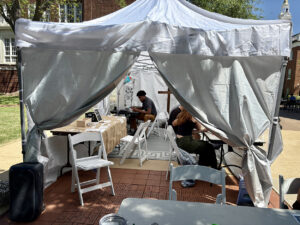
Inside the prayer tent at East Texas Baptist University, students such as Christian Dews engaged in focus times of prayer and reflection. (Photo / Faith Pratt)

The prayer tent was part of ETBU’s initiative to offer students, staff and faculty a time of focused prayer.

Beginning at 8 a.m. on April 15 and lasting until 8 a.m. on April 16, students had full 24-hour access to the prayer tent, a large white tent outside the Ornelas Student Center housing prayer cards, a thanksgiving journal, crafts and more.

ETBU’s prayer tent ministry began in 2019, though the idea of prayer tents on college campuses has existed for years. ETBU’s prayer tent exists to encourage the students of ETBU to depend upon the Lord in prayer, organizers noted.

“A while ago … our Baptist Student Ministry decided it was a great idea to have time on campus for people to be developed, not only in prayer, but also involved with others in community with that,” said Paxton Lovell, junior sports communication major and BSM member.

“So, they started this prayer tent, which allows people for 24 hours to come by whenever they need to pray, to be close with one another and … be involved.”

Adoration, confession, thanksgiving and supplication

BSM volunteers were stationed outside the tent, offering a collection box for written prayer, information to students walking by and helping guide them through the prayer tent’s purpose and structure.

The prayer tent followed the ACTS prayer model, an acronym standing for adoration, confession, thanksgiving and supplication. This method serves as an outline for prayer.

The prayer tent offered four stations with tables, each corresponding to a segment of the ACTS model. The different stations allowed students to focus on various aspects of prayer.

Sophomore Christian ministry major and BSM member Patrick Burt explained the process.

“There’s different things you can pray by. You can confess to God what you’ve been struggling with,” Burt said. “You can thank him for what he is currently doing in your life You can adore him and … be in his presence.”

One station had note cards for students to write their prayer requests. They could attach their prayers inside the tent or put them into a box collected by BSM.

Another station had a notebook for students to write down what they were thankful for, praising God for all he has done in their lives and highlighting his goodness and glory.

The “confession” station had paper gift tags students could write confessions on before hanging them on nails on a wooden cross in the tent’s center.

East Texas Baptist University students Kevin Estell and Rhythme Seban create artistic expressions of thanksgiving. (Photo / Faith Pratt)

Another station had art and crafts supplies students could use to make a collage of what they are thankful for, prayer requests or anything God put on their hearts.

Senior university studies major Rhythme Seban described her first impressions of the prayer tent, which she discovered after leaving class.

“I liked that they chose a white tent because it made it feel … very holy. It has a sacredness to it that I really appreciate,” Seban said.

“The table I liked was the confessions table, where it’s basically a time of repentance, where you can write down … your wrongdoings and put it on the cross and leave it there. … It emphasizes that the debt has already been paid.”

Visibility and accessibility

The prayer tent’s structure and location made it visible and accessible to students who might not approach it otherwise.

Sophomore rehab science major Landen Hobbs said he fell into this category, but is so thankful he stopped by for prayer.

“I didn’t even know we offered the prayer tent, probably because I didn’t really pay attention to … spiritual stuff last year,” Hobbs acknowledged.

“I was actually about to walk into the cafeteria doors when I saw the prayer tent. … So, I turned around and walked over.”

Hobbs particularly was impressed by the confession board “because I don’t feel like I thank God enough. … We’re all guilty of this. We pray for it, but after it happens, we forget to thank him.”

Having the tent up allowed people to connect on a deeper, more spiritual level, creating an inviting space for students to engage in a time of repentance and confession, surrounded by the love of students in ministry.

“I’m one of the BSM leaders of the prayer tent. I’m here to just show the love of God and … pray for people and pray for their requests that they leave here,” said Luis Correa, a sophomore criminal justice major.

“The prayer tent is very helpful. … It offers the opportunity to just be able to show love to people who might not know Christ. … I’ve seen a lot of people affected by this.

“I just pray that more people continue to come throughout the day and hopefully just be able to feel the sense … that God wants your heart, and hopefully this prayer tent can help people come to know Christ or restore their relationship with him.”


Texas House approves education savings account program

After hours of debate, the Texas House of Representatives approved for the first time in the state’s history a plan to send public funds to private schools, including religious schools.

The House voted 85-63 in the wee hours of the morning on April 17 to approve a bill authored by Rep. Brad Buckley, R-Killeen, to establish an education savings account program.

 The voucher-like program—Gov. Greg Abbott’s top legislative priority—will provide about $10,000 to each participating private school student and up to $2,000 to each participating homeschool student.

“It’s time to provide the full array of options for students and their families,” Buckley said.

‘The false flag of parental choice’

Charles Foster Johnson, executive director of Pastors for Texas Children, offered a dissenting view, calling the education savings account program “a reckless subsidy that rips public dollars out of our neighborhood schools and hands them to unaccountable private institutions.”

“This scheme fails our poorest children, violates the Texas Constitution and uses public tax dollars to fund the establishment of religion—all under the false flag of ‘parental choice,’” Johnson said.

John Litzler

John Litzler, public policy director for Texas Baptists’ Christian Life Commission, expressed disappointment in the House vote approving the education savings account program.

“While we are disappointed in the House’s passage of Senate Bill 2, the Christian Life Commission remains committed to the same values we’ve always held: supporting public education and promoting religious liberty,” Litzler said.

Education savings accounts offer a “tightly controlled” and “parent-directed” approach to educating students that prioritizes “the state’s most vulnerable students,” Buckley asserted.

The program allocates $1 billion toward education savings accounts families can direct to schools for tuition and other expenses.

While 80 percent is dedicated to students with disabilities and—broadly defined—low-income families, the general population is able to apply for the remaining 20 percent.

Opponents of the bill characterized the “universal” nature of that 20 percent as making the program available to “millionaires and billionaires.” The House rejected several amendments that would have placed an income cap on program eligibility.

Call for referendum rejected

The House voted in favor of a motion by Buckley to table an amendment introduced by Rep. James Talarico, D-Austin, calling for a statewide referendum on the education savings account program.

Talarico said the idea originated with conservative activists who support what they call “school choice” and initially was supported by some Republican lawmakers

However, he asserted, Abbott threatened to veto bills proposed by any Republican who voted in favor of Talarico’s amendment and told the lawmakers he would make their primary elections a “bloodbath.”

“The governor has said private school vouchers are widely popular. … I would think the governor would welcome an opportunity to finally have a mandate on this controversial topic,” Talarico said.

He urged his Republican colleagues to exercise courage, demonstrate independence and vote in favor of the referendum.

“We do not serve the governor. We serve our constituents. … This is the people’s House, not the governor’s House,” Talarico said.

‘About power and profit’

Johnson noted the pressure Abbott applied to House Republicans to vote in favor of the voucher-like education savings account program.

Charles Foster Johnson

“We thank God for the faithful lawmakers who stood strong—every House Democrat and the courageous Republicans who formed a new ‘moral caucus’ by putting children and conscience ahead of party,” Johnson said.

Gary VanDeaver of New Boston and Dade Phelan of Orange, former Speaker of the House, were the two Republicans who voted against the education savings account bill.

“This vote was not about what’s best for Texas children—it was about power and profit,” Johnson asserted. “A handful of billionaire donors have bought our legislature, and Gov. Abbott has handed our public school system over to them in exchange for political favor.”

Jeff Yass, cofounder and managing director of the Philadelphia-based Susquehanna International Group and an ardent supporter of “school choice,” made the largest single campaign donation in Texas history to Abbott.

The governor supported the primary opponents of rural Republicans who defeated a voucher-style proposal in the 2023 legislative session, changing the makeup of the Texas House.

Prior to considering the education savings account bill, the House voted 144-4 to give preliminary approval to a school funding bill that will provide $8 billion over two years.

Lawmakers voted on the funding bill after extensive debate and consideration of multiple amendments. The bill will increase the basic allotment per public school from $6,160 to $6,555, with 40 percent earmarked for school staff salaries.

Litzler voiced support for the House school funding bill, which includes close to $2 billion in special education funding and $750 million to increase teacher pay.

“Since Texas is now on a path to divert public funds to private schools, it will become increasingly important each legislative session that Texas passes bills to fully fund public education,” he said.


Bill on temperature control in Texas prisons gets hearing

The Texas House of Representatives Committee on Corrections heard public testimony April 16 on a bill to buy and install air-conditioning and heating systems in Texas prisons.

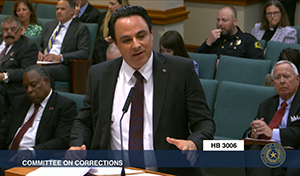
 HB 3006, authored by Rep. Terry Canales, D-Edinburg, relates to the purchase and installation of climate-control systems at prison facilities operated by the Texas Department of Criminal Justice.

Five house bills related to the matter had been filed this session, but none had received a committee hearing until today.

“We support legislation that upholds the value and dignity of life as being made in the image of God our creator. We believe this bill does just that,” said John Litzler, director of public policy for Texas Baptists’ Christian Life Commission.

Phased installation over 10 years

Rep. Terry Canales, D-Edinburg, is the author of HB 3006. (Screen capture image)

The bill sets up a system where Texas Department of Criminal Justice will phase in climate control in Texas prisons over the next 10 years, which Canales noted was a “compromise” to expedite the TDCJ’s estimated timeline of 25 to 30 years for prisons in Texas to be fully air-conditioned at their current rate of installation.

The bill would allow for a phased installation of climate control not to exceed $100 million every two years and allows the use of inmate labor to reduce costs, Canales explained, noting some inmates have HVAC training.

He noted the bill’s phase-in plan means he “would expect to see a huge dent” in the number of prisons lacking air-conditioning by 2032.

Canales also pointed out not having climate control in Texas prisons is costing taxpayers millions of dollars. Legal action against the conditions has become a “cottage industry,” he noted, where the litigants virtually are guaranteed a win with “tons of litigation” every year.

“It’s already a precedent that you lose,” he said.

“And so, every time somebody gets hurt, every time there’s a stroke, we’re dishing out by the millions.”

“The situation is dire,” Canales said. The compromise bill only brings temperatures down to 85 degrees, he explained. But that reduction in temperature is the difference between life and death.

He urged committee members to visit a Texas prison to experience the conditions for themselves if they’ve never been. But, he warned them to wear a t-shirt and expect to leave drenched in sweat and with the taste of the stench of the disgusting conditions in their mouths.

Average 14 heat-related deaths per year

In her testimony, attorney Erica Grossman, who has participated in litigation related to air-conditioning in prisons, cited an average of 14 acknowledged heat-related deaths per year due to heat-related causes between 2001 and 2019.

Rep. Thresa Meza, D-Irving, questioned whether that number might represent an undercount of heat-related deaths. Grossman and other witnesses explained undercounts of heat-related deaths and injury are likely, citing Judge Robert Pittman’s comments in his 91-page ruling last month as evidence.

Grossman pointed out the court ruling in March called both the lack of air-conditioning in prisons and the TDCJ timeline of 30 years to mitigate conditions unconstitutional, without reservation.

As TDCJ had testified the only obstacle to installing climate control was funding, the ruling “invited the legislature to solve this funding problem now and solve it quickly” to implement the undisputedly necessary changes, she explained.

Treating pets better than humans

Conditions in Texas prisons are inhumane, Litzler suggested. He asserted Texas law devalues life when it requires temperatures in shelters where dogs and cats are present not to exceed 85 degrees for longer than two consecutive hours, while holding temperatures in state prisons to no such standards.

“We’re valuing dogs’ and cats’ comfort and safety over that of human beings,” Litzler lamented. “And that’s why we need this legislation in Texas, to promote a culture of life in our state.”

Litzler noted Texas Baptists minister through Philippi Church Ministries to more than 1,750 inmates, who meet in 350 groups in over 110 jails and prisons around the state, many of which are among the un-air-conditioned units.

Additionally, four of the six regional TDCJ prison chaplains in Texas are endorsed by Texas Baptists, and of all the chaplains in the TDCJ system, 1 in 4 has been endorsed by Texas Baptists, Liztler noted.

“We’re involved. We’re on the frontlines,” he observed, noting the current budget surplus means now is the time to address the need for climate control in Texas prisons.

‘What is the cost of a life?’

Other witnesses spoke of their experiences being incarcerated in these conditions or on behalf of those who have experienced the stifling heat indexes of many Texas prisons.

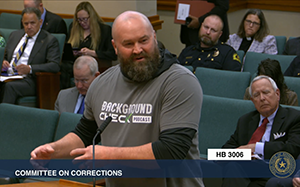
Jay Dan Gumm, president of Forgiven Felons, testified on behalf of a measure to install climate-control systems in Texas prisons. (Screen capture image)

Jay Dan Gumm, president of Forgiven Felons, described fighting other inmates to get to coolers while he was incarcerated—not to drink the water, but to dip bedsheets in the icy water so he could tie the sheet to his hot metal bunk frame in each corner and place his fan at the end, creating his “own little bubble.”

He recalled heat-related fights at all four of the state prisons where he was held, with one leading to his solitary confinement. But when he was transferred to a private prison with air-conditioning, “I didn’t get in any fights,” he said.

It’s sad the only way climate control in Texas prisons is likely is through the courts, Gumm observed. He acknowledged pushback about the costs, but, he asked, “What is the cost of a life?”

If the mission of TDCJ isn’t just punitive, but rehabilitative: “How are we rehabilitating, at the same time killing some of the inmates because of the heat? … What is the cost of a life?” he asked again.

‘People are dying’

Jeff Edwards also spoke in favor of the bill, describing himself as “the cottage industry that was talked about.” He has been litigating this issue for the last 15 years, he said, noting he’s seen a “sea change” on this issue.

“As a civil rights issue, it’s black and white,” Edwards noted. “The courts have spoken. People are dying. People are suffering. It’s not even really up for debate.”

But, Edwards said, if it was ever analyzed from a cost-benefit perspective, it would be a “net positive” for the state on that front too. Adding air-conditioning will bring jobs, energy efficiency and savings, he said.

“It’s not just the right thing to do. It’s the smart thing to do,” Edwards asserted.

And as one of the lawyers in the current case, he said he wanted to tell the committee, “in no uncertain terms, this is going to happen,” because the court has made clear the conditions are unconstitutional.

No witnesses spoke against the bill. Brian Collier, executive director of Texas Department of Criminal Justice, provided neutral testimony.

Canales said he has been following this bill more than 10 years,  HB 3006 is Canales’ third attempt to address the need for temperature control in Texas prisons in three years, after bills he introduced in the past two legislative sessions passed the House of Representatives, only to die in the Senate.

At the close of testimony, HB 3006 was left pending.

Editor’s note: The Committee on Corrections approved HB 3006 on April 23 by a vote of 7-1. The bill was reported favorably without amendments, according to the Texas Legislature online. 


On the Move: Armes, Veal

Paul Armes to Spring Creek Baptist Church in Bosque County as pastor.

Carrie Veal to Second Baptist Church in Lubbock as senior pastor.


Around the State: UMHB presents annual Easter Pageant

Thousands of people viewed the reenactment of the crucifixion and resurrection of Christ at the University of Mary Hardin-Baylor’s 86th annual Easter Pageant on April 16. A video is available to view on the UMHB Facebook page and at this link Easter Pageant 2025-Campus Activities. Each year, UMHB President Randy O’Rear selects a student to direct the pageant and two students to play the key roles of Mary and Jesus. The students who fulfill the two key roles are chosen based on their strong Christian faith and character. Banner Scarborough, a senior from Lubbock, portrayed Jesus, and Emily Huynh, a senior from Richardson, performed the role of Mary. Victoria Kuntz, a senior public relations major from Los Fresnos, served as this year’s pageant director.

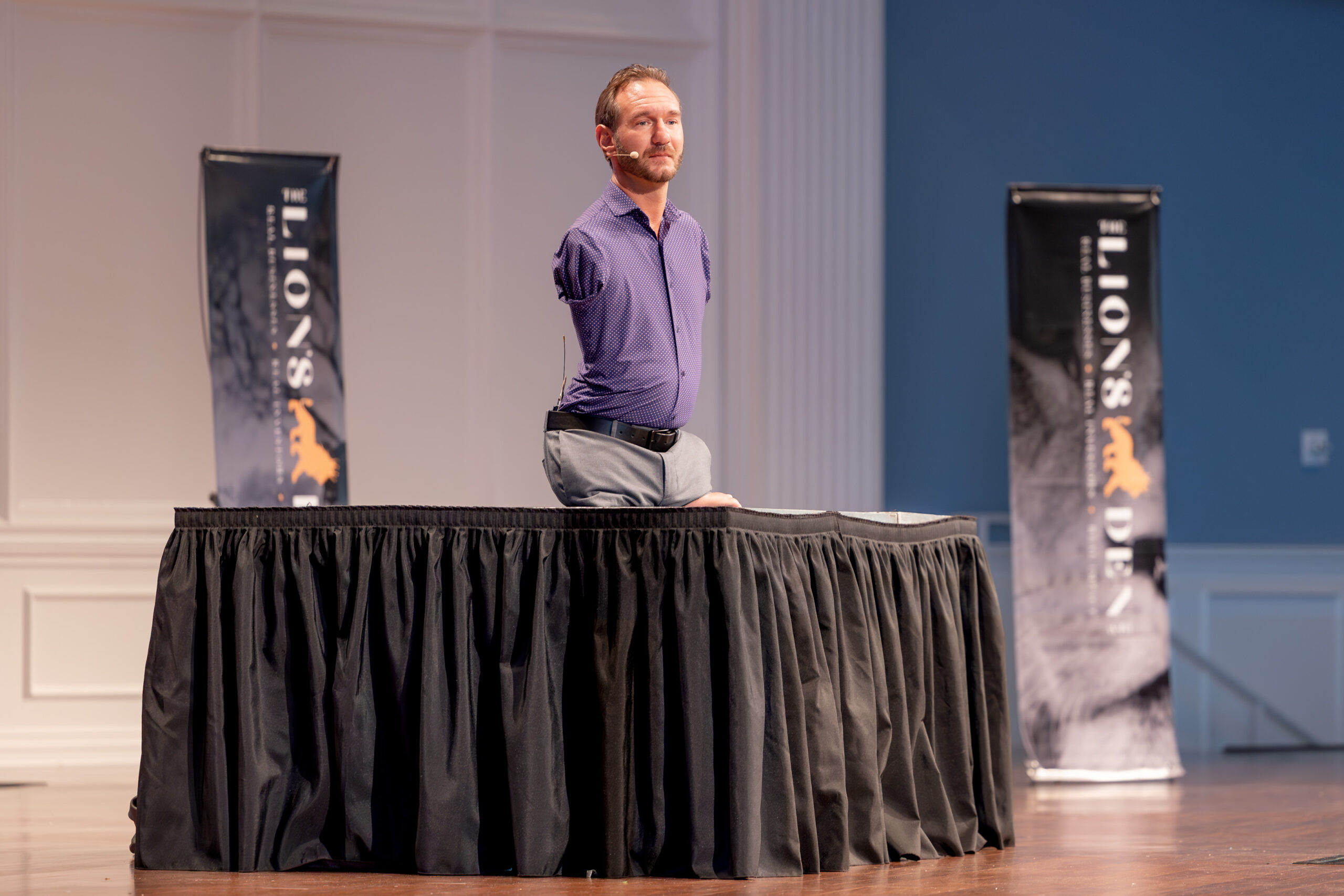
Nick Vujicic, an internationally acclaimed speaker and founder of Life Without Limbs, delivered a keynote address at the 10th Annual Lion’s Den DFW Conference at DBU. (Photo / DBU)

Dallas Baptist University hosted the 10th annual Lion’s Den DFW Conference, fostering faith-driven entrepreneurship and impact investing. The April 9-10 event brought together investors, entrepreneurs and thought leaders committed to advancing God’s kingdom through transformative business ventures. Highlights included a keynote address by Nick Vujicic, a renowned motivational speaker and founder of Life Without Limbs, who spoke on “The Hope for Africa in the 21st Century.” Born without limbs, surviving a suicide attempt at age 10, and eventually discovering his purpose in Christ, Vujicic spoke about faith, identity and living with eternal purpose. He also spoke about financial literacy, entrepreneurship and a dream to mobilize 200 million Christians to give $2 a day to transform Africa. Henry Kaestner, co-founder of Sovereign’s Capital, led a session on “Why Invest in Africa,” emphasizing the importance of faith-aligned investments in emerging markets. Actress, producer and New York Times bestselling author Candace Cameron Bure presented the trophies to the pitch competition winners. She encouraged attendees to carry their convictions boldly into the workplace, no matter the setting.

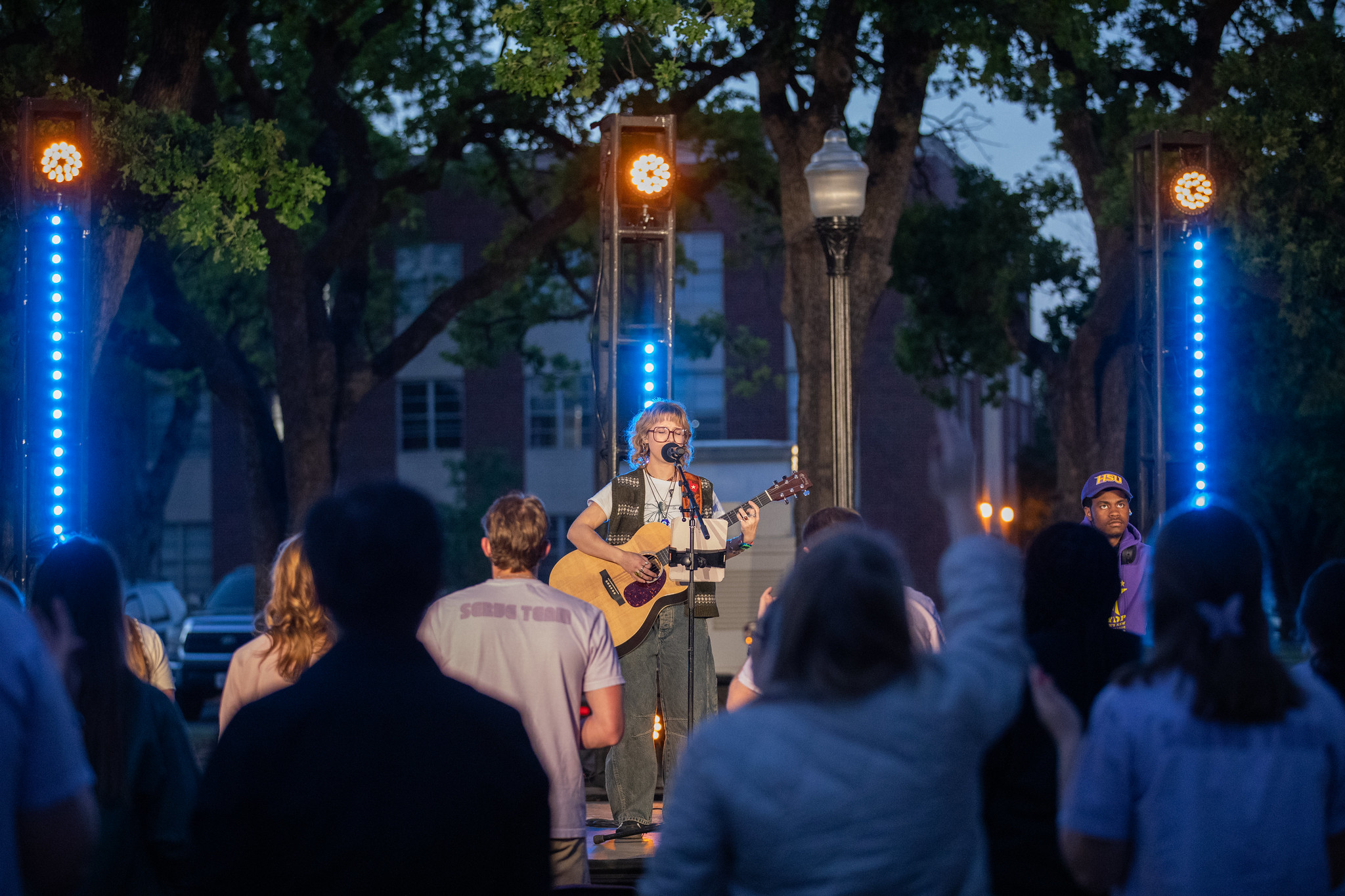
Hardin-Simmons University is hosting Revive25—a three-day, student-led event, on April 14-16. (HSU Photo)

Hardin-Simmons University hosted Revive25—a three-day, student-led event, on April 14-16. The event focused on uniting the campus community around Christ through worship, prayer and spiritual renewal. Revive25 centered around 24 continuous hours of prayer, paired with three nights of worship services that included preaching, prayer and live worship music. The final night concluded with baptisms.

As of April 9, three Baylor students face visa terminations, Baylor spokesperson Lori Fogleman told the Baylor Lariat. She said the students “have had their immigration status terminated in the government database known as SEVIS”—Student and Exchange Visitor Information System. Fogelman explained Baylor’s International Student and Scholar Services learned of the terminations during a routine records review. Neither the university nor the students were given advance notice of the change in status, a pattern being observed in universities around the state and more broadly around the country. She noted the university remains “strongly committed” to supporting international students as part of its commitment to fostering caring Christian community. “Baylor has not had ‘antisemitic rallies,’ and our international students are not terrorists or gang members. They came to one of America’s premier Christian universities to be formed as leaders in the world and in the church. … Stand up. Speak out. This is a moral moment,” Baylor professor Greg Garrett said in a social media post.

University of Mary Hardin-Baylor students unveiled their undergraduate and graduate research projects during Watson Scholars’ Day. (UMHB Photo)

University of Mary Hardin-Baylor students unveiled their undergraduate and graduate research projects on April 8 during Watson Scholars’ Day. Sponsored by the UMHB Office of Research, Watson Scholars’ Day requires students to complete all the steps necessary to present at a conference—including identifying a topic, conducting research and ultimately explaining their findings publicly. Participants included 104 students and 15 faculty sponsors. AP Seminar students from Belton High School also attended the event to observe and take notes for their own upcoming presentations.

Houston Christian University held a groundbreaking ceremony for the Smith Engineering, Science and Nursing Building. (HCU Photo / Michael Tims, Creative Director)

Houston Christian University held a groundbreaking ceremony for the Smith Engineering, Science and Nursing Building, made possible by a $20 million lead gift from Sherry and Jim Smith, the largest single donation received in HCU’s history. “This incredible new facility represents our steadfast dedication to preparing students for success in the evolving landscape of engineering, science and nursing,” said HCU President Robert Sloan. The $60 million, 71,000-square-foot, multi-disciplinary facility will offer cutting-edge learning spaces, advanced laboratories and the latest technology in the fields of engineering, science and nursing. Designed to foster collaboration and innovation, the state-of-the art structure will empower students with the practical skills and knowledge they need to thrive in some of the nation’s most in-demand industries. Houston Mayor John Whitmire spoke at the groundbreaking. The construction project is set to begin this spring and complete in fall 2026.

STCH Ministries released the first episode of its new Heal, Restore, Transform podcast. The podcast offers stories of hope, helpful resources and real conversations about faith and life. This podcast offers a space where faith meets real-life challenges, offering encouragement, wisdom and biblical truth. It’s designed to be a resource for counselors and a support for those seeking help. The first episode features Tim Williams and Darin Griffiths, who tackle breaking the stigma of mental health in the church. They explore how education, transparency and support can foster healing, along with practical ways churches can help. Listen now on Apple Podcasts and Spotify. The next episode will release on April 28, and the topic is grief.

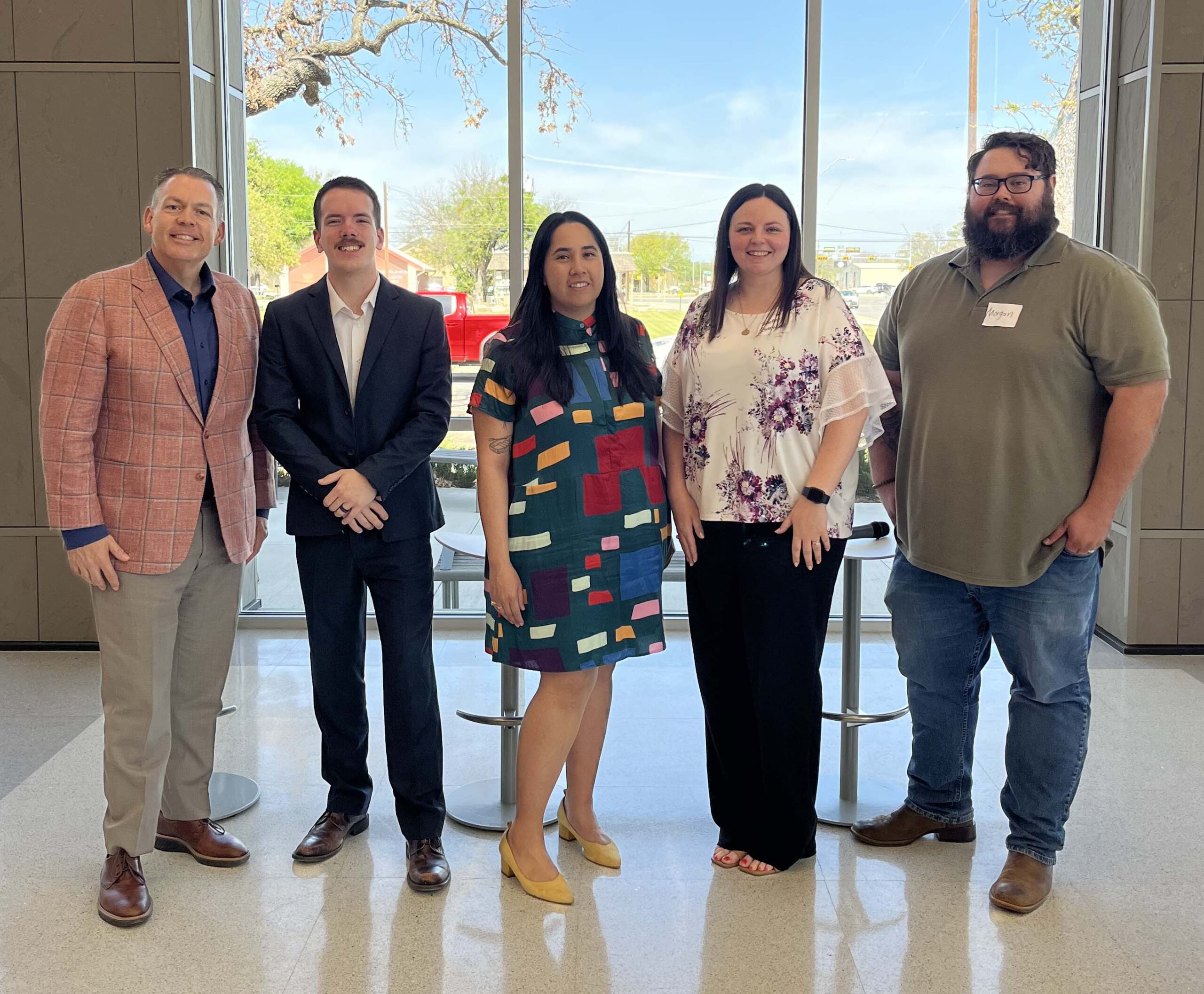
Alumni panelists pictured with Cory Hines (left), HPU president, are Noah Acord, Leah Joiner, JulieAnn Greenfield and Morgan Lacy. (HPU Photo)

Howard Payne University’s Student Association of Social Work hosted its first social work alumni brunch on March 29 in the Newbury Family Welcome Center. The event was a time to build community with professionals in the fields of social work and criminal justice and to help students make new connections. The four speakers included Morgan Lacy, hospice social worker; JulieAnn Greenfield, faith-based and community engagement specialist; Leah Joiner, senior project manager for Meadows Mental Health Policy Institute; and Noah Acord, Brownwood police officer. The speakers provided students with advice about the value of self-care, how to navigate graduate school and the importance of support in helping professions.

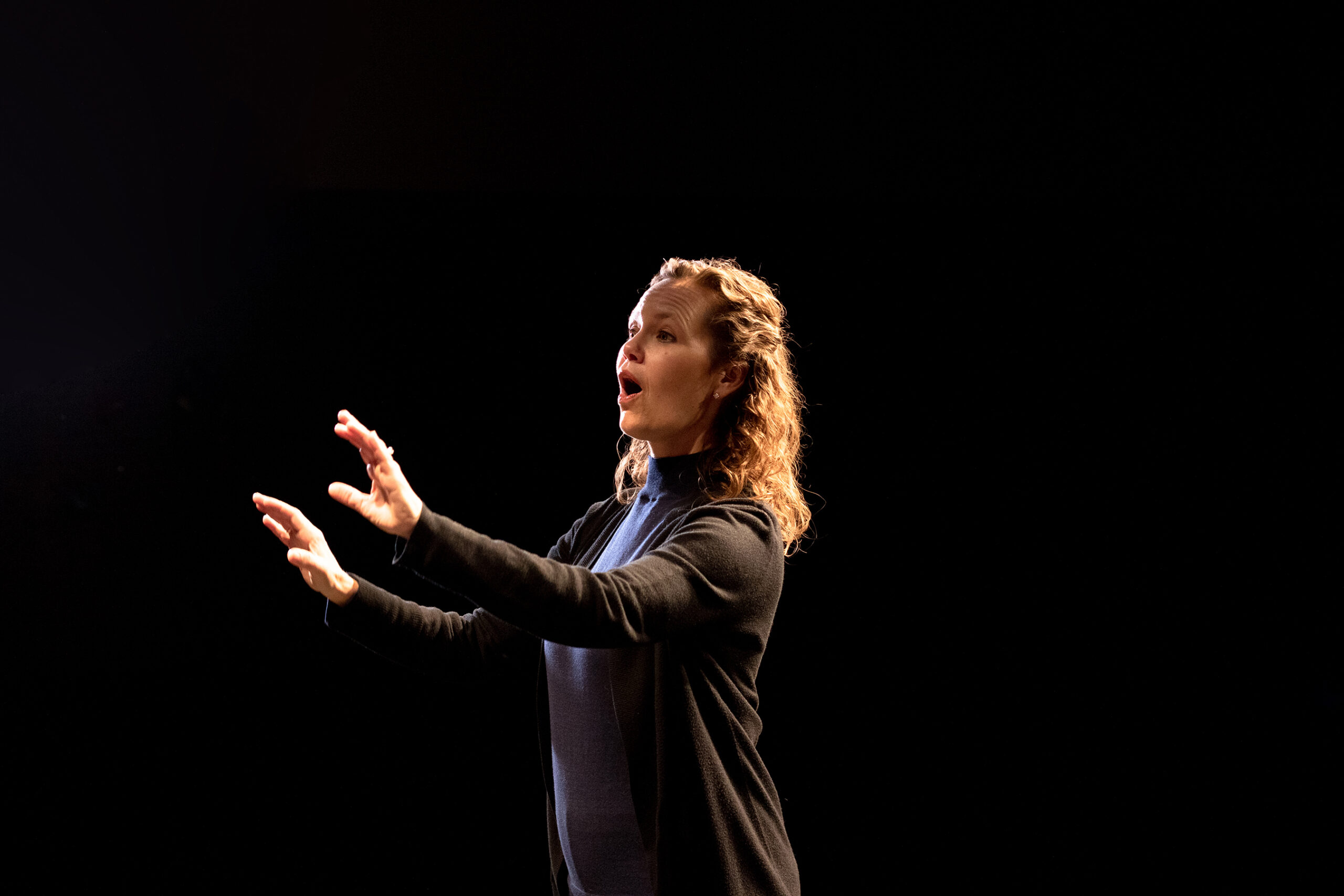
Sarah Herrington, director of choral studies and assistant professor of music education at Wayland. (Wayland Photo)

Gabriel Fauré’s Requiem will be featured at the Wayland Baptist University’s International Choir and Wayland Singers’ spring concert at 7 p.m., April 26, in Harral Memorial Auditorium. This will be a special performance of the same work the choirs will perform June 7 at Carnegie Hall in New York City. In addition to the Wayland choral ensembles, the Carnegie choir in New York will include Wayland faculty, alumni and choral friends from across the country. The April 26 concert also will bring together these groups, featuring participants who live within driving distance. The concert will include two guest soloists and an organist—Paige Brown, soprano, and Ashley Prewett, baritone; and organist John Hollins, associate director of choral studies at Texas Tech University and organist and choirmaster at St. Paul’s-on-the-Plains Episcopal Church in Lubbock. The concert is free and open to the public. However, attendees are encouraged to make monetary donations to help offset costs associated with the Carnegie Hall project and associated travel expenses.

East Texas Baptist University hosted the 2025 East Texas Regional Phi Alpha Theta Conference on April 5. (ETBU Photo)

East Texas Baptist University hosted the 2025 East Texas Regional Phi Alpha Theta Conference on April 5. This annual gathering of student historians provided an opportunity for undergraduate and graduate students from across the region to present research and engage in scholarly discussions. During the conference luncheon, attendees heard from Taylor Weaver, ETBU reference and instructional services librarian and assistant professor of library science. The event also recognized outstanding student research.

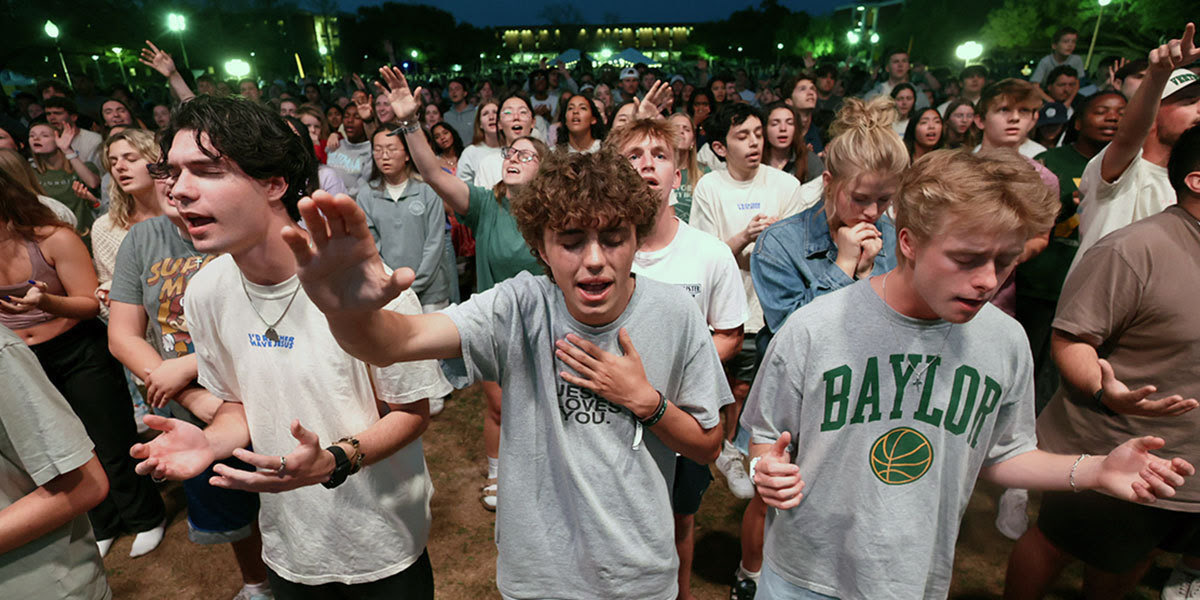
Hundreds of Baylor students gathered in Jesus’ name for FM72, an annual 72-hour on-campus prayer and worship event. (Baylor Photo)

In the spring of 1945, a group of Baylor students prayed for spiritual renewal for 90 straight days. Their prayers led to a movement that helped inspire ministries on campus and around the world, from the Journeyman mission program to the Passion Conferences. Last week, hundreds of Baylor students again gathered in Jesus’ name for FM72, an annual 72-hour on-campus prayer and worship event coordinated by Baylor’s Office of Spiritual Life in conjunction with local churches and campus ministries. The event took place at Fountain Mall, at the heart of campus. A prayer tent featured round-the-clock worship and prayer, and students gathered four straight nights, Sunday through Wednesday, for special worship services led by a variety of pastors and speakers. More than 30 Baylor students were baptized Wednesday night. “There’s something about learning how to pray that’s different,” said Charles Ramsey, associate chaplain and director for campus ministries and church connections at Baylor. “There’s something about lingering in prayer. … That is different, and it’s very special.”

The Baptist World Alliance is leading a 35-member delegation with representatives from eight countries to participate in the United Nations 4th Session of the Permanent Forum on People of African Descent this week. The international delegation will host multiple events as part of the BWA’s Flourishing Freedom Initiative, a multi-year focus on racial justice. In 2015, the United Nations adopted 17 sustainable development goals to provide “a shared blueprint for peace and prosperity for people and the planet.” The BWA delegation will focus their advocacy on a call to add an 18th sustainable development goal focused on restorative racial justice.


Conservative seminary training gaining ground outside U.S.

Providing theological education and ministry training is a challenge for Baptists in many places around the world, but Global Leadership Development is making it easier.

Southern Philippines Baptist Theological Seminary is one example.

Southern Philippines Baptist Theological Seminary

Edgar Aungon, president of the seminary, reported on how Global Leadership Development has helped his school.

The seminary started as an idea in 1953, when Southern Baptist Convention Foreign Mission Board missionaries Elaine Crotwell and Clyde Jowers saw the need for a training program for pastors in the Philippines, Aungon said.

Edgar Aungon, president of Southern Philippines Baptist Theological Seminary, addressing attendees of the Global Leadership Development Pastor’s Consortium, April 14, 2025. (Photo: Eric Black)

“Jowers was appointed as the first director of the Davao Baptist Bible School” in 1955, Aungon added, noting Baker Cauthen was then-executive secretary of the Foreign Mission Board.

Between its founding and 1982, the Bible school developed into a seminary with the financial and personnel assistance of the Foreign Mission Board, later to be renamed the International Mission Board.

In 1996, the IMB changed its mission strategy and “withdrew their financial support and teaching personnel,” Aungon said. “My seminary was left to fend for itself.”

In an effort to earn enough income to continue providing the theological education needed in the Philippines, the seminary started offering general education as early as elementary and kindergarten. Unfortunately, general education became the focus, causing theological education to suffer.

Aungon said there are 1,800 Southern Baptist churches in the Visayas island group and on Mindanao. Of their pastors, 19 to 20 percent are trained, he added.

Global Leadership Development “helped the seminary … develop a Master of Theology degree and provided professors to teach the 36-hour degree,” David Mahfouz, pastor of First Baptist Church in Warren and a Global Leadership Development ambassador, explained in an email.

How Global Leadership Development helps

When asked how Global Leadership Development helps seminaries strengthen and grow, Mahfouz said the effort does so in several ways.

Global Leadership Development ambassador David Mahfouz, pastor of First Baptist Church in Warren, addressing attendees of the GLD Pastor’s Consortium at Southwestern Baptist Theological Seminary in Fort Worth, April 14, 2025. (Photo: Eric Black)

“We provide consortiums that they join. They agree to recognize each other’s academic credits and maintain parity among their degree offerings. Also, they can share faculty and syllabi, and we provide staff development,” Mahfouz said.

“We send visiting professors to teach classes. They go at their own cost. The seminary provides housing for them,” he continued.

“We provide digital resources through the deployment of our Alexandria Library, [which contains] 2 million books and journal articles.”

“We identify faculty … and help them gain access to further academic studies by raising scholarship funds. We also identify the top 2 percent of students at a seminary and recruit them to pursue higher academic degrees,” Mahfouz explained.

Much of this is facilitated with the support of Champion Churches. Mahfouz’s church became a Champion Church in partnership with Southwestern Baptist Theological Seminary and the Baptist seminary in Lisbon, Portugal, in 2016.

Growth of Global Leadership Development

In August 2021, Global Leadership Development counted 90 related seminaries with an estimated combined enrollment of 27,000 students. That same year, Mahfouz reported 354 Champion Churches partnering with Global Leadership Development.

Mahfouz reported by email the number of Champion Churches and partner ministries is now 250. Among those partners are Baptist associations in Texas such as Enon Baptist Association and Golden Triangle Network, along with International Evangelical Association, Kingdom First Ministries and Baptist Distinctives. The Association of Korean Southern Baptist Churches also is a partner.

Though the reported number of Champion Churches has decreased since 2021, the number of related seminaries has grown to 140, with an estimated combined enrollment of 42,000 students.

Theological perspectives

Representatives of the partners gathered April 14 for a meeting of the Global Leadership Development Pastor’s Consortium hosted by Southwestern Baptist Theological Seminary in Fort Worth.

Jimmy Draper, retired president of the Southern Baptist Convention Sunday School Board (now LifeWay Christian Resources), delivered the opening message of the Global Leadership Development Pastor’s Consortium at Southwestern Baptist Theological Seminary in Fort Worth, April 14, 2025. (Photo: Eric Black)

Jimmy Draper, former pastor of First Baptist Church in Euless and retired president of the SBC’s Sunday School Board (now LifeWay Christian Resources), addressed attendees by asking, “How are we going to fulfill the Great Commission?”

With an examination of Acts 16:6-10—the story of God forbidding Paul to preach in Bithynia—Draper concluded God doesn’t expect Christians to figure out how to fulfill the Great Commission, but to listen to God and obey what God tells them to do.

“God had a plan that included the whole world,” Draper said after suggesting Lydia, who became a follower of Jesus after Paul followed God’s call to Macedonia instead of Bithynia, was instrumental in evangelizing Asia through her salespeople.

Following Draper, Matthew Scott, global digital director for International Evangelical Association, showed an instructional video about disciple-making by Billie Hanks Jr., IEA’s founder and president.

Saying disciple-making is the weak link and the Achilles’ heel in completing the Great Commission, Hanks distinguished between discipleship and disciple-making. Discipleship happens in groups. Disciple-making is one-on-one. Additionally, disciple-making is “intentional, relational, highly specific.”

Along with other markers of disciple-making, Hanks noted women are to disciple women, and men are to disciple men for two reasons. One, men understand men’s spiritual needs better than women do, and vice versa. Two, men discipling men and women discipling women guards against temptation and inappropriate relationships.

Multiplication is a result of disciple-making done right, Hanks said.

Global Leadership Development started in 2012 as the Patterson Center for Global Theological Innovation, named for former Southwestern Seminary President Paige Patterson. A Christian Index article described it as “a Conservative Renaissance in seminaries around the world.”


Chris Tomlin’s new song resurrects oldest known hymn

(RNS)—In the 1890s, a pair of British archaeologists began digging in an ancient rubbish heap at the edge of the ruins of Oxyrhynchus, Egypt, looking for a glimpse into the city’s past.

They’d eventually find tens of thousands of documents, written on papyrus and preserved in the desert for centuries, ranging from official documents to personal letters. Among them was a fragment about 11 inches long and 2 inches wide that detailed shipments of grain on one side.

On the other side were the music and lyrics to a song. That song would turn out to be one of the oldest Christian hymns ever found.

“We have about 50 examples of musical compositions with musical notation from antiquity,” said John Dickson, a former songwriter turned biblical scholar.

“This is the only Christian one. And it predates any other notation of a Christian hymn by many centuries.”

Scholars have known about the fragment, known as P.Oxy. 1786 or the Oxyrhynchus Hymn—a reference to the Oxyrhynchus Papyri collection—since 1922, when the text of the hymn was first published in English.

The song is filled with Christian imagery, with worshippers telling the stars and wind to be silent as they praise God, “the giver of all good things,” but the tune is hard to sing. It’s not the kind of song to turn up in a megachurch worship service.

The late Martin Marty, a famed Christian historian, once wrote: “If you complain that it’s a bit bumpy and hard to sing, or that it’s ‘one of those old hymns’ and not catchy like the ones that show up on screens, you are right.”

New old hymn debuts—again

But Marty, who was wrong about few things, might have spoken too soon. A new version of the Oxyrhynchus Hymn debuted last week, courtesy of a new translation from Dickson and help from Chris Tomlin and Ben Fielding, two of the most popular modern worship songwriters.

John Dickson in “The First Hymn” documentary. (Video screen grab)

Christened as “The First Hymn,” the new song arrived just in time for Holy Week, along with a documentary about the hymn that debuts this week at Biola University in Los Angeles and at the Museum of the Bible in Washington, D.C.

Dickson said there are earlier Christian hymns—including several in the text of the New Testament—but none of them has the musical notation found in the P.Oxy. 1786.

He said scholars can still read that notation, which comes from an ancient Greek style of music, and so they know what the hymn would have sounded like. The documentary features Dickson singing a bit of the original melody in the ruins of an ancient cathedral.

“I think the most theologically significant thing is that it’s a hymn to the Trinity—Father, Son and Holy Spirit, the century before the Nicene Creed,” he said.

A former songwriter and musician who now teaches biblical studies and public Christianity at Wheaton College in the Chicago suburbs, Dickson said he’s long dreamt of hearing this ancient hymn sung by modern worshippers.

Ancient text, modern melody

But there were a few challenges. One was the hymn’s original melody likely would not work for a modern audience. The other was some of the words of the hymn were missing in the fragment.

So, he wrote a new translation of the lyrics that remain and gave them to the two songwriters to work with. They used all of his translation and added a more modern melody.

A studio recording of the song begins with an Egyptian vocalist singing along with a guitar part that echoes the original melody of the hymn, followed by a new melody from Tomlin and Fielding.

There is also a live version of the song recorded at a stadium-style concert, and one sung with a choir.

“All powers cry out in answer,” the new lyrics read. “All glory and praise forever to our God, the Father, Son, and Spirit, we sing amen.”

Marc Jolicoeur, director of worship studies at Kingswood University in New Brunswick who is part of a worship leader worship project, said other adaptions of old, traditional hymns and texts—such as the Doxology, the Lord’s Prayer, the Apostle’s Creed and a blessing from the Book of Numbers—have been adapted into popular modern worship songs that “meet a Venn diagram of needs.”

He hopes to use this new version of the first hymn in worship.

“It’s quite appealing to me as a worship leader—beautiful song, laid out in a familiar and engaging arrangement, deeply connected to the ancient pillars of the faith,” he said.

Jolicoeur also said the new version from Tomlin and Fielding is a bit of a “Ship of Theseus” puzzle—in that the song has some new lyrics, in a new language and melody.

The Ship of Theseus is a reference to a philosophical puzzle—if all the parts of a ship are replaced over time, is it still the same ship or something new? Is The First Hymn really the old hymn resurrected or a hymn inspired by an ancient song?

Song of joy in midst of persecution

Shannan Baker, a postdoctoral fellow at the Dunn Center for Christian Music Studies at Baylor University, said the new hymn is different from some of the other work Tomlin and Fielding have done.

Tomlin is best known for songs such as “How Great Is Our God” and “Good, Good Father,” while Fielding co-wrote “Mighty to Save” and “What a Beautiful Name” for Hillsong, the Australian megachurch.

“There is a draw toward things that feel more authentic because they are from the ‘early church,’” said Baker.

Dickson said the song comes from a time when Christians were under persecution in the Roman Empire. Yet, they sang with joy about their faith, something he hopes will inspire modern listeners.

“I look at this hymn and think it’s joyful confidence in the midst of persecution, instead of Christians punching back,” he said.

He also hopes Christians of all kinds of backgrounds will embrace the song.

“Here is a version of Christianity before all our squabbles, before all our denominations,” he said. “I like to think of the song as a token of unity.”