On the Move: Armes, Veal
Paul Armes to Spring Creek Baptist Church in Bosque County as pastor.
Carrie Veal to Second Baptist Church in Lubbock as senior pastor.
Paul Armes to Spring Creek Baptist Church in Bosque County as pastor.
Carrie Veal to Second Baptist Church in Lubbock as senior pastor.
Thousands of people viewed the reenactment of the crucifixion and resurrection of Christ at the University of Mary Hardin-Baylor’s 86th annual Easter Pageant on April 16. A video is available to view on the UMHB Facebook page and at this link Easter Pageant 2025-Campus Activities. Each year, UMHB President Randy O’Rear selects a student to direct the pageant and two students to play the key roles of Mary and Jesus. The students who fulfill the two key roles are chosen based on their strong Christian faith and character. Banner Scarborough, a senior from Lubbock, portrayed Jesus, and Emily Huynh, a senior from Richardson, performed the role of Mary. Victoria Kuntz, a senior public relations major from Los Fresnos, served as this year’s pageant director.
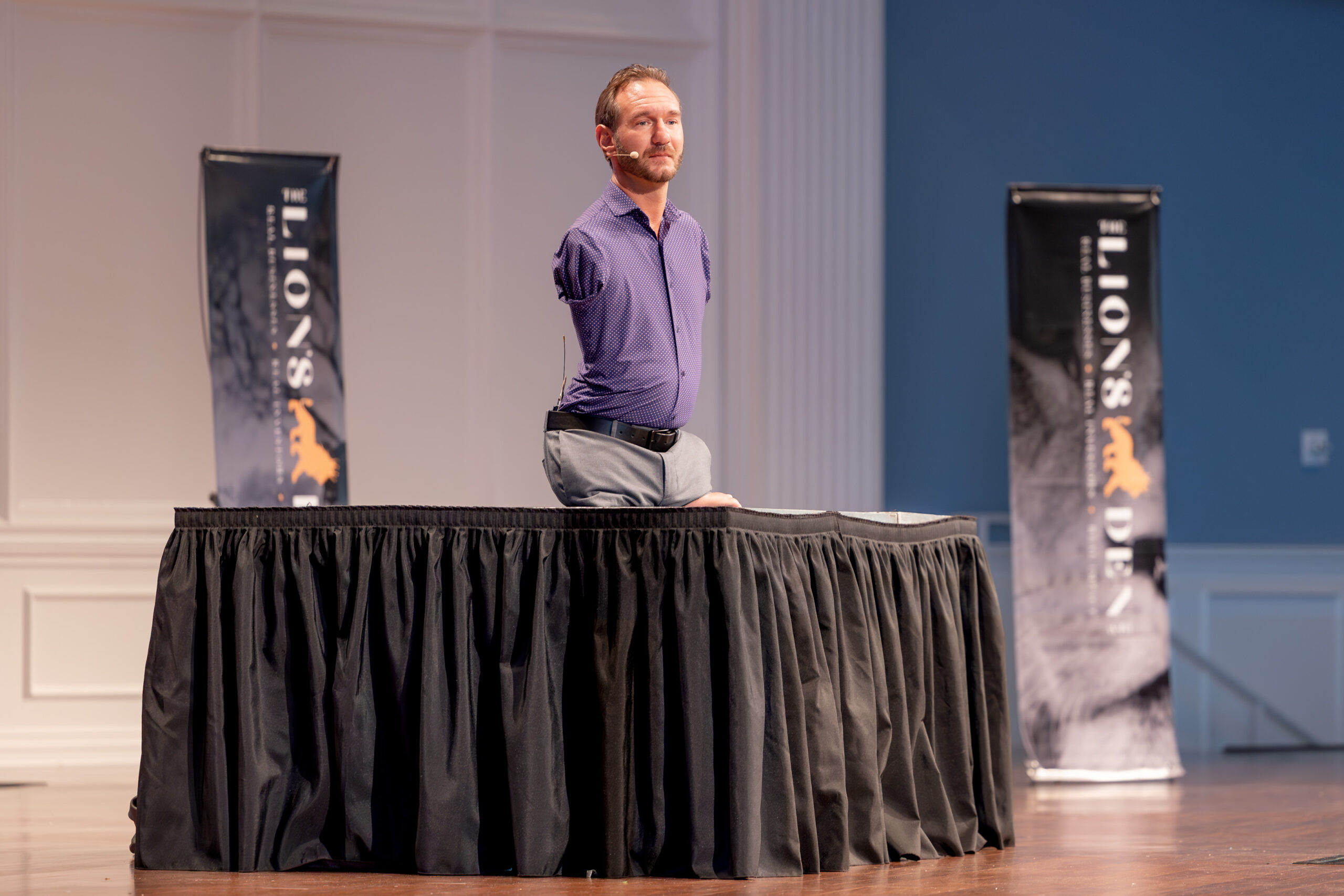
Dallas Baptist University hosted the 10th annual Lion’s Den DFW Conference, fostering faith-driven entrepreneurship and impact investing. The April 9-10 event brought together investors, entrepreneurs and thought leaders committed to advancing God’s kingdom through transformative business ventures. Highlights included a keynote address by Nick Vujicic, a renowned motivational speaker and founder of Life Without Limbs, who spoke on “The Hope for Africa in the 21st Century.” Born without limbs, surviving a suicide attempt at age 10, and eventually discovering his purpose in Christ, Vujicic spoke about faith, identity and living with eternal purpose. He also spoke about financial literacy, entrepreneurship and a dream to mobilize 200 million Christians to give $2 a day to transform Africa. Henry Kaestner, co-founder of Sovereign’s Capital, led a session on “Why Invest in Africa,” emphasizing the importance of faith-aligned investments in emerging markets. Actress, producer and New York Times bestselling author Candace Cameron Bure presented the trophies to the pitch competition winners. She encouraged attendees to carry their convictions boldly into the workplace, no matter the setting.
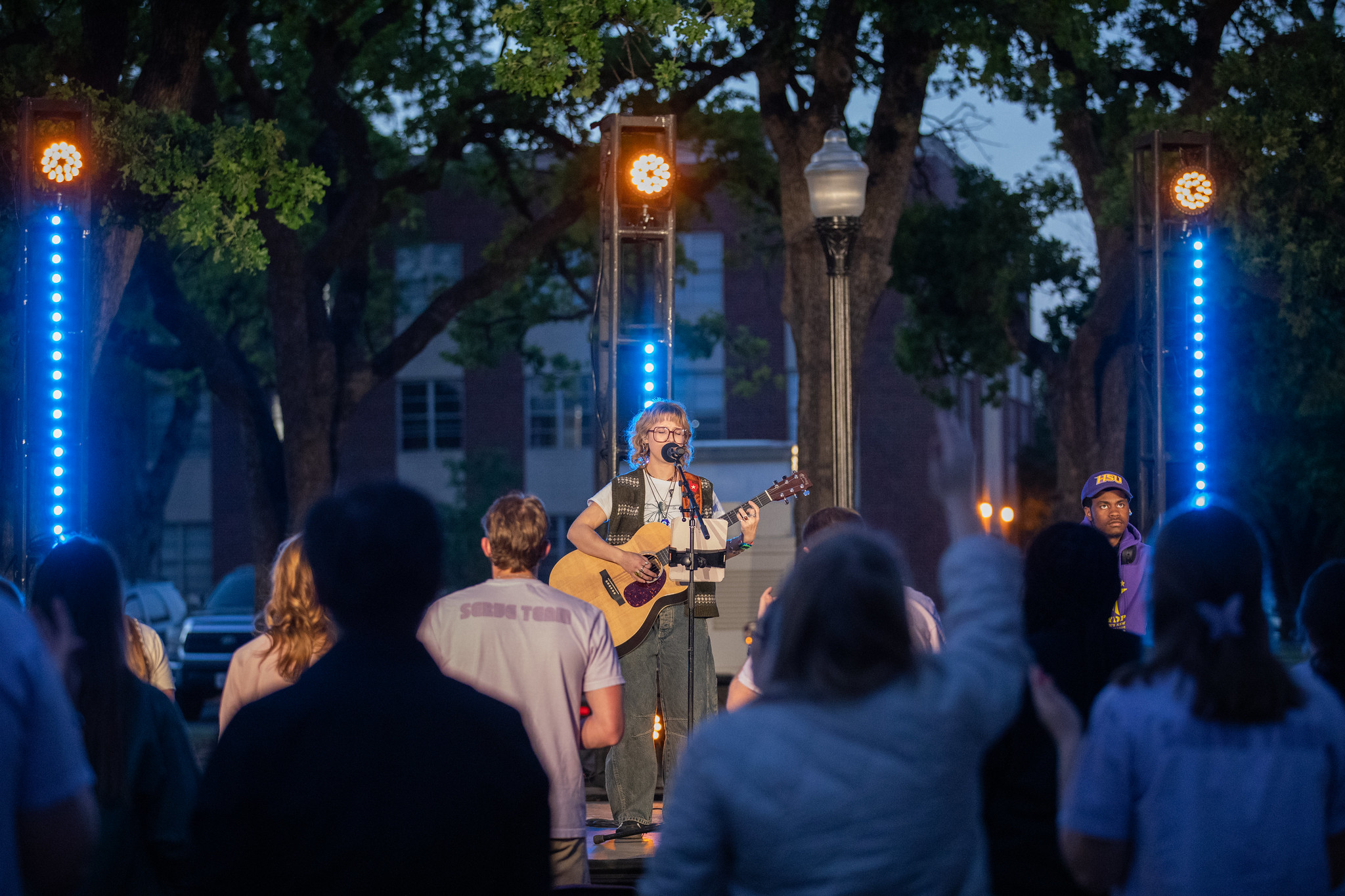
Hardin-Simmons University hosted Revive25—a three-day, student-led event, on April 14-16. The event focused on uniting the campus community around Christ through worship, prayer and spiritual renewal. Revive25 centered around 24 continuous hours of prayer, paired with three nights of worship services that included preaching, prayer and live worship music. The final night concluded with baptisms.
As of April 9, three Baylor students face visa terminations, Baylor spokesperson Lori Fogleman told the Baylor Lariat. She said the students “have had their immigration status terminated in the government database known as SEVIS”—Student and Exchange Visitor Information System. Fogelman explained Baylor’s International Student and Scholar Services learned of the terminations during a routine records review. Neither the university nor the students were given advance notice of the change in status, a pattern being observed in universities around the state and more broadly around the country. She noted the university remains “strongly committed” to supporting international students as part of its commitment to fostering caring Christian community. “Baylor has not had ‘antisemitic rallies,’ and our international students are not terrorists or gang members. They came to one of America’s premier Christian universities to be formed as leaders in the world and in the church. … Stand up. Speak out. This is a moral moment,” Baylor professor Greg Garrett said in a social media post.

University of Mary Hardin-Baylor students unveiled their undergraduate and graduate research projects on April 8 during Watson Scholars’ Day. Sponsored by the UMHB Office of Research, Watson Scholars’ Day requires students to complete all the steps necessary to present at a conference—including identifying a topic, conducting research and ultimately explaining their findings publicly. Participants included 104 students and 15 faculty sponsors. AP Seminar students from Belton High School also attended the event to observe and take notes for their own upcoming presentations.

Houston Christian University held a groundbreaking ceremony for the Smith Engineering, Science and Nursing Building, made possible by a $20 million lead gift from Sherry and Jim Smith, the largest single donation received in HCU’s history. “This incredible new facility represents our steadfast dedication to preparing students for success in the evolving landscape of engineering, science and nursing,” said HCU President Robert Sloan. The $60 million, 71,000-square-foot, multi-disciplinary facility will offer cutting-edge learning spaces, advanced laboratories and the latest technology in the fields of engineering, science and nursing. Designed to foster collaboration and innovation, the state-of-the art structure will empower students with the practical skills and knowledge they need to thrive in some of the nation’s most in-demand industries. Houston Mayor John Whitmire spoke at the groundbreaking. The construction project is set to begin this spring and complete in fall 2026.
STCH Ministries released the first episode of its new Heal, Restore, Transform podcast. The podcast offers stories of hope, helpful resources and real conversations about faith and life. This podcast offers a space where faith meets real-life challenges, offering encouragement, wisdom and biblical truth. It’s designed to be a resource for counselors and a support for those seeking help. The first episode features Tim Williams and Darin Griffiths, who tackle breaking the stigma of mental health in the church. They explore how education, transparency and support can foster healing, along with practical ways churches can help. Listen now on Apple Podcasts and Spotify. The next episode will release on April 28, and the topic is grief.
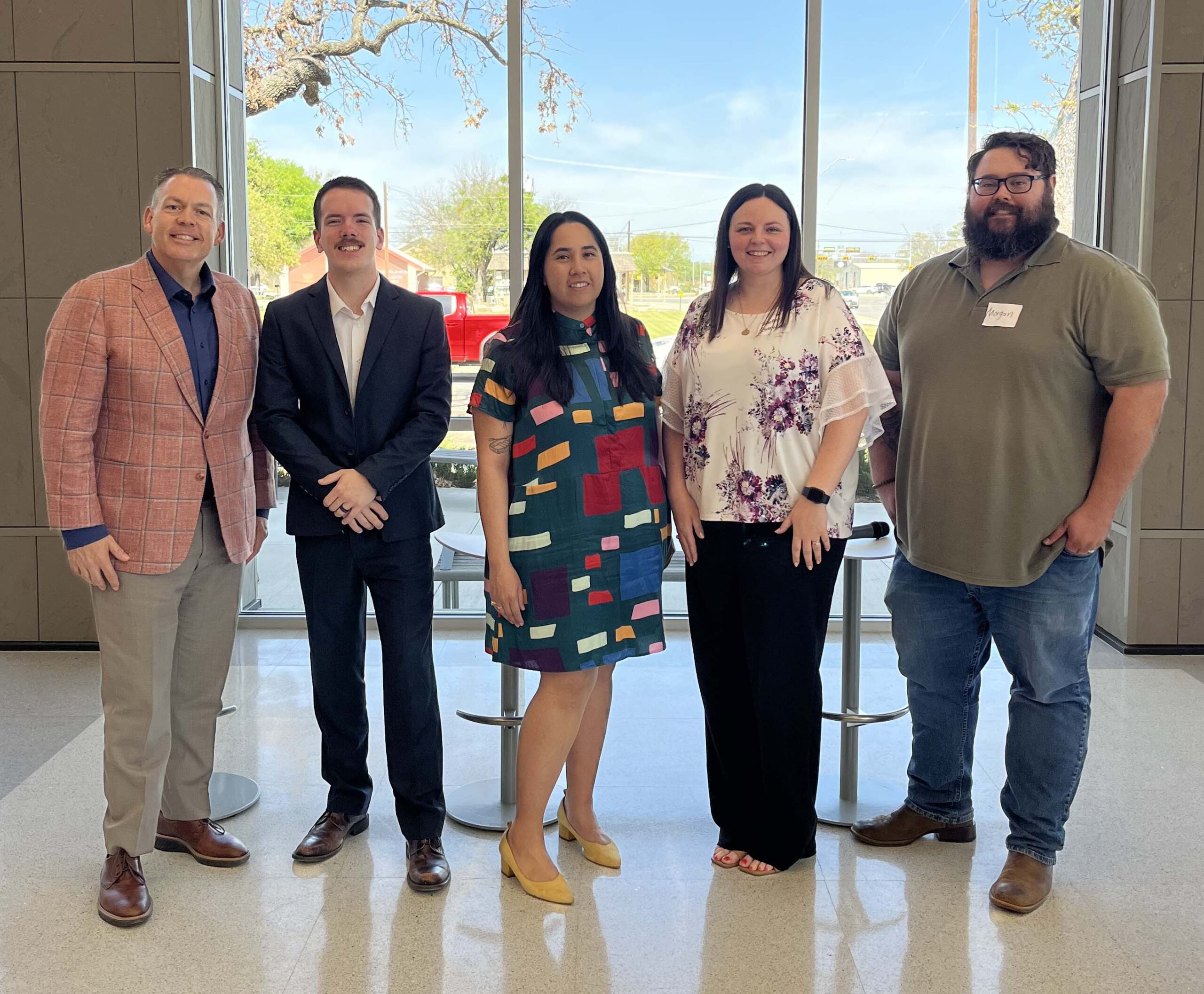
Howard Payne University’s Student Association of Social Work hosted its first social work alumni brunch on March 29 in the Newbury Family Welcome Center. The event was a time to build community with professionals in the fields of social work and criminal justice and to help students make new connections. The four speakers included Morgan Lacy, hospice social worker; JulieAnn Greenfield, faith-based and community engagement specialist; Leah Joiner, senior project manager for Meadows Mental Health Policy Institute; and Noah Acord, Brownwood police officer. The speakers provided students with advice about the value of self-care, how to navigate graduate school and the importance of support in helping professions.
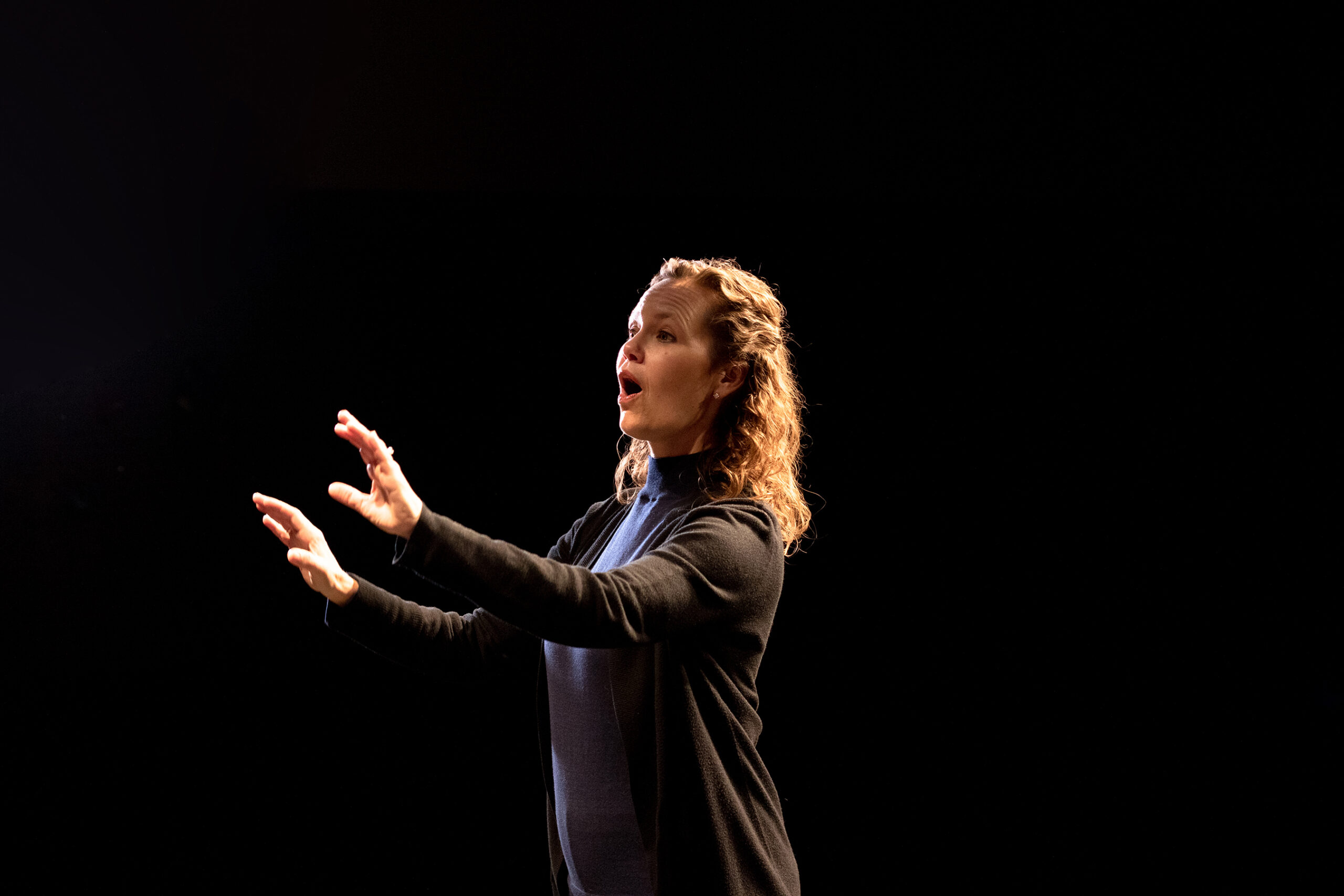
Gabriel Fauré’s Requiem will be featured at the Wayland Baptist University’s International Choir and Wayland Singers’ spring concert at 7 p.m., April 26, in Harral Memorial Auditorium. This will be a special performance of the same work the choirs will perform June 7 at Carnegie Hall in New York City. In addition to the Wayland choral ensembles, the Carnegie choir in New York will include Wayland faculty, alumni and choral friends from across the country. The April 26 concert also will bring together these groups, featuring participants who live within driving distance. The concert will include two guest soloists and an organist—Paige Brown, soprano, and Ashley Prewett, baritone; and organist John Hollins, associate director of choral studies at Texas Tech University and organist and choirmaster at St. Paul’s-on-the-Plains Episcopal Church in Lubbock. The concert is free and open to the public. However, attendees are encouraged to make monetary donations to help offset costs associated with the Carnegie Hall project and associated travel expenses.
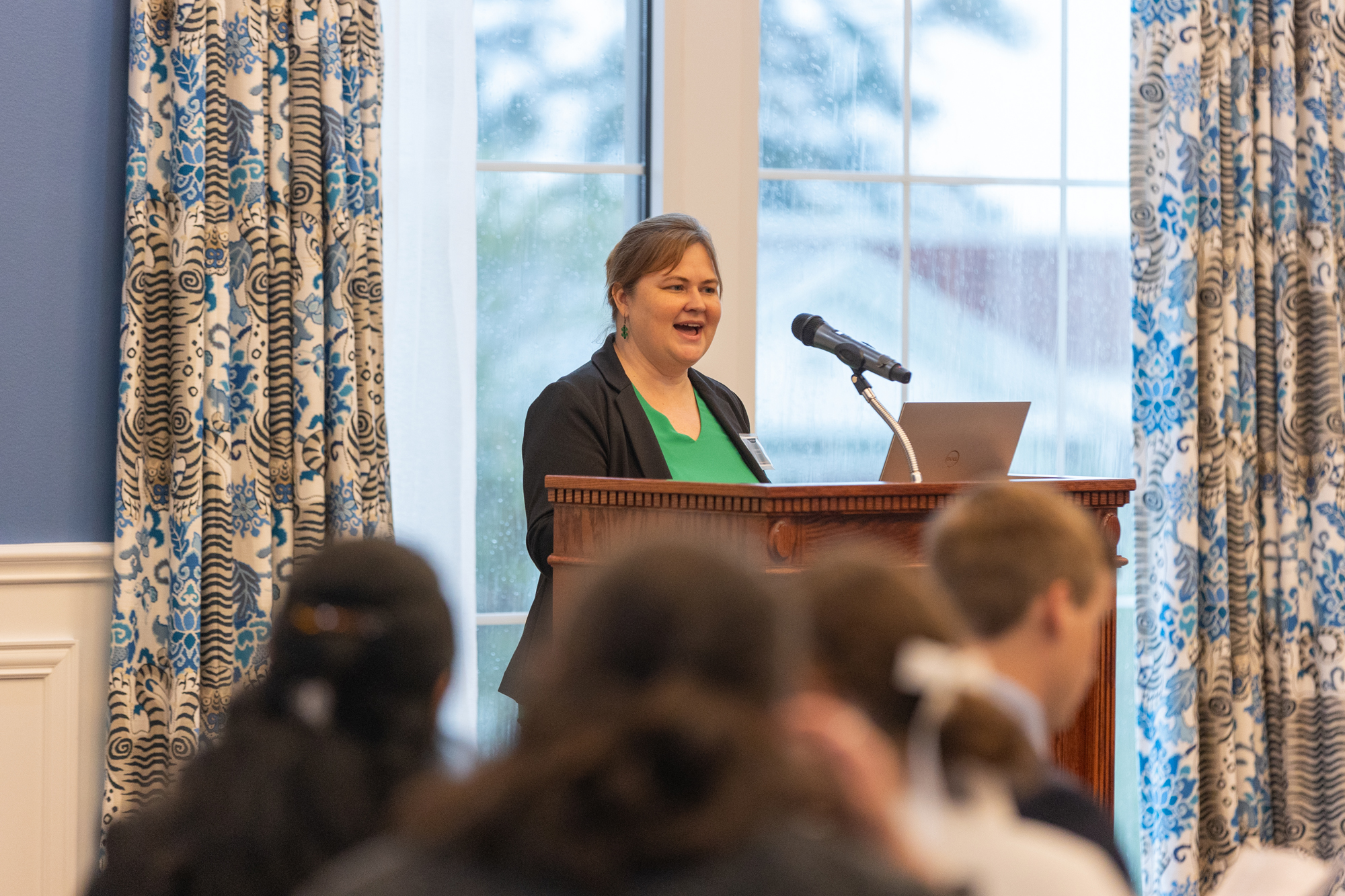
East Texas Baptist University hosted the 2025 East Texas Regional Phi Alpha Theta Conference on April 5. This annual gathering of student historians provided an opportunity for undergraduate and graduate students from across the region to present research and engage in scholarly discussions. During the conference luncheon, attendees heard from Taylor Weaver, ETBU reference and instructional services librarian and assistant professor of library science. The event also recognized outstanding student research.
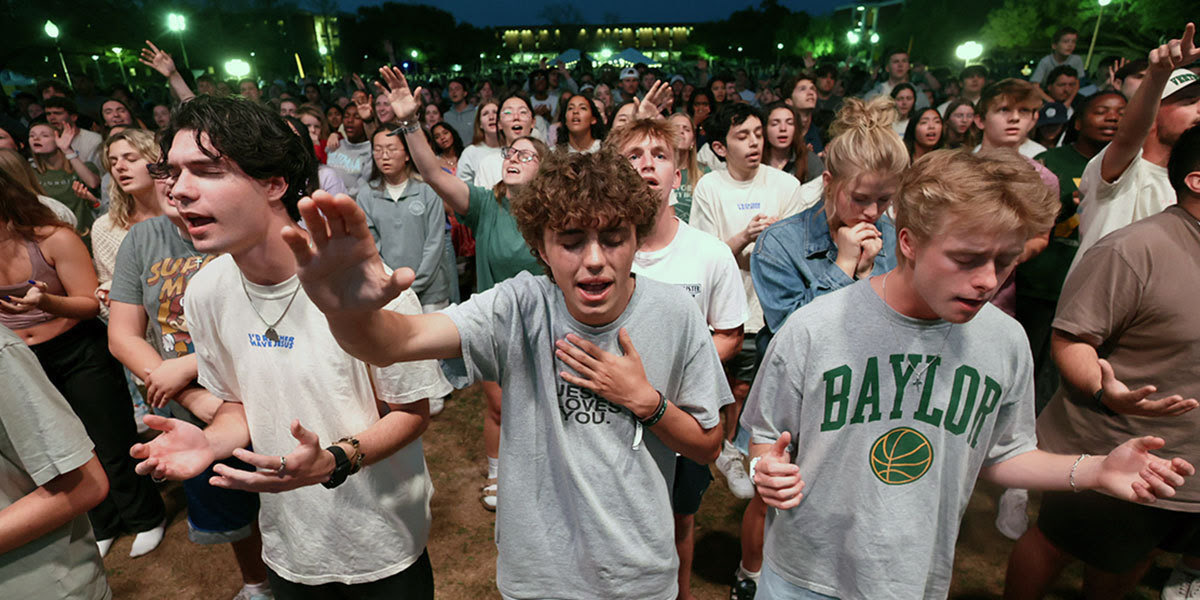
In the spring of 1945, a group of Baylor students prayed for spiritual renewal for 90 straight days. Their prayers led to a movement that helped inspire ministries on campus and around the world, from the Journeyman mission program to the Passion Conferences. Last week, hundreds of Baylor students again gathered in Jesus’ name for FM72, an annual 72-hour on-campus prayer and worship event coordinated by Baylor’s Office of Spiritual Life in conjunction with local churches and campus ministries. The event took place at Fountain Mall, at the heart of campus. A prayer tent featured round-the-clock worship and prayer, and students gathered four straight nights, Sunday through Wednesday, for special worship services led by a variety of pastors and speakers. More than 30 Baylor students were baptized Wednesday night. “There’s something about learning how to pray that’s different,” said Charles Ramsey, associate chaplain and director for campus ministries and church connections at Baylor. “There’s something about lingering in prayer. … That is different, and it’s very special.”
The Baptist World Alliance is leading a 35-member delegation with representatives from eight countries to participate in the United Nations 4th Session of the Permanent Forum on People of African Descent this week. The international delegation will host multiple events as part of the BWA’s Flourishing Freedom Initiative, a multi-year focus on racial justice. In 2015, the United Nations adopted 17 sustainable development goals to provide “a shared blueprint for peace and prosperity for people and the planet.” The BWA delegation will focus their advocacy on a call to add an 18th sustainable development goal focused on restorative racial justice.
Providing theological education and ministry training is a challenge for Baptists in many places around the world, but Global Leadership Development is making it easier.
Southern Philippines Baptist Theological Seminary is one example.
Edgar Aungon, president of the seminary, reported on how Global Leadership Development has helped his school.
The seminary started as an idea in 1953, when Southern Baptist Convention Foreign Mission Board missionaries Elaine Crotwell and Clyde Jowers saw the need for a training program for pastors in the Philippines, Aungon said.

“Jowers was appointed as the first director of the Davao Baptist Bible School” in 1955, Aungon added, noting Baker Cauthen was then-executive secretary of the Foreign Mission Board.
Between its founding and 1982, the Bible school developed into a seminary with the financial and personnel assistance of the Foreign Mission Board, later to be renamed the International Mission Board.
In 1996, the IMB changed its mission strategy and “withdrew their financial support and teaching personnel,” Aungon said. “My seminary was left to fend for itself.”
In an effort to earn enough income to continue providing the theological education needed in the Philippines, the seminary started offering general education as early as elementary and kindergarten. Unfortunately, general education became the focus, causing theological education to suffer.
Aungon said there are 1,800 Southern Baptist churches in the Visayas island group and on Mindanao. Of their pastors, 19 to 20 percent are trained, he added.
Global Leadership Development “helped the seminary … develop a Master of Theology degree and provided professors to teach the 36-hour degree,” David Mahfouz, pastor of First Baptist Church in Warren and a Global Leadership Development ambassador, explained in an email.
When asked how Global Leadership Development helps seminaries strengthen and grow, Mahfouz said the effort does so in several ways.
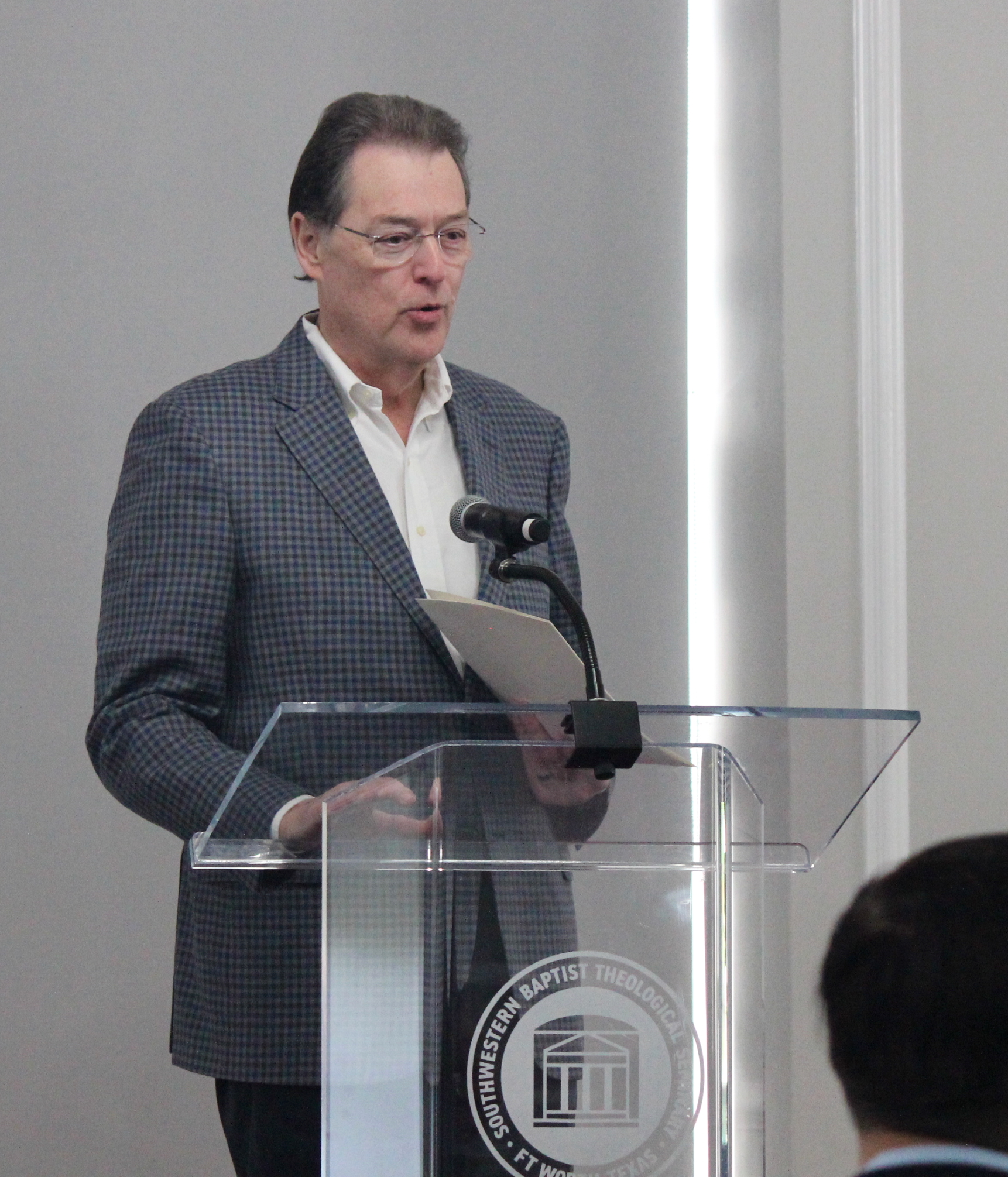
“We provide consortiums that they join. They agree to recognize each other’s academic credits and maintain parity among their degree offerings. Also, they can share faculty and syllabi, and we provide staff development,” Mahfouz said.
“We send visiting professors to teach classes. They go at their own cost. The seminary provides housing for them,” he continued.
“We provide digital resources through the deployment of our Alexandria Library, [which contains] 2 million books and journal articles.”
“We identify faculty … and help them gain access to further academic studies by raising scholarship funds. We also identify the top 2 percent of students at a seminary and recruit them to pursue higher academic degrees,” Mahfouz explained.
Much of this is facilitated with the support of Champion Churches. Mahfouz’s church became a Champion Church in partnership with Southwestern Baptist Theological Seminary and the Baptist seminary in Lisbon, Portugal, in 2016.
In August 2021, Global Leadership Development counted 90 related seminaries with an estimated combined enrollment of 27,000 students. That same year, Mahfouz reported 354 Champion Churches partnering with Global Leadership Development.
Mahfouz reported by email the number of Champion Churches and partner ministries is now 250. Among those partners are Baptist associations in Texas such as Enon Baptist Association and Golden Triangle Network, along with International Evangelical Association, Kingdom First Ministries and Baptist Distinctives. The Association of Korean Southern Baptist Churches also is a partner.
Though the reported number of Champion Churches has decreased since 2021, the number of related seminaries has grown to 140, with an estimated combined enrollment of 42,000 students.
Representatives of the partners gathered April 14 for a meeting of the Global Leadership Development Pastor’s Consortium hosted by Southwestern Baptist Theological Seminary in Fort Worth.

Jimmy Draper, former pastor of First Baptist Church in Euless and retired president of the SBC’s Sunday School Board (now LifeWay Christian Resources), addressed attendees by asking, “How are we going to fulfill the Great Commission?”
With an examination of Acts 16:6-10—the story of God forbidding Paul to preach in Bithynia—Draper concluded God doesn’t expect Christians to figure out how to fulfill the Great Commission, but to listen to God and obey what God tells them to do.
“God had a plan that included the whole world,” Draper said after suggesting Lydia, who became a follower of Jesus after Paul followed God’s call to Macedonia instead of Bithynia, was instrumental in evangelizing Asia through her salespeople.
Following Draper, Matthew Scott, global digital director for International Evangelical Association, showed an instructional video about disciple-making by Billie Hanks Jr., IEA’s founder and president.
Saying disciple-making is the weak link and the Achilles’ heel in completing the Great Commission, Hanks distinguished between discipleship and disciple-making. Discipleship happens in groups. Disciple-making is one-on-one. Additionally, disciple-making is “intentional, relational, highly specific.”
Along with other markers of disciple-making, Hanks noted women are to disciple women, and men are to disciple men for two reasons. One, men understand men’s spiritual needs better than women do, and vice versa. Two, men discipling men and women discipling women guards against temptation and inappropriate relationships.
Multiplication is a result of disciple-making done right, Hanks said.
Global Leadership Development started in 2012 as the Patterson Center for Global Theological Innovation, named for former Southwestern Seminary President Paige Patterson. A Christian Index article described it as “a Conservative Renaissance in seminaries around the world.”
(RNS)—In the 1890s, a pair of British archaeologists began digging in an ancient rubbish heap at the edge of the ruins of Oxyrhynchus, Egypt, looking for a glimpse into the city’s past.
They’d eventually find tens of thousands of documents, written on papyrus and preserved in the desert for centuries, ranging from official documents to personal letters. Among them was a fragment about 11 inches long and 2 inches wide that detailed shipments of grain on one side.
On the other side were the music and lyrics to a song. That song would turn out to be one of the oldest Christian hymns ever found.
“We have about 50 examples of musical compositions with musical notation from antiquity,” said John Dickson, a former songwriter turned biblical scholar.
“This is the only Christian one. And it predates any other notation of a Christian hymn by many centuries.”
Scholars have known about the fragment, known as P.Oxy. 1786 or the Oxyrhynchus Hymn—a reference to the Oxyrhynchus Papyri collection—since 1922, when the text of the hymn was first published in English.
The song is filled with Christian imagery, with worshippers telling the stars and wind to be silent as they praise God, “the giver of all good things,” but the tune is hard to sing. It’s not the kind of song to turn up in a megachurch worship service.
The late Martin Marty, a famed Christian historian, once wrote: “If you complain that it’s a bit bumpy and hard to sing, or that it’s ‘one of those old hymns’ and not catchy like the ones that show up on screens, you are right.”
But Marty, who was wrong about few things, might have spoken too soon. A new version of the Oxyrhynchus Hymn debuted last week, courtesy of a new translation from Dickson and help from Chris Tomlin and Ben Fielding, two of the most popular modern worship songwriters.
Christened as “The First Hymn,” the new song arrived just in time for Holy Week, along with a documentary about the hymn that debuts this week at Biola University in Los Angeles and at the Museum of the Bible in Washington, D.C.
Dickson said there are earlier Christian hymns—including several in the text of the New Testament—but none of them has the musical notation found in the P.Oxy. 1786.
He said scholars can still read that notation, which comes from an ancient Greek style of music, and so they know what the hymn would have sounded like. The documentary features Dickson singing a bit of the original melody in the ruins of an ancient cathedral.
“I think the most theologically significant thing is that it’s a hymn to the Trinity—Father, Son and Holy Spirit, the century before the Nicene Creed,” he said.
A former songwriter and musician who now teaches biblical studies and public Christianity at Wheaton College in the Chicago suburbs, Dickson said he’s long dreamt of hearing this ancient hymn sung by modern worshippers.
But there were a few challenges. One was the hymn’s original melody likely would not work for a modern audience. The other was some of the words of the hymn were missing in the fragment.
So, he wrote a new translation of the lyrics that remain and gave them to the two songwriters to work with. They used all of his translation and added a more modern melody.
A studio recording of the song begins with an Egyptian vocalist singing along with a guitar part that echoes the original melody of the hymn, followed by a new melody from Tomlin and Fielding.
There is also a live version of the song recorded at a stadium-style concert, and one sung with a choir.
“All powers cry out in answer,” the new lyrics read. “All glory and praise forever to our God, the Father, Son, and Spirit, we sing amen.”
Marc Jolicoeur, director of worship studies at Kingswood University in New Brunswick who is part of a worship leader worship project, said other adaptions of old, traditional hymns and texts—such as the Doxology, the Lord’s Prayer, the Apostle’s Creed and a blessing from the Book of Numbers—have been adapted into popular modern worship songs that “meet a Venn diagram of needs.”
He hopes to use this new version of the first hymn in worship.
“It’s quite appealing to me as a worship leader—beautiful song, laid out in a familiar and engaging arrangement, deeply connected to the ancient pillars of the faith,” he said.
Jolicoeur also said the new version from Tomlin and Fielding is a bit of a “Ship of Theseus” puzzle—in that the song has some new lyrics, in a new language and melody.
The Ship of Theseus is a reference to a philosophical puzzle—if all the parts of a ship are replaced over time, is it still the same ship or something new? Is The First Hymn really the old hymn resurrected or a hymn inspired by an ancient song?
Shannan Baker, a postdoctoral fellow at the Dunn Center for Christian Music Studies at Baylor University, said the new hymn is different from some of the other work Tomlin and Fielding have done.
Tomlin is best known for songs such as “How Great Is Our God” and “Good, Good Father,” while Fielding co-wrote “Mighty to Save” and “What a Beautiful Name” for Hillsong, the Australian megachurch.
“There is a draw toward things that feel more authentic because they are from the ‘early church,’” said Baker.
Dickson said the song comes from a time when Christians were under persecution in the Roman Empire. Yet, they sang with joy about their faith, something he hopes will inspire modern listeners.
“I look at this hymn and think it’s joyful confidence in the midst of persecution, instead of Christians punching back,” he said.
He also hopes Christians of all kinds of backgrounds will embrace the song.
“Here is a version of Christianity before all our squabbles, before all our denominations,” he said. “I like to think of the song as a token of unity.”
Consuelo Oliva woke up suddenly at 3 a.m. Rain was pounding on the roof and windows of her home. The rain kept falling and falling—fast and hard. She had never experienced so much rain at one time.
“I was getting scared, and the kids were getting scared. … We couldn’t sleep because we were afraid the water level was going to rise, and it did, in seconds. … I kept praying for the rain to stop,” Oliva said.
The rain continued to pour and soon it entered Oliva’s home. Their whole home flooded with several inches of water. Oliva said they stepped onto the floor from the bed and their feet were covered in water.
“It was horrible. We couldn’t find our way out. It was all surrounded by water,” she said.
Oliva’s home was one of many that flooded in the Rio Grande Valley after excessive rain at the end of March. Some areas received more than 16 inches of rain—equivalent to one year’s worth of rain for the area—in one day.
Texans on Mission deployed assessors, shower and laundry, box distribution and flood recovery teams to the area. The flooding was so widespread, the need was great.
“The impact of the flooding in the Rio Grande Valley was felt far and wide,” said David Wells, Texans on Mission director of disaster relief. “We knew we needed to respond, but it was challenging to coordinate the teams to go since we still had teams in Missouri and Oklahoma on deployment.”
But Texans on Mission volunteers “stepped up to offer help and hope to those needing relief in the Rio Grande Valley,” Wells said.
It took three days for the water to recede from Oliva’s home. She was despondent over the damage. She and her husband bought the land her home sat on 35 years ago, and they slowly built their home over the years. And in an instant, all their possessions were lost.
Oliva’s husband started to pull out insulation. It was filled with so much water, he could wring it like a sponge and water just poured out. Sheetrock and furniture were ruined. It didn’t take long for mold to start growing as well.
“I told my husband, ‘Please tell me that I’m dreaming.’ It was bad. It was really bad,” Oliva said.
Oliva’s husband Tomas works six days a week. So, after the flood he was only able to work on the house one day a week. Cleanup was happening slowly until a Texans on Mission flood recovery team showed up and finished the job in one day.
Oliva said her daughter learned about Texans on Mission from her school. She called and said, “Mom, there’s people here that say they can go over there and help you.”
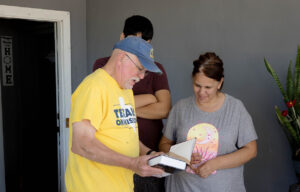
Oliva said she instantly felt “blessed and relieved.” Still, she thought they would have to wait weeks for the team to show up but was surprised when they called within a week and said the team would be at her house the next day.
“I was really happy,” Oliva said. “I called my husband and said: ‘They’re going to come tomorrow. The help is coming tomorrow!’”
The Texans on Mission team spent all day at Oliva’s home, tearing out ruined sheetrock and insulation, cleaning to remove mold and moving furniture.
As the team worked on her home, they also were able to connect with Oliva and her family, encourage them and show them the love of Christ.
“I felt so blessed and relieved,” Oliva said. “I’m so thankful for you guys coming to help us. And everyone is safe. All this we can buy slowly. But life we can’t buy.”
An expert on global development urged anti-hunger advocates to understand what U.S. foreign aid looked like before and after President Donald Trump’s inauguration.
Baptists and other evangelicals have spoken out on the effects federal cuts to foreign aid are having on global ministries and their inability to make up for overwhelming needs, exacerbated by abrupt loss of funding.
“There’s a huge amount of hunger in the world, and in today’s political environment, there are lot of things going on that are going to exacerbate global food insecurity and hunger and necessitate that we all take action,” Kate Weaver, advocate board member for Baylor University’s Collaborative on Hunger and Poverty, told participants of the collaborative’s annual summit.
Even before the presidential inauguration, acute food insecurity was high, explained Weaver, associate professor at the LBJ School of Public Affairs at the University of Texas in Austin, who co-directs innovations for peace and development.
To understand the current situation better, Weaver set the “lay of the land” of U.S. international development aid by asking questions about what U.S. foreign aid looked like before Jan. 20, when the U.S. Agency for International Development became the target of big federal government cuts.
The United States does not always give without strings attached. In fact, 40 percent of aid is “tied aid,” with conditions attached.
This aid—required to be spent back on goods, such as seeds, contractors and services provided by the donor country—might have stretched further, had recipients been free to identify cheaper goods available locally or to hire local extension agents with local expertise.
“If we want to take a look at waste, corruption and fraud,” Weaver suggested, “let’s take a little look in the mirror.”
She noted aid isn’t perfect. In fact, she said: “Aid is highly, highly flawed. But not all of that waste, fraud or corruption comes from other countries. Sometimes that comes from our own practices. And we need to face that reality, if we’re going to fix the system.”
Additionally, Weaver explained, giving often aligns with national interests, so much of the funding goes to middle-income countries, like Israel or Ukraine, rather than to countries with the highest rates of poverty and the greatest need.
“What’s happening in the aid world today is a near complete dismantling of the entire system,” Weaver said. “On inauguration day, President Trump surprised everyone by saying that he wasn’t just going to ask for a cut to foreign aid, he was going to try to eliminate it.”
She noted one of his first acts was an executive order placing a 90-day freeze on all foreign aid “and promising a comprehensive review of USAID and the entire aid system.”
“DOGE immediately entered the Ronald Reagan Building in Washington, D.C. USAID workers were furloughed or fired, and it became clear the intention was not a comprehensive review to create efficiencies, but to demolish USAID,” she said.
It seemed like USAID should be low on the list of problems President Trump would take on, Weaver said. Few Americans had foreign aid as top-of-mind before the executive action.
So in many ways, USAID was “low-hanging fruit” to test the power of executive mandate—“how much an executive can go in and demolish an agency that was created by Congress, that Congress is the only entity that has the power to create a federal agency, and to suspend contracts which means basically using executive authority to overhaul appropriated funds from Congress,” she suggested.
The U.S. Constitution does not give the executive branch that authority. But Trump went ahead, reneging on contracts Congress already had signed, virtually eliminating foreign aid.
“And because Congress didn’t do anything, he got away with it.” Now “the experiment” of how far executive power could be pushed is playing out in the courts.
Between Jan. 20 and April 8, more than 10,000 USAID jobs were eliminated, Weaver noted, through a difficult, erratic process.
The promise was to take 90 days to review foreign aid, but within 24 hours, the cuts to thousands of programs were initiated, not by careful review, but through the use of a 220-word wordlist, eliminating anything with those particular words, like “women,” she explained.
“All women’s health programs were gone with the stroke of a pen.”
Then there was an announcement that USAID would be downsized, moved to the Department of State, and as of a couple of weeks ago, “they pretty much announced that USAID is going away, in everything but name,” Weaver noted.
Key bureaus were eliminated, including everything related to democracy assistance, governance, most health programs and others. The sectors that remain relate to infrastructure, finance and private sector development.
“That’s where we are today” with U.S. aid, Weaver explained.
Unfortunately, she continued, other countries around the world also are facing similar situations at home and are reducing foreign aid, exacerbating the loss of USAID and creating “a shock to the (global aid) system.”
She acknowledged some countries with the capacity to begin providing for some of these needs have become highly dependent on aid. They can take agency and make changes to account for these cuts, but not overnight.
That these changes happened so quickly as the result of a one-and-a-half-page executive action “boggles the mind.”
PEPFAR, established by President George W. Bush to address the AIDS crisis in Africa, has been eliminated, which will lead to many babies being born with HIV who otherwise wouldn’t have been, she said. Many other agencies and initiatives are at risk.
“The ripple effects are huge,” Weaver said.
Hundreds of thousands of individuals related to the distribution of foreign aid in the countries and in Washington, D.C., have lost their jobs, beyond the 10,000 jobs cut from USAID directly.
Data and resources for communicating data used to plan how best to address humanitarian needs have been defunded. Websites formerly used to access the data are locked down. Information and data are disappearing.
Aid organizations have been scrambling to compile and preserve what they can access, but research that has been relied upon to formulate predictions and create efficient plans to address hunger and poverty for more than 40 years is now scarce or inaccessible, Weaver explained.
Even before the cuts since Jan. 20, global food security already was slipping. Acute food insecurity has remained “very high,” Weaver said, noting the World Health Organization announced in 2024, 1 in 11 people worldwide faced hunger in 2023. In Africa it was 1 in 5. In Austin it’s about 30 percent who face food insecurity.
If these cuts remain in effect, hundreds of thousands of people will starve.
There’s an indelible tie between hunger and poverty and regional instability. Aid was designed to keep the donor nation more secure by helping to prevent regional conflicts that might broaden and pull in the donor country and to build global goodwill, establishing “soft power.”
If these cuts remain in effect, hundreds of thousands of people may starve, and the U.S. might be less secure.
In the “whiplash” of rapidly changing orders, “it’s imperative that we … stay engaged on it,” and work to get Congress to act, Weaver said.
MARSHALL—In spite of cold, rainy weather, more than 250 East Texas Baptist University students spent a recent Saturday serving churches, outreach centers and nonprofit organizations throughout Harrison County.
The ETBU Baptist Student Ministry sponsored the annual Serve Day event on April 5. Students served through various ministries and community service as part of the university’s mission to spread the love of Christ through acts of service.
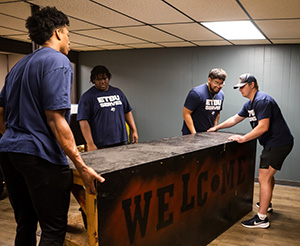
After breakfast, fellowship and prayer at Ornelas Student Center, organizers assigned students to various groups based on service locations.
ETBU student athletes, Student Foundation, leaders and campus organizations served at local churches, the Mission Marshall food pantry, the First Baptist Church of Hallsville Outreach Center, Reunion Inn Assisted Living and other sites.
Projects included painting, cleaning, food pantry assistance, setting up Vacation Bible Schools and spending time with residents in an assisted living facility.

Some students wrote letters to local first responders and educators, showing the variety of service opportunities Serve Day offered.
“I learned that a lot of organizations need more help than what it seems,” junior psychology major Kaitlyn Huzy said. “We are called to serve in different ways, and I think Serve Day does a good job of covering that there are different ways to serve.”
A small group of ETBU students served alongside the baseball team at the Cypress Valley Bible Church, helping to clean up the children’s play place and various rooms inside the facility.
Staff expressed their gratitude to ETBU students for helping clean up the area.

“We have lots and lots of children that come to our church, and as you can imagine, it really dirties things up—not only the chairs they sit in, but the playground equipment,” said Russ Perry, head of adult ministry at Cypress Valley Bible Church.
“All of you guys here at ETBU have helped us really big to keep that not only looking nice, but safe also. It’s a really big deal that you guys came out to help us. We are really, really grateful.”
The Serve Day experience allowed students to support ministries that directly influence local communities, families and children.
Serve Day also allowed for strong fellowship among ETBU faculty and students and encouraged servant leadership opportunities that may not have been available otherwise.
Junior nursing major Chika Obi, who helped with VBS setup at Port Caddo Baptist Church, reflected on her experiences.
“I love serving. I feel like with my personal time, I don’t have enough free time to allocate to volunteering. … So, I feel like Serve Day is a nice way of bringing everyone together,” she said.

“It wasn’t just the student foundation … all of these different clubs, sports teams, everyone was brought together to serve, and I love that.”
In addition to service opportunities and fellowship, ETBU’s Serve Day allows students to strengthen their servant leadership skills and reflect on how their faith influences their desire to serve.
“I want to serve more. God has put it on my heart to serve where I am, to ‘grow where I’m planted.’ Serve Day helped me to live out that conviction,” senior biochemistry major Graham Parmelee said.
“We seek to lead our students to serve. It’s part of what we do at ETBU,” said David Griffin, dean of spiritual life.
“We encourage every student to serve. … It really is amazing to see so many students step up and … serve the community. It’s a beautiful thing. Hopefully, it’s nurturing a heart of service in them that is going to inspire them to serve for the rest of their lives, not just now.”
Faith Pratt, a student at East Texas Baptist University, is serving as an intern with the Baptist Standard this semester.
ROCKWALL (BP)—North Carolina pastor Clint Pressley will be nominated for a second term as president of the Southern Baptist Convention, Rockwall pastor Michael Criner announced April 13.
“It is my honor to nominate Clint Pressley for a second term as president of the Southern Baptist Convention,” Criner, senior pastor of First Baptist Church of Rockwall, wrote in a statement to the Biblical Recorder announcing his intent to nominate Pressley during the 2025 SBC annual meeting June 10-11 in Dallas.
“While this renomination is no surprise, it is coming after sincere prayer and ongoing conversations with a wide number of SBC pastors.”
Pressley, who has served Hickory Grove Baptist Church in Charlotte as senior pastor since 2010, has emphasized Southern Baptists’ confession of faith and cooperative ministry model during his first term as SBC president.
Pressley plans to further emphasize confession and cooperation around the theme of “Hold Fast,” based upon Hebrews 10:23-24, at this summer’s SBC meeting. Both the Baptist Faith & Message and the Cooperative Program are celebrating their 100th anniversaries this year.
Criner added Pressley has represented Southern Baptists well in his first term, while emphasizing the SBC’s core tenets of confession and cooperation.
“During his first year, Clint Pressley has displayed clarity, conviction and courage,” Criner wrote. “One of the most admirable qualities of Clint is that in every environment where he has represented the SBC, he has joyfully pointed us to the very best of who we are and what we do: our confession and our cooperation for/towards the Great Commission.
“Clint has been a stabilizing voice and worked strategically with our leaders, but also lent his ear to the everyday pastor. I hope others will join me in voting for Clint Pressley this June in Dallas.”
According to Annual Church Profile data and Baptist State Convention of North Carolina records, Hickory Grove reported 77 baptisms and averaged 2,790 in worship attendance in 2024. The church reported $9,880,859 in total undesignated receipts in 2024, with $274,056 (2.77 percent) given through the Cooperative Program.
Hickory Grove also gave $259,963 to the Lottie Moon Christmas Offering for International Missions and $75,685 to the Annie Armstrong Easter Offering for North American Missions in 2024.
Pressley was elected the 65th president of the SBC in June 2024 at the annual meeting in Indianapolis.
A native of Charlotte, Pressley joined Hickory Grove as a teenager before earning a bachelor’s degree from Wofford College in Spartanburg, S.C., and a master of divinity from New Orleans Baptist Theological Seminary. He currently is pursuing a doctor of ministry from Southern Baptist Theological Seminary in Louisville, Ky.
Pressley pastored two churches in Mississippi before returning to Hickory Grove in 1999 as senior associate pastor of preaching. In 2004, he was called as senior pastor of Dauphin Way Baptist Church in Mobile, Ala. In 2010, Pressley returned to Hickory Grove as co-pastor and was installed as senior pastor in 2011.
Pressley also served in a variety of other leadership roles in Baptist life, including vice president of the SBC Pastors’ Conference in 2013, first vice president of the SBC from 2014 to 2015, and as a trustee of Southern Baptist Theological Seminary from 2015 to 2025, which included a stint as chairman. He currently serves on the board of directors for the Baptist State Convention of North Carolina.
He and his wife Connie, the daughter of a Southern Baptist pastor, have two sons.
Melvin William Clinton Jr. of Turkey, longtime Texas Baptist pastor, died April 11 in Silverton. He was 88. He was born Jan. 11, 1937, in Ponca City, Okla., to Melvin Edward and Alta King Clinton. He married Guyretta Ruth Baker on June 2, 1957, in Uncas, Okla. He was pastor of First Baptist Church in Turkey 48 years. He previously served at First Baptist Church in Lamont, Okla., and Bethel Baptist Church in Funston. He also was actively involved in the Kairos and Emmaus ministries. He had served on the Turkey Volunteer Fire Department and Ambulance Service several years and was a member of the Turkey Lions Club. He was preceded in death by his wife Guyretta Ruth; daughter Debra Zanardi; son-in-law Mark Zanardi; and two sisters, Ida Mae Wright and Roseanne Snodgrass. Survivors include son Gary Clinton and wife Theresa of Silverton; daughter Karen Rice and husband Walt of Howardwick; eight grandchildren; nine great-grandchildren; two great-great-grandchildren with one on the way; brother Madison Clinton of Altus, Okla.; and sister Ellen Neely of Ponca City, Okla. His funeral service will be held at 10:30 a.m. on April 15 at First Baptist Church in Turkey. The family request memorials be sent to First Baptist Church in Turkey.
Marguerite Gaston Garrett, former member of the Baptist General Convention of Texas Executive Board, died April 8. She was 98. She was born May 5, 1926, in Buffalo, N.Y., to Orissa Knight Gaston and John Zell Gaston, while her father was completing his medical residency there. She grew up in Houston near the medical district and Rice University. She graduated from Rice University and met her husband Robert (Bob) Irving Garrett on a blind date on San Jacinto Day, April 21, 1946. They married Aug. 6, 1948, in Houston. Since her husband was a medical doctor serving in the U.S. Navy, his tours of duty took them to live in many places, including California, Illinois, Virginia and Florida, before settling in Lufkin in 1971. At First Baptist Church in Lufkin, she served on multiple committees and in various ministries, including choir and handbells, and was involved in Woman’s Missionary Union. She served in the Medical Auxiliary of doctor’s wives and in the leadership of the local Museum of East Texas, Ellen Trout Zoo and Kiwanis Club. She was preceded in death by her husband Bob, daughter Katherine and son Glenn Arthur. She is survived by son Robert I. Garrett Jr. and wife Jane Huff; daughter Peggilu Garrett Woodward and husband Douglas; son J. David Garrett and wife Ruth; four granddaughters; two grandsons; and five great-grandchildren.
Separate military airstrikes on Palm Sunday in Ukraine, Myanmar and Gaza claimed dozens of lives, destroyed a church building and severely damaged a hospital.
A Russian airstrike killed at least 34 people in the northeastern Ukrainian city of Sumy in the deadliest attack of the conflict so far this year.
The Tatmadaw Burmese military bombed the Mindat Baptist Church in Myanmar, totally destroying the building.
An Israeli airstrike on Gaza City partially destroyed the Al-Ashli Hospital, also known as the Ahli Arab Hospital.
The Gaza City hospital was founded by the Anglican Church Missionary Society and currently is owned by the Episcopal Church Diocese of Jerusalem, but it was owned and operated from 1954 until the early 1980s by the Southern Baptist Convention’s Foreign Mission Board.
“On this Palm Sunday, we mourn as Jesus mourned as he entered Jerusalem—weeping as children are dashed to the ground as separate aerial strikes destroy the Mindat Baptist Church in Myanmar, families headed to worship in Sumy, Ukraine, and the further destruction of the Al-Ahli hospital which remains an important Baptist legacy center of care in Gaza City,” Elijah Brown, general secretary of the Baptist World Alliance, wrote in an April 13 text message.
“As we decry that which brings violence, in resurrection hope we hear again Jesus’ call to live as active peacemakers who believe the wounds of Jesus are deep enough to heal the wounds of this world.”
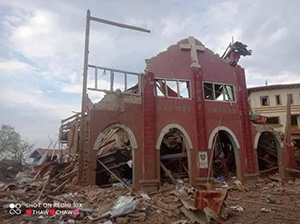
Roy Medley, executive director of the Burma Advocacy Group and general secretary emeritus of the American Baptist Churches USA, called the bombing of Mindat Baptist Church in Myanmar by the Burmese military a “war crime” and “yet another act of terrorism against the Christian community in Burma.”
“Their choice of Palm Sunday—the beginning of the holiest week of the year for Christians—was purposeful and part of their ongoing attempt to destroy the Christian faith in Burma,” Medley said.
“Our current administration, which prides itself in its defense of religious freedom, needs to speak and act forcefully against the State Administration Council and the Tatmadaw for this war crime.
“We again call for increasing sanctions that stop the flow of funds and materiel that allow them to pursue war against the people of Burma. And we urge that relief funds for the recent earthquake not to be channeled further through the junta.”
Merritt Johnston, executive director of BWA Women, said she received a video from a BWA Women leader showing a church service in Sumy, Ukraine, interrupted by a nearby bomb blast and shattering glass.
“We are heartbroken by this violence and continue to pray for just peace,” said Johnston, director of communications for BWA.
“On this Holy Week, when we turn our hearts to the peace we have through Christ’s resurrection, we grieve for those who live daily with the tyranny of violence, even in places that should be sanctuaries.
“We call upon our global Baptist family to stand in prayer with our sisters and brothers who are suffering as they continue to serve their communities with a faith that bombs cannot destroy.”
The Ukrainian Council of Churches and Religious Organizations issued a statement condemning the attack at the beginning of the seasons when Jews observe Passover and Christians celebrate Easter.
“Such actions demonstrate that nothing is sacred for the state that declares itself to be ‘Holy Rus.’ Basic respect for the value of human life is absent, not to mention respect for the holidays of Christianity and Judaism,” the council statement reads.
The statement notes Orthodox, Catholic and Protestant Christians all are observing Easter on the same day this year.
“We, heads of Ukrainian Churches and Religious Organizations, strongly condemn the terrorist attacks by the Russian Federation on Ukrainian cities and villages and call on the world’s leading nations to take all possible measures to stop Russia’s military aggression against Ukraine and to strengthen Ukraine’s capabilities to defend itself and protect life,” the council statement reads.
“We call on all people of goodwill to pray for the victory of truth and a just peace for Ukraine.
“Our condolences go to the victims of Russian state terror and we beseech the Almighty for just retribution against the perpetrators of this and all other acts of Russian terror against the people of Ukraine.”
The Episcopal Church Diocese of Jerusalem issued a statement condemning “in the strongest terms” the Israeli military’s missile attacks on the hospital in Gaza City.
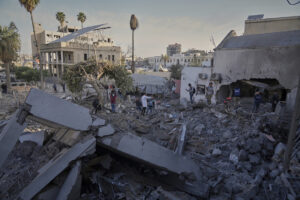
“The twin strikes demolished the two-story Genetic Laboratory and damaged the Pharmacy and the Emergency Department buildings,” the statement reads. “It also resulted in other collateral damage to the surrounding buildings, including the church building of St. Philip’s.”
The Israeli military gave the hospital 20 minutes notice, ordering all patients, employees and displaced people to evacuate the hospital premises prior to the bombing, the diocese reported.
“We thank God that there were no injuries or deaths as a result of the bombing. However, one child who previously suffered a head injury tragically died as a result of the rushed evacuation process,” the diocese statement reads.
“The diocese of Jerusalem is appalled at the bombing of the hospital now for the fifth time since the beginning of the war in 2023—and this time on the morning of Palm Sunday and the beginning of Holy Week.
“We call upon all governments and people of goodwill to intervene to stop all kinds of attacks on medical and humanitarian institutions. We pray and call for the end of this horrific war and the suffering of so many.”
F.B. Huey Jr., longtime seminary professor and former missionary, died April 7. He was 100. He was born in Denton on Jan. 12, 1925, and attended the University of North Texas before graduating from the University of Texas in Austin. He worked in a family-owned business in Denton for 10 years before entering the ministry in 1955. While a seminary student, he served as pastor of churches in Bolivar and Denton. After graduating from Southwestern Baptist Theological Seminary with the Master of Divinity and Ph.D. degrees, he and his family served as Southern Baptist missionaries in Rio de Janeiro, Brazil, from 1961 to 1965, where he was professor of Old Testament at the South Brazil Baptist Theological Seminary. From 1965 until his retirement in 1990, he was professor of Old Testament at Southwestern Seminary. He served as editor of the Southwestern Journal of Theology from 1975 to 1978, was associate dean for the Ph.D. degree from 1985 to 1990, and served as interim pastor of 27 churches. He also was guest professor at the Baptist Theological Seminary in Rüschlikon, Switzerland, in 1970-71, and at the Canadian Southern Baptist Seminary in 1996. After his retirement, he continued as adjunct professor of Old Testament at Southwestern Seminary and as pastor of the Rush Creek Baptist Church in Arlington. He was the author of eight books, four of which were translated into Chinese. He served as one of the translators for the New American Standard Bible, the New International Version and the International Children’s Bible. He contributed numerous articles to scholarly and popular religious publications, Bible commentaries, theological dictionaries and encyclopedias. He was named as a distinguished alumnus of Southwestern Baptist Theological Seminary in 2001. He was preceded in death by his wife of 62 years, Nonna Turner Huey; grandson, Jonathan David Huey; and great-granddaughter, Brynlee Anne Bitton. He is survived by his daughter, Mary Anne Lisbona and her husband Alberto; daughter Linda Miller and her husband Darrell; son David Huey and his wife Debbie; five grandchildren; and five great-grandchildren. Funeral services will be held at Travis Avenue Baptist Church, where he was a member, at 11 a.m. on April 15. The family will receive friends beginning at 10 a.m. prior to the memorial service.