Newseum closing but Religious Freedom Center continues
WASHINGTON (RNS)—The nation’s capital is about to have one less museum when the Newseum closes Dec. 31, but the Religious Freedom Center that was housed there will continue operations.
Gene Policinski, chief operating officer of the Freedom Forum Institute, which includes the center among its five focus areas, said the building has not been the core of his institute’s operations, which occur more in other locations and online.

“We’re headquartered here; obviously, it’s a marvelous asset and we use the meeting rooms and the conference center,” he said of the building the institute shared with the Newseum, its partner. “But when we relocate our administrative offices later in 2020, those programs simply move to where we now will be.”
The institute’s religious liberty programming—long led by recently retired scholar Charles Haynes—dates to the 1990s, when the Newseum was housed across the Potomac River in Rosslyn, Va. It moved to the Pennsylvania Avenue location in 2008 when the Newseum moved.
The Newseum, a seven-level museum about the free press and the First Amendment, announced it was closing earlier this year and has said “remaining in the current location has proved to be financially unsustainable.” Newseum spokeswoman Sonya Gavankar said the museum hopes to find a new location “but that process will take time.”
Religious Freedom Center offices move
The offices of the institute, including the Religious Freedom Center, will move less than a mile from the building on Pennsylvania Avenue with a terrace view of the U.S. Capitol. Its leaders have secured a two-year lease at 300 New Jersey Avenue, NW.

Other aspects of the institute include the First Amendment Center, and initiatives related to education, diversity and workplace integrity training, such as the Power Shift Project that helps the media industry address issues of sexual harassment.
As they head to a new temporary location, Religious Freedom Center staffers will be working to expand some of its newer initiatives. In January 2020, it will host a weeklong intensive course on religious freedom for students from African American theological institutions at local churches and seminaries. A portion of the first offering of the course for black seminarians was held at the Newseum in January of this year.
Policinski said the center is making plans to expand a training program for business executives that will include webinars and in-person sessions after it was piloted at firms such as Accenture, a professional services company, and Schreiber Foods, a Wisconsin dairy company. He said he hopes the center can help businesses navigate differences among employees about health care and family planning services and religious objections that could arise over transgender bathrooms.
“We feel very strongly that another area, unfortunately, of contention will be, as we increase in diversity and awareness of diversity of religion in the workplace, issues around religious holidays and religious observance in the workplace itself,” he said.
Staff in transition
The center is also planning to add a staffer to a multiyear project called Georgia 3Rs Project—Rights, Responsibility, Respect—that will continue to address the academic study of religion in that state’s public schools.
The center currently has a staff of about half a dozen, along with more than 20 nonresident scholars and fellows. Kristen Farrington left her role as the center’s executive director during the summer to become an assistant chaplain at an Episcopal school. Policinski said filling that position is “on hold” during the time of transition.
The center recently held its last public event at the current location, hosting about 90 Muslim and Jewish leaders for a Dec. 3 conference that featured speakers representing American Jews and Muslims discussing what they wish members of each faith group knew about the other.
Richard Foltin, a senior scholar at the center and a member of the board of the Inter Jewish Muslim Alliance, said there are additional plans for those kinds of interreligious gatherings as well as others.
“One of the important things the Religious Freedom Center does is convene a Committee on Religious Liberty that brings together advocates and experts on church-state relations from a broad range of religious communities, from a broad range of political perspectives,” he said. “That work is going to continue as well.”





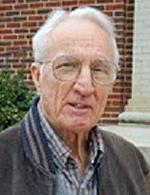 Walker Knight, a longtime Baptist journalist, died Dec. 1. He was 95. Knight earned his undergraduate degree from Baylor University. He was editor of a U.S. Air Force publication and a rural Texas weekly newspaper—and pastor of First Baptist Church in Dale—before he joined the Baptist Standard staff in 1950. During his time as associate editor of the Standard in the 1950s, its circulation grew to 355,000. He was editor of Home Missions magazine, later Missions/USA, at the Southern Baptist Convention’s Home Mission Board from 1959 to 1983. In that role, Knight gained a reputation for publishing not only engaging missions features, but also articles that challenged entrenched attitudes about race. He became the subject of controversy in January 1967, when a cover story on black pastor and civil rights activist William Holmes Borders provoked hundreds of readers to cancel their subscriptions. But Arthur Rutledge, chief executive at the Home Mission Board, stood by Knight, and the magazine went on to win numerous awards. “Home Mission magazine was perhaps the most effective communication piece that caused Southern Baptists to become more open and sensitive to racial reconciliation,” Emmanuel McCall, an African American minister who served on the Home Mission Board staff from 1968 to 1991, wrote in his 2007 book, When All God’s Children Get Together: A Memoir of Baptists and Race. Knight retired early and launched SBC Today in 1983 as a national newspaper free from denominational control. The newspaper was renamed Baptists Today in 1991 and eventually became Nurturing Faith. Knight was a member of Oakhurst Baptist Church in Decatur, Ga., for 60 years. He was preceded in death by his wife Nell. He is survived by children Walker Leigh Knight Jr. of Denver, Colo.; Kenneth Knight of Cleveland, Ga.; Nelda Coats of Oriental, N.C.; and Jill Knight of Arden, N.C.; four grandchildren; and siblings Cooksey Bennett Knight of Henderson, Ky.; Mary Ruth Gardner of Bonita Springs, Fla.; Hiram Knight of Zion, Ky.; Jane Mahler of Warner Robins, Ga.; and James Knight of Henderson, Ky.
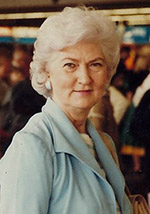 Nina Raye Phagan Pinkston, veteran missionary and longtime Woman’s Missionary Union leader, died Dec. 2 Grayson, Ga., due to complications of breast cancer. She was 89. She moved to Georgia to be near family about 18 months ago after nearly 50 years in Fort Worth, where she and her husband Glen both earned master’s degrees in religious education from Southwestern Baptist Theological Seminary and where they were longtime members of Travis Avenue Baptist Church. She was born in Bellevue to Wade Ray Lona and Lona Louville Phagan on Dec. 30, 1929. In 1944, her family moved to Perryton, where her father served as Ochiltree County sheriff for 26 years. She graduated from Perryton High School, attended Wayland Baptist College and graduated from Texas Tech University. At Wayland, she met Glen Pinkston of Levelland, and they married in Perryton. When he re-enlisted in the U.S. Air Force and was stationed in Japan, she traveled aboard a troop transport ship to join him. Over the next 31 years, they lived in Japan, Ohio, Nebraska, England, California, West Germany and finally at Carswell Air Force Base in Fort Worth. After his retirement, they moved to West Germany to serve as Southern Baptist missionaries more than 10 years, helping grow Baptist churches near U.S. military bases across Europe and serving as religious education consultants for the European Baptist Convention. They averaged more than 60,000 miles a year traveling to churches. During one trip, they suffered a serious car accident, in which she broke her neck and collar bone. With much prayer, great medical treatment and hard work, she recovered and continued mission work in Europe. She served in leadership roles both with national WMU and Texas WMU. She was preceded in death by her husband Glen in 2017. She is survived by sons Michael Pinkston of Plano and Steven Pinkston of Grayson, Ga.; five grandchildren; and a brother, Jim Phagan of Carrollton. A memorial service is scheduled at 11 a.m. on Dec. 21 at Travis Avenue Baptist Church in Fort Worth.