Southern Baptists remember 50th anniversary of Asbury revival
FORT WORTH (BP)—Southern Baptists who recall a historic revival that swept through Southwestern Baptist Theological Seminary 50 years ago say remembering what God did in the midst of one divisive period of American history should motivate believers to pray for it again.
This month marks a half-century since revival broke out at Asbury College and Seminary in Wilmore, Ky., on Feb. 3, 1970. Thanks to the testimonies of those Asbury students, the revival spread to college campuses and seminaries throughout the United States.
Asbury students visited Southwestern Seminary in March of that year and spoke after a chapel service, launching the revival there.
Tom Elliff, then a 24-year-old seminary student, said students knew the Asbury students were on campus and expected them to be at chapel that day. Robert Naylor, president of Southwestern Seminary at the time, announced the Asbury students would speak after chapel and students could stay and listen.
“Nobody left,” said Elliff, who later was elected president of the Southern Baptist Convention and served as president of the SBC International Mission Board. “To my recollection, the chapel was full. That began a seemingly endless time of confession. What started everyone confessing was that not only were students confessing, but there were guests confessing sin. There were also professors confessing sin.”
Extended time of confession
The time of confession continued all night. Elliff, who lived in Dallas at the time, drove home at 7 p.m., took a shower and then returned. As he exited his car, Elliff met a man who was frantically coming out of the chapel. He asked for prayer and the two slipped into a nearby prayer room.
The man then confessed to Elliff that he had been bitter toward God because he hadn’t had an opportunity to preach while at the seminary. Elliff prayed with him. As they walked out of the room, they ran into another man who said his church needed revival and wanted someone to come and share their experience of that evening.
“I told him, ‘I think you have someone right here,’” Elliff said, pointing to the man with whom he had been praying. “I left those men talking and rejoicing and made my way back to the chapel where the prayer service was taking place.”
As Southwestern students went to local churches that next weekend, the impact spread throughout the Dallas-Fort Worth area and beyond. Elliff connects his Southwestern experience to another revival he led a few months later in Colorado that touched an entire town.
Prayer preceded revival
Tim Beougher, the Billy Graham professor of evangelism and church growth at Southern Baptist Theological Seminary in Louisville, Ky., points to two factors that laid the groundwork for the Southwestern revival.
First, leaders had prayed for revival for several years. Jack Gray, who taught spiritual formation at Southwestern at the time, began gathering students, faculty and staff to pray for revival at the seminary.
Elliff remembers these volunteer prayer times as significant experiences in the life of the seminary and in his own life.
“Anytime you see revival, you can always point back to some praying figures,” said Beougher, who wrote his master’s thesis on the 1970 revival at Southwestern.
Time of division and unrest
Beougher also notes the revival came during a time of intense unrest in America, particularly among students. Demonstrations were taking place at universities nationwide. In May 1970, several unarmed students were shot and killed at Kent State University. Multiple universities cancelled spring commencement exercises for fear of violence.
“Revival always presupposes declension,” Beougher said. “In other words, if you’re already living in a revived state, you don’t need revival. You already have it. One of the things that we have seen throughout history that helps cause revivals like this is desperate prayer. We’ve all heard the saying that there are no atheists in foxholes. That’s not completely true, because sometimes foxholes cause people to become even more hardened against God. But, in general, when we’re desperate, we cry out to God like we never have before.”
Matt Queen, who holds the L.R. Scarborough Chair of Evangelism at Southwestern, said the seminary has a long relationship with revivals throughout its history. He pointed to hymn writer Dick Baker, an alumnus who participated in revivals worldwide with Billy Graham, and his brother, B.O. He also mentioned a famous 1995 revival that started in Brownwood and impacted the campus at Southwestern.
Beougher hopes memories of revivals like the one at Southwestern in 1970 will remind Southern Baptists that God can do something similar today.
“When we think about our world today, it’s very divided,” Beougher said. “We have 80 to 85 percent of our churches plateaued and declining. We need a fresh touch from God. Part of having this kind of desperate prayer is really believing there is a God who loves to answer those prayers—and that he is able to do it.”
EDITOR’S NOTE: The third paragraph from the end was edited after the article originally was posted to correct an error, changing a reference from a 1995 revival in “Brownsville” to “Brownwood.”




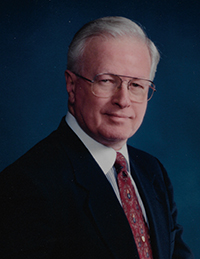 William Robert “Bill” O’Brien, longtime missionary and missions innovator, died Feb. 1. He was 86. O’Brien was born in Fort Worth, graduated with a bachelor’s degree from Hardin-Simmons University in Abilene and earned a master’s degree from Southwestern Baptist Theological Seminary in Fort Worth. He felt the call to serve God early in life, and he served out his calling in many capacities, including as a music minister, pastor, international missionary and writer. Many fondly remember him as a teacher, mentor and friend. Others praised him as a visionary and statesman who challenged Baptists to move beyond a paradigm of isolation and programs to collaborate to reach the spiritually unreached. He and his late wife, Dellanna West O’Brien, were appointed as missionaries to Indonesia in 1962. He served two terms there in the field of music and the arts, taught in the Baptist seminary and directed radio-television efforts for Indonesian Baptists. An internationally recognized missiologist, he taught at Dallas Baptist University, at Baylor University’s Truett Seminary as the inaugural Missions Scholar-in-Residence, and at the John Leland Center for Theological Studies in Arlington, Va. He was founding director of Beeson Divinity School’s Global Center at Samford University, and he also served as missions professor at Beeson Divinity School. He is widely known for his time of service as executive vice president of the Southern Baptist Convention’s Foreign (now International) Mission Board. He founded Bridges of Hope, a community development organization in Indonesia, and he was founder of the Gaston Christian Center, a collaboration of faith-based agencies in Dallas. He served on the board of directors of the Birmingham Civil Rights Institute and was president of the American Society of Missiology. Reflecting on one of his favorite Bible verses, Romans 12:1–3, and his sense of calling, O’Brien said, “The whole idea of becoming a living sacrifice through the transformation of the mind is a daily challenge, not a one-time event.” He was preceded in death by his first wife of 56 years, Dellanna West O’Brien, who served as executive director of national Woman’s Missionary Union. He is survived by his wife of 10 years, Charmaine; children Denise O’Brien Basden and husband Paul; Erin O’Brien Puryear and husband Rick; and Ross O’Brien and wife Lisa; as well as six grandchildren and four great-grandchildren. A celebration of his life will be held Feb. 10 at 1:30 p.m. at Wilshire Baptist Church in Dallas. Donations in his memory can be made to two of the ministries in which he was invested—the Gaston Christian Center and the Pathways Endowment at Wilshire Baptist Church.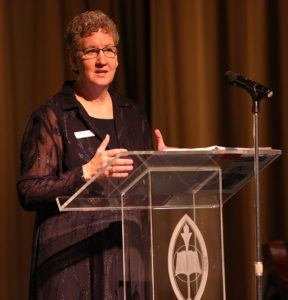
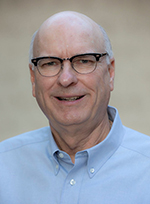

 Donald Cannata, longtime minister of education, died Jan. 31. He was 86. He was born Aug. 20, 1933, in Houston to Samuel R.J. and Mattie Lee Ellison Cannata, and he was educated in Houston public schools. He earned degrees from Baylor University and Southwestern Baptist Theological Seminary. Cannata served as minister of education and administration in churches in Texas and Alabama for four decades. He moved with his family to Waco in 1972 to serve First Baptist Church and later Western Heights Baptist Church. He was preceded in death by brothers Harold Lee and Sam Jr. He is survived by his wife, Norma Palmer Cannata; daughter, Leigh Ann Marshall, and husband, Tracy; son Mark, and wife, Edna; daughter Susan Moody; seven grandchildren; and one great-grandson.