Return to gathering offers opportunity for fresh relaunch

As congregations plan when and how to return after suspending in-person worship services to stop the spread of COVID-19, Texas Baptist leaders suggested issues for churches to consider as they relaunch.

“Legally speaking … churches can relaunch right away. Practically speaking … churches should relaunch when they are ready,” John Litzler, a San Antonio-based attorney, said during the “Relaunch” video conference April 29.

The Baptist General Convention of Texas sponsored the video conference to help churches make informed decisions about when they are “ready” to relaunch, not to offer a “one-size-fits-all-approach” for resuming in-person worship and discipleship, said moderator Joshua Minatrea, director of communications for Texas Baptists.

Joining Litzler and Minatrea on the call were BGCT President Michael Evans, pastor of Bethlehem Baptist Church in Mansfield; BGCT Executive Director David Hardage; Rolando Rodriguez, director of Hispanic ministries for Texas Baptists; and Phil Miller, acting director of Texas Baptists’ Great Commission Team.

Guidelines and protocols

When Gov. Abbott issued an executive order in March that included religious gatherings among “essential services,” the first iteration of guidelines for houses of worship noted the Centers for Disease Control recommended no gatherings of 10 or more people if any individuals from at-risk populations attended, Litzler noted.

Revised guidelines issued April 21 removed that recommendation but continued to encourage churches to “conduct as many activities as possible remotely and … follow federal guidelines when providing services in person.”

The most recent guidelines, issued jointly by the offices of the governor and the state attorney general April 27, include a recommended set of “minimum health protocols” for churches that decide to provide in-person services. Texas Baptists posted a checklist of health protocols based on those health protocols here.

While some businesses that had closed are reopening within prescribed occupancy restrictions, “churches are not a ‘reopened’ service; they are an ‘essential’ service,” Litzler said. Restrictions placed on maximum occupancy that are imposed on businesses such as restaurants and movie theaters do not apply to churches, he said.

However, churches are encouraged to follow social distancing guidelines by keeping every-other-row of seats empty and maintaining six-foot distance between worshippers who do not live in the same household.

Stay safe at church

Evans encouraged churches to review the recommended minimum health protocols as important steps to “staying safe at church.”

Churches might want to consider training ushers how to dismiss worshippers one row at a time and “lovingly” not allow individuals exhibiting COVID-19 symptoms into contact with others, he suggested.

“One of the things I’ve said to our leadership is that we pray to God for the best. However, we need to prepare for the worst, even though we don’t want to do that,” Evans said.

Church leaders should think through worst-case scenarios, brainstorming with individuals in the church who tend to think along those lines, he suggested.

“This is the time when the pessimists in the church really get to shine, and we really want to listen to them this time,” Evans said.

‘Online worship is here to stay’

Whenever churches choose to return to in-person worship gatherings, Rodriguez encouraged congregations to continue the online engagement many of them started in the last few weeks.

“Online worship is here to stay. That’s a reality,” he said.

Many congregations have recognized how much their outreach has increased since beginning online worship services out of necessity, Rodriguez noted.

“Online worship has given the church an opportunity to have a global ministry,” he said.

As the audience of church worship services online grows, congregations need to ensure they have the proper licensing for music, Litzler added.

Also, churches that livestream worship services on social media and then post those videos for later viewing on their website should make certain their license allows for that type of broadcasting, he said.

“We are seeing an increase in the policing of copyright infringement from Facebook and YouTube,” he said.

Litzler also noted churches should consider privacy issues as they expand their online presence—particularly if worshippers, not just worship leaders, are pictured.

Churches especially should be sensitive to the privacy rights of children who are in the foster care system and spouses who are victims of abuse, he noted. Litzler suggested designating a particular section in the worship center as a “safe place” where crowd shots will not be taken.

‘Learning as we go’

Rather than simply return exactly to the pre-COVID-19 status quo, Rodriguez encouraged churches to consider how they might adapt and change, based on what they have learned.

“Growth equals change,” he said. “You can change many things and never grow. But I believe this crisis has helped leaders and churches grow. And if we grow, we will grow through a process of change.

“We will never do church the same again. But you know what? It’s OK.”

Changes forced on churches by the COVID-19 crisis offer them “the opportunity of a lifetime to change the conversation” about how they measure success and how they move forward, Miller said.

“There are no experts right now. Everybody is wading through this a page at a time,” he said. “We are learning as we go.”

Rather than resuming in-person worship and Bible study prematurely and having to relaunch a second time later, Miller encouraged churches to think through the process.

“It’s not how soon we go back in. It’s how safe we go back in,” he said.

For example, he noted a 300-square-foot classroom that previously would have comfortably accommodated 20 adults now can be occupied safely by only three adults when social distancing guidelines are observed.

Miller encouraged Texas Baptist churches to “acknowledge the activity of God” and build on the success they have experienced.

“One of the things we have discovered in all this through classes that are doing Zoom (video conferences) and a variety of things like that is that simplicity has come back in such a good way,” he said.

Miller pointed to resources Texas Baptists have developed for churches to consider as they relaunch ministries to youth and children.

Stewardship matters

As churches consider issues of generosity and stewardship, Hardage encouraged pastors not to shy away from the subject of giving.

“Obviously, you want to be gracious,” he said. “We have to understand our folks are wrestling with their own finances.”

At the same time, pastors should encourage members to give “as you can,” recognizing stewardship is a biblical principle.

Hardage also suggested leaders keep their congregations informed about how their church stands financially during a challenging time.

“I would encourage you to graciously communicate in an honest way the financial condition of your church,” he said.

As church leaders consider issues related to congregational business and administration, Hardage suggested they seek to “stabilize” the organization, “analyze” how the church is doing in terms of budget and “optimize” resources for the utmost impact.

In terms of worship planning moving forward, churches might need to consider shorter services to allow enough time for dismissal and disinfecting between services, he said.

Churches might also consider having practice services with ushers prior to a relaunch and experiment with a small audience during online worship services before inviting all worshippers back, he suggested.

Evans urged Texas Baptists to remember the words of Moses to the people of Israel, as recorded in Deuteronomy 31:6. Quoting from the King James Version of Scripture, he said: “Be strong and of good courage, fear not, nor be afraid of them: for the Lord thy God, he it is that doth go with thee; he will not fail thee, nor forsake thee.”

“We’ve seen harder days throughout the life of our country,” Evans said. “And we know that the same God that saw us through then is the same God who is going to get us through this.

“I think we’re going to be stronger. I think we’re going to be better. And I sure know we’re going to be wiser.”


Faithful teaching leads to spiritual growth in Kenya

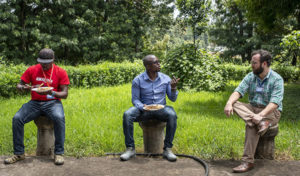
NAIROBI (BP)—Although more than 85 percent of Kenyans identify as Christian, missionary Daniel Lowry says the majority have a distorted view of Jesus and the Bible.

In a post-colonized era, western practices have infiltrated and woven themselves into the fabric of Kenyan traditions and culture. One popularized idea that has seeped into the Kenyan religious culture is the prosperity gospel movement, said Lowry, a missionary with the Southern Baptist Convention’s International Mission Board.

Traditional Kenyan religious culture promotes the concept of a “big man,” or a moderator who is the mediator between God or evil spirits and the common people, he explained. This “big man” speaks to the people on God’s behalf or protects them against the evil spirits.

The prosperity gospel has coupled itself with this mindset through the “big man in charge” mentality, Lowry said. The moderator promises health and wealth through faith, if the people do what he says.

Lowry is dedicated to teaching truth and training faithful preachers of the gospel. He and his wife Kristen have served in Kenya together since 2018. As a professor at the Kenya Baptist Theological College and Seminary, Lowry has opportunities to teach truth and correct misunderstandings of the gospel among Kenyan ministry students.

Opening eyes

Because one to four years of school is neither financially possible nor feasible for Kenyan students, each term at the seminary is four to five weeks long—four weeks for a diploma student, five weeks for a bachelor student. Currently, 40 students attend the seminary, both male and female, from all walks of life and professions.

Over the years, Kenya Baptist Theological College has coordinated Baptist Bible schools through harmonizing their curriculum and offering needed assistance for quality, sound theological education. The student body has been a representation of countries such as Tanzania, Congo, Ethiopia, Burundi, China, Brazil and South Sudan. (IMB Photo)

Many students who attend the seminary already are involved in ministry but want more training. The Kenyan Baptist Convention also requires training to serve in a pastoral role. Other students have been called out of a profession into the ministry.

As students attend the seminary, their eyes are opened to the truth of Scripture. After one of the professors taught on the four Gospels, a student responded: “I have never heard this taught before in my church. How can I go back with this new information?”

Lowry wants to see students trained not only in theories but also in practical application. He wants to partner students with faithful pastors so the students can see firsthand how to live out what they are learning in the classroom.

For Lowry and the other professors at the seminary, the goal is to see Kenyans leading churches that are faithful to the Bible.

“A well-trained Kenyan could do more work in Kenya than I could ever do,” Lowry said. “We recognize the ripple effect we can have here. We hope to impact a nation through the faithful teaching of God’s word.”


Denison Forum’s ‘Daily Article’ added to Baptist Standard content

Baptist Standard Publishing and Denison Forum have entered into an agreement to republish the popular Daily Article written by Jim Denison and published by Denison Forum.

Each week, the Standard will republish on its website one of the five Daily Articles. The republished Daily Article also will appear on the Baptist Standard Facebook and Twitter feeds.

“Denison Forum is glad to partner with those committed to Christ and his word, and we’re grateful for partnerships that continue to expand the kingdom,” Blake Atwood, managing editor of Denison Forum, said.

Daily Articles can be accessed on the Baptist Standard website under the Opinion tab or at the Daily Article page on the Denison Forum website.

The mission of Denison Forum is “to thoughtfully engage the issues of the day from a biblical perspective.” In each Daily Article, Denison examines trending cultural issues and current events, applying biblical insight to empower “believers to navigate current issues and share the timeless truths of God’s word with a changing culture.”

Denison was interviewed for the Standard’s On the Way podcast to be released April 29. In his interview, he discusses questions his father asked about God and how those questions shaped Denison’s ministry. Click here to listen to his interview.

The Daily Article is emailed to subscribers each weekday morning. Click here to subscribe.


Obituary: Merle T. Basden

Merle T. Basden of Granbury, longtime Texas Baptist leader in religious education, died April 26. He was 98. He was born Nov. 23, 1921, in Memphis, Tenn. He served in the U.S. Army in World War II. Basden earned his undergraduate degree from Union University, a Master of Religious Education degree from Southwestern Baptist Theological Seminary and his doctorate from the University of North Texas. He was minister of education at First Baptist Church in Paris and at churches in Mississippi, Tennessee and Arkansas. He became director of education for Tarrant Baptist Association in April 1961 and served the association 27 years. After his retirement in 1988, he was the executive director of the Southern Baptist Religious Education Association nine years. He received the Distinguished Leader Award in 1996 from the Baptist Association of Christian Educators. He was preceded in death by his wife Jane Orr Basden, his daughter Sharon Basden Frankenfield, his sister Ruby Bragg, and his brothers James Basden and Harold Basden. He is survived by his son Michael Basden, son-in-law Gary Frankenfield, grandson Christopher Frankenfield and several nieces and nephews. Memorials may be made to the Texas Baptist Hunger Offering, Baptist General Convention of Texas, 7557 Rambler Rd., Suite 1100, Dallas, TX 75231-2310.


College ministries in Waco unite for student prayer revival

WACO—Baylor University students came together virtually in mid-April to praise God and pray together at FM72, a 72-hour prayer revival.

The event, originally planned for Fountain Mall at the center of the Baylor campus, was moved online following the campus’s shutdown due to the COVID-19 virus. Students, along with family members and friends from all 50 states and 12 countries, participated.

Baylor’s Baptist Student Ministry hosted the April 13-15 prayer revival in conjunction with other campus ministries and local churches. Charles Ramsey, BSM director at Baylor, coordinated the event. He explained that hosting FM72 virtually was a way for students to come together and pray during turbulent times.

“In this time of fear and unknown and uncertainty, I thought it was vitally important that we ministered to one another. We needed a space where people could come together to voice concerns and feel heard,” Ramsey said.

FM72 kicked off on April 13 with a worship night livestreamed on Facebook and FM72’s website.

Logistical challenges

Ministry leaders led short devotionals presented between songs throughout the evening. Worship leaders were careful to follow Centers for Disease Control guidelines, including standing farther apart and limiting the number of people who could be in the room.

Worship leaders Rebecca Harris and Jerry Swam Sadi lead one of the nightly worship services during FM72.

Planning the evening worship experiences was difficult, because organizers had to completely redesign them to fit an online format instead of a physical stage, Ramsey noted.

“It took a lot of collaboration to pull this together,” he said. “Bands and worship leaders couldn’t get together to practice. People didn’t have months to prepare what they were going to talk about. And they had to readjust the schedule to fit an online audience.

“People tune in and listen to things differently when they’re watching a livestream than they do when they’re present physically.”

After the first evening worship service, a Zoom prayer room was opened and remained active for the next 72 hours. Prayer times were entirely student-led, with students signing up to lead one-hour slots of prayer time where they would host the room and invite others to join them.

“They prayed, interceding for different issues, praying for campus and the community, praying for people that had been affected by the virus and for people in need and who are suffering. They prayed through Scripture passages and also had a time of waiting on the Lord and of voicing concerns and requests,” Ramsey explained.

“It was amazing to watch the students plan, coordinate and mobilize for those 72 hours. From my perspective, the 150 prayer hosts were the backbone of the event. Seeing their commitment in action and listening to the minister was extremely rewarding to me.”

Continued Baylor influence

Last year, Baylor college leaders and pastors felt called to unite students and campuses in Waco for Christ. They looked back on a gathering of Baylor students in 1945 who came together to pray for revival for 90 days as inspiration, choosing the heart of the Baylor campus as host site for the prayer revival.

Though FM72 was not held on the campus this year, Baylor’s support still was instrumental this year. Baylor University President Linda Livingstone and her husband, Brad, supported FM72’s mission and part of the early push to move the event online. They led the opening prayer for the final night of worship and shared a short devotional about prayer and hope.

Also, many of the worship and college ministry leaders were current or former Truett Theological Seminary students.

“It really was a showcase of Truett talent,” Ramsey said. “We simply could not have done this without these gifted and equipped leaders who serve in our community. These are ministers of the gospel, and we continue to benefit from our strong partnership with Dean Todd Still at George W. Truett Seminary.”

Everyone involved with the planning and leading of FM72 did it because of the lasting impact they knew it would have on students, Ramsey noted.

Exceeded expectations

Even with those high expectations, Ramsey was overwhelmed by the response they saw. During worship services, a phone number was displayed on the screen for prayer requests.

It prompted thousands of calls, and a team of students was on-call to pray over each one individually and to respond to the person. Some students who participated were not from Baylor or other local Waco colleges, but rather had been invited by friends to participate.

Ramsey said it was a testimony to God’s grace that so many more lives were touched through this virtual event.

Now that FM72 is over, Ramsey is excited to see the students carry their passion and all that they learned into their own homes. One unique opportunity COVID-19 has brought to light is that the students are scattered around the world, where they can minister to those around them.

“These students are now sharing the gospel in their homes and their communities of influence. They’re in a place where they can now minister and look to their family and neighborhood,” Ramsey said. “FM72 was a commission of the students to be ministers of the gospel, not only with their friends, but in their homes and communities.”


On the Move: Harrel

Zac Harrel to Heart of Texas Baptist Network as network missionary from First Baptist Church in Gustine, where he was pastor.

____________________________________________________________________________________

On the Move

Update us with your staff changes


Around the State: Robotics students design motorized hospital trays for Hendrick

Hendrick Health System wanted an effective system that could deliver some aspects of health care to hospital patients while protect both nurses and patients, reducing the risk of spreading COVID-19. So, Hendrick’s leaders contacted the engineering and robotics programs at two Abilene-area school districts, asking them to design motorized hospital trays. Robotics students and teachers in the Abilene Independent School District and the Wylie Independent School District used standard-issue table trays and spare parts to design a working prototype in a matter of hours. Working in cooperation with a local manufacturing company that created models based on the students’ designs, Hendrick was using the robotic hospital trays within a week. View a video here.

The senior art exhibition of Howard Payne University student Sarah “Abi” Brown launched on the HPU School of Music and Fine Arts Facebook page April 27. The exhibition, which features a video introduction by the artist, is presented exclusively online. Its format is tailored to simulate an in-person gallery experience, with the video featuring Brown’s descriptions of the inspiration for her artwork and photos allowing for detailed viewing of each item in the exhibit. Her artwork includes a broad range of styles and techniques, including paintings, ceramics, weavings, photographs and drawings.

Haley Harmening, a senior worship studies major at East Texas Baptist University, was crowned as the 64th Miss ETBU. Sophomore speech communication major Bailey Snow was selected as first runner up, and junior elementary education major Cayce Billingsley was selected as second runner up. At ETBU, Harmening has participated in Hilltop Singers, Lampsato worship band, chapel band, concert choir, marching band and theater, and she has served as a Tiger Camp leader. She was selected from eight contestants during the annual pageant sponsored by ETBU’s Student Government Association. Due to restrictions and safety precautions regarding the COVID-19 health crisis, each contestant went through an online interview and question-and-answer process, in addition to the usual online vote by students, faculty, and staff. The evening wear and talent portions of the pageant were removed this year, as was the traditional reception that unites all former Miss ETBU winners with the current year’s contestants.

Three students in the University of Mary Hardin-Baylor College of Visual & Performing Arts earned top honors from the 2020 Hal Leonard Vocal Competition. Angel Tolbert, a junior music education major from Temple, won the national musical theatre college division. Christopher McCloskey, a freshman vocal performance student from Katy, came in fourth. Chandler Webb, a freshman music education major from Arlington, was a finalist. The deadline to enter the competition was Feb. 1, and none of the competitors learned the results until April 23. Tolbert and McCloskey also qualified for the national semifinals in the National Association of Teachers of Singing student auditions in its musical theater competition. That competition, usually held at a host institution, moved to an online platform due to the cancellation of summer events as the result of the novel coronavirus. The students submitted their videotaped auditions for the next round of competition.

Prior to the restrictions made necessary to stop the spread of COVID-19, Howard Payne University faculty and students spent four days in Lubbock to meet and work alongside staff members with Buckner International. The HPU group met with and received training from Lubbock-based foster care professionals and other local Buckner staff. Students and faculty also hosted a “Parents’ Night Out” event to provide an evening of child care for area foster families and a “Mom’s Morning Out” event for families in Buckner’s Family Pathway program. Additionally, the group spent an evening working with local mission organization Lubbock Impact. The trip represented the first steps in a wide-ranging collaboration between HPU and Buckner. Rachel Derrington Bourke, chair of the department of social work; Toni Damron, assistant professor of social work and coordinator of field instruction; and Gina Gibbs, chair of the department of criminal justice, led the group from HPU. Student participants were David Manolof, a senior from Midway, Alaska; Alex Mata, a junior from Gatesville; Marisa Miller, a senior from Temecula, Calif.; Benjamin Olin, a sophomore from Howe; Destiny Sharp, a senior from Brownwood; James (Andrew) Taylor, a senior from Brookesmith; and Diana Torres, a junior from Houston.


Isolation can aggravate mental health issues, counselor says

When people must isolate themselves, issues that could be managed previously rise to the surface, Christian licensed professional counselor Olga Harris said.

Addictions, traumas, anxiety and depression affect lives—particularly among people who lacked the safety net necessary to prevent these situations from escalating into something worse, Harris said.

Those situations turn even more difficult when therapists, counselors and clinics shut down to minimize the transmission of COVID-19, she added.

“We have to be creative and figure out how to do online counseling or phone consultations,” Harris said. “But still, the dynamic is completely different.”

Need to connect with one another

In addition to previously existing issues, Harris said, people deal with a variety of fears—not only fear of dying from the virus or contracting and spreading COVID-19, but also fears about how the crisis will affect them financially, she said.

Olga Harris

While social distancing may help minimize transmission of the virus, isolation also may present traps for those dealing with mental illness, Harris explained.

“People who found outlets in going outside and running errands, exercising and playing with the kids do not have that anymore,” Harris said. “But people in my profession understand the need we have to connect with one another.”

Studies focused on prison inmates or senior adults suggest isolation can trigger negative mental health consequences and often also impact a person’s physical health.

Work at communication and connection

Methods of communication and connection already exist to help minimize social isolation while observing physical social distancing, Harris said.

Video calling, instant messaging or even going back to writing and sending letters may help people communicate and stay connected with one another, she said.

“Those are things that can help us stay safe,” Harris said. “But not everything about this is negative, for some of my clients this time has opened opportunities to connect even better than before.”

Couples who worked long hours and had little time for each other now use this time away from work to care for one another, she said. Families can pray together now, help each other with different tasks or even just play games together, Harris emphasized.

Positive results possible

Stay at home orders also can prompt families to address underlying negative issues and consider ways to resolve them, she added.

“Now we have that time where we are forced to quiet our mind and heart, and have that intimacy with our Creator,” Harris said.

Harris noted she has seen positive results quickly. Couples on the brink of divorce have used this time to make new memories, work on their house together and talk through issues, strengthening their relationships and bringing them closer.

Certainly, COVID-19 affects some more than others right now, and Harris said the church must watch for those whose world has fallen completely apart.

While currently it is too early to analyze, Harris said, suicide is expected to rise because of the changes brought on by COVID-19.

“People are reaching their breaking points,” she said. “Churches must reach out to their communities while also figuring out new ways to do so effectively.”

Churches can connect with communities

Just as families have opportunities to grow together, churches also have new chances to connect with their communities, she said.

“We need to grow and heal in our relationships with others, ourselves and with God,” Harris insisted. “We shouldn’t want to go back to the way things were. We need to adapt to a new better normal after learning from this crisis or any crisis for that matter.”

As a counselor for the Baptist General Convention of Texas’ counseling services, Harris understands pastors and ministers now face many unusual challenges.

Because these times can be disconcerting for church leaders, Harris recommends ministers seek the help of counselors who will help them. By doing so, they invest in their own mental health and gain a handle on their personal lives and ministry. They also set an example for those among whom they minister.

“This is like training for a marathon,” Harris said. “We invest and prepare by practicing activities that help us so when the next crisis hits, we can be better prepared.”

Prepare and be proactive

Pastors can use this time to prepare and be proactive so they will be ready when something else disruptive happens, she said.

Just like a negative circumstance not only affects one part of a person, good constant practices also affect more than part of a person, Harris noted.

“The Lord is the one who does the job,” she said. “God is the one who helps us understand we need healing and also provides the healing we need.”

Many times, the issues people suffer through become tools for them to minister in the lives of others, Harris said.

“Isn’t this then an opportunity for churches to know and identify with many people who are experiencing, throughout various degrees, the same circumstances?” Harris asked. “Doors are opening up for pastors and churches to reach out to others in ways they could not do so before.”

Advocating and caring for the community brings growth to the church, she said.

Researching and putting together a list of resources available in the community positions the church to serve and signals to hurting people that the church cares for them, she explained. She recommended resources like auntbertha.com—a social care network website—or calling 211 to learn more about what is available.

Connecting with nonprofits, crisis centers, food pantries and agencies helping with utility bills or rent also opens the door for churches to connect more with the community around them, she added.


LifeWay explores sale of Ridgecrest Conference Center

NASHVILLE (BP)—LifeWay Christian Resources trustees authorized exploring the sale of Ridgecrest Conference Center and Summer Camps, despite the conference center and camps operating at a profit in recent years.

The trustee board’s executive committee presented the recommendation to the full board during a special called meeting held virtually and in executive session April 23. The board unanimously supported LifeWay scheduling exploratory site visits with potential buyers.

“This was a painful decision,” LifeWay CEO Ben Mandrell said. “LifeWay’s leaders have prayed over this decision and looked at multiple options to keep Ridgecrest. The more than 100-year-old conference center has a rich heritage and spiritual legacy for Southern Baptists. However, the decision is a necessary one.”

If sold, Ridgecrest would join Glorieta Conference Center as a former LifeWay property. Glorieta was sold in 2013 for $1 to a Texas-based nonprofit that incorporated as Glorieta 2.0 for the purchase. Glorieta 2.0 continues to operate the facility east of Santa Fe, N.M., which recently served as the filming location for NBC’s “The Biggest Loser.”

Ridgecrest Conference Center and Summer Camps hosts 70,000 guests annually for various events involving churches, Christian associations, other ministries, families, and individuals. Among these are several offered by LifeWay, including Centrifuge, CentriKid and Student Life Camps, Black Church Leadership and Family Conference and others. In addition, Camp Ridgecrest for Boys and Camp Crestridge for Girls operate at near capacity during the summer months.

Focus on ‘overall sustainability’

According to an FAQ on the company’s website, LifeWay has been considering “whether or not owning and maintaining a conference center is the wisest way forward in terms of stewardship.”

Mandrell, who became president of the 129-year old organization last summer, cited changes in organizational strategy, rising costs and uncertainty due to COVID-19 as reasons for the potential sale of the property.

“LifeWay must control costs and manage resources in order to continue serving local churches in the most effective way,” he said. “Owning a conference center and the adjoining girls’ and boys’ camps requires significant operational and increasing financial investment.”

Mandrell also stated in order for Ridgecrest to thrive in the future, “it will require a significant increase in financial investment over the next 10 years. We believe our focus must be on the overall sustainability and extension of LifeWay’s core ministry. Owning a conference center will require more financial investment than we can bear.”

As with Glorieta, LifeWay’s preference would be to find a buyer that would continue to offer a Christian conference center environment and the operations of the boys and girls camps.

“Due to significant LifeWay investments over the past six years, Ridgecrest is well-positioned for future success under new ownership,” Mandrell said. “Finding a buyer who can make the ongoing investments necessary to maintain Ridgecrest’s current high standards of hospitality and service is the right thing to do for the future of Ridgecrest and LifeWay.”

Due to the global pandemic, Ridgecrest temporarily has ceased hosting groups until local authorities lift restrictions on groups physically gathering. On April 7, LifeWay announced the cancellation of all camps for the month of June. A decision has not been announced related to Camp Crestridge and Camp Ridgecrest.

All July and August camps still are scheduled, but North Carolina Gov. Roy Cooper announced April 23 the extension of stay-at-home orders in the Tarheel State through May 8. The three-phase reopening plan for the state means July and August camps might now also be in jeopardy.

While LifeWay is tasked by the SBC with assisting churches through the operation of camps and conference centers, it will be “recommending to the SBC Executive Committee a refresh of (its) ministry assignments that more closely align with (its) current mission, vision and strategic initiatives.”

“We’ve been asking whether or not owning and maintaining a conference center is the wisest way forward in terms of stewardship,” Mandrell said. “While LifeWay will continue to host camps and events, we realize we don’t need to own a hospitality facility to provide those experiences.”


Hendrick to buy medical centers in Abilene and Brownwood

Hendrick Health System signed agreements to purchase Abilene Regional Medical Center and Brownwood Regional Medical Center from affiliates of Community Health Systems.

The organizations anticipate finalizing the transactions by the fall of 2020, subject to state regulatory approval.

“Throughout our more than 95-year history, we have met the healthcare needs of Abilene and surrounding areas,” said Brad Holland, president and CEO of Hendrick Health System, which is affiliated with the Baptist General Convention of Texas.

“We are proud to be a trusted healthcare partner to so many in our community, evidenced by the fact that we are often at capacity for many of our services. By Abilene Regional and Brownwood Regional joining Hendrick, we will be able to ensure patients have access to care when they need it.”

Through the proposed transactions, Hendrick is committed to maintaining healthcare services and promoting local jobs, while expanding access to care, officials with the healthcare system emphasized.

“Aligning with Hendrick Health System creates a more comprehensive regional network of hospitals for our region,” said Mike Murphy, chief executive officer of Abilene Regional. “Our hospitals have a shared commitment to serving patients with compassionate, quality care, and we look forward to joining together.”

Jace Jones, chief executive officer of Brownwood Regional, called the affiliation with Hendrick “an opportunity to collaborate on advancing medical care and services for our region.”

“We believe this affiliation will be good for our employees, our patients and our community,” Jones said.

Address capacity issues

Hendrick serves its surrounding 24 counties, and under normal circumstances, it operates at or near capacity for many services, with the emergency department and operating rooms regularly full.

The proposed transactions would address these capacity issues, ensuring that patients and families do not have to travel to larger cities to receive more specialized services, officials said.

“Our leadership frequently discusses the region’s healthcare needs for today and in the future,” said Larry Smith, chair of Hendrick Health System Board of Trustees. “Our communities are only strong if our local healthcare is strong. We are excited about the ways the proposed transactions will allow us to maintain and increase jobs and services in the Big Country.”

Brownwood Regional Medical Center is leased pursuant to an agreement with the Brown County Hospital Authority. The parties intend to work with the authority in connection with the assignment of the long-term lease and operations to Hendrick Health System.

While they seek regulatory approval, Hendrick Health System, Abilene Regional Medical Center and Brownwood Regional Medical Center will continue to operate as separate and independent organizations.

Hendrick Health System traces its history to 1924, when it opened as West Texas Baptist Sanitarium. Millard Jenkins, the pastor of First Baptist Church in Abilene, and Jefferson Davis Sandefer, president of Simmons College, assembled the committee of prominent Abilene area citizens that gave birth to the hospital.

Today, Hendrick Health System includes Hendrick Medical Center, licensed for 540 beds, and a comprehensive range of healthcare services, including women’s health, orthopedics, rehabilitation, oncology, neuroscience, cardiovascular, neonatal intensive care and children’s services.

Based on information provided by Hendrick Health System. . 


Texas Baptists host video panel on reopening church facilities

Texas Baptists will host “Relaunch: Solutions for reopening your church facility,” an online video panel discussion at 10 a.m. April 29, to help church leaders consider varied factors as they make decisions about resuming on-site, in-person worship services and other activities.

As the focus shifts from response to relaunch, there are numerous factors a church may consider to provide a safe worship experience that brings honor to God and shows love to its community, organizers noted.

Through the “Relaunch” panel discussion, the Baptist General Convention of Texas will seek to provide practical solutions to churches of all sizes and contexts—urban, suburban or rural.

“While every church’s context is different, we can still come together, encourage one another, and hear guidance on common challenges and opportunities many will face,” said BGCT Executive Director David Hardage.

During the webinar, Texas Baptist leaders will discuss questions from pastors around the state focused on the best way to begin reopening facilities.

Joining Hardage on the panel are BGCT President Michael Evans, pastor of Bethlehem Baptist Church in Mansfield; Phil Miller, acting director of Texas Baptists’ Great Commission Team; Rolando Rodriguez, director of Hispanic ministries; and attorney John Litzler, legal consultant.

For more information and resources, and to register, visit txb.org/relaunch.


Prepare before reopening closed church facilities, experts say

As churches that suspended public gatherings due to the COVID-19 pandemic consider reopening their buildings, some Texas Baptists with extensive experience in church facilities offer recommendations for congregations to keep in mind.

Mold presents a potential problem churches should address, said Tom Elliott, who leads the church builders for Texas Baptist Men.

“Anything that holds water—such as toilets, p-traps, water heaters, baptisteries, floor drains, air conditioning drain lines and drain pans—are places where mold can grow,” Elliott said. “Due to the lack of circulation, water can become stagnant, smell and cause mold to form.”

If floor drains and p-traps beneath sinks lose their water seal, it can cause sewer gases to enter a building, he noted. And if mold forms in air-conditioning drain lines, it can cause drains to become clogged and possibly overflow, causing damage, he noted.

“If HVAC systems were not running during the shutdown, then condensation might be a problem,” Elliott said.

As temperatures rise, condensation particularly can become a problem in metal buildings, and they should be monitored closely for any moldy odors or observable damp spots on walls and ceilings, he suggested.

“Water fountains should be flushed out. Ice makers should be cleaned, filters changed and restarted,” Elliott said.

“Flushing toilets, opening faucets and hose bibs and letting them run for several minutes, spraying the inside of toilet tanks with bleach, pouring a gallon of water down floor drains and cleaning out air-conditioning lines should take care of most concerns.”

Walk through the facility

Considering the relatively brief time church buildings have been closed due to the pandemic, most facilities should not experience significant problems, said Keith Crouch, director of Texas Baptists’ church architecture team, and church architecture consultant Ken Hunnicutt, who formerly served as business administrator at Green Acres Baptist Church in Tyler, First Woodway Baptist Church in Waco and First Baptist Church in Weatherford.

However, they suggested church leaders conduct a walk-through of the facility to ensure that lighting, plumbing and cooling systems are working properly. Routine maintenance service of air-conditioning systems and plumbing might be in order, they noted.

They also recommended reviewing signage to make sure it is appropriate and evaluating the facility in terms of its appearance.

Clear clutter from hallways and fire exits, and ensure any necessary mowing or trimming on the church property has been completed before members and guests return, they suggested.

In terms of public safety, governing authorities also may have specific recommendations regarding the cleaning of facilities and appropriate practices to encourage continued social distancing, they noted.

Revised guidelines issued from the state

Revised guidelines for houses of worship jointly issued by Gov. Greg Abbott and State Attorney General Ken Paxton on April 21 stated, “Houses of worship should conduct as many activities as possible remotely, and should follow federal guidelines when providing services in person.”

An updated version of the revised guidelines issued April 27 continued to encourage houses of worship to offer as many activities remotely as possible, but it also outlined “minimum health protocols” when providing in-person services.

Both sets of guidelines underscore Abbott’s executive order declaring religious services conducted in houses of worship as “essential services,” and they specifically state, “Local governments may not order houses of worship to close.” At the same time, the guidelines emphasize the state’s compelling interest to stop contagion and protect public health.

For churches and other houses of worship that choose to conduct public services, the state officials recommended these minimum health protocols:

  • Strongly encourage individuals in at-risk populations to participate in worship remotely.
  • Designate an area in the facility reserved exclusively for the at-risk population, or offer a service open only to the at-risk population.
  • Ensure proper spacing between worshippers who attend—with at least six feet between parties in any row. Individuals in the same household or individuals attending worship together can sit adjacent to each other, provided they keep six feet between themselves and others. Keep every other row empty.

State officials issued the following protocols for employees and volunteers:

  • Provide training on appropriate cleaning and disinfection, hand hygiene and respiratory etiquette. They should wash or sanitize their hands upon entering the facility, and they should maintain six feet separation from others. Consider having employees and volunteers wear face covering over the nose and mouth.
  • Screen employees and volunteers before they enter a place of worship, sending home any who exhibit new or worsening signs of COVID-19, including cough, shortness of breath or difficulty breathing, chills and shaking, muscle pain, headache, sore throat, loss of taste or smell, diarrhea or a body temperature 100 degrees or greater, as well as anyone who has been in close contact with a confirmed case of COVID-19.
  • Any volunteer or employee who has been diagnosed with COVID-19 must meet three criteria before returning to a house of worship: at least 72 hours fever-free, improved respiratory symptoms and at least seven days have passed since symptoms first appeared. If a person has symptoms and has not been tested and evaluated by a medical professional but wishes to return to work before completing the self-isolation period, he or she must have a note from a medical professional.
  • Any employee or volunteer who has had known close contact with a person who has a confirmed case of COVID-19 must complete a 14-day self-quarantine from the last date of exposure.

The state officials also issued health protocols for facilities:

  • Regularly and frequently clean and disinfect regularly touched surfaces.
  • Disinfect seats between services and any items that come into contact with attendees.
  • Make hand sanitizer, disinfecting wipes, soap and water, or other disinfectant readily available.
  • Post readily visible signs reminding everyone of best hygiene practices.
  • If meals are provided, it is recommended that they be individually packaged.
  • Maintain rigorous sanitation practices such as disinfection, handwashing and cleanliness when preparing or serving anything edible.

“Churches, congregations, and houses of worship may adopt additional protocols consistent with their specific needs and circumstances to help protect the health and safety of all Texans,” the guidelines state. “The same minimum standard health protocols would apply to funeral services, burials and memorials.”

Editor’s Note: The article was edited less than three hours after it originally was posted on April 27 to include updated guidelines from the governor and attorney general.