Truett Newton to First Baptist Church in Chilton as pastor from Lakeview Baptist Church in Lacy Lakeview, where he was minister to students. More than 30 years ago, First Baptist Church in Chilton also was the first pastorate of his father, Mark Newton, now senior pastor of First Baptist Church in Lufkin.
Around the State: DBU advances to baseball’s Super Regionals
June 16, 2021
The Dallas Baptist University Patriots advanced to the NCAA Baseball Super Regionals for the second time in the program’s history. An 8-5 come-from-behind victory over the Oregon State Beavers allowed DBU to advance to its first Super Regional competition in 10 years. While the University of Virginia ended DBU’s hopes of advancing to the College World Series by defeating the Patriots in two out of three games at the Super Regionals, DBU was the only team in college baseball to have won 40 games in each of the last seven seasons.
Marilyn Davis (front center) was recognized at a June 10 reception marking her retirement after more than 40 years service to the Christian Life Commission. She is pictured with the current CLC staff.
The Texas Baptist Christian Life Commission established the Strickland-Davis Scholarship to benefit students pursuing a degree in a field of study related to the commands of Micah 6:8—“Do justice, love kindness, and walk humbly with God.” The scholarship honors the memory of Phil Strickland, who served the CLC 38 years, including a quarter-century as its director; and it recognizes Marilyn Davis, who recently retired after more than four decades of service to the CLC. The CLC announced the creation of the scholarship at her June 10 retirement reception. The CLC will award three $1,000 scholarships each school year to qualified students pursuing undergraduate degrees, master’s degree or doctorates. Applicants are required to be a member of a church affiliated with the Baptist General Convention of Texas that contributes to the Cooperative Program and supports the Texas Baptist Hunger Offering. High preference will be given to students attending universities related to or affiliated with the BGCT. Among other requirements, applicants are expected to submit an essay that relates his or her field of study to the mission and charge of Micah 6:8. For more information and specific application guidelines, contact the CLC via the form here.
East Texas Baptist University’s clinical laboratory science program has achieved recommendation for accreditation with the National Accreditation Agency for Clinical Laboratory Sciences. (ETBU Photo)
East Texas Baptist University’s clinical laboratory science program has achieved recommendation for accreditation with the National Accreditation Agency for Clinical Laboratory Sciences. The agency provides international accreditation and approval of educational programs in the clinical laboratory sciences and health care-related disciplines. The agency accreditation process is recognized by the Council for Higher Education Accreditation. Accreditation involves a process of external peer review, in which NAACLS grants public recognition to education programs that meet established education standards in clinical laboratory science disciplines. ETBU’s clinical lab science program prepares technician-level clinical laboratory professionals to complete advanced laboratory coursework in preparation for national certification. All accredited programs are required to submit a self-study and host a site visit in the cyclical review process. Accredited programs are eligible for a maximum award of 10 years. East Texas Baptist University’s program received the maximum accreditation period allowable for new programs at five years.
Wayland Baptist University received a grant to participate in COVID-19 vaccine education. Funded by the Interfaith Youth Core, the Faith in the Vaccine initiative is meant to educate those communities and demographic groups that have been hesitant to embrace COVID-19 vaccines. Through the Interfaith Youth Core program, college and university student ambassadors will focus educational efforts on those communities to which they have personal ties. Schools were required to apply for the grant program, answering questions about how they would approach educating the communities they serve. Each school selected to participate was allowed to choose 20 students to be Faith in the Vaccine ambassadors. Each student receives a $1,500 stipend for the work they will do promoting education about the vaccine. The grant is meant to fund projects and work completed between June and December 2021. Justin Lawrence, associate dean of the School of Behavioral and Social Sciences, applied for the grant and will serve as the faculty adviser to the group. “This is about service,” Lawrence said. “Students are able to get out there and serve their community, and maybe they can articulate something in a way that somebody else couldn’t. Sometimes people need to hear it from somebody else, and that is what we will be doing.”
Ed Litton, known for racial reconciliation, elected SBC president
June 16, 2021
NASHVILLE, Tenn. (RNS)—Ed Litton, senior pastor of Redemption Church in Saraland, Ala., was elected president of the Southern Baptist Convention during the SBC annual meeting June 15.
Litton has made racial reconciliation a hallmark of his work since at least the 2014 riots after the killing of Michael Brown in Ferguson, Mo. His election is considered a defeat for hard right conservatives in the Southern Baptist Convention’s recent battles over race, sexual abuse and gender roles.
Litton won in the second round of voting Tuesday, defeating Georgia pastor Mike Stone, a former SBC Executive Committee chair and favorite of the Conservative Baptist Network, which has been critical of SBC leadership, saying it has become captive to liberal ideas.
In the first round, Stone and Litton each received about a third of the 14,300 votes cast, with Southern Baptist Theological Seminary President Al Mohler drawing about a quarter of the vote. Randy Adams, executive director of the Northwest Baptist Convention, was a distant fourth.
Litton, who served as the SBC’s first vice president in 2001, becomes the 63rd president of the SBC and will take over from J.D. Greear, pastor of The Summit Church in Durham, N.C., who served an extra year term due to the cancellation of the 2020 annual meeting amid the coronavirus pandemic.
Fred Luter
Fred Luter, the only Black pastor to serve as president of the SBC, from 2012 to 2014, announced in January he would nominate Litton on Tuesday. The two have been friends for more than 20 years and met when they swapped pulpits for a “Racial Reconciliation Sunday” event.
“From there, our relationship developed to more than just colleagues to bring races together,” Luter told Baptist Press, the SBC’s official news organization.
Luter and Litton were among the signers of “Justice, Repentance and the SBC,” a December 2020 statement published after heads of six Southern Baptist seminaries issued a statement rejecting critical race theory.
Ahead of the election on Tuesday, Luter, pastor of Franklin Avenue Baptist Church, called Litton someone who could unite Southern Baptists and get them focused on evangelism, not fighting among themselves.
“Take it from Fred, vote for Ed,” Luter told the crowd of more than 15,000 messengers.
The 2021 SBC presidential election comes at a time of tension for the nation’s largest Protestant denomination. The denomination has declined by close to 2 million members since 2006 and its rate of baptisms has been stagnant for years.
Southern Baptists also have been divided over issues of race and immigration, support for former President Donald Trump, gender roles and allegations of mishandling sexual abuse cases.
Dwight McKissic, pastor of Cornerstone Baptist Church in Arlington, recently told the New Yorker magazine he would leave the denomination if Stone or Mohler won, and other African American pastors had voiced similar sentiments.
After graduating Grand Canyon University and Southwestern Baptist Theological Seminary, Litton served in church and state convention posts in Texas and Arizona before helping to found Mountain View Baptist Church in Tucson. He became pastor at Redemption—then known as First Baptist North Mobile—in 1994. In 2007, his first wife and mother of their two children, Tammy was killed in a car accident. In 2009 he married Kathy Ferguson, who had lost her husband, also a pastor, in an auto accident seven years earlier.
Greear favors missionary gavel over one named for slaveholder
June 16, 2021
NASHVILLE, Tenn. (RNS)—As outgoing Southern Baptist Convention President J.D. Greear prepared to open his final annual meeting in that role, he determined to follow through on his plans to change the way he officially got it started.
Traditionally, Southern Baptists open the two-day meeting with the banging of a gavel. In most years, the meetings have featured the Broadus gavel, named for John A. Broadus, a founding faculty member of Southern Baptist Theological Seminary—who was also a slaveholder and a believer in white superiority.
This year, Greear told Religion News Service prior to the meeting he would use a different gavel, named for a pioneering missionary.
Adoniram Judson a ‘personal hero’
“I’ll be using the Judson Gavel,” he told RNS in an emailed response to a question about his plans.
That gavel is named for Adoniram Judson, the first Baptist missionary sent out “by the organization that would eventually become the Southern Baptist Convention,” Greear wrote. “Adoniram Judson has always been a personal hero of the faith to me, and I believe his life and testimony exemplify, in every way, the spirit of a Great Commission Baptist.”
“Great Commission Baptists” is a moniker some Southern Baptists adopted that simultaneously deemphasizes their regional affiliation and focuses on the command of Jesus to his followers to spread his message worldwide.
In a 2020 statement, Greear had said that he thought “it is time to retire the Broadus gavel.” He added that “it is time for this gavel to go back into the display case at the Executive Committee offices.”
Broadus was the author of books on homiletics, or the art of preaching, including On the Preparation and Delivery of Sermons.
But he also was a promoter of the Confederacy in a denomination that has its origins in a defense of slavery.
“At the 1863 meeting of the Southern Baptist Convention in Augusta, Ga., Broadus drafted resolutions pledging Southern Baptist support for the Confederacy,” reads the SBC flagship seminary’s 2019 report on slavery and racism in its history.
Nine years later, Broadus presented the gavel to the SBC “for the use of the president, which he had brought from Jerusalem for that purpose,” according to a historical note about the gavel included in the denomination’s 1939 Annual.
Broadus eventually repudiated U.S. slavery in 1882, the Southern Seminary report states, and argued a decade later against lynching.
Robert E. Wilson Sr., historian of the SBC’s National African American Fellowship, said he appreciated the move by Greear, who will complete his time as president—which was extended due to the COVID-19 pandemic—with the banging of a gavel on Wednesday afternoon.
“I believe that he is trying to show that there is the need for continuing to move from the past that we had to the present that we’re in,” said Wilson, pastor emeritus of God’s Acre Baptist Church at Ben Hill in Atlanta. “And I think that he’s wise in just helping to bring about those changes.”
Ausberry urges African American fellowship to stay the course
June 16, 2021
NASHVILLE, Tenn. (RNS)—Marshal Ausberry, the outgoing president of the National African American Fellowship of the Southern Baptist Convention, urged Black members of the predominantly white denomination to continue their affiliation in the face of recent controversies.
“Before you go through that door,” Ausberry told dozens of fellowship members on the eve of the SBC’s annual meeting, where debates over race, gender and sex abuse were expected to spill onto a convention floor, “I want to encourage you before you do anything, seek the will of God.”
The Virginia pastor, who is concurrently serving as the SBC’s first vice president, compared African American Southern Baptists to the biblical character of Jonah, who did not want to go to Nineveh, a place with much wickedness. But God wanted Jonah to go there anyway, “and call out against it, for their evil has come up before me,” he said, quoting the Old Testament.
Several prominent Black pastors have left the denomination since December, when the SBC’s Council of Seminary Presidents declared that critical race theory, an academic approach to understanding systemic racism, was incompatible with the denomination’s faith statement. Two years ago, the SBC passed a resolution that sought to settle controversy over critical race theory by calling its ideas “analytical tools subordinate to Scripture.”
The presidents’ December statement set off protests, meetings and a possible new resolution that Baptists attending the SBC annual meeting this week will be asked to address.
“Don’t worry about what the seminary presidents pontificate,” Ausberry recommended. “They ain’t God. They’re fallible.”
Don’t ‘follow the crowd’
Ausberry said he has heard many arguments for departing the SBC, which is estimated to be 6 percent to 8 percent Black, and has himself “been close to the door in tears” at times.
“Some of you feel that maybe the SBC-ers are a bunch of racists and no self-respecting Black church would be part of this racist organization,” he said. “Some of you say that or maybe you heard that the Black church ought to not belong to a largely white organization or convention.”
But Ausberry pointed out that, statistically, the offenders represented a tiny share of the SBC.
“You want to leave because two SBC-affiliated pastors called Vice President Kamala Harris a Jezebel,” he said. “They shouldn’t have said it. They should be condemned absolutely. But two out of 45,[000,] 47,000 pastors?”
He then shifted to departures of prominent Southern Baptists. First, he cited Bible teacher Beth Moore, who left in March in part due to many SBC leaders’ continued alignment with then-presidential candidate Donald Trump even after the release of “Access Hollywood” tapes in which he bragged about his abusive treatment of women.
Ausberry also mentioned the departure of Russell Moore, who led the SBC’s public policy center, and whose recently leaked letters paint a picture of leaders thwarting efforts to address abuse and promote racial reconciliation.
“Some of you might say, ‘Well, I don’t like how they treated Beth Moore,’” Ausberry said. “Some of you might say that ‘I don’t like how they treated Russell Moore,’ that he spoke truth to power and refused to kiss the ring of power.’’
While not citing others who have left by name, Ausberry told the group, “Some of you are playing follow the crowd,” he said. “And if certain people say they’re going to leave, then you want to follow the leaver.”
Then he twice repeated Russell Moore’s words about why he earlier refrained from revealing “horrific actions” he had witnessed: “part of it is because I don’t want the vast majority of Southern Baptists who are good and godly and seeking to be on mission to grow weary and leave.”
‘Before you do anything, seek the will of God’
As Ausberry’s sermon took on a familiar call-and-response rhythm with his audience, he argued for staying in God’s will and not being swayed by doing what might seem right in secular sectors.
“It might be politically correct and popular with your friends,” he preached, “and some of you say, ‘My friends want me to ‘leave loud.’’ The SBC might be your Nineveh. I want to encourage you before you do anything, seek the will of God.”
Ausberry’s sermon was the featured speech during NAAF’s annual dinner named for a formerly enslaved man who is considered the first Protestant missionary from America. He traveled to Jamaica in 1782.
This year is the first time Liele has been recognized on the official SBC calendar, which has designated the first Sunday in February as George Liele Church Planting, Evangelism and Missions Day, reported Baptist Press.
Historical figures such as Liele and many Southern Baptists who have been the first Black people to lead some multiracial churches and join seminary faculty and Baptist agency staffs are examples to look to for inspiration, Ausberry argued.
“It may not make sense today but look back on the shoulders we’re standing on as we move forward,” he said.
After Ausberry received a standing ovation, the church musicians for the evening struck up the classic gospel tune “I Don’t Feel No Ways Tired.”
The end of its chorus says, “I don’t believe he brought me this far to leave me.”
El Paso Baptists launch migrant ministry center
June 16, 2021
The changing needs of an El Paso church and the increasing needs of newly arrived individuals at the U.S.-Mexico border coincided to help launch a new associational ministry.
During an earlier immigration surge, Senior Pastor Patrick Six at Scotsdale Baptist Church in El Paso began thinking about how his church could be involved in a ministry to migrants.
He and a few other pastors in El Paso Baptist Association discussed whether the church might host such a ministry. However, dramatic shifts in immigration policy and the COVID-19 pandemic put those plans on hold.
In the meantime, throughout the pandemic, El Paso Baptist Association partnered with the U.S. Department of Agriculture’s Farmers to Families program to meet food needs in the area. In one year, the association helped distribute more than $8 million worth of fresh food to families through 150 churches and local organizations.
One door closes, another opens
Larry Floyd, executive director of El Paso Baptist Association
About the time the association’s involvement with that program expired, associational leaders became aware of a renewed influx of migrants, refugees and asylum seekers—and an opportunity to assist one particular group.
“These are people who have been thoroughly vetted and been granted temporary legal status that allows them to be in the United States, but they need help connecting with their sponsors in this country,” said Larry Floyd, executive director of El Paso Baptist Association.
While some other agencies and organizations in El Paso assist in linking new arrivals to their sponsors in the United States, most offer that help “minus the gospel,” Floyd said. From previous experience, he was convinced providing the service offers an avenue to share the love of Christ.
Shon Young with the Val Verde Border Humanitarian Coalition talks to El Paso Baptists about ways to minister to migrants, refugees and asylum seekers. (Photo courtesy of Larry Floyd)
When Floyd was pastor of City Church in Del Rio from 2015 to 2019, he worked with mission pastor Shon Young to launch the Val Verde Border Humanitarian Coalition. So, Floyd recognized the opportunity for ministry to newly arrived individuals and families, and he knew the process involved in starting this kind of organization.
Floyd presented to associational leaders his vision for a ministry center that could offer a range of services. The center could help new arrivals connect with their sponsors and facilitate travel arrangements. It also could supply food, clothing and personal hygiene items; offer a place to shower; provide limited overnight lodging; organize activities for children; and present the gospel both through word and deed.
“I have received calls from Washington state, Tennessee, Alabama, North Carolina, South Carolina, Idaho, New Mexico and—of course—all parts of Texas. The reason for the calls—to see how they can help with the border crisis in El Paso,” Floyd said.
Short-term volunteers and some financial assistance from outside the region appeared to be available. However, the association needed a core group of committed local volunteers to staff the center—and, most significantly, a site to house it.
Church makes facility available
At that point, Scotsdale Baptist Church re-entered the conversation. When the congregation was significantly larger, it built a Christian life center the church no longer was using on a regular basis that could be used for ministry to migrants.
Patrick Six, senior pastor of Scotsdale Baptist Church in El Paso
“We’re not as big as we used to be,” Pastor Six said. “But it’s like the question God asked Moses: ‘What is that in your hand?’ What does Scotsdale have? We don’t have the members to provide the manpower for this kind of ministry, but we do have a building.”
Six met with his church’s elders to present the idea of making the Christian life center available as the host site for the El Paso Migrant Ministry Center. Once that group endorsed the proposal, Six invited Floyd to attend the church’s next business meeting, to respond to questions and concerns.
“The church voted overwhelmingly in favor of offering the Christian life center for this ministry,” Six said.
The church made the offer to the association with no predetermined end date, recognizing the migrant ministry would occupy the entire facility seven days a week, potentially providing 24-hour-a-day services to guests.
“It’s like the rule for a mission trip: Be flexible,” Six said.
‘Trusting in the Lord’
While short-term volunteers already have expressed an interest, Floyd recognizes the key to a sustainable ministry center is committed local volunteers. So, he organized interest meetings to answer questions, enlist volunteers and solicit support.
“After much prayer and securing a venue to begin this enormous ministry, we believe the time is now to move ahead and create a Migrant Ministry Center that will be bathed in the love of Christ,” Floyd wrote in a recent blog post.
The El Paso Migrant Ministry Center launches on July 7. The association has established a portal for online donations and set up an Amazon Wish List of items the center needs, such as simple recreation equipment for children, cleaning supplies, personal hygiene items, baby care items and office supplies.
While the center is preparing for up to 200 guests per day, that number could vary widely, and ministry leaders will not know exactly what to expect until the center is operating fully, Floyd acknowledged.
“It’s an interesting day in the life of a border city,” he said. “We are just trusting in the Lord and having faith he will bring the people we need for this ministry.”
For more information about the center and volunteer opportunities, contact El Paso Baptist Association at (915) 544-8671 or epba@elpasoba.org.
NASHVILLE (RNS)—The Southern Baptist Convention’s Executive Committee rejected a request to broaden an inquiry into its handling of sexual abuse allegations to include all the entities of the SBC.
Southern Baptist Convention Executive Committee member Jared Wellman from Tate Springs Baptist Church in Arlington speaks during a meeting June 14 in Nashville. (RNS Photo by Adelle M. Banks)
Committee member Jared Wellman, pastor of Tate Springs Baptist Church in Arlington, made the motion calling for the committee to allow the messengers to expand the scope of an independent review by Guidepost Solutions of Executive Committee activities to all paid, elected and appointed leaders or staff of the denomination and its entities.
“There should be no limit to who can be interviewed,” Wellman said.
Another committee member, Joe Knott, argued against Wellman’s request.
“In most cases, most of our churches are 100, 150 people. The children’s Sunday schools are run by the mothers of the children and their grandmothers,” said Knott, a lawyer from Raleigh, N.C.
“There’s no safer place on earth than most Southern Baptist churches for children. If there is a problem, we can address it without hiring a third party and giving them unlimited access to our people.”
After a show of hands, Executive Committee Chairman Rolland Slade ruled there was not a two-thirds vote in favor of Wellman’s request. A supermajority of the voting members was required because the agenda for the meeting already had been set.
A day earlier, eight well-known survivors of sexual abuse in the SBC likewise called for a denomination-wide investigation. The survivors’ statement was in support of a motion Todd Benkert, an Indiana pastor, said he hopes to make from the floor of the two-day SBC annual meeting.
During the Executive Committee meeting, Floyd noted Southern Baptists are expected to vote for a second and final time this week to amend the SBC constitution to expel churches that mishandle cases of abuse or racial discrimination.
He also said he is confident in the process his committee is beginning with Guidepost.
“We will cooperate with their work and be transparent with them,” said Floyd, who became the committee’s president in 2019. “We are not aware of any ongoing situations and certainly none within my time here,” he added, referring to any allegations of abuse that may have been mishandled.
The most recent accusations about mishandling of abuse arose from two letters written by Russell Moore, who has resigned as president of the SBC’s Ethics & Religious Liberty Commission, that were leaked to the press over the past two weeks.
Officers elected
In addition to voting on Wellman’s motion, the 79 Executive Committee members in attendance, after two rounds of voting, elected Erik D. Cummings, a Miami pastor, as chair of the convention events committee. After the second round, Rod Martin, a noted Moore critic, removed his name from consideration, clearing the way for Cummings, who was put forward by Slade.
Slade himself was re-elected to a second year as chairman after no one else was nominated for the role of chair.
Committee member Dwight Easler pointed to what the two-hour meeting said about the Executive Committee’s willingness to address problems in the denomination.
“At the end of the day, I want us to be fully aware that what’s coming out of this room is we can debate nominations, but we cannot debate or discuss how we’re going to investigate the way we handle sexual abuse,” said Easler, a pastor from Gaffney, S.C. “That’s very, very telling about our situation.”
Outgoing President J.D. Greear, during his time to speak during the meeting, also seemed to be concerned about outward appearances of Southern Baptists’ actions this week.
“What happens over the next few days has not just an impact on our fellowship together,” he said, just before leading the committee in prayer for the two-day meeting ahead. “It has an impact on the witness that we give to a watching world.”
Connie Dixon elected WMU president, succeeds Linda Cooper
June 16, 2021
NASHVILLE (BP)—Connie Dixon of New Mexico was elected president of the national Woman’s Missionary Union on June 13 in the group’s annual meeting at First Baptist Church in Nashville.
Dixon succeeds Linda Cooper, whose term ended after six years of service.
Sandy Wisdom-Martin (left) executive director-treasurer for national Woman’s Missionary Union, presents Linda Cooper, outgoing WMU president, with a gift of letters written to her. (Photo / Abby Duren)
Cooper, whose standard five-year term was extended during the COVID-19 shutdown, encouraged Dixon to remain focused on God and Christ’s Great Commission. Dixon served 13 years through December 2020 as executive director of the New Mexico WMU.
“Always remember, the Lord’s goodness, his grace, his mercy and his forgiveness is always sufficient. Never let it get old, and never take it for granted,” Cooper charged Dixon. “May it never be about who you impress, but who you impact with the gospel.”
Shirley McDonald of Texas was elected national recording secretary for 2021-2022. McDonald and Dixon join National WMU Executive Director/Treasurer Sandy Wisdom-Martin, who continues in the post she has held since August 2016.
Cindy Walker of Minden, La., received the Dellana West O’Brien Award for Women’s Leadership Development, named in honor of the former national WMU executive director. Walker has led Girls in Action and Acteens at First Baptist Church in Minden for a combined 50-plus years, has served on the WMU Foundation and has exhibited a commitment to missions and missions education, WMU said in announcing the award.
Kina Jones, a graduate of Begin Anew (formerly the Christian Women’s Job Corps), was presented the Sylvia Bentley Dove Award. Since earning a GED through CWJC at age 50, Jones has launched a cleaning business and serves as a Begin Anew volunteer.
‘God has his hand on WMU’
Cooper reminded WMU of its mission to take the gospel into all the world, referencing International Mission Board statistics that globally nearly 155,000 people die daily without a saving relationship with Jesus Christ. She termed the level of lostness as “unacceptable.”
“I truly believe God has his hand on WMU, guiding every step. … God is not limited in his ability or his willingness to provide just what we need to those who are willing to be used for his glory,” Cooper said. “We must not allow our feelings of inadequacy to keep us from doing what God has called us to do. …. If God can use a simple country girl from Kentucky, he can use you, and he wants to.”
Cooper updated attendees on WMU’s missionary and educational work through the local church and international outreaches that include WMU chapters in all 50 states and 39 countries.
Current and former WMU leaders including Wisdom-Martin, Executive Director and Treasurer Emerita Wanda Lee and President Emerita Kaye Miller were among those honoring Cooper for persevering in faith, witnessing, joy, hope, love and prayer.
Also honoring Cooper were D. Ray Davis, IMB church mobilization manager, and former NAMB missionary Travis Kerns, associate professor of apologetics and world religions at Southwestern Baptist Theological Seminary.
“You have a rare gift as a leader. I’ve seen you hold your own with the most prestigious in our denomination, and I’ve seen you get around on the floor with the kids at the SBC day camp,” Lee said of Cooper. “You look at everyone through kingdom eyes, seeing them as equally important and valuable.”
A WorldCrafts “Linda necklace” will be released in Cooper’s honor and available for sale July 12 at worldcrafts.org.
Attendees heard reports from missionaries including Itamar Elizalde, a North American Mission Board Send Relief ministry coordinator in Puerto Rico; NAMB church planters Jacob and Francine Zailian, and IMB church planters and trainers Carlos and Lily Llambes.
WMU spotlighted national Acteens panelists including Kayla Moore, a member of Durham Baptist Church in Lewistown, Mo., along with Texans Hope Howard of Retama Park Baptist Church in Kingsville and Rana Seddik of Freeman Heights Baptist Church in Garland.
At least three critical race theory statements proposed for SBC
June 16, 2021
NASHVILLE (RNS)—If he had the chance to turn back time, Pastor Stephen Feinstein says, he might not have proposed Resolution 9.
The innocuous-sounding and nonbinding statement adopted by Southern Baptists who attended their 2019 annual meeting has contributed to a fierce battle over critical race theory, an academic approach to understanding systemic racism. The resolution allowed for critical race theory to be used as an analytical tool but also stated that it should be subordinate to Scripture.
The debate around critical race theory has only grown more contentious in the years following, even as the nation’s largest Protestant denomination was unable to meet in person for two years due to pandemic restrictions.
“Oh my gosh, I had no idea, and if I could do it all over again, I would have just shut my fingers up and not typed anything,” said the California pastor and U.S. Army Reserve chaplain who admits he might have naively thought it would be adopted and harmony would reign. “That is not what happened.”
As the 2021 Southern Baptist Convention annual meeting grapples with a number of serious challenges—at least a four-way presidential election, declining membership, charges and countercharges about how it has handled sex abuse claims—some will be focused particularly on resolutions related to critical race theory and to Resolution 9.
The two-day gathering is set to begin June 15 in Nashville, Tenn., with attendance expected to be more than 16,000 people, the highest in 25 years.
The critical race theory debate reached a higher dimension when the SBC’s Council of Seminary Presidents issued a statement late last year declaring critical race theory and intersectionality, another academic theory that addresses exploitation when gender and race intersect, are incompatible with the latest version of the denomination’s faith statement, adopted in 2000.
Two Southern Baptist pastors, Tom Ascol of Florida and Tom Buck of Texas, have called on delegates to rescind Resolution 9.
But according to Southern Baptist polity, each meeting’s resolutions represent the thinking of the messengers, or delegates, attending that particular gathering. A new resolution could be adopted, but historically, old ones aren’t removed.
“That resolution that was passed will always be in the record books,” Jon Wilke, media relations director for the SBC Executive Committee, told Religion News Service in 2020.
Three resolutions already proposed
However, at least three proposed resolutions for the 2021 meeting could be considered clarifications of Resolution 9 that Southern Baptists could potentially adopt this year.
One resolution, proposed by Feinstein despite his second thoughts, clarifies his view that critical race theory is not necessary, that any truths that come from it can also be found in Scripture, while acknowledging systemic racism exists.
A second resolution is proposed by Pastor Todd Littleton, a minister and podcaster in Oklahoma. Titled “On the Incompatibility of Structural Racism and Oppression with the Baptist Faith and Message,” Littleton’s proposed resolution counters the seminary presidents’ declaration against critical race theory.
Interviewed shortly after the release of a leaked 2020 letter by Russell Moore, who recently resigned as president of the Southern Baptist Ethics and Religious Liberty Commission, Littleton said it’s ironic there’s a debate about the existence of structural racism.
“Here we are, we’ve got this big brouhaha over CRT and people claiming that we’re really not racist, we’ve dealt with all that, we don’t need to talk about it,” he said. “And one year ago, the president of the ERLC pens a letter outlining the very ways that’s been real in our denomination.”
But another SBC pastor from Oklahoma—whose governor recently signed into law a bill that bars schools from teaching concepts of critical race theory—supports a third proposed resolution titled “Southern Baptists Against Racism.” That statement affirms the seminary presidents’ determination that critical race theory and intersectionality do not align with their denominational faith statement.
Wade Burleson, a pastor of an Enid, Okla., church, argued critical race theory is rooted in Marxism.
“Christ is a uniter,” said Burleson. “I don’t see CRT uniting. I see it dividing. Marxism has a goal of dividing.”
Reflecting Marx or MLK?
Pastor Dwight McKissic of Arlington wrote an essay posted June 9 on SBCVoices.com that responds to those who connect critical race theory to German philosopher Karl Marx.
Pastor Dwight McKissic of Cornerstone Baptist Church in Arlington preaches during worship services on June 7, 2020. (AP Photo/LM Otero)
“Derrick Bell, who is considered the father of Critical Race Theory, denied any Marxan influence or European scholarly influence on his development of CRT,” wrote McKissic, who said he would leave the predominantly white SBC if messengers “denounce CRT in its entirety” at the meeting.
“If you want to know what CRT is, it is everything Martin Luther King has written, including his ‘I Have A Dream Speech.’”
Should McKissic, who already left the Southern Baptists of Texas Convention over its anti-CRT stance, depart the larger denomination, he would join several other prominent Black leaders who made that move in recent months.
This year’s resolutions committee chair, James Merritt, confirmed there are “at least 3 or 4” race-related resolutions proposed in the “thick notebook” he will be reviewing with other committee members before they determine which ones to accept, reject or refine and present for adoption at the meeting.
Merritt, who pastors Cross Pointe Church in Duluth, Ga., said a resolution is not going to solve the SBC’s growing debate about race relations. Still, he acknowledged there’s a lot riding on the committee’s work this year, with critical race theory one of the “points of tension” it has to manage.
“We’re calling on the Lord of heaven to give us wisdom and discernment,” said Merritt, who was president of the SBC from 2000 to 2002. “I had an entity head tell me he thinks this may be the most pressure-packed important resolutions committee in 40 years, and he may very well be right.”
Divide not strictly along lines of race
The divides about critical race theory are not strictly between people of different races in the Southern Baptist Convention, which was founded in 1845 with a defense of slavery.
Voddie Baucham Jr., an African American dean of a Zambia-based divinity school, is against the use of critical race theory and devoted pages of his new book, “Fault Lines: The Social Justice Movement and Evangelicalism’s Looming Catastrophe,” to the development and passage of Resolution 9—for which he faults the 2019 resolutions committee for opening the door to engagement with CRT.
Resolution 9 concluded: “Critical race theory and intersectionality should only be employed as analytical tools subordinate to Scripture—not as transcendent ideological frameworks.”
“This is the crux of the matter: The million-dollar question is whether CRT is a worldview or merely an analytical tool,” writes Baucham, who describes critical race theory as a worldview. “Tools don’t explain; worldviews do.”
Michael Ausberry is president of the National African American Fellowship of the Southern Baptist Convention, pastor of Antioch Baptist Church in Fairfax Station, Va., and first vice president of the SBC. (BP Photo)
Marshal Ausberry, president of the National African American Fellowship of the SBC, said most African American churches in the denomination do not see critical race theory as “the hill to die on.” He noted several Black churches have recently become affiliated with the SBC and his fellowship, even as some Black leaders have left the SBC.
Ausberry, who also is the first vice president of the SBC, noted Feinstein’s 2019 proposed resolution was refined by the resolutions committee—by men and women who were not liberals but rather mostly SBC-trained scholars.
“These are very conservative men and women and who made all kinds of qualifications in their address of CRT,” he said, “not embracing CRT but simply carving out a safe lane for someone—not in the pulpit, not in the elementary school or high school, but in the safety of a college or similar classroom—to help build cultural competencies in future pastors and church leaders that there are some things that can be systemic racism.”
Feinstein, who describes himself as an ethnically Jewish pastor of a Southern Baptist congregation, hopes that despite expectations of a contentious meeting fueled by debate on CRT and other issues, there will be a way to move forward.
“I just want our denomination to stay united in our cooperation on global missions and church planting with the guardrails that are set by the Baptist Faith & Message 2000,” he said. “I want the Lord to protect us from not being, really, just blown up.”
SBC Executive Committee hires firm to review allegations
June 16, 2021
NASHVILLE (RNS)—Responding to allegations that it has mishandled allegations of abuse in the past, the Southern Baptist Convention’s Executive Committee announced June 11 it had retained a firm to “conduct an independent review of its processes,” according to a statement from Ronnie Floyd, president of the Executive Committee.
The review by Guidepost Solutions comes in response to allegations by Russell Moore, until recently the president of the SBC’s Ethics & Religious Liberty Commission, claiming Floyd and Georgia pastor Mike Stone had tried to delay attempts to deal with abuse and to silence abuse survivors.
“Guidepost Solutions is a global leader in monitoring, compliance, sensitive investigations, and risk management solutions and has deep experience providing advice and counsel to faith communities in this area,” the statement reads.
Besides reviewing Moore’s allegations, Guidepost will “review and enhance training” provided to the Executive Committee staff and trustees in responding to abuse matters.
“The SBC Executive Committee commits to providing full support and transparency to Guidepost Solutions, including making individuals available for interviews and providing relevant documents,” the statement also reads.
Some prominent members of the SBC worried that the Executive Committee’s review would fall short of a full investigation. Dwight McKissic, senior pastor of Cornerstone Baptist Church in Arlington, cast doubt on a review that would be “something less than an independent investigation launched by the convention,” and not the Executive Committee.
Abuse advocate and attorney Rachael Denhollander, who has been critical in the past of SBC officials’ treatment of alleged sex abuse victims, called Guidepost Solutions a “highly qualified firm” capable of reviewing the Executive Committee’s actions and advising SBC leaders.
“The question is whether the Executive Committee allows them to do their job,” said Denhollander, a former gymnast who was the first to accuse former USA Gymnastics doctor Larry Nassar of abuse.
Denhollander called for the SBC Executive Committee to expand the mandate given to Guidepost to include a full written report and a review of all paid staff and elected officials.
“If they get those two things, Guidepost can do their job,” she said.
Denhollander criticized SBC leaders during a 2019 Caring Well Conference on responding to abuse, leading to pushback from those leaders. In leaked clips of meetings with Moore, then head of the SBC’s Ethics & Religious Liberty Commission, Floyd said he was not worried about “what survivors can say.”
“I am not worried about that,” he is heard saying in the audio clips, released by a College Station pastor who is a former ERLC staffer. “I’m thinking of the base. I just want to preserve the base.”
Floyd has said those audio clips mischaracterize his response to abuse.
Moore, who resigned recently after years of controversy, cited the pushback over abuse and over the ERLC’s work on race in a letter to ERLC trustees before his resignation. That letter was recently published by Religion News Service.
Rolland Slade, chairman of the Executive Committee, has expressed support for an independent investigation into Moore’s allegations. Two Southern Baptist pastors have announced plans to propose an independent investigation during the SBC’s annual meeting in Nashville, which is expected to draw more than 16,000 attendees.
Leaked audio reveals leaders reluctant to deal with sex abuse
June 16, 2021
NASHVILLE (RNS)—Audio clips leaked by a Southern Baptist whistleblower appear to corroborate accusations Southern Baptist Convention leaders were reluctant to take action against churches accused of mishandling abuse.
The audio contains a recording of Ronnie Floyd, president of the SBC’s Executive Committee, telling SBC leaders in an October 2019 meeting he is concerned about preserving the base in the denomination—even if that leads to criticism from abuse survivors.
‘I just want to preserve the base’
“As you think through strategy—and I am not concerned about anything survivors can say,” Floyd says in the recording, taken during a meeting to debrief the Caring Well Conference, held to address the handling of sexual abuse allegations within the SBC. “I’m not scared by anything the survivors would say. OK. I am not worried about that. I’m thinking the base. I just want to preserve the base.”
The audio also contains a May 2019 recording of Georgia pastor Mike Stone, a 2021 candidate for SBC president, saying a working group deciding how to deal with churches accused of mishandling sexual abuse had been “bullied” and “thrown under the bus.”
Abuse survivor Rachael Denhollander (right) discusses the Southern Baptist Convention’s history of addressing sexual abuse with Ethics & Religious Liberty Commission President Russell Moore at the Caring Well conference in Grapevine. (Photo / Karen Race Photography 2019 / Via RNS)
“There’s this human factor, where good people are thrown under the bus, trying to do their best,” he said during an Atlanta meeting on sexual abuse. “And now we are asking the group to trust some of the ones who threw them under the bus.”
The recordings and a “whistleblower report,” released by College Station pastor Phillip Bethancourt, reveal more details about the divides between SBC leaders over how to deal with sexual abuse in the nation’s largest Protestant denomination.
The report comes on the heels of the leaking of two letters from former SBC ethicist Russell Moore, who resigned recently as president of the SBC’s Ethics and Religious Liberty Commission, detailing his disagreements with Stone and other SBC leaders.
In his letter, Bethancourt said he made the recordings of meetings involving Moore, Stone—who was then chair of the SBC’s Executive Committee—and Floyd in 2019. At the time, Bethancourt was on the staff of the ERLC.
Bethancourt said in his letter that he only shared clips and not the full audio of the two meetings because the names of abuse survivors are mentioned. He said he would release the full recording of the meetings to a third-party investigator if Southern Baptists decide to appoint one to look into the matter.
Calls for independent investigation
Since Moore’s letters were leaked, a number of pastors have called for a third-party investigation into how the SBC leadership has responded to abuse allegations.
“Southern Baptists are at a crossroads as we head to the 2021 SBC annual meeting in Nashville. I don’t know which direction Southern Baptists will choose,” Bethancourt wrote in his letter. “But I do believe these ancient words: The truth will set you free. The future of the SBC will only stand if it is built on a foundation of truth.”
Stone has denied Moore’s allegations that he tried to delay efforts to deal with abuse. He did not immediately respond to a request June 10 for comment.
In a statement to Religion News Service, Floyd said he called a confidential meeting of SBC leaders in May 2019 to discuss how to respond to abuse in the denomination.
The meetings, Floyd said, “reflect leaders engaging in a scriptural process of coming together with others who have differing opinions on complicated issues and of discussing those differences honestly with a goal of how to best move forward.”
He called Bethancourt’s release of the audio recordings from the meetings an “attempt to mischaracterize them” as trying to avoid the reality of sex abuse.
Want to care for abuse survivors but disagree about how
Floyd also said Baptists want to care for abuse survivors but don’t agree on how to do that.
“However, the SBC is not divided on the priority of caring for abuse survivors and protecting the vulnerable in our churches,” he said.
Floyd apologized for any offense his remarks may cause. He also said the Executive Committee is responding to calls for an independent investigation into its handling of abuse allegations.
“Regardless of how some are attempting to characterize past action and future intent,” he said, “since last weekend the Executive Committee staff leadership has been in the process of talking with and potentially securing a highly credible outside firm with the intent of conducting an independent third-party review of the accusations recently levied at the SBC Executive Committee.”
The recordings also highlight a dispute over the Caring Well Conference run by the ERLC in October 2019, which dealt with abuse in the SBC. During that conference, attorney and abuse advocate Rachael Denhollander accused SBC leaders, and in particular the Executive Committee, of mistreating survivors of abuse.
In the recording of a meeting in October 2019, after the conference, Floyd talks about the pushback he received over the conference.
“How are we supposed to respond, in your minds, to people who say, why in the world would we have a conference and let people degrade the Southern Baptist Convention, attack its leadership, our churches—and all those things. How are we supposed to do that and say what they want to say and yet the whole entire sexual abuse study was funded by the Executive Committee.”
Moore defended his agency’s approach to the conference, saying the SBC was not part of a cover-up of abuse. He also warned that had the ERLC limited what survivors at the conference could say, news of those limits would have ended up in national newspapers.
Urging SBC entities to address sex abuse
Bethancourt was the first—but not the only—Southern Baptist to stand at a microphone on the convention floor and make a motion at the 2019 meeting urging denominational leaders to pay closer attention to sexual abuse issues.
He requested each of the SBC’s entities—including the Executive Committee—to report on their efforts at the 2020 meeting that was to be held in Orlando, Fla., before the COVID-19 pandemic forced its cancellation.
He asked that they consider three topics.
“One: What is their entity doing to foster effective abuse awareness, prevention and care?” he said, after describing himself as a messenger from a Franklin, Tenn., church.
“Two: What additional steps has their entity taken to address abuse since the 2018 SBC annual meeting in Dallas, Texas? Three: How is their entity partnering with the efforts of the Sexual Abuse Advisory Group to address abuse?”
Later that day the Committee on Order of Business announced that proposal would be referred to the entities.
Just before Bethancourt made his motion, Floyd, the Executive Committee president, was introduced by Stone, then the chairman of the Executive Committee, who noted that the office Floyd was filling had been “unexpectedly vacated.” Floyd was succeeding Frank Page, who resigned after “a morally inappropriate relationship.”
Right after Bethancourt spoke, two other people made motions urging other steps related to sex abuse. One asked for the International Mission Board to include in its report the full update of a law firm’s examination of sexual abuse allegations in that agency. Another sought the Executive Committee’s consideration of a plan to aid churches that might need funding to investigate sex abuse in their midst.
The second request was ruled out of order and the third was referred to the Executive Committee.
Obituary: William Harvey O’Dell
June 16, 2021
William Harvey O’Dell of Amarillo, retired Baptist pastor and chaplain, died June 5. He was 90. He was born to Jesse Dameron and Daisy Murphy O’Dell on Sept. 25, 1930, in Santa Rita, N.M. As a child, he attended the Baptist church at Maxdale, near Ding Dong, in Bell County, where his father was a deacon, and his mother was the church pianist. At that church, he committed his life to Christ at age 9 and was baptized in the Lampassas River. He graduated from Killeen High School at age 15 and enrolled at Texas A&M University. He joined the U.S. Air Force at age 17 and served as a C-47 airborne radioman in Itazuki and Yakota, Japan, and the Kempo Air Base in Korea, delivering supplies and troops. He flew with the 5th Air Force, P-61 night fighter squadron and was in Guam with the 93rd Bomb Squadron, 19th Bomb Wing, 20th Air Force, flying B-29s. When the Korean War broke out, he served with the 4th Troop Carrier Squadron, flying C-54s on the Alaska Route to Tokyo, Hawaii, Wake, and Aschia and Tachakawa in Japan. In January 1952, he was assigned to Roswell, N.M., and was honorably discharged the same year. He received the Korean Service, Air, and Good Conduct Medals. Many years later, he also received a letter of appreciation and a Korean War Service Medal from Kim Dae-Jong, president of the Republic of Korea, in gratitude for his service. He surrendered to God’s call to the gospel ministry and became pastor of Mountain View Baptist Church in Howe, Okla. On Dec. 20, 1952, he married Helen Grace Cagle. The following May, he enrolled at Baylor University, graduating the next year. He went on to earn a Master of Theology degree from Fuller Theological Seminary and did post-graduate work at Golden Gate Baptist Theological Seminary. He was pastor of mission churches in California while he attended seminary. He then served as pastor of the Berea Baptist Church in Big Spring, where he also worked with the Veterans’ Administration Hospital. He then became chaplain of the Veterans Administration Medical Center in Amarillo, where he served more than 20 years, retiring in 1992. He was interim pastor of several churches after his retirement. He is survived by his wife of 68 years, Helen; daughter Karen O’Dell Bullock and her husband John of Granbury; daughter Kandi O’Dell Pruitt of Iowa Park; daughter Kathy O’Dell of Amarillo; and son William H. O’Dell Jr. and his wife Amy of Stephenville; 12 grandchildren; nine great-grandchildren; and his brother Robert O’Dell and wife Shirley of Poteau, Okla.




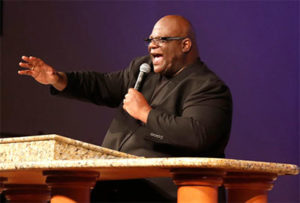


 William Harvey O’Dell of Amarillo, retired Baptist pastor and chaplain, died June 5. He was 90. He was born to Jesse Dameron and Daisy Murphy O’Dell on Sept. 25, 1930, in Santa Rita, N.M. As a child, he attended the Baptist church at Maxdale, near Ding Dong, in Bell County, where his father was a deacon, and his mother was the church pianist. At that church, he committed his life to Christ at age 9 and was baptized in the Lampassas River. He graduated from Killeen High School at age 15 and enrolled at Texas A&M University. He joined the U.S. Air Force at age 17 and served as a C-47 airborne radioman in Itazuki and Yakota, Japan, and the Kempo Air Base in Korea, delivering supplies and troops. He flew with the 5th Air Force, P-61 night fighter squadron and was in Guam with the 93rd Bomb Squadron, 19th Bomb Wing, 20th Air Force, flying B-29s. When the Korean War broke out, he served with the 4th Troop Carrier Squadron, flying C-54s on the Alaska Route to Tokyo, Hawaii, Wake, and Aschia and Tachakawa in Japan. In January 1952, he was assigned to Roswell, N.M., and was honorably discharged the same year. He received the Korean Service, Air, and Good Conduct Medals. Many years later, he also received a letter of appreciation and a Korean War Service Medal from Kim Dae-Jong, president of the Republic of Korea, in gratitude for his service. He surrendered to God’s call to the gospel ministry and became pastor of Mountain View Baptist Church in Howe, Okla. On Dec. 20, 1952, he married Helen Grace Cagle. The following May, he enrolled at Baylor University, graduating the next year. He went on to earn a Master of Theology degree from Fuller Theological Seminary and did post-graduate work at Golden Gate Baptist Theological Seminary. He was pastor of mission churches in California while he attended seminary. He then served as pastor of the Berea Baptist Church in Big Spring, where he also worked with the Veterans’ Administration Hospital. He then became chaplain of the Veterans Administration Medical Center in Amarillo, where he served more than 20 years, retiring in 1992. He was interim pastor of several churches after his retirement. He is survived by his wife of 68 years, Helen; daughter Karen O’Dell Bullock and her husband John of Granbury; daughter Kandi O’Dell Pruitt of Iowa Park; daughter Kathy O’Dell of Amarillo; and son William H. O’Dell Jr. and his wife Amy of Stephenville; 12 grandchildren; nine great-grandchildren; and his brother Robert O’Dell and wife Shirley of Poteau, Okla.