At least three critical race theory statements proposed for SBC

NASHVILLE (RNS)—If he had the chance to turn back time, Pastor Stephen Feinstein says, he might not have proposed Resolution 9.

The innocuous-sounding and nonbinding statement adopted by Southern Baptists who attended their 2019 annual meeting has contributed to a fierce battle over critical race theory, an academic approach to understanding systemic racism. The resolution allowed for critical race theory to be used as an analytical tool but also stated that it should be subordinate to Scripture.

The debate around critical race theory has only grown more contentious in the years following, even as the nation’s largest Protestant denomination was unable to meet in person for two years due to pandemic restrictions.

“Oh my gosh, I had no idea, and if I could do it all over again, I would have just shut my fingers up and not typed anything,” said the California pastor and U.S. Army Reserve chaplain who admits he might have naively thought it would be adopted and harmony would reign. “That is not what happened.”

As the 2021 Southern Baptist Convention annual meeting grapples with a number of serious challenges—at least a four-way presidential election, declining membership, charges and countercharges about how it has handled sex abuse claims—some will be focused particularly on resolutions related to critical race theory and to Resolution 9.

The two-day gathering is set to begin June 15 in Nashville, Tenn., with attendance expected to be more than 16,000 people, the highest in 25 years.

Seminary presidents statement escalates CRT debate

The critical race theory debate reached a higher dimension when the SBC’s Council of Seminary Presidents issued a statement late last year declaring critical race theory and intersectionality, another academic theory that addresses exploitation when gender and race intersect, are incompatible with the latest version of the denomination’s faith statement, adopted in 2000.

Two Southern Baptist pastors, Tom Ascol of Florida and Tom Buck of Texas, have called on delegates to rescind Resolution 9.

But according to Southern Baptist polity, each meeting’s resolutions represent the thinking of the messengers, or delegates, attending that particular gathering. A new resolution could be adopted, but historically, old ones aren’t removed.

“That resolution that was passed will always be in the record books,” Jon Wilke, media relations director for the SBC Executive Committee, told Religion News Service in 2020.

Three resolutions already proposed

However, at least three proposed resolutions for the 2021 meeting could be considered clarifications of Resolution 9 that Southern Baptists could potentially adopt this year.

One resolution, proposed by Feinstein despite his second thoughts, clarifies his view that critical race theory is not necessary, that any truths that come from it can also be found in Scripture, while acknowledging systemic racism exists.

A second resolution is proposed by Pastor Todd Littleton, a minister and podcaster in Oklahoma. Titled “On the Incompatibility of Structural Racism and Oppression with the Baptist Faith and Message,” Littleton’s proposed resolution counters the seminary presidents’ declaration against critical race theory.

Interviewed shortly after the release of a leaked 2020 letter by Russell Moore, who recently resigned as president of the Southern Baptist Ethics and Religious Liberty Commission, Littleton said it’s ironic there’s a debate about the existence of structural racism.

“Here we are, we’ve got this big brouhaha over CRT and people claiming that we’re really not racist, we’ve dealt with all that, we don’t need to talk about it,” he said. “And one year ago, the president of the ERLC pens a letter outlining the very ways that’s been real in our denomination.”

But another SBC pastor from Oklahoma—whose governor recently signed into law a bill that bars schools from teaching concepts of critical race theory—supports a third proposed resolution titled “Southern Baptists Against Racism.” That statement affirms the seminary presidents’ determination that critical race theory and intersectionality do not align with their denominational faith statement.

Wade Burleson, a pastor of an Enid, Okla., church, argued critical race theory is rooted in Marxism.

“Christ is a uniter,” said Burleson. “I don’t see CRT uniting. I see it dividing. Marxism has a goal of dividing.”

Reflecting Marx or MLK?

Pastor Dwight McKissic of Arlington wrote an essay posted June 9 on SBCVoices.com that responds to those who connect critical race theory to German philosopher Karl Marx.
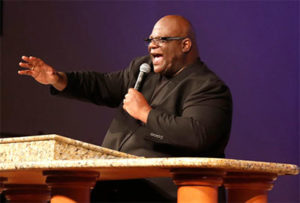
Pastor Dwight McKissic of Cornerstone Baptist Church in Arlington preaches during worship services on June 7, 2020. (AP Photo/LM Otero)

“Derrick Bell, who is considered the father of Critical Race Theory, denied any Marxan influence or European scholarly influence on his development of CRT,” wrote McKissic, who said he would leave the predominantly white SBC if messengers “denounce CRT in its entirety” at the meeting.

“If you want to know what CRT is, it is everything Martin Luther King has written, including his ‘I Have A Dream Speech.’”

Should McKissic, who already left the Southern Baptists of Texas Convention over its anti-CRT stance, depart the larger denomination, he would join several other prominent Black leaders who made that move in recent months.

This year’s resolutions committee chair, James Merritt, confirmed there are “at least 3 or 4” race-related resolutions proposed in the “thick notebook” he will be reviewing with other committee members before they determine which ones to accept, reject or refine and present for adoption at the meeting.

Merritt, who pastors Cross Pointe Church in Duluth, Ga., said a resolution is not going to solve the SBC’s growing debate about race relations. Still, he acknowledged there’s a lot riding on the committee’s work this year, with critical race theory one of the “points of tension” it has to manage.

“We’re calling on the Lord of heaven to give us wisdom and discernment,” said Merritt, who was president of the SBC from 2000 to 2002. “I had an entity head tell me he thinks this may be the most pressure-packed important resolutions committee in 40 years, and he may very well be right.”

Divide not strictly along lines of race

The divides about critical race theory are not strictly between people of different races in the Southern Baptist Convention, which was founded in 1845 with a defense of slavery.

Voddie Baucham Jr., an African American dean of a Zambia-based divinity school, is against the use of critical race theory and devoted pages of his new book, “Fault Lines: The Social Justice Movement and Evangelicalism’s Looming Catastrophe,” to the development and passage of Resolution 9—for which he faults the 2019 resolutions committee for opening the door to engagement with CRT.

Resolution 9 concluded: “Critical race theory and intersectionality should only be employed as analytical tools subordinate to Scripture—not as transcendent ideological frameworks.”

“This is the crux of the matter: The million-dollar question is whether CRT is a worldview or merely an analytical tool,” writes Baucham, who describes critical race theory as a worldview. “Tools don’t explain; worldviews do.”

Michael Ausberry is president of the National African American Fellowship of the Southern Baptist Convention, pastor of Antioch Baptist Church in Fairfax Station, Va., and first vice president of the SBC. (BP Photo)

Marshal Ausberry, president of the National African American Fellowship of the SBC, said most African American churches in the denomination do not see critical race theory as “the hill to die on.” He noted several Black churches have recently become affiliated with the SBC and his fellowship, even as some Black leaders have left the SBC.

Ausberry, who also is the first vice president of the SBC, noted Feinstein’s 2019 proposed resolution was refined by the resolutions committee—by men and women who were not liberals but rather mostly SBC-trained scholars.

“These are very conservative men and women and who made all kinds of qualifications in their address of CRT,” he said, “not embracing CRT but simply carving out a safe lane for someone—not in the pulpit, not in the elementary school or high school, but in the safety of a college or similar classroom—to help build cultural competencies in future pastors and church leaders that there are some things that can be systemic racism.”

Feinstein, who describes himself as an ethnically Jewish pastor of a Southern Baptist congregation, hopes that despite expectations of a contentious meeting fueled by debate on CRT and other issues, there will be a way to move forward.

“I just want our denomination to stay united in our cooperation on global missions and church planting with the guardrails that are set by the Baptist Faith & Message 2000,” he said. “I want the Lord to protect us from not being, really, just blown up.”


SBC Executive Committee hires firm to review allegations

NASHVILLE (RNS)—Responding to allegations that it has mishandled allegations of abuse in the past, the Southern Baptist Convention’s Executive Committee announced June 11 it had retained a firm to “conduct an independent review of its processes,” according to a statement from Ronnie Floyd, president of the Executive Committee.

The review by Guidepost Solutions comes in response to allegations by Russell Moore, until recently the president of the SBC’s Ethics & Religious Liberty Commission, claiming Floyd and Georgia pastor Mike Stone had tried to delay attempts to deal with abuse and to silence abuse survivors.

“Guidepost Solutions is a global leader in monitoring, compliance, sensitive investigations, and risk management solutions and has deep experience providing advice and counsel to faith communities in this area,” the statement reads.

Besides reviewing Moore’s allegations, Guidepost will “review and enhance training” provided to the Executive Committee staff and trustees in responding to abuse matters.

“The SBC Executive Committee commits to providing full support and transparency to Guidepost Solutions, including making individuals available for interviews and providing relevant documents,” the statement also reads.

Some prominent members of the SBC worried that the Executive Committee’s review would fall short of a full investigation. Dwight McKissic, senior pastor of Cornerstone Baptist Church in Arlington, cast doubt on a review that would be “something less than an independent investigation launched by the convention,” and not the Executive Committee.

Abuse advocate and attorney Rachael Denhollander, who has been critical in the past of SBC officials’ treatment of alleged sex abuse victims, called Guidepost Solutions a “highly qualified firm” capable of reviewing the Executive Committee’s actions and advising SBC leaders.

“The question is whether the Executive Committee allows them to do their job,” said Denhollander, a former gymnast who was the first to accuse former USA Gymnastics doctor Larry Nassar of abuse.

Denhollander called for the SBC Executive Committee to expand the mandate given to Guidepost to include a full written report and a review of all paid staff and elected officials.

“If they get those two things, Guidepost can do their job,” she said.

Denhollander criticized SBC leaders during a 2019 Caring Well Conference on responding to abuse, leading to pushback from those leaders. In leaked clips of meetings with Moore, then head of the SBC’s Ethics & Religious Liberty Commission, Floyd said he was not worried about “what survivors can say.”

“I am not worried about that,” he is heard saying in the audio clips, released by a College Station pastor who is a former ERLC staffer. “I’m thinking of the base. I just want to preserve the base.”

Floyd has said those audio clips mischaracterize his response to abuse.

Moore, who resigned recently after years of controversy, cited the pushback over abuse and over the ERLC’s work on race in a letter to ERLC trustees before his resignation. That letter was recently published by Religion News Service.

Rolland Slade, chairman of the Executive Committee, has expressed support for an independent investigation into Moore’s allegations. Two Southern Baptist pastors have announced plans to propose an independent investigation during the SBC’s annual meeting in Nashville, which is expected to draw more than 16,000 attendees.


Leaked audio reveals leaders reluctant to deal with sex abuse

NASHVILLE (RNS)—Audio clips leaked by a Southern Baptist whistleblower appear to corroborate accusations Southern Baptist Convention leaders were reluctant to take action against churches accused of mishandling abuse.

The audio contains a recording of Ronnie Floyd, president of the SBC’s Executive Committee, telling SBC leaders in an October 2019 meeting he is concerned about preserving the base in the denomination—even if that leads to criticism from abuse survivors.

‘I just want to preserve the base’

“As you think through strategy—and I am not concerned about anything survivors can say,” Floyd says in the recording, taken during a meeting to debrief the Caring Well Conference, held to address the handling of sexual abuse allegations within the SBC. “I’m not scared by anything the survivors would say. OK. I am not worried about that. I’m thinking the base. I just want to preserve the base.”

The audio also contains a May 2019 recording of Georgia pastor Mike Stone, a 2021 candidate for SBC president, saying a working group deciding how to deal with churches accused of mishandling sexual abuse had been “bullied” and “thrown under the bus.”

Abuse survivor Rachael Denhollander (right) discusses the Southern Baptist Convention’s history of addressing sexual abuse with Ethics & Religious Liberty Commission President Russell Moore at the Caring Well conference in Grapevine. (Photo / Karen Race Photography 2019 / Via RNS)

“There’s this human factor, where good people are thrown under the bus, trying to do their best,” he said during an Atlanta meeting on sexual abuse. “And now we are asking the group to trust some of the ones who threw them under the bus.”

The recordings and a “whistleblower report,” released by College Station pastor Phillip Bethancourt, reveal more details about the divides between SBC leaders over how to deal with sexual abuse in the nation’s largest Protestant denomination.

The report comes on the heels of the leaking of two letters from former SBC ethicist Russell Moore, who resigned recently as president of the SBC’s Ethics and Religious Liberty Commission, detailing his disagreements with Stone and other SBC leaders.

In his letter, Bethancourt said he made the recordings of meetings involving Moore, Stone—who was then chair of the SBC’s Executive Committee—and Floyd in 2019. At the time, Bethancourt was on the staff of the ERLC.

Bethancourt said in his letter that he only shared clips and not the full audio of the two meetings because the names of abuse survivors are mentioned. He said he would release the full recording of the meetings to a third-party investigator if Southern Baptists decide to appoint one to look into the matter.

Calls for independent investigation

Since Moore’s letters were leaked, a number of pastors have called for a third-party investigation into how the SBC leadership has responded to abuse allegations.

“Southern Baptists are at a crossroads as we head to the 2021 SBC annual meeting in Nashville. I don’t know which direction Southern Baptists will choose,” Bethancourt wrote in his letter. “But I do believe these ancient words: The truth will set you free. The future of the SBC will only stand if it is built on a foundation of truth.”

Stone has denied Moore’s allegations that he tried to delay efforts to deal with abuse. He did not immediately respond to a request June 10 for comment.

In a statement to Religion News Service, Floyd said he called a confidential meeting of SBC leaders in May 2019 to discuss how to respond to abuse in the denomination.

The meetings, Floyd said, “reflect leaders engaging in a scriptural process of coming together with others who have differing opinions on complicated issues and of discussing those differences honestly with a goal of how to best move forward.”

He called Bethancourt’s release of the audio recordings from the meetings an “attempt to mischaracterize them” as trying to avoid the reality of sex abuse.

Want to care for abuse survivors but disagree about how

Floyd also said Baptists want to care for abuse survivors but don’t agree on how to do that.

“However, the SBC is not divided on the priority of caring for abuse survivors and protecting the vulnerable in our churches,” he said.

Floyd apologized for any offense his remarks may cause. He also said the Executive Committee is responding to calls for an independent investigation into its handling of abuse allegations.

“Regardless of how some are attempting to characterize past action and future intent,” he said, “since last weekend the Executive Committee staff leadership has been in the process of talking with and potentially securing a highly credible outside firm with the intent of conducting an independent third-party review of the accusations recently levied at the SBC Executive Committee.”

The recordings also highlight a dispute over the Caring Well Conference run by the ERLC in October 2019, which dealt with abuse in the SBC. During that conference, attorney and abuse advocate Rachael Denhollander accused SBC leaders, and in particular the Executive Committee, of mistreating survivors of abuse.

In the recording of a meeting in October 2019, after the conference, Floyd talks about the pushback he received over the conference.

“How are we supposed to respond, in your minds, to people who say, why in the world would we have a conference and let people degrade the Southern Baptist Convention, attack its leadership, our churches—and all those things. How are we supposed to do that and say what they want to say and yet the whole entire sexual abuse study was funded by the Executive Committee.”

Moore defended his agency’s approach to the conference, saying the SBC was not part of a cover-up of abuse. He also warned that had the ERLC limited what survivors at the conference could say, news of those limits would have ended up in national newspapers.

Urging SBC entities to address sex abuse

Bethancourt was the first—but not the only—Southern Baptist to stand at a microphone on the convention floor and make a motion at the 2019 meeting urging denominational leaders to pay closer attention to sexual abuse issues.

He requested each of the SBC’s entities—including the Executive Committee—to report on their efforts at the 2020 meeting that was to be held in Orlando, Fla., before the COVID-19 pandemic forced its cancellation.

He asked that they consider three topics.

“One: What is their entity doing to foster effective abuse awareness, prevention and care?” he said, after describing himself as a messenger from a Franklin, Tenn., church.

“Two: What additional steps has their entity taken to address abuse since the 2018 SBC annual meeting in Dallas, Texas? Three: How is their entity partnering with the efforts of the Sexual Abuse Advisory Group to address abuse?”

Later that day the Committee on Order of Business announced that proposal would be referred to the entities.

Just before Bethancourt made his motion, Floyd, the Executive Committee president, was introduced by Stone, then the chairman of the Executive Committee, who noted that the office Floyd was filling had been “unexpectedly vacated.” Floyd was succeeding Frank Page, who resigned after “a morally inappropriate relationship.”

Right after Bethancourt spoke, two other people made motions urging other steps related to sex abuse. One asked for the International Mission Board to include in its report the full update of a law firm’s examination of sexual abuse allegations in that agency. Another sought the Executive Committee’s consideration of a plan to aid churches that might need funding to investigate sex abuse in their midst.

The second request was ruled out of order and the third was referred to the Executive Committee.


Obituary: William Harvey O’Dell

William Harvey O’Dell of Amarillo, retired Baptist pastor and chaplain, died June 5. He was 90. He was born to Jesse Dameron and Daisy Murphy O’Dell on Sept. 25, 1930, in Santa Rita, N.M. As a child, he attended the Baptist church at Maxdale, near Ding Dong, in Bell County, where his father was a deacon, and his mother was the church pianist. At that church, he committed his life to Christ at age 9 and was baptized in the Lampassas River. He graduated from Killeen High School at age 15 and enrolled at Texas A&M University. He joined the U.S. Air Force at age 17 and served as a C-47 airborne radioman in Itazuki and Yakota, Japan, and the Kempo Air Base in Korea, delivering supplies and troops. He flew with the 5th Air Force, P-61 night fighter squadron and was in Guam with the 93rd Bomb Squadron, 19th Bomb Wing, 20th Air Force, flying B-29s. When the Korean War broke out, he served with the 4th Troop Carrier Squadron, flying C-54s on the Alaska Route to Tokyo, Hawaii, Wake, and Aschia and Tachakawa in Japan. In January 1952, he was assigned to Roswell, N.M., and was honorably discharged the same year. He received the Korean Service, Air, and Good Conduct Medals. Many years later, he also received a letter of appreciation and a Korean War Service Medal from Kim Dae-Jong, president of the Republic of Korea, in gratitude for his service. He surrendered to God’s call to the gospel ministry and became pastor of Mountain View Baptist Church in Howe, Okla. On Dec. 20, 1952, he married Helen Grace Cagle. The following May, he enrolled at Baylor University, graduating the next year. He went on to earn a Master of Theology degree from Fuller Theological Seminary and did post-graduate work at Golden Gate Baptist Theological Seminary. He was pastor of mission churches in California while he attended seminary. He then served as pastor of the Berea Baptist Church in Big Spring, where he also worked with the Veterans’ Administration Hospital. He then became chaplain of the Veterans Administration Medical Center in Amarillo, where he served more than 20 years, retiring in 1992. He was interim pastor of several churches after his retirement. He is survived by his wife of 68 years, Helen; daughter Karen O’Dell Bullock and her husband John of Granbury; daughter Kandi O’Dell Pruitt of Iowa Park; daughter Kathy O’Dell of Amarillo; and son William H. O’Dell Jr. and his wife Amy of Stephenville; 12 grandchildren; nine great-grandchildren; and his brother Robert O’Dell and wife Shirley of Poteau, Okla.



On the Move: Villanueva

Jordan Villanueva to Howard Payne University as instructor in the School of Christian Studies from Indian Hills Baptist Church in Grand Prairie, where he was pastor.


Around the State: Cargills benefit ETBU nursing students

East Texas Baptist University is partnering with the Cargill family to help facilitate the Polly Cargill Nursing Scholarship program. The Polly Cargill Endowed Nursing Scholarship at ETBU was established with an initial gift of $282,000, and a matching gift from an anonymous donor brought the corpus to $564,000. The scholarship will be awarded through application to students admitted into ETBU’s School of Nursing. Jack Cargill made a legacy gift to the ETBU Polly Cargill Endowed Nursing Scholarship. Jerry and Judy Cargill also made a contribution of $282,000 to the Polly Cargill Nursing Scholarship Fund held at a foundation in Dallas to benefit nursing students at ETBU, Kilgore College, Panola College, the University of Texas-Tyler and other schools in the area. Jerry and Jack Cargill founded the scholarship to honor their mother, Polly Cargill, and support nursing students in their journey to become competent, equipped and compassionate health care workers. Since its inception 19 years ago, the Polly Cargill Nursing Scholarship has provided financial aid to 60 nursing students from schools across the region. “We are deeply grateful for the Cargill family and their enduring generosity to provide scholarships for nursing students in East Texas and Northwest Louisiana,” ETBU President J. Blair Blackburn said. “Their legacy of love and support for health care education has given life and hope to many people—certainly here on the hill of East Texas Baptist University and in our School of Nursing in the downtown Marshall Grand. I praise God for the Cargill family, and look forward to what lies ahead in our shared kingdom educational partnership.”

STCH Ministries—formerly known as South Texas Children’s Home—is partnering with Bluebonnet Youth Ranch to use its Yoakum property as a Homes for Families campus. STCH Ministries Homes for Families at Bluebonnet Ranch will be a resource for single mothers and their children who are facing a crisis and need help transitioning into independent living. The four-phase program provides a safe, comfortable setting for mothers and their children to begin a new chapter, while the staff helps to address their physical, emotional and spiritual needs. “We are excited to be partnering with Bluebonnet Youth Ranch and look forward to continuing the legacy they established so many years ago,” said Eron Green, president and CEO of STCH Ministries.

Wayland Baptist University’s School of Music is offering a new online certification in piano pedagogy. The certification is primarily designed for piano teachers who want to increase their knowledge and understanding of pedagogy and instructional techniques. Offered completely online, students will participate in a 12 credit-hour program taken in four eight-week sessions. Teachers are Richard Fountain, professor of piano, and Kennith Freeman, associate professor of collaborative piano. Students enrolling in the 2021-22 academic year will benefit from a special discounted tuition rate. Students will take two classes at a time, beginning in August. The second class will begin in mid-October and conclude in early December. The spring sessions will begin in mid-January and conclude in mid-May. For more information on the program, call (806) 291-1076 or email fountainr@wbu.edu or Kennith.freeman@wbu.edu.

Howard Payne University has created the Diane Owens Excellence in Music Education Scholarship to honor the life and work of Diane Owens, director of the pre-college music program at the university. Owens has served as the director of the program for 20 years and has taught pre-college music for a total of 27 years. The scholarship will provide recipients $500 per semester or $1,000 per year. Eligible HPU students must maintain a 3.0 GPA and be a junior or senior student who has demonstrated high moral character, a heart for service, excellence in music education and exemplary course work. Students teaching in the pre-college music and art program will be given preference, if all other qualifications are equal. Scholarship recipients will be selected by the dean of the HPU School of Music and Fine Arts.

BaptistWay Press has changed its name to GC2 Press. “GC2 represents the Great Commission and Great Commandment and reflects Texas Baptists’ mission and heart,” said Bob Billups, publisher of GC2 Press. BaptistWay Press began under the leadership of Bill Pinson, then executive director of the Baptist General Convention of Texas, and Bernie Spooner in the Sunday School Discipleship team. BaptistWay Press launched in 2000 to provide Bible study curriculum to adults, students and children. Its curriculum currently is used in 40 states and numerous countries around the world. Adult Bible studies have been translated into multiple languages, including Cambodian, Korean and Spanish.

Southwestern Baptist Theological Seminary named three individuals to academic and administrative leadership roles—Travis H. Trawick as associate provost, F. Edward Upton as interim vice president for institutional advancement and Lucas Hahn as director of admissions. Trawick has been vice president for institutional advancement since 2018. Upton, who will be considered for election to his position by the seminary’s board of trustees at its fall meeting, came to Southwestern Seminary in 2020 as associate vice president for institutional relations. Hahn previously served in admissions roles at Southern Baptist Theological Seminary, Missouri Baptist University and Fontbonne University.

Howard Payne University presented its Outstanding Faculty Member Award to Dennis Gibson, associate professor of chemistry and department chair, and Outstanding Staff Member Award to Hunter Sims, athletic director. HPU’s Department of Athletic Training received the Outstanding Department Award, recognizing all members of the department for their service. The university presented certificates for excellence in teaching to Chuck Gartman, assistant professor of Christian studies and director of ministry guidance; and Jill Heupel, assistant professor of kinesiology and director of the Master of Education in Sport and Wellness Leadership program. HPU presented certificates recognizing excellence in service to Wendy McNeeley, assistant vice president for university records and dean of general education; and Bob Pacatte, director of HPU’s Department of Public Safety and chief of police.

Retirement

James Fuller after 27 years as senior pastor at Calder Baptist Church in Beaumont and 43 years in vocational Christian ministry, effective May 31.


Seminary changes name of undergraduate school

FORT WORTH—The undergraduate school of Southwestern Baptist Theological Seminary is now Texas Baptist College, President Adam W. Greenway announced June 9.

“Texas Baptist College is going to be a tremendous educational enterprise that will enrich its students’ lives and impact our world through their service,” Greenway said. “I believe few changes we have implemented in recent years at Southwestern Seminary have as far-reaching potential as the new name, vision, and leadership for our college.”

In addition to its new name, approved by the seminary’s board of trustees in its spring meeting as part of other bylaw changes, the college also has a new vision statement and three core distinctives: “Christ-centered,” “Scripture-driven,” and “student-focused.”

“Texas Baptist College exists to glorify God by providing trustworthy Christian higher education for more faithful kingdom service,” said Benjamin M. Skaug, who became dean of the college Jan. 1.

The seminary’s undergraduate school was launched in 2005 as the College at Southwestern. In 2017, it was renamed L.R. Scarborough College, after the seminary’s second president.

The college is “unapologetically, unashamedly committed to the truths of biblical orthodoxy that have been faithfully held to by Baptists down through the tunnel of time,” Greenway said. “We are unapologetic in our commitment to Baptist distinctives and to a vision of Christ-centered education that is committed to the richness of a heritage of faith that has long preceded us.”

Changing the name from L.R. Scarborough College is not intended to disregard Scarborough’s legacy, Greenway emphasized, but rather continues Scarborough’s emphasis on Texas Baptist education.

“L.R. Scarborough, among other things, was a preeminent Texas Baptist, one who was committed to reaching this state with the gospel of Jesus Christ and to perpetuating the best of our Baptist identity and distinctives,” Greenway said.

“We believe, in many ways, the broader name Texas Baptist College enables us to continue to emphasize the legacy of L.R. Scarborough alongside that of our founder, B.H. Carroll, and so many others who were committed to a vision of training and educating God-called men and women for all the vocations everywhere they may serve, but especially right here in the great state of Texas.”


Pastors value denominations but unsure about future

NASHVILLE, Tenn.—As many Protestant denominations prepare to gather this summer for their national meetings, most pastors believe it is vital for their church to be part of a denomination but doubt the importance of those types of ties lasting another decade.

A Lifeway Research study asked Protestant pastors their thoughts on the importance of denominations and how they believe denominations will fare in the next 10 years.

“Among Protestant churches in the United States, there continues to be denominational splits and disputes, the emergence of new local and national non-denominational networks, and the presence of a large number of churches that do not belong to a denomination, convention or conference,” said Scott McConnell, executive director of Lifeway Research. “This begs the question whether those within Protestant denominations still see value in them.”

Denominations valued

About 8 in 10 Protestant pastors whose church is in a denomination or denomination-like group (78 percent) say they personally consider it vital to be part of a denomination, with 53 percent strongly agreeing, according to the Nashville-based research firm. One in 5 disagree (20 percent), while 2 percent are not sure.

Pastors believe their congregations share their opinion about the denominational ties. A similar percentage (77 percent) say their congregation believes it is vital for their church to be part of a denomination, though fewer strongly agree (44 percent). Again, 21 percent disagree, and 2 percent are not sure.

“While the connections of some denominations are completely voluntary, those of others are deeply rooted in their polity,” McConnell said. “Yet communicating the importance or the benefits of relating to the denomination in this way cannot be taken for granted. One in 5 pastors do not see that value today.”

Some pastors are more likely to believe connecting to a denomination is vital to them personally. Younger pastors (18-44) are more likely to agree than those 65 and older (83 percent to 74 percent). White pastors (80 percent) are also more likely to see that tie as vital than African American pastors (63 percent).

There are also distinctions within different denominational streams. Mainline pastors (92 percent) are more likely than evangelical pastors (76 percent) to say being a part of a denomination is important to them personally. Among specific denominational groups, Lutherans (95 percent) are the most likely to agree, and pastors in the Restorationist movement (31 percent) are the least likely to agree.

Decreasing importance?

Despite most pastors affirming the personal and congregational importance of being connected to a denomination, a majority believe that value will decrease in the next decade. More than 6 in 10 pastors currently at a church in a denomination or denomination-like group (63 percent) say the importance of being identified with a denomination will diminish in the next 10 years. Around a third of pastors (32 percent) disagree, and 5 percent are not sure.

In many cases, those pastors most likely to see personal and congregational value in denominational connections are those most likely to see that importance continue through 2030. Young pastors (18-44) are the least likely to say identifying with a denomination will diminish in importance in the next decade (54 percent).

“Many, including pastors, who predicted the demise of Protestant denominations in the U.S. have not proven prophetic,” McConnell said. “The fact that younger pastors are less pessimistic could signal better days ahead for denominations or at least fewer memories of the worst days.”

While it is impossible to know how those predictions will fare 10 years from now, pastors shared similar views in 2010, according to a previous Lifeway Research study.

Strong agreement has dipped slightly on the questions of denominational importance since 2010, but overall agreement has remained largely unchanged. A decade ago, 76 percent of denominationally connected pastors said they considered it vital to be part of a denomination personally, and 76 percent said their congregation felt the same.

In 2010, 62 percent believed the importance of being identified with a denomination would be diminished by now. The total percentage who sees a coming decline is near the current 63 percent, but fewer today are as confident in their prediction. A decade ago, 28 percent strongly agreed the importance would diminish. Today, the percentage dropped to 19 percent.

Pastors may be more pessimistic about their denominations than those in their communities. A 2015 Lifeway Research study on Americans’ views of denominations found most were open to churches connected to major Christian groups. No matter the denomination, fewer than half of Americans, even among the nonreligious, said a church connected to that denomination was “not for me.”

When asked whether they had a favorable or unfavorable opinion, or were not familiar enough to form an opinion of specific denominations, favorable percentages were higher than unfavorable for each group, and every denomination had unfavorable percentages below 28 percent.

The mixed mode survey of 1,007 Protestant pastors was conducted Sept. 2–Oct. 1, 2020, using both phone and online interviews. Each survey was completed by the senior or sole pastor or a minister at the church. Researchers weighted responses by region and church size to reflect the population more accurately. The completed sample is 1,007 surveys (502 by phone, 505 online). The sample provides 95 percent confidence the sampling error does not exceed plus or minus 3.4 percent. Margins of error are higher in sub-groups.


Religious terrorism in Burkina Faso claims 160 lives

YAGHA, Burkina Faso (BP)—Jihadists are blamed for killing 160 people in Burkina Faso in a prolonged weekend attack among the latest in violent religious persecution in Africa’s Sahel region.

Government and nongovernmental leaders there blame the Islamic State regional affiliate, the Islamic State in the Greater Sahara, for the attack, although no one has claimed responsibility. The attack is the deadliest in Burkina Faso’s history and spurred calls for increased international counterterrorism efforts in West Africa.

‘Inflamed religious tensions’

Such attacks in the predominantly Muslim Sahel region, on the southern shore of the Sahara, are religiously motivated and target both Christians and moderate Muslims, according to the U.S. Commission on International Religious Freedom.

“As violent Islamist groups gain ground in central Sahel, they are committing religious freedom violations in their areas of operation,” the commission said in a May factsheet. “Across parts of Mali, Burkina Faso and Niger, ISGS and Katiba Macina have imposed strict interpretations of Sharia law, restricted religious practice and executed individuals because of their beliefs.

“These trends have inflamed religious tensions and increased persecution across West Africa,” the commission stated “a religiously diverse region home both to an inspiring history of interfaith tolerance and also pockets of sectarian violence and poor religious freedom conditions.”

The U.S. Commission on International Religious Freedom identified Islamic State in the Greater Sahara and Katiba Macina among several terrorist groups growing in the region.

Civilians shot, homes burned

In the weekend attack on remote Solhan village in Yagha province in northern Burkina Faso, jihadists shot civilians, torched homes and a market, and threw explosives into goldmining holes where some civilians hid during the onslaught.

Solhan officials recovered 160 bodies on June 6 in three mass graves that held victims of the attack, Agence France-Presse reported. The death toll previously was reported as 132 and might yet rise, according to reports.

Amed, a goldminer who managed to survive in a mining hole, told the Wall Street Journal he was awakened by the sounds of AK-47-style rifles early June 5.

“I found the bodies of four of my friends and we buried them in a mass grave,” the newspaper quoted Amed. “When our army says it’s safe, I don’t know what they mean.”

Burkina Faso President Roch Kabore announced a three-day national mourning period ending June 8.

The Solhan deaths are in addition to 14 people killed June 4 in an attack on Tadaryat village about 100 miles north of Solhan, BBC reported. In May, 30 people were killed in an attack in east Burkina Faso.

‘Loosely affiliated militant Islamist groups’

Nearly a third of Burkinabé identify as Christian, comprising the largest group of Christians in any of the targeted Sahel nations, including Mali and Niger, which are 94 percent and 99 percent Muslim, respectively. Most are Sunni.

Katiba Macina, founded in 2015 by a Fulani Muslim, has aligned with other Salafi jihadists in central Mali to establish Jamaat Nusrat al-Islam wal-Muslimin, which the U.S. Commission on International Religious Freedom describes as a “coalition of loosely affiliated militant Islamist groups.” The group is “almost exclusively responsible” for the sharp rise in attacks in fatalities in the Sahel annually since 2016, the commission said.

Terrorists operating in the region also fight against one another based on religious beliefs.

“ISGS violence against members of rival jihadist groups in the region may also amount to targeting individuals based on their beliefs,” the commission wrote in its factsheet. “Following an extended period when ISGS and al-Qaeda affiliated groups in the region tolerated each other’s presence, relations between these groups deteriorated in 2020.”

The latest killings in Burkina Faso add to the estimated 8,000 such killings in the Sahel in 2020, according to the Africa Center for Strategic Studies. More than 1.7 million people have been displaced in the region, including 170,000 refugees and 1.5 million internally displaced persons, according to Africa Center statistics.

Regional counterterrorism initiatives include the G5 Sahel Joint Force, an ad hoc military intelligence coalition comprising Burkina Faso, Mali, Niger, Mauritania and Chad.

The U.S. State Department condemned the attack, having previously designated the Islamic State in the Greater Sahara and Jamaat Nusrat al-Islam wal-Muslimin as entities of particular concern for severe religious freedom violations in areas under the entities’ control.


TBM disaster relief volunteers see joy after storms

LAKE CHARLES, La.—After two hurricanes, an ice storm and now a flood, a soaked ceiling hung precariously in the kitchen of a Southwest Louisiana home. The homeowner was waiting for it to fall any moment.

A Texas Baptist Men flood recovery team from Kingsland Baptist Church in Katy refused to let that happen. They cut away the drywall and made the area safe again.

When the homeowner saw it, she was overwhelmed with joy.

“Oh Lord Jesus, that is so beautiful,” she said.

Moments like this were as emotional for TBM volunteers as they were for homeowners.

TBM crews removed soaked flooring, furniture and drywall from flood-damaged homes in Lake Charles, La. (TBM Photo)

“The homeowners that we helped pretty much humbled us,” said Phil Clasen, who led the Katy TBM team. “They’re obviously bummed, but their joy is pretty incredible. We had the opportunity to serve them and the Lord, but they blessed us greatly.”

Similar scenes happened again and again as three TBM flood recovery teams served in the disaster-battered city. Hurricane Laura and Hurricane Delta slammed the region in the fall. An ice storm hit earlier this year. Recently, Lake Charles was drenched by heavy rain.

Moving from home to home, the TBM crews removed soaked flooring, furniture and drywall for free. The ministry jump-started the recovery process for families, launching a family far beyond what it could do on its own.

“We get them to a place where they can start the rebuild,” said Sam Yates, who led the Waco Regional Baptist Association TBM team. “Their spirits are a lot higher. We try to minister to them and comfort them. They are very appreciative.”

A TBM flood and fire recovery team from Collin County take a break after removing water-damaged items from a home in Lake Charles, La. (TBM Photo)

The sea of yellow-shirted TBM volunteers, as well as Baptist disaster relief volunteers from across the country, have become a continuous site in the community for months. As a result, volunteers and residents have bonded. They are traveling the recovery journey together.

Because of the kinship, Lake Charles residents are opening up to volunteers. They are praying together, crying together and celebrating together. More than 425 people, including nine last week, have professed faith in Christ as Lord for the first time as a result of Baptist disaster relief ministry.

“We want to minister to them, let them know that God has a plan for them,” Yates said. “People are crying. They don’t know what the next move is. We have several chaplains. They’ve done a great job ministering to people.”

To support TBM disaster relief financially, give online at TBMTX.org/donate or mail a check to Texas Baptist Men, 5351 Catron Drive, Dallas 75227.

EDITOR’S NOTE: The article was posted June 8. The third paragraph from the end was revised on June 9 to correct a numerical error.


Small church start grows into multifaceted ministry

Robert Canady was serving as the pastor of pastoral care at Friendship West Baptist Church in South Dallas when he sensed God calling him to start a church on the east side of Dallas County.

So, on March 31, 2003, Canady quit his job to plant a new church with no building, no members and no funds. However, he had faith God would provide.

That afternoon, he went to the gym, where he ran into Charlie Wilson, longtime pastor of First Baptist Church in Sunnyvale and one-time director of evangelism for the Baptist General Convention of Texas.

When Wilson heard about Canady’s ambitions, he recognized they shared the same vision to start a church in eastern Dallas County.

First Baptist in Sunnyvale recently had acquired a building where a new church could meet, and the established congregation had people who would serve in their ministries and funds available to get the new congregation started.

“I couldn’t believe it,” Canady said. “You know that was all God.”

With that, All Nations Fellowship was born in Garland, with 12 initial members.

In the years that followed, All Nations Fellowship grew to nearly 800 members before the COVID-19 pandemic in 2020.

Helping people prepare for ‘Next Level Life’

The church is involved in a variety of ministries in its community, striving to meet people where they are and improve their lives.

One of the largest is Next Level Life, a faith-based nonprofit organization led by Stephanie Canady, the senior pastor’s wife and executive pastor of administration for All Nations Fellowship.

Next Level Life is designed to help local students prepare for the “next level” of life, whether college or the workforce. It seeks to educate students about real-life issues, from finances to resumes to health care.

“We started Next Level Life because we felt like there was a need to make sure our kids were ready. Some kids are going to go to college. Some are going to go straight into the workforce. And they’re not all ready,” Canady said. “We want these kids to have the best opportunity for success that we can give them.”

A prostate cancer diagnosis in late 2020 opened Canady’s eyes to even more opportunities for local ministry. He learned African American men are at increased risk for developing prostate cancer. In fact, a study by Zero Cancer shows that one in six African American men will be diagnosed with prostate cancer at some point in their lives.

Men attend a health symposium hosted by All Nations Fellowship.

As Canady went through his doctor appointments, surgery and recovery, he felt God calling him to start a new component of their ministry—the Next Level Life Men’s Health.

It will educate men in their community, the majority of whom are African American, about health issues, particularly prostate cancer, Canady explained.

Next Level also will help those who cannot afford medical care get check-ups and anything else they need to stay healthy.

“God took me around the long way to get me to see what he wanted me to see,” Canady said regarding his own cancer.

Rather than focus on building a larger facility—which was the church’s plan before the COVID-19 pandemic—the congregation has determined to build a bigger ministry to make a bigger impact in its community.

“The pandemic has taught us that we don’t need a big church, we just need a big ministry. Our goal is to do massive ministry by reaching the masses,” Canady said.

“I’m glad we never started the new church building because that’s God’s hand directing and ordering our steps. [The church’s] vision has been made even clearer. We are a body of Christian believers called to impact the community, edify the believer and glorify the Father.”


Pastors demand inquiry into SBC handling of sex abuse cases

WASHINGTON (RNS)—Two Southern Baptist pastors will seek an investigation into allegations that some leaders of the Southern Baptist Convention mishandled several sex abuse claims and bullied sex abuse victims.

The pastors—Ronnie Parrott of Christ Community Church in Huntersville, N.C., and Grant Gaines, pastor of Belle Aire Baptist Church in Murfreesboro, Tenn.—said they will make a motion at the upcoming annual meeting of the Southern Baptist Convention asking the denomination’s newly elected president to hire an outside firm to investigate.

“The intention behind the motion Grant and I are making is to seek the truth,” Parrott said. “We don’t need any more of the ‘he said this,’ and ‘he said that’ comments. We need the truth. An independent, third-party investigation is the only path forward for the truth.”

On June 9, the current chair of the SBC Executive Committee, Rolland Slade, joined the call for an independent investigation and affirmed the planned motion by Parrott and Gaines.

“It’s never the wrong time to do the right thing,” said Slade, pastor of Meridian Baptist Church in El Cajon, Calif.

Two letters from Russell Moore

The allegations were detailed in two letters written by outgoing SBC ethics chief Russell Moore, detailing internal conversations that revealed how top leaders of the convention resisted sexual abuse reforms and tried to intimidate those pushing for them.

Southern Baptists will meet June 15-16 in Nashville for their annual convention, and the ongoing scandal of sex abuse in its churches will be high on the agenda.

Abuse survivor Rachael Denhollander discusses the Southern Baptist Convention’s history of addressing sexual abuse with Ethics & Religious Liberty Commission President Russell Moore at the Caring Well conference. (Karen Race Photography / RNS)

Moore, who resigned his position as head of the Ethics & Religious Liberty Commission, wrote two scathing letters detailing the inner workings of the SBC’s Executive Committee, which conducts business of the denomination between annual meetings.

In Moore’s first letter, addressed to the ERLC executive committee and written more than a year before his resignation, he explained his troubles with the SBC’s leadership in bitterly frank terms, focusing especially on resistance he’d met around advancing issues of racial justice and sexual abuse reform.

A week after the first letter was leaked, a letter by Moore to SBC President J.D. Greear was published on the site the Baptist Blogger. In the May 31 letter, Moore said leaders sought to “exonerate” churches with credible allegations of negligence and mistreatment of sexual abuse survivors.

“You and I were critical of such moves, believing that they jeopardized not only the gospel witness of the SBC, but also the lives of vulnerable children and others in Southern Baptist churches,” Moore wrote.

Moore said members of the Executive Committee then became enraged when he invited Rachael Denhollander to speak at a conference. Denhollander is a lawyer and former gymnast who was the first woman to publicly accuse Larry Nassar, former Michigan State University and USA Gymnastics doctor, of sexual assault.

At that conference, Denhollander, a Southern Baptist, detailed the mistreatment of a fellow survivor at the hands of the Executive Committee. That survivor’s name is not mentioned in the letter, but it is believed to be Jennifer Lyell, a former leader in Christian publishing who went public several months ago with allegations of sexual abuse against a prominent SBC leader.

“As I knew then and know far better now, if anything, Rachael downplayed the horror this survivor had experienced, and later would experience, at the hands of the Executive Committee,” Moore wrote.

Former Executive Committee chair responds

Mike Stone, pastor of Emmanuel Baptist Church in Blackshear, Ga., is past chair of the SBC Executive Committee. Stone, who is a candidate for SBC president, is on the steering council of the Conservative Baptist Network. (Photo courtesy of BP)

Mike Stone, the immediate past chairman of the Executive Committee, posted a 13-minute video on June 6, saying Moore slandered him.

“It’s scandalous, it’s unscriptural, it’s ungodly, it’s outrageous,” Stone said of Moore’s letter. He also said he himself was abused by an older man when he was young and, as a victim, would be the last person to interfere with the convention’s work to root out sex abuse.

Stone is a nominee for president of the SBC and a member of the steering council of the Conservative Baptist Network.

But Daniel Akin, president of Southeastern Baptist Theological Seminary in Wake Forest, N.C., said June 7 he would support an independent investigation of the SBC Executive Committee.

“I believe facts are our friends, and so is the truth,” he said. “When accusations of such a nature are raised, I can’t imagine anyone not wanting the truth out, unless they happen to be hiding the truth. If people made mistakes, they need to own those mistakes and ask for forgiveness.”

Moore could not be reached June 7. As a conservative Southern Baptist who opposes abortion and same-sex marriage, Moore was hardly a theological outlier among his fellow Southern Baptist leaders. But he found himself criticized and ostracized by the convention after denouncing Donald Trump’s character in his 2016 bid for the White House.

As president of the Ethics & Religious Liberty Commission, he set up the Caring Well Initiative, which called on churches to confront the abuse crisis, institute policies to protect vulnerable women and children, listen to victims and care for them.

He also was outspoken of the need for the SBC to confront racism and gained a following among Black Southern Baptists who appreciated his efforts.

He resigned recently, taking a position with the evangelical publication Christianity Today and moving his family’s church membership to a non-SBC church. Moore was deemed “a source of significant distraction” in a task force report earlier this year to the SBC’s Executive Committee.

He did, however, have followers among a group of younger pastors who form Baptist21, among them Ronnie Parrott, who sits on the group’s board.

Parrott told RNS June 7 the allegations Moore raised were potentially harmful for the 14 million-member denomination’s public witness and so it was important to resolve them if the SBC is to move forward with a unified message.

EDITOR’S NOTE:  This article was originally posted on June 8.  It was updated on June 9 to include additional information from the current chair of the SBC Executive Committee, based on reporting by Bob Smietana and Adelle Banks.