Supreme Court lets stand Texas fetal heartbeat law

In a 5-4 decision, a divided U.S. Supreme Court refused to block the new Texas law banning abortions after a fetal heartbeat can be detected.

The law—which went into effect Sept. 1—prohibits abortion as early as six weeks into a pregnancy, and it authorizes anyone in the general public to sue for damages anybody they believe is “aiding and abetting” an abortion.

The Texas Legislature approved the law at the end of the regular legislative session in May. It makes no exceptions for rape or incest, but it does allow an exception for “medical emergencies.”

In a statement on its website, Texas Right to Life said it is “thrilled with the outcome,” calling the court’s decision “a massive victory for the pro-life movement.”

Rachel Laser, president and CEO of Americans United for Separation of Church and State, issued a statement denouncing the new Texas abortion law.

“Abortion bans are the result of the crumbling of church-state separation. The First Amendment prohibits the government from imposing one set of religious beliefs on others, but Texas’ new draconian law and other attempts by states to ban reproductive freedom do just that,” Laser said.

A majority of Supreme Court justices denied an application for an injunction against the law’s implementation. They stated Whole Women’s Health and other applicants presented “complex and novel antecedent procedural questions on which they have not carried their burden.”

No ruling on the law’s constitutionality

However, the matter may not be settled for the long term.

“In reaching this conclusion, we stress that we do not purport to resolve definitively any jurisdictional or substantive claim in the applicants’ lawsuit,” the majority opinion stated. “In particular, this order is not based on any conclusion about the constitutionality of Texas’ law, and in no way limits other procedurally proper challenges to the Texas law, including in Texas state courts.”

Chief Justice John Roberts—joined by Justice Stephen Breyer and Justice Elena Kagan—dissented from the majority, writing: “The statutory scheme before the Court is not only unusual, but unprecedented. The legislature has imposed a prohibition on abortions after roughly six weeks, and then essentially delegated enforcement of that prohibition to the populace at large. The desired consequence appears to be to insulate the State from responsibility for implementing and enforcing the regulatory regime.”

In a blistering dissent, Justice Sonia Sotomayor called the court’s majority order “stunning.”

“Presented with an application to enjoin a flagrantly unconstitutional law engineered to prohibit women from exercising their constitutional rights and evade judicial scrutiny, a majority of Justices have opted to bury their heads in the sand.”

In their application, the abortion providers and abortion rights advocates who asked for the emergency injunction asserted the new law would block 85 percent of the procedures previously performed in the state and force most clinics to close.



Cuban Baptist pastors fined but will not face prison

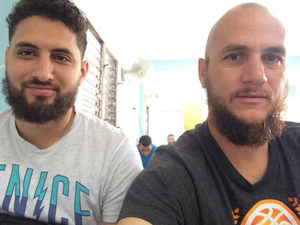
Two Baptist pastors in Cuba who were detained for an extended period after nationwide protests July 11 will be fined but will not face prison sentences.

Yarian Sierrra (left) and Yeremi Blanco from the Berean Baptist Mission in Matanza were detained nearly two weeks in Cuba. (Facebook Photo via CSW)

Yéremi Blanco Ramírez and Yarian Sierra Madrigal learned Sept. 1 the Cuban government will impose a fine—but not sentence them to prison—for participating in the protests, according to Christian Solidarity Worldwide, a United Kingdom-based human rights organization focused on religious liberty.

The two Berean Baptist ministers, associated with William Carey Biblical Seminary, were released from prison in late July and placed under house arrest after being detained incommunicado nearly two weeks. The wife and child of Sierra Madrigal were evicted from their home after state security officers threatened their landlord.

Blanco Ramirez and Sierra Madrigal were among the Christian leaders who were detained following the July 11 demonstrations throughout the nation. Protestors marched under the banner “Patria y Vida” (Homeland and Life), calling on the government to allow humanitarian aid into the country and make it accessible to the general population.

Yusniel Pérez Montejo, a minister affiliated with the Eastern Baptist Convention of Cuba, also was detained in connection with the July 11 demonstrations but released prior to the two Berean Baptist pastors.

Another Protestant minister, Lorenzo Rosales Fajardo, remains in detention after more than seven weeks. He was transferred to a maximum security prison on Aug. 9, and his appeal was denied by Cuban authorities.

While expressing thanks for the release of some prisoners of conscience, a spokesperson for Christian Solidarity Worldwide said Cuban authorities must do more.

“While we welcome the fact that Pastors Blanco Ramírez and Sierra Madrigal have not been handed prison sentences, we maintain that they never should have been imprisoned or accused of anything in the first place,” said Anna-Lee Stangl, head of advocacy for CSW.

“We are also deeply concerned at the continued and unjust detention of Pastor Rosales Fajardo. We call on the Cuban authorities to drop the charges against all three men, releasing Pastor Rosales Fajardo immediately and without condition, and cancelling any fines imposed on Pastors Blanco Ramírez and Sierra Madrigal.”


Incumbent BGCT 1st VP Guarneri nominee for reelection

Julio Guarneri, incumbent first vice president of the Baptist General Convention of Texas and lead pastor of Calvary Baptist Church in McAllen, will be nominated for reelection.

Tony Celelli, president of Stark College and Seminary, announced he will nominate Guarneri at Texas Baptists’ annual meeting in Galveston, Nov. 14-16.

Celelli praised Guarneri as “a Baptist statesman for today and for the next season” in Baptist life.

“Julio has a heart for missions and evangelism,” he said, noting the priorities of Guarneri’s ministry are in line with Texas Baptists’ priorities.

Celelli also characterized Guarneri not only as “a product of Texas Baptists,” but also as a “pioneer among Texas Baptists.”

“Calvary Baptist Church is a pioneer in ministry—a church that is multiethnic, multigenerational and multicultural,” he said.

‘Churches need to be encouraged’

Guarneri said he is willing to serve another term if elected, because he is excited about what is happening among Texas Baptists in the areas of discipleship, church planting and church revitalization.

“I want to be part of that and to share in shaping its implementation,” he said.

Reflecting on the challenges churches and their leaders have faced during the COVID-19 pandemic, Guarneri said, “Churches need to be encouraged.”

“By networking, we can help churches recover—to experience healing from the losses they sustained and look to the future with optimism,” he said.

“The role of the convention is to cast a vision and to encourage pastors to cooperate and network.”

Guarneri voiced support for Executive Director David Hardage’s GC2 initiative—emphasizing Texas Baptists’ commitment both to the Great Commission and the Great Commandment as given by Jesus.

“I’d like to see Texas Baptists continue to position themselves in a Christ-like position,” he said, resisting the temptation to be “coopted by a political agenda.”

“We can be kingdom-minded,” he said.

Guarneri also noted his desire to see Texas Baptists’ multicultural and multiethnic work grow and expand.

Leading a cross-cultural congregation

Since 2010, Guarneri has been pastor at Calvary Baptist Church in McAllen, a cross-cultural congregation in the Rio Grande Valley.

Previously, he was pastor of Iglesia Bautista Getsemani in Fort Worth for 17 years. He also served as minister of education and youth at Segunda Iglesia Bautista in Corpus Christi, was founding pastor of Shalom Baptist Mission in Corpus Christi and was pastor of Primera Iglesia Bautista in Taft.

Guarneri was born in Mexico City but attended junior high and high school in South Texas. He earned his undergraduate degree from Texas A&I University in Kingsville, a Master of Arts in Religious Education degree from Southwestern Baptist Theological Seminary and a Ph.D. in Leadership Studies from Dallas Baptist University.

He has served as moderator of Tarrant Baptist Association and on the board of trustees of Buckner International, as well as on the board of what is now Stark College and Seminary.

He and his wife Monica have four children—Josh, Rachel, Mia and Stevan.


Around the State: Renovated Tidwell Bible Building opens

The newly renovated Tidwell Bible Building—a 67-year-old landmark on the Baylor University campus—reopened Aug. 25. (Baylor Photo)

Baylor University marked the opening of the newly renovated Tidwell Bible Building with a ribbon-cutting ceremony on Aug. 25. The renovation and preservation of the 67-year-old building was planned as part of the $300 million in capital improvements to support the aspirations of the Give Light fundraising campaign. The project was funded through a $15 million lead gift from the Sunderland Foundation of Overland Park, Kansas, and a completion gift from the late Barbara “Babs” Nell Baugh, of San Antonio, and The Eula Mae and John Baugh Foundation. “Tidwell Bible Building is a much-loved landmark at Baylor University, and we are grateful to the Sunderland Foundation and the Baugh family for helping us to restore and preserve this wonderful piece of Baylor’s history,” President Linda A. Livingstone said. “At some point in their Baylor journeys, practically all of our students have taken a class in Tidwell, which houses some of our core disciplines, and we are grateful that this Baylor tradition will continue on for future generations because of their generosity.”

Wayland Baptist University President Bobby Hall (right) visits with Don Newbury (left), humorist and retired Howard Payne University, and Lance Wood, pastor of First Baptist Church in Clarendon, during a reception at his home. (WBU Photo)

Wayland Baptist University and the Baptist General Convention of Texas sponsored The Gathering for West Texas pastors and their families at Wayland on Aug. 27-28. About 50 pastors and family members from Lubbock Area Baptist Association, Caprock Plains Baptist Association and Amarillo Area Baptist Association took part in the event. Donnie Brown, director of spiritual life at Wayland, said he worked with Texas Baptists to organize the event after seeing pastors struggle with COVID-19 and the effect it had on their churches and ministries. “We wanted to give them an opportunity to get away, relax and have fun being around other ministers with similar experiences who could encourage each other,” Brown said. Don Newbury, retired president of Howard Payne University and noted humorist, was the featured speaker. After dinner, participants attended a dessert reception at the home of Wayland President Bobby Hall. Participants in a panel discussion about the effects of COVID-19 on ministry included Jerry Joplin, director of Lubbock Area Baptist Association; Kenneth Jackson, pastor of New Light Baptist Church in Lubbock, Lorrie Brown, university minister at First Baptist Church in Plainview; Emily West, wife of Jacob West, pastor of First Baptist Church in Plainview; and Lance Woods, pastor of First Baptist Church in Clarendon.

A record number of new students at Dallas Baptist University participate in the opening session of SWAT—Student Welcome and Transition week. (DBU Photo)

Dallas Baptist University welcomed the largest first-year class in the school’s history during SWAT—Student Welcome and Transition week. More than 700 new students participated in SWAT, along with 100 upperclassmen who led a variety of games, Bible studies and other activities. As part of SWAT, students worked in service projects at Mission Arlington, Brother Bill’s Helping Hand, Cornerstone Baptist Church in Dallas and other sites throughout the Dallas-Fort Worth area.

Tanner Wright (teamusa.org)

Tanner Wright, a graduate of Hardin-Simmons University, placed seventh overall in the finals of the 100-meter T47 competition at the 2020 Paralympic Games in Tokyo, clocking a time of 11.21 seconds. He will compete in his signature event, the 400-meter T47, on Sept. 2.

Wayland Baptist University, the Jimmy Dean Museum and the City of Plainview are among the sponsors of the inaugural Jimmy Dean Music and Arts Festival from 9 a.m. to 9 p.m. Sept. 4 on the Wayland campus. More than 40 vendors and six food trucks will be set up, along with the Mustang Club Car Show. Outdoor concerts are scheduled throughout the day, ending with a 7 p.m. concert by the Sounds of West Texas featuring special guest Donna Deanperforming some of Jimmy Dean’s biggest hits. There is no charge for admission to any of the concerts or events associated with the festival.

Fellowship Southwest passed the $500,000 mark in allocations to ministries serving immigrants along the U.S./Mexico border. So far, ministry partners supported by Fellowship Southwest have fed, sheltered and protected more than 300,000 vulnerable people—particularly refugees amassed along the border who are seeking asylum in the United States, said Jorge Zapata, associate coordinator of the Cooperative Baptist Fellowship of Texas.

Anniversary

20th for Dennis Wiles as senior pastor at First Baptist Church in Arlington.

Retirement

Ron Lyles after 40 years as pastor of South Main Baptist Church in Pasadena and 50 years as a Texas Baptist pastor.


Obituary: John Gordon Wilkerson Jr.

John Gordon Wilkerson Jr., former Baylor University regent and deacon at First Baptist Church in Lubbock, died Aug. 28 after a battle with cancer. He was 86. He was born in Lubbock on Dec. 18, 1934. After he graduated from Lubbock High School in 1953, Wilkerson went on to earn a degree from Baylor University in 1957. He assumed leadership of Wilkerson Cold Storage Co. in 1956 and remained chairman of the company until his death. Baylor made it possible for him to complete his degree via correspondence courses and graduate with his class while he worked in Lubbock following his father’s death in a plane crash. This forged a lifelong love for and loyalty to Baylor. He married Ruth Collins on June 21, 1958. They spent the next 63 years together in Lubbock, where their family grew to include four children and where they were actively involved in serving their church, schools and community. In addition to serving as a deacon at First Baptist Church in Lubbock, Wilkerson taught Sunday school and was president of Men’s Brotherhood. He worked on numerous church committees and served as an assistant scoutmaster for Boy Scout Troop 9. Ruth and John were gracious in sharing their home with others in countless fellowships. Wilkerson served 18 years as a Baylor University regent, including two as chair of the board. He was president of the Hankamer School of Business alumni board of directors, a director of the Baylor Alumni Association and chair of Baylor’s Development Council. As a lifelong Lubbock citizen, Wilkerson served as chairman of the Board of City Development, the Lubbock County Appraisal District and the Civil Service Commission. He was preceded in death by his brother, Howard; his son, Ray; and his granddaughter, Meredith. Survivors include his wife Ruth; son Gordon and wife Lori; son David and wife Kim; daughter Sarah Scott and husband Richard; seven grandchildren; two great-grandchildren; and his sister Mary Grady and her husband Bill. Memorial gifts may be sent to the Ray Hankins Wilkerson Endowed Scholarship Fund, Baylor University, One Bear Place #97050, Waco, TX 76798, Memo: Wilkerson HSB ESF #434SFNE.


Bill Leonard: Conversion crisis demands new approaches

In light of a “conversion crisis” in Baptist life, churches may need to consider changing the language they use to communicate to nonbelievers, a church historian told a teleconference audience.

Baptists began as a “believers church” that required an individual profession of faith in Christ and evidence of conversion by each member before baptism, said Bill Leonard, founding dean of the School of Divinity at Wake Forest University.

empty pews425“In 2021, there is in a sense a conversion crisis among evangelicals in general in the U.S. and among Baptists in particular,” Leonard said. “Fewer and fewer people are attending church. Fewer and fewer persons are seeking baptism and professing faith.
“And passing on that faith is increasingly difficult, because fewer families bring their children to church at an early age to be nurtured.”

Leonard led a Zoom discussion titled, “A Sense of the Heart? Rethinking Religious Experience and Conversion 2021,” in conjunction with the Cooperative Baptist Fellowship’s virtual general assembly.

‘A direct encounter of the soul with God’

Baptists need to wrestle with important questions, he asserted: “How does the objective idea that God loves the world become subjective in the experiences of individuals? How does God find God’s way to me?”

Christianity always has faced the reality of personal religious experience that involves both God’s transcendence and God’s immanence and incarnation, he noted.

“In the early church, early Christian dogmatism was transformed by mysticism—from corpse-cold dogmatism to the standard definition of mysticism: a direct encounter of the soul with God,” Leonard said.

The Protestant Reformation moved many Christians from the idea that Christ comes to believers through the elements of the Eucharist to the position that Christ encounters individuals through faith alone, he noted.

Later awakenings led many Protestants from the Calvinistic view of a limited atonement for the elect to a “whosoever will may come to Christ” view, he continued.

“Revivalism evolved. It begins with heart-warming religion—with dramatic religious experiences in New England churches and in frontier camp meetings,” Leonard said.

“But over time, particularly as revivalism is institutionalized, … revival often moves from a heart-warming experience into a confessional transaction—pray a prayer, say these words, believe in your heart, and all is settled.”

‘How does our church tell the Jesus story?’

So, Leonard continued, each congregation today finds itself needing to answer the questions: “How does our church tell the Jesus story?”

bill leonard350
Bill Leonard was founding dean of the Wake Forest University School of Divinity.

American churches—particularly Baptist congregations—need to ask why fewer individuals are responding to the gospel, as well as what trends in church and culture affect how the gospel message is told and how it is heard, he asserted.

Churches today make a mistake if they assume people who attend worship automatically “know and understand what it means to have a personal experience with Jesus,” Leonard said.

People in 2021 “hear multiple plans of salvation in multiple contexts,” and congregations need to be able to clearly communicate their understanding what a personal encounter with Christ means, he added.

Leonard suggested the atoning work of Christ on the cross that makes salvation possible and the teachings of Christ, particularly as capsulized in the Beatitudes, are inseparable.

“Both are to be taken seriously and lived out in the church, in the individual and in the world,” he said. “Fragmenting that story [of Jesus] into separate pieces is not helpful at all.”

Leonard recommended churches “cultivate multiple entry points into faith,” providing a variety of ways people may enter into the faith community and have a personal encounter with Christ—whether that involves a dramatic immediate transformation or a more gradual nurturing approach.

“As strange as it may seem to say, our culture needs the church right now,” he said. “It doesn’t always know that, and we’ve not been the best as the church in noting how we can respond to the culture and the needs there.”

‘Offer healing for brokenness’

Leonard suggested churches consider adopting the language of “brokenness” rather than speaking of “sin” initially in seeking to present the gospel to nonbelievers.

“We need to see the gospel as a response to human brokenness,” Leonard said.

Nonbelievers may not understand or relate to “the rhetoric of sin,” but “everyone in the culture, sooner or later, knows about brokenness,” he explained.

“That’s not judgmental. That’s not pejorative. That not self-righteous. It is a shared brokenness,” he said. “The church is the incarnate response to brokenness.”

The church also incarnates “the intentionality of grace,” Leonard continued. “The grace of God made known to us in Jesus Christ is the gift we really bring to the world.”

Rather than beginning with the story of Jesus’ encounter with Nicodemus in John 3 and what would be—to the larger culture—confusing language about being “born again,” Leonard encouraged churches to “begin with Jesus by the lakeshore” and his message that “God’s new day has come near.”

“That is an ever-present call, not simply in the first century but in every era,” Leonard said. “The motive is to offer healing for brokenness.”


More Nigerian Baptist students freed, but attacks continue

KADUNA, Nigeria (BP)—An additional 47 Nigerian Baptist school students kidnapped in July have been released, leaving captive 31 of the more than 120 originally taken, the Christian Association of Nigeria reported Aug. 28.

Bandits released 32 Bethel Baptist High School students to their parents Friday, school administrator and pastor John Hayab told the News Agency of Nigeria in Kaduna, but the reason for the release was not stated.

“The parents were advised to immediately take their wards to the hospital for medical checkup, as they were very sick and exhausted,” Vanguard News quoted Hayab. “The children looked so weak, sick and tired.”

Earlier on Aug. 22, kidnappers returned 15 Bethel students to their parents who paid ransoms, Hayab told Reuters.

Ongoing violence in Nigeria reported

Meanwhile, religious leaders have lamented ongoing violence in Nigeria, describing the country as under a “national emergency.”

Among the latest attacks, militant Fulani herdsmen killed an estimated 36 people Aug. 24 in an attack near the University of Jos in Plateau, south of Kaduna, Christian Solidarity Worldwide reported Aug. 27.

“Indigenous ethno-religious minorities are being targeted in a relentless campaign of violence which involves decimation, displacement and demographic alteration,” CSW spokesperson Kiri Kankhwende said, “and which accelerates during farming or harvesting seasons, indicating a deliberate effort to engineer starvation and complete economic disempowerment.”

In early August, Stephen Baba Panya, president of Evangelical Church Winning All, decried the killing of at least 70 people over the previous two weeks in farming communities in Plateau state and southern Kaduna.

They include at least 19 people in the Batsari Local Government Area and 26 people in Zamfara state in early July, Christian Solidarity Worldwide reported.

The killings appear to be in addition to at least 33 people killed in six days of attacks following the July 5 kidnapping at the Bethel Baptist school. In those attacks, terrorists have killed civilians and burned four churches and hundreds of nearby homes, witnesses told CSW.

An ‘existential threat to Nigeria’

Parents are reunited with released students of the Bethel Baptist High School in Damishi, Nigeria, on Sunday, July 25, 2021. Armed kidnappers in Nigeria have released 28 of the more than 120 students who were abducted at the beginning of July from the Bethel Baptist High School in the northern town of Damishi. Church officials handed those children over to their parents at the school on Sunday. (AP Photo)

In the Bethel kidnapping, the freed students comprise the second and third groups released after some 70 kidnappers abducted as many as 179 children July 5 from the school in northern Nigeria. Many initially escaped their captors or were quickly recovered within hours of the kidnapping, but about 125 remained in bondage.

A month ago, kidnappers released 28 students to parents after demanding ransoms of about $1,200 per student, but the reason for the students’ release was not disclosed.

The Bethel kidnapping was at least the fourth such abduction in Kaduna schools in the last six months as security continues to deteriorate in the region. While kidnappings originally were the mark of Boko Haram terrorists, bandits and other terrorists now are following suit for ransoms.

“The rising levels (of) violence and instability being endured by Nigerian civilians constitute a national emergency,” said Yunusa Nmadu, CEO of CSW Nigeria. “However, we are yet to see a sense of urgency and the political will on the part of the authorities to formulate and enact the effective and comprehensive security strategy that is needed to stem the kidnappings and attacks on people who are simply trying to get on with normal life as best they can.

“This situation is an existential threat to Nigeria and risks the stability of the entire region. We continue to call on the Nigerian authorities, both state and federal, to equip and direct the security forces to rescue abductees in a timely manner, including the abducted students; to protect vulnerable communities, and to restore order in Kaduna, Katsina, Zamfara and throughout the country.”


NRB spokesman fired after pro-vaccine statements

WASHINGTON (RNS)—The spokesman for a major evangelical nonprofit was fired for promoting vaccines on the MSNBC “Morning Joe” cable news show.

Daniel Darling, senior vice president of communications for the National Religious Broadcasters, was fired Aug. 27 after refusing to admit his pro-vaccine statements were mistaken, according to a source authorized to speak for Darling.

Daniel Darling, senior vice president of communications for the National Religious Broadcasters, was fired for promoting vaccines on the MSNBC “Morning Joe” cable news show. (Screen Capture Image)

His firing comes at a time when Americans face a new surge of COVID-19 infections due to the highly contagious Delta variant even as protesters and politicians resist mask mandates or other preventive measures.

During a broadcast on Aug. 2, Darling, an evangelical pastor and author, told host Joe Scarborough about how his faith motivated him to get a COVID-19 vaccine. Darling described the vaccines as an amazing feat of discovery by scientists, some of whom share his Christian faith.

Darling said he was proud to be vaccinated.

“I believe in this vaccine, because I don’t want to see anyone else die of COVID. Our family has lost too many close friends and relatives to COVID, including an uncle, a beloved church member and our piano teacher,” Darling told Scarborough.

He expressed similar views in a recent USA Today opinion piece.

Fired without severance

Earlier this week, leaders at NRB, an international association of Christian communicators with 1,100 member organizations, told Darling his statements violated the organization’s policy of remaining neutral about COVID-19 vaccines. According to the source, Darling was given two options—sign a statement admitting he had been insubordinate or be fired.

When he refused to sign a statement, Darling was fired and given no severance, the source told RNS.

Troy Miller, CEO of NRB, confirmed Darling no longer was with the organization. He did not respond to a question about the role Darling’s statements about vaccines played in his departure.

“Dan is an excellent communicator and a great friend. I wish him God’s best in all his future endeavors,” Miller told RNS in an email.

In a statement reported by Ruth Graham of the New York Times, Darling said he was “sad and disappointed that my time at NRB has come to a close.”

“I am grieved that the issues that divide our country are dividing Christians,” he said, adding that he intended to devote himself to “unifying believers around the truth of the gospel.”


Updated: TBM joins major disaster response after Hurricane Ida

The first wave of Texas Baptist Men disaster relief volunteers left Dallas early on Aug. 30 en route to South Louisiana, where Hurricane Ida made landfall as a Category 4 storm with maximum sustained winds of 150 mph.

The TBM mobile unit, with a field kitchen capable of preparing 30,000 meals a day, rolled out of the TBM warehouse on Aug. 30, headed for South Louisiana. (TBM Photo)

TBM volunteers will staff a mobile field kitchen capable of providing 30,000 meals a day. They anticipated work in LaPlace, La., about 30 miles west of New Orleans.

In addition to the emergency feeding unit, crews also will operate a shower and laundry unit and an electrical support unit.

The initial group of volunteers also includes an incident management team, who will coordinate operations from Louisiana Baptists’ offices in Alexandria, and damage assessors who will work in the field.

Subsequent TBM teams likely will involve mud-out crews and chainsaw volunteers, once residents who evacuated the area are permitted to return to their homes.

TBM is collecting bottled water and cleaning supplies. An initial delivery of seven pallets of bottled water, three pallets of powdered energy drink mix and two pallets of hand sanitizer from Buckner International was delivered Monday morning. More than 24,000 pounds of humanitarian aid supplies from Buckner, which filled about half of a semi truck, left with the TBM caravan headed for Louisiana.

Once crews arrive in Louisiana, TBM will support the work of Louisiana Baptist disaster relief teams and work in coordination with Southern Baptist disaster relief volunteers from other states, including Arkansas, Missouri, North Carolina, South Carolina and Oklahoma.

Hurricane Ida made landfall west of Grand Isle, a barrier island near Port Fourchon, La., just before noon on Aug. 29. By late evening, about 1 million Louisiana residents were without electricity.

Jamie Dew, president of New Orleans Baptist Theological Seminary, posted on Facebook at 8 a.m. the next morning: “Very thankful this morning. No flooding on campus or major building damage. LOTS of tree and shingle damage.”

He instructed students and employees: “We will open campus as soon as possible, but until you hear from us, DO NOT plan your return to campus just yet.”

To support TBM disaster relief financially, give online at TBMTX.org/donate or mail a check to Texas Baptist Men, 5351 Catron Drive, Dallas 75227.

Originally posted at 9:30 a.m. on Aug. 30, this developing news article was edited at 2:30 p.m. the same day and about 2 p.m. on Aug. 31 to include additional details. 


Pastors reflect on preaching in pandemics

When COVID-19 hit Houston in March 2020, South Main Baptist Church had to make many adjustments quickly. But Pastor Steve Wells’ previously planned sermons on fear and anger gained new relevance.

Steve Wells, pastor of South Main Baptist Church in Houston, participated in an online workshop on “Preaching in Pandemics,” offering in conjunction with the Cooperative Baptist Fellowship general assembly. (Screen capture image)

“In the fall of 2019, I was pretty convinced that the fall of 2020 was going to be the most contentious period we have known in our city and as a nation,” Wells recalled during a Zoom teleconference offered in conjunction with the Cooperative Baptist Fellowship general assembly.

So, in early 2020, Wells already was helping to prepare his congregation for “really smart people [who] are spending all their time trying to work you into a frenzy” by appealing to fear and anger.

“That ended up not needing changing,” Wells said.

Ways to ‘reclaim some sense of power’

However, in direct response to the pandemic, he and his worship planning team developed a list of challenges members of the congregation likely would be experiencing. They identified issues such as anxiety, stress and depression.

Then he contacted a therapist and made appointments to spend 30 minutes each week with him.

In each session, Wells presented the biblical text for a sermon and the issue of the week, and he asked: “If someone came into your office and this was their presenting problem, what is the healthiest counsel you could give them to address that?”

“So then, every week, I was trying to offer both my best insights into the text and then say: ‘Here is sound psychological counsel if you’re feeling this. These are concrete steps you can take to reclaim some sense of power in your life and to move forward,’” Wells said.

After that sermon series, Wells said, he felt like his congregation “needed a great big dose of Jesus last year.” So, he began an extended series based on the Sermon on the Mount.

Wells and three other pastors offered their insights during a virtual workshop on “Preaching in the Pandemics,” which dealt not only with the challenges presented by COVID-19, but also political division and racial injustice.

‘Absolutely exposed to the elements’

Cheryl Anderson, pastor of Palmetto Missionary Baptist Church in Conway, S.C., acknowledged feeling overwhelmed as she addressed the challenges members of her predominantly Black congregation experienced.

“I found myself preaching from my own despair and anger, and that was a real challenge to my integrity,” she acknowledged.

Because the church shifted to a virtual worship format where “anybody could listen in,” Anderson said she felt particularly vulnerable.

“I had to be true to my calling and true to the reality of our life,” she said. “So, I addressed the challenge of being absolutely exposed to the elements. … I addressed it with an openness to the Holy Spirit, with the practicality of the gospel, and with a genuine reliance on truth as the foundation for my personal apologetics.

“I felt absolutely compelled to preach the whole truth and nothing but the truth, because I felt there was no more time on the clock.”

Christy McMillan-Goodwin, pastor of First Baptist Church in Front Royal, Va., described the challenge of “the uncertainty—week to week—of not knowing what was going to happen with the virus, the shutdown, masking and unrest in the community,” she said.

Preaching from the lectionary provided not only an appreciated structure in a time of change, but also a remarkable relevance, she noted.

“It’s interesting how connected the lectionary was to what was going on,” she said.

Identifying ‘felt needs and pain points’

Shaun King, senior pastor of Johns Creek Baptist Church in Alpharetta, Ga., spoke to the challenge of preaching in the COVID-19 environment—first to empty seats in all-virtual worship services and later to socially distanced and masked congregants.

He acknowledged an “interruption of the energies of the preaching moment” he felt in tangible and visceral way, missing the “energy swap” he was accustomed to experiencing.

King used surveys to identify the “felt needs and pain points” his congregation was experiencing, which he sought to address in sermons, including a series from the Old Testament book of Job.

Entering into 2021—particularly the Lenten season and Easter—King directed attention toward “trying to name and reframe the experience through the lens of resurrection.”

Need for self-care

King acknowledged ministering in the midst of the pandemic brought him almost to the point of “existential exhaustion.” He found help through therapy, an exercise routine at the gym, regularly scheduled meetings with friends who also are ministers and the practice of “centering” prayer each morning.

“If I don’t do that daily, to frame the day, I am an absolute train wreck,” he said. “When I routinely attend to that, I’m unflappable. And there really is no in-between.”

The other three pastors likewise emphasized the importance of connecting with small groups of friends, engaging in some form of exercise—preferably outdoors—and guarding their schedules to avoid constant demands on their time.

Wells mentioned the importance of ministers learning to recognize “how much gas is in the tank,” and saying “no with conviction” on occasion to be free to say “yes with abandon” at other times.

Moving forward, before he begins a series of messages based on the New Testament book of Galatians, Wells said he plans to preach several sermons about the importance of “claiming sabbath.”


CBF approves flat budget for 2022

Registered participants in the virtual Cooperative Baptist Fellowship general assembly approved a 2022 budget based on $14,575,891 in projected expenditures.

The approved budget is about $123,000 less than the total originally anticipated for 2021 but in line with spending and actual receipts for the year.

It is based on a conservative $14,595,606 in projected revenue, compared to $14,723,483 for the 2021 budget.

Global missions makes up the largest single area of expected expenditures at $6,226,453, based in part on a $3 million goal for the CBF Offering for Global Missions, and $421,804 for the expansion of Together for Hope initiatives in some of the nation’s poorest counties.

Ministries personnel and support—including state and regional fellowships, outreach and growth, racial justice and leadership, advocacy, church renewal, partnerships and chaplaincy—accounts for $3,958,218.

The 2022 budget includes $1,639,314 for advancement and communications, and $2,330,102 for administration.

Budgeted travel and in-person expenses—curtailed for most of the current fiscal year due to the COVID-19 pandemic—are restored in the 2022 budget. The budget includes a 1 percent across-the-board pay increase for staff and field personnel, and it includes funding for an anticipated increase in the cost of their health insurance.

Pastors recognized and affirmed

Rosalio Sosa, pastor of Iglesia Bautista Tierra de Oro in El Paso and founder of a migrant shelter network, was one of three pastors who received the Emmanuel McCall Racial Justice Trailblazer Award from CBF.

Others honored with the award this year are Preston Clegg of Second Baptist Church in Little Rock, Ark., and Cheryl Adamson of Palmetto Missionary Baptist Church in Conway, S.C.

Carol McEntyre, pastor of First Baptist Church in Columbia, Mo., told the general assembly she never anticipated her entire term as CBF moderator would be carried out within the context of a global pandemic.

At the same time, she affirmed ministers serving CBF churches around the country for the creativity and flexibility they exhibited throughout the ongoing COVID-19 pandemic and for the courage many demonstrated in a time of racial reckoning and a toxic political environment.

“You have done good work,” said McEntyre, a graduate of Baylor University’s Truett Theological Seminary and the Diana R. Garland School of Social Work.

She encouraged ministers to practice self-care while bearing “a heavy pastoral load.”

“Please, take care of yourself,” she urged. “Be a good pastor to yourself.”

Patricia Wilson, a professor at Baylor Law School, assumed the moderator’s role at the end of the 2021 general assembly, having served a year as moderator-elect.

Board and council members elected

General assembly participants affirmed Debbie McDaniel, a lay leader from First Baptist Church in Huntsville, Ala., as moderator-elect. McDaniel, a graduate of Stephen F. Austin State University in Nacogdoches, has served on the CBF Ministries Council for five years and is a past chair of the council.

As recommended by the Fellowship’s nominating committee, general assembly participants approved two Texans for the CBF Missions Council—Anyra Cano, youth minister at Iglesia Bautista Victoria en Cristo in Fort Worth and coordinator of Texas Baptist Women in Ministry; and Hannah Coe,  senior pastor of Calvary Baptist Church in Waco.

Two Texans were elected to the nominating committee at the recommendation of the CBF Governing Board—Isa Torres, pastor of Cliff Temple en Español and pastor resident at Cliff Temple Baptist Church in Dallas; and Patty Villarreal, co-founder of the Christian Latina Leadership Institute and member of Woodland Baptist Church in San Antonio.

Chris Adcox, a certified public accountant and member of Wilshire Baptist Church in Dallas, was named to the CBF Church Benefits board.

CBF Executive Coordinator Paul Baxley addressed the virtual general assembly. (Screen capture image)

In his report to the general assembly, CBF Executive Coordinator Paul Baxley asked if—in the midst of a global pandemic, a divisive political environment and racial injustice—the Holy Spirit might bring about renewal among God’s people.

“We do not lose heart,” Baxley said, pointing to the “risk-taking sacrificial service” of CBF chaplains and pastoral counselors during a pandemic, field personnel offering hope and help in difficult places, and congregations responding with creativity and agility in changing times.

CBF Texas conducts business

During a virtual meeting of CBF Texas, participants elected Matt Walton from South Main Baptist Church as moderator-elect for the state organization and Amy Wilkins from Valley Ranch Baptist Church in Coppell as recorder.

Participants elected Israel Loachamin from First Baptist Church in Waco to a two-year term on the governing board and five individuals to three-year terms on the board—Carlos Valencia from Iglesia Bautista Victoria en Cristo in Fort Worth, Kan’Dace Brock from The Message Church in San Antonio, Christopher Mack from Trinity Baptist Church in San Antonio, Jake Maxwell from Second Baptist Church in Lubbock and Kevin Pranoto from Cliff Temple Baptist Church in Dallas.

CBF Texas participants approved a $251,760 budget for 2022 and also voted in favor of a bylaw change that shuts down CBF Texas regional teams and replaces them with ministry/mission affinity teams working through Fellowship Southwest.


CBF urged to follow the word of God and wind of the Spirit

Seeking to follow both the “word of God”  and the “wind of the Spirit” is like rowing a boat, two ministers from a multiethnic church in Connecticut told the opening worship session of the Cooperative Baptist Fellowship general assembly.

“If you only use one oar, you’ll find yourself going in circles for hours,” Daniel Martino and Antonio Vargas Jr. said. The pair preached together in English and Spanish—a back-and-forth, rapid-fire bilingual format they often use at the Church of the City in New London, Conn.

Beginning with the coming of the Holy Spirit at Pentecost, the early Christian church learned the key was “learning to use both oars and to use them both with the same intensity,” they emphasized.

The word of God—the Bible—provides a firm foundation and much-needed grounding in unstable times, they said. The wind of God—the Holy Spirit—provides direction and guidance into “new territory and uncharted lands,” they added.

“We cannot control where the Spirit blows,” they said. “But if it is the Lord’s will, there is nothing to fear.”

‘Not modification but total transformation’

If Cooperative Baptists fail to “catch where the wind is blowing,” they run the risk of remaining “right where we are today” at a time when God wants to bring restoration, renewal and revival, they asserted.

“Renewal from the inside out is not modification but total transformation,” they stressed. The wind of the Spirit “aligns and adapts our models” to God’s heart, they added.

“We recognize the Lord renewing our minds and facilitating us to go into uncharted and unknown territory toward justice, a clear identity, growth and holistic diversity—racial, ethnic,  ideological, theological, socioeconomic, gender and age,” they said.

CBF views itself as “familia,” they noted. But after three decades, they asserted, it is time to ask, “What kind of family are we aiming to become?”

“Have we extended our hand to new family members? Who is missing here?” they asked. “Who, from the family of God, has not received the invitation to fellowship? … We often talk about expanding the table or even resetting the table. But as a fellowship, let us aspire in this season to rebuild the table.”

Moving forward, Martino and Varaga challenged CBF to recognize “bold dreams are given to bold people.”

“Our hope for CBF is that we can remember what God has shown us and make these bold dreams a reality,” they said. “We do not lose heart, because we are being renewed by the wind and the word. With or without us, God is doing a new thing.”