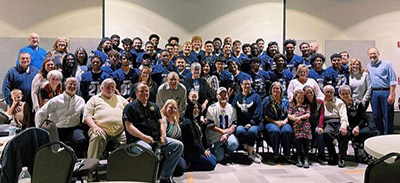
A global ministry that has led to 25 million decisions for Christ over the past 50 years grew out of a small West Texas Baptist church and an unsuccessful cotton farmer’s vision for missions.
Ben Mieth, age 88, recalls how what is now International Commission grew out of a mission initiative of First Baptist Church in Seminole. (Photo / Ken Camp)
“I went broke farming. I lost four crops in three years,” said Ben Mieth, founder of what is now known as International Commission. “I knew the Lord was trying to tell me something.”
International Commission currently works in 181 countries, conducting church-based evangelism projects and equipping national church leaders. It provides evangelism and discipleship resources to congregations across the United States.
However, the organization has deep roots in Texas Baptist life, particularly in West Texas.
“We are an organization of Texas Baptists, just not a Texas Baptist organization,” said Brent Edwards, president of International Commission.
While International Commission is not affiliated with the Baptist General Convention of Texas, it has worked with BGCT leaders in sharing personal evangelism resources.
And for five decades, it has worked with some Texas Baptist congregations in short-term evangelism-based international mission trips.
Early board members included pastors of Texas churches and directors of missions of Texas Baptist associations, Edwards noted.
Current board members include Rick Lineberger, senior pastor of First Baptist Church in Glen Rose, and Chad Selph, senior pastor of First Baptist Church in Allen.
Originally a ministry of Seminole church
The global ministry grew out of First Baptist Church in Seminole and what Ben Mieth, now age 88, described as a clear call from God.
It began when William “Dub” Henry Jackson, founder of the World Evangelism Foundation, invited Gene Hawkins, then pastor of First Baptist Church in Seminole, to enlist members of his congregation to be part of a short-term partnership church-to-church missions trip to Japan.
Mieth participated as part of a 40-member team from Baptist churches in West Texas who worked with several Japanese churches in personal evangelism. The four teams involved in that mission trip saw 1,000 people make professions of faith in Christ, Mieth recalled.
The idea of churches in the United States working in partnership with congregations in another country captured Mieth’s imagination.
“Coming home from Japan, the Lord told me, ‘What you saw work in Japan will work in Mexico,’” he said. “God burdened my heart for Hispanic people.”
Mieth traveled to Mexico to introduce pastors to the idea of working in evangelistic partnerships with volunteers from churches in Texas. Once several pastors in the Ojinaga area expressed interest, he led a team from First Baptist in Seminole to participate in a weeklong mission trip.
The Texans worked with Mexican churches to make evangelistic visits, lead Vacation Bible Schools and hold evangelistic worship services each evening. That first mission experience led to 1,500 professions of faith in Christ and a new church being planted.
Expanded at request of Mexican pastors
Within a few months, several pastors from Chihuahua City asked Mieth to bring volunteers to their area for similar ministry.
A mission partnership with churches in Chihuahua, Mexico, and a West Texas initiative coordinated by First Baptist Church in Seminole led to the formation of what is now International Commission.
So, he recruited church teams from West Texas to work directly with Mexican churches, and that experience produced results similar to the earlier mission trip.
Mexican pastors invited Mieth to return to Chihuahua to do for churches throughout the entire state what they had done for congregations in the state capital.
At that point, Mieth, Hawkins and other leaders of First Baptist Church in Seminole decided it was time to establish the global missions and evangelism initiative as its own nonprofit organization. Adopting terminology made popular by Billy Graham, they formed International Crusades.
In time, the term “crusades” became problematic, particularly in countries with a significant Muslim population. So, the organization rebranded itself as International Commission in 2000.
As word spread, the ministry received invitations to work in other Latin American countries. Contact with a Latvian-born missionary to Brazil opened doors to serve in Eastern Europe and beyond.
Following the Operation Andrew model
While International Commission has no formal connection to the Billy Graham Evangelistic Association, it adopted that organization’s “Operation Andrew” strategy and materials.
Months before International Commission sends a short-term mission team from the United States to another country, Christians in that country are challenged to identify individuals who need a relationship with Christ and to pray regularly for them.
International Crusades—now known as International Commission—participates in an evangelistic outreach in Chile in 1988. (Photo Courtesy of International Commission)
When the visiting mission team arrives, American volunteers go with local Christians to present the gospel to those individuals for whom they have been praying.
After the mission team returns home to the United States, believers in partnership national churches follow up with those who made commitments to Christ, focusing on discipleship and Christian growth.
As part of its “N2N” (National-to-National) program, International Commission also works with church leaders around the world to train their members to do the same kind of projects, with local Christians praying for, evangelizing and discipling their own countrymen.
The N2N teams can work in places closed to Americans, have no cultural and language barriers to overcome, and can operate at a fraction of the cost of sending U.S.-based teams internationally, Edwards explained.
Texas Baptist convictions ‘in the DNA’
International Commission has grown far beyond a few West Texas Baptist churches partnering with an equal number of congregations in Mexico.
However, Edwards said, the mission remains the same: to equip and enable believers to conduct church-based evangelism projects to reach unbelievers and make disciples.
The organization’s doctrinal statement includes an affirmation of the Baptist Faith & Message, and International Commission continues to have strong connections to Texas Baptists, he said.
“It’s in the DNA,” Edwards said.
On the Move: Clayton
January 6, 2022
Jonathan Clayton to Mount Zion Baptist Church in Floydada as pastor from Trinity Baptist Church in Denver City.
Colorado wildfire survivors look beyond fire and ash
January 6, 2022
LOUISVILLE, Colo. (BP)—Linda Hinkle didn’t get “one more time” into her house.
On Dec. 30, winds in excess of 100 mph drove the fire that would soon devour Hinkle’s home alongside others in several communities west of Denver.
At the absolute most, she recollects, her family had 30 minutes to get what they could as the smoke thickened and ash began to fall.
Her 95-year-old father. Bags with clothes jammed in them. Shoes. Medications. Computers, phones and chargers. Two parakeets in the travel birdcage used on trips to the vet and two dogs—a rescued Yorkshire terrier who had been in their home for a week and a Czechoslovakian Wolfdog—joined them in two cars.
Earlier, Hinkle’s son, Jordan, finished his shift from the bakery of a nearby grocery store and looked west toward the city of Superior. The dry conditions made the smoke he saw more concerning than usual, as fires typically don’t happen at this time of year.
Meanwhile, two miles toward the direction he stared, parents were snatching up their kids at a pizza parlor, pushing through doors pinned by the wind, and running to their cars to escape the flames.
Fifteen minutes after Jordan arrived at his parents’ house nearby, he told her they should leave. A moment later, Hinkle received an evacuation alert on her phone. She went to her backyard and looked. At that point, she said, it felt like being inside a dark cloud that was choking views at 50 feet.
“I was in panic mode and thought we were going to come back,” she said. “We just grabbed some necessities for a couple of nights.”
Even so, the worsening conditions made her want to go back in the house one more time. Jordan had none of it, telling his mom they needed to leave now. His warnings were echoed by escaping cars honking their horns to alert neighbors and firemen announcing an immediate evacuation over loudspeakers.
Hinkle was in the process of cleaning when Jordan arrived and had removed her wedding ring. The ring remained on the counter when they left. Other lost personal items include the jewelry given to her after her mother’s death and pre-digital era pictures and videos she had always meant to put online.
“It felt like you were in the middle of an erupting volcano,” she said. “You couldn’t see. Ash was blowing around and getting in your mouth and eyes.”
Eventually, they and others crawled their way onto the road and away from the smoke. After about 15 minutes, the darkness began to give way to the light.
Loss of material things changes perspective
Things like your house burning down only happen to other people, she said, until it happens to you. There’s no doubt that losing possessions hurts, especially those with sentimental value. But that loss also has a way of clearing your eyes, letting you see what is of more, even eternal, value.
In the past she and her husband, Dale, had served with Colorado Baptist Disaster Relief. As Colorado Baptists responded to needs from the fire, so now the Hinkles are being cared for by friends and their church family at Reclamation Church in Boulder.
“All of these possessions that we cling to … you can’t take them with you anyway. You realize how many people care about you [from the] love of our church, our friends and our family,” she said.
Currently, the family is staying with her best friend, who also is a member of Reclamation Church (a daughter lives further north in Loveland, Colo.). With word getting out, clothes have been provided and even a more suitable birdcage for the parakeets. A woman at Walmart overheard Hinkle’s story and gave a $100 bill to help her get restarted.
“People have helped me,” she told her. “And now I’m going to help you.”
Sleep has often been tough to come by since last Thursday. All kind acts big and small have helped.
“I pray: ‘God, it’s a new day. Give me the strength I need to continue,’” she said.
“Gratitude doesn’t accompany only what you can hold and see,” she said. It’s bigger than that, she explained. It helps you step through the darkness and into the light, one more time.
Preemptive Love board cuts ties with founders
January 6, 2022
WASHINGTON (RNS)—Preemptive Love, a nonprofit long championed by Christian influencers and celebrities for its work in Iraq and elsewhere, plans to cut ties with its founders after former employees complained of an abusive work environment and misleading fundraising practices.
Jeremy and Jessica Courtney, former missionaries who founded the Preemptive Love Coalition in 2007, were placed on leave in the summer of 2021 to allow the charity’s board of directors to address concerns raised in a letter from more than two dozen former employees.
After reviewing the preliminary findings of an investigation by Guidepost Solutions, a consulting firm hired to review the former employees’ allegations, the board resolved that the Courtneys would not return from their leave of absence and no longer have a role with the organization, a representative of Preemptive Love confirmed to Religion News Service.
In a statement posted on the Preemptive Love website, the board promised to work to improve the organization’s culture and to improve its transparency.
“The board cannot ask staff members to serve others with excellence in the name of peacemaking if the organizational culture itself is not healthy and vibrant. We must invest in our own community with the same heart and compassion that we invest in vulnerable communities around the world,” the statement read.
The board also asked for patience as it makes changes to Preemptive Love and promised that more details about its future would be forthcoming.
“We are asking for the trust of staff, of partners, of supporters and our broader community dedicated to the important peacemaking and humanitarian work accomplished every day by this organization,” the statement read.
In mid-December, Ben Irwin, a former director of communications for Preemptive Love, posted a long article on Medium.com detailing his concerns about the Courtneys, presenting a starkly contrasting picture than the mission outlined by Preemptive Love’s leadership.
Stated goal to ‘unmake violence’
According to its website, the organization does relief work in the Middle East and Latin America as part of a broader goal of “working together to unmake violence and create the more beautiful world our hearts know is possible.”
Jeremy Courtney, who grew up in Leander as the grandson of a Baptist minister, attended Howard Payne University and earned his Master of Divinity degree from Baylor University’s Truett Theological Seminary.
In speeches and conversations with donors, he long has said Preemptive Love began with a cup of chai and the story of a girl with a broken heart. Courtney, who had moved to the Middle East intending to be a missionary after 9/11, had relocated to Iraq in 2007 to work on humanitarian relief.
As Courtney sat in a hotel, a man approached and told Courtney that his cousin’s daughter had a heart defect and no local doctor could treat her.
“You are an American. Is there something you can do?” Courtney recalled the man saying in a 2011 TED Talk given in Baghdad. “Ultimately, I decided to help this little girl,” he told the TED audience. “I decided to suspend my questions and to jump in and love first.”
That meeting led the Courtneys and some friends to form a nonprofit that would raise money to provide heart surgeries for Iraqi children. The group’s name was the Preemptive Love Coalition. “Now, unlike a preemptive strike, where I seek to get you before you get me,” Courtney explained in his TED Talk, “preemptive love is where I jump forward to love you before you love me.”
Preemptive love also meant trying to help people even if you lacked the expertise to solve their problems. That can-do attitude worked, and by March 2009, Preemptive Love had raised more than $220,000 to provide 26 heart surgeries for Iraqi children.
The following year, the organization raised about $300,000 to provide surgery for 23 more children, along with follow-up care. Preemptive Love would eventually pay for surgeries for hundreds of children and set up a program to train local doctors to perform lifesaving surgery.
Shift in focus to refugee relief
After the rise of the Islamic State group, Preemptive Love shifted to providing relief for refugees in Iraq and other war-torn countries such as Syria. In 2020, Preemptive Love had its best year ever—raising more than $13 million to support a team of “global peacemakers” who provide food and water and other assistance while spreading the gospel of loving first.
The Courtneys’ work proved particularly attractive to Christian influencers and young Christians such as Dane Barnett, who were disillusioned with politics and wanted to change the world. A secular organization, Preemptive seemed to be infused with faith.
Barnett began raising funds for Preemptive Love in 2011, while a student at Cedarville University, a Christian school in Ohio. Barnett, who said he’d been born with a congenital heart defect, was drawn by the organization’s aid to heart patients.
“If I had been born in Iraq, I’d need a place like Preemptive Love to save my life,” he said.
Barnett had also grown concerned about the evangelical subculture he had grown up in, feeling it was too focused on power and not enough on living like Jesus. Preemptive Love, he said, offered a way to find meaning by helping others.
“The concepts of preemptive love—of loving anyway, loving your enemies, loving first, all those taglines that we used in marketing and fundraising over the years—really did feel like an alternative to the way the American church was running,” he said.
He eventually spent five years on staff.
Concerns voiced about the organization
Despite the success of Preemptive Love, Barnett had concerns about the way the organization was run. Anyone who disagreed with the Courtneys was belittled or pushed out.
Amanda Donnelly, the group’s former chief marketing officer, said she was fired by Jeremy Courtney after she disagreed with his wife, Jessica, the charity’s chief program officer.
“The minute I crossed her it was over for me,” she said.
Donnelly, who was based in the United States, said she and other senior leaders had been summoned to a meeting in Iraq with the Courtneys in early June with a week’s notice, purportedly to work out their differences.
The meeting, which would have included visits to refugee camps, was supposed to help leaders regain trust and to put the “fire of God” in their bones, according to an email from Courtney that was obtained by Religion News Service.
When Donnelly balked, she was let go. She also filed a formal human resources complaint.
In an email, Courtney told the staff at Preemptive Love that Donnelly and other leaders were not “fast in crisis,” a term the charity uses to describe its work.
“There will not be two classes of ‘citizens’ in this community,” he wrote. “Our top leadership team won’t be allowed to earn money off the pain and accomplishments of those they are unwilling to walk with face to face in the places where the substance of our work is taking place.”
Overstated work in the field
Along with her concerns about the work culture at Preemptive Love, Donnelly and other staffers worried that Preemptive Love’s marketing overplayed the organization’s work in the field.
In December 2019, World magazine, an evangelical publication, raised questions about Preemptive Love’s work in Syria, reporting the claims made in fundraising appeals did not match the work being done on the ground. The charity has long denied the assertion, though it did admit misstating the scope of some of its work in Syria.
A report on the Preemptive Love website states that its work in Syria began in March 2016 and ramped up after the fall of Aleppo in December of that year. A letter on the charity’s website also claims in the final weeks of 2016, after Aleppo fell, Preemptive Love raised $6 million more than it had projected. According to a representative from Preemptive Love, $2.6 million of those funds were restricted.
However, while it was raising millions for its work in Syria, Preemptive Love did not hire its first staffer in that country until February 2017. The charity now has three staffers there.
Most of the initial relief work by Preemptive Love in Syria was done by partner organizations, despite claims by Courtney that “our team” was on the ground.
Michelle Fisher, chair of Preemptive Love’s board and a longtime friend of the Courtneys, told RNS in an email information about its partners was withheld to protect their safety.
“Because Preemptive Love’s mission is to serve vulnerable people in some of the most difficult and dangerous places, the organization has chosen to protect our partners by not publicly identifying them, especially on the internet,” she told RNS in an email response.
“The regions where partners are located are often religiously, socially and geopolitically complex. There are many scenarios where working with a U.S. organization can put people and the partner organization itself at risk.”
Preferred dramatic story to telling the truth
Former staffers told RNS they believe in the work being done by Preemptive Love and that the funds collected by the charity are used to help people in desperate situations. But they are concerned that Preemptive Love has preferred a dramatic story to the truth.
In his Medium post, Irwin linked to a pair of videos that he said were misleading. One details a food delivery in the city of Fallujah, Iraq, in 2016, after the city was retaken from ISIS. In the video, aid workers in Preemptive Love T-shirts distribute bags of food. At one point, Jeremy Courtney breaks in, saying that the distribution was interrupted by a clash between religious and tribal leaders.
“That has settled down now and we’ve been allowed to come back in and continue the distribution and so we have now distributed 52,000 pounds of food, 24,000 liters of water to about 500 families who were in desperate need of this kind of support,” Courtney says in the video.
In reality, said Irwin, Courtney was 200 miles away from the violence and edited his narration into footage of the event.
Another video shows Courtney near a bombed-out mosque in Mosul when the sound of an air strike is heard, followed by an explosion and shaky footage of people taking cover. Courtney tells the camera that there was an explosion a few meters away and that “shrapnel flew everywhere.”
That too was edited—the strike landed at some distance away. Raw footage posted by Irwin shows people milling about, relatively unconcerned.
“He didn’t need to sensationalize it,” said Irwin.
Fisher told RNS both Courtney and Irwin approved the edits.
“The time-stamped raw footage from the trip in question indicates that this video was intentionally edited to have a broader interpretation by the viewer than the actual events that transpired,” she told RNS.
Putting safeguards in place
The board “has already begun implementing safeguards to ensure that this issue is never repeated,” she added.
Fisher also told RNS Preemptive Love is committed to transparency about its work. She admitted the group’s leadership had not always presented information in the most transparent way.
“As a board, we have determined that while the impact of the actual work by the field teams and partners often exceeds the public narrative, there have been some instances where leadership has made the decision to present material in a way that is ambiguous and potentially allows for some misinterpretation of context or surrounding events,” she said in an email.
Gene Tempel, founding dean emeritus of the Lilly School of Philanthropy at Indiana University, said storytelling is an essential part of fundraising. Stories draw people in and help them connect with those being helped by a charity, he said.
“But we would like to see honesty in the storytelling and not exaggeration,” he said.
Tempel advocates for brutal honesty and transparency in fundraising—telling people how their donations will be used and why they are needed.
Tempel said that fundraisers who stretch the truth don’t only hurt their own organization, they undermine other charities by sending a message to donors that nonprofits can’t be trusted.
“Transparency and accountability are the two buzzwords in philanthropy,” he said. “So be transparent and hold yourself accountable.”
Estudiantes latinos tienen éxito en su posgrado con el apoyo de la Iniciativa Teológica Hispana
January 6, 2022
La Rev. Dra. Loida I. Martell recuerda un momento crítico de vida o muerte que enfrentó mientras realizaba un doctorado en teología de la Universidad de Fordham.
El consejero de posgrado de Martell había rechazado repetidamente su propuesta de investigación de tesis. La demora amenazaba con estropear una beca que le había sido otorgada a Martell por la Iniciativa Teológica Hispana (HTI, por sus siglas en inglés) para completar su tesis.
“Siguió poniendo obstáculos”, dijo Martell sobre su asesor. Estaba frustrada y consternada porque sus planes de convertirse en profesora de teología a nivel universitario estaban fracasando.
Fue entonces cuando Martell se enteró de que HTI hacía más que otorgar ayuda financiera a los estudiantes de posgrado hispanos. Los académicos de HTI defendieron su propuesta de investigación, presionando a los funcionarios de Fordham hasta que revisaron su propuesta nuevamente.
Fue aprobada.
Martell obtuvo su Ph.D. en 2005 y actualmente es vicepresidenta de asuntos académicos y decana del Seminario Teológico de Lexington en Lexington, Kentucky. Martell, quien es ministra bautista ordenada y veterinaria, fue pionera en el estudio de la teología evangélica.
“Si no hubiera sido por HTI, no estoy segura de haber podido completar el programa”, dijo Martell. “Aquí estoy hoy, profesora titular y decana”.
Triunfar en conjunto
Según todos los informes, obtener un título de doctorado en los EE. UU. puede ser arduo, lento y agotador desde el punto de vista financiero. En algunos campos, como el Ph.D. [nivel más alto de doctorado religioso], el promedio de finalización puede ser inferior al 50 por ciento, según el Consejo de Educación de Posgrado.
João Chaves, subdirector de programación de HTI, da la bienvenida al podio al Rev. Carlos Velázquez, de la Catedral de San Fernando. La reunión incluyó una hora social y un programa corto.
Sin embargo, la HTI, que celebra su 25 aniversario este año, ha estado ampliando las filas de latinos con doctorados en religión y teología. La iniciativa cuenta con una tasa de finalización del 93 por ciento, con estudiantes que terminan en un promedio de 5,5 años. En octubre, su consorcio colaborativo, integrado por 24 instituciones de educación superior teológica, celebró su graduación número 150.
Lilly Endowment Inc., en su informe anual de 2020, señaló la importancia de ampliar el número de profesores teológicos latinos, cuya representación en las escuelas teológicas estadounidenses es actualmente inferior al 5%.
Sin embargo, ya en 2012, la Asociación de Escuelas Teológicas (ATS, por sus siglas en inglés) informó que los estudiantes de color representaban más de un tercio de la matrícula total en las escuelas que son parte de la ATS; un aumento del 55% durante un período de 20 años.
Con ese crecimiento y “con la composición racial o étnica de la población general de EE. UU., proyectada para crecer hasta alcanzar el estatus de mayoría para 2040, esta tendencia justifica una respuesta reflexiva para garantizar que las escuelas, y sus graduados, tengan la capacidad de servir a un mundo cada vez más multirracial y multicultural”, decía el informe de la ATS.
David Nirenberg, decano de la Escuela de Divinidad de la Universidad de Chicago, dijo en un video de aniversario en las redes sociales que HTI está abordando esta brecha apoyando a nuevos y jóvenes académicos de diversas maneras.
“HTI ha pensado en…cómo proporcionar a los estudiantes no solo las finanzas, no solo la ayuda editorial, la ayuda integral, [sino] también las redes, lo espiritual y lo familiar”, dijo Nirenberg. “Es por eso que tantos estudiantes de HTI hablan de ‘la familia’”.
La iniciativa rodea y apoya a los estudiantes desde el comienzo de su educación de posgrado hasta sus primeras experiencias laborales. Lo que HTI ofrece ahora incluye becas, tutoría, asistencia editorial, una conferencia de desarrollo profesional y fondos para la creación de redes. Una vez que los graduados son contratados, reciben apoyo cuando comienzan sus primeros puestos. Y un nuevo programa apoya a las mujeres que aspiran al liderazgo.
HTI también ha establecido un blog público de teología, una revista bilingüe revisada por colegas, un premio a un libro, una colección de disertaciones y otros recursos. [Entre las disertaciones está la de Martell: Liberating News: An Emerging U.S. Hispanic/Latina Soteriology of the Crossroads (Noticias liberadoras: Una emergente soteriología de las encrucijadas entre las hispanas y/o latinas en los EE. UU.]
Los exalumnos de HTI ahora se pueden encontrar en todos los niveles de educación superior teológica, en todas las denominaciones y más allá de los miembros del consorcio, dijo Joanne Rodríguez, directora ejecutiva de HTI.
“Tenemos académicos que ahora son presidentes de instituciones académicas, decanos, profesores titulares y profesores de tiempo completo”, dijo.
HTI cuenta con esos mismos exalumnos para ejecutar la parte del programa que casi todos describen como el “corazón del esfuerzo”: la tutoría.
Los académicos séniores ayudan a los estudiantes a navegar los programas de doctorado, incluida la colaboración con los asesores de doctorado de los estudiantes y para abogar por ellos cuando sea necesario.
Los estudiantes que se inscriben en el primer, segundo o tercer año (el año del examen integral) de estudio son puestos con mentores durante un máximo de tres años, y muchos han desarrollado fuertes vínculos personales y profesionales.
En un podcast reciente de HTI, la estudiante de Ph.D. Victoria Pérez Rivera agradeció a su mentora, la profesora adjunta del Seminario Fuller Sophia A. Magallanes.
“Por primera vez, me vi a mí misma; vi lo que podría llegar a ser algún día”, dijo Rivera. “La tutoría de muchos de nosotros ha jugado un papel fundamental en nuestras vidas, especialmente en la mía”.
Los líderes de HTI dicen que la organización lleva la tutoría a un nuevo nivel al crear una comunidad de académicos que trabajan juntos —un enfoque que llaman “en conjunto”—, para garantizar el éxito de cada graduado.
La teología en la comunidad latina se hace con un espíritu colaborativo, dijo Martell. “Nadie es insignificante; nadie es silenciado; nadie es ignorado”.
Se crean nuevos conductos
Las primeras becas de HTI se otorgaron en 1996. Un año antes, HTI había sido lanzada en la Universidad de Emory por un grupo de dedicados académicos latinos en teología.
João Chaves, graduado de HTI y miembro del personal, conversa con Kenia Vanessa Rodríguez (sentada).
Ana María Pineda, teóloga de la Universidad de Santa Clara, fue una de esas pioneras. El grupo, dijo, tenía motivos para hacer algo debido a la falta de teólogos latinos.
“Los conductos era pequeños en ese entonces”, dijo Pineda, quien copresidió un comité con el renombrado historiador de la Iglesia Justo González, autor del histórico estudio de 1988 La educación teológica de los hispanos.
Fue una de las primeras publicaciones en identificar la necesidad de más profesores latinos en instituciones dedicadas a la educación teológica, junto con una mayor interacción en esas instituciones entre compañeros, teólogos, maestros y académicos latinos.
El comité de Pineda se reunió varias veces, en Chicago y nuevamente en Puerto Rico, dijo, para exponer la visión de HTI. Hizo hincapié en que los miembros del comité querían asegurarse de que los esfuerzos siguieran siendo ecuménicos.
Ellos prepararon un informe — La encuesta nacional de educación teológica hispana/latina— y lo enviaron a Pew Charitable Trusts (Fondos de Caridad Pew), que acordó proporcionar una importante subvención inicial.
Efraín Agosto formó parte del primer comité de selección de becarios de HTI y luego, en 1999, se convirtió en el tercer becario postdoctoral de la misma iniciativa.
Sin mentores u otros latinos para el apoyo colaborativo, dijo Agosto, le tomó una década —de 1985 a 1996—obtener su doctorado en Estudios del Nuevo Testamento de la Universidad de Boston.
“Fue perjudicial para mí tratar de completar el programa esencialmente solo”, dijo Agosto, quien ahora es Profesor Croghan Bicentennial en Estudios Bíblicos y Cristianos Tempranos en Williams College.
Desde entonces, Agosto ha colaborado en proyectos con otros graduados de HTI, incluida la edición de un volumen recopilado en 2018.
“Debido a que HTI ha hecho un trabajo maravilloso al fomentar una comunidad colaborativa para que las personas trabajen en conjunto, hizo más fácil el trabajo cuando se trataba de elaborar un libro como este”, dijo Agosto en una entrevista de Journeys (Jornadas), el boletín de HTI, en 2019.
“Fue fácil unir a las personas para trabajar de manera fructífera, porque teníamos una red y un conjunto de prácticas comunes”.
Martell estuvo de acuerdo.
“Lo que muchos de nosotros experimentamos en nuestras instituciones —la necesidad de luchar con uñas y dientes para ser escuchados y respetados—, nos damos cuenta de que cuando llegamos a HTI, ya no necesitamos luchar más”, dijo. “Estamos en un lugar donde ‘encajamos’ y donde posteriormente funcionamos.
“Pero más que función, donde prosperamos y, por lo tanto, nos convertimos en regalos los unos para los otros y para la comunidad en general”.
El consorcio
A lo largo de los años, el modelo comercial de HTI fue revisada a medida que la organización buscaba una mejor base financiera.
El decano de Duke Divinity School, Edgardo A. Colón-Emeric, visita al profesor del Antiguo Testamento, Pablo Andiñach, mientras una banda toca en el patio.
En 1999, la HTI trasladó su sede al Seminario Teológico de Princeton, y el seminario proporcionó fondos operativos básicos. Rodríguez abrió la oficina como subdirectora; luego se convirtió en directora ejecutiva en 2002.
El consorcio se lanzó en 2007; ahora hay 24 escuelas que son parte del consorcio.
En 2016, Princeton ofreció $100.000 en apoyo anual, y la tarifa de membresía de cada escuela se fijó en $6.500 para el primer estudiante y $3.500 por cada estudiante adicional. Para cubrir el costo total de alrededor de $8.500 por estudiante, el personal comenzó a recaudar fondos enérgicamente y recibió subvenciones de Lilly Endowment Inc., la Fundación Henry Luce, la Fundación W.K. Kellogg y Trinity Church Wall Street.
“Comenzamos a experimentar un crecimiento después de 2016, cuando introdujimos las becas de disertación, financiadas por Lilly”, dijo Rodríguez. En ese momento, había alrededor de 41 estudiantes; el año pasado, HTI alcanzó su nivel más alto de inscripción con 64.
“HTI ha demostrado su valía”, dijo Edgardo A. Colón-Emeric, decano de Duke Divinity School.
En videos en Facebook y Twitter que conmemoran el 25 aniversario de HTI, los líderes de las instituciones del consorcio elogiaron a la organización por su enfoque, tasa de finalización y graduados de alta calidad.
“La cantidad de académicos de HTI que han tenido éxito en obtener puestos de enseñanza ha sido tan notable”, dijo Kah-Jin Jeffrey Kuan, presidente de la Escuela de Teología de Claremont. Señaló que en la última década, siete académicos de HTI de Claremont han encontrado trabajo en el campo.
Nirenberg, de la Universidad de Chicago, dijo que otros en la educación superior que estén realmente interesados en la diversidad, la equidad y la inclusión deberían considerar replicar el enfoque de HTI.
“Este es un modelo que toda institución que se toma en serio la diversidad debe implementar en todos los niveles”, dijo. “Esto es lo que se necesita, en conjunto, esto es lo que se necesita para tener éxito en lo que todos decimos que queremos tener”.
Los próximos 25 años
Frank Yamada, director ejecutivo de la Asociación de Escuelas Teológicas, dijo que HTI ha creado un “espacio seguro” para que los estudiantes latinos de posgrado reciban opiniones de otros sin ser malinterpretados.
HTI ha comenzado a expandir este espacio seguro y su alcance.
En 2019, la organización lanzó Open Plaza (Plaza Abierta), un foro en línea con un blog, un podcast y charlas conversacionales.
“HTI siempre ha sido mucho más que el hecho de graduar a un estudiante; queremos que prosperen y contribuyan al panorama más amplio de la educación teológica y religiosa”, dijo Rodríguez.
La subvención Lilly ayudó a lanzar un programa de pasantías para estudiantes que están en las etapas anteriores a su disertación y otro llamado Orientación Profesional Temprana (o ECO por sus siglas en inglés), que proporciona mentores para ayudar a los graduados de HTI a tener éxito en sus primeros trabajos de enseñanza.
José Francisco Morales Torres, profesor asistente de estudios latinos y religión en el Seminario Teológico de Chicago, es parte del nuevo programa.
“Ahora estoy viviendo mi llamado a enseñar con audacia y coraje, gracias a HTI y su ECO”, escribió en un testimonio en línea. “Estoy eternamente agradecido”.
Tito Madrazo, director del programa en la división de religión de Lilly Endowment Inc., es un graduado más reciente que participa en HTI. Se unió a HTI en 2013 después de que Colón-Emeric, su profesor en Duke Divinity School, lo presentara a la organización.
“Ser parte de la comunidad fue un regalo increíble”, dijo Madrazo, quien se graduó en 2018 con un Th.D. en homilética. “Ayudó a dar forma a mi investigación y me introdujo a mentores sabios, así como a compañeros estudiantes de doctorado con lo que me podía identificar”.
Uno de esos mentores fue Martell, quien “sigue siendo una amiga cercana”, dijo Madrazo. “Como pastor y académico, ella comparte mis compromisos tanto con la iglesia como con la academia. Loida me ayudó a ver la historia más amplia y el panorama de las homilías hispanas/ latinas.
HTI espera tener pronto más latinas como Martell gracias a la beca Lilly. Lilly también está financiando Latinas in Leadership (Latinas en Liderazgo), un programa solo por invitación para ayudar a las mujeres a prepararse para puestos superiores.
Martell está entusiasmada con el esfuerzo de las latinas, porque estima que el número de latinas en puestos de enseñanza de tiempo completo en las escuelas que son parte del ATS es menos de 40.
“Sin embargo, gracias a HTI, estamos avanzando”, dijo Martell.
LEWISVILLE—When COVID-19 hit North Texas in March 2020, Northview Baptist in Lewisville already was prepared to minister to its community’s needs.
In large part, it was due to Executive Pastor Rob Veal’s foresight in launching Heart of the City—a people-centered ministry he believes other churches could replicate.
Both Veal and Senior Pastor Kenneth Wells are long-time residents of the area and know its people well. Wells has been pastor at Northview Baptist Church since 1981, and Veal has four decades experience in ministry.
“Although we understood the needs of the people, it wasn’t until 2009 that God made me aware of addressing the social concerns of our community while we still share the gospel,” Veal said.
At that point, Northview became more intentional about meeting community needs.
In years that followed, Veal saw the value in developing Heart of the City as a nonprofit corporation, and it was granted that status in April 2019. By October 2019, Heart of the City was operating a food pantry on an ongoing basis.
Five months later, the pandemic forced businesses to close—some for a few weeks, others permanently. Store shelves that had been full were emptied. Many people were unemployed.
However, Heart of the City already was in place and experienced at meeting needs.
Focus on people, provide a model for ministry
Two factors make Heart of the City distinctive, Veal said. First, its primary focus is on people, not on providing resources. Since its beginning, the ministry has connected with 2,700 families.
“Food and clothing are only tools that we use to begin relationships with those we serve,” he said.
Second, Heart of the City was developed with an eye toward serving as a model that could be replicated by other churches in their own communities, he noted.
“One reason this program is so successful is that Northview teaches, trains, equips and provides oversight for any and all interested churches. We feel it is a laboratory to practice what Baptist churches have been teaching their members for decades,” Veal said.
While Heart of the City will adapt as needs change, it currently provides food, clothing and life skill coaching.
As a partner agency with the North Texas Food Bank, Heart of the City’s Farmers’ Market Food Pantry offers a wide selection of nutritious food to residents of South Denton County. A fresh-food patio serves the homeless and the working poor.
The ministry has given away more than 670,000 lbs. of food since opening in 2019.
Neighbors are encouraged to tell others that have a need for free food, Veal explained. They help each other by passing the word.
Primarily, the food pantry provides an avenue to talk to people about Jesus, he stressed.
Heart of the City offers a “totally free clothing” ministry where local residents can shop in person or even make an online request. (Courtesy Photo)
Heart of the City also offers a “totally free clothing” ministry. Local residents can shop in person or even make an online request.
The “Thrive” program provides life skills coaching. Volunteers work with people who need help in life issues, finance, parenting, marriage, and spiritual matters. Private sessions are available by appointment.
Heart of the City’s main campus is open six days a week, and the ministry relies heavily on volunteers.
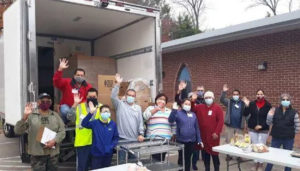
Heart of the City’s main campus is open six days a week, and the ministry relies heavily on volunteers. (Courtesy Photo)
“Whatever the interest, there is something to do—warehouse labor, truck driving, shelf stocking, personal shoppers, clothing sorting and hanging, one-to-one talking with those we serve, marketing, grant writing, program administration, social media editor and others,” Veal said.
“Our volunteer support is very strong. Maybe they have never taught a Sunday school class or sung in the choir, but they can volunteer.”
Northview Baptist continues to provide financial, prayer and volunteer support for Heart of the City.
“As God continues to supply our needs, there is no burden on the church,” Veal said.
As executive pastor at Northview, Veal has significant administrative responsibilities.
He appreciates the opportunities his work with Heart of the City provides for hands-on ministry, demonstrating God’s love to people in need.
“I can sit across the table from people who visit Heart of the City and really listen,” he said, noting it provides a tangible way to fulfill the biblical commands to love God and love others.
Carolyn Tomlin writes for the Christian market and teaches the Boot Camp for Christian Writers.
COVID-19 made life more daunting for seminarians
January 6, 2022
WASHINGTON (RNS)—Cooper Young, a second-year seminary student at Gordon-Conwell Theological Seminary in Massachusetts, knew he felt called to become a minister. But like many students in the past two years, his education has become a journey. Classes went from on campus and in person to online from home, and back again.
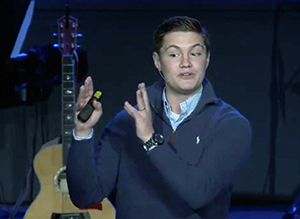
Pastor Cooper Young preaches at Crossroads Community Church in Chittenango, N.Y., on Dec. 19, 2021. (Video screengrab)
Meanwhile, since graduating from Syracuse University in 2020, Young has gone through other significant changes. He got married and, after an internship in Massachusetts, was hired as an assistant minister by his childhood church in Chittenango, N.Y. On the downside, he’d contracted COVID-19.
“I was still in my first year of marriage, but then on top of that, it’s a new job at a church of predominantly people over 55,” Young recalled.
Charged with bringing in younger people in the middle of a pandemic, Young said he found himself fighting resistance to his ideas for growth while also fielding the congregation’s objections to the church leadership’s mask policies.
“It didn’t seem like a lot was working,” he said.
The torrent of experiences—compounded by the fuzzy consciousness known as “COVID fog”—eventually impacted his mental health.
“I was having a panic attack at one point—the only time it’s ever happened in my life before,” Young said.
Taking a toll on mental health
For many seminarians, Young is a harbinger of the difficulties many of them will face as they graduate into a religious landscape that has been transformed—spiritually, physically, politically and logistically—by COVID-19, and of the toll this new reality is taking on their mental health.
According to a recent Barna Group survey, pastors have increasingly been contemplating quitting their jobs since the beginning of 2021. In the same poll, female clergy members, like women across all industries, were found to be more likely to quit their jobs than male clergy.
Seminaries, like other institutions of higher education, have stepped up mental health services. But how much help students get can depend on the cultural climate of the school, as some schools may offer more services than others.
“Our school is pretty open about it if you have mental health needs and we have mental health needs, and we talk about it quite openly,” said Su Yon Pak, a dean and associate professor of integrative and field-based education at Union Theological Seminary in New York.
But the pandemic has put a greater focus on those struggling with their mental health, Pak said. “Because of all the constraints, the restraints, the quarantine, the fear of dying, people dying in the families, not being able to connect, absolutely. It’s not just students. We all struggled through it. It was really hard. And as a school we tried to put that upfront.”
Increasing stress on ministers
Jay-Paul Hinds
Jay-Paul Hinds of Princeton Theological Seminary explained that the range of issues facing students preparing for graduation only begins with the pandemic.
“The isolation of COVID has something to do with it, the racial tension in this country, the political uncertainty has a lot to do with it. And for many people, the declining role of the church in our society is of major concern,” Hinds said.
These increasing stressors of being a pastor in a pandemic are affecting the way many seminarians are thinking about their careers.
“It can put those who feel drawn to it at a crossroads when it comes to future employment, especially those looking to become ministers in the traditional sense of leading a congregation,” Hinds said.
One of Hinds’ colleagues, Kenda Creasy Dean, a United Methodist minister and a professor of youth, church and culture, said those concerns are causing seminarians to look for other uses for their degrees.
“Our students are far less likely to equate ministry with pastoring a church. They are very likely to see it as working with nonprofits and doing entrepreneurial stuff and … being in the helping professions in other ways, social work and other stuff,” she said.
But given the needs of the church, and the inevitability that seminarians will hold a church job sooner or later, prospective clergy themselves are looking for ways to safeguard their mental health.
Young believes schools can do more to help their students’ mental health in this period by adjusting curriculum and workload.
“I would love for there to be a ‘Less is more’ mentality,” he said, noting that some seminary texts essentially glorify unhealthily long hours.
Adjust expectations
Seminaries could design their programs to meet students where they are in their lives, Young said. Students with young children or other responsibilities at home as well as a job, he suggested, might be allowed to take classes without the additional work required outside of the classroom, and to move through the curriculum at their own pace.
But Young also offered that those making the transition from seminary to full-time work need to emphasize the positive. After his panic attack, he said: “I kind of readjusted my expectations and my attitude. I honestly came in pretty ignorant and not too gung-ho but wanting a quick fix instead of having to persevere.”
The turning point for Young was the young adult group that he and his wife started together, which they called Do Good, “not just for our church but for anyone who wants to come.”
Before long, he said, “people in the area I didn’t even know were checking out the church.” At the same time, he said, the uproar about mask wearing subsided as well.
“God was definitely moving and doing things,” Young said.
Church music landscape rearranged as big publishers close
January 6, 2022
NASHVILLE (BP)—When Brentwood Benson announced last month it was shutting down, it became the latest in a line of major church music publishers closing their doors.
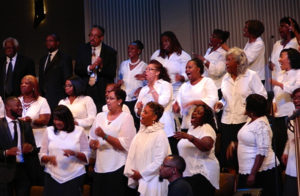
A choir under the direction of Patrick Bradley, minister of worship and creative arts at Westside Baptist Church in Lewisville, leads worship at the African American Fellowship Conference in Waco. (Photo / Ken Camp)
Last year saw the bankruptcy of Lorenz Corp., which had purchased choral giant Word Music in 2017. Then a few months ago, Lifeway released its last box of new choral offerings for churches.
While several companies still offer hard copies of sheet music, the landscape looks very different than it did even a few years ago.
If the church music publishing industry saw a step or two of decline in the 21st century, the COVID-19 pandemic took it down an octave.
“I think COVID probably was that final nail in the coffin for a lot of our publishers, because suddenly, there weren’t choirs meeting. There was no need for new music. The composers were sitting on the side with nothing to do,” said Kenny Lamm, worship ministries strategist for the Baptist State Convention of North Carolina.
A blow for small-church choirs
Longtime worship leader Kirk Kirkland, who also has worked as an arranger and recording vocalist for both Lifeway and Brentwood Benson, said the closures are a blow for small churches that don’t have fulltime music staff or a lot of time for rehearsal. Brentwood Benson’s Ready to Sing series has been a longtime staple for small-church choirs.
“[It was] one of the best church music resources on the market, and their sales proved it,” said Kirkland, worship leader at Judson Baptist Church in Nashville. “For that to go away, I know is going to impact the church. … Where are they going to get what they need? There are other publishers that exist, but those places those churches have traditionally gone to get what they need are disappearing quickly.”
Daniel Semsen is one of a handful of smaller, independent publishers attempting to fill the void. He and his wife Christy had been creating new products for Word Music when they got word last year Word’s parent company was filing for bankruptcy and their contract was over.
Semsen, worship leader at Village Church in Burbank, Calif., knew churches still would need the products these companies offer. So, he started Semsen Music, a digital-only publishing house, where churches can download and print their own copies.
“We care about the choir, about the way the church choir gives an opportunity for people to belong somewhere—for people to join into worship. That’s our passion and our heart,” Semsen said.
“We want to step into this space where these giant publishers were, so we can provide resources for people like us.
“We love the choir so much. We don’t want it to go away. We need new music. We don’t want to just get it from Praisecharts or use old music. We want well-crafted music that fits a certain purpose: Performance-type music, not just four-part harmony of a worship song. [Pieces] like Word and Lifeway and Brentwood Benson have been offering for decades.”
‘Emerging from COVID without choirs’
Brian Brown, director of Lifeway Worship, said the changes are inevitable.
“Brentwood Benson largely served small- and medium-size churches, and many of them went into COVID with choirs, and they’re emerging from COVID without choirs,” Brown said.
He cited a Duke University study showing by 2012, fewer than half of all churches had a choir at all—a number that has shrunk since then.
“[Lifeway is] doing far, far less in the choral space, because church practice has changed,” Brown said. “We have to focus our resources to serve the most churches with the limited resources we have.”
Not that Lifeway has completely stopped providing for choirs, though.
People are using choirs as large praise teams, Brown said. So, Lifeway has begun adding bass lines to vocal charts for worship songs to make them usable by four-part groups.
Lifeway will continue to publish pieces specifically for choir, but it will be in digital format only —no physical product. Churches will have to download and print the sheet music themselves, or issue each singer a tablet, something Brown said is a small but growing trend.
Acquiring music digitally already was common but accelerated during the pandemic. It’s now the norm, Brown said, adding: “Churches that have resisted have had to embrace it.”
Diverse choirs draw congregations into worship
Regardless of trends, all the people Baptist Press interviewed said a choir can be an effective part of a service, drawing a congregation into worship.
“I think about the people that walk into the church and they see five beautiful young people leading worship. I think there’s maybe a disconnect there. As opposed to walking into a church and seeing 40 or 100 people up there of all different ages and backgrounds. All different kinds of cultures worshiping together,” Samsen said.
“You see a 15-year-old worshiping with a 75-year-old. … People that look completely different from one another worshiping together. I think it’s powerful. … People tend to join in to sing with the big mass of people that is already singing on stage. The choir is an important part of worship, because it says to everybody, ‘Come and sing with us.’”
Kirkland, who uses the term “large-group worship team” rather than “choir,” said featuring all sorts of people is integral to the worship at Judson.
“Who is on the platform should reflect the congregation,” Kirkland said. “Everybody in a seat should be able to see someone who looks like them up on the platform.”
Lamm agrees there is something unique and irreplaceable that a choir can add. He organized a mass choir for one of the sessions of the Baptist State Convention of North Carolina’s annual meeting last fall and said the service was “one of the best nights of worship that I’ve experienced,” adding that it set the tone for the rest of the meeting.
“Somebody said when they walked in, they could feel the presence of the Spirit of God,” he said. “I worked with [the choir] on worshiping with their whole being and not just the neck up. It was an amazing transformation. It bled into the congregation even more to light that fire of worship.”
Obituary: Kay Sandlin
January 6, 2022
Kay Taylor Sandlin, who served three decades as a preschool teacher at Beech Street Baptist Church in Texarkana, died Dec. 26 after a brief battle with cancer. She was 69. She was born Oct. 7, 1952, in Shreveport, La., to Gorman and Willa Mae Taylor. After graduating from Captain Shreve High School, she earned an undergraduate degree in home economics degree from Louisiana State University. She went to work as a teacher for the Texarkana Independent School District, and in Texarkana, she met her husband of 46 years, Rickey Sandlin. She taught at Westlawn Middle School before taking a break to stay home to raise her sons, Taylor and Erick. She then became a preschool teacher at Beech Street Baptist Church where she worked more than 30 years until her retirement in 2015. As an accomplished seamstress, she made many dresses, altered countless dance costumes and prom dresses, and created many beautiful articles of clothing. She was a member of Highland Park Baptist Church in Texarkana. She is survived by her husband, Rickey Sandlin; son Taylor Sandlin and wife Alyson of Sugar Land; son Erick Sandlin of Houston; two grandchildren; sisters Jan Hopkins of Marshall and Renee Beard and husband David of Natchitoches, La.; stepbrother Ron Smith and wife Louise of Shreveport; stepbrother Larry Smith and wife Sheryl Smith of Longview; and stepsister Kay LeRoy and husband Steve of Shreveport.
TBM Builders rebuild church gym a hurricane destroyed
January 6, 2022
ROCKPORT—More than four years after Hurricane Harvey, Rockport still is recovering from storm damage. But thanks to Texas Baptist Men Builders, one church’s recovery is much closer now than just a few months ago.
When Hurricane Harvey struck the Texas Gulf Coast in 2017, Rockport took a direct hit. The storm crawled through the state at a sluggish 5 mph, wreaking havoc in its path with powerful wind, heavy rains and even tornadoes.
Coastal Oaks Baptist Church sustained significant damage. One of the church’s largest buildings, which housed the only privately owned gymnasium in town, required demolition.
The church called on TBM to see where the ministry could help.
In November, about 14 TBM Builders began work on the facility, which eventually will house a gym, education space and kitchen. Volunteers framed the first and second floors of the new space, handled electrical work and assisted in other projects as needed.
“The work we do is behind the scenes, but it helps pastors and teachers do what they’re called to do,” TBM Builders Coordinator Wayne Pritchard said. “We provide facilities for people to use to minister to others for Christ.”
Once completed, the building—designed with youth in mind—will open many doors for ministry in Rockport, said Ken Marks, project manager at Coastal Oaks Baptist Church.
In addition to youth ministry, it also will serve as an event space for the community, he added.
“It is really hard work but some of the most gratifying work I’ve ever done in my life,” said TBM volunteer Randy Lloyd, who regularly serves with TBM Church Builders alongside his wife of 47 years Patsy. “It’s gratifying because we know it’s work for the Lord and not for us.”
Respond to doubts and deconstruction by listening and loving
January 6, 2022
HOUSTON (BP)—It’s not easy for a young preacher to stand before his congregation week after week while questioning fundamental truths of the Christian faith. Twenty years ago, that’s the position Steve Bezner found himself in.
Bezner questioned nearly everything about his faith—from who Jesus was, to the nature of the Bible, to the miraculous.
“I was frightened,” said Bezner, now senior pastor of Houston Northwest Church. “I was afraid it would come through in my preaching.”
Bezner didn’t call his experience during those dark nights of wrestling with doubts in the late 1990s deconstruction. But as he tells it, his struggles sound like the growing movement of that name occurring throughout the evangelical world in recent years.
Despite Bezner’s doubts, God continued to use the young pastor in his church. People were coming to faith in Christ and getting baptized.
Struggles made pastor more empathetic
Two decades later, Bezner confidently affirms the historic doctrines of the church and biblical orthodoxy, but he believes the years wrestling with doubts helped him grow as a Christian and made him a better pastor.
He thinks back to his own doubts as he writes sermons to ensure he is thinking about the questions he was asking. Particularly during Christmas and Easter, he tries to signal to his listeners that he understands their struggles and can help.
“It also makes me more empathetic and gentler,” Bezner said. “If people want to meet one on one and have questions, I’m not looking to doubt them. I’m not looking to question why they have these doubts. I’m looking to say, ‘Tell me what your questions are.’”
Ted Cabal, professor of philosophy of religion at Southwestern Baptist Theological Seminary, notes the term deconstruction has its roots with Jacques Derrida, whose skepticism led him to question the existence of truth.
Today, in evangelical circles, the term relates to people taking apart their previously held faith system. The term has become broad enough to include everything from a complete rejection of orthodox Christianity to a sincere Christian’s rethinking previously accepted doctrinal and cultural beliefs.
Cabal doesn’t believe deconstruction should be classified as a new intellectual movement but placed within a history of doubt Christians have responded to for the entire history of the church.
‘Deconstruction’ not all bad
Cabal doesn’t believe it’s all bad, either. In today’s culture, when many Americans see themselves as Christians when their beliefs clearly don’t line up, it’s better for people to be clear about their doubts, he noted.
“I think in these cases, it’s actually better that people come to recognize what they really believe, instead of rocking along, … [saying,] ‘I’m a Christian, I don’t really care to think about really important things like God and life and death,’” Cabal said.
“I think this is an opportunity for us to have more serious conversations with people who really do feel these things, viscerally. They’re upset. They’re mad at the church, or they’ve gone through some terrible life experience of suffering and mad at God. Well, that’s what [the church is] here for.”
Cabal encourages Christians to keep gospel conversations going with people who are dealing with doubts. Apologetics can be a good tool for this, he believes. Christians don’t need to be experts in science and philosophy to respond biblically.
“Have a conversation and care enough about them and love them and be kind and thoughtful, even as the Lord has been with us,” said Cabal, who served as the general editor for Broadman and Holman’s Apologetics Study Bible.
“For someone like me, who was a blasphemer, evil, unbeliever, why should I not extend the very same kind of grace of God as he did to me?”
Don’t be afraid of tough questions
David Rathel, an associate professor of Christian theology at Gateway Seminary, said Christians shouldn’t be afraid of tough questions brought on by people deconstructing their faith. Rathel points to narratives throughout the Christian tradition—from Scripture to church history—of people wrestling with doubt and despair.
“The Christian intellectual tradition is rich enough to handle the questions we throw at it,” Rathel said. “We don’t have to be afraid to come with hard, deep, difficult questions because the doctrine can do its work.”
Rathel believes much of the deconstruction discussion is coming not from intellectual questions about Christianity but out of responses to pain. Like Cabal, Rathel urges Christians to “listen and love.
“Let them tell their story,” Rathel said. “Don’t run to the defensive, and don’t always reach for the canned answer.”
He says it’s “bigger than a conversation between two brains.” It’s important for Christians responding to these doubts to understand why these questions are being asked before trying to answer them.
Mentors needed to guide doubters
Bezner believes people who are struggling through doubts need a trusted mentor with whom they can discuss their questions.
“I had a mentor. I had the space to read,” Bezner said. “I was able to answer some of my questions and say: ‘OK, I’m not crazy. This makes sense.’”
Now, Bezner wants to be that kind of mentor to others as they walk through doubts. Not everyone with whom Bezner walks through doubts comes to faith or comes back to faith, but he keeps the conversation going.
“I think that’s probably the key pastorally,” Bezner said. “I think when people have doubts, it’s not their doubts that lead them out of the faith. It’s whenever their church or their pastor or their mentor won’t let them have doubt and ask questions.
“Most of the time, doubts come because of personal experience, or through discovering new information. And so, if we believe that God is the God of truth, and that all truth is God’s truth, then we shouldn’t be afraid of new information.
“We should be able to say, ‘OK, if that’s new information that’s come to light, and that’s truthful information, then there’s got to be a way that it integrates into the scriptural narrative in a way that completely supports what God has told us.’”
Irving church connects student athletes to the love of Christ
January 6, 2022
IRVING—To demonstrate the love of Christ and meet needs in their community, members of Oak View Baptist Church in Irving developed an outreach program to encourage student athletes to press on towards the goal.
When members of Oak View Baptist Church in Irving adopted the varsity football team from Nimitz High School, it opened up a wide opportunity for ministry in their community. (Photo courtesy of Oak View Baptist Church)
As word spread about the positive impact the program was making on the team, it wasn’t long before the church was given another opportunity—to sponsor the boys’ and girls’ basketball teams.
With both outreach programs, church members of varied ages show support for the players and their families with encouraging notes, care packages and attendance at home games. The weekly care package usually consists of items such as a sports drink and snacks such as baked goods, chips or protein bars. In addition, church members often include a Bible verse and note of encouragement with each care package.
“It is encouraging to watch members of Oak View come out to the games, especially those who have no relatives or friends directly involved,” said Jack Teel, minister to students.
“They are coming to support their player, and you can see the joy it brings to their lives. At each game, I watch the players look up into the stands and point to the section where our church members are sitting and wave at them. Then, I watch our sponsors light up with pride for the students.”
Making a connection with students
Before each season begins, the church holds a “meet-and-greet” event, where church members and student athletes get acquainted. At the end of each season, the church hosts a lunch for the players and their families.
“Our desire is to make a connection with the students and let them know that people care about them and want to support them,” said Lynda Randle, who serves weekly in the student ministry and coordinates the football outreach.
“We want to help get them connected to a local church if they don’t already have one. It’s always a special time when the players come to church, and we can get to know them better.”
Teel agreed, adding: “The response has been amazing since we started the program a few years ago. It truly is a unique way for us to reach our community. It has allowed us to hear stories of how our bags and personal notes have reached these players in their time of need—both on and off the field and the court. It has been a great vessel to spread the love of Christ in our community.”
Student athletes comes to faith in Christ
Through the years, many of the players have connected with the church and made professions of faith, including Delontae Scott, who played football at Nimitz and now plays in the NFL for the Pittsburgh Steelers. Scott began attending Oak View’s student ministry when he was a high school student and gave his life to Christ as a result of the football outreach.
Many of the students and their families have stayed in contact with their sponsors even after graduation, which has allowed church members to continue the connection.
“This outreach is about planting seeds,” said Wes Pyfer, who coordinates the basketball outreach. “You never know what the Lord has in store. It’s exciting to get to know these players and let them know that someone cares about them.
“Many of their families have to work and aren’t able to attend games. So, this is especially meaningful for them to have supporters cheering them on during the games. The players are so appreciative of the care packages and look forward to receiving them each week. It means a lot to the coaches, as well, to know that people are coming alongside them and supporting the team.”
By continuing the connection with these players, Teel recognizes the opportunity the sports outreach opens up to influence the city for Christ.
“The ultimate goal of the outreach is to live out our mission statement as a church and connect people to the life-changing love of Christ,” Teel said.
“I would love to see this outreach expand beyond what it is today and crossover into other sports, as well as the arts program. Any place that we might be able to reach a student and their family in a way that otherwise might not be possible is exciting to me. We have a mission field here, and I am excited to see what God has in store.”
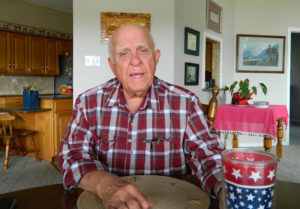


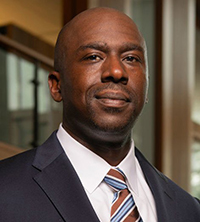
 Jeremy Courtney, who grew up in Leander as the grandson of a Baptist minister, attended Howard Payne University and earned his Master of Divinity degree from Baylor University’s Truett Theological Seminary.


 Kay Taylor Sandlin, who served three decades as a preschool teacher at Beech Street Baptist Church in Texarkana, died Dec. 26 after a brief battle with cancer. She was 69. She was born Oct. 7, 1952, in Shreveport, La., to Gorman and Willa Mae Taylor. After graduating from Captain Shreve High School, she earned an undergraduate degree in home economics degree from Louisiana State University. She went to work as a teacher for the Texarkana Independent School District, and in Texarkana, she met her husband of 46 years, Rickey Sandlin. She taught at Westlawn Middle School before taking a break to stay home to raise her sons, Taylor and Erick. She then became a preschool teacher at Beech Street Baptist Church where she worked more than 30 years until her retirement in 2015. As an accomplished seamstress, she made many dresses, altered countless dance costumes and prom dresses, and created many beautiful articles of clothing. She was a member of Highland Park Baptist Church in Texarkana. She is survived by her husband, Rickey Sandlin; son Taylor Sandlin and wife Alyson of Sugar Land; son Erick Sandlin of Houston; two grandchildren; sisters Jan Hopkins of Marshall and Renee Beard and husband David of Natchitoches, La.; stepbrother Ron Smith and wife Louise of Shreveport; stepbrother Larry Smith and wife Sheryl Smith of Longview; and stepsister Kay LeRoy and husband Steve of Shreveport.