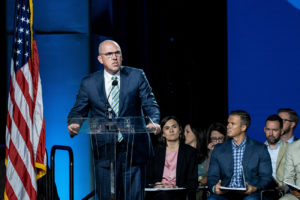
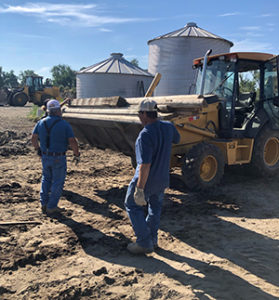
Lt. Col. Garrett Hager (retired U.S. Marines) to First Baptist Church of Copperas Cove as minister of discipleship from Bangs.
Gannon Sims to Cliff Temple Baptist Church in Dallas as senior pastor from Fredericksburg, Va., where he and his wife Carey directed the Center for Faith and Leadership.
Obituary: Bob Burgin
August 24, 2022
Robert “Bob” Duaine Burgin of Arlington, Baptist missionary, pastor and public school educator, died Aug. 19. He was 87. He was born March 3, 1935, to Joseph and Beulah Mae Burgin in Jewett, the youngest of seven children. After he graduated from Jewett High School, he continued his education at Sam Houston State Teachers College and Arlington State College. He later went on to earn a master’s degree from North Texas State University, and Dallas Baptist University awarded him an honorary doctorate. Burgin served in the U.S. Army from 1958 to 1962, including a 13-month assignment in South Korea. During that time, he and his wife Tillie fell in love with the Korean people and their country. After his time in the service, they returned to Arlington where he finished his student teaching and then took his first teaching job at Carter Junior High School. He later went on to teach at Arlington High School and Shackelford Junior High School before he served as assistant principal of Hutcheson and Gunn Junior High Schools, assistant principal and principal at Nichols Junior High, and principal of Arlington High School. When Bob and Tillie Burgin answered God’s call to missions, they served in Seoul, Korea, from 1966 to 1971 and 1976 to 1979. He served as a pastor through Mission Arlington since it began in 1986, most recently as the pastor of Parkview Fellowship Church. In January 1999, Burgin came out of retirement and returned to the classroom as a professor at Dallas Baptist University, where he spent the next 20 years. He is survived by his wife, Tillie; son Jim and his wife Debbie; son Rick and his wife Allison; five grandchildren; two great grandchildren; sister Imogene Freeman and brother Edgar Burgin. Visitation is scheduled from 6 p.m. to 8 p.m. on Aug. 24 at Wade Family Funeral Home in Arlington. His memorial service will be at 1 p.m. on Aug. 26 at Parkview Fellowship Church. In lieu of flowers, donations may be made to Mission Arlington.
Austin church offers hope to refugees
August 24, 2022
AUSTIN—When Paul Sebineza helped plant a church in Austin to reach new arrivals from refugee camps in Kenya, he had an advantage—personal experience.
“I understand the fears and frustration of coming to America and starting a new life. Once, I was in their place,” said Sebineza, who immigrated to the United States from the Democratic Republic of Congo.
Sebineza serves alongside Senior Pastor Dieudonne Ratabagaya at Hope of Life Baptist Church in Austin. As coordinator of church programs, his responsibilities include ministries geared toward children, youth, men and families, as well as camps.
When Sebineza and Ratabagaya started Hope of Life Church in 2015, they began with six people. Today, average attendance is 140.
The church’s name—Hope of Life—explains its purpose and ministry, Sebineza said.
“These refugees have lost everything,” he said. “Many have been in refugee and resettlement camps for five to 10 years. The church is helping them fit into the American culture. It is difficult.”
Sebineza understands the hardships of being a refugee. He spoke French when he arrived in the United States and knows the difficulty of learning to speak and write English. He empathizes with the newly resettled refugees, and they respond to him because he relates to what they are going through.
Hope of Life Baptist Church gives those who attend the opportunity to dance and sing familiar music and hear sermons in their native language. Ratabagaya often allows ordained men in the church to preach, which gives them experience in speaking and sermon preparation.
Offering transportation, employment assistance
In addition to helping new arrivals learn English and become more familiar with American food, customs, culture and recreation, the church also assists with transportation.
“Imagine being in a large city like Austin, and not understanding the language,” Sebineza said. “What bus should I take to go to work? Which bus takes me home? This is only one example of the problems faced.”
The church also helps resettled refugees find jobs. The city needs workers and the people can learn skills needed for labor, Sebineza noted. But completing applications and developing a resume can be daunting for a new arrival.
Hope of Life also offers counseling to those who request it. With so many changes, adjusting to a new way of life can be depressing, Sebineza acknowledged.
“Expectations from back home are not easy to change,” he observed.
Meeting essential needs
The COVID-19 pandemic increased the number of people needing help. For those who have difficulty feeding their families, the church provides groceries. Hope of Life receives support from the Texas Baptist Hunger Offering. And the numbers of people in need continue to grow.
“I’ve seen an increase in refugees since former President Trump left office,” Sebineza said. “Since restrictions are less strict during the Biden administration, we have seen more refugees arriving in Austin.”
When Sebineza helped plant Hope of Life Baptist Church in Austin, his life changed.
“I feel good about what I’m doing and how God has blessed me. … God is good. America is good,” he said.
In addition to ministering to refugees who relocate to Austin, Hope of Life also ministers to people in their homeland. In September, Ratabagaya and Sebineza will journey to Kenya to help plant a church, and Ratabagaya’s sermons at Hope of Life are posted on YouTube.
“Technology allows people all over the world to listen and become involved in this ministry,” Ratabagaya said. “This is one of the blessings from God—that everyone—regardless of where they live, if they have a computer or cell phone and internet, can hear the gospel.”
As Sebineza offers encouragement to refugees, he often points to a favorite Bible verse, John 14:27: “Peace I leave with you, my peace I give you. I do not give to you as the world gives. Do not let your hearts be troubled and do not be afraid.”
Carolyn Tomlin writes for Christian magazines and teaches the Boot Camp for Christian Writers.
Afghan Christians in hiding one year after U.S. withdrawal
August 24, 2022
KABUL, Afghanistan (BP)—Christians in Afghanistan are forced into greater secrecy and largely cut off from humanitarian aid, International Christian Concern said in its report on the first anniversary of U.S. withdrawal from the Muslim country.
ICC’s estimate of 10,000 to 12,000 Christians in the country is the same as estimates immediately before the Taliban gained rule there, despite early reports of a mass exodus of Christians who already worshiped in secret there.
With adherence to Christianity and other minority religions punishable by death under the Taliban’s strict Sharia law, many Christians would like to leave the country but have no safe way out, ICC said in its report that urges a long-term strategy in international humanitarian aid.
“Most Christians see no future inside Afghanistan. Emigration is a highly restricted privilege enjoyed only by a select few,” the report stated. “Widows, unmarried women and the elderly are among those with the least opportunity to leave, creating an untenable environment where they must choose between staying at risk of their lives or fleeing illegally.”
Christians, though ostracized by family and friends, enjoyed limited freedom to serve their immediate communities under U.S. occupation, the report said, but are further ostracized in the current climate.
“Whether they remain inside Afghanistan or migrate elsewhere, Afghan Christians cannot seek out humanitarian aid at the same capacity and through the same channels as other Afghans,” ICC Senior Association Manager Claire Evans said. “Consequently, providing humanitarian assistance to Afghan Christians requires a long-term strategy that matches the fluidity of the situation on the ground.”
Some Christians chose to remain
Voice of the Martyrs, a global ministry to persecuted Christians, said many intentionally remained behind.
“You might have heard, a year ago after the fall of Kabul, that every follower of Christ in Afghanistan had fled the country, been killed or was hiding while trying to get across the border,” VOM spokesperson Todd Nettleton said. “This is simply not true.
“Bold believers in Christ intentionally made the decision to stay in the country—knowing full well their lives were at risk—to serve their countrymen and to continue to share the gospel.”
VOM encourages prayer for Christians remaining in Afghanistan.
The United States Commission on International Religious Freedom will host a virtual hearing Aug. 24 focused on religious persecution in Afghanistan, U.S. policy and recommendations for U.S. government action.
“The Taliban’s imposition of their narrow interpretation of Sunni Islam on all of society poses a grave threat to Afghans who interpret Islam differently, who hold a different faith, or who choose to have no faith at all,” USCIRF said in announcing the hearing.
“In addition, despite continued promises to protect all ethnic and religious communities residing in Afghanistan, the Taliban de facto government has been unable to protect religious minorities against attacks from Islamic State-Khorasan. While some religious minority communities face the threat of extinction, others struggle to practice their faith in hiding due to fear of reprisal.”
In addition to death for apostasy, Sharia law imposes harsh punishments for other actions deemed criminal, including stoning to death or a specified number of lashes by flogging for adultery; crucifixion, death, amputation or exile for highway robbery; flogging or beating for immodest dress; and execution by various means for murder and homosexuality, USCIRF reported.
Church leaders vulnerable under Taliban rule
More than 99 percent of Afghanistan’s 39 million people are Muslim, and the Taliban works to flush out and punish those who don’t conform to a strict interpretation of Islam, ICC said in its report. The Taliban confiscates phones of suspected Christians and monitors mosques to determine who’s not attending regular prayers.
“Before Afghanistan fell to the Taliban, Christian pastors experienced a relatively safe environment to proselytize in their respective communities. Threats from Islamic radicals were prevalent but less egregious during the war following 9/11,” ICC said.
“However, the current reign of Taliban extremism in Afghanistan has presented a much more challenging context for Christians in terms of continuing to proselytize.”
ICC pinpointed church leaders, women, ethnic minorities and former public service employees as among the most vulnerable under Taliban rule. Humanitarian aid is “incredibly limited,” ICC said, with bank transfers impossible and the accessibility of cash at receiving locations unreliable.
“Any leadership role within a church necessitates, at minimum, welcoming newcomers, providing spiritual guidance, and coordinating logistics. Since conversion to Christianity is not allowed, a Christian leader serving another Christian can be viewed as proselytizing even if proselytization never occurred,” ICC said in its report.
“A relative angry with their family member’s Christian identity can seek out the names of other believers. The angry family member can subsequently report those names to the Taliban. Thus, anyone who has accepted a leadership role within the church places themselves at significant risk.”
The international community can help by finding sustainable ways for refugees to care for themselves, and by denying diplomatic recognition to the Taliban unless the regime guarantees human rights for all Afghans, regardless of religious affiliation, ICC said.
“The Taliban claims to be tolerant, but they are one of the worst oppressors of Christians and have a long track record of brutal crimes against vulnerable minorities,” ICC said.
“Despite hopes to the contrary, the world has seen a collapse of fundamental human rights such as women’s rights, religious freedom, freedom of speech, freedom of the press, the right to assemble” and other freedoms.
Foster care ministry focused on school-age children
August 24, 2022
SULPHUR SPRINGS (BP)—The new school year can be especially tumultuous for children in foster care, Pastor Jacob Smith of Sulphur Springs’ Union Baptist Church learned as his church prayed about the viability of a foster care ministry.
Seeing God affirm the ministry, Smith contacted Journey Road, a nondenominational nonprofit foster care ministry in nearby Pickton, to learn current needs. The new school year is a prime time to reach out.
“Journey Road let us know there is kind of a massive uptick in CPS (Child Protective Services) actions that result in foster care placements at the beginning of the school year, which is unsurprising,” Smith said.
“These kids are, for the first time in several months, going into a building full of mandatory reporters. Because of that uptick, this became a back-to-school kind of thing.
“These kids are now showing up, and they don’t just need basic toiletries and things like that, but they also need basic school supplies to be provided for them. And so that got wrapped up into one ministry.”
Each backpack contains school supplies, toiletries, a full set of towels, a set of twin sheets, a Bible and information on Union Baptist Church with online access to the gospel.
‘It’s going to come down to churches’
Rachel Draper and her husband founded Journey Road in 2019. The couple learned the needs of foster care parents and children after they became foster parents. A shortage of foster families, support services and resources are prevalent, said Draper, who is recruiting churches to help.
“Our foster care system, people say it’s a broken system. Well, it’s beyond broken,” Draper said. “There’s just so many gaps in the system. Now, can we work through that? Absolutely.
“But I think it’s going to come down to churches. And I don’t really have any other answers, other than that.”
There were about 407,500 children in foster care in the United States in 2020, about 217,000 of whom entered the system that year, according to Kids Count data from the Annie M. Casey Foundation. About 8 in 10 children in foster care in 2020 were placed with families and relatives, as opposed to group homes, the foundation reported.
Church provides foster families with ‘starter kits’
Union Baptist, a congregation of 29 members, packed 20 starter kits during its Aug. 14 evening church service to donate to Journey Road and plans to donate another 20 at the start of the spring semester.
“Oftentimes, foster kids arrive in their new homes with basically nothing but the shirt on their back. Maybe they have a few possessions. These families also don’t get a lot of advance (notice) before they receive a placement,” Smith said.
“There’re times, quite often, when these families will wake up in the morning with a certain number of children or no children, not thinking they’re going to get anymore, and then by the end of the day, they’ve got another kid, or three.”
Draper spoke at Brashear Baptist Church near Sulphur Springs on Aug. 14, encouraging members to support foster care.
“Everyone can be a part of the foster care process. You don’t have to foster to still be a part of this ministry,” she said. “There’re so many different ways that you can be involved, everybody of all ages.
“I believe it’s important for me to provide opportunities for people to serve in this area, to give them an avenue to serve and to be obedient to what God wants us to do. But also, I think it brings more awareness to where we are with foster children. And it just takes everybody.”
Fostering can attract people with improper motives or the wrong mentality to be foster parents, but Draper said it’s difficult to weed those from the crop of good parents.
“But I’m kind of the way, ‘Let’s just water the flowers we have,’” Draper said. “And let’s try to get some more good flowers so the weeds can kind of go out.”
‘Model what could happen’
In addition to foster parenting, Christians can provide supplies, volunteer to provide respite care for up to two weeks when foster parents need to travel, or serve as babysitters for several hours or overnight. Journey provides certification for respite providers and babysitters.
“We just have to have more people of faith stepping it up,” she said.
Journey Road runs a 35-acre rental community for foster parents and respite providers in Northeast Texas, where parents have a community of support.
Draper encourages churches to generate community among foster parents and providers.
“What we want to do is model what could happen if other communities did this,” she said. “Now you don’t have to live on 35 acres together, but you could still have a small community of foster families that get to know each other and start supporting each other this way.”
Journey Road also hosts activities for foster parents and providers from the region, such as an annual back-to-school bash where children receive new clothing and shoes for school and providing Christmas wish lists.
Union Baptist feels compelled to help.
“The kind of feeling we all got in prayer was that it was just kind of a compulsion,” Smith said. “It became one of the only things the Lord would let us think about in terms of ministry. This is an issue that is familiar to us as a church body, and so it was easy, I think, for us as we prayed to begin to feel the Lord’s impression. This is the kind of ministry we can work on, that we can really support these families and bless them and reach out to them.”
Union Baptist plans to partner with Journey Road in various foster care outreach events.
“We’re hoping people come to know Jesus, people come to faith through this work, first and foremost,” Smith said. “But we also want to help these families who are doing kind of one of the ultimate acts of charity. And I don’t mean that in a derogatory way; I mean that in the sense of Christian charity.”
Review of Baylor relationship required by 2011 agreement
August 24, 2022
The Baptist General Convention of Texas’ announced intention to “review and consider changes” to the special agreement that defines its relationship with Baylor University is a routine matter delayed one year due to the COVID pandemic, BGCT Executive Director David Hardage said.
The BGCT has related to Baylor by special agreement for more than three decades. The renegotiated special agreement the BGCT and Baylor adopted in 2011 calls for periodic review.
“BGCT and Baylor agree to review the terms of this agreement at least every ten years to discuss mutually agreeable revisions to the agreement,” the agreement adopted Nov. 4, 2011, stated. “Notwithstanding the agreement to review at least every ten years, this agreement shall be treated as an agreement without a specific or definite term.”
Reviewing the agreement and considering any changes to it last year would have been “a challenge coming out of the pandemic,” Hardage said in an Aug. 19 interview with the Baptist Standard.
“We just postponed it a year. … It’s something we are supposed to do. … We are fulfilling our responsibilities and duties,” he said.
BGCT leaders are not entering into the review with preconceived ideas about desired changes, but they recognize it has been a decade of change both for Baylor and the convention, he noted.
When the 2011 agreement was negotiated, Linda Livingstone was not Baylor’s president, and Hardage was not the BGCT executive director.
Hardage identified a question for both parties to consider as they review the agreement: “What is the right way for us to relate going forward?”
Hardage: Prism ‘not driving the conversation’
While Baylor’s decision in April to grant a charter to Prism, an LGBTQ student group, may be discussed as the relationship agreement is reviewed, Hardage said, “It’s not driving the conversation.”
On May 3, the BGCT posted a statement on its website from Hardage: “We are aware of the recent chartering of the Prism at Baylor student organization by Baylor University. We have heard concern expressed by many in the Texas Baptists family and are in the process of communicating those concerns to university leadership. There has been some confusion regarding the group’s chartering, and we are seeking clarification to determine the best course of action moving forward. The BGCT’s position on Human Sexuality and Biblical Marriage has not and will not change.”
Last year, Baylor’s board of regents adopted a resolution saying, “The university remains committed to extending Christ-like love and grace in caring for all our students and meeting them where they are, just as Jesus did, and adhering to traditional biblical teaching of Scripture regarding human sexuality.”
The university did not change its statement on human sexuality, which says in part: “Christian churches across the ages and around the world have affirmed purity in singleness and fidelity in marriage between a man and a woman as the biblical norm. Temptations to deviate from this norm include both heterosexual sex outside of marriage and homosexual behavior. It is thus expected that Baylor students will not participate in advocacy groups which promote understandings of sexuality that are contrary to biblical teaching.”
Baylor provided the BGCT “all the information and clarity we need” regarding the chartering of Prism, Hardage said in the interview.
“The convention is really grateful for the care and concern [Baylor has] exhibited for all their students,” he said.
“We know where they are. … As with all of our institutions, we want them to care about their kids on campus. That’s a unique situation. These are challenging waters to navigate, and we pray for them in navigating those challenging waters.”
The BGCT Institutional Relations Committee at its Aug. 18 meeting heard a report on the need to review the relationship agreement, but it took no action, Hardage said.
“Right now, there are no formal committees tasked with this,” he said. “It’s just convention and university leadership doing what we’re supposed to do—review the agreement and discuss any possible revisions.”
Hardage acknowledges ‘missteps’ regarding GC2
August 24, 2022
Baptist General Convention of Texas Executive Director David Hardage acknowledged “missteps” in the development of the GC2 statement of faith, and he suggested Texas Baptists press the “pause” button before taking further action.
As a movement focusing Texas Baptists on Christ’s Great Commission and Great Commandment, GC2 has gained broad support. But Hardage frankly admitted BGCT leaders made “missteps along the way” as they attempted to provide organizational structural for an organic movement.
“Texas Baptists do a good job of letting you know what they are comfortable and uncomfortable with. So, I’ve heard that,” Hardage said in a wide-ranging interview with the Baptist Standard.
In particular, leaders failed to think “deeply enough” about a background document presented to the BGCT Executive Board that said the GC2 statement of faith “may also be used to vet the beliefs for BGCT elected/appointed committees, boards or scholarships,” he said.
“That was poorly worded, or maybe should have never been added,” Hardage said. “That’s not who we are. We have never and will never do a vetting like that. We don’t do that. It’s not how we operate.”
When asked further about how the statement became part of the background document, Hardage said, “Somebody did think it was a good idea, and the rest of us just missed it.”
Putting ‘structure around an idea’
Texas Baptist leaders made “missteps” as they tried to “put structure around an idea” that developed organically, he insisted.
Baptist General Convention of Texas Executive Director David Hardage told Texas Baptists’ virtual annual meeting, “We want to be known as a movement of God’s people—a GC2 movement—focused on fulfilling the Great Commission and carrying out the Great Commandment.” (Screen Capture)
Early on in his time as BGCT executive director, Hardage said, he concluded Texas Baptists want to see two things happen: “They want to see lost people saved. And they want to see hurting people helped.”
So, Hardage began to emphasize Texas Baptists as a people united by their desire to obey the Great Commission and the Great Commandment—to share the gospel of Christ and show love to others.
“It seems biblical to be those people,” he said.
About the same time, Texas Baptists responded to a couple of “divine appointments,” he said. The BGCT launched its Missionary Adoption Program at the invitation of Baptists in Brazil, connecting Texas Baptist churches to indigenous missionaries. Texas Baptists also responded to an invitation to help church planters start congregations outside of Texas.
While out-of-state churches and their pastors might be reluctant to identify themselves as Texas Baptists, they might find it easier to identify themselves as part of the “GC2 movement,” Hardage noted.
In his report to the virtual 2020 BGCT annual meeting, Hardage said, “We want to be known as a movement of God’s people—a GC2 movement—focused on fulfilling the Great Commission and carrying out the Great Commandment.”
Reserving the name, preparing for the future
Five months earlier, BGCT Treasurer/CEO Ward Hayes filed a certificate of formation with the Texas Secretary of State, registering GC2 as a nonprofit corporation. The certificate of formation listed three directors of the corporation—Hardage, Hayes and Craig Christina, BGCT associate executive director.
Hardage said convention leaders wanted to protect the “GC2” name and legally “set the stage for something down the road, but it’s way too early to say what that may be.” The nonprofit has no elected board or any governing documents at this point, he said.
Derek Dodson, a member of Seventh and James Baptist Church in Waco, questioned the propriety of the BGCT executive leadership establishing another parallel organization while simultaneously serving the convention.
“It appears to be a conflict of interest,” said Dodson, director of undergraduate studies and senior lecturer in the religion department at Baylor University. Dodson emphasized he was speaking for himself, not the university or its religion department.
Hardage said he does not see a conflict of interest, but he admitted having a second fledgling organization on a track parallel to the BGCT “does create confusion.”
So far, more than 50 churches outside of Texas have affiliated with GC2, but Hardage acknowledged their relationship to the BGCT is “complicated and messy.”
Adopting a GC2 statement of faith
In September 2021, the BGCT Executive Board approved a statement of faith for GC2, which it identified as “a movement of God’s people to share Christ and show love.” Hardage told the board Texas Baptists needed a succinct explanation of their theological identity when approached by entities asking if they could relate to the GC2.
The rationale for the statement of faith presented to the board said it was not intended to replace the Baptist Faith & Message but to “function as a guide for collaboration with like-minded conventions, denominations, churches, ministries, foundations, institutions or Christians.”
The statement of faith was approved by the Executive Board but not presented to messengers at the 2021 BGCT annual meeting. However, messengers to that meeting did approve an amendment to the statement of faith, adding a reference to the ascension of Christ.
“We never should have voted on that. But we did,” Hardage said. “Nobody is opposed to the ascension. But it was not necessary. It should have just been received as a suggestion. But we made a mistake there.”
At its May 2022 meeting, the Executive Board again was asked to approve a GC2 statement of faith, but this time the board recommended it be presented for consideration by messengers to the 2022 BGCT annual meeting in Waco, Nov. 13-15.
Hardage said he now views having the Executive Board vote on what he considered “an information piece” was a mistake—giving the document greater weight than it was intended to have.
What it includes, what it omits
The statement of faith includes basic orthodox Christian doctrines such as the Triune God; Jesus Christ as the head of the church; Jesus’ virgin birth, atoning death, resurrection, ascension and return; the urgency of evangelism; and the Bible as “God’s word and truth without mixture of error.” It declares salvation is “by grace alone, through faith alone, in Christ alone.”
It also includes some distinctive Baptist beliefs, such as the Lord’s Supper and baptism as the two ordinances of the church; “the priesthood of every believer and all believers;” and “the autonomy of the local church in governance and ordination.”
However, it does not include other Baptist distinctives such as religious liberty, separation of church and state, and soul competency.
It also includes some hot-button social issues, affirming “the sanctity of human life from conception to natural death,” defining biblical marriage as “one man and one woman in a covenant relationship with the Lord and one another;” and affirming gender as “a gift from God at birth.”
Uniting or dividing?
“Culture war issues tend to divide instead of unite. They didn’t have to be included,” Dodson said. “It seems like a tool of division. It doesn’t look Baptist.”
Dodson questioned whether the intention is to “morph the BGCT” into GC2 or to provide an alternative to the BGCT to “mend fences with the Southern Baptists of Texas Convention.”
Chris McLain, pastor of First Baptist Church in Bandera, voiced enthusiastic support for an emphasis on the Great Commission and Great Commandment. McLain added he could understand why out-of-state churches that want to identify with Texas Baptists’ mission might identify more readily with GC2 than with the “Texas Baptists” label.
However, he questioned why an “organic movement” needs its own distinctive statement of faith.
McLain asked why important Baptist distinctives such as religious liberty and the separation of church and state were not included in the GC2 statement of faith.
He also expressed concern about giving social and cultural issues equal weight to central Christian doctrines in the statement of faith.
“We should be wise about wading into those waters, allowing the shifting winds of culture to determine the terms of the conversation,” he said.
Hardage acknowledged the questions that have been raised along those lines and said, “It’s probably time to pause and think through all of that.”
Used as a vetting tool?
Unlike the earlier version of the GC2 faith statement the Executive Board approved last year, the background section of the document presented to the board in May said the statement of faith “may also be used to vet the beliefs for BGCT elected/appointed committees, boards or scholarships.” McLain particularly expressed concern about that provision.
“It triggers memories of how the Baptist Faith & Message 2000 was written, and how it moved closer to creedal use than how Baptists historically have understood confessions of faith,” he said.
McLain voiced support for BGCT leadership and said he saw no evidence of “nefarious” intent behind the GC2 statement of faith. But as a former recipient of BGCT ministerial scholarships, he specifically questioned why students would be pressured to affirm a theological statement of faith before beginning their theological studies.
“Many of these students are not yet fully formed theologically,” he said. “It appears we would be asking them to sign onto a statement they may not fully understand. … They are still in the process of figuring out what they believe.”
Dodson questioned how the GC2 statement might be used during a transition time in the life of the BGCT. Hardage announced in June his plans to retire as BGCT executive director. Last month, the officers of the BGCT and its Executive Board announced the membership of a search committee that will recommend the next executive director.
“Will the next executive director be vetted according to the GC2 statement of faith?” Dodson asked.
When asked that question, David Mahfouz, pastor of First Baptist Church of Warren and chair of the search committee, responded by email, “The GC2 statement would not have an impact or relate to the work of [the executive director] search committee at this time in our search process.”
‘We will correct that’
Hardage acknowledged including a sentence about possibly using the GC2 statement as a tool for vetting was a “misstep.”
“We just didn’t think it through deeply enough,” he said. “I wish we hadn’t done that. We will correct that.”
When asked what messengers to the BGCT annual meeting will vote on regarding the GC2 statement of faith, Hardage said, “Probably nothing this time.”
Hardage indicated he will address the matter in his remarks to the BGCT Executive Board at its September meeting.
“I will express my preference in putting that on ‘pause’ while we think through and pray through where that does and does not need to go,” he said.
Particularly in light of his plans to retire within a few months, Hardage said: “I don’t want to put anything onto somebody else that may not be their dream or their vision. So, I think we’ll just put it on ‘pause’ for a little while.”
“If the Lord is in this, let’s let him guide it in his time and in his way, and we’ll try not to run ahead,” he said.
‘Do the right thing the right way’
Moving forward, he voiced support for the idea of having more “sounding boards” in place to consider any statement of faith or organizational structure for GC2. Rather than a small group developing a document, he suggested the convention “get some pastors together in a room two or three times” to discuss it and then “give it some time.”
“We want to do the right thing the right way,” he said.
Rather than “rush” into taking action, the BGCT should “think through it all, read through it all and hear more from our constituents,” he said.
“There’s some messiness we need to try to clean up and more things we need to think through,” he said. “Bottom line: I still love the [GC2] idea. I still love the focus. I hope Texas Baptists always find a way to keep the Great Commission and the Great Commandment at the forefront.
“In the midst of all the messiness we have—and that we sometimes create—Texas Baptists still want to see two things happen: They want to see the lost people saved and hurting people helped.”
What does the Justice Department’s SBC investigation mean?
August 24, 2022
WASHINGTON (RNS)—More than four decades after sexual abuse claims against a Catholic priest first made national headlines, spurring accusations, lawsuits, a series of newspaper investigations and billions in settlements, the U.S. Department of Justice is investigating a religious group’s handling of sexual crimes by clergy and church staff.
Bart Barber, pastor of First Baptist Church in Farmersville, speaks during the Southern Baptist Convention annual meeting at the Anaheim Convention Center in Anaheim, Calif. Barber was elected president in a runoff vote. (Photo by Justin L. Stewart/Religion News Service)
This time, the Southern Baptist Convention is under investigation, according to a statement released Aug. 12 by leaders of the nation’s largest Protestant denomination.
News of the investigation came months after the release of a report from the investigative firm Guidepost Solutions that found SBC leaders had mistreated abuse survivors and mishandled abuse claims for decades.
The SBC’s Nashville-based Executive Committee acknowledged it had received a subpoena from the Department of Justice. Leaders from Southern Baptist seminaries, missionary groups, the Executive Committee and other entities promised to cooperate fully.
Farmersville pastor Bart Barber, the SBC’s newly elected president, also signed the statement. Barber also recently appointed a task force to implement new reforms meant to address abuse.
Former FBI agent offers perspective
The question is: Why the SBC, and why now?
“If I were still in law enforcement, I’d want to take a hard look at the report myself and see if there is anything of potential value to prosecutors in terms of bringing criminal charges against an offender, or if there is anything that law enforcement needs to do to in order to prevent a crime,” said Kathleen McChesney, a former FBI agent who served as executive director of the Office of Child Protection for the U.S. Conference of Catholic Bishops.
McChesney, now a consultant, said federal law enforcement officials often investigate sex trafficking, child porn and crimes against children on the internet. It’s less common for them to investigate sexual abuse, which is often handled by local or state officials.
In 2011 a Texas jury sentenced Warren Jeffs, leader of the Fundamentalist Church of Jesus Christ of Latter Day Saints, to life in prison for abuse after Jeffs spent years on the FBI’s most-wanted list as a fugitive.
The DOJ generally gets involved only when a federal crime may have occurred, often when victims are transported across state lines as part of an illegal act.
While it has been rare for the FBI or other department investigators to look into religious groups’ activities, the DOJ currently is investigating the Archdiocese of New Orleans to determine whether abusive Catholic priests took children across state lines, the Associated Press reported in June.
“The issue has always been determining what is the federal crime,” Peter G. Strasser, the former U.S. attorney in New Orleans, told AP earlier this year. Strasser “declined to bring charges in 2018 after the archdiocese published a list of 57 ‘credibly accused’ clergy.”
More proactive after Larry Nassar scandal
But the DOJ may have decided to become more proactive in the wake of the USA Gymnastics scandal involving Larry Nassar, a former team doctor, who eventually was arrested and sentenced to up to 175 years in prison for abusing more than 150 women and girls. In 2021, a Justice Department report found the FBI “mishandled allegations of sexual abuse of athletes” by Nassar.
“The report noted that according to civil court filings, about 70 women and girls were victimized by Nassar between the time when the FBI was first told of the allegations, and when Michigan officials arrested him on the basis of separate information,” The Washington Post reported last year.
McChesney said the #MeToo movement has also made investigating sexual assault and domestic violence more of a priority than in the past. Federal law enforcement is in a different place than in the early 2000s, she noted, when The Boston Globe, The Boston Phoenix and other outlets revealed the extent of sexual abuse in the Catholic Church in Massachusetts.
At the time, the FBI was focused on responding to the 9/11 terrorist attacks. And federal officials rarely were investigating crimes related to the Mann Act, which criminalized sex trafficking across state lines, said McChesney.
“Federal law enforcement was not focused on anything really but terrorism at that point,” she said. “While abuse cases weren’t ignored, they were not really on the radar until the last decade.”
‘The whole landscape has changed’
She also said the statute of limitations often made it difficult to prosecute sexual abuse or to file civil lawsuits.
“The whole landscape has changed over the past two decades,” she said, pointing to Pennsylvania Attorney General Josh Shapiro’s investigation that turned up more than 300 cases of clergy sexual abuse in the state’s Catholic parishes over the past 70 years.
When federal investigators target churches or religious figures, McChesney said, other issues, such as fraud or discrimination, have normally been involved.
In 2016, the Department of Justice won religious discrimination convictions against local government officials in Colorado City, Ariz., and Hildale, Utah, who had ties to the Fundamentalist Church of Jesus Christ of Latter Day Saints. Those leaders were accused of discriminating against residents not part of the church. A year later, Fundamentalist Church of Jesus Christ of Latter Day Saints church leader Lyle Jeffs was convicted after a federal indictment for food stamp fraud.
McChesney said investigating church leaders for a cover-up is more challenging than investigating specific crimes.
“You have to be able to prove that there was some intent to protect an abuser,” she said. “Is there proof somewhere that they were trying to hide or protect an abuser?”
Around the State: Richardson church offers welcome after hospitalization
August 24, 2022
Phil Hollen, a former Ironman Triathlete, returned home Aug. 14 after nearly 10 months of hospitalization due to COVID. (Photo courtesy of David Alvey)
Members of The Heights Baptist Church in Richardson lined neighborhood streets and cheered when former Ironman triathlete Phil Hollen returned home after nearly 10 months in the hospital following a life-threatening bout of COVID. In October 2021, Hollen was in the best shape in his life, completing a 2.4-mile swim, a 112-mile bicycle ride and a 26.2-mile marathon. A month later, he was admitted to the hospital with COVID. Within days, he was on a ventilator. In a few weeks, he was placed on an ECMO life-support machine, which removed carbon dioxide and sent oxygen-filled blood back to body tissues. He spent an extended time in a medically induced coma. Members of The Heights Baptist Church provided meals to his family and held prayer vigils in hospital parking lots. Their prayers were answered when he returned home on Aug. 14.
First Woodway Baptist Church provided medical supplies to a hospital in Matanzas, Cuba. (Courtesy Photo)
First Woodway Baptist Church provided 400 lbs. of medical supplies to a hospital in Matanzas, Cuba. The hospital treated burn victims and asthma patients in the aftermath of four fuel tank explosions in the supertanker port area of the city in western Cuba. Officials said lightning struck one fuel storage tank, and the blaze spread to three other tanks. One firefighter died, and more than 120 people were injured. Working with Blessings International, based in Broken Bow, Okla., the Waco-area church secured medicine at a discount. The church supplied 80 tubes of burn medication, albuterol inhalers and nebulizers, blood pressure cuffs, stethoscopes and other medical supplies. Peter Dyson and three other volunteers from the church traveled with the shipment to ensure its safe delivery to the hospital. His father, retired Baylor Univesity business professor L.M. Dyson, has helped Cuban Baptists for two and a half decades by linking resources in North America to needs on the island nation.
President Randy O’Rear welcomed more than 750 new freshmen to the University of Mary Hardin-Baylor campus in Belton during the Aug. 10 convocation service. (UMHB Photo)
Joe Loughlin, lead pastor of First Baptist Church in Temple, was featured speaker at the Aug. 10 fall convocation service at the University of Mary Hardin-Baylor. “Each of you is placed here for a reason, just as God wanted,” Loughlin told students. Loughlin serves on the UMHB board of trustees. UMHB President Randy O’Rear welcomed more than 750 new freshmen to campus. He noted when the school began in 1845 at Independence, 24 students attended the first classes. This fall, more than 3,500 students from 33 countries and 41 states are enrolled at UMHB, including 564 students who are the first in their families to attend college.
Baylor University received a significant gift from Katie and Jimmy Garrison of Boerne to support the Give Light Campaign and provide support for the capital priorities of Baylor athletics. Baylor will recognize the couple’s philanthropic support through the naming of the Dimmitt Garrison Family Berm within McLane Stadium and the Dimmitt Garrison Family Lobby within the Paul and Alejandra Foster Pavilion. “The Dimmitt Garrison family has truly established an inspiring legacy of family commitment at Baylor University,” President Linda A. Livingstonesaid. “The family’s commitment to Baylor’s Christian mission is exemplified in their generational support of Baylor’s students, faculty and staff. They understand the vision for the university, and their thoughtful, multigenerational approach to philanthropy is encouraging and inspiring. We are grateful for a family of Baylor alumni who value supporting Baylor’s current priorities to ensure the institution’s future growth and prominence.”
Amy Ford (center), president of Embrace Grace, was honored by Dallas Baptist University at its annual Community Partners Luncheon. She is pictured with DBU President Adam C. Wright (left) and Desi Henk (right), assistant vice president of career and professional development. (DBU Photo by Kirsten McKimmey)
Dallas Baptist University recognized Amy Ford, president of Embrace Grace, at its 15th annual Community Partners Luncheon. Embrace Grace is an organization devoted to providing spiritual and practical care for unplanned pregnancies and single mothers in need. Ford, the author of Help Her Be Brave: Discover Your Place in the Pro-Life Movement, experienced her own unplanned pregnancy in her teens. Out of her loneliness and shame, she developed a passion to enact change. “The heart of Embrace Grace is to make the church one of the first places a young woman runs to instead of the last because of shame and guilt, and that is the heart of Jesus,” said Desi Henk, assistant vice president of career and personal development at DBU.
Southwestern Baptist Theological Seminary in Fort Worth announced it will provide a full tuition scholarship to all Southern Baptist Convention International Mission Board missionaries enrolled in the seminary’s master’s degree and doctoral programs. President Adam W. Greenway also announced students who are current IMB applicants who have not yet received appointments to the mission field will have 100 percent of their tuition covered for a 36-hour Master of Theological Studies degree, which meets the mission board’s theological education requirement for appointment.
Anniversaries
5th for Juan Valdez as pastor of Templo Bautista in Abilene.
5th for Blake White as pastor of South Side Baptist Church in Abilene.
10th for DeOri Newman as pastor of Ash Street Baptist Church in Abilene.
Ordination
Maddie Rarick to the gospel ministry by First Baptist Church in Waco. She is pastor of Meadow Oaks Baptist Church in Temple.
Retirement
Greg Oppenhuis from Big Springs Baptist Church in Garland after 19 years as pastor there and after 36 years in the gospel ministry. He plans to become a Christian life coach.
On the Move: Cano, Hébert and Tomasek
August 24, 2022
Anyra Cano to Fellowship Southwest as director of programs and outreach from Texas Baptist Women in Ministry, where she was coordinator, and Christian Latina Leadership Institute, where she was academic coordinator. She served 12 years as youth minister at Iglesia Bautista Victoria en Cristo in Fort Worth.
Andrew Hébert to Mobberly Baptist Church in Longview as senior pastor from Paramount Baptist Church in Amarillo, where he was lead pastor. Hébert, author of Shepherding Like Jesus: Returning to the Wild Idea that Character Matters in Ministry, recently served on the Southern Baptist Convention Sex Abuse Task Force.
Bryce Tomasek to First Baptist Church in Slidell as youth pastor. He had been serving the church in that role as an interim minister for the summer.
TBM volunteers work long hours to meet needs in Kentucky
August 24, 2022
JACKSON, Ky.—Chelsea has two children, and another is due to arrive any day now. That’s enough to keep anyone busy. Then several feet of mud and river water poured into her home.
Joe Fuller from The Heights Baptist Church in Richardson demonstrates what a dirty job looks like, working on a TBM mud-out crew in Kentucky. (Photo / John Hall)
Neighbors rallied around her to help, but the task was simply too large to tackle.
“We prayed for someone to help,” one of the neighbors said.
Then a group of Texans in yellow shirts arrived. In one long, grueling, mud-soaked day, the Texas Baptist Men flood recovery team removed all the drenched sheetrock, flooring and furniture from Chelsea’s home to make it ready to rebuild.
“God answered the prayer of a neighbor,” said Jerry Hall from Hillcrest Baptist Church in Cedar Hill, who led the team who worked on Chelsea’s house. “We came in and did the house today. We’re praying everything will be OK moving forward.”
At least 37 people died in widespread flooding across eastern Kentucky, and many people have lost everything they owned. The economically challenged region also has one of the lowest rates of flood insurance in the nation, compounding difficulties as homeowners try to claw out of the predicament.
“When a disaster hits, people are in positions they can’t get out of on their own,” said David Wells, TBM Disaster Relief director. “TBM volunteers come alongside families to accelerate the recovery process. Christ calls us to help the hurting, and that’s exactly what we’re doing in Kentucky.”
Lifting spirits and sharing the gospel
TBM flood recovery volunteers work on a home in Kentucky. (Photo / John Hall)
TBM flood recovery teams are saving every family they serve thousands of dollars. They’re also lifting spirits as they go house to house. Volunteers talk to people, empowering them to unpack the trauma they’ve experienced.
One woman said she woke up to several feet of water in her house. She, her husband and son swam down the street to safety. Another woman tried desperately to save her horse but was unable to do so.
When the opportunity arises, TBM volunteers offer to pray with people. They’ve distributed 34 Bibles and talked about God’s love.
“People are in shock,” Wells said. “They’ve lost everything and are struggling with what to do next. TBM volunteers are providing the help they need to replace the hurt with hope.”
Sometimes that ministry means cleaning out a flooded home. Other times, it’s as simple as doing a load of laundry for someone who can’t because their washer no longer works. A TBM laundry unit runs from 4 a.m.-11 p.m. each day as volunteers wash, dry and fold loads of clothes and blankets for free that arrive drenched with water and covered in mud.
Jerry Hall from Hillcrest Baptist Church in Cedar Hill works as on-site coordinator for a TBM crew serving in Kentucky. (Photo / John Hall)
Some people bring a trash bag full of items to be washed. Others bring several bags. One family brought enough clothes to fill a pickup truck bed.
“They show up in disbelief,” said Sid Riley, a TBM volunteer on the laundry team. “They want to know how much it cost. They can’t believe it’s free. One woman came in with a small load, and we asked her if she had any bedding. We want to help. They’re very grateful.”
TBM flood recovery, shower, laundry, feeding and chaplain teams continue to serve in eastern Kentucky and will as long as needed, Wells said.
“When there’s a need, TBM volunteers seek to meet it,” Wells said. “They’re stepping up again here in Kentucky. They’re transforming lives in the name of Christ. Please lift the people of eastern Kentucky up in your prayers as well as TBM volunteers who are serving.”
To support TBM disaster relief ministries financially, send a check designated for disaster relief to Texas Baptist Men, 5351 Catron Dr., Dallas, TX 75227 or click here to give online.
South Texas cowboy church assists Montana flood recovery
August 24, 2022
Volunteers from a South Texas cowboy church journeyed to Montana to help the owners of a feedlot recover from extensive flooding.
Four members of the Cowboy Fellowship of Atascosa County, a Texas Baptist church in Jourdanton, traveled 1,500 miles from south of San Antonio to South Central Montana. The missions team removed debris and began making repairs at a family-owned feedlot that serves ranchers in the Carbon County area.
When the Clarks Fork of the Yellowstone River overflowed its banks, it left debris everywhere. (Courtesy Photo)
Earlier this summer, the Clarks Fork of the Yellowstone River overflowed its banks, causing massive damage to Fromberg, Bridger and other communities in Carbon County.
Pastor Pete Pawelek, pastor of Cowboy Fellowship of Atascosa County, learned about the need in Montana from his friend Josh Sparkman at No Fences Cowboy Church of Morgan County in Alabama.
“We have done disaster relief for a long time,” Pawelek said. He noted members of the congregation served with Texas Baptist Men disaster relief after several major hurricanes, as well as responding to wildfires and floods close to home.
The prospect of helping ranchers in Montana repair damaged fences, stock pens and barns appealed to his congregation, Pawelek said.
Members of the volunteer mission team from Cowboy Church of Atascosa County who served in Montana were (left to right) David Nelson, team leader Manny Loya, Austin Zinsmeyer and Adam Zinsmeyer. (Courtesy Photo)
“It’s a unique opportunity particularly suited to a cowboy church,” he said.
Through the Alabama congregation, Cowboy Fellowship connected with Danny and Melissa Dorvall, whose feedlot in the Fromberg area sustained significant damage due to floods. Danny Dorvall’s parents—Brad and Tanya Dorvall—also experienced damage at their ranch in Bridger.
Manny Loya led the four-person mission team that also included David Nelson, Adam Zinsmeyer and his son Austin Zinsmeyer. They focused on removing debris from the feedlot.
“Water overran the area, and it was washed out,” Loya said. “Pens were knocked over or shifted. Tractor tires were all over the place. There was debris from upstream everywhere, and a lot of knocked over trees. There was a lot of flooded farmland and ranchland, and the floods destroyed fence lines.”
The Texas Baptist volunteers served five working days in Montana, clearing away debris and seeking to restore as much as possible of what the flood damaged.
Dorvall made available all the heavy equipment he owned for the volunteers to use.
“The people there were great,” Loya said. “They fed us and kept us supplied with water and Gatorade. We really had free rein on their property, and they trusted us to do what they asked.”
Four members of the Cowboy Fellowship of Atascosa County, a Texas Baptist church in Jourdanton, traveled 1,500 miles from south of San Antonio to South Central Montana. The missions team removed debris and began making repairs at a family-owned feedlot that serves ranchers in the Carbon County area. (Courtesy Photo)
After the crew began making the trip home to South Texas, Melissa Dorvall wrote a note of appreciation on the church’s Facebook page: “My husband Danny and I cannot thank these men enough for helping to fix our feedlot. They are an answer to prayer, and we will never forget what they have done for us. A huge thank you also to their families and the church! They will forever be our friends.”
Her husband Danny similarly posted photos along with the message: “The saying something good can come out of something bas is one I truly believe now. These four men from Texas were a blessing to my family and proof that the good came out of the bad. … Not only did they help clean up, but they became lifelong friends. I can’t put into words how much their help is appreciated by all of us!”
Both Loya and Pawelek said Cowboy Fellowship hopes to send another mission team to Montana in the near future.
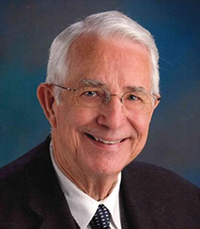 Robert “Bob” Duaine Burgin of Arlington, Baptist missionary, pastor and public school educator, died Aug. 19. He was 87. He was born March 3, 1935, to Joseph and Beulah Mae Burgin in Jewett, the youngest of seven children. After he graduated from Jewett High School, he continued his education at Sam Houston State Teachers College and Arlington State College. He later went on to earn a master’s degree from North Texas State University, and Dallas Baptist University awarded him an honorary doctorate. Burgin served in the U.S. Army from 1958 to 1962, including a 13-month assignment in South Korea. During that time, he and his wife Tillie fell in love with the Korean people and their country. After his time in the service, they returned to Arlington where he finished his student teaching and then took his first teaching job at Carter Junior High School. He later went on to teach at Arlington High School and Shackelford Junior High School before he served as assistant principal of Hutcheson and Gunn Junior High Schools, assistant principal and principal at Nichols Junior High, and principal of Arlington High School. When Bob and Tillie Burgin answered God’s call to missions, they served in Seoul, Korea, from 1966 to 1971 and 1976 to 1979. He served as a pastor through Mission Arlington since it began in 1986, most recently as the pastor of Parkview Fellowship Church. In January 1999, Burgin came out of retirement and returned to the classroom as a professor at Dallas Baptist University, where he spent the next 20 years. He is survived by his wife, Tillie; son Jim and his wife Debbie; son Rick and his wife Allison; five grandchildren; two great grandchildren; sister Imogene Freeman and brother Edgar Burgin. Visitation is scheduled from 6 p.m. to 8 p.m. on Aug. 24 at Wade Family Funeral Home in Arlington. His memorial service will be at 1 p.m. on Aug. 26 at Parkview Fellowship Church. In lieu of flowers, donations may be made to