Southwestern Seminary announces layoffs

FORT WORTH (BP)—Southwestern Baptist Theological Seminary confirmed Oct. 27 it has initiated layoffs a week after announcing steps to rectify a financial environment that could “quickly escalate to a crisis.”

“As part of the previously announced intention to implement organizational restructuring, including budget reductions, at the direction of the board of trustees, the interim administration has informed certain staff their employment has been ended,” a statement read. “These have been extremely difficult decisions as we seek to address our current challenges.”

When asked if information on the number of affected staff could be released, a seminary spokesman responded, “Not at this time.” Baptist Press was unable to confirm whether more layoffs are forthcoming.

“We recognize the disruption that this causes for these staff members and their families,” the statement continued. “There is certainly no joy in having to make these decisions at this time. Appropriate severance is being offered to affected employees.”

Interim President David S. Dockery presented the “organization restructuring” to trustees on the second day of their Oct. 17-18 gathering on Seminary Hill. It was the group’s first gathering since the resignation of former president Adam W. Greenway.

“The [Southwestern Seminary] community is praying not only for the Lord’s provision and favor but for genuine renewal to come to the Southwestern campus,” Dockery told trustees on Oct. 18.

What restructuring includes

The restructuring includes a reduction of the operational and personnel budget by at least 10 percent, representing approximately $3.6 million. Those cuts will come primarily from the area of institutional support, beginning with programming over personnel, Dockery said.

A years-long evaluation of the seminary’s 200-acre “campus footprint and its optimal use” has led to placing the B.H. Carroll Park Apartments on the market. Other parcels surrounding the main campus may follow suit, Dockery said.

Trustees spent Oct. 17 in closed session reviewing seminary financials and, said Chairman Danny Roberts, “had access to any and all information they requested.”

“As a result, we are requesting the auditors to do some additional work to carefully examine all expenditures, especially those which raised concerns,” he said in the group’s open session Oct. 18.

O.S. Hawkins, serving as senior advisor and ambassador-at-large since retiring as Guidestone president, commended trustees as “the most engaged group of men and women I have ever seen.”

Seeking clarity on new financial guardrails

On Oct. 24, Baptist Press sent a list of follow-up questions to Southwestern Seminary that requested clarity on the new financial guardrails and “multi-faceted matters” mentioned by Dockery that led to the current financial position as well as if details from the audits would be provided.

The seminary responded: “Southwestern Seminary trustees continue to work with the interim administration in executing the actions taken by the board during its meeting. As it is appropriate to share new developments, we will provide that information.

“We were delighted to host the largest recent fall Preview Day in some years on Oct. 21, welcoming more than 300 prospective students and their families, and culminating with more than 650 participants in our fall festival.

“Our Admissions team is aggressively recruiting students to study with our first-class faculty of scholar-ministers who not only teach their subjects with excellence, but help our students live their calling as Gospel ministers during their studies. Our campus community has been infused with multiple prayer gatherings as students, faculty, and staff humbly seek God’s blessings under the theme verse of Psalm 90:17.”


Send Network presenta nuevos valores, equipo de liderazgo, sitio web en español

ALPHARETTA, Ga. — En una reunión nacional de más de 275 miembros del personal de campo en la sede de la Junta de Misiones Norteamericanas (NAMB, por sus siglas en inglés) el jueves (6 de octubre), el presidente de Send Network, Vance Pitman, presentó una lista de nuevos líderes, un sitio web en español y los nuevos valores que guían la red de plantación de iglesias más grande de Norteamérica.

“Como familia de iglesias que plantan iglesias en todas partes para todas personas, queremos ser claros acerca de los valores que impulsan nuestras decisiones”, dijo Pitman. “Estos valores impactan todo lo que hacemos”.

  1. Buscar primero el reino : Dios está obrando a nivel local y global.
  2. Profundizar la devoción— Sin la oración y la Palabra, somos impotentes.
  3. Mantenernos unidos— Somos una familia unida por una misión.
  4. Pensar en la multiplicación– La misión global de Dios exige discípulos e iglesias que se multipliquen.
  5. Involucrar a tu ciudad— El Evangelio cambia vidas, familias y comunidades.

La implementación de los cambios se produce solo unos días después de que se anunciara que los fondos para Send Network, el brazo de plantación de iglesias de NAMB con unos 1,050 misioneros plantadores de iglesias respaldados actualmente, alcanzaron un máximo histórico este año de $ 68.9 millones ofrendados por los bautistas del sur a través de la Ofrenda de Resurrección Annie Armstrong.

Pitman también presentó un nuevo equipo de liderazgo ejecutivo: Félix Cabrera como vicepresidente de Send Network Español, Matt Carter como vicepresidente de movilización, Michael Crawford como vicepresidente de estrategias y desarrollo, Bryan Loritts como vicepresidente de regiones y Travis Ogle como vicepresidente ejecutivo.

Loritts y Crawford continúan en sus roles actuales como pastor docente en The Summit Church y director ejecutivo de la Convención Bautista de Maryland/Delaware, respectivamente, sirviendo de manera vocacional con Send Network, mientras que los demás serán personal de tiempo completo de la organización.

Pitman también presentó el primer equipo líder de plantadores de la red– practicantes experimentados que tienen un historial comprobado de plantación de iglesias. El equipo incluye 16 plantadores y representa cada región de los Estados Unidos y múltiples etnias.

Su experiencia colectiva de plantación y pastoral totaliza más de 260 años, dijo Pitman, con ministerios responsables de 882 plantaciones de iglesias en Norteamérica, e iglesias que han bautizado a más de 22.000 nuevos creyentes y tienen una asistencia actual de fin de semana de más de 45.000 personas.

Pitman describió que el equipo líder de plantadores tiene la responsabilidad de ser el rostro, la voz y el corazón de Send Network.

“Muchos plantadores y sus iglesias enviadoras se unen a Send Network por los recursos y el apoyo incomparables que ofrecemos”, dijo Pitman, “pero si el dinero y los sistemas desaparecieran mañana, seguiríamos siendo una familia de iglesias que plantan iglesias, dirigidas por este piadoso grupo de abanderados y tantos pastores y plantadores como ellos”.

Durante la reunión, Cabrera encargó a ocho campeones de la plantación de iglesias hispanas que están encargados de conectar y equipar iglesias a medida que ellas envían plantadores para comenzar nuevas iglesias de habla hispana y de mayoría hispana en Norteamérica. Estos campeones están ubicados en Estados Unidos y Puerto Rico, y energizarán la plantación de iglesias hispanas en sus regiones.

“La oportunidad de hacer nuevos discípulos y comenzar iglesias entre la comunidad hispana está creciendo rápidamente en Norteamérica”, dijo Cabrera, destacando las más de 1,360 iglesias bautistas del sur hispanas que ya se plantaron entre 2011 y 2021. “No estamos hablando solo de hispanoparlantes, hispanos de primera generación, sino también hispanos de segunda y tercera generación. Esta es una oportunidad increíble”.

Cabrera también dio a conocer un nuevo sitio web en español que sirve a los plantadores e iglesias hispanas con recursos e información contextualizada, en SendNetworkEspanol.com.

“Tenemos un grupo increíble de misioneros que se dedican a llevar el Evangelio a lugares de difícil acceso en Norteamérica”, dijo el presidente de NAMB, Kevin Ezell, al anunciar la financiación sin precedentes a la junta directiva de la organización a principios de esta semana en una reunión separada en Chicago. “Estoy agradecido por cada uno de ellos y los sacrificios que ellos y sus familias han hecho para seguir el llamado de Dios. Estos obsequios ya están marcando la diferencia”.

Por el personal de NAMB, publicado el 17 de octubre, 2022 en https://www.baptistpress.com/resource-library/espanol/send-network-presenta-nuevos-valores-equipo-de-liderazgo-sitio-web-en-espanol/


Obituary: Ed Rogers

Edward “Ed” Rogers of Georgetown, Texas Baptist pastor and denominational leader, died Oct. 23. He was 88. He was born Jan. 21, 1934, to Earl and Chrystelle Rogers. He earned a Bachelor of Arts degree from Howard Payne University in 1956. He and his wife of 67 years, Sylvia, married while he was a Howard Payne student. He went on to earn Master of Divinity and Doctor of Ministry degrees from Southwestern Baptist Theological Seminary. Baylor University granted him the status of Alumnus Honori Causa, and Howard Payne University awarded him an honorary Doctor of Divinity degree. His first full-time pastorate was in Manitou Springs, Colo. Rogers was pastor of First Baptist Church in Dumas 34 years. During his time in Dumas, he also preached on four continents. He served in a variety of leadership positions within the Baptist General Convention of Texas and preached in more than 60 churches around Texas. He served first as chairman and later as director of the BGCT Human Welfare Coordinating Board. William M. Pinson Jr., BGCT executive director emeritus, praised Rogers as “the personification of the servant leader” who “did not seek positions but was willing to serve when asked.” Rogers “loved people, and people loved him,” Pinson said. “Perhaps that was his greatest gift—to always be searching for ways to help people. … He was my friend and coworker and God’s gift to me.” Rogers is survived by his wife Sylvia; daughter Janna Hill and husband Mike; daughter Susan Morrison and husband Neil; son Richard Rogers and wife Sarah; six grandchildren; two great-grandchildren; and four siblings. A memorial service is scheduled at 11 a.m. on Oct. 28 at First Baptist Church in Georgetown, preceded by a period of visitation with his family beginning at 10 a.m. In lieu of flowers, memorial gifts may be directed to Children at Heart Ministries.


On the Move: Adams

Nathan Adams to First Baptist Church in Hereford as pastor, effective Nov. 1. He most recently was associate pastor of students and discipleship at First Baptist Church in Floydada.


Around the State: Carl Trueman speaks at DBU

President Adam Wright welcomes Carl Trueman to Dallas Baptist University. (DBU Photo)

Carl Trueman, professor of biblical and religious studies at Grove City College, was the featured speaker at the Dallas Baptist University Institute for Global Engagement lecture. In his chapel address to students, Trueman asserted Western moral culture is eroding steadily. A world without God provides no grander, metaphysical purpose or a common ethic for human life and relationships, he insisted. In a luncheon address to faculty and staff, he discussed ways technology has diminished society’s view of external authority. Trueman is a graduate of the Universities of Cambridge and Aberdeen and has taught on the faculties of the Universities of Nottingham and Aberdeen and at Westminster Theological Seminary. Most recently, he was the William E. Simon Visiting Fellow in Religion and Public Life in the James Madison Program at Princeton University. He is the author of The Rise and Triumph of the Modern Self: Cultural Amnesia, Expressive Individualism, and the Road to Sexual Revolution.

Eighty-five students attended the Congreso Experience—a one-day event featuring workshops, group activities and an evening of worship designed to encourage Hispanic students in their education and spiritual walk—Oct. 22 at the University of Mary Hardin-Baylor. Eric Hernandez from the Baptist General Convention of Texas was featured speaker, and Robert Vasquez led worship.

Recipients of the 2022 East Texas Baptist University Alumni Awards were (left to right) Justin Hayes, the Unsung Hero Award; Janice Hearn, the Alumni Achievement Award; Bob Metcalf; the J. Wesley Smith Achievement Award; and Jerry and Judy Cargill; the W.T. Tardy Service Award. Alumnus Irene Sisk was named the Golden Lightkeeper, and her daughter Suzanne Melhart accepted the award on her behalf. (ETBU Photo)

East Texas Baptist University alum Irene Sisk received the Golden Lightkeeper Award during ETBU homecoming. The university presents the award to alumni who graduated 50 years ago or more and who demonstrate continuing achievement in their vocation, church and community. Through her gift to the university, the Sisk Health Services Clinic at ETBU was established in her honor and in memory of her husband. In addition, she designated funds for an endowed scholarship at ETBU for students pursuing a career in medicine. Her daughter, Suzanne Melhart, accepted a commemorative award on her behalf. Also at homecoming, ETBU presented the 2022 Golden Blazers to Linda Cliett, Lorre Kauffman, Stacy Kauffman and Sergio Ramos in recognition of their financial support and volunteer service to ETBU. Since the program’s inception in 2010, a total of 99 members have been presented with ETBU’s traditional Golden Blazers. Bob Metcalf received the J. Wesley Smith Achievement Award, Jerry and Judy Cargill received the W.T. Tardy Service Award and Janice Hearn received the Alumni Achievement Award. Justin Hayes was granted the Unsung Hero Award, and Leah Chiles Grant received the Young Alumnus Award. ETBU seniors RJ Miller and Abby Jones were named 2022 ETBU Homecoming King and Queen.

Shayden Spradley, a junior at the University of Mary Hardin-Baylor, was named Miss Mary Hardin-Baylor. (UMHB Photo)

Shayden Spradley, a junior at the University of Mary Hardin-Baylor, was named Miss Mary Hardin-Baylor. At the Oct. 22 pageant, she also was named Miss Congeniality. She is the daughter of Bobby and Mindy Spradley of Belton. She is involved with the Student Government Association, Student Foundation and Hope for the Hungry.

C3—Christians Caring for Creation—honored Woodland Baptist Church in San Antonio as the Church of the Year for Faith-based Environmental Advocacy. “Woodland is the prototype for faith-based communities who want to grapple with environmental crises facing our world,” said C3 CEO Don Gordon. As part of an extensive educational project regarding ecology, Woodland conducted an energy audit and a campus-wide evaluation of its energy usage and environmental practices. The church currently is in the process of installing solar panels and electrical vehicle chargers on its campus and designing a rain-water collection system. Garrett Vickrey is pastor.


Evangelicals ask: Deconstruction or reconstruction?

OAK PARK, Ill. (RNS)—A conference about the future of the nation’s largest religious tradition began with a bit of honesty.

Joel Lawrence

“Nobody knows exactly what an evangelical is,” said Joel Lawrence, executive director of the Center for Pastor Theologians, at the opening of the Reconstructing Evangelicalism conference Oct. 24.

The conference, which drew about 400 pastors and other church leaders to Calvary Memorial Church in the Chicago suburbs, was inspired by a recent trend among evangelicals and other Protestants to “deconstruct” the faith they grew up with. Deconstruction refers to examining core beliefs and often rejecting the conservative politics, sexism and racial divides evangelicalism has come to be known for.

The question “What is an evangelical?” led to a spirited, thoughtful and sometimes pointed conversation during the conference’s opening panel about the movement’s flaws and how to mend them.

For much of the American public, the word evangelical is synonymous with MAGA-style politics, Doug Sweeney, dean of Beeson Divinity School in Birmingham, Ala., acknowledged.

“That would not be one of my favorite characteristics,” said Sweeney, who argued that “evangelical” should be tied more to theology than politics.

Kristen Du Mez

In a plenary address, historian Kristin Kobes Du Mez of Calvin University in Grand Rapids, Mich., defined evangelicalism as a political and consumer culture. She said she has long wondered if the more important thing to ask is, “Who is not an evangelical?”

“Who gets to decide that?” she asked.

Elizabeth Conde-Frazier, academic dean of Esperanza College in Philadelphia, said the theological gatekeeping among evangelicals is often “quite ruthless.” Evangelical Christians from Latin America or other parts of the church outside the United States, she said, are largely ignored by American evangelical pastors.

“Why don’t you know their names?” she asked the pastors at the conference. “Why don’t you quote them in your sermons?”

Conde-Frazier asserted any reconstruction of evangelicalism must include a more robust understanding of human sinfulness. While evangelicals often focus on personal sin, they tend to miss the way that power can be misused by sinful church leaders or movements.

“Sin turns into a monster when you have power,” she said.

Can the ‘evangelical’ label be rescued?

Malcolm Foley directs the Black church studies program at Baylor University’s Truett Theological Seminary in Waco. (Baylor University Photo)

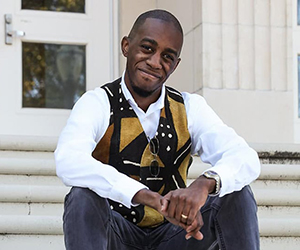
Malcolm Foley, who directs the Black church studies program at Baylor University’s Truett Theological Seminary in Waco, advocated for an activist form of evangelicalism, one that combines evangelism with social action.

“That is the only evangelicalism that I think is worthy of talking about,” he said.

At the same time, Foley was skeptical that the word “evangelical” could be saved or reconstructed.

“The work and energy that we would be investing in reclaiming that term could also be used in loving our neighbors,” he said. “Instead of needing to reclaim the term, just be gospel people. Be people who are going to invest in deep spiritual, economic and physical solidarity as the church.

“They can call you whatever they want. If you are living a life that is bearing witness to the kingdom of God, I don’t care what you call me.”

Sweeney countered that he was not willing to give up on evangelicalism yet. A self-described “evangelical Lutheran” and a member of a group called Lutheran Congregations in Mission for Christ, Sweeney summoned a picture of the cross-denominational movement that evangelicalism aspires to be and that he said he hoped to remain part of.

Still, if evangelicalism is to be reconstructed, various panelists said, it has to be done with humility. Some evangelicals, several panelists said, see their movement as the last hope for Christianity in the world—an idea the panelists rejected.

Impact of consumer culture

In an interview before her address, Du Mez said many of the pastors at the conference want to be faithful to their beliefs and lead their congregations well—but outside cultural forces make that difficult.

“It is a hard time to be a pastor,” said Du Mez, author of Jesus and John Wayne: How White Evangelicals Corrupted a Faith and Fractured a Nation.

Du Mez’s view of evangelicalism as a consumer culture is based on observation of churches that grow by giving people what they want, which of late has included hot-button conservative politics and culture-war rhetoric. Leaders who try to address racism, sexism or other social justice issues get pushback from inside the church and from social media.

She pointed to evangelicals like Beth Moore, a popular Bible teacher who became unwelcome in the Southern Baptist Convention, the nation’s largest evangelical group, for calling out sexism and abuse in the nation’s largest Protestant denomination.

“If you step out of line, you will be punished,” Du Mez said.

Many pastors are good-hearted and have a clear grasp of theology, she said. But they often lack an understanding of the broader cultural factors affecting the country and their churches.

“One of my favorite virtues is the virtue of wisdom or prudence—understanding of how the world works,” she said. “So that when you are pursuing your goals, you are doing so in a way that will bear the fruit. Because if you don’t understand properly how the world works, yeah, then good luck trying to live faithfully trying to bring positive change.”

Lawrence said the conference is meant to spark respectful conversations about Christianity, its challenges and the possibility for change.

“It’s not good for any of us if we are not having these conversations,” he said.


Zimbabwe Baptist leaders killed in auto crash

An Oct. 21 automobile accident claimed the lives of the longtime former president of Zimbabwe Theological Seminary, his son and the seminary’s current president.

Lott Carey—an African American Baptist missions society—reported the deaths of Henry Mugabe, noted theologian and former seminary president; his son Munyaradzi Johannes Mugabe; and Dudzirai Chimeri, seminary president.

The three reportedly were traveling from Harare to Gweru when the crash occurred.

Henry Mugabe

Lott Carey President Gina Stewart praised Mugabe as “a gentle giant” and as “a man of tremendous intellect, … an outstanding theologian and a true ambassador of the gospel of Jesus Christ.”

Emmett Dunn, executive secretary-treasurer of Lott Carey, called Mugabe “an innovative leader who combined the practical and spiritual in crafting the church’s response to the ills of society.”

Mugabe was “a provocative theologian who believed that the word of God must be interpreted using the lenses of marginalized Africans, and a firm believer in the fight for justice in defending the rights of the indigenous church against foreign intervention,” Dunn continued. “He enters heaven bearing the scars as evidence of his fight for justice.”

Elijah Brown, general secretary and CEO of the Baptist World Alliance, expressed appreciation for the life and ministry of Mugabe, who led the seminary for an extended time during a difficult period.

“Dr. Mugabe was an instrumental leader for theological education for many years, and his faithful service will undoubtedly bear fruit for generations to come through the lives of those he taught,” Brown said. “The entire global Baptist family grieves his death and the death of his son Munyaradzi and Dr. Dudzirai Chimeri.”

In 2011, Mugabe was principal of the Baptist Theological Seminary of Zimbabwe, which was supported by the Southern Baptist Convention’s International Mission Board. He was fired for refusing to accept changes made to the school’s governing documents—particularly a requirement that academic staff adhere to the 2000 Baptist Faith & Message and its prohibition of women pastors.

When Mugabe refused to meet with a new council the Baptist Convention of Zimbabwe formed to replace the school’s board of trustees, he was locked out of his office and given seven days to move out of his home, owned by the Baptist Mission of Zimbabwe.

Two years later, a labor court ruled he had been improperly dismissed and ordered he be reinstated with back pay. However, he left the school to form the Zimbabwe Theological Seminary, with support from Lott Carey and the Alliance of Baptists.

Mugabe held a Master of Divinity degree and a Ph.D. from Southern Baptist Theological Seminary. In addition to his teaching and administrative duties in Zimbabwe, he also taught at the Baptist Theological Seminary at Richmond, Campbell University’s Divinity School, McAfee School of Theology at Mercer University and Wake Forest University Divinity School.


Unify Project weeks from launch, Litton says

MOBILE, Ala. (BP)—The Unify Project, a national collaborative with noted pastor Tony Evans to engage Southern Baptist pastors in racial reconciliation, is weeks from launching, former Southern Baptist Convention President Ed Litton announced Oct. 20.

“It is no secret that America bears serious racial scars from our past and recent present, and many of these wounds remain unhealed today,” said Litton, senior pastor of Redemption Church in Saraland, Ala.. “The Unify Project is committed to the belief that the local church is the very best solution to address America’s racial problem.

“And it’s our goal to help pastors and churches bring hope to their communities through the healing power of the gospel.”

He invited pastors to pray for and join the work, and to sign up for updates via email at TheUnifyProject.org.

Pastor Tony Evans preached at the National African American Fellowship’s June 12, 2022, worship service at Friendship Baptist Church in Yorba Linda, Calif. (BP Photo by Sonya Singh)

Evans, senior pastor of Oak Cliff Bible Fellowship in Dallas and a noted author, theologian and radio host, will help lead the Unify Project in concert with The Urban Alternative ministry he also leads.

Fred Luter, senior pastor of Franklin Avenue Baptist Church in New Orleans and the lone African American to have served as SBC president, joins Litton and Evans in leading the work.

The three announced plans for the initiative at the 2022 SBC annual meeting. The work flows from The Pledge Group, which Litton helped launch with an ecumenical Christian group of pastors and leaders in the Mobile area after the murder of George Floyd.

The group has seen progress in confessing hidden racism and building gospel-unified cross-cultural relationships, Litton said in a video shared in the annual meeting.

As described in June, the program will include an annual one-day solemn assembly when congregations will fast and collectively re-invite God into the well-being of their community, without compromising any elements of the faith; pastors and leaders addressing with one voice, in love and with biblical clarity, proclaiming God’s perspective on issues facing their communities including identity, race, marriage and life; and collectively performing acts of kindness throughout their communities.

“The political, the social, the racial, the class distress that we are facing, that has helped to be caused by the church, can only be properly dissolved by the church,” Evans said. “If God can’t get the church right, the culture can never become right.”

Fred Luter 175
Fred Luter

Luter has described Unify as an opportunity for the SBC to lead in unity at a particularly divisive time in the nation.

“This is one that every one of us who are real true believers in Jesus Christ can come together and support. It would be great that the Southern Baptist Convention would be known for a convention that comes together to unify people, and not to divide people,” Luter has said. “That’s what I hope would happen. Because this racial issue is something that’s happening across the country.”

An ethnically diverse cross-section of Southern Baptist leaders compose a steering committee.

The vision for the work flows from The Pledge Group, which Litton helped launch with an ecumenical Christian group of pastors and leaders in Mobile, Ala., after the murder of George Floyd.


Pastor reflects on Texas Death Row ministry

The first time Pastor Dana Moore set foot behind the walls of a prison was to visit a Texas Death Row inmate.

“I had visited a few church members—unfortunately—in county jail a handful of times, but I had never been to a prison before,” said Moore, pastor of Second Baptist Church in Corpus Christi.

When John Henry Ramirez was executed Oct. 5, his pastor, Dana Moore, stood beside him in the death chamber, praying and laying one hand upon him. (Photo / Ken Camp)

Once a month for the next five years, he traveled to the Allan B. Polunsky Unit to visit John Henry Ramirez, who was sentenced for the 2004 stabbing death of convenience store clerk Pablo Castro.

When Ramirez received a lethal injection Oct. 5, Moore stood beside him inside the death chamber in Huntsville, praying and reaching out to touch him—a right Ramirez secured from a U.S. Supreme Court ruling.

Moore began making regular visits to see Ramirez when a couple in his church who had been visiting him no longer were able to make the 300-mile trip to Livingston.

“My opportunity to meet John was a God-given opportunity for ministry, and when God gives the invitation, you have to respond to it,” Moore said. “It’s not a ministry I sought out. … I had to take advantage of the opportunity to serve.”

As a state-designated spiritual adviser, Moore will continue to make monthly treks from Corpus Christi to Livingston to visit six men on Texas Death Row.

Far-from-ordinary lives

When Moore first began visiting Death Row inmates, he was struck not by how different they are but by how similar they are to anyone else.

“We have a tendency to demonize them, but they seem just like anybody else you would meet. I was surprised by how ordinary they are,” he said.

However, he learned, their lives are far from ordinary.

“They are locked down 22 hours a day. They have no physical contact from another human being, other than when an officer puts handcuffs on them to move them, and they spend all their time in a very small cell,” Moore said.

“They can’t touch grass. Everything around them is concrete. They are totally isolated. That has to work on their minds.”

Pastor Dana Moore of Second Baptist Church in Corpus Christi (Baptist Press).

Moore also noted he was surprised how gracious and understanding the inmates on Death Row can be, particularly toward someone they know cares about them.

He recalled one time when he was on the way to a monthly visit at the Polunsky Unit when he received a phone call, informing him the daughter of a couple in his church had taken her own life.

“I thought for just a second, and then made a U-turn and headed back home to be with them,” Moore recalled. “When the two men I was supposed to visit that day found out why I didn’t make it, they were totally understanding. In fact, they said they would have been disappointed in me if I hadn’t done what I did.”

‘They carry a lot of anxiety’

Ministry to an inmate awaiting execution is significantly different than ministry to someone who is dying of natural causes, he noted.

“There are other people involved [in an execution] to make sure it takes place. It’s not a gradual process of getting progressively sicker. The inmate knows, ‘I am perfectly healthy until I am injected with drugs that will put me to sleep and then kill me.’ They carry a lot of anxiety about that,” he said.

Moore’s convictions about the death penalty did not change in the last five years of ministry on Death Row.

“I already had changed my views on capital punishment years ago. The goals that it is supposed to achieve can be done in other ways. … The Old Testament was a very different time period than today,” he said.

Moore knows not everyone in his congregation shares his opposition to capital punishment, but the church has been overwhelmingly supportive of him and his Death Row ministry, he said.

“One of the men from our church who visits the prisons is pro-death penalty, and the experience didn’t change his mind. It [opposition to the death penalty] is not a prerequisite for this kind of ministry,” he said.

Regardless of their views about capital punishment, Moore hopes Texas Baptists will pray for the men on Texas Death Row, for the field ministers who provide them ongoing spiritual direction and for God to continue to work in the lives of everyone involved.

“There is a revival going on at the Polunsky Unit. Pray that it will keep going,” he said. “Pray for those who know Christ already, and pray for the lost, that they will come to know him.”

He will pray for those who are awaiting execution.

“That’s hanging over them all the time,” he said.


TBM workers train in Israel; partnership enters next phase

Ten Texas Baptist Men volunteers took their expertise in mass feeding to Israel recently to learn how to provide those services in a culturally appropriate manner in Israel.

Two results emerged—more kosher-trained volunteers and a readiness to move to a second phase in the Israeli-TBM partnership.

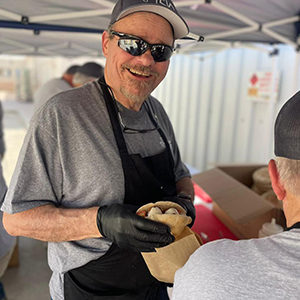
Texas Baptist Men volunteer Ken Van Huss enjoys the challenge of learning to cook and prepare food in a culturally appropriate way in Israel. (TBM Photo)

After the latest TBM trip to Israel, more than 100 TBM volunteers are trained now for emergency food distribution in the country, said John-Travis Smith, TBM associate executive director and liaison with Israeli leadership. Several hundred trained volunteers are needed.

The effort is part of a TBM partnership with Emergency Volunteers Program in Israel to provide meals after crises such as natural disasters and terrorist attacks.

Israeli leaders reported the training experience has been “fabulous,” Smith said. They affirm how TBM has been willing to adapt to the particular kosher requirements in Israel.

“I think it went wonderfully,” said Gary Finley, team leader. “We went over there to learn from them how to prepare meals based on their culture and traditions, and I think we showed them that we’re able to do this.”

The team “did whatever needed to be done, and I believe our Israeli hosts were impressed by the professionalism TBM brought to the table,” Finley said. “We showed we could prepare meals efficiently and in the way they need them to be prepared. We were willing to work.”

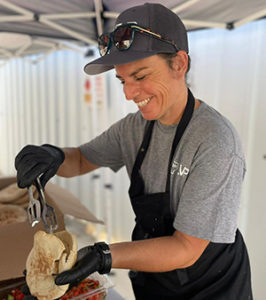
TBM volunteer Jackie Grey appreciated the learning opportunity as she was trained to prepare and serve kosher food in Israel. (TBM Photo)

Team member Jackie Grey said: “Everything was amazing—fabulous people. I learned loads.”

Now, both Israel and TBM are ready to expand the effort, which is preparing for “any kind of emergency,” Smith said. “Israel is overdue for a 100-year earthquake.” And terrorist attacks and forest fires pose threats, as well.

TBM began the relationship about four years ago with a desire to serve, Smith said.

“We are prepared to provide food to anyone,” he said, and TBM has done just that in its initial deployments to Israel.

In 2019, TBM volunteers served meals at a hospital and along the Gaza Strip border fence.

“We fed Israelis and Muslim Bedouins, anyone we encountered who needed food,” Smith said. Earlier this year, TBM volunteers helped feed Ukrainian refugees in Israel.

For the training, “every day we would practice cooking and feeding at different surprise locations to stretch our ability to be mobile,” Joe Crutchfield said. “We cooked different kinds of food than we normally do.”

The menu included falafel and humus, traditional Middle Eastern foods, and a kosher hamburger, which has no cheese but includes a “secret sauce,” pickles, tomatoes and sauerkraut-like layer.

“Everything is prepared fresh. Nothing is frozen,” he said. “We had to slice pickles and pita bread. And they trained us on how to put these meals together in a traditional kosher manner.”

The dynamism of the volunteers surprised their Israeli hosts, Crutchfield said.

“They were amazed. They were not expecting 65- and 70-year-old people to work like we do,” he said. “We’re blowing them away. It is a shocker to them that we came to serve them and that we work so hard to serve them. It has an impact on them as to why we are serving.”

TBM volunteers serve as a means of sharing the love of Christ with anyone in need. There are restrictions on evangelistic efforts in Israel, but the volunteers are free to answer questions.

A TBM operations center near Jerusalem serves as the center of TBM activities in Israel. It is outfitted with sleeping facilities, a training center, a warehouse, and a mobile kitchen in which food is prepared.

Phase Two of the partnership means growth of the operations center and the need for more trained volunteers, Smith said. Three more mobile kitchens are now being built in Israel, and plans call for a total of eight. Sleeping facilities are being expanded, and the warehouse is being equipped.

“We will double the capacity that we can have there now,” he said.

The volunteers will come from TBM’s cadre of workers already trained for work at home and from new recruits from churches that have not yet served with TBM for the Israeli effort.

“We need more people to volunteer for training,” Smith said.

In a serious emergency, TBM could need 300 to 400 people per month, with volunteers rotating in and out for one or two-week stays, Crutchfield said. And, as with disasters at home, not all trained volunteers are ever available at the exact moment of need in a disaster. As a result, a larger pool of kosher-trained volunteers is needed.

An actual callout for the Israeli teams may not actually be to Israel itself, Smith said. EVP responds to emergencies in other parts of the world, and the organization could need kosher-trained volunteers for such a callout in another country.

“TBM volunteers bring to any disaster or emergency a distinct sense of calling,” Smith said. “Our love for God and others moves us to serve our neighbors in every way possible, and Scripture makes clear that our neighbors are any people in need. This is woven through the very fabric of TBM service.”

Finley called the project a “great opportunity to provide help, hope and healing in a land and with a people that are so special to our faith.”


Long-tenured pastors in San Antonio area recognized

San Antonio Baptist Association recently recognized 19 pastors who have served 25 or more years at the church where they minister now, including six who have served 30 years or more.

At its 164th annual meeting, the association honored the long-tenured pastors whose combined years of service in their current churches total 547 years.

“This kind of service gives us stability to build upon,” said Darrell Horn, executive director of San Antonio Baptist Association. “Without them, we wouldn’t have gotten this far.”

Each pastor’s wife received a white rose corsage symbolizing loyalty, Horn noted. In proper San Antonio fashion, a mariachi band played at the associational celebration.

The association honored two pastors who have served more than 40 years at a single church—44 years for Dennis Wall at The Hills Church and 42 years for Jack Stevens at Riverside Baptist Church.

“I can attribute my longevity here to the grace of the Lord and the patience of the church,” Stevens said.

Four additional pastors have served 30 years or more at the church where they currently minister—Jerry W. Dailey, 37 years at Macedonia Missionary Baptist Church; Brent Bryant Sr., 34 years at Redeeming Grace Christian Church; Robert Campos, 31 years at My Redeemer Lives Church; and Alfonso Flores, 30 years at Primera Iglesia Bautista Mexicana.

Ten other pastors have served more than 25 years at their current church—Douglas Diehl, 29 years at Crossroads Baptist Church; Jesse Grice, 29 years at True Vine Baptist Church; Carlos Navarro, 29 years at Iglesia Bautista West Brownsville; Ray Still, 29 years at Oakwood Baptist Church; Steve Branson, 28 years at Village Parkway Baptist Church; Jeff Harris, 28 years at Grace Point Church; H. Statt Riddlebarger, 28 years at Pearsall Road Baptist Church; Robert Welch, 28 years at Parkhills Baptist Church; Fermin Flores, 26 years at Capilla Bautista El Buen Pastor; and David Lindow Jr., 26 years at First Baptist Church, Universal City.

Another three pastors have served 25 years at the church where they minister now—Jerry Cosper at Southeast Baptist Church, Gary C. Patterson at Berean Baptist Bible Fellowship and Adam U. Perez at Iglesia Bautista El Jordan.


Pastors seek to shape how members respond to Halloween

NASHVILLE, Tenn.—As millions of Americans celebrate Halloween, many Protestant pastors in the United States are encouraging their church members to respond to the holiday in specific ways.

Volunteers photograph costumed children at a fall festival at First Baptist Church in Cedar Hill. (File Photo)

More than 7 in 10 (71 percent) pastors say they encourage church members to invite friends or neighbors to church events on or near Halloween, such as a fall festival or trunk-or-treat, according to a Lifeway Research study.

Nearly 3 in 5 (58 percent) pastors say they want church members to build relationships with neighbors who trick-or-treat. And 1 in 3 (34 percent) pastors encourage church members to hand out gospel tracts to trick-or-treaters.

More than 3 in 4 (78 percent) Americans plan to celebrate Halloween this year, according to a Numerator survey. But not all pastors want their church members to take part.

Lifeway Research found about 1 in 8 (13 percent) say they encourage people in their congregations to avoid Halloween completely. Others don’t try to push their congregations in any direction regarding the holiday, with 8 percent of pastors saying they don’t encourage their church members to do any of these things.

“Few pastors simply ignore the fact that so many Americans participate in Halloween celebrations,” said Scott McConnell, executive director of Lifeway Research. “Most pastors focus on the social nature of these celebrations, encouraging their congregations to engage with others outside their church.”

Growing encouragement to engage

Compared to 2016, pastors are more likely to seek to influence their church members’ engagement in Halloween festivities this year. And the largest increase is in handing out gospel tracts. Whereas 26 percent of pastors encouraged their church members to hand out gospel tracts to trick-or-treaters in 2016, this year, 1 in 3 (34 percent) pastors are doing the same.

But pastors are also more likely to encourage their congregations to engage in the holiday in other ways. In 2016, 67 percent of pastors encouraged their church members to invite friends or neighbors to church events. This year, 71 percent of pastors are encouraging the same.

Pastors also are more likely to encourage church members to build relationships with neighbors who trick-or-treat this year (58 percent) than in 2016 (52 percent). As churches continue to recover from the impact of COVID, many may be trying to reconnect with their members and communities and see Halloween as an ideal opportunity for this engagement.

While some pastors are more likely to encourage their churches to engage in Halloween this year, a minority are more likely to encourage church members to avoid the holiday completely. While 8 percent of pastors encouraged their church members to avoid Halloween in 2016, 13 percent are doing the same this year.

Pastors more outspoken

No matter their take on Halloween, pastors are holding to their stances more firmly and are more likely to vocalize those ideas for their congregations.

“Whether it comes from a desire to reconnect with their community after the pandemic prevented much of this or from deepened convictions about the holiday itself, pastors appear more resolute in their convictions around Halloween,” McConnell said.

Fewer pastors are refraining from influencing their church members’ engagement with Halloween at all. Whereas 12 percent of pastors said they were not encouraging their church members in any of these ways in 2016, 8 percent of pastors say the same today.

This year, even more pastors view Halloween as an opportunity to engage neighbors in at least some capacity.

Younger pastors are more likely to encourage their congregations to engage in Halloween by inviting friends and neighbors to church events or by building relationships with neighbors who trick-or-treat. Pastors ages 18-44 and 45-54 are among the most likely to encourage members to build relationships with neighbors (66 percent and 63 percent, respectively) and to invite neighbors to church events (78 percent and 79 percent, respectively).

Older pastors are more likely to encourage their churches to hand out gospel tracts to trick-or-treaters. Those 55-64 (38 percent) and older than 65 (37 percent) are among the most likely to encourage church members to give out tracts.

“The majority of even the smallest churches offer church events this time of year and encourage their members to invite people from the community,” McConnell said. “In a society that is increasingly distant and divided, most pastors see opportunities within the interactions that take place around Halloween.”

Regional and demographic differences

Other factors also indicate a pastor’s likelihood of encouraging engagement with the holiday. White pastors are among the most likely to encourage their congregations to build relationships with neighbors (61 percent) and invite neighbors to church events (73 percent).

Pastors in the South are also among the most likely to encourage church members to hand out gospel tracts (38 percent) and to invite neighbors to church events (75 percent).

Evangelical pastors (42 percent) are more likely than mainline pastors (28 percent) to encourage members to hand out gospel tracts. And Baptists are the most likely to encourage the same (58 percent).

Pastors older than 65 are among the most likely to encourage their churches to avoid Halloween completely (20 percent) and are the most likely not to encourage their churches to respond to the holiday in any of these ways (14 percent).

African American pastors are also among the most likely to encourage their church members to avoid the holiday (32 percent) or not encourage their congregations in any direction regarding the holiday (19 percent).

In terms of church size, pastors of churches with fewer than 50 in attendance are among the most likely to encourage their congregations to avoid Halloween completely (16 percent).

The phone survey of Protestant pastors was conducted by Lifeway Research Sept. 6-29, 2022. Analysts weighted responses by region and church size to reflect the population more accurately. The completed sample is 1,000 surveys, providing 95 percent confidence the sampling error does not exceed plus or minus 3.2 percent. Margins of error are higher in sub-groups.