Harvey Gene Rotramel, a Texas Baptist pastor more than three decades, died Nov. 25 in El Paso. He was 83. He was born Oct. 9, 1939, in Centralia, Ill., to Joseph Roscoe Rotramel and Eleanor LaRue Gilbert Rotramel. He met and married his wife of 64 years, Dorothy Lillian Henry Rotramel, when they were students at Howard Payne University. His first pastorate was at Cottonwood Baptist Church near Cross Plains. While he was pastor of Seventh Street Baptist Church in Ballinger, he attended Southwestern Baptist Theological Seminary in Fort Worth. He was pastor of Belmont Baptist Church in Odessa from 1975 to 1986 and First Baptist Church in Edinburg from 1986 until his retirement in 1999. The Rotramels moved to Huntsville, and in retirement, he served at Hawthorne Baptist Church in New Waverly. In his final years, he was a member of First Baptist Church in El Paso, where his son Mark is senior pastor. Throughout his ministry as a pastor, many young men responded to God’s call to the gospel ministry. He was preceded in death by his wife Dorothy in 2018. He is survived by son Harvey Gene Rotramel Jr. and wife Susan; son Mark Rotramel and wife Teresa; seven grandchildren; and 12 great-grandchildren. A memorial service is scheduled at 1 p.m. Mountain Standard Time on Dec. 16 at First Baptist Church in El Paso.
Documentary tells faith journey of Man in Black
December 5, 2022
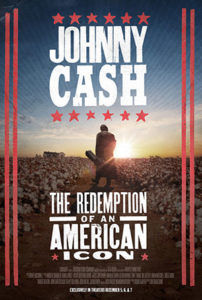
NASHVILLE (BP)—“Johnny Cash: The Redemption of an American Icon,” is a new documentary telling the story of how the legendary musician known as “The Man in Black” found the light of Jesus Christ.
The film releases as a special Fathom Event showing in theaters Dec. 5-7. It is directed by Ben Smallbone, brother of award-winning musical duo For King & Country and contemporary Christian music artist Rebecca St. James.
The project uses a combination of archive footage and recordings of Cash, along with interviews with his friends, family members, fellow country musicians and evangelical leaders.
Those featured in the movie include Tim McGraw, Sheryl Crow, Marty Stuart, Franklin Graham, Greg Laurie, Cash’s sister Joanne Cash and Cash’s son John Carter Cash.
John Carter Cash told Baptist Press that even though it was often overlooked, his father’s Christian faith was always a priority for him.
“His faith was essential to him all throughout his life,” Cash said in an interview.
“The defining factor of his life was his faith. His faith and connection to God was there no matter what he struggled with or endured. His faith survived out of grace. He was not perfect, but his ability to continue on is what really stands out.”
The movie tells the story of Cash’s early faith roots growing up in Arkansas, and singing gospel songs while helping work in the family fields. The younger Cash even described gospel music as the music his dad enjoyed the most.
Yet, as Cash began his music career as a young adult, he began to shift to the country music style he became known for. Despite achieving immense music success over several years, Cash dealt with a host of struggles, including a crippling drug addiction and a troubled first marriage to his wife Vivian, whom he divorced in 1966.
These were in addition to Cash’s difficult relationship with his father and the accidental death of his teenage brother Jack, who had desired to become a preacher.
Saw the Light
Johnny Cash (File Photo)
All of these struggles drove Cash to a place of desperation and hopelessness. Things reached a breaking point when his addiction was at its worst in the late 1960s.
The movie tells the story of Cash walking through a dark cave in Tennessee with a flashlight, considering ending his life. At one point Cash walked as deep as he could into the cave, and dropped his flashlight and went to the ground.
Though he was in complete darkness, the story goes that the light from outside of the cave slowly started to peek through, showing him the way out.
The story represents Cash coming back to the light of Christ and the foundation of his Christian faith.
Soon, he began finding ways to bring his faith more prominently into the national spotlight. He filmed a documentary with his second wife June Carter Cash in Israel (“Gospel Road: A Story of Jesus”). He wrote a novel about the apostle Paul (“Man in White”). And he appeared at 30 crusades held by world-renowned evangelist Billy Graham.
Graham and Cash were good friends, said John Carter Cash, who described their relationship as being “like brothers.”
Find connection with God
In addition to Cash’s public displays of faith, the younger Cash was able to see the personal side of his dad’s faith in a tangible way.
“I think one of the greatest spiritual disciplines he had was studying the Scriptures to better understand what the ways of the Spirit were,” John Carter Cash told BP. “My dad was forever a life student. He was always reading, studying and trying to understand more about life and faith.”
Toward the end of his life, Johnny and June Cash attended First Baptist of Hendersonville, Tenn.
John Carter said many people helped his dad break his drug addiction and prioritize God, but he believes he would have found his way back to God no matter the circumstance.
“His faith was his salvation and why he was alive,” the younger Cash said.
“That’s how he made it. My dad was always grateful to be here. He always took in God’s grace because by his own means, he probably wouldn’t have been here. He stayed true to what he believed in. His faith was the central focus, no matter what he went through in life.”
John Carter Cash hopes the movie will paint a picture of his father’s vulnerability in a way that audiences resonate with.
“My father had a way of showing his humanity and showing his weaknesses,” he said. “He was there to support people who were also going through struggles like he went through. My dad was not afraid to say, ‘I have fallen and gotten back up. Please help me and I will help you.’ That’s the person that he was.
“There are things within this movie that I believe will lend the viewer a better understanding of my father as a human. I hope they learn what was really important to him and who he was on the inside, particularly about the beauty of his character and strength of his love.”
In a world full of technology and division, his father’s message would be to focus on what’s really important, John Carter said.
“If he were alive today my dad would say, ‘Don’t forget what really matters,’” he said. ‘“Family, connection and togetherness matter. Don’t forget what is true. Don’t let all of the information that is out there confuse what matters in the end.’
“I hope through this film, people who are struggling or feeling like they’re not connected with God can find that connection just as my father did.”
Action urged to prevent deportation of Chinese Christians
December 5, 2022
Sixty-four Christians currently in Thailand face deportation to China—which they fled to escape persecution—unless U.S. officials allow them to resettle in East Texas with the help of area churches.
The 21Wilberforce human rights organization is urging Texas Baptists and others to persuade Congress to intervene on behalf of the Chinese Christians.
Members of the Shenzhen Holy Reformed Church—nicknamed the “Mayflower Church” for their commitment to seeking religious freedom—left China in 2019 after repeated threats and interrogation by Chinese police.
Initially, Pastor Pan Yongguang and members of the church relocated to South Korea’s Jeju Island on tourist visas but were denied asylum.
“From 2017 to 2021, a total of 5,225 Chinese nationals sought asylum in Korea. Only three were recognized as refugees,” a commission report stated.
Members of the Mayflower Church later moved to Bangkok, Thailand, where they filed for United Nations refugee status Sept. 5.
Recently, the Thai government refused to renew the church members’ tourist visas. They now face a forced return to China, where they fear severe persecution and possible imprisonment.
In the past three years, members of the church have been stalked, harassed and threatened by Chinese operatives, and family remaining in China have been interrogated and intimidated, the Associated Press reported.
Religious persecution in China today is worse than it has been in decades, former Chinese dissident and longtime international human rights advocate Bob Fu of ChinaAid told told Randel Everett of 21Wilberforce during an event at Dallas Baptist University. (DBU Photo)
Midland-based ChinaAid has been instrumental in advocating on behalf of the Mayflower Church and working with Freedom Seekers International to enlist sponsors for the church members’ resettlement.
A group of churches in Tyler have committed financially and materially to sponsor the asylum seekers’ resettlement in the United States, but resettlement requires governmental permission.
21Wilberforce is spearheading an effort to mobilize Texas Christians to contact Rep. Kay Granger, R-Fort Worth and ranking member of the House Appropriations Committee, and Rep. Michael McCaul, D-Houston and senior member of the House Foreign Affairs Committee.
An online letter urges Granger and McCall to advocate for members of the Mayflower Church to be allowed to resettle in the United States. It encourages them to call on President Joe Biden and Secretary of State Antony Blinken to work toward resettlement of the Mayflower Church members, including possibly granting them humanitarian parole.
“The consistent documented harassment, the threat of repatriation back to China, and the sponsorship of local communities point to Texas resettlement as the best option to offer refuge for the church members,” the letter states.
Those who have signed the letter include Elijah Brown, general secretary of the Baptist World Alliance; Katie Frugé, director of the Texas Baptist Christian Life Commission; Mark Heavener, director of intercultural ministries for Texas Baptists; and Stephen Reeves, executive director of Fellowship Southwest.
For more information and to sign the online letter, click here.
Charitable giving up but gifts to larger churches dropped
December 5, 2022
WASHINGTON (RNS)—An annual report on giving to evangelical Christian nonprofits, including churches and other ministries, found that giving to the United States’ largest churches fell by more than 6.6 percent in 2021, despite a rise of 4 percent last year in charitable giving nationwide.
New donors and large donations were especially hard to come by, according to the report.
The findings appeared in the 2022 State of Giving report, released by the Evangelical Council for Financial Accountability, an accreditation organization that sets standards for ministries’ financial management and reporting.
The report’s authors examined cash-giving patterns to more than 1,800 ECFA members, drawn from financial statements from those nonprofits. All told, ECFA members received more than $19 billion in cash donations in 2021. They also received $11.3 billion in revenue from fees and investments and $4.7 billion worth of in-kind donations.
Many Christian groups other than churches saw increases in keeping with the overall rise in philanthropic giving, and some did far better. Donations to Christian foundations (65.8 percent), anti-human trafficking groups (28.9 percent), K-12 schools (18.3 percent), church planting (12.2 percent) and pregnancy resource centers (14.5 percent) saw some of the largest increases.
Giving to Christian charities overall was up 3 percent, adjusted for inflation, according to the report. That tops overall charitable giving in the United States, which dropped by just under 1 percent, according to Giving USA data cited by ECFA.
The report also finds that giving went up by 1.8 percent from 2016 to 2021.
Those numbers made the decline in giving to churches (-6.6 percent) and youth ministry (-2.9 percent) all the more stark. Churches with budgets under $2 million saw giving go down by 8 percent, while those with budgets of more than $20 million saw giving go down by 2.5 percent.
Many charities and churches alike struggled to find staff and volunteers.
The churches in the ECFA are larger than the average church in the United States. According to the 2020 Faith Communities Today study, which looks at congregations from a wide range of faith groups, the median congregation has a budget of $120,000, down 20 percent from 2010.
Most congregations in the United States have budgets of less than $100,000, but because larger churches draw so many, about half of Americans (51 percent) attend a church where the budget is $1 million or more.
The ECFA study found that 45 percent of nonprofits had trouble finding enough volunteers, 53 percent had problems finding enough staff, 29 percent struggled to keep existing donors, and 63 percent had issues finding major donors who gave $10,000 a year or more.
More than a third (37 percent) tapped their reserves in 2021, while 43 percent left reserves untouched. Just under 1 in 5 (17 percent) were able to grow their reserves.
National Christmas Tree turns 100 this year
December 5, 2022
WASHINGTON (RNS)—A church choir sang. Marine Band members played. And the president of the United States pressed a button to light the first National Christmas Tree under the gaze of thousands of onlookers on Christmas Eve 1923.
For 100 years, the tree has represented a symbol of civil religion as Americans mark the Christmas season.
On Nov. 30, President Joe Biden did the honors just as President Calvin Coolidge did at that first lighting, and contemporary gospel singer Yolanda Adams sang for the crowds gathered on the Ellipse in the shadow of the White House.
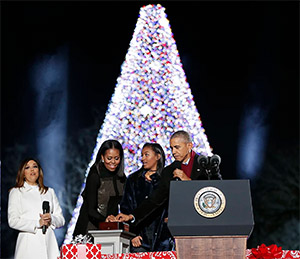
President Barack Obama, first lady Michelle Obama and their daughter Sasha light the 2016 National Christmas Tree during the National Christmas Tree lighting ceremony at the Ellipse near the White House in Washington, Dec. 1, 2016. Also on stage is the host Eva Longoria. (AP Photo via RNS/Pablo Martinez Monsivais)
Though the tree was not lit from 1942 to 1944—due to the Second World War—it is the second-oldest White House tradition, after the Easter Egg Roll, which began in 1878.
“A hundred years is a fairly significant milestone to reach for consistently practicing a tradition,” said Matthew Costello, senior historian of the nonprofit White House Historical Association. “This is really part of the customs and the traditions of the White House and living in the White House.”
Whether the tree will continue as a symbol of civil religion—a Christian tradition but also a generic celebration of the holiday known for Santa and reindeer—is an open question, said Boston University professor of religion Stephen Prothero. In the wake of the Jan. 6 attack on the Capitol, the tree’s intersection of politics and religion may be seen as too fraught.
“At this point, these Christian symbols in the public square feel very different to me and to many other Americans, than they have in the past,” he said. “And that’s precisely because of the increasing power of white Christian nationalism in American society.”
Already, the tree can seem like a relic of an America that is now past.
“You would think, based on separation of church and state, that the federal government wouldn’t get into the Christmas tree business, but we have been doing these kinds of things for a long time,” Prothero said.
But the tree has always been part of America’s balancing act of alternately welcoming or rejecting religion in the public square.
“It used to be that there was a kind of a gentleman’s agreement—and I say, gentleman on purpose, because it was men who were making this agreement. And the agreement was that you could have religious symbols in the public space, but that they would have to be generic, that they wouldn’t be explicitly Christian,” Prothero said.
Five facts about the National Christmas Tree
1. It’s been a place for God-talk by Democrats and Republicans.
In 1940, before the United States entered the conflict in Europe, Franklin D. Roosevelt used the tree lighting to condemn the war, referring to the Beatitudes of Christ, and urging “belligerent nations to read the Sermon on the Mount,” a National Park Service timeline notes.
In 1986, Ronald Reagan offered a different interpretation of the holiday. “For some Christmas just marks the birth of a great philosopher and prophet, a great and good man,” he said. “To others, it marks something still more: the pinnacle of all history, the moment when the God of all creation—in the words of the creed, God from God and light from light—humbled himself to become a baby crying in a manger.”
More recently, Barack Obama, referring to baby Jesus, said at a 2010 ceremony that “while this story may be a Christian one, its lesson is universal.”
Donald Trump said in 2017 that the “Christmas story begins 2,000 years ago with a mother, a father, their baby son, and the most extraordinary gift of all, the gift of God’s love for all of humanity.”
2. The Christmas tree was joined by other symbols of faith.
At times, there has been a Nativity with life-sized figures near the National Christmas Tree. An Islamic star-and-crescent symbol also made a 1997 appearance on the National Mall not far from the White House, but it was vandalized, losing its star.
“This year for the first time, an Islamic symbol was displayed along with the National Christmas Tree and the menorah,” said President Bill Clinton that year in a statement. “The desecration of that symbol is the embodiment of intolerance that strikes at the heart of what it means to be an American.”
A public menorah first appeared near the White House in 1979, when President Jimmy Carter walked to the ceremony in Lafayette Park. The candelabra moved to a location on the Ellipse in 1987, and a 30-foot National Menorah has continued to be lit annually as a project of American Friends of Lubavitch.
3. Its lighting continued amid difficult times.
Roosevelt lit the tree weeks after the bombing of Pearl Harbor in 1941, with British Prime Minister Winston Churchill standing behind him.
After the Nov. 22, 1963, assassination of President John F. Kennedy, his successor waited until a 30-day mourning period was over before lighting the tree. “Today we come to the end of a season of great national sorrow, and to the beginning of the season of great, eternal joy,” said Lyndon Johnson on Dec. 22 of that year.
A few months after the 9/11 terrorist attacks, President George W. Bush rode in a motorcade to the nearby Ellipse for the ceremony.
Costello contrasted these “people-oriented” instances to the more “policy-oriented” rhetoric of State of the Union speeches.
“We see after these moments of national catastrophe, disaster, tragedy, where this can be a really uplifting time for presidents to deliver a message directly to the American people, to remind them about what the season is all about, but also forward-looking,” he said.
4. While it’s kept its name, others have switched to ‘holiday.’
The neighboring Capitol Christmas Tree was a Capitol Holiday Tree for a time. It reverted back to the “Christmas” title in 2005.
“The speaker believes a Christmas tree is a Christmas tree, and it is as simple as that,” Ron Bonjean, spokesman for House Speaker J. Dennis Hastert, told The Washington Times that year.
Matthew Evans, then landscape architect of the U.S. Capitol, told Religion News Service in 2001 the tree is “intended for people of all faiths to gather round at a time of coming together and fellowship and celebration.”
Around that time, some state capitols and statehouses also opted to name their pines, firs and spruces “holiday trees” instead. But the National Christmas Tree has retained its longtime imprimatur.
5. The tree ceremony is really about kids.
An ailing 7-year-old girl asked that President Reagan and first lady Nancy Reagan grant her “Make a Wish” program request that she join them for the tree lighting in 1983.
“The Christmas tree that lights up for our country must be seen all the way to heaven,” Amy Bentham wrote to the program, according to the U.S. National Park Service website. “I would wish so much to help the President turn on those Christmas lights.”
The Reagans granted her wish.
“The bottom line is what the president says and does, it matters; obviously, people listen,” Costello said. “But really, this is about kids, it’s about children and sort of the magical time of the year. And that was just one example, I think, that was especially poignant about why the ceremony matters.”
Evangelical influencers criticize candidate Trump
December 5, 2022
WASHINGTON (RNS)—David Lane, a Texas-based political operative and leader of the American Renewal Project, described former President Donald Trump as out of touch, driven by personal grievances and self-importance.
David Lane in an undated image. (RNS video screen grab)
“Unfortunately, the former president’s penchant for settling political scores and his compulsion to keep the spotlight upon himself have both become threadbare and trite,” Lane wrote in his biweekly email to evangelical Christian pastors.
Titled “Why did the red wave die on the vine?,” the email was sent Nov. 29 to about 70,000 subscribers of the American Renewal Project, which is dedicated to mobilizing evangelical pastors to run for office.
Lane’s email was a sign of a growing willingness on the part of evangelicals to criticize the former president. In Trump’s 2016 run for the White House and throughout his failed 2020 campaign, white evangelicals were his most stalwart supporters, with about 80 percent voting for him.
Despite leaked tapes capturing sexual indiscretion and the rank and file’s general reluctance to describe him as morally upstanding, evangelical ministers especially presented a near united front in support for Trump.
Praise Trump’s vision but not his ego
In the weeks since Trump announced he is running for election again in 2024, however, it appears something has changed.
Lane lauded Trump’s accomplishments in his email, including his “blue-collar patriotism” and “his fight to place constitutional traditionalists on the U.S. Supreme Court and U.S. Courts of Appeals.”
But Lane added, “His vision of making America as a nation great again has been put on the sidelines, while the mission and the message are now subordinate to personal grievances and self-importance.”
Lane isn’t the only one to take a step back.
Shortly after Trump announced he was running again, Robert Jeffress, pastor of First Baptist Church in Dallas and one of Trump’s evangelical advisers during the 2016 campaign, said he wasn’t going to endorse the former president unless or until he became the Republican nominee.
Mike Evans, a Christian Zionist activist from Texas and another former member of the evangelical advisory board, went so far as to tell The Washington Post he would not vote for Trump again. Evans recalled how he once left a Trump rally “in tears because I saw Bible believers glorifying Donald Trump like he was an idol.”
Texas televangelist and onetime Trump adviser James Robison, president of Life Outreach International, told a meeting of the National Association of Christian Lawmakers in mid-November that the former president has the tendency to act “like a little elementary schoolchild,” focusing on minor spats at the expense of larger goals.
Finding fault with personality
John Fea, a historian at Messiah College who studies evangelical culture and politics, said it may be too early in the election cycle to draw any conclusions about evangelical attitudes toward Trump.
Fea noted none of the evangelical leaders who have criticized Trump said they were doing so because of the Jan. 6 insurrection on the Capitol, nor the false claims that the 2020 election was stolen or the multiple criminal cases against Trump winding through the courts.
“There’s a huge silence,” Fea said. “They’re not turning away from Trump for the reasons why millions of Americans didn’t vote for (candidates backed by) Trump in 2022.”
What’s new is a willingness to find fault with Trump’s personality—his “self-importance,” his “elementary schoolchild” behavior, his need to command the spotlight—criticisms most evangelicals had not aired publicly, despite being questioned often about Trump’s behavior.
On the heels of the GOP’s disappointing performance in the 2022 midterms, in which many Trump-endorsed candidates lost their elections, other segments of the GOP have expressed exasperation with Trump. Many evangelicals may be peeved at the losses as well.
President Donald Trump (left) is greeted by Pastor Robert Jeffress at the Celebrate Freedom Rally in Washington, D.C. (Photo by Yuri Gripas/REUTERS via RNS)
There is evidence Trump’s support among rank-and-file evangelicals may still be strong, and even those leaders whose passion for Trump seems to have cooled hold his presidency in high regard. Jeffress told Religion News Service the former president delivered for evangelicals in a big way.
“I still say, without apology, he is the greatest president we’ve had since Ronald Reagan,” Jeffress said in a telephone call.
Still, he reiterated, he had no desire to engage in Trump’s presidential bid—yet.
“If there’s a prolonged primary fight, I don’t see the need to get into that right now,” Jeffress said. “If he’s the nominee, I will support him enthusiastically and happily.”
‘Off his game’
Neither Jeffress nor Lane criticized Trump for dining last week with the white nationalist Nick Fuentes and the rapper Ye, both of whom have a history of antisemitic remarks. Lane said he didn’t know anything about Fuentes, and Jeffress said he’s been secluded in the past week and hasn’t talked to “anybody.”
Several Republican lawmakers and former Vice President Mike Pence have rebuked Trump for the dinner at his Mar-a-Lago estate.
“President Trump was wrong to give a white nationalist, an antisemite and a Holocaust denier a seat at the table,” Pence told NewsNation. “I think he should apologize for it, and he should denounce those individuals and their hateful rhetoric without qualification.”
Lane, whose emails reach Southern Baptist, charismatic and Pentecostal Christians, peppers his notes with biblical quotes and appeals to Christians eager to claim a Judeo-Christian heritage in America’s governance and culture.
To that end he has spent nearly $50 million since 2005 to mobilize evangelical pastors to run for school boards, city councils, county commissions, state legislatures and beyond.
In a telephone call, Lane said he didn’t see his missive as criticism as much as advice he hoped the former president would take.
“I think I’m doing him a favor,” Lane said.
He said he didn’t think Trump could win by re-litigating the 2020 election results or by mocking Florida Gov. Ron DeSantis, whom the former president recently called “Ron De-Sanctimonious” at a rally.
“His personality disorder causes him to combat and war over everything he doesn’t like,” Lane said. “That’s got him off his game. He’s no longer delivering the message of the American people and what’s in the culture.”
In his email to pastors, Lane concluded with a quote from Proverbs: “Where there is strife, there is pride, but wisdom is found in those who take advice.”
Study reports oppressive pandemic religious restrictions
December 5, 2022
About one-fourth of nearly 200 nations studied by the Pew Research Center used force to prevent religious gatherings during the COVID pandemic.
Authorities in 46 of those areas (23 percent) used physical means—including assault, detention, property damage or confiscation, displacement or death—to enforce pandemic-related restrictions on worship services and other religious gatherings. The total does not include countries that used less-stringent means of enforcement, such as fines for violations.
“In 40 of the 46 countries where force was reported to have been used, governments arrested and held worshippers or religious figures for gatherings that violated public health measures, or for other actions by religious groups relating to the pandemic,” the report states.
Authorities in at least 11 countries physically assaulted individuals who gathered for worship.
More than 300 Christians in China were arrested in February and March 2020 during pandemic-related home inspection and identification checks. Some were beaten and subjected to electric shocks, according to the U.S. State Department’s Report on International Religious Freedom.
Two Christians in India’s Tamil Nadu State died after they were beaten while in police custody for allegedly violating COVID curfews.
In 74 countries and territories (37 percent), the study found governments used force to limit religious gatherings, religious groups were blamed for the spread of the virus, or private actors engaged in pandemic-triggered violence or vandalism against religious groups.
They included 12 countries in the Americas, 20 in the Asia-Pacific region, 20 in Europe, seven in the Middle East and North Africa, and 15 in sub-Saharan Africa.
‘Used the pandemic to further existing discrimination’
Randel Everett, founding president of the 21Wilberforce human rights organization, pointed to a factsheet published in March 2020 by the U.S. Commission on International Religious Freedom.
The commission document called on governments to develop public health responses to the pandemic that avoided measures placing an undue burden on religious observance or stigmatizing religious groups.
“Pew’s latest research report brings to light many examples of governments and government officials that did just that,” Everett said. “They used the pandemic to further existing discrimination, marginalization and persecution of people of faith. A draconian example is the total lockdown in China.”
China—initially criticized for its early failure to address the spread of the coronavirus—instituted strict “zero-COVID” restrictions. In recent days, thousands have taken to the streets to protest oppressive lockdowns instituted by President Xi Jinping.
In 45 countries (23 percent), some religious groups asserted pandemic-related restrictions unfairly targeted them when compared to businesses and nonreligious institutions or when compared to other religious groups.
Religious groups in 18 countries said restaurants, other businesses and nonreligious gatherings were treated with more leniency than religious institutions. In the remaining 27 countries, the study noted reports that enforcement of restrictions favored some religious groups over others.
In Myanmar, leaders of religious minority groups asserted authorities enforced COVID-related health restrictions much more stringently against Christians and Muslims than against Buddhists.
For example, 12 Muslim men in Myanmar received three-month prison sentences for holding a religious gathering in a house, and a Christian pastor was sentenced to three months in prison for holding a prayer meeting. However, none of the 200 individuals who attended a Buddhist monk’s funeral were arrested, and organizers received fines.
Resistance, defiance or cooperation
In 54 countries (27 percent), religious groups either filed lawsuits or spoke out against restrictions—typically complaints against unequal treatment.
The study identified 69 countries (33 percent) where at least one religious group defied COVID-related public health restrictions.
On the other hand, researchers noted religious leaders or groups in 94 countries (47 percent) encouraged their followers to worship at home, promoted online alternatives or encouraged efforts to stop the spread of the virus, such as wearing masks and practicing social distancing.
In at least 55 countries (28 percent), government officials and religious leaders worked collaboratively to promote public safety and stem the spread of the COVID virus, including half of the countries in sub-Saharan Africa.
“I don’t find it surprising that religious leaders and communities helped to shape the attitudes of people toward public health recommendations aimed to combat the COVID-19 pandemic, whether it was relying on religious laws and theological views to support restrictions, placing value on human life and caring for the community,” Everett said.
For 13 years, the Pew Research Center has studied religious restrictions globally, analyzing changes in the Social Hostilities Index and Government Restrictions Index scores at global and regional levels.
The 10-point Social Hostilities Index measures hostile acts against religious groups by private individuals or organizations, while the 10-point Government Restrictions Index looks at law, policies and actions by the state to limit religious freedom.
The median score on the Government Restrictions Index showed a slight decrease, from 2.9 in 2019 to 2.8 in 2020, while the Social Hostilities Index rose from 1.7 in 2019 to 1.8 in 2020.
Looking at overall restrictions—not just those related to public health—the Pew Research Center found 77 countries (39 percent) with “high” or “very high” levels of government restrictions, social hostility or both. That is a slight increase from 75 countries (38 percent) the previous year, but it is below the peak of 85 countries (43 percent) in 2012.
Senate approves measure to codify same-sex marriage
December 5, 2022
The U.S. Senate voted 61-36 to approve the Respect for Marriage Act, a bill to codify same-sex marriage as law, but faith groups differed on whether the amended bill includes adequate religious liberty protections.
The bipartisan bill drew the support of all Democrats present to vote on Nov. 29, along with 12 Republicans and two independents. Sen. John Cornyn and Sen. Ted Cruz of Texas both voted against the bill.
The amended bill now goes back to the U.S. House of Representatives for approval. The House already had approved an earlier version in July by a 267-157 vote.
The Respect for Marriage Act—a legislative version of the U.S. Supreme Court’s Obergefell v. Hodges decision that legalized same-sex marriage—repeals the Defense of Marriage Act. That 1996 law defined marriage as the union of one man and one woman, and also allowed individual states to refuse to recognize same-sex marriage granted under the laws of other states.
As amended, the Senate version of the Respect for Marriage Act—which also protects interracial marriage—states nothing in the bill “shall be construed to diminish or abrogate a religious liberty or conscience protection” available under the U.S. Constitution or federal law.
It specifically states:
Churches and other religious entities will not be required to provide services, facilities or goods for a same-sex marriage.
The bill does not allow the federal government to recognize polygamous marriages.
The bill cannot be used to deny or alter benefits or tax-exempt status to an otherwise eligible person or entity.
In a mid-November tweet, Amanda Tyler, executive director of the Baptist Joint Committee for Religious Liberty, affirmed bipartisan efforts by lawmakers to “advance civil rights protections for same-sex and interracial couples, while reaffirming existing religious freedom protections.”
“Lawmakers are right to recognize a diverse range of views on marriage among religious traditions as they work to pass legislation to ensure every American is equal in rights and dignity,” Tyler tweeted. “We believe marriage equality and religious freedom are compatible.”
The Center for Public Justice issued a statement Nov. 29 commending the Senate “for adding vital religious freedom protections before passing the Respect for Marriage Act.”
“We salute the Senate for providing multiple protections for organizations that are committed to one man-one woman marriage, including security for their tax-exempt status and their eligibility for government funding, accreditation and licensure,” the statement read.
However, other faith-based organizations voiced continued opposition to the Respect for Marriage Act, saying the religious liberty protections were inadequate.
In written comments to Baptist Press, Hannah Daniel, policy manager for the Southern Baptist Convention’s Ethics and Religious Liberty Commission, expressed disappointment the Senate failed to “amend this bill further to bolster religious liberty protections for people and institutions of faith.”
“In the lead-up to this vote, we expressed our opposition to the bill to senators, and now that it moves back to the House, we will continue doing so,” Daniel stated.
Catholic News Service reported the U.S. Conference of Catholic Bishops said even as amended, “religious objectors are likelier to be denied exemptions under the First Amendment and [the Religious Freedom Restoration Act] in cases where they would have prevailed but for the passage” of the Respect for Marriage Act.
“The amended act will put the ministries of the Catholic Church, people of faith and other Americans who uphold a traditional meaning of marriage at greater risk of government discrimination,” Cardinal Timothy M. Dolan and Bishop Robert E. Barron of the U.S. Conference of Catholic Bishops wrote in a Nov. 23 letter to all members of Congress.
On the Move: Haynes
December 5, 2022
Jason Haynes to First Baptist Church in Richmond as minister of music and worship from First Baptist Church in Baton Rouge, La., where he was music minister. He begins Dec. 11.
Around the State: Jeremy Everett named Waco Today Person of the Year
December 5, 2022
Waco Today magazine—a publication of the Waco Tribune-Herald—named Jeremy Everett, founding executive director of the Baylor Collaborative on Hunger and Poverty, as its Person of the Year. In September, Everett participated in the White House Conference on Hunger, Nutrition and Health. Under his leadership, the Baylor Collaborative worked in partnership with the U.S. Department of Agriculture, McLane Global and PepsiCo to provide 40 million meals to low-income schoolchildren in 43 states during the COVID pandemic through the Emergency Meals to You program. The program grew out of a pilot program of the Texas Hunger Initiative in summer 2019 to deliver food boxes to the homes of students in rural Texas. In 2014, Everett was appointed by the U.S. Congress to serve on the National Commission on Hunger.
Wayland Baptist University received a three-year $120,000 grant from the Robert Welch Foundation, a renewal and expansion of the Welch Summer Research Program. The grant provides $40,000 per year to fund undergraduate chemistry research, said Robert Moore, professor of chemistry and program director. A program of the Kenneth L. Maddox School of Mathematics and Sciences, 59 Wayland students have participated in the Welch Summer Research Program for one to three years since 2005. “Almost 90 percent of those who have participated and graduated have continued into science or related careers,” Moore said. “More than half have already earned advanced degrees.”
East Texas Baptist University participated in its seventh annual Operation Christmas Child, an outreach program organized by Samaritan’s Purse. All 23 of ETBU’s athletic teams gathered to assemble boxes together this year. (ETBU Photo)
East Texas Baptist University participated in its seventh annual Operation Christmas Child, an outreach program organized by Samaritan’s Purse. Students, staff and faculty filled more than 300 shoeboxes with small toys, school supplies and other items sent to children ages 2 to 14 around the world as a Christmas gift and a tangible reminder of God’s love for them. During national collection week, all of ETBU’s 23 athletic teams gathered to fill boxes and pray for the children who will receive them. “Operation Christmas Child is a very easy way to bless a child from another country with a gift that not only brightens their day but gives them the good news of Jesus Christ,” said Lisa Seeley, director of the Great Commission Program and director of global education at ETBU.
A $1 million continuation gift from Holly Frost and Kathaleen Wall for the Grace Hopper Scholarship will benefit students pursuing STEM-related degrees at Houston Christian University, formerly known as Houston Baptist University. In 2019, Frost and Wall donated $2 million to enable the university to provide $500,000 annually to be disbursed for scholarships for students pursuing degrees in the STEM field in honor of Rear Admiral Grace M. Hopper. Recipients who are awarded the scholarship must demonstrate persistence, technical knowledge, and selfless service in pursuit of STEM-related degrees.
Dallas Baptist University presented both the Russell H. Perry Free Enterprise Award and the Tom Landry Leadership Award to David B. Walls, president and CEO of Austin Industries.
Dallas Baptist University presented both the Russell H. Perry Free Enterprise Award and the Tom Landry Leadership Award to David B. Walls, president and CEO of Austin Industries. Walls serves as a trustee of Baylor Scott & White Health Care System, as well as in leadership roles on other professional and civic organizations. Walls, who earned his undergraduate degree in construction technology from the University of Houston and a master’s degree in building construction from Texas A&M University, holds a Ph.D. in leadership from DBU. He and his wife Jana are members of First Baptist Church in Rockwall. “Dr. Walls is an incredible businessman, generous philanthropist, and civic leader, but most importantly, he is a Christ-centered servant leader who puts God first,” DBU President Adam C. Wrightsaid. “He loves his family and has been a wonderful blessing to us at DBU.”
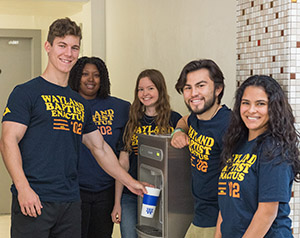
President Jackson Kent (left) and other members of the Enactus team at Wayland Baptist University celebrate the installation of another water bottle filling station on campus as part an ongoing “go green” initiative. (WBU Photo)
The multi-year “go green” initiative of the Wayland Baptist University Enactus student team continues to grow with the recent installation of a sixth water bottle filling station. The Enactus group has been instrumental in installing five stations on campus and one off-campus at the local YMCA. They collect data on the number of plastic bottles they help save from entry into the waste cycle, as well as how many gallons of clean water are provided to the students. “The goal is to help provide clean drinking water without increasing plastic waste. In doing our research we found that Plainview has a higher-than-average amount of plastic waste,” said Jackson Kent, a student from Houston and president of the Wayland Enactus chapter. Enactus is an international organization that fosters entrepreneurial action among college students. “We are geared toward helping students gain experience with entrepreneurship, but also with serving and giving back to the community,” Kent said.
Vic Shealy has resigned after nine seasons as head football coach and 10 years at Houston Christian University, formerly Houston Baptist University. Shealy was the longest-tenured head coach in the Southland Conference, after being named the Huskies first-ever football coach in April of 2012. He led the team through a developmental season in 2013 and then nine official seasons from 2014 to 2022. “We will always be grateful to Vic Shealy for his historic contributions to HCU athletics and especially to our football program,” President Robert Sloan said. “He will forever be known as the founding coach of HCU football. Vic is a man of great integrity, and we wish God’s blessings on him and his wife Holly. He has been not only a good colleague, but a great friend.” The university immediately will begin a search for Shealy’s successor. Long-time assistant coach, Roger Hinshaw, the only remaining member of the original coaching staff, will serve as interim head coach.
Johnny Hunt plans return to ministry
December 5, 2022
WASHINGTON (RNS)—Former Southern Baptist Convention President Johnny Hunt—who was accused of sexual abuse—plans a return to ministry after completing a restoration process overseen by four pastors, according to a video released last week.
Hunt, a longtime megachurch pastor in Georgia, was named earlier this year in the Guidepost Solutions report on sexual abuse in the SBC, which alleged that Hunt had sexually assaulted another pastor’s wife in 2010. Guidepost, a third-party investigation firm, found the claims credible.
Pastors (from left) Mark Hoover, Mike Whitson, Steven Kyle and Benny Tate appear in a video to talk about their restoration work with Johnny Hunt. (RNS video screen grab)
“We believe the greatest days of ministry for Johnny Hunt are the days ahead,” said Steven Kyle, pastor of Hiland Park Baptist Church in Panama City, Fla., in the video.
Kyle—along with pastors Mark Hoover of NewSpring Church in Wichita, Kan.; Benny Tate of Rock Springs Church in Milner, Ga.; and Mike Whitson of First Baptist Church in Indian Trail, N.C.—said they had worked with Hunt and his wife on an “intentional and an intense season of transparency, reflection and restoration” in recent months.
In that process, Kyle said he and other pastors had observed Hunt’s “genuine brokenness and humility before God” and deemed him fit for ministry in the future.
The allegations against Hunt caught his many admirers by surprise. At the time of the Guidepost report, Hunt was a popular speaker and a vice president at the SBC North American Mission Board and was beloved by many SBC leaders.
“I’m heartbroken and grieving,” Daniel Akin, president of Southeastern Baptist Theological Seminary in Wake Forest, N.C., told Religion News Service in May, after news of the allegations against Hunt was made public.
Four pastors ‘do not speak for the SBC’
Hunt denied the allegations at first, then claimed the incident, which was said to have taken place at a vacation condo, was a consensual encounter.
“I confess that I sinned,” Hunt said in a letter in May to First Baptist Church in Woodstock, Ga., where he was the pastor for three decades. “I crossed a line.”
Neither Hunt nor Kyle responded to a request for comment.
As part of a series of actions meant to deal with sexual abuse, Southern Baptists passed a resolution in 2021 saying any pastors guilty of abuse should be banned from the ministry.
Current SBC President Bart Barber, pastor of First Baptist Church in Farmersville, served on that resolutions committee.
“I would permanently ‘defrock’ Johnny Hunt if I had the authority to do so. In a fellowship of autonomous churches, I do not have the authority to do so,” Barber wrote in a Nov. 30 blog.
“Yet it must be said that neither do these four pastors have the authority to declare Johnny Hunt to be restored. They do not speak for the Southern Baptist Convention. Indeed, it is not clear that they even speak for their own churches,”
Barber wrote it would be best to regard the statement from the pastors as “the individual opinions of four of Johnny Hunt’s loyal friends.”
“The idea that a council of pastors, assembled with the consent of the abusive pastor, possesses some authority to declare a pastor fit for resumed ministry is a conceit that is altogether absent from Baptist polity and from the witness of the New Testament. Indeed, it is repugnant to all that those sources extol and represent.”
In the recent video, the pastors paid tribute to Hunt, saying he had done more to help pastors than anyone they knew. Serving on his spiritual care team, they said, was a way of repaying Hunt for all he had done in the past, noting that for years Hunt had run a program that restored more than 400 fallen pastors to ministry.
Tate cited the well-known New Testament parable of the good Samaritan, in which a man traveling from Jerusalem to Jericho is beset by robbers and left injured by the side of the road. In the parable, religious leaders pass the man by, but a good Samaritan rescues him.
“When I heard about this situation with Johnny Hunt, what rolled in my mind is, I want to be a good Samaritan,” he said. “I sure don’t want to run away from him. I want to run to him. I want to help him.”
No mention of assault victim
The video made no mention of the victim of Hunt’s assault or any efforts he had made to make amends for his actions. The pastors did mention Hunt had gone through a similar process of counseling in 2010 after the alleged assault occurred, which involved “confession to those involved.”
Barber took exception to the use of the Good Samaritan parable as a reason to restore Hunt to ministry.
“The wounded person on the side of the road is the abuse survivor, not Johnny Hunt, and she received no mention at all by this panel—she was passed by, in a way, by this quintet,” Barber wrote. “I do not know her, but I don’t want to be guilty of leaving her on the side of the road. I am praying for her, I have heard her, and I believe her.”
After serving as SBC president from 2008 to 2010, Hunt took a leave of absence due to health concerns. The alleged assault and his initial counseling process are said to have happened during that leave but no details were made public.
First Baptist Church in Woodstock, where Hunt is no longer a member, had no involvement in the restoration process, current pastor Jeremy Morton told RNS.
In the past, First Baptist had hosted an annual men’s conference led by Hunt, but the church will not host that conference in 2023.
Hunt, who now attends Hiland Baptist, was recently featured on the church’s “Unchangeable Truth” podcast, where Hunt, Kyle and another pastor talked about the lessons Hunt had learned.
In the video, Hunt mentioned his work in restoring pastors who had made “terrible mistakes” and thanked Kyle and the other pastors for being kind to his family.
“We are all broken people,” he said. “We all need Jesus.”
Hunt also said he would remain accountable to Kyle and other pastors in the future but did not specifically address the alleged assault or make any apologies. Hunt did say that there were “many things I would have done differently.”
“I can’t change the past,” he said. “If I could, believe me, I would. But I can only learn from it and move into the future better for it, thanks to the hope of the gospel.”
EDITOR’S NOTE: This article was originally posted on Wednesday morning, Nov. 30. It was edited online later that afternoon to include statements from SBC President Bart Barber.
Pastors say Christmas Eve most-attended holiday service
December 5, 2022
NASHVILLE, Tenn.—The closer it gets to Christmas, the more likely church pews will be filled, pastors say.
Half of U.S. Protestant pastors (48 percent) say a Christmas Eve service is their churches’ largest event during the holiday season, according to a Lifeway Research study. The frequency of the highest attendance events builds up to Christmas Eve and then tapers off into January.
“Christians have many different Christmas traditions, and so do their churches,” said Scott McConnell, executive director of Lifeway Research. “Family and church traditions are most likely to coincide for Christmas Eve services, but many evangelical churches see the highest holiday attendance earlier in December.”
Few pastors point to an event the first week of December or earlier (6 percent) or a service during the second week (10 percent) as their most well-attended. Around a quarter (26 percent) say an event during the third week of the month is top.
While it may not be true for most congregations, early December is the high-water mark for Christmas season attendance at Harrisburg Baptist Church in Tupelo, Miss. Senior pastor Rob Armstrong said attendance starts off strong in December, with their Sunday services the first two weeks of the month being their most attended events.
“Excitement about the Christmas season feeds into the higher attendance in the first few weeks of the month,” he said.
The church’s Christmas Eve service also is well attended, but he said the Sunday closest to Christmas and the Sunday closest to New Year’s Day have the fewest people show up.
In that regard, the Tupelo congregation is in line with most other churches. Few U.S. Protestant pastors see the largest crowds on Christmas Day (7 percent) or an event during the first week of January (5 percent).
The Christmas season is a prime season for church attendance. Traditionally, Christmas is the second-highest attendance time of the year behind only Easter, according to a 2012 Lifeway Research study.
In 2014, more than 3 in 5 Americans (63 percent) said Christmas activities should include a visit to a church service, according to Lifeway Research. In 2015, Lifeway Research found a similar percentage (61 percent) said they typically attend church during Christmastime.
Even among those who don’t attend church this time of the year, 57 percent said they would be likely to attend if someone they knew asked them.
Seasonal differences
High-attendance events during the Christmas season vary from church to church. Pastors in the South (39 percent) are least likely to say Christmas Eve. Pastors at congregations of fewer than 50 (19 percent) are the least likely to say they have the most people attend an event during the third week of December.
Mainline pastors are more likely than their evangelical counterparts to say their most attended service is on Christmas Eve (60 percent v. 44 percent), while evangelical pastors are more likely than mainline ministers to say their highest attendance event is during the third week of December (30 percent v. 17 percent).
Denominationally, some churches fare better earlier in the month, while others see their crowds grow as the season wears on.
Pentecostal (18 percent) and Baptist (15 percent) pastors are more likely than Methodist (3 percent), Restorationist Movement (2 percent) and Lutheran (1 percent) pastors to have their highest attendance during the second week of December.
For the third week, Pentecostals (45 percent), Restorationist Movement pastors (37 percent) and Baptists (35 percent) are more likely than Presbyterian/Reformed (20 percent), non-denominational (17 percent), Methodist (13 percent) and Lutheran (7 percent) pastors to have the largest crowd of the season.
Lutherans (84 percent) are the most likely to say their high-attendance event this season happens on Christmas Eve.
Restorationist Movement churches are unique in that 21 percent say their most popular service is an event the first week of January.
Some traditions have aversion to holiday
John Dobbs, pastor of Forsythe Church of Christ in Monroe, La., said there is a resistance to celebrating Christmas among the autonomous Christian and Church of Christ congregations. “That is based on the truth that we are never actually told in Scripture to celebrate the birth of Christ,” he said.
Dobbs also noted pastors and members at Church of Christ congregations have diverse opinions on how to approach the Christmas holiday.
While many Orthodox Christians celebrate Christmas in January, the first part of the year also provides a natural time of reflection and focus.
“Given the aversion to holidays among many traditional and conservative churches, a day of renewal and beginning again becomes a day of emphasis and engagement,” Dobbs said.
At Harrisburg Baptist, attendance on the Sundays closest to Christmas and New Year’s Day are some of the lowest attended of the season, according to Armstrong, as many are out of town visiting family. Despite what may be smaller crowds, he still believes churches should gather on those days.
“Churches should have worship on Christmas Day or any Sunday close to it,” he said. “It’s OK to have low attendance on those days because people travel.”
Religious traditions specific to varied Christian denominations make a difference in when attendance peaks, McConnell observed.
“Pastors are always eager to see people attending church services, and the Christmas season is one time of year they get to see most of their congregation as well as visitors,” he said. “But the nature of those traditions varies by church with some seeing attendance culminating in a special Christmas Eve service, others a Sunday morning service and others a special musical experience.”
Lifeway Research conducted the phone survey of Protestant pastors Sept. 6-30, 2022. The calling list was a stratified random sample, and researchers used quotas for church size. Analysts weighted responses by region and church size to reflect the population more accurately. The completed sample is 1,000 surveys, providing 95 percent confidence the sampling error does not exceed plus or minus 3.2 percent. Margins of error are higher in sub-groups.
 Harvey Gene Rotramel, a Texas Baptist pastor more than three decades, died Nov. 25 in El Paso. He was 83. He was born Oct. 9, 1939, in Centralia, Ill., to Joseph Roscoe Rotramel and Eleanor LaRue Gilbert Rotramel. He met and married his wife of 64 years, Dorothy Lillian Henry Rotramel, when they were students at Howard Payne University. His first pastorate was at Cottonwood Baptist Church near Cross Plains. While he was pastor of Seventh Street Baptist Church in Ballinger, he attended Southwestern Baptist Theological Seminary in Fort Worth. He was pastor of Belmont Baptist Church in Odessa from 1975 to 1986 and First Baptist Church in Edinburg from 1986 until his retirement in 1999. The Rotramels moved to Huntsville, and in retirement, he served at Hawthorne Baptist Church in New Waverly. In his final years, he was a member of First Baptist Church in El Paso, where his son Mark is senior pastor. Throughout his ministry as a pastor, many young men responded to God’s call to the gospel ministry. He was preceded in death by his wife Dorothy in 2018. He is survived by son Harvey Gene Rotramel Jr. and wife Susan; son Mark Rotramel and wife Teresa; seven grandchildren; and 12 great-grandchildren. A memorial service is scheduled at 1 p.m. Mountain Standard Time on Dec. 16 at First Baptist Church in El Paso.
 The film releases as a special Fathom Event showing in theaters Dec. 5-7. It is directed by Ben Smallbone, brother of award-winning musical duo For King & Country and contemporary Christian music artist Rebecca St. James.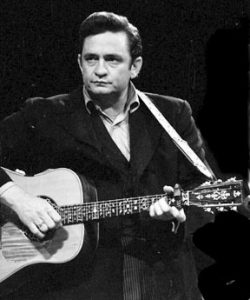



 The commission document called on governments to develop public health responses to the pandemic that avoided measures placing an undue burden on religious observance or stigmatizing religious groups.