Akin announces retirement from Southeastern Seminary
October 15, 2025
(RNS)—Daniel Akin, president of Southeastern Baptist Theological Seminary, announced to students gathered for a chapel service on Oct. 14 his plans to retire next summer.
Reading from a short letter—the same one he sent to the school’s trustees a day earlier—Akin said he planned to step down effective July 31, 2026.
Speaking on behalf of his wife, Charlotte, too, he said: “We love this school. … We are filled with incredible gratitude and thanksgiving for God’s grace in bringing us here almost 22 years ago. It is time to hand off the baton of leadership to those whom God will raise up to lead this Great Commission school into the future.”
The occasion he chose was Southeastern’s 75th anniversary, which is being celebrated on the campus in Wake Forest, a suburban town north of Raleigh, N.C.
Akin will turn 69 in January and has led the seminary—one of six in the Southern Baptist Convention—for much of his career.
Significant growth in last two decades
Last academic year, Southeastern had 2,263 students, half of them full-time equivalents, according to data from the Association of Theological Schools. That’s a 40 percent increase over 2004, the year Akin started, when Southeastern had 1,619 students.
About a third of the seminary’s students—776—were studying for the Master of Divinity degree in the 2024-25 school year. Of those, 441 were full-time students.
Southeastern is now the third largest of the denomination’s six seminaries, after Midwestern in Kansas City, Mo., and Southern in Louisville, Ky. The verdant campus, originally the site of Wake Forest University, also includes an undergraduate school, Judson College, with an enrollment of 1,603 students.
Akin—a theological conservative—has acknowledged the reality of structural racism and said change is needed to broaden the predominantly white ranks of SBC membership. He said one of the major goals at Southeastern is boosting the number of racial minority students.
He also has acknowledged the sins of sexual abuse in the denomination. When a former assistant accused the late Paul Pressler—one of the most influential leaders of the self-identified conservative resurgence in the denomination—of sexual abuse, Akin said he believed the testimony of the victim.
“We can’t deny the reality of the accusations,” Akin said.
Ten years ago, he even agreed to do a video spot for Openly Secular, a group of atheists, freethinkers, agnostics and humanists, in which he said that no one should be discriminated against for their belief or nonbelief.
Served previously at Southern Seminary
A former athlete from Georgia, Akin once had dreams of playing baseball, but after an injury, he answered a call to ministry, graduating in 1980 from Criswell College in Dallas.
He first came to Southeastern in 1992 as dean of students and then moved on to Southern Seminary, where he served as dean of the School of Theology, and senior vice president for academic administration for eight years.
In 2004 he was chosen to replace Paige Patterson, one of the leaders of the conservative resurgence in the Southern Baptist Convention, as president of Southeastern.
In his retirement letter, Akin noted: “I am often asked, ‘Is it hard to be a seminary president?’ My answer is always the same: ‘Not for me.’ My answer is simply a testimony to the people that make up the Southeastern family.”
Akin and his wife have four adult children, all of whom are serving in ministry.
National reporter Bob Smietana contributed to this report.
Aid to Gaza resumes, including from faith-based agencies
October 15, 2025
(RNS)—With President Donald Trump announcing “the war is over” on Oct. 13—and Israel and Hamas trading hostages for Palestinian prisoners—aid from the United Nations and faith-based agencies began to flow into the Gaza Strip, with hopes of stemming a humanitarian disaster.
Trump’s 20-point Gaza ceasefire plan names the United Nations, the Red Crescent and other international institutions as the entities responsible to deliver aid to Palestinians who are in the grips of a profound humanitarian crisis.
It does not cite the Gaza Humanitarian Foundation, a private entity created by the United States and Israel to circumvent the United Nations, which the latter alleged was allowing Hamas to steal aid.
Over the past 36 hours, the United Nations, which has seen its agencies hampered or outright banned by Israel during the two-year war, resumed its work in Gaza.
The United Nation’s Office for the Coordination of Humanitarian Affairs reported that “for the first time since March, cooking gas entered the Strip,” and frozen meat, fresh fruit, flour and medicines also crossed into Gaza throughout the day on Monday.
Israel broke an earlier ceasefire agreement in mid-March, leading to an 11-week halt of all humanitarian relief entering Gaza. Since then the Israeli government has been allowing a small amount of aid into Gaza but has been unable to stamp out spreading starvation.
U.N. has 60-day plan for humanitarian relief
Tom Fletcher, undersecretary-general for the U.N. humanitarian affairs office, briefed the media late last week on 60-day plans to immediately scale up distribution of food and medicine, repair water and sewage lines and provide thousands of tents, tarps and other supplies to the strip, which now lies in rubble.
“This is the plan. We can deliver it. We’ve done it before, and we will do it again,” Fletcher said.
Until last week, the Gaza Humanitarian Foundation was operating four militarized distribution sites.
But Sunday night, The Associated Press reported that three of its four distribution points, where more than 1,000 Palestinians were killed by Israeli forces guarding from the perimeters, have been abandoned. Palestinians had torn down the structures, dragging off wood and metal fences.
The report cited an unnamed official suggesting that the Gaza Humanitarian Foundation no longer would be involved, but the group denied it was shutting down.
In an email to RNS, a spokesman said: “There will be tactical changes in GHF operations and temporary closures of some distribution sites may occur. There is no change to our long-term plan.”
But it wasn’t clear if the Gaza Humanitarian Foundation was prepared to continue to function without the Israeli military in the vicinity.
Nor was it clear why Palestinians would choose to receive aid from militarized sites guarded by U.S. contractors, especially given the number of Palestinians killed approaching those sites, when they could revert to the U.N.’s civilian delivery system that included some 400 distribution locations before the war.
Samaritan’s Purse in ‘wait-and-see pattern’
Samaritan’s Purse, which joined the Gaza Humanitarian Foundation—primarily to provide supplemental food packets and first aid at its distribution sites—suspended its flights from North Carolina to the region.
“We’re in a wait-and-see holding pattern,” said Ken Isaacs, vice president of programs and government relations for Samaritan’s Purse.
“We want to help the people of Gaza in any and all ways that we can, and we’re waiting to see what the finalized results of the peace agreement are so that we know where and how are the best ways to help.”
The lifting of restrictions on aid was welcomed by a host of humanitarian groups, including Catholic Relief Services. Bill O’Keefe, executive vice president for mission, mobilization and advocacy at CRS, said the organization was “aggressively ramping up.”
“We are anticipating deliveries of large supplies of shelter materials that we’ve had in Jordan and Egypt, and we’ve secured more warehouse space,” O’Keefe said.
“We reopened our office in Gaza City and are really doing everything we possibly can to meet as many needs as we can as quickly as we can.”
Catholic Relief Services has a staff of 65 in Gaza, all of them Gazan residents, but its work has been slowed significantly by Israel’s restrictions on aid. When Israel has allowed in aid, it has mostly privileged the Gaza Humanitarian Foundation.
O’Keefe said his staff has seen a big opening for aid and hopes the end of hostilities will allow even more.
“There are lots of questions in terms of how many access points will be opened,” he said, adding, “We hope all of them.”
Conference rallies Christian women for culture-war battles
October 15, 2025
ALLEN (RNS)—“Welcome to the fight—the fight for truth, the fight for our Christian faith, the fight for our children, the fight for the nation,” commentator Allie Beth Stuckey said as she greeted 6,700 conservative Christian women assembled in a suburban Dallas arena.
Allie Beth Stuckey (Facebook profile photo)
Among Stuckey’s hundreds of thousands of social media followers, that fight often is waged in podcast recordings, comment sections, PTA meetings and local elections.
But the battle converged in a Dallas suburb Oct. 11 during Stuckey’s second annual “Share the Arrows” women’s conference, where throngs of Bible-wielding Christian women gathered at the Credit Union Texas Event Center in Allen.
Program personalities included online influencers, including Jinger Duggar Vuolo from the hit show “19 Kids and Counting” and homeschooling “momfluencer” Abbie Halberstadt.
Held just one month since the assassination of Charlie Kirk, the event also served as a rallying cry for women whose faith has been reignited by the death of the conservative political activist.
“There’s a new ache in all of our hearts since Charlie passed, and we’re just so excited to keep this fire burning. This is a great way to rekindle that in all of us,” Rachel Jonson, a 28-year-old mother from Corinth, near Denton, told RNS as she sat near the back of the arena, rocking the infant wrapped to her chest.
To these women, Kirk was an evangelist turned martyr who died for defending conservative beliefs about Scripture, family, abortion, gender and sexuality that they, too, hold sacred. In the weeks after Kirk’s passing, the conference saw a swell of more than 2,000 women purchase tickets.
Call to a ‘spiritual battle’
The conference aimed to equip these women to boldly enter the fray of the culture wars. Though Stuckey argues the battle is primarily about defending biblical truths, she says political engagement is a byproduct.
“This is a fight to which every single Christian is called, and it’s not fought on a physical battlefield or even only in the public square,” Stuckey said from the conference stage. “This is a spiritual battle that is waged in our homes and in our neighborhoods, at school, at your job.”
“Share the Arrows” women’s conference attendees line up before doors open early Saturday, Oct. 11, 2025, at the Credit Union of Texas Event Center in Allen. (RNS photo/Kathryn Post)
Nearly everyone who spoke with RNS said they were excited to be with likeminded women. Waiting in her seat before the event, Anna Tumulty, 40, from Springtown, said she brought her daughter Lily to the conference for her 16th birthday “to help prepare her for her future walk with Christ, and to prepare her to face the problems in today’s culture.”
Carolina Graver, 29, flew in from Alaska to see Stuckey in person. Listening to Stuckey’s hit podcast, “Relatable,” in 2020 inspired her to serve on her local city council, she said. Though she attended the conference alone, Graver said her fellow conferencegoers were an “extension” of her local faith community.
“I don’t know them, but they’re still in the same family of Christians as I am,” Graver said.
The “Share the Arrows” conference was designed with women like Graver in mind. Stuckey—best known for her sharp political, cultural and theological commentary and for her 2024 book Toxic Empathy: How Progressives Exploit Christian Compassion—told RNS the idea for the event was born in the wake of 2020, when many conservative women feared speaking their minds.
Speakers see attacks on values
Despite President Donald Trump’s 2024 election win, this year’s event wasn’t framed as a victory lap. The phrase “share the arrows” refers to the idea that when a conservative believer is attacked, likeminded Christians should rally around them.
Kirk’s assassination was cited repeatedly as evidence conservative views remain under threat.
“The pattern that we see of Christianity for the past 2,000 years, much to the disappointment of the tyrants that have tried to stop us, is that Christians tell the truth, Christians are persecuted, Christians multiply,” Stuckey said during the conference.
The values being targeted, according to the event speakers, include convictions about the dangers of “transgenderism” and queer identity, the belief that abortion is murder, and the upholding of traditional roles for men and women in marriage.
Satan was frequently described as the one slinging the “arrows,” though it was often fellow Christians, rather than the secular left, who were accused of distorting what the conference framed as objective biblical truths.
Alisa Childers (RNS Photo by Kathryn Post)
Alisa Childers, the former Christian musician turned author and apologist, condemned longtime NIH director and evangelical Francis Collins for supporting fetal tissue research, LGBTQ+ rights, DEI and “Darwinian evolution.”
Childers then received laughter and applause for calling out evangelical author Jen Hatmaker, who is also LGBTQ-affirming.
“We have groups of people that call themselves Christians, that will say: ‘Well, the Bible doesn’t really mean what we thought it meant for 2,000 years. Words don’t have objective meaning,’” Childers said during her talk.
Hillary Morgan Ferrer, founder of nonprofit Mama Bear Apologetics, described progressives not as enemies, but as captives.
“We have to realize that people have ideological Stockholm Syndrome, especially when it comes to the whole alphabet brigade, because they think these ideas are the things that give me purpose. They give me acceptance,” Ferrer said, in reference to the LGBTQ+ acronym.
Children’s Rights nonprofit founder Katy Faust noted that it’s possible to love gay people without compromising conservative convictions but also framed same-sex marriage as a justice issue that deprives children of a mother or father. She rejected no-fault divorce, IVF and surrogacy, saying these practices prioritize parental preferences over the rights of children.
Appeal to MAHA mothers
While cultural battles were a through-line of the conference, there were lighthearted moments, too. Speakers peppered their conversations with jokes about chicken coops and sourdough starters, and panels on motherhood and health doled out practical advice on how to control children’s access to social media and avoid processed foods.
The event’s sponsors—including a Texas-based, antibiotic-free meat company; a pro-life, chemical-free baby essentials brand; and a sustainable fashion brand—revealed a significant overlap with MAHA—Make America Healthy Again—mothers, or, as Childers put it, moms of the “crunchy” variety.
Stuckey told RNS “Share the Arrows” has a “pretty narrow” theology and politics, and unlike other Christian women’s conferences “who dabble in the social and racial justice,” Stuckey has “zero tolerance” for that.
Even with its narrow focus, Stuckey said: “This is probably one of the biggest Christian women’s conferences out there, too, and it’s only our second year. I do think that tells us a little bit about where Christian women are headed.”
In the wake of Kirk’s death, Stuckey has joined many conservative faith leaders in talking about the possibility of revival.
In her speech, Childers hinted at Stuckey’s role in that movement, describing Stuckey as “exactly like a female Charlie Kirk” who had “rallied together 6,500 Charlie Kirks to come together.”
Stuckey, though, insisted that Kirk was an anomaly.
“I and maybe 100 other people represent a sliver of what Charlie was,” Stuckey told RNS. “If I am part of the team that takes the baton of evangelizing and being an apologist for the faith in the conservative realm, I will be honored to take that.”
BWA names first ambassador to the Middle East
October 15, 2025
The Baptist World Alliance appointed Nabeeh Abbassi, a leader in the Jordan Baptist Convention, as its first ambassador to the Middle East.
The BWA trustee committee unanimously approved the appointment, which includes a five-year term of service and membership within the BWA Leadership Council.
“This is a sign of our commitment to the historic witness of the church from Jesus to today in this region and our prayers in action for peace and wellbeing,” said Elijah Brown, BWA general secretary and CEO.
“We are thankful for Dr. Abbassi’s years of faithful service and dedication to the Lord, and I look forward to working closely with him to continue the incredible work of Baptists in the Middle East.”
BWA ambassadors serve as volunteer leaders who provide pastoral presence, specialized expertise and global representation in advancing strategic ministry priorities.
Working under the guidance of the BWA general secretary and alongside a designated BWA staff liaison, ambassadors serve as catalysts for strengthening relationships, equipping churches and elevating the global witness of the Baptist family.
Focus on building bridges
Abbassi, will focus on building bridges between local churches and the global Baptist family, strengthening relationships with governments and faith leaders, and amplifying the voice of Middle Eastern Baptists in the global public square.
“I receive my appointment as the first BWA ambassador to the Middle East with gratitude and humility. It is not an honorary title but a call to serve as a bridge builder, a companion in reconciliation, and a witness for religious freedom and just peace,” Abbassi said.
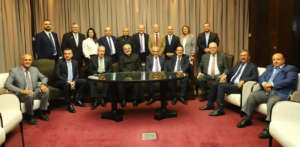
Newly appointed Baptist World Alliance Ambassador to the Middle East Nabeeh Abbassi and European Baptist Federation General Secretary Alan Donaldson are pictured with Jordanian dignitaries at the EBF 75th Anniversary Celebration Gala Dinner in Amman. (Photo courtesy of Laith Farage)
“I see this role as an opportunity to bring local churches into closer fellowship with the global Baptist family and to represent their voice before governments, religious leaders, and wider society so that the gospel may shine with greater clarity and compassion.
“My prayer is that the Holy Spirit will guide us as faithful witnesses of Christ, working together for unity in the church, the flourishing of gospel witness, and the deepening of Baptist partnership across the Middle East and the world.”
In addition to several pastorates, Abbassi served as chairman of the Amman Baptist School board of trustees, president of Jordan Baptist Convention, founder of the Arab Center for Consulting and Training Services and regional director for Christar in the Middle East, North Africa and Europe.
Abbassi’s new role was announced when the 2025 European Baptist Federation Council convened in Amman, Jordan, Sept. 24-27.
Pastor continues to serve in Ukraine after losses
October 15, 2025
KYIV, Ukraine (BP)—“I’m alive,” Pastor Mark Sergeev’s oldest son Christopher, 13, called from debris that seconds earlier was the third floor of the Sergeev family home in Kyiv.
Everyone was accounted for except Sergeev’s youngest and 8-year-old son Aaron.
Pastor Mark Sergeev, his wife Jane and their three sons, who were asleep in their home on the third floor — blown away (at right) — in a Russian missile attack, survived uninjured.
“I think I’m going to take my kids down to the first floor,” Sergeev’s wife Jane had said moments earlier. Their three sons sleep on the third floor, and the first floor was the closest the family had to a bomb shelter.
“In the moment that she told me that, in a second, the rocket came, fell down,” Sergeev said days after the explosion.
The rocket was a 550-pound Escondare Russian missile, one of 48 missiles Forbes reported Russia rained across Ukraine in a 12-hour span overnight Sept. 27-28, in addition to 593 drones. Ukraine neutralized as many as 611 of the weapons, Forbes reported, but the Escondare was evidently among five missiles and 30 drones Forbes said struck 16 locations across Ukraine.
“We’re OK,” Sergeev heard Christopher scream again. “I picked up my phone and started recording the video and going up. I found my youngest son Aaron.”
Sergeev dug Aaron from the rubble, alive. The family, including their 10-year-old son Nathan, made it to the street outside.
“When we got out on the street, I saw, it’s a miracle,” Sergeev told Baptist Press. “It’s only one wall that saved our lives. A couple of feet more, and I think the kids would have to be dead.
“I told Christopher: ‘If God has not put his angel at that wall, you would be dead. But now, you’re standing here and smiling.’”
Second home lost to the war
At least four people died in Kyiv that night, Forbes reported. The 13 injured in the city were among 70 injuries nationwide in the barrage. Russia is intensifying air strikes and targeting utility plants as winter nears.
Pastor Mark Sergeev, his wife Jane and their three sons, who were asleep in their home on the third floor — blown away (at right) — in a Russian missile attack, survived uninjured.
This is the second home Sergeev, pastor of Kyiv Ecclesia Church, has lost to the war. Russia confiscated his first home in Melitopol, he told Baptist Press, as well as his first church, Melitopol Christian Church, founded by his parents some 30 years ago in southeastern Ukraine. The family moved to Kyiv and planted Ecclesia in September 2024.
Colby Barrett, a U.S. engineer and documentary producer, spoke to Baptist Press along with Sergeev on Zoom as the family recovered. Barrett, who chronicles the struggles of Ukraine’s church community in the documentary series Faith Under Siege, traveled to Kyiv to hear Sergeev’s story.
“The drywall in his house, it’s all gone. All the windows are gone. The force of the explosion was so strong, it blew all of the drywall off, and nobody should have survived that, especially the kids on the third floor,” Barrett said. “It’s not physically possible, so God’s hand was right there.”
Chose to remain and minister
Sergeev chooses to remain in Ukraine and minister to the nation as it defends itself against Russia.
“Everybody in this world has a calling. I understand that I have a calling for Ukraine. Somebody has to be here,” Sergeev said. “And I see how many miracles happen here, right now—how many people come into the church.”
Sergeev baptized more than 10 soldiers, all new believers, within the past two months at Ecclesia, he said, as the church continues to grow. Soldiers, reservists and their families often visit the church.
“Some of them never before believed in God, but now they’re giving their lives to Christ. That’s why I understand that this is a very important opportunity for us as the pastors to lead and help them,” Sergeev said.
“It’s encouraging me to do another wave, to do something, to build a church. That’s why I’m still here with my family.”
Ecclesia was just ending its monthly three-day fast Oct. 4 when Sergeev spoke with Baptist Press. His family is living in a home provided by an Ecclesia member, and he believes the church’s and family’s perseverance are a testimony of faith for his children and future leaders.
“I want America to know that Ukraine is still a conservative Christian country,” he said, referencing the people of the nation that upholds religious freedom.
“We still have a stronghold of Christianity in Europe. We’re still fighting for our family values. We’re building churches.”
Pastor views the war as a spiritual battle
Sergeev asks Americans to pray for Ukraine, as he believes the war is a spiritual battle of Satan attacking the church.
“I want to ask, still pray, still stand with us, because this battle is not only about this piece of land,” he said. “This is a spiritual battle. The enemy came to destroy, to kill kids, people, cities, to destroy cities.”
Barrett continues to chronicle Ukraine’s Protestant and Evangelical churches as they suffer persecution in Russia’s war on Ukraine. He hopes to add additional installments to the four-part Faith Under Siege series currently streaming on Angel.com and the Angel app.
“We are incredibly grateful that the A Faith Under Siege series is available exclusively on Angel,” Barrett said in a press release. “Witnessing how Christians in Ukraine have held firm through torture, drone attacks, and even the abduction of their children by invading Russian forces has deepened my own faith.”
‘I want to be in the center of God’s will’
Barrett, working on the documentary series with executive producers Steven Moore and Anna Shvetsova, appreciates the faith and faithfulness of Christians in Ukraine.
“Every time I come here, it is just so uplifting,” Barrett said. “In the U.S., if it snows a couple inches, church is canceled. Mark, right after his house was bombed, goes to two different services, led two different services.
“There’s video of him that day. He’s wearing black pants, and there are still drywall stains on his pants. He’s dirty, he’s sweaty, but just no fear,” Barrett said. “This is crazy with faith, with the love of God, and just surrender.”
Sergeev believes it is God’s will that he continues to spread the gospel in Ukraine.
“God is preparing something. He has a plan, 100 percent,” Sergeev said. “Even if tomorrow my life will be ended, this is his plan. He understands. But I want to be in the center of God’s will, whatever he wants to do right now.
“That’s why I’ve not escaped from the country.”
Judge bars ICE from some acts against protestors
October 15, 2025
(RNS)—A federal judge in Illinois has issued a temporary restraining order that bars government agents from using some forceful tactics against faith-based demonstrators who have been protesting outside a Chicago-area U.S. Immigration and Customs Enforcement facility.
The order hands a win to activists who say their right to religious freedom has been violated by law enforcement who repeatedly shot them with pepper balls and other projectiles.
The order, handed down Oct. 9, came three days after the complaint was filed against Department of Homeland Security Secretary Kristi Noem.
Although the suit was primarily brought by journalists who allege they have been targeted by federal agents, the list of plaintiffs also included Pastor David Black, a Chicago-area Presbyterian minister.
Sprayed with pepper balls
According to journalist Dave Byrnes, Judge Sara Ellis mentioned Black during court proceedings, recounting an incident that took place last month when Black was filmed praying in front of the ICE facility in Broadview, Ill.
As the pastor finished his prayer, footage shows federal agents firing at him using pepper balls, which can cause eye irritation and respiratory distress. Black was struck multiple times, including in the head.
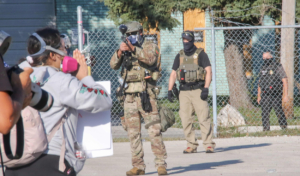
Federal agents fire tear gas and pepper pellets at the protesters at the side entrance of the ICE detention facility on 25th street and Harvard to block ICE cars from entering and leaving at the ICE detention facility on Beach Street in Broadview, IL USA on September 26, 2025. For the fourth Friday in a row, protesters have returned to this facility to attempt to block operations tied to enforcement sweeps. (Photo By: Alexandra Buxbaum/Sipa USA)(Sipa via AP Images)
Other faith-based demonstrators and clergy say they have also been pelted with nonlethal rounds while protesting at the facility, as religious activists have been a regular presence at the location for the past few weeks.
Byrnes reported Ellis said during court proceedings the plaintiffs had sufficiently argued the federal government’s use of force against people praying at the site “substantially burdens their exercise of religion.”
In her order, the judge barred agents from using a list of “riot control weapons” on “members of the press, protesters, or religious practitioners who are not posing an immediate threat to the safety of a law enforcement officer or others.”
The order also prohibits the firing of “compressed air launchers” and similar weapons at “the head, neck, groin, spine, or female breast, or striking any person with a vehicle, unless the person poses an immediate threat of causing serious bodily injury or death.”
In addition, agents, who have been criticized for wearing face masks, are instructed by the order to wear “visible identification.”
The 14-day order is limited to the northern court district of Illinois, which encompasses roughly a third of the state, including Chicago.
Protesters accused of ‘impeding operations’
Asked by Religion News Service about Black and the lawsuit, Department of Homeland Security Assistant Secretary Tricia McLaughlin responded with a statement, shortly before posting the same statement on her X feed.
McLaughlin said Black was among demonstrators “blocking an ICE vehicle from leaving the federal facility—impeding operations.” Referring to “agitators,” not Black specifically, she said they were verbally warned.
“If you are obstructing law enforcement you can expect to be met with force,” McLaughlin said in the statement.
Amanda Tovar, the person who filmed the widely shared video of Black being shot with pepper balls, disputed McLaughlin’s description of events in an interview with CNN.
McLaughlin also referred to Black as a “pastor,” using quotation marks. RNS confirmed Black is an ordained minister of First Presbyterian Church in Chicago, operating under the Presbytery of Chicago.
Religious leaders criticize immigration policies
A wide array of religious leaders have criticized President Donald Trump’s immigration policies throughout his second term. Meanwhile, the administration has used Bible quotations to support its immigration enforcement efforts on social media.
Clergy have participated in protests supporting immigrants in several cities, confronted apparent federal agents on church property and filed lawsuits in opposition to the president’s mass deportation agenda.
Pope Leo XIV, like his predecessor Pope Francis, also recently spoke critically of Trump’s immigration policies, referring to the treatment of immigrants in the U.S. as “inhuman.” He also told Latino Catholics who work with immigrants that their work is “perhaps especially” important in the U.S., and he urged American bishops to speak out.
However, faith leaders in Chicago say tensions surrounding the Broadview facility have escalated over the past few weeks.
Pastor unnerved by Homeland Security agents
Pastor David Swanson of New Community Covenant Church on Chicago’s South Side, declined to comment directly on the lawsuit, explaining that he’s only been a part of demonstrations at Broadview on one occasion.
But he said that during his visit, when large numbers of demonstrators assembled near the facility last Friday, the behavior of DHS agents left him unnerved.
At one point, he said, senior Border Patrol official Gregory Bovino—who has become a visible presence in DHS immigration enforcement—walked over to where Swanson and others were standing and began shoving the pastor while yelling in his face.
Swanson, who was wearing a clerical collar, said Bovino yelled, “I’m not going to tell you again,” even as the pastor continued to move back. Part of the incident was documented by an Associated Press photographer. DHS officials did not respond immediately to comment on the interaction.
Swanson said the experience differed dramatically from demonstrations elsewhere he has attended. In the past, he said, he has tried to be “a presence for peace in situations that can get volatile” and a “person who different sides can be able to approach and talk with and have conversations with.” But his experience at Broadview felt different.
“This was the first time that I felt like there was absolutely no regard and no respect for a person who was visibly associated with a faith tradition,” Swanson said. “It did not seem like it made one iota of difference.”
Obituary: Charles ‘Chuck’ Davis
October 15, 2025
Charles “Chuck” William Davis Jr., chair of the board of trustees at Hardin-Simmons University, died Oct. 1 in McKinney. He was 67. He was born Jan, 4, 1958, in Chattanooga, Tenn., to Charles William Davis Sr. and Delores Eloise (Nellums) Davis. He grew up in Tennessee, Mississippi and Texas, graduating from Whitesboro High School. He earned a bachelor’s degree in music from Hardin-Simmons University and a master’s degree from Southwestern Baptist Theological Seminary. He met Elaine Martin at Hardin-Simmons, and they married in 1983. He served as a student summer missionary in Morocco, and the Davises later served as Journeymen missionaries with the Southern Baptist Convention’s International Mission Board in Taiwan. After seminary, Davis entered campus ministry with the Baptist General Convention of Texas, serving as a Baptist Student Ministries director at the University of Texas Southwestern Medical School, Houston Baptist University and the University of Texas Medical Branch in Galveston. He also led medical mission projects in Mexico and Central America. In 1999, Davis joined the U.S. Department of State as a Foreign Service officer. Over a 20-year career, he represented U.S. interests in China, London, Jordan, Singapore, Israel, Nicaragua and Mexico, specializing in embassy management and consular affairs. His career highlights included coordinating humanitarian evacuations, assisting U.S. citizens following the London Underground bombings and organizing official visits for three U.S. presidents. For his service, he received multiple honors, including the Meritorious Honor Award and the Franklin Award, recognizing his efforts to strengthen American citizenship. While he served with the State Department, Davis preached and taught adult Sunday school in churches from Israel to the United Kingdom, even helping to plant an international church in Beijing. Upon his retirement, he served as a trustee at HSU, where he was elected chair of the trustee board in 2023. While on the board, he helped the university craft and formalize its statement of faith. In 2011, he was honored with the HSU Distinguished Alumni Award. He is survived by his wife, Elaine Davis of McKinney; son John Daniel Davis and wife Hannah of Washington, D.C.; daughter Allison Michelle Davis of Abilene; and sister Julie Barclay and husband Tommy of Abilene. Memorial gifts may be directed to the International Mission Board or the Hardin-Simmons University Annual Scholarship Fund.
Chris Clayman: Frontier people groups deserve priority
October 15, 2025
Frontier people groups—unreached people groups where Christians number less than 1 in 1,000—represent about 20 percent of the global population, Chris Clayman, CEO of the Joshua Project, told participants at a Waco missions conference.
Christians should prioritize outreach to frontier people groups, Clayman told the “Beyond Us … From Neighborhoods to Nations” missions conference at First Baptist Church in Waco. Waco-area churches sponsored the conference in collaboration with Baylor University’s Truett Theological Seminary and Baylor Spiritual Life.
“God is gathering worshippers from all peoples and commands us to join him.”
From the time of Abraham until Christ returns, God’s plan is to bless all nations and people groups, Clayman said.
“There are seats missing at the wedding banquet.”
Luke 14 records Jesus’ parable of a wedding feast to which all are invited. Revelation 19 presents the vision of the marriage supper of the Lamb, where all the redeemed of the ages gather.
However, not everyone who should be at the table is there yet. “God’s heart is for the unreached,” Clayman said.
“The primary propagation of the gospel happens through the church.”
Frontier people groups need “breakthrough churches” in their language and culture where they feel welcomed.
“Many mission efforts work primarily with existing churches, diverting focus away from frontier peoples needing cross-cultural efforts.”
Frontier people groups who lack local, culturally relevant churches never will be reached if mission efforts are confined to working with churches on the mission field.
“Most missionaries go where they are invited, not to frontier people groups.”
If there are no Christians within a people group to invite missionaries, those people never will receive a missionary if an invitation is required. Furthermore, missionary candidates tend to favor groups with whom they already have some cultural connection.
“A lot of frontier people groups live in cultures you’re not going to connect with, and you’re not going to like their food,” Clayman said.
“Frontier people groups make up the largest group of unreached people groups.”
Clayman reported 72 percent of unreached people groups are frontier peoples, but they receive only a tiny fraction of the missionaries.
“Paul set an example of not building on someone else’s foundation.”
In Romans 15:20-21, Paul expressed his desire to take the gospel to areas that had not heard the gospel rather than continue work where there already was a gospel witness.
“In many ways, it’s like gospel triage,” Clayman said—giving attention where the need is greatest.
“We have clarity about where the greatest church planting need is in the world, and the populations there are growing rapidly.”
Four out of five unreached people groups are in the 10/40 window—the area of North Africa, the Middle East and Asia between 10 degrees north and 40 degrees north latitude. Furthermore, the birth rate is higher in unreached areas than in predominantly Christian countries.
“There is great imbalance and injustice of opportunity for those born into frontier people groups.”
Individuals in frontier people groups are least likely to hear a clear presentation of the gospel or encounter a Christian witness.
“Christians are rightfully concerned about justice issues. … But I don’t really hear much about the injustice linked to frontier people groups not having the opportunity to hear about Jesus in their lifetime,” Clayman said.
“Frontier people groups require highly intentional, difficult, cross-cultural mission efforts.”
Christians looking for an immediate return on investment are not attracted to frontier people groups, and working among those groups is challenging.
“It demands a lot of sacrifice,” Clayman said.
Frontier people group missions “requires our most careful attention, mobilization, training and prioritized deployment of resources,” Clayman asserted.
Tony Evans’ next chapter, undisclosed ‘sin’ and new book
October 15, 2025
Dallas megachurch founder Tony Evans has lived a mostly private life for more than a year, after announcing an undisclosed “sin” caused him to step away from the prominent pulpit where he preached for almost five decades.
His church, Oak Cliff Bible Fellowship, announced Sunday, Oct. 5, that he completed a restoration process but is not returning to its leadership.
However, Evans, 76, is working on new public-facing projects, mostly through his ministry The Urban Alternative.
His latest book, Unleashed: Releasing God’s Glorious Kingdom in and Through You, is set to be released by Thomas Nelson Publishers on Oct. 28.
He’s also scheduling speaking engagements at churches and conferences after his first major address in more than a year at a conservative Christian summit in Des Moines, Iowa, in July.
The elder board of his predominantly Black nondenominational church also announced his son, Jonathan Evans, has been appointed an elder and is expected to be installed officially as lead pastor.
In an interview with Religion News Service days before his church’s “Restoration Sunday,” the elder Evans said he has faced challenges with people not accepting his marriage to his second wife, Carla Evans, after the death of Lois Evans, to whom he was married for 49 years.
He also said there have been other personal matters, which he chose not to discuss in the interview, that he has grappled with as his son is gaining more church responsibilities.
When he’s in town, Evans now sits at the front of the church with his family, and he said he’s supportive of Jonathan Evans’ leadership and impressed by his preaching.
In the interview, which has been edited for length and clarity, Evans talked about his new book, why he left his church’s leadership, the next phase of his life and his thoughts about eternity.
You have previously written books on your beliefs about what you call the “kingdom power” of God. How do you sum up those convictions, and how are you approaching that topic differently this time?
In the book Unleashed, I’m trying to focus on taking the concept of the kingdom and releasing it in and through your life.
Many Christians don’t have a kingdom worldview. They’ve accepted Christ. They’re on their way to heaven. But this rule of God on the way there for them on Earth is often missing. And so, we’re trying to go deeper in seeing it being practically activated in your life.
Your book discusses choices and standards you think Christians should embrace, and you seem to have made a choice for yourself about standards when you stepped down from pastoral leadership at Oak Cliff Bible Fellowship last year.
Can you share what the undisclosed sin was that prompted that decision, and if your healing and restoration process is continuing?
There was a decision made as I moved into a new relationship. My wife passed away in 2019, and I remarried (four) years later, and there was such consternation around that, and people who were not as excited about it (laughs). And we were already in transition with my son (in leading the church).
So, we just said this would be the best time to go ahead and make that transition, so that all the consternation around it wouldn’t interfere with that process. There was some underlying things, but that was the decision that was made as we moved forward.
And who made that decision—you or the church?
A combination. It was a shared one.
You used the word “sin” in your statement, and now you’re using the word “consternation.” Can you explain what you mean?
There just was some personal matters that we’re not free to go into, but some personal matters that precipitated that decision.
Anything more you can say? That’s a little unclear.
I know, but because the church wanted to just keep it within the bounds of the church, that’s why we’re honoring that.
Your son is now preaching regularly at Oak Cliff Bible Fellowship. How has that transition gone? Are you solely a member there, or are you involved in the church in other ways now?
I am the founding pastor, and my goal is to support him in every way. It has freed me up to do some of the national events that we are doing.
We’re doing a new podcast that we’re taping now. We also (are producing) an “Unbound” documentary series showing how the Bible moved throughout history. So, it’s created a freedom that I’ve never had before (laughs).
How soon do you think you’ll be back in the pulpit preaching?
We have some meetings coming up to discuss the plan for that, because we are trying to not let his movement into this new arena be overshadowed by my 48 years. So, it’s a timing thing, and we haven’t gotten specific yet, but we’re working toward that.
In your son’s sermon on Sept. 28, he said he initially complained to God about this season that Oak Cliff Bible Fellowship began when you stepped away, but said he realized he should be grateful for your decades-long ministry and God’s faithfulness in it. What has it been like watching his sermons and seeing him lead?
He’s blowing my mind, actually. He’s got this—it’s an old term—but this “New Jack City” thing (laughs), the media thing and this new generation thing, but he is solidly expositional in the word. So, I am loving the exposition. I’m loving the relevancy.
This younger generation of preachers, they tend to be much more casual, much more relaxed. This is a new world that I don’t fully get, but I can appreciate the fact that we want to reach it in a relevant way.
When you say “media,” what do you mean?
I’m certainly meaning his use of social media, but media in the service—video clips and staging and props and all that.
You note in your book that when people have mountains, so to speak, or difficulties, they tend to talk to other people about their problems rather than talking to God about them—or to the mountain. What’s an example of when you spoke to a mountain, maybe especially in the last year or so?
During this year, we have had to address some major issues with regard to our projects, our funding. We’re having to raise $9 million to do all that we’re doing around the world. And so, we had to speak to God about being our source, but we also had to speak to the source. We had one donor who unexpectedly gave us a million dollars.
Did the difficulty of fundraising have anything to do with the fact that you stepped away?
No, it has had to do with the need of the moment. It’s a couple of projects. One is “Unbound,” where we’re tracing from the medieval age through the Renaissance to the Reformation to the Enlightenment to the modern times how God has moved his word along.
When we take these trips to the different countries with these events, “Unbound” is showing how God used the social, political, economic and personality dynamics to move his word along.
When you spoke in July to the Family Leadership Summit in Iowa, you told them, “You’re not first Democrat, you’re not first Republican. You are first of all, a representative of another king and another kingdom, and everything else is second to that.”
In a time when politics are often dividing the church, are you concerned that evangelical Christians are often described as following their party more than their faith?
That’s a major concern, because what we’ve done is turned politics into an idol, and anything idolatrous is going to be rejected by God.
God is involved in politics all through Scripture, but he’s involved as God. He’s not riding the backs of donkeys or elephants. Neither can Christians be riding the backs of donkeys or elephants.
So absolutely, Christians should be engaged in politics. We should bring God’s point of view to politics, but we should never believe we’re going to be delivered or saved by politics.
Was there something you learned about yourself or that you’re taking forward now that this restoration process has concluded?
Through this year, there have been a number of losses of people; some of our leaders who have passed away. And a dear part of our ministry, one of our board members who I was very close to, passed away from cancer.
I think I’ve gone deeper in thinking about eternity. Always thought about it, but deeper in that vein. So, whatever life I have left, I want to maximize at the highest possible level for God’s kingdom and for eternity.
Christians called to missional—not comfortable—lives
October 15, 2025
Christ calls his followers to missional lives, not lives of comfort and ease, speakers emphasized at the “Beyond Us … From Neighborhoods to Nations” Missions Conference at First Baptist Church in Waco.
Waco-area churches sponsored the conference in collaboration with Baylor University’s Truett Theological Seminary and Baylor Spiritual Life.
“There’s no easy way to be about the Father’s business,” said Christine Caine, author, evangelist and founder of the A21 campaign to fight human trafficking.
“To me, there is nothing more important than taking the gospel of Jesus Christ into all the world.”
Too many Christians suffer from “passion deficit disorder,” she said, offering her prayer that God will ignite a passion within the church “for the thing that God’s heart beats for, which is a lost and a broken world.”
“Passion is the fuel that keeps us going,” she said.
Caine grew up in poverty as the adopted child of a Greek immigrant couple in Australia. As a survivor of long-term sexual abuse, she spoke about how God redeemed her when she came to faith in Christ.
“When I learned to make what Jesus did for me at Calvary bigger than what anyone had done to me who had abused me, it changed my whole life,” she said. “Why would I not want a lost and broken world to know that?”
‘Willing to be interrupted and inconvenienced’
In 2008, she and her husband Nick founded A21 with a goal of abolishing modern-day slavery—human trafficking—in the 21st century. The organization works in 19 locations in 14 countries, seeking to reach, rescue, recover and restore trafficking victims.
Like the priest and the Levite in the parable of the Good Samaritan, many Christians too often pass by the wounded because they are busy and preoccupied, Caine said.
Instead, followers of Jesus are to be like the Samaritan who was “willing to be interrupted and inconvenienced” to care for someone who was broken and hurting, she said.
“The church is not about the Father’s business because we are not willing to be interrupted or inconvenienced,” she said.
When God’s people move beyond “little Christian ‘bless me’ clubs” and commit to be his witnesses to a lost and broken world, God will “do something unlike anything we’ve ever seen,” Caine said.
Reawakened love for the lost
“We need a reawakening in the church of what our mission is—a love for the lost,” she said.
While Jesus told his followers to be “in the world but not of it,” too many Christians today are “of the world but not in it,” Caine said.
Jesus called on his disciples to be salt and light—catalytic agents that bring about change, she emphasized.
“You can’t change a world you’re not in, and you can’t reach lost people who you don’t have close proximity to. And if you’re of it—the same substance as it—you won’t bring about change,” she said.
Christians need God to help them see the world as he sees it, Caine asserted.
“It’s so easy to ignore suffering when it is nameless and faceless and it’s just a statistic. God doesn’t make numbers. He makes people. … God sees people as people,” she said.
“We talk about the poor, the lost, the marginalized and the disenfranchised as if they are just statistics. They are people created in the image of God, and they are the ones to whom we’re sent to be salt and light.”
‘God doesn’t give comfortable callings’
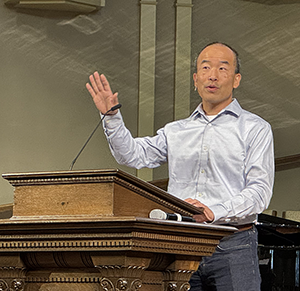
Tom Lin, president and CEO of InterVarsity Christian Fellowship, described how responding to God’s call meant abandoning the dreams his parents had for him.
“God doesn’t give comfortable callings,” Lin said.
As the child of immigrants, Lin said he was raised to pursue the American dream of comfort and security.
After Lin earned his undergraduate degree in economics from Harvard University, his parents were devastated when he told them he was following God’s call to pioneer missions in Mongolia.
“My parents came from poverty in Asia so I wouldn’t have to live in poverty in Asia,” he said.
From Genesis to Revelation, God’s plan has been for his people to “put feet to their faith” and be a blessing to all nations, Lin asserted.
“Each of us has a purpose, and it is to be bless the nations. This is not an optional activity,” he said. “I often tell college students, ‘This is not like extra credit.’”
In a time of unprecedented need in the world, Christians have unprecedented opportunities to bless the nations, but obedience to God’s call demands defying the dominant culture, Lin insisted.
“Culture teaches us to do everything we can to bless ourselves—to bless our own Christian bubble, our own Christian churches, and to avoid suffering,” he said.
“God’s purpose for his people is to bless the nations, and it often requires leaving comfort, he said. But when God’s people obey his call, he added, “We see God’s faithfulness.”
Christ gave the Great Commission to the whole church
Obedience to God’s call means recognizing Jesus gave his Great Commission—making disciples of all nations—to the whole church, not the select few, said Bob Roberts, founder of GlocalNet and co-founder of the Multi-Faith Neighbors Network.
While God calls some Christians to vocational service as cross-cultural missionaries, God also calls every follower of Jesus to use his or her skills, talents, gifts and areas of expertise for kingdom purposes, Roberts said.
Christians earn the right to spread the gospel by going through “the front door,” as welcomed guests in other countries who contribute to society rather than operating secretively or deceptively, he said.
Countries that may be closed to traditional missionaries eagerly welcome Christians who are “bringing value” to their people through their vocations and contributing to “human flourishing,” he said.
Christians with experience in education, health care, business and agriculture can use those abilities to advance the kingdom of God and bring wholeness as God desires, Roberts said.
“You don’t have to take the culture over. You just have to be salt and light in the culture,” he said. “I don’t want Christian nationalism. I want Holy Spirit presence.”
For example, when Roberts was pastor of Northwood Church in Keller, the congregation established a relationship with Hanoi about 30 years ago.
That ongoing relationship led to the opportunity for educators in the church to develop a special-education curriculum for the entire nation of Vietnam.
“We tend to do missions to people. We need to do missions with people,” Roberts said.
‘God always pushes us beyond our boundaries’
Love for God, love for others and Christ’s command to make disciples motivates Christians to move outside the narrow confines of what is comfortable and familiar, said Julio Guarneri, executive director of the Baptist General Convention of Texas.
“God always pushes us beyond our own boundaries. If you have been transformed by the gospel, you cannot stay in the same place. … He always invites us to go beyond ourselves,” Guarneri said.
Christians find their motivation for missional living in the cross of Christ, he said.
“We are not motivated by need or by guilt,” Guarneri said. “We are motivated by the love we see at the cross.”
The call of God compels his people to go beyond their preconceived ideas and gain a new perspective, he said. Even after Christ’s resurrection, his disciples still did not understand what Jesus had been teaching about the kingdom of God. Before his ascension, they asked Christ when he would “restore the kingdom to Israel.”
“They thought the kingdom was about making Israel great again. It’s not about national greatness but about a global witness,” Guarneri said.
Christ called the provincial disciples is to become “cross-cultural ambassadors of God’s love,” he said.
God calls his people to the ministry of reconciliation, Guarneri said. Sin alienates people from God and each other, but God’s grace reconciles.
“We have been deputized as agents of reconciliation,” Guarneri said.
Nigerian official disputes reports of anti-Christian violence
October 15, 2025
A high-ranking Nigerian official dismissed reports by international human rights organizations about widespread violence against Christians in his country as “not supported by the facts on the ground,” but some Nigerian Christian leaders disagreed.
However, in an Oct. 6 interview with the Baptist Standard via Zoom, Mohammed Idris Malagi, minister of information and national orientation for Nigeria, insisted Christians are not targeted in his country—except by “violent extremists,” whom the government opposes.
“It is sad that this has been characterized as a religious conflict. We don’t believe that it is. It never has been a religious conflict. It actually is an extremist conflict,” he said.
Based on the information it accumulated from varied sources, the group reported 30 Christians a day killed and 35 a day kidnapped during a 220-day period.
“The statistics you have reeled out are not supported by facts on the ground,” Malagi said. “Yes, we have to understand there actually is violence in Nigeria perpetrated by some extremists, targeted at both Muslims and Christians in our country. Nigeria strongly condemns that and fights that with all its available resources.”
‘Making sure attacks like this don’t happen again’
Likewise, he dismissed as incorrect a report by Amnesty International that—in the two years since Nigeria’s president assumed his office—10,217 individuals have been killed in Benue, Edo, Katsina, Kebbi, Plateau, Sokoto and Zamfara States, with more than half of those killings (6,896) occurring in Benue State.
“We have seen some of these numbers flying around here and there, including the ones from Amnesty International, but let me say we still dispute these numbers,” he said.
When asked if the government had a report of its own, documenting when and where violence is occurring and to what extent it is happening, he said it’s a complicated situation, and reporting is “a work in progress.”
“What’s more important to us is making sure that attacks like this do not happen again,” he said. “We’re calling on our international partners to join hands with us to ensure that Nigeria returns to normalcy.”
‘Numbers may differ, but the pain is real’
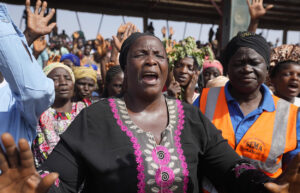
Victims of a gunmen attack pray for peace at the internal displaced camp in Bokkos, north central Nigeria, Wednesday, Dec. 27, 2023.(AP Photo/Sunday Alamba)
Joseph John Hayab, chairman of the Christian Association of Nigeria in the northern states and Federal Capitol Territory, said any discussion of religious persecution in Nigeria “must be approached with honesty, empathy and a commitment to truth.”
“While there may be variations in the statistics presented by different organizations, the reality remains that many Christians in parts of the country continue to face harassment, denial of opportunities, and targeted attacks because of their faith. These experiences cannot be ignored, even as we continue to hope and work for a more just and peaceful nation,” Hayab said.
The government should acknowledge the reality of suffering, he emphasized.
“The numbers may differ, but the pain is real. What matters most is not the figures, but the human lives lost, the families displaced, and the communities living in fear,” said Hayab, country director for the Global Peace Foundation-Nigeria.
“These are human and moral realities that deserve the government’s honest attention and collective national empathy.”
‘Act decisively to protect every citizen’
Archbishop Daniel Okoh, president of the Christian Association of Nigeria, issued a public statement Oct. 8 affirming many Christian communities in parts of Nigeria “have suffered severe attacks, loss of life, and the destruction of places of worship.”
“These realities are painful reminders of the urgent need for government and security agencies to act decisively to protect every citizen,” Okoh stated.
The Christian Association has “established mechanisms for recording incidents of religiously motivated killings, engaged with international partners, written to the International Criminal Court in the Hague, and hosted global Christian organizations” to raise awareness, he noted.
“Our concern remains that these cries for justice and protection are too often met with delay or denial,” Okoh stated.
Middle Belt an ‘epicenter of attacks’
Gideon Para-Mallam, a pastor and peace advocate, asserted, “Nigeria practices the undeclared policy of denial when it comes to the persecution of Christians in the country.”
“The Middle Belt has become the epicenter of attacks that disproportionately target only Christian farming communities,” Para-Mallam said.
“Attackers often come in droves with military-grade weapons to raid these villages at night destroying homes and churches. Many pastors are targeted and killed. Farmlands are destroyed, and survivors are forced to flee.”
Malagi insisted the violence in the Middle Belt is “largely due to competition for resources, for land, especially between farmers and herders.”
“Criminal elements” and “violent extremists” are mostly responsible, he said, and it is “not a religious conflict per se.”
Para-Mallam offered a different perspective, asking, “If it were a farmer-herder class, why is it that only the farmers who are often of a particular religion—Christianity—get killed in such high numbers?”
‘Nigeria will continue to fight extremists’
The government in Nigeria is committed to ridding the country of extremist violence, Malagi said.
“Nigeria will continue to fight extremists that perpetrate violence toward both Christians and Muslims,” he said.
“We agree completely that Muslims and Christians and people of all faiths in this country have been attacked, and many of them have been killed. The Nigerian authorities are not taking this kindly. … A number of measures have been taken.”
Nigeria is making progress in stopping violence perpetrated by Boko Haram, the Islamic State-West Africa Province and other radical jihadists, he said.
Nigeria’s federal government has taken significant steps to protect citizens by enhancing the military presence in the Middle Belt, Malagi said.
The government also is engaged in peacemaking and long-term reconciliation initiatives in the region, as well as promoting interfaith dialogue, he added.
‘More needs to be done’
Hayab commended the federal government for progress made in the past two years, but he called on the government to do more.
“It is important to acknowledge that the current administration has shown some improvement compared to the previous government, particularly in its efforts to engage faith communities and promote national unity. This progress is commendable,” he said.
“However, more needs to be done to guarantee genuine freedom of religion as enshrined in the Nigerian Constitution. True democracy can only flourish when every citizen, regardless of faith, can serve God freely without fear, intimidation or discrimination.”
When questioned about the sophisticated, military-grade weaponry used by militant herdsmen in the Middle Belt, Malagi said the government believes they are coming “from outside our borders.” Stopping the flow of arms will require “the cooperation of our neighbors and the international community,” he said.
“We are taking steps to ensure that we mitigate that significantly so that we can provide security for the lives and property of our people,” Malagi said.
State governments and the federal government are working collaboratively in law enforcement to rid the country of criminal elements and extremists, he said.
Okoh acknowledged with appreciation the government’s efforts to respond to Nigeria’s security challenges, but he urged the authorities to “redouble” efforts to provide “equitable protection for all.”
Secular state or Sharia law?
Malagi called Nigeria a “very secular state” and “a country governed by laws,” where the religious freedom of all its people is guaranteed in the constitution.
“Every member of our society is free to practice his or her religion,” he said.
When asked whether the enforcement of blasphemy laws and Sharia law in 12 northern Nigerian states violate the country’s constitution and Article 18 of the Universal Declaration of Human Rights, he insisted Sharia applies only to the Muslim population—not others.
The “Nigerian Constitution is supreme,” and it supersedes any regional laws, he said.
Hayab disagreed, saying, “The continued misuse of Sharia and blasphemy laws in some northern states remains a serious concern.”
“In the Christian faith, salvation is instantaneous. Therefore, anyone who embraces Christianity should not be subjected to Sharia law,” he said.
“Sadly, there are still cases where Christian converts are held to ransom under such laws, denying them freedom of faith. This practice amounts to persecution and violates both the spirit and the letter of Nigeria’s constitutional guarantees.”
In states with Sharia law, churches find it “almost impossible” to acquire land, and renting buildings for Christian worship is “a major challenge,” Para-Mallam said.
‘Tools of religious and political intimidation’
More severe persecution of Christians arises from the imposition of blasphemy laws, he added.
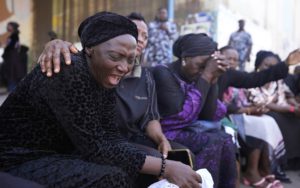
Women react under the bridge during a march in solidarity with the victims of the Christmas Eve 2023 attack, in Jos, Nigeria, Saturday, Jan. 6, 2024. (AP File Photo/Sunday Alamba)
“Blasphemy laws have become tools of religious and political intimidation and extreme persecution, as anyone accused of blasphemy may end up being lynched without fair hearing and trial,” Para-Mallam said, noting perpetrators of mob violence seldom are prosecuted.
“On paper, Sharia law is supposed to be for Muslims alone. But it’s not practicably so. We have it on record many Christians have been dragged to Sharia courts and have Sharia laws applied to them.”
In spite of the well-documented attacks on Christians on Christmas Eve in 2020, 2022 and 2023, Malagi rejected the idea that Christians are targeted, except by some extremists who also have attacked Muslim gatherings and mosques.
“Generally, Christians are not living in fear in Nigeria,” he said.
Christian casualties outnumber attacks on Muslims
Hayab agreed both terrorists and bandits have killed some Muslims and attacked worshippers in mosques, but Christian casualties remain far greater.
“While it is true that some Muslims who reject extremist ideologies have also suffered attacks, it must be acknowledged that the Christian community bears a heavier share of these incidents,” he said.
“As a nation, we must rise above these divisions and work together to promote understanding, justice, and mutual respect.”
Malagi acknowledged the criminal element and that extremists “want to exploit religious differences,” but “Muslims and Christians largely live side-by-side in harmony” in Nigeria.
“We want Christians in the United States—and, indeed, Christians all over the world—to know that Nigeria’s situation is a very complex one,” he said. “It is not driven by any systematic religious persecution of Christians.”
‘Nigeria belongs to us all’
Hayab urged the government to do more to protect all its citizens from persecution and to ensure religious freedom.
“I have called on the federal government several times to continue strengthening its security and reconciliation initiatives and to ensure that no Nigerian is denied freedom of worship or equal opportunity on the basis of religion, and we will continue to do so,” Hayab said.
“Nigeria belongs to us all, and we must join hands to build a nation where peace, truth and fairness define our coexistence, and where every citizen can freely serve God without restriction.”
Okoh offered a similar call and voiced a similar hope.
“Nigeria’s healing will not come from denial or blame, but from courage: the courage to face our collective failures, to grieve together, and to rebuild trust within our communities,” he stated.
“Only then can our nation rise from its wounds and embrace a future of genuine peace.”
On the Move: Price
October 15, 2025
Dylan Price has resigned as pastor of Independence Baptist Church in Independence, where he served four years. He also managed the Texas Baptist History Museum in Independence.


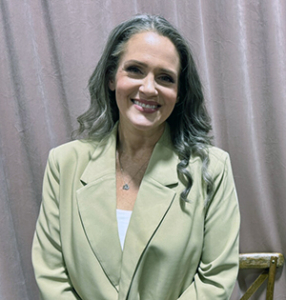


 “God doesn’t give comfortable callings,” Lin said.
 While God calls some Christians to vocational service as cross-cultural missionaries, God also calls every follower of Jesus to use his or her skills, talents, gifts and areas of expertise for kingdom purposes, Roberts said.