Southwestern calls meeting to address trustee concerns

The Southwestern Baptist Theological Seminary will hold a special called meeting May 30 via Zoom to address concerns raised by trustees regarding lack of disclosure.

The called meeting apparently was in response to a formal request sent to Chairman Danny Roberts, executive pastor of Cross Church, formerly North Richland Hills Baptist Church in suburban Fort Worth, and members of the board of trustees.

In that letter, leaked to several media outlets from an unidentified email account, the writer—whose name was redacted—stated: “We have reached a point of conscience that for us to remain silent would be, in our own opinion, to fail in our fiduciary and legal responsibility to the sole member, SBC, and to leave both of us open to potential questions of personal ethical failure if we do not immediately go on the record in a good faith attempt to disclose what we know to the rest of the Board of Trustees.”

The letter asserts trustee Aaron Sligar, pastor of Living River Chapel in Sutton, W. Va., produced “a detailed written report for the Board of Trustees” regarding an investigation into the financial management of the seminary under the previous administration.

It asserts the officers of the board’s executive committee asked Sligar not to present the full written report to the board. Instead, they asked him to present an oral summary of his findings to the board at its April 17-18 meeting.

The Baptist Standard received an unsolicited document purported to be the “floor report” Sligar presented to the board. The document noted $12 million spent on renovation projects, concerns about credit card policies and possible donor designation changes.

When asked to verify assertions in the letter to Roberts and to indicate whether the “floor report” document accurately represented what he told the board, Sligar replied by email: “An anonymous source leaked the report in question, which is a working document within the Southwestern Baptist Theological Seminary Board of Trustees. While our review is ongoing, this document was never intended for the press or public; as such, it does not represent an official statement from the board.”

Sligar directed any further questions to Roberts.

The letter to Roberts also raised concerns about the formation of Future Fort Worth, a nonprofit whose agent of record is a Southwestern Seminary administrator. The other two directors of the corporation are two Fort Worth businessmen involved in real estate development.

The Standard called Roberts’ office, but the call was not returned. Subsequently, both Roberts and James Smith, vice president for communications, received an email from the Standard with a series of questions.

Rather than answer specific questions, Roberts released a statement through Smith’s office on behalf of himself and the executive committee.

“Southwestern Seminary has inherited and endured a challenging period for more than eight months following the resignation of the former president. Out of a desire to balance charity to the former president with a need to address actions and decisions that have brought us to the seminary’s current state, the board of trustees has disclosed limited information to the Southern Baptist public while it has fulfilled its fiduciary duty to carefully evaluate certain financial matters,” the statement reads.

“Unfortunately, some individuals have questioned the integrity of the board’s processes and actions. While it would be imprudent at this time to answer each claim that is now in circulation in various platforms, we assert claims of inappropriate activities of the board officers, executive committee, and/or named staff are without merit, and the board will release all relevant and appropriate information following a special-called meeting of the board of trustees to be held on May 30 to address these matters.

“Additionally, as has been previously reported, the Department of Justice is investigating the Southern Baptist Convention concerning sexual abuse. The seminary is cooperating fully in this matter.”


Classroom Ten Commandments bill dies in the House

A bill that would have mandated the display of the Ten Commandments in every Texas public school classroom failed to advance in the Texas House of Representatives.

The Texas House essentially killed the measure—roundly criticized by advocates of church-state separation—by not voting on it by the midnight May 23 deadline. A vote on SB 1515 would have advanced the bill for third and final passage.

Barring last-minute parliamentary maneuvers, the bill will not pass in this session of the Texas Legislature, which ends May 29.

In a party-line vote last month, the Texas Senate approved the bill by Sen. Phil King, R-Weatherford, requiring public schools in the state to post the Ten Commandments prominently in every classroom.

In a committee hearing, King said displaying the Ten Commandments acknowledges “the role that fundamental religious documents and principles had in American heritage and law.” He called the bill a way to “bring back this tradition of recognizing America’s religious heritage.”

His bill called for a “durable poster or framed copy of the Ten Commandments” measuring at least 16 inches wide and 20 inches tall to be displayed “in a conspicuous place” in every elementary and secondary classroom.

The bill stipulated the exact wording of the Ten Commandments—an abbreviated version of Exodus 20:2-17 from the King James Version of the Bible. Jews, Catholics and Protestants number the commandments differently, and their wording varies.

Amanda Tyler

Amanda Tyler, executive director of the Baptist Joint Committee for Religious Liberty, tweeted: “In a victory for religious freedom, the Texas Ten Commandments bill failed to pass the #txlege last night. I’m happy my home state rejected this attempt to advance #ChristianNationalism.”

Texas lawmakers did pass a bill that allows public schools to employ chaplains. Unlike school counselors, the chaplains are not required to be certified by the State Board for Educator Certification.

The House successfully amended the bill to prohibit registered sex offenders from serving as chaplains and instituting background checks. The final version of the bill also requires chaplains to be endorsed by an endorsing body recognized by the U.S. Department of Defense, the Federal Bureau of Prisons or the Texas Department of Criminal Justice.


Oklahoma pastor advocates for life of death row inmate

OKLAHOMA CITY (BP)—Oklahoma Southern Baptist pastor John-Mark Hart is part of a multifaith coalition advocating for the life of death row inmate Richard Glossip on grounds of biblical mercy and the pursuit of impartial criminal justice.

In the ongoing battle, the U.S. Supreme Court stayed Glossip’s execution that was scheduled for May 18, marking the sixth time since 2014 that Glossip’s execution has been delayed in his conviction for hiring an accomplice to murder his boss in 1997.

“There’s just such a strong chance that he’s innocent,” said Hart, pastor of Redemption Church in Oklahoma City. “And (Gentner Drummond) the attorney general of the state is saying this man did not receive a fair trial.

“Right now, we’re in kind of a holding pattern waiting on the Supreme Court’s decision,” Hart said. “Are they going to take up his case? If they choose not to take up his case, then there are very limited options. Really, the only option I’m aware of to save him at that point would be to reinstate a moratorium” on the death penalty in Oklahoma.

Gentner and Oklahoma City District Attorney Vick Zemp Behenna are among members of the criminal justice system who have advocated for Glossip’s life. Glossip would not meet new guidelines Behenna has established for use of the death penalty, Behenna said in an April 23 letter to the Oklahoma Pardon and Parole Board.

Urging broad criminal justice reform

Hart is among at least three Southern Baptist pastors advocating for Glossip in particular and broader criminal justice reform in Oklahoma in general. They are among 26 initial signers of the November 2022, online statement “Christ and Capital Punishment,” that has since gained about 300 signatures.

Hart said he wrote the statement, endorsed by signers Matthew Beasley, pastor of Hope Community Church in Norman, and M.L. Jemison, pastor of St. John Missionary Baptist Church in Oklahoma City.

Other Southern Baptists among the initial signatories are Reid Hebert, executive director of Christ Community Health Coalition, and Jared Stevenson, a member of the staff of the Oklahoma City office of Navigators discipleship ministry. Both Hebert and Stevenson are members of Redemption Church.

Ongoing disparities in the criminal justice system are causing many, including white evangelicals, to rethink biblically based justifications for the use of capital punishment, Hart asserts.

“If Richard Glossip was not a part of this situation, we still would have written Christ and Capital Punishment and would be advocating for this change, because we wanted a more merciful, a more gracious and redemptive approach to criminal justice in Oklahoma in general,” he said. “But situations like what’s happening with Richard Glossip bring the system problems to the fore in a very powerful way.”

Signers of the statement vary in their perspectives of capital punishment, Hart said, ranging from Hart who staunchly objects to the death penalty as a defense of the sanctity of human life, to others who advocate for use of the punishment only in the most grievous cases where guilt clearly is proven.

“We’ve got people from a variety of perspectives saying the way we’re coming together to do things right now cannot continue,” Hart said of the statement. “For us, we’re people of faith. Sometimes there are morally compelling public issues that as people of faith, we feel the responsibility to say we need to have a morally grounded dialogue about this.”

Hart has not ministered to Glossip. Helen Prejean, a Catholic nun opposed to the death penalty, is Glossip’s spiritual adviser, Hart said.

Call for moratorium on the death penalty

In calling for a moratorium on the death penalty in Oklahoma, the statement asserts the state’s “past and present practice of capital punishment is complicit in a deeply troubling national history of unjust and inequitable application of the death penalty,” noting racial disparities in the use of the death penalty that adversely impact Blacks and Hispanics.

“Perhaps the gravest miscarriage of justice is to execute someone who is innocent,” the statement reads in part, “but in the last 50 years 190 former death-row prisoners [in the United States] have been exonerated of all charges related to the wrongful convictions that had put them on death row, including 10 wrongfully convicted prisoners in the state of Oklahoma.”

Messengers to the 2000 Southern Baptist Convention Annual Meeting passed the resolution “On Capital Punishment,” recommending it be used only when the guilt of the accused is clearly proven.

“We urge that capital punishment be administered only when the pursuit of truth and justice result in clear and overwhelming evidence of guilt,” the resolution reads, and “because of our deep reverence for human life, our profound respect for the rights of individuals, and our respect for the law, we call for vigilance, justice, and equity in the criminal justice system.”

The 2000 resolution acknowledges imperfect justice systems in a fallen world, but it states, “God authorized capital punishment for murder after the Noahic Flood, validating its legitimacy in human society (Genesis 9:6).”


Around the State: Baylor regents approve $902.4 million budget

Baylor University’s board of regents approved a $902.4 million university operating budget for 2023-24, an increase of $39.2 million (4.5 percent) from last year. The board authorized $24.5 million in total funding for three renovation projects involving residence halls, the Honors College and Baylor Law School. Regents also approved a master’s degree in physician assistant studies and a Bachelor of Science/Master of Science degree program in biology of global health. The board elected William “Bill” E. Mearse of Houston as chair, effective June 1. He succeeds Mark V. Rountree of Dallas as chair. Melissa Purdy Mines of Austin was elected vice chair. The board elected three at-large regents—David R. Brooks of McKinney and Martha Delehanty of Jupiter, Fla., along with Carey P. Hendrickson of Arlington, a Baptist General Convention of Texas-appointed regent. Steve Wells, pastor of South Main Baptist Church in Houston, begins a three-year term on the board as an alumni-elected regent June 1.

Wayland Baptist University President Bobby Hall presents the school’s Citizenship Award to graduating seniors Araceli Torres and Devin Davis. (WBU Photo)

Wayland Baptist University presented its Citizenship Awards to graduating seniors Araceli Torres of Odessa and Devin Davis from Opelousas, La., during a recent recognition chapel service. Torres was a molecular biology major with a minor in chemistry who volunteered at the local food bank. Davis was a history major who has been part of the track, cross country and eSports teams. He also was involved in Student Alumni Council and Student Union Board.

Kristyn Getty

Dallas Baptist University awarded an honorary doctorate to Kristyn Getty, a Grammy-nominated Christian recording artist and songwriter from Northern Ireland. She received the honorary Doctor of Humanities degree at a May 12 commencement ceremony at DBU. Getty and her husband Keith are co-founders of the Sing Conference, held annually in Nashville, Tenn., and she is creator of the award-winning Getty Kids Hymnal.

Stephen M. Stookey, dean of Wayland Baptist University’s School of Christian Studies

The Baptist History & Heritage Society named Stephen M. Stookey, dean of Wayland Baptist University’s School of Christian Studies, as the 2023 recipient of the W.O. Carver Distinguished Service Award. The award pays tribute to individuals who have made outstanding contributions to the cause of Baptist history. Stookey came to Wayland in 2016 as a professor of religion and has taught graduate and undergraduate courses in classroom and online settings. He taught previously at Southwestern Baptist Theological Seminary, B.H. Carroll Theological Institute and Dallas Baptist University. Stookey has been involved with the Baptist History & Heritage Society since the early 1990s. In 2017, he received the society’s Carolyn Blevins Meritorious Service Award.

John Davis, professor of management and coordinator for the program in management, was elected president of the faculty at Hardin-Simmons University.

Ordination

Chance McMillan, Garrett Mathis, Keith Mayberry, David Murphree, Danny Salazar, Chris Styne and Chris Williams as deacons at First Baptist Church in Plainview. Jacob West is pastor.


Most churchgoers say they want to serve, but few do it

BRENTWOOD, Tenn.—Although most churchgoers say they want to serve in their communities for gospel impact, there is a noticeable gap when it comes to the number who are already volunteering for a charity.

Most Protestant churchgoers say their churches encourage them to serve people not affiliated with their church and that they want to do so. But few have volunteered in the past year, a new study by Lifeway Research reveals.

More than 4 in 5 churchgoers say their churches encourage every adult to serve people outside their church (84 percent) and they want to serve these people in hopes of sharing the gospel (86 percent).

Despite saying they want to serve people who are not a part of their church, few churchgoers are even serving within the context of their own churches. Two in 3 (66 percent) churchgoers say they have not volunteered for a charity (ministry, church or non-ministry) in the previous year. Three in 10 (30 percent) say they have, and 4 percent are not sure.


According to the latest findings of the U.S. Census Bureau, 23 percent of Americans volunteered through an organization between September 2020 and September 2021.

“The easiest way to serve others is when a charity or group organizes the effort,” said Scott McConnell, executive director of Lifeway Research. “They recognize the need, come up with a plan and often gather needed resources. You just have to show up. Churchgoers say they want to, but less than a third showed up to help a charity in the previous year.”

In another 2022 Lifeway Research study, Protestant pastors said churchgoers were more likely to serve in the church than in the community.

Pastors estimated, on average, 42 percent of their adult churchgoers were involved with regular responsibilities at their churches. And pastors estimated an average of 27 percent of adult churchgoers were involved in serving in the community.

The gap between desire and action

Younger churchgoers—ages 18 to 34 (91 percent) and 35 to 49 (91 percent)—are more likely than those 50 to 64 (84 percent) and older than 65 (79 percent) to say they want to serve people in their community who are not affiliated with their church.

However, the oldest churchgoers (those over the age of 65) are the most likely to say they participated in any type of volunteer work in the previous year (40 percent).

Denominationally, Methodists are the most likely to say their churches encourage them to be involved in ministry that serves community members not affiliated with the church (98 percent) and among the most likely to say they want to do this in hopes of sharing the gospel (95 percent). Still, Methodist churchgoers are the most likely to say they did not participate in any volunteer work in the previous year (88 percent).

“This study did not measure service churchgoers may have done individually for their neighbors. Meeting such needs as they arise is a great form of service,” McConnell said. “But some of the most widespread needs in communities require volunteers working together, something that the majority of churchgoers don’t do over the course of a year.”

A similar gap between desire and action exists for Christians sharing their faith, according to a 2022 Evangelism Explosion study conducted by Lifeway Research. More than 9 in 10 (93 percent) self-identified Christian adults in the U.S. say they are at least somewhat open to having a conversation about faith with a friend. And around 4 in 5 (81 percent) feel similarly about speaking about faith with a stranger.

Yet, in the past six months, 53 percent had a conversation about faith with a loved one. And 40 percent had a conversation about faith with a stranger.

Although many factors may contribute to this gap, pastors identified one in a 2021 Lifeway Research study that may play a role in churchgoers’ hesitation to get involved in both evangelism and community service—comfort. More than 2 in 3 Protestant pastors (67 percent) say comfort is a modern-day idol that has significant influence in U.S. churches.

Cultivating desire that leads to action

Theological beliefs and church attendance frequency contribute to the likelihood a person wants to serve and will have actually volunteered outside of their congregation.

Those who attend a worship service at least four times a month are more likely than those who attend one to three times a month to want to serve people in their communities (88 percent v. 82 percent). The most frequent church attendees are also the most likely to have volunteered in the past year (37 percent).

Additionally, those with evangelical beliefs are more likely than those without to have a desire to serve those in their communities who are unaffiliated with their churches (90 percent v. 83 percent) and to have served in the past year (37 percent v. 25 percent).

“Service is contagious. When you are regularly participating in the life of your church, people you get to know will ask you to serve with them,” McConnell said. “Doing good things with friends is enjoyable and easier to find time to do.”

Lifeway Research conducted the online survey of American Protestant churchgoers Sept. 19-29, 2022, using a national pre-recruited panel. Quotas and slight weights were used to balance gender, age, region, ethnicity, education and religion to reflect the population more accurately. The completed sample is 1,002 surveys, providing 95 percent confidence the sampling error does not exceed plus or minus 3.3 percent. Margins of error are higher in sub-groups.


NAMB, McRaney file motions for summary judgment in suit

In separate May 18 motions filed for summary judgment in the six-year-old McRaney v. North American Mission Board lawsuit, both parties are seeking a ruling by the judge ahead of the currently scheduled Aug. 7 trial date.

NAMB is seeking a ruling to dismiss the entire case, and Will McRaney is seeking a ruling on one of NAMB’s specific defenses to his claims.

McRaney’s attorneys are focused on the separation agreement aspect that impacted his severance package when he was fired from the executive director role at the Baptist Convention of Maryland/Delaware in 2015.

NAMB claims the separation agreement between McRaney and the Maryland/Delaware convention releases NAMB from this case; McRaney disagrees.

Depositions noted

As far as NAMB’s argument in its motion, several depositions were highlighted that say McRaney’s six counts against NAMB are invalid, including testimony from Maryland Baptist pastor William Warren and Alabama Baptist pastor Rob Paul.

Warren was president of the Baptist Convention of Maryland/Delaware when McRaney was terminated. Warren states in his deposition the decision to terminate McRaney stemmed from his leadership style, not from the loss of NAMB funding that happened because of disagreements between McRaney and NAMB.

Warren stated he first sided with McRaney in the dispute between NAMB and McRaney. But over the course of a few months listening to other Maryland/Delaware convention staff members, he changed his mind on McRaney’s ability to lead the state convention.

Did it ever cross his mind that if McRaney were no longer the leader, NAMB might reinstate its funding? Warren acknowledges in his deposition that it did, but he also consistently asserts his decision to vote in favor of termination was solely about the staff culture created by McRaney.

Paul served in Mississippi at the time of his connection to the case and disinvited McRaney to an event in 2016 after McRaney’s public attack on NAMB continued to escalate.

“In essence, [McRaney] was declaring war on [NAMB], and significant numbers of our ministry partners were [NAMB] ministers, and those two things are incompatible,” according to Paul’s deposition transcript.

McRaney’s actions following his termination led to the decision not to include him on the program in Mississippi, Paul said.

And while NAMB officials acknowledge NAMB personnel referred to McRaney as “delusional,” “nutcase” and “liar” in private communications, it contends McRaney was the one who chose to publicize the comments.

“The irony of this lawsuit is that, while Plaintiff (McRaney) claims his dispute with NAMB marred his reputation, he alone is the one who has continually publicized it,” NAMB attorneys state in the motion for summary judgment.

A NAMB spokesperson stated: “NAMB filed this motion because the evidence developed during extensive legal discovery—which is now complete—overwhelmingly supports NAMB’s consistent factual defenses, as well as the religious liberty protections afforded churches and other ministries like NAMB. We are hopeful the court will dismiss this unsubstantiated lawsuit again, as it did in 2019.”

Debating role of NAMB

McRaney’s six claims against NAMB include two claims for interference with contract and economic relations, two claims for defamation and two claims for infliction of emotional distress.

His motion for summary judgment focuses on the first two claims specifically related to NAMB’s separation agreement defenses. McRaney’s attorneys outline four reasons related to Maryland and federal law as well as clauses in the agreement and a disagreement over whether NAMB was a “supporting organization” and what rights that would include in enforcing McRaney’s separation agreement with the Maryland/Delaware convention.

The motion also states: “NAMB seeks to enforce provisions of the Separation Agreement as a non-party to the contract. But Maryland law is restrictive about when a party can enforce a contract as a third-party beneficiary. Here, discovery made clear that NAMB had no role in, or knowledge about, the Separation Agreement when it was negotiated and executed.

“NAMB did not even see a copy of the Agreement until after this lawsuit was filed, and there is no evidence that the parties intended for the Agreement to benefit NAMB. To the contrary, the undisputed evidence shows that Dr. McRaney intended to preserve his claims against NAMB when he signed the Separation Agreement. Under these facts, Maryland law does not permit NAMB to enforce the Separation Agreement.”

David Sharp, an economist, and Barry Hankins, a professor of history at Baylor University, provided testimony for McRaney and state NAMB should not be considered a “supporting organization.”

The motion states: “While the term ‘supporting organization’ is undefined in the Agreement, its ordinary meaning is clear. ‘A supporting organization, in the United States, is a public charity that operates under the U.S. Internal Revenue Code in 26 USCA 509(a)(3).’ … This ordinary meaning of ‘supporting organization’ is also confirmed by NAMB’s own use of the term in the same way it is employed with reference to the Internal Revenue Code.”

The motion also states: “Before executing the Separation Agreement, Dr. McRaney specifically asked his attorney, David de Armas, whether the Separation Agreement ‘would preclude claims against NAMB.’ Mr. de Armas advised Dr. McRaney that signing the Separate Agreement would not preclude claims by him against NAMB.”

NAMB and McRaney both have until June 1 to respond to each other’s motions, and then they will have until June 8 for the following rebuttal.

From there, the judge will make the call on how to proceed.


BGCT Executive Board approves sexual abuse task force

The Baptist General Convention of Texas voted to create a task force to study and recommend responses to sexual abuse issues in Texas Baptist churches.

During a May 23 meeting conducted via Zoom, the board voted 65-1 to approve a recommendation to create the task force to “strengthen and clarify” the BGCT response to sexual abuse in churches.

The nine-member task force will include three Executive Board members, three Texas Baptist pastors who are not on the board and three licensed counselors who are not on the board. The task force also will have access to legal counsel.

Associate Executive Director Craig Christina and BGCT Executive Board Chair Bobby Contreras will appoint members of the task force, which will function until Dec. 31, 2024, unless extended by the board.

“Addressing sexual abuse within the church requires a multifaceted approach,” the background section of the printed recommendation provided to BGCT Executive Board members stated.

“Texas Baptists have been a leader in advocating for prevention in this area through trainings, background checks, policies and procedures, and overall awareness. We remain committed to this important aspect of this issue.”

The BGCT provides access to free sexual abuse awareness training in partnership with MinistrySafe to provide information specifically about child sexual abuse prevention.

In September 2021, the BGCT Executive Board approved a policy declaring any registered sex offender“permanently disqualified” from church leadership. The board approved a policy that any congregation allowing registered sex offenders in church leadership roles “may be considered out of harmonious cooperation” with the convention.

“On the issue of care, for years we have provided recommendations and funding to those dealing with clergy sexual abuse,” the document continued, adding the BGCT remains “committed to meeting this need.”

Texas Baptist Counseling Services offers help in locating counseling resources.

Questions for task force to examine

However, the document presented to the board stated, a task force can help the BGCT explore additional questions such as:

  • “How can we assist churches that become aware of an accusation, recent or decades old, of this nature?”
  • “What should BGCT guidelines be for relating to churches and/or volunteers mentioned in such allegations, in their dealings with the BGCT?”
  • “At what level of evidence/proof is action required and/or clearance afforded?”
  • “If law enforcement declines to pursue an accusation, what steps should a church and/or [the] BGCT take or not take?

Plans for new BSM on the Baylor campus

During the May 23 virtual meeting, the Executive Board also ratified a memorandum of understanding between the BGCT and Baylor University to build a new Baptist Student Ministry center on the Baylor campus.

Baylor University will donate a parcel of land for the building site. The BGCT will secure funds to design, build and maintain the building, at an estimated $6 million cost. When Texas Baptists have raised $3 million in receipts and pledges, the university will finalize the deed to the property.

The Executive Board agreed to allocate $500,000 from available investment and undesignated endowment earnings to the Baylor BSM building project.

Relationship agreements affirmed

The board also affirmed new relationship agreements with Hendrick Medical Center and the Baptist Standard. The agreements will require approval by messengers to the BGCT annual meeting during Texas Baptists’ Family Gathering in McAllen.

The relationship agreement with Hendrick Medical Center calls for the BGCT to elect no more than 20 percent of the medical center’s board of directors. Currently, messengers to the BGCT annual meeting elect 75 percent of the board. The agreement calls for all board members to be members of BGCT-supporting churches.

The relationship agreement with the Baptist Standard states the BGCT and the Baptist Standard remain “autonomous and independent organizations.” It stipulates the news organization will “maintain its longstanding partnership with the BGCT for the purpose of informing and resourcing the churches and institutions of the BGCT and the broader Christian community.”

Under the relationship agreement, the BGCT will continue to elect a simple majority of the Baptist Standard’s board of directors, and the agreement stipulates all directors on the board will be “members in good standing” of Baptist churches.

Question raised about gun violence

Following a report from the Christian Life Commission, Paul Kim, pastor of Forest Community Church in Dallas and Executive Board member, noted the mass shooting at an outlet mall in Allen claimed the lives of three members of the Cho family, who were part of New Song Church in Carrollton.

Pastor Paul Kim raises a question during the BGCT Executive Board meeting, held via Zoom. (Screen capture image)

In light of the attack, Kim said, members of his congregation and some other Asian American churches want to know, “Can we as Texas Baptists make a statement about gun violence?”

He specifically asked if the CLC is dealing with the issue of gun violence as part of its commitment to pro-life causes.

CLC Director Katie Frugé said “internal conversations” are ongoing about how to address the issue. They include soliciting feedback from Texas Baptists who serve on the governing commission, she noted.

John Litzler, director of public policy, pointed out one gun control measure—raising the age for purchasing an assault rifle from 18 to 21—was approved by a committee in the Texas House, but it never advanced to the full House of Representatives. The Texas Senate showed no desire to consider the measure.

In his report to the board, Ward Hayes, BGCT chief financial officer and treasurer, said Texas Baptists’ Cooperative Program receipts through the end of the first quarter totaled about $7.47 million, compared to $7.7 million during the same period in 2022.

In other business, the board:

  • Held part of its meeting in executive session. The chair did not indicate during the open portion of the meeting anything regarding the nature of what was to be discussed in executive session, which typically is reserved for legal matters or personnel issues.
  • Approved a recommendation from the Committee on Nominations for Boards of Affiliated Ministries to elect Marilyn Elliott from First Baptist Church in San Antonio to fill a vacancy on the Baptist Health Foundation of San Antonio board of trustees.
  • Adopted a personnel policy change recommended by the administration support committee to add Juneteenth as a paid holiday for BGCT Executive Board employees.
  • Affirmed policy changes recommended by the administration support committee regarding extended ministry leave and medical leave of absence for personnel, as well as updated language to the policy guidelines for the Mary Hill Davis Ethnic/Minority Scholarship program.


Senate committee adds vouchers to school funding bill

In a last-ditch move, the Texas Senate Committee on Public Education attached a school voucher program to a substitute version of a House-approved public education funding bill.

The committee, chaired by Sen. Brandon Creighton, R-Conroe, approved its substitute version of HB 100 by a 9-3 vote along party lines May 22.

Gov. Greg Abbott threatened to call a special session if the Texas Legislature did not send him a “school choice” bill to sign into law. May 29 is the last day of the 88th regular session of the Texas Legislature.

On Twitter, Creighton called the committee substitute bill “a bold blueprint for the future of Texas education.”

“The bill infuses billions of new funds into public education, provides teachers significant raises and finally delivers school choice to Texas parents,” Creighton tweeted.

“I ask anyone who says we can’t empower parents and students with educational opportunities and lift up public education at the same time to look at this legislation.”

How the Senate and House versions differ

BJC opposes Colorado voucher planThe original HB 100 as presented by Rep. Ken King, R-Canadian, focused on allocating $4.5 billion in new funds for public school, including raises for schoolteachers, and increasing the basic allotment—the minimum amount schools receive per student—by $90.
However, the Senate committee version, includes a provision to add education savings accounts for parents that choose to send their children to private schools, including parochial schools.

Specifically, it would provide up to $8,000 per student each year to pay for tuition, textbooks, tutoring or other educational experiences.

The Senate committee version of the bill, which cuts the increase for education from $4.5 billion to $3.8 billion, would dedicate about $500,000 to the voucher-style program.

It would provide a $50 per student increase in the $6,160 basic allotment, which has not changed since 2019.

‘Holding … school funding hostage’

Charles Foster Johnson

Charles Foster Johnson, executive director of Pastors for Texas Children, noted the House rejected private school voucher proposals three times in this legislative session, thanks to a coalition of rural Republicans and urban Democrats.

However, he said, the Senate committee chose to “manipulate the legislative process” by attaching a voucher proposal to the funding bill “under cover of darkness” in the “waning stretch of the session.”

“It is a desperate measure that will fail—even if it means our community public schools don’t get the money they need and our dedicated teachers the pay raise they deserve,” Johnson said.

“If it were good and right, powerful political forces would not be using unfair, deceptive tactics to pass it.”

Michelle Smith, executive director of Raise Your Hand Texas, said lawmakers should focus on increasing the basic allotment for public schools “instead of diverting much-needed resources away” from public education.

“Public dollars should remain in public schools,” Smith said. “Holding much-needed school funding hostage at the eleventh hour to create an unaccountable ESA voucher scheme can only harm the public schools that are at the hearts of our communities.”


Kason Branch to be nominated for SBC second VP

Michael Criner of Brownsboro announced May 22 he plans to nominate Kason Branch, senior pastor at Creekstone Church in North Richland Hills, for second vice president of the Southern Baptist Convention.

Criner, pastor of Rock Hill Baptist Church in Brownsboro, will make the nomination during the upcoming SBC annual meeting in New Orleans.

Both Criner and Branch serve churches uniquely aligned with the Southern Baptists of Texas Convention.

“Kason is a snapshot of who we are as Southern Baptists,” Criner said. “He faithfully loves the Lord, his family and his church. … His leadership is exceptional and his relationships broad.

“Kason has the ability to see the best in others which enables him to become a peacemaker among other pastors. His work as a church planting catalyst for the SEND Network has helped launch and strengthen many churches in the Fort Worth region. Kason exemplifies what a partnership in the Great Commission looks like, and I am thrilled to nominate him for this role.”

Branch served on the 2022 SBC Committee on Committees and is a part-time church planting catalyst for Send Network SBTC covering the Fort Worth region.

According to Annual Church Profile information, Creekstone Church reported 11 baptisms in 2022 and averaged 110 in weekly worship. The church collected $250,000 total undesignated receipts, with $6,000 (2.4 percent) given through the Cooperative Program.

Branch holds a bachelor’s degree in business administration from the University of Arkansas at Pine Bluff with a concentration in marketing along with a master’s degree in Christian leadership from Dallas Theological Seminary.

He currently is pursuing a Ph.D. in leadership at Anderson University in South Carolina.

Branch and his wife Shanea, a first grade teacher, will celebrate 20 years together this July. They are the parents of two teenagers, Owen and Kayden Grace.


Obituary: José Isaac Soria

José Isaac Soria, a longtime Texas Baptist pastor and public schoolteacher, died May 20. He was 91. He was born on Oct. 14, 1931, in Monclova, Coahuila, Mexico, to José de la Luz and Irene Soria. Growing up in a family with 11 siblings, he learned the gospel and pastoral ministry from his father, who served churches in Piedras Negras and Odessa. He attended Valley Baptist Academy, graduating in 1953. During his high school years, he preached at a Hispanic mission in Edcouch, and he served as youth vice president of what is now the Hispanic Baptist Convention of Texas. He was pastor of Hispanic Baptist Mission in Refugio beginning immediately after his high school graduation and continuing until he enlisted in the U.S. Army in 1956. He served in the 101st Airborne Division as a paratrooper in Germany and the 82nd in North Carolina. After receiving his honorable discharge from the Army, he returned to Texas and was called as pastor of Hispanic Dinero Baptist Church in Live Oak County. He earned an undergraduate degree in education from the University of Corpus Christi. In 1962, he married Diana Muñóz, who he met at the Airport Baptist Mission in Corpus Christi. He began his bivocational career when he began serving Primera Iglesia Bautista in Robstown as pastor, while also teaching reading and Spanish in the Orange Grove Independent School District. He went on to teach Spanish, history and special education 23 years in the Robstown Independent School District. He also served as pastor at Primera Iglesia Bautista in Sinton, Templo Bautista in Corpus Christi, Primera Iglesia Bautista in Gregory, Primera Iglesia Bautista in Odem, Annaville Baptist Church en Español, First Baptist Church of Euless en Español and Buenas Nuevas Baptist Church in Fort Worth. Soria also worked as a substitute teacher for the public schools in Corpus Christi and Fort Worth. He also was a licensed real estate agent, and he owned and managed apartment properties in Robstown and Corpus Christi. He was named honorary president of the Hispanic Baptist Convention of Texas annual meeting in Austin in 2015. He was preceded in death by four brothers and three sisters; his daughter Edika; and an unborn son and daughter. He survived by his wife of 60 years Diana; daughters Monica Guarneri and husband Julio; daughter Yvette Sherwood and husband Joel; six grandchildren; two great grandchildren; brothers Daniel and David; and sisters Lydia and Rosa.


Obituary: Frank Rainey Jr.

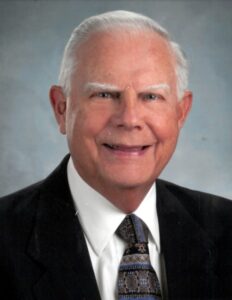
Frankie Rainey Jr., former pastor and professor, died May 19. He was 84. He was born Sept. 6, 1938, in Corsicana to Frankie and Mary Rainey. He was a graduate of Wayland Baptist University and Southwestern Baptist Theological Seminary, where he earned his doctorate. He served seven Texas Baptist churches as pastor. He was a professor of Christian studies 18 years at Howard Payne University and professor of biblical languages and campus pastor 10 years at Canadian Baptist Theological Seminary. He is survived by his wife of 65 years Sue Rainey, son Paul Rainey and his wife Tracie, daughter Rhonda Bertrand and her husband Ray, four grandchildren and eight great-grandchildren. A memorial service will be held at 10 a.m. on May 26 at First Baptist Church in Burleson.


Bestselling author and retired pastor Tim Keller dies at 72

WASHINGTON (RNS)—Tim Keller, an influential Presbyterian Church in America minister who founded a network of evangelical Christian churches in New York City, died. He was 72.

Known for his brainy and winsome approach to evangelism, Keller founded Redeemer Presbyterian Church in Manhattan in 1989 and grew the congregation into a hub for a network of churches across the city.

His 2008 book, The Reason for God: Belief in an Age of Skepticism, reached The New York Times bestseller list. His books sold more than 3 million copies.

Keller had been under treatment for pancreatic cancer after announcing in June 2020 that he had the disease. On May 18, Keller’s son Michael posted a message that his father had been released from the hospital and would receive hospice care at home.

“It is with a heavy heart that I write today to inform you that Redeemer Presbyterian Church founder and long-time senior pastor, Tim Keller, passed away this morning at age 72, trusting in the sure and certain hope of the resurrection,” Bruce Terrell, a leader of the Redeemer Leadership Network, wrote in an email announcing Keller’s death.

“We are forever grateful for his leadership, heart and dedication to sharing the love of Christ with others. While we will miss his presence here, we know he is rejoicing with his Savior in heaven,” Terrell wrote.

‘The Bible came alive’

Born Sept. 23, 1950, in Allentown, Penn., Timothy James Keller grew up in a Lutheran church and, later, in a congregation of a small denomination known as the Evangelical Congregational Church.

His mother wanted him to be a minister. But like many college students, he lost interest in practicing Christianity while studying at Bucknell University, even though he was a religion major, according to a recent biography.

Keller later recounted having a conversion experience as the result of being involved in an InterVarsity student ministry, where he learned to study the Bible from a ministry leader named Barbara Boyd.

“During college, the Bible came alive in a way that is hard to describe,” he wrote in his book, Jesus is the King.

“The best way I can put it is that, before the change, I pored over the Bible, questioning and analyzing it. But after the change, it was as if the Bible, or maybe Someone through the Bible, began poring over me, questioning and analyzing me.”

While attending Gordon-Conwell Seminary north of Boston, he became friends with Kathy Kristy, whom he had first met when visiting her sister, a classmate of Keller’s. After a rocky start, the two began dating while attending a summer class at Westminster Theological Seminary in Philadelphia, according to Timothy Keller: His Spiritual and Intellectual Formation, a recent biography by Collin Hansen. They later married.

After seminary, Keller became pastor of West Hopewell Presbyterian Church in Hopewell, Va., part of the newly formed Presbyterian Church in America, where he spent five years. There, his ministry was shaped by lessons he’d learned at the Ligonier Study Center run by R.C. Sproul, an influential Calvinist author and preacher. In particular, he held regular question-and-answer discussions with the congregation.

He then spent five years teaching at Westminster Theological Seminary before moving to New York to plant Redeemer in Manhattan. That startup church began meeting in space rented from a Seventh-day Adventist congregation.

Redeemer Church flourished in Manhattan

The church grew quickly to a group of 250, according to a history posted on its website. Unlike many urban churches, which drew crowds with rock bands, Redeemer became known for its traditional worship style and for Keller’s sermons, appealing to the mind as well as the heart. Redeemer eventually grew into a congregation of more than 5,000 and became known for planting other congregations in New York and beyond.

Keller told Christianity Today in a 2022 podcast he wanted people to see the Christian gospel as “intellectually credible” and to recognize that “it offers something that they’ve been looking for all their lives.” He said he also wanted newcomers to be “gratified participants.”

“They felt that they were not trespassers, they felt welcomed, they felt that they were expected, and they were not under pressure to immediately bow the knee,” he said.

Author Jonathan Rauch became friends with Keller in recent years. Despite their differences—Keller was a conservative evangelical pastor, Rauch is Jewish, atheistic and openly gay—Rauch said he never doubted his friend’s love.

“Though he was a man of profound learning, he always expressed it with curiosity and humility,” he said. “Though he was devoted to the church and a builder of institutions, he never forgot that individuals come first. Tim’s pastorate was universal, a gift to believers and unbelievers alike. When I hear the term ‘Christlike,’ I’ll think of him.”

“I was blessed to get to know Tim a bit over the past year,” said Karen Swallow Prior, a professor of literature and Religion News Service columnist. “He went out of his way a couple of times to reach out to me and offer personal encouragement and support at specific moments when I needed it. That showed me exactly the kind of person he is, and that’s the kind of person I want to be. Tim’s legacy is deep, wide, and immeasurable.”

Keller also was a leading figure in the Neo-Reformed movement as one of the co-founders of The Gospel Coalition. “We are a fellowship of evangelical churches in the Reformed tradition deeply committed to renewing our faith in the gospel of Christ and to reforming our ministry practices to conform fully to the Scriptures,” the group’s preamble says.

Conservative but not confrontational

Known for his conservative but non-confrontational approach to ministry, Keller came under fire in recent years from critics who said his “winsome” approach to engaging with culture no longer works in such a polarized time.

Keller told Religion News Service in a 2022 interview he found such criticism puzzling. As an evangelical pastor in New York, he said, his views were often in conflict with the broader culture. But that was not going to stop him from acting like a Christian.

 “This was never the neutral territory,” said Keller, who stepped down as pastor of Redeemer in 2017. “We always had opposition.”

John Starke, pastor of Apostles Church Uptown in New York City, said, “While Tim is often known for listening to his critics, I’m glad he listened to Jesus here more.”

Starke said Keller taught him the connection between knowledge and vibrant spirituality, but also how to pray.

“Tim taught many of us pastors who ministered in urban contexts how to have a cultural and theological grid when we thought and talked about the world around us,” Starke said. “But he also taught us how to pray for revival and experience personal spiritual renewal. It was both, and both were important to him.”

Unlike other evangelical pastors, Keller was skeptical of Donald Trump. He was part of a 2017 closed-door gathering of evangelical leaders who met at Wheaton College to try to figure out the movement’s future in the age of Trump.

“As the country has become more polarized, so has the church, and that’s because the church is not different enough from modernity,” Keller reportedly said at the meeting. “There’s now a red evangelicalism and a blue evangelicalism.”

Despite his illness, Keller kept writing. In his 2022 book, Forgive, he described the power of forgiveness, something he said many of his fellow Christians have lost faith in.

“A secret to overcoming evil is to see it as something distinct from the evildoer,” he wrote, “Our true enemy is the evil in the person and we want it defeated in him or her.”

In their update about Keller’s health on Thursday, Keller’s family said that he was grateful for all those who have prayed for him.

“I’m thankful for my family, that loves me. I’m thankful for the time God has given me, but I’m ready to see Jesus,” he prayed, according to the family update. “I can’t wait to see Jesus. Send me home.”

In addition to his wife and son Michael, Keller is survived by sons David and Jonathan, a sister, Sharon Johnson of Sorrento, Fla., his daughters-in-law Jennifer, Sara and Ann-Marie, and seven grandchildren.