Seminary alleges ‘imprudent’ and ‘unwise’ financial actions

FORT WORTH—Southwestern Baptist Theological Seminary trustees heard a report from a task force calling for “new financial guardrails” to guard against “imprudent” and “unwise” financial activities.

At the same April 19 meeting where the board approved a $35.9 million budget for the 2024 fiscal year and elected David S. Dockery as president, Chair Danny Roberts delivered a report from a trustee task force “that evaluated the former president’s expenses and financial management, following up on a request from trustees during their fall meeting.”

A Nov. 5, 2022, tweet from the seminary stated: “Update from Board Chairman Danny Roberts to our Southern Baptist Family: ‘We are in the process of an ongoing and detailed auditing into potential spending irregularities and past bidding processes that was demanded by the unanimous vote of the SWBTS Board of Trustees after hearing a financial report in a recent executive session at their October meeting. Please join us in praying for this process of transparency as it nears completion.’”

According to a report on the trustee meeting from the seminary’s office of communications, Roberts said the task force “was given unfettered access by the administration to all financial records of the institution.”

The task force found evidence of “imprudent” and “unwise” financial decisions, including “some activities contrary to institutional policies,” Roberts said.

However, he added, the group’s findings “did not rise to the level of requiring further action based on what is currently known.”

‘Need for greater accountability’

“The findings demonstrated a need for greater accountability and oversight for the institution,” Roberts said. “As a result, new financial guardrails will be implemented to provide for greater accountability to the trustees in order to prevent similar decision making in the future.”

The seminary news release did not provide any specific information about the “financial guardrails.”

Adam W. Greenway resigned as president of the seminary last September amid reports of a major budget deficit and significant turnover in faculty, staff and administration.

The following month, the seminary announced layoffs to avert a potential financial “crisis.” At that point, Dockery—acting as interim president—presented an organizational restructuring plan that cut operational and personnel costs by about $3.6 million.

Adam Greenway

On April 18, Greenway tweeted: “Many have asked what really happened re: me and @SWBTS. I have not commented publicly before now, and will not say much at this time, except to say that I fully expected an updated summary to be provided by the seminary some time ago. Why it has not, I do not know.”

When contacted by the Baptist Standard, Greenway reiterated his desire for Southwestern Seminary to provide a full accounting.

“I look forward to the seminary fulfilling its promise of transparency to Southern Baptists by releasing the full trustee investigative report, including all related findings, without edit or redaction,” Greenway said.

“I trust that all Southern Baptists will then be able to judge for themselves the veracity of the summary narrative presented in the seminary’s press release.”

When asked about a written report from the task force and the availability of such a report, James A. Smith, associate vice president for communications at the seminary responded: “The full board of trustees heard reports from members of the task force in executive session. Board members did not receive written reports.”

Southwestern Baptist Theological Seminary trustee chairman Kevin Ueckert (left) addresses trustees at a special called meeting at the Fort Worth campus. The board met to discuss the controversy surrounding Paige Patterson (right), then president of the seminary. (File Photo by Adam Covington/SWBTS via BP)

When he was elected as seminary president in 2019, Greenway had to deal with an already challenging situation. His predecessor, Paige Patterson, was fired by trustees in large part for his mishandling of sexual abuse complaints and his perceived disrespect for women.

During his time at Southwestern, Patterson expanded the faculty and led the seminary to take on several extensive—and expensive—construction projects during a period of significant enrollment decline.

In February, Southwestern Seminary accepted a nonbinding agreement to sell 15 acres of its B.H. Carroll Park to the City of Fort Worth for $11 million, and trustees affirmed the action by its business administration committee at their April 19 meeting. The city plans to use the property to provide housing for 140 homeless families and victims of domestic violence.

In other business, the board of trustees approved “Advance Southwestern: 2030,” an updated and expanded version of an academic plan adopted in 2021.

“Designed with the hope of bringing about institutional renewal and consensus, the plan serves as both an audit of our current situation and a pointer to the future, recognizing the vital need to bring much-needed unity and synergy to the Southwestern community,” the introduction to the 39-page plan states.

Trustees also granted the business administration committee authority to negotiate with Prestonwood Baptist Church in Plano to establish a Fort Worth branch of its pregnancy center on campus.

The board elected as officers for the 2023-24 academic year Jonathan Richard, pastor of First Baptist Church in Estancia, N.M., as chair; Robert Brown, executive director of Lakeway Christian Schools in Morristown, Tenn., as vice chair; and Angela Duncan, a homemaker from Granbury, as secretary.


Ronny Marriott nominee for BGCT first vice president

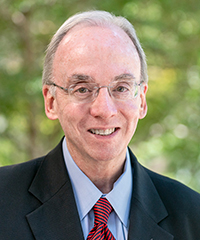
Ronny Marriott, incumbent second vice president of the Baptist General Convention of Texas and pastor of First Baptist Church in Burleson, will be nominated for Texas Baptists’ first vice president.

Albert Reyes, president and CEO of Buckner International and a former BGCT president, will nominate Marriott at Texas Baptists’ Family Gathering, July 16-18 in McAllen.

Reyes agreed to nominate Marriott after both of them learned the incumbent BGCT first vice president, Nebiye Kelile, will not seek a second term.

Kelile, pastor of both Pathway Church and Orchard Hills Baptist Church in Garland, previously served a one-year term as second vice president of the BGCT. The Baptist Standard contacted Kelile and confirmed he will not seek continued elected office at this time.

‘Creative and innovative’

Reyes praised Marriott as “a good leader” who has shown himself to be “solid and consistent.”

“He is one of us—an experienced Texas Baptist pastor” with first-hand knowledge about starting churches and revitalizing congregations, Reyes said.

Marriott’s missions experience includes trips to seven countries and involvement in five church-planting projects, he added.

Quoting Rice University sociologist Stephen Klineberg, Reyes said Texas is “undergoing an epic demographic transformation.”

“That has implications for Texas Baptist ministries and for state and global missions,” Reyes said.

“We need leaders like Ronny Marriott who are in the trenches—creative and innovative pastors who are reaching the lost in their communities. We need pastors who are reaching people for Christ in contextually relevant ways.”

Emphases of BGCT and Burleson church align

Marriott said he has enjoyed his experience as second vice president since his election to that post five months ago, and he wants to be of continued service to Texas Baptists.

“The things Texas Baptists are focused on are some of the same things we are emphasizing at First Baptist Church in Burleson,” he said.

Under Marriott’s leadership, the church has launched a residency program for young ministers. The two-year program offers practical experience in a congregational context, and it also provides residents leadership training and a monthly stipend.

“We have a heart for calling out the called,” Marriott said.

In response to a recommendation from Texas Baptists’ Gen Z/Millennial Task Force, the BGCT approved a motion at the 2022 annual meeting in Waco to explore the development of a residency program in which “young ministers are mentored and trained by established ministers.”

Marriott hopes he can offer insights from his church’s experience as Texas Baptists develop a residency program.

First Baptist Church in Burleson also has experience in helping to revitalize struggling congregations—another emphasis of the BGCT and its Center for Church Health.

“We have seen how these two programs can work together,” Marriott said, noting residents at First Baptist have gained practical experience by helping other congregations in its region.

“Young people who feel called to ministry need experience. We need thriving churches, and we’ve seen how they can come fully alive with just a little bit of help,” he said. “It’s a win-win for everybody.”

Marriott has led First Baptist Church in Burleson since 2016. Previously, he was pastor of First Baptist Church in Temple, First Baptist Church in Corpus Christi and Sunset Baptist Church in Dripping Springs.

He also served at Shady Oaks Baptist Church in Hurst—first as youth minister and later as senior pastor. His first experience in vocational ministry was serving on staff at Northlake Baptist Church in Dallas as youth pastor.

Marriott earned his undergraduate degree from Howard Payne University, and he holds a Master of Divinity degree and a Doctor of Ministry degree from Southwestern Baptist Theological Seminary.

He has served on Texas Baptists’ Theological Education Council, the BGCT Executive Board and the Christian Life Commission, as well as on the board of trustees at Howard Payne University.

He and his wife Robin have three children—Molly, Morgan and Ryan.


Around the State: UMHB students participate in Watson Scholars’ Day

More than 110 University of Mary Hardin-Baylor students unveiled their undergraduate and graduate research projects during the 2023 Watson Scholars’ Day. Sponsored by the university’s office of research, Watson Scholars’ Day requires students to identify a topic, conduct research and explain their findings publicly. In the quantitative category, Christine Flores placed first among graduate students for her research project, “Agreement Between Body Mass Index and Percent Body Fat in Resistance-Trained Men and Women,” and Catherine Porfirio, Emily Kinney, Jason Samuel, Alexis Stokes and Angela Valdez placed first among undergraduate students for their project, “Readability: A Study of STAAR Reading Levels for 2019, 2021 and 2022.” In the qualitative category, Kayla Abshire placed first for her research project, “A Study of Elementary Teachers’ Perceptions of Technology Support at Private Texas Schools During the Onset of the Global Pandemic.” In the literature review category, Amber Dickey placed first for her project, “The Shelf Life of Besremi: A Polycythemia Treatment: A Literature Analysis.”

Marshall Hall on the East Texas Baptist University campus. (ETBU Photo)

East Texas Baptist University’s office of academic success and the Academic Center for Excellence tutoring lab was awarded certification as a Level 1 certified tutor training program by the internationally recognized College Reading and Learning Association. Achieving certification means ETBU has met the association’s high standards for tutor selection, training, direct service and evaluation as an integral part of its overall tutoring program. The Academic Center for Excellence tutoring lab provides free resources to students for all of ETBU’s general education and major-specific gateway courses. The tutoring lab is open 20-plus hours each week and provides more than 1,100 one-on-one appointments every school year. Tutors also work closely with faculty members to provide supplemental instruction and large-group test preparation sessions in an effort to create strong study habits in ETBU’s undergraduate population.

Wayland Baptist University’s Kenneth L. Maddox School of Mathematics and Sciences received a $75,000 equipment grant for chemistry research from the Welch Foundation. Robert Moore, professor of chemistry and author of the grant request, said the funding will help the university purchase a benchtop nuclear magnetic resonance spectrometer, which is useful for identifying organic compounds. It is the last piece of equipment needed for the school to be in line with the required holdings of an American Chemical Society certified degree program. The grant also will enable the university to buy a multi-mode microplate detection system, which has broad applications, including cancer research, Moore said. “This grant will enable our faculty to continue to work closely with our students to pioneer science research and enhance their educational experiences through hands-on learning,” said Cindy McClenagan, vice president of academic affairs. “We are grateful for the Welch Foundation’s investment in our university and our shared commitment to advancing scientific knowledge and innovation.”

Chloe Spiller

Chloe Spiller, a cyber engineering student at Houston Christian University, was awarded the Department of Defense Science, Mathematics and Research for Transformation Scholarship. Spiller becomes the first Department of Defense SMART Scholar at HCU, formerly Houston Baptist University. She is among 526 students chosen from across the country to participate in the SMART scholarship-for-service program in 2023. This award provides students full tuition for up to five years, along with mentorship, summer internships, a stipend and full-time employment with the Department of Defense after graduation. It offers students hands-on experience at one of more than 200 Department of Defense facilities during their internships and the chance to apply this knowledge as early career professionals. During summer internships, SMART scholars work directly with an experienced mentor, gaining technical skills.

Anniversary

50th for Houston Northwest Church. Steve Bezner is pastor.


Seminary names Dockery president, Hawkins chancellor

FORT WORTH—Southwestern Baptist Theological Seminary trustees announced they unanimously elected David S. Dockery as president and O.S. Hawkins as chancellor at their April 19 meeting.

In announcing Dockery’s election as the seminary’s 10th president, Trustee Chair Danny Roberts called him “God’s man for Southwestern Seminary at this time.”

A ‘critical juncture’ in the seminary’s history

“Our seminary’s at a critical juncture in this 115-year history,” Roberts said. “And in God’s providence, he has already provided the man to lead our seminary during this time.”

(Southwestern Baptist Theological Seminary Photo)

Dockery served as interim president and Hawkins as senior adviser and ambassador-at-large for the seminary since last September, following the resignation of Adam W. Greenway as president.

Initially, trustees had named Hawkins, former president of Guidestone Financial Services, as acting president immediately after they accepted Greenway’s resignation.

Five days later, the board met in executive session by video conference and announced Dockery and Hawkins would work “in tandem” to address what Hawkins called the “external and internal challenges facing the seminary.”

During Greenway’s time as president, the seminary experienced significant turnover in faculty, staff and administration, and it was running a major deficit.

Southwestern Baptist Theological Seminary accepted a nonbinding agreement to sell 15 acres of its B.H. Carroll Park to the City of Fort Worth for $11 million. (Southwestern Seminary Image)

Last October, Southwestern Seminary announced layoffs to avert a potential financial “crisis,” and Dockery presented trustees an organizational restructuring plan that cut operational and personnel costs by about $3.6 million.

In February, the seminary accepted a nonbinding agreement to sell 15 acres of its B.H. Carroll Park to the City of Fort Worth for $11 million. The city plans to use the property to provide housing for 140 homeless families and victims of domestic violence.

No need to ‘look further’ for president

Roberts said trustees did not need to “look further for our next president” based on Dockery’s “impressive performance as interim [president], providing stability and healing, his long track record of outstanding Christian leadership in higher education, with the current needs of the institution.”

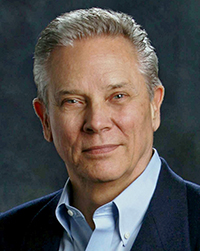
David S. Dockery

Although a presidential search committee would be typical, “Southwestern’s current challenges are best faced with clarity in the office of the president as soon as possible and for the future,” he said.

Roberts noted it. is not the first time a president of Southwestern was elected without a search process, referring to the seminary’s second president, L.R. Scarborough.

“We have settled today who our leader is, and we may move forward as we continue to seek God’s favor on Seminary Hill, as we equip men and women of the next generation of ministers to the calling that God has given them,” he said.

‘Deeply humbled and genuinely grateful’

Dockery said he was “deeply humbled and genuinely grateful for the privilege and responsibility to serve” as Southwestern’s president.

“I am truly thankful for the overwhelming support from the board of trustees as well as for the faithful encouragement and prayerful support from the faculty, staff, colleagues and students,” Dockery said. “What an honor it will be to continue to serve side-by-side with O.S. Hawkins, a dear friend and person that I greatly admire and from whom I have learned much in recent months.

“We recognize that we stand on the shoulders of so many who’ve gone before us. I love this institution and the best aspects of its history. We will, with God’s help, seek to carry forward in the future the best of Southwestern’s heritage and the Southwestern spirit.”

Dockery said he trusts in the “Lord’s favor and blessings to rest on Southwestern Seminary and Texas Baptist College in the days to come.”

New role of chancellor

Roberts expressed gratitude for Hawkins’s willingness to accept the new role of chancellor in which he “will continue to offer his experience as statesman and influence in this seminary and in this community.”

“There are really few leaders in Southern Baptist Convention life who have the impeccable leadership credentials of Dr. Hawkins has with the sterling track record of 25 years as president of GuideStone Financial Resources, among other places of service,” Roberts said.

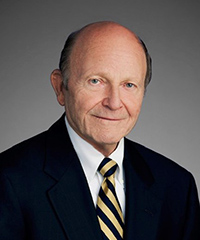
O.S. Hawkins

Hawkins would continue to serve as a volunteer and will report to Dockery by providing “counsel, offer support and guidance, develop contacts, raise funds and bring his influence, credibility, and good will and gravitas to our seminary community,” Roberts said.

“This change in title will greatly aid his efforts in supporting the seminary,” Roberts said. “And we are blessed that this Southwesterner is willing to serve our seminary at this strategic moment in our history.”

As a two-time graduate of Southwestern, Hawkins said his service to the seminary is in gratitude for what the institution has meant to him.

“I have loved Southwestern since the first day I attended classes in January 1970, and I feel a sense of indebtedness to all those who invested so much in my own journey to the M.Div. and Ph.D. degrees on this hill,” Hawkins said.

“While I will be serving alongside Dr. Dockery in the new role of chancellor, I will be volunteering my time and whatever gifts and talents God has given me to prayerfully advance the school into what we hope and prayerfully expect to be a brighter tomorrow. We are calling on all Southwesterners to join us on this journey.”

Experience as a scholar and administrator

Dockery, who earned the Master of Divinity degree from Southwestern Seminary in 1981, joined the seminary faculty in 2019 when he was named distinguished professor of theology and theologian-in-residence for the B.H. Carroll Center for Baptist Heritage and Mission.

He served as special consultant to the president, and from December 2020 to February 2022, he also served as interim provost at Southwestern. He is the inaugural director of the Dockery Center for Global Evangelical Theology, named in his honor by the board of trustees at their spring 2022 meeting.

After a lengthy career in Christian higher educational leadership at Trinity International University, Union University and Southern Baptist Theological Seminary, Dockery was invited in 2019 to assist with the founding of the International Alliance for Christian Education.

He also served as president of the Evangelical Theological Society and board chair of the Council for Christian Colleges and Universities, Christian College Consortium, and Consortium for Global Education.

In addition to his degree from Southwestern Seminary, Dockery holds an undergraduate degree from the University of Alabama at Birmingham, a Master of Divinity degree from Grace Theological Seminary, a Master of Arts degree from Texas Christian University and a Ph.D. from the University of Texas at Arlington.

He was named a distinguished alumnus by Southwestern Seminary in 2002.

Dockery has written, edited or contributed to nearly 100 books, and he served as the New Testament editor for the 40-volume New American Commentary Series. He was general editor of the 15-volume Reclaiming the Christian Intellectual Tradition Series and is co-editor of the multi-volume Theology for the People of God series. He is general editor of the forthcoming New English Translation Study Bible.

Dockery and his wife Lanese have been married more than 47 years, and they have three married sons and eight grandchildren.

Hawkins retired in March 2022 as the president and CEO of GuideStone after a quarter-century leading the SBC entity. He previously was pastor of First Baptist Church in Dallas and First Baptist Church in Fort Lauderdale, Fla.

He has written more than 40 books and received the distinguished alumni award from Southwestern Seminary in 2000.

He and his wife Susie have been married since 1970. They have two married daughters and six grandchildren.

Based on information provided by the Southwestern Baptist Theological Seminary communications office, with additional reporting by Managing Editor Ken Camp. 


TBM offers shelter to those whose world has been shaken

ANTAKYA, Turkey—A heart breaks as naturally as it loves. And traversing Antakya, Turkey, it crumbles like the buildings.

In Antakya, Turkey, a February earthquake left 300,000 people homeless in less than two minutes. (TBM Photo / John Hall)

This once bustling city of 400,000 people now looks post-apocalyptic. Any structures not reduced to rubble by a February earthquake are leaning, cracked or both. More than 300,000 people became homeless in less than two minutes, with many of them leaving the city.

Six Texas Baptist Men volunteers came to this devastated landscape to put together simple shelters for families who had lost their homes to the earthquake.

The metal buildings provide safe places for families to live the next several years, empowering them to move out of cracked structures or flimsy tents.

These Quonset-hut-style, half-cylindrical shelters are being built in a place that feels like a scene out of a movie. Electricity is hard to come by, and water is even harder. Don’t even ask about sewage management.

Residents—often including children—scavenge through the rubble for scrap metal they can sell or reuse. Small emergency tents dot the city, giving a small source of protection for families. Long lines of people form daily for food and water distributions, as well as government support checks.

Begin with a basic need—provide shelter

In such a desperate situation, it’s hard to know where to begin offering relief and recovery. A TBM team started with the basics.

TBM volunteers Chris Roberts (left) and Robert Watson (right) work in Atkakya, Turkey. (TBM Photo / John Hall)

“Historically, Christians were first called Christians here in Antioch,” said Team Leader Robert Watson from First Baptist Church in Tyler. “They were called that because they were ‘little Christs.’ They were living out the teachings of Jesus. That’s what we want to do here.”

TBM volunteers, working alongside an in-country partner, fought supply-chain issues and used the trial-and-error method to devise a custom template for housing in this situation. The team outlined a system whereby the shelters, measuring 3 meters by 9 meters, can be crafted and installed faster by future volunteers.

TBM has provided funds for 20 homes in the city. That can’t meet the need of everyone here. No one team or one organization could. But the TBM team sought to do what it could.

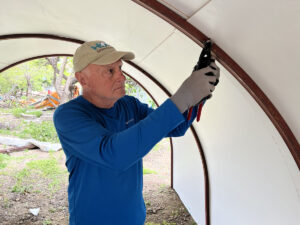
TBM volunteer Michael Gilbert work on a shelter for a family displaced by the earthquake that rocked Turkey in February. (TBM Photo/ John Hall)

“We’re trying to make an impact in individual homes and families,” said TBM team member Mike Gillert from First Baptist Church in Athens. “Hopefully it will make a difference for families, and they will know God loves them.”

The Turks certainly appreciated the team’s work. They pitched in to help where they could. They cleaned the lots for the houses and worked alongside the Texans where possible. Even children excitedly stepped in to hold tools and drive in stakes.

Using hand gestures and Google Translate, team members were able to communicate and connect with those they served. In many cases, the Turks wanted to know everything they could about these Texans who traveled around the globe to help them.

After building the homes, the teams gave some of the families water filters and boxes of food. Conversations led to opportunities to encourage people and pray with them.

“They’re just as interested in us as we are in them,” team member Chris Roberts from First Baptist Church in Tyler said. “They want to know where we’re from, why we’re doing this.”

The team was particularly affected by serving a woman in a wheelchair. After the earthquake, she was unable to return to her upstairs apartment and was living in a makeshift area in a cracked living room.

As soon as the team arrived, she rolled out to greet those who were helping her. She visited with most of the team and expressed her appreciation. She even wanted a photo with the team to remember them.

‘Building these homes for Jesus and his children’

TBM volunteer Joe Fuller works atop a newly constructed shelter the team built in Antakya, Turkey. (TBM Photo / John Hall)

At another home, 8-year-old Amen joined the crew to build his home in the rain. Seeing his excitement and energy spurred them along.

“That’s our job,” said team member Joe Fuller from The Heights Baptist Church in Richardson. “Jesus told us what we do for the least of these we do for him. As far as I’m concerned, we’re building these homes for Jesus and his children.”

Hugs and tears flowed upon the completion of each home. Families often offered coffee, tea and even small sweets from their small supplies.

“They’re thrilled,” Roberts said. “They’re overwhelmed. I’m honored to be able to help give them a place to rest their head, where they can get out of the weather.”

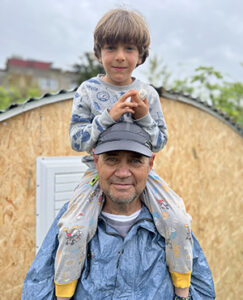
TBM volunteer R.L. Barnard and a newfound friend are pictured in front of a shelter the Texas team built in Turkey. (TBM Photo / John Hall)

The experience transformed the team as well as the Turks. Instead of seeing Turkey simply in terms of political and religious stances, they met the Turks themselves and found it easy to identify things in common. Children want to play. Parents want to provide for them. They want what’s best for their families and their community.

“These are folks just like you and me who need help,” Roberts said. “I’m glad to see the human side of it. They’re just folks like us. We can help them.”

Hoisting Amen on his shoulders, team member R.L. Barnard from First Baptist Church in Duncanville couldn’t help but smile as the child waved a Turkey flag.

The road to recovery is long. But for the families these Texans served, it has started.

“I have a real soft spot for these people,” Barnard said. “And I always will.”


TV preacher and SBC leader Charles Stanley dies

WASHINGTON (RNS)—Charles Stanley, a former Southern Baptist Convention president, Atlanta pastor and longtime religious broadcaster, died April 18. He was 90.

 “We are saddened to share that our beloved pastor, Dr. Charles Stanley, has passed away,” reads a statement on the website of In Touch Ministries. “We are forever indebted to him for his godly example, biblical teaching, and devotion to the gospel. Please join us in prayer for the Stanley family.”

Stanley, a native of Dry Fork, Va., felt called to ministry as a teenager and, after pastorates in North Carolina, Ohio and Florida, led First Baptist Church in Atlanta as its senior pastor for five decades.

Influential religious broadcaster

In 1972, he began his broadcast ministry with “The Chapel Hour,” a 30-minute program on two Atlanta television stations. It was renamed “In Touch With Dr. Charles Stanley” and became a nationwide broadcast on the Christian Broadcasting Network in 1978.

By the 1980s, “In Touch” reached more than 1 million households, his website said. At the time of Stanley’s death, his messages were heard in more than 127 languages on TV and radio, making him one of the longest-serving pastors with a continuous weekly broadcast program.

“Dr. Stanley leaves behind a lasting legacy as a torch-bearer and trailblazer of gospel ministry and Christian broadcasting,” said Troy A. Miller, president of National Religious Broadcasters.

“We were blessed to have such a faithful servant of the Lord as a veteran NRB member and a faithful supporter and encourager of the work of NRB. Our condolences and prayers are with Dr. Stanley’s family. Although we mourn his loss in this life, it is a joy to know that he is with his Lord and Savior.”

Stanley was inducted into the NRB Hall of Fame in 1988.

Presided over two mammoth SBC meetings

He served two consecutive one-year terms as SBC president, presiding over its largest meetings—the Dallas convention in 1985 that drew 45,531 messengers and the Atlanta meeting in 1986 that attracted 50,987 messengers—and helped lead the so-called conservative resurgence.

Charles Stanley preached to the Southern Baptist Convention at its annual meeting in Atlanta in 1986. (Photo courtesy of Southern Baptist Historical Collection and Archives)

Current SBC President Bart Barber, pastor of First Baptist Church in Farmersville tweeted about Stanley’s longtime influence.

“Condolences to the family of Charles Stanley, former SBC President, Conservative Resurgence leader, nationally-known preacher, and successful author,” Barber tweeted. “As a teenaged preacher, I was reading Charles Stanley resources.”

Evangelist Greg Laurie tweeted: “Charles Stanley went to Heaven today. He made his mark on this world for the Gospel and his incredible teaching of God’s Word. I like so many others was blessed by hearing his messages on the radio and TV and he was a trusted voice we have all been encouraged by.”

Younger and older Christian leaders weighed in about Stanley’s prominence, with evangelist Nick Hall calling him a “hero of the faith” and Focus on the Family founder James Dobson calling his colleague “an effective evangelist.”

“Stanley had a straightforward take on how to live the Christian life—trust Scripture and obey God,” Dobson added. “That simple mantra undergirds his legacy and no doubt is reflected in the faith of countless Christians who have been impacted by his ministry.”

The author of dozens of books was recognized by people in the grassroots as well as in the highest echelons of American society.

“I read every morning, the Bible and Scriptures and Charles Stanley devotionals,” President George W. Bush said in a 2003 interview with Ladies’ Home Journal. “It matters a lot to me personally.”

Difficult early life

Stanley’s rise in influence came after a difficult young life. When he was 9 months old, his father died. Young Stanley’s mother remarried when he was 9, but he said her new husband spurned him.

“And if somebody would have said, ‘Well, that didn’t bother you did it?’ I probably would have said ‘no,’” he told Religion News Service in a 2014 interview about his book Emotions: Confront the Lies. Conquer With Truth.

“But years later, I realized that those years of rejection as a kid really sunk deep into me. Finally, after a lot of praying and having some friends of mine speak with me about it, I was able to get over that rejection.”

In 2015, Stanley, whose views criticizing homosexuality and same-sex marriage mirrored that of many Southern Baptists, declined an award he had planned to accept from the Jewish National Fund in Atlanta.

After many Jews opposed him receiving the honor, Stanley chose to turn down the award, citing his love for Israel and the strife the award was causing in the Jewish community, according to the JNF.

As recently as 2010, Stanley ranked among the most influential preachers, behind evangelist Billy Graham and pastor and author Charles Swindoll. He and Rick Warren, then pastor of Saddleback Church, were each listed third in a Lifeway Research survey.

Strained family relations

Stanley’s wife Anna filed for divorce in 1993. After a period of reconciliation, the couple divorced in 2000, after 44 years of marriage.

Stanley, known as a spokesman for conservative family values, at one time had told his congregation he would resign if he divorced, but later he determined he’d continue to be its leader.

“The love you have shown me and the love I have for you have encouraged me to remain faithful to God’s call on my life,” Stanley told his congregants.

Gearl Spicer, administrative pastor for First Baptist Atlanta at the time, said, “It is my biblical, spiritual, and personal conviction that God has positioned Dr. Stanley in a place where his personal pain has validated his ability to minister to all of us.”

Anna Stanley died in 2014 of pneumonia and other health issues at age 83.

For a time, the divorce led to a ruptured relationship with son Andy Stanley, founding senior pastor of North Point Community Church in Atlanta, but the father and son later reconciled.  In addition to his son, Stanley is survived by daughter Becky Stanley Brodersen, six grandchildren, three great-grandchildren and half-sister Susie Cox.

No fear of death

Charles Stanley became First Baptist Atlanta’s pastor emeritus in 2020, after serving the megachurch for 50 years in its top role.

“As much as I love being your pastor, I know in my heart this season has come to an end,” the senior Stanley said at the time.

“I’ll continue to preach the gospel as long as God allows, and my goal remains the same: to get the truth of the gospel to as many people as possible as quickly as possible in the power of the Holy Spirit to the glory of God.”

When he spoke with RNS in 2014, Stanley said he did not fear death.

“No, I don’t, for the simple reason that God makes it clear in his word: ‘Absent from the body, present with the Lord,’ for those of us who know Christ as Savior,” he said, citing a verse from 2 Corinthians. “And the fact that Jesus died at Calvary, and his blood shed for us paid our sin debt in full, there is no reason to fear death. So, I don’t.”

With additional reporting from Baptist Press.


ERLC chief Leatherwood urges red flag law
 in Tennessee

WASHINGTON (RNS)—In late March, Brent Leatherwood got what he called “the most terrifying call a parent could imagine.”

There was a shooter at the Covenant School in Nashville, Tenn., where his three children attend.

His children survived the attack. Three of their schoolmates did not. Three of the staff at the school also were killed.

But Leatherwood’s personal connection to the school seems to have translated into a professional decision.

Letter to Tennessee lawmakers

Identifying himself as a Covenant parent, a gun owner and the current president of the Southern Baptist Convention’s Ethics and Religious Liberty Commission, Leatherwood—a former Tennessee Republican Party official—wrote to the state’s political leaders last week urging them to act to prevent gun violence.

In a letter addressed to Tennessee’s lieutenant governor, the speaker of its House of Representatives and every legislator, Leatherwood said God had given them the responsibility “to oppose evil and protect innocent lives.”

He urged them to act in support of a proposal from Tennessee Gov. Bill Lee to pass a “red flag” law to remove guns from people who are a danger to themselves or others.

“This proposal values life, both the life of the person in distress and anyone who may become a target in their anguish,” Leatherwood wrote.

“Removing their ability to inflict harm on themselves or others is in line with our state’s strong commitment to protecting the sanctity of life.”

‘Never an excuse for inaction’

Leatherwood, who declined an interview request, told legislators and other state leaders they could respect the Second Amendment and still protect children. He thanked legislators for a new law that allows private schools to hire police as school resource officers.

The governor signed that law days after the shooting. He also signed an executive order allowing more background checks on firearm sales.

In Leatherwood’s letter, he cited the Bible, specifically a passage from Genesis about every person being made in God’s image, and Jesus’ command to “love your neighbor as yourself.”

“Yes, it is true we live in a world tainted by terrible acts and deeds, but that is never an excuse for inaction,” he wrote.

“While it may not prevent every instance of this sort of violence, it will prevent some, and thereby save innocent lives. That should be more than enough reason to advance this proposal.”

‘Minimize the threat of gun violence’

Southern Baptists have passed resolutions in recent years calling for action on the pandemic of mass shootings in the United States. In 2018, they passed a resolution in the wake of a mass shooting at a Texas church in Sutherland Springs, calling on “federal, state, and local authorities to implement preventative measures that would reduce gun violence and mass shooting.”

A 2022 resolution, which Leatherwood quoted in his letter, also called for action.

“We earnestly pray for our local, state, and federal leaders to recognize the seriousness of the ongoing threat of mass shootings throughout our society and to take concrete steps, towards solutions that uphold the dignity and value of every human life, especially the most vulnerable among us, and to minimize the threat of gun violence throughout our society,” the resolution read.

Passing gun legislation in Tennessee, where evangelicals are one of the largest faith groups, is complicated. State leaders have worked for years to loosen gun regulations—including allowing people over 21 to carry concealed weapons without a permit.

The shooting at Covenant has led to large protests at the statehouse, by students and by faith groups calling for action on gun violence.


Rapture triggers haunt the Left Behind generation

WASHINGTON (RNS)—When a pandemic caused shutdowns across the globe in March 2020, Stacie Grahn thought it was the literal end of the world.

Stacie Grahn

“I thought: ‘This is it. We’re all in our homes. Is this when we’re all going to disappear?’” Grahn said in a phone call from British Columbia. “With the vaccine, I thought: ‘Is this how they’re going to separate us? Is this going to be the mark of the beast we have to take?’”

For those like Grahn who are taught the rapture can happen at any second, the End Times are more than fodder for apocalyptic fiction. Fear-saturated stories about the saved being transported to heaven while the world faces havoc and hellfire can generate lifelong panic, paranoia and anxiety, reorienting people’s lives around what’s to come instead of what is.

These religious beliefs have societal implications, too. Why care about the refugee crisis or climate change if the world is doomed?

Rapture a relatively recent concept

Belief in the Second Coming of Christ is as old as the church, but the concept of the rapture is a relatively recent early 19th-century phenomenon, most often embraced in evangelical or fundamentalist circles.

In the late 20th century, it was reinforced through popular media, including Hal Lindsay’s 1970 bestseller The Late Great Planet Earth, which interpreted world events as signs of the end times, as well as the 1972 thriller A Thief in the Night and, in the 1990s, Tim LaHaye and Jerry B. Jenkins’ wildly popular Left Behind series.
But, as Grahn could tell you, these ideas aren’t relics of the past. Grahn’s grandmother first introduced her to the rapture at a young age via videos of End Times ministries and preachers like JD Farag. Anything her grandmother planned was with an asterisk.

“We can plan that, but the Lord could be coming back,” Grahn recalled her grandmother saying.

Prepping for disaster

Unlike Grahn, Nikki G, 46, came to view the rapture as gospel later in life. In 2010, she uprooted her life to join the International House of Prayer in Kansas City, Mo. As a survivor of several high-control religious groups. she asked to go by her first name due to safety concerns.

Nikki was attracted by the fervency of the group, which has been hosting 24/7 worship and prayer since 1999 and has a distinct End Times flavor.

“We believe that the church will go through the Great Tribulation with great power and victory and will only be raptured at the end of the Great Tribulation. No one can know with certainty the timing of the Lord’s return,” the organization’s website says.

As a result of the apocalyptic messaging she heard in these groups, Nikki said she rejected materialism, began canning food and strategized survival tactics. But prepping to survive until the rapture took a toll on Nikki.

“It’s very dehumanizing,” Nikki said. “You’re not present. You’re always in the future. You are disassociated from your body, your nervous system and yourself, and ultimately you become the theology. … I was no longer Nikki, when I was in all of that.”

She experienced nightmares, flashbacks and insomnia years after leaving.

Anecdotal evidence of anxiety and fear

Therapist Mark Gregory Karris said, while there’s little research on rapture-related trauma, anecdotal evidence suggests people can experience anxiety, fear and disrupted life plans because of such teachings. He said it especially is true among those who emphasize the immediacy of the rapture, the torment of those left behind and the need to be good enough to win God’s approval. Some who ingest these beliefs see future plans as futile, even faithless.

That was the case for Diana Frazier, 39, who grew up in an Assemblies of God church in Poulsbo, Wash.

“I remember sobbing multiple times as a little kid, thinking I will never get to get married, I will never get to have children. There’s no point in having any kind of dream for my future because I’ll be in heaven,” she said. “And then I would have guilt and shame, even as a little kid, because I’d know I was supposed to be happy about that.”

As a teen, Frazier participated in a youth group-sponsored hell house, a riff on haunted houses that portrayed sinful scenarios—like drunken car crashes and an abortion clinic—that led to hell.

Afterward, participants were invited to say the “sinner’s prayer.” Inundated with images of the terror she’d face if she wasn’t chosen by God, Frazier constantly was vigilant, ready to respond to disaster. But there was a cost.

“Humans aren’t meant to survive like that. Walking around with a fire extinguisher going all the time when there’s no fire is exhausting.”

Frazier paused her education after receiving her associate degree, in part because she thought Jesus would arrive at any time. Even when she had doubts, the risk of leaving her church community felt too high. She’d be forsaking her friends, her family and, later, as a parent, potentially jeopardizing her kids’ salvation.

“I’d be literally losing everything, for what? To go to college? Get a career?” she asked.

Fear of being ‘Left Behind’

“Left Behind” movie poster, photo courtesy of Stoney Lake Entertainment.

April Sochia, 41, grew up in a Baptist community in the Adirondack Mountains of New York state and began to fear the rapture after reading the Left Behind series in college.

“I felt great pressure to force my kids to say the sinner’s prayer, because it was their ticket to heaven,” she said. “If the rapture happened, they had to say the sinner’s prayer, but it had to be genuine enough so they wouldn’t get left behind.”

According to Nikki, who now works as a certified trauma recovery coach, it’s common for people who believe in the rapture to evaluate and judge themselves constantly, seeking to be right with God so they won’t be judged harshly in the end times.

Andrew Pledger, 23, was part of the Independent Fundamental Baptist movement as a child in Walkertown, N.C., when his 4-H Club took a field trip to a local farm. Before the farm tour started, Pledger went to the bathroom. When he came out, no one was there.

“I remember just dread and fear going throughout all of me,” he said. “I couldn’t hear anyone’s voices, they were just gone. I remember running around the yard screaming and yelling for my mother … those five minutes of that fear and rapture anxiety, it was a lot.”

Though Pledger no longer believes in the rapture, his body remembers. Just over a month ago, a plane flew low over his current home in Greenville, S.C., and the sound—so familiar in the rapture genre—shocked him into fight or flight mode.

“It’s so frustrating, the cognitive dissonance of, I don’t believe in the rapture anymore, but I experienced that,” he told RNS.

Concept ‘read back’ into the New Testament

Therapist Karris said much like people experience phantom limbs, people can experience “phantom ideas” even after rejecting the idea of the rapture.

“That’s why it lasts so long, because we’re talking about it being in the tracks of the nervous system,” he said.

Of course, belief in the rapture doesn’t always translate into trauma. For some, the promise of being chosen by God and escaping the world’s troubles is profoundly reassuring.

Still, the fact that some experience severe consequences shouldn’t be downplayed, Karris asserted.

Tina Pippin, a professor of religion at Agnes Scott College in Decatur, Ga., said the rapture isn’t strictly biblical. It’s a concept that’s “read back” into New Testament passages, which get “sort of appropriated or misappropriated,” Pippin said, in Scriptures like 1 Thessalonians 4, which says that those who are “alive and are left” will “meet the Lord in the air.”

With 39 percent of American adults believing humanity is living in the end times, Pippin said, it’s important to assess the far-reaching implications of apocalyptic beliefs.

“The rapture is not just a theological position, it’s also a political one, and I think a really dangerous one,” said Pippin, who criticized those who ignore or even welcome global tragedies as precursors to Jesus’ return.

As awareness around rapture anxiety grows, many who’ve been impacted by rapture teachings are reassessing their beliefs and finding physical, emotional and spiritual healing.

During the height of the pandemic, Frazier stepped away from her church community. She still believes humans are “all divinely connected” and hopes to return to school to become a therapist.

For Grahn, the rapture panic she felt during the pandemic was the beginning of her faith unravelling. She no longer believes in Christianity or the rapture and holds space for religious trauma survivors on social media through her @apostacie accounts.

Her grandmother is still awaiting a heavenly ascent.

“I wouldn’t bring it up with my grandma. … They believe, as much as we know Christmas is on Dec. 25 every year, they believe it will happen at any moment,” said Grahn. “To them, it’s heaven or hell. They’re not going to give that up or take that chance.”


Singing Men to reach Ukrainian refugees on Poland tour

MARIUPOL, Ukraine (BP)—The Mariupol Baptist church where Trent Blackley last performed is rubble, the city hard hit by Russian military forces who have killed 8,500 Ukrainian civilians in the war on Ukraine.

The Singing Men of Texas performed before capacity crowds at multiple venues during their 2017 Ukraine mission trip. (File Photo courtesy of Singing Men of Texas_)

“It was good that we got to Ukraine while we could,” said Blackley, director of the North Texas chapter of the Singing Men of Texas and lead vocalist and accompanying guitarist for the Texas Country Boys ensemble.

“One of the churches we were in was in Mariupol, and that’s the city that just got totally devastated, right on the sea of Azov. We’ve seen some before and after pictures of their worship center. It’s rubble now.”

Blackley was last in Mariupol in 2017 with the Texas Country Boys, which grew from the larger Singing Men of Texas. Blackley continues to minister to Ukrainian refugees, this time in a Singing Men of Texas concert tour of Poland April 17-28 with Southern Baptist evangelist Michael Gott and Gott’s wife Jan.

Gott last evangelized in Mariupol “just a few weeks before the Russians began attacking that city,” he told Baptist Press. “And we saw the very hall where we held the concert bombed or at least destroyed by the rockets, and now it’s all under the control of the Russians.”

It was “breathtaking” to see “how God gave us unique opportunities just before the curtain fell,” Gott added.

Ukrainians packed to capacity the multiple venues where the Singing Men of North Central Texas performed during their 2015 missions tour with international evangelist Michael Gott. (File Photo)

Founded in 1975 and composed primarily of Baptist ministers of music, the Singing Men of Texas have sung numerous times in Ukraine in partnership with Gott since 2010. England, Romania, Brazil, China and Spain are among the group’s international travels, in addition to concerts across the United States.

Blackley has kept in touch with Ukrainian pastors who have hosted performances there.

“So many of them, it’s every situation you can imagine. Some of them are there, and they’re leading their communities to respond to people’s needs in the community,” Blackley said of the pastors.

“And then there are others—a lot of the younger ones—that have gone to Poland, and they’re working there in ministry, or some that we know of that are in Texas. So we’ve been able to keep up with them, mostly through social media.”

Perform concerts, proclaim the gospel

The 90-member North Central chapter of the Singing Men, the largest chapter in the state, will take a group of 113 on the Poland tour, including wives. The men will sing most songs in English, with Ukrainian and Polish subtitles.

Gott will preach brief evangelistic messages translated in Polish at the end of each concert and distribute more than 1,000 Polish New Testaments with the Psalms donated by the Eastern European Mission.

Eastern European Mission distributed 2 million Bibles in Eastern and Central Europe in 2022, the group’s president Bob Burckle said, continuing its ministry that began in 1961 by smuggling Bibles and other Christian materials to the Soviet Union.

“Our mission statement is, ‘The Bible, we want everyone to get it,’” Burckle said. “And there’s a double meaning in the English language. We physically want to get the Bible into people’s hands. … You read it and you get it in your head, and then from the head, you get it in your heart.”

Thousands have written professions of faith at Singing Men of Texas and Gott outreach events, Blackley and Gott both noted.

“What we’ve found is music is just a very powerful tool to bind our hearts with other people,” Blackley said. “The fact that we come in and rent a hall there in their city, and they can come and enjoy a great concert in one of the finest music halls in their town, seems to be very attractive to them.

“Because of the experiences we’ve had over these last 12 or 13 years, we’ve seen God move in a really powerful way when we’ve combined our music with a simple gospel message from Michael Gott,” Blackley said.

“And that’s really been kind of the catalyst for everything we’ve done, even stateside. We’ve had great response from guys who want to see God at work.”

“House of the Lord,” “Jesus Brought Me Out,” Swing Down Sweet Chariot,” and “Sing the Story” are among a repertoire the group will sing, including various genres of Christian music.

In Lodz, the last concert on the Poland tour, the group will sing in a choral festival including several local choirs. The program will include “Agnus Dei,” the lone song the Singing Men will present in the Polish language.

“I think perhaps it’s easier to sing it than to speak it,” Blackley said.

Uneasy but open to the gospel

Blackley was in Poland in October 2022 with the Texas Country Boys. He found refugees in various states of recovery.

“Those that had kind of landed on their feet and had connections there within Poland, they were in good spirits and taken care of,” Blackley said. “And those who came across with nothing, not knowing anyone, they were still trying to figure things out.”

Many in Poland remain uneasy about the war.

“From the Polish people … there was just a very uneasy feeling, because they hoped that they weren’t the next to incur some wrath from (Russian President Vladimir) Putin,” Blackley said. “But I do believe that that made them extra open to the gospel message.”

The Gotts arrived in Poland in advance of the tour to handle logistical details. There, they met many Ukrainian refugees.

michael gott200
Evangelist Michael Gott

“Some of these people are just a step away from breaking into tears because they are living with incredible stress,” Gott said.

He and Jan met a Ukrainian mother and wife who worked as a server in a restaurant, sending money back to family members in Ukraine where her father, brother and a cousin are fighting in the war.

The Gotts met an attorney with four children whose husband visits her monthly from Ukraine, where he’s in the armed forces. In Poland, the mother and her children live in a two-bedroom apartment.

“We wanted to see this apartment for ourselves to understand the stress these people are living under,” Gott said. “And yet, I want to tell you without any apology, that the Polish people have gone out of their way to help Ukrainians, and they’ve given them every benefit.”

Blackley solicits prayers for the success of the ministry.

“We’re thankful for people all across Texas and across the United States that join us in prayer, as we sing to spread the gospel of Jesus Christ in music and spoken word,” he said.


Obituary: William “Bill” King Robbins Jr.

William “Bill” King Robbins Jr. of Houston, philanthropist and Baptist deacon, died April 13. He was 91. Robbins was born Nov. 29, 1931, to Helen and William King Robbins Sr. After he graduated from Robert E. Lee High School in Baytown, he earned Bachelor of Arts and Bachelor of Laws degrees from Baylor University and a Juris Doctor degree from Baylor Law School. In his early years, he served as an officer and director of various international subsidiary companies of Union Carbide Corporation and as legal counsel for Humble Oil and Refining Company, now Exxon Corporation. A Korean War veteran, Robbins was the founder and CEO of Houston-based North American Corporation, which engages in consulting, finance and investments, along with oil, gas and energy activities. He and his wife Mary Jo created the Robbins Foundation to support Christian missions causes, education and health care internationally. At Baylor University, their philanthropy supported institutional initiatives and scholarships to the Robbins Institute for Health Policy and Leadership within the Hankamer School of Business, as well as supporting Robbins Chapel within Brooks College. In March, Baylor dedicated the Mary Jo Robbins Clinic for Autism Research and Practice, named as part of a leadership gift by Bill Robbins in his wife’s honor. The clinic is housed within the Robbins College of Health and Human Sciences, named in recognition of a 2014 gift from the couple. “We are praying for Mary Jo, their family and so many in our Baylor community who had formed deep friendships with Bill over so many decades of support,” Baylor President Linda A. Livingstone said. “We mourn his passing, but we honor his life of service and the tremendous faith that guided and inspired him. The impact he leaves behind at Baylor is nothing short of transformational. He has supported, guided and exhorted our faculty and administration in the areas of healthcare and leadership, and the legacy that he and Mary Jo have created is truly humbling. Bill was renowned as a business leader and healthcare expert, but, most of all, he was known as a man of faith. What a powerful legacy.” At Baylor, Robbins was a member of the Endowed Scholarship Society, the Bear Foundation, the Old Main Society, the 1845 Society and the Heritage Club. He also was a life member of the Baylor Law Alumni Association. He served on the advisory councils of the Honors College and the Hankamer School of Business Robbins Institute for Health Policy and Leadership. He also was on the Robbins College of Health and Human Services board of advocates and the Baylor University Foundation board. He formerly served on the Baylor University board of regents and on the board of trustees at Baylor College of Medicine. He also supported Baylor Scott & White Medical Center-Hillcrest in Waco and the Baylor Louise Herrington School of Nursing in Dallas. Survivors include his wife Mary Jo Huey Robbins; children Cynthia K. Robbins, Jackson Gorman and wife Cheryl Scoglio, and Crystal Baird; and two grandchildren. Visitation is scheduled April 20 from 5 p.m. to 6 p.m. for the family and 6 p.m. to 8 p.m. in the Grand Chapel at Forest Park Lawndale Funeral Home in Houston. A memorial service will be at 11 a.m. on April 21 at Tallowood Baptist Church in Houston. Memorial gifts may be made to the Robbins Foundation, 4265 San Felipe, Suite 300, Houston, TX 77027 or to Tallowood Baptist Church, 555 Tallowood Rd, Houston, TX 77024.


Police raid church in Uzbekistan during worship

Police raided an unregistered Baptist church in southern Uzbekistan during a worship service and detained 10 worshippers after beating and using electric shock prods on some individuals, the Forum 18 human rights organization reported.

Uniformed officers reportedly stormed the Council of Churches Baptist congregation in Karshi during Sunday morning worship services on April 9, when Western Christians observed Easter and one week before Orthodox Easter.

In an April 17 email, Alan Donaldson, general secretary of the European Baptist Federation, stated a contact in Uzbekistan was “not aware of attacks on any Baptist church” but noted reports of an attack on a separatist or secessionist church.

German Baptist musicians visiting

Forum 18 reported officials who arrived during the April 9 service in Karshi identified themselves as representatives of the local district committee, saying they were acting in accordance with a circular from the Religious Affairs Committee and the Culture Ministry prohibiting events involving foreign groups.

Church members said the raid followed the congregation’s unsuccessful attempts to rent local halls for Easter presentations featuring visiting Baptist musicians from Germany. The German Baptist musicians were singing at the church when the police stormed the sanctuary.

Forum 18 reported police “brutally beat” some church members and “also used electric shock prods and other implements to incapacitate the brothers and sisters,” while fellow worshippers wept and prayed.

“Local Baptists said 10 church members, including young people were taken to the police station. Video images show police officers holding one church member … [a]round the neck as he was on the ground and as they put him in a police van,” Forum 18 reported.

Police officials refused to answer any questions when contacted by the Norway-based human rights organization.

The day after the raid in Karshi, police also raided a Council of Churches Baptist congregation in Denov, in Uzbekistan’s Surkhandarya region, that also featured the German Baptist musicians, Forum 18 reported.

“They said the meeting was illegal and forcibly dispersed those present,” the human rights organization stated.

Last year, the U.S. Commission on International Religious Freedom recommended the Department of State include Uzbekistan to its Special Watch List “for engaging in or tolerating severe violations of religious freedom pursuant to the International Religious Freedom Act,” but the State Department did not follow that recommendation.


Supreme Court puts abortion pill ruling on hold

WASHINGTON (BP)—The U.S. Supreme Court on April 14 placed a temporary hold on a week-old decision that suspended the federal government’s 2000 approval of mifepristone, a drug used to end pregnancies.

Associate Justice Samuel Alito ordered a stay of the federal court ruling out of Texas Wednesday night, April 19.

Alito, who is assigned motions that arise from the Fifth Circuit Court of Appeals, said a response to the emergency request by the Biden administration for the hold must be filed by noon Tuesday, April 18.

While Alito’s order is not based on the merits of the lower court’s decision, it means the April 7 nationwide injunction halting distribution of mifepristone will not take effect until after April 19, if then.

The order is “standard operating procedure” for an emergency application, according to Alliance Defending Freedom, which is representing pro-life doctors and associations in their challenge to the FDA.

“It gives the court sufficient time to consider the parties’ arguments before ruling,” ADF Senior Counsel Erin Hawley said in a written statement.

Jennifer Dalven, director of the American Civil Liberties Union Reproductive Freedom Project, called Alito’s administrative stay “the only sensible action here, which was to hit pause on a profoundly dangerous decision.”

Federal Judge Matthew Kacsmaryk of Amarillo said the U.S. Food and Drug Administration failed in 2000 to address safety concerns in approving mifepristone, the first drug in a two-step process commonly referred to as medical or chemical abortion.

He delayed its implementation for seven days to permit the Biden administration time to pursue “emergency relief” from the Fifth Circuit Court of Appeals in New Orleans.

After the Department of Justice urged the appeals court to block the federal judge’s order while the lawsuit is under consideration, a three-judge panel of the circuit court ruled April 12 the statute of limitations had expired regarding a challenge to the FDA’s approval of mifepristone. The panel rejected, however, a FDA request to block Kacsmaryk’s prohibition on actions taken by the federal agency in 2016 and thereafter.

Those FDA actions beginning in 2016 included increasing mifepristone’s use from seven weeks to 10 weeks of a pregnancy, reducing the number of in-person visits with a doctor from three to one and allowing distribution of the drug by mail.

The Fifth Circuit decision “puts important safety precautions back in place for vulnerable women and saves more preborn lives,” said Hannah Daniel, policy manager for the Southern Baptist Ethics & Religious Liberty Commission, after the ruling.

Mifepristone, often known as RU 486 and authorized by the FDA under President Clinton, causes the lining of the uterus to release the embryo, terminating the pregnancy. Misoprostol, a drug approved by the FDA to treat ulcers, is typically taken one to two days later and causes the uterus to contract and expel the embryo.

Medical/chemical procedures as a percentage of all abortions have increased dramatically the last two decades. They rose between 2001 and 2020 from five percent of all abortions to 53 percent, the Guttmacher Institute reported in December.

The case is Alliance for Hippocratic Medicine v. FDA.

Additional reporting by Managing Editor Ken Camp.