Greenway threatens seminary with $5 million lawsuit

FORT WORTH—Adam Greenway, former president of Southwestern Baptist Theological Seminary, sent a demand letter threatening a $5 million lawsuit.

According to The Tennessean, a Sept. 25 letter to Southwestern Seminary sent by Greenway attorney Andrew Jones claims financial disclosures issued from the seminary humiliated the former president and harmed his job prospects.

Jonathan Richard, chair of the seminary’s trustee board, called the letter “incredibly disappointing” in light of efforts to work toward “an amicable resolution” following Greenway’s departure a year ago from Southwestern Seminary, “especially given [Greenway’s] professed love for this institution.”
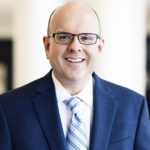
Adam Greenway

“Over the past year, we have continued to pray for Dr. Greenway’s spiritual, mental and emotional well-being as we have worked towards an amicable resolution, which we had every reason to believe had been achieved with the agreement signed in February of this year,” Richard said in a public statement.

“As stewards of precious institutional resources, we cannot in good conscience capitulate to his absurd demand for $5 million. Our focus remains on confronting the financial challenges facing Southwestern, which would only be compounded by agreeing to his demand.”

Southwestern announced Greenway’s resignation on Sept. 23, 2022, a day after the board’s executive committee and the seminary administration held an all-day meeting. The seminary ultimately created a task force to investigate the financial position of the entity and Greenway’s impact.

A member of that task force brought forward concerns related to Southwestern’s financial standing, resulting in a May 30 special-called board meeting that included an extended response days later. On June 7, the board released a “summary of findings” over Greenway’s spending while in office.

Efforts by BP to contact Greenway and his attorney for further comment were unsuccessful. The Baptist Standard also contacted Greenway for comment but did not receive a response.

Greenway became president at Southwestern in 2019. He and the seminary reached a confidential settlement agreement in February that—the Tennessean reported—included a stipulation of neither party disparaging the other. A statement regarding the agreement was emailed to Baptist Press at the time but not published.

“Baptist Press received a statement from the seminary concerning Dr. Greenway on Feb. 28, 2023,” said Brandon Porter, associate vice president for convention news at the SBC Executive Committee.

“We reached out to both sides to get context and comment. Both sides declined to provide either. BP editors chose not to publish the statement or a story about it without context or comments.”

The seminary’s publication of its summary of findings cast Greenway in a negative light and essentially broke that agreement, Greenway’s attorney said in the Tennessean article.

“The framing of these expenditures as unauthorized and lavish personal gain undertaken by Dr. Greenway is an assertion of financial impropriety on par with embezzlement,” Jones said.

Expenditures were “grossly inflated and false,” he added. That included reports of an espresso machine valued at more than $11,000, which became the subject of online jokes. The actual cost of the machine, Jones said, is $5,952.67.

Southwestern Seminary “has fully complied with its obligations under the Settlement Agreement and will continue to do so,” said the seminary’s attorney, Michael D. Anderson, in a response letter to Jones dated Oct. 11. “The matters raised in your letter do not constitute a breach of the Settlement Agreement, regardless of how you characterize them.”

Anderson cited Greenway’s request in April for the seminary to fulfill “its promise of transparency to Southern Baptists by releasing the full trustee investigative report including all related findings, without edit or redaction.” Greenway’s statement was released on X, formerly Twitter.

“The fact that Dr. Greenway does not like the results of that financial review and the public disclosure of it (which he demanded) does not make the results of the financial review false or in any way defamatory,” Anderson said.



Around the State: ETBU presents servant leadership awards

East Texas Baptist University awarded the Bob and Gayle Riley Servant Leadership Award to seniors Avery Abshierand Abraham Contreras. Each year, ETBU presents the award to two upperclassman students who are nominated by their peers, faculty and staff in recognition of their commitment to the Christ-centered model of servanthood. Abshier, a Christian ministry major, has served as a resident assistant, Tiger Camp leader, Baptist Student Ministry Kid’s Club leadership team member, Christian Association of Student Leaders planning committee participant, and Sunday School leader at Mobberly Baptist Church in Longview. Contreras, a Christian ministry and mental health major, has served as a BSM Leader, resident assistant, Tiger Camp co-leader and CASL co-leader. He is a youth apprentice for Mobberly Baptist Church in Longview and a behavioral analyst intern at Community Healthcore

Raymond Harris

Dallas Baptist University appointed Raymond H. Harris as senior fellow of entrepreneurship for the Institute for Global Engagement, a nonpartisan Christian think tank dedicated to addressing issues in the public square. Harris is the founder of one of the largest architectural firms specializing in corporate architecture. He is the author of The Anatomy of a Successful FirmThe Heart of Business and Business by Design. He is also an executive producer for numerous movies distributed by Sony Pictures and Lions Gate Entertainment and an executive producer for a music company label.  

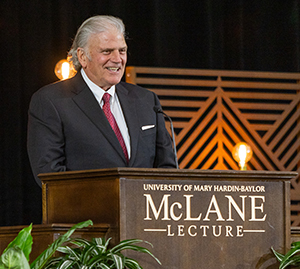
Franklin Graham, president and CEO of the Samaritan’s Purse relief organization and the Billy Graham Evangelistic Association, delivered the McLane Lecture at the University of Mary Hardin-Baylor (UMHB Photo)

Franklin Graham, president and CEO of the Samaritan’s Purse relief organization and the Billy Graham Evangelistic Association, delivered the McLane Lecture at the University of Mary Hardin-Baylor on Oct. 11. “We’re all on a journey called life. You only have one shot at life. You don’t want to miss it. You don’t want to mess around. You want to get it right,” Graham told a crowd of more than 2,500. “Make your life count.” Graham challenged students, faculty and guests to apply Proverbs 3:5-6. “You have to trust the Lord. Acknowledge him. And then, start moving,” he urged. Graham was the featured speaker for the 19th McLane Lecture, sponsored by Elizabeth and Drayton McLane Jr.

The Hispanic Higher Education consortium is sponsoring a college fair at the east campus of Del Sol Church in El Paso from 3 p.m. to 8 p.m. on Oct. 22. Representatives from eight universities affiliated with the Baptist General Convention of Texas will be present, awarding up to $24,000 in scholarships in $2,000 increments to prospective students in attendance.

Areli Estrada-Lopez

Haylie Stum

Two East Texas Baptist University students were named as recipients of scholarships granted in partnership with the national Council of Independent Colleges and the Independent Colleges and Universities of Texas. Haylie Stum, an undergraduate student from Cypress majoring in Sports Communications, was chosen to receive the CIC/UPS Scholarship. She was named the Texas Association of Journalism Educators Journalist of the Year in 2023. Areli Estrada-Lopez, a junior business administration major from Marshall, was selected to receive a PACCAR Scholarship provided by the ICUT Foundation. “Year after year, these scholarships leave an indelible mark on the lives of deserving students,” said ETBU President J. Blair Blackburn. “Aligned with ETBU’s mission to offer students an accessible path to Christian education, we are equipping and empowering students to prepare for God’s calling on their lives.”

Anniversary

170th for First Baptist Church in Plano on Oct. 22. Craig Curry is pastor.

140th for Primera Iglesia Bautista in Laredo. Dorso Maciel is pastor.


Online worshippers lead in Bible reading frequency

PHILADELPHIA (BP)—Bible users who worship God online are most likely to read the Bible at least weekly apart from church service, the American Bible Society said in the latest installment of its 2023 State of the Bible report.

Among online worshippers, 74 percent read the Bible at least weekly, whether they worship solely online or online and in person. Of in-person-only worshippers, 32 percent read the Bible at least weekly, the American Bible Society stated.

“This might seem surprising to those who see online church as a lesser experience, used by people who are less committed spiritually,” the society said in the report’s seventh chapter, focused on Bible use and technology. “We suspect that these numbers speak to the personal nature of online attendance.”

Online attendance, often done alone or with immediate family, “can be more about hearing about God and from God,” the Bible society speculated. “It’s personal, as Bible reading often is.”

The findings are among the results of an 18-minute survey conducted in January among a representative sample of adults 18 and older within the 50 states and the District of Columbia. Percentages are based on 2,761 responses.

The release delved into how many people read the Bible at least weekly outside of normal church services and certain descriptive characteristics concerning them.

Among the top findings:

  • 25 percent of American adults use the Bible at least weekly, amounting to about 65 million people.
  • More than half of evangelicals, 53 percent, report reading the Bible weekly, compared to 21 percent of Catholics who do so.
  • Black Americans far surpass others in reading the Bible at least weekly, with 38 percent reporting so, compared to 23 percent among all other ethnic groups combined. Nearly one in five Blacks (19 percent) read the Bible daily, outpacing all other groups combined, which numbered 8 percent.

Curiosity about Scripture doesn’t necessarily drive Scripture reading, the Bible society found. About 39 million U.S. adults say they are extremely curious about Scripture, but they don’t read it at least weekly. More than half of Americans—52 percent—wish they read Scripture more, but only 14 percent increased their Bible reading in the past year.

Among the top impediments to reading Scripture more frequently were a lack of time (26 percent), a lack of excitement (15 percent), not knowing where to start (17 percent), and difficulty in relating to the language (15 percent).

Among other findings:

  • The popularity of digital Scripture sources is about the same as in 2022. Just under 70 percent of Bible users read a printed Bible at least monthly, 50 percent read a digital Bible app at least monthly, and 48 percent read Scripture through internet searches at the same frequency.
  • Elders continue to favor printed Bibles at 87 percent, while 46 percent of Boomers are most likely to watch a Bible program on video.
  • Bible apps and podcasts are most popular among Millennials, 42 percent, and Gen X, 39 percent; with digital Bibles and online Bible reading plans also most popular among those generations.
  • Gen Z is most likely to access Scripture through internet searches.

The State of the Bible annually looks at the Bible, faith and the church in America. The American Bible Society collaborated with the University of Chicago’s National Opinion Research Center in designing the study conducted online and via telephone to NORC’s AmeriSpeak Panel.

Previous chapters of the 2023 study revealed various aspects of how Scripture engagement impacts daily life. Future chapters will offer new insights on how the Bible affects philanthropic habits and summarize highlights from 2023 research.


A third of Asian Americans say religion is very important

WASHINGTON (RNS)—More Asian Americans identify as atheist, agnostic or nonreligious than before, according to a survey by Pew Research Center.

But 40 percent of those Pew surveyed, who included Americans of Chinese, Filipino, Indian, Japanese, Korean and Vietnamese backgrounds, said they feel close to a religion for reasons aside from religion, such as family or cultural ties.

Pew’s survey, which studied over 7,000 participants over the course of a year, found that Asian Americans are part of the ongoing trend of Americans who don’t follow any religion, often referred to as “nones.” Today, 32 percent of Asian Americans are religiously unaffiliated, compared with 26 percent in 2012.

Asian Americans as a whole are mostly Christian (34 percent), especially Korean (59 percent) or Filipino Americans (74 percent), who are evenly split between Protestantism and Catholicism (16 percent and 17 percent). Born-again or evangelical Protestants make up 10 percent of Asian Americans.

However, Asian Americans who identify as Christians have shown the sharpest declines in affiliation with religious institutions since 2012, dropping by 8 percentage points.

More than half (56 percent) of Chinese Americans and close to half (47 percent) of Japanese Americans said they are not affiliated with any religion, comprising the largest groups of religious nones. They are also the groups least likely to consider religion very important.

Buddhists and Hindus, both at 11 percent, were the next largest faith groups. Vietnamese Americans are the most likely of the Asian origin groups to identify as Buddhist (37 percent), and Indian Americans are far more likely than the other groups to be Hindu (48 percent).

The survey’s findings reflected a complex understanding of religiosity in many Asian American cultures, in which religious identity can mean more than just adhering to a set of beliefs. In particular, daily life in Asian countries can be infused with practices associated with Buddhism, Hinduism, Daoism, Shintoism and Confucianism, even among those who do not identify as religious.

One Vietnamese Buddhist told the researchers, “Confucianism and Daoism is part of my culture. However, for me, it’s a school of philosophy. I do not identify myself as being a Daoist or Confucian.”

While only 11 percent of Asian American adults say their religion is Buddhism, for example, 21 percent feel close to Buddhism for other reasons.

Religiously unaffiliated Indian Americans report this phenomenon at much higher rates than nones of other Asian origin groups, saying they feel close to Hinduism for reasons aside from religion.

Reported affinity toward more than one religion

Many Asian Americans also reported feeling an affinity toward more than just one religion, the survey found. Four in 10 Asian American adults expressed a cultural connection to one or more groups that they do not claim as a religious identity, but still feel close to.

One Hindu participant expressed a connection to Buddhism “because some of the practices of Buddhists, they are very much similar” to Hindu practices.

The survey found 18 percent of Asian Americans do not identify religiously as Christian, yet say they feel close to Christianity aside from religion, including, for example, the American celebration of Christmas.

“My whole life I was exposed to Christmas and all this stuff. Even though I don’t believe in it, we had to give gifts … so it was always part of our culture, even though we don’t believe in it,” said one non-Christian Indian participant who grew up in the United States.

On the whole, Asian Americans are slightly less likely than Americans as a whole to say religion is very important in their lives, the survey says.

Asian American Muslims (60 percent) and Christians (54 percent) are much more likely to feel that religion is very important in their lives than are Asian American Hindus (33 percent) and Buddhists (31 percent), and also are the likeliest to say they attend religious services or visit a temple, shrine or other religious space at least monthly.

Regular religious attendance is more common among Korean and Filipino Americans than among Vietnamese, Japanese or Chinese Americans. And as a whole, Asian Americans born in a country other than the United States are far more likely than those born here to say they attend religious services at least monthly (32 percent versus 21 percent).

Twenty-one percent of all Asian Americans surveyed said they attend services at least weekly.

Worship trends vary among traditions, but 36 percent of Asian Americans say they have an altar, shrine or religious symbol that they use for home worship. Of those who do, many identify as Buddhist or Hindu.

But worshipping at home is also fairly common among Catholic Filipino Americans, with 66 percent of them saying they have an altar at home.

As many Asian Americans expressed a dual-belonging with more than one religion, 30 percent of Asian Americans said all or most of their friends have the same religion they do. Seventy-seven percent of Asian Americans say they would be comfortable if a family member married outside of their faith.


TBM helps medical personnel serve in Israel

Texas Baptist Men provided $150,000 to transport medical professionals from the United States to Israel to help treat people affected by the ongoing war.

“Doctors, nurses and paramedics are on their way to help as volunteers in Israel,” said John-Travis Smith, TBM associate executive director who coordinates TBM ministry in Israel. “So many people are suffering as a result of the violence in Israel. TBM is helping the people in any way we can.

Volunteers with Israel’s Emergency Volunteer Project prepare meals Monday, Oct. 9, for people suffering in the aftermath of the Hamas attack on Israel. The EVP volunteers are using food trailers designed and purchased by Texas Baptist Men. (Courtesy Photo)

“We had set up disaster relief equipment there in advance of any type of need. Now, our trained volunteers are providing meals for those in need. Getting medical professionals to the scene is just another way we can help the people.”

From a secure location, an 18-member TBM volunteer team has been providing food in Israel for more than a week. Roughly half of them are set to return this week, with another group of volunteers ready to take their place, Smith said.

Volunteers are coming from across the country and beyond to join the effort, including Baptists on Mission, Church Forward and Hungarian Baptist Aid.

“Our volunteers are stepping up to serve,” he said. “They’re meeting the needs of people who have been impacted by the war. Many of these people have lost their homes. Their neighborhoods have been hit hard. TBM volunteers are reaching out with the compassion of Christ to southern Israel during these difficult times.”


Russian forces occupy seventh Baptist church in Ukraine

Russian occupying forces seized another Baptist church in Ukraine, and a military court in Russia imprisoned a Baptist who refused to fight in Ukraine on religious grounds, Forum 18 News reported.

Forum 18, an Oslo-based partner of the Norwegian Helsinki Committee, reported Russian military closed and seized a Baptist Union church in the Zaporizhzia Region of southeastern Ukraine.

The Zaporizhzia Region church is the seventh Baptist Union church confiscated in territory captured since Russia’s February 2022 full-scale invasion of Ukraine. The other six churches seized previously by Russian occupying forces are in Ukraine’s Donetsk Region.

Voice of the Martyrs reported Russian authorities claimed a mine had been planted at the Zaporizhzia Region Baptist church.

Forum 18 quoted Artyom Sharlay of Russian’s Religious Organizations Department as asserting “law-abiding” faith communities “face no restrictions, but those that break the law are banned.”

In addition to the Baptist Union church, Russian occupying forces also forcibly closed an Orthodox Church of Ukraine parish in Basab and a Roman Catholic church in Skadovsk.

Russia jails conscientious objectors

Meanwhile in Russia, Baptist Vyacheslav Reznichenko began a two-and-a-half-year prison term at a prison colony-settlement because he refused to participate in the military occupation of Ukraine, Forum 18 reported.

Reznichenko, a reservist in Vladivostok, was called up in September 2022. He reportedly told his commanders twice he refused to use weapons against another person, based on his religious convictions.

He was denied the option to perform alternative civilian service or act in an unarmed role in the army, although that right constitutionally is granted to conscientious objectors.

Forum 18 reported Reznichenko is one of four men jailed by Russian military courts for refusing to fight in Ukraine on religious grounds. Two already serving sentences in penal colony-settlements are Dmitry Vasilets, a Buddhist, andAndrey Kapatsyna, a Pentecostal Christian.

Another Pentecostal, Maksim Makushin, was sentenced Sept. 28  to two years and eight months. He is appealing his case.


Is religion good for you? It’s complicated, Gallup says

\WASHINGTON (RNS)—A new report from Gallup finds religious people around the world report being more positive, have more social support, and are more involved in their communities than those who are not religious.

The study, based on 10 years of data, also finds the well-being of religious people varies from country to country and is often hard to measure. Even if researchers find that religion is good for you, people who are not religious may not care about its benefits or want anything to do with it.

“Gallup World Poll data from 2012-2022 find, on a number of well-being measures, that people who are religious have better well-being than people who are not,” according to the report, published last week.

Data about nine aspects of life

The study included data about nine aspects of people’s lives, from their positive interactions with others and their social life to their civic engagement and physical health. Each of the nine indexes included a score of 0 to 100, based on answers to a series of questions.

For the positive experience index, respondents were asked questions such as “Did you smile or laugh today?” and “Were you treated with respect?”

For civic engagement, they were asked questions about whether they gave to charity or helped a stranger.

The physical health index asked if they had health issues that kept them from doing things people their age usually do and whether they were in physical pain.

For community basics, they were asked about housing and infrastructure.

Religious people scored higher on five of Gallup’s indexes: social life (77.6 compared with 73.7 for nonreligious people), positive experience (69 to 65), community basics (59.7 to 55.6), optimism (49.4 to 48.4) and civic engagement (35.8 to 31).

They scored about the same as nonreligious people in two indexes: a “life evaluation” of whether they were thriving or suffering and their local economic confidence.

Religious people scored lower on two indexes: negative experience and physical health.

The differences between religious and nonreligious people were most prominent in highly religious countries.

Researchers noted that even small differences can have a significant impact on a global scale.

“Each one-point difference in index scores between religious and nonreligious people represents an effect for an estimated 40 million adults worldwide,” the report stated.

“For example, the four-point difference between religious and nonreligious people on the Positive Experience Index means that an estimated 160 million more adults worldwide have positive experiences than would be the case if those adults were not religious.”

Interest and involvement in religion declining

The report suggests religion and spirituality could be a possible asset in dealing with the mental health crisis in many countries. However, they noted, the number of people interested in or involved in religion is declining.

For the report, Gallup partnered with the Radiant Foundation, which promotes a positive view of religion and spirituality and is associated with The Church of Jesus Christ of Latter-day Saints.

Jeff Jones, Gallup poll senior editor, said measuring the impact of religion and spirituality on wellness is complicated, especially as people become less religious and the way they practice spirituality evolves.

“With the changing nature of religious landscapes and spiritual practice, it can make quantitative measurement amid the changes challenging, as the traditional forms of spirituality—namely, attending formal religious services, are becoming less common and people are seeking other ways to fulfill their spiritual needs,” Jones said in an email.

The report, which also includes quotes from experts and a review of past research on the connection between wellness and religion, notes that even as researchers become more aware of the positive outcomes of religion, people are less interested in religion around the world.

While they have no polling data on the decline of religion, the report suggests several causes for that decline, including growing polarization that pits religious and nonreligious people against each other. Nonreligious people at times see religious people as a threat. Religious people, especially from larger faith groups, can wield their power in ways that others see as harmful.

“Religious groups and individuals—particularly from the dominant religious group in a society—who are hostile to other religious groups may promote a cultural context that is harmful to the well-being of those outside the group,” the report states.

“Resentment toward the dominant group may also tune people out to their messages, both those that are harmful (out‑group animosity) but also that are helpful (serving others).”


Plane crashes near NC church before Sunday services

OAK ISLAND, N.C. (BP)—A plane crash near the entrance to Beach Road Baptist Church early Sunday morning didn’t stop the church from holding both of its regularly scheduled worship services.

According to multiple media reports, the pilot of a single-engine plane was forced to make an emergency landing shortly after taking off from Cape Fear Regional Jetport near Oak Island along the North Carolina coast.

Investigators said the pilot reported engine trouble shortly after takeoff at about 8 a.m. and attempted to land the plane in an open field between the entrance to the church and a local hardware store. The church is less than two miles from the jetport.

According to reports, the pilot managed to land the plane safely, but the left wing clipped a tree during the landing, which spun the plane around before it came to rest near the church’s welcome and information sign.

The pilot was taken to an area hospital where he was treated for non-life-threatening injuries, according to reports.

Later in the day, Woody Walls, associate pastor for discipleship at Beach Road Baptist Church, posted about the incident on social media along with a picture of the plane resting beside the church’s welcome sign.

“Interesting start to the morning as a small plane crashed at the entrance to the church,” Walls wrote on X, the platform formerly known as Twitter. “Pilot had minor injuries. Threw a wrench in our operations, but we managed to get both services in and on time.”

Beach Road Baptist Church holds two Sunday morning worship services, which start at 9 a.m. and 10:45 a.m.

Walls said he and several other staff and volunteers already were at the church preparing for the day’s worship services when the crash occurred. Walls said he was outside visiting with volunteers who were setting up a check-in tent for first-time guests when they heard the crash.

“We heard a loud noise, and we first thought it was a vehicle accident out on the main road in front of the church,” said Walls, who immediately called 911.

As Walls and other volunteers made their way to the scene, they saw the plane resting near the church sign. Walls said several volunteers from the church helped get the pilot out of the cockpit and away from the crash site until emergency crews arrived a short while later.

The N.C. Highway Patrol, the Southport Fire Department and other Oak Island emergency personnel responded to the incident, according to reports. The crash also is being investigated by the Federal Aviation Administration.

Once church leaders knew the pilot was OK, Walls said they turned their attention to adjusting the logistics involved with the day’s worship services and assisting about 300 people who soon would arrive at church for the first service.

Church volunteers assisted in redirecting traffic for local residents and those attending the church’s 9 a.m. worship service. By the time the church’s second service concluded a little after noon, the plane and associated debris had been removed.

“We were grateful no one was hurt,” Walls said. “The pilot did a great job to bring the plane down and avoid people. The Lord certainly spared everyone. No one was injured, and there was no damage to property, other than the plane. My understanding is the pilot had some minor injuries and was expected to do well.”

Walls also praised church members who weren’t assigned to serve on Sunday, but stepped in to volunteer wherever was needed as word of the incident spread.

“It’s always a blessing to see people step up, step in and serve,” Walls said.

Sunday’s incident was the second plane crash near Beach Road Baptist Church in less than four months.

On the afternoon of Sunday, June 25, a small plane crashed in a neighborhood behind the church. During that incident, the pilot also reported trouble shortly after taking off from Cape Fear Regional Jetport.

The plane struck the side of a home and was in flames when first responders arrived. The pilot, who was the only person on the plane, died in the crash. No other injuries were reported.

Chad Austin is managing editor of the Biblical Recorder.


Wayland wrestlers see feeding the hungry as their mission

PLAINVIEW—For Yireh Moreno, an 18-year-old freshman wrestler and student trainer at Wayland Baptist University, the desire to provide food to hungry people is based on personal family experience.

“I want to be that neighbor that gave to my parents,” Moreno said.

She has made feeding the hungry her personal mission since arriving on campus.

“I don’t care about putting my name out there. I just want people to get food,” said Moreno, who makes trips from Plainview to Lubbock to provide sandwiches to people living outside a homeless shelter.

“Once you know how it is in those situations, all you want to do is give back. It is very close to home for me. I just want to help.”

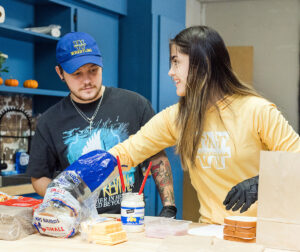
Wayland Baptist University students Yireh Moreno (right) and Baily West make sandwiches for hungry people. (Wayland Photo)

She is joined in the effort by Baily West, a second-semester freshman wrestler from Houston. West has experience ministering to homeless people through Kuts for Christ in his hometown.

Moreno thought she was going to be starting at University of Texas–Rio Grande Valley this semester, but a call from a Wayland wrestling coach in July changed that.

“He offered a scholarship and some aid. God provides,” she said.

After working as an intern at Grace Church Houston for more than a year, West applied to Wayland in July because he felt it was time to renew his collegiate wrestling career.

Both student athletes arrived on the Plainview campus in August.

‘God provides’

Moreno pointed out her first name means “God provides.”

“Jehovah Jireh means ‘God provides,’ but my parents changed the J to a Y,” she said. “I was going to be named Monica, but they came up with Yireh because they knew God was going to provide for them.”

Moreno grew up in Los Fresnos, a border town in the Rio Grande Valley.

“I come from a humble family,” she said. “I’m first generation as far as college. My parents are first-generation immigrants, and my grandparents were born in Mexico. When I was still in my mother’s womb, my parents struggled a lot financially.

“They had to move into my grandmother’s house, because they did not have the finances to buy or rent a home. A couple of years after, they got their own apartment. But because of the apartment, they didn’t have much money for food. My mother was always praying, and she knew God was going to provide.”

A couple of months after the family moved into the small, one-room, studio-type apartment, a neighbor started buying groceries for them.

“Every month, she would give us groceries. She would buy kid’s food for me,” Moreno recalled. “My mom asked why she was doing this, since we had never asked for food, and she said: ‘God told me to start giving y’all food. So, I’ve had it on my heart to give it to you guys.”

Although the apartment was a “really small space,” Moreno said, it was “a good place to grow up with family.”

“We went to church every Sunday and were very involved. Through the years we saw God providing,” she said.

When Moreno arrived at Wayland, she was not financially able to get the full meal plan.

“I have the 10-meals-a-week plan. So, I lay my food out thin to see what days I will eat at the cafeteria and what days I will not,” she said.

But that hasn’t kept Moreno and West from making sure others don’t go hungry. With West’s assistance, Yireh Moreno is living up to her name—God provides.

“There are people who don’t have any food,” she said. “They are just out on the street, and these are not just any people, they are somebody’s kids. They just grew up in a bad situation like me.

“I wanted to do something about that, because I know how I felt back then to not have any food in the fridge.”

Not deterred by initial rejection

Moreno and West embarked on their mission to feed the hungry when they spotted a homeless woman camping under a tree in Plainview. They were on their way to get a sandwich when Moreno spotted the woman living under a tree along a side road.

The sandwich shop, which was about to close for the night, offered them a left-over sandwich, and they took it to the homeless woman. But their first encounter with feeding the hungry did not go as expected.

“When I got out of the car, she asked, ‘What do you want?’” Moreno recalled. “I told her I just wanted to give her a sandwich. She said, ‘I don’t want anything from you.’

“So, I laid it down where her stuff was and walked away. I said, ‘This is not from me, this is from God.’ As soon as I closed the door of the car, I saw the sandwich flying across the windshield.”

But that didn’t deter the Wayland student athletes.

“Just because one person rejects something doesn’t mean everyone else will,” Moreno said. “I thought there are people that will be grateful for a sandwich. So, we went to Wal-Mart and got a bunch of sandwich materials. We made the sandwiches and decided to go to Lubbock.”

Their destination was a homeless shelter, but Moreno said she wasn’t prepared for what they saw.

“All you see is homeless people everywhere,” she said. “There was a man lying on a bench next to the facility, and he was so skinny. There was this woman who did not look hygienic. There was a man with a bunch of clothes on because he doesn’t have a place to put them. He just keeps them on.”

It wasn’t hard to decide who needed food when Moreno asked, “Do you guys want some sandwiches?”

“As soon as we said that, there was a swarm of people,” she said. “It warmed my heart, because they were very grateful, but it saddened me too. I got to thinking that I wanted to do this every week. I wanted this to be something regular and effective, not just a one-time thing for the good of heart and then just leave. I wanted them to know that at this time on Sunday afternoon there is going to be food.”

After returning from the Lubbock trip, Moreno inquired about leftovers from the cafeteria.

“I asked for food that was extra or would go to waste, because we could pack it and send it to Lubbock. It would be something that people could benefit from,” she said.

Moreno envisions enlisting a group of students to deliver the food. She said the university is investigating the logistics of her proposed project.

While wrestling, West is majoring in Christian ministry and plans to graduate in five years with the accelerated bachelor’s to master’s degree.

An injury has sidelined Moreno’s wrestling for a while, and instead of studying sport medicine, she has opted to go a different route.

“I’ve decided to go one step further, and have changed my degree to pre-med microbiology,” she said.

“God willing, I will get my doctorate degree and do something similar to this but in healthcare. I want to go to a rural area where they can’t pay for a doctor.”

In the meantime, Moreno and West continue to make sandwiches to take to those who hunger.

“I want this to prosper,” she said. “There are just too many people out there who are hungry.”


Obituary: Betty Ann Kelton Howell

Betty Ann Kelton Howell, lifelong missions supporter and former church secretary, died Oct. 9, 2023, at home in Elysian Fields. She was 87. She was born April 21, 1936, in Odessa to Ben Neely Kelton and Vernia Stephenson Kelton. She grew up on several West Texas ranches, where her father was foreman. As a Texas UIL typing champion, she moved to Fort Worth to attend Durham Business College. She attended Hardin-Simmons University, where she met Elmin Kimbol Howell. They married Feb. 13, 1955, in Abilene. When he was awarded a scholarship to George Peabody College, they moved to Nashville, Tenn. After he completed is Master of Arts degree there, they moved to Globe, Ariz., for a teaching and coaching job. In 1959, they moved to Beaumont, where he served as minister of activities at First Baptist Church. In 1962, they relocated to Shreveport, La., to serve at First Baptist Church. During their six years in Shreveport, she taught kindergarten and led a seniors club called Live Long and Like It. In 1968, her husband was called by the Baptist General Convention of Texas to develop the River Ministry along the Texas/Mexico border. They lived in Mesquite and joined Shiloh Terrace Baptist Church in Dallas. In 2001, they moved to Rockwall, and in 2019, they relocated to East Texas. During their years in the Dallas area, she worked as secretary at East Grand Baptist Church and also for the BGCT. She was an avid college football fan and was known for listening to the radio or TV on most Saturdays while sewing and cheering on any college sports. She enjoyed embroidery and quilting. She was preceded in death by her husband Elmin K. Howell Jr. She is survived by daughter, Kimberly Howell Todaro and her husband John; son Paul S. Howell and his wife Amy; four grandchildren; and seven great-grandchildren.


Obituary: Margaret P. Lawson

Margaret P. Lawson, retired professor at Southwestern Baptist Theological Seminary, died Sept. 29. She was 79. She was born Oct. 25, 1943, in Rhodesia, now known as Zimbabwe. Prior to coming to the United States in 1983 to begin studies at Southwestern Seminary, she taught high school English and biology, and she served as coordinator of Christian education at the Baptist Union of South Africa. In addition to a Bachelor of Theology degree from the University of South Africa, Lawson earned a Master of Arts in Religious Education degree and a Doctor of Philosophy degree, both from Southwestern Seminary. Lawson served nine years at Southwestern Seminary as an adjunct teacher for multiple classes—including principles of teaching, building church curriculum and adult education—before she was elected to the faculty as assistant professor of foundations of education in 1999. She was promoted to associate professor of foundations of education in 2008, where she served until she retired in 2012. She served as the minister of education or minister of discipleship at several churches in the Fort Worth area, including Springdale Baptist Church, Riverside Baptist Church, First Baptist Church of Lakeside and Woods Chapel Baptist Church, as well as Surrey Hills Baptist Church in Oklahoma City, Okla. Lawson also served as the director of the curriculum center at Southwestern from 1987 to 1993. In 2013, Lawson was awarded the Distinguished Leaders Award by the Disciple Leaders Network, a ministry of the Baptist Association of Christian Educators. A celebration of life service will be held at 10 a.m. on Oct. 21 at Arlington Plaza—Sky Active Living.


Rex Horne to lead Arkansas Baptist State Convention

LITTLE ROCK, Ark. (BP)—Rex Horne, longtime Arkansas Baptist pastor and former president of Ouachita Baptist University, is executive director-elect of the Arkansas Baptist State Convention.

The state convention’s executive board approved the recommendation of its operating committee, which served as the search team, during a special called meeting Oct. 10. Horne has served as the interim executive director since December.

The decision makes Horne the 35th executive director in the 175-year history of the convention, which began in 1848.

The executive director leads the convention staff in serving the needs of and assisting about 1,500 churches and encouraging missions cooperation among them.

“I am deeply humbled and honored to be named the next executive director of the ABSC,” Horne said. “During these last 10 months, there have been a number of challenges met and steps taken that will have a positive impact on our future cooperative ministries.

“I will respect all our churches. I will assist and strive to encourage our pastors and their vision. I will listen, learn and lead optimistically in a time that is transitional but can also be transformational.”

Bill Panneck, senior executive pastor at Central Baptist Church in Jonesboro and chairman of the operating committee, said the committee members recognized early on that prayer would be the key for God to lead them to “his perfect choice, at his perfect time, in his perfect way.”

When the opportunity came to hear Horne’s vision and plans going into the future for Arkansas Baptists, Panneck said it became clear to the whole team he was the person to lead them going forward.

“What a privilege it was for me, as chairman of the search team, to recommend Dr. Horne to the executive board and have them unanimously approve one of Arkansas’ great statesmen as the next executive director of the ABSC. God is in control and the future for Arkansas Baptists is very bright with Dr. Horne at the helm,” he said.

Jeff Paxton, senior pastor at First Baptist Church in Dover and president of the state convention’s executive board, said he is excited Horne answered the call to be the next executive director for Arkansas Baptists.

“Dr. Horne has admirably and effectively served Arkansas Baptists for decades, and I have no doubt he will do the same in the future. His energy, passion, vision and wisdom, along with his steady hand will lead us well as we endeavor to win the lost for Christ. It is evident God’s Spirit has been upon him, and I’m certain that will be the case as the ABSC moves forward,” Paxton said.

Horne served as pastor of Immanuel Baptist Church in Little Rock from 1990 to 2006, president of the Arkansas Baptist State Convention from 1996 to 1997 and president of Ouachita Baptist University from 2006 to 2015. Additionally, Horne was a trustee for OBU and a board member for Baptist Health.

The past several years, Horne has also interacted with several Arkansas Baptist churches through his work with the Arkansas Baptist Foundation as a consultant.

He earned a Master of Divinity degree from Southwestern Baptist Theological Seminary and a Doctor of Ministry degree from New Orleans Baptist Theological Seminary.

Horne and his wife, Becky, have been married 50 years. They have four children and 15 grandchildren.