Around the World: UN experts concerned about India’s response in Manipur
September 14, 2023
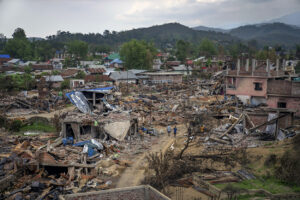
Dozens of houses lay vandalized and burnt during ethnic clashes and rioting in Sugnu, in Manipur, India, June 21, 2023. For three months, Indian Prime Minister Narendra Modi has been largely silent on ethnic violence that has killed over 150 people in the remote state in India’s northeast. That’s sparked a no-confidence motion against his government in Parliament, where his party and allies hold a clear majority. (AP Photo/Altaf Qadri, File)
Nineteen United Nations human rights experts recently raised concerns about the “apparent slow and inadequate response” by India’s government to violence in the northeastern state of Manipur, where more than 250 houses of worship have been destroyed or damaged. They particularly noted reported sexual violence, extrajudicial killings, forced displacement and torture. They called on the Indian government to increase humanitarian relief to the region, investigate acts of violence and hold perpetrators accountable. Conflict between the Kuki, a predominantly Christian ethnic group, and the Meitei, who are mostly Hindu, began as a political dispute over land rights. Rioting began in May in response to peaceful protests, and violence continued to escalate. The U.N. experts stated an estimated 160 people were killed by mid-August—mostly from the Kuki community—and more than 300 were injured.
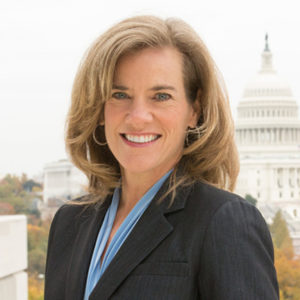
Katie Choy-Wong
Katie Choy-Wong, author of Building Bridges: A Handbook for Cross-cultural Ministry and a leader of the Alliance of Asian American Baptist Churches, will be the keynote speaker at the North American Baptist Fellowship’s annual meeting, Oct. 30-31 at the First Baptist Church of the City of Washington, D.C. She has served as a trainer for American Baptist Home Mission Societies and as senior pastor of New Life Christian Fellowship in Castro Valley, Calif. For more information and registration, click here.
Delegations from the European Baptist Federation and the Communion of Protestant Churches in Europe met recently to evaluate the results of previous theological dialogue and next steps toward cooperation. On the basis of doctrinal dialogue in 2002 and 2004, the communion and the federation agreed in 2010 to become “mutually cooperating bodies.” At the recent meeting at Elstal Theological College, representatives agreed to recommend doctrinal dialogue be resumed and cooperation continue.
More than 22,000 youth and young adults from across Nigeria attended the 2023 Arise Congress Sept. 6-9 at the Baptist International Conference Center in Ogun State, Nigeria. The event was the first joint congress of the Nigerian Baptist Convention Youth, Baptist Student Fellowship and missions auxiliary organizations for youth.
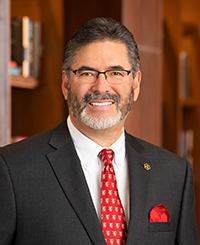
Albert Reyes
Buckner International recently marked its 15th anniversary of ministry in Mexico by opening its second Family Hope Center there. The grand opening of the Buckner Family Hope Center at San Agustín Etla, located in the central Mexican state of Oaxaca, included a public ribbon cutting ceremony, lunch and a shoe distribution. “We want this Family Hope Center to be a light of hope for the families that are with us today, but also for many other people who still don’t know about Buckner Mexico,” said Albert Reyes, president and CEO of Buckner. “Our goal is to reach those who need it most.” The Family Hope Center works as an intervention model, providing services within a family-strengthening framework to prepare families to overcome adversity. Families in San Agustín Etla will have access to free classes, counseling and activities.
Compiled from reports by regional affiliates of the Baptist World Alliance and other sources.
Christian lawmakers push battle over church and state
September 14, 2023
EDITOR’S NOTE: This article contains a reference to bodily mutilation of children.
LYNCHBURG, Va. (RNS)—A collection of state legislators and local government officials from across the country gathered in southern Virginia this summer with one unifying purpose.
They’re members of the National Association of Christian Lawmakers, which in past years has distributed at least 15 pieces of model legislation to conservative lawmakers in various states—measures to ban abortion, restrict “gender-affirming” care and condemn gay marriage.
The group’s goal is to change the social fabric of the country and return America to what it says are its Judeo-Christian origins, and members are capitalizing on the momentum that the long-sought end of Roe v. Wade has given them to pass their vision of biblically informed law.
Jason Rapert, a former Arkansas state senator, founded the group in 2019. He pushed for construction of a Ten Commandments monument at the Arkansas Statehouse and has opposed gay marriage.
He describes the National Association of Christian Lawmakers as a place for lawmakers to debate, construct and distribute model legislation from a “biblical worldview.”
“We believe that with all the troubles facing our country, with Democrats and leftists that are advocating cutting penises off of little boys and breasts off of little girls, we have reached a level of debauchery and immorality that is at biblical proportions,” Rapert said in an interview with News21.
National Association of Christian Lawmakers members must sign a pledge voicing their opposition to gay marriage, affirming belief in life at conception and endorsing the idea that Christianity shaped America and made it what it is today.
Well-connected and well-financed
The nascent group is well-connected. Funders have donated hundreds of thousands of dollars to the effort, and Rapert has wooed U.S. congressional representatives, prominent lobbyists and GOP officials to serve on his board of advisers and to speak at meetings.
The organization also receives funding from conservative legal powerhouses such as the Alliance Defending Freedom, First Liberty Institute and similar outfits.
National Association of Christian Lawmakers members have advanced legislation at the forefront of America’s culture wars, from Florida’s “Don’t Say Gay” bill to South Carolina’s six-week abortion ban.
Texas’ 2021 abortion ban, which allows private citizens to sue providers and those assisting people seeking abortions, was sponsored by National Association of Christian Lawmakers member Sen. Bryan Hughes, R-Mineola.
The National Association of Christian Lawmakers adopted that bill as model legislation. Seven of 12 similar bills introduced in statehouses across the country and reviewed by News21 were sponsored or co-sponsored by legislators who are now association members.
A myriad of special interest groups organize meetings for lawmakers and distribute model bills. But the National Association of Christian Lawmakers is unique in its scope.
Republican state Rep. John McCravy of South Carolina said he joined because of the organization’s focus on social issues such as abortion and gay marriage. At the core of McCravy’s beliefs is the idea that Christianity should be at the center of how the United States is governed.
“There’s nothing wrong with being a Christian in office,” he said. “There’s nothing wrong with taking values that are revered and applying them to government. … That was what all our laws are founded on anyway.”
Guard separation of church and state
But those ideas have been contested by people of faith and secular advocates who say specific religious beliefs shouldn’t govern all Americans. They’re also not popular with the broader American public, a majority of whom believe the government should enforce the separation between church and state, according to the Pew Research Center.
Holly Hollman
Holly Hollman, general counsel of the Baptist Joint Committee for Religious Liberty, is one such critic.
“I think the idea that the government is the best to evangelize what we think religiously is a terrible idea,” she said. “Christians have had a great impact on the law in the history of America, but we’ve never been a Christian nation officially, legally.”
Hollman said making laws shaped by a legislator’s view of Christian values can be harmful for both the government and people of faith because it erodes the separation of church and state.
That phrase was popularized by Thomas Jefferson in a letter to the Danbury Baptist Association of Connecticut in 1802. He wrote that the establishment clause in the Constitution created a “wall of separation” between religion and government.
But for some, the separation of church and state doesn’t prohibit established religious beliefs from becoming law.
“It doesn’t say there’s a separation of church and state. There’s nothing in the U.S. Constitution that says that. A lot of people think there is, but there’s not,” McCravy said. “However, it does say that we are not to establish a state religion.”
‘A spiritual battle’
In June, the National Association of Christian Lawmakers held a national policy conference at Liberty University in Lynchburg, Va. Home to the late Moral Majority founder Jerry Falwell, the city is an important place for Christian conservatives.
Standing in front of a large sign with the phrase “In God We Trust” emblazoned across it, Rapert kicked off the livestreamed portion of the conference.
“Beginning tomorrow, you’re going to be engaging not only in policy discussion, my friends, you’re going to be engaging in spiritual battle,” he said.
Throughout the conference, lawmakers discussed and proposed modifications to a number of model bills and resolutions that would ban gender-affirming care, condemn gay marriage and enshrine fetal personhood.
In all, the group approved eight new model bills. News21 requested copies of the measures from Rapert, but he did not respond.
Rapert said his group doesn’t track the effectiveness of its model bills, nor does it know the number of times they’ve been introduced in state legislatures.
The organization’s rise comes at a time when a right-leaning U.S. Supreme Court has delivered ruling after ruling advancing Christian influence in public life and limiting anti-discrimination laws.
These decisions have created an opportunity for religious conservatives to push toward incorporating more conservative Christian views into law, which members of the National Association of Christian Lawmakers hope to do nationwide.
“We believe that America would be better served by Christians serving in public office at every level in the United States,” Rapert said.
This report is part of “America After Roe,” an examination of the impact of the reversal of Roe v. Wade on health care, culture, policy and people, produced by Carnegie-Knight News21.
On the Move: Reynolds
September 14, 2023
Kenneth Reynolds to First Baptist Church in Pearsall as pastor. He previously was pastor at RockPoint Church in San Antonio.
Around the State: Lifeway listens to Texas worship leaders
September 14, 2023
Ten worship leaders from Texas Baptist churches and several others joined Tom Tillman, director of music and worship for Texas Baptists, for a listening session in Dallas with three executives from Lifeway regarding the future of the lifewayworship.com website. (BGCT Photo)
Ten worship leaders from Texas Baptist churches and several others joined Tom Tillman, director of music and worship for Texas Baptists, for a listening session in Dallas with three executives from Lifeway regarding the future of the lifewayworship.com website. In July, Lifeway announced plans to discontinue the website but postponed that action due to concerns expressed by ministers of music about losing access to the digital music library. Lifeway held listening sessions in Georgia/Alabama, North Carolina and Kentucky prior to the meeting in Dallas. Lifeway representatives at the Texas listening session were Scott Arvay, senior vice president and chief revenue officer; Brian Brown, director of worship; and Carol Pipes, director of communication. Tillman noted Brown told him Texas worship pastors use the website far more than any other state. During the listening session, Texas Baptist worship leaders emphasized how the website has been an important tool in their ministries. They consistently noted in contrast to some other popular sites, which offer only chord charts, Lifeway also makes available full instrumentation in keys appropriate for congregational singing, Tillman observed. “We left very encouraged today. Scott Arvay was very heartfelt in his explanations to the group about getting this right,” Tillman said. Arvay noted the high cost of cloud-based technology and information technology upgrades that factored into the original “business decision” to discontinue the website, but he emphasized Lifeway wants to focus on serving churches, Tillman reported.
Paula Hurd, alongside her daughters, cuts the ribbon celebrating the official dedication of the Mark and Paula Hurd Welcome Center at Baylor University. Paula Hurd is joined by Baylor President Linda A. Livingstone, Board of Regents Chair Bill Mearse, Drayton and Elizabeth McLane and staff of Baylor Undergraduate Admissions and Baylor Alumni. (Photo / Matthew Minard / Baylor University)
Baylor University dedicated the Mark and Paula Hurd Welcome Center, a 136,000-square-foot building at the corner of Interstate 35 and University Parks Drive. The university recognized donors Paula Hurd and her late husband Mark for their lead gifts. Designed by global firm Populous—which also created Baylor’s McLane Stadium—and built by Vaughn Construction, the Hurd Welcome Center will serve as a central hub for prospective students, families, alumni and visitors, as well as current students, faculty and staff. “This is where many prospective students will realize they belong at Baylor. It will play a pivotal role in fostering connections within the Baylor Family and beyond,” President Linda Livingstone said. “It will be a place where future students and their families can connect with current students, faculty and alumni, and this is where alumni will rekindle their love for Baylor and strengthen their connection to the Baylor Family.” In addition to thanking the Hurd family, Livingstone also expressed gratitude to Drayton and Elizabeth McLane for their leadership and continued investment in projects at Baylor, including the McLane Family Alumni Center, located on the second floor of the Hurd Welcome Center.
The Stinger Spectacular at Howard Payne University—combining homecoming, family weekend and the Yellow Jacket Preview for prospective students—is scheduled Oct. 13-14. (HPU Photo)
The Stinger Spectacular at Howard Payne University—combining homecoming, family weekend and the Yellow Jacket Preview for prospective students—is scheduled Oct. 13-14. Key events include an alumni banquet, “Cobbler on the Campus,” an alumni and family breakfast, the Stinger Spectacular parade, a family picnic, a football game featuring the HPU Yellow Jackets facing the Austin College Kangaroos, and various class reunions and receptions. The weekend also includes a performance of “Virtue Is Its Own Reward” by the HPU School of Music and Fine Arts, a concert featuring the HPU Alumni Choir, a presentation by the HPU Marching Band and an alumni art exhibit. For a complete schedule of events or to register for Stinger Spectacular, click here.
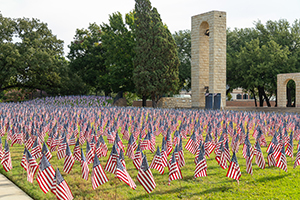
The University of Mary Hardin-Baylor chapter of the Young Conservatives of Texas planted 2,977 United States flags at the Luther Memorial on the UMHB campus to honor the lives lost in the Sept. 11, 2001, terrorist attacks. (UMHB Photo)
The University of Mary Hardin-Baylor chapter of the Young Conservatives of Texas planted 2,977 United States flags at the Luther Memorial on the UMHB campus to honor the lives lost in the Sept. 11, 2001, terrorist attacks. The organization began planting the flags Sept. 7, so they would be in place all day on Sept. 11. They removed the flags on Sept. 12.
On the “Together for Good” radio program and podcast, Cody Knowlton (left), president and CEO of Baptist Health Foundation of San Antonio, interviews Nikisha Baker, president and CEO of SAMMinistries, which provides support services to the unhoused population of San Antonio. (BHFSA Photo)
Baptist Health Foundation of San Antonio has launched a new radio program and podcast to provide a platform for local nonprofit organizations to tell their stories. “Together for Good” airs at 8:30 a.m. each Saturday on 630-AM, a local Christian radio station, and then is released as a podcast on streaming platforms. Cody Knowlton, president and CEO of Baptist Health Foundation of San Antonio, hosts the program, in which he interviews leaders of churches and nonprofit organizations within the foundation’s eight-county service area. Topics focus on health issues in South Central Texas and how nonprofits are addressing those issues. “We want to see these nonprofit organizations grow and build on the great work they’re already doing, and we’re offering an opportunity to tell the public about that work,” Knowlton said. Since its inception in 2004, Baptist Health Foundation of San Antonio has awarded more than $100 million in grants to nonprofits in Bexar Country and the surrounding area.
Lynn Cohick
Lynn Cohick, distinguished professor of New Testament and director of Houston Theological Seminary at Houston Christian University, will be the keynote speaker for B.H. Carroll Theological Seminary’s Frank and Pauline Patterson Lecture Series. She will speak on second century martyrs and what they might say to the American evangelical church today. The lectures and question-and-answer sessions will be from 1:45 p.m. to 4 p.m. on Monday, Nov. 13, and from 8:30 a.m. to 3:30 p.m. on Tuesday, Nov. 14. The lectures are free and open to the public. Guests can participate in person at First Baptist Church in Arlington or online. To register, click here.
Anniversary
10th for Darrin Moore as senior pastor at Truevine Missionary Baptist Church in Spring.
100th for First Chinese Baptist Church in San Antonio on Oct. 8. John Lee is pastor.
150th for First Baptist Church in Schulenburg. David W. Thompson is pastor. The church will observe the anniversary Oct. 8 with a 9:30 service of remembrance, followed by a brief continental breakfast. A service of worship and celebration is scheduled at 10:45, followed by a luncheon on the grounds. Guest speakers include former pastors Tim Edwards and Mike Zimmerman.
Pushback to the spread of megachurch praise music
September 14, 2023
NASHVILLE (RNS)—The crowds seen buzzing last week outside the Bridgestone Arena, a regular host to the NCAA basketball tournament and a hometown venue for country music acts, were coming not to take in a game or a concert, but to sing, write and bond over Christian hymns.
The annual Sing! Global conference, held Sept. 4-6, drew about 8,500 Christian worship music leaders and other church musicians, pastors, vendors and hymn composers from as many as 35 countries. An estimated 80,000 others in 120 countries participated online.
They attended breakout sessions on congregational singing, songwriting and children’s and family ministry. Others addressed themes such as “Hymns in Hard Places,” evangelism and singing at home. They listened to speakers, live recording sessions and late-night performances.
Most of all they came to sing together—tunes from historic hymnals, from Celtic traditions and new creations—and to share a common love and culture of sacred music.
“I like seeing all different denominations represented, kind of breaking down the walls and seeing the church at large,” said Amy Bauman, from Appleton, Wisc. Over the hum of strangers getting acquainted in the lunch line, Bauman said she and her fellow singers had come to be reenergized and have their “flames reignited.”
Criticizing ‘shallow’ theology
But there is another story about a battle for American hymnody that has been on display since the Sing! Global conference was founded in 2017 by Keith and Kristyn Getty, a husband-and-wife hymn writing team.
For more than a decade, American worship services have started to leave traditional hymns behind.
Churches are forsaking historic chestnuts such as “Be Thou My Vision,” whose words date to the sixth century with music from the early 1900s, or “Love Divine, All Loves Excelling,” adapted in the mid-1700s by the Methodist Charles Wesley from a popular opera number of the time.
The most popular church music now originates in bands associated with megachurches such as the Bethel Church network in California, Elevation Church in North Carolina, Atlanta’s Passion City Church (“How Great Is Our God”) and the global megachurch Hillsong (“Oceans”).
One recent study found that of the 38 most played songs, 22 were released by one of the four most prominent megachurches. An additional eight songs were released by artists with ties to those churches, and six more were collaborations with megachurch artists or cover songs.
Those who gather in Nashville are in part a bulwark against the takeover by megachurch music, known as “praise and worship” songs. Praise songs are palatably positive, easy for a large crowd to sing along to and focus on a personal, emotional closeness to God. But these features, critics say, come with a theological vagueness and a musical blandness.
“Unfortunately, some of the modern music of contemporary Christian music has become almost secularized, or has become popular tunes, but pretty shallow gospel,” said Mark Hosny, assistant professor of music and worship arts at Trevecca Nazarene University.
“As believers, there is nothing wrong with upbeat songs. We’ve just got to be sure that what drives that narrative is talking about the gospel of Jesus Christ.”
Expressing ‘concrete truth’ in song
Keith and Kristyn Getty (Courtesy Image)
The Gettys answer this call, according to people who attended their conference.
“I think what sets these types of hymns apart from some of the current trends is that there are very specific, concrete things being said. It is not vague, it is not general,” said Cliff Johnson, a pastor from Hope, Ark., who attended the conference last week. “There is a very concrete truth being proclaimed, understood, and felt that you can build your life upon.”
Despite Sing! Global’s popularity, Hosny said he doesn’t expect churches to swing all the way back to the traditional hymnody. But he takes it as a sign of a desire in congregations for a “deeper and richer” theology than what they have been getting.
Adam Perez, assistant professor of worship studies at Belmont University in Nashville, pointed out that the Gettys, with roots in the evangelical Reformed tradition, tend to write and record hymns that explicitly outline doctrinal truths. They provide a sense of theological and missional certainty to listeners, appealing to the desire for certainty in a complex world.
The Gettys are “actually in-between the hymn people and the modern worship people,” said Perez.
And they are hardly the only ones to try to preserve the historic hymn tradition. Perez adds that traditional hymns don’t have to come with traditional theology.
Perez recently completed a term on the board for the Hymn Society, founded in 1922, whose own conference is aimed at the people producing, writing and editing hymnals and songs for Presbyterians, Evangelical Lutherans, Episcopalians, Roman Catholics and United Methodists.
“The hymns there are much more theologically liberal, much more open to ambiguous poetic devices,” he said.
At Sing! Global, some attendees were less concerned with worship music battles than with the important role that songs of faith have in handing Christianity down by providing a link to the witness of past generations.
“My grandmother was the one that always sang hymns. Then my mom sang hymns. So, for me, it is a connecting, intergenerational faith that shows through hymns, specifically,” said one children’s music director from a Florida church.
“I don’t really remember my grandmother necessarily sitting down and saying, ‘Hey, this is Jesus, let me tell you about him,’ but she sang ‘I’ll Fly Away’ while sweeping every day.”
“There’s longstanding financial issues that are systemic in the institution,” Dockery said. “There’s a sense of instability because of the turnover that has happened, not only at the presidential level, but among other administrators and faculty as well,” he said in a Baptist Press This Week interview.
Still, he said, the seminary is starting the new semester with a 5 percent increase in total headcount for the 2022-2023 academic year compared to the prior academic year.
“The financial challenges are complex,” said Dockery, who was installed as the 10th president of the seminary Aug. 22. He has 40 years of experience in higher education and is well-known for his longtime leadership at Union University in Jackson, Tenn.
The seminary is working to get a clear picture of the financial situation, addressing the need to oversee restricted and unrestricted gifts and endowments as well as its operational budget, he said.
An endowment of more than $150 million has helped Southwestern Seminary endure a season of financial instability, he said in the video interview.
According to a financial statement released by the seminary on June 9, it operated at an average budget deficit of $6.67 million every year from 2002 through 2022.
Financial concerns were the majority of the reasons the Southern Association of Colleges and Schools issued a warning to the seminary.
As he leads Southwestern Seminary toward appropriate financial stewardship, he is also increasing communication among staff, trustees and students.
“We had a faculty staff meeting on August 9 to begin the new year, bringing everyone together,” he said.
“Often, the staff meets by itself or the faculty meets by itself or some are not involved. But this was everyone. And we tried to give a full one-hour update on where we are as an institution, so we all know where we are. We can’t know where we’re going unless we know where we’re starting from.”
Dockery said the third part of the warning called for greater communication with the seminary’s board of trustees “… to make sure the board is informed and acting wisely as good fiduciaries of the institution, making sure that they are acting with all the information that they can.”
“We’re going to do our best to make sure that that happens,” he said.
He knows many Southern Baptists want to see the seminary grow in accountability and transparency.
“Southwestern has been a great beneficiary of the Cooperative Program … of the gifts that have come through from the work of the churches. We don’t take that for granted at all,” he said.
“Our responsibility is to be good stewards of that.”
Send Relief ministers in Morocco after deadly earthquake
September 14, 2023
MARRAKECH, Morocco—The death toll from the major Sept. 8 earthquake in Morocco has approached 3,000 as first responders continue attempts to rescue people from the rubble. Send Relief leaders and partners are on the ground, meeting needs and assessing a long-term response.
“We are praying for the people of Morocco and for the ongoing rescue and relief efforts,” said Paul Chitwood, president of the Southern Baptist Convention’s International Mission Board. “I’m especially grateful for Send Relief’s international relief team, who are already on site and working with local partners responding quickly to meet needs and share hope.”
Jason Cox, Send Relief’s vice president of international ministry, diverted from the international Serve Tour stop in Athens, Greece, to be with partners in Morocco. He has witnessed the devastation firsthand, distributed food and water, and conducted village-by-village assessments for Send Relief’s long-term recovery efforts.
Cox and a small team of partners visited a village in the Atlas Mountains. As they journeyed to survey the damage, they were met by a group who had come from the summit.
“At the bottom of the hill, we were told not to come up. There’s no one left alive here,” Cox said in a video released by Send Relief. “We came up anyway, and there were some men at the top of the hill who welcomed us and received the relief supplies we were able to give to them.”
Concrete buildings have been flattened, and entire villages like the one Cox visited were ruined in an instant when the 6.8-magnitude tremor hit in the middle of the night.
“In the moments after the earthquake, partners of Send Relief on the ground were able to respond quickly,” Cox said. “There will not be a quick recovery from something like this, though.”
Through its partners on the ground in Morocco, Send Relief is committed to facilitating a long-term recovery plan for as many people as possible, he noted.
Wellman says cooperation group will focus on big picture
September 14, 2023
NASHVILLE (BP)—A group tasked with defining the meaning of “friendly cooperation” in the Southern Baptist Convention will take a long-range approach to their work, said its chairman.
“We think of how the trees in this forest called the SBC interact,” said Jared Wellman, pastor of Tate Springs Baptist Church in Arlington. “We’re not looking at one tree, but the health of the forest.”
The cooperation group’s formation came from a motion approved at the 2023 SBC annual meeting in New Orleans. Georgia pastor James Merritt made the motion as messengers prepared to vote on an amendment to the SBC Constitution clarifying the title of “pastor” as being designated solely for men.
Messengers gave the amendment, which had been introduced a year earlier by Virginia pastor Mike Law, its required 2/3 vote of approval. A second vote by that margin is necessary at the Indianapolis annual meeting next year to complete its adoption.
While Merritt’s motion did not address Law’s proposal directly, it came at a time when Southern Baptists are debating their statement of faith’s mention of the word “pastor.”
In particular, they are asking whether the 2000 Baptist Faith and Message—which restricts the role of pastor to men—refers to the position of lead or senior pastor or to any staff person operating with that title.
Merritt’s motion calls for a “broadly representative” task force to “study the issue of how this convention should deem churches to be in friendly cooperation on questions of faith and practice, as laid out in Article 3.1 of the Constitution referencing our adopted statement of faith, and bring back recommendations to the 2024 SBC annual meeting in Indianapolis, Indiana for how we can move forward together in biblical fidelity, missional clarity, and cooperative unity.”
The cooperation group will focus on the original language in Merritt’s motion, Wellman said, adding he knows SBC President Bart Barber wants the group to do that.
“It’s to be a broadly representative group … and we want to honor that to then study the issue of how this convention can deem churches to be in friendly cooperation of faith and practice as laid out in Article 3” of the Baptist Faith and Message, Wellman said.
The full slate of members for the cooperation group are to be named soon. Once that happens, Wellman expects the first meeting to take place shortly thereafter.
While some meetings will take place online, Wellman said he is looking into whether some SBC entities would be open to hosting in-person meetings, as well. He envisions those to be two-day gatherings, with members breaking into subgroups for various assignments.
“You can cooperate digitally, but there is something to be said about being in the room together,” he said. “I would really love for the bulk of our work to be done by the end of March. Then we can use April and May to listen to feedback.”
Religious freedom ‘sharply deteriorated’ in Iran, report says
“State violence in Iran has persisted for decades, but the Iranian government’s most recent actions have reflected particular brutality,” the commission report stated.
The report detailed the government’s “systemic, ongoing and egregious violations of religious freedom over the past year, with a particular focus on its targeting of religious minorities and dissidents asserting their right to freedom of religion or belief.”
The Iranian government’s crackdowns on the Baha’i and Sunni religious minorities have included killings, imprisonment, torture, disappearances, rape and other sexual violence.
“Iran is a theocratic authoritarian state with restricted political participation,” the report stated.
Women and girls targeted
Women and girls particularly have been targets of religious oppression and human rights abuses, the report noted.
Since the revolution in 1979, women have been required to wear a hijab—a religious headscarf—in public spaces, regardless of their personal beliefs. In the past year, the Iranian government has “doubled down” on enforcement of that requirement, the report noted.
“In May 2023, President Ibrahim Raisi’s administration presented to parliament a bill that would define improper hijab wearing as ‘nudity’ and allow officials to arrest, fine and imprison women for not wearing the hijab,” the commission report stated.
In July, Iran restarted “morality police” street patrols to enforce mandatory hijab laws and to shut down any businesses that failed to enforce those laws.
Iranian state authorities have killed more than 500 citizens since last September who dared to protest the government’s religiously grounded policies, the commission reported. Authorities have fired on protesters in confined spaces and fatally beaten some protestors, including a 16-year-old girl.
“Iran has carried out multiple executions of protestors, often following their torture in detention, as well as multiple due process violations,” the report stated.
The commission reported 13,000 girls have been hospitalized after alleged poison gas attacks on girls’ schools, and authorities have used tear gas on protestors demonstrating against the government’s failure to investigate the attacks on schools.
Religious minorities have been targeted for imprisonment, in violation of Article 18 of the Universal Declaration of Human Rights, the report noted.
“Since September 2022, Iran has systematically arrested scores of Sunni religious officials based on that status, often following their sermons or public statements,” the commission reported.
Followers of the Baha’i faith long have faced “severe and systematic deprivation of liberty and other restrictions as a matter of government policy, which treats Baha’is as a ‘deviant sect of Islam,’” but persecution has escalated in the past year, the report noted.
Call for action
The commission called for the United States to impose “targeted sanctions on Iranian officials complicit in violations of freedom of religion or belief.”
“It must also raise religious freedom and other human rights abuses in any bilateral and multilateral negotiations with Iran’s government on issues of regional and international security,” the report stated.
Meet the pastor behind that ‘quitting the church’ essay
September 14, 2023
WASHINGTON (RNS)—Alex Lang thought he was done with the pastorate for good.
On Sunday, Aug. 27, Lang bid farewell to the congregation at First Presbyterian Church in Arlington Heights, Ill., where he’d served for a decade.
Alex Lang at First Presbyterian Church in Arlington Heights, Ill., where he’d served for a decade. (Screen Grab Image)
His final sermon done, Lang sat down and typed out some thoughts on why he left not only First Presbyterian but the pastorate altogether. Lang posted that essay a few days later on his website, thinking his few hundred regular readers might be interested.
He was partly right. His regular readers were interested. And so were about 350,000 of Lang’s colleagues.
Lang’s essay, entitled “Why I Left the Church,” went viral—and prompted a national conversation among clergy about the pressures of the profession and how they talk about those pressures.
Over coffee and in Facebook posts and denomination offices, Lang’s essay became the topic du jour for clergy around the country. Some resonated with his concerns, while others saw his leaving as a lack of faith.
“I’ve done more than 50 articles,” said the 43-year-old Lang during an interview at his home outside of Chicago. “Usually, nobody cares.”
Essay resonated with pastors
His more recent essay became a blank slate for people to write their own experiences on. Many of those experiences are difficult—as pastors have become burnt out caring for people’s souls amid the decline of organized religion known as the “Great Dechurching” and the aftermath of the COVID-19 pandemic.
“Alex raised issues that are relevant and resonated with clergy serving congregations and other institutions,” said Craig Howard, executive presbyter of the Presbytery of Chicago, of which First Presbyterian is a part. “These issues include isolation, organizational calcification, burnout, and bullying.”
After reading Lang’s essay, Howard said he emailed other clergy in the Presbyterian Church (USA) in the Chicago area, inviting them to meet up and talk. That meeting, he said, led local leaders to work on some resources to help pastors with spiritual care and mental health issues.
In his essay, Lang talked about the burden of knowing his congregation’s secrets and their sorrows—which became, at times, more than he could bear.
“What you don’t realize is that, over time, the accumulation of all that knowledge starts to weigh you down,” he wrote. “Your mind is a repository for all sorts of secrets and, if you’re human, you feel sympathy and empathy for their suffering.”
That portion of Lang’s essay resonated with Devyn Chambers Johnson, co-pastor of Covenant Congregational Church in North Easton, Mass. She said it’s hard for congregation members or those outside the church to understand that part of a pastor’s life.
While helping professionals like therapists or counselors also support people in crises, they don’t do so on the scale that a pastor does, something she said her husband and co-pastor, Ryan, helped put into perspective.
“Therapists only have a few dozen people to care for,” she recalled her husband saying. “At church, you have hundreds of people that you help with their hurts and griefs. That is something people don’t realize.”
Add to that the logistics of the pastorate—preparing sermons, raising funds, working with committees and dealing with all the small details needed to keep a congregation running—and it can be a lot.
Chambers Johnson said she felt more prepared for the burdens of the pastorate because her father was a pastor—so she knew what she was getting into. She also said caring for people in her church is a privilege—that some of the most holy moments of her life came when she was present with people in grief or crisis.
“That’s the part of the job I would not trade for everything,” she said.
Pressures take toll on pastors
Scott Thumma, director of the Hartford Center for Religion Research, said adapting to the COVID-19 pandemic—and responding to the Black Lives Matter movement, political polarization and the reality that congregations are shrinking and aging—has all taken a toll on pastors.
Thumma, who has been studying the impact of the pandemic, said a growing number of pastors have begun to think about leaving the pastorate.
“It’s absolutely clear that people are stressed and tired and worn out,” he said. “And they think about quitting. But they are not giving up.”
Thumma said only 3 percent of clergy think about leaving all the time—a percentage that hasn’t changed much in recent years. And he said that overall, clergy have a fairly positive outlook on life, according to a recent study done by Hartford.
Nathan Parker, pastor of Woodmont Baptist Church in Nashville, said he’d had mixed reactions to Lang’s piece, which he said circulated widely among his Southern Baptist colleagues. For his part, he said he had more sympathy for Lang’s congregation than for Lang himself.
Parker worried Lang hadn’t relied enough on God—or that he hadn’t helped his people rely more on God and less on themselves.
“I don’t want anyone to feel sorry for me,” said Parker, adding that without God’s help, the job of a pastor is impossible.
Sparking helpful conversations
Kerri Parker, executive director of the Wisconsin Council of Churches, said Lang’s essay had led to some helpful conversations about the struggles clergy face. Some of those clergy, she said, have a complicated relationship with the church.
“If they were on a dating app with the church, they would say they are not a thing,” she said. “But they are not, ‘not a thing.’ But they would not necessarily tell someone they are fully an item.”
She said clergy are tempted to take everything on themselves—and don’t rely on either God or their colleagues. That’s despite most clergy taking ordination vows that remind them that everything does not depend on them.
Parker said that no amount of self-care or great planning and new ideas can overcome the challenges churches face.
“We are used to holding everything together because we don’t know what else to do,” she said. “When it all goes to heck, it just goes.”
She said Lang’s essay was a gut check for pastors. Parker added a colleague put it this way: “When we try and bear the burdens of ministry without turning them over to God, we are doomed to failure.”
Lang had doubts about doctrine
For Lang, things are more complicated. He admits to being a perfectionist—memorizing his sermons, trying to make everything at church run perfectly—and trying to help his congregation follow the teachings of Jesus in the modern world.
He also says he had doubts about many of the traditional teachings of the Christian faith—such as the resurrection of Jesus or the virgin birth—and whether Jesus was the only way to find salvation. He said that he thought by modernizing theology and speaking to people in an engaging, down-to-earth manner, he could help draw people outside the church into the faith.
That didn’t work the way he hoped. Even those who were interested in his ideas found it hard to connect to a traditional congregation. COVID-19 also wrecked many of the plans the church had for the future.
Lang said he also recognized that after a decade, the church needed new leadership.
“They need someone else with new ideas to take them in a new direction,” he said.
Still, leaving was hard, something that was evident in his last sermon, which was filled with laughter and tears and a sense of genuine affection between a pastor and his flock.
Lang joked about his own failings and paid tribute to congregation members who went above and beyond the call of duty. He also thanked them for taking a chance on him as a young pastor.
Perhaps the most moving moment of the sermon came as Lang described the fraught relationship he’d had with his mother growing up. He said she was often critical, telling him he was not good enough, while Lang admitted judging his mother’s shortcomings.
While in college, Lang said one of his mentors challenged him to live out the teachings of Jesus—and to love her even though he saw her as an enemy. That changed everything, he said, recounting the story with tears in his eyes.
“If you embrace Jesus’ teaching—and that kind of unconditional love—you can revolutionize the world,” he said.
When he left, Lang’s congregation gave him a piece of Kintsugi art—made from broken pottery that had been mended with gold. That kind of pottery was a metaphor for his life, he said, that despite the struggles and his own failings, there is still beauty.
He said he remains skeptical about the future of institutional Christianity. But he is hopeful about the congregation he left behind.
In his last sermon, Lang urged the congregation to stay committed to the work they have been doing, despite the change in leadership. The church is always bigger than the pastor, he told them.
Then he gave thanks.
“You all have conveyed God’s unconditional love to me, more profoundly than just about anything in my life,” he said.
Sexual addiction a threat to the church, therapist asserts
September 14, 2023
Given the secrecy and shame surrounding pornography usage, researchers offer widely divergent statistics about its prevalence in the church. But few question the reality of the problem—both in the pews and in the pulpits.
“I don’t know of a bigger threat to the church today,” said Jimmy Myers, a licensed professional counselor and Christian certified sex addiction therapist. “And we are too pious to talk about it.”
In particular, clergy who struggle with pornography or other compulsive sexual behavior are reluctant to discuss it because they fear losing their jobs if they acknowledge a problem in their own lives, Myers said in an interview.
Adina Silvestri, a licensed professional counselor and researcher, agrees. In an online article published by the American Counseling Association, she wrote: “Within the Church, clergy who are sex addicts live with the shame, fear, and guilt involved with their compulsive sexual behaviors, while acting as a moral compass for their congregations. It is a lonely journey.”
However, Myers noted, the World Health Organization includes compulsive sexual behavior as a mental health disorder in the latest edition of its International Statistical Classification of Diseases.
Failure to address the problem
Jimmy Myers
Ministers who dare to talk about compulsive sexual behavior as an addiction from which people can recover with the proper therapy—not just a bad habit they can overcome with will power—risk being perceived as “soft on sin” by some church members, Myers said.
“We have to change the way we address this,” he said.
Myers served 20 years in church staff positions at Baptist churches before he founded The Timothy Center, an Austin-based Christian counseling center. He sees the use of pornography as destructive in itself and as a first step that can lead to other compulsive sexual behavior.
“Pornography is the marijuana of sexual addiction,” Myers said. “It is the gateway drug to other behaviors.”
Like drug users who crave increasingly stronger drugs, the arousal template for pornography users continues to escalate, requiring more frequent viewing, more hardcore content and other sexual behaviors to get the same results, he explained.
In an article produced for the Utah State University’s couple and family relationships extension service, Naomi Brower wrote: “Some of the common damaging effects of pornography for users can include addiction, isolation, increased aggression, distorted beliefs and perceptions about relationships about sexuality, negative feelings about themselves, and neglecting other areas of their lives.”
Mark Legg, a former associate editor at the Denison Forum, agrees about the devastating impact of pornography.
“Pornography carves canals of addiction in our brains, sends a torrent of shame into our hearts, digs up sedentary sin, and wreaks havoc on our relationships,” Legg wrote in an online article.
The “canals of addiction” Legg describes are neural pathways created by “consistent frequent exposure over long duration,” Myers explained.
Compulsive sexual behavior may be rooted in childhood abuse or severe family dysfunction, and patients often also are diagnosed with anxiety and depression.
“The brain of a person with sexual addiction is physically different,” he said, adding it explains the condition but is “not an excuse for behavior.”
Create new pathways in the brain
Fortunately, the brain continues to change and adapt, retaining a certain degree of plasticity. Through proper therapy and treatment, neural networks in the brain can be restructured, creating new neural pathways, he explained.
“Rewiring” the brain’s neural pathways requires time and intensive therapy, he acknowledged.
Previously, The Timothy Center treated compulsive sexual behavior through an intensive outpatient program that demanded three hours of therapy three times a week for six weeks.
Recently, the center introduced a 15-hour weekend intensive program—the only one of its kind in Central Texas. During two days of rigorous therapy, participants learn about the root causes of sexual addiction, and they explore emotional regulation and relapse reduction.
The two-day format not only is less time-consuming than the previous intensive outpatient program, but also allows individuals from outside the Austin area an opportunity to “jump-start” therapy, which can be continued with a licensed counselor closer to their home.
Churches should encourage members and ministers to seek professional help if they are struggling with compulsive sexual behavior, Myers said.
That may mean offering a sabbatical to staff members who need therapy rather than immediately dismissing them if their sexual addiction is discovered or confessed.
Churches benefit from learning about the causes and treatment of compulsive sexual behavior, because it helps them differentiate between the person and the person’s behavior, he said.
“Everyone is broken. How can we judge somebody just because they are sinning in a different way than we are?” Myers asked.
“We need to respond with compassion. We need to hit that sweet spot that Jesus demonstrated—not condemning the person and not ignoring the sinful behavior.”
Discovery indicates Jewish rebels captured Roman weapons
September 14, 2023
JERUSALEM (RNS)—Fifty years ago, Israeli archaeologists discovered an ancient Hebrew inscription on a stalactite in a remote cave in the desert east of Jerusalem, where the land begins to slope down toward the Dead Sea.
In June, hoping to find additional inscriptions not visible to the naked eye, three researchers—an archaeologist, a geologist and a photographer trained in multi-spectral photography—returned to the cave.
Archaeologists work in a cave above the Dead Sea in eastern Israel in August. (Photo by Oriya Amichai, Israel Antiquities Authority)
While exploring a new level of the cave, one of the researchers discovered the iron head of a Roman javelin, known as a “pilum,” in a hidden narrow crevice.
The trio immediately contacted the Israel Antiquities Authority, which has been conducting a systematic search of Judean desert caves for the past six years. The agency aims to preserve any remnants of Dead Sea scrolls or other ancient artifacts in the archaeology-rich region, keeping them out of the hands of looters and off the black market.
Soon after discovering the javelin, the archaeologists discovered a cache of four 1,900-year-old swords, all of them remarkably well-preserved. Even more remarkable were the swords’ wood and leather accessories, which the desert’s arid climate had prevented from decaying.
Three of the swords were identified as Roman spatha swords, with 2-foot-long blades, and a shorter weapon, a ring-pommel sword, with an 18-inch-long blade.
The weapons were most likely left in the cave by Jewish rebels involved in the Bar Kokhba revolt in 132 to 136 A.D., the Jews’ final attempt to force the Romans out of the ancient land of Israel after nearly two centuries of occupation. During the revolt, bands of Jewish fighters and refugees lived in the caves that dot the forbidding Judean landscape.
The uprising failed, and the Romans expelled most of the surviving Jews and changed the territory’s name from “Judaea” to “Syria Palaestina.”
The swords may represent a small victory amid this defeat.
“It appears that the weapons were hidden by the Judean rebels, after they were seized from the Roman army as booty,” the Israel Antiquities Authority said in a public statement.
For the archaeologists, the discovery is a major triumph.
“Finding a single sword is rare—so four? It’s a dream! We rubbed our eyes in disbelief,” the researchers wrote.
‘Maybe the best preserved’ Roman swords ever found
Israel Antiquities Authority researchers examine one of the swords recently discovered near the Dead Sea. (Photo by Emil Aladjem, Israel Antiquities Authority)
The swords were discovered in what is today the En Gedi Nature Reserve, about 100 miles from Jerusalem, according to Eitan Klein, who co-directed the Israel Antiquities Authority’s sweeping excavation of the cave after the first weapon was discovered.
Klein said the swords “are maybe the best preserved” Roman swords ever discovered anywhere in the world.
“Usually, you find only the blade without the handle. Here you have the entire sword, with equipment,” he said.
The Judean Desert has yielded thousands of ancient artifacts thanks to its extremely hot and dry climate, which enables organic materials to be preserved for thousands of years. About 90 percent of the Dead Sea Scrolls discovered in the Judean Desert after the Second World War were written on vellum, made from processed animal hides.
“We can assume there were many more such scrolls in Jerusalem,” Klein said, but the city’s much higher humidity would have destroyed them.
When the researchers examined the swords, they knew from their design that they had been manufactured by Roman armorers during the second century A.D.
“We believe that the people who hid the swords in the cave were not Roman soldiers,” Klein said. “It is very difficult to access the cave. So, the strong probability is that they were hidden by the Jewish rebels who fought against the Romans. We already knew that caves in very close proximity to this cave were used during the Bar Kokhba revolt.”
A Bar Kokhba-era coin found in the cave added further evidence.
Three of the swords were discovered inside their wooden scabbards. The site also contained leather strips and wooden and metal bits belonging to the weapons.
Now relocated to the Israel Antiquities Authority’s climate-controlled facility, researchers are carrying out Carbon-14 testing on the weapons’ organic materials to better determine their age, as well as investigating the exact type and source of the metal, wood and leather.
They also are hoping DNA testing will reveal something about the ancient people who handled—or were impaled by—the weapons.
“We should know more, perhaps in the coming days and weeks,” Klein said.