SBC cooperation group begins its work

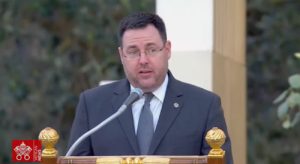
NASHVILLE (BP)—A group commissioned to study cooperation in the Southern Baptist Convention will use subgroups to study Southern Baptist documents and processes, as well as gathering insights from local, state and national sources.

Psalm 77 will serve as background for guidance in the process, said Chair Jared Wellman, pastor of Tate Springs Baptist Church in Arlington, in the 20-member cooperation group’s first online update.

An emphasis is placed on verse 11, he wrote, which reads, “I will remember the deeds of the Lord; yes, I will remember your wonders of old.”

“This verse underscores the theme of finding hope and solace in God by reflecting on His faithfulness and power, even in the midst of present difficulties,” Wellman stated.

In addition to updates, the cooperation group website includes articles and columns for context.

 “The website is simple, featuring just a few pages: a contact page, a page displaying the names and faces of the group, and a page for Southern Baptists to access updates related to our work on their behalf,” Wellman told Baptist Press.

“Additionally, we have included the motion’s text on the landing page, and we are closely following its wording to guide our efforts, as it reflects the language adopted by the messengers.

“Our aim is to keep everyone well-informed about our work and direction so that they can be prayerfully prepared for June 2024.”

One subgroup will focus on Article 3 of the SBC Constitution and the Baptist Faith and Message, while another will concentrate on Bylaw 8 and the SBC Credentials Committee.

An ad hoc group comprising those from the first two groups will reach out to Southern Baptists on the local, state and national levels for feedback on the topic of cooperation.

“Those groups will meet regularly,” the update said. The full group will then reconvene “to bring recommendations that have been thoroughly studied.”

The Cooperation Group will use a four-stage approach in bringing its final recommendations in Indianapolis:

  • Research (September-December)
  • Recommendations (January-March)
  • Refinement (April-May)
  • Resolution (June).

All updates will be communicated through the website.

The cooperation group’s formation grew out of a motion at the SBC annual meeting in New Orleans calling for the study of what it means for churches to be “in friendly cooperation on questions of faith and practice.”

SBC President Bart Barber announced in August Wellman would lead the group. He named the remaining members last month.


Pastors fight for legal residency after visa rule change

GORDON (BP)—Albert Oliveira came to the United States from Brazil in 2010 on a student visa, graduated from Southwestern Baptist Theological Seminary, began serving as pastor of a growing church, married and started a family.

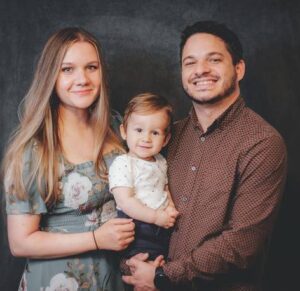
The Oliveira family have little chance of legally remaining in the U.S. past February 2024, having already exhausted more than three of the five years their R1 visa will be active. (Photo via BP)

But he and his wife, a German citizen, would need green cards to remain in the United States and allow Oliveira to continue his pastorate at First Baptist Church in Gordon.

In the middle of their application journey in April, the U.S. government unexpectedly changed the rules and effectively added years to their wait. The R1 nonimmigrant religious worker visas he and his wife hold will expire before they can even apply for green cards under the new process.

“Now we’re just trapped in a limbo,” Oliveira told Baptist Press.

The Oliveiras and their American-born toddler have little chance of legally remaining in the U.S. past February 2024, having already exhausted more than three of the five years their R1 visa will be active.

“It’s just a longer wait that exceeds what we are allowed to stay here legally. Attorneys themselves say we would have to leave the country at the end of the five years,” Oliveira said. “Basically, the whole religious worker category is useless. You’d have to go to another category to even have a chance of staying in the U.S.”

Caught in the middle when rules changed

Oliveira and his family are among thousands. Churches, ministries and attorneys are advocating for change.

The U.S. government issued 6,300 nonimmigrant religious visas in 2018 before the COVID-19 pandemic when applications slacked, and issued 5,900 in 2022, the American Immigration Lawyers Association reported.

“What is really disappointing to us is the egregious nature of it, is that they provided no advance notice to people,” said Sharvari Dalal-Dheini, director of government relations for the lawyers’ association.  “… [T]hings changed overnight, significantly.”

For years, a limited number of immigrant visas have been available annually, with a per country limit of 7 percent of the total allotment. Only a portion of the total visas are reserved for religious workers, described as EB-4 (employment-based category 4) applicants.

In March 2023, the U.S. government deemed it had been allotting immigrant visas incorrectly for seven years to residents from El Salvador, Honduras and Guatemala in a way that created lengthy backlogs for applicants from the three countries known as the Northern Triangle.

The change would be corrected the next month, the government said, resulting in the creation of severe backlogs for religious workers and others in the EB-4 category from all countries.

Dalal-Dheini expects the change to create an 11-year backlog for the most recent EB-4 applicants in a line she described in July as 105,267 applicants long and growing. Until recently, the EB-4 category for all countries except Mexico and the Northern Triangle had been current, she said.

The change “without sufficient notice is unlawful and must be immediately rectified,” Dalal-Dheini said in a July 31 letter to Secretary of State Anthony Blinken and Secretary of Homeland Security Alejandro Mayorkas.

In the letter, the AILA advocated a range of administrative fixes to the problem, including granting deferred action for some applications, eliminating certain waiting periods, extending employment authorization for certain applicants, and codifying protections for special immigrant juveniles who are also included in the EB-4 category.

“It creates a lot of stress and anxiety for people who are here and thought they had a plan, not only for the religious workers themselves, but the people they serve,” Dalal-Dheini said. “There are a number of people who are impacted, and I know the religious groups in the community have gotten active.”

Lawsuit filed

In April, the Society of the Divine Word joined a multi-denominational group of about 20 churches, missions and religious denominations in challenging the change. Suing the U.S. Citizenship and Immigration Services, plaintiffs claimed violations of the Establishment Clause and the Free Exercise Clause of the First Amendment, the Religious Freedom Restoration Act, the Immigration and Naturalization Act, and other missteps.

The plaintiffs said they exercise and advance their religious beliefs by employing foreign-born ministers and international religious workers, and requested a summary judgment, but the district court in Northern Illinois instead dismissed the case July 23.

Short of leaving the country, Oliveira sees only one option available—applying for a visa under a different category, EB-2 (employment based second preference). Among requirements in the EB-2 category is the stipulation that employers pay a certain minimum salary, a requirement which Oliveira said might be a burden for some churches.

“I do believe that it does hurt the religious freedom because the church is independent, and we shouldn’t be at the mercy of the government to tell how long their pastor should be, and who their pastor should be, or how much they should be making,” Oliveira said.

“The church is growing. It’s healthy, and the gospel is being shared. And the church really is feeling burdened that they (might lose) the pastor that has been part of such a journey with them.”

Since Oliveira began serving First Baptist Gordon in 2022, Sunday worship attendance has grown from around 20 to more than 150, he said. The church has hired an attorney to help Oliveira through the visa application process.

“It has caused our church much burden financially. It has caused me a lot of emotional burden because I’m here, not knowing where to go [in the] next year and a half,” he said. “My wife is from one country, I’m from another, and my son is from this country. So wherever we go, we’re going to have to figure out the immigration of that country.”

The Oliveiras would prefer to stay put.

“I love this country,” he said. “This is a second home for me, my wife, and a first home for our son. But my perception is that the people are silent about those that are trying to come to the U.S. legally.”


Statement on School Choice Sunday

Recently, Texas Governor Greg Abbott met with various religious leaders across the state via a teleconference advocating for Texas churches to declare October 15 “School Choice Sunday,” and urged them to promote “school choice” from the pulpit. Regardless of one’s view on the legislative proposal, a call from a government authority to intervene in Sunday worship goes beyond what any church body should accept or condone.

It is out of bounds for any representative of the government to co-opt a Sunday morning time of worship. A government’s request for churches to join a legislative agenda violates the conscience concerning religious liberty and the separation of church and state. Churches that too closely entwine with political affairs hamper both their Christian witness and citizenship responsibilities. Texas Baptists remain committed to the separation of church and state. Government should not interfere with the free exercise of religion, and no religion should depend on public tax dollars for support.

We encourage all citizens, including church members, to be informed on the various proposals before the state, and we also encourage all churches to protect their autonomy from interference by the state.

As the current and former Executive Directors of the Executive Board of the BGCT and joined by the current and former presidents of the convention, we offer our prayers and encouragement to Baptists in Texas and all citizens of goodwill to honor the separation of church and state while seeking the flourishing of all people made in the image of their Creator.

Executive Directors

Julio Guarneri (executive director-elect) *

David Hardage

Randel Everett

Charles Wade *

William M. Pinson Jr.

Presidents

Ronny Marriott

Julio Guarneri *

Michael Evans

Danny Reeves

René Maciel

Kathy Hillman

Jerry Carlisle

Victor Rodriguez

David Lowrie

Joy Fenner

Steve Vernon

Michael Bell

Albert Reyes

Ken Hall

Clyde Glazener

Charles Wade*

Richard Maples

Joel Gregory

* Served as BGCT president prior to becoming executive director.


TBM supplies water to Southeast Louisiana

Texas Baptist Men sent more than 30,000 bottles of water and sports drinks to a suburb of New Orleans as salt water threatens the drinking supply of several parishes in Southeast Louisiana.

Texas Baptist Men sent more than 30,000 bottles of water and sports drinks to a suburb of New Orleans as salt water threatens the drinking supply of several parishes in Southeast Louisiana. (TBM Photo)

A TBM truck left Dallas Saturday for Bethlehem Baptist Church in Braithwaite, La., and church members unloaded the water on Sunday afternoon after worship, said Rupert Robbins, associate director of TBM disaster relief.

On Monday, the church distributed the water to more than 200 area families, said Pastor Michael Jiles of Bethlehem Baptist Church. The church spread the word quickly to the people of Plaquemine Parish using social media, the church’s electronic sign and word of mouth.

“Thank you so much from the bottom of our hearts,” the pastor said of TBM’s support. “Thank God for you considering us.”

The water problem is caused by saltwater working its way up the Mississippi River. Braithwaite is an unincorporated community on the banks of the river, about 25 miles south of New Orleans.

The water in Braithwaite is drinkable now, the pastor said, but saltwater already is in the water supply of some communities south of town.

“The Mississippi River’s flow has declined due to drought that is impacting the river and the water that flows into it from the Ohio River,” The Hill reported. “As a result, saltwater from the Gulf of Mexico is able to push its way toward Louisianans.”

Members of Bethlehem Baptist Church in Braithwaite, La., unloaded water. provided by Texas Baptist Men. (TBM Photo)

Louisiana Baptist Disaster Relief made TBM aware of the water situation. TBM then connected with Bethlehem Baptist through contacts with the National Baptist Convention of America, said Rand Jenkins, TBM’s chief strategy officer.

“This is our first time to collaborate with this important convention, and we are excited about future possibilities,” Jenkins said.

National Baptists mobilized volunteers at the Louisiana church to complete the handoff of needed water.

Terry White, executive secretary and treasurer of the NBCA Home Mission Board, thanked TBM for its response to the situation in Louisiana.

“We’re looking forward to doing even more together, he added.

David Wells, director of TBM disaster relief, praised the effort of both TBM and Bethlehem Church volunteers. On the TBM side, “‘it was a quick turnaround, and our volunteers just did a wonderful job,” Wells said.

Then, in Louisiana, “the church people showed up in a big way, unloading the truck quickly so it could return to Texas,” he said.

The TBM truck carried two pallet jacks along with the water. Church volunteers manned one jack in the truck, bringing the pallets to the lift gate, and others operated the jack storing the water and sports drinks.

“I’m just thankful we have volunteers who will step up at a moment’s notice, follow the Lord’s leadership and serve those in need,” Wells said. “It’s no surprise, but it always makes me thankful.”


TBM brings escape room approach to discipleship

Texas Baptist Men Discipleship brought a global cultural movement into the church to help participants move toward a more vibrant, calling-driven faith through the Escape Room Mission Experience.

Youth at First Baptist Church in Tyler are among the 7,500 who have participated in the Escape Room Mission Experience. (TBM Photo)

“It’s an experience that helps participants escape from a lifeless faith and move into a faith built on calling, mission and purpose,” said Preston Cave, TBM missions and discipleship coordinator. “It can also be used by both students and adults.”

Escape rooms have gained popularity in recent years. They involve teams of players using clues to solve puzzles and complete tasks to accomplish a goal in a set amount of time. Teams may be trying to escape from rooms or—as with the Mission Experience—working together toward a specific goal.

“The goal of this experience is to help people escape from routine, non-biblical ways of doing church,” Cave said. “Our theme is Rebuild the Church, and we promote this by showing individuals a path toward a true life calling.”

Cave has led the experience in more than 80 churches, but it can be led by anyone.

“Everything needed for the Mission Experience is contained in a duffle bag that can be shipped to a church or ministry that would like to use it,” he said.

To date, more than 7,500 students have gone through the experience.

The Escape Room Mission Experience takes no longer than 55 minutes, Cave said, but most groups finish in 45-minutes.

“The goal is to discover four words that reveal hidden codes to progress players through the experience,” he said. “At the end, each participant will be given a small Blueprints for Life book that explains the gospel in a simple, yet engaging way.”


School board member sues over right to quote the Bible

GLENDALE, Ariz. (RNS)—An Arizona school board member who was instructed to stop quoting Bible passages during board meetings filed a federal lawsuit against her district Sept. 27.

Heather Rooks alleged her First Amendment rights to free speech and free exercise of religion had been violated.

Rooks, a Christian who attends a large nondenominational church, has been serving the Peoria Unified School District, one of Arizona’s largest districts, since January 2023.

She is being represented by the law firm Gibson Dunn & Crutcher and the First Liberty Institute, a Plano-based conservative legal organization.

Since the start of her term, Rooks, whose four children attend school in the district, has quoted short Bible passages during the “board comments” portion of each board meeting. The passages were often related to the theme of courage.

“Have I not commanded you? Be strong and courageous. Do not be afraid; do not be discouraged, for the Lord your God will be with you wherever you go,” Rooks said at a meeting in January, quoting from the first chapter of Joshua.

“Keep me safe, my God, for in you I take refuge,” she said in April, quoting from Psalm 16.

Rooks told Religion News Service she was surprised and then saddened after being instructed not to quote Scripture, because she “never thought that would happen in America.” She said she recited Bible passages as a source of strength when faced with difficult decisions.

‘With everything that goes on as a new school board member, we’re facing a lot of adversity and challenges. So reading those verses really gave me some strength and courage and peace,” Rooks said.

Rooks said, in particular, she was seeking courage to “keep speaking out for parents.”

Critics cite political overtones

Critics of Rooks say her quoting of Bible passages has political undertones, especially during board meetings where issues like white supremacy and gender nonconformity are discussed. In April, the board voted down a bathroom policy Rooks supported that would have restricted transgender students from using bathrooms that align with their gender identity.

In February, the group Secular Communities for Arizona issued a complaint to the board arguing Rooks was violating the Constitution’s establishment clause.

“It is coercive, embarrassing and intimidating for citizens from a different religion or nonreligious citizens to display deference toward a religious sentiment in which they do not believe, but which this school board member does,” Dianne Post, legal director of Secular Communities for Arizona, wrote in an email included in the lawsuit.

In May and again in June, a staff attorney for the nonprofit group Freedom From Religion Foundation sent emails to the board president requesting the district stop board members from promoting their beliefs. The emails said failure to do so would “subject the school district to unnecessary liability and potential financial strain.”

The board’s legal counsel emailed board members in mid-July saying it would “be in the best interest of the district” for board members to stop quoting Bible verses, because doing so violated federal and state laws and because Freedom From Religion and Secular Arizona had “threatened” to “take further action,” including filing a lawsuit.

Shortly after, Rooks announced at a board meeting that she would refrain from reciting Bible passages. She added that she would “have my attorneys at First Liberty Institute handle this matter,” according to the suit.

‘Substantially burden her religious exercise’

The lawsuit claims that quoting brief Bible passages without comment does not violate the First Amendment’s prohibition against establishment of religion but is instead part of the “longstanding tradition of government officials solemnizing public occasions in this way.”

Hiram Sasser, executive general counsel for First Liberty Institute, clarified the tradition of calling upon a resource to solemnize an occasion applies to people of all religious backgrounds, not just Christians quoting the Bible.

Rooks’ lawsuit also says the district’s policy and actions “chill her ability to freely speak” and “substantially burden her religious exercise by forcing her to choose between following the precepts of her religion and retaining her position as a member of the Board.”

Thus, it argues, the district has violated state and federal laws guaranteeing Rooks’ right to freedom of speech and free exercise of religion.

Freedom From Religion Foundation co-President Annie Laurie Gaylor questioned the efficacy of the suit, saying because the district didn’t discipline Rooks, there’s “no actual case or controversy for a lawsuit.”

“She’s suing her own school district because she disagrees with a legal opinion about the legal liability that the board is entailing if her conduct continues,” Gaylor said. “Heather Rooks is basically abusing judicial resources in order to fight a culture war.”

Sasser told RNS by joining the case, First Liberty Institute is “fighting to preserve the correct and original meaning of the Constitution.” He added school districts still are adjusting to the Supreme Court’s Kennedy v. Bremerton School District decision, which found the Constitution protected a football coach’s right to pray with students on the 50-yard line after games.

“You have 50 years of legal precedent that essentially tilts the scales in favor of censorship of anything religious in public,” Sasser asserted. “That is suddenly gone, and the new standard is to accommodate religious speech.”

In her July email to the school board, the board’s legal counsel argued Kennedy v. Bremerton did not apply because the coach’s prayer was silent and not broadcast publicly. She did not return requests for comment.

As of Oct. 2, Peoria Unified School District had not yet been served, but Sasser said the process was underway.

“Heather decided to let the legal process play out,” said Sasser. “That’s why we filed the lawsuit: to see if they’re right, or we’re right.”


BGCT leaders call Gov. Abbott’s appeal ‘out of bounds’

Gov. Greg Abbott’s call for churches to observe “School Choice Sunday” and for ministers to use pulpits to promote a voucher-style legislative proposal is “out of bounds,” 21 past and present Baptist General Convention of Texas leaders said.

Executive Director-Elect Julio Guarneri and President Ronny Marriott joined 15 BGCT past presidents and former BGCT executive directors Bill Pinson, Charles Wade, Randel Everett and David Hardage in a public statement registering objection to a government official seeking to “co-opt a Sunday morning time of worship.”

“Regardless of one’s view on the legislative proposal, a call from a government authority to intervene in Sunday worship goes beyond what any church body should accept or condone,” the Texas Baptist leaders stated.

In a Sept. 19 teleconference with clergy, Abbott announced he would call a special session for the purpose of passing “school choice” legislation. He called on pastors to “go to the pulpit, speak from your pulpit to your congregation, and let them know how important this issue is to the fabric of the future of Texas.” In a press release the same day, Abbott urged Texans to participate in “School Choice Sunday” on Oct. 15.

“I believe that every parent can do a better job of raising their children if they are given the power to choose the school that is best for their child,” Abbott stated. “If they are given that power, that child will go down a pathway to better educational success, personal success and relationship success.”

Separation of church and state affirmed

The past and present Texas Baptist leaders affirmed the historic Baptist principle of separation of church and state.

“It is out of bounds for any representative of the government to co-opt a Sunday morning time of worship,” they stated. “A government’s request for churches to join a legislative agenda violates the conscience concerning religious liberty and separation of church and state. Churches that too closely entwine with political affairs hamper both their Christian witness and citizenship responsibilities.

“Texas Baptists remain committed to the separation of church and state. Government should not interfere with the free exercise of religion, and no religion should depend on public tax dollars for support.

“We encourage all citizens, including church members, to be informed on the various proposals before the state, and we also encourage all churches to protect their autonomy from interference by the state.”

The Texas Baptist leaders closed by offering “prayers and encouragement to Baptists in Texas and all citizens of goodwill to honor the separation of church and state, while seeking the flourishing of all people made in the image of their Creator.”

Joining Guarneri, Marriott and the four former BGCT executive directors in signing the statement were former BGCT presidents Michael Evans, Danny Reeves, René Maciel, Kathy Hillman, Jerry Carlisle, Victor Rodriguez, David Lowrie, Joy Fenner, Steve Vernon, Michael Bell, Albert Reyes, Ken Hall, Clyde Glazener, Dick Maples and Joel Gregory.

Guarneri and Wade each served as president of the convention before they were elected as executive director.


BWA leader joins ecumenical prayer vigil in Rome

Prior to the beginning of the Vatican Synod on Synodality, Baptist World Alliance General Secretary Elijah Brown offered a prayer for peace at an Ecumenical Prayer Vigil in Rome, a historic event that included participants from Orthodox, Anglican and various Protestant traditions.

The Sept. 30 prayer service—which drew an estimated crowd of 18,000 participants to St. Peter’s Square around the theme “Together”—marked the beginning of the Roman Catholic Church’s XVI Ordinary General Assembly of the Synod of Bishops.

The Synod on Synodality is a summit of 464 Catholic bishops, priest and laity—including women—to discuss a range of issues, based on two years of conversations in Catholic parishes around the world.

Baptist World Alliance General Secretary Elijah Brown offered a prayer for peace at an Ecumenical Prayer Vigil in Rome. (Screen Grab Image)

At the prayer service, Brown followed Mor Ignatius Aphrem II of Antioch, patriarch of the Syriac Orthodox Church, who prayed in Arabic: “Christ Jesus, look down upon your family. We entrust all your disciples to you, that they may continually grow as peacemakers.”

Brown prayed: “For all who suffer from violence and war in Ukraine, Myanmar, Afghanistan, Pakistan, Haiti, Nicaragua, Congo, Syria, Sudan, Ethiopia and in many other places around the world, for those who persevere, wherever they live, in the service of justice and reconciliation, we pray to you.”

Other participants included Justin Welby, the archbishop of Canterbury; Bartholomew I, ecumenical patriarch of Constantinople; Jong Chun Park, president of the World Methodist Council; Anne Burghardt, general secretary of the Lutheran World Federation; Thomas Schirrmacher, secretary general of the World Evangelical Alliance; William Wilson, president of the Pentecostal World Fellowship; and Kuzipa Nalwamba, representative from the World Council of Churches.

The ecumenical Taizé community organized the two-hour prayer service, which included eight minutes of silence for personal prayer.

In his remarks to the ecumenical gathering, Pope Francis emphasized the importance of silence as “essential in the life of the believer,” noting it “enables true discernment.”

‘A spirit of Jesus-centered worship’

“While we maintain our differences, I was grateful to participate on behalf of the Baptist World Alliance in this historic gathering as church leaders from Catholic, Orthodox, Mainline and Evangelical churches came together for the very first time to pray,” Brown said.

“There was a spirit of Jesus-centered worship when the many thousands who were present spontaneously joined with a children’s choir from Ukraine to sing ‘Alleluia.’ I was encouraged that the prayer service began and concluded with each of the church leaders standing and prayerfully reflecting before the cross.

“With so many around the world bearing the cruelties and injustice of war and persecution, it was humbling to pray again for peace and to ask if each one of us would follow Jesus with courage and conviction into the sufferings of violence in the path of peacemaking.”

In a brief encounter with Pope Francis, Brown said he told him, “The Baptist World Alliance prays for peace and for renewed Pentecost witness.”

“The Pope responded, ‘Pray for me, as well,’” Brown said.

Taizé hosted a youth gathering prior to the prayer service. Brown met with 125 young people from Egypt, Sri Lanka, Spain, Germany, Sweden and other nations to talk about what it means to follow God’s call and live on mission.

He also preached at La Chiesa di Trastevere, the largest Baptist church in Rome.


Churches benefit from the gifts of people with disabilities

Erik Carter believes the church needs the gifts people with disabilities bring to the body of Christ as much as those individuals need the church.

Carter directs the Baylor Center for Developmental Disabilities and leads Baylor University’s new interdisciplinary Disability, Faith and Flourishing Initiative within the School of Education.

Erik Carter

“It’s my passion to help churches welcome and embrace persons with disabilities,” he said.

For Carter, that desire comes from personal experience. Growing up, he had no contact with any people with developmental disabilities.

“They were a hidden part of our community,” he said.

However, the summer after his freshman year in college, he worked at a camp for youth. To his surprise, he was assigned to work in programs for young adults with developmental and intellectual disabilities.

“I stumbled into relationships with people who had Down syndrome,” he said, noting they unconditionally embraced him as a friend.

The young people with developmental disabilities were Christians. At the time, Carter was not.

However, he was touched by their love for Jesus, their joyful approach to living, their accepting attitudes, and their firm conviction God accepted them just as they were.

“They shared their testimonies in a way I had never heard before,” he said. “That’s how I became a Christian.”

‘A matter of reciprocity’

As director of the new Baylor Disability, Faith and Flourishing Initiative, Carter hopes to influence the way churches view ministry with people who have disabilities.

“It’s not just about trying to open up churches to make them more hospitable and accessible to persons with disabilities because of their needs. It’s also about opening minds of church people who need to encounter people who have disabilities. These are individuals with gifts that we need,” he said.

“It’s a matter of reciprocity. It’s not a charity thing. It’s a faithfulness thing.”

In a society that values speed, people with disabilities can teach others the value of slowing down, he noted. In a culture that emphasizes independence, people with disabilities can help others learn the importance of interdependence, he added.

“People do come to Christ through the witness of people with disabilities. And I would love for it to be an unremarkable story,” Carter said.

Help churches become accessible and inviting

After teaching at Vanderbilt University, where he was co-director of the Vanderbilt Kennedy Center for Excellence in Developmental Disabilities, Carter joined the Baylor university faculty in January. He felt drawn to the university because of Baylor’s commitment to being “a preeminent Christian research university.”

Carter believes Baylor is uniquely positioned to become “the first of its kind hub” for research, theological reflection, ministry training and resource development to help congregations become accessible and inviting faith communities where people with disabilities can flourish.

“Most churches want to do it well, but they don’t know how,” he said.

The initiative Carter leads not only will examine empirical research that already exists, but also will do further research and seek to discover ministry models that work in churches of varied sizes and settings.

Based on research so far, Carter observed larger churches tend to respond to people with disabilities by creating programs geared toward them and hiring staff to carry out those programs. Programs may include specialized classes for individuals with disabilities, along with support groups and respite care for families.

“In smaller churches, it’s more a matter of coming alongside particular individuals and their families,” he said. “It’s dealing with one person at a time and one family at a time.”

Regardless of church size, ministry to people with disabilities demands time and intentionality, he noted. The initiative will seek to help churches identify barriers that may keep people with disabilities from participating fully in worship, discipleship, service and fellowship.

“Barriers to their participation can be architectural, and they can be attitudinal,” Carter said. “Churches may inadvertently exclude people.”

The Baylor initiative defines “disabilities” broadly enough not only to include people on the autistic spectrum or with Down syndrome, but also individuals who experience disabilities that accompany aging, such as memory loss, impaired mobility and loss of hearing and vision.

Seen in the broadest sense, 70 million Americans—1 out of 5 people in the United States—have disabilities. One student in 7 receives special education services in school. One child in 36 is on the autistic spectrum.

Think about disability from God’s perspective

One area of potential collaboration may be with Baylor’s Truett Theological Seminary, as the initiative seeks to help churches consider disabilities from a theological perspective.

“We want to enter into conversations with those who are thinking theologically about it,” Carter said. “How do we think about disability from God’s perspective?”

The initiative will include a training component for churches and make resources available to congregations, he noted.

In January, the Baylor Center for Developmental Disabilities will host a five-part training series focused on helping churches become more accessible, welcoming and supportive communities for people with disabilities and their families.

Designed for pastors, ministry leaders and other interested church members, sessions will focus on practical ways churches of all sizes can plan worship, religious education, fellowship activities, outreach and support that make possible ministry with and by people with disabilities. Both in-person and online options will be available. Dates and times will be announced online here.

As churches find ways to remove barriers and include people with disabilities in their congregations, they benefit from the gifts those individuals bring, Carter insisted.

“People with disabilities have different life experiences and perspectives to offer,” he said. “Even those who are unable to communicate can help us expand our imaginations, teaching us how to pray without speaking and worship without singing.

“As churches widen the welcome, we become more creative and imaginative. … We want to support churches in the journey.”


Lifeway Worship website to continue for another year

BRENTWOOD, Tenn.—After meeting with church music leaders for multiple listening sessions, Lifeway Christian Resources announced the decision to continue operating lifewayworship.com for another year.

“Lifeway exists as a ministry partner for the local church. We are committed to churches and their leaders to support the ways God is using them,” said Ben Mandrell, Lifeway president and CEO.

“The listening sessions we held with worship leaders and music directors gave us invaluable feedback in understanding the benefit lifewayworship.com provides for their ministry. As a result, we will continue updating the website for another year, including the production of new music through September of next year.”

Brian Brown, director of Lifeway Worship said it is important for churches to understand that the resources currently on the website will not go away.

“Everything we’ve created for the past 15 years will remain available to churches,” he said.

In July, Lifeway announced it would shut down the website that provides arrangements, charts, sheet music and other music resources for church worship. Churches were given until Aug. 31 to purchase new music and until Sept. 30 to download all their content.

In response to concern from ministry leaders, however, Lifeway made the decision to postpone the shutdown.

 “While we originally made the difficult decision to discontinue lifewayworship.com with prayerful consideration, we should have invested more time to listen to church leaders, provide more notice of the impending change, and partner with those who rely on this tool every week,” Mandrell said at the time.

Ten worship leaders from Texas Baptist churches and several others joined Tom Tillman, director of music and worship for Texas Baptists, for a listening session in Dallas with three executives from Lifeway regarding the future of the lifewayworship.com website. (BGCT Photo)

As part of that commitment, Lifeway hosted four listening sessions in Georgia, North Carolina, Kentucky and Texas. In those meetings, Brown, Scott Arvay, senior vice president and chief revenue officer, and Carol Pipes, director of communications, heard from music ministers and worship leaders from those four states, as well as surrounding states.

“We were very pleased with the listening sessions as each one allowed for open and honest dialogue about the unique role Lifeway Worship plays in serving worship leaders. It was so encouraging to hear how important of a role it plays in many aspects of the leader’s responsibilities, including discipleship of those that serve on their teams,” said Arvay.

After hearing from users of the website, Arvay said Lifeway recognized this is a ministry issue for worship leaders and not just a technology or tool challenge.

“Lifeway’s ability to compose worship music note by note in keys that are singable by the congregation allows the leader to involve more of the church in worship ministry, especially classically trained musicians. Or simply put, Lifeway Worship is their curriculum,” he said.

“Additionally, we left inspired as we heard stories of Lifeway Worship serving as the key resource that helped leaders find unity between those at odds over traditional versus modern worship styles.”

Arvay said the organization will continue discussing ways to come alongside churches in their worship and music ministry.

“Over the next year, Lifeway will work closely with worship leaders to develop a holistic strategy on how we can best serve their needs, including the place lifewayworship.com plays,” he said.


UN official condemns ‘unspeakable tragedy’ in Myanmar

The United Nations High Commissioner for Human Rights condemned atrocities committed by the ruling military regime in Myanmar as “inhumanity in its vilest form.”

In Sept. 26 remarks to the U.N. Human Rights Council, High Commissioner Volker Turk called for an end to “an unspeakable tragedy,” saying the Burmese military regime should be brought before the International Criminal Court.

“There is no time to lose,” Turk said, noting at least 4,108 deaths caused by the Burmese military—known as the Tatmadaw—and its affiliates.

Last year, the Baptist World Alliance general council approved a resolution condemning the coup in Myanmar, saying the Burmese military was waging “a campaign of terror and violence, particularly against minority religion.”

The violence has escalated and the human rights situation has deteriorated dramatically in recent months, Turk told the council.

“Widespread campaigns of violence perpetrated by the military continue, in full disregard for the fundamental principles of humanity and repeated demands of the United Nations Security Council for an immediate cessation of the hostilities and calls for unhindered humanitarian access,” he said.

Turk presented a report—the eighth report submitted by his office since the February 2021 military coup in Myanmar—covering the period from April 1, 2022, to July 31, 2023. It points to “a seemingly endless spiral of military violence” in Myanmar.

“Its findings describe a range of incidents—many of particular brutality, emblematic of a systematic negation of human rights, human life and human dignity,” he said. “We are faced here with a system of ruthless repression designed to coerce and subjugate its people and to erode a society so that the predatory interests of the military are preserved.”

Turk reported 22 documented incidents of mass killings. In some cases, soldiers tortured villagers and mutilated their bodies.

“Three specific military tactics have been systematically directed against the civilian population: airstrikes, mass killings and burning of villages,” Turk said.

He pointedly noted the Burmese military is depending on heavy weaponry that “can only be purchased from foreign sources,” and it relies on foreign currency to buy hardware, aviation fuel and other materials.

Pastor Cung Biak Hum was shot dead in the Chin state of Myanmar. (Facebook Photo / Asia Pacific Baptists)

On Sept. 18, 2021, Burmese military shot dead a Baptist pastor in the Chin State. Pastor Cung Biak Hum was shot while he was attempting to help a church member extinguish a fire after the man’s home was set ablaze during military attacks.

“Civilian rule of law in Myanmar has vanished,” Turk said.

He noted credible sources reported 24,836 people have been arrested, 19,264 still are detained, and 150 have been sentenced to death by military-controlled courts. At least 7,368 individuals have been convicted “in ad hoc trials, most lasting mere minutes, and without defense counsel,” he added.

Hkalam Samson, past president and former general secretary of the Kachin Baptist Convention in Myanmar was detained by the Burmese military junta in December. On Good Friday, he was sentenced to six years in prison. (CSW Photo)

Hkalam Samson, past president and former general secretary of the Kachin Baptist Convention, is among the religious leaders who remain imprisoned in Myanmar. Samson was seized last December before he could board a flight to Bangkok, Thailand, for medical treatment.

“People in Myanmar have long suffered with insufficient attention being paid by the international community to their plight,” Turk concluded. “That must change.”

Earlier this month, the founding president of the 21Wilberforce human rights organization urged Texas Baptists to call on Congress to provide support for persecuted people in Myanmar.

Randel Everett, a former executive director of the Baptist General Convention of Texas, sent an email asking Texas Baptist leaders to endorse a letter to Rep. Kay Granger, R-Fort Worth, chair of the House Appropriations Committee, urging full funding for the Burma Act.

Everett noted the importance of contacting Granger and other members of Congress immediately to influence the decision-making process for funding.

“The funding will provide vital aid that will help the communities affected by the violence to rebuild, promote a federal democracy, and hold accountable those responsible for the ruthless abuses of human rights and religious liberty,” Everett wrote.


Ethnic leaders protest Executive Committee staff cuts

NASHVILLE (BP)—The recent elimination of five Southern Baptist Convention Executive Committee staff positions—including two related to ministry among Hispanics and Asians—prompted letters from ethnic leaders.

Prior to Sept. 13, Luis Lopez directed Hispanic relations and mobilization, and Peter Yanes led Asian American relations and mobilization.

The California Southern Baptist Convention first reported the letters from the National Hispanic Baptist Network and a group of 18 Asian American church leaders.

‘Unhelpful’ and ‘short-sighted’ decision

The National Hispanic Baptist Network expressed “disappointment” at the elimination of Lopez’s position.

“We believe that the decision to eliminate this position is unhelpful, short-sighted, and leaves Hispanic Baptists with no representation on the Executive Committee as well as the Board of trustees (again),” the letter said. “This represents a step backwards in our communication and collaboration when we should be moving forward together to reach and disciple the lost in the U.S. and beyond (including the more than 52,000,000 lost Hispanics in the U.S.).”

The letter from National Hispanic Baptist Network Executive Director Bruno Molina included statements from Pete Ramirez, executive director of the California Southern Baptist Convention; Emanuel Roque, Hispanic Multicultural catalyst for the Florida Baptist Convention; and Jesse Rincones, executive director of Convención Bautista Hispana de Texas.

The network delivered the letter—which included a request for an in-person meeting—to Executive Committee Interim President and CEO Jonathan Howe.

“This is devastating news for the over 3,000 Hispanic Baptist congregations in the SBC,” Rincones said. “I fear that the loss of Luis Lopez as the Associate Vice President for Hispanic Relations does not convey being ‘fully committed’ to relating with a fellowship that, if it were a state convention, would rank 4th largest.”

Ramirez said the Executive Committee’s decision to remove Lopez and Yanez from their positions “has left our partnering ethnic family with a deep sense of discouragement.”

“Their work is invaluable and made a positive impact in building unity throughout our SBC family, especially among groups of various languages and cultures,” Ramirez said.

“With a void in these important positions, where only diverse leadership can understand and minister to these specific differences, I’m not sure the EC will be able to fulfill this vital initiative.”

2011 work group study cited

Both groups cited a messenger-approved 2011 Executive Committee workgroup study analyzing ethnic involvement in Southern Baptist life.

That study originated from a 2009 motion by Paul Kim, pastor emeritus of Antioch Baptist Church in Cambridge, Mass., and ultimately led to a final report affirmed by the Executive Committee prior to the 2011 SBC annual meeting in Columbus, Ohio.

The letter signed by 18 Asian Baptist leaders said eliminating the positions opposed the mandate of the 2011 report.

“Ethnic fellowships value the SBC because of its emphasis to fulfill the Great Commission,” said Francis Chung, California Southern Baptist Convention Missions Initiative Team leader. “However, we hope that as we reach the nations and become more diverse, our leadership will reflect that diversity in our convention. It’s not that we need the leadership to look like us, rather, our leaders would understand the complexities and needs of the entire convention.

“The leadership of the SBC doesn’t look like us but what is even more concerning is that it does not understand nor represent the ethnic fellowships well.”

Howe points to budget constraints

The Executive Committee faced “several painful decisions” due to “current budget constraints,” Howe told the reporter from the California Southern Baptist Convention.

“Thankfully, these budget constraints affect only the EC and not the already-established networks of Korean, Chinese, Vietnamese, Hispanic, Brazilian, Laotian, Hmong, Native American, and other ethnic Southern Baptists who are taking the name and fame of Christ to their countrymen and beyond,” Howe said.

“Their vital work serves as a reminder that we are truly better together, and these ethnic fellowship groups represent the best of what we all strive for: a steadfast commitment to reaching all tongues and tribes with the Good News of Jesus Christ.”

Howe said it is impossible to ignore an ongoing budget crisis that has resulted in “painful” cuts to personnel and operations budgets.

“Over the past two years, we have spent nearly $10 million more than was budgeted and are on the verge of depleting our financial reserves as we continue to respond to the sexual abuse crisis across the Convention,” he said.

“Even with the recent personnel and operational cuts, the EC still does not have a balanced budget and will have to draw from reserves again in 2024.

“Unfortunately, it is unknown how long the EC will be facing these budgetary restrictions, but this is the reality in the present as well as for the foreseeable future.”

The Executive Committee has faced a significant financial downfall since 2021, due to the ongoing legal fees and investigation costs related to addressing sexual abuse.

Bearing costs for salaries previously shared

In November 2019, then-Executive Committee President and CEO Ronnie Floyd announced the addition of three full-time staff positions focused on increasing engagement among ethnic groups.

Julio Arriola quickly filled the first of those positions as Lopez’s predecessor over Hispanic relations and mobilizations. Yanes joined the following month. Charles Grant was named to oversee African American relations and mobilization in August 2020. All three positions were jointly funded by the Executive Committee and the North American Mission Board.

In December 2019, Willie McLaurin came on board in the newly created position of Executive Committee vice president for Great Commission Relations and Mobilization.

McLaurin’s role, which began the following January, called on him to “implement Cooperative Program and stewardship education, work to strengthen relationships and promote increased giving among Southern Baptist churches, develop strategies to strengthen relationships with multiple demographic groups within the SBC and provide oversight and assistance to the executive directors of church relations and mobilization for Hispanics, Asian Americans, African Americans and of church affiliations.”

In November 2021, NAMB shifted away from the partnership. Arriola became director of Send Network Southern Baptist Convention of Texas, a NAMB-funded role. Ashley Clayton, the executive director of church affiliation, whose position also was jointly funded by NAMB, moved to a church mobilization role with NAMB’s Send Network.

This meant NAMB and the Executive Committee went from equally sharing the cost of four positions to now each retaining responsibility for two, a budget-neutral impact.

In March 2022, McLaurin, who by then was interim Executive Committee President, hired Lopez to fill the vacant position for Hispanic mobilization, now fully funded by the Executive Committee.

Going forward, Grant will serve under the title of associate vice president for Convention Advancement and Relations.

“Significant gains in collective synergy, new fellowships and growth have been achieved among the Asian and Hispanic networks,” Grant told Baptist Press. “I am grateful to hear from both the Asian Collective leaders and the National Hispanic Baptist Network leaders concerning their heartfelt expressions about the recent EC staffing changes.

“Although the restructuring has caused pain, I am thankful for their willingness to dialogue about how to continue the momentum created by the partnership with the Executive Committee. I look forward to listening, learning and discovering ways to leverage opportunities to partner for strengthening diversity in the SBC and advancing the kingdom of God.”

In a statement to Baptist Press, Howe said that “diversity of representation and leadership is an integral part for the future of the Southern Baptist Convention—especially in our trustee system.”

Trustees are not selected by entities, Howe noted, but are received through a nominations process that requires approval of Southern Baptists at annual meetings.

Future discussions and efforts led by Grant with ethnic leaders will focus on how best to serve those communities.

Howe expressed his gratefulness to the International Mission Board and NAMB, as well as seminaries and state conventions with staff members “focused on mobilizing all ethnicities.”

“We are committed to partnering with them to continue to reach, elevate and mobilize Southern Baptists of all ethnicities and backgrounds,” he said.

With additional reporting by Managing Editor Ken Camp.