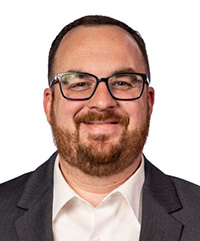
Michael Clary to be nominated for SBC 1st VP

NASHVILLE (BP)—Jared Moore will nominate Cincinnati pastor Michael Clary for Southern Baptist Convention first vice president at the 2024 SBC annual meeting in Indianapolis, Moore told Baptist Press March 11. Moore is a candidate for SBC president.

Moore cited Clary’s support of the so-called “Law Amendment” and Internal Revenue Service Form 990 financial disclosures of SBC entities in announcing the intended nomination, as well as Clary’s 25-year career in Christian ministry.

(https://baptiststandard.com/news/baptists/sbc-approves-amendment-limiting-pastorate-to-men/)

“He’s in favor of passing the Law Amendment. He sees the Law Amendment as just a reflection of Scripture and a reflection of our confession that Southern Baptists have voted on,” Moore said of Clary. “And [Clary believes] that putting that in the constitution would actually serve Southern Baptists well.”

The SBC Executive Committee has made no recommendation on two motions from the 2023 SBC annual meeting that would require SBC entities to submit to messengers financial information that would be included on IRS Form 990 for nonprofits. The IRS exempts certain religious organizations from submitting the form. The SBC and its entities receive the exemption.

Moore described Clary’s support of 990 disclosure as a matter of financial transparency.

“He believes that our trustees at our various SBC entities should submit 990-level financial disclosures at every SBC annual meeting,” Moore said. “And it’s not that he doesn’t trust the trustees–he trusts the trustees–but he wants to make sure that trustees trust Southern Baptists. And Southern Baptists have to be able to see that our money is being spent wisely. It’s God’s money.”

Moore described Clary as a mature Christian and a faithful husband and father.

Clary is the founding pastor of Christ the King Church, launched in 2009, in Cincinnati. Christ the King gave $792 to the Cooperative Program in 2023 from undesignated receipts of $472,854, according to the 2023 Annual Church Profile. The church reported four baptisms, 127 members and an average worship attendance of 201.

Clary told Baptist Press of an additional $32,000 in Great Commission giving in 2023, asserting donations of $10,000 to plant Christ the King Church, a Southern Baptist Church plant in Eastern Hills, Ohio, and $817 in donations to the Cincinnati Area Baptist Association.

Clary cited other donations of $4,200 to the 1520 Coalition global church planting ministry; $6,000 to Vision Nationals church planting organization based in Vishakhapatnam, India; $2,000 to the Acts 29 Network; and $3,000 to Cornerstone Church in Detroit (Acts 29), and several smaller outreaches.

Clary since has left the Acts 29 network, he told Baptist Press, which Moore confirmed.

Moore is the senior pastor of Homesteads Baptist Church in Crossville, Tenn.


Stories recorded of Ukrainian Christians tortured by Russia

KYIV, Ukraine (BP)—Russian soldiers captured Azat, a Ukrainian Baptist pastor, on one of his many trips to deliver humanitarian aid to Mariupol as Russia ravaged the city in the early months of the war.

What Russian soldiers did to him over the next six weeks because of his Christian faith left him temporarily bedridden—one wound baring his leg bone, internal organs damaged, teeth knocked out, eardrums burst, he said in a video recounting the torture.

“I had a bag on my head and my hands were handcuffed to my legs. Electric wires were connected to my genitals. They beat me with batons, an iron pipe, a wooden stick,” Azat said. “They mocked me and asked me how I became a traitor to the faith of my fathers and grandfathers by becoming Baptist. I am a Baptist and for Russians, Baptists are American spies. They call us ‘foreign agents.’”

Electrocuting him, soldiers demanded to know whom he served, perhaps speculating he served a foreign government.

“I told them, ‘I serve God.’ And then they tortured me more, asking which God do I serve. To this, I responded, ‘The Holy Trinity: The Father, the Son and the Holy Spirit.’ Well, at this they laughed and beat me so badly that they thought that I was dead.”

Ukraine Freedom Project records persecution

Steven Moore, a U.S. citizen in Kyiv who has launched the Ukraine Freedom Project to tell the stories of persecuted Christians, said Russia’s perception of Azat’s Christianity is typical.

 “The Russians view Protestants and evangelicals as agents of America,” Moore told Baptist Press. “As Russia occupies, they (surmise): ‘Oh, this is a Baptist church. The pastor must be an agent of America, like our priests are an agent of the Kremlin.” So, they arrest them, they torture them, and they shut down their church, and sometimes they kill believers for their faith.”

Azat tells his story on the website Moore’s ministry founded, RussiatorturesChristians.org. Azat is among four Baptists who share their personal stories of persecution on the site, along with the stories of other Christians tortured and persecuted there.

“What I do, I find the people that have escaped the occupation, because information is difficult to get out of the occupied areas,” Moore said. “If you’re a Christian who speaks out against the persecution and torture of your co-believers in the occupied areas, the Russians will threaten your family and friends who are still there.”

Russia killed at least 26 faith leaders in the first year of the war, now in its third year, Moore said, citing numbers broadly stated as fact. Dmytro Vovk, an expert on religious freedom with the Organization for Security and Cooperation in Europe’s Office for Democratic Institutions and Human Rights, cited the number at a March 2023 virtual hearing hosted by the U.S. Commission on International Religious Freedom.

USCIRF referenced the hearing March 1 in urging the Biden Administration “to utilize all tools available to sanction and hold accountable Russian authorities, including de facto authorities” for targeting and abusing prisoners of conscience held for their religious faith and practice.

“In Russian-occupied Ukraine, Russian forces have relentlessly suppressed Ukrainian religious communities,” the commission said, “by banning religious groups, shutting down houses of worship, and abducting, detaining, imprisoning, and torturing religious leaders and actors.”

Moore wants Christians in the United States to know the plight of Ukrainian Christians at Russia’s hands.

“If Russia wins in Ukraine, there will be tens or hundreds of thousands of dead Christians,” Moore asserted. “The Baptists are the most represented Protestant denomination in Ukraine, and so, they’re bearing the brunt of a lot of these horrors. The horrors that are happening here to Christians are from the Russians.”

Call to prayer and advocacy

He urged U.S. Christians to continue praying for Ukraine and to advocate for continued U.S. military aid.

“People of faith need to stand up,” he said. “We need their prayers and we need their political support in making sure the Ukrainians can get the weapons they need to save their people in occupied Ukraine and keep more Ukrainians from suffering the same fate.”

Moore, who has worked as a political aide in the United States, said God opened the door for him to launch a ministry to help Ukrainian Christians in the early days of the war. His Ukraine Freedom Project also offers humanitarian aid, providing socks for soldiers, generators for residents, and first-aid kits, among other supplies.

“My friends from Ukraine started calling me and saying, ‘They’re bombing Kyiv, I don’t know what to do.” Moore, who has spent two years in Iraq as a civilian during wartimes, said he knew how to navigate such offenses. A friend and Ukrainian veteran of Russia’s 2014 invasion of the Donbas region contacted Moore, and the two devised a plan.

“I had the time, I had the resources, I had the skills and so many people were calling me (for) help,” said Moore, who had considered a skiing trip in the days before the war. “I figured if I had gone skiing, it was not a decision that would have aged well. God opened up all these doors. And just, boom, boom, boom, doors started opening.”

Moore intends to continue telling the stories of the persecuted Christians who are able to escape Russia’s grasp, he said.

“We have a passion for highlighting the systematic torture and arrest and murder and persecution of evangelical Christians,” he said. “The Christian population has been totally driven underground.”


Ronny Marriott nominee for BGCT president

Ronny Marriott, incumbent president of the Baptist General Convention of Texas, will be nominated at Texas Baptists’ annual meeting for a second term.

David Lowrie, pastor of First Baptist Church in Decatur and a past president of the convention, announced his intention to nominate Marriott, the lead pastor of First Baptist Church in Burleson, at the BGCT annual meeting, Nov. 10-12 in Waco.

Lowrie praised Marriott as an experienced Texas Baptist leader with “a heart for who we are and who we need to become.”

“I believe Ronny is the right person in the right place for this time in the life of Texas Baptists,” Lowrie said.

Under Marriott’s leadership, First Baptist in Burleson “sets a good example” for cooperative giving and community engagement, he added.

Noting they served together on the board of trustees at Howard Payne University, Lowrie said, he observed Marriott’s willingness to “listen well” to various viewpoints and to adapt to changing circumstances.

“He is a thoughtful leader who is willing to do hard things when necessary,” Lowrie said.

‘It’s a new day’

Marriott was elected as first vice president of the state convention at Texas Baptists’ Family Gathering last July in McAllen, having previously been second vice president. At the same meeting, Julio Guarneri was reelected as BGCT president. Marriott assumed the presidency when Guarneri was selected as BGCT executive director.

“It was a steep learning curve, but people around me have been patient and gracious,” Marriott said.

He expressed his desire to support Guarneri in his role as executive director and walk alongside him during changing times.

“I’m excited about our future,” he said. “It’s a new day.”

Marriott particularly noted questions surrounding the upcoming vote at the Southern Baptist Convention regarding whether churches with women who serve in pastoral roles can remain in “friendly cooperation” with the SBC.

He affirmed Texas Baptists’ position affirming the autonomy of local congregations, and noted his desire to see the BGCT support and encourage Texas Baptist churches as they make their own decisions about the role of women in ministry.

During his brief time as president so far, Marriott said, he is “having a great time” and is “eager to meet more people” around the state. He pointed to the need to encourage churches in cooperative giving.

Encourage and equip young ministers

Noting his commitment to mentor and encourage young ministers, he commended Texas Baptists’ support for the Pastor’s Common—a space where ministry leaders build community, listen to each other and collaborate.

Marriott led his church to launch a residency program for young ministers, providing them two years of practical experience in a congregational context. He hopes to see Texas Baptists implement a similar residency program, as recommended by the convention’s Gen Z/Millennial Task Force.

He also voiced support for Texas Baptists’ commitment to church health and to encouraging ministers and their families.

“I want to try to be a positive influence,” Marriott said.

Before coming to First Baptist Church in Burleson in 2016, Marriott served as pastor of First Baptist Church in Temple, First Baptist Church in Corpus Christi and Sunset Baptist Church in Dripping Springs.

He also served at Shady Oaks Baptist Church in Hurst—initially as youth minister and later as senior pastor. He also served on staff at Northlake Baptist Church in Dallas as youth pastor.

He earned his undergraduate degree from Howard Payne University. He holds a Master of Divinity degree and a Doctor of Ministry degree from Southwestern Baptist Theological Seminary.

He has served on Texas Baptists’ Theological Education Council, the BGCT Executive Board and the Christian Life Commission.

He and his wife Robin have three children—Molly, Morgan and Ryan.


Christians urged to answer biblical call to peacemaking

American Christians must answer the biblical call to peacemaking and help write “a good ending to this season in history,” said Bob Roberts, co-founder of the Multi-Faith Neighbors Network.

Bob Roberts

“We are living in one of those hinge moments in history that comes around about every hundred years. And we have to make the right decisions. We have to do the right thing,” said Roberts, who was the founding pastor of Northlake Church in Keller and the GlocalNet church starting initiative.

The current volatile situation is both global and national, he emphasized.

“When we look at the world, we’d better value peacemaking,” said Roberts, president of the Institute for Global Engagement.

The church has a vital—if often-neglected—role to play in making peace, he emphasized.

 “We need to be speaking up. But I fear that what is happening is we are being caught up in the hysteria along with everyone else. And as a result, we have not much to offer,” Roberts said.

Historically, the church has been seen as a uniting influence, he observed.

“Now, we are seen by many as a divider,” he lamented.

Build personal relationships

Christians can take an important step on the peacemaking journey by fostering relationships with their neighbors from other faith traditions, seeing them as “people created in the image of God,” Roberts said.

Next, Christians and people of other faiths can build relationships by working together on service projects that promote the common good and fit their mutual interests, he suggested.

Once the relationships are established and trust is built, Christians and non-Christians can “talk about the hard topics” in a respectful manner, he added.

Recently, the Multi-Faith Neighbors Network developed a Peacemaker’s Toolkit for faith leaders. It includes a biblical and theological framework for peacemaking, and it presents multiple peacemaking scenarios with questions to explore and suggestions for navigating difficult conversations.

Roberts noted John Thielepape, director of projects at the Multi-Faith Neighbors Network and former director of missions for Parker Baptist Association, spent two years researching and spearheading the development of the toolkit.

The toolkit offers church leaders a framework for developing a proactive response to polarization and provides practical resources for peacemaking, he noted. It is suited both to individual use and small-group study, he added.

“It equips ministers to see a role for themselves in peacemaking,” he said.

‘Love your enemies’

American evangelicals in general and Baptists in particular haven’t always placed a high value on peacemaking, but it is a central theme of the Bible and vitally important to believers who suffer from violence and persecution, Roberts said.

“Peacemaking matters to the church in Indonesia. Peacemaking matters to the church in Palestine. Peacemaking matters to the Christians in Sudan. And if we are passionate evangelicals, peacemaking ought to be everything for us as well,” he said.

“It’s the core and the essence of the gospel. … We’ve been given this radical command by Jesus, ‘Love your enemy.’ If you’re going to love your enemy, you’re in the peacemaking business.”

Begin with kindness, respect and humility, he suggested.

“A peacemaker doesn’t trash other people,” Roberts said, noting the difference between challenging ideas and demeaning people.

Christians also need to acknowledge and deal with divisions in their own ranks, he noted, speaking as a lifelong Southern Baptist.

“I grieve over how we treat one another with such disrespect and how we vilify one another. We treat one another like trash over secondary issues,” Roberts said.

“We need to take a deep breath and just deal with our own house.”


What is happening with the SBC and the DOJ probe?

WASHINGTON (RNS)—Last week, lawyers for the Southern Baptist Convention Executive Committee say they were contacted by the U.S. Attorney’s Office for the Southern District of New York and were told an investigation into the committee’s handling of sexual abuse had been closed.

News about the status of the investigation eventually leaked, and on March 6, the interim head of the Executive Committee confirmed the investigation was concluded “with no future action to be taken.”

That news came as a surprise to abuse survivors and advocates such as Megan Lively and Tiffany Thigpen. They reached out to Department of Justice investigators, who they say told them the investigation was ongoing. Both said they were told the lead DOJ investigator had no more questions for the Executive Committee, but the investigation remains open.

“The lead investigator from the DOJ concerning this investigation was as surprised as we were by these reports. She answered both Megan and I immediately when we called (separately) and said the investigation is very much open and active,” Thigpen told Religion News Service in a text message.

Something has changed. But what?

A staff member in the press office of the U.S. Attorney’s Office for the Southern District of New York said she could not comment on investigations. When asked whether the attorney general’s office disputed the statement made by the SBC Executive Committee, the staff member had no comment.

An attorney for the SBC also declined to comment.

Both sides agree something has changed with the DOJ’s investigation. They appear to disagree about what that change means. The confusion over the status of the DOJ investigation has strained the already tense relationship between abuse survivors and SBC leaders.

After this story was published, Baptist Press, an official SBC publication, published additional comments from the SBC’s lawyer.

“Legal counsel for the SBC has since confirmed that the investigation into the SBC as a whole remains open and ongoing,” Baptist Press reported.

“I am grieved the SBC, yet again, continues to take unnecessary measures to manipulate, discredit, and silence those who attempt to bring the truth to light,” said Lively in a text about the confusion over the status of the DOJ report.

Background on the SBC response to abuse

In 2022, the SBC’s annual meeting passed a series of reforms intended to address sexual abuse—focusing on identifying abusive pastors, creating training to prevent abuse and developing better systems for assisting survivors of abuse. In 2023, messengers at the SBC annual meeting reaffirmed their support for reforms.

While some Baptist state conventions have made progress on implementing reforms, there has been little progress on a national level—largely due to legal concerns and lack of a permanent funding plan. A task force charged with implementing reforms recently announced a plan to start an independent nonprofit to oversee those reforms.

Few details are available about the proposed nonprofit and almost no funding for it. Recently, the leaders of two SBC mission boards that have been funding the work of the task force said they would not fund the new nonprofit, known as the Abuse Response Commission.

In general, the DOJ does not comment on investigations and has not acknowledged the status, scope or existence of an investigation into the SBC and its entities, which include the Executive Committee, the North American Mission Board and International Mission Board, six seminaries, Lifeway Christian Resources and the Ethics & Religious Liberty Commission.

In 2022, the SBC Executive Committee announced it had received a subpoena from the Department of Justice and would cooperate with federal officials. Leaders of the SBC’s entities issued a joint statement to the same effect.

“Individually and collectively each SBC entity is resolved to fully and completely cooperate with the investigation,” said the SBC statement in 2022. “While we continue to grieve and lament past mistakes related to sexual abuse, current leaders across the SBC have demonstrated a firm conviction to address those issues of the past and are implementing measures to ensure they are never repeated in the future.”

No further details have been forthcoming, other than the Executive Committee reporting that the DOJ investigation has added to its growing legal expenses. It’s not clear whether any other SBC entities have been or continue to be under investigation by the DOJ.

Strained relationship with abuse survivors

The delay in implementing national reforms has strained relations between abuse survivors and SBC leaders, undermining the tenuous trust those survivors had in the reform process. That trust already was under stress after SBC entities filed a controversial amicus brief in an abuse case in Kentucky.

That case before the Kentucky Supreme Court involved the state’s statute of limitations and whether changes made by the Kentucky Legislature applied retroactively. Lawyers for abuse survivor Samantha Killary, who had been abused for years by her adoptive father, a Louisville police officer, argued the changes should allow her to sue the police department her father worked for and other third parties.

The Kentucky Supreme Court eventually ruled against her.

Abuse advocates and survivors were angered at the SBC entities that filed the amicus brief, saying those entities took the side of an abuser instead of an abuse survivor. The SBC entities were not parties in Killary’s case but were being sued in at least one other past abuse case in the state.

That amicus brief also caught members of the Executive Committee and leaders working on abuse reform by surprise.

The SBC Abuse Reform Implementation Task Force is expected to make a report to the denomination’s annual meeting this summer in Indianapolis. The task force is expected to unveil training materials for churches on how to respond to abuse.

But it’s unclear what the task force will report about other reforms, such as a database of abusive pastors or a permanent funding plan for reforms.

Jonathan Howe, interim Executive Committee president, said the SBC is committed to moving forward with reforms.

“While we are grateful for closure on this particular matter, we recognize that sexual abuse reform efforts must continue to be implemented across the convention,” he said. “We remain steadfast in our commitment to assist churches in preventing and responding well to sexual abuse in the SBC.”


Primary results present challenges in Texas Legislature

The March 5 Texas primary elections produced “sobering” but not altogether surprising results for opponents of private school vouchers and supporters of public education, the leader of Pastors for Texas Children said.

Meanwhile, significant turnover in the Texas Legislature presents the challenge—and opportunity—to build new relationships with new state lawmakers, the public policy director of Texas Baptists’ Christian Life Commission noted.

In multiple cases, Gov. Greg Abbott fulfilled his pledge to campaign for the challengers of the 16 Republican incumbents in the Texas House of Representatives who voted against his educational savings account plan. Abbott’s proposal would have used public funds to benefit families with children in private schools, including religious schools.

Charles Foster Johnson

“We are in trouble as a state,” said Charles Foster Johnson, founding executive director of Pastors for Texas Children. “There is a disregard for democratic processes and local control.”

He lamented the election of candidates “beholden to out-of-state billionaires” who are “far removed from our concerns and interests.” He pointed out “school choice” proponents Jeffrey Yass of Pennsylvania and Betsy DeVos of Michigan contributed more than $100 million to influence the primaries.

Even so, given Abbott’s influence and the significant financial contributions of billionaires Yass and DeVos, the primary results were “sobering but not extremely awful,” Johnson said.

Wins and losses

Of the 16 Texas Republican lawmakers who opposed private school vouchers, six won their bids for reelection—Drew Darby of San Angelo, Stan Lambert of Abilene, Jay Dean of Longview, Ken King of Canadian, Charlie Geren of Fort Worth and Keith Bell of Forney.

Six incumbent Republicans who voted against school vouchers lost—Glenn Rogers of Mineral Wells, Reggie Smith of Sherman, Steve Allison of San Antonio, Travis Clardy of Nacogdoches, Ernest Bailes of Shepherd and Hugh Shine of Temple.

Four of the 16 incumbents face challenges in a run-off race—Gary VanDeaver of New Boston, John Kuempel of Seguin, DeWayne Burns of Cleburne and Justin Holland of Rockwall.

While Pastors for Texas Children does not endorse candidates, its national sister organization Pastors for Children was “deeply engaged” in the primary election and will continue to support “public education allies” in the runoff races and the general election, Johnson said.

In its efforts to defeat private school vouchers, Pastors for Texas Children traditionally depended heavily on the strong support of rural Republicans who recognize the importance of public schools in their local communities, he noted.

Moving forward, he acknowledged the need to build stronger relationships with Black and Hispanic pastors in urban centers that tend to vote for Democratic candidates.

“We believe six to eight Republican seats in swing districts may be flipped to Democrats in the general election,” Johnson said.

Building relationships

“It’s too early to tell” what impact the primaries will have on how lawmakers will respond to the CLC’s legislative priorities, said John Litzler, public policy director for the CLC.

John Litzler

While specific legislative priorities for the next session will be determined by commissioners later, the CLC likely will work on prolife issues, efforts to prevent the expansion of gambling and predatory lending in Texas, and matters related to religious liberty—including opposition to using public funds to support religious schools.

“With so much turnover in the legislature, our challenge in dealing with those who replace incumbents will be building new relationships with these lawmakers,” Litzler said.

At the same time, he sees it as an opportunity to help educate state legislators about matters of concern to Texas Baptists.

For example, some of the newly elected representatives specifically ran on platforms promoting religious liberty. However, while they likely appreciate the free exercise of religion, they may not fully understand the importance of the government not establishing or promoting a specific religion, he noted.

“It will be important to meet with them and share both sides of what the [First Amendment] religious liberty protections mean,” he said.

Similarly, conversations with lawmakers who ran on a prolife platform could offer opportunities to expand their understanding of the scope of what it means to promote a “culture of life.”

Litzler sees building relationships with lawmakers as a key part of his job—a task he had to learn quickly prior to the 88th Texas Legislative Session in 2023.

“So, it’s not like it’s the first time I’ve had to quickly establish new relationships with legislators,” he said. “At least this time, it’s not all of them at one time.”


Consider worship through lens of autism, researcher urges

WACO—“Do I belong here?” When people with autism and their families ask the question about church, it may be difficult to answer.

If churches want autistic individuals and their families to feel welcomed and supported, they must reconsider worship “through the lens of autism,” researcher Armand Léon van Ommen said at a recent community talk hosted by Baylor University’s Truett Theological Seminary and the Baylor Collaborative on Faith and Disability.

Van Ommen, senior lecturer in practical theology at the University of Aberdeen, conducted his research by listening to people with autism and their families, with a focus on nonspeakers.

So, his talk included many first-person accounts of study participants’ experiences, without including their names.

He identified four key areas to think about through the lens of autism: church as sensory, church as social, thinking differently and “what you do is who you are.”

Church as sensory

“Church is a highly sensory space,” van Ommen said. Since differences in sensory perception is characteristic of autism, churches need to consider how sensory stimulation in worship services affects people with autism, he said.

Autistic individuals might be hypersensitive and find sensory stimulation overwhelming. They may be hyposensitive, having a muted response to stimulation. Or they may be sensory-seeking.

Stimming [self-stimulating behavior including arm or hand-flapping, finger-flicking, rocking, jumping, spinning or twirling, head-banging and complex body movements] could be seen as sensory-seeking,” van Ommen said.

Differing sensory perception means “lows can be lower to the extent that it can be [physically] painful,” van Ommen said. Participants in his study reported if something in the worship service impacts negatively, they “could need to recover for a full day after Sunday worship.”

The auditory aspect of worship can be challenging for autistic people, not only related to volume, but also balance, van Ommen said. One study participant noted when the music is out of tune, it is so painful, “it makes me feel quite ill … like I want to vomit.”

Touch involved in worship also can be hard. Holding hands to pray or greetings with handshakes and hugs “can be cringy” for autistic people, van Ommen said. However, he added, autistic people often welcome hugs—but only from friends.

“You have to understand, when I ask for accommodations, it’s not to be catered to, but it’s so I can participate at all,” one study participant said.

Church as social

Church also is highly social. Since differences in social interaction and communication are characteristics of autism, churches should think about how the social aspects of church pose hurdles for autistic people, van Ommen said.

Encounters with the welcome team at the door, navigating past groups of people to get to the worship center, finding a seat, and people unexpectedly chatting with them all are social stressors before the worship service even begins for autistic people, who “are constantly second-guessing social clues and what people say,” van Ommen said.

However, it’s a myth that autistic individuals only care about themselves or that if an “autistic person doesn’t initiate contact, they aren’t interested in me,” he continued.

Social interactions are “daunting but desired,” van Ommen said. Social situations can be difficult, but every autistic person he has worked with desires relationship, he added.

Thinking differently

Autistic people think differently from non-autistic people. One study participant described “seeing patterns, shapes and colors in the liturgy.”

If the liturgy was delivered well, she could participate in worship—seeing these colors shapes and patterns, even when she visited a liturgical service conducted in a language she did not speak, she reported.

But if it was delivered poorly, even when she could understand the words, the delivery kept her from seeing the patterns, colors and shapes necessary for her to worship, van Ommen said.

Autistic people are good at seeing theological practices as the social constructs they are and pointing out things that don’t quite ring true, van Ommen said.

“Autistic people are much more likely to stick up our hand and say: ‘That doesn’t make sense. Teach me that better,’” one study participant said.

Van Ommen said questions from autistic people aren’t always welcome, but we need to listen to autistic people’s theology.

“You don’t have to agree with it,” another autistic person said. “And you probably won’t. But I suppose my dream church would be one open to slightly different ways of looking at things, rather than imposing quite a neurotypical theology onto everybody.”

‘What you do is who you are’

In conclusion, van Ommen discussed the idea that what you do is who you are, or worship practices reflect and shape what worshippers believe.

The mother of an autistic person said, “If you were to analyze it, what happens in our services actually says a lot about what we think is normal, or what we are prepared to accept as normal, and it also says something about what we think is normal in God.”

So, van Ommen said, it is important to create space for autistic members of the body of Christ to feel loved and accepted—as is.

“I don’t want to take joy of the others away by accommodating me,” another participant said. “I just want people ‘to get me’. When I am not supported by the community, I cannot, in turn, give back to the community.”

The church cannot do without autistic people if Christians take 1 Corinthians 12:21-23 seriously, van Ommen said. In the body of Christ, those parts which might be considered weaker should be treated with the greatest esteem.

One autistic person commented: “We are treated as projects, not as people who can contribute. Yet we offer so much.”

Van Ommen suggested churches turn things around.

“What if we started to think about a church where autistic people are central and if the rest want to participate, great,” he said.

To learn more about the subject, find Léon van Ommen’s podcast here.


DOJ closes investigation of SBC EC’s handling of abuse

(RNS)—Federal officials have concluded an investigation into sexual abuse in the Southern Baptist Convention’s Executive Committee, with no charges being filed.

News the investigation was closed was reported first by The Tennessean in Nashville.

“On February 29, 2024, counsel for the SBC Executive Committee was informed that the US Attorney’s Office for the Southern District of New York has concluded its investigation into the EC with no further action to be taken,” Jonathan Howe, Executive Committee interim president and CEO, told Religion News Service in a text responding to a request for comment.

News of the investigation became public in August 2022, after the Executive Committee first received a subpoena from the Department of Justice. That subpoena was issued a few months after the release of a major report showing some SBC leaders had mistreated abuse survivors for years and had intentionally sought to downplay the number of sexual abuse cases in the 13.2 million-member denomination.

Few details about the investigation have been made public, and the Department of Justice never has acknowledged an inquiry was underway.

The Executive Committee has reported the DOJ investigation has added to its growing legal expenses in recent years. The committee also faces ongoing civil lawsuits, including one filed by a former denominational president named in the 2022 abuse report from Guidepost Solutions.

Last December, several SBC entities settled a lawsuit prompted by years of alleged sexual abuse by legendary SBC leader and retired Texas judge Paul Pressler.

That Guidepost report, which was commissioned by messengers at the 2021 SBC annual meeting, found a number of cases where SBC leaders had mistreated abuse survivors and one case where a leader was accused of sexual assault.

Reform efforts stalled

A series of reforms aimed at addressing sexual abuse in the denomination has stalled in recent months, largely due to uncertainty over how those reforms will be paid for.

Members of a task force assigned to implement those reforms recently announced plans to start a new nonprofit to oversee the reforms. However, leaders of two SBC mission boards funding the task force have said they will not fund the new nonprofit.

Howe said SBC leaders are committed to moving forward with reforms.

“While we are grateful for closure on this particular matter, we recognize that sexual abuse reform efforts must continue to be implemented across the Convention. We remain steadfast in our commitment to assist churches in preventing and responding well to sexual abuse in the SBC,” he said in a statement.

NOTE: Religion News Service updated the headline and first sentence of the article to clarify the SBC Executive Committee—not the denomination—was the subject of investigation.


Daughter and grandson of Ukrainian Baptist pastor killed

A Russian strike on Odesa, Ukraine, killed 12 people, including the daughter and grandson of a Baptist pastor.

Serhiy Haidarzh was putting his 3-year-old daughter Liza to bed in her room, and his wife Anna was lying down with their 4-month-old son Timothy in the nursery when a Russian drone hit, destroying their apartment building.

Serhiy and Liza survived. Anna—daughter of Odesa Baptist Pastor Nikolai Sidak—and Timothy did not.

“Anna and the baby were buried under tons of concrete rubbles. Later, doctors said they died immediately while sleeping. Their bodies were found at about 4 p.m. the next day,” said Igor Bandura, vice president of the Evangelical Baptist Union of Ukraine.

Bandura described Nikolai Sidak as the “well-known and respected pastor of an independent Baptist church in Odessa.”

In addition to the 12 fatalities, another 20 people were injured, some critically.

Of the 12 people killed in the Russian strike, five were children. Timothy Haidarzh was the youngest. The others ranged in age from 8 months to 9 years old.


Christian nationalism critic invited to State of the Union

WASHINGTON (RNS)—Amanda Tyler, lead organizer of Christians Against Christian Nationalism, will attend the State of the Union address Thursday, March 7, as a guest of U.S. Rep. Jared Huffman (D-Calif.), co-founder of the Congressional Freethought Caucus.

Tyler has become one of the loudest voices in Washington and in the country speaking against the Christian nationalist movement, a decentralized but insistent collection of preachers, politicians and self-appointed champions of ideas that fuse church and state, with many often insisting the United States is ordained by God to be governed by Christian principles with Christians in charge.

The executive director of the Baptist Joint Committee for Religious Liberty, an organization that supports religious freedom, Tyler, a Texan who formerly worked for U.S. Rep. Lloyd Doggett (D-Texas), began opposing Christian nationalism even before she helped to found Christians Against Christian Nationalism in 2019.

Since then, she has testified to Congress repeatedly to raise concerns about the dangers of the movement, which she frames as destructive both to religious liberty and to American democracy.

In October, she told the U.S. House Oversight Committee’s Subcommittee on National Security, the Border and Foreign Affairs: “The single greatest threat to religious liberty in the United States today, and thus our reputation as leaders in the fight for religious liberty to the rest of the world, is Christian nationalism.”

Tyler’s presence at President Joe Biden’s speech to both houses of Congress is a signal that the Freethought Caucus, whose leadership Huffman shares with U.S. Rep. Jamie Raskin (D-Md.), is seeking to expand its role as a watchdog in how religion and politics are mixed in Washington.

Freethought Caucus

The caucus emerged following debates that sprung up in the wake of Huffman declaring himself a humanist—a first for a sitting member of Congress—and was announced at a Secular Coalition for America event.

“It has to be OK for someone who is nonreligious—for humanists or agnostics or atheists—to serve in the United States Congress,” Huffman said in a speech announcing the caucus.

While saying the group’s mission would be to oppose discrimination against “agnostics, humanists, seekers and nonreligious folks,” the California congressman also said it would be dedicated to promoting broader goals, such as “public policy formed on the basis of reason, science and moral values,” as well as protecting the “secular character of our government by adhering to the strict constitutional principle of the separation of church and state.”

In the years since, the caucus has grown to include more than 20 declared members of various religious identities, including Reps. Rashida Tlaib (D-Mich.), Eric Swalwell (D-Calif.), Pramila Jayapal (D-Wash.) and Jan Schakowsky (D-Ill.).

In November 2020, Huffman and Raskin presented a 28-page document written by the Secular Democrats of America PAC asking then President-elect Biden to consider policy proposals designed to stymie the influence of Christian nationalism, and encouraging fellow lawmakers to avoid phrases such as “God and country.”

Influence of Christian nationalism

The group escalated its criticism of Christian nationalism after the Jan. 6 attack on the Capitol. Members of the caucus invited scholars and activists, including Tyler and figures from the Freedom From Religion Foundation, to brief them about the role Christian nationalism played in the attack.

Soon after, Huffman made a speech on the House floor, crediting the experts’ briefing, saying Christian nationalism “is infecting our government—from members of Congress and top officials in the previous administration, to the wife of a Supreme Court justice.”

Just before the report of the House select committee investigating the Jan. 6 attack was to be issued, Raskin, who sat on the committee, brought Tyler to testify before the House Oversight Subcommittee on Civil Rights and Civil Liberties, which Raskin chaired.

“Christian nationalism helped fuel the attack on the U.S. Capitol on Jan. 6, uniting disparate actors and infusing their political cause with religious fervor,” Tyler told the panel.

Some faith leaders were disappointed when the select committee’s report made only spare mention of Christian nationalism.

While relatively quiet most of last year, the caucus has been active since Mike Johnson, a U.S. representative from Louisiana and an evangelical Christian, became Speaker of the House in October. The caucus released a white paper accusing him of being “deeply connected in political practice and philosophy to Christian Nationalism.”

In February, the group joined with other Democratic lawmakers in sending a letter to Johnson voicing frustration that California megapastor Jack Hibbs had been allowed to serve as a guest chaplain to give the opening prayer in the House.

Hibbs, the letter contended, is a “radical Christian Nationalist who helped fuel the January 6th insurrection and has a long record of spewing hateful vitriol toward non-Christians, immigrants, and members of the LGBTQ community.”

Raising awareness

In a statement announcing Tyler’s appearance at the State of the Union, Huffman said, “The political climate surrounding this year’s State of the Union Address is unlike anything we’ve experienced.”

Huffman cited “Christian Nationalists seeking their ‘Seven Mountains’ domination of every level of government, from local school boards to state courts like Alabama’s, all the way to the halls of Congress,” referring to a movement of far-right Christians who aim to control the seven most influential social institutions: family, religion, education, media, entertainment, business and government.

He added: “Despite the serious threat the current Speaker of the House poses to true religious freedom, most Americans are unfamiliar with the dangerous agenda of Christian nationalism, and don’t realize how close we are to losing church-state separation and democracy as we know it. Amanda Tyler gets it.”

Tyler in return lauded the Freethought Caucus, calling the group of lawmakers “a strong ally in our work advancing faith freedom for all.”


Around the State: Five BGCT executive directors meet

Four former Baptist General Convention of Texas executive directors and their spouses—Bill and Bobbie Pinson (1983–1999), Charles and Rosemary Wade (1999–2008), Randel and Sheila Everett (2008–2011), and David and Kathleen Hardage (2011–2022)—joined the newest BGCT executive director and spouse Julio and Monica Guarneri at Dallas Baptist University for a dinner hosted by the university. “I invited them to campus to honor their leadership and welcome Dr. Guarneri as the new executive director. I wanted them to be able to learn from one another, and consequently, I wanted to learn from them as well. It was a very special time,” DBU President Adam Wright said. The dinner in the Hillcrest Great Hall on the DBU campus was to commemorate Guarneri’s appointment as the new executive director, while also celebrating the past, present and future of Texas Baptists as the Lord continues to guide the work of the BGCT. The dinner also was hosted to thank Texas Baptists for how much they continue to do for DBU and for God’s kingdom partnership between the two organizations.

Marek-Smith Center ribbon cutting March 1 (UMHB image)

The University of Mary Hardin-Baylor celebrated the dedication of the Marek-Smith Center for Teacher Preparation with a special ceremony and ribbon cutting March 1. “This amazing and beautiful building is another game changer for UMHB. It raises the bar for teacher education and reflects our commitment to offer exceptional academic programs,”said UMHB President Randy O’Rear. During his remarks, O’Rear explained the facility’s name honors the special relationship between Evan Smith and Logan Marek. “Logan is … a remarkable young man. He is generous. You will notice his name on the donor wall inside. He used his own hard-earned money to support this project because he wanted to make a gift to honor his friendship with Evan,” O’Rear said.

Nine Houston Christian University students in a cross-cultural counseling course are providing counseling to 20 individuals in Nepal and Egypt. Students are working with clients, many of whom are refugees or victims of human trafficking, in one-on-one or group meetings through video calls and instant-messaging apps with the help of a translator. “Students are learning how to work with clients with diverse backgrounds and are researching the countries their clients are from to better understand and help them,” said Andrea Johnson, assistant professor of counseling at HCU. In this counseling internship, HCU students are gaining diverse experiences in a multicultural setting and witnessing the impact their profession has on the growth and healing of the clients they serve. “This course gives students the opportunity to be living disciples for Christ in their profession, which is their mission work,” said Johnson.


Texas Ranger and World Series Champion Nathaniel Lowe speaks with DBU’s Associate Director of Athletics for Media Relations Reagan Ratcliff at the 32nd Annual Patriot Baseball Banquet on February 9. (DBU photo)

Dallas Baptist University hosted the 32nd Annual Patriot Baseball Banquet on February 9. Current Texas Ranger and World Series Champion Nathaniel Lowe headlined the event. He was joined on stage and interviewed by DBU’s Associate Director of Athletics for Media Relations Reagan Ratcliff. “This is bigger than what you guys do on the mound; it’s bigger than what you do in the field or the batter’s box. It’s about who you are as people. Your identity is not found in what you do, but your identity is in Christ,” Lowe said. Ratcliff asked him about how it felt to be a part of the Texas Ranger’s incredible 2023 season and their World Series Championship victory. Lowe explained their victory is not an end point, but rather a brief highlight during their careers, and they will continue to work hard. “We are bigger than our jobs. It’s cool to win, but there is a whole lot more to life than winning and losing,” Lowe said. He closed by imparting some advice to the Patriots, “Make the most of your time here because it doesn’t last forever. You are going to be a former player a lot longer than you are a current player. So, go out there and enjoy it, make the most of it, and leave everything on the field.”

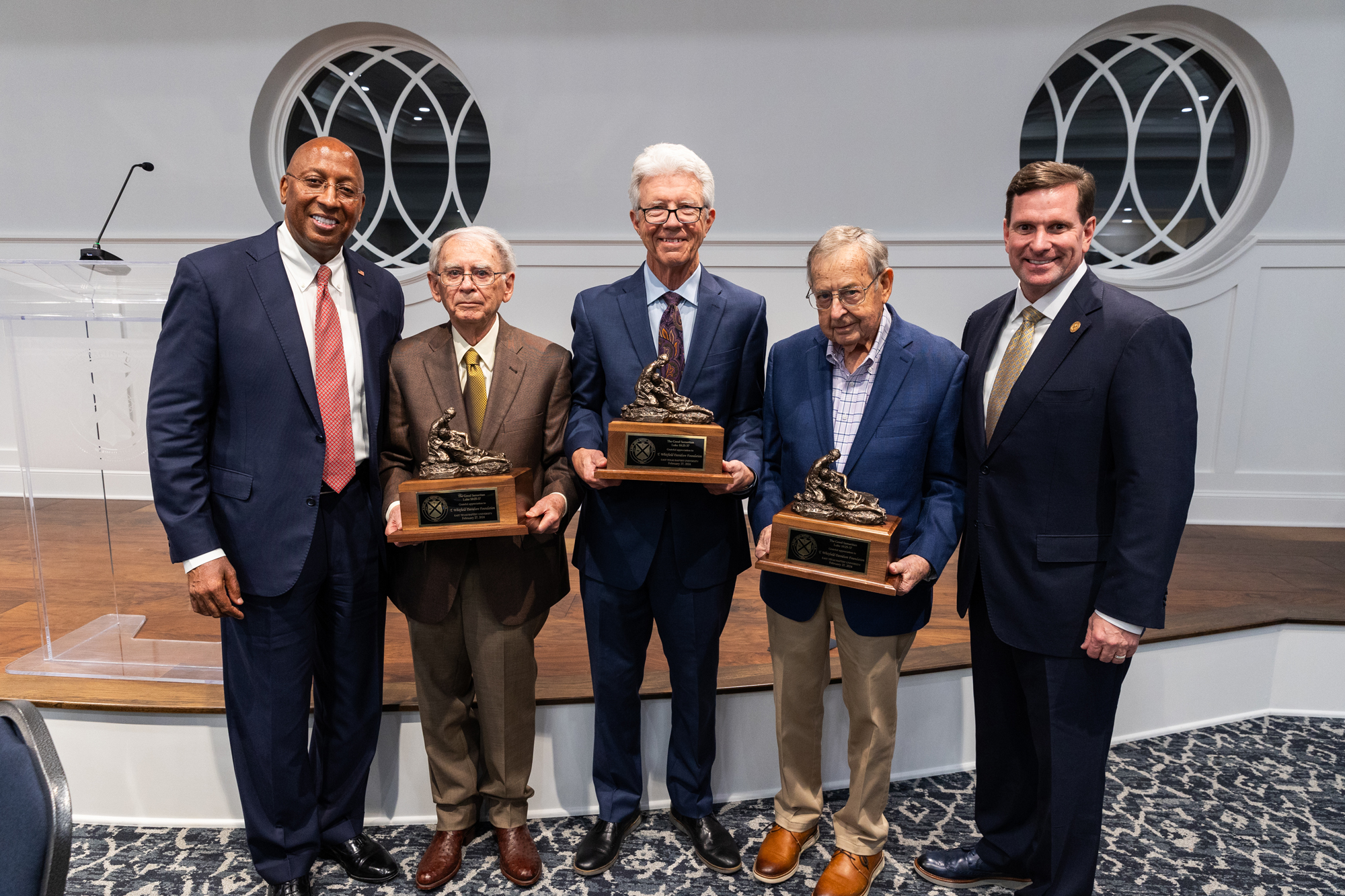
ETBU 2024 Good Samaritan Award recipient T. Whitfield Davidson Foundation (ETBU photo)

East Texas Baptist University recognized the Thomas Whitfield Davidson Foundation as the 2024 ETBU Good Samaritan Award recipient on Feb. 27. Inspired by the parable in Luke 10:25-37, the Good Samaritan Award and ETBU Scholarship Banquet celebrates individuals and organizations who exemplify the spirit of “loving your neighbor as yourself.” The T. Whitfield Davidson Foundation was established through the legacy of former Chief Judge of the Northern District of Texas Thomas Whitfield Davidson. Hailing from Marshall, Judge Davidson’s foundation consistently demonstrates remarkable generosity, providing vital support to nonprofit organizations in Marshall and Harrison County. The T. Whitfield Davidson Foundation has been instrumental in supporting countless ETBU students through scholarships, ensuring access to transformative educational opportunities.


Biden administration finalizes rule on religious liberty protections

(RNS)—Nine agencies of the Biden administration have finalized a new rule that officials say will improve religious freedom by protecting the rights of beneficiaries of social services funded by the government.

In particular, the rule will affect those receiving help from the many faith-based social service providers and will ensure providers cannot withhold help based on faith affiliation nor require beneficiaries to participate in any religious activity in order to receive help.

The rule restores some religious freedom protections rescinded by the Trump administration that also affected people seeking job search and job training assistance, housing services and academic enrichment. It also clarifies faith-based organizations should be able to compete equally with secular providers for awards while keeping their religious character.

“Today’s announcement establishes uniform policies to safeguard Americans from religious discrimination in social services,” said U.S. Health and Human Services Secretary Xavier Becerra in the March 1 statement. “These regulations aim to guarantee broad access to essential social services for eligible individuals, reinforcing awareness of religious liberty protections.”

Key features of the ruling

The 187-page rule, scheduled to be published in the Federal Register on March 4, was issued by the following departments: Health and Human Services, Agriculture, Education, Homeland Security, Housing and Urban Development, Justice, Labor, Veterans Affairs and the U.S. Agency for International Development.

One of the key protections is a requirement that organizations receiving federal grants for U.S. social service programs inform beneficiaries of their right to not be discriminated against on the basis of their religion. Grantees must provide a model notice to providers of this requirement, which applies to programs supported by grants or by vouchers.

Another key aspect of the rule is the encouragement of government agencies funding U.S. programs to aid beneficiaries in locating alternative providers in their region that are more compatible with their beliefs and also are federally funded.

Response of separation of church and state advocates

The announcement was hailed by organizations that long have supported religious freedom and the separation of church and state.

“We applaud the Biden administration for restoring religious freedom protections for the millions of often vulnerable and marginalized people who use government-funded social services,” said Rachel Laser, president and CEO of Americans United for Separation of Church and State, in a statement.

“Religious freedom is a foundational American principle. No one should have to give up their religious freedom in order to have access to critical services. No one should ever be pressured to participate in religious activities or be required to meet a religious litmus test in exchange for the help they need,” the statement continued.

Interfaith Alliance said the new rule is an important step in restoration of rights of people who seek aid from social service providers that receive federal funds, including food banks, eldercare organizations and shelters aiding those who are coping with domestic violence or homelessness.

“This is an important course correction from the Trump administration’s attack on every person’s right to believe as they choose without coercion,” said the Rev. Paul Brandeis Raushenbush, Interfaith Alliance’s president and CEO, in a statement.

“The federal government has an obligation to ensure all people can equitably access life-saving social services without sacrificing their religious freedom rights and without fear of discrimination,” he continued.

Government offices and cabinet weigh in

The rule responds to an executive order in February 2021 when President Joe Biden re-established the White House Office of Faith-based and Neighborhood Partnerships.

Stanley Carlson-Thies, founder of the Institutional Religious Freedom Alliance, also welcomed the development that long has involved staffers of that office and its cabinet-level counterparts.

“I’m glad to see the rights of beneficiaries not to participate in unwanted religion be well protected again,” he said in a statement to Religion News Service. “Government needs to do a better job on the positive side: accommodating beneficiaries who can best be helped when a religion shaped program is one of the options.”

In January 2021, Americans United joined other groups in suing on the day the Trump administration rule became effective, shortly before the end of his presidential term. The suit has been on hold while the Biden administration worked to finalize the new rule.

Melissa Rogers, who was appointed by Biden in 2021 to oversee the so-called faith-based office, as she had in former President Barack Obama’s second term, also had opposed the Trump administration’s plans to remove the requirement that faith-based social service providers offer a secular alternative to people seeking their assistance.

“You can’t benefit from protections you don’t know you have,” she tweeted in January 2020. “The religious liberty of social service beneficiaries is as important as the religious liberty of faith-based providers.”