Biden signs foreign aid package for Ukraine, Israel

WASHINGTON (BP)—President Joe Biden signed a $95 billion foreign aid package April 24 that drew bipartisan support for Israel, Ukraine and other allies, and pledged to begin sending weapons and military equipment to Ukraine within hours.

“It’s going to make America safer. It’s going to make the world safer. And it continues America’s leadership in the world,” Biden said after signing the bill.

The foreign aid package gives Ukraine $60.8 billion, Israel $26.4 billion and the Indo-Pacific region $8.1 billion. A portion of Israel’s allocation, $9 billion, will provide humanitarian aid to Gaza.

Brent Leatherwood, president of the Southern Baptist Ethics & Religious Liberty Commission, welcomed the foreign aid package secured with bipartisan support encouraged by House Speaker Mike Johnson. Southern Baptist leaders and some other evangelicals had been urging Johnson to push the measure through.

“Our nation has long supported those combating oppression and terrorism, and the horrors we have seen across the globe demand a response,” Leatherwood said.

“Whether responding to an active war in Europe, a terrorist event in Israel, or the threat of an invasion by China, American engagement is essential for protecting vulnerable lives, churches and communities threatened by tyrants. This nation still has the capacity to do tremendous good, and it did so this week.”

House Speaker Johnson commended

Leatherwood is among several evangelicals who have commended Johnson for his about-face in moving the aid package forward, despite blocking its progress months earlier as Republicans focused on border security and other national concerns.

Ultimately, Johnson promoted the aid as crucial to helping U.S. allies in pushing back communists and terrorists who threaten national and international security.

“This week a fellow Southern Baptist, House Speaker Mike Johnson, helped ensure America will not stand idly by and let the illegal and unjust invasion directed by Vladimir Putin go unchallenged,” Leatherwood said.

“I am confident our Baptist brothers and sisters in Ukraine, and their fellow Ukrainians, are deeply appreciative of his leadership and the bipartisan resolve shown in Washington that has met the challenge of this moment.

“For the last two years in Ukraine, Russian bombs have obliterated hundreds of Baptist churches, religious liberty has been extinguished in areas under Russian control and countless innocent lives have been lost at the hands of Russian invaders. These atrocities deserve our strongest condemnation, and thankfully, Southern Baptists have been at the forefront of calling attention to them.”

Johnson risked the support of a handful of Republican members of Congress opposed to foreign aid who called for his ouster, but most Republicans supported the measures.

The Senate passed the four-bill package April 23 after the House’s approval late last week, but Congress struggled for months to find a bipartisan solution to support allies in the military crises that Southern Baptists have said threaten religious freedom and democracy beyond Europe and the Middle East.

Ukraine’s allotment includes $13.8 billion for weapons, $9 billion worth of economic assistance as forgivable loans, and other monies to replenish U.S. weapons stockpiles.

Ukrainian president thanks U.S.

Ukrainian President Volodymyr Zelensky thanked the United States for the aid in a post on X, formerly Twitter.

“I am grateful to President Biden, Congress, and all Americans who recognize that we must cut the ground under Putin’s feet rather than obeying him, as this is the only way to truly reduce threats to freedom,” Zelensky wrote April 24. “Together, we can ensure this.

“Regardless of what anyone says, we are gaining the support we need to continue protecting lives from Russian attacks.”

Israel’s allocation includes $4 billion for the Iron Dome and David’s Sling missile defense systems in the Israel-Hamas War. Israel, the only U.S. ally in the Middle East, launched war against Hamas after the terrorist group killed 1,200 civilians in an unprecedented attack on Israel Oct. 7, and is also pushing back attacks from Iran and Hezbollah.

The allocation to the Indo-Pacific region would help U.S. allies in combatting Chinese aggression, including $3.3 billion for submarine infrastructure and development, and $1.9 billion to replenish U.S. weapons provided to Taiwan and other regional allies.

China’s religious persecution includes beating and imprisoning religious leaders and others on fabricated charges, attempting to ban entire religious groups, and limiting public preaching, proselytizing, conversions, religious literature and broadcasting.

China relentlessly has persecuted Christians in its war on Ukraine, banning religious groups, shuttering houses of worship, and abducting, detaining, imprisoning and torturing religious leaders.

Included in the package is a ban on TikTok in U.S. app stores unless the platform’s Chinese owners divest of their shares within a year. China’s strong communist arm jeopardizes the personal data of some 170 million Americans who use the platform, including teenagers and business owners, supporters of the ban assert.



Baylor’s Disability & Church conversation emphasizes belonging

Example of a visual schedule, helpful for accessibility. (Photo/Calli Keener)

WACO— Erik Carter challenged participants at a Baylor University conference to be catalysts for change—so all really do belong in faith communities.

Carter is executive director of the Baylor Center for Developmental Disabilities, host of “Disability and Church: A Conversation” on April 17. 

“How might we be communities of all the peoples—where members with and without disabilities live, learn, work and worship?” Carter asked. “And serve and support one another. … Where all families can flourish together in faith and life.”

Carted began with his personal testimony. Growing up in a time when disabled people generally were segregated in schools or clubs, he had limited opportunity to know and befriend people with disabilities. 

“It was as if our schools, workplaces, and even our churches were perfectly designed in ways that kept us apart,” Carter explained.

In this environment, Carter had come to believe his value lay in accomplishments and abilities—until he went to a summer camp his freshman year in college where he “stumbled into new friendships with several young men and women with intellectual disability at a mountain camping program.”

‘Glad abandon’ speaks

Wayne, Margaret and John Ray loved him without any concern for his accomplishments, and he felt belonging, Carter said. Beyond belonging, Carter observed the “glad abandon” with which they worshiped and their deep love for Jesus. 

“John Ray could not speak, and Wayne often struggled with words,” Carter said. “They trusted wholeheartedly. They knew for sure they belonged to God. And how much I longed to have that same assurance! … And so, I followed their lead and gave my life to Christ.” 

Carter said this story should not be surprising. 

“Indeed, it is an ordinary story of how God’s grace flows through God’s people to transform lives. All of God’s people. No asterisks. No exceptions,” he continued.

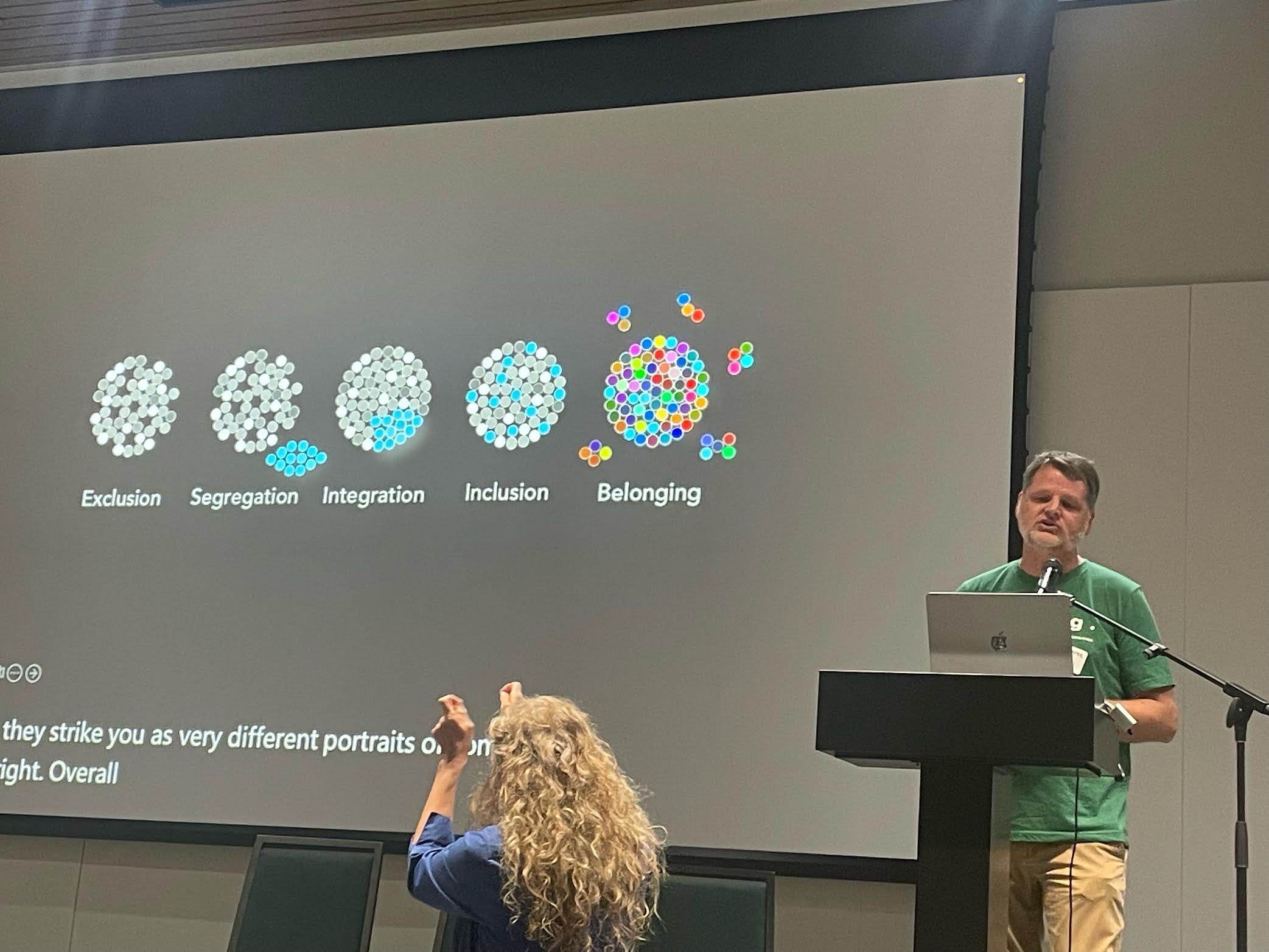
Offering insights from two decades of research focused on “what it means to create communities in which believing and belonging abound together,” Carter described five prevailing portraits for community, which have generally progressed through history “from exclusion toward embrace.”

Erik Carter describes prevailing portraits of community. (Photo/Calli Keener)

Portraits of community

Providing a visual model of each, Carter explained exclusion was the prevailing model of the 1970s, where individuals with disabilities still were excluded from much of community life—especially those with intellectual or developmental disabilities. There were holes in this model. 

“Communities were incomplete,” Carter said.

In the 1970s and ’80s, separation was the prevailing model—where programs were created for children and adults with developmental disabilities, but “usually, apart from anyone else without the same label. In most communities, everyday life was still lived away from people with disabilities,” Carter said.

In the 1990s and 2000s there was a shift toward integration, “but many of the opportunities that emerged still involved a certain separation,” he said. People with disabilities were placed “near, but not really among, their peers without disabilities. There is a huge difference between near and among,” Carter said.

The present-day model is one of inclusion, Carter said—“where a growing national focus is on the full inclusion of people with disabilities in the same classrooms, clubs, colleges, church activities and community groups as anyone else. Inclusion. From being apart to among and with one another.” 

Josh Baker reads Psalm 67:1-5. (Courtesy Photo/Gena Baker)

But, Carter said, there is still one more model churches should be striving toward—beyond integration or inclusion—belonging. In this model, Christians learn to see each other in fundamentally different ways, “as a diverse community in which each person has equal and immeasurable value … knitted together—woven into relationship.”

None of these models is actually just historical—it is “living history; our present landscape….you will find each of these varied portraits—[exclusion, segregation, integration, inclusion and belonging]—across the more than 26,000 churches and scores of Christian schools throughout Texas,” Carter said.

But the research has identified elements of belonging, Carter said, “from the lived experiences of hundreds of young people with intellectual and developmental disabilities and their families who have been part of our various studies over the years. 

 “It is a question we have posed directly to them. How do you know you belong in your faith community?”

Elements of belonging

“Belonging is experienced when they are present, invited, welcomed, known, accepted, supported, cared for, befriended, needed and loved,” Carter said their responses showed.

Carter recalled his own testimony of being welcomed, befriended and loved by Wayne, Margaret and John Ray as a teen and how they shared their faith with others—people with disabilities doing ministry.

 “Three people who might have been overlooked by society—and by the church—as a promising avenue through which Jesus might call others to him. And yet the opposite is certainly true,” Carter said, explaining that their gifts were real, attractive and a conduit for God’s life-changing grace.

Carter opened table talks, observed by Baylor Center for Developmental Disabilities representatives for the purpose of study. Participants reflected on and discussed ways the churches represented were doing well or could do better or differently in each of the ten areas identified as necessary for experiencing belonging.

Panel discussion moderated by Grace Casper, program coordinator for the BCDD (center). Madi Snow-Gould (left) and Aaron Jones (right) share experiences with disability in church. (Photo/Calli Keener)

Table discussions allowed families of disabled people and disabled attendees, themselves, to discuss their experiences with church and disability.  

One participant, whose adult son is autistic, shared a positive story of inclusion at their church where they have been members for years.

She said everyone at church knows her son by name and that “she’s really only known as his mom.” They both feel known and loved there, she said. 

But she said she would like to worship in a space where she feels less concerned about how an unexpected behavior from her son might impact other worshippers. 

She has a vision for beginning a disability-inclusive service, much like other churches might have non-English speaking language services. And one of her pastors and two other church members who want to help support and participate in this ministry vision becoming reality joined her for the talk.

Others at the table shared how their experiences at church had not always been welcoming. Kirk and Gena Baker shared of times they’d been asked to remove autistic children from worship, who were not being excessively disruptive.

They’ve forgiven these offenses, they said. But they expressed how crushing it was to be treated this way by brothers and sisters in Christ. 

Yet they rejoiced in God’s answer to 27 years of prayer, when they moved to Waco less than two years ago and learned about the Baylor Collaborative for Developmental Disabilities beginning.

Thriving congregations initiative

This talk was part of an interdisciplinary project funded by a grant from the Lilly Endowment’s Thriving Congregations Initiative. The project is led by Baylor’s Truett Theological Seminary, Baylor Center for Developmental Disabilities and the Center for Church and Community Impact in the Diana R. Garland School of Social Work. 

 “The project focuses on helping congregations embrace young people with disabilities, mental health challenges and chronic illnesses,” said Angela Reed, Truett Seminary’s associate dean for academic affairs and principal investigator of this project, in an earlier interview.

“We’re going to need congregations that are very interested in young people and supporting young people,” she continued.

“Early this summer, we will be announcing how interested churches can apply to join our first learning cohort,” Carter said.

Jason La Shana, director of the Baylor Collaborative on Faith & Disability, explained the selected cohort of churches will enter into a “multi-year mutual learning process around disability and mental health in the church,” in a follow-up email.


Kachin Baptist leader detained after brief release

A Kachin Baptist leader in Myanmar who briefly was released from prison last week after 16 months behind bars was taken into custody again by authorities and continued to be detained a week later.

Hkalam Samson, former president and general secretary of the Kachin Baptist Convention in Myanmar, was released from Myitkyina Prison in Burma’s Kachin State on April 17 one year after receiving a six-year prison sentence. A few hours later, he was taken back into custody (CSW Photo)

Hkalam Samson, former president of the Kachin Baptist Convention, was released from Myitkyina Prison on April 17 as part of an amnesty marking the end of the Thingyan New Year festival in Myanmar, also known as Burma.

Hours later, authorities arrived at Samson’s home to take him into custody.

“It was a Gethsemane moment for many of us,” said Roy Medley, executive director of the Burma Advocacy Group and general secretary emeritus of the American Baptist Churches USA.

Samson’s wife, Zung Nyaw, initially was allowed to accompany him, and a member of the Kachin Peace-Talk Creation Group also was taken into custody at the same time.

As of April 24, Samson—chairman of the Kachin National Consultative Assembly and critic of human rights abuses by the ruling Burmese military—still was detained for questioning at a house on the grounds of Myitkyina Prison.

Ah Le Lakang, general secretary of the Kachin Baptist Convention USA, reported April 18 Zung Nyaw was allowed to leave the prison grounds. At least at that point, she and other family members were permitted to visit Samson.

Initially, Ah Le Lakang said, Samson’s wife said police told them he was being taken into custody for his own security. Later, they said he was being detained for questioning.

Samson first was arrested on Dec. 5, 2022, at the Mandalay International Airport while attempting to travel to Bangkok for a medical procedure.

He was sentenced last year to six years in prison on charges of unlawful association, defaming the state and terrorism.

At the time, Baptist World Alliance General Secretary Elijah Brown called Samson’s sentence “a grave injustice” and called on churches to pray for an end to his “unjust imprisonment.”

Samson was president of the Kachin Baptist Convention in Myanmar from 2018 to 2022, and he previously served two terms as the convention’s general secretary, from 2010 to 2018.

‘Arbitrary disregard for human rights’

Medley called Samson “a courageous spokesman for religious liberty” who continued to minister to others even during his 16-month imprisonment.

On behalf of the Burma Advocacy Group, Medley contacted Rashad Hussain, U.S. Ambassador-at-Large for International Religious Freedom; Tom Andrews, U.N. Special Rapporteur for Burma; Senate Minority Leader Mitch McConnell, R-Ky.; and Sen. Todd Young, R-Ind., a member of the Senate Foreign Relations Committee.

In addition to advocating with government officials for Samson’s release, Medley also requested prayer.

“Let us remember in our prayers his wife and family, for this is yet another tragic experience of arbitrary disregard for human rights and the rule of law,” he wrote in an email.

“We must not lose heart, but instead, we must redouble our prayers and efforts for his release and for the release of all in Burma from the shackles of tyranny.”

EDITOR’S NOTE: In an email to the Baptist Standard received late evening on April 24, Ah Le Lakang reported Hkalam Samson continues to be detained in a guest house at the prison compound. He wrote: “His family members can visit and have meals together. His relatives are allowed to speak with him on the prison grounds. His attorney can speak with him but has yet to be in person. He is still being held for questioning. The spokesperson, Zaw Min Thun, the Burmese Military, told BBC Burmese that Dr. Samson was called back for the peace-building process.  PCG leader Lamai Gum Ja is still with Dr. Samson. He can go home and come stay with Dr. Samson anytime.”


On the Move: Pierce

Will Pierce to First Baptist Church in Edmonson as pastor. He previously was pastor of youth and young families at Port Caddo Baptist Church in Marshall.


Russell Moore lauds Baptist emphasis on the personal

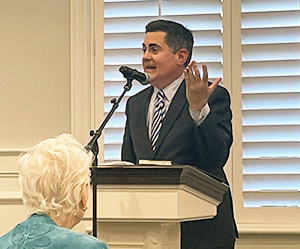
DALLAS—Baptists’ emphasis on “the personal” may be the greatest gift they offer in the 21st century, ethicist Russell Moore, editor-in-chief of Christianity Today, told a group at Dallas Baptist University.

Baptists’ historic emphasis on religious liberty for all grows out of a healthy respect for individual personhood and the voluntary response of each person to the gospel, Russell Moore told a gathering at Dallas Baptist University. (Photo / Calli Keener)

Moore—a lifelong Baptist who now worships in a nondenominational church—delivered the April 22 Baptist Distinctives Lecture, sponsored by DBU’s Center for Baptist History and Heritage.

“I am convinced that the Baptist distinctives that endure and that are most resilient are also the ones that are most needed right now,” said Moore, former president of the Southern Baptist Convention’s Ethics and Religious Liberty Commission.

Various denominations have contributed particular emphases to the broader body of Christ, and Baptists’ greatest contribution may be their commitment to “the nature of the personal,” he said.

Baptists’ emphasis on voluntary faith, believers’ baptism, religious liberty for all people and other distinctives “boil down to the central concern that God does not bring people into the kingdom nation by nation, family by family, village by village or tribe by tribe, but one by one.”

In an individualistic culture, the tendency often is to “over-correct into a kind of collectivism,” Moore observed.

‘My name is Legion’

“In reality, the Baptist emphasis on the personal is a corrective to individualism and is actually necessary for genuine community,” he said.

Moore pointed to Jesus’ encounter with a demoniac among the tombs, as recorded in Mark 5.  Jesus asked, “What is your name?”

The demoniac responded, “My name is Legion, for we are many.”

That reply was “similar to the response of the entire world right now,” Moore observed. While isolated in many respects, people feel crowded and deprived of individual personhood.

He cited a tech specialist who has noted social media drives people into a “hive” mindset all the time. Users constantly are seeking to identify their online “tribe” and attempting to identify what they need to say to remain a part of the tribe.

“Ironically, all that connection all of the time leads to disconnection and loneliness,” Moore said.

He recalled a conversation with pastors who were speculating about why so many left the ministry in 2021 and even those who remained felt “broken” in many ways.

One of the ministers observed many people persevered through 2020, thinking things would return to “normal” after the COVID-19 pandemic ended and the election cycle was over, only to discover the old “normal” was gone.

‘Ripe for authoritarian movements’

In what passes for “normal” now, many people are trapped in a “middle-school” mentality of feeling unsure about their identity while being hyper-sensitive to what others think about them, Moore observed.

“The world is like that right now, and that means we are ripe for disintegration, for authoritarian movements, for personality cults, for every kind of attempt to fill that void,” he said.

To offer deliverance to an unclean and untouchable demoniac, Jesus had to “break with the community,” Moore said.

“Community is an important aspect of what it means to be human, and an important aspect of what it is God has put together in the church,” he said. “Community on its own, though, ultimately breaks down.”

Baptists’ emphasis on the “personal calling by name” as part of the gospel invitation helps create a healthier community, Moore observed. He lamented the loss of public altar calls.

“There was something about the altar call that spoke to every person in the congregation, even if no one responded, that said: ‘Remember you are a sinner. Remember that you—not just we, but you—are redeemed. And remember that all of your neighbors—no matter how hostile you believe them to be, no matter how far gone you believe them to be—could, in an instant, be your brother and sister in Christ. You do not give up on them,’” he said.

“It was a way of merging the individual and the community together.”

Religious liberty respects personhood

Baptists’ historic emphasis on religious liberty for all grows out of a healthy respect for individual personhood and the voluntary response of each person to the gospel, he observed.

“Religious liberty is not simply an ancillary and self-protecting idea for Baptists,” Moore said. “Religious liberty comes out of that emphasis upon the personal—upon the word Jesus has given to us, ‘You must be born again.’”

The gospel depends on an individual response to God’s call, and Christian identity is not dependent on national identity, he noted.

“The gospel cannot be applied to people like a state-issued driver’s license,” Moore said. “The state cannot regenerate a person. The state cannot make a person a Christian. The state can only make a person a pretend Christian.”

He pointed to the threat of Christian nationalism in a variety of contexts, including Vladimir Putin’s use of the Russian Orthodox Church, as well as Christian nationalist movements emerging throughout Europe and in the United States.

Christian nationalism is “not Christian orthodoxy taken to an extreme,” he asserted. “It’s instead what Christians at one time would have called ‘modernism.’ It is the idea that one can make a Christian simply by changing external circumstances, rather than having that person approach God through the mediation of the shed blood of Jesus Christ.”

Authoritarian leaders “have realized that the best way to coopt the power of personal authority is to say, ‘If you don’t obey me, you’re disobeying God,’” Moore said.

“Once you have taken a Christian understanding of reality and hollow it out, you end up with something that can be tossed aside altogether.”

‘Community needs the personal’

At their best, Baptists understand the gospel comes “conscience-to-conscience” and demands a response at the personal level, he insisted.

“Community needs the personal. You cannot refuse to see the trees for the forest,” Moore said.

Real community—where every person is viewed as a valuable contributor who is given genuine responsibility—breaks down tribalism, he asserted.

Baptists have an important message “for a 21st century that is plagued by a sense of belonging to everyone and thus belonging to no one,” he said.

“The Baptist movement has a great deal to contribute if we can remember who we are,” Moore said.


Around the State: B.H. Carroll marks 20th anniversary

B.H. Carroll Theological Seminary marked its 20th anniversary at a gala in Frisco April 21, recounting God’s promise and provision for the seminary. First conceived a decade before its founding as a way to reach bivocational pastors and those who could not afford to uproot and attend an in-residence seminary program, the seminary officially launched in 2004 with the aim of being affordable, accessible and achievable. Carroll founder and its first president, Bruce Corley, recalled preparing a paper in 1993 about changes in seminary education. “Among the things I talked about were the kinds of students attending seminary,” Corley said. “There were 40,000 bivocational ministers in Baptist life, scattered all over the United States, and very few of them ever attended seminary. They were in small churches. So that is at the heart of the genesis for Carroll—to make seminary education, like the one I enjoyed, available to many, many students.” B.H. Carroll President Gene Wilkes said Carroll’s continued success is intertwined with the success of East Texas Baptist University. The university and seminary announced their intent to merge in February 2023 after nearly a year of conversations. The merger will be completed in 2025. Founders Jim Spivey, Budd Smith and Stan Moore also participated in the video presentation. 

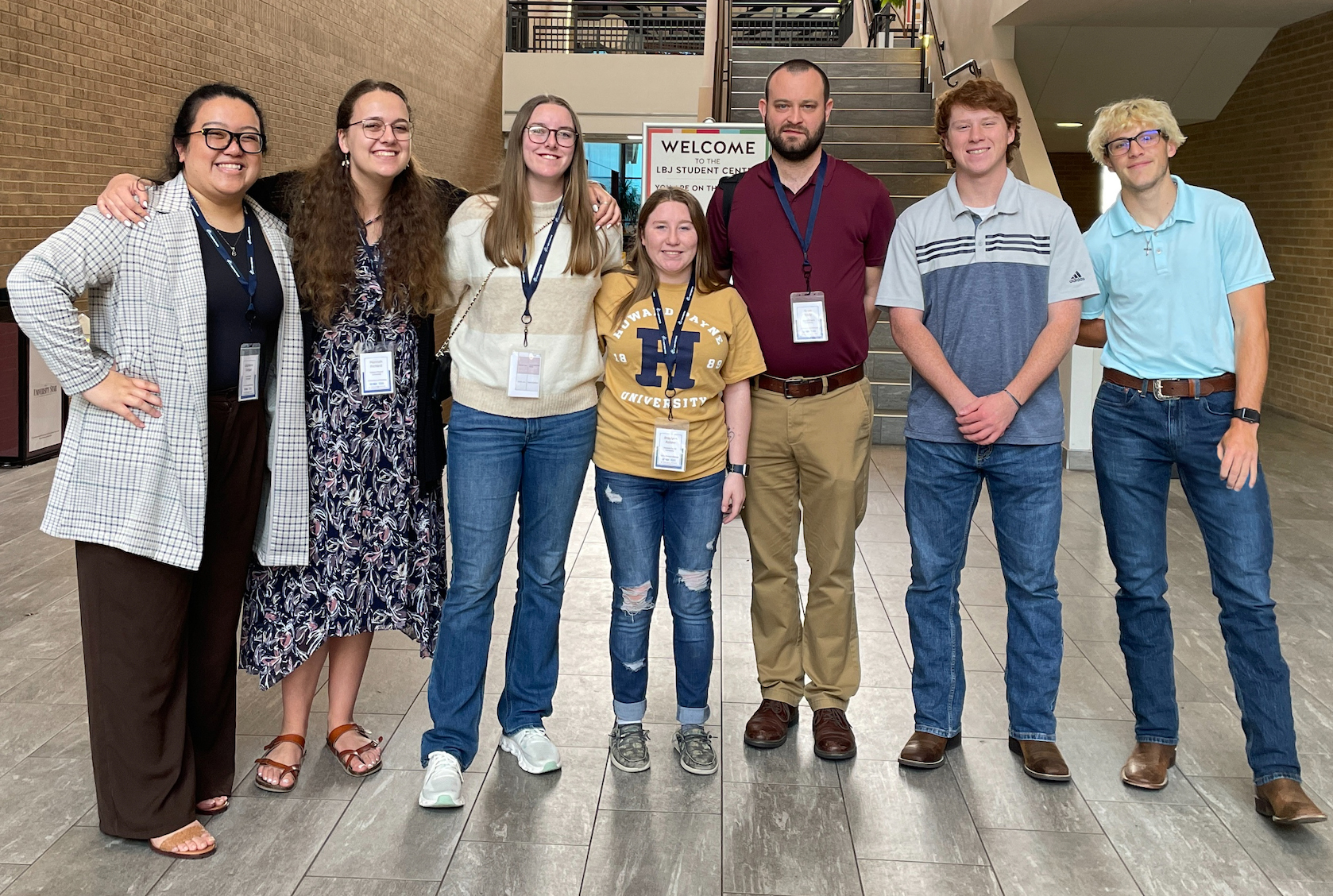
From left to right are Stephanie Tarigan ’16, Hannah Richard, Allie Barnett, Braelyn Askew, Scott Eddy, Zachary Blizel and Deaven Connelly. (HPU Photo)

Students and a faculty member from Howard Payne University attended the Texas Section meeting of the Mathematical Association of America in March. The meeting, held at Texas State University in San Marcos, featured more than 70 presentations by plenary speakers, undergraduate students, graduate students and faculty. Scott Eddy, instructor of mathematics, sponsored the group. Hannah Richard, senior mathematics major, presented her research on mathematical spirals at the meeting. “This is the first time we’ve had an undergraduate presenting in the 10 years I’ve been at Howard Payne,” Eddy said.

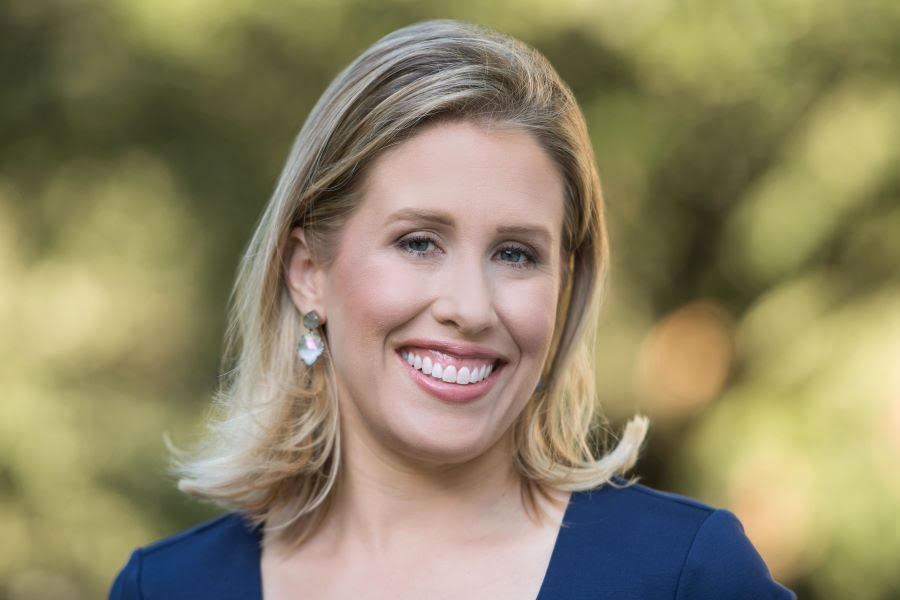
Shanna Akers (UMHB Photo)

The University of Mary Hardin-Baylor selected Shanna Akers as dean of the Scott & White School of Nursing. She will begin her role at UMHB on June 1. Akers spent 13 years at Liberty University as a professor, chair, associate dean and administrative dean and five years as dean. Akers has been engaged in accreditation efforts across various disciplines, including nursing, health care simulation, respiratory therapy, forensic science and social work, and she has contributed to accreditation and reaffirmation processes. With nearly 30 years of experience as a registered nurse, Akers has served in prominent roles within both public service and professional organizations. She was a gubernatorial appointee to the Virginia Health Workforce Development Authority Board and commissioner on nursing education for the Virginia Nurses Association. 

Elisabeth R. Kincaid (Baylor Photo)

Baylor University appointed Elisabeth R. Kincaid as director of the Institute for Faith and Learning, effective Aug. 1. She also will serve as associate professor of ethics, faith and culture in Baylor’s Truett Theological Seminary and affiliate faculty member in the department of management in the Hankamer School of Business. A native Texan, Kincaid is a theologian, lawyer and business ethics scholar, with experience in finance and campus ministry. She currently holds the Legendre-Soule Chair in Ethics at the College of Business in Loyola University New Orleans, where she also serves as the inaugural director of the Center for Ethics and Economic Justice. As director of the Institute for Faith and Learning, Kincaid will oversee the annual Baylor Symposium on Faith and Culture and the Crane Scholars Program, guide the institute’s current programming of faculty formation experiences and contribute to the development of new initiatives for faculty spiritual well-being. “The IFL’s integration of faith across academic disciplines has inspired much of my own administrative vision and especially my own interdisciplinary research,” Kincaid said. “I’m thrilled and honored to serve as a leader in the next phase of the IFL’s service across the Baylor campus.” Kincaid has held faculty positions in Christian ethics at the Aquinas Institute of Theology and Nashotah House Theological Seminary, where she also served as acting academic dean. She is married to S. Thomas Kincaid III. They have two children.

Dallas Baptist University recognized two doctoral graduates with an Outstanding Dissertation Award during the April 18-19 Christian Leadership Summit. Kalie Lowrie of Brownwood received the award for an outstanding Ed.D. dissertation. Lowrie, assistant vice president for alumni relations at Howard Payne University, wrote “Spiritual Leadership Behaviors Among Leaders at Faith-Based Nonprofit Organizations.” Brian Bayani of Navasota was recognized with the award for an outstanding Ph.D. dissertation. Bayani, a licensed paramedic and master peace officer, wrote “Exploring the Relationship Between Moral Inquiry, Supervisor Leadership Style, and Suicidal Behavior in Texas Paramedics.”

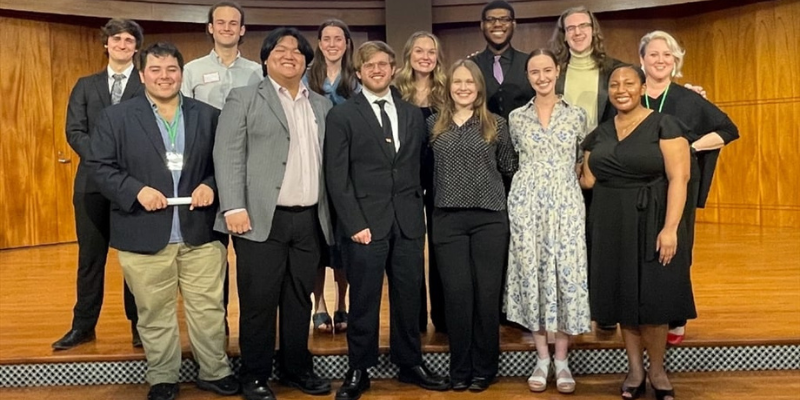
NATS Choral Competition. (HCU Photo)

Houston Christianity University students excelled at the annual Vocal Competition for Greater Houston Chapter of the National Association of Teachers of Singing, held April 6 on the HCU campus. Around 250 singers from Greater Houston area universities, colleges and high schools competed in classical and musical theatre categories. Led by David Kirkwood, chair of HCU’s music department, students performed in the competition and dominated in the classical categories, which were divided by grade level and gender. HCU had six first place winners, including Joshua Yeates, Jonathan Lee, Nicholas Pappas—under the direction of Kirkwood—and William Carr, Kynadi Law and CeliaKate Mellett—under the direction of Rachel Elizabeth De Trejo. In addition to prize money and certificates, HCU’s first place winners have been invited to sing at the NATS Winners’ Recital on May 19, on the HCU campus.

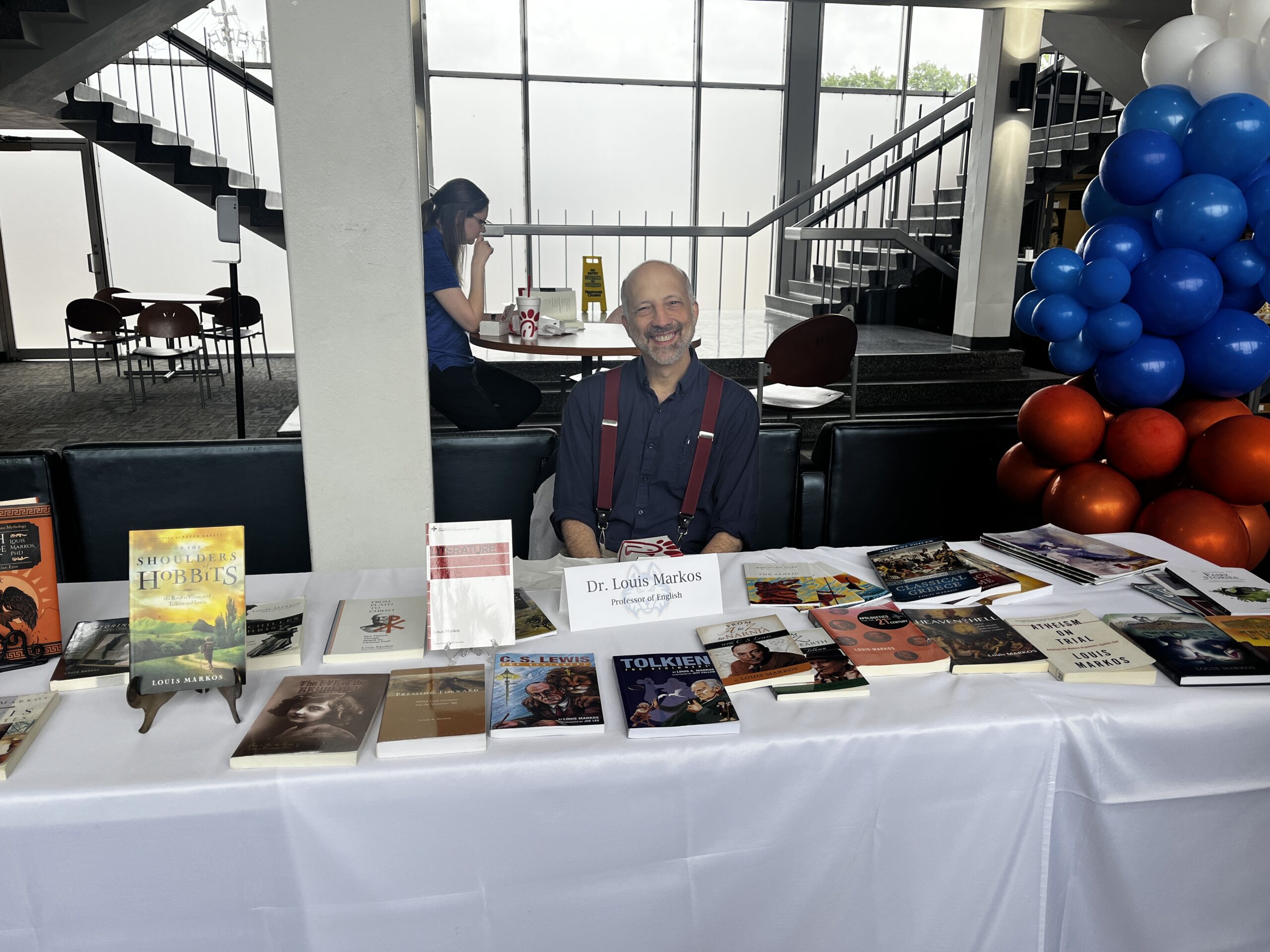
Louis Markos, Robert H. Ray Chair in Humanities and author of Atheism on Trial: Refuting the Modern Arguments Against God, sits surrounded by his other publications. (HCU Photo)

Houston Christian University students, faculty and staff gathered for the sixth annual Author Celebration. This celebration, organized by HCU’s First Lady Sue Sloan, recognizes faculty members with scholarly publications and creative endeavors released in the past year. More than 13 authors displayed work representing fiction, theology, education, psychology, history and literature. “HCU is really good at combining the truth of the gospel with cultural engagement. All the authors here today have connected the truth of Christianity to real world problems that it can help solve,” said Austin Freeman, assistant professor of apologetics and author of Tolkien Dogmatics: Theology through Mythology with the Maker of Middle-Earth. The Author Celebration included winners of the “Piece of the Past” student essay contest, which encourages students to engage with artifacts from one of three on-campus museums. Undergraduate student contest winner Claire Wilkerson commented on the event: “I appreciate the opportunity the university gives to celebrate the work of authors on campus. The example of faculty and staff who have created so many influential works encourages me to reflect more deeply and communicate this more creatively.”


Faith leaders praise House approval of foreign aid

WASHINGTON (RNS)—Conservative religious leaders who had been imploring Speaker Mike Johnson to back assistance for Ukraine and Israel celebrated the House of Representatives’ passage of foreign aid packages April 20, clearing the way for the measures to go to the Senate.

Brent Leatherwood, president of the Southern Baptist Convention’s Ethics and Religious Liberty Commission, was among those lobbying Johnson—himself a Southern Baptist—on behalf of Baptists in Ukraine and the United States concerned about the plight of Ukrainian Christians.

“That is why we asked Speaker Johnson and congressional leaders to come together to meet the challenges of this moment,” Leatherwood said in a statement to Religion News Service. 

“In the House passage of bills relating to Ukraine, Israel and Taiwan, the Speaker sent a strong message to autocrats and terrorists alike that our nation will take a stand to support vulnerable lives and oppose the tyrants who threaten them.”

The push on Ukraine included an April 17 meeting between Johnson, Pavlo Unguryan—an evangelical and political leader from Ukraine—and a Ukrainian citizen whose wife and child were killed in a March attack on Odesa.

Praise for Johnson’s efforts

Gary Marx, president of the new coalition Defenders of Faith and Religious Freedom in Ukraine and former executive director of the Faith and Freedom Coalition, praised the House leader’s “courage and his willingness to listen to the cries of Ukraine’s faithful.” 

In the same statement posted on social media, he added, “As we celebrate this victory, we recognize that there is still more work to be done.”

On April 18, Marx had written to Johnson on behalf of the coalition seeking congressional support for Ukrainian Christians. The letter also was signed by Rick Santorum, a former Republican senator and chairman of Patriot Voices, and Adam Hamilton, a prominent United Methodist pastor in Kansas, among more than a dozen other faith leaders.

“We are pained and shocked by the widespread, vicious persecution of our brothers and sisters in Ukraine by Russian forces,” reads the letter. “Russia is waging a war against Evangelical and Protestant Christians at a scale likened to ‘cultural genocide.’ These Christians are being persecuted, harassed, intimidated, imprisoned, tortured, mutilated, and killed—simply for worshipping God as they see fit.”

Other leaders of political groups that largely represent evangelical Christians pressured Johnson to shepherd support for Israel through a Congress with contingents on the right and left opposing the aid package. Twenty-one Republicans joined 37 Democrats in voting against the Israel aid bill.

In a virtual press conference organized by Johnson’s staff as the House prepared to vote, Sandra Hagee Parker, chair of the Christians United for Israel Action Fund, lauded the speaker, praising his “fortitude” in pushing for the “vital issue” of Israel aid.

“The enemies of America are watching and waiting to see what America does, and we should do everything in our power to have Israel’s back,” Parker said. 

She echoed Johnson’s remark that Russia, China and Iran constitute a new “axis of evil,” hearkening back to former President George W. Bush’s State of the Union address in which he called out Iran, Iraq and North Korea.

Anyone who doubts that the three states are mounting a “united front against the enemies of the West is simply sticking their head in the sand,” Parker said.

Ralph Reed, founder of the Faith and Freedom Coalition, said at the press conference the United States must “rush” to Israel’s defense.

Reed suggested Johnson, despite threats from some GOP members to challenge his speakership, ultimately will be celebrated by conservative Christians if the bills are passed.

“We must never waver, and once this bill passes and it gets to the president’s desk and it’s signed, Speaker Mike Johnson will get a lot of credit for moving through a minefield to get this done,” Reed said.

A more diverse group of a dozen religious leaders who had been seeking support for the people of Gaza sent Johnson a note of thanks for his efforts, coupled with concern about final passage of the aid they sought.

But please ensure humanitarian aid

“We, as a group of diverse faith leaders, thank you for including in the legislation you have brought before Congress life-saving humanitarian aid for civilians in Gaza as well as humanitarian and refugee assistance for other areas facing wars and famine,” wrote the leaders of Christian, Jewish and Muslim organizations in an April 19 letter. “Please ensure that humanitarian aid is included in the bill that is passed.”

Signers of the letter included Walter Kim, president of the National Association of Evangelicals; Bishop Vashti McKenzie, president and general secretary of the National Council of Churches; Mary Novak, director of NETWORK Lobby for Catholic Social Justice; Rabbi Jonah Pesner, director of the Religious Action Center for Reform Judaism; and Barbara Williams-Skinner, co-convener of the National African American Clergy Network.


Baylor conveys land to BGCT for Baptist Student Ministry

Baylor University conveyed to the Baptist General Convention of Texas the deed for a parcel of land set to house the new 12,000-square-foot Baptist Student Ministry building in an April 18 ceremony in Waco.

The property, more than an acre in size, is located at the intersection of Daughtrey Avenue and 4th Street, adjacent to the university campus.

During the ceremony, hosted in the university’s Hurd Welcome Center, Baylor President Linda Livingstone and BGCT Executive Director Julio Guarneri signed and exchanged documents to finalize the transfer of the future Baylor BSM site.

“What a significant milestone we reached,” Guarneri said. “This action demonstrates the administration’s and the university’s commitment to fostering the spiritual life of students on the Baylor campus and to a continued strong partnership between our two entities.

“We are very grateful for this gift and believe it is an investment in the kingdom of God and in eternity. We are committed to being good stewards of this trust.”

Initial $3 million goal met

In accordance with a 2023 agreement between the related institutions, Baylor agreed to convey the land to Texas Baptists once an initial fundraising threshold of $3 million was met.

Jerry Carlisle (left), president of Texas Baptists’ Missions Foundation, visits with Baylor University President Linda Livingstone and BGCT Executive Director Julio Guarneri. (Texas Baptists Photo)

Jerry Carlisle, president of Texas Baptists’ Missions Foundation, notified President Livingstone in March the campaign milestone had been achieved. Upon notification, officials worked to finalize the transfer, which culminated in handshakes and smiles at the signing.

 “Today begins an exciting chapter in the long relationship between Baylor University and the Baptist General Convention of Texas as Baylor officially conveys a parcel of land to the BGCT for construction of a new Baptist Student Ministries Building,” Livingstone said.

 “The BSM center will provide another sacred space on our campus for Baylor students to grow spiritually, know God and make him known globally. It is an honor to join Dr. Julio Guarneri for this special ceremony that upholds Baylor’s Christian mission and distinct place in higher education and further strengthens Baylor’s historic ties to Texas Baptists.”

God moving on the Baylor campus

Mark Jones, director of the Center for Collegiate Ministry with Texas Baptists, attended the signing and spoke of the Baylor BSM’s emergence and the movement of God taking place on the university campus.

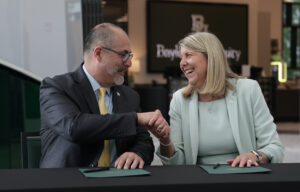
Baptist General Convention of Texas Executive Director Julio Guarneri and Baylor University President Linda Livingstone shake hands after the university conveyed to Texas Baptists the deed to a parcel of land where the new Baylor Baptist Student Ministry facility will be built. (Texas Baptists Photo)

“Five years ago, Baylor and Texas Baptists reaffirmed the place of Baptist Student Ministry as having priority status as a student organization at Baylor,” Jones said. “BSM leadership, working with Baylor leaders as well as numerous pastors and volunteers from local churches, has seen a historic movement of God among Baylor students.”

Jones pointed to initiatives like FM72, a four-day prayer and worship experience on campus, and Pathway, a freshman-focused discipleship initiative, as examples of God’s movement.

“The momentum of this movement of God is having an immediate impact on the experience these students have at Baylor as well as a generational impact that will be seen for years to come,” he said.

“A new building for the Baptist Student Ministry will be a vital place for training, worship and leadership collaboration.”

Seeking to raise additional $6 million

Conceptual drawing of the new Baptist Student Ministry center on the Baylor University campus

The Missions Foundation, the group tasked with coordinating the fundraising effort for the expanding campus ministry, set the total cost of the capital campaign at $7 million. An additional $2 million also is being sought to provide an operating and maintenance endowment for the expanding campus ministry.

Carlisle attended the signing, along with TBMF vice presidents Steve Massey and Eric Wyatt. He expressed appreciation to Livingstone, Baylor University and the donors who helped realize the deed conveyance.

“The Missions Foundation is profoundly grateful for the generous donors who want to see a permanent platform for Texas Baptists to share the gospel on Baylor’s campus,” Carlisle said.

“We look forward to gathering the remaining $4 million in gifts for the construction of the building, as well as $2 million to endow the operation of the building.”

Will Bowden, director of the Baylor BSM, was also present for the ceremonial transfer. In January, Bowden gathered students and leaders to pray over the property and share the vision for the new facility.

The Baylor BSM is one of 137 campus ministries coordinated by Texas Baptists.

Additional information about the Baylor BSM, including renderings of the new facility, is available here. To make a gift to support the campaign, contact Texas Baptists’ Missions Foundation at missionsfoundation@txb.org or (214) 828-5343.


WMU Pursue Conference asks: ‘Who is at your table?’

WACO—The Woman’s Missionary Union of Texas Pursue Conference kept the Great Commission focus that has been at the heart of the organization since its beginning, while setting the stage for coming shifts. 

“Who is at your table?” Texas WMU leaders asked. Table leaders then led dinner attendees to answer a series of questions about the literal table where guests were seated and to spur reflection on living missionally beyond the conference.

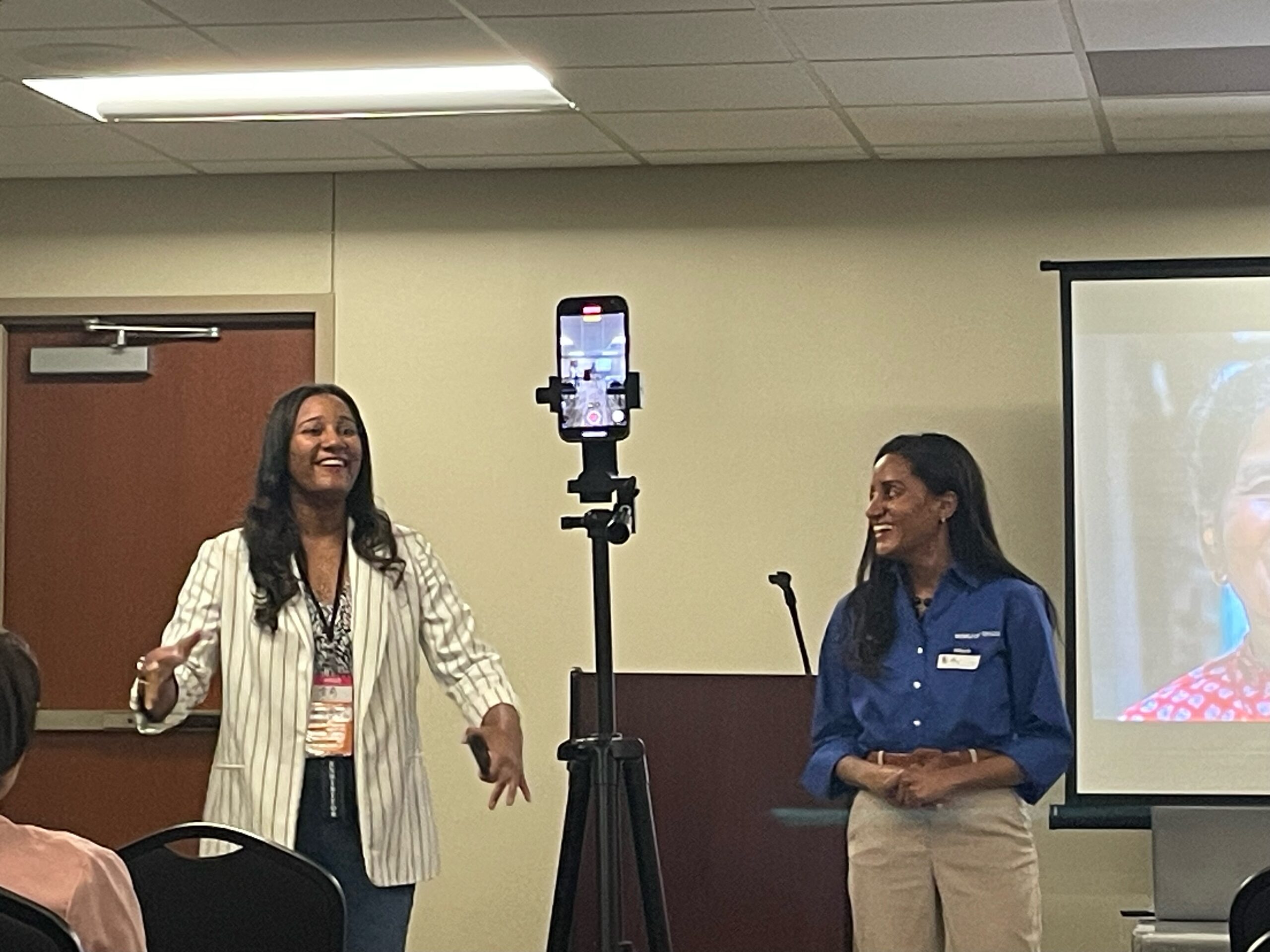
J. Merritt Johnston and Jackie Faughn at WMU of Texas Pursue Conference. (Photo/Calli Keener)

J. Merritt Johnston, a native Texan and University of Mary-Hardin Baylor graduate who serves as Baptist World Alliance Women executive director, was interviewed by Texas WMU President Jackie Faughn to help acquaint attendees with BWA. 

Merritt said BWA started in 1905 to network Baptists and impact the world for Christ. There are 51 million global Baptists in the Baptist World Alliance, 253 member bodies representing 130 countries and continents, and 176,000 Baptist churches around the world, she noted.

“It’s a big family that you’re part of” Johnston said. “And God has been moving in our Baptist family. We’ve grown 29 percent in the last 10 years, primarily in the global south.”

BWA Women has five ministry areas, Johnston said: strengthening worship, fellowship and unity; leading mission and evangelism; responding through aid, relief and community development; defending religious freedom, human rights and justice; and advancing theological reflection and transformational leadership.

Baptist Women’s World Day of Prayer has been happening for almost 75 years, where Baptist women around the world pray for their communities, and they also “are praying for you” Johnston said.

“Who is at your table?” Johnston echoed the question. “My friend, the world is at your table, and you don’t have to go on an airplane to get there. … On behalf of your global Baptist family, thank you for making a place for the world at your table.”

The signage is clear

Tamiko Jones, executive director-treasurer of WMU of Texas, followed Johnston saying: “The signage is very clear. God is calling us to make disciples.” 

“We are certainly to be disciple makers,” Jones said, while acknowledging her way of being a disciple maker may, stylistically, look different than the next person’s way.

“But it is urgent as believers to take every opportunity to show love and then share the gospel.” 

Jones said God is calling, and “I pray you’re obedient and bold to be disciple-makers.” 

Pursue God, she urged. And pursue relationships with others, because God’s people are to make disciples for Christ, she said.

Exhibition Hall, WMU of Texas Pursue Conference. (Photo/Heather Davis)

Julio Guarneri, executive director of Texas Baptists, told the conference, Texas Baptists are about two things: Loving God and sharing his love with others. 

“We understand that sometimes going to make disciples of all nations means crossing the ocean, but we also understand sometimes in means crossing the street,” Guarneri said.

In the past dozen years, Texas has added 9 million people to its total population, he noted adding, “I don’t think we’ve added 9 million people to our churches.”

Texas is changing, he said. Hispanics are now the largest demographic, followed by Anglos and African Americans. In Texas, 162 languages are spoken, and Texas Baptist churches offer services in 80 languages each week, he noted.

“The nations have come to us,” Guarneri said. “So, we have a great responsibility. Texas remains today a mission field and a mission force.” 

 “We’re so thankful for our relationship with WMU. You pray, you give, but you also do,” he said.

Getting down to business

Faith Howard was introduced as a National Acteens Panelist, and Rebecca Johnson was announced as the Eula May Henderson Memorial Scholarship recipient.

Texas WMU board members and staff leadership last spring to strategically plan to make sure WMU of Texas is moving forward to meet both the commandment and the commission that has been their description since 1880, both Jones and Faughn said.

Quoting, at length, a passage about a similar time of change on the horizon from Lengthening Legacy, a book about WMU’s history, Tamiko Jones made the case: “We have the courage to shift today because of the boldness that came before us.”

Faughn elaborated on that idea, saying: “I want you to hold onto that word ‘shift’ today. … I don’t want you to think of change,” because that word causes a strong negative response.

 “However, for us to be able to reach the 30 million in our state with the gospel, as well as discipleship making, we’re going to need to do some shifting,” Faughn said.

Jones and Faughn presented the reimagined Texas WMU mission statement: “To empower God’s people to advance the gospel through missional discipleship,” contrasting it to the prior mission statement of “making disciples to make disciples.”

Then they shared a new vision statement: “To see every believer across every culture and community compelled to live missionally.”

“We want to focus on making missional disciples,” Faughn said. 

Sisters Shirley Porto, BWA, and Joyce Porto, Missional Lifestyle Strategist for Multicultural WMU Texas, lead workshop on cultural intelligence. (Photo/Calli Keener)

“Missional” is defined as believers living daily as disciple-makers—“thinking about your being versus your doing. How we walk alongside each other to share the gospel—lifestyle, relationship, discipleship,” Jones said. 

God’s people are called to be disciple-makers every day, everywhere, Jones and Faughn stressed.

“If we don’t do some shifting, what’s going to happen to us as an organization and what’s going to happen to our state?” Faughn asked.

The new vision and mission statements will guide WMU of Texas as it moves forward and unfolds living missionally, Jones and Faughn agreed. 

 “I think as we move forward, you will see that our purpose has not changed,” Faughn said. “But how we move forward may look a little different.”

Officers were reelected: Jackie Evans Faughn as president, Brenda Bourgeois as vice president and Lynn Montgomery as recording secretary. 

Faughn cited Deuteronomy 6:4-9 and Jesus’ quote of these verses in Matthew as a charge to live missionally, making missional disciples, because “it’s not a one and done. It’s ongoing.” 

Texas WMU is leading boldly toward “not just a shift in organization but a shift in mindset, behavior, obedience and pattern,” Faughn said.

Trevor and Kimberly Yoakum, International Mission Board missionaries in Togo, West Africa, who currently are stateside staying at Mary’s House—missionary housing WMU provides on the campus of Southwestern Baptist Theological Seminary—spoke about their ministry.

Vanessa Lerma, first-ever border missionary for WMU of Texas, said she’s been encouraged by wonderful, godly women who helped her grow, who’ve taken the time to ask questions, encourage rest and spend life just being there. Lerma asked WMU members to pray for her and several women she is working with.


Lead with righteousness and justice in chaordic times

The 21st century church needs apostolic leaders for chaordic times that blend elements of chaos and order, Randel Everett told participants at the 2024 Christian Leadership Summit at Dallas Baptist University.

“We are immigrants in a brand-new world,” said Everett, a former executive director of the Baptist General Convention of Texas who recently retired as founding president of the 21Wilberforce human rights organization.

Rapid advances in technology and massive global migration create extraordinary opportunities and challenges for the global church, he observed.

The current context demands apostolic leaders in the church—those who believe they are sent out into the world by God with the message of hope in Christ, he asserted.

Everett contrasted the crowd in Jerusalem to whom Peter preached in Acts 2—Jews who shared a common religious background and understanding of Scripture—and those whom Paul addressed in Acts 17 on Mars Hill—Athenians who represented a wide variety of philosophies.

“We live in Athens, not in Jerusalem,” he said.

Many people today do not share a Christian worldview, but they are spiritually hungry and craving meaningful relationships in a world where they often feel isolated, he observed.

Rather than presenting logical proofs in linear fashion, non-Christians from varied backgrounds in a chaordic age respond better to narratives—personal stories, Everett noted.

Recognize citizenship in God’s kingdom

Apostolic leaders in the current context need to engage with society and seek to be positive influences in their communities and countries, he said.

However, they should recognize they are sojourners whose primary identity is as citizens of God’s kingdom, he added.

“Our ultimate authority is in Christ. Our ultimate instructions are in God’s word,” Everett said. “We should never forget our first loyalty is to Jesus Christ.”

Church leaders today need a Christian worldview that is historically grounded and global in its scope, he said. Christians in the West can learn deep lessons from fellow believers in other parts of the world who live under oppression and persecution, he asserted.

“The Bible makes sense to them because the Bible was written by persecuted people for persecuted people,” said Everett, senior fellow for religious liberty with DBU’s Institute for Global Engagement. “We should listen, and we should learn. … We are part of a global family.”

Furthermore, apostolic leaders in the 21st century need to be willing to take risks and “travel light,” so they are free and nimble to respond to rapidly changing circumstances, he said.

“We need leaders who persevere,” Everett said. “We need leaders who are single-minded—whose eyes are fixed on Jesus.”

‘Enact righteousness and justice’

Christian leaders have a responsibility to lead with righteousness and justice, said Raymond Harris, an architect and entrepreneur who has used his profits to invest in the lives of others who are committed to justice and promote sustainable community development in Africa and Asia.

Christian leaders have a responsibility to lead with righteousness and justice, said Raymond Harris, an architect and entrepreneur, when he addressed. the Christian Leadership Summit at Dallas Baptist University. (Photo / Ken Camp)

“I believe righteousness and justice are sisters in the Scripture,” said Harris, senior fellow of entrepreneurship in DBU’s Institute for Global Engagement. “When righteousness prevails, there is human flourishing around leaders.”

Scripture provides examples of righteousness among “the least,” such as a widow who gave all she had to the temple treasury and a woman who demonstrated “righteous extravagant generosity” when she anointed Jesus, he noted.

Leaders not only should think about how their decisions benefit the poor and vulnerable, but also how they can learn from the poor what truly matters in God’s economy, he said.

“We can learn a lot about righteousness from the most unlikely people,” Harris said. “Those who are poor in society and low in society have a lot to teach us about leadership. You see, in God’s upside-down economy, he uses the least and the poor to demonstrate true eternal righteousness.”

Practice the Golden Rule

Leading by principles of righteousness and justice—particularly in the marketplace—means allowing the Golden Rule to govern decision-making and business deals, Harris said.

“Think of the contract negotiations you might go through someday and do it from the other side of the table,” he said. “What’s really best for the other guy? And can you live with that?”

All interpersonal dealings in the marketplace “should be marked by God’s righteous love,” he said. “And this can be demonstrated very simply by gratitude and generosity.”

Righteousness is a gift God bestows on those who submit to Christ’s lordship and allow their lives to be guided by the Holy Spirit, he explained.

“Our works on Earth develop our righteousness but do not provide our righteousness,” he said.

Harris explored the relationship between “doing and becoming” in regards to righteousness and justice.

“The more we do good works, the more we develop a character of righteousness,” he said. “Righteousness is truly a gift of God that we are to work to integrate into our daily lives by walking closely with the Holy Spirit. … Right actions develop fruit, which develop right character, and right character motivates us to perform right deeds.”

Leaders have a responsibility to empower others to pursue righteousness and justice, he asserted.

“We are to enact righteousness and justice. We are to enact righteousness so that those around us can flourish, and we are to enact justice to take care of those who cannot take care of themselves, so they, too, can experience abundant life,” he said.

“Building your leadership around righteousness and justice will provide a light to those who are in darkness, for those who need to be rescued and for those who need to be uplifted.”

Stories have power to foster empathy

In a world of “selfies” and a narcissistic preoccupation with self on social media, leaders have a responsibility to inculcate empathy both in themselves and in those who follow them, said Mary Nelson, director of the Ph.D. program in leadership studies at DBU’s Gary Cook School of Leadership.

“Leaders need empathy,” Nelson said, noting how compassion fatigue and psychic numbing can contribute to a sense of hopelessness.

Jesus modeled “the power of the story,” and leaders have a responsibility to be open to learning from stories, she said.

“How can we lead diverse populations if we don’t take time to learn their stories?” she asked. “As leaders, we can’t afford to be numb.”

Studies demonstrate employees prosper when they work with empathetic leaders who are person-focused and sensitive to different cultures, she said.

“Reading can broaden our awareness of the world beyond our phones and beyond ourselves and deepen our empathy,” said Nelson, a professor of English.

Literature can “expand the scope of our empathy” by introducing readers to people, cultures and experiences beyond their own lives, she observed.

Fiction offers the opportunity to “delve into the unfamiliar,” and it “humanizes experiences” that may be personally unfamiliar to the reader, she noted.

“I really believe fiction helps you to read the world better,” she said. “It helps you to be more sensitive to the world around you.

“Let’s never forget that we are called to ‘weep with those who weep.’ We must seek ways to penetrate compassion fatigue. The hurting world needs love, and it needs Christ so much.

“So, I would encourage you to allow fiction to awaken the empathy within and see people and worlds you have yet to explore.”


Braswell: God uses leaders who boast in their weakness

DALLAS—God uses Christian leaders who learn to boast in their weakness and in God’s strength, a Fort Worth pastor told participants at the Christian Leadership Summit.

In 2 Corinthians 12, the Apostle Paul wrote about how an unnamed “thorn in the flesh” taught him to boast in anything that spotlighted God’s power in his life and ministry, Dale Braswell told a breakout session during the April 18-19 summit at Dallas Baptist University.

As pastor at Wedgwood Baptist Church in Fort Worth—a congregation still impacted by a mass shooting that occurred 17 years before Braswell arrived—he noted “brokenness and weakness are cousins.”

Brokenness generally occurs as something “done to you” that ultimately “has a resolution,” while weakness tends to be innate and lasting, he noted. However, he observed, the two are closely related.

“Brokenness can give greater insight into our weakness,” he said.

Braswell, who earned his doctorate in leadership studies at DBU, pointed to “abiding in Christ” as a foundational truth for leaders who recognize their own weakness. Those leaders understand their fruitfulness depends entirely on being rooted in Christ, he observed.

Christian leaders who acknowledge their weakness learn to practice spiritual disciplines as ways to stay connected to Christ, particularly as they are inundated by the “noise and busyness” of work, he noted.

“Spend more time on fewer things,” Braswell suggested, noting effective Christian leaders learn to “make space” for time with God.

‘Rely on other people’

Effective leaders who recognize their weakness and limitations know they need help and willingly accept it, Braswell added.

“Rely on other people,” he urged.

Leaders who risk appearing vulnerable to those whom they lead earn their trust, he noted.

Good leaders who honestly assess their weaknesses also learn to listen to others, Braswell said.

“Wisdom is all around us,” he said.

Effective leaders who boast in their weakness learn to wait, no matter how hard that may be, Braswell observed. Scripture clearly teaches God works on behalf of those who wait on him, he noted.

“Use that waiting time to pray,” he advised.

Be a ‘servant first’

A leader who knows his weaknesses and has a submissive heart toward God is a “servant first,” Braswell said.

Christian leaders who find their identity and calling in Christ serve others, learning to value the needs and interests of others above their own, he said. Servant leaders willingly share responsibility and authority with others, empowering them to develop and grow, he continued.

Servant leaders are not viewed as a threat by their peers or considered unapproachable by their followers, Braswell noted.

“Instead, they are perceived as a source of encouragement, care and support,” he said.


SBC Cooperation Group to release recommendations May 1

INDIANAPOLIS (BP)—The Southern Baptist Convention’s Cooperation Group announced April 19 it would release its recommendations May 1.

In a release on its website, Chairman Jared Wellman of Arlington said the release date should allow for ample discussion of the recommendations before the 2024 SBC annual meeting.

The group, appointed by SBC president Bart Barber, held its first meeting last fall. It was formed in response to a motion from a messenger to the 2023 SBC annual meeting in New Orleans calling for the study of what it means for churches to be “in friendly cooperation on questions of faith and practice.”

Jared Wellman, lead pastor of Tate Springs Baptist Church in Arlington, chairs a group tasked with defining “friendly cooperation” in the Southern Baptist Convention. (BP File Photo by Adam Covington)

“We are thankful for the prayers and support for us as we studied and developed these recommendations,” said Wellman, pastor of Tate Springs Baptist Church in Arlington.

He noted scheduling conflicts and the busy Easter season prevented the group from having an in-person meeting for several weeks, which caused their work to be delayed.

“Though this release comes later than we initially planned, we are grateful that it still provides over 40 days for messengers to engage with, understand, and respond to the recommendations,” he said.

The recommendations will be the culmination of Stage 2 of the group’s announced 4-stage process. Stage 3 will be the refinement stage, followed by the resolution stage in June.

Finally, Wellman announced the group will release a series of articles on its website May 6.

“These articles will offer deeper insights that we have been able to glean into the nature of cooperation within our community,” he said.

Group members also will appear in online discussions to help messengers process the recommendations before attending the annual meeting in June, he added.