On the Move: Dudley
Jeremy Dudley to Bethesda Baptist Church in Burleson as associate pastor of families, from First Baptist Church in Argyle, where he led worship.
Jeremy Dudley to Bethesda Baptist Church in Burleson as associate pastor of families, from First Baptist Church in Argyle, where he led worship.
(RNS)—The well-known and beloved-by-many words of “How Great Thou Art” have had a long and varied trajectory from Swedish poem to German hymn to a tradition at Billy Graham crusades.
In celebration of the 75th anniversary of the hymn’s popular English translation, Grammy-winning Christian singer-songwriter Matt Redman has teamed up with 15 other artists and released a new version, continuing the hymn’s transatlantic trek that has led it to be featured in countless hymnals and recorded on hundreds of albums.
“Someone wrote something out of the depths of their heart toward God, and then it got wings,” Redman said in a late February interview. “It’s just phenomenal to think—isn’t it?—that Elvis recorded this, and he gave it some extra wings. And then Carrie Underwood’s version is another version a lot of people talk about.”
Redman first sang and played the hymn as a teenage guitar player in an Anglican church in the English village of Chorleywood because, he said, its chord structure was easier to manage than other hymns. Now, he has added to the complex history of the hymn after being approached by the British charity that owns the copyright for it, the Stuart Hine Trust.
Hine was a British missionary who published the English words in his gospel magazine in 1949. He was inspired by a Russian hymn—which was based on an original Swedish poem—when he was traveling hundreds of miles via bicycle to distribute Bibles and preach through the Carpathian Mountains that traverse Eastern Europe.
Redman worked with Australian native Mitch Wong on the commission of “How Great Thou Art (Until That Day),” which features a new verse, a different beat and a chance to provide humanitarian aid to Ukrainians and other Eastern Europeans in the midst of war.
“We decided we’re going to have the word ‘war’ in this hymn,” said Redman, who noted he thinks worship songs should not be considered “escapist” means to momentarily leave behind the problems of the world.
“Now, that’s not a normal kind of hymn word. It’s not something people often would think of singing on a Sunday morning, but it felt like an important word.”
The new stanza of the hymn reads: “Until that day / When heaven bids us welcome / And as we walk this broken warring world, / Your kingdom come, / Deliver us from evil, / And we’ll proclaim our God how great You are! / With hope we’ll sing our God how great You are!”
The hymn has been played over 2.5 million times on digital streaming platforms in the month since its release on Jan. 26 by Capitol CMG Publishing. Phil Loose, one of the trustees, said it is too soon to know how much money the recording has raised.
The Stuart Hine Trust, which has supported Christian outreach and Bible translation, intends to use the proceeds from the writing, production and royalties of the recording to provide humanitarian aid and support rebuilding efforts in Eastern Europe.
Over its lifetime, the hymn has faced moments of relative obscurity and waves of popularity. It dates to 1885 or 1886, when Swedish editor Carl Boberg got caught in a thunderstorm and wrote the first version, then titled “O Store Gud” (or “O Mighty God”), after marveling at the calm that followed the storm. It was published in a newspaper, then set to music in his country.
Though some of its history is hazy, music professor C. Michael Hawn wrote that an English translation made it into some hymnals but “never caught on.”
In the early 1900s, the words were translated into German and then Russian, which Hine heard sung while in the Eastern European mountains. He paraphrased the first two verses in English and was inspired to write the third and fourth verses of “How Great Thou Art” over a 14-year period, according to his trust’s website.
The website quotes him as writing, “The thoughts of the first three verses of How Great Thou Art! were born, line by line, amid my unforgettable experiences in those mountains.”
The fourth verse, which begins with the words, “When Christ shall come with shout of acclamation,” was written in 1948 to assuage the grief of Eastern Europeans after the end of World War II.
In the 1950s, the hymn began to have what Redman called a “wildfire moment” when singer George Beverly Shea started using it at the “crusades” of evangelist Billy Graham—including one at New York’s Madison Square Garden that was broadcast on television and lasted 16 consecutive weeks.
Shea wrote in his 2004 book, How Sweet the Sound: Amazing Stories and Grace-filled Reflections on Beloved Hymns and Gospel Songs, about how he changed the lyrics “consider all the works thy hands have made” to “consider all the worlds thy hands have made” and modified “I hear the mighty thunder” to “I hear the rolling thunder.”
“I got a bang when I used to hear Elvis Presley sing my two words,” he said in a Religion News Service interview about the rock-and-roll singer, who won his first Grammy for his 1967 rendition of the hymn and earned another for his 1974 live version of it.
Brian Hehn, director of The Hymn Society’s Center for Congregational Song, said the hymn lends itself to both congregational singing and solo and duet voices, as in Redman’s and Wong’s new version.
“I think it does point to the general singability of the song,” he said. “And that’s one of the reasons why it’s very popular, right? Because congregations can sing it. It feels good to sing.”
The hymn, which was popular in the society’s March Madness-type tournament in 2019, is sung both in churches that use contemporary Christian music and is featured in hymnals used in mainline Protestant, African American and Catholic churches.
Hehn notes the new version leaves out the second verse often found in hymnals, and the new verse moves more quickly to the hymn’s focus on a belief in the atonement of Jesus.
“The new stanza also acknowledges the tension between living in the ‘in between’ time where Christ’s victory over death has been completed and yet there is still death and sin because that final day when all tears are wiped away has not yet arrived,” Hehn added via email.
“With the nod towards that ‘in between’ time and the addition of the word ‘hope,’ they’ve transformed what was originally a song of praise appropriate for any season into what I read as an Advent hymn!” he wrote.
The latest version featured coast-to-coast logistics, with some of the contemporary Christian and country artists recording their parts in California and others in Tennessee at Nashville’s RCA Studio B, where Presley once recorded it.
Worship leader Chris Tomlin and country band Lady A’s Hillary Scott sing the first verse of the hymn, while Redman and producer Matt Maher sing the new last verse. Other sections include vocalists Naomi Raine of Maverick City Music, TAYA and Blessing Offor.
Jon Reddick, a worship pastor at Church of the City in the Nashville suburb of Franklin, was part of the recording session in California. He said he enjoyed both the “synergy” of the artists coming together and the chance to sing a song they knew but were also getting to learn in a new way with the additional verse.
“You’re in the room with people you even know and love and admire, or just getting to meet and still admire,” said Roddick, who expects to lead the new version in his congregation when he concludes his time on TobyMac’s Hits Deep Tour.
“It was creative. It was fun. It was spirit-filled. It was a moment.”
Redman said producers were challenged to figure out which voices to use for which parts of the hymn, as they asked each singer to perform more lines than the ones in which they are heard on the recording. Though the compiling of the recordings was like a “jigsaw puzzle,” he said, getting people into the studios was easier.
“When we approached all the people to be part of it, we had a lot of green lights very quickly,” he said, noting they came together for the music and the Ukraine-related mission. “You could tell how dearly they loved the hymn.”
UGANDA—Texas Baptist Men: Texans on Mission may have discovered a secret ingredient to community transformation across northern Uganda.
Just add water.
This year, Texans and Ugandans on Mission—the name TBM and its 24 Ugandan personnel use—will drill a minimum of 65 wells in Uganda. They teach sanitation, hygiene and pump maintenance in every village where they drill a water well, as well as introducing local residents to micro-finance.
But the real key is the spiritual transformation that occurs in individual lives. Work in each village begins by starting Bible studies. And if there isn’t another church within 3 or 4 kilometers, often the villagers ask to start their own congregation.

“I expect to see 500 baptisms this year,” said Mitch Chapman, director of Water Impact with TBM: Texans on Mission and the bivocational pastor of Oak Grove Baptist Church in Elmo.
TBM: Texans on Mission envisions expanding its Water Impact ministry into other parts of Africa. Plans already are in place for work in South Sudan within the next two years, with a goal of eventually moving into Kenya, Tanzania and possibly Chad.
When Chapman retired after working 26 years in the oil industry, he didn’t envision becoming involved in water ministry on the other side of the globe.
“I fully intended to spend my time pastoring my church and building racecar chassis,” he said.
Instead, TBM tapped his drilling expertise and put him to work. Since taking the job as Water Impact director two years ago, he is on his second passport, already having filled one with visas. His church grants him the freedom to be away about 18 Sundays each year.
Chapman and TBM leaders wanted to develop a model for water ministry that could make the most significant impact on communities without fostering dependency. As they studied other Christian organizations that used water ministry as a tool for sustainable community development, they became impressed with Fort Worth-based 4Africa and its strategic approach.

TBM leaders learned 4Africa wanted to move away from operating well-drilling rigs in East Africa in order to focus more on the educational components of discipleship and community development.
So, TBM secured the drilling rigs from 4Africa last summer and took on its strategy—moving across northern Uganda district by district from east to west.
“We are in and out of each community in five years or less,” Chapman explained, noting the emphasis is on making disciples and promoting sustainable community development.
In each location, Texans and Ugandans on Mission help identify a “person of peace” in the community who starts a Bible study. A typical Bible study involves reading a passage of Scripture three times—an approach geared toward oral learners—and discussing what it means.
Bible studies also include singing, praying and sharing testimonies of how God is at work in the lives of those who are committing themselves to him.

At the same time, villagers learn hygiene and sanitation, begin building latrines and handwashing stations, and create a local organization to govern the care, use and maintenance of the well.
“There’s three to six months of community engagement before we ever drill a water well,” Chapman said.
Each step of the way, community members are expected to contribute to the effort. For example, after the Texans and Ugandans on Mission crew drills a bore hole and installs casing, villagers make bricks and gather stones to use in construction of the hand pump station.

Sam Ojok, the in-country director of Texans and Ugandans on Mission, is excited to witness the dramatic changes that take place when remote rural communities gain access to a clean water source.
“I love to see immediate impact,” he said. “Once people have clean water and practice sanitation, typhoid is no longer a big problem after just one month.”
Ojok witnessed the effects of water-borne diseases—typhoid, dysentery and cholera, among others—early in life.
“I have seen family members suffer,” he said, as his voice trailed off.
The impact not only is immediately apparent, but also long-lasting. In the Yumbe District of northwest Uganda, where 4Africa piloted the approach Texans and Ugandans on Mission adopted, 98 percent of the wells were still working at the five-year mark.
Most significantly, the region saw a 10 percent decrease in infant mortality and an 80 percent drop in deaths among children from birth to age 5.

“We focus on the rural areas. Where the government stops, we start,” Ojok said. “We penetrate deep into places without easy access.”
Texans and Ugandans on Mission measures access to clean, safe water both in terms of distance and time. The aim is to provide a water source either within one mile or a 30-minute round-trip walk of each village.
To ensure each community learns how to become self-sufficient, villagers are taught how to create small community credit unions to promote savings and to provide micro-finance loans for income-producing activities.
On a recent visit to the Omoro District, several villagers told how the loans enabled them to develop small businesses—raising goats, harvesting and selling grain and even operating a small community grocery store—to send their children to school.

At the same time, children and teenagers are growing stronger physically and spiritually through Youth Running Clubs sponsored by Texans and Ugandans on Mission. They participate in exercises, games and Bible lessons on Saturdays.
“Some of these children have experienced trauma. Through the Youth Running Clubs, we see their self-esteem grow,” Ojok said. “They improve in physical, spiritual and psychological wellness.”
The spiritual aspect drives Texans and Ugandans on Mission. Since they began working in northern Uganda last summer, 138 people have been baptized, and another 19 are scheduled to be baptized in the coming weeks.
“When we arrive in a community, water is an access point—a starting point for sharing the gospel and training church leaders,” Ojok said.
Currently, 340 Bible study groups meet in rural areas of Uganda’s Omoro District.
“People are meeting somewhere every day—sharing the word of God and learning from each other,” Ojok said.
“I have not seen another program as impactful as Texans and Ugandans on Mission.”
Managing Editor Ken Camp traveled to Uganda with Texas Baptist Men: Texans on Mission to report on the Water Impact ministry there.
Hardin-Simmons University has named West Texas pastor Jacob West as associate dean of Logsdon School of Theology. He is scheduled to begin March 25.
West earned all three of his degrees from Hardin-Simmons—Bachelor of Arts in Bible (2004), Master of Divinity (2007) and Doctor of Ministry (2013).

West said HSU and family ties in the region were strong lures back to campus, stating, “I want to strengthen Logsdon’s ties to West Texas churches and build a team to guide new ministries to love and lead the church.”
“Dr. West brings a wealth of knowledge and education that he gained while a student at Logsdon School of Theology and Logsdon Seminary,” said Kacie Eurek, HSU director for university marketing.
West served as adjunct professor at Wayland Baptist University the past four years.
West returns to Logsdon School of Theology from First Baptist Church in Plainview, where he has been pastor since December 2017. He served other churches around West Texas, including Stamford, Sweetwater and Rotan, where he served as youth pastor.
“His practical experience in church work on a daily basis provides the expertise needed to engage the minds and nurture the spirits of future Christian leaders in the HSU classroom,” Eurek said.
West will continue to see himself as a pastor in his new role. “After being a lead pastor for 16 years, it will be inevitable,” he said, adding, “Faculty and students will know I’m interested in their lives.”
“I want to lead a team approach to ministry preparation,” West said in an email to Baptist Standard.
“Every Logsdon student and faculty member is an essential member of the team,” each one adding value and growing together in Christian community, he added.
“I am also eager to connect with those already hard at work preparing ministers throughout Texas,” West said.
Stating a desire to partner with Texas Baptists to equip students for the call and to listen to the Holy Spirit, West cited an extensive network —around Texas, the United States and the world—of colleagues, friends and ministry partners in church planting, camp ministry and the Christian Life Commission.
“I am thrilled” by West’s appointment, Katie Frugé—director of Texas Baptists’ Christian Life Commission and Center for Cultural Engagement—said in an email to Baptist Standard.
“His background makes him uniquely qualified and ideally suited to equip the next generation of ministry students to live out the mission and calling of Micah 6:8. We celebrate with the HSU community today and look forward to continued partnerships in the days to come,” Frugé added.
West’s teaching responsibilities will include subjects in Hardin-Simmons’ Foundational Curriculum and “ministry courses for majors and minors in Logsdon,” Eurek said.
Logsdon School of Theology, founded in 1984 to offer undergraduate ministry degrees, was moved under the Cynthia Ann Parker College of Liberal Arts after HSU announced, Feb. 7, 2020, the closure of Logsdon Seminary, which was founded in 2004.
Hardin-Simmons offers a Bachelor of Arts and a Bachelor of Behavioral Sciences in Christian Studies, as well as a concentration in worship leadership in the music program.
Larry McGraw is the current associate dean of Logsdon School of Theology and professor of Bible. Kelvin Kelley is associate professor of theology. Kelly Pigott is professor of church history.
Asked about future plans for Logsdon School of Theology, Eurek replied: “The Logsdon School of Theology has a rich history and tradition of training qualified pastoral and ministerial candidates who have impacted the world for Christ. We strive for spiritual growth and formation in our students as we grow this program and serve the Body of Christ.”
“We are thrilled to welcome Jacob back to HSU in this new capacity,” HSU President Eric Bruntmyer said in the university’s announcement. “With his applicable experiences, Jacob will undoubtedly enrich our community and enhance our mission of providing an education enlightened by Christian faith and values.”
The deadline for Texas public school districts to adopt or reject a new policy has arrived. That policy allowed local school districts to decide by March 1 to “employ or accept as a volunteer a chaplain to provide ‘support, services, and programs for students.’”
“[S]chools may choose to do this or not, and they can put whatever rules and regulations in place that they see fit,” said Rep. Cole Hefner, R-Mount Pleasant, author of the House version of the bill.
According to a March 1 post by Texas Impact, “The largest 25 school districts in Texas have all rejected creating a new chaplain program.”
Frisco and Plano ISDs in the Dallas-Fort Worth Metroplex, and Katy, Cypress-Fairbanks and Conroe ISDs in the Houston area are among school districts that opted out of the policy, according to Texas Impact.
Fort Worth and Eagle Mountain-Saginaw ISDs declined to “hire chaplains for duties beyond the scope of a normal volunteer, like reading books or helping during events.” Instead, these districts and others will retain their current policies allowing chaplains to volunteer in accordance with requirements of all volunteers.
Dripping Springs, McKinney, San Marcos, Gainesville, Brownsboro and Edinburgh ISDs also declined to change their policies, according to John Litzler, Texas Baptists’ general counsel and the Texas Baptists’ Christian Life Commission director of public policy.
Litzler was not aware of any school districts that opted to enact the new chaplain policy.
Since the decision was left up to each school board, “unless you go pull the public records from all the school board meetings for every school district in Texas,” there’s not an easy way to know who did or did not adopt the new policy, Litzler said.
“It’s not surprising to me that the largest districts that tend to be more urban and have more access to school counselors don’t need chaplains to fill that role,” Litzler said, while agreeing with districts “evaluating their needs on a case-by-case basis.”
“Some districts may have a need for a school chaplain if they can’t get counselors,” Litzler added, referring particularly to rural districts.
When asked what the next step might be for the school chaplain policy, Litzler pointed to efforts made to improve the bill before it was passed.
“Making sure the chaplain had been recommended by an agency that had approval from [the] Texas Department of Criminal Justice or the military” or other endorsing organization with high credentialing standards would have been helpful, Litzler said. If the legislature “went back and amended the law to do that, that would be great.”
“The bill was unnecessary in the first place,” Charles Johnson, Pastors for Texas Children executive director, said.
School districts have trained, well-educated, clinically experienced counselors “our children need,” he said. Additionally, many school counselors are “people of faith. They’re in our churches. They carry the Lord God with them in their hearts. They’re motivated by the compassion of God for these children.”
Pastors for Texas Children has close relationships with public school superintendents throughout Texas, Johnson said, and knew most school districts would not change their existing volunteer policies to adopt the new policy.
“This was a culture-war bill designed to violate our God-given religious liberty by advancing a very thin, right-wing extremist, fringe version of Christianity. That’s the reason the top 25 districts have not participated in the program,” Johnson said.
SB763, supported by conservative groups such as Texas Values Action and National School Chaplain Association, was passed May 9, 2023, during the 88th Texas Legislature and signed into law by Gov. Greg Abbott as Chapter 23 of the Texas Education Code. It went into effect Sept. 1, 2023. School boards had until March 1, 2024, to decide whether to adopt the new policy.
In August 2023, more than 100 Texas chaplains signed an open letter urging all school board members in Texas to opt out of allowing chaplains to serve in the capacity outlined by SB763. More than a third of the chaplains were Baptists, including some endorsed by the Baptist General Convention of Texas.
The open letter pointed to religious liberty concerns, among other things.
“Not only are chaplains serving in public schools likely to bring about conflict with the religious beliefs of parents, but chaplains serving in public schools would also amount to spiritual malpractice by the chaplains,” the letter stated.
Those, such as Rep. James Talarico, D-Austin, who opposed passage of the bill worried it “will lead to Christian nationalists infiltrating our public schools and indoctrinating our students.” Talarico is a Presbyterian seminarian.
Proponents of the bill, such as Julie Pickren—a current member of Texas’ State Board of Education—contended, “There are children who need chaplains.”
Hefner, refusing to amend the bill to prohibit proselytizing, defended the training chaplains receive, which he contended makes clear proselytizing is to be avoided.
“This is just to supplement and complement our counselors in doing the job that (are) working really hard,” Religion News Service quoted Hefner saying.
CANADIAN (BP)—Pastor Bob Bynum, 77, has become somewhat of a rancher’s helper, wrestling cattle at times and helping when needed among the 20 or so ranchers who worship at Locust Grove Baptist Church.
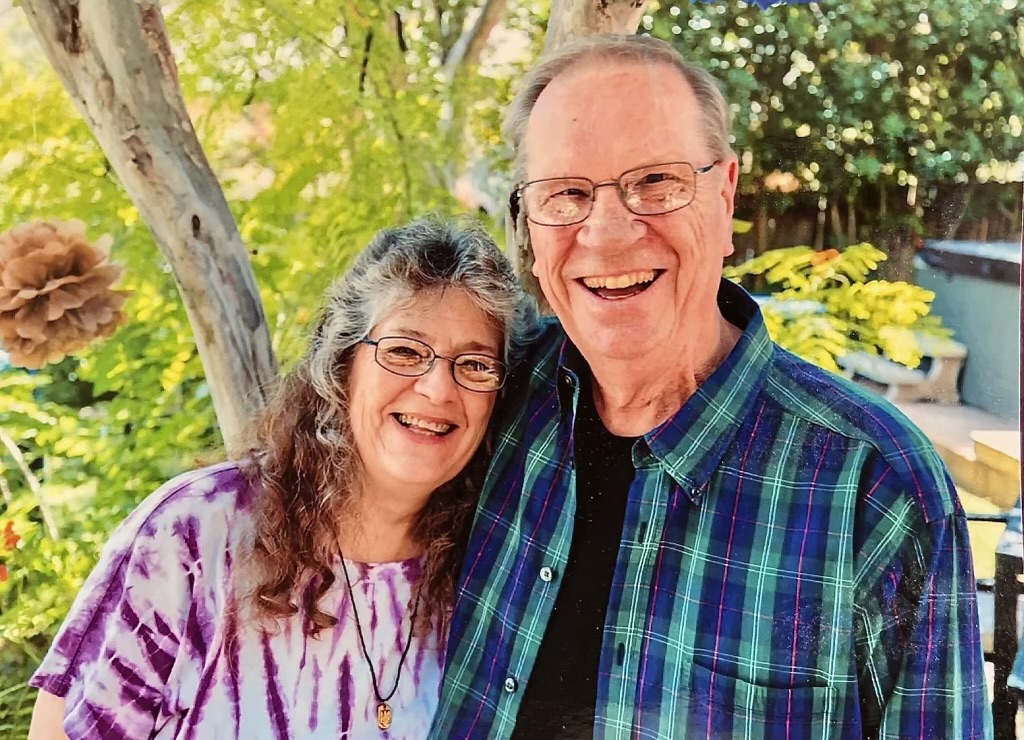
The Smokehouse Creek Fire, the largest in Texas history, came within a mile of a church member’s ranch, Bynum told Baptist Press March 1, but none of the church’s members have reported any direct losses.
“We have about 60 families that are devastated in one way or another” in Canadian, a 1.3-square-mile community of about 2,400 people and the only incorporated community in Hemphill County. “I think we’ve lost 40 homes.”
At least two people have died in the flames. The Smokehouse Creek Fire covers more than 1 million acres, or 1,600 square miles, in Texas and Oklahoma and is 15 percent contained, the Texas A&M Forest Service reported March 1. It is only one of several fires driven by parched land and high winds in the two states.
Bynum was on standby at First Baptist Church of Canadian, a Southern Baptist Disaster Relief staging area, awaiting his assignment in the early stages of the response. He’s also a disaster relief chaplain for Voluntary Organizations Active in Disaster and is active in the multidenominational Canadian Ministerial Alliance.

“For me personally, it’s heartbreaking,” Bynum said, “and yet exciting that I can be a part of doing something positive to put people in a better frame of mind, pray for them and minister to their physical and spiritual needs.
“It’s really exciting on that level, and yet, our heart has kind of sunk.”
Bynum and his wife were able to remain in place in their parsonage when Canadian was evacuated Feb. 28, as a rancher and volunteer firefighter who attends the church kept them updated on the flames’ path. The fire came within six miles of the church, his wife Betty said.
Texans on Mission and Southern Baptist Disaster Relief units reported responses in Texas and Oklahoma as early as Feb. 28 and 29.
Surveying damage this morning, Bynum encountered seven burned homes and lots of stubble where grass once grew. But he also saw volunteers hauling trash and delivering hay to feed cattle. Ranches the fire spared are housing cattle that fled the flames.
“It’s really good to see so many people actively involved, not just Baptists but citywide,” he said. “People comforting each other and being there for each other. I’ve seen that firsthand.”
Bynum described Locust Grove’s members as generous and benevolent. A Locust Grove family is providing shelter to a family who lost their home in the fire, Bynum said. Betty is working with ranchers to coordinate grocery donations. Locust Grove Baptist will likely serve as a staging area to receive hay donations as recovery continues, Betty said.
In Fritch, about 90 miles southwest of Canadian, Texans on Mission Disaster Relief Director David Wells reported Feb. 29 that 100 or so homes were destroyed or damaged.
Weather conditions will remain favorable for wildfires through the weekend, according to weather reports. The Top O’ Texas Baptist Association serves 68 congregations in the Panhandle.
NASHVILLE (BP)—A special-called meeting will take place March 21 for Southern Baptist Convention Executive Committee members to consider the nomination of Jeff Iorg as the next Executive Committee president and CEO.
The vote will take place in executive session at the Grand Hyatt in the Dallas-Fort Worth International Airport.
Iorg has been president of Gateway Baptist Theological Seminary since 2004, when it was known as Golden Gate Baptist Theological Seminary. In 2016, he oversaw the completion of the seminary’s move from Mill Valley to Ontario, Calif., and the launching of an online campus, while continuing to grow the endowment from $16 million to $60 million without incurring debt.
“Jeff Iorg is who we have been praying for,” said search team chairman Neal Hughes, director of missions and executive director of the Montgomery (Ala.) Baptist Association and MBA Community Ministries.
Hughes noted Iorg’s “calm demeanor, communication skills, executive administrative ability and thorough knowledge of Southern Baptist life will be a God-send to the SBC.”
Executive Committee chairman and search team member Phillip Robertson said he was “beyond excited” at the news and called Iorg “a leader that all Southern Baptists can unite around.”
Other Southern Baptist leaders noted Iorg’s longevity in denominational service and the relational capital it brings.
“Jeff Iorg is one of the most respected leaders throughout the Southern Baptist Convention,” said R. Albert Mohler Jr., president of Southern Baptist Theological Seminary. “He combines character with great ability and incredible commitment to the SBC and its churches. He is exactly what we need as president of the Executive Committee at this historic moment.”
“I have known Jeff Iorg for more than 25 years. During that time, I have observed, with keen interest, how he has grown into a stellar leader among Southern Baptists,” said Rick Lance, executive director, Alabama Baptist State Board of Missions.
“He has earned the respect of our Baptist family from across the landscape of SBC life. Personally, I believe Jeff is in the top tier of statesmanlike leadership in the SBC,” Lance added.
Iorg’s tenure as head of a Southern Baptist entity on the West Coast brings its own considerations in terms of leadership.
“Jeff Iorg is loved beyond measure in the West,” said Tony Dockery, lead pastor of St. Stephen Baptist Church in San Dimas, Calif., and Executive Committee vice chair.
Daniel Atkins, pastor of Taylor Road Baptist Church in Montgomery, Ala., and a Gateway trustee, called Iorg “the leader the SBC needs for today and the future.”
Former Northwest Baptist Convention associate executive director Stan Albright referred to the “high expectations” Iorg has for staff while exhibiting “great faith in their performance.”
“He is confident, yet humble; focused, yet aware of his challenges; and a vision-caster, yet a team player,” Albright said.
Before becoming the president at Gateway, Iorg, as executive director of the Northwest Baptist Convention, led churches to increase Cooperative Program giving by 30 percent.
Iorg was a children’s minister before becoming pastor at Green Valley Baptist Church in St. Joseph, Mo. The church saw growth in attendance and staff, as well as financial viability during his tenure.
Iorg moved on to plant Pathway Church in Gresham, Ore. After leading as pastor for several years and raising up his replacement, he continued to serve for 10 years as a lay leader.
Last October, Iorg asked Gateway trustees to begin the process of initiating a transition plan to find the seminary’s next president.
A magna cum laude graduate from Hardin-Simmons University with a Bachelor of Arts in Bible and a minor in psychology, Iorg continued his education at Midwestern Baptist Theological Seminary, earning a Master of Divinity.
He received a Doctor of Ministry degree from Southwestern Baptist Theological Seminary, with a project focused on developing effective listening skills for evangelism.
He and his wife Ann married in 1980 and have three children and five grandchildren. He is the author of eight books on biblical leadership, character development, evangelism, marriage and leading through change.
If elected, Iorg will replace previous Executive Committee president and CEO Ronnie Floyd, who resigned in October 2021.
UGANDA—The headmasters of two primary schools in rural northern Uganda agreed. Access to water makes all the difference in the lives of their students.
Atyang Primary School has operated four decades and has an enrollment of more than 1,000 students who meet in well-established facilities. Rising Star Primary School in Lagwedola started a year ago, has 64 students enrolled, and struggles to survive.
At Atyang School, students enjoy access to a well on the school grounds with a functioning hand pump. At Rising Star School, children recently gathered in the front yard of their tiny schoolhouse to watch a drilling rig create a bore hole and install casing for a well in their village.
Chan David Felix, headmaster at Atyang School, speaks about the positive changes he already has witnessed. Okello George, headmaster at Rising Star School and pastor of a church that meets in the same building, voices hope for a brighter future.

Representatives from Texas Baptist Men: Texans on Mission—known in Uganda as Texans and Ugandans on Mission—recently visited Atyang School to see how the well their organization made possible is being used.
Government district officials had attempted to drill a well on the Atyang School property three times and failed each time. TBM tried and succeeded.


“God solved the problem,” the school’s headmaster said.
He attributed success to the power of prayer—and the fact that the government tried drilling based on where they thought a well would be most convenient, while the TBM team drilled at a site most likely to access the underground aquifer.
“Before we had our own well, students had to cross a very busy road to get to the nearest well,” the school’s headmaster said. “It was prone to accidents. It was so risky. … Children were knocked down by motorbikes.”
The headmaster noted his school has an almost-equal number of girls and boys enrolled now. Previously, girls often dropped out of school at the onset of puberty because of embarrassment caused by their menstrual cycle. Now, the girls have access to water for washing and are learning about feminine hygiene.

Having an on-campus source of clean water also means the time students previously spent walking to and from a remote well can be spent in classrooms.
“We had to go very far, and it wasted a lot of time. It was time away from class,” said student Aber Shawn Amina. “We’re very happy now.”
The headmaster of Rising Star School voiced hope his students will have the same experience, once the well at Lagwedola is completed.
At peak times when many people gather at the nearest well, a trip to fetch water can last more than two hours, he noted. Once the well at Lagwedola is operational, it will serve 42 households—about 300 people.
“It will benefit the community around us. It will benefit the school, as well. It will mean more time for learners to be in their classes,” he said.
The headmaster—senior pastor of a church in Gulu City—grew up in Lagwedola. When he came back to visit, he saw the needs in his hometown. His congregation in Gulu City agreed to plant a church there, and he started the school.
The subsistence farmers in the area around Lagwedola struggle to survive, due to changing weather patterns, he noted.

Some parents find it hard to afford even the low-cost tuition the school charges. So, the headmaster allows families to pay a portion of each student’s tuition in maize and beans, which he uses to make porridge to feed children at lunchtime.
In spite of the challenges, he believes the school has the capacity to grow to serve up to 200 children in the village and the surrounding countryside.
Similarly, the headmaster of Atyang School sees tremendous potential for his school—now that students have easy access to clean water.
“We are so grateful,” he said. “With water, everything is possible.”
Managing Editor Ken Camp traveled to Uganda with Texas Baptist Men: Texans on Mission to report on the Water Impact ministry there.
(RNS)—A new report released Feb. 28 found roughly 3 in 10 Americans express some sympathy for Christian nationalism, with its greatest popularity concentrated in the Southeast and Upper Midwest.
The findings appear in a study from the Public Religion Research Institute, which probed public support for Christian nationalism as part of a broader survey of more than 22,000 adults.
To assess feelings about Christian nationalism, respondents were asked whether they completely agree, mostly agree, mostly disagree or completely disagree with five statements, including “the U.S. government should declare America a Christian nation” and “U.S. laws should be based on Christian values.”
PRRI broke out four categories depending on how people responded to the questions. Those most supportive of the ideology—10 percent of the country—were dubbed Adherents, followed by Sympathizers, who represent 20 percent of the country. Those who disagreed with the statements were classified as Skeptics (37 percent) or Rejecters (30 percent).

Mississippi and North Dakota showed the highest levels of support for Christian nationalism, with Adherents and Sympathizers making up 50 percent of those states. They are followed by Alabama (47 percent), West Virginia (47 percent), Louisiana (46 percent), Tennessee (45 percent), Kentucky (45 percent), Nebraska (45 percent) and Wyoming (45 percent).
States exhibiting the least support for Christian nationalism were Oregon (17 percent), Massachusetts (18 percent), Maryland (19 percent), New York (19 percent), New Jersey (20 percent) and Washington (20 percent).
Adherents make up 12 percent and Sympathizers make up 22 percent of Texas. Skeptics are the largest group in Texas at 39 percent, followed by Rejecters at 24 percent.
Voting patterns reflected the presence of Christian nationalist ideas as well. “Residents of red states are significantly more likely than those in blue states to hold Christian nationalist beliefs,” the report reads. Researchers later note, overall, nearly 4 in 10 residents of red states express support for Christian nationalism.
The survey also noted a strong correlation between support for Christian nationalism and support for the Republican Party, as well as for former President Donald Trump, who long has made appeals to Christian nationalists on the stump.
Last week, in addressing the annual gathering of National Religious Broadcasters, a disproportionately evangelical Christian group, Trump promised the crowd: “If I get in, you’re going to be using that power at a level that you’ve never used before.” He later added: “With your help and God’s grace, the great revival of America begins on Nov. 5.”
In PRRI’s survey, among those who hold favorable views of Trump, 55 percent qualify as Christian nationalists (21 percent Adherents and 34 percent Sympathizers). Only 15 percent (4 percent Adherents and 11 percent Sympathizers) of those who hold favorable views of President Joe Biden were identified as Christian nationalists.
“As the proportion of Christian nationalists in a state increases, the percentage of residents who voted for Trump in 2020 also increases,” the report reads. “If the analysis is restricted to white Americans only, the relationship between state-level support for Christian nationalism and votes for Trump in 2020 becomes even stronger.”
The survey found support for Christian nationalism concentrated in two religious groups: white evangelical Protestants (66 percent) and Hispanic Protestants (55 percent).
Christians who ascribe to beliefs often associated with Pentecostals and charismatic Christianity—such as modern-day prophecy, spiritual healing and the prosperity gospel—were particularly drawn to the ideology.

Christian nationalism has been associated with political violence in part because of the ideology’s visible influence on the Capitol insurrection that took place on Jan. 6, 2021.
According to PRRI’s survey, there’s reason to suspect that association is not a coincidence: Christian nationalists are about twice as likely as other Americans to believe political violence may be justified, with 38 percent of Adherents and 33 percent of Sympathizers agreeing “because things have gotten so far off track, true American patriots may have to resort to violence to save the country.”
The survey also offered a potential preview of how Christian nationalism—and the political coalitions associated with it—could end up shaping this year’s presidential election. Asked about immigration and access to guns, about 50 percent of Adherents said they would vote only for a candidate who shared their views on the issues.
But the most ardent Christian nationalists hardly will be the most powerful force come November. Asked about abortion, half of Rejectors—who alone nearly outnumber Adherents—said they were unwilling to support a candidate who differs from them on their mostly liberal abortion views.
This story was reported with support from the Stiefel Freethought Foundation. With additional reporting by Editor Eric Black.
NASHVILLE (BP)—Well-known academic leader and preaching coach David Allen will be nominated for Southern Baptist Convention president at the 2024 SBC annual meeting this summer. Texas pastor Danny Forshee says he plans to nominate Allen in Indianapolis.
“He is a leader in the SBC having served our Lord faithfully as a local church pastor, professor of preaching, and mentor to literally thousands of pastors all over the world,” Forshee told Baptist Press in written comments.
He pastored two churches in Texas before joining the Southwestern Baptist Theological Seminary faculty. He has served as interim pastor of 13 churches, the statement said.
Allen served on the SWBTS trustee board for 12 years, including a stint as chairman of the board.
He became dean of the School of Theology at Southwestern Baptist Theological Seminary in 2004, serving until 2016.
Allen then became the first dean of the seminary’s School of Preaching in 2016, serving as the distinguished professor of preaching, the director of the Center for Expository Preaching and the George W. Truett Chair of Pastoral Ministry.
In 2022, he left SWBTS to lead the Adrian Rogers Center for Biblical Preaching at Mid-America Baptist Theological Seminary in Memphis, Tenn.
Allen, who still resides in Texas, is a member of First Baptist Church in Sunnyvale, according to the release. Last year, the church reported an average Sunday attendance of 430, 14 baptisms and $21,366 (1.2 percent) given through the Cooperative Program, out of $1,736,305 in undesignated receipts. The church also gave $36,103 to the Lottie Moon Christmas Offering and $18,500 to the Annie Armstrong Easter Offering.
“I know that Dr. Allen will lead our convention to be unified and laser focused on reaching the world with the Gospel of Jesus Christ,” Forshee said.
Allen earned a bachelor’s degree from Criswell College, holds a master’s degree from SWBTS and earned a Ph.D. in linguistics from the University of Texas at Arlington, according to Mid-America’s website.
He is the author of multiple books and the founder of preachingcoach.com, “a ministry dedicated to equipping pastors and ministry leaders to communicate with clarity, competence, and confidence.”
Allen has participated in “more than 450 preaching workshops, conferences, revivals, and other events in the US and in more than a dozen countries abroad,” the release said.
He has four children and nine grandchildren. He and his wife Kate have been married since October 2016. His first wife, Sherri, died of cancer in 2015.
“Dr. Allen is a dedicated follower of Jesus, husband, father, and grandfather,” Forshee said.
The 2024 SBC annual meeting is scheduled for June 11-12 at the Indiana Convention Center in Indianapolis.
(DALLAS)—To lead like Jesus, we must look like Jesus—see and perceive people and situations the way Jesus sees them; smell like sheep—be close enough to the people we work with to know their needs; and serve like the Savior—submitting to the Holy Spirit and serving until it hurts, Brent Thomason, dean of the Dallas Baptist University Graduate School of Ministry, told attendees of DBU’s Nexus Ministry Leadership Conference Feb. 26.
There is a “dearth of godly leadership in church today,” Thomason said. From scandals to sexual abuse cases to narcissistic pastors, “the church is simply hurting from bad leadership and hungry for godly leadership.”
Starting from the unexpected point of benediction, “May you always be covered by the dust of your rabbi,” David Coffey, past president of Baptist World Alliance and conference keynote speaker, said, taking his cue from Luke 4:14-30.
Ancient rabbis were followed through dirt streets. Their followers, eager to hear what the rabbis had to say, kept so close the dust stirred up by the rabbi’s sandals covered their clothes, Coffey said.
Noting Jesus is our rabbi, Coffey’s prayer was that “the dust of his teachings would fall on” and cover conference attendees.
Coffey called on the church to face the world, because God had good news in Jesus for all the “hopeless cases” during his ministry and to all the hopeless cases still around today.
“Jesus is the cure for spiritual blindness. In a world of conspiracy theories, Jesus said, ‘I am the way,’” Coffey said.
Referring to Jesus’ quote of Isaiah 61, Coffey said the congregation listening to Jesus would have loved a verse on vengeance Jesus chose to leave out.
Instead of vengeance for Zion, Jesus spoke of Elijah saving one Gentile woman and Elisha cleansing one Gentile leper, making the crowd so angry they sought to throw Jesus off a cliff.
“Do you really share God’s heart?” Coffey asked.
Coffey said the church should display godly courage. “If you can find a place where Jesus played it safe in Scripture,” let me know, he said.
“If God asks you to take courage, don’t worry about the consequences. The greatest advances in the church are always carried out by a few,” Coffey said.
Luke’s story of Jesus’ reception in Nazareth doesn’t end when he’s chased out of town, but rather “at the contrast of his reception in Capernaum and what happens when he got to where people did receive him,” Coffey said.
In his second keynote, Coffey considered the story of Lazarus’ death in John 11.
When Jesus got to Bethany, he did not run past Mary and Martha but gave each time, Coffey noted. Pastors should follow Jesus’ lead, and give God time, not running into a crisis too quickly, he added.
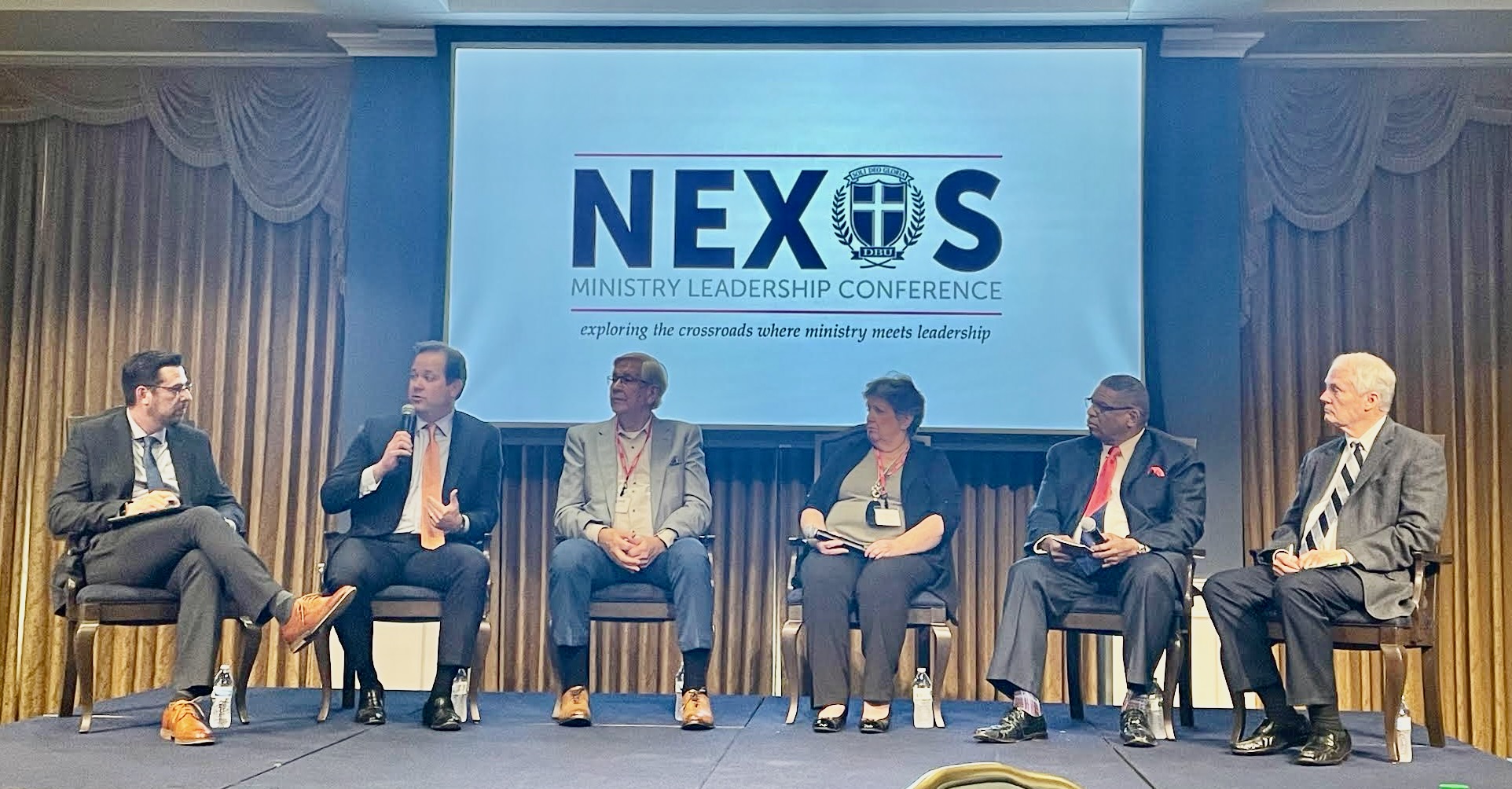
A moderated panel discussion followed the keynote.
Panel members included: Adam Wright, DBU president; Randall Everett, past executive director of the Baptist General Convention of Texas and 21Wilberforce founding president; Raquel Contreras, director of Editorial Mundo Hispano (Baptist Spanish Publishing House) and past president of Baptist Union of Churches in Chile; Oscar Epps, founding pastor of Community Missionary Baptist Church in DeSoto and BGCT past president; and Gary Cook, DBU chancellor.
“If we don’t trust God in all the little things and big things, then we are just a company, [versus a ministry],” Contreras said.
DBU faculty and staff and other denominational leaders led breakout session during the conference. These sessions included crisis leadership, leading diverse generations, leadership and mentoring, leading change, and leading in transitional times.
DBU will host a Christian Leadership Summit, April 18-19, geared toward corporate leadership as well as ministry.
The Texas Panhandle is burning, and TBM: Texans on Mission is rushing volunteers and water to the scene.

“This is devastating. Our volunteers live all over Texas, and those in the Panhandle quickly responded,” said David Wells, Texans on Mission Disaster Relief Director. “They were in Fritch Tuesday night as the city evacuated and about 100 homes were damaged or destroyed.”
Texans on Mission volunteers beyond the Panhandle are now heading to the scene. A mobile Command Center and staff are en route, as well as two shower/laundry units and assessors.
“This is the first wave,” Wells said. “The Command Center provides a communications hub for our volunteers so we can put them in the best position to serve. The assessors are in the field gathering specific information for our volunteer teams, and the shower/laundry units will serve Texas Task Force 1 and others over a multi-day deployment.”
“It is now Day Three in what is called the Smokehouse Creek Fire, the second largest fire in Texas History,” Les Griffin, Caprook Plains Baptist Association director of missions, wrote in an email to his association.
“As of Thursday morning, [reports] are saying it is still only 3 percent contained. … Towns such as Stinnett, Canadian, Fritch, Borger and yes to western Oklahoma have been ravaged,” Griffin added.
By Thursday afternoon, Associated Press reported the Smokehouse Creek Fire had grown to the largest in Texas history, having merged with another fire and covering nearly 1,700 square miles.

Additional Texans on Mission units are on standby and expected to be deployed soon – fire/flood recovery, feeding, chaplain, heavy equipment, chainsaw, asset protection, electronic support, box and others.
Thursday morning, pallets of bottled water left Texans on Mission’s Dallas headquarters headed to the Panhandle.
Mickey Lenamon, executive director/CEO, asked Texans to pray for the people living and suffering through this disaster. And he asked people to also pray for TBM volunteers.
“This is a dangerous situation,” Lenamon said. “The days ahead will require long hours of service in a sensitive situation. People have lost everything they own. They’re looking for help. But they’re also looking for hope for the days ahead.”
“Please pray that Texans on Mission volunteers can provide the practical help people need and can point people to Christ, who brings hope and healing. Whether you are on a team serving or are praying from your home, each of us has a role when Texans on Mission responds after a disaster” said Lenamon.
To support Texans on Mission’s response financially, visit tbmtx.org/panhandle.
With additional reporting by Baptist Standard News Writer Calli Keener.