SBC Cooperation Group releases recommendations
NASHVILLE (BP)—Four recommendations released May 1 are designed to “prioritize and emphasize the authority of messengers in defining the boundaries of our cooperation while clarifying and refining our structure,” the Southern Baptist Convention Cooperation Group stated.
The group was tasked at last summer’s annual meeting to study the issue of what makes a church “to be in friendly cooperation of faith and practice” with the SBC.
 Published 41 days ahead of the 2024 SBC annual meeting June 11-12 in Indianapolis, the recommendations are to be considered a draft, said Chairman Jared Wellman, pastor of Tate Springs Baptist Church in Arlington. They are “subject to necessary edits” he added.
The first three recommendations are directed at the SBC Executive Committee to propose changes to SBC governing documents for consideration at the 2025 annual meeting.
They concern steps for making changes to the Baptist Faith & Message 2000, who should have authority for seating messengers at an annual meeting, and strengthening the tie between entity trustees and the Baptist Faith & Message.
The fourth recommendation is for the Executive Committee to “evaluate” the usefulness, not to mention accuracy, of a public list of Southern Baptist churches and report their findings at the 2025 annual meeting.
Recommendation 1
The first recommendation addresses how edits or amendments may be made to the Baptist Faith and Message. Last summer in New Orleans, an amendment to the Baptist Faith & Message basically rolled through to a vote with little discussion, prompting concerns about how that came to be.
That would not be able to happen under the first recommendation, which asks that such amendments require the same ratification as amendments to the SBC Constitution—a two-thirds vote in two consecutive years.
The Baptist Faith & Message is “significant” in drawing a picture of what it means to be in friendly cooperation, the group said. “The process of amending ‘The Baptist Faith & Message’ should be robust.”
Recommendation 2
The second recommendation is similar to a process already in place, but with a distinct difference. As it is, the Credentials Committee recommends to the Executive Committee churches it considers no longer to be in friendly cooperation. If the Executive Committee agrees, those churches no longer are part of the SBC, but they may appeal the decision at the annual meeting.
“The sole authority for seating messengers” comes from the messenger body, Wellman said in a Spaces discussion on X May 1, co-hosted by SBC President Bart Barber and South Carolina pastor David Sons.
As such, the Credentials Committee, in collaboration with the Executive Committee “as needed,” will present cases that will go before the messengers for a vote.
“We trust the messengers. We champion the messengers,” Wellman said in the discussion. “And we feel like messengers are the ones who ought to have this sole right to make this decision.”
The SBC Cooperation Group also recommended churches seating messengers for the first time be recognized and celebrated at the annual meeting.
“… [T]he health of our convention’s culture would be improved” by that step, the group said in its report.
Recommendation 3
The third recommendation calls for a requirement by the Committee on Nominations to nominate “only those candidates who affirm the convention’s adopted statement of faith” to seats as entity trustees or as standing committee members.
Wellman pointed to the Baptist State Convention of North Carolina as an example when it came to trustee fidelity.
“We were impressed by that model in such a way where we felt like we could mimic it,” he said.
In functionality, he and Barber noted, the current Committee on Nominations followed this model. “In fact, I think it’s fair to say that in recent memory, the Committee on Nominations has already been doing this.”
Wellman agreed, comparing it to Recommendation 1 and the ease with which the Baptist Faith & Message was amended in New Orleans. As it is, a trustee can “theoretically” not affirm the Baptist Faith & Message. A step to strengthen that step can only strengthen the trust between churches and Southern Baptist entities.
Recommendation 4
The fourth recommendation urges steps “to clarify our cooperative unity” by evaluating “the usefulness and accuracy” of a public list of Southern Baptist churches.
In the Spaces discussion, previous cases were brought up where churches were recommended to no longer be in friendly cooperation and, when contacted, were surprised they had any connection to the SBC. The result was confusion that often played out publicly.
Southern Baptists could gain “a clearer picture” of which churches are part of the SBC, whether that is through seating messengers, completing an Annual Church Profile and/or giving through the Cooperative Program.
No more ‘disfellowship’
The report included an addendum as a point of clarification. The language of “disfellowshipping” a church is inaccurate, the group said, because from a biblical standpoint, it suggests that those churches are no longer Christian.
Article XIV of the Baptist Faith and Message encourages cooperation with like-minded churches, even if they aren’t Southern Baptist, the group pointed out.
With regard to Southern Baptist matters, the suggested terminology is “not in friendly cooperation.”
Early in the Cooperation Group’s meetings, the phrase “closely identifies with” received a lot of scrutiny.
Wellman admitted he was “lukewarm” to it and the “ambiguity” it brought. But by December, he had “come to love this phrase,” calling it “not perfect” but “sufficient.”
Women with the title ‘pastor’
There is no mention of the Law Amendment in the recommendations, although Wellman and Barber said it was brought up to them often by others.
That constitutional amendment, up for a second and final vote by messengers this June, pertains to churches giving women the title of pastor.
As it wasn’t mentioned in the motion that messengers approved, Barber said, addressing it directly was deemed to be outside the scope of the group’s assignment.
“That amendment lies directly in the hands of the messengers,” he said.
The report included a statement on Article III of the SBC Constitution, which outlines the composition of the SBC.
The constitution’s language of “closely identifies with” regarding the Baptist Faith and Message “is sufficient,” the group said.
“Overall, our committee is in unanimity in trusting and championing the convention’s messengers,” Wellman wrote in a chairman’s note preceding the report that also called for Southern Baptists to pray and fast with the recommendations’ release.
In addition to Wellman, members of the Cooperation Group are Victor Chayasirisobhon, Jerome Coleman, Tara Dew, Donna Gaines, Matt Henslee, Travis Kerns, Richard Land, Jonathan Leeman, Jason Paredes, Greg Perkins, Jim Richards, Juan Sanchez, Andrew Walker, Trevin Wax and Tony Wolfe.
SBC officers serving in ex officio roles are Bart Barber, president; Kason Branch, second vice president; Don Currence, registration secretary; and Nathan Finn, recording secretary.
 The report cites a nongovernmental organization that documented 183 individuals who were “wrongly imprisoned in connection with their religious beliefs, activities or activism.”



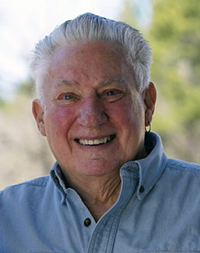







 John Marshall Edwards, longtime Texas Baptist pastor, died March 12 on his 85th birthday. He was born in Salisbury, N.C., on March 12, 1939. He responded to God’s call to enter full-time ministry while attending a revival with friends during his senior year at Newton County High School in Covington, Ga., where he graduated in 1957. At Baylor University, he was the president of the Freshman Baptist Student Union Council, president of the Ministerial Alliance, missions chair of the Baptist Student Union Executive Council and member of Student Congress. While a student at Baylor, he also served as pastor of Mountain Baptist Church in Gatesville. He met Doris Dillard in 1958. After their first date during a Latham Springs Baptist Encampment retreat, he told his cabinmates he had just dated the girl he planned to marry. They married Aug. 18, 1960. He graduated from Baylor University in 1961, earning his undergraduate degree with a major in religion and minors in English and history. He went on to earn a Bachelor of Divinity degree from Southwestern Baptist Theological Seminary in 1966. While he was in seminary, he was pastor of First Baptist Church in Troy and Meadow Oaks Baptist Church in Temple. After graduating from seminary, he was pastor of Windsor Park Baptist Church in Austin; Columbus Avenue Baptist Church in Waco; First Baptist Church in Columbia, S.C.; First Baptist Church in Conroe; St. Andrews Baptist Church in Columbia, S.C.; and First Baptist Church in Blowing Rock, N.C. During his time in Austin, he founded the Fellowship of Christian Athletes group at Reagan High School and served as chaplain of the school’s football and baseball teams. While serving in Waco, he founded and led the popular “Wholeness of Life” series, a lunchtime Bible study attended by about 400 members of the business and professional community. He continued leading the “Wholeness of Life” series with a weekly attendance of about 1,000 while in Columbia, S.C. He also served interim pastorates at First Baptist Church in San Marcos and First Baptist Church in Kingsland. In 2005, he was named pastor emeritus of First Baptist Church in Blowing Rock. He served as the speaker for the annual mission meetings in Taiwan, Hong Kong, Zimbabwe, Honduras, Guatemala, Indonesia and Kenya. He served on the board of trustees of Baylor University and was chair of the board of trustees at the University of Mary Hardin-Baylor. He was awarded an Honorary Doctor of Humanities degree by the Baptist College at Charleston, S.C., in 1982. He is survived by his wife of 63 years, Doris Dillard Edwards; son Scott and his wife, Mary K; daughter Cindy; five grandchildren and four great-grandchildren.