Bill that defunds Planned Parenthood creates vouchers
After the U.S. House of Representatives approved President Donald Trump’s “Big Beautiful Bill” by a 215-214 vote in the early morning hours May 22, Baptist groups praised and panned aspects of the wide-ranging budget bill for altogether different reasons.
In addition to extending Trump’s 2017 Tax Cuts and Jobs Act and imposing Medicaid restrictions, the budget reconciliation bill—which now goes to the Senate—defunds Planned Parenthood and creates a national private school voucher program.
The Southern Baptist Convention’s Ethics and Religious Liberty Commission praised a provision in the budget reconciliation bill that cuts federal funds, including Medicaid payments, for Planned Parenthood.
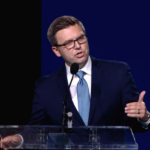
“Preborn lives and families are at stake. Cutting off the hundreds of millions of dollars that flow to predatory organizations like Planned Parenthood will be a gut punch to the abortion industry,” ERLC President Brent Leatherwood told Baptist Press.
“Tens of thousands of Southern Baptists, believers and pro-life Americans joined with us to call for the defunding of Planned Parenthood and the abortion industry,” Leatherwood said.
“The U.S. House, under the leadership of Speaker Mike Johnson, responded. I am grateful for that. We expect the Senate to do the same.”
Leatherwood also praised the bill for including other ERLC legislative priorities.
“An expanded child tax credit, a refundable adoption tax credit, the removal of taxpayer funding for radical gender transition interventions, and improvements to charitable giving all made it into this bill. These items were all part of our legislative priorities that we provided to Congress,” he said.
Bill would establish national school voucher program
In contrast, the Baptist Joint Committee for Religious Liberty strongly opposes a provision of the budget reconciliation bill changing the federal tax code to offer vouchers students can use to attend private schools—including religious schools.
The plan in the budget bill essentially offers dollar-for-dollar tax credit to donors who contribute to Scholarship Granting Organizations, which would distribute scholarship funds to use on a student’s private school tuition, books and other costs.
“If passed, this national school voucher program would divert funds toward private, mostly religious, schools that serve a select few, forcing taxpayers to fund religious education with little accountability,” BJC Executive Director Amanda Tyler said.

“What’s at stake are our public schools, which serve 90 percent of America’s students, our religious freedom, and the integrity of a government that serves the common good—not just the wealthy few.”
The bill will impose vouchers nationwide—even in the 17 states where voters explicitly rejected voucher proposals, Tyler added.
Sabrina Dent, director of the BJC Center for Faith, Justice and Reconciliation also criticized aspects of the budget bill that cut funds for Medicaid, the Supplemental Nutrition Assistance Program and the Women, Infants and Children nutrition program.
“It is an egregious and cowardly act for Congress to even contemplate a budget that will cut social service programs,” Dent said. “Thus, it is our moral obligation to protect children and families along with their dignity by saying ‘no’ to these budget cuts.”