



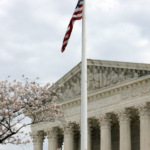
On June 23, in Landor v. Louisiana Department of Corrections and Public Safety, the U.S. Supreme Court ruled, by a 6-3 vote, Damon Landor’s lawsuit against state prison officials who shaved his head that the officials cannot be held accountable in their personal capacities under the Religious Land Use and Institutionalized Persons Act of 2000.
Landor served five months in prison for a drug possession conviction and is a practicing Rastafarian, an Abrahamic religion and social movement that emerged in Jamaica in the 1930s, blending Judeo-Christian beliefs, Pan-Africanism, and mysticism.
The growing of natural, uncombed hair into dreadlocks is a key symbol of the faith, a reflection of adherence to the Nazirite vows found in Numbers 6:5. As part of his religious expression, Landor did not cut his hair for 20 years.
His first prison accommodated his hair as part of federal appeals courts precedent. However, three weeks before the end of his sentence, Landor was transferred to a new prison, where officials forcibly shaved his head.
The Ethics and Religious Liberty Commission argued the maltreatment is in violation of the Religious Land Use and Institutionalized Persons Act, a federal law protecting individuals, houses of worship, and other religious institutions from discriminatory zoning laws and safeguarding the religious freedom rights of individuals confined to government institutions like prisons and mental health facilities.
The decision in Landor v. Louisiana was authored by Justice Neil Gorsuch, stating: “One condition [of enacting RLUIPA] requires state prison systems to agree to answer federal suits by private plaintiffs alleging certain substantial burdens on their religious exercises.”
The majority argument implied RLUIPA enacts Congress’s Spending Clause Power found in Article I Section 8 of the U.S. Constitution. To receive federal funding, state prison systems must agree to participate in lawsuits where plaintiffs allege “certain substantial burdens on their religious exercises.”
Therefore, SCOTUS ruled Congress did not have authority to hold state employees individually liable under this statute unless they consented to be sued. The argument stated RLUIPA’s sister clause, the Religious Freedom Restoration Act of 1993, allows for individual-capacity damages lawsuits.
CLC responds
John Litzler, director for public policy at Texas Baptists’ Christian Life Commission, expressed the broader relevance of the case to religious freedom in America, and lamented the unjust treatment of Landor:
Sign up for our weekly edition and get all our headlines in your inbox on Thursdays
“Religious freedom is such an important right that American courts, including the Supreme Court, have consistently held that freedom is protected even as other liberties are lost due to incarceration.
“[The] ruling in Landor v. Louisiana Department of Corrections weakens those religious liberties protections. The technical right to religious freedom without a meaningful method to address infringement of the right amounts to mere words on paper.
“The unjust treatment of Mr. Landor that gave rise to this lawsuit is nothing short of a travesty.
“The Texas Baptists Christian Life Commission urges lawmakers, courts, and officials at all levels of government to improve and strengthen religious liberty protections for Americans of all faiths or no faith. We will remain diligent in prayer and advocacy as we continue to support religious freedom for all.”
In a Facebook post, Litzler, on behalf of the CLC, stated how the Landor case reflects the importance of protecting religious freedom today: “While I still believe religious liberty protections in our country are very strong, the Landor ruling serves as a stark reminder on the eve of America’s 250th birthday, that religious freedom is a fragile value in need of protecting.”
He called Texas Baptists to continue educating themselves on the history of Baptists’ advocating for religious freedom, urging modern Baptists to continue the fight.
“Texas Baptists need to continue to educate ourselves on the history of Baptists’ fight to secure religious freedom protections for all Americans at the founding of our nation, and we need to be willing to advocate and continue the good fight to protect these God-given rights.
“Religious liberty is a crucial and cherished Baptist distinctive, and it’s imperative we do what we can to protect those rights,” he said.









We seek to connect God’s story and God’s people around the world. To learn more about God’s story, click here.
Send comments and feedback to Eric Black, our editor. For comments to be published, please specify “letter to the editor.” Maximum length for publication is 300 words.