Does God or money shape a church’s ministry?

Ask a Christian whether God or finances determine how a church operates.

Most likely, the response would be: “Of course, God does.”

But John L. and Sylvia Ronsvalle believe the answer may not be as clear-cut as most Christians assume. They cite an overall decline in giving to churches and the fact most denominations and their affiliated congregations have failed to develop a specific “positive agenda for affluence” or a means to help U.S. citizens deal with their money.

In spite of economic setbacks, the United States remains an affluent country, they maintain, but its citizens and institutions sometimes aren’t certain how to use wealth responsibly.

The Ronsvalles are authors of The State of Church Giving through 2010: Who’s in Charge Here? A Case for a Positive Agenda for Affluence for empty tomb inc., a Champaign, Ill.-based research and service organization. Published in 2012, the study uses membership and giving data from 40 mainline and evangelical denominations from 1968 through 2010. American Baptist Churches-USA and the Southern Baptist Convention were included.

The study analyzed church member giving by total contributions, gifts to support church finances—building upkeep, staff salaries and benefits, curriculum and so forth—and benevolence, which includes money given for mission support.

When giving is compared as percentage of income, both church finances and benevolence show a pattern of decline, with the greatest percentage drop in benevolence. Member giving declined from 0.66 percent of income in 1968 to 0.35 percent by 2010. Overall giving to churches—the total of gifts to church budgets and benevolence—was calculated at about 2.40 percent for 2010.

The study calculated the potential of the church not only to meet its own needs, but also to further kingdom work. The Ronsvalles noted if congregational members in 2010 had given at the same percentage of income as members did in 1968, $2.8 billion more would have been available for the church’s mission purpose.

If individual members had given a tithe or 10 percent of their incomes, the churches the study included would have seen an additional $165 billion to pay for the congregations’ expenses and meet global physical and spiritual needs.

Individuals aren’t the only ones who should be challenged to give at least at former percentage levels. The Ronsvalles point out institutions must develop specific plans when trying to encourage participants to contribute to a particular program.

The study looked at Southern Baptist missions giving through the Lottie Moon Christmas Offering for International Missions. The convention established the Board of Foreign Missions on May 10, 1845, two days after the denomination was founded, and it has emphasized foreign mission giving since that time.

In addition, the SBC has introduced several programs to encourage evangelism, including the 75 Million Campaign in the 1920s and Bold Mission Thrust in the early 1980s. The problem, the Ronsvalles said, is financial campaigns dedicated specifically to reach program goals never were planned, as well.

They point out the SBC continues to emphasize evangelism, particularly among unreached people groups, announcing the “Embrace” program for churches to adopt a group. Then last year, the convention adopted the secondary name “Great Commission Baptists” for churches to use voluntarily.

The study noted that in the 1970s, churches sent, on average, 8.94 percent of total gifts to the Cooperative Program. From 2005 to 2010, the average had dropped to 4.91 percent.

While the SBC has stressed global evangelism and promoted several emphases since 1919, by 2012 “it had not yet effectively mobilized it members to accomplish that goal, as it strove to balance the needs of its general structure with the challenge of completing the task of taking the gospel to the whole world,” the Ronsvalles said.

The United Methodist Church also has experienced difficulty meeting some mission goals. When the bishops set up an initiative on children and poverty, they did not set a timetable or plan to develop strategies for meeting goals. Although they updated the initiative in 2001—again with no specific plan—they discontinued it at the end of 2004.

But with its initiative to end malaria, set up in 2010, the church set both financial and timeframe goals. That initiative still continues.

The study suggests churches have moved toward a consumer mentality—that they must provide comfort or entertainment to attract new members and keep those they have.

The Ronsvalles conclude the decline in giving and membership that began in the 1960s is an indication “church leaders did not provide a positive agenda” as members’ disposable income increased.

“Whatever church leaders taught about money, church members were not convinced to maintain, let alone to increase, the portion of income directed to the church,” the study concludes.


Does God really require 10 percent?

Are Christians required to give 10 percent of their income to the church? If so, is it based on gross or net income? Would God accept less in hard times?

The issue of tithing—traditionally understood as 10 percent—has perplexed churchgoers for years. Interpretation and denominational practice usually set the tone for givers, often with tension between giving as law or “old covenant” or as grace under the “new covenant”—both biblically based.


Begin with 10 percent

“The principal topic of discussion at the morning session of the Southern Baptist Convention was the report of the committee on tithing. … The committee recommended the adoption of the tithing system, and that several state conventions, district associations, the pastors, churches and missionary societies educate the people up to paying systematically to God not less than one-tenth of their income,” The New York Times reported May 12, 1895.

From its beginning in 1845, the convention has emphasized giving. Still today, the SBC is among denominations that encourage believers to give at least 10 percent of their income to their local church. Leaders of the two major faith-based financial service ministries —Crown Financial Ministries and Dave Ramsey’s Financial Peace University—do as well.

Those who promote the 10-percent concept usually cite Malachi 3:8-11, especially verse 10 which emphasizes bringing the “full tenth into the storehouse” (Holman Christian Standard Bible). The passage promises God will “open the floodgates of heaven and pour out a blessing for you without measure.”

They point to Psalm 24:1 that everything belongs to God already, and to Genesis 14, the story of Abraham paying a tenth as tribute to Melchizedek, the king of Salem and a priest to God. Tithing proponents also cite Proverbs 3:9, which calls believers to honor God with the firstfruits of the harvest. Again, the passage promises a blessing.

Crown calls the tithe “seed stock,” based on 2 Corinthians 9:10: “Now he who supplies seed to the sower and bread for food will also supply and increase your store of seed and will enlarge the harvest of your righteousness” (New International Version).

On his website, Ramsey insists God established the tithing principle for believers’ benefit—teaching them “how to keep God first” and “how to be unselfish.” The financial consultant also stresses: “God is trying to teach us how to prosper over time.”

Tithing advocates encourage believers to continue giving at 10 percent, even when in debt. Ramsey insists those who cannot live on 90 percent of their income will not be able to do so on 100 percent. He also claims those who examine their budgets still can give “at least” 10 percent, regardless of their circumstances.

Crown stresses believers have options, even while in debt.
They could tithe on the amount remaining after paying creditors each month. Or they could commit to giving at least some amount to God, starting with less than 10 percent and increasing the percentage as debts are paid or as income increases.

If an individual’s debts require all his or her income, the person can “tithe” by volunteering at church or by serving the needy.

To those who suggest the tithe is an Old Testament concept supplanted by the new covenant, Randy Alcorn, author of The Treasure Principle, noted on his blog, “However, the fact is that every New Testament example of giving goes beyond the tithe.

While he believes in the “superiority” of the new covenant over the old, he said he believes “there’s ongoing value to certain aspects of the old covenant.” Tithing is one of those.


Grace giving

Others advocate that under the New Testament, grace rather than law should guide giving.

David Croteau, author of You Mean I Don’t Have to Tithe? and Perspectives on Tithing believes that, while giving remains important, the concept is different in the New Testament.

“Tithing was a wonderful institution in the Mosaic law,” Croteau said. “However, the Mosaic law, including the tithe, has been fulfilled by Christ. The tithe was connected to festivals, government and religion in the Old Testament and was always connected to the land of Israel.”

He believes the Bible—particularly the New Testament—teaches four principles for giving. It should be income-based or proportionate, based not only on Deuteronomy 16:16-17, but also 1 Corinthians 16:2 and 2 Corinthians 8:3, 12. Giving should be needs-based (1 Corinthians 9:1-14, 2 Corinthians 8:13-14, 9:12), generous (2 Corinthians 8:2-3, Philippians 4:17-18) and heart-based (Exodus 25:1, 35:5, 21-22, 36:6, 2 Corinthians 9:7).

Daniel Akin, president of Southeastern Baptist Theological Seminary, points to Matthew 23:23 and Luke 11:42 to show that the “Lord was concerned not only with what we give but how we give,” Akin wrote.

He uses 2 Corinthians 8-9 when teaching his students about what he has termed “grace giving.” Giving is an expression of gratitude for what God has done through Jesus, with the emphasis on generosity.

Akin said the Corinthians passage points out circumstances and difficulties should not interrupt generosity, financial giving is a reflection of believers’ giving themselves to God, and Jesus-followers “should excel in the grace of giving.”

He added Scripture also points out that willing generosity is “more important than the amount given,” that believers should give through churches and other ministries that will handle gifts “judiciously” and that the generosity of some believers will encourage others.

American Baptist Churches-USA also encourages giving out of gratitude. “The tithe is, for Christians, not a legalistic obligation, but an opportunity for grateful response to God’s grace,” the denomination states on its website.

The American Baptist group claims tithing is biblical, but it should be considered an expression of stewardship and discipleship rather than as a legalistic practice. “American Baptists should see tithing as an expression of God’s grace, not a legalistic way of earning grace. It is a response—not a requirement.”

Those who advocate a minimum of 10 percent also encourage believers to give out of love. Ramsey notes on his website, “Read the Bible and take from it what you will, and if you tithe, do it out of love for God, not guilt.”


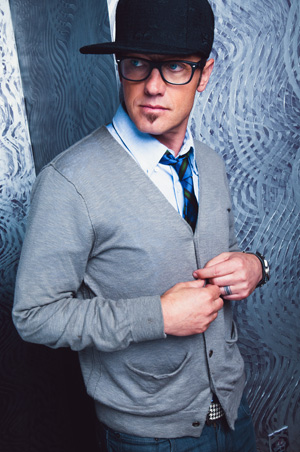
TobyMac keeps eye on the prize, focus on Jesus

For more than 20 years, Toby McKeehan—better known as TobyMac—has combined pop, rock, soul, hip-hop and urban flavors with Christ-centered lyrics.

As his songs have gained national attention by being featured in numerous television programs, movies and sporting events, the gospel-filled lyrics have been instrumental in pointing teenagers and young adults to Christ.

“I think God’s been teaching me a lot of things lately and reminding me of messages that need to be shared,” McKeehan said. “We all need to be reminded that in the middle of a world that is telling you to focus on yourself, God is calling us to help meet the needs of others.

books

“I think that if we don’t have the reflection of God’s word and friendships that remind us of that, it’s easy to get caught up in this world. All of a sudden, you look up, and you’re a self-absorbed person. It’s awkward at times, and you’re working against the very hard ways of this world when you say, ‘I’m going to care about others.’ It takes a lot more effort than to just care about yourself.”

McKeehan’s passion for reaching teenagers and young adults grew out of the impact a youth minister made on his life.

“I grew up in Fairfax, Va., and when I was 12 years old, my mom was dragging my siblings and me to church every Sunday,” McKeehan said. “We didn’t go to Sunday school, just to church. I didn’t really understand a lot of things about church and the Bible, but I was too afraid to ask anyone about them.”

A pivotal turning point came when his youth pastor invited him to church camp. McKeehan was excited about the new experience but never expected the week to change his life.

“Looking back, it’s funny, because I didn’t have a clue what was really involved in a church camp,” he said. “I had invited four friends, and I just thought we would play a lot of sports. That’s what I thought the whole week would be about. It was interesting, because obviously there was a lot of preaching, which we didn’t expect.

“But the beautiful part of it all was every night when the youth pastor would sit on the floor with us in our little cabin, he would open the Bible and share about Jesus. I remember that youth pastor telling us about the mistakes he had made in life and about the hope that he had found in Christ. I think the Bible suddenly made more sense to me because the youth pastor seemed like a regular person who was willing to get down on our level and reach out to us. As a 12-year-old, God used that to begin to work in my heart.”

Before the end of the week, McKeehan knew he needed to talk with the youth pastor about accepting Christ as his Savior.

“I will never forget that Friday night, getting into my sleeping bag, and my heart was just pounding,” McKeehan said. “The whole time, I was trying to lay there and go to sleep, but I knew that I needed to do something about what I was feeling inside. I finally unzipped my sleeping bag, walked into the other room and woke up that youth pastor in the middle of the night. I shared with him that I had never accepted Christ before, but I was ready to do so. He led me to Christ right then.”

Afterward, he began praying his father also would accept Christ. A few months later, his father agreed to attend a worship service when he heard there would be a guest speaker and relaxed atmosphere. As God was working, McKeehan’s father made a profession of faith during the invitation. From then on, his entire family regularly attended worship services together.

In 1987, McKeehan formed the contemporary Christian music group dc Talk with Michael Tait and Kevin Max. After performing together more than a decade, the band members decided to pursue other ventures.

Although he has garnered many accolades and achievements, McKeehan remains focused on shining the spotlight on Christ.

In 2011, McKeehan released his first Christmas album, Christmas in Diverse City, which featured a song dedicated to raising awareness about adoption. Mandy and Toby McKeehan adopted twins in 2002. Because of his commitment to faith and family, he makes it a priority to provide entertainment that presents biblical principles while wearing many hats as a singer, songwriter, author, record label president and parent of five children.

Through his albums and concerts, McKeehan desires to share songs that are not only relevant to believers but also spark conversations and pose questions with non-Christians. His most recent album, Eye On It, challenges listeners to pursue a daily walk with Christ and live for what matters most. This album debuted at No. 1 on the Billboard 200 chart.

“I want my music to depict things that I’m going through and issues people can relate to. By sharing songs about the attributes of Christ and the fruits of the Spirit, it presents great opportunities for non-Christians to start asking questions and opens doors to share the gospel.”


Maturing believers exercise faith and trust.

NASHVILLE, Tenn.—Christians who are progressing in spiritual maturity are more likely to exercise their faith by trusting God even in difficult circumstances, according to a survey by LifeWay Research.

“Exercising faith” is one of eight attributes of discipleship that consistently shows up in the lives of maturing Christians. The attributes are part of the transformational discipleship study conducted by LifeWay Research.

Among the eight attributes of discipleship tested, churchgoers have higher scores for exercising faith than any of the other attributes, said Ed Stetzer, president of LifeWay Research. Yet, he pointed out, only 13 percent of worshippers were able to give the best response to all of the questions related to this attribute.

“It is easy to say God has a purpose for everything in life, but it requires faith to enjoy seeing his plan unfold in difficult times,” Stetzer said.

The survey measured responses to a set of statements indicative of a person’s level of faith. More than 90 percent of respondents agree with the statement: “I believe that God has a purpose for all events in my life, regardless of whether I perceive each event as being good or bad.” Just 4 percent disagreed with the statement.

Additionally, 86 percent agree they “express praise and gratitude to God even in difficult circumstances.”

Seventy-eight percent disagree that, in the midst of difficult circumstances, they “sometimes doubt that God loves me and will provide for my life.” Fifteen percent agree they sometimes doubt the love of God and his provision.

The survey shows the longer believers have trusted Christ as Savior, the better their responses are for exercising faith. Being involved in a Bible study group, praying for Christians and non-Christians, and witnessing to nonbelievers also make a positive impact.

Faith also is exhibited in the belief that God can change lives, the survey shows. More than 80 percent disagree with the statement: “I sometimes doubt that God can change the lives of non-Christians I know.” Eleven percent say they agree with the statement.

“Exercising faith is a mindset that says God the Father knows best,” Stetzer said. “Clearly, this should then be seen in other attributes of discipleship, such as serving, obeying, engaging the Bible and building relationships.”

The survey also reveals Christians who are stronger in their faith are less prone to doubt God’s involvement, even in unexplainable circumstances. Just 9 percent agree with the statement: “When things happen in my life I can’t explain, I typically doubt God is involved.” Eighty percent disagree with the statement.

“Exercising Christian faith is more than believing God exists; it is believing in God’s promised presence, provision and compassion for us,” Stetzer said. “It is exhibited in a life that depends on Jesus Christ for salvation and is filled with the expectation of his daily activity.”

The survey of 2,930 American adults who attend a Protestant church once a month or more was conducted Oct. 14-22, 2011. A demographically balanced online panel was used for the interviewing. Respondents could respond in English, Spanish or French. The sample provides 95 percent confidence the sampling error does not exceed plus or minus 1.8 percent. Margins of error are higher in subgroups.


‘Are you my mother?’ Sometimes, there’s no easy answer

WASHINGTON (RNS)—In a classic 1960 children’s book, a baby bird toddles up to one critter after another asking, “Are you my mother?”

For some babies today, there’s no simple answer—biologically or legally.

Advances in artificial reproductive technologies mean a baby could have three “mothers”—the genetic mother, the birth mother and the intended parent, who may be a woman or a man.

Statutes on surrogacy, adoption, divorce and inheritance vary state by state, court by court, decision by decision. For nontraditional couples, the patchwork of laws makes it even more complex. New York allows gay marriage but forbids surrogacy, for example, while Utah permits surrogacy but bans gay marriage.

In the complex cases of 21st-century family formation, challenges abound. Courts are struggling to sort through these complications. Examples:

  • The U.S. Supreme Court will hear challenges to the federal Defense of Marriage Act and California’s Proposition 8 gay-marriage ban in 2013. Rulings in those cases, likely by late June, could decide whether same-sex married couples are entitled to the same federal benefits and protections as opposite-sex married couples and whether a state can ban gay marriage.

If the U.S. Supreme Court redefines legal marriage, that will affect the legal rights of parents as well.

  • The Michigan Supreme Court is considering whether children conceived through in vitro fertilization after a parent’s death can receive Social Security benefits. That case involves a father who banked his sperm before undertaking chemotherapy and then died from cancer before the babies were conceived and born.

The latest technology—egg banking—could make this a legal issue for mothers as well. Freezing eggs allows a woman to stash her eggs while she’s healthy and young and then, years later, have her baby. Maybe. If she dies or divorces in the interim, there’s a potential legal duel over who controls the eggs.

  • The Florida Supreme Court recently heard arguments in the case of a lesbian couple where one woman’s eggs, fertilized with donor sperm and nurtured in vitro, were implanted in the birth mother/partner. The egg donor parent could not adopt their baby because Florida does not recognize same-sex marriages or permit same-sex adoption.

Nine years later, the birth mother took off with their daughter. The original judge in their custody battle granted custody to the birth mother. An appeals court overturned that, granting parental rights to both women. If the donor mom’s rights are upheld by the state Supreme Court, the decision could redefine Florida law.

“We are making families we never dreamed of 20 years ago. Doctors laughed at me then, but if we don’t create a legal and ethical framework, we will have babies born into courtrooms, not into families,” said reproductive law specialist Susan Crockin.

Crockin, who teaches at Georgetown University Law Center, tells her clients, “Everything you can do to secure your family in this new world of baby-making, you should do.”

It took four lawyers in two states to finally make Doug Okun and Eric Ethington the legal parents of their 9-year-old twins.

The Piedmont, Calif., married couple built their family using their sperm, eggs from an anonymous donor, in vitro fertilization, then embryo transfer to a gestational surrogate. “We were determined all along to avoid any legal battles about genetic parenthood,” Okun said.

Lawyer No. 1 arranged for the legal agreements with the egg donor and the surrogate, a married woman who would deliver the twins in Ohio.

Lawyer No. 2 was an estate-planning specialist who spelled out all inheritance rights and guardianship agreements—before there was any pregnancy.

Lawyer No. 3, in Ohio, worked to get the couple’s names on the birth certificate so they could take their children home. The surrogate’s “husband still had to renounce his rights as the legally presumed father. Then we had to have DNA testing done to establish our paternity,” Okun said.

Back in California, lawyer No. 4 arranged for a domestic partner adoption for the couple who were not yet legally wed. After their 2008 wedding—during the brief window when same-sex marriage was legal in California—they redid the adoption orders.

For Elizabeth Ruby Okun Ethington and Sophia Rose Okun Ethington, two fathers are listed on the documents. There’s no “Mother.”

“The girls know how they were made, how they were born. When the mother stuff comes up, I let them answer. They matter-of-factly say, ‘Oh, we have two dads,'” said Okun.

John Yeast, a doctor specializing in high-risk pregnancies and head of medical affairs for Saint Luke’s Hospital in Kansas City, Mo., is just as matter-of-fact about the question of motherhood.

“I care for the actual pregnancy. I see the woman bearing the child, consenting to delivery and dealing with any complications,” he said. “State law requires her name on the birth certificate.”

Russell Moore, dean of Southern Baptist Theological Seminary, knows about the pain of infertility. He and his wife dealt with it for years before adopting two children and then having three more “in the typical way,” he said.

Even so, Moore strongly opposes artificial reproductive technologies and same-sex couples’ reliance on them to create families.

“Treatments that seek to correct the causes of infertility are praiseworthy, but once science and technology re-engineer the meaning of procreation itself, it’s gone too far,” he said. “I’m concerned about the confusion and lack of well-being of a child, who from the beginning, has no father or no mother.”

The complexities of reproductive technologies, questions about who are Mom and Dad, and the multitude of laws and regulations do have a benefit, said Deborah Wald, a San Francisco family law specialist.

“All this litigation is making us think hard: What do we mean when we say ‘parent’?”


Why do the innocent suffer? It’s a modern question as old as the Book of Job

WACO (ABP)—Many criticized prominent evangelicals like James Dobson and Mike Huckabee for claiming December’s Connecticut school massacre was God’s punishment of a morally disobedient nation, but don’t expect such views to change.

Scholars insist the belief in divine retribution for personal and national transgressions not only goes back as far as the Old Testament Book of Job, but also is a concept fused into the American worldview.

“This is a recurring pattern in American history since the Puritans,” said Barry Hankins, professor of history and resident scholar in religion at Baylor University. “They believed God is in covenant with nations and in covenant with America.”

Theologians call it theodicy—beliefs that seek to explain why a just God allows human beings to suffer. In the United States, biblical theodicy becomes intertwined with civil religion.

“It’s hard to tell where one begins and the other one ends,” Hankins said.

Both have been in full display since the Dec. 14 murders of 20 first graders and six adults at Sandy Hook Elementary in Newtown, Conn., he noted. Naturally, people, including the victims’ families, are asking, “Why?”

For former presidential candidate and Arkansas governor Mike Huckabee, a Southern Baptist minister, the answer is that God is punishing the nation because schools do not sanction prayer and religious instruction. Huckabee later added the use of abortion pills to the list of causes.

Focus on the Family founder James Dobson said gay marriage and secularism forced God’s hand to allow the slaughter at the school in Newtown.

Those are just the latest examples. Some Christians have blamed everything from 9/11 to Hurricane Katrina on Americans living what they consider to be unbiblical lives.
“It’s all born of this idea that God judges America on a case-by-case basis,” Hankins said.

That’s an idea straight out of the Old Testament, said Matthew Baldwin, associate professor in the department of religion, history and philosophy at Mars Hill College in North Carolina.

Baldwin teaches theodicy and historical biblical theology and sees both in the recent comments of Huckabee and Dobson. But he said their God-punishes-America view is a narrow one, even by biblical standards.

The early Hebrew prophets interpreted calamity as God’s punishment of Israel for the misbehavior of individuals, Baldwin said. But the prophet Jeremiah offers a view in which the nation is not held accountable for the actions of a few or even many. In the Book of Job, meanwhile, Baldwin said, “The author says, ‘Look, sometimes suffering just happens.'” The belief that God smites the many for the sins of the few is even further dissipated in the Gospels, he added.

But that evolving message is not reflected in the theology of some conservative American Christians, Baldwin said.
“The theodicy these guys are working with … holds God responsible for both natural disasters and these human-made tragedies,” Baldwin said. “It’s rooted in the ancient Israelite conception that God is in control of every single thing that happens.”

Dennis Sansom, professor and chair of philosophy at Samford University, said it also is rooted in human nature. “It’s part of the human condition to ask why and look for explanations” when disasters and suffering occurs, he said.

It’s also natural for those who believe in a good, loving God to ask why evil exists—and what behaviors can be adopted or modified to prevent disasters. It’s why he predicts more of the same in the future—especially in the United States, where theodicy is woven in the social and political fabric.

“I think such comments will be with us, regardless of how secular or non-churched the society becomes,” Sansom said.


From nuns to ‘nones,’ religion shaped the news in 2012

WASHINGTON (RNS)—From the nuns to the “nones,” religion dominated the headlines throughout 2012. Faith was a persistent theme in the presidential race, and moral and ethical questions surrounded budget debates, mass killings and an unexpected focus on religious freedom.

Here are ways religion made news in 2012:

Suffer the children: Gun violence as a new “pro-life” issue


A shooting rampage that killed 12 and injured more than 50 others inside a crowded movie theater in Aurora, Colo., couldn’t do it. Neither could a gunman who murdered six people at a Sikh temple in Oak Creek, Wis. But a hail of bullets inside Sandy Hook Elementary School in Newtown, Conn.—which took the lives of 20 first-graders, and six adults—finally mobilized religious activists on gun control after years of failing to gain traction.

“Those who consider themselves religious or pro-life must be invited to see that the desire to prevent gun-related deaths is part of the religious defense of the dignity of all life,” wrote James Martin, a Jesuit priest and contributing editor at America magazine.

‘None of the above’: America’s fast-growing nonreligious community

A startling one in five Americans (19 percent) now claim no religious affiliation, up from 6 percent in 1990. The so-called “nones” include unbelieving atheists who staged a massive “Reason Rally” in Washington, but two-thirds of the unaffiliated say they believe in God or a universal spirit. Almost nine in 10 say they’re just not looking for a faith to call home.

An April study found that among the under-30 set, the only religious group that was growing was the “unaffiliated,” with an increasing tide of young Americans drifting away from the religion of their childhood. By year’s end, a study from the Pew Forum on Religion & Public Life found that there are about as many religiously unaffiliated people in the world (1.1 billion) as there are Catholics, and they’re the third-largest “religious” group worldwide, behind Christians and Muslims.

Nuns on the bus and in the spotlight

The “nones,” however, shouldn’t be confused with the other big newsmaker of 2012—the nuns, who found themselves facing a Vatican crackdown and accusations that the umbrella group of most U.S. sisters was embracing “radical feminist themes” and not working strongly enough against abortion and same-sex marriage. The reform of the Leadership Conference of Women Religious was seen as a hostile takeover by many rank-and-file Catholics, who rallied to the sisters’ defense.

A separate group of sisters, meanwhile, dubbed themselves the “Nuns on the Bus,” and embarked on a 2,700-mile tour to advocate for the poor. Sister Simone Campbell, whose group Network organized the tour, landed a prime-time speaking slot at the Democratic National Convention, where she slammed the budget drafted by GOP vice presidential nominee Paul Ryan, a fellow Catholic.

The “Mormon moment”

Even though he ultimately lost his White House bid, Republican Mitt Romney nonetheless made history as the first Mormon to win a major party’s presidential nomination. He also exceeded in overcoming significant evangelical wariness of his Mormon faith—he won more evangelical support (79 percent) than Sen. John McCain did in 2008 (73 percent). What’s more, evangelicals dropped some of their long-harbored suspicion of Mormons, according to surveys, and some even viewed the faith more positively as a result of Romney’s campaign.

Even ailing evangelist Billy Graham made a late and somewhat surprising entry into campaign politics, vowing to “do all I can to help” Romney and later scrubbing his ministry’s website of all references to Mormonism as a “cult.” Despite frosty ties with the U.S. Catholic hierarchy, President Obama carried the critical Catholic swing vote, largely on the support of Hispanic Catholics. The largest share of his “religious” coalition came from an unexpected source: religiously unaffiliated voters, at 23 percent.

Goin’ to the chapel: Unprecedented strides for gay rights

Gay rights made unprecedented strides in 2012 when voters in Washington, Maryland and Maine approved gay marriage, while Minnesota voters rejected a constitutional amendment to ban it. But a series of events in May showed Americans’ mixed feelings on the issue: North Carolina approved a constitutional ban while President Obama finished his evolution and endorsed same-sex marriage. The United Methodist Church upheld its teaching that homosexuality activity is “incompatible with Christian teaching,” while a Gallup Poll found that a majority (54 percent) of Americans now see homosexual relations as “morally acceptable.”

All eyes are now on the U.S. Supreme Court, where justices in 2013 will consider challenges to a 2008 California referendum that stopped gay marriage, and the 1996 Defense of Marriage Act that prohibits the federal government from recognizing legal same-sex marriages performed in nine states and District of Columbia.

A bitter pill: Rallying against contraception in the name of “religious freedom”

One of the more unexpected entrants into the 2012 campaign was a fierce debate over birth control, centered around Catholic and evangelical resistance to the Obama administration’s mandate for free employee coverage of contraception. Even as Obama vowed to carve out exceptions for religiously affiliated institutions like hospitals and universities, Catholic bishops and evangelical colleges launched a full-throated assault on the mandate as a threat to “religious freedom.” So far, more than 30 lawsuits have been filed to stop the mandate.

But LifeWay Research showed that almost two-thirds of Americans believe businesses should be required to provide the coverage for free, even if contraception conflicts with the owner’s religious ethics. Earlier polling found that 58 percent of Catholics support the mandate; another found that Catholics rejected the idea that religious liberty is under siege.

10 years later: The long shadow of sexual abuse

As U.S. Catholics marked the 10th anniversary of the clergy sex abuse scandal that erupted in Boston, the U.S. Conference of Catholic Bishops was confronted with two landmark criminal convictions: Monsignor William Lynn, found guilty of child endangerment for shuffling abusive priests around the Archdiocese of Philadelphia, and Kansas City, Mo., Bishop Robert Finn, convicted of failing to tell police about a priest suspected of sexually exploiting children.

Even as the Penn State abuse scandal showed that abuse is not just a “church problem,” popular Franciscan priest Benedict Groeschel was forced to retract statements that seemed to defend priests who sexually abuse children and blamed some victims for “seducing” them. The chairman of the bishops’ National Review Board warned the prelates: “If there is anything that needs to be disclosed in a diocese, it needs to be disclosed now. No one can no longer claim they didn’t know.”

New threads in America’s diverse religious tapestry

The 2012 campaign marked the first time that neither major party ticket included a white Protestant, but there were other signs of America’s growing racial and ethnic diversity. New Orleans pastor Fred Luter was elected the first black president of the Southern Baptist Convention, which was formed in 1845 in the defense of slavery. Rep. Mazie Hirono, D-Hawaii, will become the first Buddhist member of the Senate; her House seat was won by Democrat Tulsi Gabbard, the first Hindu member of Congress.

The number of mosques in America has jumped 74 percent since 2000, up to 2,106. “Islam,” said David Roozen of the Hartford Institute for Religion Research, “is one of the few growth spots in America’s religious mosaic.”

Among the big names topping the religion headlines in 2012:

Evangelist Franklin Graham apologized for questioning President Obama’s Christian bona fides in February, when he couldn’t say whether Obama was a Christian, in part because, “under Islamic law, the Muslim world sees Barack Obama as a Muslim.”

ABC canceled its short-lived saucy church drama GCB after viewers lost faith in the bedazzled desperate housewives in choir robes. Then-candidate Newt Gingrich called the show “anti-Christian.”

Crystal Cathedral founder Robert H. Schuller left his California megachurch and lost a bid to recover assets as part of the church’s bankruptcy. The iconic glass building is now scheduled to become a Roman Catholic cathedral.

The Dalai Lama won the prestigious $1.7 million Templeton Prize for his efforts to bridge the divide between science and religion.

Southern Baptist public policy guru Richard Land lost his radio show, and later announced his retirement, after he was accused of plagiarizing racially and politically charged remarks in the Trayvon Martin case.

Former Alabama Supreme Court Chief Justice Roy Moore won his old job back, nearly a decade after losing it when he refused to remove a 5,200-pound granite Ten Commandments monument from his courthouse.

Yale theologian Sister Margaret Farley was publicly rebuked by the Vatican for her book Just Love: A Framework for Christian Sexual Ethics, which was deemed “not consistent with authentic Catholic theology.”

Metropolitan Jonah, the leader of the Orthodox Church in America, was sacked for failing to report or remove a priest accused of rape.

Jesus may or may not have had a wife, at least according to a 4th-century papyrus fragment that includes the cryptic line, “Jesus said to them,’My wife…” The Vatican dismissed it as a “clumsy fake.”

Paolo Gabriele, the trusted butler to Pope Benedict XVI, was sentenced to 18 months in a Vatican jail for leaking private papal documents in an attempt to rid the Vatican of corruption out of his “visceral love” for the church and the pope.

The U.S. got its first Native American saint, Kateri Tekawitha, a 17th-century Mohawk woman who practiced extreme acts of religious devotion despite torment for her baptism and conversion.

Justin Welby will be the next archbishop of Canterbury, and the first task of the former oil executive will be finding a way for the Church of England to reconsider its vote this year not to allow women to become bishops.

Passages

2012 saw the passing of several leading religious figures, including: William Hamilton, the theologian behind Time magazine’s famed “Is God Dead?” cover story in 1966, at age 87; Coptic Orthodox Pope Shenouda III, at age 88; Christian artist and “painter of light” Thomas Kinkade, at age 54; Watergate felon and evangelical icon Charles Colson, at age 80; Leontine T.C. Kelly, the first black woman to be elected a United Methodist bishop, at age 92; March for Life founder and anti-abortion activist Nellie Gray at age 88; Unification Church founder Sun Myung Moon at age 92; and anti-hunger activist and 1972 Democratic presidential nominee Sen. George McGovern, at age 90.


Top 15 Christmas songs: Are they your favorites too?

Every year, new Christmas songs are written and performed by popular artists from nearly every music genre, but inside churches, the classics still reign.

The most popular Christmas songs downloaded or sold through LifeWayWorship.com were:

1. O Come, All Ye Faithful

2. Joy To The World! The Lord Is Come


3. Hark! The Herald Angels Sing

4. Angels We Have Heard On High

5. Christ Has Come

6. Silent Night, Holy Night

7. O Holy Night!

8. O Come, O Come, Emmanuel

9. Go, Tell On The Mountain

10. The First Noel

11. Angels, From The Realms Of Glory

12. O Little Town of Bethlehem

13. Away In A Manger

14. What Child Is This

15. Joy To The World (Unspeakable Joy)

Mike Harland, director of LifeWay Worship, said most Christmas carols go back to the 13th century.

“Carols were primarily art songs in nature with spiritual or religious themes. As time went by, they became more about the Nativity of Christ. The carols associated with Christmas tended to survive. By the 16th century, the Christmas carol was here to stay.

Now, Harland said, there’s “a certain nostalgia with these familiar classics.”

“People like to sing what they know, and especially at the holiday season it takes you back to places in your memory – singing the same song as a child at Christmas.

“Christmas is a singing season,” Harland said. “It may be the most sung about season of all. Almost everyone will sing during the Christmas season at one point or another, even if they don’t normally sing at all. The familiarity of the songs is the main factor with this.”


Americans generally merry about Christmas music

NASHVILLE, Tenn.—Christmas music is nearly inescapable this time of the year, and most Americans enjoy it.

According to a recent study by LifeWay Research, 70 percent of Americans enjoy hearing Christmas songs in December, and 86 percent of people believe school choirs and bands should be allowed to perform religious Christmas music.

\

However, in the November 2012 online survey of 1,191 Americans, one in five Americans (21 percent) said the prevalence of Christmas music in December is “overdone,” while seven percent find it “annoying.”

LifeWay Research director Scott McConnell was impressed by the results considering how ubiquitous Christmas music is this time of year.

“When seemingly everyone does something, it is sure to grate on someone’s nerves. But ten times as many people find Christmas music everywhere enjoyable than find it annoying,” he said.

For those who enjoy Christmas music, religious identification and regular attendance at religious services were defining characteristics.

More than eight in 10 (83 percent) Americans who consider themselves to be a born-again, evangelical or fundamentalist Christian say they find the prevalence of Christmas music enjoyable compared to 59 percent of those who “never” attend religious services.

When it comes to which type of Christmas music Americans prefer, two-thirds (67 percent) say they enjoy listening to “both secular and religious Christmas songs.” Eleven percent enjoy only “secular Christmas songs,” as opposed to 6 percent who say they enjoy hearing songs only of a “religious” nature. One in 10 Americans say they prefer not to hear any Christmas music.

Demographically, secular Christmas songs are more popular among Americans age 18-29 and those who never attend religious worship services. Twenty-two percent of 18- to 29-year-olds are most likely to say they enjoy secular Christmas songs and the least likely (50 percent) of all age groups to say they enjoy both secular and religious Christmas songs.

Students caroling at Baylor University.

Americans who never attend religious services are least likely (45 percent) to enjoy both types of songs. Nineteen percent in this subgroup say they only enjoy secular Christmas songs in December.

Americans 65 and older (81 percent) are the most likely to say they enjoy both types of Christmas songs. Seventy-six percent of Americans who self-identified as born-again, evangelical or fundamentalist also say they enjoy both types.

Secular traditions and religious observance often overlap for Americans at Christmas, McConnell said, but they appear to be “comfortable with this blend when it comes to Christmas music. Many Christmas songs have long histories and are entrenched in December traditions.”

One of the times the two types of music come together is during performances by public school choirs and bands. A large majority of Americans (86 percent) agree public school choirs and bands should be allowed to perform religious Christmas music.

Only 9 percent say religious Christmas music should not be performed by public school choirs and bands, and 6 percent said they don’t know.

Americans from the South (65 percent) are more likely to say religious Christmas music should be allowed as compared to those in the West (57 percent).

Weekly attendees to religious services (76 percent) and Americans who call themselves a born-again, evangelical or fundamentalist Christian (88 percent) are also more likely to strongly agree that religious Christmas music should be allowed.

Age plays a factor with nearly three out of four Americans 55 years and over strongly agreeing as compared to 60 percent of those 30-44.

The survey also shows men are less likely than women to strongly agree (57 percent to 66 percent).

The survey, conducted Nov. 14-16, sampled an online panel representing the adult population of the United States. Responses were weighted by region, age, ethnicity, gender, and education to reflect the population. The completed sample of 1,191 surveys provides a 95 percent confidence that the sampling error does not exceed plus or minus 2.9 percent. Margins of error are higher in subgroups.


How should churches view holiday-only visitors?

Many churches roll out the red carpet for CEOs they expect to see just twice a year—Christmas and Easter Only worshippers. But others wonder, “If we treat CEOs like VIPs, why are they AWOL most of the time?”

Are holy day visitors not really all that different from people who visit only occasionally the rest the year?

Church leaders try a variety of methods to stay in contact with the holy-day-only visitors—social media, direct mail, deacon family ministry programs—with varying degrees of success.

Michael Ryer, minister of education and music at First Baptist Church in Commerce, considers the holy day visitors as “not really all that different” from people who visit only occasionally the rest the year.

“In fact, the holiday visitor may have more loyalty to the church—albeit seldom-seen loyalty,” he said. At least they can be counted on to attend once in December and once in the spring.

Mark Wingfield, associate pastor at Wilshire Baptist Church in Dallas, sees several categories of seasonal visitors. One group routinely attends special musical events, but the rest of the year they may be involved in another congregation. Those events also typically attract family members who may not normally attend worship.

“Christmas Eve is a different story,” he said. “I can’t tell you where all the people come from on Christmas Eve. There are the regulars, the family members of the regulars, the irregulars who show up only at high holy days, and then there are people I’ve never seen before.

“Most of the people who show up only at Christmas and Easter used to be active members. In fact, they probably still consider themselves active. They raised children here, maybe even taught Sunday school, then have moved into a different phase of life. They’re not strangers to the church. They just don’t seem to need the church very often.”

Perhaps some people just feel a spiritual need more acutely around Christmas and Easter, suggested Doyle Sager, pastor of First Baptist Church in Jefferson City, Mo.

“The holy seasons tend to surface spiritual longings in people—longings that lie dormant other times of the year,” Sager said. “So, instead of complaining or browbeating about the infrequent attendance, we attempt to seize the moment and touch that point of need and maximize this opening for the gospel.”

Leaders of the Jefferson City church see the unusually large number of worshippers neither as an annoyance nor as a semi-annual chance to impress them “as if we are doing try-outs for American Idol,” Sager emphasized. “We see it simply as ministry and witness.”

At River Road Church, Baptist, in Richmond, Va., attendance on Christmas Eve and Easter Sunday “at least doubles—maybe more,” said Pastor Mike Clingenpeel. “We do multiple services on both occasions to accommodate worshippers.”

While his church seeks to make a good impression on seasonal visitors, Clingenpeel said, “I can’t say we work harder at this on Christmas Eve or Easter Sunday than we do any other Sunday morning.”

Wilshire Baptist in Dallas seeks to make holy day visitors feel at home by ensuring that each one receives a personal greeting from a minister either as they enter or as they leave, but that’s not particularly out of the ordinary, Wingfield noted.

“We just do what we do, which includes trying to be guest-friendly all the time,” he said. “These are high-touch events, and it’s important to meet family members who are visiting, as well as others who are here checking out the church.”

The Sunday before Christmas typically attracts the largest attendance at First Baptist Church in Oklahoma City. Visitors generally fall into two categories—newcomers to the city and extended family of church members, said Kristen Rogers, minister to children and families and administrative associate at First Baptist.

Newcomers view the holiday as “an excuse to visit without obligation,” she noted. Most family of church members live away from Oklahoma City, and the church looks on them as guests rather than prospects.

“We welcome them with little expectation of further contact,” Rogers said. “We try to create an open-handed spirit. Mainly, we think for them it is an opportunity to see that we are more than the church of their childhood. We have grown up.”

Churches hold different ideas about what holy day visitors want from a worship experience—whether something new and different or the comfort of what they remember from a year ago.

“It’s hard to generalize about this,” Sager said, based on his experience in central Missouri. “Some who have been dragged along by parents or in-laws might be pleasantly surprised by more contemporary expressions in worship. Others might be put off, preferring tradition this time of year.”

Wilshire Baptist has a reputation for offering traditional worship in an area where contemporary worship has become commonplace, and that connection with the past draws some worshippers.

“Most of our seasonal folk come because of the routine,” Wingfield said. “Christmas Eve is clearly that way. This has become as much a fixture in the family routine as what’s served for dinner.”

But at First Baptist in Commerce, Ryer hopes to move worshippers beyond the routines they have known—even if they arrive craving something familiar.

“If the people that return see the same-old same-old, then there’s a very unlikely chance that they will return again until the next holiday. If they see exciting, vibrant worship that is changing people’s lives, there is a great chance they may come back again,” he said.

“I believe they are desiring routines that keep them in their comfort zones. Our desire is to give them something fresh, new and alive—alive with the Spirit of a living and loving God, because only when they see and experience God in a renewed way is there a chance he can touch and change their heart.”

Research shows some worshippers gather for holy day worship out of a desire for familiar touchstones, while others attend out of duty to parents or grandparents, said Rodger Nishioka, associate professor of Christian education at Columbia Theological Sem-inary in Decatur, Ga.

“I hear from many that say they return to sing the carols and light candles, and it is not Christmas unless that happens. Others tell me they go as an obligation to family, and it is deadly boring and irrelevant to their lives,” he said. “Most say the sermon or homily rarely relates to them, as in understanding what this archaic celebration could possibly have to do with their contemporary lives.”

Part of the problem, he noted, is a tendency of church leaders to employ “tribal language” that only insiders understand—terms like “Advent,” “incarnation” and “Magi,” for example. They make unwarranted assumptions about worshippers’ familiarity with the Christmas story.

“While many persons bring some knowledge of the basic story, the biblical story is conflated with secular versions such as the assumption that the shepherd and wise men arrive at the same time, and that there is mention of a little drummer boy,” he noted.

Holy-day-only visitors’ lack of familiarity with worship practices also can present a practical challenge, Clingenpeel noted.

“Guests with young children, for example, rarely want to leave their children in our preschool care during the service, and the children are not accustomed to worship,” he observed. “Holiday services tend to be more noisy than regular worship for this reason.”


ECFA calls for more IRS guidance


Texas televangelist Kenneth Copeland was among a number of ministries investigated by Sen. Charles Grassley and the Senate Finance Committee.

Commission wants clarifications from IRS. A commission created by the Evangelical Council for Financial Accountability called for clearer IRS guidance and greater involvement among donors to address ministries and other nonprofits that are not being financially accountable. Its 91-page report was a response from Sen. Charles Grassley, R-Iowa, after he concluded a three-year investigation into alleged lavish spending by six prominent broadcast ministries in 2011. The commission recommended compensation for leaders of nonprofits should be “reasonable,” and nonprofits should make such information available to donors who request it. It further recommended the IRS should clarify forms related to the income tax exclusion for clergy housing and provide more advice about monetary gifts to clergy given outside regular congregational offerings.

{mosimage}Pope tweets. When the Vatican announced Pope Benedict XVI’s Twitter account recently, @Pontifex drew more than 629,000 followers within a matter of days, even before the official launch Dec. 12. The pope plans to answer questions about faith submitted to him via Twitter through a special hashtag, #askpontifex, set up by the Vatican. At least initially, the pope’s tweets will be related to his official speeches and activities, but their scope might be extended in the future. While the pope will tweet in eight languages, Vatican officials said he won’t “follow” other Twitter users.

U.S. dominates list of most influential Muslims. There are more Muslims from the United States than any other country on this year’s “The Muslim 500: The World’s 500 Most Influential Muslims,” compiled by the Royal Islamic Strategic Studies Centre. America’s 2.6 million Muslims represent a tiny fraction of the world’s 1.6 billion Muslims, but they took 41 spots on the 500 list, including two in the top 50. Sheikh Hamza Yusuf Hanson, a California-born convert who founded Zaytuna College, an Islamic school in Berkeley, Calif., and a leading Islamic authority in America, ranked No. 42, two places ahead of Seyyed Hossein Nasr, an Islamic studies professor at George Washington University known for his work in Islamic philosophy.

Secular celebrants rejected by court. A federal court in Indiana has rejected humanists’ requests for secular celebrants to sign marriage licenses, saying only clergy or public officials are licensed to solemnize marriages. A lawsuit filed by the Indiana chapter of the Center for Inquiry—a secular humanist organization—argued an Indiana law that requires marriages to be solemnized only by clergy, judges, mayors or local government clerks violates the Constitution. But Judge Sarah Evans Barker of the U.S. District Court for the Southern District of Indiana ruled that marriage has religious roots. Therefore, government regulation of marriage is an act of religious accommodation—not endorsement—and protected by the Constitution. She also noted Indiana’s law does not limit who may marry the plaintiffs, but only who may sign their license.

Compiled from Religion News Service


On 200th birthday, there’s no ‘bah humbug’ for Charles Dickens

WILMINGTON, N.C. (RNS)—’Tis the season for “Bah Humbug” and “God bless us every one,” especially as the world caps off a year of celebrations for the 200th anniversary of the birth of novelist Charles Dickens.

Charles Dickens, author of "A Christmas Carol."

This Advent season, many cities have transformed their streets to Victorian English landscapes with strolling carolers and stage different productions of Dickens’ most famous yuletide work, A Christmas Carol.

Cities across the United Kingdom and France planned major events, including a cemetery tour of Dickens family graves, festivals, museum exhibits and a Dickensian Market.

During the 39th Dickens on the Strand in Galveston, the city will hold a world record birthday card signing. San Francisco will host its annual Great Dickens Christmas Fair. The walking tour “A Dickens of a Tour: Charles Dickens in Washington” continues through December and celebrates Dickens’ visits to the U.S. capital.

Dickens’ actual birthday was Feb. 7, but celebrations continued throughout 2012, especially at Christmas.

Dickens’ works are full of morality tales about caring for the poor, the plight of child labor, the pitfalls of greed, and the importance of neighborly love. But what were the author’s own spiritual beliefs?

International Dickens expert Elliot Engel, president of the Dickens Fellowship North Carolina chapter, has said Dickens’ writings did more to define current Christmas traditions than any other modern author.

Q: Was Charles Dickens a religious man?

A: He didn’t like the church much. He was a Unitarian, because the Anglican Church offended him because of the hypocrisy he saw in it. Many of his novels satirize priests who he felt abused their positions in the church. He wrote a book for his children called Life of Our Lord, because he believed the New Testament and Sermon on the Mount were the very best guidance for how to live. In it, he tells the story of Jesus in a way young people can understand.

He was very devoutly spiritual. But “Christian” would be the wrong word. In A Christmas Carol, there’s only one mention of Christ. Yet, Scrooge’s conversion was very religious.

Q: In Dickens’ writings, he satirized hypocrisy, poverty, avarice. Where did he get his moral compass?

Members of The Merry Madrigalers practice "Ding Dong Merrily On High" during a dress rehearsal before the Charles Dickens Christmas Festival in Southport, N.C., which converts the port town into Victorian England in celebration of Charles Dickens' 200th birthday. (RNS PHOTO/Amanda Greene/ WilmingtonFAVS)

A: Let’s be honest, he and his wife had nine children, and he dumped her in 1857 and took up with his mistress. So he was no angel.

He was a great friend and fine father in most ways. He was a rather domineering father at times. His father was a spendthrift and was thrown into debtors’ prison, and Charles was chosen to work as a child in a blacking or shoe polish factory. He never went back to school and was totally self-taught after age 16. He never forgave his mother and father for picking him to be the one to work to pay off the debts.

He had, you might say, great expectations of his own abilities, and he was right, of course. He was given no choice but to help. He thought he’d been abandoned by his parents. It hardened him in a way that was not flattering. “Turn the other cheek” was not part of his Sermon on the Mount. He could be a very jovial person, but underneath that was a very troubled man.

Q: Which of Dickens’ works do you feel have the strongest moral messages?

A: A Christmas Carol, hands down, because it’s so accessible to anybody. So many people can appreciate it as a work in the theater. It’s also his shortest work. The average length of a Dickens novel is 700 pages, and people don’t have time for a work that length anymore.

Q: What qualities did Dickens believe embodied true “Christmas spirit”?

A: The only song mentioned in A Christmas Carol was "God Rest Ye Merry Gentlemen," but “good will toward men” would be the main idea of his Christmas spirit. His great characters aren’t always intellectual, but they always have a huge heart. Brains are secondary. They recognize fellow travelers to the grave. All of his heroes and heroines have that quality of empathy, understanding that we’re all in this together, and we have to help each other, and that’s really the only quality all his heroes have in common.