Faith Digest: Obama rebuked on Africa trip

African ministers pan Obama. Religious leaders in Africa strongly rebuked President Obama’s call to decriminalize homosexuality, suggesting it’s the reason why he received a less-than-warm welcome during a recent trip to the continent. In a news conference in Senegal during his three-nation tour, just as the U.S. Supreme Court struck down a federal ban on same-sex marriage, Obama said African nations must grant equal protection to all people regardless of their sexual orientation. But Obama’s words rubbed religious and political leaders the wrong way. In Senegal, the West African nation where Islam is the predominant religion, homosexuality is a crime. Christianity and Islam are growing fast on the continent, and religious leaders in both faith communities responded with vehement denunciations. Homosexuality is illegal in 37 African countries, according to the Washington-based Council for Global Equality, and many African religious leaders view it as contrary to Scriptures and custom.

Americans divided on ‘nones.’ Nearly half of all Americans—48 percent—say the growing number of nonreligious people is “bad for society,” according to a poll conducted by the Pew Forum on Religion and Public Life. But about the same amount— 50 percent—say the rise in nonreligious people is either a good thing (39 percent) or doesn’t matter (11 percent). White evangelicals (78 percent) and black Protestants (64 percent) were most likely to think the growth of the nonreligious population is “bad for society.” Meanwhile, a combined 59 percent of Hispanic Catholics say the number of nonreligious people is either “good for society” (11 percent) or “does not matter” (48 percent). Young people are more likely to think the number of people who are not religious “does not matter”—50 percent of those between 18 and 29, compared to 34 percent of those over the age of 65. About one-fourth of the religiously unaffiliated say it is a “good thing” that more people are not religious, while a 55 percent majority says it doesn’t make much difference for society. Pew conducted the survey among more than 4,000 adults nationwide; the survey has a margin of error of plus or minus 2.1 percentage points.

Former popes named saints. Pope Francis declared Popes John Paul II and John XXIII will be made saints, elevating the two most decisive popes of the 20th century to the pantheon of Catholic life and worship. Under normal circumstances, two miracles are needed for sainthood—one to be beatified and a second to be canonized. A miracle generally is a healing from an incurable illness or condition instantaneously, completely and in a way that defies any scientific explanation. Francis waived the requirement for a second miracle credited to John XXIII’s intercession. John XXIII convened the Second Vatican Council (1962 to 1965) that introduced modernizing reforms in the Catholic Church on issues such as religious freedom, democracy and ecumenism. Francis signed off on a decree recognizing the second miracle attributed to the Polish-born John Paul II, who reigned from 1978 to 2005, and is credited with globalizing the papacy and playing a key role in the downfall of the communist regimes of Eastern Europe.


Superman: Jesus figure or anti-Christ?

WASHINGTON (RNS)—Superman always had a bit of a messiah complex—born as a modern-day Moses in the imagination of two Jewish guys during the Depression and over the years developing and amplifying his Christlike characteristics.

So, it made sense when Warner Bros. spared no effort in using the Jesus connection to attract the increasingly important Christian audience to see the latest film in the Superman franchise, Man of Steel.

man of steel400Henry Cavill as Superman in Warner Bros. Pictures’ and Legendary Pictures’ action adventure “Man of Steel,” a Warner Bros. Pictures release. (RNS Photo by Clay Enos/courtesy Warner Bros. Pictures)The studio hired a leading faith-based marketing agency, Grace Hill Media, to hold special screenings for pastors, and it developed an extensive website of Christian-themed resources—including specially-edited trailers for use in churches and Man of Steel sermon notes.

“The Christ-like parallels, I didn’t make that stuff up,” director Zack Snyder told CNN. “That is the tried-and-true Superman metaphor.”

Or maybe not. Despite the studio’s best efforts, some viewers are leaving the theater after watching Man of Steel and issuing what amounts to a theological spoiler alert: Don’t compare this Superman to Jesus Christ.

“He is the anti-Christ,” Thomas Reese, a Jesuit priest and commentator for National Catholic Reporter, tweeted after he saw the movie. Regarding Man of Steel, Reese wrote: “Superpowers, not love, conquers (sic) evil. Bash the bad guy, don’t turn cheek.”

Or as Jackson Cuidon put it in his Man of Steel review in Christianity Today, a leading evangelical magazine, “Superman … is there mostly to satiate that part of the American psyche that wants their messiahs to punch things, too.”

These critics’ main quibble isn’t with the quality of the movie, though many faith-based reviewers concur with secular critics who think Man of Steel suffers from an overstuffed plot and a surfeit of special effects.

Others, like Religion News Service blogger Jonathan Merritt, wonder if all the targeted marketing “represents another step forward in the commodification of Christianity.”

Rather, Superman’s real sin, for some Christians, is that he resorts to violence to accomplish his goals (Spoiler Alert): He kills his enemy, the evil General Zod.

That was new, and it broke what comic book fans traditionally call the cardinal rule of the superhero ethos: Thou shalt not kill, even though you can.

superman kid400Cooper Timberline plays Clark Kent at 9 years of age in “Man of Steel.” (RNS Photo by Clay Enos/courtesy Warner Bros.)The very point of Superman, in particular, was that he always found a solution without killing, which would have been so easy for him to do. He was a role model in making the right moral choice, not using force to win the day.

This Superman “blasted a hole in the traditional moral code of the character,” religion writer Jeff Weiss wrote in a Real Clear Religion essay.

Moreover, in Man of Steel, Superman’s interminable battles with Zod devastate Metropolis, leaving untold thousands dead but with no real reckoning—moral or otherwise—for the lives lost. “Disaster porn,” one critic called the film.

In short, this Superman is so unlike Jesus that Michael Parnell, pastor of Beth Car Baptist Church in Halifax, Va., found himself angry the studio had the gall to pitch this movie as representing Christian values.

“Don’t sit there and tell me I can compare this character to Jesus,” said Parnell, who reviewed the film for the Religious Herald. “Harry Potter is a better messianic figure than this Superman is.”

As a former moderator of the Captain Comics Round Table, Parnell is a superhero fan who knows what he’s talking about.

He even will be traveling to the big Comic-Con International festival July 19, where he may find more than a few secular comic book aficionados share his concerns.

“From everything shown to us from the moment he put on the suit, Superman rarely if ever bothered to give the safety and welfare of the people around him one bit of thought,” Mark Waid, a leading comic book writer and Superman expert, put it in a blistering online essay that has generated wide interest in the comics community.

To be sure, this latest Superman shares and even boosts many of the Christlike characteristics of most every Man of Steel: He is sent to Earth as an infant to save mankind and is raised by a hard-working adoptive father and saintly mother. He must hide his supernatural gifts until he reveals himself as an adult and then, at age 33, after performing many great deeds, he hands himself over to the authorities.

This Superman even strikes an arms-outstretched crucifixion pose as his otherworldly father urges him to return to Earth and “save them all.” The movie is, as the Christian reviewer Paul Asay put it, “a Bible study in a cape.”

Except for the last part.

Yet all may not be lost, and Christians don’t necessarily need to boycott what appears to be one of the most popular and entertaining films of the summer.

Joe Carter, writing at The Gospel Coalition site, argues the otherwise flawed Man of Steel has a redeeming quality in that in just a few minutes of screen time, Clark Kent’s Kansas dad, Jonathan Kent—played by Kevin Costner—displays the quiet strength and “unconditional, self-sacrificial love” Jesus did in the Bible.

“Superman may be the man of steel,” Carter writes, “but his earthbound father shows us what it really means to be Christ-figure.”


Faith Digest: Evangelicals more patriotic

Evangelicals score highest on patriotism. When it comes to God and country, white evangelicals report the most intense patriotic feelings in a new poll, with more than two-thirds (68 percent) saying they are extremely proud to be an American. That figure was markedly higher than for white mainline Protestants (56 percent), minority Christians (49 percent), Catholics (48 percent) and religiously unaffiliated Americans (39 percent), according to the study, conducted by the Washington-based Public Religion Research Institute in partnership with Religion News Service. White evangelicals also are more likely than any other religious group surveyed to believe God has granted the United States a special role in history (84 percent). The study, conducted June 5-9, had a margin of error of plus or minus 3.1 percentage points.

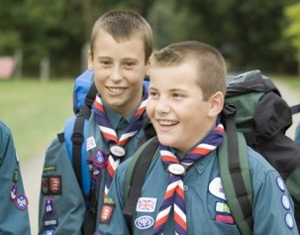
British Scouts poised to welcome atheists. Trustees of the Scouting Association in Great Britain will meet soon to vote on a new scouting oath for atheists. While British Scouts with scouts uk300religious affiliations will continue to promise to do their duty to both God and the queen, the new promise for nonbelievers will say something different—although the exact words have not yet been released. The British wing of the Scouting organization founded by Lord Robert Baden-Powell in 1907 agreed to bow to pressure from an increasing number of atheists. “We do not plan to change the core promise but to offer an option for those who are without faith but who wish to be part of the Scout movement and are keen to support the movement’s values and developmental work with young people who are drawn from the widest range of cultures, belief systems and communities,” said Chris Foster, media relations officer for the Scouting Association in London.

Vatican bank officials resign. Two top managers of the Vatican Bank resigned just five days after Pope Francis appointed an independent commission to conduct a top-to-bottom review of the scandal-plagued bank. The surprise resignation of the bank’s director general, Paolo Cipriani, and of his deputy, Massimo Tulli, followed the arrest of a senior Vatican official with close ties to the bank who was charged with attempting to smuggle 20 million euros into Italy from Switzerland. Cipriani, 58, served as the bank’s director general since 2007 and will be replaced on an interim basis by the bank’s president, German financier Ernst von Freyberg, who was appointed last February in one of Pope Benedict XVI’s last official acts. With its checkered history marked by allegations of shady deals and its tradition of utter secrecy, the Vatican Bank has become a focal point in criticism over mismanagement and corruption within the Curia, the church’s central bureaucracy. Pope Francis, who was elected with a clear mandate to reform the Curia, has called for a simpler, poorer church. To him, the Vatican’s scandals are a powerful countermessage to the church’s mission of preaching the gospel.


Dreds and Torpedo aim to teach children to worship

ROYSE CITY—Dawna Duke and Ashley Mensik—better known as Dreds and Torpedo—want to energize, equip and engage children’s ministries around Texas with high-energy praise songs.

This summer, they are leading worship for preteens at Sabine Creek Ranch in Royse City, Timberline Baptist Camp in Lindale and Mount Lebanon Baptist Encampment in Cedar Hill.

dreds torpedo250Worship leaders Dawna Duke (left) and Ashley Mensik, better known as Dreds and Torpedo, want to energize, equip and engage children’s ministries around Texas with high-energy praise songs.Duke and Mensik both grew up in Texas and loved music since an early age.

As a college student, Duke directed an after-school program at Lake Highlands Baptist Church in Dallas. With a desire to lead children to faith in Christ, she served at Sabine Creek Ranch each summer during her college years, which led to meeting and teaming up with Mensik.

“In 2008, I was hired to help lead worship for the kids in the mornings and needed someone to do the motions,” Duke said. “One day, we were just doing typical camp work, such as painting a sign for one of the games, and we hit it off talking and have been friends ever since.

Origin of a name

“Sabine Creek staffers all receive a camp name, and I was called Dreds because I had dreadlocks at the time. Ashley received the name Torpedo because she was a diver in high school. When we started leading worship for the kids, everyone just called us by our camp names, and it just kind of stuck with us.”

After working two years as a special education teacher in Dallas, Duke accepted an opportunity to begin ministering to students at International Baptist Church in Brasilia, Brazil. She continues to work there throughout the school year but teams up with Mensik in the summer.

Mensik has participated in various mission trips and loves teaching children about their need for a Savior. After graduating from Hardin-Simmons University in Abilene in 2010, she began working as an elementary-school teacher, as well as coaching gymnastics and cheerleading. She also sings on the praise team at South Side Baptist Church in Abilene.

Investing in children

As they lead worship for events, Duke and Mensik emphasize the importance of investing in the lives of children and instilling Scripture into their lives.

“We are passionate about kids learning Scripture and sharing God’s redemption story through songs—leading them to worship and glorify him because of who he is, what he has done and what he will do,” Duke said. “It’s such a privilege being able to watch kids learn about God, committing to follow him and worshipping him.”

Mensik agreed. “One of the sweetest sounds is when we can hear the children singing over the music—hands raised, heart engaged and singing at the top of their lungs. It melts my heart and brings me to tears every time,” she said.

“I am beyond encouraged by the kids we encounter and learn so much from their simple faith and honest questions. It is a beautiful example and reminder of Matthew 19:14 when Jesus said, ‘Let the little children come to me, and do not hinder them, for the kingdom of heaven belongs to such as these.’”


Faith Digest: Jihawg Ammo

Pork-laced bullets designed to send Muslims straight to hell. Still angry about the idea of an Islamic cultural center opening near Ground Zero, a group of Idaho gun enthusiasts decided to fight back with a new line of pork-laced bullets. South Fork Industries, based in Dalton Gardens, Idaho, claims its ammunition, called Jihawg Ammo, is a “defensive deterrent to those who violently act in the name of Islam.” The bullets are coated in pork-infused paint, which the company states makes the ammo “haram,” or unclean, and therefore will keep a Muslim shot with one of the bullets from entering paradise. “With Jihawg Ammo, you don’t just kill an Islamist terrorist; you also send him to hell. That should give would-be martyrs something to think about before they launch an attack. If it ever becomes necessary to defend yourself and those around you, our ammo works on two levels,” the company said in a press release. However, Shannon Dunn, assistant professor of religious studies at Gonzaga University, said South Fork’s concept is based on an inaccurate understanding of the Quran. “There is no penalty for coming into contact with pork given by the Quran,” she said, pointing to verses that prohibit the consumption of pork are reminiscent of Jewish dietary laws outlined in Leviticus. “To my knowledge, Muslims, especially unknowingly, would not be banned from heaven for eating or getting hit by pork.”

Britain’s Girl Guides drop oath to God. For more than 100 years, Britain’s Girl Guides took an oath to “love God and serve the King/Queen.” But recently, the movement announced it would scrap its oath to God in girl guides400an attempt to broaden its appeal and attract children from secular, nonbelieving families. Beginning in September, all new members who make the promise to be good and useful citizens will pledge an oath to “be true to myself and develop my beliefs” and “to serve my Queen (Elizabeth II) and my country.” Chief Guide Gill Slocombe explained the reference to God sometimes “discouraged some girls and volunteers from joining,” adding that the new wording would help the organization “reach out to girls and women who might not have considered guiding before, so that even more girls can benefit from everything guiding can offer.” Girl-guiding attracts more than half a million members in Britain. An estimated 10 million members comprise the World Association of Girl Guides and Girl Scouts from 144 countries. The Girl Guides’ Association was formed in 1910 under the leadership of Agnes Baden-Powell, sister of Lord Robert Baden-Powell, who founded the Boy Scouts. Within a few weeks, the Boy Scouts in Britain probably will announce a decision about the wording of their Oath of Loyalty, including how best to accommodate people who do not believe in God. 

Religious oppression rises despite Arab Spring. People who hoped the Arab Spring would lead to greater religious freedom across the Middle East have been sorely disappointed, and a new Pew study confirms the region has grown even more repressive for various religious groups. “In 2011, when most of the political uprisings known as the Arab Spring occurred, the Middle East and North Africa experienced pronounced increases in social hostilities involving religion, while government restrictions on religion remained exceptionally high,” according to the report by the Pew Research Center. The study shows the number of countries in the Middle East or North Africa with sectarian or communal violence between religious groups doubled from five to 10 during 2011, a year that coincided with most of the political uprisings of Arab Spring. Among those groups most adversely affected were Egypt’s Coptic Christians, whose churches have been bombed and burned both before and after the February 2011 fall of former Egyptian President Hosni Mubarak. Globally, the Pew survey of 198 countries found the share of countries with high or very high restrictions on religion rose from 37 percent in mid-2010 to 40 percent by the end of 2011.


Bono: David sang the blues, and Jesus did some punk rock

WASHINGTON (RNS)—U2 frontman Bono exchanged Bible references and bantered about music, theology and evangelicals’ role in AIDS activism in a recent radio interview with Focus on the Family President Jim Daly.

bono400Bono exchanged Bible references with Focus on the Family’s president Jim Daly. (RNS Photo by Lisa Cadman/courtesy of Focus on the Family)Bono, who grew up in Ireland with a Protestant mother and a Catholic father, echoed C.S. Lewis in Mere Christianity, where Lewis argued that Jesus was a lunatic, liar or Lord.

“When people say ‘Good teacher,’ ‘Prophet,’ ‘Really nice guy,’ … this is not how Jesus thought of himself,” Bono said. “So, you’re left with a challenge in that, which is either Jesus was who he said he was or a complete and utter nut case. … And I believe that Jesus was, you know, the Son of God.”

Bono made comparisons between biblical characters and music.

“First of all, David’s a musician, so I’m going to like him,” Bono said. “What’s so powerful about the Psalms are, as well as they’re being gospel and songs of praise, they are also the blues. It’s very important for Christians to be honest with God, which often, you know, God is much more interested in who you are than who you want to be.”

Honest language

As Bono praised David’s “honest language with God,” Daly noted, “Sometimes it gets you into hot water with the more orthodox folks, because they see you as edgy, maybe too edgy at times.”

It’s a criticism Bono’s used to hearing.

“You’ve got to be very careful that grace and politeness do not merge into a banality of behavior, where we’re just nice, sort of ‘death by cupcake,’” Bono said. “Politeness is, you know, is a wonderful thing. Manners are, in fact, a really important thing. But remember, Jesus didn’t have many manners as we now know.”

Bono recalled the biblical passage in Luke 9 when Jesus told a man not to wait and bury his father but to follow Jesus immediately.

Daly responded to Bono’s summary, “Seems cold-hearted.”

bono u2 concert400Bono and Adam Clayton perform during the U2 360 Tour in Denver, 2011.Bono replied, “No, seems punk rock to me. He could see right into that fellow’s heart. He knew he wasn’t coming, and he was just, it was pretense. We’ve got to be a bit more cutting edge, not look to the signs of righteousness. Look to the actions.”

Bono made an explicit connection between his faith and his work with the ONE Campaign, the humanitarian organization he founded to fight poverty and disease.

Christ is ‘demanding’

“It’s very annoying following this person of Christ around, because he’s very demanding of your life,” he said while chuckling. “You don’t have to go to university and do a Ph.D. to understand this stuff. You just go to the person of Christ.”

Daly threw a C.S. Lewis quote at Bono: “When a man is getting better, he understands more and more clearly the evil that’s left in him. When a man is getting worse, he understands his own badness less and less.”

Bono jokingly replied, “Yeah, that could turn up on the next U2 album, but I won’t give him or you any credit.”

In his work on HIV/AIDS, malaria, poverty and other areas, Bono noted the challenge of finding the right issue to take on.

“We have a pastor who said to us, ‘Stop asking God to bless what you’re doing, Bono.’ Which by the way, I constantly do. He said, ‘Find out what God is doing, ’cause it’s already blessed,’” Bono said. “And when you align yourself with God’s purpose as described in the Scriptures, something special happens to your life. You’re in alignment.”

Most of the 9 million HIV/AIDS victims who were saved are alive because of treatments funded by the United States, Bono said.

“I am here to thank the American people for that,” he said. “And I also want to thank the evangelical community for that, because it wouldn’t have happened without their leadership, because they like myself, pestered George Bush and the administration, who actually deserve praise for starting this out.”

AIDS and leprosy

He compared HIV/AIDS to biblical stories of leprosy.

“People don’t understand in that Scripture, the Samaritan was at odds with the ideology of the person he stopped on the road for. This is why we call it the ONE Campaign,” he said. “You and I can have many disagreements on many philosophical, theological things. But on this, we know we can agree on.”

Daly said he expects potential blowback from Focus listeners who might see Bono as unorthodox.

“Does he use a bad word here and there? Yeah, probably. Does he have a Guinness every now and then? Yeah, probably,” Daly said. “When you look at it before the throne of God, I think (God will) say, ‘You saved so many children.’”

Daly said his predecessor James Dobson might not have done an interview with Bono, but Dobson did get flack for having Laura Schlessinger on his program because she is Jewish.

“Bono clearly accepts Jesus as Lord. I wasn’t prepared for his quickness in inserting Scripture into the dialogue,” Daly said of the artist who has been married to his wife, Ali Hewson, for decades. “I celebrate with them that they have four children and have been married 30 years. Not everyone in the Christian community can say that.”


Strategy aims to transform, not avoid, conflict

OVERLAND PARK, Kan. (ABP)—Conflict poses both danger and opportunity between individuals, congregations and nations, said Evelyn Hanneman, operations coordinator for the Baptist Peace Fellowship of North America.

hanneman koala300Evelynn Hanneman introduces the Koala style of conflict transformation.“We like to say that conflict is holy ground, because conflict does offer you that place to deepen relationships, to move farther and deeper into that peace that Christ calls us to,” she said. “It is not calmness. It is a peace that comes from there being right relationships.”

Hanneman, who has worked in various positions nearly 15 years with the network devoted to peace and justice issues, shared conflict-transformation principles the group has used in faraway places like Sudan, the Philippines and Liberia in a daylong training session preceding the American Baptist Churches USA meeting in Overland Park, Kan.

The method differs from conflict resolution, bypassing negotiation and compromise to get to the deeper root causes that drive the conflict in the first place.

Shalom

The goal, she said, is, “that issue of Shalom, where there are right relationships between everyone.” That involves “not just the surface,” she said, but is “based on working through all these things so that we actually get into the depths of the conflict so that you can move out of that in a very positive way.”

The “holy ground” metaphor is from the story of Moses at the burning bush told in the book of Exodus. Having fled justice for killing an Egyptian, God appoints Moses to return and lead the Israelites out of Egypt and into Canaan.

While it is unlikely murder was part of God’s will for Moses, Hanneman said, it didn’t disqualify him for God’s larger redemptive plan.

For Hanneman, the moral of the story is God can bring good even out of the worst conflicted situation. “This may not be God’s will, but it’s where we as people with our free will have ended up,” she said. “Now what is God got going in this situation, and where can I be in that transformation process?”

Differing reactions

The process includes understanding people react to conflict in different ways, including those who come in to seek reconciliation.

“I think you need to understand how you respond to deal with the conflict,” she said. “If you are not self-aware, it is very difficult to be effective in a conflict situation.”

She assigned animals to represent the various strategies common to conflict of all kinds:

The turtle represents people whose gut reaction is to avoid conflict. They are unassertive and passive, want to be neutral and avoid tension or discomfort. The result, she said, is often: “You lose; I lose.”

The koala wants to accommodate. These people want to embrace everyone and will sacrifice themselves and accept blame to bring about peace. Their intent is to preserve even a superficial peace, believing that getting along is more important than work or goals. The typical outcome to the approach is: “You win; I lose.”

The rhino’s first impulse is to compete. They are assertive or even domineering. Whether using diplomacy or raw power, they believe their way is the only way. Rhinos believe their ideas, values and goals are supreme, and they cannot let people stand in the way. The usual outcome is: “You lose; I win.”

The fox’s strategy is compromise. They subordinate personal desires for the common good of all parties and seek creative and effective compromise. Their rationale is that you can’t fully please everyone, so they desire to make everyone partially satisfied and to preserve relationships. Their outcome is: “You win some; I win some.”

The dolphin wants to collaborate. They are assertive but also flexible. They promote mutual respect, open communication and full participation by everyone involved. Their intent is not to avoid conflict but to turn it into a positive, problem-solving process. The desired outcome is: “You win; I win.”

No single strategy is best for every conflict, Hanneman said. If it is not your problem or relatively minor, the turtle might be the best way to respond. The rhino can be needed if a quick or unpopular decision must be made or if survival is at stake.

The koala approach is appropriate when you are unsure of your own ideas or in a weak position. The fox’s compromise is appropriate if the goals of all parties are valid, differences are not worth fighting over or if time doesn’t allow for deeper solutions.

In most conflicts, however, the dolphin works best when long-term goals and relationships are involved and maturity and patience are available to see it through.

Recognizing your own conflict-management strategy going in is important, Hanneman said, because: “In conflict, we usually respond with our gut. We usually go into our alarm zone.”


Preaching on violence without disturbing the peace

How can pastors preach on subjects like gun violence without disturbing the peace in their own congregations?

“Pastors always tread the tightrope of a prophetic role and that of pastoral care,” said Terry Rosell, ethicist and professor of pastoral theology at Central Baptist Theological Seminary in Kansas City, Kan.

confiscated guns poster400“Whether it is this issue or some other on which congregants—and the church—are not in one accord, it is necessary to exercise virtues of prudence, empathy, humility and courage. Prudently, there are some times better than others to address controversial matters.”

Sensitivity to the people in the pew and a spirit of humility should guide sermon preparation, he noted.

Humility

“Empathically, I understand that this issue in particular is experienced differently by the congregant who is 26 years old and relatively unscathed by evil and the congregant who is a 66-year-old decorated veteran who also lost a daughter to a murderous intruder,” Rosell said.

“In humility, I recognize that I have been mistaken on any number of moral matters before and could be so yet again.”

Preachers might ask whether sermons should focus on political opinions or whether they should lay a foundation of biblical principles and leave it to church members to make up their own minds, some suggest.

“Gun control may not be an appropriate subject for the pulpit, where proclamation of the gospel and application of the gospel belong,” said Roger Olson, the Foy Valentine Professor of Christian Theology and Ethics at Baylor University’s Truett Theological Seminary in Waco.

“The pulpit is a place for tackling larger issues of which gun control may be part, such as whether preparing to do violence is a good idea for a Jesus-follower.”

In context

Pastors sometimes must address controversial issues if they are true to their calling, but they should do it in the context of serious biblical reflection and caring pastoral ministry, some ethicists and ministers suggest.

“I fear that today’s pastors have gone silent about any issue that Christians disagree about, which pretty much rules out all substantive preaching,” said David Gushee, distinguished university professor of Christian ethics at Mercer University in Macon, Ga.

“Instead, I believe it is possible for the pastor to weave in commentary or sermons about moral/political issues as part of a balanced diet in all kinds of preaching. This can work if the congregation sees the pastor wrestling honestly with all kinds of issues, showing his or her work biblically and ethically, avoiding politically charged slogans or propagandistic formulations, and offering all of this in the context of a solid overall pastoral ministry. But this is no easy task in today’s divided and polemical culture.”

Discuss it first

Pastors have an obligation to tackle tough subjects from the pulpit, but first, they should have the grace and courage to discuss those issues with church members—not just preach at them, an East Texas pastor suggested.

“I think pastors must preach on controversial topics like gun control and gun violence. But the essential is that a good pastor is also among his or her congregation during the week, sitting around a coffee table, sitting on the porch, sharing lunch … listening to members of the congregation—especially those who disagree,” said Kyle Childress, pastor of Austin Heights Baptist Church in Nacogdoches.

“In the informal setting of friendship in Christ, pastor and church member can listen to one another, talk, disagree and talk some more. It is out of such conversations, along with study and prayer, that pastors can stand up in the pulpit and preach on hot topics. A pastor needs to spend six days a week listening in order to preach for 20 minutes on a Sunday morning.”


Christians and violence: Seek peace and pursue it

Debates about gun violence stir strong emotions, and Christians hold varied views on what it means to “seek peace and pursue it,” as the psalmist wrote.

Some call for increased gun control, while others feel a responsibility to make sure armed citizens are trained properly and prepared to stop violent assaults.
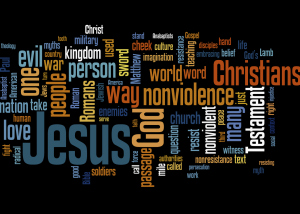
nonviolence cloud300Some Christians believe love for neighbor demands readiness to protect innocent lives, and that may include using guns for protection.

After the school shooting at Newtown, Conn., last December, a National Public Radio reporter asked Richard Land, then-president of Southern Baptists’ Ethics & Religious Liberty Commission, if the New Testament offers any justification for owning guns. Land responded by citing the Golden Rule and Jesus’ command to love one’s neighbor.

“If you see your neighbor being attacked, if you see your neighbor in danger, you have an obligation and a responsibility to do what you can to protect them,” he said.

Other Christians hold different opinions.

Following Jesus
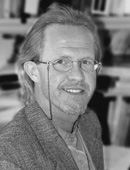
terry rosell130Terry Rosell“I have yet to see anyone successfully make a case, logically and without fallacy, for the use of weapons on the grounds of Jesus’ teaching,” said Terry Rosell, ethicist and professor of pastoral theology at Central Baptist Theological Seminary in Kansas City, Kan.

Jesus rejected self-defense and scolded Peter, his disciple, for drawing a sword in his defense, saying, “He who lives by the sword dies by the sword,” Rosell noted.

He recalled one seminary class that included doctoral students from a war-torn country. One student suggested perhaps Peter responded more appropriately than Jesus to the armed thugs who entered the Garden of Gethsemane to arrest an innocent man.

“I began singing, ‘I have decided to follow Peter.’ The class erupted into the laughter of awareness. … One thing we can do for peace is to point out the discrepancy between what we sing and what we do,” Rosell said.

“Another thing we can do is to recognize that following Jesus in the ways of strategic nonviolence is much easier from the safety of suburban Kansas City than it would be in the oppressive environment of a war-torn nation.”

Hard questions
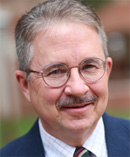
roger olson130Roger OlsonChristians need to ask themselves hard questions, said Roger Olson, the Foy Valentine Professor of Christian Theology and Ethics at Baylor University’s Truett Theological Seminary in Waco.

“Christians who are not pacifists and feel threatened by violent people ought to ask themselves how serious that threat is before buying a gun and carrying it in their car or on their person,” he said. “They need to realize that simply having a gun makes using it unnecessarily more likely.”

Christians have a responsibility to submit every ethical decision to Jesus Christ as Lord, said Kyle Childress, pastor of Austin Heights Baptist Church in Nacogdoches. And that makes life complicated, he emphasized.

“Decisions and perspectives that once seemed simple and direct might very well become difficult and challenging,” Childress said.

Protecting the innocent

“For example, if followers of Jesus do not advocate gun violence, what do we do in protecting the innocent? What if the call of Jesus is to be like Jesus in our willingness to give up our lives rather than kill? To cease from killing does not mean we no longer oppose evil, but it means that we oppose evil like Jesus, who died rather than kill. To be willing to put our lives on the line and not kill means that we trust God more than we trust the power of violence.”
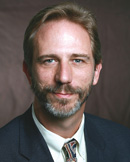
gushee130David GusheeChristians should explore what the Bible teaches about the authority of the state to maintain law and order, said David Gushee, Christian ethics professor at Mercer University and director of the Center for Theology and Public Life. The Apostle Paul teaches in Romans 13 the state has divine sanction to threaten and use force to protect innocents, stop criminals and keep the peace, he noted.

“I believe that trained and accountable officers of the state are far better positioned than civilians to exercise law enforcement functions,” he said. “As a Christian, I do support the work of professionals in exercising those functions, because their work is needed in a sinful and sometimes chaotic world, and also because well-ordered police and military have learned how to build in careful oversight and accountability for all uses of force.

“This is far less true of civilians, and I, for one, do not see a society in which the average person at the grocery store is concealing a weapon and thinking of himself as a law enforcement officer as an improvement on our current situation.”

Practicing peace

Christians should look for role models of people who practice peace, Rosell noted. He pointed to examples ranging from Martin Luther King Jr. to modern young adults—such as his own 26-year-old son—who live in “intentional communities,” often in low-income and sometime-dangerous areas, as an act of incarnational Christian witness.

“They live in an urban neighborhood that is considered unsafe due to violence. Yet they are known to neighbors as an oasis of peace—a house where meals and hospitality and help are provided freely, and only violence is unwelcome,” he said.

Churches should be peaceful communities where differences are discussed in an atmosphere of mutual respect, Childress said.

“Congregations should be places where difficult topics like violence, guns and gun control can be talked about and prayed about without rancor or hostility,” he said.

Political differences among Christ’s followers are nothing new. They date back to the time of Jesus, he noted. One of the 12 disciples, Matthew, worked as a tax collector for the Roman government. Another disciple, Simon, was identified as a Zealot—a group committed to using violence to free Judea from Roman control.

Models for reconciliation

“Most likely, these two disciples hated one another and what each stood for. Yet each found himself called by Jesus to be a follower. I wonder if there were many nights around the campfire that Jesus had to sleep in-between these two to keep one from knifing the other one during the night,” Childress said. “But over time, in following Jesus, they became the models/embodiments of reconciliation. That’s the calling of the church to this day.”

When Christians disagree without name-calling and hard feelings, it offers a powerful witness to a polarized culture, he noted.

“It demonstrates that the body of Christ, the church, talks about difficult and disagreeable topics without resorting to violence and demonization,” Childress said. “Somewhere, our society needs to see such behavior embodied and practiced. Somewhere, people need to see an alternative to violence and hatred.”



Exodus International shuts down, president apologizes

WASHINGTON (RNS)—Exodus International, a group that bills itself as “the oldest and largest Christian ministry dealing with faith and homosexuality,” announced it’s shutting its doors.

Exodus’s board unanimously agreed to close the ministry and begin a separate one, although details about a new ministry focused on gender and sexuality still are being worked out.

exodus chambers300Exodus president Alan Chambers. (Photo courtesy Exodus International)
The announcement came just after Exodus president Alan Chambers released a statement apologizing to the gay community for many actions, including the organization’s promotion of efforts to change a person’s sexual orientation.

Exodus functioned as a support group for men and women who were struggling with their sexual orientation, and early on the ministry embraced the idea that gays and lesbians could become straight through prayer and counseling.

But the belief in “reparative therapy was one of the things that led to the downfall of this organization,” Chambers said in an interview, noting Exodus in recent years redirected its focus to helping men and women work through their sexual identity.

“I am sorry we promoted sexual orientation change efforts and reparative theories about sexual orientation that stigmatized parents,” Chambers said in the apology. “I am sorry that there were times I didn’t stand up to people publicly ‘on my side’ who called you names like sodomite—or worse.”

Core beliefs have not changed

Chambers, who is married to his wife, Leslie, said his core beliefs about sexuality have not changed, and admitted he still wrestles with his own same-sex attraction.

The announcement comes at a critical point for gay rights, as the U.S. Supreme Court prepares to issue two potentially decisive rulings on gay marriage and public opinion shifts rapidly in favor of gay rights and even gay marriage.

A recent Gallup Poll showed 59 percent of Americans now view gay or lesbian relations as “morally acceptable,” a 19-point swing since 2001 and the biggest change seen on any social issue, including divorce, extramarital affairs and other issues.

Three years ago, Exodus had more than 20 employees in its Orlando office. Today, it has nine. In July, it will have 3 employees before it completely shuts down.

Local ministries will continue

Chambers announced the closure of Exodus at the ministry’s 38th annual conference in Irvine, Calif. Local affiliated Exodus ministries, which are autonomous, will continue, but not under the name or umbrella of Exodus.

Exodus began in 1976 by a gay man, Frank Worthen. “Perhaps nothing has brought Exodus into the mainstream of evangelicalism more than its embrace by James Dobson’s Focus on the Family,” wrote Christianity Today in 2007. The ministry faced some challenges in recent years, including a split with Willow Creek Community Church outside Chicago and other dissolved partnerships.

In his apology, Chambers acknowledged stories of people who went to Exodus for help only to experience more trauma.

“I have heard stories of shame, sexual misconduct, and false hope,” he said. “In every case that has been brought to my attention, there has been swift action resulting in the removal of these leaders and/or their organizations. But rarely was there an apology or a public acknowledgement by me.” 


Lifetree Cafes offer space for tough topics

WATERBURY, Conn. (RNS)—On a recent Monday evening, a room inside Christ Community Church was transformed into a coffeehouse with fresh-brewed coffee, plenty of popped kettle corn and the thorny subject of racism on the table.

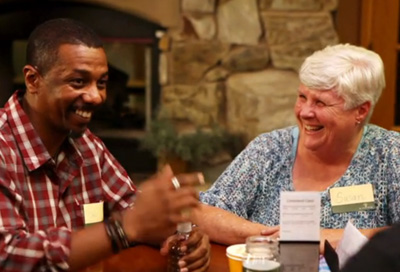
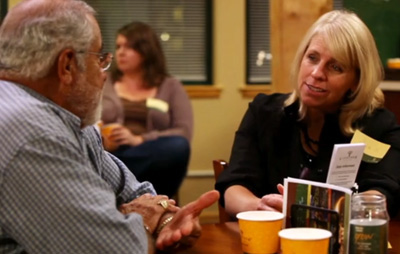
lifetree table400Lifetree Cafe is a new evangelical tool gaining popularity with churches reaching out to potential members. (LifeTree Photo)For an hour, about 20 people gathered around tables, shared personal experiences about racism, watched a short documentary and answered questions meant to stimulate conversation.

The event is called Lifetree Cafe, and it’s a new evangelical tool gaining popularity with churches reaching out to potential members.

Lifetree Cafes are a fairly recent venture by Group Publishing, a Colorado-based Christian publishing company that is tapping into people’s yearning for community and face-to face connection.

“There’s a cry out there,” said Craig Cable, a Lifetree Cafe representative. “People are looking for hope and meaning. Lifetree Cafes create a safe place where people from all walks of life can have a conversation and talk about the struggles we deal with.”

Group Publishing tested the first Lifetree Cafe in 2007 and began licensing the program in 2010. Since then, some 350 churches have purchased the program, recently at a rate of one a week.

lifetree table2 400About 350 churches have purchased the LifeTree program, recently at a rate of one a week. (LifeTree Photo)When churches sign on, Lifetree Cafe provides them with all the materials they need to host a weekly conversation cafe. Churches are given videos, scripted questions, name tags for attendees, and marketing and promotion tools to promote the event. Churches pay $300-$400 a month, Cable said.

Lifetree Cafes are open to the public and held in churches, community centers, hotels and coffee shops throughout the country. (A Lifetree Cafe in Loveland, Co., is held at a homeless shelter.)

The same topic is discussed at each cafe and sessions last one hour. Past and future topics include atheism, gun violence, domestic abuse and marijuana use. Cable said the topics appeal to all denominations. They do have a Christian message, but they don’t “feel preachy” or draw conclusions.

Deric Mendes, an atheist blogger in California, said he couldn’t resist attending a Lifetree Cafe in a local church when he saw one advertised earlier this year — especially since the week’s topic was atheism.

Mendes wrote about his experience on his blog Vicarious Redemption. Besides some criticism of the video shown at the event, Mendes said he enjoyed the experience and found the people friendly and welcoming.

But there was something strained about the evening, he said.

“It felt like a bunch of white neighbors in the 1960s discussing the black family who had just moved into the neighborhood,” Mendes said.

Casey Sabella, pastor of Christ Community Church and the weekly host of its Lifetree Cafe, said he offers the program to get his congregation talking about subjects not generally discussed during church services.

“There’s no altar call, no passing of the plate to collect offerings,” Sabella said. “The cafe is where people can come together to have a conversation.”

While the recent Lifetree Cafe at Sabella’s Connecticut church attracted only members of his congregation, he hopes to reach out to the greater community and invite people to join in the conversation every week. A schedule of future Lifetree Cafe topics can be found on the church’s website.

Bill Tooker, a Christ Community Church member, said he found the racism discussion helpful.

“When people start talking about something,” he said, “change happens.”


Juggler Jesse Joyner finds balance in Christ

CEDAR HILL—Whether Jesse Joyner is riding a unicycle or juggling, he shares an important message about finding balance through a relationship with Christ.

jesse juggler unicycle400Jesse the Juggler performs for children’s camps at Mount Lebanon Baptist Encampment in Cedar Hill.“A friend taught me how to juggle when I was 11 years old,” Joyner said. “I thought juggling was so cool and wanted to learn. I practiced every night for about two weeks until I could juggle three balls really well. I didn’t want to stop there, so I went to the library and got all the books I could about juggling.

“I spent hours each night reading those books and practicing with some cheap, tiny beanbags. My bedroom ceiling was too short for practicing five balls, so I would be on my knees for hours each night. I guess God wired me to love juggling, because I just kept working on it until I reached a new level.”

It was not until he entered college, however, that Joyner found a way to use juggling in ministry. Joyner met fellow Christian jugglers Nathan Dorrell and David Cain, who shared tips on how to develop routines that convey a gospel message.

“During my freshman year at Taylor University, which is a small Christian college in Indiana, I felt God calling me to put together a juggling show that would also present the gospel,” he said.

jesse juggler300Jesse Joyner developed a juggling act that conveys a Christian message.“I worked on some routines and sent a letter to dozens of churches. I offered my juggling show at no set cost, just on a voluntary love-offering basis. A few days after sending the letter, I had five messages on my answering machine from churches wanting me to share my show with them for an event.”

It didn’t take long before word began spreading about his creative ministry, and Joyner became inundated with requests to perform.

“When I was in college, I performed for over 100 churches and events as a side-thing to my studies. I performed for kids, families, senior citizens, inner-city missions, a county jail and other outreach events.”

As Joyner juggled his way into new ministry territory, he realized the importance of sharing the gospel at each event. 

“I quickly realized that I loved merging juggling with a Bible message,” he said. “After college, I went to Asbury Theological Seminary in Wilmore, Ky., and continued the juggling ministry, but it had to slow down a bit because of my studies. From there, I took a position as a children’s pastor at a local church. But I couldn’t get my heart off the juggling ministry.

“My love for spreading the Good News to kids and families through juggling was so strong that I took a step of faith and went full-time on the road with it when I graduated from seminary. That was six years ago, and I’ve been doing this ministry full-time ever since, by God’s grace.” 

Joyner maintains a busy schedule performing at school assemblies, Vacation Bible Schools, Upward sports award nights and other evangelistic events. This summer, he is performing for children’s camps at Mount Lebanon Baptist Encampment in Cedar Hill.

“I love teaching kids about the Bible, and I love seeing them get excited about Christ and his message,” he said. “I think I’m still a kid at heart, so juggling is simply my language through which I communicate with kids.”