Intentional Christian communities live and serve among the poor

WACO—In one of northern Philadelphia’s most-dangerous neighborhoods, a 20-person Christian group thrives, embracing a lifestyle of radical community.

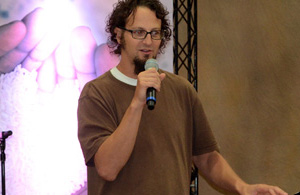
no need conf claiborne300Shane Claiborne, leader at The Simple Way, speaks to participants at the No Need Among You conference.Shane Claiborne, leader of the 10 households in the Kensington neighborhood, helped found The Simple Way in 1995 as a faith community that lives and serves among the poor.

“We are not a church plant. We are a community plant,” Claiborne, author of The Irresistible Revolution: Living as an Ordinary Radical, told the No Need Among You Conference, sponsored by Texas Christian Community Development Network and Mission Waco.

Members of The Simple Way community commit to alleviating poverty by living among the poor and sharing individual resources with them.

New Monasticism

The Simple Way has birthed and connected many other radical Christian communities around the nation. The New Monasticism movement values living among the poor in dangerous parts of cities abandoned by the affluent.

Most Christians want to help the poor but refuse to invest in their world, Claiborne said—a distinction he doesn’t consider biblical. The gospel propels Christ’s followers toward people who are hurting, he insisted.

“It takes us to the pain, the poverty and those in need,” he said.

claiborne phoenix park400Volunteers work with members of Claiborne’s community to clean up Phoenix Community Park in Philadelphia.The community lives simply and communally. Members share lawn mowers, washers and dryers, cars—and even their paychecks. Each member of the community gives 10 percent of his or her income to a common emergency fund. A medical collaborative can cover up to a $150,000 incident for Claiborne’s community.

“We share stuff because we have community,” he said. “We don’t have community because we share stuff.”

Discipleship and submission to the larger body of Christ serve as unifying threads of the New Monastic community. The communities are eclectic in faith, with no single denomination ruling the intentional community. Members are encouraged to participate in a local church but do not attend together.

Prayer

Lamenting and praying for social and racial injustice also are central to the heartbeat of The Simple Way community. Claiborne’s community meets every weekday morning to pray for the neighborhood and the injustices of the world.

“I think prayer is a really beautiful thing,” he said. “For some of us involved in social justice, we forget to pray.”

Rather than giving to an organization, community members are encouraged to give only to those with whom they have a direct relationship.

The Simple Way has transformed a formerly dark and dreary neighborhood into a creative display of the beauty of God, he said. Creativity has been restored through inspirational murals and artwork spread across Kensington buildings.

Gardening and the Gospel

Furthermore, the community has taken initiative in gardening and landscaping projects to care properly for God’s earth, a value essential to the community.

“To us, it has everything in the world to do with the gospel, because this is a part of how we see God,” he said. “We are connecting with God through creation and the miracle of life. … It’s hard to believe in a God of resurrection if we see a lot of death and a lot of suffocation. So, part of what we do is free up some of that debris.”

Claiborne recognizes other forms of intentional community can thrive, but he yearns for the people of God to come together in unified community with the sole purpose of connecting people to God.

“I can’t help but think it makes God smile when the church comes together and challenges the patterns of this world,” he said. “In the end, it’s not about us. In the end, all of this is to point toward a good and wonderful God that is transforming hearts and streets in the world.”


Analysis: ‘Gravity’ and unanswered questions of unbelief

DALLAS (RNS)—Reviews of the new hit movie Gravity note it’s an unusually fine science fiction film. What they don’t mention is that the main character represents an increasingly common theme in American religion—the spiritual “none of the above.”

Yes, the special effects are splendid. And I’ll take the word of astronauts who say the visuals capture amazingly well what it’s like to work in the microgravity of near-Earth orbit.

But there are moments where spiritual and philosophical themes take center stage.

gravity fall400An accident in space brings spiritual and philosophical themes to center stage. (Photo courtesy Warner Bros. Pictures)(Spoiler alert: If you really want to know nothing about the movie, see it first.)

There’s precious little dialogue in this relatively short film devoted to anything but technical details. So it’s perhaps a bit surprising that a significant chunk of it is about faith—or the lack thereof. Ryan Stone, a researcher-turned-newbie astronaut played by Sandra Bullock, is eventually alone and probably facing imminent death, stuck in a damaged tin can zipping through shrapnel-loaded airless space.

‘No one will pray for my soul’

So she starts a monologue. “No one will mourn for me,” she muses. “No one will pray for my soul. … I’ve never prayed. … Nobody has taught me how. …”

But she sort of prays through action. Stone is one Right Stuff space jockey once the early panic wears off. And then she sort of gives up. And in a way, the answer to her prayers shows up in the person of the experienced astronaut played by George Clooney—sort of.

gravity clooney400George Clooney as Matt Kowalski in Warner Bros. Pictures’ dramatic thriller “GRAVITY.” (RNS Photo courtesy Warner Bros.)(As a friend of mine told me: “I mean, he’s my answered prayer, but seriously?”)

Central questions of existence are raised: “What’s the point of going on? What’s the point of living?”

Why, indeed? Stone, we’ve learned, has been emotionally adrift since her 4-year-old daughter died in an accidental fall. But somehow, somewhere, she comes up with an answer that she doesn’t monologue to those existential questions. She does talk about her daughter as an angel and asks the spirit of one of the characters who hadn’t made it to give the kid’s spirit a hug.

And when she finally ends up safely—we assume—on a beach somewhere on Earth, she grabs a handful of sand and murmurs, “Thank you.”

But who is she talking to?

The ‘Nones’

And that takes us to the “nones,” the religiously unaffiliated who make up one in five Americans these days. If they’d all sign up on a list, only the Catholic Church could claim more members in the United States. The whole point of being unaffiliated, of course, is that they don’t want to sign on to any constraints. When asked to identify their faith on a list, they’ll choose “none of the above.”

gravity bullock400Sandra Bullock portrays Ryan Stone in “GRAVITY.” (RNS Photo courtesy Warner Bros. Pictures)But there’s pretty good survey evidence most of the nones, like Sandra Bullock’s Dr. Ryan, aren’t “nothings.” Some embrace the title “spiritual but not religious,” and even some who say they’re atheists retain some religion-ish trappings.

A 2008 Pew Forum on Religion & Public Life report found about half the unaffiliated surveyed said they believed in some kind of life after death—including 18 percent of the atheists and 35 percent of agnostics. About 40 percent of the unaffiliated believe in heaven—including 12 percent of the atheists and 18 percent of agnostics. And on the big question, only 30 percent of the unaffiliated said they were pretty sure there was no God.

As for prayer, the issue raised by the fictional Dr. Stone? Almost half the unaffiliated said they pray at least occasionally. And while this survey didn’t probe it, I’ll bet the likelihood of interest in prayer goes up when confronted with imminent death.

The few details we get about Bullock’s character don’t suggest an open hostility toward religion. Just a lack of contact—and a personal tragedy of the sort that pushes even some of the devout into doubt.

So where does she find the spiritual strength and internal fortitude to persevere in the face of overwhelming odds? Maybe the same place that so many other Americans are looking these days: To overcome her peril in the sky above, Dr. Stone turned to “none of the above.”


Faith Digest: Catholics agree with pope’s direction

Most American Catholics agree with pope about church’s obsession. Pope Francis rocked the Catholic world last month when he gave a wide-ranging interview in which he declared the church had become “obsessed” with a few hot-button moral issues and needed to find a “new balance.” A new poll indicates American Catholics think he’s right. The survey, released by Quinnipiac University, shows two in three (68 percent) adult Catholics questioned said they agreed with the pontiff’s observation the church has become too focused on issues such as homosexuality, abortion and contraception. Just 23 percent disagreed, and the breakdown was virtually the same across age groups and among both weekly Mass-goers and those who attend church less frequently. The national poll—conducted the last week of September—also showed American Catholics have a favorable (53 percent) or very favorable (36 percent) opinion of Francis, and just 4 percent view him negatively.

Yale’s humanists lose bid for campus recognition as faith group. A newly formed humanist group at Yale University suffered a setback when the school’s broader religious community declined to grant it recognition as a faith organization. The Yale Humanist Community, founded last year to support humanists, atheists, agnostics and other nontheists on the campus in New Haven, Conn., was denied membership in Yale Religious Ministries, an umbrella group of religious groups that serve the university’s students, faculty and staff. The group was denied membership because it is explicitly nonreligious. Yale Religious Ministries includes Christian, Hindu, Buddhist, Jewish, Sikh, Muslim and other organizations. Chris Stedman, the Yale Humanist Community’s coordinator and assistant humanist chaplain at Harvard University’s well-established humanist community, said the Yale group wanted to officially join the campus’ religious community because its members share many of that group’s values, including fostering compassion and morality and working for the greater good.


Analysis: ‘Breaking Bad,’ violence and redemption

WASHINGTON (RNS)—A couple of weeks after the Breaking Bad finale aired, the ending of the megahit cable series continues to gratify, infuriate and above all fascinate the moralists—professional and amateur—who constitute the audience’s fanboy core and who always framed the most vigorous debates about the show.

That’s understandable. The series at its dark heart is a study of good and evil, and more specifically about how good people can do bad things, how they become bad, or whether we all have a seed of evil within us that can germinate and run amok under the right conditions.

Further proof that the series’ drama is a profoundly religious one is the fact theologically minded people still are fiercely disputing exactly what the ending meant, and what the series—and its anti-hero, Walter White—stood for in moral and metaphysical terms.

breaking bad skyler400Skyler White (Anna Gunn) in a scene from the final episode of “Breaking Bad.” (RNS Photo courtesy Ursula Coyote/AMC)Is the chemistry-teacher-turned-meth-cooker an irredeemable monster? Or maybe he is just one of us—a struggling, middle-class worker bee who gets a diagnosis of lung cancer and, hearing how profitable the drug trade can be, uses his talents to concoct premium-grade drugs to make a quick score that will support his wife and children long after he’s dead.

Certainly the ending was inevitable and unsurprising: White dies, as he had to. The show’s creator, Vince Gilligan, made it clear “this story was finite all along. It’s a story that starts at A and ends at Z.”

But how Walt died, who he would take down with him—or spare—and whether he ended in a state of grace were burning questions for devotees of the series, as they are for all believers.

Eschatology, the study of our ultimate fate, is what all religious exploring points to. So do TV dramas.

“I want to believe there is some sort of cosmic balancing of the scales at the end of it all,” Gilligan said last year. “I’d just like to believe there’s some point to it all. I’d like to believe that there is. Everything is just too random and chaotic absent that.”

Not surprisingly, many who watched the finale saw a light at the end of the series for Walt. One genius of the show is that it co-opted viewers into rooting for Mr. White—as Walt’s co-conspirator Jesse Pinkman always called his onetime high school teacher—no matter how low he sank.

So despite the trail of carnage and ruined lives Walt left behind, the hope that he would find grace at the end and his death would somehow sanctify was overpowering.

Critics as varied as Emily Bazelon in Slate and Allen St. John in Forbes declared Breaking Bad ultimately a “love story” because White managed to do what he set out to do in the first season: He found a way to provide for his family, and at the end, he finally confessed his original sin in becoming the drug kingpin dubbed Heisenberg.

“I did it for me,” as he tells his devastated wife, Skyler. “I liked it. I was good at it. And I was really … alive.”

breaking bad walter400Walter White (Bryan Cranston) in a scene from “Breaking Bad” – Season 5, Episode 16. (RNS Photo courtesy Ursula Coyote/AMC)Writer Sonny Bunch even saw Gilligan slyly turning White into Jesus Christ—the wounds in Walt’s hand and side, his reference to the view of the Sangre de Cristo (Blood of Christ) mountains, his “sacrificing himself to save the people he loved,” his cruciform death pose. White also “made peace with those who had wronged him and those he had wronged (one way or another) so as to prepare himself for the afterlife.”

Well, “making peace” may be pushing it. White actually used his intellectual gifts one last time to build a Rube Goldberg killing machine and orchestrate a bloody—if improbable, without divine aid—denouement that destroyed all his enemies.

“His moment of clarity at the end doesn’t make up for all the hubris of Heisenberg,” Bazelon wrote. “But it did mean I could wholeheartedly root for his scheme of revenge.”

And that’s the theological problem. White used evil to the very end to accomplish something good. But Walter Wink would not approve. Wink, a theologian who died last year, called this rationale the “myth of redemptive violence”—the very antithesis of the Christian message but the “dominant religion” of the modern world.

“The belief that violence ‘saves’ is so successful because it doesn’t seem to be mythic in the least. Violence simply appears to be the nature of things. It’s what works. It seems inevitable, the last and, often, the first resort in conflicts,” Wink wrote. “The gods favor those who conquer. Conversely, whoever conquers must have the favor of the gods.”

Moreover, Walt’s “confession” at the end hardly was repentance. He did not give himself up to the authorities or allow himself to be publicly humiliated. He died the way he wanted, caressing the cold steel of the meth lab cookers the way Gollum—the creepy, corrupted creature of The Lord of the Rings series—fondled the magical golden ring.

“He’s patting his Precious, in Lord of the Rings terms,” Gilligan said after the finale. “He’s with the thing he seems to love the most in the world, which is his work and his meth lab, and he just doesn’t care about being caught because he knows he’s on the way out. So, it could be argued that he pays for his sins at the end or it could just as easily be argued that he gets away with it.”

Even if White does get away with it by cheating earthly justice, his ending can be seen as instructive—as long as it is viewed as a cautionary tale rather than a model for living, and dying.

And you have to appreciate that Gilligan ended the show so clearly and cleanly.

Other television anti-heroes have faded to an ambiguous black, like Tony Soprano, or suffered a premature demise at the hands of network executives before we could learn their true destiny. And many viewers still await the fate of compromised characters like Nucky Thompson in Boardwalk Empire, Don Draper in Mad Men and Frank Underwood in House of Cards—not to mention most of the cast of Game of Thrones.

We all find ourselves rooting for them. But rooting for them to do what, exactly? The moral logic White used to engineer the ending of Breaking Bad is the same rationale he used to start his meth business. And we saw where that led.


Research looks at bad choices and second chances

NASHVILLE (BP)—Regret weighs down many Americans, and according to a new study from LifeWay Research, almost half feel the weight of a bad choice from their past—even though a vast majority believe God gives second chances.

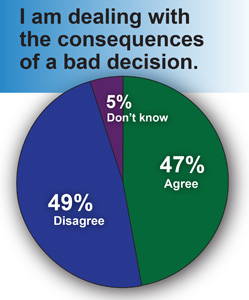
second chancesbasis417When asked to respond to the statement, “I am dealing with the consequences of a bad decision,” 47 percent of respondents agree.

Wrong decisions

While self-defined Protestant or nondenominational Christians are less likely to agree (42 percent), a majority (51 percent) of those who said they are a born-again, evangelical or fundamentalist Christian agree they still are dealing with a wrong choice from their past. 

Recognizing a sizeable percentage of people suffer consequences from past mistakes allows Christians to show grace, said Ed Stetzer, president of LifeWay Research.

“Christians minister grace out of grace,” Stetzer said. “Caring for those dealing with pain and regrets is not about fulfilling obligations or relieving guilt, as all of that has already been taken care of by Christ.”

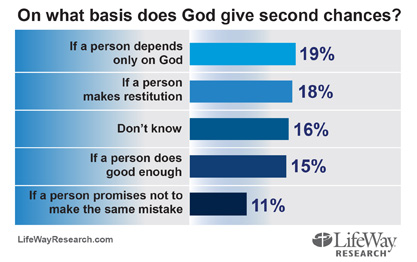
second chances250The study, sponsored by Bible Studies for Life: Do Over, a group study from LifeWay Christian Resources, also found the vast majority of Americans believe God gives second chances for those who have made a bad decision.

Overall, 84 percent believe so, while 94 percent of Protestants and 98 percent of evangelicals agree God gives second chances.

Second chances

Nearly one in five Americans believe God gives a second chance when a person depends only on God (19 percent), followed closely by when a person makes restitution (18 percent), does enough good (15 percent) or promises not to repeat the mistake (11 percent). Fewer than one in six Americans say they are not sure why God gives second chances.

“In all, some 44 percent of respondents believe God’s offering of a second chance depends on some kind of human action,” said Ronnie Floyd, general editor for Bible Studies for Life.

For Floyd, this viewpoint creates unneeded issues. “The problem with trusting in one’s self to gain a second chance from God is that we cannot trust ourselves to get it right,” he said.

“Why put extra pressure on ourselves to fix things?” Floyd asked. “We shouldn’t. The most scriptural response to a failure is to ask God to intervene to accomplish his will.”

Bible Studies for Life commissioned the study to demonstrate the need for a better understanding of what the Bible teaches about past mistakes and God’s grace in providing second chances.


Texas musician brings modern twist to classic hymns

MIDLOTHIAN—Although Christian recording artist Jimmy Needham did not grow up singing hymns in church, he wants to make up for lost time while also encouraging young worshippers to latch onto timeless truths.

jimmy needham400“I wasn’t raised in a church and hadn’t heard most of these hymns until college,” Needham said. “When I heard some of these hymns for the first time, it was such an eye-opening experience for me. Over the past few years, I’ve been exposed to more of these great hymns, and they have had a huge impact on my walk with the Lord.”

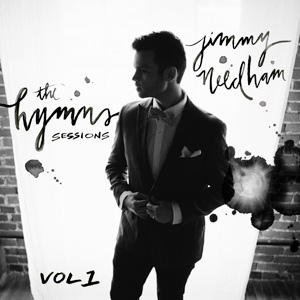
His latest album, The Hymns Sessions, Vol. 1, available through digital outlets and at his upcoming concerts, brings a distinctive twist to classic hymns including “Great is Thy Faithfulness,” “Rock of Ages,” “Come Thou Fount of Every Blessing” and “How Great Thou Art.”

jimmy needham cd300By adding a modern approach and updated style, Needham hopes to attract young worshippers and help them find new meaning in traditional hymns.

As Needham travels across the country, he maintains a busy schedule performing concerts and leading worship for ministry events. He especially enjoys ministering to youth and college students.

“I never heard the gospel until I was a sophomore in high school,” Needham said. “A friend took the time to share what it meant to have Jesus as your Savior. It was then that God opened my eyes to his truth, and I’ve been walking with Christ ever since.”

After graduating from Texas A&M University, Needham planned to become a history teacher. However, after receiving a phone call from Inpop Records, Needham felt God leading him to share the gospel through songs.

“God really changed the plans and the direction where I was heading,” Needham said.  “I’m incredibly grateful for what God has done and his faithfulness.”

In addition to performing concerts and writing songs, Needham serves as the artist in residence at Stonegate Church in Midlothian, a Baptist General Convention of Texas-affiliated congregation. This fall, he will promote the hymns project on his national “The Guy, Guitar & Gospel Tour.”

“Today, I’m more aware of my desperate need for Jesus in everything that I do and in every circumstance that’s thrown my way,” he said. “That’s why I really want people to realize a relationship with Jesus is so satisfying and fulfilling. Every other pursuit or effort trying to make our lives better seems dull compared to life in his presence.”


Faith Digest: Jewish identity changing

American Jews’ identity more cultural than religious. In the most comprehensive study of American Jews in 12 years, six out of 10 said being Jewish is mostly about ancestry or culture, not the religious practice of Judaism. “A Portrait of Jewish Americans,” released by the Pew Research Center, shows strong secularist trends most clearly seen in one finding: 62 percent of U.S. Jews said Jewishness is largely about culture or ancestry; just 15 percent said it’s about religious belief. In a related finding, more than one in five self-identified Jews—22 percent—told Pew researchers they had no religion, a proportion that mirrors the roughly one in five Americans who claim no religious affiliation. A strong majority of Jews—69 percent—call themselves very or somewhat emotionally attached to Israel—a proportion that has held fairly steady at least a decade. Pew interviewed 3,475 Jews in America to produce its 213-page report, which pins the number of adult American Jews who say Judaism is their religion at 4.2 million. That number rises to 5.3 million if cultural Jews are included. The survey, which cost more than $2 million and was funded by the Pew Charitable Trusts and the Neubauer Family Foundation, was conducted between Feb. 20 and June 13, and has a margin of error of plus or minus 3 percentage points.

Billy Graham’s grandson says evangelicals worse than Catholics on sex abuse. The Christian mission field is a “magnet” for sexual abusers, Boz Tchividjian, a Liberty University law professor who investigates abuse, told the Religion Newswriters Association conference. boz tchividjian130Boz TchividjianMission agencies, “where abuse is most prevalent,” often don’t report abuse because they fear being barred from working in foreign countries, said Tchividjian, a grandson of evangelist Billy Graham. Abusers will get sent home and might join another agency, and of known data from abuse cases, 25 percent are repeat cases, he said. While comparing evangelicals to Catholics on abuse response, ”I think we are worse,” he said, insisting too many evangelicals had “sacrificed the souls” of young victims. “Protestants can be very arrogant when pointing to Catholics,” said Tchividjian, executive director of Godly Response to Abuse in the Christian Environment—GRACE, which has investigated sex abuse allegations. Earlier this summer, GRACE spearheaded an online petition decrying the “silence” and “inattention” of evangelical leaders to sexual abuse in their churches.

Former popes due to be canonized in April. Popes John Paul II and John XXIII formally will be declared saints April 27. Pope Francis made the announcement during a meeting with cardinals gathered in Rome. John Paul, who was pope from 1978 to 2005, and John, who reigned from 1958 to 1963, are considered two of the most influential religious leaders in the world in the last century, and they represent two poles in Roman Catholicism—John XXIII, who convened the Second Vatican Council, is a hero to liberals, while John Paul II is hailed widely by conservatives. Francis said in July he planned to canonize them together, the first time two former popes will be declared saints at the same time.


Church budgets—choices that reveal ethics

It may not feel like it to number-crunchers huddled around a Sunday school classroom table, fine-tuning annual financial proposals for an upcoming church business meeting. But church budgets are moral statements that reflect ethical priorities—and may be key indicators of a congregation’s passions.
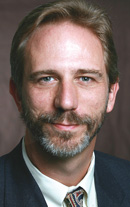
david gushee130David Gushee“All budgets reflect embedded choices that are morally significant, whether that budget is personal, familial, ecclesial or governmental,” said David Gushee, professor of Christian ethics at Mercer University. “Jesus says, ‘Where your treasure is, there will your heart be also.’ Budgets reflect what we treasure and therefore where our hearts are.”

“Everything has a moral and ethical dimension about it,” said Bill Tillman, director of theological education with the Baptist General Convention of Texas. “There are moral and ethical values both explicit and implicit in church budget operations.”

Money possesses power in itself, and it represents how power and influence are exercised, he added.

“Where we spend our money shows what we think about other people and what we think about ourselves,” said Tillman, who formerly held the T.B. Maston chair of Christian ethics at Hardin-Simmons University’s Logsdon Seminary.

Jason Edwards, senior pastor of Second Baptist Church in Liberty, Mo., said a congregation’s priorities may reflect past choices—often important ones—about ministerial staff and commitments to a geographic location.

“Those items are a part of ministry-fixed expenses for a congregation,” said Edwards, a graduate of Baylor University’s Truett Theological Seminary. “And, by the way, providing health insurance for staff does reflect the ethics of the church in a positive way. These are needed ministry expenses.”

But he added, “Beyond these basic expenses, I think what a faith community does with its discretionary funds can be very telling in regard to their ethical and moral character.”

Roger Olson, theroger olson200Roger Olson Foy Valentine professor of Christian theology and ethics at Truett Theological Seminary, agreed.

“For a Christian, everything is—or should be—a matter of ethics. Nothing’s neutral. Unfortunately, many churches have adopted a business model that tends to downplay issues of faith and morality,” Olson said.

Some observers find churches’ moral and ethical commitments in the balance their budgets achieve between administration and ministry. Others say that distinction isn’t always easy to make—and may be a false choice.

The average American congregation allocates about 80 percent to administration and facilities, according to a study this year by the Evangelical Christian Credit Union. Staff salaries represent about 58 percent of that amount, the ECCU found, although earlier studies by Christianity Today cited a figure just below 40 percent.

But those percentages tend to reduce a church’s mission engagement, said church consultant George Bullard, president of the Columbia Partnership.

“The total combined cost of staff and buildings should be no more that 70 percent of the congregational budget,” Bullard blogged last year. “When it is higher, funds available for missional formation and mission engagement are too small to creatively carry out these essential areas of ministry.”

When funding of personnel and facilities reaches 75 percent of a church’s budget, “the congregation is strangulated in its ability to do missional formation and missional engagement, and is making brick without straw,” he wrote. “At 80 percent for staff and buildings, the real work of a congregation—missional formation and missional engagement—must be altered, limited or funded from other sources.”

Church budgets are not just about supporting the organization of the church, Bullard emphasized in an interview. “They are about serving as a vehicle for the generosity of the people connected with the congregation. There they need to honor the need for a high priority on spiritual formation and missional engagement,” he said.

amy butler200Amy ButlerBut Pastor Amy Butler believes so-called “administrative functions” are in fact “frontline, on the ground, where-the-rubber-meets-the-road kind of ministry.” That assessment reflects a society shift, she wrote in a recent blog.

“In the past, we churches thought of ourselves as the backbones of society, places where good, moral and faithful people gather to pool resources so we can go out into the world and feed the homeless and convert people in order to save their souls,” said Butler, pastor of Calvary Baptist Church in Washington, D.C. “Keeping administrative costs as low as possible would help us to help the needy.”

But that role has altered, Butler said.

“We are islands in a world full of increasingly adrift people. We are places of solace and hope, community and hospitality for people who are too smart to believe in God and pretty convinced they don’t need the church—until they do.”

That requires substantial investment of resources in administration, she said.

Churches need to consider their purpose as they consider how much money to spend on building maintenance and how much to devote to missions and ministry, Olson said. “The church exists to participate in the mission of God to the world and not perpetuate itself comfortably,” he said.

Tillman likewise emphasized the importance of churches understanding their reason for being.

“The primary focus is the Great Commission,” he said, citing Jesus’ command to go into all the world to make disciples. If a church recognizes the Great Commission as its purpose, then “Great Commission values should mark the means to that end,” he added.

At the same time, churches should recognize the missional and educational value of their facilities, Tillman insisted.

“Recognize there is theology in the architecture,” he said, noting the facility may communicate to the community and to church members messages about what the church believes and values.

Congregations need to seriously confront how much they spend on their own comfort.

“Churches should ask, ‘What is there about it that makes this conducive to worship and makes it teachable and educable space to learn about and become acquainted with God?’”

As churches make budget decisions, they should listen to voices both inside and outside the congregation to determine what people perceive. Tillman noted when he taught seminary classes, he advised ministers to keep in mind “the view from the pew.”

“It may be that the Spirit of God has found residence in the people of God more firmly than in you,” he recalled telling his classes.

Likewise, if a church wants to reach its community, leaders must ask people in the community to determine what draws people to church or drives them away. “And they must be ready to hear the answer,” he added.

Churches should pray for wisdom as they seek a reasonable balance between the amount spent on program and ministries for members and how much they dedicate to missions and ministries beyond the congregation, Olson said.

“I don’t think there’s any formula that fits every church,” he said.

“I don’t think lattes in the church foyer is a big issue. But spending millions on luxurious accouterments should be.”

Congregations need to seriously confront how much they spend on their own comfort, Edwards said.

“We should wrestle with this. If we’re not wrestling with the dichotomy between our American bent toward luxury, consumerism and entitlement, we’ve probably stopped taking Jesus too seriously,” he said. “However, I also think that coffee shared within community is a way of connecting and offering hospitality. I’d say that’s part of our mission, too.”

Finding balance

Finding a balance is key, Gushee said.

“I think that sometimes practical and missions-minded Baptists forget that the mission of the church does include worship, theological reflection, Bible study, moral formation of disciples and other ‘inner’ directed work,” he said. “It also includes mechanisms for pooling resources for care for the needs of those in the family of faith. So we should not feel guilty for spending money on these priorities, sometimes congregationally and sometimes through shared collective efforts.”

That said, essential components of congregational life need not be expensive, Gushee added.

“I am convinced that the most important work the church does costs very little money—gathering in community to proclaim gospel truth, study Scripture, worship, love and care for one another, and be equipped for living out Christ’s love in the world,” he said. “Budgeting should begin by asking whether we are doing this basic work well. Then we ask what resources might be needed, including paid professional staff, to help equip us more adequately for this work.”

How much a church spends on ministries beyond its doors is a fair indicator of a congregation’s “mission-mindedness,” but not the only one, Bullard said.

“The time and energy of volunteerism is also a characteristic,” he said. “The Christlikeness of congregational participants to all demographics of people is also a characteristic. The social actions and political philosophies and actions of congregational participants—in terms of Luke 4:18-19—is also a characteristic.”

Mission-mindedness

Edwards agreed indicators of a church’s “mission-mindedness” should be broad.

“A missional Christian community also is a worshipping community,” he said. “A missional Christian community must value discipleship. Our communal worship and discipleship are necessary not only for faithfulness and effectiveness, but they distinguish us over time from an NGO. As we go out to serve, we go as a people who follow and worship Jesus.”

That doesn’t diminish the importance of missions and ministries beyond the congregation, Gushee said.

“That’s why Baptists had—and have—it right when they saw the benefit of pooling their resources for well-considered collective social and evangelistic ministries which develop ‘best practices’ with proven track records,” he said. “These are worth funding, and every local congregation has its share in that funding responsibility.”


Beauty and the budget: a balancing act

Houston-area residents know South Main Baptist Church for the beauty of its Romanesque sanctuary and for its reputation as a progressive congregation committed to meeting physical and spiritual needs, both locally and globally.

Keeping the facility beautiful and the ministries vital costs money. Maintaining balance in budgeting for building maintenance and support of missions and ministries presents a continual challenge, Pastor Steve Wells said.

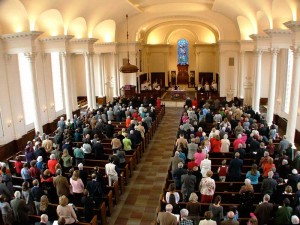
southmain fountain400South Main Baptist Church in Houston.That’s a choice faced through the ages by Christians, who believe God is revealed both in beauty and in the impoverished. Is there money for both?

“Surely the God who created a world of indescribable beauty and created us with multiple senses values aesthetics,” said Michael Clingenpeel, senior pastor of River Road Church, Baptist, in Richmond, Va. “If we’re created in God’s likeness, then we will appreciate aesthetics as an avenue to the holy, to experience transcendence.”

River Road’s Georgian sanctuary is well-suited to the liturgical worship and commitment to high musical standards that characterize the church.

“If we spend all our resources in trying to achieve beauty, we may miss opportunities to be missional,” said Clngenpeel. “But I do think there are people who become more open to God through their senses, both visual and aural. You can reach people through those things.”

South Main values excellence in worship and devotes significant time and resources to that end, from “architecture that inspires awe” to music and liturgy that touch hearts and transform lives, Wells said.

Created to worship

“If my reading of the New Testament is correct, we are created to worship God with other believers,” he said. “If I read Revelation correctly, the day is coming when we no longer will have need for Sunday school or mission trips, but there never will be a time when we are not worshipping God. We are eternally destined and designed for worship.”

South Main invests in worship because “lives are changed there,” Wells added. At the same time, the church equips members for ministry beyond the church’s walls, “to manifest the kingdom and be the body of Christ in the world,” he said.

Allan Aunspaugh, minister of music at Second Baptist Church in Liberty, Mo., said the issue can be summed up in the title of a book by worship writer Marva Dawn—A Royal Waste of Time.

“There are also those among us who would question any use of precious resources given by the faithful on ourselves,” he said. “However, the Old Testament is full of examples of the lavish gifts given to build the tabernacle and the temple. To have the best artisans build the finest worship space and fill it with ornate furnishings as an offering to a holy God is a given.”

While Jesus commands his followers to “feed the hungry and clothe the naked,” he also reprimands the critics of a woman who anoints his feet with costly perfume, calling it a “beautiful thing,” Aunspaugh added.

river road sanctuary300River Road Church, Baptist, in Richmond, Va.“When we ‘waste’ our time and resources worshipping the one and only God, our eyes become clear to see the human need around us, and we are more fitted to meet those needs,” Aunspaugh said. “It’s a precious balance, but balance there must be, lest we become skewed one way or another.

Cameron Jorgenson, assistant professor of Christian theology and ethics at Campbell University Divinity School, said Christians have addressed the question of aesthetics and morality through the centuries.

In the 10th century, Russia is said to have embraced Eastern Orthodoxy after a ruler’s emissaries returned from Constantinople with reports of magnificent churches and rituals surpassing all others in beauty, Jorgenson said. Other Christian writers have cited the therapeutic and even salvific potential of the aesthetic in spiritual and religious life, he added.

“You can’t quantify it, but it is one of the many ways we encounter God,” Jorgenson said.

Baptist blogger Tripp Hudgins, who calls himself an anglo-Baptist, said the answer to the question depends on the motivation.

“If you are spending money because you believe offering something beautiful might … help people encounter the risen Christ, then do it,” said Hudgins, an American Baptist minister currently working on a doctorate in liturgics and musicology at Graduate Theological Union in Berkeley, Calif.

Churches also must have a clear sense of their theology of worship and their theology of money—and understand that the two are compatible, he said.

“The trick for Baptists is we have this habit of saying the poor need to be fed, but we don’t need beautiful worship,” he said.

The impact of beauty

But it’s wrong to overlook the impact aesthetic and beautiful worship can have on ministry, Hudgins added.

“Liturgy is never practical,” he said.

David Gushee, professor of Christian ethics at Mercer University, said aesthetics isn’t necessarily synonymous with extravagance.

“Aesthetic beauty is relevant because we were made by God as aesthetically sensitive creatures, but some of the most profound worship I have witnessed in the world is in purely functional space dressed up with a few very basic touches,” he said.

“We need some kind of space in which to conduct the life of the church,” he added. “It can be a home, storefront or borrowed school classroom. It certainly doesn’t need to be the Taj Mahal. It does need to be adequate to meet the needs of the congregation.”

While a church should strive for excellence in all it does, it also should seek a balance, said George Bullard, president of the Columbia Partnership, a church consultancy.

The line between quality and extravagance

“There is a line that each congregation must define for itself between quality and extravagance,” Bullard said. “The quality of worship sanctuaries (and other aesthetic components) must complement the economic values of the average leadership person in the congregation.”

Roger Olson, the Foy Valentine professor of Christian theology and ethics at Baylor University’s Truett Theological Seminary, takes exception to how some congregations justify exorbitant expenses in the name of providing “meaningful” worship.

“I once belonged to a church that paid non-Christian vocalists to ‘stack’ the choir,” he said. “To me, meaningful worship is not necessarily professionally perfect worship. It’s the people of God making a joyful noise to their Lord to the best of their ability. I doubt that God is offended if someone sings off key or can’t carry a tune.”

Determine your church identity

In a metropolitan area like Houston where residents can choose among more than 500 Baptist churches—not to mention nondenominational megachurches and hundreds of congregations representing scores of other denominations—some churches might be tempted to make budget decisions based on what would attract new members and young families.

“We try not to think of ourselves as being in competition with any other churches,” Wells said. Instead, the church has determined its identity in terms of values, beliefs and worship style.

If potential new members express interest in the congregation but want to see South Main change its identity significantly, Wells gently suggests churches where they might feel more comfortable.

At the same time, South Main recognizes young families who might find the church’s worship meaningful and the ministry opportunities fulfilling will not join if the congregation does not provide a safe, clean and secure environment for their children. So, the church devotes the necessary resources to maintaining and improving preschool, children’s and youth areas.

With additional reporting by Jeff Brumley, assistant editor at Associated Baptist Press.


Hobby Lobby owner unveils ancient Jewish prayer book

AUSTIN (RNS)—Baptist businessman Steve Green unveiled what he called “the oldest Jewish prayer book ever found” and will add it to the collection of religious artifacts that will form the core of the Bible museum he is building in Washington, D.C.

steve green200Steve GreenThe artifact, dating from 840 A.D., is written in Hebrew on parchment and shows Babylonian vowel marks. Green purchased it less than a year ago from a private collection, but he declined to name the seller or how much he paid for it.

The seller likely knew the book—about the size of a large smartphone and 50 pages long—was special but did not realize its significance, said Jerry Pattengale, executive director of the Green Scholars Initiative, the research arm of The Green Collection.

The prayer book—a rare complete codex in its original tan-colored binding—includes a listing of the 100 benedictions, or blessings that some observant Jews say daily.

It may well be the “earliest connection today’s practicing Jews have to the roots of their modern-day rabbinic liturgy,” Green said.

Green, whose billionaire family owns the Oklahoma-based Hobby Lobby chain of more then 550 craft stores—made the announcement at the annual meeting of the Religion Newswriters Association.

In 2009, he founded The Green Collection, which now includes more than 40,000 ancient artifacts. They will be housed in a Bible museum planned for a site just south of the U.S. Capitol, slated to open in 2017.

Green reiterated his belief that the Bible is a foundation of the nation’s success—94 percent of U.S. households have at least one Bible, he said, despite a tremendous “brain drain” of biblical knowledge.

“Our desire is to have a nonsectarian museum that tells this book’s story and let you decide what you do with it,” he said of his yet-to-be-named museum.


Faith Digest: Pope says he’s not a ‘right-winger’

Interview with pope grabs headlines. Pope Francis’ wide-ranging interview with journalists from his own Jesuit order captured international attention, and analysts deemed it likely to cement his reputation as a leader more concerned with a pastoral approach than a doctrinal hard line. Among other things, the pope said while he has been reprimanded for not speaking much about abortion, contraception and homosexuality, he does not think it necessary to “talk about these issues all the time” and warned the church can become “obsessed” with a few doctrines. He mentioned the need to treat gays and lesbians with respect and without condemnation. “I have never been a right-winger,” he said. Sixteen Jesuit publications around the world published the interview simultaneously.

Transgender professor asked to leave Azusa Pacific. A California Christian university has asked a professor who was once its chair of theology and philosophy to leave after he came out as transgender. transgender ackley130Heather Clements / H. Adam AckleyHeather Clements taught theology at Azusa Pacific University 15 years, but this past year began self-identifying as H. Adam Ackley. Ackley said he and APU have agreed to part ways, and the university said it will continue to pay him through the academic year, but the university wants other professors to take over his current classes. Ackley also said his insurance was denied when he sought hormone treatment and “top surgery” for his chest area. “They’re giving me privacy to transition but denying medical treatment to do that,” said Ackley, who is 47, has two children and is in the process of getting a divorce. APU is an interdenominational evangelical university of about 10,000 students and 1,200 faculty located northeast of Los Angeles. It is one the largest member schools in the Council for Christian Colleges and Universities.

Moody drops beer ban. The Chicago-based evangelical Moody Bible Institute dropped its ban on alcohol and tobacco consumption by its 600-some faculty and staff, including those who work in its radio and publishing arms. The change reflected a desire to create a “high trust environment that emphasizes values, not rules,” said spokeswoman Christine Gorz. Employees must adhere to all “biblical absolutes,” Gorz said, but on issues where the Bible is not clear, Moody leaves it to employees’ conscience. Employees may not drink on the job or with Moody students, who are not allowed to drink while in school. However, the conservative school still requires students to abstain from tobacco, alcohol, illegal drugs and “sexual promiscuity” for at least one year before they enroll and during their time at Moody. “In addition, students are to refrain from gambling, viewing obscene or pornographic literature, and patronizing pubs, bars, nightclubs, comedy clubs and similar establishments,” the catalog says. “There will be no on- or off-campus dances sponsored or organized by Moody Bible Institute students or personnel.”

Number of Catholic seminarians increases. After decades of glum trends—fewer priests, fewer parishes—the Catholic Church in the United States has a new statistic to cheer: More men now are enrolled in graduate-level seminaries, the main pipeline to the priesthood, than in nearly two decades. This year’s tally of 3,694 graduate theology students represents a 16 percent increase since 1995 and a 10 percent jump since 2005, according to Georgetown University’s Center for Applied Research in the Apostolate. The center also noted annual ordinations have inched back up to the 1995 level of 511 new priests, still far below the peak of 994 in 1965.

Abercrombie & Fitch to allow headscarves. Abercrombie & Fitch will change its “look policy” and allow employees to wear hijabs after a three-year legal battle with two Muslim women was settled out of court. The settlement requires Abercrombie to report religious accommodation requests and discrimination complaints to the Equal Employment Opportunity Commission for three years and includes $71,000 in compensation for the two women. The settlement also averts a Sept. 30 trial. Abercrombie fired Umme-Hani Khan, a stockroom worker in its San Mateo, Calif., store, in 2010 for refusing to work without her religious headscarf. Khan, who had worked at the store for four months without incident, filed a religious discrimination complaint with the EEOC, which sued the retailer in 2011. In its defense, Abercrombie countered the headscarves violated its “look policy,” which was an important part of its marketing strategy. Abercrombie also defended the policy as “commercial free speech.”


Faith Digest: England debates veils in court

England debates full-face veils in courtrooms. A senior judge in England, leading members of Parliament and human rights activists are calling for an urgent debate on the explosive issue of whether Muslim women should be allowed to wear veils when they testify in court. The call for national debate follows Judge Peter Murphy’s ruling that a 22-year-old Muslim woman standing trial on charges of intimidating a witness at a north London mosque must remove her facial veil, called a niqab, when testifying so the jury can better evaluate her facial expressions. If she refuses, the woman—known only as Defendant D—could face a prison sentence for contempt of court. The judge’s ruling came days after Birmingham Metropolitan College overturned its ruling that students, staff and visitors must remove face coverings. The ruling followed protests by Muslims who launched a petition against the college decision, attracting 8,000 signatures in less than 48 hours.

American remarriage rates plunge. A new analysis of federal data provided to USA Today shows the national remarriage rate has dropped 40 percent over the past 20 years. The analysis of data comparing 2011 with 1990 shows that in 2011, just 29 of every 1,000 divorced or widowed Americans remarried, down from 50 per 1,000 in 1990; 2011 was the most recent year available for the review. The remarriage rate has dipped for all ages, with the greatest drops among those younger than 35—a 54 percent decline among ages 20-24, and 40 percent for ages 25-34. Much of the drop is due to the rise of cohabitation and older ages for first marriage—almost age 27 for women and almost 29 for men.

Catholic school launches ecumenical institute for black pastors. A 110-year-old Catholic graduate school in San Antonio has launched an ecumenical interdisciplinary program for African-American church leaders—the first of its kind among Roman Catholic schools in the United States. The Sankofa Institute for African-American Pastoral Leadership at Oblate School of Theology welcomes students from all Christian denominations. J. Alfred Smith, professor at the American Baptist Seminary of the West in Oakland, Calif., chairs the institute’s council of elders.