Gallup study shows pandemic’s lingering effects on kids

NASHVILLE (BP)—Five years after the COVID-19 pandemic, a Gallup study is sharing parents’ perspectives on how that time has affected their children’s social skills and mental health, as well as its impact on academics.

Nearly half—45 percent—of parents surveyed observe a negative impact of the pandemic on their school-age children. Out of that figure, about 22 percent say social difficulty is ongoing.

Approximately 42 percent of respondents say the pandemic negatively affected their child’s mental health, with half characterizing it as persistent.

Lisa Moore has served in student and children’s ministry pretty much since marrying her minister husband Rick 36 years ago. That’s also the amount of time she has been a nurse, the last 30 years in pediatrics.

Moore’s observations through her full-time work in the Pediatric Developmental and Behavioral Health department at Atrium Heath Navicent in Macon, Ga., and 10 years as part-time children’s minister at Lawrence Drive Baptist Church overall align with the study’s findings.

The pandemic’s effects on children appear to be far less noticeable on those she sees heavily involved in church. There is another side she has observed, though.

“There are a number of kids who previously came to church and participated who have not returned,” she said. “I feel a lot of that is due to social anxiety.”

She also has seen a change in how eager children are to become involved. There is a noticeable hesitancy among some, a nature she also observed at times to be passed along by parents.

Impact of social isolation still seen

The fourth and fifth graders of the pandemic are the freshmen and sophomores of today. She said the amount of social isolation from then still can be seen.

“Some kids were able to be around others, whether it was siblings or another close family where it was decided they wouldn’t be completely isolated from others. But some kids weren’t able to be around anyone else.”

That could’ve been the case because they were the only child in the home or the family decided to isolate completely. Either way, those children weren’t left with much more interaction than a screen.

“Electronics played a huge role,” she said, noting how screens were instrumental not only for socializing, but for school.

Melody Wilkes is the director of Preschool and Children’s Ministry at First Baptist Church in Brunswick, Ga., as well as on the leadership team for a private Christian school. She has monitored the pandemic’s impact on children from both roles.

Although not as pronounced as its impact on mental health, the Gallup study nevertheless reported 36 percent of parents saying their children’s math skills were negatively impacted, as were reading (31 percent) and science (30 percent) proficiencies.

The survey affirms what she has noticed among elementary and middle school-aged children.

“The overall academic scores for our students are down from pre-COVID levels,” she said. “I don’t know if that is due to COVID or teachers and leadership at individual schools, but the fact remains that our kids are still behind where they used to be.”

Busy schedules create other problems

Children and families in her direct line of observation have largely overcome social challenges from the lockdown, Wilkes said. That can be attributed to an abundance of activities available since then and a desire to get outside. But that also has come with a cost.

“Schedules are very busy, with some parents engaging their kids in multiple activities during the week as well as on the weekends,” she said. “Those build social skills and friendships, and that’s healthy. But my concerns lie with overscheduling our children without prioritizing Christian training.

“A lot of that falls to the church to provide those opportunities. However, many churches cut back on their activities during COVID and didn’t fully re-engage, taking the opportunity to reset the ministry. I believe this has impacted our children’s faith journey in a big way.”

Moore’s church has refocused on community and how to make it more prominent for families and children. The principles come from Flip the Script, a resource from Lifeway Christian Resources NextGen director Chuck Peters.

“It stands for Friends, Leaders, Influencers and Pastors,” she said. “These are the main influences on if kids stay in church. If they have a friend—and if their parents have friends at the church—they will be more likely to come and get plugged in.”

The rest of the acronym brings home the importance of community, Peters said.

“Coming out of the pandemic, we did a study with Lifeway Research in partnership to learn about the specific needs of Gen Z and Gen Alpha from a cultural standpoint,” he said. “Their worldview is fundamentally different.

“The millennials are the first generation in North America where less than half identify as Christian or attend church regularly. It continues to decline among generations. Gen Z is the first where the majority are not Christian but have a secular viewpoint.”

The result is a generation that no longer has a “cultural gauge” for determining what is good, or right from wrong, he added.

Peters has been in his role at Lifeway for 11 years and in children’s ministry for 16 years. His anecdotal observation is many adults have put the mental health effects of the pandemic behind them. For those children who endured it in their formative years, though, the memories and impact linger.

It’s a generation that has experienced “toxic stress and trauma” while becoming more connected than ever, digitally speaking, he said. The church must be ready to help them.

Every child and every student needs an advocate in the church who isn’t their parent, an adult who genuinely cares for them. That adult helps instill and model a biblical worldview. Introduce them to a personal relationship with Christ while modeling it.

“It’s not enough to know about Jesus. We have to know him personally and relationally for a generation longing for relationship,” he said. “Give them the gospel. Be a leader that loves them and gives them a biblical worldview.”



Student ministry leaders and parents share goals

BRENTWOOD, Tenn.—Anecdotes often portray parents and student ministry leaders at odds, but both groups share a desire to see the next generation grow spiritually. Each also believes they have a positive, healthy relationship with the other.

A study from Lifeway Students and Lifeway Research explores the perspective of churchgoing parents of teenagers and student ministry leaders in local churches. Both emphasize the spiritual health of their students and say they want to work together to see the next generation become disciples of Christ.

“For believing parents, a key goal is that their teenagers develop a genuine faith in Christ—a desire shared by student ministry leaders,” said Chad Higgins, coauthor of Define the Relationship: Growing a Parent Ministry that Brings Families and Churches Together, a book based on this research.

“Both want students to grow spiritually healthy and mature in their walk with Christ. To align on this, we need to move beyond tracking church attendance as the sole measure of faithfulness and help parents understand and discuss terms like ‘spiritually healthy’ or ‘growing in Christ’ in meaningful ways.”

What do Christian parents say?

Lifeway Research surveyed 1,001 parents who regularly attend church and have at least one child in grades 6-12. They shared hopes for their children, experiences with student ministry and if they feel they could use some help.

When asked their biggest priority for their student’s future, 2 in 5 (41 percent) say their main goal is spiritual well-being. Around half as many point to emotional well-being (19 percent) and physical well-being (18 percent).

Fewer choose financial well-being (9 percent), having a profession they enjoy (9 percent) or relational well-being (4 percent).

Most parents place spiritual (71 percent), emotional (66 percent) and physical (60 percent) well-being of their student’s future as one of their top three priorities.

Almost half (45 percent) say financial well-being, a third (32 percent) choose their student having a profession they enjoy and a quarter (25 percent) say relational well-being is one of their top three highest priorities.

“All the potential priorities listed for parents are good things,” McConnell said. “This is the tension that exists in every Christian home. Parents are forced to consider if seeking the kingdom of God and encouraging their student to do the same is of first importance or one of many things they want.”

Seven in 10 churchgoing parents (71 percent) actively encourage their students to be engaged in the Christian faith, including 37 percent who strongly encourage them.

Far fewer say they leave their spiritual development up to their student (12 percent), share information about different faiths without trying to influence their student (11 percent) or leave their student’s spiritual development up to their church (6 percent).

Most parents feel their encouragement has paid off. Seven in 10 (72 percent) say their student often or consistently lives out a belief in Jesus Christ, with 42 percent saying their student does so often and 30 percent saying they do so consistently. One in 5 (20 percent) say their student has shown interest in following Jesus.

Still, parents have concerns about their student and their spiritual growth. More than 9 in 10 (93 percent) are at least a little worried their student will become distracted by worldly things. Nine in 10 (90 percent) have some concern about their student giving into peer pressure.

Almost as many (87 percent) say they have some level of concern about their student focusing on professional growth while neglecting their spiritual growth. Four in 5 (80 percent) are at least a little concerned their student will feel unsure about their faith.

Additionally, 5 in 6 (85 percent) say they’re at least a little concerned about their student regularly attending church once they move out.

“Church leaders often notice students’ high commitment to sports and extracurriculars and can feel like they compete with church involvement,” said Higgins, co-host of the Youth Ministry Booster podcast.

 “Without real relationships with families, it’s nearly impossible to have priority conversations that don’t come across as accusatory or speculative. This lack of connection can fuel the perception of conflicting goals, even when the core desires of leaders and parents align.”

Most parents (62 percent) say they’re equipped to help their student develop spiritually, while 36 percent feel the opposite. Yet, 94 percent agree they want to become more equipped for this, and just 5 percent disagree.

This may be where parents would like help from student pastors. Only 2 percent say they’re not willing to partner with their church’s student leader to help their student grow spiritually, but 72 percent say they are open to that partnership. One in 5 (20 percent) aren’t sure, and 7 percent say their church doesn’t have a student ministry leader.

What do student ministry leaders say?

For their part, student ministry leaders want to partner and work with parents, but many have limited time and feel overwhelmed. Some leaders are full-time staff members, while others serve as volunteers.

“Student ministers and other leaders are working hard to create a safe, nurturing environment where students can grow spiritually,” Higgins said.

“They’re also seeking true partnership with families, moving beyond a one-size-fits-all discipleship model. Leaders want to communicate where students are and collaborate on the best ways to foster spiritual growth together.”

The average week for a student ministry leader includes a large portion of their time engaged in preparation work alone (11 hours) or with church staff (seven hours).

Most other time is invested in the students themselves, including four hours at student ministry activities, two hours with students one-on-one and two hours with students at their extracurricular activities or hanging out. Much less time involves adult volunteers in the ministry (two hours) or parents (one hour).

Still, equipping parents is an area in which student ministry leaders want to improve. When asked what they’d love to see their ministry do more of next year, if they could do it well, leaders often pointed to increased involvement with parents.

Around 7 in 10 say they’d want to increase their equipping of parents with tools to disciple their students (70 percent) and training of parents to disciple their students (67 percent).

Many also say that if they could do it well, they would love for parents and student leaders to grow in their relationships with each other (46 percent) and for parents to grow in their relationships with each other (41 percent).

Almost as many leaders say they’d want to improve sharing information with parents to keep them aware of new elements of youth culture (38 percent).

Half of student ministry leaders (52 percent) say they would want to train Bible study leaders of students next year. Fewer point to a priority of offering big events to attract more students (33 percent). Another 23 percent would want to offer girls’ ministry activities.

As leaders see a need to do more training and equipping of parents, they also see parents who want to be engaged in the spiritual development of their student.

Three in 4 (76 percent) say parents in their church are concerned about their student’s spiritual development. Additionally, 7 in 10 student ministry leaders (71 percent) say parents in their church are proactive in encouraging their student to engage in the Christian faith.

Despite all the desire to partner with parents and do more training, most student ministry leaders (57 percent) say they don’t have a clearly defined strategy for ministering to parents.

 “Student ministers should recognize it’s tough for parents to replicate something they’ve never experienced,” Higgins said.

“If parents grew up without a model of discipleship in the home, they’re learning from scratch. Understanding this can help ministers approach parents with empathy and support as they navigate their role.”

Student ministry leaders aren’t only concerned about what happens at church. Around 3 in 4 (73 percent) say they have sought to partner with parents to encourage spiritual activities at home, but some have been disappointed with the results.

More than 2 in 5 leaders who have tried to partner (43 percent) say parents don’t even try to engage at home in the spiritual activities they suggest, while 40 percent of leaders say the parents at least try it.

Three in 10 (30 percent) say the parents like it, but half as many (15 percent) say the students enjoy it.

A quarter believe the activities have worked for many families for a short time (25 percent), 7 percent say these activities worked for many families for a long time and 15 percent don’t think they’ve worked for most families. Around 1 in 6 (17 percent) say the results have been very encouraging.

Ministry leaders point to several challenges that have limited the success of these efforts. Around 2 in 5 (42 percent) say parents don’t have time to prepare. Three in 10 (31 percent) believe the activities have been things parents did not want to do, while 27 percent say the students haven’t wanted to participate.

A quarter (24 percent) say church leaders don’t have time to plan and communicate the connection between the church’s efforts and parents’ efforts in students’ spiritual development.

One in 10 student ministry leaders say the parent-student activities expected too much time together (11 percent) or the format of the activities has not been enjoyable (11 percent). One in 20 (5 percent) say the topics haven’t been relevant.

Some leaders blame busyness (7 percent), while others say it’s apathy and the activities not being a priority (4 percent). A few say the parents’ efforts are not tied to the church’s efforts because the parents are non-Christian or unchurched (3 percent).

“Holding two informational meetings a year won’t shift the tide of discipleship in the home, if that’s our goal,” Higgins said. “We want to see leaders build ongoing, meaningful connections that empower families to grow together in faith.”

The online survey of 1,001 student ministry parents was conducted Jan. 30 to Feb. 9, 2024, using a national pre-recruited panel. The sample provides 95 percent confidence that the sampling error from the panel does not exceed plus or minus 3.2 percent.

The online survey of 1,056 student ministry leaders was conducted Feb. 8 to Feb. 28, 2024. The sample provides 95 percent confidence that the sampling error does not exceed plus or minus 6.2 percent.


Mission partnerships take shape at Ascent gathering

(ALEXANDRIA, Va.)—A “movement” focused on reengaging North America with the gospel that has been brewing for almost a decade is beginning to take a more defined shape, and Texas Baptists have quite a few seats at the table.

Dennis Wiles, pastor of First Baptist Church in Arlington and chair of the Ascent council, welcomed around 200 invited participants—called curators—to the second formative gathering of Ascent.

When asked when the movement began, Wiles said he “would say it began when Jesus ascended into the heavens and gave the church this message and this mission.” However, the Ascent council, a group of eight at the time, first began conversations in 2016.

The initial group included Texas and Virginia Baptists, who felt like they’d lost their denominational home beyond their local and state affiliations—particularly the national and international missions agencies of their denomination.

Chris Backert provides background on the Ascent movement at the network’s second curators gathering. (Photo / Calli Keener)

It became clear in the years of dreaming about this new network, a sense of disenfranchisement from denomination was not limited to moderate Baptists in two states, Wiles explained.

Centrists across denominational lines were finding themselves in a similar place of loss.

Wiles said he’d been praying God would use the gathering—this new group assembled from orthodox, centrist Christians from a variety of denominational backgrounds—to discern together what God is up to in this time.

And like the “200 sons of Issachar” in 1 Chronicles 12:32, “who understood the times and knew what Israel should do,” he hoped the curators would understand the times and know what it is God wants them to do to “re-evangelize North America, and ultimately take the gospel to the world.”

Chris Backert, senior director of Ascent, explained when the group who envisioned Ascent began meeting to talk about a new way to cooperate for the gospel mission, they recognized the world was heading into a time of rupture.

They observed this era of upheaval was evident in social-political shifts and uneasiness. And the council began to wonder if this upheaval might be the sort of upheaval God sometimes uses to bring in a new season of revival in the church.

Starting with the gospel

Backert said they asked themselves: “What if we don’t start with the church? What if we started with the gospel?”

The early council decided to look at things from the perspective not of what does the church need, but of what does the gospel need in order to re-evangelize North America, “and we worked backwards from there.”

As they began to talk about that, “a great unity came around the idea that we really need a fresh evangelization, reengagement, awakening, whatever word you prefer. We really need a fresh outpouring of the Holy Spirit to see new generations come to faith in Christ all over North America. That’s the gospel need.”

COVID-19 slowed Ascent’s development but accelerated centrist believers’ sense of loss of ecclesial identity for the sake of the mission, Backert said. “People feel not home in their own home … and yet we feel this need, we really want to re-engage North America with the gospel.”

Wissam al-Saliby of 21Wilberforce; Cariño Cass, executive director of Churches Ministry Among Jewish People; and Adria Nunez and Guillermo Leon who lead Church Planters/Network, discuss sowing the gospel amidst opposition. The panel was facilitated by Lee Spitzer, retired general secretary of American Baptist Churches USA. (Photo / Calli Keener)

Backert said coming out of the season of rupture exacerbated by COVID, “we’re in a season of realignment—and you can see this playing out all over the world—and we’re in a season of ecclesial realignment.”

The gathering of individuals of diverse ecclesial backgrounds with a common gospel goal “couldn’t even have been conceived of 10 years ago,” Backert noted, but “in 2025, it makes perfect sense.”

As in J.R.R. Tolkien’s Lord of the Rings, “the old alliances have died.” And in this time of realignment, “it’s time for new alliances that make sense for the days ahead,” he asserted.

Backert explained Ascent is a voluntary, or “opt-in” network—“a cooperation of the willing”—but with the framework of a covenant to provide stability. The guiding covenant comes from the Capetown Commitment of the Lausanne Movement.

Based on the “connectionalism” that led to conventions, conferences, dioceses or other forms of association, Ascent aims to provide a common future for previously disparate groups—cooperating to re-evangelize North America and beyond.

“We’re trying to walk and work together for the sake of the Great Commission,” Backert said.

But Ascent is not going to look like what has been seen before, because it’s composed of individuals who may share a common future, but who do not share a common past, Backert said.

Texas connections

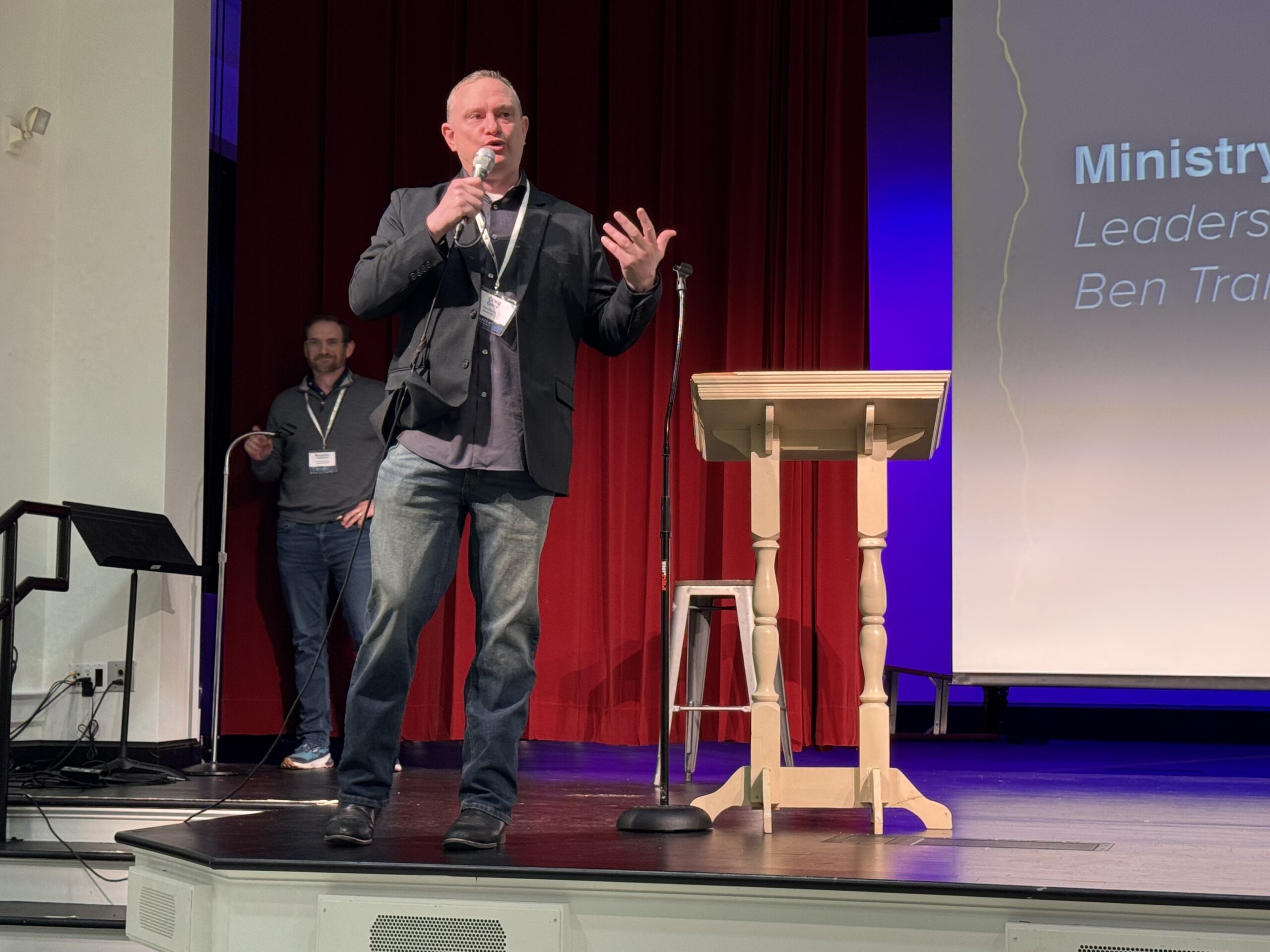
Craig Curry of Plano speaks at the Ascent curators gathering at First Baptist Church in Alexandria, Va. (Photo / Eric Black)

Texas Baptists participated in or moderated several panel discussions, highlighted the ministries they lead and led breakout sessions. Those sessions were treated as “task force” opportunities both to discuss how curators’ ministries currently meet needs in the subject area under discussion and to envision how Ascent can continue developing and/or supporting ministries.

Wissam al-Saliby, president of Baptist World Alliance-connected 21Wilberforce, spoke about the organization’s work to advocate for religious freedom during a panel about “sowing the gospel in the face of opposition.”

Al-Saliby noted sowing the gospel brings persecution. The good news is “churches are present, active and engaging all over the world,” he said, but with that comes challenges of persecution, as well as lower-level forms of discrimination and opposition.

In India in 2023, conflict among tribal groups in Manipur claimed the lives of 200 Christians, destroyed 300 churches and left 28 missionaries without salaries, he noted. The violence there and similar violence in other countries has led to “a hardening of the church’s heart towards the Muslim population,” and that’s also opposition to the spread of the gospel.

Al-Saliby explained 21Wilberforce was founded 11 years ago in Texas, to work with churches “to address the plight of religious persecution” and advocate for religious freedom for everyone, “because either everyone has religious freedom, or no one has religious freedom,” he noted.

Additionally, the organization seeks to strengthen the transfer of advocacy knowledge to locals around the globe so they can advocate for religious freedom in their contexts. Al-Saliby urged Ascent curators to be sure to factor in the mission work being done locally to fight for religious freedom, as the movement continues to take shape.

Todd Still, dean of Baylor University’s Truett Theological Seminary, moderated a panel discussion on sowing the gospel through preaching and developing preachers of the gospel.

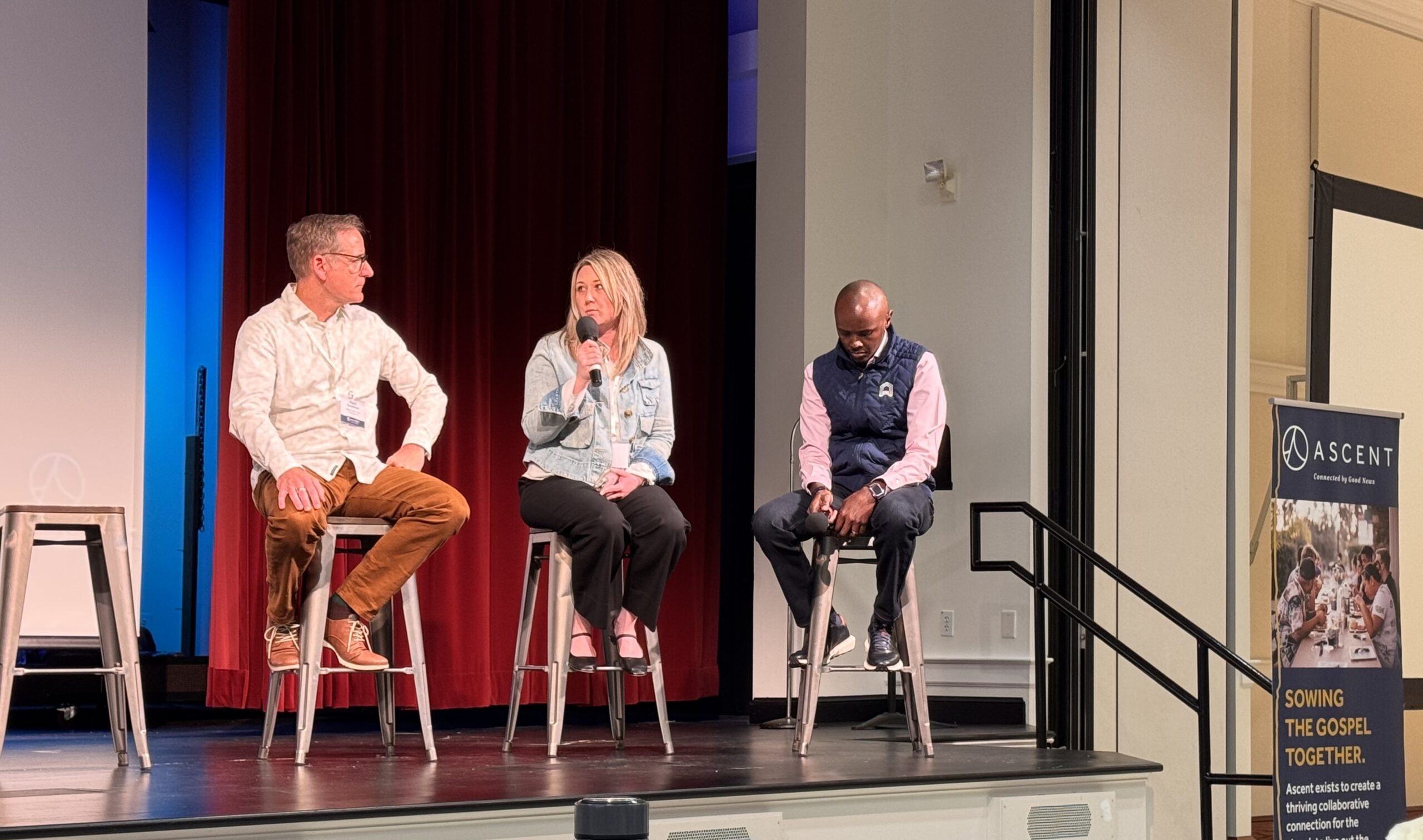
Mark Goodman, Ashley Berryhill and Kevin Nderitu participate in a panel on sowing the gospel through the local congregation at the Ascent curators gathering in Alexandria, Va. (Photo / Eric Black)

Kevin Nderitu, executive pastor of District Church in Washington, D.C.; former Texan Mark Goodman, lead pastor of Rabbit Creek Church in Anchorage, Alaska, a congregation recently removed from the Southern Baptist Convention; and Ashley Berryhill, director of Global Engagement at First Baptist Church in Arlington, participated in a panel discussion on “sowing the gospel through the local congregation.”

Cindy Wiles, of First Baptist Church in Arlington, director of the Restore Hope mission organization; Jim Ramsay of TMS Global; and Jennifer Lau of Canadian Baptist Ministries participated in a panel on “sowing the global gospel … beyond the local congregation.”

John Upton, retired executive director of the Baptist General Association of Virginia, facilitated the discussion on how to do global missions responsibly—out of love, with humility and with a “round table” approach, based in mutuality that breaks down barriers between local and global missions.

Other Texans who presented included: Rand Jenkins, chief strategy officer with Texans on Mission/On Mission Network; Arthur Jones, pastor of St. Andrews Methodist Church in Plano; Craig Curry, pastor of First Baptist Church in Plano; and Bruce Webb, pastor of First Baptist Church in The Woodlands.

Carey Sims explains the work she will be leading with Junia Network. (Photo / Calli Keener)

Carey Sims of Cliff Temple Baptist Church in Dallas will be project lead for the Junia Network, a yearlong Ascent cohort initiative offering a place for women in ministry to share, learn and resource one another.

The initiative is named after Junia, who Paul affirms along with her husband in Romans 16:7 as being “in Christ” before he was and outstanding among all apostles.

The gathering also included a celebration service recognizing curators who had been ordained or licensed by their churches during the past year and anointing minsters who had assumed new ministry roles. Several current Texas Baptists and others who previously served in Texas were among those recognized or anointed.


Gelsinger hopes to make AI a force for good and for God

(RNS)—Pat Gelsinger longed has believed faith and technology can be forces for good in the world. Now the former Intel CEO hopes to put AI to work for God.

On March 24, Gelsinger was named executive chair and head of technology for Gloo, a Christian tech platform that seeks to “catalyze the faith ecosystem through AI and other breakthrough technologies.”

Gelsinger, an investor and board member for about a decade, will take a more hands-on role now, Gloo said in a press release. The CEO from 2021-2024 of Intel, a major computer chip manufacturer, Gelsinger said the timing was right to bring his tech leadership experience and his faith together.

“I think it’s a critical phase for Gloo’s growth, but also a critical phase for technology and shaping AI as a force for good,” Gelsinger told Religion News Service. “I’ve lived my life with the two pillars of faith and technology, and Gloo allows me to unify them in a powerful and profound way.”

Gelsinger said faith leaders often have taken a backseat when new technologies, like the internet or cell phones, were adopted and had little to say about how such technologies could be used in an ethical or helpful way. He hopes to change that when it comes to AI.

“We believe that how AI is shaped is even more important, because fundamentally, technology is neutral,” he said. “It can be used for good or bad, it can be shaped for good or bad, and we believe that this is the moment to make sure it’s shaped as a force for good.”

Benchmarks for ethical use of AI

Last month, Gloo announced what it calls “Flourishing AI Standards,” which were developed with research from the Global Flourishing Study, a collaboration between the Harvard Human Flourishing Program, the Baylor Institute for Studies of Religion, Gallup, and the Center for Open Science. The idea was to provide benchmarks for ethical use of AI.

“Trust in AI is twofold,” Gelsinger said in announcing those standards. “It requires technology that is high-performing, dependable and secure, while also aligning with users’ values and ethically advancing collective human flourishing.”

Along with his work with Gloo and leadership roles at Intel, Gelsinger also has been the longtime board chair of Transforming the Bay with Christ, a “coalition of business leaders, pastors, and nonprofit leaders” in the San Francisco Bay area. That has allowed him to be both a leader and a customer of Gloo, he said.

Founded in 2013, Gloo raised $100 million in investments last summer to expand offerings like its Discover platform, which offers churches access to free and premium services. The company also recently invested in Barna Group, an evangelical research company, and in a communications company owned by Carey Nieuwhof, a Canadian author, pastor and podcaster.

In an interview, Scott Beck, co-founder of Gloo, said the company offers churches and faith groups access and connection through its cloud-based services.

Churches can sign up and get access for clips from “The Chosen,” the hit series about the life of Jesus, or use Gloo’s texting service to reach church members or read stories about church trends. They also can order products, like sermon series kits and choir materials, and access paid services.

The idea is to give every congregation—large or small—access to the same kinds of services, Beck said. So far, about 100,000 Christian leaders have signed up with Gloo.

“We do not sell technology to a church,” he said. “We never talk to the technology department. That’s not what we do. We have a platform. They go on it, they sign up, they get things that they want.”

Beck said Gloo starts with an evangelical Christian perspective but is able to customize services for different denominations and congregations. He pointed to a service called “Faith Assistant,” which allows the church to have a chatbot that answers questions based on a church’s beliefs and content from the Bible.

“We use AI to help answer those questions with the body of biblical content, but we lay on top of it all the sermons that have been preached at that church and the content that’s come out of that church to actually be able to customize all the way down to the church level,” Beck said.

“These capabilities are very powerful, and we’re super excited to be able to be bringing them to the church.”

Beck said Gloo wants to be seen as a trusted alternative to Big Tech companies and a place that shares the values of its customers. That’s important with AI, especially when people are looking for spiritual answers.

“We look at what the internet and the Big Tech companies are doing, and we do not think they service this ecosystem,” he said. “When you ask the open AI model, ‘Tell me about God,’ we’re going to make sure that we’re giving an answer that our community is happy with.”


Are evangelical clergy outliers on science?

(RNS)—For years, studies have suggested many white evangelical Christians reject the scientific consensus that human actions are driving climate change. A just-published study of clergy in America confirms it.

The National Survey of Religious Leaders reveals 78 percent of white evangelical clergy reject the assertion human actions are the cause of climate change. By contrast, only 27 percent of Black Protestant clergy and 21 percent of liberal or mainline Protestant clergy reject it.

The study of 1,600 U.S. congregational leaders across the religious spectrum was conducted in 2019 and 2020, and some findings have been released over the years, but the entire report was just published.

While white evangelical clergy reject the idea humans are responsible for climate change, they are not always anti-science, the study reveals.

“I think there’s very little reason to think anything’s changed much in the last five years,” said Mark Chaves, the study’s principal investigator and a professor of sociology at Duke University.

Most clergy, including white evangelicals, endorsed a medical approach to treating depression in addition to a spiritual approach. The study found 87 percent of evangelical clergy said they would encourage their congregants to seek help from a mental health professional when suffering from depression. The study showed 85 percent of Black Protestants, 97 percent of mainline Protestants and 99 percent of Catholics agreed.

“Clergy overwhelmingly adopt either a wholly medical or a combined medical and religious view of depression,” the study concluded.

Likewise, 69 percent of all clergy, and 64 percent of white evangelicals in particular, endorse palliative care at the end of life, agreeing in some circumstances, patients should be allowed to die by withholding possible treatments, suggesting an underlying support for a medical science approach.

The contrast between the two views of science—the rejection of climate science but the acceptance of medical science—is striking, and researchers suggest one motivating factor: politics.

“Differences among clergy about the more recent issue of climate change suggest a connection to partisan politics more than to theology,” Chaves said.

White evangelicals overwhelmingly vote Republican—Donald Trump won the support of about 80 percent of white evangelical Christian voters in 2016, 2020 and 2024, according to AP VoteCast. And the Republican Party has become opposed to any policy reforms on climate change in recent decades.

When it comes to climate change, white evangelicals may be driven by their politics more than their religion. Republicans, at least prior to the pandemic when the study was fielded, have not been steadfastly opposed to medicine—which may be one reason evangelicals are more likely to accept it.

“It used to be the thinking that religion always came first and people’s religious commitments drove their politics,” Chaves said. “There’s been more recognition lately of how it goes in the opposite direction, and this is kind of a version of that too.”

Robert P. Jones, the president of Public Religion Research Institute, agreed.

“Climate change has been politicized in a way that mental health has not,” Jones said.

“So, it’s not that (evangelicals) don’t believe in climate science and they do believe in the science behind medications and psychological counseling. It’s that rejecting climate change has been established as a necessary tribal partisan belief in a way that rejecting mental health treatment has not.”

The National Survey of Religious Leaders, though fielded before the coronavirus pandemic, offers a detailed picture of the country’s clergy with demographic data on clergy age, sex, congregation size, compensation, health and well-being. It is considered the largest, most nationally representative survey on clergy available.

Additional findings from the survey include:

  • In 2019-20, the median primary congregational leader was 59 years old, seven years older than the median clergy age of 52 in a similar 2001 survey. Most U.S. clergy of all faiths (66 percent) found their calling as a second career.
  • Women accounted for only 17 percent of congregations’ primary leaders, though up from 11 percent in 2001 when a similar study of clergy was published. Most of those women clergy leaders were concentrated in liberal mainline traditions; 32 percent of those churches are led by women.’
  • Among the clergy leading congregations (890 of the 1,600 surveyed), 66 percent were white, 26 percent Black, 5 percent Hispanic and 3 percent Asian. Catholic priests were the most diverse racially, with 21 percent who were Hispanic.
  • The median primary clergy leader was paid $52,000 for working full time. The study showed 7 percent of full-time primary clergy earned $100,000 or more, while 20 percent earned less than $35,000 a year.
  • Most congregations no longer provide their leader with housing. Only 21 percent reported that they lived in a manse, parsonage or rectory, a drop from 39 percent in 2001.
  • U.S. clergy are pretty happy and physically healthy. Only 5 percent of clergy said their health was poor or fair, compared with 12 percent in the general population, according to a Centers for Disease Control study. Mainline clergy were somewhat less happy and satisfied in comparison with other religious traditions.
  • The vast majority of clergy—97 percent—were very or moderately satisfied with their work, and 85 percent felt satisfied with their life almost every day. The survey was conducted before the coronavirus pandemic, and some studies post-pandemic have shown an increase in clergy burnout and stress.

The survey, funded by a grant from the John Templeton Foundation, had a margin of error of 3.5 percentage points.


African theologians look to Nicene Creed anniversary year

NAIROBI, Kenya (RNS)—As Christian denominations in Africa join the preparation for the 1,700th anniversary of the First Council of Nicaea, clerics, theologians and laypeople are embracing the moment as a chance to reshape the continent’s spiritual and social future.

The gathering of bishops in Nicaea—now Iznik, in Turkey—in 325 was called by Roman Emperor Constantine to settle factionalism in the early church caused by Arianism, a theology that said Jesus was not divine, that originated in Africa.

“Why it was held is because an African cleric like myself raised issues that needed to be addressed concerning the doctrine of the Holy Trinity,” said Stephen Njure, a Catholic Church historian at Moi University in western Kenya. “That is Arius. Arius came up with a heresy that necessitated the council.”

The anniversary “has everything to do with us, since one of us prompted its being, because of our need for clarity of faith,” Njure said, adding ideas like Arianism, which the council declared a heresy, help the church by forcing it to formulate doctrine and purify its teachings.

In the late spring of 325 at Nicaea, 318 bishops deliberated on controversies on the nature of Christ, both human and divine, and agreed on a standard statement of faith still known today as the Nicene Creed and said across much of the globe each Sunday. The creed defines God as one entity manifested in three persons: Father, Son and the Holy Spirit.

The bishops meeting at Nicaea also established a date for Easter and laid the ground for early canon law.

Protestant, Catholic and Orthodox churches around the globe are celebrating the anniversary, with conferences looking afresh at the council and the lessons it can teach on Christian unity amid divisions and a troubled globe.

Global meetings slated for October and November

In November, the World Council of Churches will hold a conference in November titled “Towards Nicaea 2025: Exploring the Council’s Ecumenical Significance Today,” and a global meeting of evangelical Christians is planned for October in Istanbul.

Last year, before he fell ill, Pope Francis told Eastern Orthodox priests visiting the Vatican he hoped to travel to Turkey to celebrate the creed with the Ecumenical Patriarch Bartholomew I, and in January, Francis expressed his willingness to work on once again finding a common date for Easter.

The two branches of Christianity, separated by the Great Schism of 1054, follow different calendars, with the Eastern Orthodox keeping to the Julian calendar and marking Easter a week after the West.

In Egypt, the Coptic Orthodox Church will host the Sixth World Conference on NICAEA organized by the World Council of Churches.

“[This] is more than a gathering of church leaders; it’s a chance for Africa to reshape its spiritual and social future,” said Jackie Makena, a Methodist theologian and adjunct lecturer at St. Paul’s University in Limuru, near Nairobi, who stressed that for Africa, Nicaea was about reclaiming its narrative.

“Amid centuries of colonial influence, the conference offers a platform for African voices to lead conversations on decolonizing theology, leadership and social justice, climate justice and racial justice issues,” Makena said.

According to the theologian, across the continent, preparations for the conference in Egypt are in full swing.

“Delegations, including different world communions and theological institutions, are hosting public lectures, paper presentations, and engaging in community discussions,” she said.

Makena said the meeting would show Africa’s rich theological heritage and come out with new ways of thinking about faith unbound by colonial legacies.

“Institutions and leaders are uniting to ensure that Africa’s perspective is not only heard but also forms a cornerstone of the broader ecumenical dialogue,” she said.

John Ngige Njoroge, an Orthodox priest who heads theology and interfaith relations at the Africa Conference of Churches, said Nicaea was the first ecumenical council that demonstrated how Christians could unite to find solutions to challenges, including theological disagreements.

“This is very significant for Africa, where today the propagation of misleading theologies is a threat to Christian unity and human dignity,” Njoroge said.

Makena, the Methodist theologian, hopes the anniversary celebration results in a revitalized, inclusive church that bridges divides, whether they be theological, racial or generational.

“As Africa plays a pivotal role in this conversation, the hope is that its renewed perspective will inspire unity in diversity,” she said.


Barr: Scripture doesn’t make rules for pastors’ wives

WACO (RNS)—Imagine a job interview where, to get the gig, your spouse must answer intrusive questions about their fertility, personal religious beliefs and their own career trajectory.

Such interrogations are common for many pastors’ wives across white evangelicalism, according to medieval historian Beth Allison Barr—herself a pastor’s wife and the James Vardaman Endowed Chair of History at Baylor University.

 In her new book, Becoming the Pastor’s Wife: How Marriage Replaced Ordination as a Woman’s Path to Ministry, that’s only the start of the often-unspoken expectations awaiting many women who pair up with pastors. Their appearance, homemaking and parenting are often under scrutiny, and their unpaid labor is considered a given.

Barr isn’t arguing for an end to the role itself, but she wants everyone to know that the job’s expectations are based in culture more than Scripture. Though the only avenue in some denominations for women to pursue a calling to ministry, “pastor’s wife” is not the result of a biblical mandate, Barr argues, but of history.

RNS spoke to Barr, author of the 2021 bestseller The Making of Biblical Womanhood: How the Subjugation of Women Became Gospel Truth, about her own experience as a pastor’s wife, the medieval Christian women who pastored both women and men, and her thoughts on how white evangelical Christians might reframe their view on pastors’ wives. The interview has been edited for length and clarity.

What kind of expectations did you find are placed on pastors’ wives?

Probably the hardest expectation that’s often placed on women in these roles is to be a mom. This has absolutely nothing to do with whether a man is doing a good job as a pastor, yet it’s an expectation that a minister’s family should have children who are well-behaved.

For women who experience infertility—and I was one of those women—what does it do when the pastor’s wife can’t be a mom? I remember being confronted head-on by people in more than one congregation about my inability to produce a child. I think it really highlights the weirdness of this role, this unofficial position that is connected to another person’s job.

What does the Bible say about the role of a pastor’s wife?

There is no clear example to point to. And so, here we have this role that has no clear biblical grounding. Almost all of the female leaders in the Bible, we know very little, perhaps nothing, about their marital status. We’ve taken this role that is nowhere in the Bible and then have held it up as sort of the ideal model for biblical women, for godly women.

What historical factors led to the role of the pastor’s wife being what it is today?

In the early Christian world, there was a lot of emphasis placed on unmarried people serving or people giving up their spouses. The Reformation changes this. For early Protestants, the way you distinguished a Protestant minister was that he was married. In many ways, the minister’s wife becomes a symbol of resistance. She literally embodies this conversion experience. These women broke the law to get married, and marriage becomes part of the job description to be a minister.

For a good while, though, we still see women who are serving in independent ministry roles, or women who are married to pastors who are rejecting the pastor’s wife image. There were multiple options for women, and it’s not really until the latter part of the 20th century that we begin to see this idea that the best way to be in ministry as a woman is to be married to a pastor.

How is the decline of women’s ordination related to the rise of the pastor’s wife in the evangelical church?

I write about some powerful women who were serving as pastors to men in the Southern Baptist Convention well into the post-World War II era. This is where the shift happens. In the aftermath of World War II, there was an effort to get men back into jobs, to get them into college, in part by discouraging women from being in jobs that were seen as in competition with men.

In the 1960s and ’70s, we see more women in seminary wanting to be pastors. It is also at this moment that we begin to hear, in more conservative spaces, voices saying it is unbiblical for a woman to be a pastor. They begin fighting against women’s ordination while elevating the pastor’s wife role. Women can still be in ministry, but you have to do it “God’s way.”

The pastor’s wife role begins to be weaponized against female pastors, and to be made extremely visible. Especially in the ’90s, you see seminaries creating institutes to train up pastors’ wives. This is also when you see the spike in this genre that is geared towards helping women become pastors’ wives.

Your book’s cover underscores some of the book’s messages.

Women have throughout church history served in independent leadership roles that were recognized and ordained by men—until now. Members of the Southern Baptist church are pushing to pass this amendment that says women cannot serve in any designated pastoral position, which is one of the most restrictive limits placed on women in Western church history.

I wanted to show in this book cover the scope of history, as well as the narrowing of a woman’s ministry role. We have this image representing this woman who’s this 1950s and ’60s “Leave It to Beaver” minister’s wife. And behind her is an early medieval saint, Catherine of Alexandria, who became the patron saint of preachers. We have this woman who encapsulates the leadership roles that women held, and now we have this reduction.

Do we have any alternatives to the white evangelical pastor’s wife?

I found some stark differences in books written by Black pastors’ wives that gave me hope. They don’t argue that it’s a biblical role. They say it comes from history, stemming from enslaved communities where the stable characters were women who were spiritual leaders and church mothers. I’m thinking specifically about a 1976 book written by Weptanomah Carter.

Especially in these Black pastors’ wives books before 2005, we see that many are co-pastors with preaching and pastoral care authority. I saw more focus on women’s independent gifting and the ability of women to serve in ministry roles that were outside of even their own churches. It showed me how historically constructed these roles are, which means that you can do it differently.


Citizenship in heaven must impact citizenship here

AUSTIN—Christians can change the world by practicing “radical obedience to Jesus,” Pastor Steve Bezner of Houston Northwest Baptist Church told participants at Christian Life Commission Advocacy Day in Austin.

“Jesus taught his disciples to pray, ‘Thy will be done on earth as it is in heaven,’” said Bezner, author of Your Jesus is Too American. “‘On earth as it is in heaven’ is the shorthand definition for the kingship of Jesus—the kingdom of God.”

Positive change moves on two parallel rails—the gospel of the kingdom and the government, he said.

The church should consist of believers “living in a Jesus-centered community with an open heart for our world,” Bezner asserted.

“We should create a church community that is so compelling, people are drawn to be part of it,” he said.

The gospel message of salvation made possible in Christ should cause Christians to view the world differently and live a new reality, he insisted.

“Whenever we put on our gospel glasses, we finally see the world as God would have us see it,” Bezner said.

Living in radical obedience to Jesus according to the new reality of God’s kingdom means elevating service over power, diversity over division and intimacy over sex, he said.

Because not everyone will accept and acknowledge the kingship of Jesus, government is a useful means to promote the common good and bring about positive change, he added.

Christians should speak truth to power prophetically rather than yielding to the temptation to “cozy up” to power, he insisted.

“The church’s first role is to stand up and speak up for those who don’t often have a voice and to do so in a way that may be unpopular with those who sit in cushy offices,” Bezner said.

In an American culture that values winning, Christians instead should focus on faithful service, he insisted.

‘Pilgrims as Citizens’

Julio Guarneri, executive director of the Baptist General Convention of Texas, discussed “Pilgrims as Citizens.” Guarneri worked from Hebrews 11 and 12 to demonstrate Christians are called to be nomads who rely on the supremacy of Jesus.

In circumstances that “may not look like what we thought God said he was going to do,” Guarneri said, “faith waits for God’s timing,” believing the future belongs to God.

“The early church faced suffering and persecution,” Guarneri noted. And it was to primarily Jewish-background congregations under Roman occupation the author of Hebrews writes.

In difficult circumstances, the author of Hebrews encourages the early church to remain faithful because “Jesus is better” than all things, including their plight.

The faithful witnesses of the past, listed in Hebrews 11, are to serve as exemplars, Guarneri noted.

In Hebrews 11:8-10, Abraham is described as a nomad, who lived in tents in a foreign land, called by God to go on a journey of faith to the land that eventually would be the promised land.

“The Bible tells us the children of Abraham are nomads. They admit that they are strangers and foreigners on Earth, looking for a better country.”

But, Guarneri noted, the destination, the city that endures, is not any earthly city. The final destination is the City of God.

The legacy for Abraham and Issac and Jacob, that of sojourner, is the same for anyone who has trusted Jesus, Guarneri said. “We hold loosely to our citizenship here on Earth, because our citizenship in heaven is better. … We’re pilgrims marching on to Zion.”

However, citizenship in heaven doesn’t mean Christians “live irresponsibly” here, Guarneri said. “On the contrary, because we know our destiny, then we can make a great difference here.”

Citizens of a heavenly kingdom should be the best citizens here, Guarneri said.

“Because we are pilgrims” and sojourners, “we identify” with the Hebrew people in the Old Testament, the struggling Jewish church in the first century, Baptist forefathers and mothers—who were forced to be on the move from persecution—and migrant people of today, Guarneri asserted.

“Our entire biblical and Baptist legacy is tied to a migrating people. That should mean something to us,” Guarneri said, noting that doesn’t mean not securing borders or caring for the rule of law.

But, it should mean caring for sojourners and identifying with those who are on pilgrimage.

“When a marginalized group grows in power and influence, it should never become the bully. Jesus is better,” he continued.

In Hebrews 12:2, “our attention turns to the main character of the sermon … fixing our eyes on Jesus, the pioneer and perfector of faith, for the joy set before him, he endured the cross, scorned its shame, and sat down at the right hand of Jesus.”

As dual-citizens, the supreme exemplar Jesus shows that while the kingdom of God’s end outcome is success, suffering is the path to that victory, he said.

“When we fix our eyes on Jesus, we see a king on a throne, but we also see a cross.”

If Jesus didn’t avoid pain and suffering, “neither will we.” And, God will use suffering, “to shape us into Christ-likeness” and “make us holy.”

Today’s Christians want to be respected and “wield our power to show the world that we are better than them. That’s not the way of Jesus,” he observed.

Pilgrim-citizens should live in a way that draws people to Christ and makes them want to know why Jesus’ followers are so different.

Jesus not only finished the race victoriously, he also made it possible for Christ-followers to reach the reward. We can begin to build now something we know God will make reality, he concluded.

Jesus’ stump speech

Tim Alberta, author of American Carnage and The Kingdom, the Power, and the Glory, gave the final keynote address.

Alberta began by explaining he’s gotten to know Texas well in the past few years, since about 1 in 3 of the talks he’s been asked to give since his books were published have been here.

Alberta said in the time he’s spent in Texas over the past decade writing his books and working as a political journalist, he’s observed a particular emphasis on toughness and bravado is required for political campaigning in the state.

While politics throughout the country have seen culture, theology and politics become enmeshed, Texas politics are extra “gritty,” he noted. So, he suggested, the “stump speech” of Jesus, found in Matthew 5 in the Sermon on the Mount, seems particularly difficult to reconcile in Texas.

“Blessed are the poor in spirit,” and the other beatitudes and imperatives that follow, would have a political rally audience squirming, Alberta said.

In the Sermon on the Mount, Jesus lists examples of how his instructions for his followers differ from what they believed was required of them, he pointed out.

“You’ve been told to ‘love your neighbor and hate your enemies,’ and I tell you to love your enemy and pray for those who persecute you.”

But, Alberta suggested, it’s important to consider how the entire story of humanity’s relationship to God in Scripture, from the Garden of Eden all the way to the Ascension, to present day is one of our continually misinterpreting and misunderstanding what it is we are called to be.

In “lowest common denominator politics” that leave no room for mercy or grace, Christians must ask “who we’re called to be,” he said.

Alberta noted Micah 6:8 makes God’s requirements so clear, he believes “we will be judged” for failing to follow them.

“We waited for a conqueror, and we got a child,” he said. “Are we still, today, misreading who God is calling us to be?”

Believers always have struggled with living out being a citizen of another world while still living in this one.

But, he urged, the Matthew 5 “stump speech can be yours” and the transformative power of the gospel will help Christians get that proportionality right.

With additional reporting by Managing Editor Ken Camp


Friends of Maston consider biblical principles of engagement

“It’s important to be a prophetic voice and to think about how we want to engage in the public square, but it also matters how we do it,” Katie Frugé, director of Texas Baptists’ Christian Life Commission, told those gathered Feb. 28 for the Maston Friends Reunion in Richardson.

“Christians are naturally drawn to the public square,” Frugé asserted. “What is our approach, what is our posture as we do that?” she asked.

The Baptist General Convention of Texas president appointed a committee in 1949 to consider establishing an agency to address moral and ethical issues. Christian ethicist and seminary professor T.B. Maston chaired that committee, which recommended in 1950 the formation of the Christian Life Commission.

The CLC director is a named member of the T.B. Maston Foundation board.

“We should be marked in behavior and approach by something different, that we look different from the world,” Frugé said.

“It’s not just the ‘what’ of what we’re engaging, but it’s how we do and why we engage it,” she added.

“The bottom line … expectation of the children of God” is captured in Scripture such as Proverbs 14:31, Isaiah 1:17and Mathew 25:31-46, Frugé explained.

How Christians engage

Katie Frugé, Texas Baptists director of Center for Cultural Engagement and Christian Life Commission. (Texas Baptists photo)

Quoting former CLC Director Phil Strickland, Frugé said: “For Christians to withdraw themselves from the world of politics is poor strategy. It leaves salt in the saltshaker.”

Matthew 5:13-16 suggests three principles for how Christians can approach public and political engagement, she said.

1. Engage with purpose.

Noting “salt enhances and preserves,” Frugé said Christians’ engagement “shouldn’t be reckless, reactionary or for personal gain,” but should bring “truth and hope”

Often, “people who claim the name of Christ are too salty or not salty enough,” Frugé said, saying Christians need to keep 1 Corinthians 13:1-3 in mind: “If I [have every spiritual gift], but do not have love, I am only a resounding gong or a clanging cymbal.”

“I think there’s a lot of clanging cymbals going around right now,” Frugé said. “If we look at the world of engagement … so much of it, I think, just turns into unmeaningful noise.”

As Christians engage issues, they need to do it “in a way that brings enhancement, preserving what is good, bringing hope, bringing grace, bringing justice, into the cultural conversation,” Frugé contended. They also should avoid “the clanging cymbals,” she added.

2. Engage with passion.

Christians should shine as light shines, Frugé said.

To meet a growing sense of weariness and apathy among those in younger generations who question why they even should try, Frugé challenged Christians to show them “there is something worth caring for, something bigger than us.”

At the same time, this “passion for truth” must “be paired with respect and civility, she said, as Peter instructs in 1 Peter 3:15-17: “… do this with gentleness and respect.”

Being passionate about the truth doesn’t mean compromising our witness, Frugé counseled. Since so many in the world are engaging the issues without gentleness or respect, Christians following biblical principles will be noticed for acting differently.

3. Engage with priorities.

“Not every debate is worth engaging. Some are just distractions,” especially in the digital arena, Frugé said.

Just as the ancients argued about how many angels can dance on the head of a pin, there are modern-day equivalents, she noted. Likewise, some argue “about things that aren’t even real,” such as fake photos or videos created by artificial intelligence.

Christians should follow James’ instruction to “be quick to listen, slow to speak and slow to become angry” (James 1:19), Frugé said.

Additionally, Micah 6:8 is “the guard rail, … the north star” for Christian engagement, she said.

Micah is an analog to the current day, Frugé contended.

“We definitely have government and institutional leaders who are perfectly fine exploiting the poor, taking advantage of the vulnerable,” she said.

“We see spiritual leaders who are willing to take compromises and take the advantages of political power and influence and be able to sell it for pennies on the dollar,” she added.

Through Micah, God told his people: “You know what to do. You know what I’ve asked you to do. … I want my people to do justice, love kindness and walk humbly. And that’s really the redemptive arc of the story … come back to this. This is what your focus is supposed to be. [And] that is our call as well,” Frugé said.

Why Christians engage

Matthew 22:35-40 explains why Christians should engage in the public square—to love God and love people, Frugé said.

The Christian’s “ultimate purpose is Christ,” Frugé asserted. Therefore, Christians’ “engagement is not about building influence or winning debate. It’s not to advance our position. It’s a commitment to the kingdom of God above all else,” she added.

The gospel and the kingdom of heaven must remain central, Frugé said. While “the gospel is inherently political, … it’s never partisan,” nor is it “a tool for our political or personal gain,” she said.

“When the gospel, the kingdom of heaven is weaponized for political or partisan gain, it’s irreversibly compromised. It’s no longer the life-giving, truth-speaking message of the King and the kingdom of heaven,” Frugé contended.

Christian engagement is “only so that others could come to know Christ and him crucified,” Frugé said, tying this to the Christian’s commitment to the kingdom of heaven over any institution.

“Know where your loyalties lie, and don’t doubt that,” she said, quoting Ferrell Foster, former director of ethics and justice for the Texas Baptists’ Christian Life Commission.

Furthermore, “our engagement is ultimately a spiritual battle,” Frugé said, citing Ephesians 6:12.

“We need to stop dehumanizing everyone and ‘the other,’” she said. “There’s a lot of dehumanization going on out there. … When we normalize dehumanizing behavior, it starts to create permission structures both mentally and [socially] to treat people as less-than. There is rampant dehumanization going on right now that should be very concerning to all of us.”

In contrast, Christians must treat people as image-bearers of God rather than personal enemies.

“Right now, there is a push to try to separate the Christian faith from Christian practice, and our role is to say, ‘Absolutely not,’” Frugé asserted.

“[These] are two sides of the same coin. You cannot separate these. No matter what governmental agencies or anything like that might want to say, faith and practice are two sides of the Christian witness. We’re going to hold to that, even if there are consequences or what may come.

“Our role ultimately is citizens of heaven, and so, we’re going to continue doing what the church has been committed to doing for 2,000 years.”

Addressing racism biblically

During the Maston Friends Reunion, several acknowledged T.B. Maston perhaps is best known for his views on racism and segregation. Maston’s first book on race, Of One: A study of Christian principles and race relations, was published in 1946, Kristopher Norris noted.

Kris Norris, Flourish director at The Shalom Project in Winston-Salem, N.C. (Screenshot)

Norris described three dimensions of white supremacy: privilege, perspective and practices. Privilege refers to the material advantages white people have. Perspective refers to the universal normativity granted whiteness. Practices refers to culturally guided behaviors.

Drawing from Black theologian James Cone’s use of Mark 8:34, Norris contended racism must be confronted on three levels: remembrance, repentance and reparation.

Remembrance involves denying oneself by acknowledging the wrongs done. Repentance entails taking up one’s cross through public acts of contrition. Reparation means following Jesus, who demonstrated solidarity with the vulnerable and harmed.

Zacchaeus, who publicly pledged to “give half of my possessions to the poor, and if I have cheated anybody out of anything, I will pay back four times the amount,” offers a biblical example (Luke 19:1-10), Norris suggested.

Norris recently completed his service on the T.B. Maston Foundation board, is flourishing director for The Shalom Project in Winston-Salem, N.C., and is author of Witnessing Whiteness: Confronting White Supremacy in the American Church.


Kingdom Baits aims to bring Jesus to saltwater anglers

Greg Blank, Kingdom Baits founder and student at Stark Seminary and College, didn’t grow up in church. He grew up fishing.

The son of a bass fisherman and deepwater oil rig worker, he’s been “throwing lures” for a long time, he said, though his interests moved from bass to saltwater fishing once he tried it.

“I prefer not having to throw 10,000 times to catch five fish,” he mused, but saltwater or fresh, he still loves fishing.

Fishing was his whole life, Blank explained, saying, “I worshipped fishing.”

He fished professionally offshore. And he “went to school for aquaculture, the study of raising fish, everything fishing,” until he met his wife.

Blank has been producing Kingdom Baits for about 15 months with the help of his family including his teenage son, Fisher, and his other children, but the business is still just getting started.

Between supply-preaching, working on his certificate of ministry at Stark and shift work at Seadrift Coke—a plant that produces petroleum needle coke—and his main job of husband and father, Blank said he’s short on free time to devote to his Kingdom-focused startup.

But the calling he feels and his heart for young anglers propels him forward in the business that he sees as more ministry than money-maker.

He’s able to make enough baits to stock about four shops in high-traffic areas along the coast near where he lives.

While he had visited churches here and there in his childhood, Blank said he’d never gone with any regularity until he met his wife Tara. She told him, after they met at a wedding, if they were going to date, she expected him to be in church with her on Sunday.

At the time, he was working on an oil rig offshore, but for three weeks at a time when he was onshore, he was in church with Tara. They didn’t date for long before they decided to marry.

During pre-marital counseling, the pastor of the church, John Fisher, asked Blank if he knew the Lord.

He had begun to understand what he was hearing in church, but it wasn’t until the pastor placed his hand on the back of his head and asked, “Son, do you know Jesus?” that Blank’s desire to know God moved beyond intellectual.

He cried and he prayed to accept Jesus. Then he found out later, if he hadn’t come to know Christ, the pastor did not plan on conducting the wedding.

Growing faith

Greg Blank with his Kingdom Baits display in one of the shops where they are sold. (Courtesy Photo)

Blank said the first year of marriage wasn’t easy. He was still working on a rig offshore. That environment is rough, he explained, and it is not an easy place for a new Christian’s faith to grow.

Compounding the strain of an ungodly environment and lengthy stays away from his young family, in 2010, a sister drilling rig exploded.

The danger of his job began to weigh on the Blanks, and during one phone call from a community phone on the rig, Tara told him she couldn’t live that way anymore. She said he needed to choose—the rig or his family.

Leaving the rig was not an easy decision, Blank explained. His dad, grandfather and brother all worked in the oilfield.

He was making good money. He was proud of his family’s legacy and his ability to provide. He didn’t know if he wanted to give it up.

But he had a decision to make, he noted. “It was either my pride and my family’s legacy … or it was my faith and my family.”

In the mudroom of the rig “behind shale shaker No. 5,” he dropped down to his knees and prayed for God’s help.

God gave him his life verse, Blank said: “But seek first his kingdom and his righteousness, and all these things will be given to you as well” (Matthew 6:33).

“And I knew right then and there what that meant.” It meant his whole life was going to change, he said.

“And I don’t know what it looks like, but I knew that I was leaving that rig,” he recalled.

Blank communicated to his coworkers his plans to make a change. He applied for a different job, but never heard back on it.

Then, he said he began to sense God convicting him to stop “conforming to the rig culture” and be bolder in sharing his faith.

Greg Blank supply preaching. (Courtesy Photo)

At the close of a safety meeting for the crew, the meeting’s leader asked if anyone had anything to add. Blank spoke up. He said he knew they knew of his plans to leave the rig, but they probably didn’t know that he was a Christian.

He apologized to the room full of more than 80 “rowdy roughnecks and oilfield hands” that they didn’t know he was a Christian “because I haven’t been acting that way.”

Then he assured them the rest of the time he was there, anyone who wanted to know about Jesus could talk to him about it.

Instead of the laughter he expected, the room was “dead silent.” And he got a nod of approval from the shift leader, for his apology and his faith statement.

He finally heard back about the job shortly thereafter. Seadrift Coke wanted him to come in for an interview. Blank saw the call as evidence that when “you’re obedient to God, he’ll make a way for you.”

When Blank tried to explain to Seadrift he was on a rig in the middle of the Gulf of Mexico and that getting there for an interview on Wednesday or Thursday wouldn’t be easy, the caller was unmoved. He told Blank if he wanted an interview that’s when he needed to be there.

So, he asked the top guy on the rig if he could go ashore, the response was, “Greg, I can’t send you to shore for just a couple of days.”

He urged Blank to make good on his decision and urged, “If you’re leaving, leave.”

Acting on faith

Blank said he was raised not to quit a job unless you already had another one lined up, but he did it. And he had peace about the decision. It took a couple of months to secure the position, but it was a milestone in his faith.

He knew if he was obedient and trusted God with his whole heart, “even if it looks radical, or ridiculous, that he is faithful—all the time.”

Blank explained he sees Kingdom Baits as the same type of situation, where he is walking by faith every day, learning and trusting where God is leading.

A good day’s catch. (Courtesy Photo)

He will pray for all the anglers at an upcoming saltwater fishing tournament, one of the biggest on the Texas coast. He hopes being at fishing events to share about Jesus is something he’s able to do on a more regular basis.

Blank also is considering pursuing a chaplaincy degree at Stark when he finishes his certificate. He envisions Kingdom Baits allowing him the opportunity to develop a chaplaincy ministry to anglers, to help young men and women know how to live a life of meaning in Jesus.

The packaging of Kingdom Baits contains a barcode link where Blank hopes to host a series of short, daily devotionals for fishermen and women to discuss while they’re out fishing.

Blank noted he has to be intentional about keeping fishing in its proper place. For him, it can easily become an addiction, he said.

But Blank trusts God will point him in a different direction if Kingdom Baits ever stops being the ministry God has for him. Until then, he will continue to make baits for God’s glory.

To follow Kingdom Baits’ growth visit https://linktr.ee/kingdombaits.


Conservative Christian media disagree about barring AP

GRAPEVINE (RNS)—Normally more likely to voice support for President Donald Trump’s decisions, conservative Christian broadcasters expressed ambivalence about the White House’s resolve to bar The Associated Press from presidential events.

Speaking during a panel on “values-driven media” at the National Religious Broadcasters conference on Feb. 26, Cheryl Chumley, an opinion editor at The Washington Times, said she was “optimistic” after hearing the Trump administration was “booting a lot of the legacy media” out of the White House press corps and “opening the doors for alternative media.”

But fellow panelist Raymond Arroyo, a prominent host on the Catholic-focused Eternal World Television Network and occasional host of Fox News programs, disagreed, saying, “I’m not so sure I like that idea.”

Arroyo, who worked for AP early in his career, added later, “I would prefer seasoned reporters. A podcaster coming in, a comedian sitting in the chair once occupied by the AP, I don’t think that’s a good tradeoff.”

Arroyo said he once wrote for newsroom veteran Bob Novak, whom he described as “the dean of the Washington press corps.” He said Novak told him: “These people are your sources. They’re not your friends. Don’t forget that.”

“I never have,” Arroyo concluded. “When you get too close to the power of the source, it corrupts your vision.”

Dispute over what to call the Gulf

Earlier this month, the White House banned AP reporters from access to the Oval Office, Air Force One and events held at the White House. The reason cited was AP’s announcement it would continue to refer to the Gulf of Mexico by its traditional name, rather than the Gulf of America, the name Trump designated for it in a Feb. 9 executive order.

In a previous order, signed on Inauguration Day, Trump had directed the secretary of the Interior to “take all appropriate actions” to rename the gulf.

The AP updated its style guide soon thereafter to clarify that, while “acknowledging the new name Trump has chosen,” it plans to refer to the region as Gulf of Mexico.

In response, the White House blocked an AP reporter from covering certain Oval Office events, and on Friday AP filed a lawsuit in federal court to overturn the ban.

Some conservative outlets, including Fox News and Newsmax, have joined an effort to defend AP, signing a confidential letter addressed to the White House, according to Status News.

“The First Amendment prohibits the government from asserting control over how news organizations make editorial decisions. Any attempt to punish journalists for those decisions is a serious breach of this Constitutional protection,” the letter reads.

Change in press pool selection

The White House also announced it no longer would allow the White House Correspondents’ Association to decide which organizations can take part in the designated press pool on Air Force One and at other events that can accommodate only a few reporters.

A wider range of outlets, such as podcasts and streaming services, should be included in the pool, which traditionally draws only from major newspaper and TV outlets and wire services, the White House asserted.

That decision also was opposed by liberal and conservative-leaning outlets alike, with a Fox News White House reporter blasting the decision on social media.

On Feb. 24, a federal judge allowed the White House’s ban to stand for now, though more legal action is promised by AP.

“As we have said from the beginning, asking the President of the United States questions in the Oval Office and aboard Air Force One is a privilege granted to journalists, not a legal right,” the White House press office said in response to the ruling.

Some of those at the Gaylord Texan convention center this week backed the White House’s ban, expecting it would be temporary.

NRB member Jeffrey Anderson, who has worked in Christian broadcasting for more than a decade, said while he supports freedom of the press and free speech, he remains frustrated by what he described as liberal media.

“The Associated Press, they have been very liberal for decades, and the Trump administration, I believe, is just giving them a swift kick in the butt,” he said, adding that he expected the outlet would be back in the press room within weeks.

But while most NRB members approached for comment declined to be quoted, claiming either ignorance about the situation or not being authorized to speak on behalf of their media organization, they nonetheless described unease with Trump’s actions.

Thomas Graham, CEO of Crosswind Media in Austin, said while he celebrated the White House’s decision to grant podcasters, influencers and other content creators access to the halls of power, singling out one outlet for punishment can be a “slippery slope.”

“Anytime you get in a role where you’re pushing or punishing someone for reporting their view of the facts, that is not freedom,” he said, noting his background as a reporter. “Freedom should be freedom of speech, freedom of the press.”

Graham added that he opposed a “punitive approach, rather than open-expression approach.”


Church historian and columnist Martin Marty dead at 97

(RNS)—Martin E. Marty, an eminent church historian, prolific chronicler and interpreter of religion and its role in public life, died at the age of 97 on Feb. 25 in a Minneapolis care facility where he spent his final years.

Marty, who was also a friend, mentor and pastor to many, taught for 35 years at the University of Chicago Divinity School and published a constant stream of books, articles, essays, newsletters and columns. His book Righteous Empire: The Protestant Experience in America won top honors at the 1972 National Book Awards in Philosophy and Religion.

In 1987, he published the first of his three-volume survey of 20th-century American religion, in which he described the impact of fundamentalism on the religious landscape, depicting fundamentalism as a reaction not to liberal religion or textual criticism of the Bible alone but to modernity itself and its increasing secularism.

His work helped give birth to “Modern American Religion and the Fundamentalism Project,” a years-long study Marty led with religion scholar R. Scott Appleby of fundamentalism in seven major faiths around the world.

The project produced multiple encyclopedic books—five of which Marty wrote or co-edited with Appleby—plus several documentary films and radio episodes that appeared on PBS and National Public Radio.

Righteous Empire and the Fundamentalism Project continue to shape academic discourse today,” said James T. Robinson, dean of Chicago’s divinity school, where Marty helped to found the Institute for the Advanced Study of Religion. Opened in 1979, it was named for Marty when he retired from the school in 1998.

Robinson said Marty, “a cornerstone” of the divinity school, influenced “the study of religion and public life with his visionary scholarship.”

Marty, who published some 60 books in all, served for a half-century as an editor and columnist for The Christian Century magazine and produced a biweekly newsletter, “Context,” for 41 years.

Disciplined and prolific writer

Dean Lueking, the longtime pastor of Grace Lutheran Church in River Forest, Ill., a friend of Marty’s for 75 years, remembered the prodigious industry behind his output.

“Marty had a well-ordered sense of time; every minute counts,” remembered Lueking. “He got up in the morning at 4:44 a.m. and started writing before breakfast. He was remarkably productive. He could take a 10-minute power nap and be completely refreshed.”

Lueking told of a day when a caller reached Marty’s assistant at the divinity school, who explained that the professor could not be interrupted because he was working on a book. To which the caller replied: ‘He’ll be done soon. Just put me on hold.’”

Born on the eve of the Great Depression on Feb. 5, 1928, in West Point, Neb., Martin Emil Marty was the son of a Lutheran schoolteacher who bequeathed orderliness, ambition and Swiss-watch punctuality to the youngster, while Marty’s mother, Anna, endowed the boy with a sunnier spirit of good-humored openness and inquisitiveness, according to Lueking, who attended seminary with Marty and knew his parents.

In 1941, Marty left home to study at Concordia Lutheran Prep School before earning his undergraduate degree from Concordia College (now University) in Wisconsin. After completing his theological training at Concordia Seminary in St. Louis, Marty was ordained to the ministry in the Lutheran Church-Missouri Synod and began serving in suburban Chicago parishes, including one he founded, the Lutheran Church of the Holy Spirit in Elk Grove Village.

During those early years in parish ministry, Marty pursued postgraduate work at the University of Chicago, and in 1963 he was invited to join the faculty at the University of Chicago Divinity School.

Understanding religion in a pluralistic society

The shift from the pulpit to the academy was a springboard for Marty, who quickly emerged as an internationally known figure whose understanding of religion in a pluralistic society gave him insights beyond campus.

He served as a Protestant observer during the Second Vatican Council in Rome in 1964 and became involved in the Civil Rights Movement, marching in Selma, Ala., the following year with Martin Luther King Jr.

“He was impressive in the classroom, but that was just scratching the surface,” said Daniel L. Pals of the University of Miami, a graduate student of Marty’s in the 1970s.

“Marty was also a churchman in the most serious way,” Pals said. “Politicians paid attention to Marty. Norman Lear reached out to Marty when he launched People for the American Way. Marty just was so deft at navigating that intersection of faith and culture and how they inform and influence each other.”

For Pals, however, it was Marty’s decades-long friendship with his students and their families that left the deepest impression.

“Marty cared deeply about our scholarship and our academic achievements, but also about our spouses and children,” he said.

“He knew there was more to life than the world of learning. For Marty you were a student with a family. He was a family person himself. That’s the real measure of a Renaissance man—never a sniff of snobbery. He knew the names of the people in our families. He was so normal, so well adjusted.”

‘A clarion voice of faithful reason’

John Buchanan, the former publisher of The Christian Century who died earlier in February, described Marty in an interview as “one of the most grace-filled human beings I’ve met and a clarion voice of faithful reason in our culture which is so desperately needed today.”

Buchanan, longtime pastor of Chicago’s Fourth Presbyterian Church, also paid tribute to Marty as a “world-class scholar and a devoted churchman who was always skillful in bringing out the better angels in others.”

Emily D. Crews, executive director of the Martin Marty Center, praised Marty as “a devoted teacher and adviser who leaves a legacy of boundless energy and creativity. I’m surrounded by so many people who were influenced by his work—his advisees, fellow clergy, members of his former congregations. He lived a life of generosity—generous with his work, with his time, with his students and with colleagues, parishioners and friends.”

Religion writers for daily newspapers counted on Marty as a go-to source of information, but also winsome wisdom and a generosity of spirit. He was prompt to answer calls and lent greater clarity and nuance to the often-obscure points of religion stories.

As with his students, his expertise often came with friendship, including invitations to lively wine-and-cheese gatherings in his John Hancock Building apartment in Chicago.

Marty is survived by his wife, Harriet; sons Joel, John, Peter and Micah; foster daughter Fran Garcia Carlson and foster son Jeff Garcia; stepdaughter Ursula Meyer; nine grandchildren; and 18 great-grandchildren.